A Practical Guide to Synthetic Control Method (SCM): Step-by-Step Application for Biomedical Research
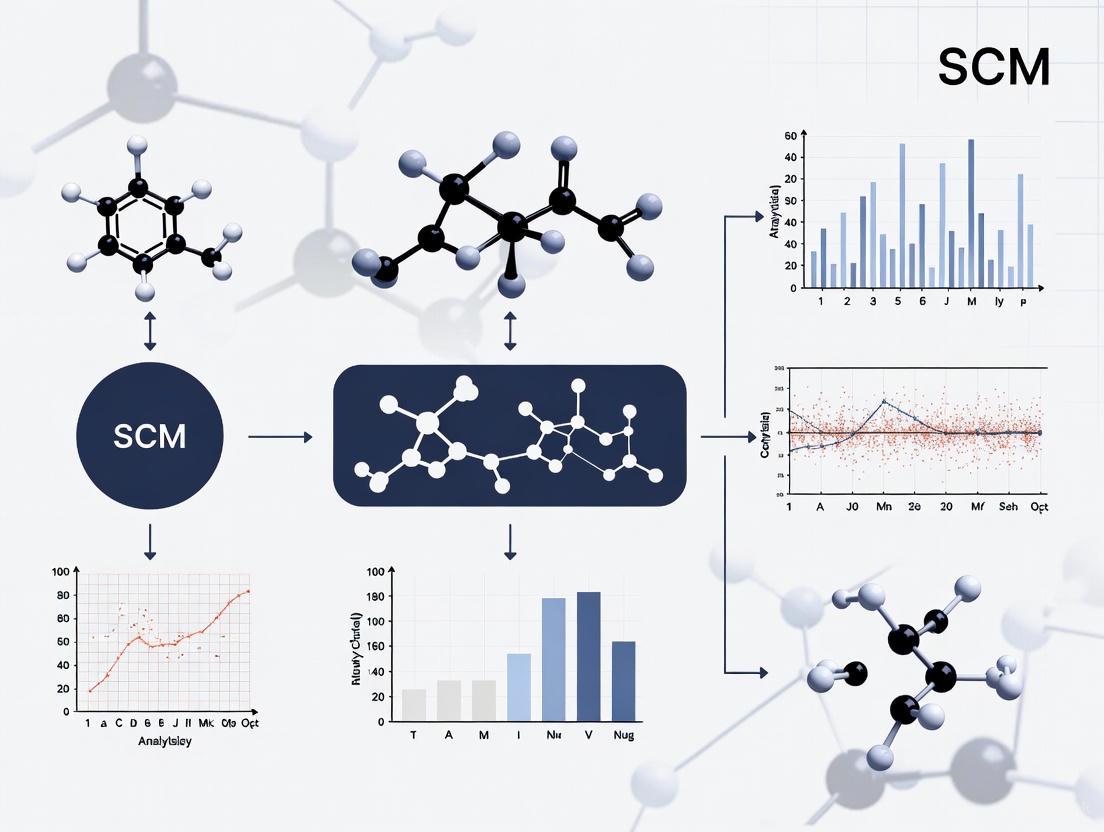
This guide provides a comprehensive framework for applying the Synthetic Control Method (SCM) in biomedical and clinical research settings.
A Practical Guide to Synthetic Control Method (SCM): Step-by-Step Application for Biomedical Research
Abstract
This guide provides a comprehensive framework for applying the Synthetic Control Method (SCM) in biomedical and clinical research settings. It details a complete workflow from foundational concepts and methodological implementation to troubleshooting common pitfalls and validating results. Designed for researchers and drug development professionals, the content addresses specific challenges in health research, including rigorous donor pool construction, statistical inference for single-case studies, and integration with modern causal inference approaches for robust impact evaluation of interventions, policies, and external events when randomized controlled trials are not feasible.
Understanding Synthetic Control Method: Core Principles and When to Use It in Health Research
The Synthetic Control Method (SCM) is a powerful quasi-experimental technique for estimating causal effects when a policy, intervention, or event affects a single unit—such as a country, state, or city—and traditional randomized controlled trials are not feasible [1]. First introduced by Abadie and Gardeazabal (2003) and formalized by Abadie, Diamond, and Hainmueller (2010), SCM constructs a data-driven counterfactual by creating a weighted combination of untreated donor units that closely mirrors the pre-intervention characteristics and outcomes of the treated unit [1] [2]. This "synthetic control" serves as the best approximation of what would have happened to the treated unit in the absence of the intervention, enabling researchers to estimate the causal effect by comparing post-intervention outcomes between the treated unit and its synthetic counterpart.
SCM has been successfully applied across numerous fields, including public policy, marketing, epidemiology, and economics. Recent applications range from assessing the economic impact of Brexit on the UK's real GDP [3] to evaluating the effect of wildfires on housing prices [4] and measuring the effectiveness of marketing campaigns [2]. The method is particularly valuable in situations where a perfect untreated comparison group does not exist, when treatment is applied to a single unit or a small number of units, or when interventions affect entire populations simultaneously [1] [5].
Theoretical Foundation
Formal Framework and Key Assumptions
SCM operates within the potential outcomes framework of causal inference. Consider a panel of J+1 units observed over T time periods, where unit i = 1 receives treatment starting at time T₀ + 1, while units j = 2, ..., J+1 constitute an untreated donor pool [1] [2]. For each unit i and period t, we observe outcome Y{*it*}. The fundamental problem of causal inference is that we can only observe one potential outcome for each unit at each time: for the treated unit in the post-treatment period (*t* > *T*₀), we observe *Y*{1t}(1) but cannot observe the counterfactual Y_{1t}(0).
The treatment effect for the treated unit at time t is defined as:
τ{1*t*} = *Y*{1t}(1) - Y_{1t}(0) for t > T₀
SCM estimates the unobserved counterfactual Y_{1t}(0) by constructing a synthetic control as a weighted combination of donor units:
Ŷ{1*t*}(0) = ∑{j=2}^{J+1} w{*j*} *Y*{jt*}
where the weights w_{j} are constrained to be non-negative and sum to one, ensuring the synthetic control is a convex combination of donor units [1] [2].
The validity of SCM rests on several key assumptions [1]:
- No Contamination: Only the treated unit experiences the intervention; control units in the donor pool remain untreated.
- No Other Major Changes: The treatment is the only significant event affecting the treated unit during the study period.
- Linearity: The counterfactual outcome of the treated unit can be constructed as a linear combination of control unit outcomes.
- Good Pre-treatment Fit: The synthetic control should closely resemble the treated unit in pre-treatment periods across both characteristics and outcome trajectories.
Outcome Model and Optimization
The underlying outcome model for SCM is often represented as a factor model [1]:
Y{*it*}^*N* = θ*t_ Z_i_ + λt* μ*i_ + ε_{it}
where:
- Z_i represents observed characteristics
- μ_i represents unobserved factors
- ε_{it} represents transitory shocks
The optimal weights W^* = (w₂^, ..., *w_{J+1}^*) are determined by solving an optimization problem that minimizes the discrepancy between the pre-treatment characteristics and outcomes of the treated unit and the synthetic control [1] [2]:
W^* = argmin_W ||X₁ - X₀W||
where:
- X₁ is a vector of pre-treatment characteristics for the treated unit
- X₀ is a matrix of pre-treatment characteristics for the donor units
- The minimization is subject to w{*j*} ≥ 0 and ∑*w*{j} = 1
Table 1: Core Components of the SCM Theoretical Framework
| Component | Description | Mathematical Representation | Interpretation |
|---|---|---|---|
| Treated Unit | Unit experiencing the intervention | i = 1 | Target of causal inference |
| Donor Pool | Collection of untreated units | j = 2, ..., J+1 | Potential control units |
| Weights | Contribution of each donor to synthetic control | w₂, ..., w_{J+1} | Non-negative, sum to 1 |
| Pre-treatment Period | Time before intervention | t = 1, ..., T₀ | Model fitting period |
| Post-treatment Period | Time after intervention | t = T₀+1, ..., T | Treatment effect estimation period |
| Treatment Effect | Causal effect of intervention | τ{1*t*} = *Y*{1t} - Ŷ_{1t}(0) | Difference between observed and synthetic outcome |
Application Protocols
End-to-End Implementation Workflow
Implementing SCM requires a rigorous, multi-stage process to ensure valid causal inference. Based on practitioner guidance and recent applications, the following workflow represents best practices for SCM implementation [2]:
Stage 1: Design and Pre-Analysis Planning
- Define treatment units, outcome metrics, and intervention timing
- Assemble comprehensive candidate donor pool with complete panel data
- Pre-register donor exclusion criteria and analytical specifications
- Ensure measurement consistency across units and time periods
- Conduct power analysis to determine minimum detectable effect sizes
Stage 2: Donor Pool Construction and Screening
- Apply correlation filtering (typically excluding donors with pre-period outcome correlation < 0.3)
- Verify seasonal pattern alignment using spectral analysis
- Test for structural breaks using Chow tests or similar procedures
- Assess contamination risk by removing units with direct or indirect treatment exposure
- Account for geographic considerations and spatial spillovers
Stage 3: Feature Engineering and Scaling
- Select multiple lags of outcome variable spanning complete seasonal cycles
- Include auxiliary covariates only when measurement quality is high
- Apply z-score normalization using pre-period statistics only: (X - μ{pre}) / *σ*{pre}
- Consider moving averages to smooth high-frequency noise
Stage 4: Constrained Optimization with Regularization
- Solve the optimization problem: minW ||X₁ - X₀W||{V}^2 + λR(W)
- Apply entropy penalty: R(W) = ∑{*j*} *w*{j} log w_{j} to promote weight dispersion
- Implement weight caps: w{*j*} ≤ *w*{max} to prevent over-concentration
- Use cross-validation to select optimal regularization parameter λ
Stage 5: Holdout Validation
- Reserve final 20-25% of pre-intervention period as holdout
- Train synthetic control on early pre-period data only
- Evaluate prediction accuracy on holdout using MAPE, RMSE, and R-squared
- Apply quality gates (e.g., MAPE < 15% for monthly data) before proceeding to effect estimation
Stage 6: Effect Estimation and Business Metrics
- Calculate treatment effects: τ̂_{t} = Y_{1t} - ∑_{j=2}^{J+1} w_j^ Y{jt} for t > T0*
- Derive business metrics including lift percentage and incremental Return on Ad Spend (iROAS)
Stage 7: Statistical Inference and Uncertainty Quantification
- Conduct placebo tests (in-space and in-time)
- Generate permutation-based p-values
- Construct confidence intervals via bootstrap methods
Stage 8: Diagnostic Assessment and Sensitivity Analysis
- Monitor weight concentration using effective number of donors: EN = 1/∑{j} wj^{2}
- Verify treated unit lies within convex hull of donors
- Perform leave-one-out analysis for influential donors
- Test robustness to alternative specifications
Case Study Protocol: Wildfire Impact on Housing Prices
A January 2025 study exemplifies the rigorous application of SCM to estimate the causal impact of a wildfire on housing prices in Altadena, California [4]. The following protocol details the methodology, which can be adapted to various intervention studies:
Research Question: What is the causal effect of a January 2025 wildfire on housing prices in Altadena, California?
Data Collection Protocol:
- Outcome Variable: Zillow Home Value Index (ZHVI) for All Homes, Smoothed, Seasonally Adjusted
- Data Source: Zillow's public data repository
- Time Frame: January 2000 to July 2025
- Treated Unit: Altadena, California
- Intervention Date: January 31, 2025
- Pre-intervention Period: 5 years (January 2020 - December 2024)
- Post-intervention Period: 6 months (February 2025 - July 2025)
- Initial Donor Pool: 60 California cities with similar population size and housing market characteristics
- Final Donor Pool: 58 cities after filtering for data availability and pre-treatment correlation
Optimization Protocol:
- Objective Function: Time-weighted loss function with exponential decay
- Weight Formula: ω_t = exp(α(t - T_{end})) with decay parameter α = 0.005
- Optimization: Minimize pre-treatment MSPE between actual and synthetic Altadena
- Validation: Sensitivity analysis across α ∈ [0.003, 0.01] to verify robustness
Inference Protocol:
- Method: Placebo-in-space test
- Procedure: Iteratively apply SCM to each donor city as if it experienced the wildfire
- p-value Calculation: p = (k + 1)/(J + 1) where k = number of placebo effects as large as Altadena's
- Metrics: Average post-treatment gap and post-to-pre-treatment RMSPE ratio
Table 2: Synthetic Control Weights from Altadena Case Study
| City Name | Weight (%) | Cumulative Weight (%) |
|---|---|---|
| Burbank | 35.53 | 35.53 |
| Whittier | 18.66 | 54.19 |
| South Pasadena | 10.69 | 64.88 |
| Temecula | 10.47 | 75.35 |
| Rolling Hills Estates | 7.61 | 82.96 |
| La Canada Flintridge | 6.05 | 89.01 |
| Sierra Madre | 5.50 | 94.51 |
| Other 41 cities | 5.49 | 100.00 |
Results Interpretation:
- Pre-treatment Fit: Excellent with RMSPE of 0.61% relative to average pre-treatment price
- Treatment Effect: Sustained and growing negative impact over six months post-wildfire
- Statistical Significance: Significant at 10% level based on RMSPE ratio (p = 0.0508) but not based on average gap (p = 0.3220)
- Economic Magnitude: Average monthly loss of $32,125 over six months post-wildfire
The Scientist's Toolkit: Research Reagent Solutions
Table 3: Essential Software Tools for SCM Implementation
| Tool Name | Implementation Language | Key Features | Use Case |
|---|---|---|---|
| Synth | R | Original SCM algorithm | Canonical SCM applications |
| augsynth | R | Augmented SCM with bias correction | Cases with imperfect pre-treatment fit [6] |
| scpi | Python, R, Stata | Uncertainty quantification with prediction intervals | Robust inference and uncertainty quantification [7] |
| CausalImpact | R, Python | Bayesian structural time series | Alternative counterfactual estimation |
| gsynth | R | Generalized synthetic control | Multiple treated units and staggered adoption |
| SyntheticDifference-in-Differences | R, Python | Combines SCM and DiD advantages | When parallel trends assumption is questionable |
Advanced Methodological Extensions
Augmented and Regularized SCM
Recent methodological advances have addressed key limitations of the standard SCM approach. The Augmented Synthetic Control Method (ASCM) introduced by Ben-Michael, Feller, and Rothstein (2021) extends SCM to cases where perfect pre-treatment fit is infeasible [1] [6]. ASCM combines SCM weighting with bias correction through an outcome model, improving estimates when SCM alone fails to match pre-treatment outcomes precisely. The method is particularly valuable when the treated unit lies outside the convex hull of donor units, a scenario where traditional SCM may produce biased estimates.
Another important advancement is the Penalized Synthetic Control Method proposed by Abadie and L'hour (2021), which modifies the optimization problem to reduce interpolation bias [1]:
minW ||X₁ - ∑{j=2}^{J+1}W{*j*} X{j} ||² + λ ∑{*j*=2}^{*J*+1} *W*{j} ||X₁ - X_{j}||²
where:
- λ > 0 controls the trade-off between fit and regularization
- λ → 0 yields standard synthetic control
- λ → ∞ approaches nearest-neighbor matching
This method ensures sparse and unique solutions for weights while excluding dissimilar control units, thereby reducing interpolation bias.
SCM with Multiple Outcomes
Traditional SCM applications typically use a single outcome variable, but recent work has explored incorporating multiple outcomes to improve counterfactual estimation [8]. When multiple relevant variables are available, analysts can employ a stacked approach that concatenates multiple outcomes into the optimization:
Stacked SCM Approach:
- Vertically concatenate pre-treatment outcomes: Y₀' = [Y₀^{(1),pre}; Y₀^{(2),pre}; ...; Y₀^{(K),pre}]
- Apply standard SCM optimization to stacked data: W^* = argminW ||y₁' - Y₀'W||{F}^2
- Generate out-of-sample predictions using the same weights
An alternative approach incorporates an intercept term for each outcome to control for differences in levels across outcomes [8]:
Intercept-Adjusted SCM: W^* = argminW,*β* ||y₁' - Y₀'W - *β*||{F}^2
where β represents an unconstrained intercept term that adjusts for systematic differences between outcomes.
Recent Algorithmic Innovations
A August 2025 paper introduces a Relaxation Approach to Synthetic Control that addresses settings where the donor pool contains more control units than time periods [3]. This machine learning algorithm minimizes an information-theoretic measure of the weights subject to relaxed linear inequality constraints in addition to the simplex constraint. When the donor pool exhibits a group structure, SCM-relaxation approximates equal weights within each group to diversify prediction risk. The method achieves oracle performance in terms of out-of-sample prediction accuracy and has been applied to assess the economic impact of Brexit on the UK's real GDP.
The Synthetic Control Method represents a rigorous, data-driven approach to counterfactual estimation in settings where traditional experimental designs are not feasible. Through its structured methodology of constructing weighted combinations of control units to approximate the pre-intervention trajectory of treated units, SCM enables credible causal inference across diverse application domains. The continued methodological innovation in areas such as augmentation, regularization, multiple outcomes, and relaxed constraints has further expanded the method's applicability and robustness.
For researchers implementing SCM, adherence to comprehensive protocols encompassing design, donor screening, validation, inference, and sensitivity analysis is essential for producing valid results. The growing ecosystem of software tools has made SCM more accessible while providing sophisticated approaches to uncertainty quantification. As SCM continues to evolve, it remains a powerful tool in the causal inference arsenal, particularly for evaluating interventions affecting single units or small groups in observational settings.
In clinical research and drug development, establishing causal evidence for the effect of a treatment, policy, or intervention is paramount. While randomized controlled trials (RCTs) represent the gold standard for causal inference, they are often ethically problematic, impractical, or prohibitively expensive in many real-world clinical scenarios [9]. In these contexts, observational causal inference methods provide indispensable tools for generating evidence. Among these, Difference-in-Differences (DiD) and various regression approaches constitute foundational methodologies. DiD estimates causal effects by comparing the change in outcomes over time between a treatment group and a control group, relying on a parallel trends assumption [10]. Regression methods, particularly logistic regression, remain a cornerstone for modeling relationships between variables and predicting binary clinical outcomes, valued for their interpretability and robust framework [11]. This article delineates the key advantages of these methods over alternatives, provides structured protocols for their application, and situates them within the evolving landscape of causal inference, including the emerging role of synthetic control methods (SCM).
Key Advantages and Comparative Analysis
Advantages of Difference-in-Differences (DiD)
DiD is a quasi-experimental design that leverages longitudinal data to construct an appropriate counterfactual, making it highly suitable for evaluating policy changes, new treatment protocols, and large-scale interventions in healthcare [10].
Table 1: Key Advantages of the Difference-in-Differences (DiD) Method
| Advantage | Description | Clinical Context Example |
|---|---|---|
| Intuitive Interpretation | The causal effect is derived from a simple comparison of pre-post changes between groups, making results accessible to a broad clinical audience. | Presenting the effect of a new hospital readmission reduction program to administrators and clinicians [10]. |
| Use of Observational Data | Can obtain causal estimates from non-randomized, observational data when core assumptions are met, circumventing ethical or practical barriers to RCTs. | Studying the effect of Medicaid expansion on cardiovascular mortality using administrative claims data [12]. |
| Controls for Baseline Confounding | Accounts for permanent, unobserved differences between treatment and control groups by using each group as its own control over time. | Comparing patient outcomes between two hospital systems with different baseline mortality rates after one implements a new surgical technique [10]. |
| Accounts for Temporal Trends | Adjusts for trends over time that are common to both groups, isolating the effect of the intervention from other secular changes. | Evaluating a smoking ban's effect on hospitalization rates while accounting for pre-existing, improving trends in public health [5]. |
| Flexible Data Requirements | Can be applied to individual-level panel data, repeated cross-sectional data, or group-level aggregate data. | Using national survey data collected from different individuals each year to assess a public health campaign's impact [10]. |
The most critical assumption for a valid DiD analysis is the parallel trends assumption: in the absence of the treatment, the outcome trends for the treatment and control groups would have continued in parallel [10] [12]. Recent methodological advancements have focused on strengthening DiD applications, including covariate adjustment to relax causal assumptions, robust inference techniques, and methods to account for staggered treatment timing, a common feature in the roll-out of new therapies or policies [12].
Advantages of Regression in Clinical Contexts
Regression, particularly logistic regression for binary outcomes, is a workhorse of clinical modeling. Its enduring relevance is attributed to several key strengths over more complex modeling techniques.
Table 2: Key Advantages of Logistic Regression in Clinical Research
| Advantage | Description | Clinical Context Example |
|---|---|---|
| High Interpretability | Model coefficients are directly interpretable as log-odds or odds ratios, providing clinically meaningful effect measures. | Conveying how a one-unit increase in a biomarker level changes the odds of a disease, facilitating risk communication [11]. |
| Handles Mixed Predictor Types | Seamlessly incorporates continuous (e.g., biomarker levels) and categorical (e.g., genotype) predictor variables in the same model. | Developing a diagnostic model for acute coronary syndrome using troponin levels (continuous), ECG findings (categorical), and patient sex (categorical) [11]. |
| Outputs Probabilities | Provides a direct estimate of the probability of an event (e.g., disease presence, treatment success) for individual patients. | Generating a patient-specific probability of post-operative infection to guide prophylactic antibiotic use [11]. |
| Robustness with Small Samples | Generally requires smaller sample sizes than machine learning (ML) models for stable performance, a crucial feature in rare disease research [13]. | Developing a prognostic model for a rare oncological condition with a limited patient cohort [9] [13]. |
| Statistical Inference Framework | Naturally incorporates confidence intervals and p-values for coefficients, aligning with the reporting standards of clinical literature [11]. | Justifying the inclusion of a novel risk factor in a clinical prediction rule based on its statistically significant odds ratio. |
While machine learning models can capture complex non-linear relationships, their performance gains on structured, tabular clinical data are inconsistent and highly context-dependent [13]. A 2019 meta-regression found no performance benefit of ML over statistical logistic regression for binary classification on tabular clinical data, highlighting that data quality and characteristics often outweigh model complexity [13]. Logistic regression's "white-box" nature offers transparency that is paramount for clinical decision-making, where understanding the rationale behind a prediction is as important as the prediction itself [13] [11].
Experimental Protocols and Workflows
Protocol for a Difference-in-Differences Analysis
The following protocol provides a step-by-step guide for implementing a DiD analysis to evaluate a clinical intervention or health policy.
Protocol 1: DiD for Health Policy Evaluation
- Objective: To estimate the causal effect of a new state-wide health policy (e.g., a bundled payment program) on hospital readmission rates.
- Primary Endpoint: Change in 30-day risk-adjusted readmission rates.
- Materials & Data:
- Treatment Group: Hospitals in the state implementing the policy.
- Control Group: Hospitals in comparable states without the policy.
- Data Source: Administrative claims data for a period spanning at least 2-3 years pre-policy and 1-2 years post-policy.
- Variables: Hospital identifier, time period (quarter/year), readmission rate, and relevant covariates (e.g., patient case-mix index).
- Procedure:
- Pre-Analysis Planning:
- Define the intervention start date (
T0). - Pre-specify the treatment and control groups based on policy jurisdiction. Ensure the control group is not exposed to similar policies.
- Justify the pre- and post-intervention periods, ensuring they are long enough to establish trends and capture seasonal effects.
- Define the intervention start date (
- Assess Parallel Trends:
- Visually inspect the trends of the outcome (readmission rate) for both groups in the pre-intervention period. The trends should be approximately parallel [10] [12].
- Formally test for differential pre-trends by regressing the outcome on a linear time trend interacted with the treatment group indicator in the pre-period.
- Model Specification:
- Estimate the following linear regression model using data from both pre- and post-periods:
Y = β0 + β1*[Post] + β2*[Treatment] + β3*[Post*Treatment] + β4*[Covariates] + ε - Where:
Yis the outcome (readmission rate).Postis a dummy variable (0=pre, 1=post).Treatmentis a dummy variable (0=control, 1=treatment).Post*Treatmentis the interaction term.β3is the DiD estimator, representing the causal effect of the policy.
- Estimate the following linear regression model using data from both pre- and post-periods:
- Statistical Inference:
- Sensitivity & Robustness Checks:
- Conduct a placebo test by artificially setting
T0to a time before the actual policy;β3should be statistically insignificant [12]. - Test different control groups or model specifications to ensure the result is not fragile.
- Conduct a placebo test by artificially setting
- Pre-Analysis Planning:
The logical workflow and key checks for this protocol are summarized in the diagram below.
Protocol for Clinical Risk Prediction with Logistic Regression
This protocol outlines the development and validation of a clinical risk prediction model using logistic regression.
Protocol 2: Logistic Regression for Risk Prediction
- Objective: To develop a model predicting the probability of post-operative infection based on pre- and intra-operative patient factors.
- Primary Endpoint: Binary outcome of post-operative surgical site infection within 30 days (Yes/No).
- Materials & Data:
- Patient Cohort: Retrospective cohort of patients undergoing the target procedure.
- Candidate Predictors: Pre-operative albumin levels, BMI, diabetes status, and operative duration.
- Data Source: Electronic health records and surgical registry data.
- Procedure:
- Data Preparation:
- Handle missing data through appropriate methods (e.g., multiple imputation).
- Split the dataset randomly into a training set (e.g., 70%) for model development and a testing set (30%) for validation [11].
- Variable Selection & Assumption Checking:
- Assess the linearity in the log-odds for continuous predictors (e.g., albumin) using restricted cubic splines or residual plots. Violations may require variable transformation [11].
- Check for multicollinearity among predictors using variance inflation factors (VIF).
- Model Fitting:
- Fit the logistic regression model on the training dataset. The model form is:
ln(p/(1-p)) = β0 + β1*Albumin + β2*BMI + β3*Diabetes + β4*OperativeDuration - where
pis the probability of infection, andln(p/(1-p))is the log-odds.
- Fit the logistic regression model on the training dataset. The model form is:
- Model Performance Validation (on Test Set):
- Discrimination: Calculate the Area Under the Receiver Operating Characteristic Curve (AUROC) to assess the model's ability to distinguish between patients who do and do not get an infection [13] [11].
- Calibration: Assess calibration (agreement between predicted probabilities and observed frequencies) using a calibration plot or Hosmer-Lemeshow test. A well-calibrated model should have predictions close to the 45-degree line on the plot [13].
- Clinical Utility: Perform decision curve analysis to evaluate the net benefit of using the model for clinical decisions across different probability thresholds [13].
- Model Interpretation & Deployment:
- Exponentiate coefficients to obtain odds ratios (OR) for each predictor. For example, an OR for diabetes of 1.8 would indicate an 80% higher odds of infection among diabetic patients.
- Present the final model as a nomogram or score chart for ease of use in clinical settings.
- Data Preparation:
The development and validation cycle for the risk prediction model is illustrated below.
The Scientist's Toolkit: Essential Reagents and Materials
Successful implementation of DiD and regression analyses requires both data and software resources. The following table details key "research reagents" for the clinical data scientist.
Table 3: Essential Research Reagents for Causal Analysis
| Item Name | Function / Definition | Application Notes |
|---|---|---|
| Longitudinal Panel Dataset | A dataset containing repeated observations of the same units (e.g., patients, hospitals) over time. | Function: The fundamental input for DiD analysis. Must include data from both pre- and post-intervention periods for treatment and control units. |
| Pre-Intervention Outcome Trajectory | The historical path of the outcome variable for all units before the treatment is introduced. | Function: Critical for verifying the parallel trends assumption in DiD and for constructing the synthetic control in SCM [1] [10]. |
| Stable Unit Treatment Value Assumption (SUTVA) | The assumption that one unit's treatment assignment does not affect another unit's outcome. | Function: A core causal assumption. Violations (e.g., treatment spillover) can bias results. Must be evaluated based on study context [10]. |
| Odds Ratio (OR) | The exponentiated coefficient from a logistic regression model, representing the multiplicative change in odds of the outcome per unit change in the predictor. | Function: The primary interpretable output of logistic regression. Provides a clinically intuitive measure of association but should not be conflated with risk ratios [11]. |
R/Python Synth & CausalImpact Libraries |
Software packages implementing advanced causal methods, including Synthetic Control and Bayesian Structural Time Series. | Function: Enable the implementation of SCM as a robust alternative when a control group for DiD is not readily available [2] [5]. |
| Placebo Test Distribution | A null distribution of treatment effects generated by applying the analysis to untreated units or pre-period dates. | Function: A key inferential tool for SCM and a robustness check for DiD. The true effect should be extreme relative to this distribution [1] [2]. |
Integration with Synthetic Control Methods
In clinical contexts where a single unit (e.g., one country, one hospital system) receives a treatment and no single control unit provides a good match, the Synthetic Control Method (SCM) offers a powerful alternative. SCM constructs a data-driven counterfactual as a weighted combination of multiple control units from a "donor pool," forcing this synthetic unit to closely match the treated unit's pre-intervention outcome trajectory and characteristics [1] [2]. This approach has been used to evaluate the impact of laws like Massachusetts' payment disclosure law on physician prescribing behavior [1].
The key advantage of SCM in a clinical setting is its utility in rare disease trials or studies where a placebo arm is not feasible. Regulatory agencies like the FDA support its use on a case-by-case basis, particularly for severe diseases with inadequate standard of care [9]. A hybrid design, which combines a small randomized control arm with a synthetically augmented control group, is gaining interest as it helps mitigate concerns about unmeasured confounding, a common criticism of purely external control arms [9].
The workflow for creating a synthetic control arm, as applied in clinical trials, is shown below.
DiD and logistic regression remain powerful and essential tools in the clinical researcher's arsenal. DiD provides a credible framework for causal inference from observational data when interventions are applied at a group level and the parallel trends assumption holds. Logistic regression offers an interpretable and robust method for clinical prediction and risk stratification, often matching or surpassing the performance of more complex machine learning models on structured clinical data. The choice between methods is not one of inherent superiority but of aligning the tool with the research question, data structure, and underlying assumptions. As the field evolves, these traditional methods are being complemented and extended by approaches like the Synthetic Control Method, which offers a novel solution to the challenge of constructing valid counterfactuals in increasingly complex and personalized clinical environments.
Application Notes: SCM in Biomedical Research
The Synthetic Control Method (SCM) is a powerful causal inference tool designed for evaluating the impact of interventions when randomized controlled trials (RCTs) are impractical, unethical, or prohibitively expensive [14]. Originally developed in the social sciences, SCM constructs a data-driven, weighted combination of untreated control units—a "synthetic control"—that closely mirrors the pre-intervention trajectory and characteristics of a single treated unit (e.g., a state, country, or patient population) [1] [15]. This method is particularly valuable in biomedical and public health research for assessing the effect of population-level interventions such as new laws, policies, or health system reforms [15].
Core Principles and Advantages for Biomedicine
SCM operates within a potential outcomes framework, estimating the counterfactual—what would have happened to the treated unit without the intervention—by creating a synthetic version from a pool of untreated donor units [2]. The weights for these units are determined via an optimization algorithm that minimizes the discrepancy between the treated unit and the synthetic control during the pre-intervention period across key predictors and outcome trends [1].
Its principal advantages for biomedical research include:
- Transparent and Data-Driven Control Selection: It reduces researcher bias by using a formal algorithm to select and weight control units, rather than relying on subjective choice [15].
- Robustness to Confounding: By closely matching pre-intervention outcome trends and characteristics, SCM strengthens the plausibility of the critical "parallel trends" assumption required for causal inference, making it more robust than simpler before-after or difference-in-differences (DiD) comparisons in many settings [1] [15].
- Ability to Handle Complex Temporal Patterns: SCM can absorb seasonal patterns, long-term trends, and the influence of unobserved confounders, provided these are reflected in the pre-intervention data [2].
- Ideal for Single-Unit Interventions: It is uniquely suited for evaluating interventions applied to a single aggregate unit, a common scenario in policy and legislative health research [1] [5].
Illustrative Use Cases in Biomedicine and Public Health
The following table summarizes key areas where SCM has been, or can be, effectively applied.
Table 1: Ideal Use Cases for SCM in Biomedicine and Public Health
| Use Case Category | Specific Example | Treated Unit | Outcome Metric | Donor Pool | Key Rationale for SCM |
|---|---|---|---|---|---|
| Health Policy & Legislation | Evaluation of Florida's "Stand Your Ground" law on homicide rates [15]. | State of Florida | Annual homicide rate | Other US states without similar laws | No single state is a perfect match; a weighted combination provides a better counterfactual. |
| Impact of Massachusetts' Payment Disclosure Law on physician prescribing behavior [1]. | State of Massachusetts | Rate of prescriptions for branded drugs | Other US states | Isolating the effect of a single state's law requires a robust, data-driven control. | |
| Public Health Interventions | Assessing the effect of early face-mask regulations on COVID-19 outbreak severity [15]. | A specific city or region (e.g., Jena, Germany) | COVID-19 incidence or mortality | Similar cities/regions without early mask mandates | Intervention was implemented in one location; RCT was not feasible. |
| Evaluating the population-level impact of smoking bans or vaccination programs [5]. | A specific country or state | Rates of smoking-related admissions or disease incidence | Comparable untreated regions | Interventions are applied at a population level, preventing individual-level randomization. | |
| Drug & Therapeutic Policy | Analyzing the effect of state-specific regulation changes for opioids [15]. | A state that enacted a new policy | Opioid overdose mortality rates | States with stable opioid policies | Policy change is a single-unit event; SCM controls for underlying state-specific trends. |
| Marketing & Access in Pharma | Measuring the impact of a direct-to-consumer advertising campaign for a new drug [1]. | A specific television market (DMA) | New prescription requests or sales | Similar, unexposed media markets | Campaigns are often rolled out in specific geographies where a control market is hard to find. |
Experimental Protocols
This section provides a detailed, step-by-step protocol for implementing an SCM analysis, framed within the context of a public health policy evaluation.
Protocol: Evaluating a State-Level Public Health Intervention
A. Pre-Analysis Planning and Design
Define the Intervention and Units:
- Treated Unit: Clearly define the single unit exposed to the intervention (e.g., "State of Florida").
- Intervention Date: Precisely specify the time period
T0, when the intervention begins. - Donor Pool: Identify a set of potential control units (e.g., "All other US states that did not enact a similar policy within the study period") [2] [15].
Outcome Variable and Data Collection:
- Primary Outcome: Define the key metric for evaluation (e.g., "Annual homicide rate per 100,000 population").
- Data Source: Secure access to a longitudinal (panel) dataset containing the outcome for all units across multiple time periods.
- Pre-Intervention Period: Ensure a sufficiently long pre-intervention timeline (
T0periods) to capture seasonal cycles and long-term trends. A short pre-period is a common failure point [2].
B. Donor Pool Construction and Screening
Apply Screening Criteria to refine the donor pool [2]:
- Correlation Filtering: Exclude donor units with a pre-period outcome correlation below a threshold (e.g., r < 0.3).
- Seasonality Alignment: Verify similar cyclical patterns using time-series decomposition.
- Contamination Assessment: Remove any units that were indirectly exposed to the intervention or a similar one.
Feature Engineering:
- Primary Predictors: Include multiple lags of the outcome variable to ensure the synthetic control matches the dynamic trajectory [2].
- Auxiliary Covariates: Include a limited set of well-measured demographic or economic variables known to predict the outcome (e.g., poverty rate, population density) [15].
- Standardization: Z-score normalize all features using pre-period statistics only [2].
C. Model Fitting and Optimization
Define the Optimization Problem: Find the weight vector
W* = (w2,..., wJ+1)that solves [1]:Where
X1is the vector of pre-treatment characteristics for the treated unit, andX0is the matrix of characteristics for the donor pool.Implementation: Use established statistical packages like the
Synthpackage in R or similar libraries in Python to perform this constrained optimization [14] [15].Holdout Validation: Reserve the final 20-25% of the pre-intervention period as a holdout set. Train the model on the early pre-period and validate its predictive accuracy on the holdout set using metrics like Mean Absolute Percentage Error (MAPE) [2].
D. Effect Estimation, Inference, and Diagnostics
Calculate Treatment Effects: The treatment effect at time
t(post-intervention) is [1]:Statistical Inference via Placebo Tests: [1] [2]
- In-Space Placebos: Iteratively reassign the "treatment" to each unit in the donor pool and re-run the entire SCM analysis.
- This generates a distribution of placebo effects under the null hypothesis of no effect.
- Calculate a p-value as the proportion of placebo effects that are as large or larger than the observed effect.
Run Diagnostics: [2]
- Pre-Intervention Fit: Visually and quantitatively assess how well the synthetic control tracks the treated unit before the intervention.
- Weight Concentration: Check the effective number of donors (
1/∑ wj^2). A very low number may indicate over-reliance on a single control unit. - Sensitivity Analysis: Test the robustness of results to changes in the donor pool, model specification, and regularization.
Workflow Visualization
The following diagram illustrates the end-to-end SCM analytical workflow.
The Scientist's Toolkit: Research Reagent Solutions
Table 2: Essential Tools and Packages for SCM Implementation
| Item / Resource | Function / Purpose | Key Features & Considerations |
|---|---|---|
R Synth Package |
The canonical implementation of the original SCM algorithm [14] [15]. | Provides a straightforward interface for weight optimization and effect estimation. Well-documented but limited to the standard method. |
| Augmented SCM (ASCM) | An extension that combines SCM with an outcome model for bias correction when pre-treatment fit is imperfect [1] [2]. | Improves robustness. Implemented in newer R packages (e.g., augsynth). Recommended when the treated unit lies outside the convex hull of donors. |
| Bayesian Structural Time Series (BSTS) | An alternative Bayesian approach for counterfactual forecasting, often used as a comparator to SCM [2]. | Provides probabilistic intervals (credible intervals). Available in R (BSTS package) and Python (CausalImpact). |
Python Causal Inference Libraries (e.g., causalinference) |
Provides a Python-based ecosystem for implementing SCM and related causal methods. | Offers flexibility for integration into larger Python-based data science workflows. |
| Placebo Test Scripts | Custom code for conducting permutation-based inference [1] [2]. | Essential for establishing statistical significance. Must be tailored to the specific study design to iteratively re-assign treatment. |
| Data Panel | A longitudinal dataset containing the outcome and covariates for the treated unit and all potential donors over time [15]. | The fundamental "reagent." Must be complete, consistent, and cover a sufficiently long pre-intervention period to ensure a valid synthetic control can be constructed. |
The validity of the Synthetic Control Method (SCM) hinges on several core assumptions that enable credible estimation of causal effects when a randomized controlled trial is not feasible. SCM constructs a counterfactual for a treated unit as a weighted combination of untreated donor units, replicating the treated unit's pre-intervention trajectory [2]. This data-driven approach for constructing a comparable control group is a natural alternative to Difference-in-Differences when no perfect untreated comparison group exists or when treatment is applied to a single unit [1]. The accuracy of this counterfactual depends critically on three foundational assumptions: no contamination, linearity, and the absence of other major changes. These assumptions ensure that the synthetic control provides a valid representation of what would have happened to the treated unit in the absence of the intervention.
The No Contamination Assumption
Definition and Theoretical Basis
The no contamination assumption stipulates that only the treated unit experiences the intervention, and control units in the donor pool remain entirely unaffected by the treatment [1]. This assumption is crucial for maintaining the integrity of the counterfactual, as it ensures that the donor pool's post-intervention outcomes genuinely reflect what the treated unit would have experienced without treatment.
In practical terms, contamination can occur through various channels:
- Direct exposure: Control units inadvertently receive the treatment.
- Spillover effects: Outcomes in control units are influenced by the treatment's implementation in the treated unit.
- Competitive responses: Control units modify their behavior in reaction to the treated unit's treatment.
- Measurement interference: The treatment affects how outcomes are measured across units.
Validation Protocols and Diagnostic Procedures
Researchers must implement rigorous diagnostic procedures to test the no contamination assumption:
Table 1: Diagnostic Tests for Contamination Detection
| Diagnostic Test | Methodology | Interpretation | Threshold Criteria |
|---|---|---|---|
| Pre-treatment Trend Analysis | Compare trends between treated and donor units during pre-intervention period | Parallel trends suggest no contamination | p > 0.05 for differential trends [2] |
| Post-treatment Donor Monitoring | Monitor donor unit outcomes for anomalous patterns post-treatment | Stable patterns suggest no contamination | Flag significant deviations (e.g., >2σ from mean) [2] |
| Cross-correlation Tests | Calculate cross-correlation between treated and donor regions | Low correlation suggests independence | r < 0.3 indicates minimal spillover [2] |
| Geographic Buffer Analysis | Analyze units at varying distances from treated unit | Distance gradient suggests spillovers | Effect decline with distance indicates contamination [2] |
| Placebo Spatial Tests | Apply synthetic control to units farther from treatment | No effect in distant units validates assumption | p > 0.05 for placebo effects [2] |
Experimental Protocol for Contamination Assessment:
- Define contamination pathways: Map potential mechanisms through which treatment effects could spread to control units.
- Implement geographic buffering: Exclude control units within a specified radius of the treated unit to prevent spatial spillovers.
- Conduct interference detection:
- Monitor donor unit outcomes for anomalous patterns post-treatment
- Perform geographic buffer analysis for spillover effects
- Run cross-correlation tests between treated and donor regions [2]
- Execute sensitivity analysis: Re-estimate synthetic control after removing potentially contaminated units and compare results.
Remediation Strategies for Contamination Violations
When contamination is detected or suspected:
- Expand donor pool geographically: Include units more distant from the treated unit.
- Temporal exclusion: Remove time periods potentially affected by contamination.
- Structural break testing: Implement Chow tests or similar procedures to identify contamination-induced breaks [2].
- Alternative method consideration: Shift to difference-in-differences or interrupted time series approaches.
The Linearity Assumption
Definition and Theoretical Foundation
The linearity assumption posits that the counterfactual outcome of the treated unit can be expressed as a linear combination of control units in the donor pool [1]. Formally, SCM assumes the counterfactual outcome follows a factor model [1]:
[ Y{it}^N = \mathbf{\theta}t \mathbf{Z}i + \mathbf{\lambda}t \mathbf{\mu}i + \epsilon{it} ]
where:
- (\mathbf{Z}_i) = Observed characteristics
- (\mathbf{\mu}_i) = Unobserved factors
- (\epsilon_{it}) = Transitory shocks (random noise)
This assumption enables the construction of the synthetic control as a convex combination ((wj \geq 0), (\sum wj = 1)) of donor units [1] [2]. The linearity constraint prevents extrapolation beyond the support of the donor pool, enhancing the credibility of the counterfactual.
Validation Protocols and Diagnostic Procedures
Diagnostic Framework for Linearity Assessment:
Table 2: Linearity Assumption Diagnostics
| Diagnostic Approach | Implementation | Positive Evidence | Risk Indicators |
|---|---|---|---|
| Convex Hull Test | Check if treated unit lies within convex hull of donors | Treated unit inside convex hull | Mahalanobis distance > critical value [2] |
| Pre-treatment Fit | Examine MSE/RMSE during pre-treatment period | Low prediction error (MAPE < 10%) [2] | Poor fit despite donor optimization |
| Weight Distribution | Analyze concentration of weights across donors | Effective number of donors > 3 [2] | Single donor dominates (weight > 0.8) |
| Non-linearity Test | Add quadratic terms to predictor set | No improvement in fit | Significant improvement with non-linear terms |
| Cross-validation | Holdout validation within pre-treatment period | Consistent performance across periods | High variance in holdout performance [2] |
Experimental Protocol for Linearity Validation:
- Convex hull assessment:
- Calculate Mahalanobis distance between treated unit and donor pool
- Verify treated unit lies within convex hull of donors [2]
- Pre-treatment fit evaluation:
- Reserve final 20-25% of pre-intervention period as holdout
- Train synthetic control on early pre-period data
- Evaluate prediction accuracy on holdout using MAPE, RMSE, R-squared [2]
- Weight distribution analysis:
- Calculate effective number of donors: ( \text{EN} = 1/\sumj wj^2 ) [2]
- Flag high concentration (EN < 3) as potential overfitting
- Regularization assessment:
- Implement penalized synthetic control: ( \min{\mathbf{W}} ||\mathbf{X}1 - \sum{j=2}^{J+1}Wj \mathbf{X}j ||^2 + \lambda \sum{j=2}^{J+1} Wj ||\mathbf{X}1 - \mathbf{X}_j||^2 ) [1]
- Test sensitivity to different regularization parameters
Remediation Strategies for Linearity Violations
When the linearity assumption is violated:
- Augmented SCM: Incorporate regression adjustment for bias correction (Ben-Michael et al., 2021) [1] [6]
- Regularized SCM: Apply penalty terms to exclude dissimilar control units [1]
- Relaxation approaches: Implement machine learning algorithms that minimize information-theoretic measures of weights with relaxed linear constraints [3]
- Alternative methods: Consider Generalized SCM (Xu, 2017) or Bayesian Structural Time Series [2]
The No Other Major Changes Assumption
Definition and Theoretical Basis
The no other major changes assumption requires that the treatment is the only significant event affecting the treated unit during the study period [1]. This assumption isolates the treatment effect from confounding by contemporaneous interventions or external shocks that might differentially impact the treated unit versus the synthetic control.
Potential violations include:
- Policy changes: Implementation of other interventions affecting the outcome
- Economic shocks: Recessions, inflation, or market disruptions
- Natural events: Disasters, pandemics, or environmental changes
- Technological disruptions: Innovations altering production functions
- Social changes: Demographic shifts or behavioral trends
Validation Protocols and Diagnostic Procedures
Diagnostic Framework for Confounding Changes:
Table 3: Diagnostic Tests for Confounding Changes
| Diagnostic Method | Procedure | Evidence Supporting Assumption | Confounding Indicators |
|---|---|---|---|
| Placebo Time Tests | Pretend intervention happened earlier | No effect in pre-period placebo tests | Significant placebo effects [2] [5] |
| Media Analysis | Review news and policy announcements | No major events coinciding with treatment | Documented contemporaneous changes |
| Multiple Specifications | Vary pre-treatment period length | Stable treatment effect estimates | Highly sensitive effect magnitudes |
| Donor Response Analysis | Examine outcomes across all donors | Parallel trends post-treatment | Divergent patterns in donor units |
| Covariate Balance Tracking | Monitor predictors unaffected by treatment | Stable relationships | Shifts in covariate-outcome relationships |
Experimental Protocol for Change Detection:
- Systematic event documentation:
- Catalog all potential confounding events during study period
- Code events by type, magnitude, and anticipated impact
- Map temporal alignment with treatment implementation
- Placebo time testing:
- Simulate treatment at various pre-intervention dates [2]
- Assess whether observed effect magnitude is historically unusual
- Calculate p-values from placebo distribution
- Sensitivity analysis:
- Re-estimate models with varying pre-treatment periods
- Test robustness to donor pool composition changes
- Examine effect stability across specifications
- Triangulation with alternative methods:
- Compare SCM results with difference-in-differences estimates
- Implement Bayesian approaches for validation [2]
Remediation Strategies for Assumption Violations
When other major changes are identified:
- Stratified analysis: Segment study period to isolate confounding events
- Covariate adjustment: Incorporate measures of confounding events in augmented SCM
- Interaction terms: Model effect modification from external factors
- Donor pool restriction: Limit to units experiencing similar external environments
- Exclusion periods: Remove time periods affected by confounding events
Integrated Validation Workflow
Comprehensive Diagnostic Framework
Implementing an integrated validation protocol ensures all core assumptions are simultaneously assessed:
Sequential Testing Protocol:
- Pre-analysis design phase:
- Define exclusion criteria for donor pool
- Pre-register analytical specifications [2]
- Establish quality gates for pre-treatment fit
- Assumption verification phase:
- Conduct contamination diagnostics (Section 2.2)
- Perform linearity assessments (Section 3.2)
- Implement change detection protocols (Section 4.2)
- Robustness confirmation phase:
Quality Thresholds and Decision Rules
Table 4: Integrated Quality Assessment Framework
| Quality Dimension | Optimal Threshold | Warning Zone | Unacceptable Range |
|---|---|---|---|
| Pre-treatment Fit (MAPE) | < 5% | 5-10% | > 10% [2] |
| Effective Donors | > 5 | 3-5 | < 3 [2] |
| Placebo Test p-value | < 0.05 | 0.05-0.10 | > 0.10 [1] |
| Mahalanobis Distance | < 1σ | 1-2σ | > 2σ [2] |
| Holdout R-squared | > 0.90 | 0.80-0.90 | < 0.80 [2] |
Research Reagent Solutions
Table 5: Essential Analytical Tools for SCM Implementation
| Research Reagent | Function | Implementation Example | Key References |
|---|---|---|---|
| Synth Package (R) | Canonical SCM implementation | Original algorithm for weight optimization | Abadie et al. (2010) [1] |
| augsynth R Package | Augmented SCM with bias correction | De-biases SCM estimate using outcome model | Ben-Michael et al. (2021) [1] [6] |
| Penalized SCM Estimator | Reduces interpolation bias | Modifies optimization with similarity penalty | Abadie & L'hour (2021) [1] |
| SCM-relaxation Algorithm | Machine learning approach for counterfactual prediction | Minimizes information-theoretic measure of weights | Liao et al. (2025) [3] |
| Placebo Test Framework | Statistical inference via permutation | Generates null distribution of pseudo-effects | Abadie et al. (2010) [1] |
| BSTS (Bayesian) | Probabilistic counterfactual forecasting | Full posterior distributions over causal paths | Brodersen et al. (2015) [2] |
| Generalized SCM | Extends to multiple treated units | Interactive fixed effects for causal estimation | Xu (2017) [2] |
| Synthetic DiD | Combines SCM and DiD advantages | Balances unobserved time-varying confounders | Arkhangelsky et al. (2021) [2] |
The Synthetic Control Method (SCM) is a rigorous causal inference tool designed for evaluating the impact of interventions—such as a new drug policy, a marketing campaign, or a public health program—when only a single unit (e.g., a country, state, or specific patient group) is exposed to the treatment [15]. Introduced by Abadie and Gardeazabal in 2003 and later formalized by Abadie, Diamond, and Hainmueller in 2010, SCM provides a data-driven approach to construct a credible counterfactual by combining a weighted average of untreated control units [1] [2]. This synthetic control unit is constructed to mimic the pre-intervention characteristics and outcome trajectory of the treated unit as closely as possible. The core causal question SCM addresses is: What would have happened to the treated unit in the absence of the intervention? [15]. Within the potential outcomes framework, the causal effect for the treated unit at post-treatment time t is defined as τ_{1t} = Y_{1t}^I - Y_{1t}^N, where Y_{1t}^I is the observed outcome under intervention and Y_{1t}^N is the unobserved counterfactual outcome [1]. SCM estimates this counterfactual, Y_{1t}^N, by reweighting the outcomes of control units from a donor pool.
Theoretical Foundation: The Factor Model
The statistical credibility of the Synthetic Control Method is anchored in a linear factor model [1]. This model provides a flexible way to account for unobserved confounders that vary over time. The counterfactual outcome for any unit i in the absence of treatment at time t is given by: Y{it}^N = θt Zi + λt μi + ε{it}
Table: Components of the Factor Model of SCM
| Component | Description | Role in Causal Inference |
|---|---|---|
| Z_i | A vector of observed covariates for unit i (e.g., demographic or baseline clinical factors). | Controls for observed confounders. |
| μ_i | A vector of unobserved unit-specific factors (latent confounders). | Accounts for unobserved time-varying confounders. |
| λ_t | A vector of unobserved time-specific effects (common factors). | Captures common shocks or trends affecting all units. |
| θ_t | A vector of unknown parameters | Models the effect of observed covariates over time. |
| ε_{it} | Transitory shocks (idiosyncratic noise) with a mean of zero. | Represents random, unmodeled variation. |
This model posits that outcomes are influenced by both observed covariates (Z_i) and a small number of unobserved common factors (λ_t) with unit-specific loadings (μ_i) [1]. The key assumption for a valid SCM is that the synthetic control weights W* can be found such that the synthetic control unit matches the treated unit in both observed pre-treatment covariates and the unobserved factor loadings. This is achieved by matching the pre-treatment outcome path over a sufficiently long period [1]. Formally, the weights must satisfy: ∑{j=2}^{J+1} w_j^ Zj = Z1* and ∑{j=2}^{J+1} w_j^ Y{jt} = Y{1t}* for all pre-treatment periods t = 1, ..., T_0 [1].
Diagram 1: Structural Factor Model for Counterfactual Outcomes. This graph depicts the causal structure of the factor model underlying SCM, showing how observed covariates, unobserved factors, and transient shocks jointly determine the potential outcome.
Core Assumptions and Data Requirements
For a synthetic control estimate to be valid, several critical assumptions must hold.
Key Assumptions
- No Contamination of Control Group: The intervention must be implemented only in the treated unit. The control units in the donor pool must not be affected by the treatment or a similar policy [1].
- No Other Major Changes: The treatment should be the only significant event occurring at the implementation time that could affect the outcome of interest. This helps isolate the treatment effect [1].
- Linearity: The counterfactual outcome of the treated unit is assumed to be constructed as a linear combination of the control units' outcomes [1].
- Perfect Pre-treatment Fit: The synthetic control should closely resemble the treated unit in pre-intervention periods. A small pre-treatment gap is crucial for a low-bias estimate [1]. The accuracy of SCM depends on the ratio of transitory shocks to the number of pre-treatment periods; a long pre-intervention history is needed for a good fit [1].
Data Requirements
- Donor Pool: A set of control units that were not exposed to the intervention. These units should be similar to the treated unit and not affected by the treatment [1] [15].
- Pre-treatment Period: A sufficiently long time series of data before the intervention. This allows the model to capture underlying trends and seasonal patterns, ensuring a good fit [1] [2].
- Outcome Variable: A consistent and reliably measured outcome of interest, observed for both treated and control units across all time periods [2].
- Predictors: Pre-treatment characteristics that predict the outcome variable. These can include lagged values of the outcome itself and other auxiliary covariates [1].
Application Protocols and Workflow
Implementing SCM involves a structured, multi-stage process to ensure a credible causal estimate.
End-to-End SCM Workflow
Diagram 2: SCM Implementation Workflow. This chart outlines the sequential and iterative stages for implementing the Synthetic Control Method, from initial design to final diagnostics.
Protocol Specifications
Stage 1: Design and Pre-Analysis Planning
- Core Activities: Define the treated unit, outcome metric, and intervention timing definitively. Assemble a comprehensive panel dataset for the donor pool. Pre-register donor exclusion criteria and analytical plans to minimize researcher bias [2].
- Critical Consideration: Ensure the treatment assignment is exogenous (as if random) relative to the potential outcomes. Verify that outcome measurement is consistent across all units and time periods [2].
Stage 2: Donor Pool Construction and Screening
- Primary Screening Criteria:
- Correlation Filtering: Exclude donors with a pre-period outcome correlation below a threshold (e.g., r < 0.3) [2].
- Seasonality Alignment: Use spectral analysis to verify similar cyclical patterns between potential donors and the treated unit [2].
- Contamination Assessment: Remove any units with direct or indirect exposure to the treatment to avoid spillover effects [2].
- Advanced Screening: Conduct structural stability tests (e.g., Chow tests) to check for breaks in the pre-treatment trends of potential donors [2].
Stage 3: Feature Engineering and Scaling
- Feature Selection Strategy: Use multiple lags of the outcome variable to span complete seasonal cycles. Include auxiliary covariates (e.g., demographic/economic variables) only when their measurement quality is high [2].
- Standardization Protocol: Scale all features using pre-period statistics only to avoid look-ahead bias. Apply z-score normalization: (X - μ_pre) / σ_pre [2].
Stage 4: Constrained Optimization with Regularization The goal is to find the optimal weight vector W that minimizes the difference between the treated unit and the synthetic control in the pre-treatment period. The objective function is [1]: min𝐖 ||X₁ - X₀𝐖|| Subject to: *wj ≥ 0* and ∑ w_j = 1.
To reduce interpolation bias, a penalized synthetic control method can be used [1]: min𝐖 ||X₁ - ∑{j=2}^{J+1}Wj Xj ||² + λ ∑{j=2}^{J+1} Wj ||X₁ - X_j||² Here, λ is a regularization parameter; as λ → 0, it becomes the standard SCM, and as λ → ∞, it approximates nearest-neighbor matching [1].
Stage 5: Holdout Validation Framework
- Validation Protocol: Reserve the final 20-25% of the pre-intervention period as a holdout set. Train the synthetic control on the early pre-period data and evaluate its prediction accuracy on the holdout set [2].
- Quality Gates: Use metrics like Mean Absolute Percentage Error (MAPE) and Root Mean Square Error (RMSE). For instance, a pre-intervention MAPE of <5% is often a good benchmark for weekly business data [2].
- Remediation: If validation fails (poor fit), practitioners should expand the donor pool, extend the pre-intervention period, or adjust regularization parameters [2].
Stage 6: Effect Estimation and Business Metrics
- Treatment Effect Calculation: The treatment effect path is estimated as [1] [2]: τ̂_t = Y_{1t} - ∑_{j=2}^{J+1} w_j^ Y_{jt}* for each post-treatment period t.
- Business Metric Derivation:
Inference and Uncertainty Quantification
Unlike traditional statistical methods, SCM with a single treated unit does not support standard asymptotic inference because the sampling mechanism is undefined [1]. Instead, inference relies on permutation-based methods.
Permutation (Placebo) Inference
This is the most common approach for SCM inference [1].
- Procedure: Iteratively reassign the treatment to each unit in the donor pool and calculate a placebo treatment effect for each one. This generates a null distribution of effect sizes under the assumption of no true effect.
- Significance Testing: The statistical significance of the actual treatment effect is assessed by comparing it to this placebo distribution. A one-sided p-value can be calculated as the proportion of placebo effects that are as extreme as, or more extreme than, the observed effect [1]. The effect is considered statistically significant if it is extreme relative to the placebo distribution.
Alternative Inference Methods
- Bootstrap Methods: Useful in settings with multiple treated units or staggered adoption, accounting for both sampling and optimization uncertainty [2].
- Bayesian Approaches: Methods like Bayesian Structural Time Series (BSTS) provide full posterior distributions over counterfactual paths, offering a natural way to quantify uncertainty [2].
Diagnostic Assessment and Sensitivity Analysis
A rigorous diagnostic phase is critical for validating the credibility of the synthetic control.
Core Diagnostics
- Weight Concentration: Calculate the effective number of donors: EN = 1/∑_j w_j^2. Flag high concentration (e.g., EN < 3) as a sign of potential overfitting, where the synthetic control relies too heavily on one or two units [2].
- Overlap Assessment: Verify that the treated unit lies within the convex hull of the donors. The Mahalanobis distance can be used to quantify the similarity between the treated unit and the donor pool [2]. Significant extrapolation occurs if the treated unit is outside the convex hull.
- Pre-treatment Fit: Visually and quantitatively assess how well the synthetic control tracks the outcome of the treated unit before the intervention. A good fit is necessary for the parallel trends assumption to hold in the post-period [15].
Sensitivity Testing
- Leave-One-Out Analysis: Systematically exclude each donor unit to check if the results are driven by a single influential control [2].
- Robustness Checks: Test the sensitivity of the results to different choices of regularization parameters, the composition of the donor pool, and the set of predictors used [2].
- Interference Detection: Monitor donor unit outcomes for anomalous patterns post-treatment, which might indicate spillover effects or other forms of contamination [2].
The Scientist's Toolkit: Research Reagent Solutions
Table: Essential Methodological Components for SCM Implementation
| Tool / Method | Function | Key Considerations |
|---|---|---|
| Donor Pool | Serves as the source of control units for constructing the counterfactual. | Must be free of treatment contamination; should contain units similar to the treated case [15]. |
| Pre-treatment Outcome Lags | Primary features used to match the trajectory of the treated unit. | Should span multiple seasonal cycles to capture underlying trends [2]. |
| Constrained Optimization | Algorithm that finds the optimal weights for the synthetic control. | Weights are constrained to be non-negative and sum to one to avoid extrapolation [1] [2]. |
| Placebo Test | A permutation method used for statistical inference. | Generates an empirical distribution of effects under the null hypothesis [1]. |
| Augmented SCM (ASCM) | An extension that combines SCM with an outcome model for bias correction. | Used when a perfect pre-treatment fit is not feasible [1]. |
| Holdout Validation | A method to evaluate the predictive power of the synthetic control. | Uses a portion of the pre-treatment data not used in model fitting to test accuracy [2]. |
| Bayesian Structural Time Series (BSTS) | An alternative probabilistic approach for counterfactual forecasting. | Provides built-in uncertainty quantification but can be sensitive to prior specification [2]. |
Advanced Extensions: Augmented and Generalized SCM
When the standard SCM fails to achieve a good pre-treatment fit, advanced extensions can be employed.
- Augmented Synthetic Control Method (ASCM): Introduced by Ben-Michael, Feller, and Rothstein (2021), ASCM extends SCM by incorporating an outcome model for bias correction. It improves estimates when the synthetic control alone fails to match pre-treatment outcomes precisely, making the method doubly robust [1] [2].
- Generalized SCM: Proposed by Xu (2017), this method uses interactive fixed effects regression and is particularly suited for settings with multiple treated units. It is more flexible than the canonical SCM and allows for the use of bootstrap methods for inference [2].
Implementing SCM: An End-to-End Workflow for Clinical and Pharmaceutical Studies
Pre-analysis planning represents a critical foundation for rigorous causal inference using the Synthetic Control Method (SCM). This initial stage establishes the formal framework for evaluating interventions when randomized controlled trials are impractical or impossible to conduct [16]. SCM is particularly valuable in settings with single or limited treated units, such as policy changes in specific regions or drug development interventions targeting particular populations [15] [1]. Proper planning ensures the synthetic control—a data-driven weighted combination of untreated donor units—provides a valid counterfactual for estimating causal effects [16] [2].
The core objective of SCM is to estimate the treatment effect (τ) for a treated unit by comparing its post-intervention outcomes to those of a synthetic control unit constructed from untreated donors [2]. This is formalized as:
τt = Y1t(1) - Y1t(0) for t > T0
Where Y1t(1) is the observed outcome for the treated unit post-intervention, and Y1t(0) is the counterfactual outcome estimated using the synthetic control: Ŷ1t(0) = ∑j=2J+1 wjYjt [2].
Defining the Treated Unit and Intervention Context
Conceptual Definition and Characteristics
The treated unit constitutes the primary entity receiving the intervention whose causal effect researchers aim to estimate. In pharmaceutical and public health contexts, this typically represents a specific population group, geographical region, or patient cohort exposed to a drug, policy, or health program [15].
A well-defined treated unit exhibits three essential characteristics:
- Discrete Identity: The unit must represent a distinct, identifiable entity such as a specific country, state, or defined population group that received the intervention [15].
- Clear Intervention Timing: The unit must have a precise intervention start date (T0 + 1) that clearly demarcates pre-and post-intervention periods [2] [15].
- Data Availability: The unit must have sufficient pre-intervention data covering multiple time periods to enable accurate synthetic control construction [16].
Causal Relationship and Exchangeability Framework
Establishing a plausible causal relationship requires demonstrating that the treated unit's outcomes would have followed a trajectory similar to the synthetic control in the absence of the intervention. This exchangeability assumption is formalized through a factor model [1]:
YitN = θtZi + λtμi + εit>
Where Zi represents observed characteristics, μi represents unobserved factors, and εit represents transitory shocks. Valid inference requires that the synthetic control weights satisfy:
∑j=2J+1 wj*Zj = Z1 and ∑j=2J+1 wj*Yjt = Y1t for all t ≤ T0 [1]
Practical Operationalization in Research Protocols
Table 1: Treated Unit Definition Protocol for Research Documentation
| Documentation Element | Protocol Specification | Data Source Verification |
|---|---|---|
| Unit Identity | Clearly specify the geographical boundaries, population inclusion criteria, or organizational definition | Administrative records; Patient registry data; Policy implementation documents |
| Intervention Timing | Document the exact implementation date (T0 + 1) and any phase-in periods | Policy effective dates; Drug approval records; Program implementation timelines |
| Theoretical Justification | Articulate the causal pathway and biological/behavioral mechanism | Literature review; Theoretical framework; Preliminary evidence |
| Contamination Assessment | Define and monitor for potential spillover effects to control units | Geographic buffers; Network analysis; Implementation fidelity measures |
| Contextual Factors | Document unique circumstances that might affect outcomes | Historical events; Concurrent interventions; System changes |
Study Design Parameters and Temporal Considerations
Temporal Architecture Requirements
The temporal structure of SCM studies requires careful planning to ensure sufficient pre-intervention data for constructing a valid synthetic control and adequate post-intervention observation for effect estimation [16].
Table 2: Quantitative Requirements for Pre-Analysis Planning
| Planning Parameter | Minimum Recommended Threshold | Empirical Justification |
|---|---|---|
| Pre-Intervention Period (T0) | 20-30 time points (e.g., months, quarters) | Captures complete seasonal cycles and long-term trends [2] |
| Post-Intervention Period | Sufficient to observe anticipated effect pattern | Based on pharmacological mechanism and outcome kinetics |
| Holdout Validation Period | 20-25% of pre-intervention data | Provides robust out-of-sample testing [2] |
| Outcome Measurement Frequency | Consistent across all units and time periods | Ensures comparability; Monthly or quarterly recommended |
| Power Considerations | Minimum Detectable Effect (MDE) of 5% achievable | Based on simulation studies of 200+ campaigns [2] |
Outcome Metric Selection and Specification
Selecting appropriate outcome metrics requires balancing theoretical relevance with measurement practicality:
- Primary Outcome: Should directly capture the intervention's hypothesized effect with high measurement reliability [2].
- Secondary Outcomes: Provide mechanistic insights or validate primary findings through convergent evidence.
- Measurement Properties: Must demonstrate consistency across all units and time periods without definitional changes during the study window [2].
Implementation Workflow for Pre-Analysis Planning
The following workflow diagram illustrates the sequential stages of pre-analysis planning for SCM applications:
Experimental Protocols and Validation Framework
Donor Pool Construction Protocol
The donor pool comprises potential control units that could contribute to constructing the synthetic counterfactual. Selection requires systematic screening:
- Correlation Filtering: Exclude donors with pre-period outcome correlation below threshold (typically r < 0.3) [2]
- Seasonality Alignment: Verify similar cyclical patterns using spectral analysis [2]
- Structural Stability: Test for structural breaks using Chow tests or similar procedures [2]
- Contamination Assessment: Remove units with direct or indirect treatment exposure [2]
- Geographic Considerations: Account for spatial spillovers and market overlap in pharmaceutical contexts [2]
Pre-Registration and Sensitivity Analysis Protocol
To minimize researcher bias and ensure analytical robustness, implement the following protocol:
- Pre-Registration Document: Specify donor exclusion criteria, analytical specifications, and primary outcomes before analysis [2].
- Holdout Validation: Reserve final 20-25% of pre-intervention period as holdout for model validation [2].
- Quality Gates: Establish prediction accuracy thresholds (e.g., MAPE < 15%, RMSE < 0.2) based on data frequency [2].
- Sensitivity Framework: Plan robustness checks for control unit selection, regularization parameters, and time periods [16].
Research Reagent Solutions for SCM Implementation
Table 3: Essential Methodological Tools for SCM Application
| Research Tool | Function/Purpose | Implementation Examples |
|---|---|---|
| Statistical Software (R/Python/Stata) | Implementation of SCM algorithms and diagnostics | Synth package in R; scm implementation in Python [16] |
| Optimization Algorithms | Constrained weight estimation with regularization | Quadratic programming for weight optimization with entropy penalty [2] |
| Placebo Test Framework | Statistical inference via permutation tests | Iterative reassignment of treatment to donor units [1] |
| Balance Diagnostics | Assessment of pre-intervention similarity | Mahalanobis distance; Pre-treatment fit statistics (R², MAPE) [2] |
| Sensitivity Analysis Tools | Robustness assessment of causal conclusions | Leave-one-out analysis; Alternative specification testing [16] |
Integration with Broader Causal Inference Framework
Stage 1 planning establishes the foundation for subsequent SCM stages, including donor pool construction, weight optimization, and effect estimation. Proper execution of pre-analysis planning ensures the synthetic control method delivers on its promise as "the most important innovation in the policy evaluation literature in the last 15 years" [15]. By rigorously defining the treated unit, establishing temporal parameters, and pre-specifying analytical protocols, researchers can produce credible causal estimates that withstand methodological scrutiny and inform evidence-based decision-making in drug development and public health policy.
The construction and screening of the donor pool is a critical second stage in the application of the Synthetic Control Method (SCM). This stage involves identifying a set of potential control units that did not receive the intervention and then systematically screening them to ensure they can form a valid counterfactual for the treated unit. The donor pool comprises units that serve as the "building blocks" for creating a synthetic control—a weighted combination that closely mimics the treated unit's pre-intervention characteristics and outcome trajectory [17] [18]. A meticulously constructed donor pool is foundational for producing credible causal estimates, as it directly influences the synthetic control's ability to replicate what would have happened to the treated unit in the absence of the intervention [2].
The process requires balancing two key principles: relevance (donors should be similar to the treated unit) and validity (donors should be unaffected by the intervention) [2] [19]. This protocol outlines a comprehensive, data-driven framework for donor pool construction and screening, designed to meet the rigorous demands of research in fields including drug development and public health evaluation.
Principles and Core Assumptions
Before embarking on the practical steps of donor pool construction, researchers must ensure that their study context satisfies the core assumptions underpinning the synthetic control method.
- No Interference / No Spillover Effects: The intervention on the treated unit should not affect the outcomes of the units in the donor pool. If evidence of spillover exists, the contaminated units must be removed to preserve validity [19] [18]. For example, in a study of a regional health policy, neighboring regions that might be indirectly influenced should be excluded.
- No Anticipation: Units should not change their behavior in anticipation of the intervention. If this occurs, the intervention date may need to be adjusted in the analysis to account for these early effects [18].
- Convex Hull Condition: The characteristics and pre-intervention path of the treated unit should be possible to replicate through a weighted combination of the donor units. If the treated unit is an extreme outlier, no combination of donors will provide a good match, making SCM unsuitable [18].
- Data Availability: A sufficiently long pre-intervention period is required to build a reliable synthetic match. The pre-intervention data must be capable of capturing key trends, such as seasonal patterns in the outcome variable [2] [16].
Donor Pool Construction and Screening Protocol
The following workflow provides a step-by-step protocol for constructing and screening a donor pool. It integrates traditional best practices with modern, data-driven screening techniques.
Initial Donor Pool Assembly
- Activity: Define an initial candidate pool of units that are plausibly similar to the treated unit but were not exposed to the intervention.
- Protocol:
- Leverage Domain Knowledge: Use subject-matter expertise to identify units that share relevant characteristics with the treated unit (e.g., similar regions, patient demographics, institutional structures) [19].
- Apply Primary Screening: Exclude units that have been directly or indirectly exposed to the intervention or a similar policy. Also, exclude units with major, known structural differences or where data quality is poor [2] [18].
- Assemble Panel Data: Collect a balanced panel dataset for all candidate donors and the treated unit. This should include:
- Pre-intervention outcome variable: Multiple time periods of the primary outcome of interest.
- Predictor covariates: Variables that predict the outcome, such as demographic or economic characteristics [17].
Data-Driven Donor Screening
This phase uses quantitative methods to screen the initial candidate pool, moving beyond reliance on domain knowledge alone.
- Activity: Systematically evaluate and filter donors based on quantitative metrics to ensure relevance and validity.
- Protocol:
- Correlation and Seasonality Alignment:
- Calculate the correlation between each donor's pre-intervention outcome trajectory and the treated unit's trajectory.
- Exclude donors with a pre-period outcome correlation below a threshold (e.g., r < 0.3) [2].
- Visually or statistically (e.g., via spectral analysis) verify that donors share similar seasonal or cyclical patterns with the treated unit [2].
- Structural Stability Testing:
- Test for structural breaks in the pre-intervention outcome data of potential donors using methods like Chow tests.
- Remove donors that exhibit significant instability, as this indicates they may be poor matches for a stable treated unit [2].
- Spillover Detection via Forecasting (Advanced Method):
- Principle: A novel method rooted in proximal causal inference posits that if a donor is truly unaffected by the intervention, its post-intervention behavior can be accurately forecast using only pre-intervention data. A wildly inaccurate forecast suggests the donor was likely affected by spillover [19].
- Protocol: For each candidate donor, use a model trained on pre-intervention data to forecast its post-intervention outcome. Compare the forecast to the actual observed post-intervention data. Donors with large forecast errors (e.g., beyond a predefined confidence interval) should be flagged for exclusion [19].
- Correlation and Seasonality Alignment:
The table below summarizes the key metrics and suggested thresholds for the data-driven screening phase.
Table 1: Quantitative Screening Criteria for Donor Pool
| Screening Method | Metric | Purpose | Suggested Threshold | Citation |
|---|---|---|---|---|
| Correlation Filtering | Pre-treatment outcome correlation | Assess baseline similarity with treated unit | Correlation coefficient > 0.3 | [2] |
| Structural Stability | p-value from Chow test | Identify units with internal breaks in pre-period | p > 0.05 (no significant break) | [2] |
| Spillover Detection | Post-treatment forecast error (e.g., MAPE) | Identify donors potentially contaminated by intervention | Error within pre-specified confidence bounds | [19] |
| Seasonality Alignment | Visual inspection or spectral coherence | Ensure matching cyclical patterns | Qualitative assessment of alignment | [2] |
Validation and Sensitivity Analysis
After constructing the final donor pool and estimating the synthetic control, it is essential to validate the selection and test the robustness of the results.
- Holdout Validation:
- Protocol: Reserve the final 20-25% of the pre-intervention period as a holdout sample. Train the synthetic control model on the early pre-intervention data only. Evaluate the model's prediction accuracy on the holdout sample using metrics like Mean Absolute Percentage Error (MAPE) or Root Mean Square Error (RMSE) [2].
- Quality Gates: The model should achieve a high R-squared or a low MAPE on the holdout set. Specific thresholds are context-dependent but should be pre-specified [2].
- Sensitivity Analysis:
- Leave-One-Out Analysis: Re-run the SCM, each time excluding one donor from the pool, to check if any single unit is overly influential [2].
- Donor Pool Variation: Test the robustness of the estimated treatment effect by constructing synthetic controls from alternative, justifiable donor pools (e.g., with different geographic or demographic scopes) [16].
- Placebo Tests: Perform "in-space" placebo tests by iteratively applying the SCM to each donor unit as if it were treated. This generates a distribution of placebo effects against which the actual treatment effect can be compared for statistical significance [2] [4].
The Scientist's Toolkit: Research Reagent Solutions
Table 2: Essential Reagents for Donor Pool Construction and Analysis
| Item | Function in Protocol | Specification & Notes |
|---|---|---|
| Panel Data Set | The fundamental input for constructing and screening the donor pool. | Must be a balanced panel with consistent frequency. Should include a long pre-intervention period to capture trends and seasonality [2] [18]. |
| Statistical Software (R/Python/Stata) | Platform for implementing data screening, SCM optimization, and inference. | R (tidysynth, Synth), Python (scm), or Stata (synth) packages are standard. Required for correlation analysis, stability tests, and weight optimization [17] [20] [16]. |
| Correlation & Stability Analysis Tools | To execute the quantitative screening steps outlined in Section 3.2. | Functions for Pearson correlation, Chow test, and time-series decomposition (e.g., stats package in R, statsmodels in Python). |
| Forecasting Model | For implementing the advanced spillover detection protocol. | Can range from ARIMA models to more complex machine learning forecasts. Used to predict donor post-intervention behavior and check for contamination [19]. |
| Placebo Test Framework | For statistical inference and validating the final result. | A script or function to automatically apply the SCM to every unit in the donor pool, generating the null distribution of effects [2] [4]. |
In the application of the Synthetic Control Method (SCM), the construction of a valid counterfactual depends critically on the careful selection and engineering of pre-intervention characteristics. This stage determines the variables used to match the treated unit with a weighted combination of untreated donor units [1] [15]. The primary goal is to construct a synthetic control that closely mirrors the treated unit's pre-treatment outcome path and relevant characteristics, thereby creating a plausible approximation of what would have occurred in the absence of the intervention [21] [22]. For researchers in drug development and public health evaluating aggregate-level interventions, rigorous feature engineering ensures that effect estimates for policy changes, new treatment guidelines, or public health campaigns are causally credible [15].
The underlying assumption of SCM is that a combination of control units can better approximate the characteristics of the treated unit than any single control unit alone [23] [22]. The optimization algorithm selects weights for the donor units to minimize the distance between the treated unit and the synthetic control across the selected features [1] [21]. Consequently, the choice of these features directly governs the resulting weights and the quality of the counterfactual, making this stage foundational for the entire analysis.
Theoretical Foundation and Rationale
The synthetic control method is grounded in a factor model representation of the potential outcomes [1]. The counterfactual outcome ( Y{it}^N ) in the absence of treatment is expressed as: [ Y{it}^N = \mathbf{\theta}t \mathbf{Z}i + \mathbf{\lambda}t \mathbf{\mu}i + \epsilon{it} ] where ( \mathbf{Z}i ) represents observed covariates, ( \mathbf{\mu}i ) represents unobserved factors, and ( \epsilon{it} ) represents transitory shocks [1]. The validity of the synthetic control relies on the condition that the weights ( \mathbf{W}^* ) are chosen such that: [ \sum{j=2}^{J+1} wj^* \mathbf{Z}j = \mathbf{Z}1 \quad \text{and} \quad \sum{j=2}^{J+1} wj^* Y{jt} = Y{1t} \quad \text{for} \quad t = 1, \dots, T_0 ] This ensures the synthetic control closely matches the treated unit in both pre-treatment characteristics and pre-intervention outcomes [1].
Matching on pre-treatment outcomes is a key feature that often makes SCM superior to matching methods based solely on covariates [1] [23]. Pre-treatment outcomes implicitly capture the influence of both observed and unobserved confounders that affect the outcome trajectory [15]. Therefore, a synthetic control that matches the path of pre-treatment outcomes is more likely to satisfy the parallel trends assumption required for valid causal inference in comparative case studies [23] [15].
Table 1: Types of Features Used in SCM and Their Rationale
| Feature Type | Description | Theoretical Rationale | Considerations |
|---|---|---|---|
| Lagged Outcomes [2] | Multiple observations of the outcome variable from pre-intervention periods. | Captures dynamic trends, seasonality, and the influence of unobserved confounders. | Should span complete seasonal cycles [2]. The most critical predictors. |
| Auxiliary Covariates [2] | Other observed variables (e.g., demographic, economic factors) that predict the outcome. | Helps control for confounding from observed variables not captured by outcome lags. | Use only when measurement quality is high; can introduce noise if poorly measured [2]. |
| Temporal Aggregations [2] | Moving averages or other summaries of the outcome variable. | Helps smooth high-frequency noise for a more stable match on the underlying trend. | Useful when data is noisy; retains trend information while reducing volatility. |
Core Principles and Data Requirements
Key Principles for Feature Selection
- Pre-Intervention Fit is Paramount: The primary objective is to minimize the discrepancy between the treated unit and its synthetic counterpart during the pre-treatment period. A good fit, as measured by a small Mean Squared Prediction Error (MSPE), is the most critical diagnostic for a valid synthetic control [1] [15] [21].
- Avoid Extrapolation: The canonical SCM uses convexity constraints (weights between 0 and 1 that sum to 1) to ensure the synthetic control is constructed from interpolation within the support of the donor pool data [23] [21]. This prevents the model from making implausible extrapolations.
- Embrace Transparency: The weights assigned to donor units and the features used for matching are explicit, making the construction of the counterfactual transparent and open to scrutiny [23]. This is a distinct advantage over regression-based methods where weighting is implicit.
Data Requirements and Preparation
A successful SCM application requires a balanced panel dataset. The following requirements are essential:
- Sufficient Pre-Intervention Periods (( T_0 )): A long pre-intervention period is crucial to capture the outcome trajectory and seasonal patterns [1] [2]. Insufficient pre-periods lead to unstable weight estimation and poor seasonal adjustment [2]. The pre-intervention period must be long enough to model the data-generating process effectively [1].
- Consistent Measurement: Outcome and covariate measurement must be consistent across all units (both treated and donors) and throughout all time periods [2].
- Data Quality: The donor pool should be constructed from units with complete data for the selected features across the entire study period. Missing data can complicate the optimization and introduce bias.
Table 2: Quantitative Standards for Feature Engineering in SCM
| Aspect | Minimum Recommended Standard | Ideal Standard | Rationale & Consequences of Violation |
|---|---|---|---|
| Pre-Intervention Period Length [2] | Varies by data frequency and outcome. | Long enough to span multiple seasonal cycles. | Shorter periods lead to unstable weights, inability to model trends/seasonality, and coarse placebo distributions [2]. |
| Number of Lagged Outcomes [2] | Use multiple lags. | Enough lags to cover a full seasonal cycle (e.g., 12 for monthly data). | Ensures the synthetic control matches the treated unit's seasonal pattern and recent trajectory. |
| Pre-treatment MSPE [2] | MAPE < 10-20% (varies by context). | As low as possible; should pass holdout validation. | High MSPE indicates poor pre-treatment fit, leading to biased effect estimates. Remediation required [2]. |
| Holdout Validation R² [2] | R² > 0.8 | R² > 0.9 | Measures predictive power on unseen pre-treatment data. Values below 0.8 indicate a model that may not generalize well to the post-period. |
Experimental Protocols and Workflows
Protocol 1: Primary Feature Engineering and Selection Workflow
This protocol outlines the core process for selecting and preparing features for the synthetic control optimization.
Step 1: Define Outcome Variable and Pre-treatment Period
- Clearly define the outcome variable of interest (e.g., homicide rate, drug prescription volume, disease incidence) [15].
- Establish the intervention time ( T_0 ) and justify the length of the pre-intervention period based on data availability and seasonal patterns [2].
Step 2: Assemble Candidate Features
- Primary Features: Extract multiple lagged values of the outcome variable. The number of lags should be sufficient to capture seasonal cycles and medium-term trends [2]. For example, with yearly data, one might include 5-10 annual lags; with monthly data, 12-24 monthly lags are common.
- Auxiliary Covariates: Gather a set of time-invariant or slow-changing covariates known to predict the outcome. In public health, this could include baseline demographic (e.g., age distribution, racial composition), socioeconomic (e.g., poverty rate, median income), and health system covariates (e.g., number of hospitals, baseline mortality rates) [15]. Prioritize covariates with high measurement quality.
Step 3: Feature Scaling and Standardization
- Scale all features using pre-period statistics only to avoid data leakage [2].
- Apply Z-score normalization: ( X{\text{scaled}} = (X - \mu{\text{pre}}) / \sigma{\text{pre}} ), where ( \mu{\text{pre}} ) and ( \sigma_{\text{pre}} ) are the mean and standard deviation calculated from the pre-intervention data [2].
- Document all transformations for full reproducibility.
Step 4: Optimize Feature Weighting (Matrix V)
- The optimization problem is ( \min{\mathbf{W}} ||\mathbf{X}1 - \mathbf{X}0 \mathbf{W}||V ), where ( \mathbf{V} ) is a matrix that weights the importance of different features [1] [21].
- Use a data-driven approach to choose ( \mathbf{V} ) such that it minimizes the mean squared prediction error of the pre-treatment outcomes [1] [21]. This can be achieved via a nested optimization procedure.
Protocol 2: Holdout Validation and Model Diagnostics
This protocol describes how to validate the chosen feature set and model specification before estimating treatment effects.
Step 1: Establish a Holdout Period
- Reserve the final 20-25% of the pre-intervention period as a holdout sample. For instance, with 10 years of pre-treatment data, use the last 2-2.5 years for validation [2].
Step 2: Train Synthetic Control
- Construct the synthetic control using only the training portion of the pre-intervention data (the first 75-80%) [2]. Use the feature set and weighting matrix ( \mathbf{V} ) from Protocol 1.
Step 3: Predict on Holdout Period
- Use the synthetic control weights to predict the outcome for the treated unit during the holdout period.
- Calculate validation metrics by comparing these predictions to the actual observed outcomes in the holdout period.
Step 4: Apply Quality Gates
- Assess the model against pre-defined diagnostic thresholds [2]. Key metrics include:
- Mean Absolute Percentage Error (MAPE): Should typically be below 10-20%, though this is context-dependent.
- R-squared (R²): Should ideally exceed 0.8 or 0.9 [2].
- If the model fails these quality gates, remediation is required before proceeding.
Step 5: Remediation Strategies
- Expand Donor Pool: Consider adding more control units if the current pool is insufficient.
- Modify Feature Set: Re-evaluate the choice of lagged outcomes and covariates. Adding more lags or removing noisy covariates can help.
- Adjust Regularization: Introduce or modify regularization parameters to prevent overfitting [2].
- Extend Pre-intervention Period: If possible, collect more pre-treatment data to improve model stability.
Protocol 3: Handling Imperfect Pre-treatment Fit with Augmented SCM
In practice, a perfect pre-treatment match is often unattainable. The Augmented Synthetic Control Method (ASCM) provides a bias-correction mechanism for such situations [1] [2].
Step 1: Construct a Baseline Synthetic Control
- First, run the standard SCM procedure (Protocols 1 and 2) to obtain an initial set of weights ( \mathbf{W}^* ) and a synthetic control outcome ( \widehat{Y}{1t}(0) = \sum{j=2}^{J+1} wj^* Y{jt} ) [1].
Step 2: Estimate an Outcome Model
- Fit a model (e.g., a linear regression or an interactive fixed effects model) to the pre-treatment outcomes of the donor units [1].
- This model aims to predict the outcome of the treated unit based on the outcomes of the donors, potentially allowing for more flexible relationships than the fixed weights of SCM.
Step 3: Calculate and Apply the Bias Correction
- The ASCM estimator adjusts the standard SCM estimate by the residual from the outcome model. The specific formulation, as described by Ben-Michael, Feller, and Rothstein (2021), combines the SCM weighting with an outcome model to correct for bias when the pre-treatment fit is not perfect [1].
- The final estimate of the counterfactual is a combination of the synthetic control and the prediction from the outcome model, which helps to reduce bias arising from interpolation bias or misfit [1].
The Scientist's Toolkit: Research Reagent Solutions
Table 3: Essential Tools and Software for Implementing SCM
| Tool / Reagent | Category | Function / Purpose | Example / Notes | ||||
|---|---|---|---|---|---|---|---|
Synth R Package [21] |
Software Package | The original R package implementing the canonical SCM. | Provides core functions: dataprep(), synth(), path.plot(), gaps.plot() [21]. |
||||
gsynth R Package |
Software Package | Implements the Generalized Synthetic Control Method. | Handles multiple treated units and uses interactive fixed effects for inference [15]. | ||||
CausalImpact R Package [5] |
Software Package | Implements Bayesian Structural Time Series for counterfactual estimation. | An alternative to SCM; provides probabilistic inference and is robust in some SCM failure modes [2] [5]. | ||||
| Penalized SCM [1] | Methodological Extension | Modifies optimization with a penalty term to reduce interpolation bias. | The optimization includes ( \lambda \sum W_j | X1 - Xj | ^2 ); ( \lambda \to \infty ) approximates nearest-neighbor matching [1]. | ||
| Placebo Test [1] [21] | Inference Technique | Assesses statistical significance by applying SCM to untreated units. | Generates an empirical distribution of placebo effects to which the real effect is compared [1] [21]. | ||||
| Holdout Validation Framework [2] | Diagnostic Protocol | Tests the predictive power of the synthetic control on unseen pre-treatment data. | Uses metrics like MAPE and R² on a holdout sample to guard against overfitting [2]. |
Constrained optimization with regularization is an advanced step in the application of the Synthetic Control Method (SCM) that enhances the stability and credibility of causal effect estimates. This technique addresses a key limitation of standard SCM: the potential for overfitting when weights are assigned to donor units without additional constraints. Regularization modifies the objective function to penalize undesirable weight distributions, leading to more robust and interpretable synthetic controls [1] [2].
In practical terms, regularization techniques help prevent over-reliance on a single donor unit or the inclusion of dissimilar units in the synthetic control. This is particularly important in drug development and public health research, where policy interventions or treatment rollouts often affect single units (e.g., specific regions or patient populations) and require reliable counterfactuals for impact evaluation. The core optimization problem in SCM seeks to find weights that minimize the discrepancy between pre-treatment characteristics of the treated unit and a weighted combination of control units [1].
Mathematical Framework and Regularization Approaches
Standard SCM Optimization
The standard SCM optimization problem identifies a vector of weights ( W = (w2, \dots, w{J+1})' ) that minimizes the pre-intervention discrepancy between the treated unit and the synthetic control [1]. The formulation is:
[ \min{W} ||\mathbf{X}1 - \mathbf{X}0 \mathbf{W}||V^2 ]
subject to:
- ( w_j \geq 0 ) for all ( j = 2, \dots, J+1 ) (non-negativity constraint)
- ( \sum{j=2}^{J+1} wj = 1 ) (sum-to-one constraint)
where ( \mathbf{X}1 ) is a ( k \times 1 ) vector of pre-treatment characteristics for the treated unit, ( \mathbf{X}0 ) is a ( k \times J ) matrix of pre-treatment characteristics for the donor units, and ( V ) is a positive definite matrix weighting the importance of different characteristics [1].
Regularized Optimization Formulations
Regularization techniques modify this objective function to address specific limitations. The general regularized optimization problem becomes:
[ \min{W} ||\mathbf{X}1 - \mathbf{X}0 \mathbf{W}||V^2 + \lambda R(\mathbf{W}) ]
where ( \lambda \geq 0 ) is a regularization parameter controlling the penalty strength, and ( R(\mathbf{W}) ) is a penalty function that discourages certain weight distributions [1] [2].
Table: Regularization Techniques in Synthetic Control Methods
| Technique | Mathematical Form | Primary Effect | Use Cases |
|---|---|---|---|
| Penalized SCM [1] | ( |\mathbf{X}1 - \sum{j=2}^{J+1}Wj \mathbf{X}j |^2 + \lambda \sum{j=2}^{J+1} Wj |\mathbf{X}1 - \mathbf{X}j|^2 ) | Reduces interpolation bias; excludes dissimilar donors | When donor pool contains units with divergent characteristics |
| Entropy Penalty [2] | ( \lambda \sum{j} wj \log w_j ) | Promotes weight dispersion; prevents over-concentration | When a few donors dominate the synthetic control |
| Weight Caps [2] | ( wj \leq w{\text{max}} ) for all ( j ) | Explicitly limits maximum weight per donor | To avoid over-reliance on a single donor unit |
| Elastic Net [2] | ( \lambda1 \sum{j} |wj| + \lambda2 \sum{j} wj^2 ) | Combines sparsity and shrinkage properties | When both sparse solutions and weight reduction are desired |
The penalized SCM approach introduced by Abadie and L'hour (2021) adds a specific penalty term that discourages large weights on control units that are dissimilar to the treated unit [1]. As ( \lambda \to 0 ), the solution approaches the standard synthetic control, while as ( \lambda \to \infty ), the method converges to nearest-neighbor matching [1].
Implementation Protocol
Workflow for Regularized Optimization
The following diagram illustrates the complete workflow for implementing constrained optimization with regularization in SCM:
Step-by-Step Experimental Protocol
Optimization Configuration
- Objective Function Specification: Define the loss function ( ||\mathbf{X}1 - \mathbf{X}0 \mathbf{W}||_V^2 ) where ( V ) is chosen based on the predictive power of covariates [1]. For outcomes strongly influenced by past values, assign higher weights to lagged outcome variables.
- Constraint Definition: Implement non-negativity (( wj \geq 0 )) and additivity (( \sum wj = 1 )) constraints to maintain the synthetic control as a convex combination of donors [1] [2].
- Pre-treatment Feature Standardization: Apply z-score normalization to all features using pre-period statistics only: ( (X - \mu{pre}) / \sigma{pre} ) to ensure comparability across variables with different scales [2].
Regularization Technique Selection
- Assess Donor Pool Characteristics: Evaluate the distribution of potential donors relative to the treated unit. Use Mahalanobis distance to quantify similarity between treated unit and donor pool [2].
- Technique Selection Criteria:
- Select penalized SCM when the donor pool contains units with substantially different characteristics from the treated unit [1].
- Apply entropy regularization when preliminary solutions show high weight concentration (effective number of donors < 3) [2].
- Implement weight caps (( w_j \leq 0.3 )) when a single donor unit dominates in initial optimization attempts [2].
- Multi-technique Approaches: For complex applications, consider combining multiple regularization techniques, such as entropy penalty with weight caps, to balance different objectives [2].
Regularization Parameter Tuning
- Parameter Grid Definition: Establish a search grid for ( \lambda ) values, typically on a logarithmic scale (e.g., ( 10^{-3}, 10^{-2}, ..., 10^{3} )) [2].
- Cross-Validation Framework: Reserve the final 20-25% of the pre-intervention period as a holdout set. Train synthetic controls on the early pre-period data using different ( \lambda ) values and evaluate prediction accuracy on the holdout period [2].
- Performance Metrics: Calculate multiple fit metrics on the holdout data:
- Mean Absolute Percentage Error (MAPE)
- Root Mean Square Error (RMSE)
- R-squared coefficient of determination [2]
- Optimal Parameter Selection: Choose the ( \lambda ) value that achieves the best balance between pre-treatment fit and model simplicity, typically using the elbow method on validation error curves.
Optimization Execution
- Algorithm Selection: Employ quadratic programming solvers for standard SCM or proximal gradient methods for non-differentiable penalties like weight caps [2].
- Convergence Criteria: Set tolerances for convergence (e.g., ( 10^{-6} ) for changes in objective function or ( 10^{-4} ) for weight changes between iterations) [2].
- Solution Validation: Verify that all constraints are satisfied within numerical precision and check for solver warnings or errors.
Quality Assessment and Diagnostics
- Fit Quality Evaluation: Assess pre-intervention fit using multiple metrics. The following table presents benchmark quality thresholds based on empirical studies across 200+ applications [2]:
Table: Quality Gates for Regularized Synthetic Controls
| Metric | Excellent | Acceptable | Requires Remediation | Data Frequency |
|---|---|---|---|---|
| Pre-treatment MAPE | < 5% | 5% - 10% | > 10% | Weekly |
| Pre-treatment MAPE | < 10% | 10% - 15% | > 15% | Daily |
| Holdout RMSE | < 0.5σ | 0.5σ - 0.8σ | > 0.8σ | Any |
| Effective Donors | > 5 | 3 - 5 | < 3 | Any |
| Max Weight | < 0.3 | 0.3 - 0.5 | > 0.5 | Any |
- Diagnostic Tests:
- Weight Concentration: Calculate the effective number of donors: ( \text{EN} = 1/\sumj wj^2 ). Flag solutions with EN < 3 as potentially overfit [2].
- Overlap Assessment: Verify that the treated unit lies within the convex hull of donors using Mahalanobis distance [2].
- Leave-One-Out Analysis: Systematically exclude each donor unit and re-run the optimization to identify influential donors [2].
- Residual Analysis: Examine temporal patterns in pre-treatment residuals to detect systematic misfit [1].
Remediation Strategies for Failed Quality Gates
- Poor Pre-treatment Fit: Expand donor pool geographically or temporally, extend pre-intervention period, or consider augmented SCM for bias correction [1] [2].
- High Weight Concentration: Increase regularization strength, switch to entropy penalty, or implement explicit weight caps [2].
- Extrapolation Bias: If the treated unit lies outside the convex hull of donors, apply augmented SCM or consider alternative methodological approaches like Bayesian Structural Time Series [2].
The Scientist's Toolkit: Research Reagent Solutions
Table: Essential Methodological Tools for Regularized SCM
| Research Reagent | Function | Implementation Examples |
|---|---|---|
| Constrained Optimization Solvers | Numerical computation of optimal weights under constraints | Quadratic programming (quadprog in R, cvxopt in Python), general-purpose nonlinear (optim in R, scipy.optimize in Python) |
| Regularization Algorithms | Implementation of penalty terms in objective function | Proximal gradient methods, augmented Lagrangian, coordinate descent |
| Model Selection Framework | Tuning parameter selection via cross-validation | Time-series cross-validation, rolling window validation, holdout validation |
| Diagnostic Tools | Post-estimation quality assessment | Weight concentration metrics, placebo tests, residual analysis, leave-one-out influence |
| Sensitivity Analysis Package | Robustness testing across specifications | Placebo in-time, placebo in-space, alternative donor pools, different regularization parameters |
Application Notes for Drug Development Research
Specific Considerations for Healthcare Applications
In drug development and public health research, regularization techniques address several domain-specific challenges:
- Regional Policy Evaluations: When evaluating the health impacts of drug formularly changes or public health interventions in specific regions, penalized SCM helps exclude dissimilar control regions that could introduce bias [1] [16].
- Clinical Adoption Studies: For studying the gradual uptake of new therapeutic protocols across hospital networks, entropy regularization prevents over-reliance on a few similar hospitals and creates more balanced synthetic controls [2].
- Pharmacovigilance Applications: When monitoring adverse event reports following drug approvals, weight caps ensure that no single control country dominates the synthetic counterfactual, providing more stable baseline estimates [2].
Interpretation Guidelines
- Regularization Path Analysis: Examine how weights change across different ( \lambda ) values to understand the stability of the synthetic control composition [2].
- Business Metric Calculation: After obtaining regularized weights, calculate treatment effects as ( \widehat{\tau}t = Y{1t} - \sum{j=2}^{J+1} wj^* Y{jt} ) for ( t > T0 ), then derive relevant health policy metrics such as incremental health outcomes per intervention dollar [2].
- Uncertainty Quantification: Use placebo tests and bootstrap methods to estimate confidence intervals around treatment effects, acknowledging that traditional standard errors may not be appropriate for regularized synthetic controls [1] [2].
Regularization techniques substantially improve the reliability of synthetic control methods in drug development research by mitigating overfitting, reducing extrapolation bias, and producing more interpretable weight distributions. Proper implementation requires careful parameter tuning, comprehensive validation, and domain-specific adaptation to ensure credible causal effect estimates for healthcare policy decisions.
Core Principles and Purpose
The validity of the Synthetic Control Method (SCM) hinges entirely on the construction of a credible counterfactual. Holdout Validation and Pre-Treatment Fit Assessment are critical diagnostic stages that evaluate whether the synthesized control unit accurately represents what would have happened to the treated unit in the absence of the intervention [2]. A successful fit demonstrates that the synthetic control captures the underlying trends and characteristics of the treated unit, ensuring that any post-intervention divergence can be more reliably attributed to the treatment effect itself [16] [5].
The pre-treatment period must be sufficiently long to capture relevant trends, including seasonal cycles and long-term patterns, to ensure the synthetic control is built on structural similarities rather than short-term noise [16] [2].
Detailed Experimental Protocols
Protocol for Holdout Validation
Holdout validation tests the predictive power of the synthetic control model on unseen pre-intervention data [2].
- Step 1: Data Partitioning. Reserve the final 20-25% of the pre-intervention period as a holdout set. The remaining earlier pre-intervention data is used as the training set [2].
- Step 2: Model Training. Construct the synthetic control unit by solving the weight optimization problem using only the training set data. This involves finding the weights for donor units that minimize the discrepancy between the treated unit and the synthetic control during this period [2].
- Step 3: Prediction and Validation. Use the synthetic control weights derived from the training set to predict the outcome variable's trajectory over the holdout set period [2].
- Step 4: Performance Calculation. Calculate prediction accuracy metrics by comparing the synthetic control's predictions to the treated unit's actual observed outcomes in the holdout period. Key metrics include [2]:
- Mean Absolute Percentage Error (MAPE)
- Root Mean Square Error (RMSE)
- R-squared coefficient of determination
Protocol for Pre-Treatment Fit Assessment
This assessment evaluates how well the synthetic control replicates the treated unit's path over the entire pre-intervention period.
- Step 1: Full Model Construction. Construct the synthetic control using the entire pre-intervention period [4].
- Step 2: Visual Inspection. Plot the trajectories of the treated unit and the synthetic control unit over the pre-treatment period. The two lines should track each other closely. A visual gap or systematic divergence indicates a poor fit [4] [24].
- Step 3: Quantitative Calculation. Calculate the Root Mean Squared Prediction Error (RMSPE) for the pre-intervention period. A lower RMSPE indicates a better fit. The RMSPE is calculated as [4]: ( \text{RMSPE} = \sqrt{\frac{1}{T{pre}}\sum{t=1}^{T{pre}}(Y{1t} - \hat{Y}{1t})^2} ) where ( T{pre} ) is the number of pre-intervention periods, ( Y{1t} ) is the outcome of the treated unit, and ( \hat{Y}{1t} ) is the outcome of the synthetic control.
- Step 4: Benchmarking. Express the RMSPE as a percentage of the treated unit's average pre-treatment outcome level to contextualize the magnitude of the error [4].
Quantitative Assessment and Interpretation
The following table summarizes the key metrics, their interpretation, and proposed thresholds for assessing model quality.
Table 1: Quantitative Metrics for Holdout and Fit Assessment
| Metric | Formula / Description | Interpretation & Quality Thresholds | ||
|---|---|---|---|---|
| Pre-Treatment RMSPE | ( \sqrt{\frac{1}{T{pre}}\sum{t=1}^{T{pre}}(Y{1t} - \hat{Y}_{1t})^2} ) | Primary measure of overall fit. Lower values are better. One study considered an RMSPE of 0.61% of the average pre-treatment price to be "excellent" [4]. | ||
| Holdout Validation MAPE | ( \frac{100\%}{N{holdout}}\sum{t=holdout}\left | \frac{Y{1t} - \hat{Y}{1t}}{Y_{1t}} \right | ) | Measures average prediction error percentage on unseen data. Practitioner guidance suggests a threshold of < 5% for a good fit [2]. |
| Holdout Validation RMSE | ( \sqrt{\frac{1}{N{holdout}}\sum{t=holdout}(Y{1t} - \hat{Y}{1t})^2} ) | Measures absolute prediction error on unseen data. Context-dependent; lower values indicate better predictive accuracy [2]. | ||
| Holdout R-squared | ( 1 - \frac{SS{residual}}{SS{total}} ) in holdout period | Measures how well the synthetic control explains outcome variation in unseen data. Values closer to 1.0 indicate excellent predictive power [2]. |
Workflow Visualization
The following diagram illustrates the integrated workflow for holdout validation and pre-treatment fit assessment.
The Scientist's Toolkit: Research Reagent Solutions
This table details essential components for implementing the SCM validation stage.
Table 2: Essential Research Reagents and Tools for SCM Validation
| Item | Function & Purpose |
|---|---|
| Donor Pool | A set of comparable, untreated units that serve as building blocks for the synthetic control. The quality and similarity of the donor pool are the most critical factors for achieving a good pre-treatment fit [16] [2]. |
| Pre-Intervention Data | A panel dataset containing the outcome variable (and optionally predictors) for both the treated unit and donor pool over a sufficiently long pre-intervention period. Data quality and time-series length are paramount [16] [4]. |
| Optimization Algorithm | A computational routine (e.g., quadratic programming) used to solve for the weights that minimize pre-treatment discrepancy between the treated and synthetic unit, often subject to constraints like non-negativity and summing to one [2] [4]. |
| Placebo Test Distribution | A distribution of pseudo-treatment effects generated by applying the SCM to units in the donor pool. This is used for statistical inference and to validate that the observed effect is unusual [2] [4]. |
| Specialized Software (R/Python/Stata) | Software environments with dedicated packages (e.g., Synth in R, scm in Python) that implement the SCM methodology, including weight optimization and inference procedures [16] [5]. |
Application Notes
This section details the procedural execution of Stage 6 within the broader SCM application framework. Following the construction and validation of a synthetic control unit, this stage focuses on quantifying the causal effect of an intervention and translating these estimates into actionable business metrics. For researchers in drug development and public health, this translates the statistical counterfactual into measures of program efficacy, cost-benefit, and overall health impact [2].
The core output is the treatment effect path, a time-series of effect sizes post-intervention. This temporal view is crucial for understanding the dynamics of the intervention's effect, such as the onset of action for a new drug or the sustained impact of a public health policy [1] [25]. The subsequent calculation of business metrics ensures that the analytical results are interpretable for decision-makers, facilitating strategic planning and resource allocation.
Quantitative Data and Core Estimation Protocol
Treatment Effect Calculation
The foundational output of the SCM is the estimated treatment effect at each post-intervention time point. The calculation involves comparing the observed outcome in the treated unit against the estimated counterfactual provided by the synthetic control [1] [2].
Table 1: Treatment Effect Estimation Formulas
| Metric | Formula | Description |
|---|---|---|
| Counterfactual Estimate | $\widehat{Y}{1t}(0) = \sum{j=2}^{J+1} wj^* Y{jt}$ | Estimated outcome for the treated unit had it not received the intervention, derived from the weighted donor pool [2]. |
| Treatment Effect Path | $\widehat{\tau}t = Y{1t} - \widehat{Y}_{1t}(0)$ | The point-in-time causal effect of the intervention for each post-treatment period t > T₀ [1] [2]. |
| Aggregate Treatment Effect | $\widehat{\tau} = \frac{1}{T-T0} \sum{t=T0+1}^T \widehat{\tau}t$ | The average treatment effect over the entire post-intervention evaluation period. |
Where:
- ( Y_{1t} ): Observed outcome for the treated unit at time ( t ).
- ( \widehat{Y}_{1t}(0) ): Estimated counterfactual outcome for the treated unit.
- ( w_j^* ): Optimized weight for donor unit ( j ).
- ( T_0 ): Final pre-intervention time period.
Detailed Experimental Protocol for Effect Estimation
Objective: To compute the daily, weekly, or monthly treatment effect path for the treated unit post-intervention.
Methodology:
- Input Prepared Data: Utilize the validated synthetic control weights ( wj^* ) from Stage 4 and the post-intervention outcome data ( Y{jt} ) for all donor units.
- Compute Counterfactual Series: For each time period
tafter the interventionT₀, calculate the synthetic control outcome ( \widehat{Y}_{1t}(0) ) as the weighted average of the donor outcomes [2]. - Calculate Treatment Effect Path: For each post-intervention period, subtract the counterfactual estimate from the actual observed outcome for the treated unit to generate the treatment effect series ( \widehat{\tau}_t ) [1] [2].
- Visualize the Path: Plot the treatment effect path ( \widehat{\tau}_t ) over time to visually assess the effect's magnitude, persistence, and trend.
Business Metric Calculation Protocol
Derived Business and Health Metrics
The treatment effect estimates are transformed into standardized business and health metrics to inform decision-making. These metrics provide a direct interpretation of the intervention's value.
Table 2: Key Business and Health Metrics for Evaluation
| Metric | Formula / Description | Interpretation in Health Context |
|---|---|---|
| Percentage Lift | ( \text{Lift} = \frac{\sum{t>T0} \widehat{\tau}t}{\sum{t>T0} \widehat{Y}{1t}(0)} \times 100\% ) [2] | The relative improvement in an outcome metric (e.g., medication adherence rate, reduction in incidence) attributable to the intervention. |
| Incremental Outcome | ( \text{Incremental Outcome} = \sum{t>T0} \widehat{\tau}_t ) | The absolute, total increase in a beneficial outcome (e.g., number of patients successfully treated, life-years saved) due to the program. |
| Incremental Return on Investment (iROI) | ( \text{iROI} = \frac{\text{Incremental Outcome Value}}{\text{Program Cost}} ) | The financial return per currency unit spent. For health outcomes, the "Outcome Value" may be based on cost savings or value of a statistical life. |
| Cost per Incremental Outcome | ( \text{Cost per Incremental Outcome} = \frac{\text{Program Cost}}{\text{Incremental Outcome}} ) | The average cost to achieve one unit of a positive health outcome (e.g., cost per patient reaching treatment goal), crucial for budget planning. |
Detailed Experimental Protocol for Metric Calculation
Objective: To derive standardized business and health metrics from the treatment effect path to evaluate the intervention's practical significance and economic impact.
Methodology:
- Aggregate Effects: Sum the treatment effects ( \widehat{\tau}_t ) over the desired evaluation window to calculate the Total Incremental Outcome [2].
- Calculate Lift: Divide the aggregate treatment effect by the aggregate counterfactual outcome and multiply by 100 to express the Percentage Lift [2].
- Integrate Cost Data: Combine the incremental outcome data with program cost information.
- Compute Financial Metrics: Calculate iROI and Cost per Incremental Outcome using the formulas in Table 2.
- Sensitivity Analysis: Recalculate key metrics under different assumptions (e.g., varying cost allocations, time horizons) to test the robustness of conclusions.
Workflow Visualization
The following diagram illustrates the complete data flow and decision process for Stage 6.
The Scientist's Toolkit: Research Reagent Solutions
Table 3: Essential Software and Analytical Tools for SCM Implementation
| Item / Solution | Function / Role in Analysis |
|---|---|
| Statistical Software (R/Python/Stata) | Provides the computational environment for data manipulation, model estimation, and visualization. Essential for executing the SCM algorithm [16]. |
SCM-Specific Packages (e.g., Synth in R) |
Implements the core SCM optimization algorithm to determine the donor weights w_j that best match pre-intervention trends and characteristics [1]. |
| Placebo Test Scripts | Code for conducting permutation-based inference by iteratively applying the SCM to untreated donor units, generating an empirical distribution to assess statistical significance [1] [2]. |
Data Visualization Libraries (e.g., ggplot2, matplotlib) |
Used to create transparent and interpretable plots of the pre-intervention fit, the post-intervention outcome paths, and the treatment effect trajectory [25]. |
Overcoming Common SCM Challenges: Donor Selection, Fit Issues, and Bias Correction
Addressing the 'Curse of Too Many Donors' and Dimensionality
In the application of the Synthetic Control Method (SCM), researchers often face a fundamental trade-off: while a larger donor pool offers more potential for constructing a valid counterfactual, it also introduces significant risks related to overfitting and model degeneracy. This challenge, often termed the 'Curse of Too Many Donors', arises when the number of potential control units (J) is large relative to the number of pre-treatment periods (T0) or predictor variables. The consequence is often a synthetic control that overfits the pre-treatment data, failing to provide a reliable counterfactual in the post-treatment period due to poor extrapolation capabilities [1] [2]. This article outlines structured protocols and diagnostic frameworks to identify, mitigate, and resolve dimensionality-related challenges in SCM applications, providing researchers with practical tools for robust causal inference.
Diagnostic Framework: Identifying Dimensionality Problems
Before implementing corrective measures, researchers must first diagnose potential dimensionality issues. The following table summarizes key diagnostic checks and their interpretations.
Table 1: Diagnostic Framework for Dimensionality Problems in SCM
| Diagnostic Check | Procedure | Problem Indicator | Interpretation |
|---|---|---|---|
| Weight Concentration [2] | Calculate Effective Number of Donors: ( EN = 1/\sumj wj^2 ) | EN < 3 | Excessive reliance on few donors increases sensitivity to idiosyncratic shocks |
| Pre-treatment Fit [1] [26] | Assess RMSPE (Root Mean Square Prediction Error) in pre-treatment period | Poor fit despite large donor pool | Donor pool lacks a combination that mimics the treated unit's trajectory |
| Leave-One-Out Analysis [2] [5] | Iteratively exclude donors with positive weights and re-estimate model | Large effect size variations | Estimates are overly sensitive to specific donor units |
| Placebo Test Distribution [1] [27] | Apply SCM to untreated units and compare effect distribution | Observed effect is not extreme relative to placebos | Treatment effect may not be statistically distinguishable from noise |
The workflow for diagnosing and addressing these issues can be visualized as follows:
Experimental Protocols for Mitigation
Donor Pool Screening and Pruning
A carefully constructed donor pool is the first defense against dimensionality problems.
Objective: To reduce the donor pool to a set of units with demonstrated relevance for constructing the counterfactual.
Procedure:
- Correlation Filtering: Calculate the correlation between each potential donor's pre-treatment outcome trajectory and the treated unit's trajectory. Exclude donors with correlation coefficients below a predetermined threshold (e.g., r < 0.3) [2].
- Seasonality Alignment: Use spectral analysis or visual inspection to verify that donor units share similar cyclical patterns with the treated unit [2].
- Structural Stability Testing: Apply Chow tests or similar procedures to detect structural breaks in donor units' pre-treatment trajectories. Remove units exhibiting instability [2].
- Contamination Assessment: Systematically exclude units with direct or indirect exposure to the treatment or similar interventions [1] [2].
Validation: Post-screening, the reduced donor pool should still contain a diverse set of units (typically 5-15 high-quality donors) to allow for flexible weighting while maintaining relevance.
Regularization and Penalized SCM
Introducing penalties into the optimization process discourages over-reliance on individual donors.
Objective: To obtain a more stable and dispersed set of donor weights, reducing overfitting.
Procedure:
- Formulate Penalized Objective Function:
min_w ||X_1 - X_0 w||^2 + λR(w)whereR(w)is a penalty term [2]. - Select Penalty Type:
- Cross-Validate Regularization Parameter: Use a pre-treatment holdout period to select the hyperparameter
λthat optimizes out-of-sample prediction accuracy [2].
Theoretical Foundation: The penalized synthetic control method modifies the optimization to include a pairwise matching discrepancy term: min_w ||X_1 - Σ_j W_j X_j||^2 + λ Σ_j W_j ||X_1 - X_j||^2. As λ → ∞, this approaches nearest-neighbor matching, ensuring sparser and more stable solutions [1].
Augmented Synthetic Control Method (ASCM)
When perfect pre-treatment fit is infeasible, bias-correction methods are essential.
Objective: To adjust for bias resulting from imperfect pre-treatment matching, relaxing the strict interpolation requirements of standard SCM [1] [26].
Procedure:
- Construct Standard Synthetic Control: Obtain initial weights
w*using standard or penalized SCM [26]. - Estimate Bias: Fit an outcome model (e.g., ridge regression, latent factor model) to the pre-treatment data of the donor units. Use this model to estimate the bias in the synthetic control's post-treatment prediction [1] [26].
- Debias the Estimate: Adjust the original SCM estimate by subtracting the estimated bias:
τ_ascm = τ_scm - bias[26].
Validation: When the pre-treatment fit is good, ASCM estimates should be similar to standard SCM estimates. Significant differences indicate that the bias correction is active and potentially improving validity [26].
Implementation Toolkit and Decision Framework
The following table provides a concise summary of the key solutions, their mechanisms, and implementation contexts.
Table 2: Research Reagent Solutions for Dimensionality Challenges
| Solution | Mechanism of Action | Primary Use Case | Implementation Note |
|---|---|---|---|
| Donor Pool Screening [2] | Reduces dimensionality by excluding irrelevant controls | Large, heterogeneous donor pools where many units are poor matches | Pre-analysis step; requires clear, pre-registered exclusion criteria |
| Regularized SCM [1] [2] | Adds penalty term to weight optimization to promote stability | High risk of overfitting (many donors, short pre-period) | Requires hyperparameter tuning (λ) via holdout validation |
| Augmented SCM (ASCM) [1] [26] | Uses outcome model to correct for remaining bias after weighting | Imperfect pre-treatment fit is unavoidable | Doubly robust; provides fallback when matching is imperfect |
| Bayesian SCM [1] [28] | Uses shrinkage priors to regularize weights and incorporate uncertainty | Settings requiring probabilistic uncertainty quantification | Computationally intensive; sensitive to prior specification |
| Synthetic Difference-in-Differences [29] | Combines SCM weighting with difference-in-differences | Violations of parallel trends in standard DiD | Exhibits double robustness properties |
The decision framework for selecting the appropriate strategy is visualized below:
Validation and Sensitivity Analysis Protocol
Placebo and Permutation Tests [1] [27]:
- In-Space Placebos: Iteratively apply the SCM methodology to each unit in the donor pool as if it were treated. Generate a null distribution of placebo treatment effects.
- In-Time Placebos: Pretend the treatment occurred at different time points in the pre-treatment period to assess if the observed effect magnitude is historically unusual [2].
- Significance Calculation: Calculate a one-sided p-value as the proportion of placebo effects that are as extreme as the observed effect:
P(τ_placebo ≥ τ_observed)[2].
Holdout Validation [2]:
- Reserve the final 20-25% of the pre-intervention period as a holdout sample.
- Train the synthetic control on the early pre-period data only.
- Evaluate prediction accuracy on the holdout using metrics like Mean Absolute Percentage Error (MAPE) and Root Mean Square Error (RMSE).
- Establish quality gates (e.g., MAPE < 15% for weekly data) to determine if the model is adequate for proceeding to effect estimation.
The 'Curse of Too Many Donors' represents a significant challenge in SCM applications, but not an insurmountable one. By implementing systematic donor pool screening, incorporating regularization techniques, and utilizing bias-correction methods like ASCM, researchers can construct more robust and credible counterfactuals. The protocols outlined herein provide a structured approach to diagnosing and mitigating dimensionality problems, enhancing the reliability of causal inferences drawn from synthetic control studies. Future methodological work will likely focus on further integrating Bayesian approaches and developing more formal criteria for donor pool construction.
The validity of the Synthetic Control Method (SCM) hinges critically on the construction of a credible counterfactual, making donor selection the foundational step for robust causal inference [16]. Data-Driven Donor Selection represents a paradigm shift from subjective, cherry-picked comparisons to systematic, transparent, and reproducible processes for building synthetic control groups [2]. This approach is particularly vital in drug development and public health evaluation, where randomized controlled trials are often impractical or unethical [16]. By leveraging algorithmic optimization and rigorous screening, researchers can construct synthetic controls that closely mimic the pre-intervention trajectory of the treated unit (e.g., a region implementing a new health policy or a patient group receiving an experimental therapy) [1] [2]. This document, framed within a broader thesis on SCM application steps, provides detailed application notes and experimental protocols to standardize this crucial first step in the research pipeline.
Theoretical Foundation and Application Rationale
The Role of Donor Selection in Causal Inference
SCM estimates the impact of an intervention by creating a "synthetic control" – a weighted combination of untreated donor units that replicates the treated unit's pre-intervention outcomes and characteristics [1] [16]. The core causal estimate is the difference between the post-intervention outcome of the treated unit and its synthetic counterpart [1]. Formally, for a treated unit (e.g., a country that implemented a new drug policy) and a donor pool of J untreated units, the counterfactual outcome Y1t(0) is estimated as:
$$\widehat{Y}{1t}(0) = \sum{j=2}^{J+1} wj Y{jt}$$
where wj are non-negative weights summing to one [1] [2]. The quality of this estimate depends entirely on how well the weighted donor pool matches the treated unit before the intervention [16]. Data-driven selection ensures this match is optimized based on empirical balance rather than researcher intuition, thereby reducing a major source of bias [2].
Why Move Beyond Subjective Selection?
Subjective or "cherry-picked" donor selection introduces several threats to validity. It can lead to confirmation bias, where researchers unconsciously select control units that support prior expectations [5]. Furthermore, it often fails to adequately account for complex pre-intervention trends and latent confounders, resulting in poor pre-intervention fit and biased treatment effect estimates [2]. A data-driven protocol mitigates these issues by enforcing transparent, pre-specified criteria for donor inclusion and weight optimization, enhancing the credibility and reproducibility of the findings [2] [16].
Application Notes: Core Principles for Implementation
Prerequisites for Data-Driven Donor Selection
Successful implementation requires specific data and design conditions, which should be evaluated during the pre-analysis planning stage [2].
- Data Availability and Quality: A sufficiently long and reliable pre-intervention time series is crucial. The data should cover the same time periods for all units (treated and potential donors) and have consistent measurement without gaps [16].
- Defining the Donor Pool: The initial candidate pool should be broader than the final analysis pool to allow for rigorous screening. Units should be excluded based on pre-specified, objective criteria (e.g., evidence of treatment contamination, poor data quality, or fundamental structural differences) [2].
- Pre-registration: To ensure complete transparency, researchers should pre-register their donor exclusion criteria, primary outcome variable, and intervention timing before conducting the analysis [2].
Quantitative Screening and Diagnostic Framework
A robust donor selection process involves multiple quantitative screens to ensure donor quality. The following diagnostics should be applied systematically.
Table 1: Quantitative Screening Criteria for Donor Pool Construction
| Screening Criteria | Diagnostic Metric | Threshold / Interpretation | Rationale |
|---|---|---|---|
| Pre-Intervention Correlation | Pearson correlation coefficient between donor and treated unit pre-period outcomes [2] | Typically exclude donors with r < 0.3 [2] | Ensures baseline outcome dynamics are similar. |
| Seasonality Alignment | Spectral analysis or visual inspection of seasonal decomposition [2] | Similar cyclical patterns and peak timings. | Confirms matching seasonal or business cycles. |
| Structural Stability | Chow test for structural breaks in pre-period [2] | No significant breaks (e.g., p > 0.05) in donor's pre-trend. | Identifies units with unstable historical patterns. |
| Mahalanobis Distance | Distance metric combining multiple covariates [2] | Treated unit should be within the convex hull of donors; smaller distance indicates better overlap. | Quantifies overall multivariate similarity. |
Experimental Protocols: A Step-by-Step Workflow
This section provides a detailed, actionable protocol for implementing data-driven donor selection, suitable for replication in statistical software like R or Python.
Protocol 1: Donor Pool Construction and Screening
Objective: To define and refine an initial candidate pool of control units into a high-quality donor pool for SCM optimization.
Materials and Inputs:
- Panel dataset of outcome variables for treated unit and all candidate controls.
- Covariate data for all units (optional but recommended).
- Statistical software (e.g., R with
Synth,tidysynth, oraugsynthpackages; Python withscmorCausalImpact).
Procedure:
- Define Initial Pool: List all units not exposed to the intervention or a similar one. Consider geographic, economic, or demographic proximity to the treated unit [2] [16].
- Correlation Filtering: Calculate the correlation between each candidate's pre-intervention outcome and the treated unit's outcome. Exclude units falling below a pre-specified threshold (e.g., r < 0.3) [2].
- Seasonality and Stability Check: For the remaining candidates, perform:
- A seasonal analysis (e.g., using seasonal-trend decomposition) to verify alignment of cyclical patterns.
- A Chow test on the pre-intervention period to detect structural breaks. Remove units with significant instability [2].
- Contamination Assessment: Formally exclude any unit with direct or indirect exposure to the intervention or other events that might confound the outcome [2]. For geo-experiments, assess risks of spillover effects [5].
- Finalize Donor Pool: The units passing all screening steps constitute the final donor pool for the SCM weight optimization.
Protocol 2: Constrained Optimization with Regularization
Objective: To determine the optimal weights for units in the donor pool such that the synthetic control best matches the pre-treatment characteristics and outcomes of the treated unit.
Procedure:
- Feature Engineering: Create the predictor matrix X1 for the treated unit and X0 for the donor pool. This should include:
- Multiple lags of the outcome variable (e.g., averages for different years or quarters to capture trends and seasonality) [2].
- Auxiliary covariates (e.g., demographic or economic variables) that predict the outcome, provided their measurement quality is high [2].
- Standardize all features using pre-period means and standard deviations [2].
- Apply Optimization: Solve the following constrained minimization problem to find the weight vector W = (w2, ..., wJ+1):
$$\minw ||X1 - X0 w||V^2 + \lambda R(w)$$
Subject to: wj ≥ 0 and Σwj = 1 [1] [2].
- Here, V is a matrix representing the importance of each predictor [1].
- R(w) is a regularization term (e.g., an entropy penalty Σwj log wj to promote weight dispersion, or a penalty on the sum of squared weights) [2].
- λ is a tuning parameter that controls the strength of regularization. It can be selected via cross-validation on the pre-treatment period [2].
- Output: The algorithm returns the optimal weights w* for constructing the synthetic control.
Protocol 3: Validation and Sensitivity Analysis
Objective: To validate the quality of the synthetic control and test the robustness of the donor selection.
Procedure:
- Holdout Validation:
- Reserve the final 20-25% of the pre-intervention period as a holdout sample [2].
- Train the SCM (i.e., optimize weights) using only the early pre-intervention data.
- Evaluate the prediction accuracy on the holdout period using metrics like Mean Absolute Percentage Error (MAPE) or Root Mean Square Error (RMSE) [2]. A good fit in the holdout period increases confidence in the model.
- Pre-Intervention Fit Assessment: Visually inspect and quantify the fit between the treated unit and the synthetic control across the entire pre-intervention period. The path should be closely aligned [16].
- Placebo Tests (In-Space):
- Iteratively reassign the treatment to each unit in the donor pool and re-run the entire SCM analysis [1] [2].
- This generates a distribution of placebo treatment effects.
- Compare the actual treatment effect to this distribution. A effect that is large relative to the placebo effects provides evidence for a significant impact [1].
- Sensitivity Analysis:
- Leave-one-out analysis: Remove each donor unit one at a time and re-estimate the treatment effect to check for over-reliance on a single unit [2].
- Weight Concentration: Calculate the effective number of donors: EN = 1/Σ(wj2). Flag cases where EN < 3, as this indicates high concentration and potential overfitting [2].
The following workflow diagram visualizes the integrated steps from these protocols, showing the pathway from initial data preparation to a validated synthetic control.
The Scientist's Toolkit: Research Reagent Solutions
The following table details key computational and data "reagents" required for implementing the data-driven donor selection protocols.
Table 2: Essential Research Reagents for SCM Donor Selection
| Reagent / Tool | Type | Function in Donor Selection | Implementation Example |
|---|---|---|---|
| Panel Data Set | Data | The primary input containing outcome and covariate values for all units across time. | A matrix with rows for units/time and columns for variables. Must have a sufficiently long pre-intervention period [16]. |
| Correlation Filter | Computational Algorithm | Screens initial donor pool based on pre-intervention outcome correlation with the treated unit. | Calculate Pearson's r; exclude units below threshold (e.g., r < 0.3) [2]. |
| Constrained Optimizer | Computational Algorithm | Solves the quadratic minimization problem to find optimal donor weights under convexity constraints. | R: synth() function; augsynth package. Python: scm.estimate() functions [1] [6]. |
| Regularization Penalty | Mathematical Term | Promotes desirable weight properties (e.g., dispersion, sparsity) to prevent overfitting. | Entropy penalty (λΣwj log wj) or L2 penalty added to the loss function [2]. |
| Placebo Test Framework | Computational Protocol | Generates an empirical null distribution for inference by applying SCM to untreated donors. | Loop over donor pool, pretending each is treated; collect placebo effects for comparison [1] [2]. |
Advanced Methods: Addressing Imperfect Donor Pools
Even with rigorous selection, a perfect pre-intervention match is not always achievable. In such cases, advanced methods can correct for the resulting bias.
- Augmented SCM (ASCM): This extension combines SCM weighting with an outcome model to estimate and correct for bias due to residual covariate imbalance [1] [6]. It is the recommended approach when the pre-intervention fit is imperfect, as it provides a de-biased estimator [6].
- Penalized SCM: This method modifies the optimization problem by adding a penalty that excludes highly dissimilar control units, reducing interpolation bias [1]. The penalty term λΣ Wj ||X1 - Xj||2 discourages large weights on very different units [1].
The DOT script below models the decision logic for when to apply these advanced methods based on diagnostic outputs.
The Augmented Synthetic Control Method (ASCM) is an advanced causal inference technique introduced by Ben-Michael, Feller, and Rothstein (2021) that extends the Synthetic Control Method (SCM) to cases where perfect pre-treatment fit is infeasible or difficult to achieve [30]. While standard SCM requires that the synthetic control closely matches the treated unit in pre-treatment periods, ASCM relaxes this strong requirement by combining SCM weighting with bias correction through an outcome model [1].
ASCM is particularly valuable in research settings where the treated unit lies outside the convex hull of donor units, making traditional SCM applications problematic. This method effectively balances the strengths of both synthetic control weighting and regression-based approaches, creating a more robust estimation framework that can handle challenging real-world data scenarios often encountered in scientific research and drug development studies [30].
Table 1: Key Characteristics of ASCM vs. Standard SCM
| Feature | Standard SCM | Augmented SCM |
|---|---|---|
| Pre-treatment Fit Requirement | Requires close matching | Tolerates imperfect matching |
| Bias Correction | No explicit correction | Built-in bias correction |
| Weight Flexibility | Non-negative weights | Allows negative weights via ridge regression |
| Outcome Modeling | Not incorporated | Integrated into estimation |
| Assumptions | Strong convex hull assumption | Relaxed convex hull assumption |
Theoretical Foundation and Mathematical Formulation
Core Conceptual Framework
ASCM addresses a fundamental limitation of standard SCM by incorporating an outcome model to correct for bias when pre-treatment fit is poor. The key insight is that even when the synthetic control weights alone cannot perfectly match pre-treatment outcomes, additional modeling can adjust for the remaining systematic differences [30] [1].
The method operates under several critical assumptions:
- No Interference: The treatment affects only the treated unit
- No Unobserved Time-Varying Confounders: Changes over time should not be correlated with treatment assignment
- Regularization Controls Extrapolation Bias: Ridge penalty prevents overfitting and controls extrapolation [30]
Formal Mathematical Specification
Let (J + 1) units be observed over (T) time periods, with the first unit ((i=1)) treated starting at time (T_0 + 1), and the remaining (J) units serving as the donor pool [30]. The treatment effect of interest is defined as:
[ \tau{1t} = Y{1t}^I - Y_{1t}^N ]
where (Y{1t}^I) is the observed outcome for the treated unit and (Y{1t}^N) is the counterfactual outcome that must be estimated.
ASCM improves upon standard SCM through bias-corrected estimation:
[ \hat{Y}^{\text{aug}}{1T}(0) = \sum{i=2}^{J+1} wi Y{iT} + \left( m1 - \sum{i=2}^{J+1} wi mi \right) ]
where (wi) are SCM weights chosen to best match pre-treatment outcomes, and (mi) is an outcome model prediction for unit (i) [30].
The most common implementation, Ridge ASCM, uses ridge regression to estimate (m_i), resulting in:
[ \hat{Y}^{\text{aug}}{1T}(0) = \sum{i=2}^{J+1} wi Y{iT} + \left( X1 - \sum wi X_i \right) \beta ]
where (\beta) is estimated using ridge regression of post-treatment outcomes on pre-treatment outcomes [30].
Experimental Protocol and Implementation
Step-by-Step ASCM Implementation
Detailed Protocol Specifications
Step 1: Unit Identification and Donor Pool Construction
- Identify the single treated unit (e.g., state implementing a policy, clinical site implementing new protocol)
- Select donor pool units (J units) with similar characteristics but no treatment exposure
- Ensure no spillover effects between treated and donor units
- Document inclusion/exclusion criteria for donor pool selection
Step 2: Data Collection and Preprocessing
- Collect pre-treatment outcome data for all units (minimum 20-30 time periods recommended)
- Gather relevant covariates that predict outcomes
- Address missing data using appropriate imputation methods
- Standardize continuous variables if necessary
Step 3: SCM Weight Calculation
- Solve optimization problem to find weights that minimize pre-treatment mismatch
- Apply non-negativity and sum-to-one constraints: (wj \geq 0), (\sum wj = 1)
- Use cross-validation to determine optimal regularization parameter λ
- Document weight distribution and unit contributions
Step 4: Pre-treatment Fit Assessment
- Calculate Mean Squared Prediction Error (MSPE) for pre-treatment period
- Visualize parallel trends between treated and synthetic control
- Establish pre-treatment fit threshold based on research context
- Proceed to Step 5 if MSPE exceeds acceptable threshold
Step 5: Bias Correction Implementation
- Estimate outcome model using ridge regression or alternative methods
- Compute bias correction term: (m1 - \sum wi m_i)
- Apply correction to synthetic control estimate
- Validate model assumptions and regularization performance
Step 6: Treatment Effect Estimation
- Compare post-treatment outcomes between treated unit and augmented synthetic control
- Calculate point estimates of treatment effects for each post-treatment period
- Generate cumulative treatment effect estimates
- Document effect sizes and temporal patterns
Step 7: Validation and Sensitivity Analysis
- Conduct placebo tests using donor pool units as false treated units
- Perform leave-one-out sensitivity analysis
- Test robustness to alternative model specifications
- Assess statistical significance using permutation methods
Table 2: Data Requirements for ASCM Implementation
| Data Type | Minimum Requirements | Optimal Specifications | Quality Checks |
|---|---|---|---|
| Pre-treatment Time Periods | 15 time points | 30+ time points | Stationarity, missing data <5% |
| Donor Pool Size | 5 units | 10-20 comparable units | Covariate balance, parallel trends |
| Outcome Measures | Continuous scale | Validated measurement instrument | Reliability metrics, face validity |
| Covariates | 2-3 key predictors | Comprehensive covariate set | Theoretical justification, completeness |
Research Reagent Solutions and Computational Tools
Table 3: Essential Research Tools for ASCM Implementation
| Tool/Software | Primary Function | Application Context | Implementation Considerations |
|---|---|---|---|
| R Synth Package | Standard SCM implementation | Baseline synthetic control estimation | Limited to traditional SCM, no built-in ASCM |
| AugmentedSynth R Package | ASCM implementation | Bias-corrected synthetic controls | Direct support for ASCM methodology |
| Ridge Regression Libraries | Outcome modeling | Bias correction component | Available in R (glmnet), Python (scikit-learn) |
| Permutation Test Code | Statistical inference | Significance testing | Custom implementation required |
| Data Visualization Tools | Results communication | Trend plots, effect displays | ggplot2 (R), matplotlib (Python) |
Applications in Scientific Research and Drug Development
ASCM offers particular value in drug development and health policy research where randomized controlled trials may be infeasible or unethical. The method enables rigorous evaluation of interventions using observational data while addressing fundamental limitations of standard synthetic control approaches [14].
Drug Development Applications:
- Evaluating post-market drug safety interventions
- Assessing impact of formulary changes on prescribing patterns
- Analyzing consequences of regulatory policy changes
- Estimating effects of manufacturing process modifications
Key Advantages for Research:
- Handles imperfect pre-treatment matching common in real-world data
- Reduces bias through integrated outcome modeling
- Maintains transparency of synthetic control construction
- Provides more robust estimates than standard SCM when pre-treatment fit is poor [30]
Interpretation Guidelines and Reporting Standards
Effect Size Interpretation
When reporting ASCM results, researchers should include:
- Point estimates of treatment effects with measures of uncertainty
- Visualization of pre-treatment and post-treatment trajectories
- Assessment of practical significance alongside statistical significance
- Contextualization of effect sizes within research domain
Validation Metrics
Comprehensive ASCM reporting should document:
- Pre-treatment fit statistics (MSPE, R-squared)
- Donor pool weight distribution
- Bias correction magnitude and direction
- Sensitivity analysis results
- Placebo test outcomes
The integration of ASCM into research practice represents a significant advancement in causal inference methodology, particularly valuable for evaluating interventions in complex, real-world settings where traditional experimental designs are not feasible. By addressing the critical limitation of poor pre-treatment fit, ASCM expands the applicability of synthetic control methods to a broader range of research questions in drug development and scientific policy evaluation [30] [1].
Managing Insufficient Pre-Intervention Periods and Weight Concentration
The Synthetic Control Method (SCM) has emerged as a pivotal causal inference tool for evaluating the impact of interventions—such as new drug approvals, marketing campaigns, or policy changes—in settings where randomized controlled trials are impractical [1] [2]. Its application, however, hinges on two pervasive methodological challenges: insufficient pre-intervention periods and excessive weight concentration. The former arises when the available time series data before an intervention is too short to reliably model the outcome trajectory of the treated unit, while the latter occurs when the synthetic control is constructed from very few donor units, increasing the risk of overfitting and invalid inference [2]. Within the broader thesis of SCM application steps, this document establishes detailed protocols for diagnosing, remediating, and validating synthetic control analyses compromised by these conditions, with a specific focus on applications in scientific and drug development contexts.
Diagnostic Framework and Quantitative Assessment
A rigorous diagnostic assessment is the first critical step in managing these challenges. The table below outlines the key metrics, their implications, and diagnostic thresholds.
Table 1: Diagnostic Metrics for Insufficient Pre-Intervention Periods and Weight Concentration
| Diagnostic Metric | Calculation/Description | Interpretation & Thresholds | Implication for Causal Validity |
|---|---|---|---|
| Pre-Period Ratio (PPR) | PPR = (Pre-treatment Periods, (T_0)) / (Predictor Variables, (k)) | Adequate: PPR > 2-3Insufficient: PPR < 1-1.5 [2] [31] | A low PPR indicates the model is over-parameterized, leading to overfitting and poor post-intervention performance [31]. |
| Effective Number of Donors (EN) | ( \text{EN} = 1 / \sum{j=2}^{J+1} wj^2 ) [2] | Good Dispersion: EN ≥ 3-5High Concentration: EN < 3 [2] | A low EN signals over-reliance on a small number of donors, making the counterfactual sensitive to idiosyncratic shocks in those units. |
| Holdout Validation Error | Root Mean Square Error (RMSE) or Mean Absolute Percentage Error (MAPE) on a reserved pre-treatment period not used in weight optimization [2] | Compare error on training vs. holdout data. A large performance drop on the holdout set indicates overfitting. | High holdout error suggests the model has learned noise rather than the underlying data-generating process, undermining its predictive validity. |
| Mahalanobis Distance | Measures the multivariate distance between the treated unit and the centroid of the donor pool [2] | A large distance indicates the treated unit lies outside the convex hull of the donors, necessitating extrapolation. | Extrapolation is a major source of bias in SCM, as the linearity assumption is unlikely to hold far from the support of the donor data. |
Protocol for Managing Insufficient Pre-Intervention Periods
Workflow and Remediation Pathways
The following workflow provides a structured approach for diagnosing and addressing an insufficient pre-intervention period.
Detailed Experimental Protocols
Protocol 3.2.1: Implementing Penalized Synthetic Control Penalized SCM modifies the standard optimization to reduce interpolation bias, which is critical with short time series [1].
- Objective Function Modification: Solve the modified optimization problem: ( \min{\mathbf{W}} ||\mathbf{X}1 - \sum{j=2}^{J+1}Wj \mathbf{X}j ||^2 + \lambda \sum{j=2}^{J+1} Wj ||\mathbf{X}1 - \mathbf{X}j||^2 ) where ( \mathbf{X}1 ) is the treated unit's pre-treatment characteristics, ( \mathbf{X}_j ) are donor characteristics, and ( \lambda ) is a regularization hyperparameter [1].
- Hyperparameter Tuning: Use cross-validation within the pre-treatment period to select the optimal ( \lambda ). A higher ( \lambda ) penalizes dissimilar donors more heavily, leading to sparser weights and behavior similar to nearest-neighbor matching [1].
- Validation: The final model must be validated using a holdout period within the pre-intervention data, as detailed in Section 5.
Protocol 3.2.2: Implementing Augmented SCM (ASCM) ASCM combines SCM with an outcome model to correct for bias when pre-treatment fit is imperfect [1].
- Initial Synthetic Control: Construct a synthetic control using standard or penalized SCM, even if the pre-treatment fit is not perfect.
- Bias Correction: Fit an outcome model (e.g., ridge regression, linear model with fixed effects) on the pre-treatment residuals to model the discrepancy between the treated unit and its initial synthetic control.
- Counterfactual Estimation: Adjust the post-treatment synthetic control prediction using the fitted outcome model from step 2. This provides a bias-corrected estimate of the counterfactual [1].
Protocol for Managing Weight Concentration
Workflow and Remediation Pathways
This workflow guides the diagnosis and mitigation of excessive weight concentration in the synthetic control.
Detailed Experimental Protocols
Protocol 4.2.1: Donor Pool Screening and Construction A high-quality donor pool is the foundation of a valid synthetic control [2].
- Correlation Filtering: Calculate the correlation between each potential donor's pre-treatment outcome trajectory and the treated unit's trajectory. Exclude donors with a correlation coefficient below a pre-specified threshold (e.g., r < 0.3) [2].
- Seasonality and Structural Stability Testing: Use spectral analysis to verify that donors exhibit similar cyclical patterns as the treated unit. Employ Chow tests or similar procedures to screen for structural breaks in the pre-treatment period for all potential donors [2].
- Contamination Assessment: Systematically remove any donor units that may have been directly or indirectly exposed to the treatment or any other concurrent, confounding intervention to ensure the integrity of the control group [1] [2].
Protocol 4.2.2: Regularized Weight Optimization Incorporate penalties directly into the optimization to promote weight dispersion.
- Define Penalized Objective: The general form is ( \minw |X1 - X0 w|V^2 + \lambda R(w) ), where ( R(w) ) is a regularization term [2].
- Select Regularization Type:
- Entropy Penalty: Set ( R(w) = \sumj wj \log w_j ). This penalty encourages a more uniform distribution of weights, preventing a single donor from dominating [2].
- Weight Caps: Impose a constraint such as ( wj \leq w{max} ) for all donors, directly preventing any single donor from receiving excessive weight. A common cap is 0.3-0.4 [2].
- Optimize and Validate: Solve the constrained optimization problem and validate the resulting synthetic control using the holdout method.
Validation and Inference Framework
Robust validation is non-negotiable when applying the protocols above.
Protocol 5.1: Holdout Validation
- Data Splitting: Reserve the final 20-25% of the pre-intervention period as a holdout dataset. Do not use this data for training the synthetic control weights [2].
- Model Training: Train the SCM (using standard, penalized, or augmented approaches) on the initial portion of the pre-intervention data.
- Performance Assessment: Evaluate the trained model on the holdout set using metrics like Root Mean Square Error (RMSE) or Mean Absolute Percentage Error (MAPE). The model is considered validated if the performance on the holdout set is reasonably close to the in-sample performance [2].
Protocol 5.2: Placebo-based Inference
- In-Space Placebo Test: Iteratively reassign the treatment to each donor unit and calculate the placebo "treatment effect" for each one. This generates an empirical distribution of effects under the null hypothesis of no effect [1] [4].
- Significance Calculation: Compute an empirical p-value by comparing the actual treatment effect to the distribution of placebo effects. For example, ( p = \frac{\text{(number of placebo effects } \geq \text{ observed effect)} + 1}{\text{(number of placebos)} + 1} ) [4] [2].
- Robustness Check: Use the ratio of post-treatment Root Mean Square Prediction Error (RMSPE) to pre-treatment RMSPE as a test statistic, as it accounts for the quality of the pre-treatment fit [4].
The Scientist's Toolkit: Research Reagent Solutions
Table 2: Essential Computational Tools and Packages for SCM Implementation
| Tool/Reagent | Function | Implementation Example |
|---|---|---|
| Synth Package (R) | The original algorithm for implementing the standard SCM, providing a direct implementation of the method proposed by Abadie et al. [1]. | Used in econometric and policy evaluation studies for constructing synthetic controls with linear constraints. |
| Augmented SCM (R/Python) | Implements the bias-correction procedure for SCM, crucial when pre-treatment fit is not perfect due to data limitations [1]. | The augsynth R package allows for the estimation of average treatment effects using the augmented SCM methodology. |
| Bayesian Structural Time Series (BSTS) | Provides a probabilistic alternative for counterfactual forecasting, incorporating prior information and yielding full posterior distributions for uncertainty quantification [2]. | The BSTS R package can be used to model the counterfactual time series, with inference based on the posterior distribution of the causal effect. |
| Generalized SCM | Extends SCM to settings with multiple treated units and interactive fixed effects, relaxing some of the linearity assumptions of standard SCM [2]. | Useful in complex panel data settings where a single factor model is insufficient to capture the data structure. |
| Penalized SCM Script | Custom implementation (e.g., in Python with CVXPY or R with optim) of the regularized objective function to combat weight concentration [1] [2]. |
Code that solves the minimization problem with an added entropy or L2 penalty term on the weights. |
The Synthetic Control Method (SCM) is a powerful causal inference tool used when a policy, treatment, or intervention affects a single unit or a small number of units. By constructing a "synthetic control" from a weighted combination of untreated units, SCM estimates the counterfactual outcome—what would have happened to the treated unit in the absence of the intervention [1]. While the standard SCM is widely applied in policy evaluation and business analytics, recent methodological advances have substantially expanded its capabilities and robustness. This article details three key advancements: Penalized SCM, which reduces interpolation bias; Bayesian SCM, which incorporates prior knowledge and quantifies uncertainty; and Synthetic Difference-in-Differences (SDID), which combines the strengths of SCM and Difference-in-Differences (DID) approaches. These methods are particularly valuable for researchers and drug development professionals evaluating the impact of interventions—such as new regulations, marketing campaigns, or public health policies—in complex, real-world settings where randomized controlled trials are infeasible [5].
Table 1: Core Advanced Synthetic Control Methods Overview
| Method | Primary Innovation | Key Advantage | Ideal Application Context |
|---|---|---|---|
| Penalized SCM | Adds a penalty term to exclude dissimilar donors | Reduces interpolation bias; yields sparser, more interpretable weights | When the donor pool contains units that are very different from the treated unit [1] |
| Bayesian SCM | Incorporates prior distributions and uses MCMC sampling for estimation | Provides full posterior distribution of treatment effects; directly quantifies uncertainty | When prior knowledge exists or full uncertainty characterization is critical [32] [1] |
| Synthetic DiD (SDID) | Combines SCM weighting with DID's double-differencing | Double robustness; works with shorter pre-treatment periods; less strict parallel trends assumption [33] [34] | When treatment assignment correlates with unobserved unit-level or time-varying factors [33] |
Penalized Synthetic Control Method (Penalized SCM)
Conceptual Foundations
Penalized SCM, introduced by Abadie and L’hour (2021), modifies the standard SCM optimization problem to address a key limitation: the potential for interpolation bias. This bias arises when the synthetic control incorporates weights from donor units that are substantially different from the treated unit, leading to unreliable counterfactual estimates. The method functions as a generalization of SCM, bridging the gap between standard SCM and nearest-neighbor matching by systematically excluding control units that are too dissimilar [1]. The core innovation is the introduction of a regularization parameter (λ) that explicitly controls the trade-off between the fit of the synthetic control in the pre-treatment period and the similarity of the individual donors to the treated unit.
Implementation Protocol
The implementation of Penalized SCM involves a structured optimization process. The following workflow outlines the key steps from data preparation to effect estimation, with the central optimization procedure detailed in the subsequent diagram.
Figure 1: Workflow for Implementing Penalized Synthetic Control Method.
Step 1: Data Preparation and Optimization The foundational step involves solving the penalized optimization problem to determine the optimal weights for the donor units [1]. The objective function is formalized as:
[ \min{\mathbf{W}} ||\mathbf{X}1 - \sum{j=2}^{J+1}Wj \mathbf{X}j ||^2 + \lambda \sum{j=2}^{J+1} Wj ||\mathbf{X}1 - \mathbf{X}_j||^2 ]
Subject to: ( \quad wj \geq 0 \quad \text{and} \quad \sum wj = 1 )
Where:
- ( \mathbf{X}_1 ) is a vector of pre-treatment characteristics for the treated unit.
- ( \mathbf{X}_0 ) is a matrix of pre-treatment characteristics for the donor pool.
- ( \lambda ) is the regularization parameter controlling the penalty strength.
- The term ( ||\mathbf{X}1 - \mathbf{X}j||^2 ) represents the Mahalanobis distance between the treated unit and donor unit ( j ).
Step 2: Parameter Tuning and Effect Estimation The choice of ( \lambda ) is critical. A data-driven approach, such as cross-validation, is used to select its value.
- As ( \lambda \to 0 ), the method reverts to standard SCM.
- As ( \lambda \to \infty ), the method approximates nearest-neighbor matching.
Once optimal weights ( \mathbf{W}^* ) are obtained, the counterfactual outcome and treatment effect are estimated as:
- Synthetic control outcome: ( \hat{Y}{1t}^N = \sum{j=2}^{J+1} wj^* Y{jt} )
- Treatment effect: ( \hat{\tau}{1t} = Y{1t} - \hat{Y}{1t}^N ), for each post-treatment period ( t > T0 ).
Application Notes
Penalized SCM is particularly advantageous in scenarios with a large and heterogeneous donor pool. It prevents the synthetic control from over-relying on units that, despite improving pre-treatment fit, are fundamentally different from the treated unit. This method enhances the interpretability and credibility of the synthetic control by producing sparser weights and reducing extrapolation from dissimilar donors [1].
Bayesian Synthetic Control Method (Bayesian SCM)
Conceptual Foundations
Bayesian Synthetic Control reframes the SCM within a probabilistic framework, treating all unknown parameters—including the weights assigned to donor units and the causal effect—as random variables with probability distributions. This paradigm shift, guided by Bayes' Theorem, allows for the formal incorporation of prior knowledge and provides a complete representation of uncertainty about the counterfactual outcome and treatment effect [32]. The core of the Bayesian approach is iterative learning, moving from prior beliefs to a posterior distribution that integrates both prior knowledge and evidence from the observed data. This method is especially useful when researchers have substantive prior information about which control units should contribute most to the synthetic control or when precise quantification of uncertainty is paramount [32] [1].
Implementation Protocol
The implementation of Bayesian SCM relies on computational algorithms to estimate the posterior distribution, as illustrated in the following workflow.
Figure 2: Workflow for Implementing Bayesian Synthetic Control Method.
Step 1: Model Specification and Priors A typical Bayesian SCM specifies a likelihood for the outcome variable and places prior distributions on the synthetic control weights and other model parameters.
- Likelihood: ( Y{it}^N \sim N(\sum{j=2}^{J+1} wj Y{jt}, \sigma^2) ), for the treated unit ( i=1 ) in pre-treatment periods ( t \leq T_0 ).
- Priors:
- Weights ((wj)): A Dirichlet prior is a natural choice to satisfy the simplex constraint ((wj \geq 0, \sum w_j = 1)).
- Other Parameters: Inverse-Gamma priors for variance parameters like ( \sigma^2 ).
Step 2: Posterior Computation and Inference The posterior distribution is almost always approximated using Markov Chain Monte Carlo (MCMC) sampling algorithms.
- Common Algorithms: Gibbs Sampling, Hamiltonian Monte Carlo (HMC), and the No-U-Turn Sampler (NUTS).
- Software: Implement using
rstanarmorbrmsin R, orPyMCin Python. - Convergence Diagnostics: Check with trace plots, the Gelman-Rubin statistic (R-hat, target < 1.05), and Effective Sample Size (ESS).
From the MCMC samples, researchers can directly obtain:
- The posterior distribution of the synthetic control weights.
- The posterior distribution of the counterfactual outcome for each post-treatment period.
- The posterior distribution of the treatment effect ( \tau_{1t} ), including point estimates (e.g., posterior median) and credible intervals (e.g., 95% highest posterior density interval).
Application Notes
Bayesian SCM is ideally suited for complex biostatistical applications, such as evaluating the effect of a new public health policy or a drug approval decision. Its ability to incorporate expert opinion through priors and to make direct probability statements about the treatment effect (e.g., "There is a 95% probability that the policy reduced mortality by between 2% and 5%") makes its findings highly interpretable for decision-makers [32]. It is a prime example of "statistical rethinking" for modern data analysis.
Synthetic Difference-in-Differences (SDID)
Conceptual Foundations
Synthetic Difference-in-Differences is a robust hybrid estimator that integrates the strengths of both Difference-in-Differences (DID) and the Synthetic Control Method (SCM). SDID improves upon DID by relaxing the strict parallel trends assumption through a data-driven reweighting of control units, similar to SCM. Concurrently, it improves upon SCM by incorporating time fixed effects and remaining valid for larger panels, even when the pre-treatment period is relatively short [33] [34]. A key advantage of SDID is its double robustness property: it provides consistent estimates if either the unit weights or the time weights are correctly specified, making it more reliable than either DID or SCM alone when their core assumptions are partially violated [33].
Implementation Protocol
The SDID estimator involves a dual-weighting scheme for both units and time periods, as detailed in the following workflow.
Figure 3: Workflow for Implementing Synthetic Difference-in-Differences.
Step 1: Dual Weighting and Estimation The SDID estimator is implemented through a series of optimization and regression steps [33] [34]:
- Find Unit Weights (( \hat{w}i^{sdid} )): These are chosen so that the weighted average of control units' pre-treatment outcomes closely matches the pre-treatment trajectory of the treated unit(s). [ \sum{i = 1}^{Nc} \hat{w}i^{sdid} Y{it} \approx \frac{1}{Nt} \sum{i = Nc + 1}^{N} Y{it}, \quad \forall t = 1, \dots, T{pre} ]
- Find Time Weights (( \hat{\lambda}_t^{sdid} )): These weights are chosen to balance post-treatment deviations from pre-treatment outcomes, stabilizing the inference.
- Estimate Treatment Effect (( \hat{\tau}^{sdid} )): The effect is estimated by solving a weighted least squares problem: [ (\hat{\tau}^{sdid}, \hat{\mu}, \hat{\alpha}, \hat{\beta}) = \arg \min{\tau, \mu, \alpha, \beta} \sum{i=1}^{N} \sum{t=1}^{T} (Y{it} - \mu - \alphai - \betat - W{it} \tau)^2 \hat{w}i^{sdid} \hat{\lambda}t^{sdid} ] This model includes unit fixed effects (( \alphai )) and time fixed effects (( \beta_t )).
Step 2: Inference and Validation
- Inference: Standard errors can be calculated using jackknife methods or, if only one unit is treated, placebo tests [34].
- Software: The
synthdidpackage in R provides a straightforward implementation, converting panel data into the required matrix format [34].
Application Notes
SDID is particularly effective when the number of control units is similar to the number of pre-treatment periods, and when the number of treated units is relatively small [33]. It has been successfully applied to evaluate the impact of marketing interventions (e.g., TV advertising on sales) and public policies (e.g., soda taxes on consumption) [33]. A key requirement is a balanced panel (all units observed for all time periods) and identical treatment timing for all treated units [34].
Table 2: Comparative Analysis of Advanced SCM Methodologies
| Characteristic | Penalized SCM | Bayesian SCM | Synthetic DiD |
|---|---|---|---|
| Core Innovation | Regularization to exclude dissimilar donors | Probabilistic framework with priors and posteriors | Dual weighting of units and time periods |
| Uncertainty Quantification | Permutation/Placebo tests | Full posterior distributions via MCMC | Jackknife/Placebo standard errors |
| Data Requirements | Standard SCM data | Standard SCM data | Balanced panel |
| Computational Intensity | Moderate | High (MCMC sampling) | Moderate |
| Primary Strength | Mitigates interpolation bias; sparse weights | Incorporates prior knowledge; intuitive uncertainty | Double robustness; works with shorter pre-treatment periods |
The Scientist's Toolkit: Research Reagent Solutions
Table 3: Essential Software and Computational Tools for Advanced SCM
| Tool Name | Primary Function | Key Features | Method Applicability |
|---|---|---|---|
| Synth Package (R) | Standard & Penalized SCM | Fits synthetic controls, supports penalization | Penalized SCM [1] |
| synthdid Package (R) | Synthetic DiD Estimation | User-friendly interface for SDID estimation & inference | Synthetic DiD [34] |
| Stan (via RStan/PyStan) | Bayesian Statistical Modeling | Powerful MCMC engine (HMC, NUTS) for complex models | Bayesian SCM [32] |
| brms / rstanarm (R) | Bayesian Regression Modeling | High-level interface for Stan for faster model prototyping | Bayesian SCM [32] |
| PyMC (Python) | Bayesian Statistical Modeling | Flexible probabilistic programming framework | Bayesian SCM [32] |
| CausalImpact (R) | Causal Inference for Time Series | Implements a Bayesian structural time-series model | Related Bayesian approaches [5] |
Ensuring Robust SCM Results: Inference, Validation, and Method Comparison
The Synthetic Control Method (SCM) is a powerful quasi-experimental approach for estimating causal effects in settings with a single treated unit, such as evaluating a new drug's impact in a specific country or the effect of a state-level health policy. A critical challenge in such studies is determining whether the observed effect is statistically significant or could have occurred by chance. Since SCM is deterministic and often relies on a single treated unit, traditional statistical inference based on p-values is often difficult to interpret or inappropriate [35]. Instead, permutation-based inference, particularly through placebo tests, has emerged as the dominant framework for assessing statistical significance in SCM applications [36] [15]. This application note provides researchers and drug development professionals with a comprehensive guide to implementing these inference techniques, complete with protocols, visualizations, and practical considerations.
Theoretical Foundations of Placebo Tests
The Core Logic of Permutation Inference
Placebo tests, also referred to as permutation tests, operate on a fundamental logic of constructing an empirical distribution of null effects against which the actual treatment effect can be evaluated. In the context of SCM, this involves iteratively reassigning the treatment to control units in the donor pool and estimating "placebo" treatment effects for each synthetic control [35]. The central question is: How extreme is the observed treatment effect compared to what we would expect if the treatment were randomly assigned? If the actual treatment effect is more extreme than most placebo effects, it provides evidence for a statistically significant intervention effect.
Key Properties and Advantages
This permutation approach offers several advantages for SCM applications. First, it does not rely on large-sample assumptions, making it suitable for the small-sample settings common in policy evaluation and drug impact studies [15]. Second, it is particularly robust when the number of treated cases is limited, with some methodologies recommending one-sided inference due to this constraint [35]. Third, placebo tests provide a transparent and intuitive method for assessing significance that aligns well with the visual nature of SCM results, allowing researchers to literally see how their actual effect compares to the distribution of placebo effects.
Table 1: Types of Placebo Tests in SCM
| Test Type | Core Mechanism | Primary Use Case | Key Output |
|---|---|---|---|
| In-Space Placebo | Reassigns treatment to each control unit in the donor pool | Validate effect uniqueness to treated unit | p-values for statistical inference [36] |
| In-Time Placebo | Applies synthetic control using fake treatment time before actual intervention | Verify no pre-existing trends explain effect | Visual assessment of effect timing [36] |
| Mixed Placebo | Combines fake treatment time AND fake treatment units simultaneously | Formalize in-time test with statistical inference | p-values for in-time assessments [36] |
Experimental Protocols and Implementation
Comprehensive Testing Protocol
The following step-by-step protocol outlines the complete implementation process for placebo and permutation tests in SCM studies:
Step 1: Estimate the Actual Treatment Effect Construct a synthetic control for the genuinely treated unit using the standard SCM optimization approach. Calculate the post-intervention gap between the actual outcome and the synthetic control outcome for each time period [2].
Step 2: Implement In-Space Placebo Tests Iteratively apply the identical SCM methodology to each control unit in the donor pool, pretending each was "treated" at the same time as the actual treated unit [35] [2]. For each placebo unit, calculate the complete path of pseudo-treatment effects throughout the post-intervention period. For computational efficiency, some implementations use correlation filtering to exclude donors with pre-period outcome correlation below a threshold (typically r < 0.3) [2].
Step 3: Implement In-Time Placebo Tests
Select one or more fake treatment times (T̃₀) prior to the actual intervention [36]. Apply the SCM methodology as if this fake time were the actual intervention point, using only pre-T̃₀ data to construct the synthetic control. Estimate the "effect" during the period between the fake treatment time and the actual intervention.
Step 4: Calculate Statistical Significance
For in-space tests, compute the one-sided p-value as the proportion of placebo effects that are as extreme or more extreme than the actual effect: p = Pr(τ_placebo ≥ τ_observed) [2]. Rank the absolute values of the mean post-intervention effects or use alternative test statistics such as the post/pre-intervention mean squared prediction error ratio.
Step 5: Visualize and Interpret Results Create a plot showing the actual treatment effect path alongside all placebo effect paths. The treatment effect is considered statistically significant if it is extreme relative to the placebo distribution [35].
Research Reagent Solutions
Table 2: Essential Methodological Components for SCM Inference
| Component | Function | Implementation Considerations |
|---|---|---|
| Donor Pool | Provides control units for synthetic control construction and placebo tests | Should include 20+ qualified units; exclude units with potential treatment contamination [2] |
| Pre-Intervention Data | Enables accurate synthetic control construction and validation | Minimum 20-25 periods recommended; include complete seasonal cycles [2] |
| Optimization Algorithm | Determines optimal weights for synthetic control construction | Use quadratic programming with convexity constraints; consider regularization to prevent overfitting [2] |
| Placebo Distribution | Serves as empirical null distribution for hypothesis testing | Requires adequate donor pool size (≥10 units recommended for reliable inference) [2] |
| Holdout Validation | Assesses pre-intervention fit quality before examining post-intervention effects | Reserve final 20-25% of pre-intervention period for validation [2] |
Visualization and Workflow Diagrams
Placebo Test Implementation Workflow
Placebo Test Comparison Framework
Quality Control and Diagnostic Framework
Validation Metrics and Thresholds
Rigorous quality control is essential for valid inference in SCM applications. The following diagnostic framework helps researchers assess the reliability of their placebo test results:
Pre-Intervention Fit Quality: The synthetic control must closely track the treated unit during the pre-intervention period. Recommended quality gates include Mean Absolute Percentage Error (MAPE) thresholds below 15% for weekly data or below 25% for daily data, Root Mean Square Error (RMSE) representing less than 10% of the pre-period mean, and R-squared values exceeding 0.9 [2]. These thresholds derive from analysis of prediction accuracy across numerous applications and are calibrated to achieve 80% power for detecting 5% effects.
Weight Concentration Diagnostics: Monitor the effective number of donors using the formula EN = 1/∑wⱼ². Flag high concentration when EN < 3 as potential overfitting [2]. Additionally, verify that the treated unit lies within the convex hull of donors using Mahalanobis distance to quantify similarity, as substantial extrapolation can introduce bias [2].
Placebo Test Validity Checks: Ensure the placebo distribution has adequate variability and represents a plausible null distribution. Conduct leave-one-out analyses to check for influential donors and perform robustness tests with alternative regularization parameters [2]. Monitor donor unit outcomes for anomalous patterns post-treatment that might indicate interference or contamination.
Troubleshooting Common Issues
When placebo tests fail to provide clear inference, several remediation strategies are available. For convex hull violations where the treated unit lies outside the convex hull of donors, consider expanding the donor pool geographically or temporally, applying Augmented SCM for bias correction, or using alternative methods such as Bayesian Structural Time Series models [2]. With insufficient pre-intervention data leading to unstable weight estimation, extend the pre-intervention period if possible, incorporate auxiliary covariates with high measurement quality, or use more aggressive regularization to prevent overfitting. When facing an inadequate donor pool size that limits placebo test power, consider relaxing exclusion criteria where justified, using synthetic difference-in-differences methods that can leverage both cross-sectional and temporal comparisons, or employing Bayesian approaches that can incorporate prior information [2].
Advanced Applications in Drug Development and Health Policy
The placebo test framework for SCM has particularly valuable applications in pharmaceutical research and health policy evaluation. In drug outcome studies, researchers can assess the impact of new drug formulations or treatment protocols introduced in specific regions while using comparable regions as controls. In policy evaluation, health economists can quantify the effects of drug pricing policies, reimbursement changes, or regulatory approvals using the synthetic control framework with rigorous permutation-based inference [15]. The mixed placebo test approach is especially valuable in these contexts as it formalizes the in-time placebo test by providing p-values, which is particularly useful when the significance of placebo effects is not immediately apparent through visual inspection alone [36].
For research involving complex outcome measures such as mortality distributions, treatment adherence patterns, or healthcare utilization compositions, recent methodological extensions like Geodesic Synthetic Control Methods (GSC) enable causal inference for outcomes residing in geodesic metric spaces [29]. These advanced techniques maintain the core logic of placebo testing while accommodating the unique mathematical properties of distributional outcomes common in health services research. Regardless of the specific application, the fundamental principles of placebo and permutation tests remain essential for establishing credible causal inference in SCM studies across drug development and healthcare policy domains.
Within the framework of Synthetic Control Method (SCM) application steps, sensitivity analysis is not merely a supplementary check but a fundamental component for establishing the credibility of causal findings. SCM constructs a data-driven counterfactual—a "synthetic control"—for a treated unit by creating an optimized weighted average of untreated control units from a donor pool [1] [23]. The core inference relies on comparing the post-treatment trajectory of the treated unit to this synthetic counterpart [21]. However, because this counterfactual is built, its validity must be rigorously probed. Sensitivity analysis provides this critical examination, testing whether the estimated treatment effect is robust and reliable or if it is an artifact of specific methodological choices, a poor pre-intervention fit, or an over-reliance on particular control units [2] [5].
The necessity for robust sensitivity checks is underscored by the method's inherent characteristics. SCM is often applied in settings with a single treated unit and a limited donor pool, where traditional statistical inference based on standard errors is invalid due to an undefined sampling mechanism [1] [21]. Furthermore, the transparency of SCM—which makes the contribution of each donor unit explicit through weights—can also be a source of criticism if the weights appear counter-intuitive or are highly concentrated on a few units [23] [37]. Sensitivity analysis, therefore, serves to quantify the uncertainty surrounding the estimate and defend against claims that the results are manufactured by a specific, perhaps suboptimal, model configuration. It is a practice that moves the analysis from a simple point estimate towards a more nuanced and defensible causal conclusion, which is paramount for researchers, scientists, and policy evaluators across fields including drug development and public health [2] [5].
Core Principles and The Necessity of Validation
The validity of a synthetic control estimate hinges on a core assumption: the close pre-treatment alignment between the treated unit and its synthetic control would have persisted into the post-treatment period in the absence of the intervention [1] [37]. This is SCM's version of the parallel trends assumption. Unlike randomized experiments, the credibility of this assumption cannot be taken for granted and must be built through methodological rigor and transparent validation [2]. Sensitivity analysis directly tests the plausibility of this core assumption by examining how the estimated treatment effect changes under various perturbations of the model.
Two primary challenges necessitate a robust sensitivity framework. First, the problem of overfitting is a constant risk. A synthetic control that relies heavily on one or two donor units may achieve an excellent pre-treatment fit by capitalizing on idiosyncratic noise rather than fundamental similarities [2] [37]. The Leave-One-Out analysis is designed specifically to diagnose this issue by identifying overly influential donors. Second, there is the challenge of researcher degrees of freedom. Decisions regarding the composition of the donor pool, the set of matching variables, and the length of the pre-treatment period can all influence the results [23]. A comprehensive sensitivity analysis proactively varies these specifications to demonstrate that the central finding is not dependent on a single, potentially arbitrary, choice. By systematically addressing these challenges, researchers can distinguish a robust causal effect from a fragile correlation, thereby providing a reliable foundation for scientific and policy decisions [5].
Key Methodological Protocols
A comprehensive sensitivity analysis for a synthetic control study involves implementing a suite of diagnostic checks. The following protocols detail the key methodologies, with a focus on Leave-One-Out analysis and Placebo Tests.
Protocol 1: Leave-One-Out (LOO) Analysis
LOO analysis is a critical diagnostic tool for assessing the stability and reliability of the synthetic control estimator. It evaluates whether the estimated treatment effect is unduly dependent on a single donor unit in the pool [2].
- Objective: To identify influential donor units and test the stability of the estimated treatment effect against minor changes in the donor pool.
- Experimental Procedure:
- Estimate the Baseline Model: Construct the synthetic control using the full donor pool and calculate the baseline Average Treatment Effect on the Treated (ATT).
- Iterate and Re-estimate: For each donor unit
jin the donor pool, create a new donor pool that excludesj. - Construct New Synthetic Controls: Using this reduced donor pool, re-run the SCM optimization to construct a new synthetic control and re-calculate the ATT.
- Compare Effects: Compare the ATT from each restricted model (
ATT_restricted) to the baseline ATT (ATT_baseline).
- Interpretation and Decision Criteria: A robust result is indicated by the
ATT_restrictedvalues forming a tight confidence interval around theATT_baseline. If the exclusion of a single donor unit causes a large deviation in the ATT—such as reducing it to statistical insignificance or changing its direction—this signals that the finding is highly sensitive and potentially over-reliant on that unit. In such cases, the rationale for including that influential donor must be exceptionally strong, or the result should be interpreted with extreme caution [2].
Table 1: Interpretation of Leave-One-Out Analysis Results
| Result Pattern | Implication | Recommended Action |
|---|---|---|
All ATT_restricted values are close to ATT_baseline |
The finding is robust and stable. | Proceed with confidence; result is reliable. |
One or two ATT_restricted values deviate significantly |
A specific donor unit is highly influential. | Scrutinize the influential donor's justification; report LOO results transparently. |
Many ATT_restricted values vary widely |
The synthetic control is generally unstable. | Consider expanding the donor pool or using a different methodological approach (e.g., Augmented SCM). |
Protocol 2: Placebo Tests
Placebo tests, or permutation tests, are the cornerstone of statistical inference for SCM. They evaluate whether the observed effect is large relative to the distribution of effects one would expect by pure chance [1] [21].
- Objective: To generate an empirical distribution of placebo treatment effects to assess the statistical significance of the true effect.
- Experimental Procedure:
- In-Space Placebos: Iteratively reassign the "treatment" to each unit in the donor pool that did not actually receive the intervention. For each placebo unit, construct a synthetic control from the remaining untreated units (including the actual treated unit) and calculate a placebo "treatment effect" [1] [2].
- In-Time Placebos (Falsification Tests): Pretend that the treatment occurred at an earlier date (within the pre-treatment period) and estimate a "treatment effect" for that false intervention point. This checks for pre-existing trends or anomalies [2].
- Construct Placebo Distribution: The collection of all placebo effects forms an empirical null distribution.
- Interpretation and Decision Criteria:
- For in-space placebos, the true treatment effect is considered statistically significant if it is extreme compared to the placebo distribution. A common metric is the placebo p-value, calculated as the proportion of placebo effects that are as or more extreme than the true effect [21]. For example, if only 2 out of 50 placebo effects are as large as the true effect, the p-value would be 0.04.
- For in-time placebos, a significant "effect" estimated at a false pre-treatment date undermines the assumption of parallel pre-trends and suggests the model may be detecting spurious patterns [2].
Protocol 3: Covariate and Specification Robustness
This protocol tests whether the results are sensitive to the researcher's specific modeling choices, such as the set of matching variables or the pre-treatment period length [23].
- Objective: To ensure the treatment effect is not an artifact of a particular model specification.
- Experimental Procedure:
- Vary Matching Covariates: Re-run the SCM analysis using different sets of pre-treatment predictors. This could involve including/excluding certain covariates or using different lag structures of the outcome variable [2] [23].
- Vary Pre-Treatment Period Length: Alter the start and/or end date of the pre-treatment period used for matching. A robust effect should be consistent whether the model uses the last 5 years or the last 8 years of pre-treatment data, for instance.
- Vary Regularization: If using a penalized SCM (e.g., with an entropy penalty or L2 norm), test how the results change with different regularization parameters (λ) [2] [37].
- Interpretation and Decision Criteria: The core finding is considered robust if the estimated ATT remains stable in magnitude, direction, and statistical significance across a range of plausible alternative specifications. Significant variation in the ATT across specifications indicates that the finding is fragile and highly dependent on subjective modeling choices.
Visualization of Experimental Workflow
The following diagram illustrates the integrated workflow for conducting a comprehensive sensitivity analysis in an SCM study, connecting the core estimation with the key validation protocols.
The Scientist's Toolkit: Research Reagents and Materials
The successful implementation of SCM and its sensitivity analysis requires both data and computational tools. The table below outlines the essential "research reagents" for this process.
Table 2: Essential Research Reagents and Tools for SCM Sensitivity Analysis
| Tool/Resource | Type | Primary Function in Sensitivity Analysis |
|---|---|---|
| Panel Dataset | Data | A balanced dataset containing outcome and covariate data for the treated unit and all potential donor units over a sufficient time span. The fundamental input for all analyses [1] [2]. |
| Donor Pool | Data | The set of untreated units from which the synthetic control is constructed. The quality and relevance of these units are critical for the validity of the counterfactual [2] [5]. |
Synth Package (R) |
Software | The original software implementation for SCM. Provides core functions for data preparation (dataprep), model fitting (synth), and visualization (path.plot, gaps.plot) [21]. |
augsynth Package (R) |
Software | Implements the Augmented SCM, which provides bias correction when pre-treatment fit is imperfect, a common issue that sensitivity analysis may uncover [1]. |
| Placebo Test Distribution | Methodological Construct | The empirical null distribution generated by applying the SCM to untreated units. Serves as the benchmark for calculating the statistical significance of the true effect [1] [21]. |
| Regularization Parameter (λ) | Model Parameter | A hyperparameter in penalized SCM that controls the trade-off between pre-treatment fit and weight dispersion. Varying λ is a key specification check [2] [37]. |
Quantitative Frameworks for Evaluation
Establishing clear, quantitative benchmarks is essential for objectively evaluating the results of sensitivity analyses. The following tables provide criteria for assessing pre-treatment fit and weight distribution.
Table 3: Quantitative Benchmarks for Pre-Treatment Fit Validation
| Validation Metric | Target Threshold | Diagnostic Interpretation |
|---|---|---|
| Pre-treatment RMSE | Data-dependent; minimize. | Lower values indicate a closer match between the treated unit and its synthetic control during the pre-intervention period. |
| Holdout Period MAPE | < 10% (for high-frequency data) | Measures prediction accuracy on a reserved portion of pre-treatment data not used for fitting. Values below 10% indicate good predictive performance [2]. |
| Holdout Period R-squared | > 0.9 | The proportion of variance in the treated unit's pre-treatment outcome explained by the synthetic control. A high value (e.g., >0.9) indicates a strong match [2]. |
Table 4: Diagnostic Criteria for Weight Distribution and Model Stability
| Diagnostic | Target Value/Range | Rationale & Implication |
|---|---|---|
| Effective Number of Donors(EN = 1/∑w_j²) | > 3 [2] | Measures weight concentration. EN < 3 suggests over-reliance on too few units, increasing model fragility and sensitivity to LOO analysis. |
| Leave-One-Out ATT Deviation | < 20% of baseline ATT | The ATT from LOO iterations should not deviate from the baseline ATT by more than 20%. Larger deviations indicate high sensitivity [2]. |
| Placebo Test p-value | < 0.10 (one-sided) | The proportion of placebo effects as large as the true effect. A p-value < 0.10 suggests the effect is unlikely due to chance [21]. |
Interpreting Weights and Diagnosing Synthetic Control Quality
The synthetic control method (SCM) constructs a counterfactual for a treated unit as a weighted combination of untreated donor units [38]. The quality of this synthetic control, and by extension the validity of the causal effect estimate, hinges on the proper interpretation of the assigned weights and rigorous diagnostic assessment [16] [2]. The weights, selected to minimize pre-intervention discrepancies, define the composition of the synthetic control, while diagnostics verify its credibility as a counterfactual [1]. This protocol provides a detailed framework for interpreting these weights and performing essential quality checks, with a focus on applications relevant to researchers and drug development professionals.
Interpreting Synthetic Control Weights
The weight vector ( \mathbf{W} = (w2, \dots, w{J+1})' ) is derived from a constrained optimization process, formalized as: [ w^* = \arg\minw ||\mathbf{X}1 - \mathbf{X}0 w||V^2 ] subject to non-negativity (( wj \geq 0 )) and add-to-one (( \sum wj = 1 )) constraints [1] [2]. Interpreting these weights is not merely a technical exercise but a substantive one, critical for assessing the construct validity of the synthetic control.
Principles of Weight Interpretation
- Substantive Meaning: The weights should reflect a plausible counterfactual. A synthetic control heavily weighted on units that are fundamentally different from the treated unit in known, important characteristics may lack credibility, even with good pre-intervention fit [16].
- Transparency and Justification: The data-driven nature of SCM provides transparency. Researchers must be prepared to justify why the particular combination of donor units selected by the algorithm represents a valid counterfactual [1].
Common Weight Patterns and Their Interpretation
Table 1: Interpreting Patterns in Synthetic Control Weights
| Weight Pattern | Interpretation | Implications for Validity |
|---|---|---|
| Sparse Weights (Only a few donors have non-zero weight) | The synthetic control is constructed from a small number of very similar units. This is common and often desirable [2]. | Positive: Easy to interpret and justify. Caution: Risk of overfitting if only one or two donors are used. |
| Dispersed Weights (Many donors contribute) | The counterfactual is a blend of many control units. This can occur when no single unit is a close match [2]. | Positive: May reduce variance. Caution: More difficult to interpret substantively; may indicate a lack of good donor units. |
| High Weight on a Single Unit | One donor unit is the primary contributor to the synthetic control. | Positive: If this unit is a well-known and strong comparator, it can be highly credible. Caution: The synthetic control may be overly reliant on one unit's post-treatment outcomes. |
| Even/Equal Weights | All donors contribute roughly equally. | Caution: This pattern can be a red flag, as it may indicate the optimization failed to find a meaningful combination, effectively defaulting to a simple average [1]. |
A Framework for Diagnosing Synthetic Control Quality
A high-quality synthetic control must meet several key criteria, which can be evaluated through a structured diagnostic protocol.
Pre-Intervention Fit
The synthetic control must closely track the outcome trajectory of the treated unit during the pre-intervention period. A poor fit indicates that the synthetic control is not a good approximation, biasing the treatment effect estimate [16] [1].
Quantitative Assessment: The quality of the pre-intervention fit can be assessed using metrics calculated on a holdout period. It is critical to reserve the final 20-25% of the pre-intervention data for this validation, without using it to train the weights [2].
Table 2: Quantitative Metrics for Pre-Intervention Fit Quality [2]
| Metric | Formula | Interpretation & Target Threshold | ||
|---|---|---|---|---|
| Root Mean Square Error (RMSE) | ( \sqrt{\frac{1}{T{holdout}}\sum{t=1}^{T{holdout}}(\hat{Y}{1t} - Y_{1t})^2} ) | Lower is better. Target depends on outcome scale, but should be small relative to the outcome's mean. | ||
| Mean Absolute Percentage Error (MAPE) | ( \frac{100\%}{T{holdout}}\sum{t=1}^{T_{holdout}}\left | \frac{\hat{Y}{1t} - Y{1t}}{Y_{1t}} \right | ) | < 10% is excellent; < 20% is good. Exceedingly high values (>30%) indicate a poor fit. |
| R-squared ((R^2)) | ( 1 - \frac{\sum{t=1}^{T{holdout}}(\hat{Y}{1t} - Y{1t})^2}{\sum{t=1}^{T{holdout}}(Y{1t} - \bar{Y}1)^2} ) | Closer to 1 is better. A value > 0.90 indicates a very strong fit. |
Visual Assessment: A simple plot of the treated unit's actual path versus the synthetic control's path in the pre-period is a powerful diagnostic tool. The two lines should be virtually indistinguishable [25].
Donor Pool Balance and Weight Concentration
The donor pool should contain units that are similar to the treated unit. A key diagnostic is to check if the treated unit lies within the convex hull of the donors; if it lies outside, the SCM is forced to extrapolate, which can introduce bias [2].
Diagnostic for Weight Concentration: The concentration of weights is measured using the Effective Number (EN) of Donors [2]: [ \text{EN} = \frac{1}{\sumj wj^2} ]
- Interpretation: An EN close to 1 indicates one donor dominates. A higher EN indicates more donors are contributing meaningfully.
- Threshold: An EN < 3 flags a high concentration of weights, which may indicate over-reliance on a small number of units and potential overfitting [2].
Inference and Robustness Validation
Since traditional p-values are not applicable in standard SCM with a single treated unit, inference relies on placebo tests [1] [2].
Placebo Test Protocol (In-Space):
- Iterate: Re-run the entire SCM analysis, artificially reassigning the treatment to each unit in the donor pool.
- Calculate: For each placebo run, compute the placebo "treatment effect" path ( \hat{\tau}_t^{placebo} ).
- Compare: Plot the actual treatment effect path against the distribution of placebo effect paths.
- Quantify: Calculate a one-sided p-value as: [ p = \frac{\text{Number of placebo units with } \widehat{RMSE}{post} \geq \widehat{RMSE}{post}^{treated} + 1}{\text{Total number of placebo units} + 1} ] where ( \widehat{RMSE}_{post} ) is the root mean squared error of the effect in the post-treatment period. A small p-value (e.g., < 0.10) suggests the true effect is unlikely to have occurred by chance [2].
Sensitivity Analysis:
- Leave-One-Out: Iteratively exclude each donor unit with a significant weight to check if the estimated effect is robust to its removal.
- Donor Pool Variation: Test the sensitivity of results to changes in the composition of the donor pool [16].
Visual Workflow for Diagnosis and Interpretation
The following diagram synthesizes the key steps for diagnosing synthetic control quality into a single, logical workflow.
SCM Quality Diagnosis Workflow
The Researcher's Toolkit: Essential Reagents for SCM
Table 3: Essential "Research Reagents" for Synthetic Control Analysis
| Tool / Reagent | Function / Purpose | Implementation Notes |
|---|---|---|
| Donor Pool | The set of untreated units serving as potential ingredients for the synthetic control [16] [14]. | Select based on substantive similarity, correlation, and seasonality alignment. Must be free of treatment contamination [2]. |
| Pre-Intervention Outcome Data | The primary input for constructing the synthetic control and assessing pre-intervention fit [16] [1]. | Should cover a sufficiently long period to capture trends and seasonal cycles. A longer pre-period generally improves reliability [16] [39]. |
| Predictor Covariates (X) | Observable characteristics used to improve the match between the treated unit and the synthetic control [1] [39]. | Can include lags of the outcome variable and auxiliary covariates. Use only if measured with high quality [2]. |
| Convexity Constraints ((wj \geq 0, \sum wj = 1)) | Forces the synthetic control to be a weighted average of the donors, preventing extrapolation [1] [2]. | A cornerstone of the method. Violations (extrapolation) can be addressed with Augmented SCM [2]. |
| Regularization Term (( \lambda R(w) )) | A penalty added to the optimization to promote desirable properties in the weights, such as dispersion or sparsity [1] [2]. | Helps prevent overfitting. Common choices include entropy penalties or weight caps [2]. |
| Placebo Distribution | The empirical null distribution of treatment effects generated by applying SCM to untreated units [1] [2]. | Used for statistical inference when traditional p-values are not available. The gold standard for SCM inference [2]. |
Experimental Protocol for a Comprehensive SCM Diagnosis
This protocol outlines the end-to-end steps for implementing SCM and performing the quality diagnostics described above.
Stage 1: Pre-Analysis and Design
- Define: Clearly specify the treated unit, intervention time ((T_0)), outcome variable, and candidate donor pool.
- Screen Donors: Apply correlation filtering (e.g., exclude donors with pre-period outcome correlation < 0.3) and check for seasonality alignment and structural stability [2].
- Pre-Register: Document donor exclusion criteria and analytical plans before analyzing post-intervention data to avoid p-hacking.
Stage 2: Data Preparation and Model Fitting
- Engineer Features: Create features from pre-intervention outcomes (e.g., multiple lags). Standardize all features using pre-period means and standard deviations [2] [39].
- Split Data: Reserve the final 20-25% of the pre-intervention period as a holdout for validation [2].
- Optimize Weights: Solve the constrained optimization problem, optionally with a regularization term, using the training portion of the pre-period [2].
Stage 3: Validation and Diagnostics (Pre-Intervention)
- Validate on Holdout: Use the fitted model to predict the holdout period. Calculate the metrics in Table 2 (RMSE, MAPE, R²).
- Assess Weights: Calculate the Effective Number of Donors. Examine the weight vector for substantive interpretability.
- Visualize Pre-Fit: Plot the actual treated unit path against the synthetic control path for the entire pre-intervention period.
Stage 4: Effect Estimation and Inference (Post-Intervention)
- Calculate Treatment Effect: ( \hat{\tau}t = Y{1t} - \sum{j=2}^{J+1} wj^* Y{jt} ) for all ( t > T0 ) [2].
- Run Placebo Tests: Perform the in-space placebo test protocol. Compute the permutation-based p-value.
- Conduct Sensitivity Analyses: Perform leave-one-out analysis and check robustness to alternative donor pools.
Stage 5: Interpretation and Reporting
- Integrate Evidence: A valid causal conclusion is supported by a combination of: (1) a strong pre-intervention fit, (2) a interpretable set of weights, (3) a large and significant effect relative to the placebo distribution, and (4) robustness across sensitivity checks.
- Report Limitations: Clearly discuss any diagnostic failures (e.g., poor pre-intervention fit, high weight concentration) and their potential impact on the validity of the estimates.
The increasing demand for robust causal inference in policy evaluation, business analytics, and scientific research has propelled the development of sophisticated methodological approaches. Among these, the Synthetic Control Method (SCM) has emerged as a powerful tool for estimating causal effects when randomized controlled trials are infeasible. First introduced by Abadie and Gardeazabal (2003) and later extended by Abadie, Diamond, and Hainmueller (2010), SCM constructs a data-driven counterfactual by combining multiple untreated units to form a "synthetic control" that closely mirrors the treated unit's pre-intervention characteristics [1].
This article provides a comprehensive comparative analysis of SCM against three prominent alternatives: Difference-in-Differences (DiD), Bayesian Structural Time Series (BSTS), and Matching Methods. Understanding the relative strengths, limitations, and optimal application contexts for each method is crucial for researchers, scientists, and drug development professionals seeking to derive valid causal inferences from observational data. We frame this comparison within a broader thesis on SCM application, providing detailed protocols and analytical frameworks to guide methodological selection and implementation.
Theoretical Foundations and Comparative Framework
Core Methodological Principles
Synthetic Control Method (SCM): SCM creates a weighted combination of control units (the donor pool) to construct a synthetic counterpart for a treated unit. The weights are determined by optimizing the similarity between the treated unit and the synthetic control during the pre-intervention period on both outcome trajectories and covariates. The method formalizes the counterfactual outcome for the treated unit (i = 1) at time (t) after intervention ((t > T0)) as ( \hat{Y}{1t}(0) = \sum{j=2}^{J+1} wj Y{jt} ), with constraints ( wj \geq 0 ) and ( \sum wj = 1 ) [1] [2]. The treatment effect is then ( \hat{\tau}{1t} = Y{1t} - \hat{Y}{1t}(0) ) [2].
Difference-in-Differences (DiD): DiD estimates the treatment effect by comparing the outcome change over time for the treated group against the outcome change for a non-equivalent control group. Its identification relies on the parallel trends assumption—the assumption that, in the absence of treatment, the treated and control groups would have experienced similar outcome trends [40].
Bayesian Structural Time Series (BSTS): BSTS models the outcome time series for the treated unit using a state-space framework decomposed into trend, seasonal, and regression components. It uses pre-treatment data to build a model, which is then projected forward to create a counterfactual prediction post-intervention, with full Bayesian inference providing uncertainty quantification [41] [42].
Matching Methods: These methods aim to preprocess data to create a control group that is similar to the treated group on observed pre-treatment covariates. Once matched, simple comparisons (e.g., DiD) can be applied to the matched sample to estimate treatment effects [40].
Quantitative Method Comparison
The table below summarizes the key characteristics, strengths, and weaknesses of each method, providing a structured comparison for researchers.
Table 1: Comprehensive Comparison of Causal Inference Methods
| Feature | Synthetic Control (SCM) | Difference-in-Differences (DiD) | Bayesian Structural Time Series (BSTS) | Matching Methods |
|---|---|---|---|---|
| Core Principle | Data-driven construction of a weighted control unit [1] | Comparison of pre-post differences between groups [40] | Bayesian state-space model for counterfactual forecasting [42] | Select controls based on covariate similarity [40] |
| Key Assumption | The synthetic control closely matches pre-treatment trends [1] | Parallel trends in the absence of treatment [40] | The time series model structure is correctly specified [42] | Conditional independence given covariates (ignorability) [40] |
| Primary Strength | Avoids extrapolation; transparent weights; matches on pre-treatment outcomes [1] | Simple implementation; handles multiple treated units [40] | Full uncertainty quantification; handles complex time patterns [41] [42] | Intuitive concept; reduces overt bias from observables [40] |
| Primary Limitation | Requires long pre-period; sensitive to donor pool [1] [43] | Vulnerable to biased estimates if parallel trends fail [40] | Results can be sensitive to prior specification [2] | Does not adjust for unobserved confounders [1] |
| Ideal Use Case | Single or few treated units; aggregate-level data (state, country) [1] [44] | Multiple treated units; panel or repeated cross-section data [44] | Single unit; rich time-series data with seasonal/trend components [42] | Cross-sectional or panel data with many confounders measured [40] |
| Inference Approach | Placebo/permutation tests [1] [2] | Asymptotic or cluster-robust standard errors [44] | Bayesian posterior intervals [41] | Bootstrapping or asymptotic standard errors [40] |
Integrated Application Notes and Protocols
Decision Framework and Workflow
Selecting the appropriate causal inference method depends on the data structure, intervention type, and underlying assumptions one is willing to make. The following diagram outlines a logical workflow to guide this selection.
Experimental Protocol for SCM Implementation
The following provides a detailed, step-by-step protocol for implementing the Synthetic Control Method, reflecting best practices consolidated from the literature [1] [43] [2].
Table 2: Essential Research Reagent Solutions for SCM Implementation
| Research 'Reagent' | Function & Purpose | Implementation Best Practice |
|---|---|---|
| Donor Pool | Serves as the source of raw material for constructing the counterfactual [1]. | Select units not exposed to the intervention or similar policies. Exclude units with potential spillover effects [18] [2]. |
| Pre-Treatment Outcomes | The primary ingredients for matching; ensures the synthetic control replicates the treated unit's trajectory [1]. | Include multiple lags covering full seasonal cycles. The pre-period should be sufficiently long for stable fitting [1] [43]. |
| Covariates (Predictors) | Improve the robustness of the synthetic control by matching on characteristics that predict the outcome [1]. | Use covariates measured pre-treatment. Prioritize variables with high predictive power over the outcome [2]. |
| Optimization Algorithm | The engine that computes the optimal weights for each donor unit to minimize pre-treatment mismatch [1]. | Use quadratic programming with constraints (non-negative weights, sum to one). Consider regularization (e.g., penalized SCM) to avoid overfitting [1] [2]. |
| Placebo Test Distribution | The validation reagent for statistical inference [1]. | Re-run the SCM analysis for every unit in the donor pool as if it were treated. This generates an empirical null distribution of effect sizes [1] [2]. |
Protocol Steps:
Stage 1: Pre-Analysis Planning & Design
- Activity: Define the treated unit, intervention timing, outcome metric, and candidate donor pool. Pre-register exclusion criteria to avoid p-hacking.
- Best Practice: Ensure treatment assignment is exogenous to potential outcomes. The pre-intervention period must be long enough to capture relevant seasonal cycles and trends [2].
Stage 2: Donor Pool Screening & Feature Engineering
- Activity: Screen the donor pool. Exclude units with low pre-treatment correlation (<0.3 is a common threshold) with the treated unit, evidence of structural breaks, or potential contamination from the intervention [43] [2].
- Best Practice: Create features from pre-treatment outcomes (e.g., lags, moving averages). Standardize all features using pre-period statistics only (e.g., z-score normalization) [2].
Stage 3: Constrained Optimization
- Activity: Solve the optimization problem to find weights (w^*) that minimize ( \lVert X1 - X0 w \rVert ), where (X1) is the treated unit's pre-treatment features and (X0) is the matrix of donor features, subject to convexity constraints [1] [2].
- Best Practice: To prevent overfitting and weight concentration, consider adding a regularization penalty ( \lambda R(w) ) to the objective function, such as an entropy penalty or weight caps [2].
Stage 4: Holdout Validation & Pre-Intervention Fit Assessment
- Activity: Reserve a portion of the pre-intervention period as a holdout. Train the synthetic control on the early pre-period and validate its prediction accuracy on the holdout.
- Best Practice: Use metrics like Mean Absolute Percentage Error (MAPE) or Root Mean Square Error (RMSE). If the fit is poor (e.g., MAPE > 15%), revisit the donor pool or feature set [43] [2].
Stage 5: Effect Estimation & Business Metric Calculation
- Activity: Calculate the treatment effect path ( \hat{\tau}_t ) for all post-treatment periods. Aggregate these into summary metrics like percentage lift or incremental return on ad spend (iROAS) for decision-making [2].
- Best Practice: Visually inspect the post-treatment divergence between the actual and synthetic control trajectories. A persistent gap suggests a treatment effect.
Stage 6: Statistical Inference & Robustness Checks
- Activity: Conduct permutation-based inference by running placebo tests on donor units. Calculate a p-value as the proportion of placebo effects that are as large or larger than the actual effect [1] [2].
- Best Practice: Perform sensitivity analyses, including leave-one-out checks (removing each donor to test influence) and in-time placebos (applying the method to pre-treatment dates) [43] [5].
Protocol Adaptations for Alternative Methods
For DiD with Matching: First, apply propensity score matching or covariate matching on pre-treatment outcomes and unit fixed effects to create a balanced sample. Then, apply the standard DiD estimator to the matched sample. This hybrid approach helps make the parallel trends assumption more plausible [40].
For BSTS: The protocol involves 1) Model Specification: Defining the structural components (local trend, seasonality); 2) Prior Elicitation: Setting priors for model parameters, often using empirical Bayes; 3) Model Fitting: Using Markov Chain Monte Carlo (MCMC) for estimation; and 4) Counterfactual Prediction: Generating the posterior predictive distribution for the post-intervention period, which forms the counterfactual [42]. AI-enhanced BSTS can use machine learning (e.g., LSTM) to generate powerful covariates for the model [42].
For Doubly Robust Methods: Newer methods like Synthetic DiD and Doubly Robust DiD/SCM [44] combine the strengths of multiple approaches. The protocol involves estimating both a SCM-like weight and an outcome model, with the final estimator remaining consistent if either model is correctly specified.
The selection of a causal inference method is a critical decision that directly impacts the validity and credibility of research findings. SCM offers a transparent and robust framework for evaluating interventions affecting a single or small number of units, particularly when a perfect control group does not exist. Its key advantage lies in making the counterfactual construction explicit and avoiding excessive extrapolation.
However, as this analysis demonstrates, no single method is universally superior. DiD remains powerful when the parallel trends assumption is tenable and many units are treated. BSTS provides a flexible and probabilistic framework for single-unit time-series analysis. Matching methods are invaluable for creating balanced comparison groups. The emerging trend toward doubly robust and hybrid methods offers a promising path forward, allowing researchers to leverage the strengths of multiple approaches to bolster their causal claims. By applying the structured protocols and decision frameworks outlined herein, researchers can navigate this complex methodological landscape with greater confidence and rigor.
The Synthetic Control Method (SCM) is a powerful quasi-experimental technique for estimating causal effects when a policy, event, or intervention affects a single unit (e.g., a country, state, city, or patient population) and no single control unit provides a perfect comparison [1] [27]. Introduced by Abadie and Gardeazabal (2003) and later extended by Abadie, Diamond, and Hainmueller (2010), SCM constructs a data-driven counterfactual—a "synthetic control"—as a weighted average of untreated units from a donor pool [1] [27]. This synthetic unit is designed to match the treated unit's pre-intervention trajectory of the outcome variable and other relevant characteristics, providing a robust estimate of what would have happened in the absence of the intervention [1] [45]. The method has been applied across diverse fields, including policy evaluation, marketing, disaster impact assessment, and public health [1] [4] [46].
Within a broader thesis on SCM application steps, this document provides detailed Application Notes and Protocols. It is structured to guide researchers, scientists, and drug development professionals through the practical implementation of SCM, using a real-world case study to illustrate key principles, data presentation, experimental protocols, and essential research tools.
Foundational Principles and Theoretical Framework
SCM operates within the potential outcomes framework of causal inference, confronting the "fundamental problem of causal inference"—the impossibility of directly observing the counterfactual outcome for a treated unit [27]. The method formalizes the selection of comparison units through a transparent, data-driven procedure, overcoming the subjectivity often inherent in traditional comparative case studies [27].
Formal Methodology and Estimation
For a panel of ( J + 1 ) units observed over ( T ) time periods, unit ( i = 1 ) is exposed to an intervention starting at time ( T0 + 1 ). The remaining ( J ) units form an untreated donor pool [1] [2]. The goal is to estimate the treatment effect ( \tau{1t} = Y{1t}^I - Y{1t}^N ) for ( t > T0 ), where ( Y{1t}^I ) is the observed post-intervention outcome and ( Y_{1t}^N ) is the unobserved counterfactual outcome [1].
The synthetic control is constructed as a weighted combination of donor units. Let ( \mathbf{W} = (w2, \dots, w{J+1})' ) be a vector of weights assigned to each donor unit, subject to non-negativity and sum-to-one constraints: [ wj \geq 0 \quad \text{for } j = 2, \dots, J+1, \quad \text{and} \quad \sum{j=2}^{J+1} wj = 1 ] The optimal weights ( \mathbf{W}^* ) are chosen to minimize the discrepancy between the pre-intervention characteristics of the treated unit and the synthetic control, solving: [ \min{\mathbf{W}} ||\mathbf{X}1 - \mathbf{X}0 \mathbf{W}|| ] where ( \mathbf{X}1 ) is a vector of pre-treatment characteristics for the treated unit and ( \mathbf{X}0 ) is a matrix of the same characteristics for the donor units [1]. The counterfactual outcome is then estimated as ( \hat{Y}{1t}(0) = \sum{j=2}^{J+1} wj^* Y{jt} ), and the treatment effect is ( \hat{\tau}t = Y{1t} - \hat{Y}{1t}(0) ) for ( t > T0 ) [2].
Table 1: Core Components of the SCM Framework
| Component | Symbol | Description | Role in Causal Inference |
|---|---|---|---|
| Treated Unit | ( i=1 ) | The single unit that receives the intervention or exposure. | Provides the observed outcome under treatment. |
| Donor Pool | ( i=2,...,J+1 ) | A set of comparable units that do not receive the intervention. | Serves as a reservoir for constructing the counterfactual. |
| Pre-Treatment Period | ( t=1,...,T_0 ) | The time period before the intervention occurs. | Used to calibrate weights and validate the synthetic control. |
| Post-Treatment Period | ( t>T_0 ) | The time period after the intervention occurs. | Used to estimate the causal effect by comparing observed vs. synthetic outcomes. |
| Weight Vector | ( \mathbf{W} = (w2,...,w{J+1})' ) | Non-negative weights that sum to one, assigned to each donor unit. | Defines the composition of the synthetic control unit. |
| Outcome Variable | ( Y_{it} ) | The measure used to assess the intervention's effect (e.g., disease incidence). | The primary endpoint for calculating the treatment effect. |
Key Assumptions for Valid Causal Inference
The validity of an SCM analysis rests on several key assumptions [1]:
- No Contamination: The intervention affects only the treated unit, and units in the donor pool remain entirely untreated.
- No Other Major Changes: The intervention is the only significant event affecting the treated unit during the study period.
- Linearity: The counterfactual outcome of the treated unit can be expressed as a linear combination of the control units' outcomes.
- Good Pre-Intervention Fit: The synthetic control must closely approximate the treated unit's outcome trajectory and characteristics in the pre-intervention period. A poor fit indicates the synthetic control is an unreliable counterfactual.
Application Notes: Wildfire Impact on Housing Prices
To illustrate a complete SCM application, we summarize a case study evaluating the impact of a January 2025 wildfire on housing prices in Altadena, California [4]. This example showcases the method's utility for assessing sudden, exogenous shocks.
Study Design and Data
The study employed a panel dataset of monthly Zillow Home Value Indices (ZHVI) for cities across California [4].
Table 2: Case Study Design Parameters for Wildfire Impact Analysis
| Parameter | Specification | Rationale |
|---|---|---|
| Treated Unit | Altadena, California | The community directly affected by the wildfire. |
| Intervention Date | January 31, 2025 | The date of the wildfire event. |
| Outcome Variable | ZHVI (All Homes, Smoothed, Seasonally Adjusted) | A robust, high-frequency measure of housing prices. Analyzed in nominal dollar terms for direct economic interpretation. |
| Pre-Intervention Period | January 2020 - December 2024 (5 years) | A sufficiently long period to capture housing market trends and cycles. |
| Post-Intervention Period | February 2025 - July 2025 (6 months) | The short-term evaluation window for initial impact. |
| Donor Pool | 58 other Californian cities | Cities not affected by the wildfire, filtered for data availability and pre-treatment correlation with Altadena. |
| Optimization Feature | Time-weighted loss function with exponential decay (( \alpha=0.005 )) | Placed moderate emphasis on recent pre-treatment periods without overweighting short-term fluctuations. |
Implementation and Results
The synthetic control for Altadena was constructed from a sparse combination of donor cities, with the top contributors being Burbank (35.5%), Whittier (18.7%), South Pasadena (10.7%), Temecula (10.5%), and Rolling Hills Estates (7.6%) [4]. The pre-intervention fit was excellent, with a Root Mean Squared Prediction Error (RMSPE) of only 0.61% relative to Altadena's average pre-treatment price, validating the synthetic control as a credible counterfactual [4].
The results revealed a substantial and growing negative effect. The price gap started at -$1,402 in February 2025 and widened over the six-month post-intervention period, leading to an estimated average monthly loss of $32,125 [4].
Inference and Validation
The study used a "placebo-in-space" test for statistical inference, applying the SCM to each city in the donor pool as if it had been treated [4]. The significance of the result was nuanced: it was significant at the 10% level when measured by the ratio of post-treatment to pre-treatment RMSPE (p = 0.0508) but not significant when measured by the average post-treatment gap (p = 0.3220) [4]. This highlights the importance of using multiple metrics for inference and the challenges of achieving high statistical power with SCM in some settings.
Detailed Experimental Protocols
This section provides a step-by-step workflow for implementing SCM, synthesizing best practices from the literature [1] [2].
End-to-End SCM Workflow
The following diagram outlines the comprehensive, iterative process for a synthetic control study, from initial design to final reporting.
Protocol Breakdown for Key Stages
Protocol 1: Design and Donor Pool Construction
- Objective: To define the study parameters and assemble a high-quality donor pool of untreated units.
- Steps:
- Pre-Analysis Planning: Define the treated unit, outcome metric, intervention date, and pre-/post-periods. Pre-register exclusion criteria to minimize researcher degrees of freedom [2].
- Assemble Candidate Donor Pool: Identify a comprehensive set of potential control units with complete panel data. The pool should be large enough to provide flexibility but restricted to units that are conceptually comparable to the treated unit [2].
- Screen Donor Pool: Apply objective criteria to filter the pool [2]:
- Correlation Filtering: Exclude donors with a pre-period outcome correlation below a threshold (e.g., r < 0.3).
- Seasonality Alignment: Verify similar cyclical patterns using spectral analysis.
- Contamination Assessment: Remove any units with direct or indirect exposure to the intervention.
- Validation: Document the final donor pool and justifications for exclusions.
Protocol 2: Feature Engineering and Optimization
- Objective: To prepare input data and compute the optimal weights for the synthetic control.
- Steps:
- Feature Selection: The primary features should be multiple lags of the outcome variable, spanning complete seasonal cycles. Auxiliary covariates (e.g., demographic variables) can be included but require high measurement quality [2].
- Data Standardization: Scale all features using pre-period statistics only (e.g., z-score normalization: ( (X - \mu{pre}) / \sigma{pre} )) to prevent post-treatment information leakage [2].
- Constrained Optimization: Solve for the weight vector ( \mathbf{W}^* ) that minimizes ( \|\mathbf{X}1 - \mathbf{X}0 \mathbf{W}\| ), subject to non-negativity and sum-to-one constraints [1] [2].
- Apply Regularization (Optional): To reduce overfitting and interpolation bias, use a penalized synthetic control estimator [1]: [ \min{\mathbf{W}} ||\mathbf{X}1 - \sum{j=2}^{J+1}Wj \mathbf{X}j ||^2 + \lambda \sum{j=2}^{J+1} Wj ||\mathbf{X}1 - \mathbf{X}_j||^2 ] where ( \lambda > 0 ) controls the trade-off between fit and regularization.
- Output: A vector of optimal weights ( \mathbf{W}^* ) and the resulting synthetic control time series.
Protocol 3: Validation and Inference
- Objective: To rigorously validate the model and quantify the uncertainty of the estimated effect.
- Steps:
- Holdout Validation: Reserve the final 20-25% of the pre-intervention period as a holdout sample. Train the synthetic control on the early pre-period data and evaluate its prediction accuracy on the holdout using metrics like Mean Absolute Percentage Error (MAPE) or Root Mean Square Error (RMSE). This tests the model's predictive power without using post-treatment data [2].
- Placebo Testing (In-Space): Iteratively reassign the treatment to each unit in the donor pool and estimate a placebo treatment effect. This generates an empirical null distribution against which the actual treatment effect can be compared [1] [4] [2]. The p-value can be calculated as ( p = (k + 1) / (J + 1) ), where ( k ) is the number of placebo units with an effect as large as the treated unit.
- Sensitivity Analysis:
- Leave-One-Out: Remove each control unit with a positive weight and re-run the analysis to check for influential donors.
- Pre-Treatment Placebos: Apply the method to pre-treatment dates where no real effect is expected.
The Scientist's Toolkit: Research Reagent Solutions
The following table details essential methodological "reagents" and computational tools for implementing SCM in research.
Table 3: Essential Research Reagents and Tools for SCM Implementation
| Tool / Reagent | Type | Function in SCM Analysis | Example Use Case / Note |
|---|---|---|---|
| Panel Dataset | Data | A dataset containing observations for multiple units (e.g., cities, patients) over multiple time periods. | The fundamental input data structure for SCM. Must span a sufficiently long pre-intervention period. |
| Donor Pool | Data/Method | A reservoir of potential control units not exposed to the intervention. | Quality and relevance of the donor pool are the most critical factors for a valid analysis [5]. |
| Constrained Optimizer | Software Algorithm | Solves the quadratic programming problem to find the optimal weights for donor units under constraints. | Core computational engine. Available in standard statistical software. |
| Synth Package (R) | Software Library | A classic implementation of the synthetic control method, providing functions for estimation and inference [1]. | Well-suited for canonical SCM applications and replication of early studies. |
| augsynth R Package | Software Library | Implements the Augmented SCM, which uses an outcome model to correct for bias when pre-treatment fit is imperfect [6]. | Recommended when perfect pre-treatment balance is not achievable [1] [6]. |
| CausalImpact (R/Python) | Software Library | Uses Bayesian structural time-series models to create a counterfactual, an alternative to SCM. | Useful for sensitivity analysis or when a donor pool is unavailable. |
| Placebo Test Distribution | Analytical Output | An empirical null distribution of treatment effects generated by applying SCM to untreated units. | Used for calculating permutation-based p-values, overcoming the limitations of standard asymptotic inference [1] [4]. |
| Pre-Treatment RMSPE | Diagnostic Metric | Root Mean Squared Prediction Error during the pre-treatment period. Quantifies how well the synthetic control tracks the treated unit before the intervention. | A low RMSPE is necessary for a valid analysis. Used in the denominator of the post/pre RMSPE ratio for inference [4]. |
Advanced Methodological Extensions
When standard SCM faces limitations, several advanced extensions can be applied:
- Augmented SCM (ASCM): Introduced by Ben-Michael, Feller, and Rothstein (2021), ASCM combines SCM weighting with bias correction through an outcome model. It improves estimates when the synthetic control fails to achieve perfect pre-treatment fit, which is common in practice [1] [6].
- Penalized SCM: This modification adds a penalty term to the optimization problem to promote sparsity and exclude dissimilar control units, thereby reducing interpolation bias [1].
- Synthetic Difference-in-Differences (SDID): This method combines the strengths of SCM and DiD, often providing more robust estimates, particularly when pre-treatment fit is not perfect [2].
The Synthetic Control Method provides a rigorous, transparent, and data-driven framework for causal inference in settings with a single treated unit, such as the evaluation of a new drug's regional rollout or the impact of a public health intervention. The Altadena case study demonstrates its practical application and the importance of rigorous validation and inference. By adhering to the detailed protocols and leveraging the tools outlined in this document, researchers in drug development and other scientific fields can confidently employ SCM to generate credible evidence on the impact of real-world interventions.
Conclusion
The Synthetic Control Method offers a powerful and transparent framework for causal inference in biomedical research, particularly when randomized trials are impractical. Success hinges on rigorous design—thoughtful donor pool construction, a sufficiently long pre-intervention period, and careful validation. Emerging methods like Augmented SCM and Synthetic DiD enhance robustness by addressing imperfect pre-treatment fit. For future applications in drug development and clinical research, SCM can be leveraged to assess the real-world impact of policy changes, market interventions, or public health events, providing credible evidence for decision-making. Adherence to the detailed workflow and validation protocols outlined ensures that SCM applications yield reliable, defensible, and impactful results.
References
- 1. Chapter 32 Synthetic Control | A Guide on Data Analysis [https://bookdown.org/mike/data_analysis/sec-synthetic-control.html]
- 2. A Practitioner's Guide to Weighted Synthetic Control Methods ... [https://www.stellaheystella.com/blog/a-practitioners-guide-to-weighted-synthetic-control-methods-for-incrementality-testing]
- 3. [2508.01793] A Relaxation Approach to Synthetic Control [https://arxiv.org/abs/2508.01793]
- 4. A Synthetic Control Case Study of Altadena (Jan 2025) [https://arxiv.org/html/2510.22817v1]
- 5. Synthetic control methods: Complex test groups [https://www.statsig.com/perspectives/synthetic-control-methods-test-groups]
- 6. The Augmented Synthetic Control Method | Working Papers [https://gspp.berkeley.edu/research-and-impact/working-papers/the-augmented-synthetic-control-method]
- 7. scpi: Uncertainty Quantification for Synthetic Control Methods [https://www.jstatsoft.org/article/view/v113i01]
- 8. Synthetic Controls With More Than One Outcome [https://jgreathouse9.github.io/docs/scmo.html]
- 9. Synthetic control arms: full impact yet to be realised [https://www.clinicaltrialsarena.com/interviews/synthetic-control-arms-full-impact-yet-to-be-realised/]
- 10. Difference-in-Difference Estimation [https://www.publichealth.columbia.edu/research/population-health-methods/difference-difference-estimation]
- 11. Clinical Risk Prediction with Logistic Regression [https://academic-med-surg.scholasticahq.com/article/131964-clinical-risk-prediction-with-logistic-regression-best-practices-validation-techniques-and-applications-in-medical-research]
- 12. Difference-in-Differences for Health Policy and Practice [https://pubmed.ncbi.nlm.nih.gov/41055548/]
- 13. Beyond Comparing Machine Learning and Logistic ... [https://pmc.ncbi.nlm.nih.gov/articles/PMC12631085/]
- 14. Causal inference using synthetic controls [https://medium.com/data-science-at-microsoft/causal-inference-using-synthetic-controls-d96a890c83a7]
- 15. Synthetic Control Methods for the Evaluation of Single-Unit ... [https://pmc.ncbi.nlm.nih.gov/articles/PMC8634614/]
- 16. Synthetic Control Methods - Introduction by Xingna Zhang [https://www.ncrm.ac.uk/resources/online/all/?id=20854]
- 17. Introduction to Synthetic - Tilburg Science Hub Control Methods [https://tilburgsciencehub.com/topics/analyze/causal-inference/synthetic-control/intro-synthetic-control/]
- 18. Synthetic Control Methods [https://goltc.org/publications/synthetic-control-methods/]
- 19. Spillover Detection for Donor Selection in Synthetic Control ... [https://research.atspotify.com/2025/11/spillover-detection-for-donor-selection-in-synthetic-control-models]
- 20. Mastering Synthetic Control Method [https://www.numberanalytics.com/blog/synthetic-control-method-guide]
- 21. R-synthetic-control-tutorial [https://carlos-mendez.quarto.pub/r-synthetic-control-tutorial/]
- 22. Synthetic Control Method - an overview [https://www.sciencedirect.com/topics/economics-econometrics-and-finance/synthetic-control-method]
- 23. 10 Synthetic Control – 24. Unparallel Pre-Treatment Trends Using Synthetic Control ... [https://stats.stackexchange.com/questions/649162/unparallel-pre-treatment-trends-using-synthetic-control-method]
- 25. Understanding Synthetic Control Methods [https://towardsdatascience.com/understanding-synthetic-control-methods-dd9a291885a1/]
- 26. The augmented synthetic control method in public health ... [https://pmc.ncbi.nlm.nih.gov/articles/PMC10981189/]
- 27. Contrasting and combining the historical counterfactual ... [https://www.cambridge.org/core/journals/european-political-science-review/article/contrasting-and-combining-the-historical-counterfactual-method-and-the-synthetic-control-method/AB45F5B4D6A8D42A1F8E48A843009321]
- 28. A Bayesian Alternative to Synthetic Control for ... [https://www.cambridge.org/core/journals/political-analysis/article/bayesian-alternative-to-synthetic-control-for-comparative-case-studies/C23BD67E4BBBB8C88ADAEAE169696A45]
- 29. Geodesic Synthetic Control Methods for Random Objects ... [https://arxiv.org/html/2505.00331v2]
- 30. 32.9 Augmented Synthetic Control Method | A Guide on ... [https://bookdown.org/mike/data_analysis/sec-augmented-synthetic-control.html]
- 31. Validating the Causal Impact of the Synthetic Control Method [https://medium.com/data-science/validating-the-causal-impact-of-the-synthetic-control-method-2f3bf185f266]
- 32. Bayesian Statistics: A Modern Accurate Data Analysis in ... [https://www.linkedin.com/pulse/bayesian-statistics-modern-accurate-data-s2tye]
- 33. Chapter 29 Synthetic Difference-in-Differences [https://bookdown.org/mike/data_analysis/sec-synthetic-difference-in-differences.html]
- 34. SynthDiD 101: A Beginner's Guide to Synthetic Difference- ... [https://towardsdatascience.com/synthdid-101-a-beginners-guide-to-synthetic-difference-in-differences-84fed9b730ae/]
- 35. 32.8 Inference in SCM | A Guide on Data Analysis [https://bookdown.org/mike/data_analysis/inference-in-scm.html]
- 36. A mixed placebo test for synthetic control method [https://www.sciencedirect.com/science/article/abs/pii/S0165176523000290]
- 37. A L-infinity Norm Counterfactual and Synthetic Control ... [https://arxiv.org/html/2510.26053v1]
- 38. Synthetic control method [https://en.wikipedia.org/wiki/Synthetic_control_method]
- 39. How to do Causal Inference using Synthetic Controls [https://medium.com/data-science/how-to-do-causal-inference-using-synthetic-controls-ab435e0228f1]
- 40. Difference-in-Differences with matching methods ... [https://www.sciencedirect.com/science/article/abs/pii/S1048984324000420]
- 41. Methods [https://docs.geteppo.com/geolift/methods/]
- 42. AI-based Bayesian structural time series modeling for ... [https://www.sciencedirect.com/science/article/abs/pii/S1352231025003036]
- 43. Towards Reliable Synthetic Control [https://towardsdatascience.com/towards-reliable-synthetic-control-156106a1a7cb/]
- 44. Difference-in-Differences Meets Synthetic Control: Doubly ... [https://arxiv.org/html/2503.11375v2]
- 45. Synthetic Control Method [https://sambodhi.co.in/resources/synthetic-control-method-alternative-approaches-to-counterfactual/]
- 46. Using synthetic control method to evaluate the effect of a ... [https://www.sciencedirect.com/science/article/pii/S0739885925000435]