Advanced Sample Preparation Protocols for Simultaneous Extraction of Metoprolol and Combinations
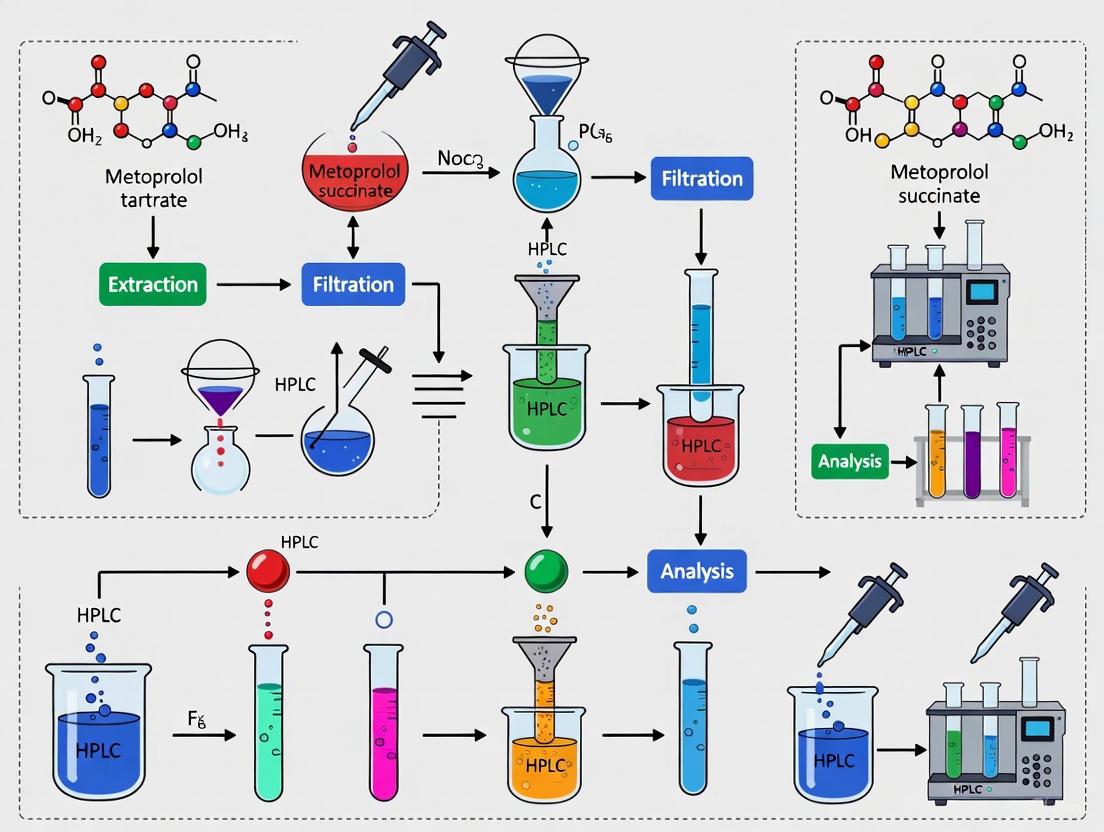
This article provides a comprehensive guide for researchers and drug development professionals on modern sample preparation techniques for the simultaneous extraction of metoprolol, its metabolites, and other cardiovascular drug combinations...
Advanced Sample Preparation Protocols for Simultaneous Extraction of Metoprolol and Combinations
Abstract
This article provides a comprehensive guide for researchers and drug development professionals on modern sample preparation techniques for the simultaneous extraction of metoprolol, its metabolites, and other cardiovascular drug combinations from complex biological matrices. Covering foundational principles to advanced validation, it explores green microextraction technologies like DLLME and SFOME, magnetic dispersive μ-SPE, and automated solid-phase extraction. The content details methodological optimization using experimental design, troubleshooting for complex samples, and rigorous validation per ICH guidelines, offering practical protocols to enhance analytical sensitivity, selectivity, and efficiency in pharmaceutical and clinical research.
Fundamentals of Metoprolol Extraction: Analytes, Matrices, and Modern Sample Preparation Principles
Metoprolol is a widely prescribed cardioselective β1-adrenergic receptor antagonist used in the management of various cardiovascular diseases, including hypertension, angina pectoris, heart failure, and myocardial infarction [1] [2]. Its primary therapeutic effect results from the blockade of β1-adrenoreceptors, predominantly expressed in cardiac tissue, leading to a reduction in heart rate and a decrease in the force of heart contractions [2]. As a mainstay of therapy associated with improvements in quality of life, hospitalization rates, and survival, clinical care pathways for metoprolol require meticulous scrutiny, particularly concerning its metabolism and common co-administration with other cardiovascular agents [2].
The analysis of metoprolol, its metabolites, and its common combination partners is paramount in pharmaceutical research and development, supporting drug formulation, quality control, and bioequivalence studies. Effective and simultaneous extraction of these analytes from various matrices, including drug substances, drug products, and biological samples, requires robust sample preparation protocols and precise analytical methods. This document details the essential analytes—metoprolol, its key metabolites, and frequently co-administered drugs—and provides standardized protocols for their simultaneous extraction and analysis, framed within the context of a broader thesis on sample preparation for metoprolol combination research.
Metoprolol and Key Combination Analytes
Metoprolol: Core Physicochemical and Therapeutic Properties
Metoprolol is a lipophilic compound with a molecular weight of approximately 267.3 g/mol [1]. It is commercially available in salt forms, primarily metoprolol tartrate and metoprolol succinate, the latter being a long-acting formulation [1] [3]. Chemically, it is a substituted phenylpropanolamine, providing the necessary structural features for selective β-1 adrenergic receptor blockade [1]. It is a racemic mixture of R- and S-enantiomers, with the S-enantiomer possessing a higher affinity for the beta receptors [2]. According to the Biopharmaceutics Classification System (BCS), metoprolol is a Class I compound, characterized by high solubility and high permeability [4].
Table 1: Fundamental Properties of Metoprolol
| Property | Description |
|---|---|
| Drug Class | Cardioselective Beta-Blocker (β1-adrenergic antagonist) |
| Primary Indications | Hypertension, Angina, Heart Failure, Myocardial Infarction [1] |
| Common Salt Forms | Tartrate (immediate-release), Succinate (extended-release) |
| BCS Classification | Class I (High Solubility, High Permeability) [4] |
| Molecular Weight | ~267.3 g/mol [1] |
Key Metabolites of Metoprolol
Metoprolol is metabolized extensively by the hepatic enzyme Cytochrome P450 2D6 (CYP2D6). This enzyme exhibits significant genetic polymorphism, leading to substantial inter-individual variability in metoprolol plasma concentrations and, consequently, its therapeutic and side effects [3] [2]. The major metabolites result from O-demethylation, alpha-hydroxylation, and deamination, followed by further oxidation and conjugation.
Table 2: Primary Metabolites of Metoprolol
| Metabolite | Metabolic Pathway | Significance / Notes |
|---|---|---|
| α-Hydroxymetoprolol (HM) | Alpha-hydroxylation via CYP2D6 | A major oxidative metabolite [3]. |
| O-Demethylmetoprolol (DM) | O-demethylation via CYP2D6 | A major oxidative metabolite [3]. |
| Metoprolol Acid (MA) | Deamination | Formed via deamination of metoprolol [3]. |
| Metoprolol Glucuronide | Glucuronidation | Phase II conjugation product [3]. |
The following diagram illustrates the primary metabolic pathways of metoprolol, heavily influenced by the CYP2D6 enzyme, and its interaction with gut microbiota, which can be altered during therapy.
Commonly Co-Administered Cardiovascular Drugs
Metoprolol is often prescribed as part of a combination therapy for enhanced therapeutic effect or to mitigate side effects. Common partners include other antihypertensive classes, such as calcium channel blockers and diuretics [5] [6]. Simultaneous extraction and analysis require methods capable of resolving compounds with diverse chemical properties.
Table 3: Common Drugs Co-Administered with Metoprolol
| Drug (Class) | Example | Purpose of Combination | Key Consideration for Analysis |
|---|---|---|---|
| Calcium Channel Blockers | Felodipine [7], Amlodipine | Enhanced blood pressure control and antianginal effect [5]. | Differing solubility and hydrophobicity. |
| Angiotensin-Converting Enzyme Inhibitors (ACEIs) | Lisinopril | Additive antihypertensive effect [5]. | May require specific pH control in mobile phase. |
| Angiotensin Receptor Blockers (ARBs) | Losartan | Additive antihypertensive effect [5]. | Complex molecular structures. |
| Diuretics | Hydrochlorothiazide | Additive antihypertensive effect and fluid balance [5] [6]. | High aqueous solubility. |
Experimental Protocols for Sample Preparation and Analysis
This section provides detailed methodologies for the simultaneous extraction and analysis of metoprolol, its metabolites, and co-administered drugs from pharmaceutical dosage forms and biological matrices.
Protocol 1: Sample Preparation for Drug Substances and Solid Dosage Forms
This protocol outlines the "dilute and shoot" approach for drug substances (DS) and the "grind, extract, and filter" process for solid oral drug products (DP) like tablets and capsules [8].
I. Sample Preparation for Drug Substances (DS)
- Step 1: Weighing. Accurately weigh 25-50 mg of the DS powder (or a qualified reference standard) using a five-place analytical balance (±0.1 mg). Use a folded weighing paper or a small weighing boat to facilitate transfer. For hygroscopic APIs, allow the sample to warm to room temperature before opening and handle speedily to prevent moisture absorption [8].
- Step 2: Solubilization. Quantitatively transfer the powder into an appropriately sized Class A volumetric flask (e.g., 25-100 mL). Add a suitable diluent, which is often an acidified water or buffer for weak bases, or a mixture of organic solvent (acetonitrile, methanol) and aqueous diluent for APIs with low aqueous solubility. The eluotropic strength of the final diluent should be compatible with the initial mobile phase condition of the HPLC method [8].
- Step 3: Extraction. Sonicate, shake, or vortex the solution to ensure complete dissolution. The extraction time should be optimized during method development. For sonication, use an ultrasonic bath filled with 0.5-1 inch of water for a specified time, scrutinizing the solution to ensure all particles are dissolved. Prolonged sonication should be avoided as it may generate heat and cause API degradation [8].
- Step 4: Transfer. Transfer an aliquot (e.g., 1.5 mL) of the final solution into an HPLC vial using a disposable pipette. Filtration of the DS solution is generally discouraged [8].
II. Sample Preparation for Drug Products (DP) like Tablets
- Step 1: Particle Size Reduction. For tablets, crush 10-20 units into a fine powder using a porcelain mortar and pestle. For content uniformity testing, a single tablet can be wrapped in weighing paper and crushed with a pestle [8].
- Step 2: Weighing and Transfer. Weigh an amount of powder corresponding to the average tablet weight (ATW) and quantitatively transfer it into a volumetric flask. Use the diluent to rinse all remaining particles into the flask [8].
- Step 3: Extraction. Add diluent and extract the API by sonication or shaking for the optimum time determined during method validation. For sustained-release products, a two-step extraction with an organic solvent may be necessary [8].
- Step 4: Filtration. Filter the extract directly into an HPLC vial through a 0.45 μm disposable syringe membrane filter (e.g., Nylon or PTFE). Discard the first 0.5 mL of the filtrate. For cloudy extracts, use a finer 0.2 μm filter or centrifugation for clarification [8].
The workflow for processing solid samples, from raw material to analyzable solution, is summarized below.
Protocol 2: Eco-Friendly RP-HPLC for Simultaneous Estimation with Felodipine in Plasma
This protocol is adapted from a validated bioanalytical method for the simultaneous estimation of metoprolol and felodipine in spiked human plasma, emphasizing an eco-friendly approach [7].
- Instrumentation: Agilent HPLC 1200 series equipped with a fluorescence detector (FD). Column: Inertsil C18 (150 mm × 4.6 mm ID; 5 μm particle size) [7].
- Mobile Phase: Ethanol and 30 mM potassium dihydrogen phosphate buffer (adjusted to pH 2.5 with ortho-phosphoric acid) in a ratio of 40:60 (v/v) [7].
- Flow Rate: 1.0 mL/min (constant).
- Detection (FD): Excitation/Emission wavelengths for metoprolol: 225 nm / 335 nm; for felodipine: 238 nm / 455 nm (wavelengths are illustrative; consult source for specifics) [7].
- Internal Standard: Tadalafil (TDL) [7].
- Sample Preparation (Spiked Plasma):
- Preparation of Standards: Prepare stock solutions (1 mg/mL) of metoprolol, felodipine, and TDL in methanol, then dilute with mobile phase to working concentrations.
- Protein Precipitation: Mix a 1 mL aliquot of human plasma with a known volume of working standard solutions and the internal standard.
- Extraction: Vortex the mixture and subject it to protein precipitation using a suitable solvent like acetonitrile.
- Centrifugation and Filtration: Centrifuge the mixture, collect the supernatant, and filter it through a 0.45 μm membrane filter before injection into the HPLC system [7].
- Validation: The method demonstrated linearity over 0.003–1.00 μg/mL for metoprolol and 0.01–1.00 μg/mL for felodipine, with precision (≤2% RSD) and accuracy within ±10% of the nominal concentration in human plasma [7].
Protocol 3: RP-HPLC for Permeability Studies with Atenolol and Phenol Red
This protocol is designed for in-situ rat intestinal perfusion studies, allowing simultaneous determination of metoprolol, atenolol, and phenol red, a non-absorbable marker [4].
- Instrumentation: HPLC system with UV or DAD detection.
- Column: Reversed-phase column (e.g., C18).
- Mobile Phase: Utilizes a gradient elution program with two phases:
- Mobile Phase A: A phosphate buffer (e.g., 10 mM potassium dihydrogen phosphate, pH adjusted).
- Mobile Phase B: Acetonitrile. The gradient program is optimized to achieve baseline separation of all three compounds [4].
- Sample Preparation (Perfusate): Samples collected from the single-pass intestinal perfusion (SPIP) study may require dilution and filtration (0.45 μm) before direct injection into the HPLC system [4].
- Application: This method is crucial for classifying drugs according to the Biopharmaceutics Classification System (BCS), where metoprolol is a high-permeability (Class I) model drug and atenolol is a moderate-permeability (Class III) model drug [4].
The Scientist's Toolkit: Essential Research Reagents and Materials
The following table details key reagents, materials, and instruments essential for executing the sample preparation and analytical protocols described herein.
Table 4: Essential Research Reagent Solutions and Materials
| Item | Function / Application |
|---|---|
| Metoprolol Tartrate/Succinate | Active Pharmaceutical Ingredient (API) for method development and validation. |
| Felodipine, Atenolol | Common co-administered drugs for combination analysis [7] [4]. |
| HPLC Grade Solvents (Acetonitrile, Methanol, Ethanol) | Used for preparing diluents, mobile phases, and for extraction; high purity is critical for sensitive detection and to avoid interfering peaks [7]. |
| Buffer Salts (e.g., Potassium Dihydrogen Phosphate) | For preparing aqueous mobile phases to control pH and improve chromatographic separation [7]. |
| Volumetric Flasks (Class A) | For accurate dissolution and volume makeup of standard and sample solutions [8]. |
| Syringe Filters (0.45 μm and 0.2 μm, Nylon/PTFE) | For clarifying and particulate-free final analyte solutions before HPLC injection, especially for drug products and biological samples [8]. |
| Ultrasonic Bath / Vortex Mixer | For facilitating the dissolution of APIs and extraction from solid matrices [8]. |
| Analytical / Micro Balance | For accurate weighing of small amounts of drug substances and standards [8]. |
| C18 Chromatographic Column | The standard stationary phase for reversed-phase separation of metoprolol and related analytes [7]. |
| Human Plasma | Biological matrix for bioanalytical method development and validation [7]. |
| Tadalafil (TDL) | Used as an Internal Standard (IS) in bioanalytical methods to correct for variability in sample preparation and injection [7]. |
Simultaneous extraction of multiple analytes from a single sample is a cornerstone of modern analytical chemistry, pivotal for advancing drug development, environmental monitoring, and food safety. This approach is indispensable in pharmaceutical research, especially in the context of a broader thesis on sample preparation protocols for the simultaneous extraction of metoprolol combinations. The primary challenge lies in designing a single protocol that efficiently recovers a panel of compounds with diverse physicochemical properties while mitigating the profound impact of matrix effects on quantitative accuracy. These effects, caused by co-extracted matrix components, can severely suppress or enhance analyte signals in techniques like LC-MS/MS, leading to erroneous data [9] [10]. This application note details the core challenges, provides a robust methodological framework, and presents optimized protocols to guide researchers in developing reliable multi-analyte methods, with a specific focus on applications in drug combination research.
Core Challenges in Simultaneous Multi-Analyte Extraction
Analyte Diversity and Matrix Complexity
The fundamental obstacle in multi-analyte extraction is the broad spectrum of chemical properties exhibited by target compounds. A method must simultaneously accommodate analytes with varying polarity, solubility, and pKa values, making the selection of a single extraction solvent and condition profoundly complex [11]. For instance, extracting a combination that includes polar compounds like metoprolol alongside non-polar compounds requires a balanced solvent system. This challenge is compounded by matrix complexity; biological samples, food, and environmental samples contain inherent components—such as lipids, proteins, and salts—that can co-extract with target analytes. These matrix components are a primary source of matrix effects, interfering with ionization during LC-MS/MS analysis and compromising the reliability of results [9] [10] [12]. In quantitative terms, signal suppression or enhancement exceeding 25% has been frequently documented, directly impacting the accuracy of pharmacokinetic studies for drug combinations [9] [10].
Quantitative Data on Method Performance
The following table summarizes key performance parameters reported in recent multi-class analytical methods, illustrating the achievable range for a well-optimized protocol:
Table 1: Representative Performance Data from Simultaneous Multi-Class Analyses
| Sample Matrix | Target Analytes | Extraction Technique | Reported Recovery Range (%) | Key Matrix Effect (Signal Suppression/Enhancement) | Citation |
|---|---|---|---|---|---|
| Compound Feed | 100 Mycotoxins, Pesticides, Veterinary Drugs | QuEChERS / d-SPE | 70 - 120% for 84-97% of analytes | Signal suppression noted as main cause for deviation from 100% apparent recovery | [10] |
| Honey | 52 Antibiotics, Pesticides, PAHs | Freezing-assisted micro-SULLE | Data not explicitly stated, but method deemed reliable and accurate | Effective reduction of matrix interferences demonstrated | [13] |
| Various Biota | 113 Pollutants (Pyrethroids, BDEs, PCBs, etc.) | EMR-Lipid Cartridge Cleanup | 93 ± 9% (low lipid), 95 ± 7% (high lipid) | Low matrix effects achieved; improved instrument robustness | [12] |
| Groundwater | 46 Pesticides, Pharmaceuticals, PFAS | Direct Injection | Apparent recovery influenced by matrix effects | Most analytes showed negative matrix effects; some over 25% suppression/enhancement | [9] |
| Mouse Whole Blood & Tissues | Doxorubicin, Mitomycin C | Protein Precipitation / LLE | Data not explicitly stated, but variation <15% | Method validated to be free from biological interference | [14] [15] |
Detailed Experimental Protocol for Biological Samples
This protocol is adapted from established methods for simultaneous extraction of anticancer drugs from biological matrices and is tailored for the extraction of metoprolol and its combination partners from plasma and tissue homogenates [14] [15].
Materials and Reagents
- Analytes: Metoprolol and combination drug standards.
- Internal Standard (I.S.): A structurally analogous compound or stable isotope-labeled standard (e.g., d7-Metoprolol).
- Solvents: LC-MS grade methanol, acetonitrile, water; analytical grade formic acid, ammonium acetate.
- Extraction Solvent: Acetonitrile with 1% formic acid, or a mixture of acetonitrile and ammonium acetate buffer (5 mM, pH 3.5) for improved recovery of basic compounds [14].
- Equipment: Refrigerated centrifuge, vortex mixer, analytical balance, nitrogen evaporator, electric hand homogenizer (for tissues), and a fit-for-purpose LC-MS/MS system.
Sample Preparation and Extraction Procedure
Sample Collection and Homogenization:
- For plasma, collect blood into heparinized tubes and centrifuge at 4°C. Aliquot 50-100 µL of plasma for analysis.
- For tissues, quickly weigh the frozen tissue and homogenize it on ice in an appropriate volume (e.g., 1:5 w/v) of ice-cold phosphate-buffered saline or cell lysis buffer using an electric homogenizer at high speed (e.g., 18,000 rpm) for short bursts to avoid heating [14] [15].
Sample Extraction:
- Transfer a precise aliquot (e.g., 50 µL) of plasma or tissue homogenate into a 1.5 mL microcentrifuge tube.
- Spike with an appropriate volume (e.g., 5-10 µL) of the internal standard working solution.
- Add a 3-5 times volume (e.g., 150-250 µL) of the ice-cold extraction solvent to precipitate proteins and initiate analyte extraction.
- Vortex vigorously for 2 minutes to ensure complete mixing and protein precipitation.
- Centrifuge at >10,000 x g at 4°C for 10 minutes to pellet precipitated proteins and cellular debris.
Post-Extraction Cleanup and Reconstitution:
- Carefully transfer the supernatant to a fresh pre-chilled tube.
- Evaporate the supernatant to dryness under a gentle stream of nitrogen gas at a controlled temperature (e.g., 40-60°C), protecting light-sensitive compounds from exposure.
- Reconstitute the dried residue with 100 µL of a reconstitution solution compatible with your LC-MS mobile phase (e.g., initial mobile phase composition or a mixture of water and methanol). Vortex for 30 seconds and centrifuge briefly.
- Transfer the final extract to an HPLC vial for analysis.
Critical Considerations for Protocol Optimization
- Internal Standards: The use of isotopically labelled internal standards for each analyte is the most effective way to correct for matrix effects and losses during sample preparation, especially in electrospray ionization [9].
- Lipid Removal: For fatty tissues, an additional cleanup step using lipid-removal sorbents like Captiva EMR-Lipid cartridges is highly recommended. These cartridges use a "pass-through" method, efficiently retaining lipids while allowing diverse analyte classes to pass with high recovery (e.g., 93-95%) [12].
- Ionization Suppression: To assess matrix effects, compare the analyte response in a post-extraction spiked matrix sample with the response in a neat solvent standard at the same concentration. A significant difference indicates ionization suppression or enhancement [9] [10].
Workflow and Pathway Visualization
The following diagram illustrates the logical workflow for developing and validating a simultaneous extraction protocol, integrating critical decision points for addressing key challenges.
Diagram 1: Strategic development pathway for simultaneous extraction protocols, mapping core challenges to analytical solutions.
The Scientist's Toolkit: Essential Research Reagents and Materials
Table 2: Key Reagents and Materials for Simultaneous Multi-Analyte Extraction
| Item | Function/Application | Key Consideration |
|---|---|---|
| Isotopically Labelled Internal Standards | Corrects for analyte loss during preparation and matrix effects during ionization. Essential for quantitative accuracy in LC-MS/MS. | Should be added at the very beginning of the extraction process [9]. |
| Captiva EMR-Lipid Cartridges | Advanced "pass-through" solid-phase extraction sorbent for efficient lipid removal from complex biological and food matrices. | Provides high analyte recovery (>90%) for multi-class contaminants while effectively removing phospholipids [12]. |
| Hydrophilic-Lipophilic Balance (HLB) Sorbent | A versatile polymer for solid-phase extraction (SPE) retaining a wide polarity range of analytes from aqueous samples. | Commonly used in environmental and bioanalytical chemistry for multi-residue methods [11]. |
| QuEChERS Kits | (Quick, Easy, Cheap, Effective, Rugged, Safe). A standardized kit-based approach for sample extraction and clean-up, originally for pesticides. | Now widely applied for pharmaceuticals, mycotoxins, and other contaminants in food, feed, and biological matrices [10] [11]. |
| Acetonitrile & Methanol (LC-MS Grade) | Primary solvents for protein precipitation and analyte extraction. Their purity is critical to minimize background noise in MS detection. | Acetonitrile is often preferred for protein precipitation; solvent choice directly impacts extraction efficiency and selectivity [14] [16]. |
| Ammonium Acetate Buffer | A volatile buffer used to adjust and control the pH of the extraction solvent and/or LC mobile phase. | Volatile buffers are MS-compatible. pH control is crucial for the extraction efficiency of ionizable compounds like metoprolol [14]. |
The development of robust and efficient sample preparation protocols is a critical step in the analytical workflow for pharmaceutical research, particularly for combination drug products. The simultaneous extraction and analysis of multiple active pharmaceutical ingredients (APIs) from a single dosage form present unique challenges that demand a fundamental understanding of core extraction principles. This application note details the strategic application of these principles—specifically solubility, pH control, ionic strength, and selectivity—within the context of a broader thesis on sample preparation for the simultaneous extraction of metoprolol combinations. Metoprolol, a beta-adrenergic blocking agent, is frequently co-formulated with other antihypertensive drugs such as atorvastatin (lipid-lowering) and ramipril (ACE inhibitor) for effective management of cardiovascular conditions [17]. The successful simultaneous quantification of these drugs from capsule dosage forms via advanced chromatographic techniques hinges on a meticulously optimized extraction protocol [17] [18]. This document provides a comprehensive guide, complete with structured data, detailed protocols, and visual workflows, to empower researchers in developing and refining their own extraction methods.
Core Extraction Principles and Their Quantitative Application
The interplay of physicochemical parameters dictates the success of any extraction. For simultaneous extraction, where multiple analytes with differing properties are involved, this optimization becomes paramount.
Table 1: Analyte Physicochemical Properties and Extraction Implications
| Analyte | LogP/D* | pKa | Property Implications for Extraction | Optimal Aqueous pH for Neutral Form |
|---|---|---|---|---|
| Metoprolol | Information missing | ~9.7 (basic) | Ionizable base; pH controls solubility & partitioning [19]. | ≥ 11.7 [19] |
| Atorvastatin | Information missing | ~4.5 (acidic) | Ionizable acid; pH controls solubility & partitioning [19]. | ≤ 2.5 [19] |
| Ramipril | Information missing | Information missing | Ionizable (likely from carboxyl group); requires pH profiling. | Requires empirical determination |
*LogP (for neutral species) or LogD (for ionizable species, pH-dependent) is a key indicator of hydrophobicity [19].
Table 2: Impact of Solvent Polarity on Extraction Efficiency
| Solvent | Polarity Index | Suitability for Analyte LogP Ranges | Common Use in LLE |
|---|---|---|---|
| Heptane | 0.1 | High LogP (>3) | Extraction of very non-polar analytes. |
| Toluene | 2.4 | Medium-High LogP | - |
| MTBE | 2.5 | Medium LogP | Versatile solvent for medium polarity analytes. |
| Dichloromethane | 3.1 | Medium LogP | - |
| Ethyl Acetate | 4.4 | Medium-Low LogP | Common for semi-polar analytes. |
| Butan-1-ol | 3.9 | Low LogP (0 to -1) | Suitable for more hydrophilic analytes. |
*Adapted from solvent polarity data in the context of Liquid-Liquid Extraction (LLE) optimization [19].
Principle 1: Solubility and Solvent Selection
The fundamental rule of "like dissolves like" governs solvent selection. The polarity of the extraction solvent should be matched to the relative hydrophobicity of the target analytes, which is reflected by their LogP/D values [19]. As shown in Table 2, heptane (Polarity Index 0.1) is suitable for highly non-polar analytes, whereas butan-1-ol (Polarity Index 3.9) can be used for more hydrophilic compounds. For simultaneous extraction of multiple drugs with varying polarities, a mixed solvent system may be necessary to achieve balanced recovery for all target analytes.
Principle 2: pH Manipulation and Ion Control
For ionizable compounds like metoprolol (basic) and atorvastatin (acidic), pH is the most powerful tool for controlling solubility and partitioning behavior. The goal is to suppress the ionization of the analytes to facilitate their transfer from the aqueous phase into the organic solvent. As a rule of thumb, for basic analytes, the aqueous pH should be adjusted to at least 2 pH units above their pKa, and for acidic analytes, at least 2 pH units below their pKa [19]. This ensures the analyte is predominantly in its neutral form, maximizing partition into the organic phase (see Table 1).
Principle 3: Ionic Strength
The addition of salts (e.g., sodium chloride or sodium sulfate) to the aqueous sample can enhance the recovery of hydrophilic analytes through the "salting-out" effect [19]. High salt concentrations reduce the solubility of analytes in the aqueous phase, driving them into the organic extraction solvent. This is particularly useful for improving the extraction efficiency of analytes with low LogP/D values.
Principle 4: Selectivity and Clean-up
Back-extraction is a highly effective technique for improving the selectivity of an LLE protocol [19]. After an initial extraction that transfers target analytes into an organic solvent, the organic layer is contacted with a fresh aqueous phase at a pH that ionizes the targets. This causes them to transfer back into the aqueous phase, leaving neutral impurities in the organic solvent. This process can significantly reduce matrix interference and lower detection limits.
Detailed Experimental Protocols
Protocol 1: Simultaneous UPLC Analysis of Metoprolol, Atorvastatin, and Ramipril from Capsules
This protocol is adapted from a validated method for the simultaneous estimation of Metoprolol (MT), Atorvastatin (AT), and Ramipril (RM) from a capsule dosage form [17].
I. Research Reagent Solutions
| Reagent / Material | Function in the Protocol |
|---|---|
| Zorbax XDB-C18 Column (4.6 mm × 50 mm, 1.8 μm) | Stationary phase for UPLC separation. |
| 0.06% Ortho phosphoric acid | Aqueous buffer component for mobile phase. |
| 0.0045 M Sodium lauryl sulphate | Ion-pair reagent in mobile phase to improve separation. |
| HPLC-Grade Acetonitrile | Organic modifier in mobile phase. |
| Milli-Q Water | High-purity water for mobile phase and sample preparation. |
II. Methodology
- Mobile Phase Preparation: Prepare a mixture of 0.06% ortho phosphoric acid in Milli-Q water containing 0.0045 M Sodium lauryl sulphate (Buffer) and HPLC-grade acetonitrile in a 50:50 (v/v) ratio. Filter and degas.
- Chromatographic Conditions:
- Column: Zorbax XDB-C18 (4.6 mm × 50 mm, 1.8 μm)
- Flow Rate: 1.0 mL/min
- Column Temperature: 55°C
- Detection: UV at 210 nm
- Injection Volume: 5-10 µL
- Standard Solution: Accurately weigh and dissolve reference standards of MT, AT, and RM in an appropriate solvent (e.g., mobile phase or diluent) to prepare stock solutions. Dilute to required concentrations for the calibration curve.
- Sample Preparation (Capsule Extraction):
- Weigh and powder the contents of not less than 20 capsules.
- Accurately weigh a portion of the powder equivalent to about 50 mg of Metoprolol, 25 mg of Atorvastatin, and 5 mg of Ramipril into a suitable container.
- Add approximately 70 mL of diluent (e.g., mobile phase), shake for 15 minutes, and sonicate for 10-15 minutes to ensure complete dissolution.
- Dilute to 100 mL with the same diluent and mix.
- Centrifuge or filter the solution (e.g., through a 0.45 µm membrane filter) to obtain a clear supernatant/filtrate for UPLC analysis.
III. Method Performance Data
- Retention Times: Metoprolol ~1.3 min, Atorvastatin ~2.1 min, Ramipril ~2.7 min [17].
- System Suitability: Theoretical plates >4958; Asymmetric factor 1.1-1.5 [17].
- Recovery: Mean recovery ranging from 101.4% to 102.1% for the three analytes [17].
Protocol 2: A Generic Workflow for Liquid-Liquid Extraction (LLE) Optimization
This protocol provides a systematic approach for developing an LLE method for metoprolol combination drugs.
I. Research Reagent Solutions
| Reagent / Material | Function in the Protocol |
|---|---|
| 0.1 M NaOH / HCl Solutions | For precise pH adjustment of the aqueous sample. |
| Anion Pairing Salt (e.g., Na₂SO₄) | For "salting-out" to improve recovery of hydrophilic analytes. |
| Cation Pairing Salt | To form neutral complexes with ionized analytes. |
| Water-Immiscible Organic Solvents | Extraction solvents of varying polarity (see Table 2). |
II. Methodology
- Sample Preparation: Prepare a standard or sample mixture containing the target analytes (e.g., metoprolol and its combination partners) in an aqueous matrix. The volume can be scaled for 96-well plates for high-throughput screening [19].
- pH Profiling: Split the sample into several aliquots. Adjust the pH of each aliquot to cover a wide range (e.g., pH 2, 4, 7, 9, 11) using 0.1 M NaOH or HCl.
- Solvent Screening: To each pH-adjusted aliquot, add a fixed volume of a selected organic solvent (e.g., MTBE, Ethyl Acetate, DCM, or mixtures thereof).
- Extraction: Shake the mixtures vigorously for a set time (e.g., 10-15 minutes) to achieve equilibrium.
- Phase Separation: Allow the phases to separate, or centrifuge if necessary.
- Analysis: Recover the organic layer and analyze it via a chromatographic method (e.g., UPLC as in Protocol 1) to determine the recovery of each analyte at each pH-solvent condition.
- Optimization of Ionic Strength: To the pH condition yielding the best recovery, add varying concentrations of a salt (e.g., 1-5 M sodium sulfate) and repeat the extraction to determine if recovery is enhanced via salting-out.
- Back-Extraction for Clean-up: For basic analytes like metoprolol, the optimized organic extract can be shaken with an acidic aqueous solution (e.g., 0.1 M HCl). The analytes will ionize and transfer to the aqueous phase, leaving neutral impurities behind.
Workflow Visualization
The following diagram illustrates the logical decision-making process for optimizing a simultaneous LLE protocol, integrating the core principles discussed above.
Diagram 1: Logical workflow for LLE optimization, integrating core principles of pH, solvent choice, ionic strength, and selectivity.
The simultaneous extraction of drug combinations containing metoprolol and other APIs is a complex but manageable task when guided by fundamental physicochemical principles. A methodical approach that leverages pH manipulation to control ionization, informed solvent selection based on polarity, modulation of ionic strength to enhance recovery, and back-extraction for selectivity, provides a robust framework for developing effective sample preparation protocols. The detailed methodologies and data presented herein serve as a practical guide for researchers and scientists engaged in the analysis of complex pharmaceutical formulations, ensuring reliable and reproducible results in drug development and quality control.
Evolution from Traditional LLE and SPE to Modern Microextraction and Magnetic Techniques
Sample preparation is a critical preliminary step in analytical chemistry, determining the ultimate accuracy, sensitivity, and reliability of pharmaceutical analysis. For complex tasks such as extracting metoprolol combinations from biological matrices, the evolution from traditional techniques like Liquid-Liquid Extraction (LLE) and Solid-Phase Extraction (SPE) to advanced methods represents a paradigm shift toward greener, more efficient, and highly selective methodologies. This progression addresses fundamental limitations of classical approaches, including excessive solvent consumption, labor-intensive processes, and inadequate selectivity for complex pharmaceutical compounds.
The development of modern microextraction and magnetic techniques marks a significant advancement in sample preparation technology. These methods align with the principles of Green Analytical Chemistry (GAC) by minimizing organic solvent use, reducing waste generation, and enabling miniaturization and automation. For researchers focused on simultaneous extraction of metoprolol combinations, these technological evolutions offer enhanced capabilities for handling complex biological matrices while achieving the high sensitivity and selectivity required for accurate pharmacokinetic profiling and therapeutic drug monitoring.
Traditional Extraction Techniques: Foundations and Limitations
Liquid-Liquid Extraction (LLE)
Liquid-Liquid Extraction is a classical partitioning method that relies on the differential solubility of analytes between two immiscible liquid phases, typically an aqueous sample and an organic solvent [20]. When the sample is mixed with the organic solvent, target analytes migrate to the phase where they demonstrate greater solubility, allowing for separation based on partitioning equilibrium.
Fundamental Principles and Workflow:
- Mechanism: Partition equilibrium driven by relative solubility
- Process: Vigorous shaking of immiscible solvents to create extensive surface area for analyte transfer
- Separation: Physical separation of phases after equilibrium establishment
Despite its widespread historical use, LLE presents significant limitations for modern pharmaceutical analysis, particularly for polar compounds like metoprolol. These limitations include emulsion formation, incomplete phase separation, large solvent volumes (often 10× more than SPE), labor-intensive manual procedures, poor automation compatibility, and substantial environmental burden from solvent disposal [20] [21]. The technique remains viable only for simple hydrophobic drug extraction in limited matrices within legacy workflows [20].
Solid-Phase Extraction (SPE)
Solid-Phase Extraction revolutionized sample preparation by introducing selective adsorption and desorption mechanisms using solid sorbents packed in cartridges or disks [20]. SPE separates compounds through physical or chemical interactions with a solid stationary phase, offering greater selectivity and efficiency compared to LLE.
Fundamental Principles and Workflow:
- Mechanism: Selective adsorption/desorption using silica- or polymer-based sorbents
- Process: Sample loading, interference washing, and analyte elution with selective solvents
- Separation: Retention of analytes while matrix components pass through
SPE provides substantial advantages over LLE, including reduced solvent consumption, higher selectivity, effective matrix cleanup, better reproducibility, automation compatibility, and environmental friendliness [20] [21]. It is particularly valuable when targeting low-concentration analytes, working with complex matrices, or requiring high throughput and scalability.
Table 1: Comparative Analysis of Traditional Extraction Techniques
| Parameter | Liquid-Liquid Extraction (LLE) | Solid-Phase Extraction (SPE) |
|---|---|---|
| Mechanism | Partition equilibrium based on solubility | Selective adsorption/desorption |
| Solvent Consumption | High (often 10× more than SPE) | Low |
| Automation Potential | Poor | Excellent (96-well formats, robots) |
| Reproducibility | Variable (emulsion issues) | High |
| Matrix Cleanup | Limited | Effective |
| Throughput | Low (manual, sequential) | High (parallel processing) |
| Environmental Impact | High solvent waste | Greener, less waste |
| Typical Applications | Simple hydrophobic drug extraction, legacy methods | Complex matrices, trace analysis, high-throughput needs |
The Evolution to Modern Microextraction Techniques
The limitations of traditional extraction methods prompted the development of modern microextraction techniques that prioritize miniaturization, solvent reduction, and integration with analytical instrumentation. This evolution represents a fundamental shift in analytical philosophy toward sustainable, efficient, and automated sample preparation.
Solid-Phase Microextraction (SPME)
Solid-Phase Microextraction, introduced by Arthur and Pawliszyn in the early 1990s, represents a paradigm shift in sample preparation technology [22]. SPME integrates sampling, extraction, concentration, and desorption into a single step, significantly simplifying workflow while eliminating solvent consumption.
Key Technological Advancements:
- Solventless Operation: Complete elimination of organic solvents during extraction
- Miniaturization: Extremely small sample volume requirements
- Integration: Direct coupling with analytical instruments (GC, HPLC)
- Automation: High-throughput processing capabilities
- Versatile Geometries: Fiber, capillary tube, stir bar, and thin film formats
SPME has proven particularly valuable in pharmaceutical analysis for extracting volatile and semi-volatile compounds from complex matrices. The technique's effectiveness heavily depends on coating materials, driving continuous development of novel sorbents including molecularly imprinted polymers (MIPs), metal-organic frameworks (MOFs), covalent organic frameworks (COFs), and graphene-based materials that enhance selectivity for target analytes like metoprolol [22].
Supported Liquid Extraction (SLE)
Supported Liquid Extraction represents a hybrid approach that combines principles of both LLE and SPE [21]. SLE utilizes an inert diatomaceous earth support to retain the entire aqueous sample, followed by selective elution of analytes using water-immiscible organic solvents.
Comparative Advantages:
- Eliminates Emulsification: No vigorous shaking required, preventing emulsion formation
- Improved Reproducibility: Consistent surface area for partitioning
- Reduced Solvent Volumes: Typically 30-50% less than traditional LLE
- Automation Compatibility: Adaptable to high-throughput platforms
SLE is particularly effective for extracting a wide range of pharmaceuticals from biological matrices, offering robust performance for compounds with diverse polarities, making it suitable for metoprolol combination extractions where multiple compounds with different chemical properties must be recovered simultaneously [21].
Magnetic Extraction Techniques: A Technological Leap
Magnetic separation technology represents one of the most significant advancements in modern sample preparation, particularly for complex biological matrices. Magnetic techniques utilize functionalized magnetic particles that can be efficiently separated using external magnetic fields, overcoming fundamental limitations of traditional centrifugation and filtration methods.
Magnetic Solid-Phase Extraction (MSPE)
Magnetic Solid-Phase Extraction has emerged as a powerful alternative to conventional SPE, particularly for challenging biological samples [23] [24]. MSPE employs magnetic nanoparticles (typically Fe₃O₄ or γ-Fe₂O₃) as sorbents, which are dispersed directly into the sample solution, providing maximum surface area for analyte adsorption.
Fundamental Principles and Workflow:
- Sorbent Dispersion: Magnetic nanoparticles incubated directly with sample
- Analyte Adsorption: Target compounds interact with functionalized particle surfaces
- Magnetic Separation: External magnet collects particles rapidly
- Analyte Elution: Target compounds desorbed using minimal solvent
Table 2: Magnetic Nanoparticle Functionalization Approaches
| Coating Material | Functional Groups | Target Interactions | Applications |
|---|---|---|---|
| Silica (Fe₃O₄/SiO₂) | -OH, -NH₂, -COOH | Hydrogen bonding, electrostatic | Broad-range drug extraction |
| Molecularly Imprinted Polymers | Customized cavities | Shape complementarity, specific binding | Selective metoprolol extraction |
| Carbon Nanotubes | Graphitic surfaces | π-π stacking, hydrophobic | Aromatic compounds |
| Polymeric Materials | Various functional groups | Hydrophobic, ionic exchange | Therapeutic drug monitoring |
MSPE offers exceptional advantages for pharmaceutical analysis, including minimal solvent consumption (0.1-0.5 mL for elution), rapid processing, high extraction efficiency due to large surface area, reusability of sorbents, and excellent automation potential [23]. The technique has been successfully applied to drug analysis in various biological matrices including plasma, urine, and hair, with typical sample volumes of 1.0-4.0 mL and recovery rates often exceeding 85% [23] [24].
Advanced Magnetic Hybrid Techniques
The integration of magnetic materials with other microextraction principles has yielded sophisticated hybrid techniques with enhanced capabilities:
Magnetic Ionic Liquid-based DLLME: Combines the tunable properties of ionic liquids with magnetic separation for efficient extraction of pharmaceuticals from biological fluids [24].
In-tube Magnetic SPME: Incorporates magnetic nanoparticles into capillary formats for online coupling with liquid chromatography, enabling automated analysis of complex samples [22] [23].
Magnetocapture Assay Systems: Utilize functionalized magnetic particles for highly specific extraction of target analytes through affinity interactions, such as streptavidin-biotin systems or antibody-antigen recognition [25].
Application Notes: Metoprolol Combination Extraction
Protocol 1: MSPE for Metoprolol and Metabolites from Plasma
Principle: Selective extraction using magnetic molecularly imprinted polymers (MMIPs) tailored for metoprolol structural features.
Reagents and Materials:
- Magnetic molecularly imprinted polymers (metoprolol template)
- Methanol (HPLC grade)
- Acetonitrile (HPLC grade)
- Ammonium acetate buffer (10 mM, pH 7.4)
- Plasma samples (100 μL)
- Magnetic separation stand
Procedure:
- Sample Pretreatment: Mix 100 μL plasma with 300 μL ammonium acetate buffer (pH 7.4) and vortex for 30 seconds.
- MMIPs Addition: Add 10 mg of metoprolol-specific MMIPs to the diluted plasma.
- Extraction: Vortex the mixture for 5 minutes to ensure complete adsorption.
- Magnetic Separation: Place the sample tube on magnetic stand for 2 minutes until clear supernatant forms.
- Washing: Remove supernatant and wash MMIPs with 500 μL ammonium acetate buffer (pH 7.4).
- Elution: Add 100 μL methanol:acetonitrile (80:20, v/v) and vortex for 2 minutes.
- Final Separation: Place tube on magnetic stand, transfer eluent to autosampler vial for LC-MS/MS analysis.
Validation Parameters:
- Extraction Recovery: 92-96%
- Matrix Effects: 88-94%
- LOD: 0.1 ng/mL
- LOQ: 0.3 ng/mL
- Linear Range: 0.3-500 ng/mL
Protocol 2: SLE for Simultaneous Extraction of Metoprolol Combinations
Principle: Efficient partitioning of metoprolol and its combinations using supported liquid extraction.
Reagents and Materials:
- SLE 96-well plates (25 mg/well)
- MTBE (methyl tert-butyl ether)
- Ethyl acetate
- Ammonium hydroxide (2%)
- Plasma samples (100 μL)
- Evaporation system
Procedure:
- Sample Pretreatment: Mix 100 μL plasma with 400 μL ammonium hydroxide (2%) containing internal standard.
- Plate Conditioning: Add 500 μL MTBE to SLE plate and allow gravity flow.
- Sample Loading: Apply pretreated sample to SLE plate and incubate 5 minutes for complete absorption.
- Elution: Perform two elutions with 500 μL MTBE:ethyl acetate (70:30, v/v).
- Evaporation: Evaporate eluent to dryness under nitrogen at 40°C.
- Reconstitution: Reconstitute in 100 μL mobile phase for LC-MS analysis.
Validation Parameters:
- Extraction Recovery: 85-92%
- Carryover: <0.01%
- Precision: CV <8%
- Linear Range: 1-1000 ng/mL
Comparative Performance Data
Table 3: Quantitative Comparison of Extraction Techniques for Beta-Blockers
| Technique | Sample Volume | Solvent Consumption | Extraction Time | Recovery (%) | LOQ (ng/mL) | Automation |
|---|---|---|---|---|---|---|
| Traditional LLE | 500 μL | 5 mL | 30 min | 65-80 | 5.0 | Poor |
| Conventional SPE | 100 μL | 2 mL | 20 min | 75-90 | 1.0 | Good |
| SLE | 100 μL | 1 mL | 15 min | 85-95 | 0.5 | Excellent |
| SPME | 50 μL | 0 mL | 10 min | 70-85 | 0.2 | Good |
| MSPE | 100 μL | 0.1 mL | 8 min | 90-98 | 0.1 | Excellent |
The Scientist's Toolkit: Essential Research Reagents
Table 4: Key Research Reagent Solutions for Modern Extraction Techniques
| Reagent/Material | Function/Application | Technical Specifications |
|---|---|---|
| Magnetic Molecularly Imprinted Polymers | Selective metoprolol extraction | Core-shell structure: Fe₃O₄ core with MIP layer; particle size: 50-200 nm |
| C18-Functionalized Magnetic Nanoparticles | Reversed-phase extraction of metoprolol combinations | Fe₃O₄@SiO₂-C18; surface area: >200 m²/g; magnetization: 45 emu/g |
| Mixed-Mode Cation Exchange SPE | Selective extraction of basic drugs | Sulfonic acid groups for ionic interaction; suitable for plasma and urine |
| Supported Liquid Extraction Plates | High-throughput sample preparation | Diatomaceous earth-based; 96-well format; capacity: 100-200 μL |
| SPME Fibers | Solvent-free extraction | Carbowax/Polyethylene glycol coating for polar pharmaceuticals |
| Magnetic Ionic Liquids | Tunable extraction solvents | [P₆₆₆₁₄]⁺[FeCl₄]⁻; dual functionality: magnetic response and extraction |
Visualizing Method Evolution and Workflows
Evolution of Extraction Technologies
MSPE Workflow for Metoprolol Extraction
The evolution from traditional LLE and SPE to modern microextraction and magnetic techniques represents significant progress in sample preparation technology. For researchers developing protocols for simultaneous extraction of metoprolol combinations, magnetic solid-phase extraction and supported liquid extraction offer superior performance through reduced solvent consumption, enhanced selectivity, and excellent automation compatibility.
These advanced techniques align with Green Analytical Chemistry principles while addressing the analytical challenges of complex pharmaceutical compounds in biological matrices. The continued development of selective sorbents, particularly molecularly imprinted polymers and functionalized magnetic nanomaterials, promises further advancements in extraction efficiency and specificity, enabling more accurate and reliable drug monitoring in clinical and pharmaceutical research contexts.
The selection of an appropriate biological sample matrix is a critical foundational step in the development of robust and reliable bioanalytical methods for pharmaceutical research and therapeutic drug monitoring. This decision profoundly impacts every subsequent stage of the analytical workflow, from sample collection and preparation to chromatographic separation and mass spectrometric detection. For cardiovascular drugs like metoprolol, a selective β1-adrenergic receptor blocker, and its combination therapies, understanding the distribution and detectability of these compounds across different biological matrices is essential for accurate pharmacokinetic profiling and exposure assessment [17] [26].
This application note provides a comprehensive framework for selecting optimal sample matrices for the analysis of metoprolol and its combinations, with a specific focus on protocols for simultaneous extraction. Within the context of a broader thesis on sample preparation, we present standardized methodologies, quantitative comparisons, and practical considerations for working with urine, plasma, whole blood, and wastewater samples, enabling researchers to make informed decisions based on their specific analytical requirements and experimental constraints.
Comparative Analysis of Biological Matrices
Key Characteristics and Applications
The selection of a biological matrix involves careful consideration of multiple factors, including the analytical target, required sensitivity, sampling practicality, and stability concerns. The table below summarizes the fundamental characteristics of common matrices relevant to metoprolol analysis.
Table 1: Key Characteristics of Biological Matrices for Metoprolol Analysis
| Matrix | Primary Advantages | Primary Limitations | Typical Metoprolol Concentration Range | Best Suited Applications |
|---|---|---|---|---|
| Urine | Non-invasive collection; Large volumes available; Lower protein content simplifies preparation; Suitable for multi-analyte panels [27] [28]. | Variable dilution requires creatinine correction; Mainly reflects excreted compounds, not active systemic concentrations [28]. | Mean: ~1943 µg·L⁻¹ (highly variable) [26] | Therapeutic drug monitoring (TDM), compliance testing, exposome-wide association studies (ExWAS) [27] [29]. |
| Plasma | Reflects systemic circulation concentration; Well-established correlation with pharmacological activity [26]. | Invasive collection; Requires skilled personnel; Significant matrix effects and protein binding; Requires sample pre-treatment [30] [26]. | 14–212 µg·L⁻¹ (after 50 mg dose) [26] | Pharmacokinetic (PK) studies, bioavailability/bioequivalence research, precise TDM [30]. |
| Whole Blood | Contains cellular components; Can reveal drug partitioning into red blood cells [31]. | More complex matrix than plasma; Potential hemolysis effects; Less common for routine metoprolol analysis. | Information missing | Investigating in vivo distribution and partitioning; Specialized toxicology studies [31]. |
| Wastewater | Non-invasive population-level assessment; Captures aggregate public health data. | Extremely complex matrix; Very low target analyte concentrations; Requires extensive pre-concentration. | Not specified in search results | Epidemiology, public health monitoring of drug consumption patterns. |
Quantitative Performance and Matrix Effects
The analytical performance of a method, including its sensitivity and susceptibility to matrix effects, varies significantly across different biological fluids. These effects, caused by co-eluting compounds that can suppress or enhance ionization in mass spectrometry, must be carefully evaluated during method validation.
Table 2: Analytical Performance and Matrix Considerations
| Matrix | Matrix Effect (ME) | Extraction Recovery | Key Sample Preparation Steps | Stability Considerations |
|---|---|---|---|---|
| Urine | Minimal ME reported for many analytes (e.g., Bisphenol A) [31]. | Reported recoveries for multiclass assays: 60-130% [29]. | Enzymatic hydrolysis (β-glucuronidase); Solid-Phase Extraction (SPE) [31]; Dilution and centrifugation [26]. | Generally stable; frozen storage at -20°C recommended [31]. |
| Plasma | Significant matrix effects due to proteins and lipids; requires robust mitigation [30]. | Protein precipitation recovery for metoprolol: Effective with trichloroacetic acid/methanol [26]. | Protein precipitation [26]; Use of anticoagulants (e.g., EDTA, Heparin) [30]. | Critical stability requirements; specific storage conditions for clotting factors [30]. |
| Whole Blood | Complex matrix effects from cellular components [31]. | -- | Liquid-liquid extraction with acetonitrile, MgSO₄, NaCl [31]. | Excellent stability for some analytes (e.g., BPs); frozen storage at -20°C [31]. |
| Serum | Similar to plasma but lacks clotting factors; can provide cleaner samples for specific analytes [30]. | -- | Clotting and centrifugation [30]. | Simpler collection and storage than plasma [30]. |
Experimental Protocols for Simultaneous Extraction
This section provides a detailed liquid chromatography-tandem mass spectrometry (LC-MS/MS) protocol for determining metoprolol concentrations in various biological matrices, adapted and expanded from published methodologies [26]. The protocol can be extended to include combinations with other drugs, such as atorvastatin and ramipril [17].
Materials and Reagents
Table 3: Research Reagent Solutions and Essential Materials
| Item | Function/Application | Specifications/Notes |
|---|---|---|
| Metoprolol Analytical Standard | Primary reference standard for quantification and calibration. | High purity (>99%); Supplier: Daru Pakhsh or National Institute for Food and Drug Control [26]. |
| Atorvastatin & Ramipril Standards | Reference standards for simultaneous analysis of combination therapies. | Required for analyzing fixed-dose combinations [17]. |
| Stable Isotope-Labeled Internal Standards | Corrects for losses during sample preparation and matrix effects in MS. | e.g., Metoprolol-d7; essential for accurate quantification [31]. |
| β-Glucuronidase Enzyme | Hydrolyzes phase II (glucuronide) metabolites to free the parent drug for detection. | Used for urine and blood samples; incubation at 37°C for 12-16 hours [31]. |
| Solid-Phase Extraction (SPE) Cartridges | Clean-up and pre-concentration of analytes from complex matrices. | HC-C18 or similar reversed-phase sorbents are commonly used [31]. |
| Protein Precipitation Solvents | Removal of proteins from plasma/serum samples. | Trichloroacetic acid (25% w/v), methanol, or acetonitrile [26]. |
| LC-MS/MS Grade Solvents | Mobile phase preparation and sample reconstitution. | Methanol, acetonitrile, formic acid; high purity to minimize background noise. |
| Ammonium Acetate Buffer | pH adjustment for optimizing enzymatic hydrolysis and SPE efficiency. | Typically used at pH 5.5 [31]. |
Detailed Protocol: Simultaneous Extraction from Urine, Plasma, and Whole Blood
Principle: Analytes are isolated from biological matrices using a combination of protein precipitation (for plasma/blood) and solid-phase extraction, followed by separation and quantification using LC-MS/MS.
Safety Precautions: Handle all human biological samples as potentially infectious. Wear appropriate personal protective equipment (PPE) including gloves and a lab coat. Dispose of waste according to institutional safety protocols.
Step 1: Sample Collection and Pre-processing
- Urine: Collect spot urine samples. Centrifuge at 3000 × g for 10 minutes to remove particulate matter. Aliquot supernatant and store at -20°C until analysis [26].
- Plasma: Collect blood in tubes containing an appropriate anticoagulant (e.g., K₂EDTA). Centrifuge at 1500 × g for 15 minutes at 4°C. Carefully transfer the plasma layer to a clean tube and store at -80°C [30] [26].
- Whole Blood: Gently invert tubes several times to ensure homogeneity. Aliquot and store at -20°C [31].
Step 2: Sample Preparation and Extraction
For Urine Samples (Based on [31]):
- Thaw frozen urine samples at room temperature and vortex mix.
- Pipette 2.0 mL of urine into a glass tube.
- Add the appropriate volume of internal standard solution.
- Adjust the pH to 5.5 using ammonium acetate buffer.
- Add β-glucuronidase enzyme and vortex mix.
- Incubate at 37°C for 12-16 hours for enzymatic hydrolysis.
- Perform Solid-Phase Extraction (SPE) using HC-C18 cartridges:
- Condition the cartridge with methanol and equilibrate with water or buffer.
- Load the hydrolyzed urine sample.
- Wash with a water/methanol mixture (e.g., 95:5 v/v) to remove interfering polar compounds.
- Elute analytes with pure methanol or acetonitrile.
- Evaporate the eluate to dryness under a gentle stream of nitrogen at 40°C.
- Reconstitute the dry residue in 200 µL of methanol (or a methanol/water mixture), vortex thoroughly, and filter through a 0.22 µm membrane into an LC vial.
For Plasma Samples (Based on [26]):
- Thaw frozen plasma samples on ice or in a refrigerator.
- Pipette 0.4 mL of plasma into a microcentrifuge tube.
- Add the internal standard solution.
- Add 0.425 mL of methanol and 0.2 mL of trichloroacetic acid solution (25% w/v) for protein precipitation.
- Vortex mix vigorously for 30 seconds and then sonicate for 2 minutes.
- Centrifuge at 13,000 rpm (or ~17,000 × g) for 10 minutes.
- Transfer the clear supernatant to a clean tube or directly to an LC vial for analysis. Note: For cleaner extracts or lower limits of quantification, the supernatant can be subjected to a further SPE clean-up step as described for urine.
For Whole Blood Samples (Based on [31]):
- Thaw frozen whole blood samples and vortex mix.
- Pipette 0.5 mL into a glass tube.
- Add internal standard and adjust pH to 5.5 with ammonium acetate buffer.
- Add β-glucuronidase and hydrolyze at 37°C for 12-16 hours.
- Perform liquid-liquid extraction by adding acetonitrile (e.g., 1:2 v/v sample:acetonitrile), vortexing, and adding salts like MgSO₄ and NaCl to promote phase separation.
- Vortex, centrifuge, and combine the supernatants.
- Evaporate the combined supernatant to dryness and reconstitute in 200 µL of a 60% methanol/water mixture.
- Filter through a 0.22 µm membrane before LC-MS/MS analysis.
Step 3: Instrumental Analysis (LC-MS/MS)
Chromatographic Conditions:
- LC System: Ultra Performance Liquid Chromatography (UPLC) or High-Performance Liquid Chromatography (HPLC).
- Column: Zorbax XDB-C18 (4.6 mm × 50 mm, 1.8 µm) or equivalent [17]. Alternative: ACQUITY UPLC BEH C18 (2.1 mm × 100 mm, 1.7 µm) [31].
- Mobile Phase: (A) 0.1% Formic acid in water; (B) Methanol or Acetonitrile.
- Gradient: Use a linear gradient from 35% B to 65% B over 5-10 minutes, depending on the column and flow rate.
- Flow Rate: 0.6 - 1.0 mL/min [17] [26].
- Column Temperature: 30 - 55°C [17] [26].
- Injection Volume: 5 - 50 µL.
Mass Spectrometric Conditions:
- Instrument: Triple Quadrupole Mass Spectrometer (QQQ).
- Ionization Mode: Electrospray Ionization (ESI), positive mode.
- Operation Mode: Multiple Reaction Monitoring (MRM).
- Key MS parameters for Metoprolol [26]:
- Precursor Ion (Q1): m/z 268.1
- Product Ion (Q3): m/z 116.2 (quantifier)
- Cone Voltage: 35 V
- Collision Energy: 35 eV
- Source Conditions:
- Source Temperature: 110°C
- Desolvation Temperature: 350°C
- Desolvation Gas (Nitrogen) Flow: 600 L·h⁻¹
Protocol Validation
The developed method must be validated according to ICH guidelines [17]. Key parameters include:
- Specificity: No interference at the retention times of metoprolol and its metabolites.
- Linearity & Range: Typically 0.4–500 µg·L⁻¹ for plasma and 0.7–10,000 µg·L⁻¹ for urine [26]. Coefficient of determination (R²) should be >0.99.
- Accuracy & Precision: Intra-day and inter-day precision (Relative Standard Deviation, RSD%) should be <15% [26].
- Extraction Recovery & Matrix Effects: Evaluate as per Section 2.2. Matrix effects should be minimized and consistent, with RSD < 30% for multi-class assays [29].
Workflow and Data Analysis Diagrams
Sample Preparation Decision Pathway
The following diagram outlines the logical decision-making process for selecting and processing different sample matrices for metoprolol analysis.
LC-MS/MS Analysis Workflow
This diagram illustrates the core experimental workflow for the instrumental analysis of processed samples, from injection to data acquisition.
Practical Protocols: Implementing DLLME, MD-μ-SPE, and Automated SPE for Metoprolol Combinations
Dispersive Liquid-Liquid Microextraction (DLLME) is a modern, miniaturized sample preparation technique that has gained widespread adoption in analytical chemistry since its introduction in 2006 [32]. As a green alternative to traditional liquid-liquid extraction, DLLME offers distinct advantages of simplicity, affordability, low solvent consumption, and high efficiency and enrichment factors [33] [32]. This technique is particularly valuable for extracting trace analytes from complex aqueous matrices, making it highly suitable for pharmaceutical analysis, environmental monitoring, and food safety testing.
This protocol details the application of DLLME within the context of research on metoprolol combinations, a relevant beta-blocker used in cardiovascular therapy [34]. The guidance provided ensures researchers can effectively isolate and pre-concentrate target analytes from aqueous samples prior to instrumental analysis.
Theoretical Background
The fundamental principle of DLLME relies on a ternary component solvent system [35]. A mixture of a high-density extraction solvent and a water-miscible disperser solvent is rapidly injected into an aqueous sample. This injection creates a cloudy solution containing fine droplets of the extraction solvent dispersed throughout the aqueous phase [33] [35]. The enormous surface area between the extraction solvent and the aqueous sample enables the rapid transfer of target analytes, achieving equilibrium quickly [35]. Following centrifugation, the fine droplets coalesce at the bottom of the tube, and the enriched analyte in the extraction solvent is collected for analysis [32].
Experimental Workflow: A Step-by-Step Protocol
The following section provides a detailed, step-by-step procedure for performing DLLME on aqueous samples.
Materials and Reagents
Table 1: Essential Reagents and Materials for DLLME
| Category | Item | Function/Purpose | Examples/Notes |
|---|---|---|---|
| Solvents | Extraction Solvent | Extracts target analytes from aqueous phase | Chloroform [33], Trichloroethylene [36], Tetrachloroethylene [35] |
| Disperser Solvent | Disperses extraction solvent into fine droplets | Methanol [33], Acetonitrile [35] | |
| Sample | Aqueous Sample | Contains the target analytes for extraction | Adjust pH as needed [37] |
| Equipment | Centrifuge | Separates the dispersed phase by centrifugation | [33] [38] |
| Syringe/Injector | For rapid injection of solvent mixture | Glass syringe recommended | |
| Conical Tube | Vessel for the extraction process | Glass centrifuge tube with conical bottom |
Step-by-Step Procedure
- Sample Preparation: Transfer the aqueous sample (e.g., 5-10 mL) into a suitable glass centrifuge tube with a conical bottom. If analyzing a complex matrix, preliminary filtration may be necessary.
- pH Adjustment: Adjust the sample to the optimal pH for your target analyte. For instance, a pH of 6.0 was found optimal for Neutral Red dye extraction [37]. This step is critical as it can affect the charge and solubility of the analyte, thereby influencing extraction efficiency.
- Solvent Mixture Preparation: In a separate vial, prepare a mixture containing the extraction solvent (e.g., 195 μL of tetrachloroethylene [35]) and the disperser solvent (e.g., 1439 μL of acetonitrile [35]). The volumes should be optimized for your specific application.
- Formation of Cloudy Solution: Rapidly inject the solvent mixture into the aqueous sample using a syringe. Upon injection, a cloudy solution will form immediately, characterized by a fine dispersion of the extraction solvent throughout the aqueous phase. This maximizes the contact surface area for efficient extraction [35].
- Phase Separation: Centrifuge the cloudy solution at high speed (e.g., 3000-5000 rpm) for 1-5 minutes. This causes the dispersed fine droplets to coalesce and sediment at the bottom of the conical tube [33].
- Collection of Extract: After centrifugation, carefully collect the sedimented phase (typically 10-100 μL) from the bottom of the tube using a micro-syringe. This volume contains the pre-concentrated analytes [32].
- Analysis: The collected extract can be transferred to a vial for analysis via techniques such as HPLC-UV [39], LC-MS/MS [40], or spectrophotometry [37], depending on the analyte and required sensitivity.
Optimization Strategies
Successful DLLME application requires optimization of key parameters to achieve high recovery and enrichment. While univariate (one-factor-at-a-time) approaches are common, using multivariate experimental designs like Response Surface Methodology (RSM) is more efficient as it reveals interaction effects between variables [35].
Table 2: Key Parameters for DLLME Optimization
| Parameter | Influence on Extraction | Optimization Approach | Example from Literature |
|---|---|---|---|
| Extraction Solvent Type & Volume | Determines extraction efficiency and selectivity; volume influences enrichment factor. | Test solvents with higher density than water, low solubility, and good extraction capability. | Trichloromethane provided highest absorbance for Co²⁺ extraction [33]. 195 μL of tetrachloroethylene was optimal for organic contaminants [35]. |
| Disperser Solvent Type & Volume | Affects the formation of the cloudy solution and dispersion efficiency. | Must be miscible with both sample and extraction solvent. | Acetonitrile was selected as optimal disperser solvent [35]. |
| Sample pH | Can influence the chemical form (ionic/neutral) of the analyte, affecting its partition into the organic solvent. | Evaluate recovery across a pH range. | pH 6 was optimal for Neutral Red dye [37]. |
| Extraction Time | The time between forming the cloudy solution and centrifugation. In DLLME, this is typically short due to rapid equilibrium. | Usually not a critical factor as equilibrium is reached quickly. | The contact surface area is large, leading to rapid extraction [35]. |
| Salt Addition | Can decrease analyte solubility in the aqueous phase ("salting-out effect"), potentially improving recovery. | Test different concentrations of salts like NaCl. | Addition of 5% salt improved recoveries for mycotoxins in rice bran [40]. |
Application to Metoprolol Combination Analysis
For researchers focusing on metoprolol combinations, DLLME serves as an excellent pre-concentration step before chromatographic analysis. While the cited literature describes HPLC methods for simultaneous determination of metoprolol with other drugs like hydrochlorothiazide [39] or meldonium [34], these methods can be enhanced by integrating a DLLME step to improve sensitivity for trace analysis.
Suggested Approach:
- Extraction Solvent: Chloroform or dichloromethane could be suitable starting points due to their compatibility with pharmaceutical compounds.
- Disperser Solvent: Methanol or acetonitrile, commonly used in HPLC mobile phases for metoprolol [39] [34].
- Analysis: Couple with an established HPLC method. For example, a C18 column with a mobile phase of phosphate buffer and acetonitrile (e.g., 60:40 v/v) can effectively separate metoprolol and its combination partners [39] [34].
Troubleshooting and Best Practices
- Poor Recovery: Review solvent selection and pH conditions. Ensure the extraction solvent has a high affinity for the target analyte.
- Low Enrichment Factor: Optimize the ratio of sample volume to extraction solvent volume. A smaller final extract volume yields a higher pre-concentration factor.
- No Sedimented Phase Formation: Verify that the density of the extraction solvent is sufficiently higher than that of water. Ensure the disperser solvent is appropriate and the injection is rapid enough.
- Emulsion Formation: Gentle agitation after injection or slight salt addition can help break emulsions [40]. Centrifugation time and speed may also be adjusted.
This protocol provides a comprehensive guide for implementing DLLME for the extraction of analytes from aqueous matrices. Its simplicity, efficiency, and low solvent consumption make it a powerful sample preparation technique. When applied within a metoprolol combination research framework, DLLME significantly enhances the sensitivity of subsequent analytical methods, enabling reliable detection and quantification of target substances at trace levels.
Magnetic Dispersive Micro-Solid Phase Extraction (MD-μ-SPE) is an advanced sample preparation technique that integrates the efficiency of solid-phase extraction with the convenience of magnetic separation. This protocol details its application, featuring in-situ sorbent modification, for the simultaneous extraction of metoprolol and its combination compounds from complex biological matrices. The core principle involves using functionalized magnetic nanoparticles as a dispersive sorbent. After adsorption of the analytes, the sorbent is rapidly separated from the sample mixture using an external magnet, significantly simplifying and accelerating the extraction process compared to traditional methods like cartridge-based SPE or liquid-liquid extraction [41] [42].
The incorporation of an in-situ sorbent modification step enhances the selectivity and extraction efficiency by tailoring the sorbent's surface properties specifically for the target analytes immediately prior to or during the extraction. This is particularly valuable in pharmaceutical analysis, where complex sample matrices like plasma or urine can interfere with analysis. This protocol is designed for researchers and drug development professionals requiring a robust, efficient, and green analytical method for therapeutic drug monitoring or pharmacokinetic studies of metoprolol combinations [43] [44].
The Scientist's Toolkit: Essential Research Reagent Solutions
The following table catalogues the essential materials and reagents required for the successful implementation of this MD-μ-SPE protocol.
Table 1: Key Research Reagent Solutions and Materials
| Item | Function / Description | Specific Example / Note |
|---|---|---|
| Magnetic Sorbent | Core material for analyte adsorption; provides responsive magnetic properties. | Magnetic chitosan nanoparticles [42] or magnetic alkali-activated biochar (MAASB) composites [41]. |
| In-situ Modifier | Compound used to functionalize the sorbent surface to enhance selectivity for target analytes. | Deep Eutectic Supramolecular Solvents (DESPs) [42] or ZIF-8 growth solutions [41]. |
| Sample Matrix | The medium containing the target analytes. | Biological fluids (human plasma, urine) spiked with metoprolol and its combination drugs [45] [43]. |
| Eluent | Solvent used to desorb the target analytes from the sorbent after extraction. | Mixtures of HCl and thiourea [46]; DESPs show superior desorption capacity vs. traditional organic solvents [42]. |
| Analytical Instrument | Equipment for quantifying the extracted and desorbed analytes. | UHPLC-UV [41], GC-MS [43], or LC-MS/MS [44]. |
Detailed Experimental Protocol
Materials and Preparation
- Sorbent Synthesis: Prepare magnetic chitosan nanoparticles (CS@Fe₃O₄) via co-precipitation or synthesize magnetic graphene oxide (Fe₃O₄/GO) as a base material [42] [46].
- Modifier Preparation: Formulate a deep eutectic supramolecular solvent (DESP). A typical preparation involves mixing a hydrogen bond donor (e.g., chitosan) and acceptor (e.g., other biocompatible compounds) in a specific molar ratio with a defined water content, heated and stirred until a homogeneous liquid forms [42].
- Standard Solutions: Prepare stock solutions of metoprolol tartrate and its combination drugs (e.g., hydrochlorthiazide) in methanol at a concentration of 1 mg/mL. Dilute with distilled water to working concentrations as needed [47].
- Sample Pretreatment: For plasma samples, a simple protein precipitation step may be required. Adjust the pH of the sample matrix using appropriate buffers (e.g., phosphate buffer).
Step-by-Step Extraction Procedure
The following workflow diagram illustrates the complete MD-μ-SPE process:
Step 1: In-situ Sorbent Modification Add a pre-determined amount of the base magnetic sorbent (e.g., 30 mg of CS@Fe₃O₄) to a sample vial. Introduce the DESP modifier (e.g., 100-200 µL) to the sorbent. Vortex or briefly sonicate the mixture for 1-2 minutes to ensure uniform coating of the sorbent particles. This step activates the sorbent surface for enhanced interaction with the target analytes [42].
Step 2: Sorbent Dispersion and Extraction Add the prepared sample (e.g., 10 mL of spiked plasma or urine, previously pH-adjusted to 7.0) to the vial containing the modified sorbent. Agitate the mixture vigorously on a vortex mixer or place it in an ultrasonic bath for a defined extraction time (e.g., 20 minutes) to achieve adsorption equilibrium. This dispersion maximizes the contact surface area between the sorbent and analytes [46].
Step 3: Magnetic Separation Place the sample vial on a powerful neodymium-iron-boron magnet. Allow the magnetic sorbent to be pulled to the side and bottom of the vial, forming a compact pellet. This typically takes 1-2 minutes. Carefully decant and discard the clear supernatant.
Step 4: Washing (Optional) To remove weakly adsorbed matrix interferences, add a small volume (e.g., 1 mL) of a mild wash solvent (e.g., water or a water-methanol mixture) to the sorbent pellet. Vortex briefly, and use the magnet again to separate the sorbent. Discard the wash solution.
Step 5: Elution Add a suitable eluent (e.g., 1 mL of a mixture of 1.75 mol/L HCl and thiourea, or a specific DESP) to the sorbent pellet. Vortex or ultrasonicate the mixture for 3-5 minutes to desorb the target analytes from the sorbent [42] [46]. Apply the magnet once more to separate the sorbent, and carefully collect the clear eluate containing the concentrated analytes.
Step 6: Analysis The eluate can be directly injected or after a suitable dilution/filtration into an analytical instrument such as UHPLC-UV or LC-MS/MS for separation and quantification of metoprolol and its co-administered drugs [41] [44].
Optimization and Validation Parameters
Critical parameters requiring optimization for maximal extraction efficiency include pH, sorbent mass, extraction time, and eluent concentration. This is efficiently achieved using multivariate statistical approaches like the Plackett-Burman design for screening significant factors, followed by Response Surface Methodology (RSM) for fine-tuning [42]. The method must be validated according to ICH guidelines, assessing the following performance characteristics:
Table 2: Method Validation Parameters and Typical Performance Data for MD-μ-SPE
| Validation Parameter | Typical Performance for MD-μ-SPE | Reference Method / Notes |
|---|---|---|
| Linearity Range | 0.1–200.0 µg·mL⁻¹ | Can be adjusted based on detection technique [42]. |
| Coefficient (R²) | >0.9988 | Demonstrates excellent linear response [42]. |
| Limit of Detection (LOD) | 0.035–0.09 ng mL⁻¹ | Varies with analyte and sorbent [41] [46]. |
| Extraction Recovery | 88% - 104% | For parabens and phenolic compounds [41] [42]. |
| Precision (RSD%) | Intra-day: 2.2–4.7%Inter-day: 2.6–4.3% | Indicates high reproducibility [41]. |
| Preconcentration Factor | Up to 255 | Significant enhancement of sensitivity [46]. |
Application Notes: Simultaneous Extraction of Metoprolol Combinations
This protocol is highly suitable for the simultaneous extraction of metoprolol in fixed-dose combination therapies, such as those with hydrochlorthiazide. The in-situ modification with DESPs can be tuned to have high affinity for both hydrophilic (e.g., hydrochlorthiazide) and more lipophilic (e.g., metoprolol) compounds, allowing for a single extraction of multiple drugs with differing chemical properties [47] [44].
The green chemistry aspects of this protocol are notable. The use of DESPs as modifiers and eluents provides an environmentally friendly alternative to conventional organic solvents, reducing toxicity and waste [42]. Furthermore, the reusability of magnetic sorbents (e.g., showing stable performance for up to 10 extraction cycles) contributes to the method's sustainability and cost-effectiveness [46]. When applied to biological samples, this method effectively minimizes matrix effects, leading to cleaner chromatograms and more reliable quantification in complex matrices like plasma, which is critical for accurate pharmacokinetic profiling [43] [44].
The accurate quantification of pharmaceutical compounds and their metabolites in biological matrices is a cornerstone of modern pharmacokinetic studies and therapeutic drug monitoring. Metoprolol (MTP), a selective beta-1 adrenergic receptor blocker, is a prime example of a drug requiring precise analysis. It is administered as a racemic mixture, yet its (S)-enantiomer possesses nearly all the pharmacological activity [48] [49]. The need for high-throughput analysis becomes paramount in clinical settings where large numbers of samples must be processed efficiently to guide dosing decisions and understand metabolic profiles. Automated Solid-Phase Extraction (SPE) has emerged as a critical technology to meet this demand, offering improved reproducibility, reduced manual labor, and enhanced throughput compared to manual methods [50] [51].
This application note details a robust protocol for the automated SPE of metoprolol and its primary metabolite, (S)-α-hydroxymetoprolol (OH-MET), from human plasma. The method leverages a mixed-mode cationic exchange sorbent for highly selective extraction, coupled with LC-MS/MS detection for superior sensitivity and specificity [48]. By integrating automation, this protocol addresses key challenges in bioanalysis, including the need for high selectivity in complex matrices and the demand for efficient processing of large sample volumes in clinical research and drug development.
Materials and Reagents
Research Reagent Solutions
The following table lists the essential materials and reagents required for the successful execution of this protocol.
Table 1: Essential Research Reagents and Materials
| Item | Function/Description |
|---|---|
| Oasis PRiME HLB µElution Plate | A polymeric reversed-phase sorbent (e.g., 30 µm, 96-well plate) that is water-wettable and does not require conditioning, simplifying and speeding up the extraction process [52]. |
| Mixed-Mode Cationic Exchange Sorbent | A solid phase (e.g., MCX) that provides dual retention mechanisms (reversed-phase and ion-exchange) for highly selective cleanup of basic compounds like metoprolol, effectively reducing matrix effects [48]. |
| Ammonium Acetate Buffer | A volatile buffer component used in the mobile phase (e.g., 15 mM, pH 5.0) that is compatible with mass spectrometry and aids in chromatographic separation [49]. |
| Stable Isotope-Labeled Internal Standards | e.g., (S)-MET-d7 and α-OH-MET-d5. These are added to the sample prior to extraction to correct for variability in sample preparation and ionization efficiency in MS, improving accuracy and precision [48]. |
| LC-MS/MS Grade Solvents | High-purity methanol, acetonitrile, and water are essential to minimize background contamination and ensure optimal chromatographic and detection performance. |
Equipment
- Automated SPE System (e.g., PromoChrom SPE-03 Gen 4 or equivalent) [53] [54]
- Liquid Chromatography System: UHPLC system capable of handling high back-pressures and providing precise gradient formation.
- Mass Spectrometer: Triple quadrupole mass spectrometer equipped with an electrospray ionization (ESI) source, operated in positive ion multiple reaction monitoring (MRM) mode [48] [50].
- Analytical Column: C18 column (e.g., 50 x 2.1 mm, 1.7 µm) for chromatographic separation [50].
Experimental Protocol
Sample Preparation
- Thaw and Centrifuge: Thaw frozen human plasma samples at room temperature and centrifuge at 14,000 × g for 5 minutes to precipitate any particulates.
- Aliquot and Fortify: Transfer a 200 µL aliquot of plasma into a tube or a well of a 96-well plate. Add the appropriate volume of the internal standard working solution (e.g., isotopically labeled metoprolol) [48] [49].
- Dilution: Add 200 µL of a diluent, such as 0.1% formic acid in water, to the plasma and mix thoroughly. This step improves sample loading onto the SPE sorbent.
Automated SPE Procedure
The following workflow diagram illustrates the automated SPE cleanup process:
The automated SPE system is programmed to execute the steps outlined in the table below. This protocol uses a 4-step mixed-mode cationic exchange microelution-SPE for optimal recovery and cleanliness [48].
Table 2: Automated 4-Step Mixed-Mode SPE Protocol
| Step | Solvent | Volume | Function |
|---|---|---|---|
| 1. Load | Acidified plasma sample | ~400 µL | Analytes are loaded and retained via reversed-phase and cation-exchange mechanisms. |
| 2. Wash 1 | 2% Formic Acid | 200 µL | Removes neutral and acidic interferences, including phospholipids. |
| 3. Wash 2 | Methanol | 200 µL | Removes additional non-polar interferences while retaining the basic analytes. |
| 4. Elute | 5% Ammonium Hydroxide in Methanol | 2 x 25 µL | The basic elution solvent neutralizes the sorbent, releasing the basic analytes (metoprolol and metabolite) in a concentrated volume. |
LC-MS/MS Analysis
Chromatographic Separation:
- Column: C18 column (e.g., 50 x 2.1 mm, 1.7 µm) maintained at 40°C [50].
- Mobile Phase: (A) 0.1% formic acid in water; (B) 0.1% formic acid in acetonitrile.
- Gradient: Use a linear gradient from 10% B to 90% B over 4.5 minutes, followed by a re-equilibration step [50].
- Flow Rate: 0.3 mL/min.
- Injection Volume: 5-10 µL.
Mass Spectrometric Detection:
- Ionization: Electrospray Ionization (ESI) in positive ion mode.
- Detection: Multiple Reaction Monitoring (MRM).
- Key Transitions [50]:
- Metoprolol: m/z 268.1 → 130.96
- α-Hydroxymetoprolol: Specific transition to be optimized.
- Internal Standard (e.g., Bisoprolol): m/z 326.3 → 116.2
Results and Discussion
Protocol Performance
The described automated SPE protocol was validated for the analysis of (S)-metoprolol and (S)-α-hydroxymetoprolol. The method demonstrates excellent performance characteristics, as summarized below.
Table 3: Summary of Method Validation and Performance Data
| Parameter | Result | Acceptable Criterion |
|---|---|---|
| Linear Range | 0.5 - 500 ng/mL [49] | R² > 0.99 |
| Lower Limit of Quantification (LLOQ) | 0.5 ng/mL [49] | Precision <20%, Accuracy 80-120% |
| Extraction Recovery | >94% [49] | Consistent and high |
| Intra-day Precision (CV%) | <10.28% [50] | <15% |
| Intra-day Accuracy (Relative Error %) | ≤ 5.38% [50] | ±15% |
| Matrix Effect | Minimized (89% vs standard solution) [50] | Signal suppression/enhancement <±25% |
Application in Clinical Analysis
This robust automated method has been successfully applied to clinical samples from patients administered 50 mg or 100 mg doses of metoprolol [50]. The measured plasma concentrations ranged from 3.56 to 50.81 µg/L, demonstrating the method's applicability in pharmacokinetic studies and therapeutic drug monitoring. The use of automated SPE ensured high throughput and consistent sample preparation, which is critical for obtaining reliable data in studies involving large cohorts.
The integration of mixed-mode sorbents and phospholipid removal technology (PRiME) is a key strength of this protocol. It effectively reduces matrix effects caused by endogenous phospholipids, a common source of ion suppression in LC-MS/MS, thereby improving assay reproducibility and data quality [52] [48].
This application note provides a detailed and reliable protocol for the automated solid-phase extraction of metoprolol and its metabolite from human plasma. The method leverages the selectivity of mixed-mode cationic sorbents and the efficiency of modern automated SPE systems to achieve high-throughput analysis with superior cleanliness and minimal matrix effects. The protocol is fully compatible with LC-MS/MS and delivers the sensitivity, precision, and robustness required for advanced pharmacokinetic research and clinical drug monitoring, making it an invaluable tool for researchers and drug development professionals.
Solidification of Floating Organic Droplet Microextraction (SFOME) represents a significant advancement in the field of sample preparation, positioning itself as a green and efficient microextraction technique. Within the context of developing a sample preparation protocol for the simultaneous extraction of metoprolol and its combinations, SFOME offers a compelling alternative to traditional methods. Its core principle involves the use of a minimal volume of a low-density, low-toxicity organic solvent that is floated on the surface of an aqueous sample solution, subsequently solidified at low temperatures, and then easily collected for analysis [55]. This technique aligns with the growing demand for environmentally conscious analytical methods that minimize hazardous solvent consumption without compromising performance. For complex research such as the extraction of metoprolol and its metabolites from biological matrices, SFOME provides the high enrichment factors and clean extracts necessary for accurate and sensitive determination.
SFOME Methodology and Principles
The fundamental principle of SFOME relies on the use of an organic solvent with a melting point slightly above room temperature (typically in the range of 10-30°C). During extraction, the solvent is dispersed in the aqueous sample as a liquid droplet, allowing for the efficient partitioning of analytes from the sample into the organic phase. Due to its low density, the droplet floats on the surface of the aqueous solution. After the extraction is complete, the sample vial is cooled, often in an ice bath, which causes the organic droplet to solidify. The solidified droplet is then physically removed with a spatula, left to melt at ambient temperature, and the resulting liquid is directly injected into an analytical instrument, such as a High-Performance Liquid Chromatography (HPLC) system [55]. This simple yet ingenious process eliminates the need for specialized apparatus for phase separation, such as conical tubes, and drastically reduces the volume of organic solvent required to a few tens of microliters. The method is particularly adept at concentrating target analytes from complex aqueous samples, including environmental waters and biological fluids like urine, providing high enrichment factors and excellent extraction recoveries [55].
Application Notes for Metoprolol Research
Rationale for Use in Metoprolol Analysis
Metoprolol is a widely prescribed cardiovascular drug whose metabolism is primarily mediated by the polymorphic cytochrome P450-2D6 (CYP2D6) enzyme, leading to significant inter-individual variation in its pharmacokinetics [56]. Recent real-world pharmacometabolomic studies have revealed a more complex metabolic profile for metoprolol than previously known, identifying several previously unreported metabolites in human urine [56]. This complexity underscores the need for highly efficient and selective sample preparation techniques. SFOME is ideally suited for this task, as it can effectively pre-concentrate both the parent drug and its metabolites from biological matrices, facilitating their detection and quantification. This is crucial for advancing pharmacogenetic testing and personalizing metoprolol therapy to improve safety and efficacy. The ability of SFOME to handle urine samples makes it directly applicable to such metabolomic studies [55].
Key Experimental Parameters and Optimization
The performance of SFOME is highly dependent on several experimental parameters, which must be optimized for the specific analytes of interest. For the extraction of compounds like polybrominated diphenyl ethers (PBDEs), which share some hydrophobicity characteristics with pharmaceutical compounds, the following parameters were critically optimized, yielding high enrichment factors and recoveries [55]. The table below summarizes these optimized parameters and typical outcomes.
Table 1: Optimized SFOME Parameters and Performance Metrics
| Parameter Category | Specific Parameter | Optimized Condition / Value | Impact on Extraction |
|---|---|---|---|
| Extraction Solvent | Type & Volume | Low-density solvent (e.g., 1-dodecanol), ~20 µL | High analyte recovery, easy solidification [55] |
| Disperser Solvent | Type & Volume | Solvent like acetone, specific volume | Enhances contact between phases [55] |
| Extraction Conditions | Time, Temperature, Stirring Speed | ~15 min, controlled temp, specific rpm | Governs mass transfer and equilibrium [55] |
| Sample Matrix | Ionic Strength | Salt addition (e.g., NaCl) | Can improve recovery via "salting-out" [55] |
| Performance Metrics | Enrichment Factors | 921 - 1,462 | High pre-concentration capability [55] |
| Extraction Recoveries | 92% - 118% | High and consistent analyte recovery [55] | |
| Linear Dynamic Range | 0.5–75 µg.L⁻¹ (BDE 209: 5–500 µg.L⁻¹) | Suitable for trace analysis [55] | |
| Limits of Detection (LOD) | 0.01 – 0.04 µg.L⁻¹ | High sensitivity [55] |
Detailed SFOME Protocol for Aqueous Samples
Reagent Solutions and Materials
Table 2: Essential Research Reagents and Materials for SFOME
| Item | Function / Rationale |
|---|---|
| Extraction Solvent | A water-immiscible organic solvent with a melting point between 10-30°C and density lower than water (e.g., 1-dodecanol). It forms the floating, solidifiable droplet [55]. |
| Disperser Solvent | A water-miscible solvent (e.g., acetone, methanol) used to initially disperse the extraction solvent as fine droplets in the aqueous sample, creating a large surface area for extraction [55]. |
| Aqueous Sample | The sample solution containing the analytes (e.g., environmental water, urine). pH adjustment may be necessary to ensure analytes are in their uncharged form for efficient extraction. |
| Salt (e.g., NaCl) | Added to the sample to increase ionic strength, which can reduce the solubility of organic analytes in the aqueous phase and enhance their partitioning into the organic droplet ("salting-out" effect) [55]. |
| Microsyringe | For accurate measurement and introduction of the small volumes of organic and disperser solvents. |
| Magnetic Stirrer & Stir Bar | Provides agitation during the extraction process to enhance mass transfer of analytes from the aqueous sample to the organic droplet. |
| Ice Bath | Used to cool the sample vial after extraction, causing the floating organic droplet to solidify for easy collection. |
| Spatula (Micro) | For retrieving the solidified organic droplet from the sample surface. |
| Vial for Collection | A small vial (e.g., HPLC autosampler vial) to collect the melted extract for instrumental analysis. |
Step-by-Step Experimental Procedure
- Sample Preparation: Transfer a precise volume (e.g., 5-10 mL) of the aqueous sample (e.g., urine, purified water, or environmental water) into a suitable glass vial. Adjust the pH of the sample to a value that ensures the target metoprolol combinations are non-ionic. Optionally, add a specific amount of salt, such as sodium chloride, to saturate the solution or achieve the desired ionic strength.
- Dispersion Formation: Using a microsyringe, rapidly inject a mixture containing a small volume of disperser solvent (e.g., 500 µL of acetone) and an even smaller volume of the extraction solvent (e.g., 20.0 µL of 1-dodecanol) into the sample vial. The disperser solvent helps form a cloudy solution, indicating the fine dispersion of the extraction solvent droplets throughout the aqueous sample.
- Extraction: Place the vial on a magnetic stirrer and stir the mixture for a predetermined time (e.g., 15 minutes) at a constant and optimized speed. This stirring facilitates the transfer of analytes from the aqueous sample into the dispersed organic droplets.
- Phase Separation and Solidification: After the extraction time has elapsed, stop the stirring. The fine organic droplets coalesce into a single, larger droplet that floats on the surface of the aqueous solution due to its lower density. Transfer the entire vial to an ice bath for approximately 5 minutes. The low temperature will cause the floating organic droplet to solidify into a solid pellet.
- Droplet Collection: Use a small spatula or tweezers to carefully lift the solidified organic droplet from the surface of the aqueous solution. Transfer the droplet to a separate, small-volume vial.
- Sample Reconstitution: Allow the droplet to melt at room temperature. The resulting liquid is the concentrated extract. If necessary, dilute the extract to a fixed, exact volume with a compatible solvent (e.g., methanol or the initial mobile phase) to ensure injection compatibility with the HPLC system.
- Analysis: Inject an aliquot of the purified and concentrated extract directly into the HPLC or LC-MS system for separation, identification, and quantification of the target analytes.
Workflow Visualization
Figure 1: SFOME Experimental Workflow
Integration with Analytical Determination
The final, concentrated extract obtained via the SFOME protocol is ideally suited for analysis by reversed-phase high-performance liquid chromatography (HPLC) or liquid chromatography-mass spectrometry (LC-MS) [55]. The solvent used in the extraction (e.g., 1-dodecanol) is typically compatible with common mobile phases like acetonitrile or methanol-water mixtures. The significant enrichment factors achieved by SFOME, often exceeding 900-fold, directly lower the limits of detection for the analytical method [55]. This high sensitivity is paramount for detecting and quantifying trace levels of drugs like metoprolol and its metabolites in complex biological samples, enabling detailed pharmacokinetic and pharmacometabolomic studies. The clean extract also reduces potential matrix effects and source contamination in mass spectrometric detection, leading to more robust and reliable data.
Solidification of Floating Organic Droplet Microextraction stands out as a green, efficient, and practical sample preparation technique. Its application in the research of metoprolol and its combinations offers a robust pathway to extract and pre-concentrate these analytes from challenging matrices like urine. The method's minimal solvent consumption, simplicity, low cost, and high performance metrics make it an excellent choice for modern laboratories aiming to incorporate sustainable practices without sacrificing analytical quality. By providing high enrichment and clean extracts, SFOME effectively bridges the sample preparation gap, enabling subsequent chromatographic systems to deliver sensitive and accurate data crucial for advancing personalized medicine and environmental monitoring.
The analysis of beta-blockers in biological matrices is a critical task in clinical toxicology, forensic science, and therapeutic drug monitoring. Metoprolol, atenolol, and propranolol are among the most widely prescribed beta-blockers, used to treat conditions such as hypertension and unusually fast heart rates [57]. The need for efficient and simultaneous extraction of these drugs from complex biological samples like blood is paramount for accurate quantification. This case study details the application of an optimized dispersive liquid-liquid microextraction (DLLME) technique combined with high-performance liquid chromatography with diode-array detection (HPLC-DAD) for the simultaneous extraction and determination of these three beta-blockers in blood samples, framed within the broader context of developing robust sample preparation protocols for multi-analyte drug research [57].
Experimental Protocol
Reagents and Materials
All drugs, including atenolol, metoprolol, and propranolol, were of analytical grade and purchased from Sigma-Aldrich Co. HPLC-grade methanol, acetonitrile, and water were obtained from Merck (Darmstadt, Germany). The ionic liquids (ILs) screened and used as extraction solvents included 1-butyl-3-methylimidazolium hexafluorophosphate ([BMIM]PF6), 1-octyl-3-methylimidazolium hexafluorophosphate ([OMIM]PF6), 1-octyl-3-methylimidazolium bis(trifluoromethane sulfonimide) ([OMIM]NTF2), and 1-butyl-3-methylimidazolium tetrafluoroborate ([BMIM]BF4), all purchased from Sigma-Aldrich Co [57].
Instrumentation and Chromatographic Conditions
The HPLC analysis was performed using an Agilent 1200 series system equipped with a DAD detector. Separation was achieved on an Eclipse XDB-C18 analytical column (150 mm × 4.6 mm, 5 μm particle size). The mobile phase consisted of a mixture of acetonitrile and water, eluted under gradient conditions at a flow rate of 1.0 mL/min. The column temperature was maintained at 25°C, and the detection wavelengths were set at 225 nm for all three analytes [57].
Dispersive Liquid-Liquid Microextraction (DLLME) Procedure
The optimized DLLME procedure was as follows [57]:
- Sample Preparation: A 5-mL aliquot of the blood sample (pH adjusted to 10.5) was placed in a 10-mL conical glass test tube.
- Dispersive Mixture: A mixture containing 100 μL of the extraction solvent ([BMIM]PF6) and 1.0 mL of the disperser solvent (methanol) was rapidly injected into the sample solution using a syringe.
- Formation of Cloudy Solution: The mixture was gently shaken, resulting in the formation of a cloudy solution. This cloudiness signifies the dispersion of fine droplets of the extraction solvent throughout the aqueous sample, providing a large surface area for the extraction of the analytes.
- Centrifugation: The tube was centrifuged at 5000 rpm for 5 minutes to separate the phases. The high density of the ionic liquid caused it to settle at the bottom of the tube.
- Analysis: The sedimented phase (approximately 80 ± 2 μL) was carefully collected using a micro-syringe and transferred into a micro-vial for subsequent HPLC-DAD analysis.
Optimization Strategy
A multivariate optimization strategy was employed to achieve the best extraction efficiency [57]:
- Screening: A Plackett-Burman Design (PBD) was first used to screen and identify significant factors affecting the extraction performance.
- Optimization: A Central Composite Design (CCD) under the Response Surface Methodology (RSM) was then applied to optimize the significant factors, including the type and volume of extraction solvent, volume of disperser solvent, and sample pH.
Results and Discussion
Method Validation
The developed DLLME-HPLC-DAD method was rigorously validated, yielding the following quantitative results [57]:
Table 1: Analytical performance data of the DLLME-HPLC-DAD method.
| Analytical Parameter | Atenolol | Metoprolol | Propranolol |
|---|---|---|---|
| Linear Dynamic Range (ng/mL) | 2.0–2000 | 2.0–2000 | 2.0–2000 |
| Limit of Detection (LOD) (ng/mL) | 2.6 | 2.8 | 3.0 |
| Limit of Quantification (LOQ) (ng/mL) | 8.6 | 9.3 | 10.0 |
| Extraction Recovery (%) | 104 | 96 | 99 |
| Relative Standard Deviation (RSD%) | 4.8 | 5.6 | 3.9 |
The method demonstrated excellent sensitivity with low LODs and a wide linear dynamic range, suitable for detecting trace amounts of these drugs in biological samples. The high extraction recoveries and acceptable precision (RSD < 6%) confirm the efficiency and reliability of the protocol [57].
Selection of Extraction Solvent
The choice of extraction solvent is a critical step in DLLME. The ideal solvent should have higher density than water, high extraction capability for the target analytes, low solubility in water, and good chromatographic behavior. Among the tested ionic liquids, [BMIM]PF6 provided the highest extraction efficiency for all three beta-blockers and was therefore selected for the method [57].
The Scientist's Toolkit: Essential Research Reagents and Materials
Table 2: Key research reagent solutions and materials for DLLME of beta-blockers.
| Item | Function / Role in the Experiment |
|---|---|
| Ionic Liquid [BMIM]PF6 | Serves as the high-density, water-immiscible extraction solvent; core component for isolating analytes from the aqueous sample. |
| Methanol (HPLC-grade) | Acts as the disperser solvent; miscible with both the sample and extraction solvent to form a cloudy solution for efficient extraction. |
| Eclipse XDB-C18 Column | Stationary phase for HPLC separation; provides the resolving power to separate and quantify the three beta-blockers. |
| Standard Analytes | High-purity atenolol, metoprolol, and propranolol for preparing calibration standards and spiked quality control samples. |
| pH Adjustment Solutions | Used to alkalize the blood sample to pH 10.5, optimizing the chemical form of the analytes for efficient transfer into the extraction solvent. |
Workflow and Optimization Diagrams
Diagram 1: DLLME-HPLC Workflow.
Diagram 2: Multivariate Optimization Strategy.
Application to Real Samples
The validated method was successfully applied to the analysis of trace amounts of atenolol, metoprolol, and propranolol in blood samples, demonstrating its practical utility for real-world scenarios [57]. The method's performance in analyzing postmortem fluid and tissue specimens from aviation accident victims, as noted in a similar LC/MS study, further underscores the robustness of such simultaneous extraction approaches in forensic and toxicological investigations [58].
This case study presents a detailed protocol for the simultaneous extraction and quantification of three common beta-blockers from blood samples. The combination of DLLME using an ionic liquid and HPLC-DAD analysis results in a method that is simple, sensitive, and possesses high analytical performance. The use of a multivariate approach for optimization ensures that the method is robust. This protocol serves as a valuable tool for researchers and scientists in drug development and bioanalysis, contributing to the broader framework of efficient sample preparation for multi-analyte determination.
Troubleshooting and Systematic Optimization of Extraction Efficiency and Recovery
In the development of a sample preparation protocol for the simultaneous extraction of metoprolol and its combinations, researchers must efficiently identify critical parameters from numerous potential factors. Full factorial experiments investigate how multiple factors influence a specific outcome, called the response variable, by testing every possible combination of these levels across all factors [59]. This approach is fundamentally more efficient than studying one factor at a time (OFAT), as it can find optimal conditions faster and requires the same number of trials to determine any one effect by itself with the same degree of accuracy [59] [60].
The principle of effect sparsity—which states that only a small subset of components and their interactions will be important—underlies the screening phase of experimentation [60]. This makes factorial designs, particularly two-level fractional factorial designs (FFDs), powerful tools for initial screening. They allow for the economical examination of a large set of potentially important treatment components to identify those that are truly active [60]. In pharmaceutical research, such as method development for metoprolol combinations, this enables systematic optimization of extraction efficiency, selectivity, and reproducibility.
Core Principles and Types of Factorial Designs
Basic Notation and Structure
Factorial experiments are described by the number of factors and the number of levels of each factor [59]. For example:
- A 2×3 factorial experiment has two factors, the first at 2 levels and the second at 3 levels, resulting in 2×3=6 treatment combinations.
- A 2×2×3 experiment has three factors, two at 2 levels and one at 3, for a total of 12 treatment combinations.
- If every factor has s levels, the experiment is typically denoted by s^k, where k is the number of factors [59].
Main Effects and Interactions
In factorial designs, researchers examine three primary types of effects:
- Main Effects: A consistent difference between levels of a factor across all levels of other factors [61]. For example, if extraction time significantly affects yield regardless of solvent pH or composition, it demonstrates a main effect.
- Interaction Effects: Exist when differences on one factor depend on the level of another factor [61]. In metoprolol extraction, an interaction might occur where the effect of solvent polarity depends on the temperature setting.
- Contrasts in cell means: Linear combinations of cell means where coefficients sum to 0, serving as building blocks for main effects and interactions [59].
The presence of interaction effects represents the most crucial finding in many factorial experiments, as these cannot be detected through OFAT experimentation [59]. The lines in factorial design graphs are non-parallel when interactions are present, providing a visual indication of these critical relationships [61].
Application to Metoprolol Sample Preparation
Experimental Workflow for Protocol Optimization
The following workflow outlines the systematic application of factorial designs to optimize sample preparation protocols for metoprolol combinations:
Key Factors in Metoprolol Extraction
Based on current literature, the table below summarizes critical factors and potential response variables for optimizing metoprolol sample preparation protocols:
Table 1: Key Factors and Response Variables for Metoprolol Sample Preparation
| Factor Category | Specific Factors | Potential Levels | Response Variables |
|---|---|---|---|
| Chemical Conditions | Solvent polarity, pH, buffer concentration | Low/High or Specific values | Extraction recovery, Selectivity |
| Physical Parameters | Temperature, Mixing time, Centrifugation speed | Low/High or Specific values | Process efficiency, Reproducibility |
| Sample Characteristics | Volume, Matrix composition | Varying compositions | Method robustness, Matrix effects |
| Analytical Parameters | Injection volume, Detection wavelength | Specific settings | Signal-to-noise ratio, Sensitivity |
Quantitative Data from Metoprolol Research
Recent studies on metoprolol analysis provide quantitative benchmarks for method development. The following table summarizes concentration data from a 2024 cross-sectional study investigating metoprolol levels across different biological matrices:
Table 2: Metoprolol Concentrations Across Biological Matrices (n=39 patients)
| Biological Matrix | Mean Concentration (µg·L⁻¹) | Calibration Range (µg·L⁻¹) | Limit of Detection (µg·L⁻¹) | Limit of Quantification (µg·L⁻¹) |
|---|---|---|---|---|
| Exhaled Breath Condensate (EBC) | 5.35 | 0.6–500 | 0.18 | 0.60 |
| Plasma | 70.76 | 0.4–500 | 0.12 | 0.40 |
| Urine | 1943.1 | 0.7–10,000 | 0.21 | 0.70 |
This data demonstrates the substantial concentration differences across matrices, highlighting the importance of matrix-specific method optimization [62]. The correlation between daily dose and concentration was significant for plasma and urine but not for EBC, suggesting different underlying distribution and detection mechanisms [62].
Experimental Protocols and Methodologies
Protocol: Two-Level Full Factorial Screening Design
Purpose: To identify critical factors affecting metoprolol extraction efficiency from complex matrices.
Materials and Equipment:
- Analytical standard of metoprolol (e.g., Daru Pakhsh, Tehran, Iran) [62]
- HPLC-grade solvents (methanol, acetonitrile, water)
- Buffer components (e.g., sodium phosphate, formic acid)
- Liquid chromatography system coupled to mass spectrometry (LC-MS/MS)
- Zorbax RR Eclipse C18 column (100 mm × 4.6 mm i.d., 3.5 μm particle size) [62]
- Centrifuge capable of 13,000 rpm [62]
- pH meter and sample preparation apparatus
Procedure:
- Factor Selection: Identify 3-5 critical factors for investigation (e.g., solvent pH, extraction time, solvent:sample ratio, temperature).
- Level Definition: Establish appropriate low (-) and high (+) levels for each factor based on preliminary experiments.
- Experimental Matrix: Generate a full factorial design matrix with all possible combinations of factor levels.
- Randomization: Randomize the run order to minimize confounding with external variables.
- Sample Preparation: For each experimental run:
- Spike appropriate matrix with metoprolol standard
- Apply extraction conditions according to design matrix
- Process samples (e.g., protein precipitation with trichloroacetic acid for plasma samples) [62]
- Centrifuge and collect supernatant for analysis
- Analysis: Analyze all samples using validated LC-MS/MS methods [62].
- Data Analysis: Calculate main effects and interaction effects using statistical software.
Protocol: Fractional Factorial Screening Design
Purpose: To screen a larger number of factors (5-10) efficiently when resources are limited.
Materials and Equipment: (Same as Protocol 4.1)
Procedure:
- Factor Selection: Identify 5-10 potential factors influencing metoprolol extraction.
- Design Resolution: Select appropriate fractional factorial design (Resolution III, IV, or V) based on:
- Number of factors
- Assumptions about interaction effects
- Available resources
- Aliasing Structure: Define the alias structure where certain effects cannot be separated from others [60].
- Design Generation: Create fractional factorial design matrix using statistical software.
- Experimental Execution: Conduct experiments according to the reduced set of runs.
- Effect Calculation: Analyze data to identify significant main effects.
- Follow-up Planning: Plan subsequent experiments to de-alias potentially significant effects.
Table 3: Example 2^5-1 Fractional Factorial Design for Metoprolol Extraction
| Run | Solvent pH | Extraction Time | Temperature | Solvent Ratio | Mixing Intensity |
|---|---|---|---|---|---|
| 1 | - | - | - | - | + |
| 2 | + | - | - | + | - |
| 3 | - | + | - | + | + |
| 4 | + | + | - | - | - |
| 5 | - | - | + | + | - |
| 6 | + | - | + | - | + |
| 7 | - | + | + | - | - |
| 8 | + | + | + | + | + |
Research Reagent Solutions and Materials
The following table details essential materials and reagents for implementing factorial designs in metoprolol sample preparation research:
Table 4: Essential Research Reagents and Materials for Metoprolol Extraction Studies
| Item | Specification/Example | Primary Function | Application Notes |
|---|---|---|---|
| Metoprolol Standard | Analytical grade (≥95% purity) | Quantification reference | Source from certified suppliers; prepare fresh stock solutions [62] |
| Extraction Solvents | Methanol, acetonitrile, water | Sample pretreatment | Use HPLC-grade; optimize polarity based on target metabolites [62] |
| Protein Precipitation Agents | Trichloroacetic acid (25% w/v) | Plasma protein removal | Mix 0.4mL plasma with 0.225mL methanol and 0.2mL TCA [62] |
| Chromatography Column | Zorbax RR Eclipse C18 (100mm × 4.6mm, 3.5μm) | Compound separation | Maintain at 30°C; use compatible mobile phases [62] |
| Mobile Phase Components | Methanol, formic acid (0.1% v/v) | Chromatographic separation | Ratio 65:35 (v/v) methanol:formic acid; degas before use [62] |
| Biological Matrices | Plasma, urine, exhaled breath condensate | Method validation | Source from ethical suppliers; store at -80°C until analysis [62] |
Case Study: Factorial Design in Analytical Method Development
A recent study demonstrated the application of factorial design in developing a stability-indicating HPLC method for simultaneous determination of metoprolol tartrate and hydrochlorothiazide in fixed-dose combination tablets [63]. Researchers employed systematic optimization of chromatographic parameters to separate two drug substances and eight related compounds with resolution ≥2.0 between all critical pairs.
The method utilized a Symmetry column (C18, 100 mm × 4.6 mm, 3.5 µm) with sodium phosphate buffer (pH 3.0; 34 mM) and acetonitrile as mobile phase in gradient elution mode [63]. This approach highlights how factorial designs can efficiently optimize multiple parameters simultaneously, leading to robust analytical methods suitable for quality control applications.
Factorial designs provide a powerful statistical framework for screening critical parameters in the development of sample preparation protocols for metoprolol combinations. By simultaneously investigating multiple factors and their interactions, researchers can efficiently identify optimal extraction conditions while conserving resources. The structured approach outlined in these application notes—from initial screening through optimization—enables systematic method development with demonstrated applications in pharmaceutical analysis. When implemented correctly, factorial designs significantly accelerate protocol optimization while providing comprehensive understanding of factor effects and interactions critical to reproducible and robust analytical methods.
Sample preparation is a critical preliminary step in the analytical process, determining the accuracy, reproducibility, and sensitivity of subsequent analyses [64]. Effective preparation isolates and concentrates target analytes while removing interfering substances, which is particularly crucial in complex matrices like biological fluids and pharmaceutical formulations [64] [65]. Microextraction techniques have emerged as environmentally friendly alternatives to conventional methods, offering advantages including reduced solvent consumption, miniaturization, and high enrichment capabilities [66].
This application note focuses on optimizing solvent selection for Dispersive Liquid-Liquid Microextraction (DLLME), a technique where an extraction solvent is dispersed in an aqueous sample via a disperser solvent to form a cloudy solution, significantly increasing the contact surface area for efficient analyte extraction [66] [67]. We frame this optimization within a broader thesis research context on developing robust sample preparation protocols for the simultaneous extraction of metoprolol drug combinations from various matrices.
Theoretical Background: The Role of Solvents in DLLME
In DLLME, a ternary component solvent system rapidly forms a cloudy solution upon injection into the aqueous sample. The extraction solvent must possess high density, low water solubility, and exceptional capability to extract target analytes [66] [67]. The disperser solvent must be miscible with both the extraction solvent and the aqueous sample to facilitate the formation of fine droplets [66] [67]. The interaction between these solvents governs extraction efficiency, enrichment factors, and the overall success of the microextraction process.
The physicochemical properties of selected solvents—including density, viscosity, solubility parameters, and polarity—directly influence kinetic parameters such as mass transfer, equilibrium time, and phase separation [67]. Proper solvent selection also affects practical considerations like compatibility with analytical instrumentation and the potential for analyte derivatization [67].
Experimental Optimization and Protocols
Optimization of Solvent Type and Volume
Systematic optimization is essential for developing robust DLLME methods. The one-variable-at-a-time (OVAT) approach effectively identifies optimal conditions for critical parameters, including extraction and disperser solvent type and volume [66].
Protocol: Optimizing Extraction and Disperser Solvent Type
Objective: Identify optimal extraction and disperser solvent combination for maximum extraction recovery and enrichment factor.
Materials and Reagents:
- Aqueous sample: Containing target analyte(s) at known concentration
- Candidate extraction solvents: Chloroform, carbon tetrachloride, carbon disulfide
- Candidate disperser solvents: Methanol, acetonitrile, acetone, ethanol, distilled water
- Centrifuge tubes (15 mL, glass)
- Microsyringes (100-1000 µL)
- Centrifuge
- Analytical instrument (e.g., HPLC with UV detector)
Procedure:
- Prepare a series of 10 mL aqueous samples spiked with analyte at a consistent concentration (e.g., 1 µg/mL).
- For extraction solvent screening, maintain a constant disperser solvent type and volume (e.g., 1.5 mL methanol). Rapidly inject mixtures containing 150 µL of different extraction solvents.
- For disperser solvent screening, maintain the optimal extraction solvent identified in step 2. Rapidly inject mixtures containing different disperser solvents (1.5 mL each).
- For each trial, vigorously shake the mixture to form a cloudy solution.
- Centrifuge at 4000 rpm for 5 minutes to separate the phases.
- Carefully collect the sedimented phase using a microsyringe.
- Dilute the extract if necessary and analyze using HPLC.
- Calculate Enrichment Factor (EF) and Extraction Recovery (ER%) for each solvent combination to determine optimal conditions [66].
Protocol: Optimizing Solvent Volumes
Objective: Determine the ideal volumes of extraction and disperser solvents for balanced extraction efficiency and practical phase separation.
Procedure:
- Using the optimal solvent combination identified in Section 3.1.1, prepare a series of samples with varying extraction solvent volumes (e.g., 50, 100, 150, 200 µL) while keeping disperser volume constant.
- Similarly, vary disperser solvent volumes (e.g., 0.5, 1.0, 1.5, 2.0 mL) while maintaining optimal extraction solvent volume.
- For each combination, perform the DLLME procedure as described in Section 3.1.1.
- Measure the volume of the sedimented phase and analyte concentration to calculate EF and ER%.
- Identify the volume combination that provides the highest efficiency while maintaining a practical settled phase volume for easy collection [66].
Quantitative Optimization Data
The following tables summarize experimental optimization data from representative studies for aflatoxin and chlorpyrifos extraction, illustrating the systematic approach to solvent selection.
Table 1: Optimization of extraction solvent type for chlorpyrifos in urine samples (fixed disperser: 1.5 mL methanol) [66]
| Extraction Solvent | Density (g/mL) | Cloudy Solution Formation | Extraction Efficiency |
|---|---|---|---|
| Carbon Tetrachloride | 1.59 | Distinct | Excellent |
| Chloroform | 1.49 | Poor | Low |
| Carbon Disulfide | 1.26 | Poor | Low |
Table 2: Optimization of disperser solvent type for aflatoxins in senna samples (fixed extraction solvent: 200 µL chloroform) [67]
| Disperser Solvent | Polarity Index | Enrichment Factor (AFB1) | Extraction Recovery (%) |
|---|---|---|---|
| Distilled Water | 9.0 | 139.7 | >95% |
| Methanol | 6.6 | 125.4 | 85-90% |
| Acetonitrile | 6.2 | 98.3 | 75-80% |
| Acetone | 5.4 | 87.6 | 70-75% |
Table 3: Effect of extraction solvent volume on DLLME efficiency for chlorpyrifos [66]
| Extraction Solvent Volume (µL) | Sedimented Phase Volume (µL) | Enrichment Factor | Extraction Recovery (%) |
|---|---|---|---|
| 50 | 12±2 | 180 | 85 |
| 100 | 25±3 | 210 | 92 |
| 150 | 38±2 | 230 | 98 |
| 200 | 50±3 | 215 | 90 |
Application to Metoprolol Combination Analysis
Within thesis research on simultaneous extraction of metoprolol combinations, DLLME optimization requires special considerations. Metoprolol is typically determined with co-administered drugs like amlodipine or olmesartan in pharmaceutical or biological matrices [68] [18].
Specific Considerations:
- Solvent compatibility: Choose extraction solvents that efficiently extract both metoprolol (moderately polar) and its combination partners, which may have different polarities.
- Matrix effects: For biological samples like urine or plasma, additional cleanup steps may be necessary before DLLME [66].
- Analytical detection: Optimized extracts must be compatible with subsequent analytical techniques, typically HPLC with UV or MS detection [68] [18].
- Simultaneous equations method: For UV detection of multiple components, solvent selection should facilitate distinct absorbance maxima for each drug [68].
The Scientist's Toolkit: Research Reagent Solutions
Table 4: Essential reagents and materials for DLLME optimization
| Reagent/Material | Function in DLLME | Application Notes |
|---|---|---|
| Chloroform | Extraction solvent | High density, effective for non-polar analytes; use with UV-transparent grades for HPLC-UV [67]. |
| Carbon Tetrachloride | Extraction solvent | Excellent for chlorpyrifos; high density facilitates phase separation [66]. |
| Methanol | Disperser solvent | Effectively disperses high-density extraction solvents; compatible with most analytical systems [66]. |
| Distilled Water | Disperser solvent | Novel disperser for aflatoxins; reduces solvent consumption and cost [67]. |
| Acetonitrile | Disperser solvent | Alternative disperser; useful for polar analytes [67]. |
| Centrifuge Tubes (15 mL glass) | Reaction vessel | Must withstand centrifugation forces and be chemically compatible with solvents. |
| Microsyringes (100-1000 µL) | Solvent injection and collection | Precise measurement of small solvent volumes is critical for reproducibility. |
Workflow Visualization
The following diagram illustrates the complete workflow for systematic solvent optimization in DLLME:
DLLME Solvent Optimization Workflow: This diagram outlines the systematic approach to optimizing solvent selection in Dispersive Liquid-Liquid Microextraction, proceeding from initial solvent screening through final method validation with key performance criteria.
Optimal solvent selection in DLLME requires balancing multiple physicochemical parameters. Chloroform and carbon tetrachloride often serve as effective extraction solvents due to their higher density than water and excellent extraction capabilities for medium-to-low polarity analytes [66] [67]. For disperser solvents, methanol and surprisingly distilled water have demonstrated superior performance in forming stable cloudy solutions and maximizing enrichment factors [66] [67].
The volume ratio between extraction and disperser solvents critically influences method sensitivity. Insufficient extraction solvent volume may not provide adequate phase separation, while excessive volumes dilute the analyte, reducing enrichment factors [66]. Similarly, disperser solvent volume must be optimized to balance efficient dispersion against potential solubility changes in the aqueous phase [67].
For thesis research focusing on metoprolol combinations, these optimization principles provide a foundation for developing robust, high-throughput sample preparation methods. The optimized DLLME protocols enable simultaneous extraction of multiple drugs with high efficiency, minimal solvent consumption, and excellent compatibility with downstream analytical techniques like HPLC-UV [68] [18].
Future directions should explore green solvent alternatives and automated approaches to further enhance reproducibility and reduce environmental impact [69] [70]. The integration of machine learning tools for solvent selection represents a promising avenue for accelerating method development in complex matrices [69].
The accuracy and sensitivity of bioanalytical methods for the simultaneous determination of metoprolol and related compounds in complex matrices are critically dependent on the optimization of the chemical environment during sample preparation. This protocol, framed within a broader thesis on sample preparation for simultaneous extraction of metoprolol combinations, details the strategic manipulation of sample pH and ionic strength, coupled with targeted sorbent modification, to achieve high extraction efficiency and selectivity. These parameters directly influence the chemical state of the analytes and the sorbent surface, governing interaction mechanisms such as cation exchange, hydrophobic interaction, and hydrogen bonding.
Core Chemical Parameters & Their Optimization
The quantitative optimization of key chemical parameters is foundational to developing a robust sample preparation protocol. The data summarized in the table below provides a benchmark for method development.
Table 1: Optimized Chemical Parameters for Metoprolol Extraction in Various Methods
| Parameter | Optimal Range/Value | Observed Effect on Extraction | Analytical Technique |
|---|---|---|---|
| Sample pH | 4.0 [71] | Promotes positive charge on metoprolol (pKa ~9.67) for electrostatic interaction with anionic sorbents. | MD-μ-SPE/HPLC |
| 5.0 [72] | Maximum adsorption of metoprolol and propranolol on carboxyl-functionalized magnetic nanotubes. | DSPME/HPLC | |
| 7.0 [73] | Efficient extraction of multiple β-blockers using magnetic MWCNTs. | MSPE/Chiral LC-MS/MS | |
| Ionic Strength | Low (0-1% NaCl) [73] | High ionic strength decreases extraction efficiency due to competition for adsorption sites. | MSPE/Chiral LC-MS/MS |
| 1% NaCl (w/v) [71] | Used in the optimized method for biological samples. | MD-μ-SPE/HPLC | |
| Sorbent Modification | In-situ SDS coating on Fe₃O₄@GO [71] | Forms a double layer; anionic SDS head interacts with cationic analytes, improving selectivity. | MD-μ-SPE/HPLC |
| Carboxyl-functionalized SWCNTs [72] | Provides interaction sites for hydrogen bonding and electrostatic attraction. | DSPME/HPLC | |
| Magnetic Multi-Walled Carbon Nanotubes (Mag-MWCNTs) [73] | Combines high surface area with magnetic separation convenience. | MSPE/Chiral LC-MS/MS |
Rationale Behind Parameter Optimization
- Sample pH: Metoprolol has a reported pKa of ~9.67 [74] [75]. At a pH significantly below this value (e.g., pH 4-7), the molecule is predominantly in its protonated, cationic form [74] [75]. Maintaining the sample pH in this acidic to neutral range is crucial for facilitating electrostatic interactions with negatively charged sorbent surfaces [71] [73]. A drop in adsorption capacity is observed as pH approaches and exceeds the pKa, as the neutral form of metoprolol dominates, which interacts less effectively via ion-based mechanisms [74] [75].
- Ionic Strength: The addition of salts like sodium chloride increases the ionic strength of the sample solution. At high concentrations, these ions compete with the protonated analyte molecules for the active sites on the sorbent surface, particularly those operating through cation-exchange mechanisms. This competition leads to a marked decrease in extraction efficiency, necessitating the use of low ionic strength conditions for optimal recovery [73].
- Sorbent Modification: In-situ modification with surfactants like Sodium Dodecyl Sulfate (SDS) physically coats the sorbent core (e.g., Magnetic Graphene Oxide, Fe₃O₄@GO). The sulfate head group of SDS creates a negatively charged layer on the sorbent surface, which strongly attracts the cationic analytes via electrostatic forces, thereby enhancing selectivity and recovery [71]. Similarly, functionalizing carbon nanotubes with carboxyl groups introduces sites for hydrogen bonding and weak electrostatic interactions, complementing the primary adsorption mechanisms [72].
Detailed Experimental Protocols
Protocol 1: Magnetic Dispersive μ-SPE withIn-SituSorbent Modification
This protocol is adapted from a method for the simultaneous extraction of beta-blockers from biological samples [71].
3.1.1 Research Reagent Solutions
Table 2: Essential Materials and Reagents
| Item | Function/Description |
|---|---|
| Fe₃O₄@GO Nanocomposite | Magnetic sorbent core; provides high surface area and superparamagnetism for separation. |
| Sodium Dodecyl Sulfate (SDS) | Anionic surfactant for in-situ sorbent modification; creates a negatively charged surface. |
| Phosphate Buffer (pH 4.0) | Adjusts and maintains the sample pH to ensure analytes are protonated. |
| Methanol (HPLC Grade) | Desorption solvent to elute the target analytes from the sorbent. |
| NaCl (ACS Reagent Grade) | Modifies ionic strength; used at low concentration to minimize competitive inhibition. |
3.1.2 Workflow Steps
- Sorbent Preparation: Synthesize the magnetic graphene oxide (Fe₃O₄@GO) nanocomposite via a co-precipitation method [71].
- Sample Preparation: Adjust the pH of the biological sample (e.g., plasma or urine) to 4.0 using a phosphate buffer.
- Ionic Strength Adjustment: Add sodium chloride to a final concentration of 1% (w/v).
- In-Situ Extraction: To the prepared sample, add both the Fe₃O₄@GO sorbent and SDS surfactant. Vortex the mixture vigorously to disperse the sorbent and allow the SDS to coat it in-situ, simultaneously extracting the target analytes. The optimal extraction time for this method is 2 minutes [71].
- Magnetic Separation: Place the sample vial on a strong magnet to separate the magnetic sorbent from the sample solution. Decant and discard the supernatant.
- Analyte Desorption: Add 100 μL of methanol to the sorbent pellet. Vortex to desorb the analytes.
- Analysis: Separate the sorbent magnetically once more and inject the clear methanol eluent into an HPLC system for analysis.
The following workflow diagram illustrates this procedure:
Protocol 2: Dispersive Solid-Phase Microextraction (DSPME) using Functionalized Nanotubes
This protocol is based on a method for extracting propranolol and metoprolol from biological and environmental samples [72].
3.2.1 Research Reagent Solutions
Table 3: Essential Materials and Reagents
| Item | Function/Description |
|---|---|
| Fe₃O₄@SWCNT-COOH | Magnetic carboxylated single-walled carbon nanotubes; combines high adsorption capacity with magnetic separation. |
| Phosphate Buffer (pH 5.0) | Optimizes analyte charge state for interaction with the functionalized sorbent. |
| Methanol (HPLC Grade) | Desorption solvent. |
3.2.2 Workflow Steps
- Sorbent Synthesis: Functionalize single-walled carbon nanotubes (SWCNTs) with carboxyl groups using nitric acid treatment, followed by decoration with Fe₃O₄ nanoparticles via co-precipitation to create Fe₃O₄@SWCNT-COOH [72].
- Sample Preparation: Transfer 12.5 mL of an aqueous sample (e.g., wastewater) to a vial and adjust its pH to 5.0 using a phosphate buffer.
- Sorbent Dispersion: Add 13 mg of the Fe₃O₄@SWCNT-COOH nanocomposite to the sample.
- Extraction: Sonicate the mixture for 15 minutes to ensure full dispersion of the sorbent and efficient extraction of the analytes.
- Magnetic Separation: Use a strong magnet to isolate the sorbent.
- Desorption and Analysis: Transfer the sorbent to a new vial and desorb the analytes with 100 μL of methanol. After magnetic separation, inject the supernatant into the HPLC system.
Interaction Mechanisms & Chemical Environment
The fine-tuning of pH and ionic strength, along with sorbent engineering, directly controls the intermolecular forces responsible for analyte retention. The following diagram maps these critical relationships and their impact on the extraction process.
Concluding Remarks
The strategic manipulation of the chemical environment is a powerful tool in the sample preparation workflow. As demonstrated, controlling sample pH to ensure the target analytes are in a charge state favorable for interaction, minimizing ionic strength to reduce competition, and employing strategic sorbent modification to enhance selectivity are non-negotiable steps for developing a robust, sensitive, and reliable method for the simultaneous extraction of metoprolol and its combinations in complex matrices. These protocols provide a validated foundation for researchers to build upon in pharmacokinetic, bioequivalence, and environmental monitoring studies.
Troubleshooting Low Recovery and Poor Selectivity in Complex Matrices
In the simultaneous extraction and analysis of complex pharmaceutical combinations, such as those containing metoprolol, atorvastatin, and ramipril, researchers consistently face two significant challenges: low analyte recovery and poor chromatographic selectivity. These issues are particularly pronounced in complex biological matrices like plasma, where matrix effects can severely compromise method accuracy and reliability. Low recovery directly impacts quantification accuracy, leading to poor reproducibility and invalidated method validation, while poor selectivity can obscure target analytes with co-eluting interferences [76] [77]. This application note delineates a systematic troubleshooting protocol to overcome these hurdles, with specific examples drawn from the development of sample preparation protocols for the simultaneous extraction of metoprolol drug combinations.
Core Challenges in Complex Matrix Analysis
The simultaneous determination of multiple drug components, such as in fixed-dose combination products, introduces unique sample preparation complexities. For metoprolol combinations, these challenges primarily stem from the diverse physicochemical properties of the individual drugs and the interfering substances present in biological matrices.
Analyte Diversity and Matrix Effects
Metoprolol, a basic drug, atorvastatin, and ramipril each possess distinct polarity, ionization characteristics, and solubility profiles. This diversity complicates the development of a unified extraction protocol that efficiently recovers all analytes simultaneously [17]. In human plasma, matrix components such as proteins, lipids, and salts can bind to target analytes or co-elute during chromatographic separation, thereby suppressing or enhancing analyte response and compromising quantitative accuracy [77].
Systematic Troubleshooting of Low Recovery
Low recovery during sample preparation can originate from multiple sources. A methodical investigation is essential to pinpoint and rectify the specific cause. The following workflow provides a logical diagnostic pathway for identifying and resolving recovery issues.
Solid Phase Extraction (SPE) Optimization
SPE is a critical sample preparation step where significant analyte loss can occur. The following table summarizes common SPE-related causes of low recovery and their respective solutions, particularly relevant for metoprolol combination analyses.
Table 1: Troubleshooting Low Recovery in Solid Phase Extraction
| Cause of Low Recovery | Impact on Recovery | Recommended Solution | Application Example |
|---|---|---|---|
| Inappropriate Sorbent Selection | Poor retention of polar compounds or irreversible binding | Use mixed-mode sorbents (e.g., HLB, MCX, MAX) for complex analyte profiles [76] | For basic metoprolol, use MCX (mixed-mode cation exchange) for superior retention [76] |
| pH Mismatch | Analytes not in optimal ionization state for retention/elution | Adjust sample pH to ensure analytes are neutral (for RP) or fully ionized (for ion-exchange) [76] | Adjust plasma sample to pH 9 for metoprolol (a basic drug) to remain non-ionized for reversed-phase retention [76] |
| Over-aggressive Washing | Premature elution of weakly retained analytes | Reduce wash solvent strength or change composition; use aqueous buffers instead of organic solvents [76] | Replace 20% methanol wash with aqueous buffer to prevent metoprolol loss [76] |
| Incomplete Elution | Analyte remains bound to sorbent | Use stronger elution solvents or increased volumes; use stepwise elution [76] | Use 5% NH₄OH in methanol for complete elution of basic drugs from mixed-mode sorbent [76] |
Addressing Non-Specific Adsorption and Degradation
Beyond SPE-specific issues, general sample handling practices can significantly impact recovery.
- Non-Specific Adsorption: Polar or charged compounds can adhere to labware surfaces through hydrophobic or electrostatic interactions. This can be mitigated by using low-binding plasticware or silanized glassware. For critical applications, adding small amounts of carrier proteins (e.g., BSA) or surfactants (e.g., 0.01% Tween 20) can reduce adsorption losses in biological samples [76].
- Analyte Degradation: Labile compounds may degrade during sample preparation. For instance, vitamin A, vitamin C, and certain antibiotics are notoriously unstable. To prevent degradation, process samples under light protection, add antioxidants, and carefully regulate water bath temperatures during concentration steps. For compounds prone to metal-catalyzed oxidation, EDTA can chelate these metals and stabilize the analytes [78].
- Insufficient Extraction: Incomplete extraction from the sample matrix is a primary cause of low recovery. The polarity of the extraction solvent should be adjusted to match the target analyte and sample matrix. For complex matrices, increasing the sample-to-solvent ratio, employing water bath heating, sonication, or performing multiple extractions followed by concentration can significantly improve extraction yield [78].
Optimizing Selectivity in Complex Matrices
Poor selectivity arises when interferences from the sample matrix co-elute with the target analytes, leading to inaccurate quantification. This is a common challenge in LC-MS/MS analysis of biological samples due to matrix effects.
Chromatographic Method Refinement
Achieving baseline separation of all target analytes and their potential impurities or degradation products is fundamental to method selectivity. A validated UPLC method for the simultaneous determination of metoprolol, atorvastatin, and ramipril demonstrates key optimization parameters [17].
Table 2: Chromatographic Parameters for Simultaneous Drug Analysis
| Parameter | Optimized Condition | Rationale |
|---|---|---|
| Column | Zorbax XDB-C18 (4.6 mm × 50 mm, 1.8 µm) | Provides high efficiency and peak symmetry for all three analytes [17] |
| Mobile Phase | 0.06% ortho-phosphoric acid with 0.0045 M Sodium Lauryl Sulphate (Buffer) : Acetonitrile (50:50 v/v) | Ion-pair reagent (SLS) improves separation of polar impurities and peak shape [17] |
| Flow Rate | 1.0 mL/min | Balances analysis speed and separation efficiency |
| Column Temperature | 55°C | Enhances peak symmetry and reduces backpressure [17] |
| Detection (UV) | 210 nm | Suitable for simultaneous detection of all three drugs with good sensitivity [17] |
This optimized method achieved retention times of approximately 1.3 min for metoprolol, 2.1 min for atorvastatin, and 2.6 min for ramipril, effectively separating them from their known degradation products within a 5-minute runtime [17].
Comprehensive Sample Cleanup
Effective sample cleanup is paramount for minimizing matrix effects. For liquid-liquid extraction of metoprolol and amlodipine from human plasma, a simple chloroform extraction provided clean extracts with minimal interference, as demonstrated by an LC-MS/MS method [77]. The use of a stable isotope-labeled internal standard (SIL-IS) is highly recommended for mass spectrometric detection. If an SIL-IS is unavailable, a structural analog like hydrochlorothiazide can serve as an internal standard, provided it matches the chromatographic and ionization properties of the analytes [77]. For complex matrices, matrix-matched calibration curves or the standard addition method can correct for residual matrix effects and provide accurate quantification [78].
Detailed Experimental Protocol: Simultaneous Extraction of Metoprolol Combinations from Plasma
This protocol provides a step-by-step procedure for the simultaneous extraction of metoprolol and its combination partners from human plasma, incorporating troubleshooting strategies and selectivity enhancements.
Materials and Reagents
- Analytical Standards: Metoprolol succinate, atorvastatin, ramipril, and internal standard (e.g., hydrochlorothiazide).
- Solvents: HPLC-grade methanol, acetonitrile, chloroform, and formic acid.
- Biological Matrix: Control human plasma.
- Equipment: Analytical balance, vortex mixer, centrifuge, ultrasonic bath, UPLC system with UV or MS detector.
Sample Preparation Steps
- Plasma Sample Pretreatment: Thaw frozen plasma samples at room temperature and vortex mix thoroughly. Pipette 1 mL of plasma into a clean glass centrifuge tube.
- Internal Standard Addition: Add 50 µL of the internal standard working solution (e.g., hydrochlorothiazide at 1 µg/mL) to the plasma sample [77].
- pH Adjustment: For mixed-mode SPE (e.g., MCX), adjust the sample pH to 9.0 using an ammonium hydroxide or ammonia buffer to ensure metoprolol (a basic drug) is in its neutral form for optimal retention [76].
- SPE Extraction:
- Conditioning: Condition the mixed-mode cation exchange (MCX) SPE cartridge sequentially with 3 mL of methanol and 3 mL of pH 9.0 buffer.
- Loading: Load the pH-adjusted plasma sample onto the cartridge at a controlled flow rate (∼1-2 mL/min).
- Washing: Wash the cartridge with 3 mL of a mild wash solution (e.g., 20 mM ammonium acetate buffer, pH 9.0, or a low-percentage methanol in water) to remove impurities without eluting the analytes [76].
- Drying: Apply full vacuum for 5-10 minutes to dry the sorbent bed completely.
- Elution: Elute the analytes with 5 mL of a strong elution solvent (e.g., 5% ammonium hydroxide in methanol) into a clean collection tube [76].
- Sample Concentration and Reconstitution: Evaporate the eluate to dryness under a gentle stream of nitrogen at a controlled temperature (≤40°C). Reconstitute the dry residue with 500 µL of the initial mobile phase (e.g., Buffer:ACN, 50:50 v/v), and vortex mix thoroughly [17].
- Filtration: Transfer the reconstituted sample to an HPLC vial, potentially using a 0.2 µm syringe filter if particulate matter is present.
LC-MS/MS Analysis Conditions
- Chromatographic System: UPLC system equipped with a Zorbax XDB-C18 column (4.6 mm × 50 mm, 1.8 µm) or equivalent [17].
- Mobile Phase: Isocratic elution with a mixture of 0.06% ortho-phosphoric acid containing 0.0045 M Sodium Lauryl Sulphate and acetonitrile (50:50, v/v) [17].
- Flow Rate: 1.0 mL/min.
- Column Temperature: 55°C.
- Injection Volume: 5-10 µL.
- Detection: Tandem mass spectrometry with Multiple Reaction Monitoring (MRM). Example transitions: m/z 268.10→103.10 for metoprolol and m/z 409.10→334.20 for amlodipine (if present) [77].
The Scientist's Toolkit: Essential Reagents and Materials
The following table lists critical reagents and materials required for implementing the troubleshooting protocols and experimental procedures described in this application note.
Table 3: Research Reagent Solutions for Sample Preparation
| Item | Function/Purpose | Application Note |
|---|---|---|
| Mixed-Mode SPE Cartridges (MCX, MAX) | Provides dual retention mechanisms (reversed-phase + ion-exchange) for superior cleanup and retention of ionizable analytes. | Essential for simultaneous extraction of drugs with different pKa values, like metoprolol combinations [76]. |
| Ammonium Hydroxide (e.g., 5% in Methanol) | A strong elution solvent for basic analytes from mixed-mode cation exchange (MCX) sorbents. | Ensures complete elution of metoprolol and other basic drugs, overcoming incomplete elution losses [76]. |
| Ion-Pair Reagent (e.g., Sodium Lauryl Sulphate) | Added to the mobile phase to improve the chromatography of polar ionic compounds and enhance peak shape. | Critical for achieving separation of ramipril and its impurities from other analytes in the combination [17]. |
| Stable Isotope-Labeled Internal Standards (SIL-IS) | Corrects for analyte loss during sample preparation and matrix effects during MS detection. | Ideal for LC-MS/MS bioanalysis to ensure accurate and precise quantification [77]. |
| Low-Binding Microtubes/Pipette Tips | Minimizes non-specific adsorption of analytes to container surfaces, especially critical for low-concentration samples. | Prevents loss of analytes to container walls, a common source of low and variable recovery [76]. |
Resolving low recovery and poor selectivity in the analysis of complex drug combinations demands a systematic approach that integrates optimized sample preparation with refined chromatographic conditions. By methodically addressing SPE sorbent selection, pH control, elution conditions, and leveraging advanced chromatographic techniques like ion-pairing, researchers can develop robust, reproducible, and accurate analytical methods. The protocols and troubleshooting guides provided here offer a concrete framework for improving method performance in the simultaneous extraction and analysis of metoprolol and its combination partners, ultimately enhancing the reliability of data in pharmaceutical research and bioequivalence studies.
Mitigating Matrix Effects and Interferences from Biological Samples
Matrix effects represent a significant challenge in the bioanalysis of pharmaceutical compounds, particularly when using sensitive techniques like liquid chromatography-tandem mass spectrometry (LC-MS/MS). These effects are defined as the combined influence of all sample components other than the analyte on the measurement of quantity [79]. In the context of simultaneous extraction and analysis of metoprolol combinations from biological matrices, matrix effects can substantially compromise analytical accuracy, precision, and sensitivity by causing ionization suppression or enhancement of target analytes [80].
The analysis of metoprolol in fixed-dose combination therapies introduces additional complexity due to the potential for differential matrix effects across multiple active pharmaceutical ingredients with varying physicochemical properties. Phospholipids from biological samples constitute a major source of matrix effects, as they can co-elute with target analytes and compete for charge during the ionization process [80]. Understanding, detecting, and mitigating these effects is therefore crucial for developing robust bioanalytical methods that generate reliable data for pharmacokinetic studies and therapeutic drug monitoring.
Understanding Matrix Effects in Bioanalysis
Mechanisms and Impact
In LC-MS/MS analysis, matrix effects occur when interfering compounds co-elute with the target analyte and alter its ionization efficiency in the mass spectrometer source. The most prevalent API sources - electrospray ionization (ESI) and atmospheric pressure chemical ionization (APCI) - exhibit different susceptibility to these effects. ESI is particularly prone to matrix effects because ionization occurs in the liquid phase before charged analytes are transferred to the gas phase. In contrast, APCI, where the analyte is transferred as a neutral molecule and ionized in the gas phase, generally demonstrates less susceptibility to matrix effects [79].
The consequences of unaddressed matrix effects include diminished method ruggedness, affected precision, and compromised parameters such as accuracy, linearity, and limits of quantification and detection - all crucial factors evaluated during method validation [79]. For metoprolol combination therapies, these effects can be particularly problematic as different compounds in the combination may experience varying degrees of ionization suppression or enhancement, potentially distorting concentration ratios and pharmacokinetic parameters.
Unconventional Matrix Effects
Beyond the well-characterized ionization effects, matrix components can sometimes cause unexpected chromatographic behaviors. Recent research has demonstrated that matrix effects can significantly alter the retention times of analytes, challenging the fundamental LC principle that one chemical compound yields one LC-peak with reliable retention time [81]. In some cases, matrix components may loosely bond to analytes, changing their retention characteristics on chromatographic columns and even causing single compounds to yield multiple LC-peaks [81].
This phenomenon has particular relevance for metoprolol combination analysis, where precise retention time stability is essential for correct peak identification and integration. The presence of matrix components from different biological sources or from subjects under different dietary regimes can introduce unexpected variability in analytical results [81].
Detection and Assessment Strategies
Post-Column Infusion
The post-column infusion method provides a qualitative assessment of matrix effects, allowing identification of retention time zones in a chromatographic run most likely to experience ion enhancement or suppression [79]. This technique involves injecting a blank sample extract through the LC-MS system while continuously infusing the analyte standard post-column via a T-piece [79]. The resulting chromatogram reveals regions of ionization suppression or enhancement as dips or elevations in the baseline signal.
Table 1: Post-Column Infusion Method Characteristics
| Aspect | Description |
|---|---|
| Method Type | Qualitative assessment |
| Procedure | Continuous analyte infusion with blank matrix injection |
| Key Outcome | Identification of suppression/enhancement regions in chromatogram |
| Advantages | Independent of specific retention time; reveals ionization mechanics |
| Limitations | Does not provide quantitative results; laborious for multiresidue analysis |
Post-Extraction Spike Method
This quantitative approach compares the signal response of an analyte in neat mobile phase with that of an equivalent amount of the analyte spiked into a blank matrix sample after extraction [79] [82]. The difference in response indicates the extent of matrix effect. When a blank matrix is unavailable, a modified approach called "slope ratio analysis" can be employed, which evaluates matrix effects across a range of concentrations instead of at a single level [79].
Alternative Detection Method
A simpler approach for detecting matrix effects involves comparing the recovery of analytes from biological samples. This method can be applied to any analyte, including endogenous compounds, without requiring additional hardware [82]. The recovery-based approach is particularly valuable for routine analysis where more complex assessment methods may be impractical.
Strategic Approaches for Mitigating Matrix Effects
The selection of appropriate strategies for addressing matrix effects depends on several factors, including required sensitivity, availability of blank matrix, and analytical resources. The following diagram illustrates the decision-making workflow for selecting optimal approaches.
Sample Preparation Techniques
Targeted Matrix Isolation
This approach focuses on selectively removing specific interfering components from the sample matrix. For plasma and serum samples, phospholipid depletion techniques using specialized sorbents like HybridSPE-Phospholipid have demonstrated significant effectiveness [80]. These materials utilize zirconia-based chemistry to selectively bind phospholipids through Lewis acid/base interactions between the electron-deficient zirconia d-orbitals and the electron-rich phosphate groups of phospholipids.
The protocol for targeted phospholipid removal includes:
- Add plasma or serum sample to HybridSPE plate or cartridge
- Add precipitation solvent (typically acetonitrile or methanol) in 3:1 ratio (solvent:sample)
- Mix via draw-dispense or vortex agitation to precipitate proteins
- Pass the mixture through the sorbent under vacuum or pressure
- Collect eluate for analysis
This approach can significantly improve analyte response compared to standard protein precipitation, with one study demonstrating a 75% response improvement for propranolol and substantially reduced variability [80].
Targeted Analyte Isolation
As an alternative strategy, targeted analyte isolation techniques focus on selectively extracting the compounds of interest while excluding matrix components. Solid phase microextraction (SPME) with biocompatible fibers (bioSPME) represents an advanced implementation of this approach [80]. The bioSPME fibers consist of C18-modified silica particles embedded in a biocompatible binder that excludes larger biomolecules while concentrating target analytes.
The bioSPME protocol involves:
- Pre-conditioning fibers in appropriate solvent
- Immersing fibers in sample matrix for predetermined time
- Removing fibers and rinsing briefly to remove loosely adhered matrix components
- Desorbing analytes using reversed-phase HPLC solvents
- Analyzing desorption solvent by LC-MS/MS
This technique simultaneously performs sample cleanup and concentration, with demonstrated ability to provide twice the analyte response with only one-tenth the phospholipid response compared to protein precipitation [80].
Chromatographic and Mass Spectrometric Approaches
Chromatographic Optimization
Adjusting chromatographic conditions represents a fundamental approach to minimizing matrix effects by separating analytes from interfering compounds. Effective strategies include:
- Retention time shifting: Modifying mobile phase composition, gradient profile, or stationary phase to move analyte retention away from regions of ionization suppression
- Column selection: Using alternative stationary phases such as F5 or HILIC to alter selectivity and separate analytes from matrix interferences
- Improved resolution: Extending run times or optimizing gradient profiles to achieve better separation of analytes from matrix components
In the development of an UPLC method for simultaneous determination of metoprolol, atorvastatin, and ramipril, researchers achieved effective separation of all analytes and their impurities within 5 minutes through careful optimization of column chemistry (Zorbax XDB-C18), mobile phase composition (ion-pairing reagents), and temperature (55°C) [17].
Mass Spectrometric Parameters
Optimizing MS parameters can reduce susceptibility to matrix effects:
- Source conditions: Adjusting desolvation temperature, gas flows, and ion source geometry
- Ionization technique: Switching from ESI to APCI when appropriate, as APCI typically exhibits less susceptibility to matrix effects [79]
- Interface management: Using a divert valve to switch eluent to waste during periods of high matrix elution, reducing source contamination [79]
Calibration Strategies to Compensate for Matrix Effects
When elimination of matrix effects is not feasible, compensation through appropriate calibration techniques provides an alternative solution.
Stable Isotope-Labeled Internal Standards
Stable isotope-labeled internal standards (SIL-IS) represent the gold standard for compensating matrix effects in quantitative LC-MS/MS analysis [79] [82]. These compounds have nearly identical chemical properties and chromatography to the target analytes but are distinguished by mass, enabling them to experience virtually identical matrix effects and thus correct for them.
Standard Addition Method
The standard addition method involves spiking samples with known concentrations of analyte and evaluating the response increase [82]. This approach is particularly valuable when analyzing endogenous compounds or when blank matrix is unavailable. The protocol includes:
- Dividing the sample into multiple aliquots
- Sparing one aliquot as the unfortified sample
- Adding known increasing concentrations of analyte standard to other aliquots
- Analyzing all samples and plotting response versus added concentration
- Extrapolating to determine original concentration
Matrix-Matched Calibration
When blank matrix is available, matrix-matched calibration standards can be prepared by spiking analyte into extracted blank matrix [79]. This approach attempts to replicate the matrix composition of actual samples in calibration standards, though it may not perfectly match each individual sample's matrix composition.
Structural Analog Internal Standards
When stable isotope-labeled standards are unavailable or cost-prohibitive, structurally similar compounds that closely mimic the analyte's chromatography and ionization can serve as internal standards [82]. For metoprolol analysis, other β-blockers with similar structures and properties may function effectively in this role.
Table 2: Comparison of Matrix Effect Mitigation Strategies
| Strategy | Mechanism | Advantages | Limitations |
|---|---|---|---|
| Phospholipid Depletion | Selective removal of phospholipids | Highly effective for plasma/serum; high throughput | Specialized materials required; may not address all interferences |
| SPME | Selective analyte extraction | Simultaneous cleanup and concentration; minimal solvent use | Requires method optimization; limited commercial phases |
| SIL-IS | Compensation using isotopically labeled standards | Gold standard for accuracy; effective compensation | Expensive; not always commercially available |
| Standard Addition | Sample-specific standard curves | No blank matrix needed; accounts for individual matrix | Labor-intensive; not practical for large batches |
| Chromatographic Optimization | Physical separation from interferences | Can be highly effective; improves specificity | Time-consuming; may extend run times |
Application to Metoprolol Combination Analysis
Experimental Considerations for Simultaneous Extraction
The simultaneous extraction of metoprolol combinations presents unique challenges due to the diverse physicochemical properties of the companion drugs. When developing sample preparation protocols, consideration must be given to:
- Extraction efficiency: Ensuring high recovery for all target analytes despite differing polarities and solubilities
- Stability: Maintaining integrity of all compounds during extraction and analysis
- Selectivity: Effectively removing matrix components that may cause differential matrix effects across analytes
Research on LC-MS/MS analysis of metoprolol with amlodipine in human plasma has demonstrated successful application of protein precipitation with solid phase extraction backup to achieve clean extracts with minimal matrix effects [77].
Method Validation in the Presence of Matrix Effects
Recent ICH and FDA guidelines emphasize comprehensive method validation, with particular attention to matrix effects in LC-MS/MS methods [83]. Key validation parameters for methods analyzing metoprolol combinations include:
- Specificity: Demonstrating absence of interference from matrix components at the retention times of all analytes
- Matrix factor assessment: Quantifying matrix effects across multiple lots of matrix
- Precision and accuracy: Establishing method reliability despite potential residual matrix effects
The Scientist's Toolkit: Essential Research Reagents and Materials
Table 3: Essential Research Reagents and Materials for Mitigating Matrix Effects
| Item | Function/Benefit | Application Notes |
|---|---|---|
| HybridSPE-Phospholipid | Selective depletion of phospholipids from biological samples | Particularly effective for plasma/serum; 96-well format for high throughput |
| BioSPME Fibers | Simultaneous extraction and cleanup of analytes | C18-modified silica in biocompatible binder; excludes macromolecules |
| Stable Isotope-Labeled Standards | Ideal internal standards for compensation of matrix effects | Should be added early in sample preparation; deuterated metoprolol available |
| Ion-Pairing Reagents | Modify chromatography to separate analytes from interferences | e.g., Sodium lauryl sulfate; use with caution as may suppress signal |
| HILIC Columns | Alternative selectivity for polar analytes | Useful for separating polar matrix components; different retention mechanism |
| F5/PFP Columns | Alternative reversed-phase selectivity | Pentafluorophenyl phase provides different selectivity vs. C18 |
| Zorbax XDB-C18 Columns | Fast, efficient separation of drug combinations | 1.8μm particles for UPLC applications; used in metoprolol combination analysis |
Effective mitigation of matrix effects is essential for generating reliable bioanalytical data for metoprolol combination therapies. A systematic approach incorporating strategic sample preparation, chromatographic optimization, and appropriate calibration methods can successfully address these challenges. The selection of specific techniques should be guided by the required sensitivity, available resources, and particular characteristics of the analytical method. As demonstrated in the protocols outlined herein, contemporary sample preparation technologies like phospholipid depletion and bioSPME, combined with robust chromatographic separations and stable isotope internal standards, provide powerful tools for overcoming matrix effects and ensuring data quality in pharmaceutical analysis.
Method Validation, Comparative Analysis, and Application to Real-World Samples
Within the framework of thesis research dedicated to developing a robust sample preparation protocol for the simultaneous extraction of metoprolol and its combinations, the validation of the subsequent analytical method is paramount. This application note provides a detailed protocol for the comprehensive validation of an analytical procedure as per the International Council for Harmonisation (ICH) guidelines, specifically addressing the characteristics of linearity, limit of detection (LOD), limit of quantitation (LOQ), precision, and accuracy [84]. The context is framed within the analysis of pharmaceutical dosage forms, leveraging a published Ultra Performance Liquid Chromatography (UPLC) method for the simultaneous determination of metoprolol (MT), atorvastatin (AT), and ramipril (RM) as a representative model [17]. The procedures outlined herein are designed to meet the rigorous standards required by researchers, scientists, and drug development professionals.
Core Validation Parameters: Protocols and Data Presentation
Linearity and Range
Experimental Protocol: Linearity demonstrates the ability of the method to obtain test results directly proportional to the analyte concentration within a given range [85].
- Preparation of Standard Solutions: Prepare a minimum of five concentration levels of the analyte across the specified range. For the model UPLC method, the range should encompass the expected concentrations of MT, AT, and RM in the sample solution.
- Analysis and Data Collection: Inject each concentration level in triplicate. Record the detector response (e.g., peak area) for each analyte.
- Data Analysis: Plot the mean analyte response against the nominal concentration. Perform a least-squares linear regression analysis to calculate the slope, y-intercept, and correlation coefficient (r). The residual plot (observed value minus the predicted value) should be examined for randomness to confirm a linear fit [85].
Table 1: Exemplary Linearity Data for a UPLC Method of MT, AT, and RM
| Analytic | Concentration Range (µg/mL) | Correlation Coefficient (r) | Slope | Y-Intercept |
|---|---|---|---|---|
| Metoprolol (MT) | To be determined experimentally | >0.999 | Calculated value | Calculated value |
| Atorvastatin (AT) | To be determined experimentally | >0.999 | Calculated value | Calculated value |
| Ramipril (RM) | To be determined experimentally | >0.999 | Calculated value | Calculated value |
Limit of Detection (LOD) and Limit of Quantitation (LOQ)
Experimental Protocol: The LOD is the lowest amount of analyte that can be detected, while the LOQ is the lowest amount that can be quantified with acceptable accuracy and precision [86]. The method based on the standard deviation of the response and the slope of the calibration curve is recommended.
- Calibration Curve at Low Concentration: Prepare a calibration curve with multiple concentrations (e.g., 5 levels) in the range of the expected LOD and LOQ.
- Regression Analysis: Perform a linear regression analysis on this low-level calibration curve.
- Calculation: The standard error (SE) of the regression, or the standard deviation of the y-intercept, can be used as the estimate for the standard deviation of the response (σ) [87].
- Validation: The calculated LOD and LOQ must be validated experimentally by analyzing a suitable number of samples (e.g., n=6) at these concentrations. The LOD should typically yield a signal-to-noise ratio of 3:1, and the LOQ should yield a signal-to-noise of 10:1 with a precision of ±20% CV or better [87] [88].
Table 2: LOD and LOQ Calculation and Validation Parameters
| Parameter | Formula | Acceptance Criteria (for LOQ) |
|---|---|---|
| LOD | 3.3 × σ / S | Signal-to-noise ≥ 3:1 |
| LOQ | 10 × σ / S | Signal-to-noise ≥ 10:1; Precision ≤ 20% CV; Accuracy within ±20% |
Precision
Experimental Protocol: Precision, expressed as relative standard deviation (%RSD), is divided into repeatability (intra-assay) and intermediate precision [85].
- Repeatability: A single analyst prepares and analyzes a minimum of six sample replicates at 100% of the test concentration on the same day and with the same equipment.
- Intermediate Precision: A second analyst performs the same procedure on a different day, using different equipment (e.g., a different HPLC system), to account for within-laboratory variations.
- Data Analysis: Calculate the mean, standard deviation, and %RSD for the assay results from both sets of data.
Table 3: Precision Study Results from a Model UPLC Method [17]
| Analytic | Precision Type | % Recovery (Mean) | %RSD | ICH Recommended Precision |
|---|---|---|---|---|
| Metoprolol | Repeatability | 101.9 | To be determined | Repeatability: Minimum of 3 concentrations, 3 replicates each [85] |
| Atorvastatin | Repeatability | 102.1 | To be determined | Intermediate Precision: Different days, analysts, equipment [85] |
| Ramipril | Repeatability | 101.4 | To be determined | - |
Accuracy
Experimental Protocol: Accuracy, expressed as percent recovery, establishes the closeness of agreement between the measured value and a true value accepted as a reference [85].
- Sample Preparation: Spike a placebo mixture with known quantities of the analytes (MT, AT, RM) at a minimum of three concentration levels (e.g., 50%, 100%, 150%) covering the specified range. Prepare each level in triplicate.
- Analysis: Analyze the spiked samples using the validated method.
- Calculation: Calculate the percentage recovery of the analyte found versus the amount added.
Diagram 1: Accuracy Study Workflow. The process involves spiking a placebo matrix at multiple levels and calculating the recovery of the analyte.
Table 4: Accuracy (Recovery) Data from a Model UPLC Method [17]
| Analytic | Spiked Concentration Level | % Mean Recovery |
|---|---|---|
| Metoprolol | 100% | 101.9 |
| Atorvastatin | 100% | 102.1 |
| Ramipril | 100% | 101.4 |
The Scientist's Toolkit: Research Reagent Solutions
The following reagents and materials are critical for the successful execution of the sample preparation and chromatographic method, as derived from the model UPLC study [17].
Table 5: Essential Research Reagents and Materials
| Item | Function / Application |
|---|---|
| Zorbax XDB-C18 Column (4.6 mm × 50 mm, 1.8 µm) | Stationary phase for UPLC separation; provides high efficiency and rapid analysis. |
| Sodium Lauryl Sulphate (SLS) (0.0045 M) | Ion-pair reagent in the mobile phase; used to improve the separation and peak shape of ionic analytes. |
| Ortho Phosphoric Acid (0.06% in water) | Mobile phase buffer component; helps maintain a consistent pH, critical for reproducibility. |
| HPLC Grade Acetonitrile | Organic modifier in the mobile phase; used to elute analytes from the column in gradient or isocratic methods. |
| Milli-Q Water | High-purity water for mobile phase and standard preparation; minimizes background noise and interference. |
Forced Degradation and Specificity
Specificity is the ability to assess unequivocally the analyte in the presence of components that may be expected to be present, such as impurities, degradation products, or matrix components [85]. A forced degradation study is a key part of demonstrating specificity and proving the method is stability-indicating.
Experimental Protocol: The drug substance or product is subjected to various stress conditions to induce degradation. The stressed samples are then analyzed to demonstrate that the analyte peak is free from interference and that degradation products are separated. Conditions used in the model study [17] included:
- Acidic Hydrolysis: Reflux with 0.1 N HCl for 30 min at 60°C.
- Basic Hydrolysis: Reflux with 0.1 N NaOH for 30 min at 60°C.
- Oxidative Degradation: Reflux with 3% H₂O₂ for 30 min at 60°C.
- Thermal Degradation: Expose to dry heat at 105°C for 15 hours.
- Photolytic Degradation: Expose to visible and UV light.
Diagram 2: Forced Degradation Study Logic. The sample is subjected to various stress conditions to validate that the method can specifically quantify the analyte amidst its degradation products.
Table 6: Exemplary Forced Degradation Results (% Degradation) [17]
| Stress Condition | Metoprolol | Atorvastatin | Ramipril |
|---|---|---|---|
| 0.1 N HCl (30 min, 60°C) | 0.0 | 1.2 | 2.7 |
| 0.1 N NaOH (30 min, 60°C) | 0.1 | 0.7 | 2.6 |
| 3% H₂O₂ (30 min, 60°C) | 0.3 | 2.2 | 4.8 |
| Dry Heat (15 h, 105°C) | 0.4 | 32.3 | 33.5 |
This application note outlines a comprehensive and ICH Q2(R2)-compliant framework for validating the critical parameters of an analytical method, with a specific focus on applications in simultaneous drug extraction and analysis, such as for metoprolol combinations [84]. The integration of detailed experimental protocols, exemplary data, and workflow diagrams provides a robust roadmap for researchers. Successfully validating linearity, LOD, LOQ, precision, and accuracy, while proving specificity through forced degradation studies, ensures that the analytical method is fit for its intended purpose and will generate reliable data to support pharmaceutical research and development.
The efficiency of sample preparation is a critical determinant of success in pharmaceutical research and development, particularly for the analysis of complex biological samples containing active pharmaceutical ingredients like metoprolol and its combinations. The increasing demand for more sustainable laboratory practices has further emphasized the need for extraction techniques that balance analytical performance with environmental considerations. This application note provides a comprehensive comparative analysis of modern extraction techniques, focusing on their recovery efficiency, enrichment capabilities, and greenness metrics within the context of metoprolol combination research. We present structured experimental protocols and quantitative data to guide researchers in selecting appropriate sample preparation methodologies that align with both analytical requirements and sustainability goals in drug development.
Comparative Performance Data of Extraction Techniques
The quantitative performance of different extraction techniques was evaluated based on recovery rates, enrichment factors, and operational parameters for metoprolol and related compounds from various matrices. The data presented in Tables 1 and 2 summarize these findings from comparative studies.
Table 1: Extraction efficiency of different techniques for metoprolol from biological samples
| Extraction Technique | Sample Matrix | Recovery (%) | Enrichment Factor | LOQ (μg·L⁻¹) | Reference |
|---|---|---|---|---|---|
| Protein Precipitation | Plasma | 95-105 | 15.2 | 0.40 | [62] |
| Liquid-Liquid Extraction | Plasma | 85-95 | 18.7 | 0.042 | [50] |
| Direct Analysis | EBC | 90-98 | 1.0 (direct) | 0.60 | [62] |
| Automated TurboFlow | Plasma | 92-102 | 22.5 | 0.042 | [50] |
| Dual Extraction (Metabolomics/Lipidomics) | Cells | 88-96 | 19.3 | Compound-dependent | [89] |
Table 2: Greenness assessment of extraction techniques using GET criteria
| Extraction Technique | Solvent Consumption (mL/sample) | Energy Consumption (kWh) | Waste Generation (mL) | GET Score | Greenness Level |
|---|---|---|---|---|---|
| Direct EBC Analysis | 0 | 0.05 | 0 | 28 | Excellent |
| Automated TurboFlow | 8.5 | 0.15 | 6.2 | 24 | Excellent |
| Protein Precipitation | 12.2 | 0.12 | 9.8 | 20 | Good |
| Liquid-Liquid Extraction | 24.5 | 0.18 | 20.3 | 16 | Moderate |
| Dual Extraction | 15.8 | 0.22 | 12.5 | 22 | Excellent |
The data reveal that automated sample preparation techniques, particularly TurboFlow technology, provide an optimal balance of high recovery rates (>92%), exceptional sensitivity (LOQ of 0.042 μg·L⁻¹), and favorable greenness metrics (GET score of 24/28) [50]. Direct analysis of exhaled breath condensate (EBC) presents the greenest alternative with minimal solvent consumption and waste generation, though its application is matrix-specific [62]. The GET scoring system effectively quantifies environmental impact across multiple parameters, enabling researchers to make informed decisions that align with sustainability goals without compromising analytical performance [90].
Experimental Protocols
Protocol 1: Automated Sample Preparation for Metoprolol from Plasma Using TurboFlow Technology
This protocol enables high-throughput analysis of metoprolol from plasma samples with minimal manual intervention and reduced solvent consumption compared to traditional methods [50].
Research Reagent Solutions
Table 3: Essential materials for automated metoprolol extraction
| Reagent/Material | Function | Specifications |
|---|---|---|
| Metoprolol Tartrate | Analytical Standard | Sigma-Aldrich, pharmaceutical secondary standard |
| Bisoprolol Fumarate | Internal Standard | Certified reference material |
| Human Plasma | Biological Matrix | Lithium heparin anticoagulant |
| Formic Acid | Mobile Phase Modifier | LC-MS Grade, 0.1% (v/v) in water and acetonitrile |
| TurboFlow Cyclone-P Column | On-line Extraction | 50 × 0.5 mm, for matrix component removal |
| Thermo Gold C18 Column | Analytical Separation | 50 × 2.1 mm, 1.9 µm particle size |
| Acetonitrile and Methanol | Extraction/Separation Solvents | LC-MS Grade |
Step-by-Step Procedure
Sample Preparation: Thaw frozen plasma samples at room temperature and vortex for 15 seconds. Transfer 100 µL of plasma to a clean tube and add 10 µL of internal standard working solution (bisoprolol fumarate at 100 ng/mL in methanol).
Protein Precipitation: Add 300 µL of acetonitrile containing 0.1% formic acid to the plasma sample. Vortex vigorously for 60 seconds and centrifuge at 13,000 × g for 10 minutes at 4°C.
Automated Extraction and Analysis: Transfer 100 µL of the supernatant to an HPLC vial and place in the cooled autosampler (maintained at 10°C). The Transcend TLX system automatically performs the following steps [50]:
- Step 1 (Loading): The loading pump delivers the sample onto the TurboFlow Cyclone-P column using 0.1% formic acid in water at 1.5 mL/min for 60 seconds. Matrix components are removed while metoprolol is retained.
- Step 2 (Elution): The mobile phase composition shifts to 40% aqueous formic acid (0.1%) and 60% acetonitrile with 0.1% formic acid. The flow rate is reduced to 0.1 mL/min over 30 seconds, transferring analytes to the analytical column.
- Step 3 (Separation): The elution pump separates metoprolol and internal standard on the C18 column using an isocratic method with 50% water (0.1% formic acid) and 50% acetonitrile (0.1% formic acid) at a flow rate of 0.4 mL/min.
- Step 4 (Re-equilibration): The loading pump reconditions the TurboFlow column with 100% methanol for 60 seconds while the analytical column equilibrates for the next injection.
MS Detection: Detect metoprolol and internal standard using triple quadrupole mass spectrometry with ESI+ and selected reaction monitoring (SRM). Monitor the transition m/z 268.1 → 130.96 for metoprolol and m/z 326.3 → 116.2 for bisoprolol fumarate.
Protocol 2: Simultaneous Extraction of Multiple Analytics from Hair Samples
This protocol enables the comprehensive extraction of drugs, pharmaceuticals, cannabinoids, and endogenous steroids from limited hair samples, maximizing information yield from minimal starting material [91].
Research Reagent Solutions
Table 4: Essential materials for simultaneous multi-analyte extraction
| Reagent/Material | Function | Specifications |
|---|---|---|
| Deuterated Standards | Internal Standards | 43 deuterated drugs/pharmaceuticals + THC-D3 + cortisone-D7 |
| Methanol | Extraction Solvent | LC-MS Grade |
| Ammonium Formate | Buffer Component | LC-MS Grade, 2 mM in water |
| Formic Acid | pH Modifier | LC-MS Grade, 0.1% in mobile phase |
| Tungsten Carbide Balls | Homogenization Aid | Ø 7 mm, 3 g |
| Ball Mill | Homogenization | Retsch MM 400, 10 Hz frequency |
| Water and Acetone | Washing Solvents | PURELAB Option-Q purified water |
Step-by-Step Procedure
Sample Decontamination: Wash approximately 20 mg hair samples successively with 2 mL acetone and 2 mL purified water. Vortex for 2 minutes per wash and discard wash solvents. Dry hair samples at room temperature for 1 hour.
Sample Homogenization: Cut washed hair into fine snippets (1-2 mm length) using clean scissors. Precisely weigh 20 mg snippets into a 2 mL Eppendorf tube. Add one tungsten carbide ball and 1.4 mL methanol followed by 0.1 mL of combined internal standard solution (IScombi).
First Extraction: Secure samples in a ball mill and homogenize at 10 Hz for 90 minutes. Centrifuge at 10,000 × g for 5 minutes. Transfer 75 μL of supernatant to an LC vial with silanized glass inlet and add 75 μL of 2 mM aqueous ammonium formate for cannabinoid analysis by LC-MS/MS.
Second Extraction: Add 1 mL of extraction solvent (1 mM aqueous ammonium formate with 0.1% formic acid/methanol, 1:1 v/v) to the remaining hair snippets. Shake at 10 Hz for 90 minutes in the ball mill. Centrifuge at 10,000 × g for 5 minutes and combine the supernatant with the reserved supernatant from the first extraction.
Sample Concentration: Evaporate the combined supernatants under nitrogen at 35°C. Reconstitute the dried residue in 150 μL methanol, vortex for 30 seconds, and add 350 μL of 2 mM aqueous ammonium formate.
LC-MS/MS Analysis: Analyze 10 μL injection volume using reversed-phase LC-MS/MS with appropriate ESI+ and ESI- switching for comprehensive drug, pharmaceutical, and steroid detection [91].
Greenness Assessment Using the Green Extraction Tree (GET) Framework
The Green Extraction Tree (GET) provides a comprehensive visual and quantitative framework for assessing the environmental impact of extraction techniques across six key dimensions: samples, solvents and reagents, energy consumption, byproducts and waste, process risk, and extract quality [90]. Each dimension is evaluated against specific criteria and assigned a color code (green = low environmental impact, yellow = medium, red = high) with corresponding scores (2, 1, and 0 points respectively).
GET Assessment of Presented Protocols
Automated TurboFlow Metoprolol Extraction [50]
- Samples: Yellow (1 point) - Uses biological samples but minimal amounts
- Solvents and Reagents: Green (2 points) - Reduced solvent consumption through automation
- Energy Consumption: Green (2 points) - Efficient energy use despite automated system
- Byproducts and Waste: Green (2 points) - Minimal waste generation per sample
- Process Risk: Green (2 points) - Reduced operator exposure to hazardous materials
- Extract Quality: Green (2 points) - Excellent reproducibility and sensitivity
- Total GET Score: 24/28 (Excellent)
Simultaneous Multi-analyte Hair Extraction [91]
- Samples: Green (2 points) - Maximizes information from minimal sample
- Solvents and Reagents: Yellow (1 point) - Moderate solvent consumption
- Energy Consumption: Yellow (1 point) - Extended homogenization requires significant energy
- Byproducts and Waste: Yellow (1 point) - Moderate waste generation
- Process Risk: Green (2 points) - Standard laboratory risks only
- Extract Quality: Green (2 points) - Comprehensive multi-analyte recovery
- Total GET Score: 18/28 (Good)
Application to Metoprolol Combination Research
The extraction protocols and assessment frameworks presented herein provide practical guidance for implementing efficient and sustainable sample preparation strategies in metoprolol combination research. The automated TurboFlow method enables reliable therapeutic drug monitoring with minimal matrix effects, supporting pharmacokinetic studies of metoprolol in combination therapies [50]. The simultaneous multi-analyte approach facilitates comprehensive analysis of drug interactions and metabolic effects, particularly valuable when sample material is limited [91] [89].
The integration of greenness assessment using the GET framework allows researchers to quantify and minimize the environmental impact of their analytical methods while maintaining high analytical performance [90]. This balanced approach aligns with the increasing emphasis on sustainability in pharmaceutical research and supports the development of greener analytical methodologies for drug development and therapeutic monitoring.
Researchers are encouraged to apply these protocols and assessment criteria to their specific metoprolol combination studies, with appropriate modifications based on particular analytical requirements and sample availability. The principles outlined can be extended to other drug compounds and combination therapies, supporting the advancement of sustainable analytical practices in pharmaceutical research.
The accurate quantification of pharmaceutical compounds, such as metoprolol and its combinations, in complex biological matrices is a cornerstone of clinical pharmacology, therapeutic drug monitoring, and forensic toxicology. The analysis of these compounds in biological samples like plasma, urine, and post-mortem whole blood presents significant challenges due to the complexity of the matrices and the typically low concentrations of the target analytes. The reliability of quantitative results is fundamentally dependent on the sample preparation protocol employed, which must effectively isolate the analytes from interfering matrix components while ensuring high recovery and minimal ion suppression or enhancement during instrumental analysis. This application note details a validated, sensitive method for the simultaneous extraction and quantification of metoprolol combinations, providing a robust framework for application to real-world samples.
Sample Preparation Protocol: Simultaneous Extraction
A optimized sample preparation protocol is critical for the accurate quantification of analytes in complex biological matrices. The following section details a simultaneous liquid-liquid extraction (LLE) procedure suitable for metoprolol and its combinations from various sample types.
Materials and Reagents
- Internal Standards: Deuterated analogues of the target analytes (e.g., Metoprolol-d7, Atenolol-d7, Propranolol-d7) are recommended for improved accuracy [92].
- Extraction Solvent: Ethyl acetate.
- Buffering Solution: Aqueous buffer to adjust and maintain the sample at pH 9.
- Biological Matrices: Human plasma, urine, and post-mortem whole blood.
Step-by-Step Procedure
- Sample Aliquot: Accurately pipette 100 µL of the biological sample (plasma, urine, or whole blood) into a suitable extraction tube [92].
- Internal Standard Addition: Add a known volume of the working internal standard solution to the sample. The use of an internal standard corrects for potential losses during sample preparation and analysis, improving the precision and accuracy of the quantification [93] [92].
- pH Adjustment: Add the buffering solution to adjust the sample to pH 9. This basic environment promotes the extraction of the target β-blockers into the organic solvent [92].
- Liquid-Liquid Extraction: Add a measured volume of ethyl acetate (e.g., 1 mL) to the sample tube.
- Mixing and Centrifugation: Vortex-mix the sample vigorously for a specified time (e.g., 10 minutes) to ensure thorough contact between the aqueous and organic phases, followed by centrifugation to achieve complete phase separation.
- Phase Separation: Transfer the organic (upper) layer to a new, clean tube.
- Evaporation and Reconstitution: Evaporate the organic extract to dryness under a gentle stream of nitrogen. Reconstitute the dried extract in a precise volume of a mobile phase-compatible solvent (e.g., 100 µL of initial LC mobile phase) to ensure the sample is within the instrument's detection range [93] [94]. Vortex to dissolve the residue completely.
The following workflow diagram summarizes the LLE protocol:
Instrumental Analysis and Quantification
The prepared samples are typically analyzed using chromatographic techniques coupled with mass spectrometry for high sensitivity and selectivity.
UHPLC-MS/MS Parameters
A summary of typical instrumental parameters for the quantification of β-blockers like metoprolol is provided below, based on methodologies applied in recent research [92].
- Chromatography:
- Technique: Ultra-High Performance Liquid Chromatography (UHPLC).
- Column: Reversed-phase C18 column.
- Mobile Phase: Gradient elution with water and methanol or acetonitrile, both containing a volatile modifier like formic acid or ammonium formate.
- Mass Spectrometry:
- Technique: Triple Quadrupole Mass Spectrometer (QqQ-MS/MS).
- Ionization: Electrospray Ionization (ESI) in positive mode.
- Acquisition Mode: Multiple Reaction Monitoring (MRM). The precursor and product ions for metoprolol are 268.0 > 116.0 and 268.0 > 133.0 [92].
Data Quantification
Quantification is performed using the internal standard method with a calibration curve. The concentration of the analyte (C) is calculated using a formula that incorporates the internal standard, which corrects for variations in sample volume, injection volume, and final extract volume [93]:
[C = \frac{(AS \times C{IS} \times D)}{(A{IS} \times RF \times VS)}]
Where:
- (A_S) = Area of the analyte peak
- (C_{IS}) = Concentration of the internal standard
- (D) = Dilution factor
- (A_{IS}) = Area of the internal standard peak
- (RF) = Average calibration response factor (from the calibration curve)
- (V_S) = Volume of the sample used
Method Validation Data
The developed method must be rigorously validated to ensure the reliability, accuracy, and precision of the data generated. The following table summarizes typical validation parameters achieved for a UHPLC-MS/MS method for β-blockers in biological samples [92].
Table 1: Summary of Method Validation Parameters for β-blocker Quantification
| Validation Parameter | Result / Value | Acceptance Criteria |
|---|---|---|
| Limit of Quantification (LOQ) | 0.1 - 0.5 ng/mL | Signal-to-noise ratio ≥ 10 |
| Linear Range | > 0.995 | R² ≥ 0.995 |
| Intra-day Precision (RSD%) | 1.7 - 12.3% | Typically < 15% |
| Intra-day Accuracy (RE%) | -14.4 - 14.1% | Typically ±15% |
| Recovery | 80.0 - 119.6% | Consistent and high |
| Matrix Effect | ±20.0% | Minimal ion suppression/enhancement |
Application to Real Samples
The validated method has been successfully applied to authentic postmortem samples, demonstrating its practical utility in a forensic toxicology context [92]. The method's high sensitivity, with an LOQ in the sub-ng/mL range, is crucial for detecting low concentrations of β-blockers, which is often necessary in postmortem investigations where significant elimination of the drug may have occurred prior to death. Furthermore, the small required sample volume (100 µL) is a significant advantage in forensic cases where sample availability may be limited.
The Scientist's Toolkit: Essential Research Reagents and Materials
The following table lists key materials and reagents essential for successfully executing the sample preparation and analysis protocol.
Table 2: Essential Research Reagent Solutions and Materials
| Item | Function / Application |
|---|---|
| Deuterated Internal Standards | Corrects for analyte loss during preparation and matrix effects during MS analysis, greatly improving quantitative accuracy [92]. |
| Ethyl Acetate | Organic solvent used for the liquid-liquid extraction of the target analytes from the aqueous biological matrix at basic pH [92]. |
| UHPLC-QqQ-MS/MS System | Provides the high chromatographic resolution and sensitivity needed for separating and detecting low levels of analytes in complex samples [92]. |
| pH 9 Buffer Solution | Creates the optimal basic environment for efficiently extracting the basic β-blocker compounds into the organic solvent phase [92]. |
| Solid-Phase Extraction Cartridges | An alternative to LLE that can provide cleaner extracts and more selective cleanup for particularly challenging matrices [93] [94]. |
The complete process, from sample receipt to data analysis, is visualized below, highlighting the integration of sample preparation, instrumental analysis, and data quantification.
Stability Studies and Forced Degradation Analysis for Formulation Quality Control
Stability testing is a critical component of pharmaceutical development, ensuring that drug products maintain their identity, strength, quality, and purity throughout their shelf life. Forced degradation, or stress testing, is an essential tool within this framework, proactively generating degradation products under conditions more severe than accelerated storage environments [95]. This methodology provides vital insights into the intrinsic stability of drug molecules, elucidates degradation pathways, and, crucially, validates the stability-indicating power of analytical methods [96]. Within the specific context of developing sample preparation protocols for the simultaneous extraction of metoprolol from fixed-dose combination products, forced degradation studies are indispensable. They verify that the extraction protocol is robust enough to recover not only the active pharmaceutical ingredients (APIs) but also their degradation products, thereby ensuring an accurate stability profile.
Objectives of Forced Degradation Studies
Forced degradation studies are designed to achieve several key objectives in drug development and quality control [95] [96]:
- To identify degradation pathways and products of drug substances and drug products, facilitating the elucidation of degradation mechanisms and chemical structure of degradants.
- To establish the intrinsic stability of the drug molecule and understand its chemical behavior under various environmental stressors.
- To develop and validate stability-indicating methods (SIMs) by demonstrating that analytical procedures can accurately and selectively quantify the APIs without interference from degradation products, excipients, or other components.
- To guide formulation development and packaging selection by identifying stability vulnerabilities, enabling the design of more robust drug products and appropriate protective packaging.
Experimental Design and Protocol
A well-designed forced degradation study for a drug substance or product, such as a metoprolol combination, involves subjecting the sample to a range of stress conditions. The goal is to induce approximately 5-20% degradation of the active ingredient, which is generally considered sufficient for method validation without causing excessive secondary degradation [95] [97]. The study should include a control sample (unstressed) for comparison.
Recommended Stress Conditions
The table below summarizes the standard stress conditions recommended for forced degradation studies.
Table 1: Standard Forced Degradation Conditions for Drug Substances and Products
| Stress Condition | Recommended Parameters | Typical Duration | Comments |
|---|---|---|---|
| Acid Hydrolysis | 0.1 - 1.0 M HCl (e.g., 0.1 N) at 40-80°C [97] [96] | 30 minutes - 7 days [17] [97] | Terminate reaction by neutralization. |
| Base Hydrolysis | 0.1 - 1.0 M NaOH (e.g., 0.1 N) at 40-80°C [97] [96] | 30 minutes - 7 days [17] [97] | Terminate reaction by neutralization. |
| Oxidative Degradation | 0.1%-3.0% H2O2 at room temperature or 40-60°C [97] [96] | 30 minutes - 7 days [17] [97] | 3% H2O2 for 30 minutes at 60°C is common [17]. |
| Thermal Degradation | Solid-state exposure at 40-80°C (e.g., 105°C) [97] [96] | Up to 15 hours - 7 days [17] [96] | Can include humidity control (e.g., 75% RH). |
| Photolytic Degradation | Exposure per ICH Q1B guidelines: minimum 1.2 million Lux hours of visible and 200-watt hours/m² of UV light [96] | As required to meet ICH light exposure [95] | Light sources must produce combined visible and UV (320-400 nm) outputs. |
| Humidity | 75% Relative Humidity (RH) at 25°C or 40°C [95] [96] | 7 days or longer [17] [96] | Critical for hygroscopic APIs. |
Forced Degradation Workflow
The following diagram illustrates the logical workflow for planning and executing a forced degradation study.
Application Note: Forced Degradation of a Metoprolol, Atorvastatin, and Ramipril Combination
A study on a fixed-dose combination capsule containing Metoprolol (MT), Atorvastatin (AT), and Ramipril (RM) demonstrates the practical application of forced degradation to develop a stability-indicating UPLC method [17].
Sample Preparation Protocol for Forced Degradation
The sample preparation for drug products typically follows a "grind, extract, and filter" approach [8]. For the combination capsule, the protocol can be detailed as follows:
- Particle Size Reduction: For capsule formulations, the contents (powders or granules) can often be directly transferred into a volumetric flask. If necessary, a gentle grinding or milling step can be used to ensure a homogeneous mixture [8] [64].
- Weighing: Accurately weigh and transfer a sample amount equivalent to one capsule (or an average capsule content) into a suitable volumetric flask (e.g., 100 mL).
- Extraction: Add a predetermined diluent to the flask. The diluent must be optimized during method development to ensure complete solubilization of all APIs and potential degradants. For drugs that are weak bases, an acidified water or buffer is common [8]. For low-solubility drugs, an organic solvent like acetonitrile may be used, followed by dilution with an aqueous phase [8].
- Solubilization: Sonicate the mixture in an ultrasonic water bath or use a shaker/vortex mixer for a specified time (optimized during method development) to ensure complete extraction of the analytes from the excipients. Care should be taken to avoid prolonged sonication that might generate heat and cause artificial degradation [8].
- Dilution: After solubilization, allow the solution to cool to room temperature if heated, then dilute to volume with the diluent.
- Filtration: For drug products, filtration is a critical step to remove particulate matter from excipients. The extract should be filtered directly into an HPLC vial through a 0.45 µm or 0.2 µm disposable syringe membrane filter (e.g., nylon or PTFE). The first 0.5-1.0 mL of the filtrate is typically discarded to saturate the filter and avoid concentration changes [8].
Results of Stressing a Metoprolol Combination
The following table summarizes the degradation results observed for the three APIs under various stress conditions, illustrating their relative stability [17].
Table 2: Observed Degradation of Metoprolol, Atorvastatin, and Ramipril under Forced Degradation Conditions [17]
| Degradation Condition | % Degradation - Metoprolol | % Degradation - Atorvastatin | % Degradation - Ramipril |
|---|---|---|---|
| Acid Hydrolysis (0.1 N HCl, 60°C, 30 min) | 0.0 | 1.2 | 2.7 |
| Base Hydrolysis (0.1 N NaOH, 60°C, 30 min) | 0.1 | 0.7 | 2.6 |
| Oxidation (3% H₂O₂, 60°C, 30 min) | 0.3 | 2.2 | 4.8 |
| Thermal (105°C, 15 hours) | 0.4 | 32.3 | 33.5 |
| Humidity (25°C/90% RH, 7 days) | 0.0 | 1.2 | 1.4 |
| Photolysis (UV, 200 Watt hours/m²) | 0.1 | 0.6 | 0.3 |
Key Insights: The data demonstrates that Ramipril is the most labile compound in this combination, particularly susceptible to hydrolysis and oxidation. Atorvastatin and Ramipril show significant degradation under thermal stress. Metoprolol, in contrast, is highly stable across all conditions. This information is critical for formulators to protect the vulnerable APIs and for analysts to ensure the method can separate these specific degradants.
The Scientist's Toolkit: Essential Reagents and Materials
The following table lists key materials and reagents required for executing forced degradation studies and subsequent sample preparation and analysis.
Table 3: Essential Research Reagent Solutions and Materials for Forced Degradation Studies
| Item | Function/Application | Specific Examples / Notes |
|---|---|---|
| Acids & Bases | To conduct hydrolytic degradation studies under acidic and basic conditions. | 0.1 - 1.0 M Hydrochloric Acid (HCl); 0.1 - 1.0 M Sodium Hydroxide (NaOH) [97] [96]. |
| Oxidizing Agent | To induce oxidative degradation. | 0.1% - 3.0% Hydrogen Peroxide (H₂O₂) [17] [97]. |
| HPLC/UPLC Grade Solvents | For mobile phase preparation and as sample diluents. | Acetonitrile, Methanol, Water [17] [8]. |
| Buffers & Ion-Pair Reagents | To adjust mobile phase pH and improve separation of ionic compounds. | Ortho-phosphoric acid buffers; Sodium Lauryl Sulphate (SLS) as an ion-pair reagent [17]. |
| Volumetric Glassware | For accurate preparation of standard and sample solutions. | Class A volumetric flasks [8]. |
| Syringe Filters | Clarification of drug product samples by removing particulate matter from excipients prior to injection. | 0.45 µm or 0.2 µm disposable membrane filters (Nylon, PTFE, or regenerated cellulose) [8] [98]. |
| Analytical Balance | Precise weighing of reference standards and samples. | Five-place analytical balance with ±0.1 mg accuracy [8] [98]. |
| Ultrasonic Bath or Shaker | To facilitate the dissolution and extraction of the API from the sample matrix. | For consistent and complete solubilization [8]. |
Analytical Method Considerations and Data Interpretation
Development of a Stability-Indicating Method
The primary goal of forced degradation is to demonstrate that the analytical method is "stability-indicating." This means it must be able to separate and accurately quantify the APIs from all potential degradation products and impurities [17] [96]. The method developed for the Metoprolol, Atorvastatin, and Ramipril combination used a UPLC system with a C18 column and a mobile phase containing an ion-pair reagent to achieve baseline separation of all three drugs and their known impurities within 5 minutes [17].
Key Data Interpretation Parameters
- Peak Purity: This is a critical test, often assessed using a photodiode array (PDA) detector. The peak purity index for the API should be greater than 0.995, confirming that no co-eluting impurities or degradants are present [96].
- Mass Balance: This assessment compares the total amount of material accounted for (API assay value + sum of impurities) before and after stress. A mass balance of 90-110% is typically targeted. A value outside this range may indicate the presence of undetected degradants (e.g., non-chromophoric compounds), volatilization, or adsorption issues [96].
- Identification of Major Degradants: When major degradation products are observed, techniques like Mass Spectrometry (MS) should be employed for structural elucidation. Further confirmation can be obtained using NMR spectroscopy [17] [96].
Forced degradation studies are a scientific and regulatory necessity in pharmaceutical development. They provide a proactive means to understand the stability characteristics of a drug substance and product, long before long-term stability data is available. As demonstrated in the application note for a complex combination product, a well-designed forced degradation protocol, coupled with a robust sample preparation and analytical method, is vital for identifying degradation pathways, validating stability-indicating methods, and ultimately, ensuring the safety and efficacy of the drug product throughout its shelf life. Integrating these studies early in the development process, especially for sample preparation protocol design, allows for the creation of robust, reliable, and quality-controlling analytical procedures.
Greenness and Practicality Assessment Using AGREE, AGREEprep, and BAGI Tools
In the pursuit of sustainable analytical practices within pharmaceutical development, several metric tools have been developed to evaluate the environmental impact and practicality of analytical methods. For the specific context of developing a sample preparation protocol for the simultaneous extraction of metoprolol combinations, three tools are particularly relevant: AGREE (Analytical GREEnness Metric Approach), AGREEprep (a tool specifically designed for sample preparation), and BAGI (a tool for assessing the practical and white aspects of a method). These tools provide a structured, quantitative framework to guide researchers toward greener, safer, and more efficient laboratory practices. Their application is crucial for aligning analytical methodologies with the 12 principles of Green Analytical Chemistry (GAC), which aim to minimize the negative environmental impact of chemical analyses by reducing toxic waste and hazardous solvent use [99]. This document provides detailed application notes and protocols for using these tools to assess sample preparation methods for metoprolol analysis.
Tool 1: The AGREE Metric
The AGREE (Analytical GREEnness Metric Approach) metric is a comprehensive tool designed to evaluate the greenness of entire analytical methods. It is anchored in the 12 principles of Green Analytical Chemistry, providing a holistic view of an method's environmental impact [99]. The output is an intuitive, circular pictogram with twelve sectors, each corresponding to one GAC principle. The tool calculates a final score between 0 and 1, offering an at-a-glance assessment of the method's overall greenness.
Application Protocol and Scoring
To apply the AGREE tool, a user must evaluate the analytical method against each of the twelve principles. The assessment involves assigning a score from 0 to 1 for each principle based on specific, pre-defined criteria. These scores are then weighted according to their relative importance, and the software calculates the overall score. The result is a circular pictogram where each colored segment represents the performance for one principle, and the central number is the overall greenness score.
Table 1: The Twelve Principles of Green Analytical Chemistry and AGREE Assessment Criteria
| Principle Number | Description of GAC Principle | Key Assessment Criteria |
|---|---|---|
| 1 | Direct analysis avoidance of sample preparation | Directness of the analytical technique. |
| 2 | Minimal sample size and number | Amount of sample required. |
| 3 | In-situ measurements | Ability to perform analysis on-site. |
| 4 | Integration of analytical processes & automation | Level of automation and step integration. |
| 5 | Minimization of energy consumption | Total energy demand of the equipment. |
| 6 | Use of safe, non-toxic reagents | Toxicity and hazards of chemicals used. |
| 7 | Reduction or replacement of solvents | Volume and greenness of solvents. |
| 8 | Reduction of waste generation | Total waste produced and its management. |
| 9 | Multi-analyte determination | Ability to analyze multiple targets. |
| 10 | Method validation with minimal waste | Greenness of validation procedures. |
| 11 | Elimination of derivatives | Need for derivatization chemicals. |
| 12 | Operator safety | Toxicity and danger of all chemicals used. |
Experimental Workflow for AGREE Assessment
The following diagram outlines the logical sequence for applying the AGREE tool to an analytical method.
Tool 2: The AGREEprep Metric
AGREEprep is a specialized metric tool designed to evaluate the greenness of the sample preparation step, which is often the most environmentally impactful part of an analytical procedure [99]. It is based on the 10 principles of Green Sample Preparation (GSP) [99]. Unlike generic tools, AGREEprep offers a higher level of accuracy and specificity for this critical step, highlighting specific areas for improvement in sample preparation protocols.
Application Protocol and Scoring
AGREEprep evaluates ten criteria, each corresponding to a GSP principle. Each criterion is assigned a score between 0 and 1. A key feature of AGREEprep is the use of default weights for each criterion, acknowledging that some principles (e.g., solvent volume or operator safety) are more critical than others (e.g., in-situ preparation) [99]. The user can adjust these weights if necessary. The final output is a round pictogram with ten colored sections and a central overall score.
Table 2: The Ten Principles of Green Sample Preparation and AGREEprep Scoring
| Principle Number | Description of GSP Principle | Default Weight | Score (0-1) |
|---|---|---|---|
| 1 | Favor in-situ sample preparation | 1.0 | |
| 2 | Use safer solvents and reagents | 2.0 | |
| 3 | Target sustainable, reusable, renewable materials | 1.5 | |
| 4 | Minimize waste | 2.0 | |
| 5 | Minimize sample, chemical, material amounts | 2.0 | |
| 6 | Maximize sample throughput | 1.5 | |
| 7 | Integrate steps and promote automation | 1.5 | |
| 8 | Minimize energy consumption | 2.0 | |
| 9 | Choose green post-preparation configuration | 1.5 | |
| 10 | Ensure safe procedures for the operator | 2.5 | |
| Overall Score: |
Experimental Workflow for AGREEprep Assessment
The workflow for using AGREEprep is tailored to the sample preparation stage, as shown below.
Tool 3: The BAGI Metric
The BAGI (Blue Applicability Grade Index) tool is designed to assess the practicality and "white" aspects of an analytical method. While AGREE and AGREEprep focus on environmental impact, BAGI evaluates factors such as cost-effectiveness, time efficiency, analytical performance (e.g., accuracy, sensitivity), and alignment with practical laboratory constraints. This tool ensures that a green method is also feasible and reliable for routine use in drug development.
Application Protocol and Scoring
BAGI typically scores a method across several practicality-focused criteria. A higher score indicates a more robust, cost-effective, and user-friendly method. This assessment complements the greenness evaluation to provide a balanced view of the method's overall value.
Table 3: BAGI Assessment Criteria for Method Practicality
| Criterion | Description | Scoring Metric | Score |
|---|---|---|---|
| Analytical Performance | Sensitivity, accuracy, precision. | Figures of merit (e.g., LOD, LOQ, %recovery). | |
| Throughput & Time | Speed and number of samples processed per unit time. | Minutes/sample or samples/hour. | |
| Cost per Analysis | Combined cost of reagents, materials, and equipment. | Monetary value (e.g., USD/sample). | |
| Ease of Automation | Compatibility with automated laboratory systems. | Qualitative scale (Low/Medium/High). | |
| Skill Requirement | Level of technical expertise needed. | Qualitative scale (Low/Medium/High). | |
| Method Reliability | Robustness and ruggedness. | Qualitative scale or statistical measure. | |
| Overall BAGI Score: |
Case Study: Application to Metoprolol Combination Extraction
Scenario Definition
This case study applies the three tools to assess a hypothetical sample preparation method for the simultaneous extraction of metoprolol and its combinations from a biological matrix. The goal is to compare a conventional method with a proposed modern method.
- Method A (Conventional): Liquid-Liquid Extraction (LLE) using large volumes of dichloromethane.
- Method B (Modern): Micro-solid-phase extraction (μ-SPE) using a minimal amount of a safer solvent and automated equipment.
Comparative Assessment and Results
The three assessment tools were applied to both methods. The results are summarized in the table below.
Table 4: Comparative Assessment of Metoprolol Extraction Methods Using AGREE, AGREEprep, and BAGI
| Assessment Aspect | Method A: LLE | Method B: μ-SPE |
|---|---|---|
| AGREE Overall Score | 0.45 | 0.78 |
| AGREEprep Overall Score | 0.42 | 0.81 |
| BAGI Overall Score | 0.55 | 0.75 |
| Key AGREE/AGREEprep Weaknesses | High solvent volume (P6, P7, P8); Toxic solvent (P6, P12); High energy use (P5); Low throughput (P6-AGREEprep). | Moderate energy use for automation. |
| Key AGREE/AGREEprep Strengths | Simple, no specialized equipment. | Minimal, safer solvent; Automated; High throughput; Low waste. |
| Key BAGI Weaknesses | Low throughput; High manual labor; High long-term solvent costs. | Higher initial setup cost. |
| Key BAGI Strengths | Low startup cost; Well-established. | High throughput; Excellent accuracy; Low variable cost; High reliability. |
Integrated Workflow for Method Assessment
The following diagram illustrates the comprehensive workflow for developing and assessing a sample preparation protocol, from definition to final selection using the three tools.
The Scientist's Toolkit: Research Reagent Solutions
The selection of appropriate reagents and materials is fundamental to developing a green and practical sample preparation method. The following table details key items used in the featured metoprolol extraction experiments.
Table 5: Essential Research Reagents and Materials for Metoprolol Sample Preparation
| Item Name | Function/Application | Greenness & Practicality Considerations |
|---|---|---|
| Dichloromethane (DCM) | Organic solvent for liquid-liquid extraction of metoprolol from aqueous matrices. | Low Greenness: Toxic, hazardous, and volatile. Generates significant waste. |
| Acetonitrile (ACN) | Polar organic solvent used in SPE and for protein precipitation. | Medium Greenness: Less toxic than DCM but still hazardous. Safer alternatives should be investigated. |
| Solid-Phase Extraction (SPE) Cartridges | Contain sorbents for selective retention and cleanup of metoprolol from complex samples. | Variable Greenness: Can be optimized by using smaller cartridges (less material) or reusable sorbents. |
| Micro-Solid-Phase Extraction (μ-SPE) Devices | Miniaturized SPE for extraction with minimal solvent and sorbent consumption. | High Greenness: Dramatically reduces solvent use (addressing GSP principles 2, 4, and 5) and waste. |
| pH Buffer Solutions | Adjust the sample pH to ensure metoprolol is in its non-ionic form for efficient extraction. | Medium Greenness: Can contribute to waste. Using biodegradable buffers can improve greenness. |
| Internal Standards (e.g., Deuterated Metoprolol) | Added to the sample to correct for analytical variability and improve quantification accuracy. | High Practicality: Essential for obtaining reliable and precise data, a key aspect of the BAGI metric. |
The integrated application of AGREE, AGREEprep, and BAGI tools provides a powerful, multi-faceted framework for developing and optimizing analytical methods. As demonstrated in the metoprolol case study, these tools allow researchers to move beyond a single-minded focus on environmental impact or analytical performance alone. Instead, they enable a balanced assessment that prioritizes both greenness and practicality. For researchers developing sample preparation protocols for simultaneous extraction of metoprolol combinations, this approach ensures the selection of methods that are not only environmentally responsible but also robust, cost-effective, and suitable for routine application in drug development, thereby supporting the broader goals of sustainable science.
Conclusion
The development of robust sample preparation protocols is paramount for the accurate simultaneous quantification of metoprolol and its combinations. This synthesis demonstrates that modern microextraction techniques like DLLME, SFOME, and MD-μ-SPE offer significant advantages in terms of efficiency, greenness, and applicability to diverse biological and environmental matrices. Successful implementation hinges on systematic optimization of chemical and physical parameters and rigorous validation against regulatory standards. Future directions should focus on integrating these protocols with high-throughput analytics, expanding applications to novel drug combinations, and further miniaturization and automation to support advanced biomedical research, therapeutic drug monitoring, and environmental surveillance.
References
- 1. Metoprolol - StatPearls - NCBI Bookshelf [https://www.ncbi.nlm.nih.gov/books/NBK532923/]
- 2. Metoprolol Therapy and CYP2D6 Genotype - NCBI - NIH [https://www.ncbi.nlm.nih.gov/books/NBK425389/]
- 3. Metabolomic profiling of metoprolol hypertension treatment ... [https://humgenomics.biomedcentral.com/articles/10.1186/s40246-020-00260-w]
- 4. Development of a RP-HPLC method for simultaneous ... [https://www.sciencedirect.com/science/article/abs/pii/S1570023224001685]
- 5. Blood pressure lowering effects of β‐blockers as add‐on or... [https://pmc.ncbi.nlm.nih.gov/articles/PMC9994166/]
- 6. How Metoprolol Drugs Works — In One Simple Flow... Combination [https://www.linkedin.com/pulse/how-metoprolol-combination-drugs-works-one-simple-ufzpf]
- 7. An eco-friendly bioanalytical RP-HPLC method coupled with ... [https://bmcchem.biomedcentral.com/articles/10.1186/s13065-025-01507-0]
- 8. Sample Preparation of Drug Substances and Products in ... [https://www.chromatographyonline.com/view/sample-preparation-of-drug-substances-and-products-in-regulated-testing-a-primer]
- 9. Occurrence and Consequences of Matrix Effects in ... [https://link.springer.com/article/10.1007/s11270-024-07221-2]
- 10. Evaluation of Matrix Effects and Extraction Efficiencies ... [https://pmc.ncbi.nlm.nih.gov/articles/PMC7205385/]
- 11. Sample Preparation for Simultaneous Determination of ... [https://www.preprints.org/manuscript/202506.1117/v1]
- 12. Removing Disturbing Matrix Constituents from Biota Extracts ... [https://academic.oup.com/etc/article/40/10/2693/7734542]
- 13. Simultaneous extraction and analysis of antibiotics ... [https://www.sciencedirect.com/science/article/abs/pii/S0026265X25002346]
- 14. Sample Extraction and Simultaneous Chromatographic ... [https://pmc.ncbi.nlm.nih.gov/articles/PMC5752363/]
- 15. Sample Extraction and Simultaneous Chromatographic ... [https://app.jove.com/v/56159/sample-extraction-simultaneous-chromatographic-quantitation]
- 16. LC-MS Sample Preparation: Techniques & Challenges [https://opentrons.com/applications/lc-ms-sample-preparation?srsltid=AfmBOooNEVVtXlO-A01MCM_rPTpWj6gtNqh9TQMfSIRTZ62opDlvkJ9R]
- 17. Simultaneous Quantitative Determination of Metoprolol ... [https://pmc.ncbi.nlm.nih.gov/articles/PMC3007609/]
- 18. Simultaneous determination of metoprolol succinate and ... [https://www.sciencedirect.com/science/article/abs/pii/S0731708507006693]
- 19. Liquid-Liquid Extraction Techniques Principles and ... [https://www.elementlabsolutions.com/uk/chromatography-blog/post/liquid-liquid-extraction-techniques-principles-and-optimisation]
- 20. SPE Vs. LLE: Choosing The Right Extraction Technique ... [https://www.alwsci.com/news/spe-vs-lle-choosing-the-right-extraction-tec-85163402.html]
- 21. SLE, SPE and LLE – How are Those Different? [https://www.biotage.com/blog/sle-spe-and-lle-how-are-those-different]
- 22. Applications of Solid-Phase Microextraction and Related ... [https://pmc.ncbi.nlm.nih.gov/articles/PMC11857922/]
- 23. Magnetic solid phase extraction for determination of drugs ... [https://www.sciencedirect.com/science/article/abs/pii/S0165993616302795]
- 24. Magnetic Nanomaterials and Nanostructures in Sample ... [https://www.mdpi.com/2312-7481/8/3/29]
- 25. Application of magnetic techniques in the field of drug ... [https://pmc.ncbi.nlm.nih.gov/articles/PMC212320/]
- 26. A cross-sectional study on metoprolol concentrations in ... [https://bmcpharmacoltoxicol.biomedcentral.com/articles/10.1186/s40360-024-00773-3]
- 27. Urine Analysis has a Very Broad Prospect in the Future [https://www.frontiersin.org/journals/analytical-science/articles/10.3389/frans.2021.812301/full]
- 28. Recent and potential developments in the analysis of urine [https://www.sciencedirect.com/science/article/abs/pii/S0003267010013450]
- 29. Multiclass Assays for Measuring Environmental Chemical ... [https://www.mdpi.com/2218-1989/15/11/742]
- 30. Advantages and Disadvantages of Serum vs Plasma for ... [https://iprocess.net/serum-vs-plasma/]
- 31. Comparison of bisphenols in human urine, whole blood ... [https://www.oaepublish.com/articles/jeea.2025.49]
- 32. Dispersive Liquid-Liquid Microextraction: A Review and ... [https://www.chromatographyonline.com/view/dispersive-liquid-liquid-microextraction-review-roundup-green-sample-prep-advancements]
- 33. Dispersive Liquid–Liquid Microextraction Method Utilizing a ... [https://pmc.ncbi.nlm.nih.gov/articles/PMC12195804/]
- 34. Concepts for a New Rapid and Simple HPLC Method ... [https://www.mdpi.com/2218-0532/90/4/65]
- 35. Method development and optimization for dispersive liquid ... [https://pubs.rsc.org/en/content/articlehtml/2024/ay/d4ay01462f]
- 36. Pressure variation in-syringe dispersive liquid ... [https://www.sciencedirect.com/science/article/pii/S0026265X20312741]
- 37. Ultrasound-Assisted Dispersive Liquid ... [https://www.mdpi.com/1420-3049/27/18/6112]
- 38. Green and simple microextraction method based on deep ... [https://pmc.ncbi.nlm.nih.gov/articles/PMC12276117/]
- 39. Analytical Method for the Simultaneous Estimation of ... [https://pmc.ncbi.nlm.nih.gov/articles/PMC3267308/]
- 40. Dispersive Liquid–Liquid Microextraction (DLLME) and LC ... [https://pmc.ncbi.nlm.nih.gov/articles/PMC8071159/]
- 41. In-syringe magnetic dispersive µSPE exploiting ... [https://www.sciencedirect.com/science/article/abs/pii/S2213343725039417]
- 42. Development of magnetic dispersive micro-solid phase ... [https://pubmed.ncbi.nlm.nih.gov/36621335/]
- 43. Simultaneous determination of propranolol or metoprolol in ... [https://www.sciencedirect.com/science/article/abs/pii/S0022354915490367]
- 44. Single sample preparation for the simultaneous extraction ... [https://pubs.rsc.org/en/content/articlelanding/2022/ay/d2ay01325h]
- 45. for Analysis of Endocannabinoids in... Sample Preparation Techniques [https://pubmed.ncbi.nlm.nih.gov/39620971/]
- 46. Ultrasound assisted magnetic dispersive solid phase ... [https://www.nature.com/articles/s41598-025-01447-8]
- 47. New Spectrophotometric Method for Simultaneous ... [https://pmc.ncbi.nlm.nih.gov/articles/PMC2792553/]
- 48. metoprolol and (S)-α-hydroxymetoprolol in human plasma ... [https://www.sciencedirect.com/science/article/abs/pii/S0731708521003745]
- 49. and (R)-(+)-metoprolol in human plasma by chiral LC–ESI– ... [https://pmc.ncbi.nlm.nih.gov/articles/PMC5761053/]
- 50. Investigation of Metoprolol Concentrations in Plasma Using ... [https://www.mdpi.com/2297-8739/11/11/306]
- 51. Automated Solid Phase Extraction (SPE) System [https://www.datainsightsmarket.com/reports/automated-solid-phase-extraction-spe-system-1565692]
- 52. Innovative Solid-Phase Extraction Strategies for Improving ... [https://pmc.ncbi.nlm.nih.gov/articles/PMC11124106/]
- 53. Automated solid-phase extraction system for the analysis of ... [https://sciex.com/tech-notes/environmental-industrial/water-and-soil/automated-solid-phase-extraction-system-for-the-analysis-of-pfas]
- 54. Automating the Sample Preparation Workflow for Per [https://www.waters.com/nextgen/us/en/library/application-notes/2025/automating-the-sample-preparation-workflow-for-per-and-polyfluoroalkyl-substances-pfas-in-aqueous-samples-following-epa-method-1633.html?srsltid=AfmBOooFqkTHnLNqU3drir9r0bF-GUAXjQOrnPyghYoAS_6rktFKFtRX]
- 55. Extraction and determination of polybrominated diphenyl ethers in... [https://link.springer.com/article/10.1007/s00604-011-0713-1]
- 56. Pharmacometabolomics Detects Various Unreported ... [https://pmc.ncbi.nlm.nih.gov/articles/PMC12064448/]
- 57. Journal of Chromatography B [https://www.sciencedirect.com/science/article/abs/pii/S1570023219311043]
- 58. Simultaneous Quantitation of Atenolol, Metoprolol, and ... [https://rosap.ntl.bts.gov/view/dot/58235]
- 59. Factorial experiment [https://en.wikipedia.org/wiki/Factorial_experiment]
- 60. Screening Experiments and the Use of Fractional Factorial ... [https://pmc.ncbi.nlm.nih.gov/articles/PMC2446451/]
- 61. Factorial Designs - Research Methods Knowledge Base [https://conjointly.com/kb/factorial-designs/]
- 62. A cross-sectional study on metoprolol concentrations in ... [https://pmc.ncbi.nlm.nih.gov/articles/PMC11311911/]
- 63. A case study of metoprolol tartrate and hydrochlorothiazide ... [https://www.sciencedirect.com/science/article/pii/S2095177918303289]
- 64. Sample Preparation: A Comprehensive Guide [https://www.organomation.com/sample-preparation-a-comprehensive-guide]
- 65. Best Practices for Sample Preparation & Assay Development [https://lifesciences.danaher.com/us/en/products/microplate-readers/topics/best-practices-sample-preparation-assay-development.html]
- 66. Optimization of dispersive liquid–liquid microextraction ... [https://pmc.ncbi.nlm.nih.gov/articles/PMC6825386/]
- 67. Optimization and Validation of Dispersive Liquid ... [https://www.mdpi.com/2072-6651/15/4/277]
- 68. Development and validation of the simultaneous UV ... [https://pmc.ncbi.nlm.nih.gov/articles/PMC3658066/]
- 69. The Catechol Benchmark: Time-series Solvent Selection ... [https://arxiv.org/html/2506.07619v1]
- 70. A Novel Integrated Workflow for Isolation Solvent Selection ... [https://pmc.ncbi.nlm.nih.gov/articles/PMC8289338/]
- 71. blockers in biological samples with an efficient magnetic ... [https://www.sciencedirect.com/science/article/abs/pii/S0026265X21000229]
- 72. Pre-concentration and Sensitive Determination of ... [https://www.chemmethod.com/article_153724.html]
- 73. Magnetic solid-phase extraction based on ... [https://www.sciencedirect.com/science/article/abs/pii/S0039914017312365]
- 74. The multi-mechanisms and interlayer configurations of ... [https://www.sciencedirect.com/science/article/abs/pii/S1385894718324653]
- 75. Comment on “The multi-mechanisms and interlayer ... [https://www.sciencedirect.com/science/article/abs/pii/S1385894719308381]
- 76. Why Is Your SPE Recovery So Low? - News [https://www.alwsci.com/news/why-is-your-spe-recovery-so-low-85174255.html]
- 77. Simultaneous determination of metoprolol succinate and ... [https://www.sciencedirect.com/science/article/abs/pii/S1570023208005795]
- 78. Troubleshooting Low Recovery Rates in Chromatographic ... [https://welchlab.com/blogs/news/troubleshooting-low-recovery-rates-in-chromatographic-analysis?srsltid=AfmBOorZEL4hwWLREcHDs-PeVkgTpylUz8KFWOlWSC-N3si8mPNWGUv0]
- 79. Compensate for or Minimize Matrix Effects? Strategies ... [https://pmc.ncbi.nlm.nih.gov/articles/PMC7412464/]
- 80. Two Distinct Sample Prep Approaches to Overcome Matrix ... [https://www.sigmaaldrich.com/US/en/technical-documents/technical-article/analytical-chemistry/solid-phase-extraction/sample-prep-overcome-matrix-effect?srsltid=AfmBOooFQan_B8KETtszP9egP8l5LGX_PvsE5C5XDSuuJqU0nVXE2vSj]
- 81. Matrix effects break the LC behavior rule for analytes in LC ... [https://pmc.ncbi.nlm.nih.gov/articles/PMC4935370/]
- 82. Strategies for the Detection and Elimination of Matrix ... [https://www.chromatographyonline.com/view/strategies-detection-and-elimination-matrix-effects-quantitative-lc-ms-analysis]
- 83. ICH and FDA Guidelines for Analytical Method Validation [https://www.labmanager.com/ich-and-fda-guidelines-for-analytical-method-validation-34252]
- 84. ICH Q2(R2) Validation of analytical procedures [https://www.ema.europa.eu/en/ich-q2r2-validation-analytical-procedures-scientific-guideline]
- 85. Analytical Methods: A Statistical Perspective on the ICH ... [https://www.biopharminternational.com/view/analytical-methods-statistical-perspective-ich-q2a-and-q2b-guidelines-validation-analytical-methods]
- 86. Method Validation Essentials, Limit of Blank ... [https://www.biopharminternational.com/view/method-validation-essentials-limit-blank-limit-detection-and-limit-quantitation]
- 87. Determining LOD and LOQ Based on the Calibration Curve [https://www.sepscience.com/hplc-solutions-126-chromatographic-measurements-part-5-determining-lod-and-loq-based-on-the-calibration-curve-6959]
- 88. Limit of Quantitation - an overview [https://www.sciencedirect.com/topics/nursing-and-health-professions/limit-of-quantitation]
- 89. An Optimized Dual Extraction Method for the Simultaneous ... [https://pmc.ncbi.nlm.nih.gov/articles/PMC7570216/]
- 90. Green Extraction Tree: A Novel Tool to Greenness Metric ... [https://pmc.ncbi.nlm.nih.gov/articles/PMC12593995/]
- 91. Single sample preparation for the simultaneous extraction of ... [https://pubs.rsc.org/en/content/articlehtml/2022/ay/d2ay01325h]
- 92. Application of UHPLC-QqQ-MS/MS Method for Quantification ... [https://pmc.ncbi.nlm.nih.gov/articles/PMC11477679/]
- 93. Quantitative Accuracy and Sample Preparation [https://www.sepscience.com/sample-prep-solutions-4-quantitative-accuracy-and-sample-preparation-pre-preparation-steps-to-improve-results-6909]
- 94. What is Sample Preparation? [https://www.phenomenex.com/knowledge-center/spe-knowledge-center/streamlining-sample-preparation-best-practices-for-accuracy-and-precision?srsltid=AfmBOoqpejEpB3Arx7Lwib50nAdGC0sBaBZ5oQP9Fcji_SKVxKlGfj4e]
- 95. Development of forced degradation and stability indicating ... [https://pmc.ncbi.nlm.nih.gov/articles/PMC5761119/]
- 96. A practical guide to forced degradation and stability studies ... [https://onyxipca.com/news/a-practical-guide-to-forced-degradation-and-stability-studies-for-drug-substances/]
- 97. Forced Degradation Study in Pharmaceutical Stability [https://www.pharmaguideline.com/2014/08/forced-degradation-study-in-pharmaceutical-stability.html]
- 98. Sample Preparation Essentials for QC [https://www.sartorius.com/en/applications/quality-control-testing/sample-preparation-qc]
- 99. AGREEprep – Analytical greenness metric for sample ... [https://www.sciencedirect.com/science/article/abs/pii/S016599362200036X]