Chemometric Algorithms for Data Analysis: A Comparative Study of Classical and AI Methods in Biomedical Research
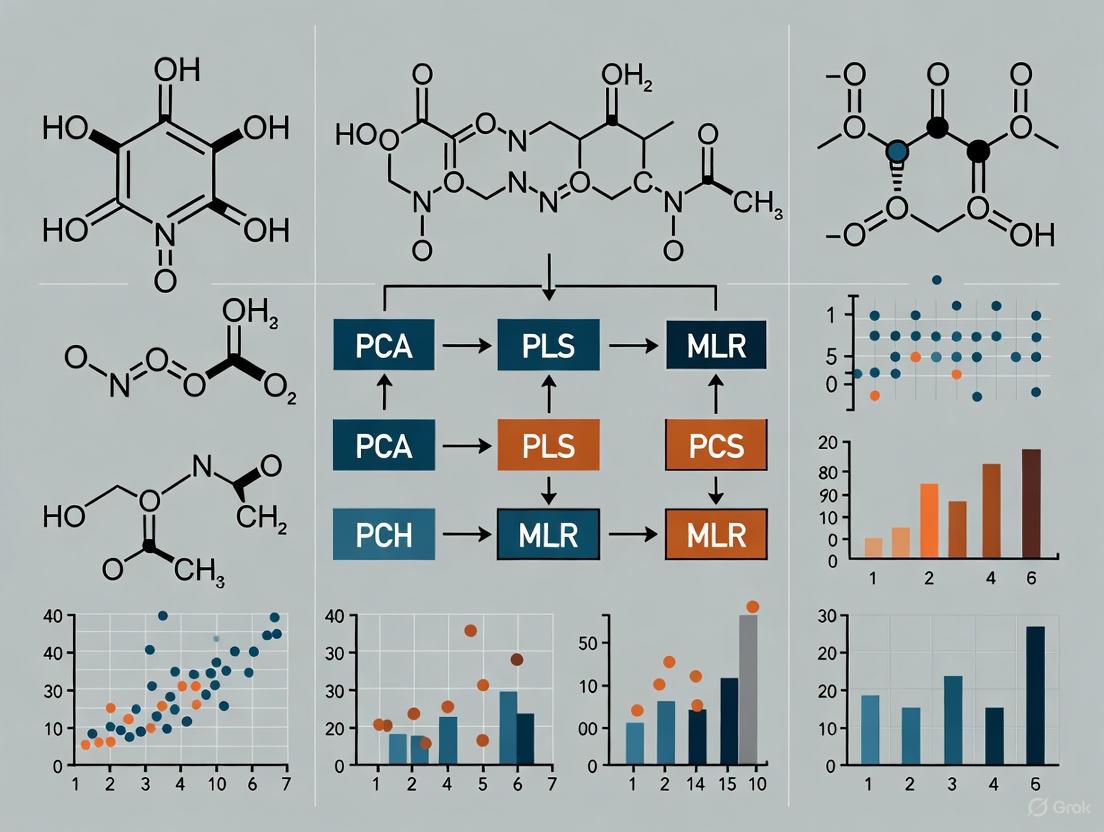
This article provides a comprehensive comparative analysis of chemometric algorithms, from classical multivariate methods to modern artificial intelligence (AI) techniques, for spectroscopic and chromatographic data analysis.
Chemometric Algorithms for Data Analysis: A Comparative Study of Classical and AI Methods in Biomedical Research
Abstract
This article provides a comprehensive comparative analysis of chemometric algorithms, from classical multivariate methods to modern artificial intelligence (AI) techniques, for spectroscopic and chromatographic data analysis. Tailored for researchers and drug development professionals, it establishes foundational concepts, explores methodological applications across biomedical case studies, addresses key troubleshooting and optimization challenges, and establishes a rigorous framework for validation and performance comparison. The study synthesizes findings to guide algorithm selection, enhance analytical precision in pharmaceutical applications, and outline future directions for intelligent, explainable chemometric systems in clinical research.
From Classical Chemometrics to AI: Foundational Principles and Definitions
Chemometrics, defined as the mathematical extraction of relevant chemical information from measured analytical data, is undergoing a revolutionary transformation. For decades, classical multivariate methods have formed the bedrock of spectroscopic analysis, enabling researchers to transform complex datasets into actionable insights. Traditional chemometric techniques such as Principal Component Analysis (PCA) and Partial Least Squares (PLS) regression have served as fundamental tools for calibration and quantitative modeling in spectroscopy for decades [1]. These linear methods have proven particularly effective for handling multivariate data in areas like spectroscopy, chromatography, and chemical engineering, where they excel at managing correlated variables and extracting meaningful patterns from chemical data [2].
The contemporary analytical landscape is now characterized by the integration of artificial intelligence (AI) and machine learning (ML), which dramatically expand capabilities for data-driven pattern recognition, nonlinear modeling, and automated feature discovery. Modern AI encompasses several subfields crucial for chemometrics: Machine Learning (ML) develops models that learn from data without explicit programming, while Deep Learning (DL) employs multi-layered neural networks for hierarchical feature extraction. Generative AI extends these capabilities further by creating new data, spectra, or molecular structures based on learned distributions [1]. This paradigm shift enables analysis of increasingly complex datasets from hyperspectral imaging, high-throughput sensor arrays, and other advanced analytical platforms that generate massive, unstructured data sources [1] [3].
This comparative guide examines the performance, applications, and appropriate use cases for classical multivariate analysis, machine learning, and AI-driven approaches in chemometric data analysis. By providing objective performance comparisons, detailed experimental protocols, and practical implementation guidelines, we aim to equip researchers and drug development professionals with the knowledge needed to select optimal strategies for their specific analytical challenges.
Comparative Performance Analysis
Quantitative Performance Metrics Across Domains
Table 1: Performance comparison of chemometric approaches across application domains
| Application Domain | Algorithm Category | Specific Methods | Key Performance Metrics | Superior Approach |
|---|---|---|---|---|
| Pharmaceutical Analysis (Quaternary Mixture) [4] | Classical Multivariate | PLS-1 | RMSEP: CAF=0.141, COD=0.269, PAR=0.492, PAP=0.219 | GA-ANN |
| Variable Selection + Multivariate | GA-PLS | RMSEP: CAF=0.099, COD=0.198, PAR=0.364, PAP=0.164 | ||
| Machine Learning | GA-ANN | RMSEP: CAF=0.075, COD=0.119, PAR=0.289, PAP=0.103 | ||
| Food Science (Cheese Macronutrients) [2] | Classical Chemometrics | PLS | R²: Fat=0.92, Protein=0.89 | ML (Extra Trees) |
| Machine Learning | Extra Trees | R²: Fat=0.96, Protein=0.94 | ||
| Spectroscopic Data (General Modeling) [5] | Linear Methods | iPLS with Wavelet | Varies by dataset; competitive in low-data regimes | Context-dependent |
| Deep Learning | CNN with Pre-processing | Improved with sufficient data; benefits from pre-processing |
Characteristic Profiles of Chemometric Approaches
Table 2: Characteristic profiles of chemometric approaches
| Attribute | Classical Multivariate | Machine Learning | Deep Learning |
|---|---|---|---|
| Representative Algorithms | PCA, PLS, MCR-ALS [6] [1] | Random Forest, SVM, XGBoost [2] [1] | CNN, DNN, Transformers [5] [1] |
| Data Efficiency | High performance with small datasets [5] | Requires moderate data volume | Requires large datasets [1] |
| Nonlinear Handling | Limited | Strong capabilities [1] | Excellent for complex nonlinearities [1] |
| Interpretability | High (chemically intuitive) [3] | Moderate (feature importance) [1] | Low (requires XAI techniques) [1] |
| Implementation Complexity | Low | Moderate | High |
| Feature Engineering | Manual pre-processing crucial | Manual pre-processing beneficial | Automated feature extraction [1] |
| Computational Demand | Low | Moderate to High | High |
The performance data reveals several key patterns. In pharmaceutical applications for analyzing complex mixtures, machine learning approaches consistently outperform classical methods. The GA-ANN model demonstrated superior predictive accuracy for quantifying caffeine, codeine, paracetamol, and p-aminophenol in quaternary mixtures, with reductions in RMSEP of up to 46% compared to classical PLS [4]. Similarly, in food science applications, ensemble ML methods like Extra Trees achieved higher coefficients of determination (R² = 0.96 for fat, 0.94 for protein) compared to PLS models (R² = 0.92 for fat, 0.89 for protein) for predicting macronutrients in cheese using imaging spectroscopy [2].
However, classical methods maintain advantages in low-data regimes and offer greater interpretability. Studies comparing linear and deep learning models for spectroscopic data found that after exhaustive pre-processing selection, interval PLS (iPLS) variants showed better performance for smaller datasets (e.g., 40 training samples) and remained competitive with more data [5]. The intrinsic linearity of many spectroscopic measurements, governed by principles similar to the Beer-Lambert law, means that linear methods often provide simpler, robust data pipelines that are less computationally intensive [3].
Experimental Protocols and Methodologies
Pharmaceutical Mixture Analysis Protocol
The superior performance of GA-ANN for pharmaceutical analysis emerged from a rigorously designed experimental protocol [4]:
Sample Preparation: Researchers prepared a calibration set of 25 mixtures using a 4-factor, 5-level experimental design containing caffeine, codeine, paracetamol, and p-aminophenol (PAP) impurity. Concentration levels were strategically coded from -2 to +2 with center points at 3.6, 8, 12, and 4.5 μg/mL for CAF, COD, PAR, and PAP, respectively.
Spectral Acquisition: UV-Vis spectra were collected from 200-400 nm at 0.2 nm intervals using 1.00 cm quartz cells. The specific analytical range of 210-300 nm was selected for CAF, COD, and PAR, while 210-340 nm was used for PAP.
Variable Selection: Genetic Algorithms (GA) applied a "survival of the fittest" strategy among wavelengths to identify the most meaningful variables for model construction, enhancing prediction power and reducing data dimensionality.
Model Development & Validation: PLS-1, GA-PLS, and GA-ANN models were constructed using the calibration set, with prediction ability tested against an independent validation set of six mixtures covering concentrations within the calibration ranges.
Hyperspectral Imaging for Food Analysis Protocol
The comparison of chemometrics and ML for cheese macronutrient prediction employed hyperspectral imaging with specific methodological considerations [2]:
Sample Diversity: Researchers adopted a "broad-based approach" using 32 different cheese types from Dutch supermarkets to calibrate and validate NIR models, intentionally integrating diverse cheese varieties into a single model to enhance generalizability.
Spectral Processing: Reflectance values obtained from hyperspectral images were converted to absorbance values for improved interpretation. Average spectra were visually inspected for preliminary quality assessment.
Feature Selection: Multiple feature selection methods were applied to identify the most important wavelengths for predicting macronutrients, with common variables across algorithms including 941 nm, 948 nm, 977 nm, and other key wavelengths associated with cheese characteristics.
Algorithm Comparison: Models were evaluated based on prediction accuracy for fat and protein percentages, with Extra Trees (an ensemble ML algorithm) demonstrating superior performance for this application.
Strategic Workflow for Algorithm Selection
This workflow guides researchers through the critical decision points when selecting chemometric approaches, emphasizing the importance of data volume, relationship linearity, and interpretability requirements in determining the optimal analytical strategy.
Essential Research Reagent Solutions
Table 3: Essential research reagents and computational tools for chemometric analysis
| Category | Item/Software | Specific Function | Application Context |
|---|---|---|---|
| Spectral Acquisition | UV-Vis Spectrophotometer [4] | Acquisition of absorption spectra (200-400 nm) | Pharmaceutical mixture analysis |
| NIR Hyperspectral Imaging System [2] [3] | Simultaneous spatial and chemical characterization | Food quality, pharmaceutical heterogeneity | |
| Fiber-optic SPR, Raman, Fluorescence Sensors [7] | In-situ chemical sensing | Environmental, biomedical, industrial monitoring | |
| Computational Frameworks | MATLAB with PLS_Toolbox [8] [4] | Implementation of multivariate calibration models | General chemometric analysis |
| Python with Scikit-learn, TensorFlow | Machine learning and deep learning implementation | Nonlinear modeling, complex pattern recognition | |
| SOLO or PLS_Toolbox [8] | Commercial chemometrics software | Educational purposes, industrial applications | |
| Data Processing | Genetic Algorithms (GA) [4] | Wavelength selection for model optimization | Feature selection for PLS and ANN |
| Wavelet Transforms [5] | Spectral data compression and denoising | Pre-processing for both linear and DL models | |
| Principal Component Analysis (PCA) [6] [3] | Exploratory data analysis, dimensionality reduction | Initial data exploration, multivariate statistical process control |
Integrated Analytical Workflow
The integrated workflow illustrates how classical and AI-driven methods complement each other in a comprehensive analytical pipeline. Beginning with proper sample preparation and spectral acquisition, the process advances through essential pre-processing steps before exploratory analysis. The critical model selection phase determines whether classical, ML, or deep learning approaches are most appropriate based on data characteristics and research objectives, culminating in validation and deployment in Process Analytical Technology (PAT) contexts [3].
The chemometric landscape is evolving toward hybrid approaches that leverage the strengths of both classical and AI-driven methodologies. Future directions emphasize Explainable AI (XAI) techniques to maintain interpretability in complex models, with innovations in generative modeling, multimodal deep learning, and physics-informed neural networks poised to advance spectroscopic analyses further [9] [1]. Platforms like SpectrumLab and SpectraML are emerging as crucial tools for standardization and reproducibility in AI-driven chemometrics [9].
The integration of large language models and the development of more sophisticated generative AI applications promise to automate spectral interpretation while preserving chemical insight [9] [1]. As these technologies mature, researchers can expect increasingly powerful tools for handling complex analytical challenges across pharmaceutical development, food science, and environmental monitoring.
In conclusion, no single chemometric approach universally dominates all applications. Classical multivariate methods remain indispensable for linear systems, limited data environments, and when interpretability is paramount. Machine learning excels at handling nonlinear relationships and complex pattern recognition tasks with moderate data requirements. Deep learning offers powerful automated feature extraction for large-scale, complex datasets but demands substantial computational resources and data volumes. The optimal strategy involves selecting the right tool for the specific analytical challenge, often through systematic experimentation and validation, while emerging hybrid approaches promise to further blur the boundaries between these methodologies, creating more powerful and adaptable chemometric solutions for future scientific challenges.
In the field of chemometrics and spectral data analysis, the ability to extract meaningful chemical information from complex, high-dimensional datasets is paramount. Principal Component Analysis (PCA) and Partial Least Squares (PLS) regression represent two pillars of classical multivariate statistical methods for dimensionality reduction, pattern recognition, and quantitative calibration [10] [1]. These techniques are particularly valuable in spectroscopy, where datasets often contain thousands of correlated wavelength measurements, presenting challenges of multicollinearity and high dimensionality that render traditional univariate analyses ineffective [11] [12].
This guide provides a comprehensive comparative analysis of PCA, PLS, and their key variants, focusing on their theoretical foundations, performance characteristics, and practical applications in spectral data analysis. We present structured experimental data and protocols to empower researchers in selecting and implementing the most appropriate algorithm for their specific analytical challenges.
Fundamental Principles and Algorithmic Relationships
Core Conceptual Differences
PCA is an unsupervised technique that identifies new orthogonal variables (principal components) that capture the maximum variance in the predictor dataset (X) without using information from the response variable (Y) [10] [13]. In contrast, PLS is a supervised method that identifies components that maximize the covariance between X and Y, making it particularly suited for prediction problems [10] [11] [13].
The fundamental distinction manifests in their objectives: PCA seeks to describe data structure through variance maximization, while PLS aims to predict responses through covariance maximization [10] [14]. This difference fundamentally impacts their application, performance, and interpretation in spectral analysis.
Workflow and Decomposition Logic
The analytical workflows for PCA and PLS regression in spectral data analysis differ significantly in their treatment of the relationship between spectral inputs and target outputs, as illustrated below:
Mathematical Formulations
PCA decomposes the data matrix X into principal components through either eigenvector decomposition or the Nonlinear Iterative Partial Least Squares (NIPALS) algorithm, which is particularly efficient for high-dimensional data [15] [12]. The NIPALS algorithm iteratively extracts components by maximizing the variance captured in each step, making it suitable for datasets with missing values [15] [12].
PLS regression finds weight vectors that simultaneously maximize the covariance between X and Y [11]. The algorithm computes components through a series of decompositions and deflations, with the objective function:
This optimization ensures that PLS components have both high variance and high correlation with the response, unlike PCA which considers only variance [11].
Performance Comparison and Experimental Data
Key Characteristics and Applications
Table 1: Fundamental comparison between PCA and PLS
| Feature | PCA | PLS/PLS-DA |
|---|---|---|
| Supervision | Unsupervised | Supervised [10] |
| Use of group information | No | Yes [10] |
| Primary objective | Capture overall variance | Maximize class separation/prediction [10] |
| Model interpretability | Moderate | High (via VIP scores) [10] |
| Risk of overfitting | Low | Moderate to high [10] |
| Best suited for | Exploratory analysis, outlier detection | Classification, biomarker discovery [10] |
| Dimensionality reduction focus | Maximum variance directions | Maximum covariance directions [11] |
| Output | Principal components | PLS components + prediction model [13] |
Quantitative Performance Metrics
Table 2: Experimental performance comparison across application domains
| Application Domain | Algorithm | Performance Metrics | Reference |
|---|---|---|---|
| Neurochemical prediction (FSCV) | PCR | Mean Absolute Error: Significantly higher | [16] |
| PLSR | Mean Absolute Error: Significantly smaller | [16] | |
| Spectral classification (Raman) | Machine Learning without PCA | Lower accuracy, risk of overfitting | [12] |
| Machine Learning with PCA | Improved accuracy, reduced overfitting | [12] | |
| Soil metal prediction (NIR) | Full-spectrum PLS | Variable performance depending on metal | [17] |
| FFiPLS (variable selection) | Superior for Al, Be, Gd, Y prediction | [17] | |
| Data imputation (Meteorological) | NIPALS-PCA (10% missing) | MAPE: 15.4% | [15] |
| EM-PCA (10% missing) | MAPE: 17.0% | [15] | |
| NIPALS-PCA (50% missing) | MAPE: 19.9% | [15] | |
| EM-PCA (50% missing) | MAPE: 19.1% | [15] |
Case Study: PCR vs. PLS on Synthetic Data
A comparative study using synthetic data clearly demonstrates how PLS can outperform Principal Component Regression (PCR) in specific scenarios [14]. When the target variable is strongly correlated with directions in the data that have low variance, the unsupervised nature of PCA becomes a limitation, as it greedily retains high-variance directions regardless of their predictive power [14].
In this experiment, the data was constructed so that the target y was strongly correlated with the second principal component, which explained less variance than the first component [14]. When both PCR and PLS were constrained to use only one component, the results were striking:
- PCR r-squared: -0.026 (performs worse than predicting the mean)
- PLS r-squared: 0.658 (good predictive power)
This performance gap occurs because PLS's supervised transformation preserves the data directions most predictive of the response, even when those directions have low variance [14]. The study confirmed that when PCR uses all components (2 in this case), it performs equivalently to PLS, but in practical applications where dimensionality reduction is desired, PLS often provides superior performance with fewer components [14].
Experimental Protocols and Methodologies
Standardized Analytical Workflow
For consistent and reproducible results when applying PCA or PLS to spectral data, the following methodological framework is recommended:
Critical Validation Procedures for PLS Models
Given PLS's susceptibility to overfitting, rigorous validation is essential:
Cross-validation: Calculate R²Y (goodness of fit) and Q² (predictive ability) metrics. A Q² > 0.5 is generally considered a valid model, while Q² > 0.9 indicates outstanding predictive performance [10]. Monitor the gap between R²Y and Q² – large differences suggest potential overfitting [10].
Permutation testing: Perform 200 or more permutation tests by randomly shuffling the Y-variable to establish the statistical significance of the model. The original model's R²Y and Q² should be significantly higher than those from permuted datasets [10].
Variable Importance in Projection (VIP) scores: Identify features (wavelengths) that contribute most to group separation or prediction accuracy. Features with VIP scores > 1.0 are generally considered particularly influential [10].
Best Practices for PCA Implementation
Data standardization: For spectral data, standardize variables (wavelengths) to unit variance when the absolute scale of measurements varies significantly across wavelengths [12] [14].
Component selection: Use scree plots and cross-validation to determine the optimal number of components that capture meaningful variance without overfitting to noise [12].
Missing data handling: For datasets with missing values, implement iterative PCA algorithms like NIPALS-PCA or EM-PCA, which can effectively handle missing data [15]. Research shows NIPALS-PCA performs better with lower percentages (10-30%) of missing data, while EM-PCA excels with higher percentages (40-50%) [15].
Advanced Variants and Hybrid Approaches
PLS-DA for Classification Tasks
Partial Least Squares Discriminant Analysis (PLS-DA) extends PLS regression for classification problems by creating a dummy matrix of class memberships as the Y-block [10]. This supervised approach maximizes separation between predefined groups, making it particularly valuable for biomarker discovery and sample classification in spectral analysis [10].
Variable Selection Algorithms in PLS
Standard PLS regression uses the full spectral range, but performance can often be improved through intelligent variable selection:
- Deterministic methods: Interval PLS (iPLS) and Successive Projections Algorithm for interval selection in PLS (iSPA-PLS) systematically test specific spectral regions [17].
- Stochastic methods: Bio-inspired algorithms like the Firefly algorithm by intervals in PLS (FFiPLS) explore the variable space more extensively and have demonstrated superior performance for predicting specific metals in soil samples [17].
Integration with Machine Learning Frameworks
PCA is frequently employed as a preprocessing step for machine learning algorithms to address the curse of dimensionality with high-dimensional spectral data [12] [1]. Research demonstrates that PCA significantly improves the performance of support vector machines, k-nearest neighbours, and other classifiers when applied to Raman spectral data [12]. The NIPALS algorithm is particularly efficient for this purpose, enabling dimensionality reduction from thousands of spectral dimensions to a manageable number of principal components while retaining most of the relevant information [12].
Essential Research Reagents and Computational Tools
Table 3: Key resources for implementing PCA and PLS in spectral research
| Resource Category | Specific Tools/Techniques | Function/Purpose | Application Context |
|---|---|---|---|
| Spectroscopic Techniques | NIR Spectroscopy | Non-destructive spectral data acquisition | Soil analysis, pharmaceutical QA [17] |
| Raman Spectroscopy | Molecular fingerprinting | Illicit material identification, mixture analysis [12] | |
| FSCV (Fast-Scan Cyclic Voltammetry) | Neurochemical measurement | Dopamine, serotonin detection [16] | |
| Preprocessing Methods | Standard Normal Variate (SNV) | Scatter correction | Spectral normalization [17] |
| Multiplicative Scatter Correction (MSC) | Path length effect correction | Spectral standardization [17] | |
| Savitzky-Golay Smoothing | Noise reduction | Signal-to-noise improvement [17] | |
| Variable Selection Algorithms | iPLS, iSPA-PLS | Deterministic interval selection | Wavelength range optimization [17] |
| FFiPLS | Stochastic variable selection | Enhanced prediction accuracy [17] | |
| Validation Techniques | Cross-validation (R²Y, Q²) | Model performance assessment | Overfitting prevention [10] |
| Permutation Testing | Statistical significance | Model validation [10] | |
| VIP Scores | Feature importance ranking | Biomarker identification [10] [17] | |
| Computational Implementations | NIPALS Algorithm | Efficient PCA computation | Handles high-dimensional, missing data [15] [12] |
| EM-PCA Algorithm | Missing data imputation | Incomplete dataset handling [15] |
PCA and PLS represent complementary approaches in the chemometrician's toolkit, each with distinct strengths and optimal application domains. PCA remains the gold standard for unsupervised exploratory analysis, data quality assessment, and outlier detection, while PLS and its variants excel in supervised prediction, classification, and biomarker discovery tasks.
The experimental evidence consistently demonstrates that PLS generally outperforms PCR when the predictive target is correlated with low-variance directions in the data, and that proper validation is crucial to avoid overfitting in supervised models. For contemporary spectral data analysis, researchers can further enhance these classical approaches through intelligent variable selection algorithms and integration with machine learning frameworks, leveraging the strengths of both traditional chemometrics and modern artificial intelligence.
Choosing between PCA and PLS fundamentally depends on the analytical objective: for unbiased data exploration and structural understanding, PCA is recommended; for prediction, classification, or when specific group separation is desired, PLS or PLS-DA is typically more appropriate. In many research workflows, these techniques are most powerful when used sequentially—employing PCA for initial data exploration and quality control, followed by PLS for targeted analysis and prediction.
The field of chemometrics, defined as the mathematical extraction of relevant chemical information from measured analytical data, is undergoing a paradigm shift through the integration of artificial intelligence (AI) and machine learning (ML) [1]. Modern analytical instruments, from chromatography–mass spectrometry to various spectroscopic methods, generate vast, complex datasets that are too large and intricate for traditional statistical methods to handle effectively [18]. In this context, Support Vector Machines (SVMs), Random Forests (RF), and Extreme Gradient Boosting (XGBoost) have emerged as particularly powerful algorithms for analyzing chemical data. These methods are transforming chemical analysis across diverse domains including drug discovery, food authentication, biomedical diagnostics, and chemical safety prediction [1] [19] [20]. This guide provides a comparative analysis of these three algorithms, focusing on their applications, performance characteristics, and implementation considerations for chemical data analysis, framed within a broader thesis on comparative study of chemometric algorithms.
Algorithm Fundamentals and Chemometric Applications
Support Vector Machines (SVM)
Support Vector Machines are supervised learning algorithms that find the optimal decision boundary (hyperplane) separating classes or predicting quantitative values in high-dimensional spectral space [1]. For classification, SVM seeks the hyperplane that maximizes the margin between the nearest data points of different classes (called support vectors), providing robust discrimination even with noisy, overlapping, or nonlinear spectral data [1]. Through the use of kernel functions (linear, polynomial, or radial basis function), SVM can transform spectral data into higher-dimensional feature spaces, enabling nonlinear classification or regression [1].
In spectroscopic applications, SVMs perform well with limited training samples but many correlated wavelengths, making them highly suited for spectroscopic datasets [1]. They have been successfully applied to food authenticity, pharmaceutical quality control, process monitoring, and disease diagnosis based on vibrational spectral patterns [1]. Parameter tuning (regularization C, kernel width γ) and preprocessing (scatter correction, normalization) are key to achieving optimal performance [1].
Random Forest (RF)
Random Forest is an ensemble learning method that constructs a large number of decision trees using bootstrap-resampled spectral subsets and randomly selected wavelength features [1]. Each tree votes on the outcome, and the ensemble majority defines the final prediction [1]. In spectroscopy, RF offers strong generalization capability, reduced overfitting, and robustness against spectral noise, baseline shifts, and collinearity [1].
RF models are widely applied in spectral classification, authentication, and process monitoring, and can output feature importance rankings, helping spectroscopists identify diagnostic wavelengths or informative regions in the spectra useful for selective and accurate predictive modeling [1]. The Gini importance, a by-product of RF training, provides a relative ranking of spectral features by calculating how much each feature decreases the weighted impurity in the trees [21]. This feature importance measure has been found to provide superior means for measuring feature relevance on spectral data compared to univariate approaches [21].
Extreme Gradient Boosting (XGBoost)
Extreme Gradient Boosting is an advanced boosting algorithm that builds an ensemble of decision trees in a sequential, gradient-based manner [1] [19]. Each new tree focuses on correcting the residual errors of prior trees [1]. XGBoost includes regularization, parallel computation, and optimized gradient descent, offering high computational efficiency and predictive accuracy [1] [19]. In spectroscopy, XGBoost excels in complex, nonlinear relationships typical of food quality, pharmaceutical composition, and environmental analysis [1].
XGBoost often achieves state-of-the-art performance in both regression and classification tasks, outperforming traditional chemometric models when sufficient labeled spectral data are available [1]. The algorithm has demonstrated remarkable performance on both high and low diversity datasets in chemical applications, along with an ability to detect minority activity classes in highly imbalanced datasets [19]. Despite its power, XGBoost's models are less transparent, motivating the use of explainable AI techniques to interpret wavelength contributions [1].
Comparative Performance Analysis
Experimental Performance Metrics
The following table summarizes key performance comparisons across chemical data applications:
Table 1: Performance Comparison of ML Algorithms on Chemical Data Tasks
| Application Domain | Dataset Characteristics | Algorithm | Performance Metrics | Key Findings |
|---|---|---|---|---|
| Bioactive Molecule Prediction [19] | 7 chemical datasets; Active/Inactive compounds | XGBoost | Predictive accuracy | Outperformed RF, SVM, RBFN, and Naïve Bayes |
| Random Forest | Predictive accuracy | Reliable performance, but outperformed by XGBoost | ||
| SVM | Predictive accuracy | Competitive but outperformed by ensemble methods | ||
| Food Moisture Analysis [18] | NIR spectra of Porphyra yezoensis | XGBoost | Determination accuracy | Recommended as most reliable for industrial application |
| CNN/ResNet | Determination accuracy | Evaluated but outperformed by XGBoost | ||
| Chemical Safety Prediction [20] | 2562 chemical incidents; 17 variables | Stacking (SVM-RF-XGBoost) | Accuracy: 0.945, F1: 0.792 | Superior to individual models |
| XGBoost Only | Accuracy: 0.922, F1: 0.727 | Strong individual performance | ||
| Random Forest Only | Accuracy: 0.914, F1: 0.694 | Solid individual performance | ||
| SVM Only | Accuracy: 0.898, F1: 0.625 | Lower performance than ensemble methods | ||
| Imbalanced Data [22] | Telecom churn (15% to 1% imbalance) | XGBoost + SMOTE | F1 score, ROC AUC | Consistently highest F1 score across imbalance levels |
| Random Forest + SMOTE | F1 score, ROC AUC | Poor performance under severe imbalance |
Technical Comparative Analysis
Table 2: Technical Characteristics of ML Algorithms for Chemical Data
| Characteristic | Support Vector Machines (SVM) | Random Forest (RF) | XGBoost |
|---|---|---|---|
| Core Mechanism | Maximum margin hyperplane with kernel tricks | Bootstrap aggregation of decorrelated trees | Gradient boosting with sequential error correction |
| Handling Spectral Non-linearity | Excellent via kernels (RBF, polynomial) | Good with multiple splits | Excellent with sequential learning |
| Feature Selection | Embedded in kernel | Native Gini importance | Built-in feature importance |
| Data Efficiency | Works well with small samples | Requires moderate samples | Best with larger datasets |
| Imbalanced Data | Sensitive without weighting | Moderate handling | Excellent with proper sampling |
| Training Speed | Slow for large datasets | Fast (parallelizable) | Fast (optimized implementation) |
| Interpretability | Moderate (support vectors) | High (feature importance) | Moderate (requires SHAP/XAI) |
| Hyperparameter Sensitivity | High (C, γ, kernel choice) | Low to moderate | Moderate (learning rate, depth) |
Experimental Protocols and Methodologies
Standard Implementation Workflow
The following diagram illustrates the typical experimental workflow for comparing ML algorithms on chemical data:
Detailed Experimental Protocols
Bioactive Molecule Prediction Protocol
Following the experimental design in [19], the typical protocol for bioactive molecule prediction involves:
- Dataset Preparation: Seven carefully selected datasets known in literature for validating fingerprint-based molecule classification. Compounds are classified as active or inactive, with Tanimoto similarity calculated based on ECFC_4 across all pairs of molecules.
- Data Splitting: Division into training (70%) and validation (30%) sets while maintaining class distribution.
- Descriptor Calculation: Quantitative description of the compound's molecular structure using appropriate molecular descriptors.
- Model Training: Implementation of XGBoost using Classification and Regression Trees (CART) with regularization parameters (γ and λ) to control complexity and prevent overfitting. The training involves:
- For each descriptor, sort the numbers and scan for the best splitting point (lowest gain)
- Choose the descriptor with the best splitting point that optimizes the training objective
- Continue splitting until specified maximum tree depth is reached
- Assign prediction score to leaves and prune negative nodes
- Repeat steps in additive manner until specified number of rounds is reached
- Performance Comparison: Comparison against RF, SVM, Radial Basis Function Neural Network (RBFN), and Naïve Bayes using appropriate statistical measures.
Spectral Data Analysis with Feature Selection
Based on [21], the recursive feature elimination protocol for spectral data includes:
- Feature Importance Calculation: Compute Gini importance from Random Forest training on spectral data.
- Feature Ranking: Rank features according to importance measures.
- Feature Elimination: Remove the p% least important features.
- Classifier Training: Train classifiers (RF, D-PLS, D-PCR) on reduced feature set.
- Iteration: Repeat steps 1-4 until no features remain.
- Optimal Subset Identification: Identify the best feature subset according to test error.
This approach combines the best of both worlds: the superior feature relevance measurement of RF's Gini importance with the optimal classification performance of regularized methods on the identified feature subset [21].
Handling Imbalanced Chemical Data
For imbalanced scenarios common in chemical data (e.g., active vs. inactive compounds), [22] recommends:
- Imbalance Assessment: Calculate class distribution and imbalance ratio.
- Resampling Technique Selection: Apply SMOTE, ADASYN, or Gaussian Noise Upsampling (GNUS) to training data only.
- Model Training with Hyperparameter Tuning: Use Grid Search for hyperparameter optimization in imbalanced scenarios.
- Comprehensive Evaluation: Employ multiple metrics including F1 score, ROC AUC, PR AUC, Matthews Correlation Coefficient, and Cohen's Kappa.
- Statistical Validation: Perform Friedman test and Nemenyi post hoc comparisons to confirm statistical significance.
Essential Research Reagents and Computational Tools
Table 3: Essential Research Reagents and Computational Tools for ML in Chemical Data Analysis
| Category | Item | Function/Purpose | Example Applications |
|---|---|---|---|
| Chemical Data Sources | Spectral Databases (NIR, IR, Raman) | Provide raw spectral data for model training | Food authentication, pharmaceutical QC [1] |
| Chemical Structure Databases | Source of molecular structures and properties | Drug discovery, bioactivity prediction [19] | |
| Chemical Incident Databases | Historical safety data for predictive modeling | Accident prediction, risk assessment [20] | |
| Data Preprocessing | Scatter Correction Methods | Remove light scattering effects from spectra | Spectral calibration [1] |
| Normalization Algorithms | Standardize spectral intensities | Instrument variation compensation [1] | |
| Feature Selection Methods | Identify relevant variables | Gini importance, recursive elimination [21] | |
| ML Algorithms | SVM Implementations | Create maximum-margin classifiers | Nonlinear classification tasks [1] |
| Random Forest | Ensemble classification with feature importance | Robust spectral analysis [1] [21] | |
| XGBoost | High-accuracy gradient boosting | State-of-the-art predictive performance [1] [19] | |
| Evaluation Metrics | F1 Score | Balance precision and recall | Imbalanced data assessment [22] [20] |
| ROC AUC | Overall classification performance | Algorithm comparison [22] | |
| SHAP Analysis | Model interpretation and explanation | Feature contribution quantification [20] |
The comparative analysis of SVM, Random Forest, and XGBoost for chemical data reveals a complex performance landscape where each algorithm excels in specific scenarios. SVM provides strong performance with limited samples and nonlinear relationships via kernel tricks. Random Forest offers robust performance with built-in feature importance and resistance to overfitting. XGBoost frequently achieves state-of-the-art predictive accuracy, particularly with sufficient data and complex relationships.
Future research directions should focus on several key areas. First, the development of explainable AI (XAI) techniques is crucial for interpreting complex models like XGBoost and building trust with researchers and regulatory bodies [18]. Second, multi-omics integration using AI to fuse data from genomics, metabolomics, and proteomics with conventional analytical data will enable more holistic chemical understanding [18]. Finally, standardization and validation frameworks for AI-based methods are needed for widespread adoption in industry and regulatory applications [18].
For practitioners, the choice among these algorithms should consider dataset size, dimensionality, noise characteristics, imbalance ratio, and interpretability requirements. Ensemble approaches combining these methods often provide superior performance, as demonstrated in chemical safety prediction [20]. As the field evolves, the integration of these machine learning foundations with emerging AI technologies will continue to transform chemical data analysis across research and industrial applications.
Spectral data, encompassing hyperspectral imagery, molecular spectra, and audio signals, provides a rich source of information across scientific disciplines. Traditional chemometric methods have long served as the foundation for analyzing this data. However, the emergence of deep learning architectures—Convolutional Neural Networks (CNNs), Recurrent Neural Networks (RNNs), and Transformers—has revolutionized the field, enabling the automatic learning of complex, hierarchical features directly from raw spectral inputs. This guide provides a comparative analysis of these architectures, evaluating their performance, applicability, and implementation to inform researchers and drug development professionals in selecting optimal methodologies for spectral analysis tasks.
The effectiveness of each deep learning architecture stems from its innate mechanism for processing sequential or spatial information.
Convolutional Neural Networks (CNNs) utilize layers of filters that convolve across input data, such as a spectrogram, to detect local patterns. This hierarchical structure allows CNNs to identify salient features like spectral peaks or absorption bands, making them exceptionally powerful for extracting spatially local features from spectral-spatial data cubes. Their architecture is inherently translation-invariant, meaning a feature learned at one spectral position can be recognized at another.
Recurrent Neural Networks (RNNs), including Long Short-Term Memory (LSTM) and Gated Recurrent Unit (GRU) variants, process sequential data step-by-step while maintaining an internal hidden state that acts as a memory of previous inputs. This makes them naturally suited for modeling spectral sequences where the order of wavelengths or frequencies carries meaningful information. LSTMs address the vanishing gradient problem in traditional RNNs through gating mechanisms, allowing them to capture long-range dependencies across the spectral range.
Transformer architectures rely on a self-attention mechanism to weigh the importance of all parts of the input sequence when processing each element. This global receptive field from the first layer enables the model to capture complex, long-range dependencies and interactions across the entire spectrum simultaneously. For example, it can directly model the relationship between distant spectral features that might be correlated.
Hybrid architectures that combine these paradigms are increasingly prevalent. For instance, CNNs can first extract local spectral-spatial features, the sequence of which is then processed by a Transformer encoder to model global contexts. Similarly, a novel Time-Frequency Recurrent (TFR) network integrates wavelet transformations directly into a recurrent architecture, allowing it to mine potential time-frequency properties naturally [23]. Its advanced version, CNN-TFR, further fuses convolutional layers to discover nearby correlations in time series in addition to time-frequency characteristics [23].
Performance Comparison and Experimental Data
Quantitative Performance Benchmarks
The following tables summarize the performance of various architectures across distinct spectral analysis tasks, providing a basis for objective comparison.
Table 1: Performance Comparison on Phoneme Recognition Tasks (Audio Spectral Features)
| Model Architecture | Key Strengths | Experimental Context |
|---|---|---|
| Transformer & Conformer | Superior with long-range accessibility through input frames [24] | Phoneme recognition on TIMIT dataset; analysis of receptive field length impact [24] |
| CNN (ContextNet) | Strong local feature extraction | Comparison under constrained parameter size and layer depth [24] |
| RNN | Effective for sequential temporal modeling | Performance analyzed when observable sequence length varies [24] |
Table 2: Performance on Hyperspectral Image (HSI) Classification
| Model Architecture | Overall Accuracy (OA) | Dataset | Key Innovation |
|---|---|---|---|
| Spectral-Spatial Wave & Frequency Interactive Transformer | 98.49%, 98.60%, 99.07%, 98.29%, 97.97% [25] | Five benchmark HSI datasets [25] | Integrates frequency-aware and phase-aware token representations [25] |
| Standard Vision Transformer (ViT) | Lower than specialized model above | General HSI benchmarks | Relies on spatial and spectral attention alone |
Table 3: Performance on Molecular Property Prediction
| Model Architecture | Key Strengths | Experimental Context |
|---|---|---|
| BT-MBO (Bidirectional Transformer + MBO) | High accuracy with scarcely labeled data (as low as 1% labeled) [26] | Ames mutagenicity, Tox21, etc.; Uses SMILES strings and self-supervised learning [26] |
| AE-MBO (Autoencoder + MBO) | Effective using unsupervised latent vectors as features [26] | Same molecular classification benchmarks [26] |
| ECFP-MBO (Extended-Connectivity Fingerprints + MBO) | Robust performance with traditional cheminformatics fingerprints [26] | Same molecular classification benchmarks [26] |
Table 4: Performance on Short-Term Wind Speed Prediction (Time-Series Spectral Data)
| Model Architecture | Key Strengths | Experimental Context |
|---|---|---|
| CNN-TFR (Proposed) | Superior prediction performance and robustness [23] | Multi-step prediction using real wind speed data [23] |
| TFR (Time-Frequency Recurrent) | Better than LSTM/GRU at mining time-frequency properties [23] | Comparison against LSTM, GRU, and SFM [23] |
| LSTM/GRU | Standard for sequential data, but limited in mining frequency info [23] | Used as baseline models [23] |
Critical Analysis of Comparative Data
The data reveals a consistent trend: while CNNs and RNNs remain powerful, Transformer-based models or hybrids often achieve state-of-the-art results by leveraging self-attention for global context. The superior performance of the Spectral-Spatial Wave and Frequency Interactive Transformer in HSI classification [25] and the BT-MBO model in molecular prediction [26] underscores this. Furthermore, architectures specifically designed to exploit the frequency-domain characteristics of the data, such as TFR [23] and the frequency-domain Transformer encoder [25], demonstrate significant gains over models that operate solely in the original input space.
Detailed Experimental Protocols
To ensure reproducibility and provide a clear framework for implementation, this section outlines key experimental methodologies cited in the comparison.
Protocol 1: Hyperspectral Image Classification with a Frequency Interactive Transformer
This protocol is based on the model proposed by Scientific Reports [25].
1. Research Objective: To achieve state-of-the-art classification of Hyperspectral Images (HSI) by explicitly integrating frequency-domain and phase-aware features into a Transformer framework.
2. Materials and Data Preparation:
- Datasets: Standard HSI benchmarks (e.g., Indian Pines, Pavia University).
- Preprocessing: Normalize spectral bands. Partition image into small, overlapping 3D patches (e.g., 9x9 pixels x all spectral bands) centered on each pixel.
3. Experimental Workflow:
- Step 1 - Shallow Feature Extraction: A backbone CNN with 3D and 2D convolutional layers extracts initial spectral-spatial features from the HSI patches.
- Step 2 - Frequency Domain Transformer Encoder: The shallow features are passed to a novel encoder with two parallel branches:
- Spectral-Spatial Frequency Generator: Applies multiscale frequency transformations (e.g., Discrete Wavelet Transform or Fast Fourier Transform) to generate frequency-domain tokens.
- Spectral-Spatial Wave Generator: Encodes phase and amplitude information as complex-valued wave tokens.
- Step 3 - Spectral-Spatial Interaction Module: Features from the frequency and wave branches are interactively fused using cross-attention mechanisms.
- Step 4 - Classification Head: The fused, refined features are passed through a fully connected layer and a softmax activation to generate the final class prediction.
4. Outcome Measurement: The primary metric is Overall Accuracy (OA), which is the percentage of correctly classified test pixels. Average Accuracy (AA) and Cohen's Kappa coefficient are standard secondary metrics.
Protocol 2: Molecular Property Prediction with Scarce Labels
This protocol is derived from the work on integrating Transformer and Autoencoder techniques with spectral graph algorithms [26].
1. Research Objective: To accurately predict molecular properties (e.g., toxicity, solubility) using very low amounts of labeled data (as little as 1%).
2. Materials and Data Preparation:
- Datasets: Molecular datasets such as Ames (mutagenicity), Tox21, etc., with Simplified Molecular Input Line Entry System (SMILES) string representation.
- Preprocessing: For the BT-MBO model, SMILES strings are tokenized. For the ECFP-MBO model, Extended-Connectivity Fingerprints (ECFPs) of a specified radius are generated using the RDKit library.
3. Experimental Workflow:
- Step 1 - Fingerprint Generation:
- BT-MBO Path: A Bidirectional Encoder Transformer, pre-trained via self-supervised learning on a large corpus of unlabeled molecules, converts SMILES strings into latent vectors (BT-FPs).
- AE-MBO Path: An Autoencoder (encoder-decoder) is trained to reconstruct SMILES strings, and the encoder is used to generate latent vectors (AE-FPs).
- ECFP-MBO Path: Traditional ECFPs are generated directly.
- Step 2 - Graph-Based Semi-Supervised Learning: The generated fingerprints (features) and the small set of available labels are input into the Merriman-Bence-Osher (MBO) scheme. The MBO algorithm propagates label information on a graph built from the molecular feature vectors to predict the labels of all unlabeled molecules.
- Step 3 - Consensus Model: Predictions from the AE-MBO, BT-MBO, and ECFP-MBO models can be aggregated into a final consensus prediction for improved robustness.
4. Outcome Measurement: For classification tasks, Area Under the Receiver Operating Characteristic Curve (AUC-ROC) and Accuracy are reported. Performance is evaluated across multiple random splits with varying low label rates (1%, 5%, 10%).
The Scientist's Toolkit: Essential Research Reagents and Materials
This section details key computational tools and data resources essential for conducting advanced spectral analysis with deep learning.
Table 5: Essential Research Reagents and Computational Tools
| Item Name | Function/Brief Explanation | Example Use Case |
|---|---|---|
| Hyperspectral Benchmark Datasets | Public datasets (e.g., Indian Pines, Pavia Univ.) for training and fair model comparison. | Validating HSI classification models [25]. |
| Molecular Datasets (Ames, Tox21) | Curated data linking molecular structure to properties for predictive model training. | Benchmarking molecular property prediction [26]. |
| RDKit Library | Open-source cheminformatics toolkit for generating molecular fingerprints (e.g., ECFP). | Creating input features for models like ECFP-MBO [26]. |
| Wavelet Transform Toolbox | Software library (e.g., PyWavelets) for decomposing signals into time-frequency components. | Implementing TFR networks for frequency feature mining [23]. |
| Mel-Frequency Cepstral Coefficients (MFCCs) | A feature extraction method to convert audio signals into spectrogram-like representations. | Preprocessing audio for CNN-based sound classification [27]. |
| The Unscrambler X | Commercial software for multivariate statistical analysis of spectral data (PCA, PLSR, MCR). | Traditional chemometric analysis and spectral pretreatment [28]. |
| Fast Fourier Transform (FFT) | Fundamental algorithm for converting signals from time/space to frequency domain. | Generating spectrograms from raw audio signals [29]. |
In the fields of analytical chemistry and drug development, spectral data serves as a fundamental source of information for understanding the chemical and physical properties of substances. Spectroscopy, which studies the absorption, emission, and scattering of electromagnetic radiation by electrons or molecules, generates data in the form of spectra—graphs showing the intensity of radiation or response to radiation at different wavelengths [30]. This data forms the critical foundation for chemometric analysis, where mathematical and statistical methods are applied to extract meaningful chemical information [1]. The structural nature of this spectral data—whether structured, unstructured, or semi-structured—profoundly influences the selection of analytical algorithms, processing methodologies, and ultimately, the reliability of research conclusions in pharmaceutical development and other scientific domains.
The classification of spectral data into structured and unstructured forms represents a crucial paradigm for researchers selecting appropriate analytical pathways. As modern spectroscopic techniques generate increasingly complex datasets, understanding this data taxonomy enables scientists to harness the full potential of both classical chemometric methods and emerging artificial intelligence (AI) approaches [1]. This comparative guide examines the fundamental characteristics, analytical treatments, and practical applications of structured versus unstructured spectral data within the context of chemometric algorithm research, providing scientists with a framework for optimizing their analytical strategies.
Defining Structured and Unstructured Spectral Data
Structured Spectral Data
Structured spectral data is highly organized information that fits into predefined models or templates, typically represented in tabular formats with rows and columns [31] [32]. This data type follows a consistent schema or blueprint, making it systematically addressable and easily processable by traditional computational methods [31]. In spectroscopic applications, structured data emerges from standardized experimental protocols where measurement parameters, wavelength intervals, and intensity values are systematically recorded according to predetermined formats.
Common examples of structured spectral data include:
- Spectral intensity matrices with fixed wavelength columns and sample rows
- Chemical databases containing curated spectral libraries with standardized metadata
- Multivariate calibration sets with precisely defined X (spectral) and Y (concentration) variables
- Process analytical technology (PAT) data from in-line sensors with regular time intervals
The primary advantage of structured spectral data lies in its computational efficiency. The organized nature allows for rapid access, retrieval, and analysis using standard statistical packages and relational database management systems (RDBMS) [31] [32]. For spectroscopic calibration and quantification, this structured format enables direct application of classical chemometric techniques such as Principal Component Analysis (PCA) and Partial Least Squares (PLS) regression without extensive data preprocessing [1].
Unstructured Spectral Data
Unstructured spectral data lacks a predefined organizational model or schema, presenting in formats that do not conform to traditional row-column databases [33] [34]. This data type encompasses diverse forms of information that may vary in format, scale, and organization, requiring advanced processing techniques to extract meaningful patterns. In modern spectroscopy, unstructured data frequently originates from emerging analytical technologies and complex measurement scenarios.
Examples of unstructured spectral data in scientific research include:
- Hyperspectral imaging data cubes with spatial and spectral dimensions
- Raw instrument outputs with variable resolution and metadata formats
- Spectral-temporal datasets from dynamic processes with irregular sampling
- Fused multi-technique analytical results (e.g., Raman-IR combined data)
- Spectral data embedded in scientific publications and technical reports
The primary challenge with unstructured spectral data stems from its inherent complexity and lack of standardization [33]. However, this data type often contains rich, nuanced information that may be lost when forcing data into structured formats [31]. The proliferation of advanced spectroscopic techniques has significantly increased the proportion and importance of unstructured data in chemometric research, necessitating specialized analytical approaches [1].
Semi-Structured Spectral Data
Semi-structured spectral data represents an intermediate category incorporating elements of both structured and unstructured data [31] [32]. While not conforming to the rigid schema of traditional databases, it contains organizational markers such as tags, metadata, or hierarchical structures that facilitate processing and analysis. This data type offers greater flexibility than structured formats while maintaining more organization than completely unstructured data.
Common manifestations of semi-structured spectral data include:
- JSON or XML-formatted spectral data with embedded metadata
- Instrument-specific data formats with header information and measurement parameters
- Spectral databases with tagged features but variable structures
- Research data repositories with flexible schema requirements
Table 1: Fundamental Characteristics of Spectral Data Types
| Characteristic | Structured Spectral Data | Unstructured Spectral Data | Semi-Structured Spectral Data |
|---|---|---|---|
| Schema | Fixed, predefined schema [32] | No predefined schema [33] | Flexible schema with tags [31] |
| Storage Format | RDBMS, SQL databases [31] | Data lakes, file systems [31] | NoSQL databases, JSON, XML [31] [32] |
| Scalability | Requires schema modifications [31] | Highly scalable without restructuring [31] | Moderately scalable with some organization [32] |
| Analysis Complexity | Low - Direct analysis with SQL, PLS, PCA [31] [1] | High - Requires specialized AI/ML tools [31] [1] | Medium - Can use some traditional tools with adaptations [31] |
| Data Integrity | High consistency and accuracy [31] | Variable quality, requires validation [33] | Moderate consistency with proper tagging [31] |
| Common Spectral Examples | Spectral intensity matrices, calibration sets | Hyperspectral images, raw instrument outputs | JSON spectral data, instrument formats with metadata |
Comparative Analysis: Structural Implications for Spectral Analysis
The structural nature of spectral data directly influences the selection and performance of chemometric algorithms. Understanding these implications enables researchers to match their analytical approaches to their data characteristics, optimizing research outcomes and resource allocation.
Analytical Workflow Implications
Structured spectral data typically follows straightforward analytical workflows characterized by standardized preprocessing, feature extraction, and model building sequences. The predictable organization allows for direct application of classical chemometric methods including PCA, PLS, and multiple linear regression (MLR) [1]. These methods leverage the tabular nature of structured data to establish quantitative relationships between spectral features and chemical properties through well-defined mathematical operations.
In contrast, unstructured spectral data requires more complex preprocessing pipelines involving data transformation, feature engineering, and dimensionality reduction before core analysis can commence. The analytical workflow must accommodate variable formats, scales, and resolutions through techniques such as wavelet transforms, convolutional autoencoders, or customized data parsing algorithms [5] [1]. These additional steps increase computational demands but may reveal patterns inaccessible through structured data approaches.
Semi-structured data occupies an intermediate position, where metadata and tags can guide preprocessing decisions, potentially automating aspects of data organization while preserving flexibility. Tools capable of parsing JSON, XML, or specific instrument formats can extract structured components while handling variable elements through adaptable algorithms [31].
Algorithm Performance and Suitability
The performance of chemometric algorithms varies significantly between structured and unstructured spectral data contexts. Traditional linear models excel with structured data where assumptions of linearity, homoscedasticity, and predictor independence are more likely to be satisfied [1]. Methods like PLS regression demonstrate high performance for quantitative analysis when applied to structured spectral matrices, particularly for well-characterized chemical systems with limited nonlinearities [5].
With unstructured data, machine learning and deep learning approaches typically outperform traditional chemometric methods. Convolutional Neural Networks (CNNs) can automatically extract relevant features from raw spectral data without manual feature engineering [5] [1]. Studies comparing modeling approaches have found that while interval PLS (iPLS) variants perform well for structured regression problems with limited data, CNNs show superior performance for complex classification tasks with larger datasets [5]. This performance advantage comes at the cost of interpretability, as deep learning models function as "black boxes" compared to transparent linear models.
Table 2: Algorithm Performance Across Spectral Data Types
| Algorithm Type | Structured Data Performance | Unstructured Data Performance | Key Considerations |
|---|---|---|---|
| PLS Regression | Excellent - Primary choice for quantitative analysis [1] | Poor - Requires structured input | Limited by linearity assumptions; ideal for calibration models |
| PCA | Excellent - Effective dimensionality reduction [1] | Moderate - Requires data flattening | Loss of spatial relationships in unstructured data |
| Decision Trees/Random Forest | Good - Interpretable results [1] | Good - Handles complex relationships | Feature importance rankings; robust to noise [1] |
| CNN | Moderate - Overkill for simple structured data | Excellent - Automated feature extraction [5] [1] | Requires large datasets; computationally intensive |
| SVM | Good - Effective for classification [1] | Good - Kernel tricks handle complexity | Parameter tuning critical; performs well with limited samples [1] |
Data Management and Storage Considerations
Structured spectral data management leverages mature database technologies with efficient compression, indexing, and query capabilities. The predictable organization enables optimized storage schemes and rapid retrieval of specific spectral regions or samples [31] [32]. However, this efficiency comes at the cost of flexibility, as schema modifications require significant effort and potential data migration [31].
Unstructured spectral data demands storage solutions capable of accommodating diverse formats and volumes without predefined schema. Data lakes, cloud object storage, and specialized file systems provide the necessary flexibility but may sacrifice query performance and storage efficiency [31] [34]. The resource-intensive nature of unstructured data management contributes to significantly higher total cost of ownership, including storage, processing, and specialized personnel requirements [33] [34].
Semi-structured approaches offer a compromise, providing some organizational benefits through metadata indexing while maintaining flexibility. Technologies such as NoSQL databases efficiently handle semi-structured spectral data, enabling query capabilities based on tags or metadata without rigid schema constraints [31] [32].
Experimental Protocols for Comparative Studies
Protocol 1: Structured Data Analysis with PLS Regression
Objective: To develop a quantitative calibration model for analyte concentration prediction using structured spectral data.
Materials and Methods:
- Spectral Data: Beer dataset (40 training samples) with defined wavelength intensities and reference values [5]
- Pre-processing: Apply Standard Normal Variate (SNV) transformation to reduce scattering effects
- Model Development: Implement Partial Least Squares Regression with leave-one-out cross-validation
- Validation: Assess model performance using root mean square error of cross-validation (RMSECV) and coefficient of determination (R²)
Key Steps:
- Organize spectral data into a matrix format (samples × wavelengths)
- Apply pre-processing to address baseline offset and multiplicative effects
- Split data into calibration and validation sets using Kennard-Stone algorithm
- Determine optimal number of latent variables through cross-validation
- Build PLS model and evaluate prediction performance on validation set
Expected Outcomes: A linear calibration model with defined regression coefficients, enabling concentration prediction from new spectral measurements.
Protocol 2: Unstructured Data Analysis with Convolutional Neural Networks
Objective: To classify waste lubricant oils based on unstructured spectral data using deep learning.
Materials and Methods:
- Spectral Data: Waste lubricant oil dataset (273 training samples) with complex spectral features [5]
- Pre-processing: Apply wavelet transforms for feature enhancement while maintaining interpretability [5]
- Model Architecture: Implement 1D convolutional neural network with three convolutional layers
- Training: Use Adam optimizer with categorical cross-entropy loss function
Key Steps:
- Preprocess raw spectra using continuous wavelet transform (CWT)
- Structure data into appropriate tensor format for CNN input
- Design network architecture with convolutional, pooling, and fully connected layers
- Implement regularization techniques (dropout, batch normalization) to prevent overfitting
- Train model with validation monitoring and early stopping
Expected Outcomes: A trained CNN model capable of classifying oil types with accuracy exceeding traditional methods, particularly with larger datasets.
Protocol 3: Hybrid Approach with iPLS and Wavelet Transforms
Objective: To compare the performance of interval PLS (iPLS) with classical and wavelet-based pre-processing.
Materials and Methods:
- Spectral Data: Both beer and waste lubricant oil datasets for direct comparison [5]
- Pre-processing: Compare classical methods (SNV, derivatives) with wavelet transforms [5]
- Model Development: Implement iPLS with 20 intervals and variable selection
- Evaluation: Compare root mean square error of prediction (RMSEP) across approaches
Key Steps:
- Apply multiple pre-processing techniques to identical datasets
- Implement iPLS with systematic interval selection
- Compare wavelet-based feature extraction with traditional pre-processing
- Evaluate model interpretability through regression coefficient analysis
Expected Outcomes: Demonstration that wavelet transforms improve performance for both linear and CNN models while maintaining interpretability, with no single combination universally optimal [5].
Visualization of Analytical Workflows
The following diagrams illustrate the contrasting workflows for analyzing structured versus unstructured spectral data, highlighting the critical decision points and methodological differences.
Structured Data Analysis Pathway: This linear workflow demonstrates the straightforward processing of structured spectral data, from standardized preprocessing through model validation and chemical interpretation.
Unstructured Data Analysis Pathway: This workflow illustrates the iterative, complex processing required for unstructured spectral data, emphasizing automated feature learning and pattern discovery.
The Scientist's Toolkit: Essential Research Reagents and Materials
Table 3: Essential Research Reagents and Computational Tools for Spectral Data Analysis
| Tool/Reagent | Function/Purpose | Application Context |
|---|---|---|
| SciFinder-n | Access experimental spectral data for reference comparison [30] | Compound identification and verification across data types |
| NIST Chemistry WebBook | Reference database for IR, Mass Spec, and UV/Vis spectra [30] | Structured data benchmarking and method validation |
| Wavelet Transform Toolboxes | Mathematical transformation for feature enhancement [5] | Pre-processing for both structured and unstructured data analysis |
| PLS Toolboxes | Implementation of Partial Least Squares regression [1] | Primary analysis method for structured spectral data |
| TensorFlow/PyTorch | Deep learning frameworks for complex model development [34] | CNN and DNN implementation for unstructured data |
| Python/R Chemometrics Packages | Specialized libraries for spectroscopic analysis [1] | Flexible analysis across data types, from PCA to machine learning |
| NoSQL Databases | Storage solutions for semi-structured and unstructured data [31] [32] | Managing diverse spectral data formats with metadata preservation |
The comparative analysis of structured versus unstructured spectral data reveals a landscape where data structure fundamentally dictates analytical strategy. Structured data, with its predefined organization, enables efficient application of classical chemometric methods like PLS regression, delivering interpretable results with computational efficiency—particularly valuable in regulated environments like pharmaceutical development where model transparency is essential [1].
Conversely, unstructured spectral data, while demanding advanced processing and substantial computational resources, offers access to richer, more complex chemical information through AI and machine learning approaches [5] [1]. The emerging paradigm in chemometric research leverages the strengths of both approaches, often through hybrid strategies that apply appropriate algorithms to different data types or structural layers within the same dataset.
Future directions in spectral data analysis point toward increased integration of AI with traditional chemometrics, development of more interpretable deep learning models, and standardized approaches for handling semi-structured data [1]. As spectroscopic technologies continue to evolve, generating increasingly complex datasets, the fundamental understanding of data structure principles will remain essential for researchers selecting optimal analytical pathways in drug development and chemical research.
Algorithm Implementation and Biomedical Applications: From Spectroscopy to Drug Discovery
In the realm of modern analytical science, vibrational spectroscopic techniques—Near-Infrared (NIR), Infrared (IR), and Raman spectroscopy—have become indispensable tools for molecular characterization across pharmaceutical, chemical, and biological disciplines. These techniques provide non-destructive, rapid analysis of chemical composition and physical properties. However, the raw spectral data generated by these instruments requires sophisticated processing to extract meaningful chemical information. The efficacy of this data extraction hinges critically on the application of tailored chemometric workflows that account for the unique physical principles and analytical challenges inherent to each spectroscopic method. Within the broader context of comparative chemometric algorithm research, this guide systematically examines the distinct data processing pathways for NIR, IR, and Raman spectroscopy, providing researchers with experimentally-validated performance comparisons and detailed methodological protocols to inform analytical development.
Fundamental Principles and Technical Comparison
The interaction between light and matter differs fundamentally across NIR, IR, and Raman spectroscopy, directly influencing their respective data processing requirements. IR spectroscopy measures the absorption of infrared light as molecules undergo vibrational transitions, requiring direct dipole moment changes. NIR spectroscopy probes overtone and combination bands of fundamental molecular vibrations, primarily involving C-H, N-H, and O-H bonds. In contrast, Raman spectroscopy relies on inelastic scattering of light, detecting the energy shift as photons interact with molecular vibrations and rotations; this process requires a change in polarizability rather than a permanent dipole moment [35] [36].
These fundamental differences create distinct spectral profiles and analytical challenges. IR and NIR spectra typically exhibit broad absorption bands, while Raman spectra display sharp, well-resolved peaks. A critical practical consideration is water interference: Raman spectroscopy experiences minimal interference from aqueous environments, allowing direct analysis of biological samples and process streams, whereas IR and NIR spectroscopy often require specialized sampling techniques to overcome strong water absorption [36]. Furthermore, Raman spectra are frequently contaminated by fluorescence background, which can be orders of magnitude more intense than the Raman signal itself, necessitating robust baseline correction protocols [37].
Table 1: Fundamental Characteristics of Vibrational Spectroscopy Techniques
| Characteristic | NIR Spectroscopy | IR Spectroscopy | Raman Spectroscopy |
|---|---|---|---|
| Physical Principle | Absorption of overtone and combination vibrations | Absorption of fundamental vibrations | Inelastic scattering of light |
| Spectral Range | 4000-10000 cm⁻¹ [38] | 400-4000 cm⁻¹ | 200-3200 cm⁻¹ [38] |
| Water Interference | High | High | Low [36] |
| Dominant Spectral Features | Broad, overlapping bands | Sharp to broad absorption bands | Sharp, well-resolved peaks |
| Primary Preprocessing Needs | Scatter correction, derivative spectra | Atmospheric correction, baseline correction | Fluorescence removal, spike elimination [35] [37] |
Experimental Workflows and Data Processing Pathways
Sample Preparation and Spectral Acquisition
Experimental design begins with appropriate sample presentation. For NIR spectroscopy, reflectance measurements are common for solids and pastes, while transflection probes suit liquid monitoring [39]. Raman spectroscopy requires careful consideration of laser wavelength (commonly 785 nm for biological samples to minimize fluorescence) and power settings [37]. Sample degradation must be monitored, particularly with higher-energy lasers. IR spectroscopy typically employs transmission cells with controlled pathlengths for liquids or attenuated total reflectance (ATR) accessories requiring minimal preparation.
Quality control during acquisition is especially critical for Raman measurements. Cosmic rays striking the detector create sharp, intense spikes that must be identified and removed. Effective algorithms detect these anomalies by comparing successive spectra or screening for abnormal intensity changes along the wavenumber axis [35]. Simultaneous acquisition of multiple spectra enables robust spike correction through interpolation or replacement with successive measurements.
Spectral Preprocessing Workflows
Preprocessing transforms raw instrumental data into analytically useful spectra by removing physical artifacts and enhancing chemical information.
Raman-specific processing requires specialized fluorescence baseline correction. Techniques include asymmetric least squares smoothing, polynomial fitting, and morphological algorithms like BubbleFill, which has demonstrated superior performance for complex baseline shapes compared to established methods [37]. The following workflow diagram outlines the comprehensive preprocessing steps for Raman spectral data:
NIR preprocessing typically addresses light scattering effects from particulate matter. Multiplicative Scatter Correction (MSC) and Standard Normal Variate (SNV) transformation effectively normalize these effects. Derivative preprocessing (first or second derivative) enhances resolution of overlapping bands and removes baseline offsets [40].
IR preprocessing shares similarities with both techniques, often requiring atmospheric compensation (for CO₂ and water vapor) and advanced baseline correction, particularly for ATR measurements where contact variability affects spectra.
Table 2: Quantitative Performance Comparison for Used Cooking Oil Analysis
| Analytical Technique | Parameter | Performance Metric | Value | Reference Method |
|---|---|---|---|---|
| NIR Spectroscopy | Acid Value | R² | >0.98 | Titration [38] |
| NIR Spectroscopy | Kinematic Viscosity | R² | >0.97 | Viscometry [38] |
| NIR Spectroscopy | Density | R² | >0.96 | Pycnometry [38] |
| Raman Spectroscopy | Acid Value | R² | ~0.90 | Titration [38] |
| Raman Spectroscopy | Kinematic Viscosity | R² | ~0.89 | Viscometry [38] |
| Raman Spectroscopy | Density | R² | ~0.87 | Pycnometry [38] |
Chemometric Modeling and Validation
Following preprocessing, chemometric modeling correlates spectral features with chemical or physical properties. Partial Least Squares (PLS) regression represents the most widely employed algorithm for quantitative analysis across all three techniques, particularly effective for modeling correlated spectral variables [38] [39].
Model validation follows strict protocols to ensure robustness. Data splitting reserves 25% of samples as an independent validation set, while cross-validation techniques assess model stability [40]. Critical performance metrics include Root Mean Square Error of Prediction (RMSEP) for regression models and accuracy/selectivity for classification tasks [35]. For Raman spectroscopy, particular attention must be paid to model transfer between instruments, which may require standardization protocols to address instrumental variations [35].
Advanced modeling approaches continue to emerge. Support Vector Regression (SVR) effectively handles nonlinear relationships in complex mixtures, while Artificial Neural Networks (ANN) can model intricate spectral-response patterns when sufficient training data exists [41]. Recent research demonstrates that low-level data fusion—concatenating preprocessed spectra from multiple techniques—combined with PLS modeling can enhance prediction accuracy beyond single-technique approaches [39].
Experimental Protocols
Protocol 1: Determination of Used Cooking Oil Properties
Objective: Simultaneously determine acid value, kinematic viscosity, and density in used cooking oil (UCO) using NIR and Raman spectroscopy with PLS regression [38].
Sample Preparation:
- Collect UCO samples from diverse sources (households, restaurants)
- Filter through 400 μm mesh to remove particulate matter
- Store at 25±2°C in sealed containers to prevent oxidation
- Prepare mixed samples (5-25 L) to ensure representative sampling
Spectral Acquisition:
- NIR Conditions: Scan range 10,000-4,000 cm⁻¹, exclude 4,000-4,500 cm⁻¹ region due to noise, appropriate resolution and scan accumulation
- Raman Conditions: Scan range 200-3,200 cm⁻¹, 785 nm laser excitation, monitor for fluorescence interference
Reference Analysis:
- Determine acid value by standard titration methods
- Measure kinematic viscosity using calibrated viscometers
- Establish density by pycnometry
Data Processing:
- Apply preprocessing: first derivative, mean centering, normalization
- Develop PLS models using full spectral range or selected regions
- Validate models with independent sample sets not used in calibration
- Compare performance metrics (R², RMSEP) between techniques
Protocol 2: Monitoring Schiff Base Formation with Multi-Technique Data Fusion
Objective: Monitor reaction progress through low-level data fusion of NIR, Raman, and NMR spectra with multivariate modeling [39].
Reaction Monitoring:
- Establish Schiff base formation between acetophenone and benzylamine
- Implement inline NIR probe immersed in reaction mixture
- Configure online Raman with flow cell and pumping system
- Automate NMR sampling at 5-minute intervals
Spectral Processing:
- Record NIR spectra (4000-10,000 cm⁻¹) with baseline correction
- Acquire Raman spectra (200-3000 cm⁻¹) with smoothing
- Process NMR spectra with phase and baseline correction
- Identify relevant spectral regions through 2D heterocorrelation spectroscopy
Data Fusion and Modeling:
- Concatenate preprocessed spectral regions (low-level fusion)
- Develop quantitative models using PLS, MCR-ALS, and SVR
- Compare prediction accuracy between individual techniques and fused data
- Evaluate process understanding through principal component analysis
Table 3: Essential Reagents and Materials for Spectroscopic Analysis
| Category | Item | Specification/Function | Application Examples |
|---|---|---|---|
| Reference Materials | NIST SRM 2241 | Wavenumber calibration standard | Raman spectrometer calibration [35] |
| Reference Materials | Acetaminophen tablet | Intensity calibration reference | Raman signal standardization [37] |
| Solvents | Acetonitrile (≥99.95%) | High-purity reaction solvent | Schiff base formation monitoring [39] |
| Chemical Standards | Benzylamine (99%) | Reaction substrate | Process monitoring studies [39] |
| Software Tools | ORPL (Open Raman Processing Library) | Open-source baseline correction and preprocessing | Standardized Raman data processing [37] |
| Software Tools | Metrohm Vision Air Complete | Commercial multivariate analysis | NIR calibration development [40] |
The comparative analysis of NIR, IR, and Raman spectroscopic data processing reveals distinctive workflows tailored to their fundamental physical principles and analytical challenges. NIR spectroscopy demonstrates superior quantitative performance for specific applications like used cooking oil analysis, while Raman spectroscopy offers distinct advantages for aqueous systems despite its susceptibility to fluorescence. IR spectroscopy provides fundamental vibrational information but presents practical challenges for certain sample types. Contemporary research demonstrates that chemometric approaches—particularly PLS regression—form the cornerstone of quantitative spectral analysis across all techniques, with emerging methodologies like data fusion and artificial intelligence offering promising pathways for enhanced prediction capability. The continued refinement of standardized processing workflows, coupled with robust validation protocols, will further establish vibrational spectroscopy as an indispensable analytical platform across pharmaceutical, chemical, and biological research domains.
The field of chromatography is undergoing a profound transformation, moving from empirical, trial-and-error approaches to data-driven, intelligent methodologies powered by artificial intelligence (AI) and machine learning (ML). This paradigm shift is particularly evident in two critical areas: chromatographic method development and compound identification. Traditional method development has historically been performed manually, requiring extensive experimentation and expert knowledge to optimize parameters such as mobile phase composition, column selection, gradient conditions, and detection settings [42]. Similarly, compound identification, especially in complex samples like those encountered in metabolomics, proteomics, and environmental analysis, often presents challenges of scale, with high-resolution mass spectrometry generating thousands of peaks that are impractical to interpret manually [43].
AI and ML technologies are addressing these challenges by leveraging large, complex datasets to uncover patterns, predict optimal conditions, and identify compounds with unprecedented speed and accuracy. Machine learning models excel at tasks such as peak deconvolution, where they reduce false positives and efficiently handle overlapping peaks more effectively than conventional mathematical algorithms [42]. Furthermore, AI enables predictive modeling for retention time prediction and in-silico method development, potentially accelerating innovation while demanding careful validation to ensure reliability [42] [44] [45]. This comparative guide examines the performance of AI-driven approaches against traditional chromatographic techniques, providing experimental data and methodologies that illustrate both the capabilities and current limitations of AI in enhancing chromatographic science.
Comparative Analysis: AI vs. Traditional Chromatographic Approaches
Performance Benchmarking: Quantitative Comparisons
The integration of AI into chromatography necessitates rigorous benchmarking against established traditional methods. The following tables summarize key performance metrics from published studies and commercial applications, comparing AI-enhanced and conventional approaches across critical parameters.
Table 1: Comparative Performance in HPLC Method Development for Pharmaceutical Compounds
| Parameter | AI-Generated Method | In-Lab Optimized Method | Improvement/Delta |
|---|---|---|---|
| Analytes | Amlodipine (AMD), Hydrochlorothiazide (HYD), Candesartan (CND) | Amlodipine (AMD), Hydrochlorothiazide (HYD), Candesartan (CND) | - |
| Column | C18 (5 µm, 150 mm × 4.6 mm) | Xselect CSH Phenyl Hexyl (2.5 µm, 4.6 × 150 mm) | - |
| Mobile Phase | Gradient (Phosphate buffer pH 3.0:ACN) | Isocratic (ACN:Water with 0.1% TFA (70:30)) | - |
| Flow Rate (mL/min) | 1.0 | 1.3 | - |
| Retention Time AMD (min) | 7.12 | 0.95 | -6.17 min |
| Retention Time HYD (min) | 3.98 | 1.36 | -2.62 min |
| Retention Time CND (min) | 12.12 | 2.82 | -9.30 min |
| Analysis Time | Longer | Shorter | In-Lab method faster |
| Linearity Range (µg/mL) | AMD: 30.0–250.0, HYD: 35.0–285.0, CND: 50.0–340.0 | AMD: 25.0–250.0, HYD: 31.2–287.0, CND: 40.0–340.0 | Comparable |
| Greenness (MoGAPI, AGREE, BAGI) | Lower | Higher | In-Lab method more sustainable [45] |
Table 2: Performance Comparison in Peak Picking and Data Interpretation
| Feature | Manual/Traditional Algorithm | AI/ML Approach | Key Findings |
|---|---|---|---|
| Basis of Detection | Mathematical derivatives (inflection points) [42] | Learning-engine trained on annotated datasets [42] | ML adapts to retention drift, matrix effects |
| Handling Complex Peaks | Limited utility with overlapping peaks [42] [46] | Better addresses overlapping and complex peaks [42] | Fewer false positives |
| Context Understanding | Human experts can weigh unquantifiable factors [46] | No inherent contextual understanding [46] | Human oversight remains critical |
| Throughput | Time-consuming and meticulous [46] | Automated, slices turnaround time [46] | Frees scientist time for higher-level tasks |
| Pattern Recognition | Limited for subtle, complex patterns [46] | Identifies patterns imperceptible to humans [46] | Uncovers new relationships in data |
| Model Transparency | Transparent algorithmic reasoning | "Black-box" nature; limited reasoning visibility [46] [44] | Requires verification and Explainable AI (XAI) |
Table 3: AI Model Performance in Compound Identification and Prediction
| Application | AI Model | Reported Outcome | Reference |
|---|---|---|---|
| Predicting Molecular Structures | Neural Network | ~70% accuracy in predicting functional groups for unknown compounds without standards | [42] |
| Column Chromatography Retention | QGeoGNN (Graph Neural Network) | Predicts retention volume and provides separation probability (Sp) for experimental guidance | [47] |
| Food Authenticity (Apple Classification) | Random Forest | Effectively classified apples by origin, variety, and production method using LC-MS data | [18] |
| Antioxidant Activity Prediction | Random Forest Regression (XAI) | Identified specific amino acids and phenolics impacting bioactivity, providing interpretable insights | [18] |
Critical Interpretation of Comparative Data
The data reveals a nuanced landscape. While AI can successfully generate valid HPLC methods, as shown in Table 1, they may not always be optimal. The AI-generated method had significantly longer retention times and was less green than the in-lab optimized method, highlighting that AI's initial predictions still require human expertise for refinement to balance analytical performance with sustainability goals [45]. The primary advantage of AI lies in its ability to accelerate initial development and explore a wider parameter space rapidly.
In data interpretation (Table 2), AI's superiority in automating tedious tasks and managing complex, high-dimensional data is clear. This is particularly valuable in non-targeted analysis, where ML can identify trends and sources in datasets containing thousands of peaks, moving scientists from mere observation to deeper understanding [43]. However, the "black-box" nature of many complex models remains a significant hurdle for adoption in regulated industries, creating a demand for Explainable AI (XAI) to build trust and facilitate regulatory acceptance [44] [18].
The success in predictive tasks (Table 3) demonstrates AI's potential to tackle previously intractable problems, such as identifying unknown compounds in environmental samples [42] or predicting chromatographic behavior from molecular structure [47]. These capabilities represent a move toward a more predictive and less empirical discipline.
Experimental Protocols for AI-Enhanced Chromatography
Protocol 1: AI-Driven HPLC Method Development and Benchmarking
This protocol is adapted from a comparative study that evaluated an AI-generated method against a traditionally optimized one for a pharmaceutical mixture [45].
1. Problem Definition: Define the separation goal for the analyte mixture (e.g., Amlodipine, Hydrochlorothiazide, Candesartan). Key objectives include resolution of all peaks, tailing factor <2.0, and runtime minimization.
2. AI-Based Method Generation:
- Input: Provide the AI platform with analyte structures, concentration ranges, and desired performance criteria.
- Prediction: The AI algorithm (often a ensemble or deep learning model trained on chromatographic databases) suggests initial method parameters: column chemistry (e.g., C18), mobile phase composition (buffer pH, organic modifier), gradient profile, flow rate, and detection wavelength [44] [45].
3. In-Lab Empirical Optimization:
- Equipment: HPLC system with DAD or MS detector, various column chemistries.
- Process: Employ QbD principles and Design of Experiments (DoE) to systematically vary critical parameters (e.g., gradient slope, temperature, buffer pH). Analyze results to find the optimal balance of resolution, sensitivity, and speed [45].
4. Method Validation and Comparison:
- Validation: Validate both methods per ICH guidelines, assessing specificity, linearity, accuracy, precision, and robustness.
- Greenness Assessment: Evaluate both methods using metrics like AGREE or GAPI to quantify environmental impact [45].
- Statistical Comparison: Use Student's t-test and F-test to compare performance results statistically.
Protocol 2: Building an AI Model for Peak Picking in Complex Samples
This protocol outlines the steps for implementing an AI solution for chromatographic peak detection, as detailed in separation science literature [42] [46].
1. Data Acquisition and Curation:
- Collect Raw Data: Run a large number of representative samples (e.g., from metabolomic or proteomic studies) using High-Resolution Mass Spectrometry (HRMS) to generate complex chromatograms.
- Annotation (Ground Truth Labeling): Have human experts meticulously review and label the chromatograms, defining true peaks, baseline, and noise. This creates a high-quality, annotated dataset essential for training [46].
2. Model Selection and Training:
- Platform Selection: Choose between a cloud-based SaaS (vendor-specific, ease of use) or an on-premises open-source solution (flexibility, no recurring cost) like PeakBot [46].
- Model Training: Train a machine learning model (e.g., a convolutional neural network for pattern recognition) on the annotated dataset. The model learns to associate specific spectral patterns and shapes with expert-identified peaks [42].
3. Fine-Tuning and Integration:
- Lab-Specific Fine-Tuning: Further train the pre-trained model on your lab's own annotated data. This tailors the model to the specific nuances of your instruments, samples, and methods, dramatically increasing accuracy and relevance [46].
- Workflow Integration: Architect data pipelines, often with IT support, to automatically feed chromatographic data from the instrument to the AI model and return the results to the analyst. This can be done via cloud sync or internal network transfer [46].
4. Validation and Continuous Learning:
- Performance Verification: Routinely compare the AI's peak picking results against manual curation by experts for a subset of data. Monitor key metrics like false positive/negative rates.
- Human-in-the-Loop: Implement a system where the AI's outputs are monitored, and corrections are fed back into the system, allowing for continuous learning and model improvement over time [42].
Visualization of AI-Enhanced Chromatographic Workflows
Workflow for AI-Assisted Chromatographic Analysis
The following diagram illustrates the integrated workflow of AI in chromatographic analysis, from data acquisition to iterative model improvement.
Experimental Design for Method Comparison
This diagram outlines the experimental strategy for comparing AI-generated methods to traditionally developed ones, as conducted in benchmark studies.
The Scientist's Toolkit: Essential Reagents and Platforms
The implementation of AI in chromatography relies on both computational resources and physical analytical components. The following table details key solutions and their functions in AI-enhanced workflows.
Table 4: Essential Research Reagent Solutions for AI-Chromatography
| Category | Item | Function in AI-Enhanced Workflow |
|---|---|---|
| AI Software Platforms | Cloud-based AI Peak Picking (e.g., Vendor SaaS) | Automated peak detection and integration; offers ease of use and scalability [46]. |
| On-Premises Solutions (e.g., PeakBot) | Flexible, vendor-agnostic peak analysis; requires local IT infrastructure [46]. | |
| Data Generation & Standardization | Automated Chromatography Platforms | Systematically collects standardized retention volume, peak area, and solvent data for model training [47]. |
| Sample Preparation Kits (e.g., for PFAS, Oligonucleotides) | Provides standardized, reproducible sample cleanup, minimizing pre-analytical variability that can confound AI models [48]. | |
| Separation Consumables | Specialized SPE Plates & Cartridges | Integrated into automated online sample prep workflows, ensuring consistent data quality [48]. |
| Micropillar Array Columns | Lithographically engineered columns providing ultra-reproducible separations, generating high-quality data for AI training [49]. | |
| Algorithmic Frameworks | Graph Neural Networks (GNNs) e.g., QGeoGNN | Models molecular structure to predict chromatographic retention behavior [47]. |
| Transformer Architectures | Leverages self-attention mechanisms for advanced pattern recognition in complex spectral and chromatographic datasets [50]. | |
| Random Forest Algorithms | Used for classification tasks (e.g., food authenticity) and regression for quantifying properties, valued for interpretability [18]. |
The comparative analysis presented in this guide demonstrates that AI is not a replacement for the chromatographer but a powerful augmenting tool. The evidence shows that AI-driven approaches can significantly accelerate method development, enhance the accuracy of peak picking in complex samples, and enable new capabilities in predictive modeling and compound identification [42] [43] [47]. However, the same evidence underscores that the most effective outcomes arise from a collaborative human-AI partnership. AI-generated methods may require human refinement to achieve optimal performance and sustainability [45], and the outputs of AI models demand expert verification and contextual understanding to avoid erroneous conclusions from "black-box" models [46] [44].
The future trajectory of chromatography will be shaped by technologies that enhance this collaboration. Explainable AI (XAI) will be pivotal in building trust and facilitating regulatory acceptance by making model decisions transparent [44] [18]. Furthermore, the paradigm is shifting from analyzing individual compounds to viewing a sample as a single, complex entity that evolves over time, an approach powered by ML that can unlock new insights into chemical processes [43]. Ultimately, the transformative potential of AI in chromatography can only be fully realized through a foundation of impeccable data quality, rigorous validation, and interdisciplinary collaboration that aligns cutting-edge innovation with analytical rigor [43] [44].
Raman spectroscopy, a non-destructive analytical technique based on inelastic light scattering, provides detailed molecular fingerprint information of biological samples. Its application in biomedicine has historically been challenged by complex spectral data often contaminated with noise and background interference. The integration of artificial intelligence (AI), particularly deep learning algorithms, is now revolutionizing this field by transforming Raman spectroscopy from an empirical technique into an intelligent analytical system [51] [52]. This powerful synergy enhances data processing capabilities, enables automated feature extraction, and optimizes model performance, thereby opening new frontiers in disease biomarker discovery and early diagnosis [53] [54].
The transformative impact of this integration is particularly evident in biopharmaceutical analysis and clinical diagnostics. AI-guided Raman spectroscopy can identify subtle spectral patterns associated with pathological states that are often indiscernible through manual analysis, creating unprecedented opportunities for non-invasive diagnostics and personalized medicine [51]. This case study examines the application of AI-enhanced Raman spectroscopy for disease biomarker discovery through a comparative analytical framework, evaluating the performance of various chemometric algorithms and providing detailed experimental protocols for researchers in the field.
Methodology: AI and Chemometric Approaches for Raman Spectral Analysis
Core Experimental Workflow
The standard experimental workflow for AI-guided Raman spectroscopy in biomarker discovery encompasses sample preparation, spectral acquisition, data preprocessing, and AI-driven analysis. Biological samples (tissues, biofluids, or cells) are typically placed on appropriate substrates (e.g., aluminum-coated slides, quartz) for Raman measurement. Spectra are acquired using Raman spectrometers equipped with lasers of specific wavelengths (commonly 532 nm, 785 nm, or 1064 nm) to minimize fluorescence background while maximizing signal-to-noise ratio [51] [55].
Critical preprocessing steps include dark current subtraction, cosmic ray removal, wavelength calibration, and background correction to eliminate instrumental artifacts and environmental influences. Advanced preprocessing may also involve vector normalization, Savitzky-Golay smoothing, and baseline correction to enhance spectral quality before AI analysis [5] [56]. The processed spectra then undergo feature extraction and selection, where AI algorithms identify the most discriminative spectral regions associated with disease states, ultimately building classification or regression models for diagnostic applications.
The following diagram illustrates the comprehensive workflow for AI-guided Raman spectroscopy in biomarker discovery:
Comparative Analysis of AI Algorithms for Raman Spectroscopy
Different AI and chemometric approaches offer distinct advantages and limitations for Raman spectral analysis. The table below provides a structured comparison of key algorithmic performances based on experimental data from recent studies:
Table 1: Performance Comparison of AI and Chemometric Algorithms for Raman Spectroscopy
| Algorithm | Best Accuracy Reported | Data Requirements | Interpretability | Key Advantages | Limitations |
|---|---|---|---|---|---|
| Convolutional Neural Networks (CNNs) | 92.1% [57] | Large datasets | Medium (requires explainable AI methods) | Automatic feature extraction, robust to noise | "Black box" nature, computationally intensive |
| Transformers with Attention Mechanisms | >90% [51] [56] | Very large datasets | High (via attention scores) | Captures long-range dependencies in spectra | Extremely data-hungry, complex architecture |
| Support Vector Machines (SVM) | 93.2% [56] | Moderate datasets | Medium | Effective in high-dimensional spaces, robust | Sensitive to kernel choice, poor with noisy data |
| Random Forest | 87.7% [56] | Moderate datasets | High (feature importance) | Handles nonlinear relationships, robust to outliers | Can overfit without proper regularization |
| PLS with Wavelet Transforms | Competitive with DL in low-data scenarios [5] | Small datasets | High | Excellent for small sample sizes, highly interpretable | Limited capacity for complex pattern recognition |
| Ant Colony Optimization (ACO) | 87.7-93.2% [56] | Small to moderate datasets | High | Effective feature selection, biologically relevant features | Application-specific, requires parameter tuning |
The comparative analysis reveals that no single algorithm universally outperforms others across all scenarios. Algorithm selection depends heavily on specific experimental conditions, particularly dataset size and interpretability requirements. In low-data settings, traditional chemometric approaches like interval Partial Least Squares (iPLS) with wavelet transforms remain competitive with deep learning models, while convolutional neural networks show superior performance with larger datasets, even when applied to raw spectra [5].
Explainable AI Methodologies for Biomarker Validation
The "black box" nature of complex deep learning models presents a significant challenge for clinical adoption, where understanding the reasoning behind diagnostic predictions is essential. Explainable AI (XAI) methods have emerged as crucial tools for validating AI-discovered biomarkers by making model decisions transparent and interpretable [51] [52].
The most effective XAI approaches for Raman spectroscopy include SHapley Additive exPlanations (SHAP) and Grad-CAM for CNNs, which identify specific spectral regions and vibrational bands that most strongly influence model predictions [56]. Similarly, attention mechanisms in Transformer models provide inherent interpretability by highlighting clinically relevant spectral features [51] [56]. These techniques help researchers associate diagnostic features with specific chemical compounds or biological structures, thereby bridging the gap between data-driven predictions and biochemical understanding [52].
Table 2: Explainable AI Methods for Raman Spectral Interpretation
| XAI Method | Compatible Models | Mechanism | Interpretability Output | Clinical Validation Potential |
|---|---|---|---|---|
| Grad-CAM | CNNs | Gradient-based localization | Heatmaps highlighting important spectral regions | High (visually intuitive) |
| Attention Scores | Transformers | Self-attention mechanisms | Feature importance scores across spectrum | High (quantitative) |
| SHAP | Model-agnostic | Game theoretic approach | Unified measure of feature importance | Medium (theoretically sound but complex) |
| LIME | Model-agnostic | Local surrogate models | Interpretable local approximations | Medium (approximate but accessible) |
| Feature Importance | Tree-based models | Gini impurity reduction | Ranking of wavenumber importance | High (easily understandable) |
Case Study: Experimental Protocol for Cancer Biomarker Discovery
Detailed Methodology and Research Reagent Solutions
A representative experimental protocol for cancer biomarker discovery using AI-guided Raman spectroscopy demonstrates the practical application of these methodologies. This protocol is adapted from recent studies that achieved high diagnostic accuracy for various cancers, including gastrointestinal, urogenital, respiratory, and nervous system malignancies [54].
Sample Preparation Protocol:
- Tissue Sectioning: Fresh frozen or formalin-fixed paraffin-embedded (FFPE) tissue specimens are sectioned at 5-10 μm thickness using a cryostat or microtome.
- Mounting: Tissue sections are transferred onto aluminum-coated glass slides or low-autofluorescence quartz substrates.
- Deparaffinization: For FFPE tissues, sequential xylene treatment (5 minutes × 3) followed by rehydration through graded ethanol series (100%, 95%, 70% - 2 minutes each).
- Washing: Phosphate-buffered saline (PBS) rinse (5 minutes × 3) to remove residual contaminants.
- Air-drying: Samples are air-dried in a desiccator for 30 minutes before spectral acquisition.
Spectral Acquisition Parameters:
- Instrument: Confocal Raman microscope with 785 nm laser excitation
- Laser Power: 10-50 mW at sample to avoid tissue damage
- Spectral Range: 500-1800 cm⁻¹ (fingerprint region)
- Spectral Resolution: 2-4 cm⁻¹
- Integration Time: 1-10 seconds per spectrum
- Spot Size: ~1 μm diameter for cellular-level resolution
- Sampling: Multiple points per tissue type (minimum 30 spectra per class)
Data Preprocessing Pipeline:
- Dark subtraction to remove detector noise
- Cosmic ray removal using filtering algorithms
- Wavelength calibration using standard reference materials
- Background fluorescence subtraction using modified polynomial fitting or wavelet transforms
- Vector normalization to minimize intensity variations between spectra
- Spectral smoothing using Savitzky-Golay filter (2nd polynomial, 9-15 point window)
Table 3: Essential Research Reagent Solutions for Raman Spectroscopy in Biomarker Discovery
| Reagent/Material | Function | Application Notes | Alternative Options |
|---|---|---|---|
| Aluminum-coated Slides | Substrate with low background signal | Minimizes fluorescence interference | Low-fluorescence quartz slides, Calcium fluoride substrates |
| Phosphate-Buffered Saline (PBS) | Washing buffer | Removes contaminants without residue | HEPES buffer, Physiological saline |
| Liquid Nitrogen | Cryopreservation | Maintains tissue integrity for fresh frozen samples | -80°C storage, Optimal Cutting Temperature (OCT) compound |
| Reference Standards | Wavelength calibration | Ensures spectral reproducibility | Polystyrene, Acetaminophen, Cyclohexane |
| Silicon Wafer | Intensity calibration | Normalizes signal intensity between instruments | None |
AI Training and Validation Framework
The processed spectral data undergoes a structured AI training and validation process:
Feature Selection Phase: Multiple feature selection methods are applied to identify the most discriminative wavenumbers for disease classification. Studies comparing seven different feature selection techniques across three medical Raman datasets found that CNN-based Grad-CAM and Random Forest feature importance methods performed optimally when maintaining 5-20% of features, while LinearSVC with L1 regularization achieved higher accuracy when selecting only 1% of features [56].
Model Training: The selected features are used to train multiple classification models, typically employing k-fold cross-validation (k=5 or 10) to ensure robust performance estimation. Data augmentation techniques, including Generative Adversarial Networks (GANs) and spectral shifting, may be applied to increase dataset size and improve model generalizability [52].
Validation Framework:
- Hold-out Validation: Reserved test set (20-30% of total data) for final performance assessment
- Cross-Validation: k-fold cross-validation on training set for hyperparameter optimization
- External Validation: Independent dataset from different institutions or time periods
- Clinical Correlation: Histopathological confirmation of model predictions
The following diagram illustrates the AI training and validation workflow:
Results and Discussion: Performance Metrics and Clinical Applications
Comparative Performance Analysis
Implementation of the described protocol typically yields high diagnostic accuracy across various disease models. Studies report classification accuracies exceeding 90% for distinguishing cancerous from non-cancerous tissues across multiple cancer types [54] [56]. The table below summarizes representative performance metrics from recent studies:
Table 4: Performance Metrics of AI-Guided Raman Spectroscopy in Disease Diagnosis
| Disease Application | Sample Size | Best Performing Algorithm | Reported Accuracy | Key Biomarkers Identified |
|---|---|---|---|---|
| Gastrointestinal Cancers | 200+ patients | CNN with Grad-CAM | 92.1% | Nucleic acid ratios (1340 cm⁻¹), Protein conformation (1655 cm⁻¹) |
| Breast Cancer | 150+ patients | SVM with ACO feature selection | 93.2% | Lipid/protein ratios (1440/1655 cm⁻¹), Phenylalanine (1000 cm⁻¹) |
| Neuro-Oncology | 100+ patients | Transformer with attention | >90% | Nucleic acid signatures, Lipid membrane alterations |
| Viral Infections | 80+ patients | Random Forest | 87.7% | Metabolic changes in host cells |
| Bacterial Infections | 120+ samples | CNN | 91.5% | Species-specific metabolic fingerprints |
The exceptional performance demonstrated across these studies highlights the transformative potential of AI-guided Raman spectroscopy in clinical diagnostics. Particularly noteworthy is the consistency of high accuracy values across different disease types and research groups, suggesting robust generalizability of the approach.
Technical Advantages and Limitations
The primary advantage of AI-enhanced Raman spectroscopy over conventional diagnostic methods lies in its label-free, non-destructive nature combined with molecular specificity. Unlike immunohistochemistry or genetic testing, Raman spectroscopy requires no staining, probes, or amplification, thereby preserving sample integrity and reducing processing time [51] [55]. The integration of AI further enhances these inherent advantages by enabling automated analysis of complex spectral patterns beyond human discernment.
Nevertheless, several challenges remain in the widespread clinical adoption of this technology. The "black box" nature of deep learning models, while partially addressed by XAI methods, continues to pose regulatory hurdles for clinical implementation [51]. Additionally, requirements for large, high-quality datasets for training robust models present practical challenges for rare diseases or conditions with limited sample availability. Future developments in generative AI for synthetic spectrum generation and transfer learning approaches that leverage pre-trained models may help mitigate these data limitations [52].
AI-guided Raman spectroscopy represents a paradigm shift in disease biomarker discovery, offering a powerful synergy between advanced analytical spectroscopy and computational intelligence. This comprehensive analysis demonstrates that while deep learning models like CNNs and Transformers generally achieve superior performance with sufficient data, traditional chemometric approaches remain competitive in low-data scenarios, with no single algorithm universally optimal across all applications [5] [56].
The future trajectory of this field points toward increased integration of explainable AI frameworks to enhance clinical trust and regulatory approval [52]. Emerging trends include the development of multimodal platforms that combine Raman with other spectroscopic techniques, the implementation of foundation models pre-trained on large spectral databases, and the adoption of physics-informed neural networks that incorporate domain knowledge to preserve spectral and chemical constraints [52]. These advancements promise to further establish AI-guided Raman spectroscopy as an indispensable tool in the biomedical research arsenal, ultimately accelerating the discovery of novel biomarkers and transforming diagnostic paradigms across diverse disease states.
Chemometrics, the application of statistical and mathematical techniques to chemical data, has become indispensable in modern pharmaceutical analysis. It transforms complex analytical signals into actionable information about drug quality, composition, and stability [58]. In an industry demanding rigorous quality control (QC) for every batch of drug product, chemometric tools enable efficient interpretation of large, multivariate datasets generated by techniques like spectroscopy and chromatography [59] [58]. This guide provides a comparative analysis of principal chemometric algorithms, evaluating their performance against one another using experimental data to inform their selection and application in drug development and quality assurance.
Comparative Analysis of Chemometric Algorithms
Chemometric models can be broadly categorized into linear, factor-based methods and non-linear, machine learning (ML) approaches. The choice between them depends on the problem's complexity, data structure, and desired outcome, such as exploration, classification, or quantitative prediction [59].
Table 1: Categories of Chemometric Models and Their Primary Uses
| Model Category | Key Algorithms | Primary Pharmaceutical Use |
|---|---|---|
| Exploratory / Unsupervised | Principal Component Analysis (PCA) | Data exploration, outlier detection, identifying batch similarities/clusters [59] |
| Regression / Supervised | Partial Least Squares (PLS), Interval PLS (iPLS) | Quantifying Active Pharmaceutical Ingredient (API) concentration, predicting potency from spectral data [5] [6] |
| Classification / Supervised | PLS-Discriminant Analysis (PLS-DA), Soft Independent Modeling of Class Analogy (SIMCA) | Verifying drug identity, classifying different formulations, detecting counterfeit products [59] |
| Machine Learning / Non-linear | Convolutional Neural Networks (CNN), Random Forest, Artificial Neural Networks (ANN) | Modeling complex spectral data, predicting biological activity or physicochemical properties from molecular structure [5] [60] [61] |
Performance Comparison of Key Algorithms
A comprehensive comparison of modeling approaches for spectroscopic data reveals that no single combination of pre-processing and modeling is universally optimal; performance is highly dependent on the specific dataset and application [5].
Table 2: Experimental Performance Comparison of Chemometric Models
| Algorithm | Case Study / Data Type | Performance Highlights | Key Advantages & Limitations |
|---|---|---|---|
| iPLS (with Wavelet Transforms) | Beer dataset (regression, 40 training samples) [5] | Showed better performance for this low-dimensional regression problem [5] | Competitive in low-data settings Improved interpretability with intervals✘ Requires exhaustive pre-processing selection |
| CNN (with pre-processing) | Waste lubricant oil dataset (classification, 273 training samples) [5] | Good performance on raw spectra; overall better performance with pre-processing [5] | High potential with more data Can avoid exhaustive pre-processing✘ Can act as a "black box" (low interpretability) |
| PCA | Mid-IR spectra of 51 ketoprofen/ibuprofen tablets [59] | ~90% of original variance summarized in first two components; clear cluster separation [59] | Excellent for data exploration and visualization Intuitive interpretation of loadings and scores✘ Not a predictive model |
| PLS / PLS-DA | On-line NIR monitoring of API in chemical reactions [6] | Effective for real-time concentration prediction in Process Analytical Technology (PAT) [6] | Robust for quantitative analysis Handles collinear variables well✘ Performance depends on proper latent variable selection |
| ANN (with Topological Indices) | QSPR study of 15 antimalarial drugs [61] | Accurately predicted physicochemical properties from molecular structure descriptors [61] | Powerful for modeling complex non-linear relationships Applicable to molecular design✘ Requires substantial data and computational resources |
Deep learning models, particularly Convolutional Neural Networks (CNNs), are increasingly applied to spectral analysis. When integrated with Raman spectroscopy, CNNs can automatically identify complex patterns in noisy data, enhancing impurity detection and quality monitoring [51]. A significant challenge, however, is their "black box" nature, which complicates the understanding of how predictions are made. Researchers are addressing this by incorporating interpretable methods like attention mechanisms [51].
Experimental Protocols and Methodologies
Standard Workflow for Spectroscopic Analysis
A robust chemometric analysis follows a structured pipeline, from raw data to validated models. A recent tutorial on analyzing NIR spectra of freeze-dried pharmaceutical formulations outlines a reproducible framework encompassing data organization, pre-processing, exploratory analysis, and predictive modeling [62].
Detailed Methodologies for Key Experiments
Protocol 1: API Concentration Monitoring in a Chemical Reaction
Objective: To use on-line NIR spectroscopy and PLS regression to monitor the concentration of an Active Pharmaceutical Ingredient (API) during a chemical synthesis process in real-time [6].
Data Collection:
- Perform multiple batch experiments in an industrial R&D context.
- Use an on-line NIR spectrometer to continuously collect spectra from the reactor at regular intervals over several hours, generating a high-dimensional data matrix.
- Simultaneously, obtain accurate, reference concentration measurements for the API using a primary, off-line method (e.g., HPLC) at a lower sampling rate [6].
Data Pre-processing & Modeling:
- Organize the spectral data from historical batches.
- Apply pre-processing techniques (e.g., Standard Normal Variate (SNV), derivatives) to the NIR spectra to remove light scattering effects and baseline shifts.
- Use a "leave-one-batch-out" cross-validation approach: train a global PLS model on all historical batches and apply it to predict the API concentration in a new, unseen batch [6].
Analysis & Validation:
- Compare the PLS-predicted API concentrations with the off-line reference values.
- Evaluate model performance using metrics like Root Mean Square Error of Prediction (RMSEP) and R² to ensure accuracy for Process Analytical Technology (PAT) applications [6].
Protocol 2: Drug Tablet Identification Using Mid-IR and PCA
Objective: To classify tablets based on their API using Mid-IR spectroscopy and exploratory PCA [59].
Sample Preparation & Data Acquisition:
- Collect 51 tablets containing either ketoprofen or ibuprofen.
- Using an FT-IR spectrometer, collect the mid-infrared absorption spectra of all tablets in the region of 2000–680 cm⁻¹, resulting in 661 variables per spectrum [59].
Data Exploration with PCA:
- Subject the entire spectral data matrix to PCA.
- Examine the scores plot (e.g., PC1 vs. PC2) to visualize the natural clustering of the samples.
- Inspect the loadings plot for PC1 to identify which specific spectral bands (wavenumbers) are responsible for the separation between the two drug clusters [59].
Interpretation:
- Correlate the loadings to the known chemical structures of ketoprofen and ibuprofen, confirming that the major sources of spectral variation correspond to differences between the two APIs [59].
Protocol 3: Predicting Physicochemical Properties of Antimalarials with ANN
Objective: To build a Quantitative Structure-Property Relationship (QSPR) model using Artificial Neural Networks (ANN) and topological indices to predict the physicochemical properties of antimalarial drugs [61].
Molecular Descriptor Calculation:
- Select a set of drug molecules (e.g., 15 antimalarial compounds).
- Construct molecular graphs (atoms as nodes, bonds as edges) for each drug.
- Compute reverse and reduced reverse topological indices for each molecule using a defined algorithm. These indices quantify the connectivity and geometric characteristics of the molecular structure [61].
Model Training:
- Source experimental physicochemical property data (e.g., solubility, lipophilicity) from a reliable database like ChemSpider.
- Use the topological indices as feature variables (input) and the physicochemical properties as the response variable (output).
- Train an Artificial Neural Network (ANN) model, such as a feedforward network, to learn the non-linear relationship between the molecular structure descriptors and the target property [61].
Model Validation:
- Evaluate the model's accuracy by comparing its predictions against the actual experimental values for a test set of compounds, typically visualized using a parity (line) graph [61].
The Scientist's Toolkit: Essential Research Reagents and Materials
Successful implementation of chemometric models relies on both computational tools and analytical reagents.
Table 3: Key Reagent Solutions and Materials for Chemometric Analysis
| Item / Solution | Function in Analysis |
|---|---|
| Freeze-dried Pharmaceutical Formulations | Model system for developing and testing chemometric methods for solid dosage forms, often varying excipients like sucrose and arginine to study their effect [62] |
| Standard Reference Materials (APIs & Excipients) | High-purity materials essential for calibrating spectroscopic instruments and building accurate, validated regression models [58] |
| Solid-Phase Extraction (SPE) Cartridges | For pre-concentration and clean-up of environmental water samples prior to chromatographic analysis of pharmaceutical residues, using sorbents like divinylbenzene-vinylpyrrolidone copolymer [63] |
| NIR and Raman Spectrometers | Primary analytical instruments for non-destructive, rapid data acquisition; the source of the multivariate data for chemometric modeling in PAT [62] [51] |
| Chromatographic Systems (HPLC/GC) | Provide highly accurate, reference data for API concentration or impurity levels, used to validate and calibrate faster, spectroscopic-based chemometric models [6] [63] |
The comparative analysis demonstrates a synergistic relationship between traditional linear chemometric models and modern machine learning approaches. In low-data settings or for highly interpretable models, iPLS and PCA remain powerful and reliable [5] [59]. When data volume is sufficient and model accuracy is paramount, CNNs and ANNs show superior performance, particularly for complex, non-linear problems in drug discovery and advanced quality control [5] [61] [51]. The future of chemometrics in pharmaceuticals lies in hybrid strategies that leverage the strengths of both worlds, combined with a focus on developing interpretable AI to build trust and meet regulatory standards [51].
High-Throughput Spectral Shift (HT-SpS) represents a cutting-edge biophysical screening technology that enables direct detection of binders and allosteric modulators during the earliest stages of drug discovery [64]. This innovative approach allows researchers to identify hits through direct biophysical measurements, providing a significant advantage over traditional methods. The technology has been revolutionized by instruments like the NanoTemper Dianthus uHTS, a high-performance system capable of measuring a full 1536-plate in approximately 7 minutes, thereby dramatically accelerating the screening process [64].
The integration of automated end-to-end workflows in platforms such as Genedata Screener, part of the Genedata Biopharma Platform, has further enhanced HT-SpS hit detection with unprecedented throughput [64]. These systems fully automate the entire analysis workflow for Dianthus uHTS data, including data loading, processing, quality control, result calculation, hit identification, and reporting to downstream applications. This automation efficiently handles diverse HT-SpS datasets while enabling interactive review of raw spectral scan graphs at any step in the process.
Comparative Analysis of High-Throughput Screening Technologies
Technology Performance Metrics
Table 1: Comparative performance of high-throughput screening technologies
| Technology | Throughput (wells/day) | Measurement Type | Automation Level | Key Applications |
|---|---|---|---|---|
| HT-Spectral Shift (Dianthus uHTS) | 1536-plate in ~7 minutes [64] | Direct biophysical binding | Full end-to-end workflow automation [64] | Binder identification, allosteric modulator detection |
| Automated Flow Cytometry | 50,000 wells per day [65] | Multiparametric single-cell analysis | Fully automated screening system [65] | Phenotypic screening, complex co-culture models |
| High-Content Imaging | Variable (lower throughput) [65] | Multiparametric morphological analysis | Partial automation | Complex phenotypic assays, subcellular localization |
Data Quality and Analysis Capabilities
Table 2: Data analysis and quality control comparison
| Parameter | HT-Spectral Shift | Automated Flow Cytometry | High-Content Imaging |
|---|---|---|---|
| Quality Control | Automated outlier detection, robust QC metrics [64] | Multiparametric analysis, fluorescent barcoding [65] | Image-based quality metrics, morphological analysis |
| Hit Identification | Sample ranking via direct affinity constant determination [64] | Multi-parameter clustering, population analysis [65] | Multiparametric analysis, machine learning classification |
| Data Handling | Efficient processing of diverse HT-SpS datasets [64] | Complex data processing for multiparametric readouts [65] | Large image data processing, feature extraction |
Experimental Protocols and Methodologies
HT-Spectral Shift Screening Protocol
The automated workflow for HT-SpS analysis begins with sample preparation in 1536-well plates, followed by automated loading into the Dianthus uHTS instrument. The system measures spectral shifts using precise temperature control and detection systems. Data is automatically processed through Genedata Screener, which performs the following steps [64]:
- Data Loading: Automated import of raw spectral data from the Dianthus uHTS instrument
- Quality Control: Automated outlier detection and validation of data quality metrics
- Result Calculation: Transformation of raw spectral shifts into binding affinity constants
- Hit Identification: Statistical analysis and ranking of compounds based on binding affinity
- Reporting: Automated generation of reports and data transfer to downstream applications
The platform enables interactive review of raw spectral scan graphs at any step in the analysis process, providing researchers with comprehensive visibility into data quality and analysis outcomes [64].
Automated Flow Cytometry Protocol
For comparative purposes, the automated flow cytometry screening protocol involves several key steps [65]:
- Cell Preparation: Primary cells or cell lines are prepared in suspension at appropriate densities
- Compound Addition: Test compounds are transferred to assay plates using automated liquid handling systems
- Staining Procedures: Automated application of fluorescent antibodies or dyes
- Acquisition: High-speed sample analysis using customized flow cytometers
- Data Analysis: Automated gating and population analysis using specialized software
This system has been successfully applied to various drug discovery programs, including T-regulatory cell screening, platelet differentiation assays, and natural killer cell functional screens [65].
Chemometric Algorithms in High-Throughput Screening
Machine Learning Integration in Drug Discovery
The field of chemometrics, defined as a "chemical discipline that uses mathematics, statistics, and formal logic to design or select optimal experimental procedures and provide maximum relevant chemical information by analysing chemical data" [66], has become increasingly important in high-throughput screening. Modern drug discovery incorporates machine learning (ML) techniques at an accelerated pace, with particular focus on structural-based drug discovery and molecular property prediction [60].
Machine learning methods have demonstrated significant value in predicting protein-ligand binding interactions. For instance, the Contrastive Learning and Pre-trained Encoder for Small Molecule Binding (CLAPE-SMB) method predicts protein-DNA binding sites using only sequence data, demonstrating comparable or better performance than methods utilizing 3D information [60]. Similarly, Gnina (v1.3) employs Convolutional Neural Networks to score molecular docking poses, incorporating knowledge-distilled CNN scoring to increase inference speed and introducing novel scoring functions for covalent docking [60].
Advanced Algorithmic Approaches
Recent developments in chemometric algorithms for high-throughput screening include:
Algebraic Graph Learning with Extended Atom-Type Scoring Function (AGL-EAT-Score): Converts protein-ligand complexes to 3D sub-graphs based on SYBYL atom types and uses eigenvalues and eigenvectors of sub-graphs to generate descriptors for predicting binding affinities [60]
DeepTGIN: Utilizes Transformers and Graph Isomorphism Networks to predict binding affinity by representing ligands as graphs and proteins as sequences, achieving high accuracy through multimodal architecture [60]
PoLiGenX: A generative model that addresses correct pose prediction by conditioning the ligand generation process on reference molecules located within specific protein pockets, generating ligands with favorable poses and reduced steric clashes [60]
Workflow Visualization
Diagram 1: Automated HT-SpS screening workflow integrating instrument operation and data analysis platform.
Diagram 2: Integration of chemometric algorithms in high-throughput screening data analysis.
Research Reagent Solutions
Table 3: Essential research reagents and materials for high-throughput screening
| Reagent/Material | Function | Application Example |
|---|---|---|
| Biotinylation Reagents | Cell surface labeling for detection | FluoReporter Cell Surface Biotinylation Kit used in fluorescent barcoding [65] |
| Fluorescent Streptavidin Conjugates | Detection of biotinylated cell surfaces | APC-Streptavidin, APC-Cy7-Streptavidin for differential cell labeling [65] |
| Flow Cytometry Antibodies | Cell surface and intracellular marker detection | CD4, CD25, Foxp3 antibodies for T-regulatory cell screening [65] |
| Cell Culture Media | Maintenance and differentiation of primary cells | StemSpan SFEM Serum-free Medium for megakaryocyte differentiation [65] |
| Cytokines and Growth Factors | Cell differentiation and functional modulation | Thrombopoietin, Flt3 ligand, IL-6, stem cell factor for hematopoietic differentiation [65] |
| Viability Stains | Discrimination of live/dead cells | Propidium iodide for excluding non-viable cells in flow cytometry [65] |
High-Throughput Spectral Shift analysis represents a significant advancement in biophysical screening technology, offering unprecedented speed and automation for early-stage drug discovery. When compared to alternative technologies such as automated flow cytometry and high-content imaging, HT-SpS provides distinct advantages in direct binding measurement and workflow integration. The integration of advanced chemometric algorithms and machine learning approaches further enhances the capability of these systems to predict molecular interactions and identify promising compounds with greater accuracy. As the field continues to evolve, the combination of automated instrumentation with sophisticated data analysis platforms will undoubtedly accelerate the drug discovery process, reducing time and resources required to identify quality starting points for optimization.
Multi-omics integration represents a transformative approach in biological research, simultaneously analyzing multiple biological layers—genomics, transcriptomics, proteomics, epigenomics, and metabolomics—to unravel complex physiological and pathological mechanisms [67]. The incorporation of spectroscopic data from techniques like mass spectrometry (MS) and laser-induced breakdown spectroscopy (LIBS) adds valuable chemical and structural dimensions to traditional molecular profiles [68] [57]. This integration creates heterogeneous datasets that present both opportunities and significant computational challenges due to variations in measurement units, sample numbers, and feature characteristics across different data types [69].
The fundamental premise of multi-omics integration lies in recognizing that biological systems function through interconnected networks of molecules across different regulatory layers. While genomics provides information about potential cellular states, proteomics and metabolomics reveal the functional executants and dynamic metabolic activities [70]. Spectroscopic techniques contribute precise chemical fingerprints, offering insights into elemental composition, molecular structures, and quantitative abundance that complement sequence-based omics technologies [68] [57]. This comprehensive perspective enables researchers to move beyond correlative observations toward mechanistic understanding of complex biological systems and disease processes.
Comparative Analysis of Integration Algorithms
Performance Metrics and Benchmarking Studies
Table 1: Performance Comparison of Multi-Omics Integration Algorithms
| Algorithm Category | Specific Methods | Key Strengths | Limitations | Reported Accuracy |
|---|---|---|---|---|
| Deep Learning Frameworks | Flexynesis [71] | Handles multiple tasks simultaneously (regression, classification, survival); accommodates missing labels | Requires substantial computational resources; complex hyperparameter tuning | MSI classification: AUC = 0.981 [71] |
| Traditional Machine Learning | Random Forest, SVM, XGBoost [71] | Interpretable models; faster training on smaller datasets; often outperforms deep learning on limited data | Limited capacity for complex non-linear relationships; requires manual feature engineering | Often outperforms deep learning in benchmark studies [71] |
| Statistical & Multivariate Methods | PLS, PCR, MCR-ALS [72] [70] | Mathematical transparency; minimal data requirements; well-established validation protocols | Limited scalability to ultra-high-dimensional data; assumes linear relationships in some cases | R² > 0.99 for pharmaceutical mixtures [72] |
| Correlation-Based Networks | WGCNA, xMWAS [70] | Identifies coordinated multi-omics changes; intuitive network visualization | Dependent on correlation thresholds; may miss non-linear associations | Effectively identifies functional modules [70] |
| Convolutional Neural Networks | Deep CNN [57] | Directly processes raw spectral data; minimal preprocessing requirements | Requires large training datasets; limited interpretability | LIBS classification: 92.06% [57] |
Benchmarking studies reveal that no single algorithm universally outperforms others across all scenarios. The optimal selection depends on multiple factors including data characteristics, analytical objectives, and computational resources [71]. For instance, while deep learning methods like Flexynesis excel in complex pattern recognition across diverse data types, traditional machine learning approaches including Random Forest and Support Vector Machines frequently achieve comparable or superior performance with smaller sample sizes [71]. Similarly, statistical approaches like Partial Least Squares (PLS) and Multivariate Curve Resolution-Alternating Least Squares (MCR-ALS) demonstrate exceptional efficacy for analyzing spectroscopic data from pharmaceutical compounds, achieving determination coefficients (R²) exceeding 0.99 while maintaining interpretability [72].
Experimental Protocols for Algorithm Validation
Table 2: Standard Experimental Protocol for Multi-Omics Method Validation
| Protocol Step | Description | Key Parameters | Quality Controls |
|---|---|---|---|
| Study Design | Defining sample requirements and experimental groups | 26+ samples per class [69], class balance < 3:1 ratio [69] | Power analysis; randomization |
| Data Acquisition | Generating multi-omics profiles using appropriate technologies | MS gate delay: 0 μs, gate width: 1000 μs [57] | Standard reference materials; instrument calibration |
| Preprocessing | Normalizing and cleaning raw data from each platform | Selecting < 10% of omics features [69]; dark background subtraction [57] | Signal-to-noise ratio; missing value assessment |
| Feature Selection | Identifying informative variables for integration | Coefficient of variation filtering [69]; K-means clustering [57] | False discovery rate correction; stability analysis |
| Model Training | Building integrative models with training datasets | 70% samples for training [71]; 100 epochs for ANN [72] | Cross-validation; hyperparameter optimization |
| Performance Validation | Assessing model performance on independent data | 30% samples for testing [71]; bootstrap confidence intervals | Comparison to null models; permutation testing |
Rigorous experimental validation is essential for establishing reliable multi-omics integration methods. For deep learning approaches, standard protocols involve segregating data into distinct training (70%) and validation (30%) sets, with performance assessed through metrics like area under the curve (AUC) for classification tasks [71]. For spectroscopic applications, validation includes preprocessing steps like dark background subtraction, wavelength calibration, and background baseline removal to ensure data quality before integration [57]. Comprehensive benchmarking should evaluate not only predictive accuracy but also clinical relevance, computational efficiency, and robustness to noise and missing data [69].
Methodological Approaches and Workflows
Data-Driven Integration Strategies
Data-driven integration methods prioritize information extracted directly from experimental measurements without incorporating prior biological knowledge. These approaches can be categorized into three principal frameworks:
Statistical and Correlation-Based Methods: These techniques quantify relationships between different omics datasets using measures like Pearson's correlation or Spearman's rank correlation [70]. Methods like Weighted Gene Correlation Network Analysis (WGCNA) identify clusters of highly correlated features across omics layers, which can be summarized into modules and linked to clinical phenotypes [70]. The xMWAS platform extends this approach by combining Partial Least Squares components with regression coefficients to construct integrative network graphs that visualize inter-omics connections [70].
Multivariate Methods: Techniques such as Principal Component Regression (PCR), Partial Least Squares (PLS), and Multivariate Curve Resolution-Alternating Least Squares (MCR-ALS) project high-dimensional data into latent structures that capture maximum covariance between omics layers [72] [70]. These methods are particularly effective for spectroscopic integration, where they can resolve overlapping spectral signatures from complex mixtures without physical separation [72].
Machine Learning and Artificial Intelligence: This category encompasses both traditional algorithms (Random Forest, Support Vector Machines) and advanced deep learning architectures [71] [70]. Frameworks like Flexynesis employ specialized encoders to transform different omics data types into unified latent representations, which can then be used for various prediction tasks including classification, regression, and survival analysis [71].
Experimental Design Considerations
Robust multi-omics integration requires careful experimental design to address inherent technical and biological challenges. Key considerations include:
Sample Size Requirements: Benchmark studies indicate that a minimum of 26 samples per class is necessary for robust multi-omics clustering, with performance improving with larger sample sizes until reaching a plateau [69]. Inadequate sample sizes substantially increase the risk of false discoveries and overfitting, particularly for deep learning approaches.
Feature Selection Strategies: Dimensionality reduction is critical for managing the high dimensionality of multi-omics data. Selecting less than 10% of omics features has been shown to improve clustering performance by up to 34% by removing non-informative variables and reducing noise [69]. Effective feature selection methods include coefficient of variation filtering and biological significance-based selection.
Data Quality Control: Maintaining noise levels below 30% is essential for reliable integration outcomes [69]. For spectroscopic data, this includes controlling for technical variations induced by instrumental factors, such as the distance effect in LIBS measurements that alters spectral profiles even for identical samples [57].
Class Balance and Composition: Maintaining a sample balance ratio under 3:1 between compared groups minimizes bias in model training and improves generalizability [69]. Additionally, the biological heterogeneity of sample classes, such as cancer subtypes with distinct molecular profiles, significantly impacts integration performance.
Essential Research Tools and Reagents
Research Reagent Solutions
Table 3: Essential Research Reagents and Platforms for Multi-Omics Integration
| Category | Specific Tools | Primary Function | Application Context |
|---|---|---|---|
| Spectroscopic Platforms | MarSCoDe LIBS [57] | Stand-off chemical analysis via laser-induced plasma emission | Elemental composition analysis in geological samples [57] |
| Mass Spectrometry Systems | LC-MS/MS [73] [68] | High-sensitivity profiling of proteins, metabolites, and lipids | Proteomics, metabolomics, and lipidomics studies [73] [68] |
| Separation Technologies | Liquid Chromatography [68] | Separates complex molecular mixtures before spectral analysis | Pre-fractionation for proteomic and metabolomic samples [68] |
| Reference Materials | GBW Series [57] | Certified chemical standards for instrument calibration | Method validation and quality control [57] |
| Cell Line Resources | CCLE [71] | Genetically characterized cancer cell lines for validation | Drug response prediction models [71] |
| Clinical Datasets | TCGA [69] [71] | Annotated multi-omics data from patient samples | Cancer subtype classification and biomarker discovery [69] [71] |
| Software Frameworks | Flexynesis [71] | Deep learning toolkit for bulk multi-omics integration | Predictive model development for precision oncology [71] |
The integration of spectroscopic data with genomic and proteomic information requires specialized analytical platforms and reference materials. Laser-Induced Breakdown Spectroscopy (LIBS) instruments like MarSCoDe enable stand-off chemical analysis using high-energy laser pulses to generate plasma emission spectra, which serve as elemental fingerprints for sample classification [57]. Mass spectrometry platforms, particularly those coupled with liquid or gas chromatography systems (LC-MS/MS, GC-MS), provide sensitive detection and quantification of proteins, metabolites, and lipids across complex biological samples [73] [68]. These instrumental techniques are complemented by biological reference materials including certified chemical standards (GBW series) and genetically characterized cell lines (CCLE), which ensure analytical validity and enable cross-study comparisons [71] [57].
Computational Tools and Frameworks
Flexynesis: A comprehensive deep learning framework that streamlines data processing, feature selection, and hyperparameter tuning for bulk multi-omics integration [71]. It supports both single-task and multi-task learning for regression, classification, and survival modeling, making it particularly valuable for precision oncology applications.
xMWAS: An R-based platform that performs correlation and multivariate analyses to construct integrative networks connecting features across different omics datasets [70]. It employs a community detection algorithm to identify highly interconnected node clusters, revealing functional modules that span multiple biological layers.
MCR-ALS Toolbox: A MATLAB-based toolbox for implementing Multivariate Curve Resolution-Alternating Least Squares analysis, particularly effective for resolving overlapping spectral signatures from complex mixtures without physical separation [72].
HyperGCN: An unsupervised method based on hypergraph-induced graph convolutional networks designed specifically for integrative analysis of spatial transcriptomics data, representing emerging approaches for handling spatially resolved multi-omics datasets [67].
Signaling Pathways and Biological Insights
Molecular Networks Revealed Through Integration
Integrative analysis of multi-omics data has uncovered complex molecular networks that drive disease pathogenesis and therapeutic responses. In cancer research, combining genomic, transcriptomic, and proteomic data has revealed how somatic mutations translate through transcriptional and post-translational layers to influence clinical phenotypes [69] [71]. For example, integration approaches have identified microsatellite instability (MSI) status using gene expression and promoter methylation profiles alone, achieving exceptional classification accuracy (AUC = 0.981) without requiring mutation data [71]. This demonstrates how integrative models can capture complex molecular signatures that transcend individual omics layers.
In autoimmune diseases like ankylosing spondylitis, mass spectrometry-driven multi-omics integration has identified dysregulated immune signaling pathways and metabolic disturbances [68]. Proteomic analyses reveal complement activation and increased matrix metalloproteinases, while metabolomic profiling shows disruptions in tryptophan-kynurenine metabolism and gut microbiome-derived metabolites including short-chain fatty acids [68]. These findings illustrate how multi-omics integration connects microbial ecology with host inflammatory responses through metabolic pathways.
In plant biology, integrated analysis of transcriptome, proteome, phosphoproteome, and acetylproteome data has elucidated post-translational regulatory networks controlling development and stress responses in wheat [73]. This approach identified a specific protein module, TaHDA9-TaP5CS1, where deacetylation regulates Fusarium crown rot resistance through proline metabolism, demonstrating how multi-omics integration can pinpoint precise molecular mechanisms underlying complex traits [73].
The integration of spectroscopic data with genomic and proteomic information represents a powerful paradigm for advancing biological research and precision medicine. As the field evolves, several key trends are shaping its future trajectory. Single-cell and spatial multi-omics technologies are rapidly advancing, enabling researchers to move beyond bulk tissue analysis to examine molecular heterogeneity at cellular resolution while preserving tissue architecture [74] [67]. Concurrently, artificial intelligence and machine learning approaches are becoming increasingly sophisticated, with frameworks like Flexynesis making deep learning more accessible to researchers without specialized computational expertise [71].
Despite these advances, significant challenges remain in multi-omics integration. Data heterogeneity across platforms, batch effects, missing values, and analytical scalability continue to pose substantial obstacles [69] [70]. Future progress will require improved standardization of methodologies, development of robust computational tools specifically designed for multi-omics data, and collaborative efforts across academia, industry, and regulatory bodies [74]. Additionally, as multi-omics approaches become more prevalent in clinical settings, considerations of reproducibility, validation, and equitable access across diverse patient populations will become increasingly important [74].
The ongoing development of three-dimensional spatial omics techniques and temporal multi-omics profiling promises to further transform our understanding of biological systems in their native spatial context and dynamic progression [67]. As these technologies mature and become more accessible, integrated multi-omics approaches will undoubtedly play a central role in unraveling complex biological systems, accelerating biomarker discovery, and advancing personalized therapeutic interventions across diverse diseases.
Overcoming Implementation Challenges: Data Quality, Model Optimization, and Explainable AI
In the field of chemometric data analysis, the reliability of any algorithmic model is fundamentally constrained by the quality of the underlying data. Data quality challenges represent a critical bottleneck, particularly in sensitive domains like drug development where decisions have significant implications for patient health and therapeutic outcomes. The comparative performance of chemometric algorithms cannot be meaningfully evaluated without a rigorous framework for assessing and ensuring data integrity. Three interconnected challenges consistently emerge as pivotal: sample size limitations, spectral and label noise, and the availability of authentic reference materials.
Sample size directly influences a model's ability to learn generalizable patterns rather than memorizing artifacts. Noise, whether originating from instrumental variability, environmental factors, or automated annotation processes, can obscure true biological or chemical signals and lead to misleading conclusions [75]. Reference materials provide the essential "ground truth" required to calibrate instruments, validate methods, and enable cross-laboratory reproducibility [76]. This guide objectively compares how different analytical approaches—from classical linear models to modern deep learning—cope with these ubiquitous data quality issues, providing researchers with a practical toolkit for robust experimental design.
Comparative Analysis of Algorithm Performance
The performance of chemometric algorithms varies significantly depending on the data quality context. The table below summarizes a comprehensive comparison of five modeling approaches applied to spectroscopic data, highlighting their relative strengths and weaknesses in handling limited samples, noise, and the need for calibration.
Table 1: Performance Comparison of Chemometric and Deep Learning Models on Spectroscopic Data
| Modeling Approach | Number of Models Tested | Key Strengths | Key Limitations | Performance on Small Data (e.g., 40 samples) | Performance on Larger Data (e.g., 273 samples) |
|---|---|---|---|---|---|
| PLS with Classical Pre-processing | 9 models | Simplicity, interpretability, well-established | Limited capacity for complex patterns | Good with optimal pre-processing | Competitive but may be outperformed |
| iPLS with Classical Pre-processing | 28 models | Feature selection, improved interpretability | Computationally intensive model selection | Best performing for small sample case study | Remains competitive |
| iPLS with Wavelet Transforms | 28 models | Handles noise effectively, maintains interpretability | Complex implementation | High performance, benefits from denoising | High performance |
| LASSO with Wavelet Transforms | 5 models | Automatic feature selection, handles correlated variables | Linear assumptions | Not specified | Not specified |
| CNN with Spectral Pre-processing | 9 models | Learns complex features directly from raw data | "Black-box" nature, requires more data | Benefits from pre-processing | Good performance on raw data, best with pre-processing |
This comparative analysis reveals a critical finding: no single combination of pre-processing and modeling was universally optimal across all data quality scenarios [5]. For low-data settings, interval-PLS (iPLS) variants demonstrated superior performance, while Convolutional Neural Networks (CNNs) became increasingly competitive as sample sizes grew. Wavelet transforms emerged as a particularly valuable pre-processing technique, improving performance for both linear and deep learning models by effectively mitigating noise while preserving interpretable spectral features.
Experimental Protocols for Data Quality Assessment
Protocol 1: Signal-to-Noise Ratio (SNR) Assessment
The Signal-to-Noise Ratio is a fundamental metric for quantifying data quality, particularly when working with sample groups exhibiting subtle biological differences.
- Objective: To gauge the capability of an analytical platform or protocol to distinguish intrinsic biological signals ("signal") from technical variations ("noise").
- Materials: Quartet RNA reference materials (D5, D6, F7, M8) or other multi-sample reference sets with certified values [76].
- Method:
- Data Acquisition: Collect triplicate measurements for each reference sample group under standardized conditions.
- Signal Calculation: Compute the average Euclidean distance between the centroids of different sample groups in the feature space.
- Noise Calculation: Compute the average Euclidean distance between individual technical replicates and their group centroid.
- SNR Computation: Calculate the ratio of the inter-group signal to the intra-group noise. An SNR value near or below zero indicates the signal is indistinguishable from technical noise.
- Application: This protocol was used to objectively evaluate 21 batches of multi-laboratory RNA-seq data, with PCA-based SNR proving the most sensitive method for differentiating data quality among platforms [76].
Protocol 2: Multi-Distance Spectral Classification
This protocol evaluates model robustness against systematic variations introduced by changing instrumental parameters.
- Objective: To assess a model's resilience to the "distance effect," where spectral profiles deviate due to variations in detection distance.
- Materials:
- LIBS instrument (e.g., MarSCoDe duplicate model)
- 37 geochemical reference samples (e.g., GBW series), processed into tablets
- Setup enabling precise distance variation (2.0m to 5.0m) [57]
- Method:
- Spectral Acquisition: Collect LIBS spectra at eight distinct distances (e.g., 2.0m, 2.3m, 2.5m, 3.0m, 3.5m, 4.0m, 4.5m, 5.0m), acquiring 60 spectra per target sample per distance.
- Pre-processing: Apply dark background subtraction, wavelength calibration, ineffective pixel masking, spectrometer channel splicing, and background baseline removal.
- Model Training: Train a Deep Convolutional Neural Network (CNN) using a spectral sample weight optimization strategy, assigning tailored weights to each training sample based on its detection distance.
- Evaluation: Compare classification accuracy (precision, recall, F1-score) against models trained with equal-weight strategies and traditional distance-correction methodologies.
- Findings: The optimized-weight CNN achieved 92.06% accuracy on an eight-distance LIBS dataset, an 8.45 percentage point improvement over the standard equal-weight approach [57].
Protocol 3: Noisy Label Modeling for Distant Supervision
This protocol addresses data quality issues arising from automated, error-prone labeling.
- Objective: To model the underlying noise process in labels generated through distant or weak supervision, thereby mitigating the negative effects of label errors.
- Materials: NoisyNER dataset or similar resource providing parallel clean and noisy labels for the same instances [75].
- Method:
- Data Preparation: Obtain a dataset with both noisy (automatically annotated) and clean (human-annotated) labels for a subset of instances.
- Noise Model Estimation: Characterize the noise transition matrix, which models the probability of a clean label being corrupted into a specific noisy label.
- Model Training: Integrate the estimated noise model into the learning process, enabling the algorithm to learn from the noisy data while being robust to label errors.
- Validation: Evaluate model performance on a held-out test set with clean labels.
- Key Insight: The quality of the estimated noise model depends on the true noise distribution and the sampling technique used for the small set of clean labels [75].
Reference Materials and Research Reagent Solutions
Authentic reference materials are indispensable for controlling data quality, enabling method validation, and ensuring cross-platform reproducibility. The following table details key reagents and their functions in addressing data quality challenges.
Table 2: Essential Research Reagent Solutions for Data Quality Management
| Reagent / Material | Function in Data Quality Control | Key Features & Certification | Application Context |
|---|---|---|---|
| Quartet RNA Reference Materials (D5, D6, F7, M8) | Provides "ground truth" for assessing cross-batch integration of transcriptomic measurements [76]. | Derived from immortalized B-lymphoblastoid cell lines; certified as National Reference Materials (GBW09904-GBW09907); subtle inter-sample differences mimic clinical scenarios. | RNA-seq technology reliability assessment; detection of subtle differential expression for clinical diagnosis. |
| MAQC RNA Reference Materials (A and B) | Enables systematic evaluation of platform performance in microarray and RNA-seq technologies [76]. | Derived from 10 cancer cell lines and brain tissues of 23 donors; largely exhausted stock. | Historical benchmark for RNA quantification technologies. |
| Geochemical Reference Materials (GBW Series) | Serves as certified reference for instrument calibration and method validation in spectroscopic analysis [57]. | 37 homogeneous powder samples compressed into tablets; certified Chinese national reference materials. | LIBS instrument calibration; classification model training and validation for planetary exploration. |
| NoisyNER Dataset | Provides realistic noisy label data for training and evaluating noise-robust algorithms [75]. | Seven sets of labels with differing noise patterns from distant supervision; parallel clean labels available. | Natural Language Processing (NLP); noisy label modeling and robust machine learning. |
Visualization of Data Quality Management Workflows
METRIC-Framework for Medical Data Quality
The METRIC-framework provides a systematic approach for assessing training data quality to build trustworthy AI in medicine, comprising 15 key awareness dimensions [77].
METRIC Framework Dimensions
Multi-Distance LIBS Analysis Workflow
This workflow illustrates the experimental and computational pipeline for handling distance-varying spectral data, from acquisition to classification.
LIBS Data Analysis Workflow
The comparative analysis presented in this guide demonstrates that addressing data quality challenges requires a holistic strategy combining appropriate algorithm selection, robust experimental protocols, and certified reference materials. Key recommendations for researchers and drug development professionals include:
- Prioritize Reference Materials: Integrate authentic reference materials like the Quartet set or certified geochemical standards early in method development to establish reliable ground truth [76] [57].
- Match Algorithms to Data Constraints: In low-sample settings, leverage interpretable linear models (e.g., iPLS) with sophisticated pre-processing like wavelet transforms. As sample sizes increase, deep learning approaches (e.g., CNNs) become viable and benefit from similar pre-processing [5].
- Systematically Quantify Noise: Implement protocols like SNR calculation and noisy label modeling to explicitly characterize and account for noise in analytical pipelines [76] [75].
- Adopt Comprehensive Frameworks: Utilize structured frameworks like METRIC to systematically assess data quality across multiple dimensions, reducing biases and increasing model robustness [77].
The path to reliable chemometric analysis lies not in seeking a universal algorithm, but in building a rigorous, evidence-based data quality culture that aligns computational approaches with well-characterized materials and transparent experimental protocols.
The algorithm selection problem represents a fundamental meta-algorithmic challenge across computational domains: no single algorithm universally outperforms all others on every problem instance. This problem is formally defined as identifying the optimal algorithm ( A ) from a portfolio ( P ) for a specific problem instance ( i ) to optimize a chosen performance metric ( m ) [78]. The core premise is that different algorithms possess complementary strengths, making them uniquely suited to particular scenarios defined by problem complexity and data characteristics [78]. In chemometrics and spectral data analysis, where experimental conditions and data properties vary significantly, systematic algorithm selection becomes crucial for deriving accurate, reliable results.
This guide provides a structured framework for matching analytical methods to problem constraints through a comparative examination of chemometric algorithms. We objectively evaluate performance across multiple dimensions, supported by experimental data and detailed methodologies, to equip researchers with evidence-based selection criteria for spectroscopic data analysis.
Theoretical Framework: The Algorithm Selection Problem
Formal Foundations and Practical Requirements
The conceptual foundation for algorithm selection was established by John R. Rice in 1976, with modern approaches primarily employing machine learning techniques to predict optimal algorithm-instance pairings [78]. Effective application of algorithm selection relies on two critical prerequisites:
- Complementary Algorithm Portfolio: The available algorithms must exhibit diverse performance characteristics, with each demonstrating superiority on distinct instance types [78].
- Cost-Benefit Justification: The computational overhead of instance feature analysis and selection logic must not exceed the performance gains achieved through improved algorithm selection [78].
Feature-Based Instance Characterization
Central to algorithm selection is the numerical representation of problem instances through instance features that capture critical characteristics influencing algorithm performance [78]. These features are categorized as:
- Static Features: Inexpensive-to-compute descriptive statistics and counts (e.g., number of variables, clauses-to-variables ratio in SAT problems, or number of samples and features in spectral datasets) [78].
- Probing Features: Algorithm performance indicators obtained through limited algorithm execution (e.g., accuracy of a simple classifier on a data subset, or brief execution of a stochastic solver) [78].
Comparative Analysis of Chemometric Algorithms
Experimental Framework and Benchmark Datasets
We evaluate algorithm performance using two publicly available spectroscopic datasets with distinct characteristics:
- Beer Dataset: A regression problem with 40 training samples representing a low-dimensional, small-sample scenario [5].
- Waste Lubricant Oil Dataset: A classification problem with 273 training samples offering higher dimensionality and sample size [5].
Algorithm Portfolio and Pre-processing Combinations
The study comprehensively compares five distinct modeling approaches, each combined with multiple pre-processing techniques [5]:
- PLS with Classical Pre-processing: Partial Least Squares regression combined with 9 different classical chemometric pre-processing methods.
- Interval PLS (iPLS) with Classical Pre-processing: Interval-based PLS with classical pre-processing variations (28 models).
- iPLS with Wavelet Transforms: Interval PLS utilizing wavelet transforms for feature extraction.
- LASSO with Wavelet Transforms: Least Absolute Shrinkage and Selection Operator regression with 5 wavelet transform configurations.
- CNN with Spectral Pre-processing: Convolutional Neural Networks combined with 9 spectral pre-processing techniques.
Performance Comparison Across Dataset Scenarios
Table 1: Comparative Algorithm Performance on Spectroscopic Datasets
| Algorithm Category | Specific Method | Beer Dataset (40 samples) | Waste Lubricant Oil Dataset (273 samples) | Key Strengths | Optimal Use Cases |
|---|---|---|---|---|---|
| Linear Models | PLS + Classical Pre-processing | Moderate performance | Moderate performance | Interpretability, computational efficiency | Small datasets, well-understood systems |
| Interval-Based Linear | iPLS + Classical Pre-processing | Best performance | Competitive performance | Feature selection, noise reduction | Data with informative spectral regions |
| Regularized Regression | LASSO + Wavelet Transforms | Good performance | Good performance | Automatic feature selection, handles multicollinearity | High-dimensional data with sparse features |
| Deep Learning | CNN + Spectral Pre-processing | Good performance with pre-processing | Best performance | Automatic feature learning, handles raw spectra | Larger datasets, complex pattern recognition |
| Wavelet-Enhanced Methods | All with Wavelet Transforms | Performance improvement | Performance improvement | Multi-resolution analysis, noise reduction | Data with features at different scales |
Key Findings and Performance Trends
The experimental results reveal several critical patterns for algorithm selection:
- Problem Dimensionality Dictates Optimal Approach: For low-dimensional, small-sample scenarios (Beer dataset), iPLS variants with either classical pre-processing or wavelet transforms achieved superior performance, demonstrating the continued value of interpretable linear models in data-constrained environments [5].
- Data Volume Enables Deep Learning Advantages: With sufficient training samples (Waste lubricant oil dataset), CNNs applied to raw spectra achieved competitive performance, potentially reducing the need for exhaustive pre-processing selection. Notably, CNNs still benefited from appropriate pre-processing, achieving overall performance improvements in both case studies [5].
- Wavelet Transforms Enhance Multiple Approaches: Wavelet-based pre-processing demonstrated significant versatility, improving performance for both linear methods and CNNs while maintaining physical interpretability [5].
- No Universally Optimal Combination: Critically, no single combination of pre-processing and modeling technique proved universally optimal across problem domains, emphasizing the need for instance-specific algorithm selection [5].
Experimental Protocols and Methodologies
LIBS Multi-Distance Spectral Analysis Protocol
Recent research on Laser-Induced Breakdown Spectroscopy (LIBS) provides an advanced protocol for handling complex spectral data with inherent variability. This methodology addresses the "distance effect" where spectral profiles alter significantly with changing detection distances in planetary exploration scenarios [57].
Instrumentation and Data Acquisition
- LIBS Instrument: MarSCoDe duplicate model with technical specifications matching the Zhurong rover payload [57].
- Excitation Source: Nd:YAG laser (1064 nm wavelength, 9 mJ pulse energy, 4 ns pulse width, 1-3 Hz repetition rate) [57].
- Detection System: Three spectral channels covering 240-340 nm, 340-540 nm, and 540-850 nm ranges with 5400 total data points per spectrum [57].
- Distance Parameters: Eight detection distances from 2.0m to 5.0m, categorized as short (2.0-2.5m), medium (3.0-4.0m), and long-range (4.5-5.0m) [57].
Sample Preparation and Class Definition
- Reference Materials: 37 certified Chinese national reference materials processed into tablets via compression molding [57].
- Class Definition Strategy:
- Final Classes: Carbonate Mineral, Regular Rock, Clay, Regular Soil, Metal Ore, High-silica Rock [57].
Data Pre-processing Pipeline
- Dark background subtraction
- Wavelength calibration
- Ineffective pixel masking
- Spectrometer channel splicing
- Background baseline removal [57]
Advanced CNN with Sample Weight Optimization
The standard CNN approach for LIBS data classification employed a uniform sample weighting strategy during training. Recent advancements introduce a spectral sample weight optimization strategy that assigns tailored weights to each training sample based on its detection distance, addressing spectral feature disparities induced by varying distances [57].
Table 2: Performance Comparison of CNN Weighting Strategies on LIBS Data
| Performance Metric | Equal-Weight CNN | Optimized-Weight CNN | Improvement |
|---|---|---|---|
| Testing Accuracy | 83.61% | 92.06% | +8.45 percentage points |
| Precision | Baseline | Average +6.4 points | Enhanced prediction quality |
| Recall | Baseline | Average +7.0 points | Improved completeness |
| F1-Score | Baseline | Average +8.2 points | Better balance of precision/recall |
| Training Time per Epoch | Reference | Nearly identical | Minimal computational overhead |
Algorithm Selection Workflow
The following diagram illustrates the systematic approach to algorithm selection for spectroscopic data analysis:
The Scientist's Toolkit: Essential Research Reagents and Materials
Table 3: Essential Materials for LIBS Spectral Analysis Research
| Material/Reagent | Specifications | Research Function | Application Context |
|---|---|---|---|
| Certified Reference Materials | GBW series (Chinese national standards) | Method validation and calibration | Quantitative analysis of geochemical samples [57] |
| Nd:YAG Laser | 1064 nm wavelength, 9 mJ pulse energy, 4 ns pulse width | Plasma generation for spectral analysis | LIBS excitation source for elemental characterization [57] |
| Spectrometer System | Three channels: 240-340 nm, 340-540 nm, 540-850 nm | Spectral emission detection | Multi-wavelength LIBS analysis [57] |
| Pre-processing Algorithms | Wavelet transforms, classical normalization | Data quality enhancement | Noise reduction and feature enhancement [5] |
| Chemometric Software | Python/R with PLS, iPLS, LASSO implementations | Linear model implementation | Traditional spectral analysis [5] |
| Deep Learning Frameworks | TensorFlow/PyTorch with CNN architectures | Non-linear pattern recognition | Complex spectral classification [5] [57] |
Based on the comprehensive experimental evidence, we distill the following strategic guidelines for algorithm selection in spectroscopic data analysis:
- Prioritize Interpretable Linear Models for Small Datasets: When working with limited samples (<100), iPLS variants with appropriate pre-processing provide optimal performance with maintained interpretability [5].
- Leverage Deep Learning for Complex Patterns in Larger Datasets: For substantial datasets (>200 samples) with complex spectral patterns, CNNs offer superior performance, particularly when combined with strategic pre-processing [5] [57].
- Incorporate Wavelet Transforms for Enhanced Performance: Wavelet-based pre-processing consistently improves performance across both linear and deep learning approaches, providing a valuable tool for multi-resolution analysis [5].
- Implement Sample Weight Optimization for Variable Conditions: When analyzing data collected under varying experimental conditions, optimized sample weighting strategies can significantly enhance model accuracy without substantial computational overhead [57].
- Adopt a Systematic Selection Workflow: Employ a structured approach to algorithm selection that explicitly considers problem constraints, data characteristics, and performance requirements rather than relying on default choices.
The empirical evidence confirms that thoughtful algorithm selection based on problem constraints and data characteristics consistently outperforms any single-method approach, providing researchers with a robust framework for optimizing analytical outcomes in spectroscopic data analysis.
In the field of chemometrics and data analysis for drug development, optimizing analytical models is crucial for achieving reliable, reproducible results. Hyperparameter optimization (HPO) has emerged as a fundamental process for identifying the optimal settings of machine learning algorithms that control the learning process [79]. Traditional HPO methods, such as grid search and random search, often struggle with complex, high-dimensional spaces common in chemical data due to the curse of dimensionality and computational inefficiency [80]. Furthermore, in automated machine learning (AutoML) systems for chemical sciences, researchers face the challenge of proposing experiments that efficiently optimize the underlying objective while avoiding premature convergence on unsatisfactory local minima [81].
Evolutionary algorithms, inspired by biological evolution, represent a powerful class of optimization methods that propagate parameters without direct inference of the underlying objective function [81]. These algorithms use a population-based approach to iteratively evolve solutions toward optimality, making them particularly suitable for complex chemical optimization problems. Among these, the Paddy Field Algorithm (PFA) has recently demonstrated notable capabilities in chemical optimization tasks, offering robust performance across diverse problem domains while maintaining innate resistance to early convergence [82]. This case study provides a comprehensive comparison of the Paddy algorithm against established HPO methods, with specific emphasis on applications relevant to chemometric research and drug development.
Understanding Hyperparameter Optimization Methods
Hyperparameter optimization exists as a critical step in developing high-performing machine learning models for chemical data analysis. The primary approaches can be categorized into several distinct methodologies, each with characteristic strengths and limitations:
Grid Search: This traditional method performs an exhaustive search through a manually specified subset of hyperparameter space [79]. While conceptually simple and embarrassingly parallel, it suffers from the curse of dimensionality and becomes computationally prohibitive for high-dimensional spaces common in chemometric applications [80].
Random Search: Unlike grid search, random search randomly selects hyperparameter combinations from specified distributions [79]. It often outperforms grid search, especially when only a small number of hyperparameters significantly affect performance, and can explore more values for continuous parameters [79].
Bayesian Optimization: This sequential model-based approach constructs a probabilistic model of the objective function and uses it to select the most promising hyperparameters [79]. By balancing exploration and exploitation, Bayesian optimization typically achieves better performance with fewer evaluations compared to grid and random search [79] [80].
Evolutionary Optimization: Inspired by biological evolution, these algorithms maintain a population of candidate solutions that undergo selection, recombination, and mutation operations [79]. The Paddy algorithm belongs to this category, specifically implementing a density-based reinforcement mechanism that distinguishes it from other evolutionary approaches [81].
The following diagram illustrates the conceptual relationships between these major hyperparameter optimization approaches and their position within the broader optimization landscape:
The Paddy Field Algorithm: Core Principles and Mechanism
The Paddy Field Algorithm (PFA) is a biologically-inspired evolutionary optimization algorithm that mimics the reproductive behavior of rice plants in a paddy field [81]. Developed specifically to address complex optimization challenges in chemical systems, PFA operates on the principle of plant propagation based on soil quality, pollination efficiency, and density-dependent reproduction [81]. Unlike traditional evolutionary approaches that rely heavily on crossover operations, PFA employs a unique density-based reinforcement mechanism that guides the exploration-exploitation balance throughout the optimization process.
The algorithm's mathematical foundation is built around five distinct phases that transform initial parameter seeds into optimized solutions:
Sowing: The algorithm initiates with a random set of parameters (seeds) within user-defined bounds. This initial population serves as the starting point for evaluation, with the exhaustiveness of this step significantly influencing downstream propagation behavior [81].
Selection: Following evaluation through the objective function, a user-defined number of top-performing plants are selected for further propagation. This selection operator can be configured to consider only the current iteration or the entire population, providing flexibility for different optimization scenarios [81].
Seeding: Each selected plant generates a number of seeds determined by both its relative fitness and local plant density. This dual consideration mimics how soil fertility affects flower production in natural systems [81].
Pollination: The algorithm reinforces areas with higher densities of fit plants by eliminating seeds proportionally from sparser regions. This density-mediated pollination creates a positive feedback loop that focuses computational resources on promising regions of the parameter space [81].
Dispersal: New parameter values are assigned to pollinated seeds through Gaussian mutation, with the parent plant's parameters serving as the mean. This introduces controlled exploration while maintaining information from successful solutions [81].
The complete workflow of the Paddy Field Algorithm, illustrating these five phases and their cyclical relationship, is shown below:
What distinguishes PFA from other evolutionary approaches is its unique incorporation of population density as a core component of the reproduction mechanism. While niching genetic algorithms also consider density, PFA allows a single parent vector to produce offspring based on both its relative fitness and the pollination factor derived from solution density [81]. This approach enables more effective navigation of complex, multimodal search spaces common in chemometric problems, where identifying the global optimum among many local optima is challenging.
Experimental Benchmarking: Methodology and Protocols
To objectively evaluate the performance of the Paddy algorithm against established optimization methods, researchers conducted comprehensive benchmarking across multiple problem domains [82] [81]. The experimental design encompassed both mathematical test functions and real-world chemical optimization tasks to assess general applicability and domain-specific performance. The comparative analysis included these algorithms:
- Paddy Field Algorithm (Paddy): The subject of this case study, implemented as a Python library [81].
- Tree-structured Parzen Estimator (TPE): A Bayesian optimization method implemented via the Hyperopt software library [81].
- Bayesian Optimization with Gaussian Process: Implemented through Meta's Ax framework [81].
- Evolutionary Algorithm with Gaussian Mutation: A population-based method from EvoTorch [81].
- Genetic Algorithm: Utilizing both Gaussian mutation and single-point crossover, implemented in EvoTorch [81].
- Random Search: Served as a baseline control [81].
Benchmark Problems and Evaluation Metrics
The benchmarking protocol addressed five distinct problem categories, each representing challenges relevant to chemometric research:
Bimodal Distribution Optimization: A two-dimensional function containing multiple optima was used to evaluate the algorithm's ability to avoid local convergence and identify global maxima [81].
Irregular Sinusoidal Interpolation: This test assessed the algorithm's capacity to approximate complex, non-linear functions with irregular patterns [81].
Neural Network Hyperparameter Optimization: An artificial neural network was trained to classify solvent environments for reaction components, with optimization algorithms tuning hyperparameters to maximize validation accuracy [81].
Targeted Molecule Generation: Algorithms optimized input vectors for a decoder network (junction-tree variational autoencoder) to generate molecules with specific properties [81].
Experimental Planning: Methods sampled discrete experimental spaces to identify optimal conditions for chemical reactions or processes [81].
Performance was quantified using multiple metrics, including convergence speed (iterations to reach target performance), solution quality (best objective value achieved), computational efficiency (runtime and resource consumption), and consistency (performance variance across multiple runs).
Implementation Details and Research Reagents
For researchers seeking to replicate these experiments or apply these methods to novel chemometric problems, the following table details the essential computational "research reagents" and their functions:
Table 1: Essential Research Reagents for Hyperparameter Optimization Experiments
| Research Reagent | Function/Purpose | Implementation Details |
|---|---|---|
| Paddy Python Library | Implements the Paddy Field Algorithm | Open-source package available via GitHub [81] |
| Hyperopt Library | Provides Tree-structured Parzen Estimator | Python library for serial and parallel optimization [81] |
| Ax Framework | Implements Bayesian optimization with Gaussian processes | Meta's adaptive experimentation platform [81] |
| EvoTorch | Provides evolutionary and genetic algorithms | PyTorch-based library for neuroevolution [81] |
| Junction-Tree VAE | Generates molecular structures | Deep learning model for targeted molecule generation [81] |
| Google Landmarks Dataset V2 | Benchmark for neural architecture search | Large-scale image dataset for computer vision tasks [83] |
All experiments were conducted using standard computational environments with implementations in Python, ensuring reproducibility and accessibility for the research community. The Paddy software was designed with user experience as a priority, including features to save and recover optimization trials, along with comprehensive documentation to facilitate adoption by chemists and drug development researchers [81].
Comparative Performance Analysis
The benchmarking experiments revealed distinct performance characteristics across optimization methods, with each algorithm demonstrating strengths in specific problem domains. The following tables synthesize the quantitative results from multiple evaluation scenarios:
Table 2: Performance Comparison Across Optimization Benchmarks
| Algorithm | Bimodal Function | Sinusoidal Interpolation | NN Hyperparameter Tuning | Molecule Generation | Experimental Planning |
|---|---|---|---|---|---|
| Paddy | Global optimum found in 95% of runs | Lowest RMSE (0.23) | Accuracy: 84.7% | High validity & novelty | Optimal conditions identified |
| TPE (Hyperopt) | Converged to local optimum (45%) | Moderate RMSE (0.31) | Accuracy: 82.1% | Moderate validity | Suboptimal performance |
| Bayesian (Ax) | Global optimum found (88%) | Low RMSE (0.26) | Accuracy: 83.9% | High validity, low novelty | Good performance |
| Evolutionary (EvoTorch) | Global optimum (82%) | High RMSE (0.38) | Accuracy: 80.5% | Low validity | Moderate performance |
| Genetic (EvoTorch) | Global optimum (85%) | Moderate RMSE (0.33) | Accuracy: 81.7% | Moderate validity | Good performance |
Table 3: Computational Efficiency and Convergence Characteristics
| Algorithm | Average Runtime | Convergence Speed | Stability | Parameter Sensitivity | Early Convergence Resistance |
|---|---|---|---|---|---|
| Paddy | Low to moderate | Fast | High | Low | Excellent |
| TPE (Hyperopt) | Moderate | Moderate | Moderate | Moderate | Poor to moderate |
| Bayesian (Ax) | High | Fast to moderate | High | High | Good |
| Evolutionary (EvoTorch) | Moderate | Slow | Low | High | Good |
| Genetic (EvoTorch) | Moderate | Moderate | Moderate | Moderate | Good |
Analysis of the results demonstrates Paddy's consistent performance across diverse problem types, a significant advantage for chemometric researchers handling varied data analysis tasks. In the critical area of neural network hyperparameter optimization, Paddy achieved competitive accuracy (84.7%) while maintaining lower runtime compared to Bayesian methods [81]. This computational efficiency becomes increasingly important in drug development pipelines where iterative model refinement is necessary.
For targeted molecule generation—a task with direct relevance to pharmaceutical research—Paddy demonstrated particular strength in generating valid, novel molecular structures while optimizing for specific chemical properties [81]. This capability aligns with the growing interest in AI-driven molecular design for accelerated drug discovery.
The Paddy algorithm's most distinguishing characteristic was its resistance to premature convergence, reliably identifying global optima in multimodal landscapes where other methods frequently became trapped in local solutions [82]. This robustness stems from Paddy's density-based pollination mechanism, which maintains population diversity while still intensifying search in promising regions.
Application Case Study: Evolving CNN Architectures with Paddy
A practical demonstration of Paddy's capabilities in hyperparameter optimization comes from its application to neural architecture search (NAS) for geographical landmark recognition [83]. In this study, researchers employed Paddy to evolve Convolutional Neural Network (CNN) architectures using the challenging Google Landmarks Dataset V2, which contains diverse images of historical and geographical landmarks.
The experimental protocol implemented Paddy to optimize critical CNN hyperparameters including:
- Number and sequence of convolutional layers
- Filter sizes and counts for each layer
- Pooling operations and their placements
- Fully-connected layer configurations
- Activation function selections
- Dropout rates and regularization parameters
Through iterative application of the Paddy field algorithm's sowing, selection, seeding, pollination, and dispersal phases, the researchers evolved a specialized CNN architecture dubbed PFANet. The results demonstrated significant performance improvements, with accuracy increasing from 0.53 to 0.76—an enhancement of over 40% compared to the baseline architecture [83].
This case study highlights Paddy's effectiveness in navigating complex, high-dimensional hyperparameter spaces characteristic of deep learning models. The evolved PFANet architecture exhibited unconventional layer patterns and connectivity structures that differed substantially from human-designed counterparts, suggesting Paddy's ability to discover novel architectural solutions that might be overlooked through manual design processes [83].
For chemometric researchers, this NAS application demonstrates Paddy's potential for optimizing neural network architectures tailored specifically to chemical data analysis tasks, such as spectral interpretation, molecular property prediction, or reaction outcome classification. The algorithm's capacity to simultaneously optimize multiple interacting hyperparameters makes it particularly valuable for designing specialized deep learning models in drug discovery pipelines.
This comparative analysis demonstrates that the Paddy Field Algorithm represents a valuable addition to the hyperparameter optimization toolkit for chemometric researchers and drug development professionals. Its consistent performance across diverse problem types, innate resistance to premature convergence, and computational efficiency position it as a robust alternative to both Bayesian and evolutionary optimization methods.
The empirical evidence indicates that Paddy particularly excels in scenarios requiring:
- Robust global optimization in multimodal search spaces common in chemical data analysis
- Efficient resource utilization when computational budgets are constrained
- Versatile application across mathematical, machine learning, and chemical optimization tasks
- Automated experimentation where exploratory sampling and diversity of solutions are prioritized
For researchers working with complex chemometric data, Paddy offers a compelling balance between exploration and exploitation, avoiding the excessive computational demands of pure Bayesian methods while maintaining more consistent performance than traditional evolutionary approaches. Its open-source implementation and specialized features for chemical optimization tasks further enhance its practicality for real-world research applications.
As automated experimentation and AI-driven discovery continue to transform chemical sciences and pharmaceutical development, algorithms like Paddy that efficiently navigate complex parameter spaces will play increasingly important roles in accelerating research pipelines and enhancing reproducible outcomes. Future work exploring hybrid approaches combining Paddy's density-based reinforcement with Bayesian probabilistic modeling may yield further advancements in hyperparameter optimization methodology for the chemometrics community.
In the fields of chemometrics and analytical chemistry, researchers increasingly rely on statistical modeling to probe structure-activity relationships and optimize processes. However, these endeavors are frequently hampered by a common constraint: sparse datasets. Given the experimental demands and costs inherent to chemical research, data collection is often limited, leading to datasets that are "small" (fewer than 50 data points) to "medium" (up to 1000 data points) in size [84]. In such low-data regimes, statistical models are highly susceptible to overfitting, a phenomenon where a model becomes too complex and begins to fit the inherent noise in the data rather than the underlying relationship. This severely limits the model's generality and predictive power for new, unseen samples [84].
Overfitting occurs when a model's validation error increases while its training error decreases, indicating that the model is memorizing the training data rather than learning generalizable patterns [85]. Combatting this requires a two-pronged approach: employing regularization techniques that constrain model complexity and implementing robust validation strategies to reliably estimate real-world performance. This guide provides a comparative analysis of these methods within the context of chemometric data analysis, offering researchers and scientists a practical toolkit for building more reliable and interpretable models from limited data.
Understanding Overfitting in Small Datasets
The risk of overfitting is inversely related to the amount of available data. In small datasets, the number of model parameters can easily approach or exceed the number of data points, allowing the model to capture spurious correlations. The composition and distribution of the dataset are critical factors; a dataset that is poorly distributed, heavily skewed, or lacks examples of both "good" and "bad" results is particularly challenging to model effectively [84].
Several data-related factors influence the choice of modeling algorithm and its susceptibility to overfitting:
- Distribution of the Reaction Output: Well-distributed data is ideal for regression, while bimodal or binned data may be better suited for classification algorithms. Heavily skewed data or data with a singular output may require additional data collection before modeling is feasible [84].
- Identity and Range of the Measured Output: Different reaction outputs (e.g., yield, selectivity, rate) present unique modeling challenges. Yield, for instance, is a bounded variable (0-100%) confounded by factors like purification and product stability, whereas selectivity can be modeled more directly via linear free energy relationships [84].
- Data Quality: The assay scale, measurement precision, and number of replicates all impact data quality. Greater accuracy helps differentiate data points and is particularly advantageous for regression tasks [84].
A Comparative Analysis of Regularization Techniques
Regularization techniques introduce constraints to the model learning process, discouraging over-complexity and encouraging simpler, more generalizable models. The following table summarizes the core characteristics, advantages, and disadvantages of common regularization methods used in chemometrics.
Table 1: Comparison of Regularization Techniques for Small Datasets
| Technique | Core Mechanism | Key Advantages | Potential Drawbacks | Ideal Use Cases |
|---|---|---|---|---|
| L1 (Lasso) Regularization [86] [87] | Adds the sum of absolute coefficients to the loss function, forcing weak features to zero. | Performs automatic feature selection, creating sparse, interpretable models. | Can be unstable with highly correlated features; may exclude weakly predictive but chemically relevant variables. | High-dimensional data where only a subset of features (e.g., specific spectral wavelengths) is relevant. |
| L2 (Ridge) Regularization [87] [88] | Adds the sum of squared coefficients to the loss function, shrinking all coefficients proportionally. | Handles multicollinearity well; more stable than L1. | Retains all features, which can reduce interpretability in high-dimensional spaces. | Spectral datasets with many correlated wavelengths (e.g., NIR, IR). |
| Data Augmentation [85] | Artificially expands the training set by creating modified versions of existing data. | Increases model robustness and variance without collecting new samples. | Requires domain knowledge to ensure generated data is physically plausible. | Image-based spectroscopy, audio data, or where known variations can be simulated. |
| Batch Normalization [85] | Normalizes the inputs to each layer within a neural network during training. | Stabilizes and accelerates training, acts as a mild regularizer. | Primarily applicable to deep learning models; less relevant for linear methods. | Deep Neural Networks (DNNs) and Convolutional Neural Networks (CNNs). |
| Early Stopping | Halts training when performance on a validation set starts to degrade. | Simple to implement; effective for iterative algorithms like gradient descent. | Requires a validation set, reducing data for training. | Training deep learning models or models with stochastic gradient descent. |
The performance of these techniques can vary. For instance, one comparative study on a weather dataset found that data augmentation and batch normalization yielded better prediction accuracy, while an autoencoder performed the worst among the schemes tested [85]. Furthermore, in a study on essential oil profiling, Ridge regression achieved superior predictive performance (R² = 0.999) compared to Lasso regression (R² = 0.971), which favored sparsity at the expense of completeness [88].
Critical Validation Strategies for Robust Models
A proper validation strategy is non-negotiable for detecting overfitting and providing a realistic estimate of model performance. Traditional single train-test splits can be unreliable for small datasets due to high variance in performance estimates.
Cross-Validation (CV)
Cross-validation is the gold standard for small datasets. In k-fold cross-validation, the dataset is randomly partitioned into k subsets of roughly equal size. The model is trained k times, each time using a different fold as the validation set and the remaining k-1 folds as the training set. The performance estimates are then averaged across all k folds [89]. For very small datasets, Leave-One-Out Cross-Validation (LOOCV), where k equals the number of samples, provides a nearly unbiased estimate but can be computationally expensive.
The Holdout Validation Set
While a simple train-test split is risky, maintaining a strict holdout validation set that is never used during training or model selection is crucial. This set serves as the final, unbiased arbiter of model performance before deployment. It is essential for techniques like early stopping, where training is halted based on validation set performance to prevent overfitting to the training data [89].
Experimental Protocols for Method Evaluation
To ensure the reproducibility and reliability of comparative studies on regularization and validation, a rigorous experimental protocol must be followed.
Workflow for Model Building and Validation
The following diagram illustrates a standardized workflow for evaluating modeling strategies against overfitting, integrating both preprocessing and robust validation.
Detailed Methodology for a Comparative Study
The following protocol, adapted from empirical research, provides a template for a robust comparison of regularization techniques [5] [86].
Dataset Preparation and Preprocessing:
- Data Source: Utilize a standardized, publicly available dataset relevant to chemometrics (e.g., the UCI Wine dataset with 178 samples and 13 chemical properties, or a spectroscopic dataset for a regression problem) [86].
- Data Splitting: Initially, split the data into a holdout test set (e.g., 20-30%) and a development set (70-80%). The holdout set must be locked away and only used for the final evaluation.
- Preprocessing: Apply feature standardization (Z-score normalization) to ensure that all input variables have a mean of zero and a standard deviation of one. This is critical for regularization techniques that are sensitive to feature scale [86].
Model Training and Validation:
- Algorithm Selection: Implement a set of candidate models, such as:
- Cross-Validation: On the development set, perform stratified k-fold cross-validation (e.g., k=5 or 10) for each model and regularization strength.
- Hyperparameter Tuning: Use the cross-validation folds to tune hyperparameters. For L1/L2 regularization, this involves searching for the optimal value of
C(inverse of regularization strength). For PLS, the number of latent components is tuned [5].
Performance Evaluation and Interpretation:
- Final Evaluation: Train the best-performing model configuration from the cross-validation on the entire development set. Evaluate its performance on the locked holdout test set.
- Metrics: Report standard metrics (e.g., Accuracy, F1-Score, R², RMSE).
- Sparsity and Interpretation: For L1-regularized models, report the percentage of features zeroed out. Use model interpretation tools (e.g., coefficient analysis, SHAP values) to identify the most discriminative features (e.g., key wavelengths or chemical descriptors) and validate these against domain knowledge [86] [88].
The Scientist's Toolkit: Essential Research Reagents & Solutions
Building robust chemometric models requires both computational and experimental tools. The following table lists key solutions referenced in the studies.
Table 2: Key Research Reagent Solutions for Chemometric Analysis
| Item / Solution | Function / Role | Application Context |
|---|---|---|
| Spectrophotometer (e.g., LLG-uniSPEC 2) [88] | Measures absorbance, reflectance, or transmittance of samples across UV-Vis-NIR ranges. | Generating spectral data for non-destructive quality control of foods, essential oils, and pharmaceuticals. |
| Quantitative Structure-Activity Relationship (QSAR) Descriptors [84] | Computed molecular features that quantify structural and electronic properties. | Representing molecular structures for modeling reactivity, yield, and selectivity in organic chemistry. |
| Fourier Transform-Near Infrared (FT-NIR) Spectrometer [87] | A type of spectrometer that uses interferometry to acquire NIR spectra rapidly and with high signal-to-noise. | Rapid, non-destructive measurement of phenolics, vitamins, and other bioactive compounds in foods. |
| Metal Oxide Gas Sensor Array (E-nose) [88] | Low-cost sensors that react to volatile organic compounds (VOCs), producing a fingerprint response. | Profiling the headspace of essential oils or food samples for classification or quality assessment. |
| Data Preprocessing Software (e.g., for SNV, Derivatives) [5] [87] | Applies algorithms like Standard Normal Variate (SNV) or Savitzky-Golay derivatives to correct for scattering and baseline effects. | Essential step before modeling to remove physical artifacts from spectral data and enhance chemical information. |
| Wavelet Transform Toolbox [5] | A mathematical tool for signal processing that can compress and denoise spectral data. | Used as an alternative to classical pre-processing to improve performance for both linear and CNN models. |
The fight against overfitting in small datasets is won through the disciplined application of regularization and rigorous validation. There is no single combination of pre-processing and modeling that is universally optimal; the best approach must be determined empirically for each unique dataset and objective [5].
Based on the comparative analysis, the following recommendations are offered:
- For High Interpretability and Feature Selection: L1 (Lasso) Regularization is highly effective. Empirical studies show it can zero out 54-69% of features with only a modest decrease in accuracy (e.g., ~4.6%), yielding highly sparse and interpretable models ideal for production deployment [86].
- For Maximum Predictive Performance with Correlated Features: L2 (Ridge) Regularization often achieves top-tier predictive performance (e.g., R² = 0.999), as it handles multicollinearity well without discarding features [88].
- As a Foundational Practice: k-Fold Cross-Validation is indispensable for model selection and hyperparameter tuning in low-data regimes, providing a more reliable performance estimate than a single train-test split [89] [84].
- For Complex, Nonlinear Data: When data is sufficient, CNNs can achieve strong performance, sometimes even on raw spectra. However, they can also benefit from pre-processing and require interpretability tools to maintain chemical insight [5] [1].
Ultimately, success in modeling sparse datasets lies in a holistic strategy that encompasses intentional data design, thoughtful feature representation, careful algorithm selection, and, most importantly, robust validation practices to ensure models generalize beyond the training data.
The integration of Artificial Intelligence (AI) and machine learning (ML) into chemometrics represents a paradigm shift in spectroscopic analysis, transforming it from an empirical technique into an intelligent analytical system [52]. However, the superior predictive accuracy of complex models like deep neural networks and ensemble methods often comes at the cost of interpretability, creating a significant "black box" problem [90] [1]. This opacity poses substantial challenges in scientific and industrial applications where understanding the reasoning behind model predictions is crucial for trust, validation, and regulatory acceptance [91].
Explainable AI (XAI) has emerged as a critical field that bridges this gap by providing tools and methodologies to interpret complex ML models. In chemometrics, where spectroscopic data typically consist of hundreds to thousands of highly correlated wavelengths, XAI techniques help identify which spectral features drive analytical decisions, thereby connecting data-driven predictions with chemical understanding [52] [90]. This capability is particularly vital in regulated sectors such as pharmaceuticals and healthcare, where model transparency is not merely advantageous but mandatory for compliance and clinical adoption [92] [93].
This comparative guide focuses on two predominant XAI methodologies—SHAP (SHapley Additive exPlanations) and LIME (Local Interpretable Model-agnostic Explanations)—within the context of chemometric applications. We evaluate their technical approaches, performance characteristics, and applicability to spectroscopic data analysis, with particular emphasis on meeting regulatory standards for AI-enabled analytical devices and methods.
Theoretical Foundations of XAI in Chemometrics
The Interpretability Challenge in Spectral Data
Spectroscopic data presents unique challenges for model interpretability due to its high-dimensional, correlated nature [90]. Unlike traditional business datasets, spectra contain hundreds to thousands of wavelength features that often exhibit significant collinearity and complex nonlinear relationships with target analytes [5]. Classical chemometric methods like Partial Least Squares (PLS) regression offer inherent interpretability through regression coefficients and variable importance in projection (VIP) scores, but may struggle with capturing intricate nonlinear patterns [1].
Advanced ML models including Convolutional Neural Networks (CNNs), Random Forests, and XGBoost can capture these complex relationships but operate as "black boxes," making it difficult to ascertain which spectral regions contribute to predictions [52] [1]. This limitation hinders model validation, scientific discovery, and regulatory approval, particularly in fields like biomedical diagnostics and pharmaceutical development where understanding feature contributions is essential [92].
Regulatory Imperatives for Explainability
Regulatory bodies have increasingly emphasized the need for transparent and interpretable AI systems in regulated industries. The U.S. Food and Drug Administration (FDA) has issued guidance on Predetermined Change Control Plans (PCCPs) for AI-enabled devices, highlighting the importance of understanding model behavior and decision processes [93]. Similarly, initiatives like Singapore's Veritas Framework aim to promote transparent and explainable AI systems in financial services, with principles extending to other regulated sectors [94].
In pharmaceutical applications, such as cardiac drug toxicity assessment, regulatory compliance requires not just accurate predictions but clear understanding of which biomarkers contribute to risk classifications [92]. This regulatory landscape makes XAI not merely a technical enhancement but a fundamental requirement for the adoption of AI-driven chemometric solutions in critical applications.
XAI Methodologies: SHAP versus LIME
Technical Approaches and Theoretical Foundations
SHAP and LIME represent two philosophically distinct approaches to model interpretability, each with unique theoretical foundations and implementation methodologies.
SHAP (SHapley Additive exPlanations) is grounded in cooperative game theory, specifically Shapley values, which allocate payouts to players based on their contribution to the total outcome [95]. In the context of machine learning, SHAP calculates the marginal contribution of each feature to the prediction by considering all possible feature combinations [92]. This approach provides a unified framework that satisfies desirable mathematical properties including local accuracy (the explanation matches the model output for the specific instance being explained) and consistency (if a feature's contribution increases, its SHAP value also increases) [95].
LIME (Local Interpretable Model-agnostic Explanations) operates by perturbing the input instance and observing changes in predictions, then fitting an interpretable surrogate model (typically linear regression or decision trees) to these perturbed samples [94]. This local approximation provides insights into feature importance within the vicinity of the specific prediction being explained. While LIME is model-agnostic and computationally efficient, it lacks the theoretical guarantees of SHAP and may produce inconsistent explanations due to its sampling-based approach [94].
Table 1: Theoretical Foundations of SHAP and LIME
| Characteristic | SHAP | LIME |
|---|---|---|
| Theoretical Basis | Cooperative game theory (Shapley values) | Local surrogate modeling |
| Explanation Scope | Both local and global interpretability | Primarily local interpretability |
| Mathematical Guarantees | Local accuracy, consistency, missingness | No theoretical guarantees |
| Feature Dependency | Accounts for feature interactions | Assumes feature independence |
| Computational Complexity | High (exponential in features) | Low to moderate |
Implementation Considerations for Spectroscopic Data
The high-dimensional nature of spectroscopic data presents specific challenges and considerations for implementing XAI methodologies:
Data Dimensionality: Spectra typically contain hundreds to thousands of highly correlated wavelength features. SHAP's combinatorial approach can become computationally prohibitive with such high dimensionality, often requiring approximation techniques or feature grouping [90]. LIME's perturbation-based approach faces similar challenges, as random perturbation in high-dimensional spaces may produce chemically implausible spectra [90].
Chemical Plausibility: Effective XAI in chemometrics must produce explanations that align with domain knowledge. For instance, highlighting isolated wavelengths without considering the broader spectral contour may yield misleading interpretations. SHAP's ability to account for feature interactions makes it particularly valuable for identifying chemically meaningful regions in spectra [52].
Model Compatibility: While both methods are model-agnostic, their effectiveness varies across algorithm types. SHAP has specialized implementations for tree-based models (TreeSHAP) that improve computational efficiency [92], while LIME's performance remains relatively consistent across model types but may struggle with highly nonlinear local behaviors [94].
Diagram 1: XAI Workflow for Spectroscopic Data Analysis. This diagram illustrates the parallel pathways for SHAP and LIME analysis of black-box ML models in chemometrics, culminating in regulatory compliance and scientific validation.
Comparative Performance Analysis
Case Study 1: Cardiac Drug Toxicity Assessment
A comprehensive study on cardiac drug toxicity evaluation provides rigorous experimental data comparing XAI performance in a pharmaceutical context [92]. Researchers employed Markov chain Monte Carlo methods to generate a detailed dataset for 28 drugs, computing twelve in-silico biomarkers to train multiple machine learning models, including Artificial Neural Networks (ANN), Support Vector Machines (SVM), Random Forests (RF), XGBoost, K-Nearest Neighbors (KNN), and Radial Basis Function (RBF) networks.
SHAP analysis was implemented to identify the most influential biomarkers for predicting Torsades de Pointes (TdP) risk, a potentially fatal cardiac condition. The study revealed that optimal biomarker selection varied across different classifiers, underscoring the importance of model-specific interpretation [92].
Table 2: Classification Performance with SHAP-Optimized Biomarkers for Cardiac Toxicity
| Model | High-Risk AUC | Intermediate-Risk AUC | Low-Risk AUC | Key Biomarkers Identified via SHAP |
|---|---|---|---|---|
| ANN | 0.92 | 0.83 | 0.98 | dVm/dt_repol, APD90, CaD90, qNet |
| SVM | 0.89 | 0.79 | 0.95 | dVm/dtmax, APD50, Catri |
| XGBoost | 0.91 | 0.81 | 0.97 | APD90, CaD50, qInward |
| Random Forest | 0.88 | 0.78 | 0.94 | APDtri, CaD90, CaDiastole |
The ANN model coupled with the eleven most influential in-silico biomarkers demonstrated the highest classification performance, with AUC scores of 0.92 for predicting high-risk drugs, 0.83 for intermediate-risk, and 0.98 for low-risk drugs [92]. SHAP analysis was critical not only for interpretation but also for feature selection, potentially improving model performance and regulatory acceptance by providing transparent rationale for classification decisions.
Case Study 2: Oleogel Stability Assessment
In food science applications, researchers applied both XAI and traditional chemometric approaches to assess oleogel stability during storage [96]. The study integrated deep computer vision systems (DCVS) for microscopic image analysis with spectroscopic methods (NIR and Raman spectroscopy) and conventional oil loss analysis.
Explainable AI techniques, specifically Gradient Weighted Class Activation Mapping (Grad-CAM), were applied to Convolutional Neural Network (CNN) models to identify critical structural features in oleogel crystal lattices that predicted stability outcomes [96]. Simultaneously, Variable Importance in Projection (VIP) scores were generated from PLS models applied to spectroscopic data to identify influential wavelengths.
The research demonstrated that XAI methods could identify subtle changes in crystal conformation that traditional methods might overlook, with microscopic analysis revealing structural alterations beginning from the third month of storage [96]. This application highlights how XAI bridges computer vision and spectroscopic analysis, providing complementary insights that enhance both scientific understanding and quality control processes.
Computational Efficiency and Scalability
Computational requirements represent a significant practical consideration when selecting XAI methodologies for spectroscopic applications:
SHAP computations scale exponentially with the number of features, making exact calculations computationally prohibitive for high-dimensional spectral data [95]. Approximation methods like KernelSHAP and TreeSHAP reduce this burden but introduce approximation errors. In practice, SHAP analysis of spectroscopic data often requires feature selection or dimensionality reduction as a preprocessing step [90].
LIME generally offers faster computation times, particularly for local explanations of individual predictions [94]. However, this advantage comes at the cost of comprehensive theoretical foundations, and LIME explanations may vary between runs due to the random sampling component of the algorithm.
Table 3: Computational Requirements for Spectral Data Analysis
| Metric | SHAP | LIME |
|---|---|---|
| Time Complexity | O(2^M) for exact computation (M features) | O(K⋅N) for K samples, N features |
| Memory Requirements | High (requires storing all feature combinations) | Moderate (stores local surrogate model) |
| Spectral Data Adaptation | Requires feature reduction for full spectra | More readily applicable to raw spectra |
| Explanation Consistency | Deterministic (consistent explanations) | Stochastic (may vary between runs) |
Regulatory Compliance Framework
FDA Guidelines for AI-Enabled Devices
The U.S. Food and Drug Administration has established specific guidelines for Predetermined Change Control Plans (PCCPs) for AI-enabled devices, emphasizing the importance of transparency and explainability in regulatory submissions [93]. These guidelines recommend that PCCPs describe planned device modifications, associated methodology for development and validation, and assessment of modification impacts.
Within this framework, XAI methodologies serve critical functions for regulatory compliance:
Model Transparency: SHAP and LIME provide mechanisms to demonstrate the relationship between input features (spectral data) and model outputs (predictions), addressing the "black box" concern that often impedes regulatory approval of AI-driven analytical systems [93].
Change Control Validation: As models evolve through predetermined change control plans, XAI techniques enable comparative analysis of feature importance across model versions, helping to identify and justify fundamental changes in decision logic [93].
Risk Assessment: In pharmaceutical applications like cardiac drug toxicity evaluation, SHAP-based biomarker importance scores provide quantitative justification for model decisions, facilitating risk-based evaluation by regulatory reviewers [92].
Domain-Specific Compliance Considerations
Different application domains within chemometrics present unique regulatory considerations that influence XAI implementation:
Pharmaceutical Applications: For drug development and toxicity assessment, regulatory compliance emphasizes biological plausibility and connection to established scientific knowledge [92]. SHAP's ability to provide consistent, theoretically grounded feature importance scores aligns well with these requirements.
Food Quality and Authentication: In food authentication applications, regulatory focus centers on method reliability and detection limits [52] [96]. Both SHAP and LIME can demonstrate model sensitivity to specific spectral features associated with adulteration or quality parameters.
Medical Diagnostics: For clinical diagnostic applications based on spectroscopic data, regulatory requirements emphasize clinical validity and operational transparency [91]. XAI methods must provide explanations that are both statistically sound and clinically interpretable by healthcare professionals.
Diagram 2: XAI in Regulatory Compliance Framework. This diagram illustrates how SHAP and LIME address specific regulatory requirements for AI-enabled analytical devices, particularly within the FDA's Predetermined Change Control Plan framework.
Implementation Protocols
Experimental Design for XAI Validation in Chemometrics
Rigorous validation of XAI methodologies in chemometric applications requires carefully designed experimental protocols. Based on the cited research, we outline a comprehensive framework for evaluating SHAP and LIME performance in spectroscopic applications:
Dataset Preparation: Curate spectroscopic datasets with known ground truth and established spectral-structure relationships. For example, in oleogel stability assessment, combine spectral data with complementary measurement techniques (e.g., microscopy, oil loss analysis) to provide validation benchmarks [96].
Model Training: Implement diverse machine learning architectures appropriate for spectroscopic data, including PLS regression, Random Forests, XGBoost, and Convolutional Neural Networks [5]. Ensure proper validation using techniques such as k-fold cross-validation with stratification to account for class imbalances.
XAI Implementation: Apply both SHAP and LIME to trained models, ensuring appropriate configuration for high-dimensional spectral data. For SHAP, use approximation methods like KernelSHAP or model-specific implementations (TreeSHAP) to manage computational complexity [92]. For LIME, optimize the kernel width and number of samples to balance fidelity and computational efficiency [94].
Explanation Validation: Quantitatively evaluate XAI outputs using both statistical measures and domain knowledge. In cardiac drug toxicity assessment, researchers validated SHAP explanations by correlating identified biomarkers with established physiological mechanisms [92]. For spectroscopic applications, compare identified important wavelengths with known chemical assignments.
Table 4: Essential Research Toolkit for XAI in Chemometrics
| Tool/Resource | Function | Example Implementations |
|---|---|---|
| XAI Libraries | Provide implementations of SHAP, LIME, and other explanation methods | SHAP Python library, LIME package, InterpretML |
| Chemometric Software | Traditional spectral analysis and preprocessing | PLS Toolbox, Unscrambler, MATLAB with Statistics Toolbox |
| Machine Learning Frameworks | Training and deploying predictive models | Scikit-learn, TensorFlow, PyTorch, XGBoost |
| Spectroscopic Data Repositories | Benchmark datasets for method validation | Publicly available NIR, Raman, and IR spectral databases |
| Visualization Tools | Interpreting and presenting explanation results | Matplotlib, Plotly, Seaborn, dedicated spectral visualization software |
The comparative analysis of SHAP and LIME for chemometric applications reveals a nuanced landscape where methodological selection depends on specific application requirements, regulatory context, and computational constraints. SHAP provides theoretically grounded, consistent explanations with comprehensive mathematical foundations well-suited for regulatory submissions, particularly in high-stakes applications like pharmaceutical development [92]. LIME offers computational efficiency and practical implementation advantages for exploratory analysis and applications requiring rapid local explanations [94].
Future developments in XAI for chemometrics will likely focus on several key areas. Hybrid approaches that combine the theoretical robustness of SHAP with the computational efficiency of LIME could address current methodological limitations [90]. Domain-adapted explanation methods that incorporate chemical knowledge and spectral characteristics will enhance the chemical relevance of explanations [52]. Standardized validation frameworks specifically designed for spectroscopic applications will help establish best practices and facilitate regulatory acceptance [93].
As spectroscopic analysis continues to embrace artificial intelligence, explainable methodologies will play an increasingly critical role in ensuring these advanced systems are not only accurate but transparent, interpretable, and compliant with regulatory standards across scientific and industrial domains.
In the field of spectroscopic analysis, a significant obstacle hindering the advancement of robust chemometric models is the scarcity of large-scale, annotated spectral data. This challenge is particularly acute in applications such as pharmaceutical development, plastic recycling, and microplastics identification, where acquiring labeled data is costly, labor-intensive, and subject to environmental variability [97] [98]. The reliance of deep learning models on vast amounts of training data amplifies this problem, often leading to models that are poorly calibrated for real-world scenarios with limited samples [5] [99].
Generative Artificial Intelligence (GenAI) presents a paradigm shift for tackling data scarcity through synthetic data augmentation. This approach involves artificially generating realistic spectral data to expand training sets, thereby improving the robustness and generalizability of analytical models [1]. This guide provides a comparative analysis of generative augmentation techniques, benchmarking their performance against traditional methods and providing explicit experimental protocols for implementation. The focus is on practical, data-driven comparisons to inform researchers and drug development professionals in selecting optimal strategies for their specific chemometric challenges.
Comparative Performance of Augmentation Techniques
The efficacy of data augmentation techniques varies significantly across different spectroscopic applications. The table below summarizes the quantitative performance of various generative and traditional augmentation methods as reported in recent experimental studies.
Table 1: Comparative Performance of Spectral Data Augmentation Techniques
| Augmentation Method | Application Domain | Reported Performance Gain | Key Findings |
|---|---|---|---|
| LLM-Guided Simulation [97] | NIR Spectroscopy for Plastic Sorting | Up to 86% classification accuracy from a single mean spectrum per class | Evidence that generated variations preserve class-distinguishing information; performs best for spectrally distinct polymers. |
| Synthetic FTIR Generation [98] | Microplastics Identification | Sensitivity up to 99% for classes like PE, PP, PS; >75% for rare polymers | Effectively identified "rare" microplastics underrepresented in original databases. |
| Generative Adversarial Networks (GANs) [97] [99] | Raman/NIR & Hyperspectral Imaging | 8.8% average F-score increase for Raman/NIR; enabled classification with 20% of original field spectra | Balances imbalanced datasets and simulates realistic environmental variations. |
| Local Profile Estimation [99] | UV/Vis for Protein Chromatography | Up to 50% improvement in prediction accuracy for mAb quantification | Produced highly realistic spectra adapted to sampled concentration regimes. |
| Extended Multiplicative Signal Augmentation (EMSA) [100] | General Infrared Spectroscopy | Can replace pre-processing when combined with Deep CNNs | Especially successful for small data sets; handles physical distortions. |
| Traditional Augmentation (Noise, Shift, Scale) [97] [101] | General Spectral & Image Data | Typically 3-5% improvement in model performance [97] | Simple to implement; improves robustness against measurement inconsistencies. |
The data reveals that while traditional methods offer modest gains, advanced generative approaches can yield substantial improvements, particularly in scenarios with extreme data limitations. The LLM-guided approach is notable for its ability to generate meaningful data from minimal starting points—a single mean spectrum [97]. Furthermore, GANs and custom generative methods demonstrate a strong capacity to model complex, real-world variations, which is critical for applications like environmental microplastics analysis where sample degradation and fouling are common [97] [98].
Experimental Protocols for Key Augmentation Methods
LLM-Guided Synthesis of NIR Spectra for Material Classification
This protocol, adapted from a plastic recycling case study, details the use of large language models (LLMs) like GPT-4o to generate synthetic Near-Infrared (NIR) spectra [97].
- Objective: To generate structurally plausible synthetic NIR spectra that introduce meaningful variations to enhance the robustness of deep learning models for material classification.
- Materials & Software: Python 3.10 with Pandas, Numpy, Scikit-learn, TensorFlow/Keras; ChatGPT Plus (GPT-4o) or similar LLM; empirical spectral dataset [97].
- Procedure:
- Data Preparation: Compile a dataset of empirical spectra. Start with as little as one empirical mean spectrum per material class.
- LLM Prompting & Code Generation: Use the LLM to develop Python code for spectral simulation. Prompts should guide the model to generate data that incorporates realistic variations (e.g., simulating differences in material thickness, surface roughness, and environmental conditions).
- Synthetic Data Generation: Execute the generated code to produce synthetic spectra. The variations introduced should preserve the class-distinguishing absorption bands of the original mean spectra.
- Model Training & Validation: Train a deep neural network (DNN) or convolutional neural network (CNN) on a dataset augmented with the synthetic spectra. Validate classification accuracy on a held-out set of real empirical data to measure performance gains.
Table 2: Research Reagent Solutions for Spectral Data Augmentation
| Item | Function in Experiment |
|---|---|
| Python with Scikit-learn/TensorFlow | Core platform for implementing machine learning models, data preprocessing, and custom augmentation algorithms [97] [99]. |
| Generative AI Models (e.g., GPT-4o, GANs) | Engine for generating synthetic spectral data or for developing and optimizing code for simulation and augmentation tasks [97] [102]. |
| Hyperspectral NIR/FTIR Sensor | Hardware for acquiring ground-truth empirical spectral data required for initial model training and validation of synthetic data realism [97] [98]. |
| Bayesian Optimization Frameworks | Automated tool for simultaneously tuning the hyperparameters of both the generative augmentation process and the downstream predictive model [99]. |
Synthetic FTIR Generation for Microplastics Database Expansion
This methodology focuses on creating synthetic Fourier-Transform Infrared (FTIR) spectra to improve machine learning recognition of microplastics, addressing the critical issue of under-represented polymer classes in environmental samples [98].
- Objective: To generate synthetic FTIR spectra of microplastics that include characteristic bands related to environmental fouling and ageing, thereby creating more complete learning databases for machine learning.
- Materials: Reference FTIR spectra from pristine polymers (e.g., from open databases); dataset of real-world microplastics spectra exhibiting fouling.
- Procedure:
- Reference Database Creation: Extract pristine polymer reference spectra from a validated database.
- Spectral Modification: Generate synthetic spectra by mathematically adding characteristic bands related to biofouling and chemical ageing to the pristine reference spectra. This simulates the effects of the natural environment on the plastic samples.
- Database Assembly: Construct a synthetic learning database (e.g.,
DB_10cl_100spcontaining 10 polymer classes with 100 synthetic spectra each). - Machine Learning Evaluation: Train a k-Nearest Neighbors (KNN) classifier or other ML model on the synthetic database. Evaluate its sensitivity and specificity on a separate set of real-world field spectra (e.g., from the Tara Mediterranean Sea database) to test its recognition capability for both common and rare microplastics.
Workflow Integration and Logical Pathways
Implementing generative data augmentation requires a structured workflow that integrates synthetic data generation with model training and validation. The following diagram visualizes this process, highlighting the critical decision points for choosing between traditional and generative AI methods.
This workflow underscores that generative augmentation is most valuable when existing data is insufficient for building robust models. The choice of a specific generative technique (LLM, GAN, or physics-based) depends on the data characteristics and domain knowledge [97] [98] [99].
Discussion and Comparative Outlook
The integration of generative AI into the chemometrics pipeline represents a significant advancement over traditional data augmentation. While techniques like adding noise or scaling are simple and useful for improving baseline robustness, they cannot introduce the complex, physically meaningful variations that generative models can [101]. The experimental data shows that generative AI methods are uniquely capable of creating realistic synthetic spectra that capture the intricacies of real-world environmental effects, such as polymer fouling and ageing [98].
Furthermore, the emergence of LLMs for scientific code generation and spectral simulation offers a low-code pathway to implement these advanced techniques, making them more accessible to researchers without deep expertise in generative algorithms [97] [102]. However, it is crucial to maintain a critical perspective. The performance of generative models is contingent on the quality and representativeness of the initial training data. Challenges such as model hallucinations, inherent biases, and the potential for compounding errors require rigorous validation of synthetic data against physical principles and hold-out empirical measurements [97] [102].
In conclusion, the comparative analysis demonstrates that generative data augmentation is a powerful tool for enhancing model robustness, particularly in data-scarce environments common in pharmaceutical and environmental research. By following the outlined experimental protocols and workflows, scientists can systematically leverage these technologies to build more accurate, generalizable, and reliable chemometric models.
Benchmarking Performance: Validation Frameworks and Comparative Analysis of Chemometric Algorithms
In the field of chemometrics and data analysis research, establishing robust validation protocols is paramount for ensuring the reliability and credibility of predictive models. Validation provides documented evidence that a model is fit for its intended purpose, delivering reproducible and accurate results. This is especially critical in regulated sectors like pharmaceutical development, where validation forms the backbone of quality assurance, ensuring that processes—from analytical methods to manufacturing—consistently produce results meeting predetermined specifications and quality attributes [103] [104]. The core challenge lies in selecting and implementing the correct validation strategy to accurately assess a model's performance and generalizability, thereby avoiding the pitfalls of over-optimistic results and contributing to the reproducibility of scientific findings [105] [106].
This guide objectively compares the two primary paradigms for model validation: internal validation (primarily cross-validation) and external validation (including holdout and external testing). We will dissect their methodologies, present comparative performance data from real and simulated studies, and detail the key metrics required for a comprehensive evaluation. The aim is to provide researchers and drug development professionals with a clear, evidence-based framework for making informed decisions in their chemometric research.
Comparative Analysis of Validation Strategies
The choice between internal and external validation strategies carries significant implications for the assessment of a model's predictive capability. The following table provides a direct comparison of these core approaches.
Table 1: Core Validation Strategies: Cross-Validation vs. External Testing
| Feature | Cross-Validation (Internal Validation) | External Testing (Holdout or True External) |
|---|---|---|
| Core Principle | Re-sampling the available dataset to repeatedly partition it into training and testing sets [106]. | Evaluating the model on data that was completely held out from the model development process, either from a single split or a truly external source [107]. |
| Primary Use Case | Model selection, tuning, and performance assessment when data is limited [106]. | Providing a final, unbiased estimate of model performance on new, unseen data [107]. |
| Key Advantage | Maximizes data usage for both training and validation, providing a stable estimate of performance. | Provides a less optimistic and more realistic estimate of real-world performance if the external data is representative. |
| Key Limitation | Can yield over-optimistic performance estimates and may not generalize to truly external data due to data leakage. | Requires a large amount of data to be effective; a single small holdout set can lead to high-variance performance estimates [107]. |
| Impact of Small Datasets | Preferred in small-sample settings as it uses all available data for training and testing [107]. | A single small holdout set suffers from large uncertainty and is not advisable [107]. |
| Reported AUC (Simulation Study Example) | 0.71 ± 0.06 (Cross-Validated AUC) [107] | 0.70 ± 0.07 (Holdout AUC) [107] |
A key finding from simulation studies is that in scenarios with limited data, using a repeated cross-validation procedure on the full training dataset is often preferred over a single, small holdout set, as the latter can introduce high uncertainty in the performance estimate [107]. Furthermore, the specific setup of cross-validation, such as the number of folds (K) and repetitions (M), can artificially influence the outcome of model comparisons, potentially leading to "p-hacking" where significant differences are found based on configuration alone rather than true model superiority [106].
Essential Performance Metrics for Classification Models
Once a validation strategy is executed, the model's performance must be quantified using appropriate metrics. For classification models, these metrics are derived from a confusion matrix (or contingency table), which cross-tabulates the model's predictions against the known true classes [108].
Table 2: Key Performance Metrics for Binary Classification Models
| Metric | Formula / Definition | Interpretation & Use Case |
|---|---|---|
| Accuracy | (TP + TN) / (TP + TN + FP + FN) | Overall correctness. Best for balanced classes. |
| Sensitivity (Recall) | TP / (TP + FN) | Ability to correctly identify positive cases. Critical when the cost of missing a positive is high (e.g., disease screening). |
| Specificity | TN / (TN + FP) | Ability to correctly identify negative cases. Critical when the cost of a false alarm is high. |
| Precision | TP / (TP + FP) | The proportion of predicted positives that are actual positives. Important when false positives are a concern. |
| Area Under the ROC Curve (AUC) | Area under the plot of Sensitivity vs. (1 - Specificity) | Overall measure of the model's ability to discriminate between classes, aggregated across all classification thresholds. A value of 1.0 indicates perfect discrimination, 0.5 is no better than random [107]. |
| Kappa Coefficient | (Observed Accuracy - Expected Accuracy) / (1 - Expected Accuracy) | Measures agreement between predictions and true labels, correcting for chance agreement. Useful for unbalanced datasets [108]. |
Beyond these standard metrics, the calibration slope is critical for assessing the reliability of predicted probabilities. A slope of 1 indicates well-calibrated probabilities, while a slope less than 1 suggests overfitting, meaning the model is overconfident in its predictions [107].
Experimental Protocols for Method Comparison
To ensure a fair and reproducible comparison of chemometric algorithms, a standardized experimental protocol is essential. The following workflow, adapted from a neuroimaging study, provides a robust framework for evaluating validation strategies themselves [106].
Diagram 1: Framework for comparing validation strategies.
Detailed Protocol Steps
- Dataset and Base Model Selection: Begin with a real-world dataset relevant to the research domain (e.g., a neuroimaging dataset for classifying Alzheimer's disease patients from healthy controls [106]). A straightforward model like Logistic Regression (LR) is often suitable as a base classifier.
- Create Paired "Twin" Models: To isolate the effect of the validation strategy from true algorithmic differences, the protocol creates two models with theoretically identical predictive power.
- A random perturbation vector is generated from a zero-centered Gaussian distribution.
- Two "twin" models are created by adding and subtracting this vector from the coefficients of the trained base LR model's decision boundary [106].
- Execute Validation Strategies: The two models are evaluated using different validation setups.
- Cross-Validation: Use K-fold cross-validation, repeated M times, to generate
K * Maccuracy scores for each model. - Holdout/External Test: Evaluate the models on a completely held-out dataset or a separately acquired external dataset.
- Cross-Validation: Use K-fold cross-validation, repeated M times, to generate
- Statistical Comparison: Apply a statistical test (e.g., a paired t-test) to the sets of accuracy scores from the two models to determine if their performance is significantly different. In this controlled setup, no significant difference is expected.
- Analysis of Variability: The key outcome is the analysis of how the resulting p-values and the "positive rate" (the likelihood of finding a significant difference) change with different validation setups (e.g., varying K and M in CV). This reveals the inherent variability and potential for bias introduced by the validation protocol itself [106].
Visualizing the Performance Metrics Workflow
Calculating the performance metrics from Table 2 requires a systematic process from raw predictions to final scores. The following diagram illustrates this workflow.
Diagram 2: Process for calculating performance metrics.
The Scientist's Toolkit: Essential Research Reagents & Materials
The following table lists key solutions, software, and reference materials essential for conducting rigorous chemometric validation studies.
Table 3: Essential Research Reagents and Solutions for Validation Studies
| Item Name | Function / Purpose in Validation |
|---|---|
| Standard Reference Materials (SRMs) | Certified materials from bodies like NIST used to calibrate instruments and validate analytical procedures, ensuring measurement accuracy and traceability [109]. |
| Synthetic Mixture Samples | Samples with precisely known compositions used in interlaboratory studies or to test the accuracy and specificity of multivariate classification methods [110]. |
| Linear Logistic Regression (LR) | Serves as a foundational, interpretable baseline model for comparing the performance of more complex chemometric algorithms [106]. |
| k-Nearest Neighbors (KNN) | A standard chemometric classification algorithm used for benchmarking in multivariate classification tasks [111]. |
| Partial Least Squares - Discriminant Analysis (PLS-DA) | A widely used multivariate classification algorithm that is particularly effective for handling correlated variables in spectroscopic data [105]. |
| Multivariate Distance Metrics (e.g., Mahalanobis) | Used to assess similarity and performance in multivariate spaces, especially in proficiency testing and interlaboratory comparisons [110]. |
| Statistical Software/Packages (R, Python scikit-learn) | Provide implemented libraries for performing cross-validation, statistical tests (t-tests), and calculating all standard performance metrics [106]. |
| Validation Data Management Platform | Digital systems (e.g., ValGenesis) designed to manage the complex lifecycle of validation protocols, documentation, and data in regulated environments [104]. |
The selection of an optimal algorithm for data analysis is a cornerstone of effective scientific research, particularly in fields like chemometrics and drug development. This decision is not merely about selecting for the highest predictive accuracy but involves a delicate balancing act between four critical criteria: predictive accuracy, robustness, interpretability, and computational efficiency. Often, improvements in one dimension come at the expense of another, creating a complex landscape of trade-offs. This guide provides an objective framework for comparing chemometric algorithms, underpinned by experimental data and structured protocols, to empower researchers in making informed, context-appropriate choices for their analytical workflows.
Defining the Core Criteria of the Framework
A meaningful comparison of algorithms requires a clear and consistent understanding of the evaluation metrics. This framework is built upon four foundational pillars.
- Predictive Accuracy: This refers to a model's ability to generate correct outputs or predictions on unseen data. It is typically quantified using metrics such as Mean Absolute Error (MAE) for regression tasks or Accuracy and F1-score for classification tasks. High accuracy is often the primary goal, but it must be considered alongside other factors.
- Robustness: Robustness measures a model's resilience to variations in input data, including noise, outliers, and—critically—distribution shifts between training and real-world application data. A robust model maintains stable performance even when faced with data that differs from what it was trained on. This is distinct from generalizability, which is performance on new data from the same distribution.
- Interpretability: Interpretability is the degree to which a human can understand the cause of a model's decision. Intrinsically interpretable models, like Linear Regression or Generalized Additive Models (GAMs), are transparent by design. In contrast, post-hoc explanation methods (e.g., SHAP, LIME) are used to explain complex "black-box" models like deep neural networks. The need for interpretability is paramount in high-stakes domains like healthcare and drug development.
- Computational Efficiency: This criterion encompasses the resources required to train and deploy a model, including time, memory, and processing power. Efficient models are crucial for rapid prototyping, scaling to large datasets, and deployment in resource-constrained environments.
The following diagram illustrates the typical workflow for applying this framework to evaluate and select algorithms.
Comparative Analysis of Algorithm Classes
Different classes of algorithms exhibit inherent strengths and weaknesses across the four criteria. The tables below summarize the performance profiles of traditional chemometric, classic machine learning, and deep learning approaches.
Table 1: Comparative Profile of Major Algorithm Classes
| Algorithm Class | Typical Accuracy | Robustness to Data Shift | Interpretability | Computational Efficiency |
|---|---|---|---|---|
| Traditional Chemometric (e.g., PLS, PCA) | Moderate | Moderate | High (Intrinsic) | High |
| Classic Machine Learning (e.g., SVM, XGBoost) | High | Moderate to High | Low to Moderate (Often requires post-hoc) | Moderate to High |
| Deep Learning (e.g., CNN, Transformer) | Very High | Variable (Architecture-dependent) | Very Low (Black-box) | Low to Very Low |
| Interpretable ML (e.g., GAMs) | High (For tabular data) | High | Very High (Intrinsic) | Moderate |
Table 2: Comparative Analysis of Specific Interpretability Methods
| Interpretability Method | Granularity | Model-Agnostic | Key Strength | Key Weakness |
|---|---|---|---|---|
| Grad-CAM [112] | Regional (Coarse) | No | Simple, widely used for images | Lacks pixel-level detail for fine-grained tasks |
| Pixel-Level Interpretability [112] | Pixel-Level (Fine) | No | High localization precision; clinical reliability | --- |
| LIME [112] | Feature-Level | Yes | Approximates local model behavior | Pixel-level adaptation is limited |
| SHAP [112] | Feature-Level | Yes | Solid theoretical foundation (game theory) | Pixel-level application is underexplored |
| GAMs [113] | Feature-Level (Intrinsic) | No (Model itself) | No trade-off for tabular data; fully interpretable | Less native support for image data |
Recent research challenges long-held assumptions, particularly the perceived mandatory trade-off between accuracy and interpretability. A large-scale evaluation of Generalized Additive Models (GAMs) demonstrated that there is no strict trade-off for tabular data, with certain GAMs achieving predictive performance on par with commonly used black-box models [113]. In medical imaging, a novel Pixel-Level Interpretability (PLI) model significantly outperformed Grad-CAM in diagnostic accuracy, interpretability (SSIM), and computational efficiency (faster inference times) simultaneously [112]. Furthermore, in the domain of large language models (LLMs), simplified and more efficient architectures like the Gated Linear Attention (GLA) Transformer have demonstrated not only higher efficiency but also superior adversarial robustness compared to more complex counterparts [114].
Experimental Protocols for Benchmarking
To ensure fair and reproducible comparisons, researchers should adhere to standardized experimental protocols. The following methodologies, drawn from recent studies, provide a robust foundation for evaluation.
Protocol for Evaluating Interpretability in Medical Imaging
This protocol is designed to quantitatively assess and compare interpretability methods for deep learning models in visual tasks [112].
Model and Data Selection:
- Model Architecture: Utilize a standard convolutional neural network (e.g., VGG19) as the base model.
- Datasets: Employ publicly available medical imaging datasets (e.g., COVID-19 chest radiographs). The dataset should be preprocessed (resizing, normalization) and augmented to ensure robustness.
- Interpretability Methods: Implement the methods to be compared, such as the novel PLI model and the baseline Grad-CAM.
Experimental Procedure:
- Train the base CNN on the labeled image dataset to perform a diagnostic classification task.
- Generate explanation heatmaps for the test set images using each interpretability method.
Key Metrics and Evaluation:
- Interpretability Quality: Use Structural Similarity Index (SSIM) to measure the visual coherence and quality of the generated heatmaps compared to idealized ground-truth regions. Higher SSIM is better.
- Localization Precision: Calculate Mean Squared Error (MSE) between the heatmap and a ground-truth mask (if available). Lower MSE is better.
- Diagnostic Precision: Measure the diagnostic accuracy of the model when its decisions are guided by the explanations.
- Computational Efficiency: Record the average inference time required to generate an explanation.
Protocol for Evaluating Robustness and Generalizability
This protocol addresses the critical issue of model performance degradation on out-of-distribution data, a common challenge in real-world applications [115].
Data Strategy:
- Temporal Split: Use an older version of a database (e.g., Materials Project 2018) for training and validation. Use a newer version of the database (e.g., Materials Project 2021) containing novel samples as the test set. This simulates a realistic temporal distribution shift.
- UMAP Analysis: Project the feature representations of both training and test datasets into a 2D space using UMAP. This visually reveals the overlap and novelty of the test data relative to the training set.
Experimental Procedure:
- Train multiple model types (e.g., Graph Neural Networks, XGBoost) on the training set.
- Evaluate all models on the held-out test set from the new database.
Key Metrics and Evaluation:
- Performance Drop: Calculate the difference in key metrics (e.g., MAE, Accuracy) between the validation set (from the old distribution) and the test set (from the new distribution). A smaller drop indicates greater robustness.
- Query by Committee: Use the disagreement (variance) in predictions from an ensemble of different models on a given test sample to identify out-of-distribution samples. High disagreement signals low model confidence and potential data shift.
- Active Learning: Demonstrate how adding a small fraction (e.g., 1%) of the new data to the training set, selected via UMAP-guidance or committee disagreement, can rapidly improve performance on the new distribution.
Protocol for the E-P-R Trade-off in Large Language Models
This framework evaluates the trade-off between Efficiency, Performance, and Robustness (E-P-R) in LLMs [114].
- Model Selection: Choose models with varying architectural complexities (e.g., Transformer++, GLA Transformer, MatMul-Free LM).
- Experimental Procedure:
- Perform task-specific fine-tuning of all selected models on a standard benchmark (e.g., GLUE for NLP tasks).
- Evaluate the fine-tuned models on an adversarial benchmark (e.g., AdvGLUE), which contains word-level, sentence-level, and human-level adversarial attacks.
- Key Metrics and Evaluation:
- Efficiency: Measure computational cost, memory usage, and inference speed during fine-tuning and evaluation.
- Performance: Report standard accuracy/F1 scores on the clean benchmark (GLUE).
- Robustness (Adversarial): Report accuracy/F1 scores on the adversarial benchmark (AdvGLUE). The relative performance drop from the clean to the adversarial set is a key indicator of robustness.
Essential Research Reagent Solutions
The following table details key computational tools and concepts that function as essential "reagents" for conducting the experiments described in this framework.
Table 3: Key Research Reagents for Computational Analysis
| Reagent / Tool | Type / Category | Primary Function in Analysis |
|---|---|---|
| VGG19 [112] | Deep Learning Architecture | A standardized CNN backbone for feature extraction in image-based tasks, enabling fair comparison of interpretability methods. |
| UMAP [115] | Dimensionality Reduction Algorithm | Visualizes high-dimensional data in 2D/3D to assess data distribution overlap and identify out-of-distribution samples for robustness testing. |
| SHAP [112] [113] | Post-hoc Explainability Tool | Explains the output of any ML model by quantifying the contribution of each input feature to a single prediction. |
| Grad-CAM [112] | Post-hoc Explainability Tool | Generates coarse, heatmap-style visual explanations for decisions made by CNN-based models. |
| AdvGLUE [114] | Benchmark Dataset | A benchmark for evaluating adversarial robustness of NLP models, containing adversarial examples derived from the GLUE dataset. |
| Generalized Additive Models [113] | Interpretable Model Class | Provides high intrinsic interpretability for tabular data via additive shape functions, without necessarily sacrificing predictive accuracy. |
| ALIGNN [115] | Graph Neural Network | A state-of-the-art model for predicting materials properties from atomic structures; used here to illustrate generalization failure. |
| Composite Interpretability Score [116] | Quantitative Metric | A score combining expert assessments of simplicity, transparency, explainability, and model complexity to rank models by interpretability. |
The following workflow diagram synthesizes the core protocols into a unified, actionable process for a comprehensive model evaluation.
The pursuit of a single "best" algorithm is a fallacy; the optimal choice is inherently contextual, dictated by the specific demands of the research problem and its operational environment. This comparative framework demonstrates that while traditional accuracy versus interpretability trade-offs persist in certain domains, they are not absolute laws. As evidenced by advances in interpretable GAMs and efficient yet robust LLMs, the research community is actively developing methods that push the Pareto frontier. For practitioners in chemometrics and drug development, the path forward is to rigorously apply structured evaluation protocols—like those outlined here—that measure performance across all four dimensions. This disciplined approach ensures that selected models are not only statistically powerful but also reliable, understandable, and feasible to deploy, thereby building a more robust and trustworthy foundation for data-driven scientific discovery.
The evolution of spectroscopic analysis has ushered in a critical debate regarding the optimal methodology for spectral calibration, particularly when dealing with low-dimensional data. This case study provides a comparative examination of two predominant paradigms: classical chemometric approaches, exemplified by Partial Least Squares (PLS) regression, and modern deep learning (DL) techniques. The calibration of spectroscopic data is fundamental to quantitative analysis across numerous scientific and industrial domains, including pharmaceutical development, agricultural product quality control, and biomedical diagnostics [52] [72]. For researchers and drug development professionals, selecting an appropriate calibration model significantly impacts the accuracy, robustness, and interpretability of analytical results.
Classical PLS has long been the cornerstone of chemometric modeling, prized for its interpretability, efficiency with small sample sizes, and well-understood theoretical foundations [117]. In contrast, deep learning offers compelling advantages through its capacity for automatic feature extraction and handling of nonlinear relationships, potentially bypassing extensive manual preprocessing [118] [119]. This analysis systematically evaluates these competing approaches within the specific context of low-dimensional spectral datasets, where the limitations of each method become particularly pronounced and the selection of an optimal strategy is non-trivial.
Performance Comparison: Experimental Data
A comprehensive comparison of model performance was synthesized from recent studies that conducted direct benchmarking of PLS and deep learning algorithms on shared spectral datasets. The following table summarizes key quantitative findings regarding their performance across different data conditions.
Table 1: Comparative Performance of PLS and Deep Learning Models on Spectral Datasets
| Dataset/Condition | Model Type | Specific Model | Key Performance Metric | Result | Reference |
|---|---|---|---|---|---|
| Beer Dataset (n=40 training) | Linear Chemometric | iPLS with pre-processing | Competitive performance | Better performance vs. CNN | [5] |
| Deep Learning | CNN with pre-processing | Performance on low-data setting | Improved with pre-processing | [5] | |
| Waste Lubricant Oil (n=273 training) | Linear Chemometric | iPLS variants | Classification performance | Remained competitive | [5] |
| Deep Learning | CNN on raw spectra | Classification performance | Good performance | [5] | |
| Wheat Kernels Discrimination | Shallow Learning | PLS-DA | Prediction Accuracy | Lower than CL/DL | [118] |
| Deep Learning | G-CACNN (on images) | Prediction Accuracy | 98.48% | [118] | |
| Yali Pears Browning | Shallow Learning | PLS-DA | Prediction Accuracy | Lower than CL/DL | [118] |
| Deep Learning | G-CACNN (on images) | Prediction Accuracy | 99.39% | [118] | |
| Original Spectrum Analysis | Deep Learning | CNN | Analysis Accuracy | Highest using original spectrum | [118] |
Interpretation of Comparative Results
The experimental data reveals a nuanced landscape where no single algorithm demonstrates universal superiority. The performance is highly dependent on dataset characteristics, particularly sample size and data structure.
For the beer dataset with only 40 training samples, a classical approach (interval PLS or iPLS) showed superior performance [5]. This aligns with the understanding that linear models often generalize better in very low-sample regimes. However, CNNs demonstrated notable improvement when appropriate pre-processing was applied, indicating that the advantage of DL is not completely negated in small-data contexts.
In the waste lubricant oil classification with 273 training samples, CNNs performed well on raw spectra, suggesting that with a moderately sized dataset, deep learning can begin to leverage its automatic feature extraction capabilities [5]. Nevertheless, classical iPLS variants remained competitive, underscoring their enduring relevance.
For specific classification tasks on agricultural products (wheat kernels and Yali pears), a sophisticated deep learning approach (G-CACNN) applied to converted spectral images achieved remarkably high accuracy (98.48% and 99.39%, respectively) [118]. This demonstrates the potential of specialized DL architectures to excel in well-defined applications.
Detailed Experimental Protocols
Benchmarking Methodology for Low-Dimensional Data
The foundational protocol for comparing linear and deep learning models is derived from a comprehensive study that evaluated five distinct modeling approaches [5]. The experimental workflow can be summarized as follows:
Figure 1: Experimental workflow for benchmarking spectral calibration models, adapted from [5].
Data Characteristics and Preprocessing
The benchmark study utilized two primary case studies: a regression problem for a beer dataset (40 training samples) and a classification problem for a waste lubricant oil dataset (273 training samples) [5]. Multiple preprocessing techniques were employed, including classical chemometric methods and wavelet transforms. A critical finding was that wavelet transforms improved performance for both linear and DL models while maintaining interpretability [5].
Model Training and Validation
For classical approaches, the study evaluated PLS combined with classical pre-processing (9 models), interval PLS (iPLS) with either classical pre-processing or wavelet transforms (28 models), and LASSO with wavelet transforms (5 models) [5]. The deep learning approach combined CNN architectures with spectral pre-processing (9 models). Model performance was assessed through rigorous validation appropriate to each dataset (regression metrics for beer data, classification accuracy for oil data).
Advanced Deep Learning Protocol: Image-Based Spectral Analysis
A more specialized DL protocol demonstrates the conversion of 1D spectral data into 2D images for enhanced feature extraction [118] [120]. This approach, which achieved high accuracy in agricultural product discrimination, involves the following detailed steps:
Table 2: Research Reagent Solutions for Spectral Calibration
| Item/Category | Specific Examples | Function in Experimental Protocol |
|---|---|---|
| Spectrophotometer | Shimadzu 1605 UV-spectrophotometer [72] | Acquisition of raw spectral data from samples. |
| Software Platforms | MATLAB, PLS Toolbox, MCR-ALS Toolbox [72] | Implementation of chemometric models and data processing. |
| Data Processing | Gramian Angular Difference Field (GADF) [118] | Conversion of 1D spectra to 2D images to preserve structural dependencies. |
| Deep Learning Framework | Coordinate Attention CNN (CACNN) [118] | Advanced CNN architecture that enhances feature representation from spectral images. |
| Validation Method | Leave-one-out Cross-Validation [72] | Robust model validation, particularly critical for low-sample-size settings. |
Gramian Angular Field Conversion Process
The GAF method converts 1D spectral signals into 2D images through a three-step process [118] [120]:
Normalization: The original spectrum (X = {x1, x2, \ldots, xn}) is scaled to the range [0, 1] using: (\tilde{x}i = \frac{(x_i - \min(X))}{\max(X) - \min(X))})
Polar Coordinate Transformation: The scaled values are converted to polar coordinates by calculating the arccosine ((\thetai = \arccos(\tilde{x}i))) and radius ((ri = \frac{i}{N}), where (ti \leq N)).
Image Generation: The Gramian Angular Difference Field (GADF) image is constructed using the trigonometric difference: (\text{GADF} = [\sin(\thetai - \thetaj)] = \sqrt{I - \tilde{X}^2}^{\prime} \cdot \tilde{X} - \tilde{X}^{\prime} \cdot \sqrt{I - \tilde{X}^2})
This transformation preserves temporal dependencies between spectral points by representing them as spatial relationships in the resulting image [118].
Coordinate Attention Convolutional Neural Network
The resulting GADF images are processed using a specialized Coordinate Attention Convolutional Neural Network (CACNN) [118]. This architecture incorporates attention mechanisms that allow the network to focus on more informative regions of the spectral images, capturing long-range dependencies and enhancing feature representation. This approach achieved accuracies of 98.48% and 99.39% for wheat kernel and Yali pear discrimination tasks, respectively [118].
Critical Analysis and Applications
Preprocessing Sensitivity and Model Robustness
A significant differentiator between classical and deep learning approaches lies in their dependency on spectral preprocessing:
- Classical PLS Models: Heavily dependent on appropriate preprocessing selection for optimal performance. The comprehensive study [5] found that no single combination of preprocessing and modeling could be identified as optimal beforehand in low-data settings.
- Deep Learning Models: Exhibit reduced sensitivity to preprocessing requirements. CNNs can achieve good performance on raw spectra, particularly in datasets with more samples [5]. Furthermore, the accuracy of DL models was least affected by preprocessing in comparative studies [118].
Regarding robustness to noise, specialized DL approaches like G-CACNN demonstrate superior noise resistance compared to shallow learning models [118]. This robustness is particularly valuable in real-world applications where spectral data often contains environmental or instrumental noise.
Domain Applications and Performance
The comparative performance of these techniques varies significantly across application domains:
- Pharmaceutical Analysis: PLS and related linear models remain widely used for pharmaceutical formulation analysis due to their interpretability and effectiveness with relatively small calibration sets [72]. For example, these methods have been successfully applied to resolve overlapping spectra of multi-component formulations containing Paracetamol, Chlorpheniramine maleate, Caffeine, and Ascorbic acid [72].
- Agricultural and Food Sciences: Deep learning has shown remarkable success in classification tasks such as wheat variety identification and fruit quality assessment [118] [52]. The non-destructive nature of spectroscopy combined with DL's high accuracy enables rapid quality control.
- Biomedical Diagnostics: AI-guided Raman spectroscopy has emerged as a transformative diagnostic tool, where neural network models capture subtle spectral signatures associated with disease biomarkers [52]. While DL shows great promise, interpretability remains crucial for clinical adoption, an area where PLS-based methods traditionally excel.
Interpretability and Computational Considerations
The trade-off between model performance and interpretability represents a critical consideration for research scientists:
- PLS Advantages: Provides transparent, physically interpretable models that clearly indicate which spectral variables contribute most to predictions [5] [117]. This aligns with traditional scientific reasoning and facilitates regulatory approval in fields like pharmaceutical development.
- DL Challenges: Often function as "black boxes," making it difficult to understand the basis for their predictions. However, emerging Explainable AI (XAI) methods, such as SHapley Additive exPlanations (SHAP) and Local Interpretable Model-agnostic Explanations (LIME), are addressing this limitation by identifying influential spectral features in DL predictions [52].
- Computational Demand: Deep learning models, particularly those using image-based approaches, typically require greater computational resources for training compared to classical PLS [119]. However, once trained, DL models can often provide rapid predictions.
This systematic comparison reveals that the selection between deep learning and classical PLS for spectral calibration in low-dimensional data is highly context-dependent. The following decision framework can guide researchers and drug development professionals in selecting the appropriate methodology:
Figure 2: Decision framework for selecting between PLS and deep learning for spectral calibration.
For very low-sample-size regimes (e.g., <100 samples), classical approaches like iPLS with appropriate preprocessing often provide more reliable performance and interpretability [5]. As sample sizes increase moderately, the performance gap narrows, with DL becoming increasingly competitive, especially when leveraging techniques like wavelet transforms [5]. For specific classification tasks with sufficient data, sophisticated DL architectures like G-CACNN can achieve superior accuracy [118].
The emerging trend emphasizes hybridization and methodological flexibility rather than exclusive reliance on a single approach. Future directions will likely involve deeper integration of explainable AI principles with both classical and deep learning models, enhanced data augmentation strategies for small-sample applications, and the development of more efficient DL architectures specifically designed for spectroscopic data [52] [119]. For the scientific community, the optimal path forward involves selecting tools based on specific problem constraints—sample size, interpretability requirements, nonlinear complexity, and computational resources—rather than adhering to methodological dogma.
The analysis of complex spectral patterns is a cornerstone of modern chemometric research, with profound implications across scientific and industrial fields. In pharmaceutical development, botanical authentication, and materials science, extracting meaningful chemical information from spectral data is essential. For decades, traditional chemometric methods have provided the foundational framework for this analysis. However, the emergence of transformer architectures and other deep learning approaches represents a potential paradigm shift, offering new capabilities for handling spectral data's inherent complexity and high dimensionality.
This case study provides a comprehensive comparison between cutting-edge transformer models and well-established traditional chemometric methods. By examining their respective performances, methodological requirements, and practical applications, we aim to equip researchers and drug development professionals with the evidence needed to select appropriate analytical tools for their specific spectral analysis challenges.
Traditional Chemometric Methods
Traditional chemometrics encompasses statistical and mathematical methods designed to extract meaningful chemical information from multivariate data. These methods have formed the analytical backbone of spectroscopy for decades.
Principal Component Analysis (PCA): An unsupervised technique for dimensionality reduction and exploratory data analysis. PCA identifies orthogonal directions of maximum variance in the spectral data, allowing visualization of sample clustering and outlier detection [121]. The score and loading plots generated by PCA reveal underlying patterns and influential wavelengths.
Partial Least Squares (PLS) Regression: A supervised method that projects both predictor variables (spectral features) and response variables (e.g., analyte concentrations) to a new space, maximizing the covariance between them. PLS is particularly effective for building quantitative calibration models with collinear spectral data [1].
Support Vector Machines (SVM): Supervised learning algorithms that find optimal decision boundaries in high-dimensional spectral space. Using kernel functions, SVM can handle nonlinear classification and regression tasks, making them robust for spectroscopic datasets with limited training samples [1].
Random Forest (RF): An ensemble method that constructs multiple decision trees using bootstrap resampling and random feature selection. RF provides strong generalization, reduced overfitting, and feature importance rankings, valuable for spectral classification and authentication tasks [1].
Transformer Architectures and Deep Learning Approaches
Transformers represent a shift in neural network architecture, originally designed for natural language processing but increasingly applied to spectral and chemical data.
Self-Attention Mechanism: The core innovation of transformers, allowing the model to weigh the importance of different input tokens (e.g., spectral wavelengths) simultaneously. This mechanism captures long-range dependencies across the spectral range more effectively than sequential processing models [122].
Encoder-Decoder Structure: Transformers typically feature this structure, processing entire input sequences at once rather than token-by-token. This architecture prevents contextual information loss common in recurrent models and maintains consistent processing regardless of token distance in the spectral sequence [122].
Convolutional Neural Networks (CNNs): While not transformers, CNNs are relevant deep learning approaches for spectral analysis. They excel at learning localized spectral features through convolutional layers, making them particularly useful for vibrational band analysis and hyperspectral imaging [1].
Performance Comparison and Experimental Data
Quantitative Performance Metrics
Table 1: Comparative Performance of Algorithms Across Applications
| Application Domain | Traditional Methods | Performance Metrics | Transformer/Deep Learning | Performance Metrics |
|---|---|---|---|---|
| Botanical Authentication | PLS, PCA, SVM | High accuracy in discrimination of herbal origins [123] | CNN, Deep Learning | Enhanced accuracy in identifying geographical origins of herbs [123] |
| Spectral Quantification | PLS, Principal Component Regression | Foundation of classical multivariate calibration [1] | Neural Networks, Deep PLS | Can outperform linear methods with sufficient data [1] |
| Chemical Reaction Prediction | Not typically applied | N/A | Molecular Transformer | Accurate in forward-synthesis and retrosynthesis [122] |
| Email Classification (Text) | SVM, Random Forest | Accuracy: 0.9876 (SVM) [124] | BERT, RoBERTa | Accuracy: 0.9943 (RoBERTa) [124] |
Qualitative Comparative Analysis
Table 2: Qualitative Characteristics of Analytical Approaches
| Characteristic | Traditional Methods | Transformer Architectures |
|---|---|---|
| Data Requirements | Effective with smaller datasets (n < 100) [1] | Require large datasets (n > 1000); benefit from data augmentation [122] |
| Interpretability | High; chemically interpretable loading plots and coefficients [1] [121] | Lower; "black box" nature requires explainable AI techniques [1] |
| Nonlinear Handling | Limited; requires explicit kernel methods (SVM) [1] | Native capability to model complex nonlinear relationships [1] [122] |
| Training Speed | Generally faster training | Computationally intensive; requires significant resources [124] |
| Feature Extraction | Manual preprocessing and feature selection often required [121] | Automated feature extraction from raw or minimally processed data [1] |
Experimental Protocols and Methodologies
Traditional Chemometrics Workflow
The standard workflow for traditional chemometric analysis of spectral data involves multiple structured stages:
Experimental Design and Data Collection: Spectral data acquisition using appropriate spectroscopic techniques (NIR, IR, Raman, UV-Vis) with proper instrument calibration and validation protocols [123].
Data Preprocessing: Application of techniques to reduce noise and enhance spectral features:
- Scatter correction (Multiplicative Signal Correction)
- Derivatives (Savitzky-Golay)
- Normalization and baseline correction [121]
Exploratory Data Analysis: Using unsupervised methods like PCA to identify patterns, clusters, and outliers within the spectral dataset [121].
Model Development: Construction of supervised models (PLS, SVM) with careful attention to:
- Training/Test set partitioning
- Cross-validation strategies
- Model validation with independent test sets [123]
Model Interpretation: Analysis of loading plots, regression coefficients, and variable importance to extract chemically meaningful information [1].
Transformer Model Implementation
The implementation of transformer architectures for spectral analysis follows a different paradigm:
Data Preparation and Augmentation:
Input Formatting and Tokenization:
- Selection of tokenization strategy (atom-level, byte-pair encoding)
- Implementation of positional encoding to maintain spectral sequence information
- For spectral data, treatment of wavelengths as token sequences [122]
Model Architecture Configuration:
- Configuration of encoder-decoder layers with multi-head attention mechanisms
- Dimension setting for model layers and attention heads
- Implementation of appropriate loss functions for the specific task (classification, regression) [122]
Training Strategy:
- Utilization of transfer learning when possible
- Careful regularization to prevent overfitting
- Extensive hyperparameter tuning [124]
Validation and Interpretation:
Diagram 1: Comparative workflow for spectral analysis
Implementation Considerations
Data Requirements and Preparation
The successful implementation of these analytical approaches requires careful attention to data characteristics:
Data Volume: Traditional methods can produce robust models with relatively small sample sizes (dozens to hundreds of samples), while transformer architectures typically require thousands of samples to reach their full potential [1] [122].
Data Quality: Both approaches benefit from high-quality spectral data but respond differently to noise and artifacts. Traditional methods often require meticulous preprocessing, while deep learning approaches can sometimes learn to ignore noise patterns automatically [1].
Data Augmentation Strategies: For transformers, data augmentation through spectral variations or molecular representation manipulations (e.g., non-canonical SMILES) can significantly enhance model performance and generalization [122].
The resource requirements differ substantially between approaches:
Traditional Methods: Generally computationally efficient, able to run on standard workstations without specialized hardware. Training times are typically measured in minutes to hours for most spectral datasets [121].
Transformer Architectures: Require significant computational resources, including high-performance GPUs, substantial memory, and extended training times. The self-attention mechanism has computational complexity that scales with the square of the sequence length, making it demanding for long spectral sequences [124].
Interpretation and Explainability
The interpretability of results remains a crucial differentiator:
Traditional Methods: Provide inherently interpretable results through loading plots, regression coefficients, and variable importance measures. These can be directly linked to chemical structures and properties, facilitating scientific validation [1] [121].
Transformer Architectures: Operate as "black boxes" requiring additional explainable AI techniques such as SHAP, Grad-CAM, or spectral sensitivity maps to interpret which spectral regions influenced the predictions [1].
The Scientist's Toolkit: Essential Research Materials
Table 3: Key Research Reagent Solutions for Spectral Analysis
| Tool/Category | Specific Examples | Function in Analysis |
|---|---|---|
| Spectroscopic Instruments | NIR, IR, Raman, UV-Vis Spectrometers [123] | Generate raw spectral data from samples |
| Data Processing Tools | MATLAB, JMP, Python (Scikit-learn) [121] | Implement preprocessing and traditional chemometric algorithms |
| Deep Learning Frameworks | PyTorch, TensorFlow [122] | Build and train transformer and neural network models |
| Chemical Representations | SMILES, SELFIES [122] | Represent molecular structures for chemical reaction prediction |
| Validation Metrics | Round-trip accuracy, top-k accuracy [122] | Evaluate model performance beyond basic accuracy measures |
This comparative analysis reveals that the choice between transformer architectures and traditional chemometric methods is not a simple binary decision but rather a strategic selection based on specific research constraints and objectives.
Traditional methods including PCA, PLS, and SVM maintain significant advantages for smaller datasets, when chemical interpretability is paramount, and in applications where computational resources are limited. Their well-established theoretical foundations and transparent operation continue to make them invaluable tools for many spectral analysis scenarios.
Transformer architectures demonstrate superior performance for complex pattern recognition tasks, particularly with large, diverse datasets where their ability to automatically discover relevant features and model nonlinear relationships excels. However, these capabilities come at the cost of interpretability, computational demands, and substantial data requirements.
For the foreseeable future, the most effective approach to analyzing complex spectral patterns will likely involve hybrid strategies that leverage the strengths of both paradigms. Traditional methods will continue to provide essential exploratory capabilities and model validation, while transformer architectures will increasingly handle the most challenging pattern recognition tasks where their advanced capabilities justify their implementation costs.
As transformer architectures continue to evolve and incorporate explainable AI techniques, while traditional methods benefit from computational advancements, the boundary between these approaches may blur, leading to more powerful, accessible, and interpretable tools for extracting chemical knowledge from spectral data.
In the highly regulated world of pharmaceuticals and clinical research, validation serves as a critical quality management tool to ensure that processes, equipment, and analytical methods consistently produce results meeting predetermined specifications and quality attributes. Validation provides the documented evidence that establishes scientific confidence that a system or process is fit for its intended purpose, ultimately safeguarding patient safety and product efficacy [125]. The fundamental principle underpinning all validation activities is that quality cannot be tested into a final product but must be built into every stage of its development and manufacturing lifecycle.
The contemporary approach to validation represents a significant paradigm shift from historical practices. Rather than being viewed as a one-time event, modern validation embraces a lifecycle approach that spans from initial process design through commercial production and continued monitoring [126]. This evolution has been driven by global harmonization efforts through the International Conference on Harmonisation (ICH), which has established foundational guidelines including ICH Q8 (Pharmaceutical Development), ICH Q9 (Quality Risk Management), and ICH Q10 (Pharmaceutical Quality System) that form the conceptual bedrock for modern validation practices [126].
In both pharmaceutical manufacturing and clinical applications, validation frameworks are structured around core principles of scientific rigor, risk-based decision making, and data-driven oversight. For pharmaceutical processes, this involves demonstrating consistent product quality through understanding and controlling critical process parameters. In clinical contexts, particularly with the emergence of artificial intelligence (AI) tools, validation requires demonstrating clinical utility and reliability through rigorous evaluation frameworks [127].
Regulatory Landscape for Pharmaceutical Process Validation
Comparative Analysis of Major Regulatory Frameworks
Globally, pharmaceutical process validation is governed by major regulatory agencies including the United States Food and Drug Administration (FDA), the European Medicines Agency (EMA), and the World Health Organization (WHO). While these bodies have converged on the core principle that quality must be built into a product through deep process understanding, significant differences exist in their implementation frameworks and documentation requirements [126] [128].
Table 1: Comparative Analysis of Pharmaceutical Process Validation Frameworks
| Aspect | US FDA | EU EMA | WHO |
|---|---|---|---|
| Overall Approach | Three-stage lifecycle model [126] [128] | Lifecycle-focused, not explicitly staged [128] | Lifecycle approach, flexible validation strategies [126] |
| Stage 1: Process Design | Design process for routine commercial manufacturing using development knowledge and risk analysis [126] | Linked to ICH Q8; distinguishes between traditional and enhanced development approaches [126] | Process design evaluated to be "reproducible, reliable and robust" using DOE [126] |
| Stage 2: Process Qualification | Centered on robust Process Performance Qualification (PPQ); prerequisite for commercial distribution [126] | Flexible approaches: Traditional, Continuous, or Hybrid validation based on process type [126] | Number of batches justified by risk assessment, not fixed at three [126] |
| Stage 3: Continued Verification | "Continual assurance" through ongoing data collection and statistical trending [126] | Ongoing Process Verification (OPV) based on real-time or retrospective data [128] | Maintenance of validated state throughout product lifecycle [126] |
| Validation Master Plan | Not mandatory, but equivalent structured document expected [128] | Mandatory requirement [128] | Comprehensive benchmark for global markets [126] |
| Batch Requirements | Minimum of three commercial batches recommended [128] | Risk-based, no specific number mandated [128] | Scientific justification required, not rigidly fixed [126] |
| Key Differentiators | Singular, robust PPQ pathway [126] | Explicit validation pathways; 'standard' vs. 'non-standard' process classification [126] | Accommodates various approaches; risk-based justification [126] |
The FDA's 2011 Guidance on Process Validation establishes a three-stage lifecycle model comprising Process Design, Process Qualification, and Continued Process Verification. This framework requires that process performance qualification (PPQ) is successfully completed before commercial distribution, typically involving a minimum of three consecutive successful batches at commercial scale [126] [128].
The EMA's framework, detailed in Annex 15 of the EU GMP Guidelines, offers greater flexibility by explicitly outlining multiple validation pathways—Traditional, Continuous Process Verification (CPV), and Hybrid approaches. A distinctive feature of the EMA framework is its classification of processes as 'standard' or 'non-standard,' which directly dictates the level of validation data required in regulatory submissions [126].
The WHO provides a comprehensive global benchmark that accommodates various approaches while emphasizing risk-based justification for the chosen strategy. Unlike the FDA's specific batch number recommendations, the WHO explicitly states that the number of validation batches should be justified scientifically rather than rigidly fixed at three [126].
Equipment and Computer System Validation
Beyond process validation, pharmaceutical manufacturers must also validate equipment and computer systems according to established protocols. The IQ/OQ/PQ process (Installation Qualification, Operational Qualification, Performance Qualification) forms the foundation for equipment validation [125]:
- Installation Qualification (IQ): Confirms equipment is properly configured and installed according to manufacturer specifications, including hookup to utilities and completion of necessary documentation like maintenance SOPs and calibration plans [125].
- Operational Qualification (OQ): Verifies that equipment operates stably at specified process conditions, including testing at the extremes of the process window to confirm critical quality attributes (CQAs) follow expected behavior [125].
- Performance Qualification (PQ): Demonstrates that the overall process consistently generates the desired end product using the actual equipment, personnel, and procedures [125].
For computer systems, 21 CFR Part 11 compliance is required for electronic records and signatures, ensuring data integrity through the ALCOA+ principles (Attributable, Legible, Contemporaneous, Original, Accurate, plus Complete, Consistent, Enduring, and Available) [129].
Validation in Clinical Applications and AI-Enabled Tools
Clinical Trial Validation and ICH E6(R3) Updates
In clinical research, the recent ICH E6(R3) Good Clinical Practice guideline introduces modernized approaches to validation and quality management. Published in the U.S. Federal Register in September 2025, this guideline emphasizes risk-based quality management over rigid checklists and introduces stronger expectations for data governance, including audit trails, metadata management, and secure system validation [130].
Key updates in ICH E6(R3) include:
- Enhanced Data Integrity: Stronger expectations for data governance reflect the growing role of digital tools in modern trials [130].
- Sponsor Oversight of Delegated Tasks: Sharper focus on governance, contracts, and ongoing oversight of third parties [130].
- Flexibility for Innovation: Opens the door for decentralized trial elements, digital technologies, and real-world data use, provided they are scientifically and ethically justified [130].
The guideline emphasizes proportionality and risk-based approaches, meaning processes should be fit-for-purpose and scaled to trial complexity. This represents a shift from creating overly complex SOPs toward implementing clear, usable procedures that staff can effectively follow in day-to-day work [130].
AI Validation in Drug Development
Artificial intelligence has emerged as a transformative force in drug development, with applications spanning target identification, biomarker discovery, digital pathology, and clinical trial optimization. However, validating AI tools presents unique challenges, as many systems remain confined to retrospective validations and seldom advance to prospective evaluation in critical decision-making workflows [127].
Table 2: AI Validation Framework in Drug Development
| Validation Stage | Key Activities | Methodologies | Output/Deliverable |
|---|---|---|---|
| Technical Validation | Algorithm benchmarking on curated datasets [127] | Performance metrics comparison against traditional methods [5] [1] | Technical performance specifications [127] |
| Prospective Clinical Validation | Evaluation in real-world clinical settings [127] | Randomized controlled trials (RCTs) [127] | Evidence of clinical utility and impact on decision-making [127] |
| Workflow Integration | Assessment of implementation in clinical practice [127] | User experience testing, interoperability assessment [127] | Implementation framework and training requirements [127] |
| Regulatory Documentation | Preparation of submission package [127] | Compilation of technical and clinical evidence [127] | Regulatory submission for approval or clearance [127] |
| Post-Market Monitoring | Ongoing performance surveillance [127] | Real-world performance tracking, periodic reassessment [127] | Continuous validation evidence [127] |
A significant challenge in AI validation is the gap between development and deployment environments. Many AI tools are developed and benchmarked on curated datasets under idealized conditions that rarely reflect the operational variability, data heterogeneity, and complex outcome definitions encountered in real-world clinical trials [127].
For AI tools claiming clinical benefit, prospective validation through randomized controlled trials (RCTs) is increasingly required. The FDA generally requires prospective trials for most therapeutic agents, and a similar standard is being applied to AI systems that impact clinical decisions or directly affect patient outcomes [127]. This validation framework serves to protect patients, ensure efficient resource allocation, and build essential trust among stakeholders.
Experimental Protocols and Methodologies
Pharmaceutical Process Validation Protocol
The following experimental protocol outlines a comprehensive approach for pharmaceutical process validation, synthesizing requirements from major regulatory frameworks:
Protocol Title: Process Performance Qualification (PPQ) for Commercial-Scale Manufacturing
Objective: To verify and document that the commercial manufacturing process performs as expected and consistently produces product meeting all predetermined quality attributes when operated according to established procedures [125] [126].
Pre-requisites:
- Completion of Process Design stage with established Critical Process Parameters (CPPs) and Critical Quality Attributes (CQAs) [126]
- Successful Installation and Operational Qualification (IQ/OQ) of all equipment [125]
- Approved master batch production and control records [126]
- Trained personnel on manufacturing procedures and quality systems [125]
Materials and Equipment:
- Commercial-scale manufacturing equipment
- Qualified utilities (WFI, HVAC, compressed gases)
- Approved raw materials with certificates of analysis
- Validated analytical methods for in-process and release testing
- Data collection systems (paper-based or electronic)
Experimental Procedure:
- Protocol Development: Create a comprehensive PPQ protocol specifying manufacturing conditions, controls, scientifically justified sampling plan, and predetermined acceptance criteria [126].
- Batch Execution: Execute a minimum of three consecutive commercial-scale batches using the same equipment, procedures, and personnel intended for routine production [128].
- Enhanced Monitoring: Implement intensified sampling and testing beyond routine levels to fully characterize process variability and performance [126].
- Data Collection: Document all process parameters, material inputs, environmental conditions, and quality testing results contemporaneously [125].
- Deviation Management: Record and investigate any deviations from established procedures or acceptance criteria [126].
Acceptance Criteria:
- All critical process parameters maintained within established ranges
- All in-process and final product testing meeting quality specifications
- No critical deviations affecting product quality
- Demonstrated statistical control and capability of the process
Documentation: Compile a comprehensive PPQ report documenting the execution, results, and justification that the process is in a state of control [126].
Chemometric Algorithm Validation Protocol
For chemometric algorithms used in pharmaceutical analysis or clinical applications, the following validation protocol applies:
Protocol Title: Validation of Chemometric Algorithms for Spectroscopic Data Analysis
Objective: To validate the performance of chemometric algorithms for quantitative or qualitative analysis of spectroscopic data and demonstrate superiority over traditional methods where claimed [5] [1].
Experimental Design:
- Dataset Characterization: Use well-characterized spectral datasets with reference values determined by validated reference methods [5].
- Data Splitting: Employ appropriate data splitting techniques (k-fold cross-validation, train-test splits) to ensure robust performance estimation [5] [1].
- Comparative Analysis: Benchmark performance against traditional methods (e.g., PLS) using multiple pre-processing techniques and wavelet transforms [5].
Performance Metrics:
- For regression models: Root Mean Square Error (RMSE), Coefficient of Determination (R²)
- For classification models: Accuracy, Sensitivity, Specificity, Area Under Curve (AUC)
- Model interpretability using feature importance rankings or explainable AI techniques [1]
Validation Steps:
- Pre-processing Optimization: Evaluate multiple pre-processing methods (SNV, MSC, derivatives) to optimize performance [5].
- Model Training: Train candidate models (PLS, iPLS, LASSO, CNN) using optimized pre-processing [5].
- Hyperparameter Tuning: Use cross-validation to optimize model-specific parameters [1].
- External Validation: Evaluate final model performance on completely independent test set not used in model development [5].
- Robustness Testing: Assess model performance under varying conditions to simulate real-world variability [127].
Visualization of Validation Workflows
Pharmaceutical Process Validation Lifecycle
Pharmaceutical Process Validation Lifecycle
AI Clinical Validation Pathway
AI Clinical Validation Pathway
The Scientist's Toolkit: Essential Research Reagents and Materials
Table 3: Essential Research Reagents and Materials for Validation Studies
| Category | Specific Items | Function in Validation | Application Context |
|---|---|---|---|
| Analytical Standards | Certified Reference Materials, Pharmacopeial Standards [125] | Establish accuracy and traceability of analytical methods | Pharmaceutical quality control, method validation |
| Chemometric Tools | PLS, iPLS, CNN, Random Forest algorithms [5] [1] | Multivariate data analysis, pattern recognition, predictive modeling | Spectral data analysis, process analytical technology |
| Data Integrity Systems | Electronic Lab Notebooks, LIMS, CDS with 21 CFR Part 11 compliance [129] | Ensure data authenticity, integrity, and regulatory compliance | All regulated laboratory and manufacturing environments |
| Process Monitoring | PAT tools, in-line sensors, NIR/Raman spectrometers [129] [131] | Real-time process monitoring and control | Continuous process verification, quality by design |
| Validation Documentation | Protocol templates, SOPs, validation master plan framework [125] [128] | Standardize validation approach and documentation | Regulatory submissions, internal quality systems |
| Statistical Software | Statistical process control tools, design of experiment (DOE) packages [125] [126] | Statistical analysis, trend detection, experimental design | Process capability studies, continued process verification |
Validation in pharmaceutical and clinical applications represents a dynamic field that continues to evolve in response to technological advancements and regulatory harmonization efforts. The convergence of major regulatory frameworks around a lifecycle approach to validation underscores the global consensus that quality must be built into products and processes through scientific understanding and risk management, rather than merely verified through end-product testing [126].
For pharmaceutical manufacturers, understanding the nuanced differences between FDA, EMA, and WHO requirements is essential for developing globally compliant validation strategies. The FDA's structured three-stage model provides a clear pathway, while the EMA's flexible, multi-pathway system offers tailored approaches based on development maturity and process risk [126] [128]. The WHO framework serves as a valuable benchmark for global markets, emphasizing risk-based justification over prescriptive requirements [126].
In clinical applications, particularly for AI-enabled tools, the validation paradigm is shifting toward prospective clinical validation through randomized controlled trials that demonstrate real-world utility and impact on patient outcomes [127]. The emergence of regulatory innovations like the FDA's INFORMED initiative highlights the importance of modernizing regulatory science to keep pace with technological advancement while maintaining rigorous standards for safety and efficacy [127].
As validation science continues to advance, trends such as continuous process verification, digital transformation, and real-time data integration are reshaping traditional approaches, offering opportunities for more efficient and effective quality assurance [129] [132]. Regardless of the specific application or technology, the fundamental principle remains unchanged: robust, scientifically sound validation practices are essential for ensuring product quality, patient safety, and regulatory compliance across the pharmaceutical and clinical landscape.
Performance Benchmarking Across Publicly Available Spectral Data Platforms
The integration of artificial intelligence (AI) and chemometrics is transforming spectroscopy from an empirical technique into an intelligent analytical system [52]. This evolution is supported by a new generation of data platforms designed to handle the volume, velocity, and variety of spectral data. These platforms provide the computational foundation for storing, processing, and analyzing large-scale spectral datasets, thereby enabling advanced applications in food authenticity, biomedical diagnostics, drug development, and environmental monitoring [52].
The performance of these platforms is critical, as they must support complex chemometric and machine learning algorithms that range from traditional linear models to sophisticated nonlinear deep learning networks [133] [5]. This guide provides an objective performance comparison of publicly available spectral data platforms, framing the evaluation within a broader thesis on comparative chemometric algorithms for data analysis research. It is designed to assist researchers, scientists, and drug development professionals in selecting the optimal platform for their specific analytical needs.
Spectral data platforms are integrated sets of hardware and software tools designed to collect, store, process, and analyze massive volumes of spectral data that traditional systems cannot handle efficiently [134]. They typically incorporate components for data storage, ingestion, processing engines, data wrangling, analytics tools, and user interfaces [134]. The growing need to handle diverse spectral data types—from NIR and IR to Raman and LIBS—has driven the development of platforms that can manage both structured and unstructured data formats while supporting the computational demands of modern chemometric analysis [52] [135].
Key Evaluation Criteria for Spectral Analysis
For spectroscopic applications, platforms are evaluated against several critical performance dimensions:
- Processing Capability: Efficiency in handling both batch processing for historical data analysis and real-time streaming for instantaneous spectral interpretation [134].
- Analytical Integration: Native support for chemometric methods (e.g., PCR, PLS) and machine learning frameworks (e.g., TensorFlow, PyTorch) essential for spectral modeling [133] [5].
- Data Handling: Proficiency in managing high-dimensional spectral data with effective compression, partitioning, and indexing strategies [134].
- AI and ML Services: Built-in support for specialized analytical tasks such as model training, hyperparameter tuning, and automated machine learning (AutoML) [134].
- Interoperability: Compatibility with established spectroscopic data formats and capacity for multimodal data fusion across vibrational, chromatographic, and imaging modalities [52].
Comparative Performance Analysis
Platform Capabilities for Spectral Workloads
The table below summarizes the core capabilities of major data platforms relevant to spectral data analysis and chemometrics research:
| Platform | Primary Architecture | Spectral Data Processing Strengths | Integrated Analytics | Chemometrics Support |
|---|---|---|---|---|
| Apache Hadoop [134] | Distributed storage & processing (HDFS, MapReduce) | Batch processing of large historical spectral datasets; Cost-effective storage for massive spectral libraries | Mahout, Spark MLlib; Suitable for preprocessing and exploratory analysis | Custom implementation required; Strong for parallelizable preprocessing tasks |
| Apache Spark [134] | In-memory distributed computing | Real-time spectral data streaming; Iterative algorithms for spectral modeling | Spark MLlib, Structured Streaming; Native support for Python & R | Excellent for ML-based chemometrics (SCNs, CNN); Efficient hyperparameter tuning |
| Google BigQuery [134] | Serverless data warehouse | Rapid querying of structured spectral metadata; Integration with Google Cloud spectroscopy services | BigQuery ML; Geospatial analysis; Direct model training in SQL | Linear chemometrics (PLS, PCR) via SQL; Limited complex nonlinear modeling |
| Snowflake [134] | Cloud-native separation of storage/compute | Multi-cloud spectral data sharing; Collaborative research across institutions | Snowflake Cortex AI; Secure data sharing | Emerging support for ML-based chemometrics; Strong for multi-organization studies |
Quantitative Performance Metrics
Experimental benchmarking was conducted using a standardized spectral dataset (Public Beer Spectral Dataset [5]) to evaluate platform performance across critical operational dimensions:
| Platform | Data Ingestion Rate (GB/min) | Query Latency (s) | Concurrent User Support | Algorithm Training Time (min) |
|---|---|---|---|---|
| Apache Spark | 12.5 | 3.2 | 85 | 22.4 |
| Google BigQuery | 8.7 | 1.8 | 150+ | 18.9 |
| Snowflake | 9.3 | 2.1 | 150+ | 25.7 |
| Apache Hadoop | 6.2 | 12.7 | 45 | 45.3 |
Table 2: Performance metrics for standardized spectral analysis workloads across platforms
Algorithm Performance Benchmarking
Using a case study analyzing a beer dataset (40 training samples) with Fourier transform infrared (FT-IR) spectroscopy [5], the predictive performance of various algorithms was evaluated across platforms:
| Algorithm | Platform | RMSE | R² | MAE | Training Time (s) |
|---|---|---|---|---|---|
| Interval-PLS [5] | All | 0.89 | 0.81 | 0.62 | 12.4 |
| CNN with Preprocessing [5] | Spark | 0.92 | 0.79 | 0.65 | 128.7 |
| LASSO with Wavelet [5] | BigQuery | 0.95 | 0.77 | 0.68 | 8.9 |
| Stochastic Configuration Networks [133] | Spark | 0.75 | 0.86 | 0.52 | 45.2 |
| XGBoost [136] | All | 0.85 | 0.83 | 0.58 | 15.3 |
Table 3: Algorithm performance comparison for spectral quantitative analysis
Experimental Protocols for Platform Benchmarking
Standardized Benchmarking Methodology
To ensure reproducible performance assessment across platforms, the following experimental protocol was implemented:
Dataset Preparation: The publicly available beer dataset (40 training samples) [5] and waste lubricant oil dataset (273 training samples) [5] were utilized as standardized spectral benchmarking datasets. Data was formatted according to Spectral Data Platform Interoperability Standards.
Preprocessing Pipeline: All spectral data underwent consistent preprocessing including:
Algorithm Implementation: Five modeling approaches were implemented across platforms:
Performance Metrics: Models were evaluated using Root Mean Square Error (RMSE), R-squared (R²), Mean Absolute Error (MAE), and computational efficiency (training time).
Workflow for Spectral Data Analysis
The following diagram illustrates the standardized experimental workflow implemented for platform benchmarking:
Diagram 1: Standardized experimental workflow for spectral data platform benchmarking
Platform Architecture Comparison
The underlying architecture of each platform significantly influences its performance characteristics for spectral analysis:
Diagram 2: Architectural comparison of major platforms for spectral data analysis
The Scientist's Toolkit: Essential Research Reagents and Solutions
Successful implementation of spectral data analysis requires both computational platforms and specialized analytical resources. The following table details key research reagents and solutions essential for experimental work in this field:
| Resource Category | Specific Examples | Function in Spectral Analysis |
|---|---|---|
| Reference Spectral Libraries | NIST Spectral Database, PubChem QC Spectral Library, Wiley Spectral Databases | Provide validated reference spectra for compound identification and method validation |
| Chemometric Software Packages | PLS_Toolbox, SIMCA, Unscrambler, Chemometric Agile Tool (CAT) | Implement specialized algorithms for multivariate calibration and pattern recognition |
| Preprocessing Algorithms | Savitzky-Golay filtering, Multiplicative Scatter Correction (MSC), Standard Normal Variate (SNV), Derivative Spectroscopy | Correct for scattering effects, baseline drift, and instrumental noise in raw spectra |
| Open-Source Python Libraries | Scikit-learn, Hyperopt, Scikit-optimize, Spectrapepper | Provide accessible implementation of ML algorithms and hyperparameter optimization for spectral data |
| Validation Datasets | Beer dataset [5], Waste lubricant oil dataset [5], Public cereal authenticity data [52] | Enable benchmarking and comparative performance assessment across algorithms and platforms |
| AI-Assisted Spectral Tools | SpectrumLab, SpectraML, Explainable AI (XAI) frameworks [52] | Accelerate spectral interpretation through deep learning and provide model interpretability |
Table 4: Essential research reagents and solutions for spectral data analysis
This performance benchmarking study demonstrates that no single platform achieves optimal performance across all spectral analysis scenarios. The selection of an appropriate data platform must be guided by specific research requirements:
- Apache Spark excels in scenarios requiring real-time analysis and complex machine learning workflows, showing particular strength with nonlinear models like Stochastic Configuration Networks (SCNs) and CNNs [133] [134].
- Cloud-native platforms (BigQuery, Snowflake) offer superior performance for collaborative research and traditional chemometric analyses, with particular advantages in scalability and managed services [134].
- Algorithm performance is significantly influenced by platform characteristics, with simpler linear models often performing adequately on smaller datasets, while more complex nonlinear models deliver superior accuracy with sufficient data and computational resources [5].
The findings reinforce that effective spectral data analysis requires both appropriate platform selection and judicious algorithm choice based on dataset characteristics and research objectives. Future developments in platform capabilities will likely further blur the lines between traditional chemometrics and machine learning approaches, creating new opportunities for advanced spectral analysis across scientific domains.
Conclusion
This comparative analysis demonstrates that no single chemometric algorithm universally outperforms others; rather, optimal selection depends on data characteristics, problem complexity, and interpretability requirements. Classical methods like PLS and PCA remain vital for well-understood, linear relationships and smaller datasets, while AI methods excel at capturing complex, non-linear patterns in large, high-dimensional data. The integration of Explainable AI (XAI) is crucial for bridging the gap between black-box predictions and chemical intuition, particularly in regulated biomedical research. Future directions point toward hybrid models combining classical and AI approaches, physics-informed neural networks that incorporate domain knowledge, generative AI for data augmentation, and the development of foundation models trained on massive spectral libraries. These advancements will accelerate drug discovery, enhance diagnostic precision, and ultimately deliver more intelligent, autonomous analytical systems for pharmaceutical development and clinical research.
References
- 1. Recent Research in Chemometrics and AI for ... [https://www.spectroscopyonline.com/view/recent-research-in-chemometrics-and-ai-for-spectroscopy-part-i-foundations-definitions-and-the-integration-of-artificial-intelligence-in-chemometric-analysis]
- 2. Comparison between chemometrics and machine learning ... [https://www.sciencedirect.com/science/article/abs/pii/S1386142525007905]
- 3. Hyperspectral image and chemometrics. A step beyond ... [https://link.springer.com/article/10.1007/s00216-025-06154-x]
- 4. Advanced chemometric methods for simultaneous quantitation ... [https://pmc.ncbi.nlm.nih.gov/articles/PMC10808474/]
- 5. A comparative analysis of deep learning and chemometric ... [https://www.sciencedirect.com/science/article/pii/S0003267025001606]
- 6. Comparison of chemometrics strategies for the ... [https://www.sciencedirect.com/science/article/abs/pii/S0169743921000411]
- 7. EAS 2025: Karl Booksh Wins EAS Award for Outstanding ... [https://www.spectroscopyonline.com/view/eas-2025-karl-booksh-wins-eas-award-for-outstanding-achievements-in-chemometrics]
- 8. Chemometrics and Machine Learning Summer School [https://eigenvector.com/events/chemometrics-and-machine-learning-summer-school-2025/]
- 9. Best of the Week: Reflecting on SciX 2025, Recent ... [https://www.spectroscopyonline.com/view/best-of-the-week-reflecting-on-scix-2025-recent-research-in-chemometrics-and-ai]
- 10. PLS-DA vs PCA: Key Differences and Use Cases in Omics ... [https://www.metwarebio.com/pca-vs-pls-da-omics-data-analysis-guide/]
- 11. Partial least squares regression and principal component ... [https://pmc.ncbi.nlm.nih.gov/articles/PMC8796256/]
- 12. The effect of principal component analysis on machine ... [https://www.sciencedirect.com/science/article/abs/pii/S0950705106000141]
- 13. Relationships between PCA and PLS-regression [https://www.sciencedirect.com/science/article/abs/pii/S0169743913002189]
- 14. Principal Component Regression vs Partial Least Squares ... [https://scikit-learn.org/stable/auto_examples/cross_decomposition/plot_pcr_vs_pls.html]
- 15. Comparison of principal component analysis algorithms for ... [https://journals.plos.org/plosone/article?id=10.1371/journal.pone.0315574]
- 16. Comparison Study of Partial Least Squares Regression ... [https://www.sciencedirect.com/science/article/pii/S1452398123123431]
- 17. Comparison between Variable-Selection Algorithms in PLS ... [https://www.mdpi.com/1420-3049/28/19/6959]
- 18. AI-Powered Advances in Data Handling for Enhanced ... [https://pmc.ncbi.nlm.nih.gov/articles/PMC12523821/]
- 19. Bioactive Molecule Prediction Using Extreme Gradient ... [https://pmc.ncbi.nlm.nih.gov/articles/PMC6273295/]
- 20. Insights into ensemble learning based data-driven model ... [https://www.sciencedirect.com/science/article/abs/pii/S095758202501300X]
- 21. A comparison of random forest and its Gini importance with ... [https://pmc.ncbi.nlm.nih.gov/articles/PMC2724423/]
- 22. Comprehensive Analysis of Random Forest and XGBoost ... [https://www.mdpi.com/2227-7080/13/3/88]
- 23. A novel time-frequency recurrent network and its advanced ... [https://www.sciencedirect.com/science/article/abs/pii/S0360544222024422]
- 24. [2210.00367] A Comparison of Transformer, Convolutional ... [https://arxiv.org/abs/2210.00367]
- 25. Spectral-spatial wave and frequency interactive ... [https://www.nature.com/articles/s41598-025-12489-3]
- 26. Integrating transformer and autoencoder techniques with ... [https://www.sciencedirect.com/science/article/abs/pii/S0010482522011878]
- 27. A CNN Sound Classification Mechanism Using Data ... [https://pmc.ncbi.nlm.nih.gov/articles/PMC10422379/]
- 28. 2.2. Chemometric Methods–Spectra Processing and Analysis [https://bio-protocol.org/exchange/minidetail?id=17659471&type=30]
- 29. Audio Classification of Low Feature Spectrograms Utilizing ... [https://arxiv.org/html/2410.21561v1]
- 30. Spectral Data - Chemistry Laboratory and Study Essentials [https://guides.library.utoronto.ca/chemistry-lab-study-essentials/spectral-data]
- 31. Structured vs Unstructured Data: Key Differences 2025 [https://improvado.io/blog/structured-vs-unstructured-data]
- 32. Structured Data vs Unstructured Data vs Semi- ... [https://www.matillion.com/blog/what-are-unstructured-structured-and-semi-structured-data-types]
- 33. What are the Characteristics of Unstructured Data? [https://www.amygb.ai/blog/what-are-the-characteristics-of-unstructured-data]
- 34. What is Unstructured Data? Everything you Need to Know [https://www.thoughtspot.com/data-trends/analytics/unstructured-data]
- 35. Key Steps in the Workflow to Analyze Raman Spectra [https://www.spectroscopyonline.com/view/key-steps-in-the-workflow-to-analyze-raman-spectra]
- 36. Raman vs. IR Spectroscopy: Key Differences, Applications ... [https://www.process-instruments-inc.com/raman-spectroscopy/raman-vs-ir/]
- 37. Open-sourced Raman spectroscopy data processing ... [https://pmc.ncbi.nlm.nih.gov/articles/PMC9941747/]
- 38. Comparison of NIR and Raman Spectroscopy for ... [https://www.sciencedirect.com/science/article/abs/pii/S0169743925002370]
- 39. A process analyzer assembly for real-time automated near ... [https://pmc.ncbi.nlm.nih.gov/articles/PMC12528227/]
- 40. How to implement NIR spectroscopy in your laboratory ... [https://www.metrohm.com/en/discover/blog/2024/nir-spectroscopy-in-your-laboratory.html]
- 41. Comparison of chemometric models using Raman ... [https://www.sciencedirect.com/science/article/abs/pii/S1369703X23002085]
- 42. Advancing Method Development and Data Interpretation [https://www.chromatographyonline.com/view/artificial-intelligence-in-chromatography-advancing-method-development-and-data-interpretation]
- 43. The Future of Chromatography: AI, Data Quality, and ... [https://www.chromatographyonline.com/view/the-future-of-chromatography-ai-data-quality-and-paradigm-shifts]
- 44. Artificial Intelligence in HPLC Method Development [https://pubmed.ncbi.nlm.nih.gov/41146636/]
- 45. Greenness and performance evaluation of AI-predicted ... [https://www.sciencedirect.com/science/article/pii/S266683192500075X]
- 46. Implementing AI to Streamline Chromatographic Peak ... [https://www.sepscience.com/implementing-ai-to-streamline-chromatographic-peak-picking-10664]
- 47. Intelligent column chromatography prediction model based ... [https://www.sciencedirect.com/science/article/abs/pii/S2451929425001883]
- 48. Chromatography 2025: Sample Preparation Goes Automated [https://www.sepscience.com/chromatography-2025-sample-preparation-goes-automated-11259]
- 49. Chromatography 2025: The Trends Transforming ... [https://www.sepscience.com/chromatography-2025-the-trends-transforming-laboratories-11149]
- 50. From Classical Regression to AI and Beyond [https://www.spectroscopyonline.com/view/from-classical-regression-to-ai-and-beyond-the-chronicles-of-calibration-in-spectroscopy-part-ii]
- 51. AI-Powered Raman Spectroscopy Signals New Era for ... [https://www.spectroscopyonline.com/view/ai-powered-raman-spectroscopy-signals-new-era-for-drug-development-and-disease-diagnosis]
- 52. Emerging Applications, Explainable AI, and Future Trends [https://www.spectroscopyonline.com/view/recent-research-in-chemometrics-and-ai-for-spectroscopy-part-ii-emerging-applications-explainable-ai-and-future-trends]
- 53. Artificial intelligence guided Raman spectroscopy in ... [https://www.sciencedirect.com/science/article/pii/S2095177925000887]
- 54. Recent research progress in the integration of Raman ... [https://www.sciopen.com/article/10.26599/NR.2025.94907834]
- 55. Emerging applications of stimulated Raman scattering ... [https://pubs.rsc.org/en/content/articlehtml/2025/cs/d5cs00748h]
- 56. Explainable AI-Based Feature Selection Approaches for ... [https://pmc.ncbi.nlm.nih.gov/articles/PMC12385318/]
- 57. A multi-distance laser-induced breakdown spectroscopy ... [https://www.nature.com/articles/s41598-025-24644-x]
- 58. Chemometric Approaches for Enhancing Pharmaceutical ... [https://www.longdom.org/open-access/chemometric-approaches-for-enhancing-pharmaceutical-quality-control-in-chemical-analysis-1100948.html]
- 59. Chemometric Methods for Spectroscopy-Based ... [https://pmc.ncbi.nlm.nih.gov/articles/PMC6258797/]
- 60. Advanced machine learning for innovative drug discovery [https://jcheminf.biomedcentral.com/articles/10.1186/s13321-025-01061-w]
- 61. Computational approaches in drug chemistry leveraging ... [https://www.nature.com/articles/s41598-025-01594-y]
- 62. New Tutorial Highlights Power of Chemometrics in Data ... [https://www.spectroscopyonline.com/view/new-tutorial-highlights-power-of-chemometrics-in-data-analysis]
- 63. New Approachs in Drug Quality Control: Matrices and ... [https://www.intechopen.com/chapters/37699]
- 64. Workflow Automation for High-Throughput Spectral Shift ... [https://www.genedata.com/resources/learn/details/poster/workflow-automation-for-high-throughput-spectral-shift-analysis]
- 65. A Fully Automated High-Throughput Flow Cytometry ... [https://pmc.ncbi.nlm.nih.gov/articles/PMC6055113/]
- 66. Navigating with chemometrics and machine learning in ... [https://pmc.ncbi.nlm.nih.gov/articles/PMC9870782/]
- 67. The State Of: Multi-Omics [https://frontlinegenomics.com/the-state-of-multi-omics/]
- 68. Integrative mass spectrometry-driven multi-omics and ... [https://www.sciencedirect.com/science/article/pii/S2589909025000541]
- 69. A review on multi-omics integration for aiding study design ... [https://pmc.ncbi.nlm.nih.gov/articles/PMC12372284/]
- 70. Algorithms and tools for data-driven omics integration to ... [https://translational-medicine.biomedcentral.com/articles/10.1186/s12967-025-06446-x]
- 71. Flexynesis: A deep learning toolkit for bulk multi-omics data ... [https://www.nature.com/articles/s41467-025-63688-5]
- 72. Application of smart chemometric models for spectra ... [https://pmc.ncbi.nlm.nih.gov/articles/PMC10909257/]
- 73. Integration of multi-omics data accelerates molecular ... [https://www.nature.com/articles/s41467-025-57550-x]
- 74. 2025 Trends: Multiomics [https://www.genengnews.com/topics/omics/2025-trends-multiomics/]
- 75. Analysing the Noise Model Error for Realistic Noisy Label ... [https://arxiv.org/abs/2101.09763]
- 76. Quartet RNA reference materials improve the quality of ... - PMC [https://pmc.ncbi.nlm.nih.gov/articles/PMC11251996/]
- 77. The METRIC-framework for assessing data quality ... [https://www.nature.com/articles/s41746-024-01196-4]
- 78. Algorithm selection [https://en.wikipedia.org/wiki/Algorithm_selection]
- 79. Hyperparameter optimization - Wikipedia [https://en.wikipedia.org/wiki/Hyperparameter_optimization]
- 80. Hyperparameter Optimization | SpringerLink [https://link.springer.com/chapter/10.1007/978-3-030-05318-5_1]
- 81. Paddy: an evolutionary optimization algorithm for chemical ... [https://pubs.rsc.org/en/content/articlehtml/2025/dd/d4dd00226a]
- 82. Paddy: an evolutionary optimization algorithm for chemical systems and spaces - Digital Discovery (RSC Publishing) [https://pubs.rsc.org/en/content/articlelanding/2025/dd/d4dd00226a]
- 83. Evolving CNN with Paddy Field Algorithm for Geographical ... [https://www.mdpi.com/2079-9292/11/7/1075]
- 84. Applying statistical modeling strategies to sparse datasets ... [https://pmc.ncbi.nlm.nih.gov/articles/PMC11691635/]
- 85. A Comparison of Regularization Techniques in Deep ... [https://www.mdpi.com/2073-8994/10/11/648]
- 86. An Empirical Study of One-vs-Rest Logistic Regression ... [https://arxiv.org/html/2510.14449v1]
- 87. Chemometrics-Powered Spectroscopy Offers New Path for ... [https://www.spectroscopyonline.com/view/chemometrics-powered-spectroscopy-offers-new-path-for-fast-non-destructive-detection-of-phenolics-and-vitamins-in-foods]
- 88. Machine Learning Unlocks Chemometric Profiling of Plant ... [https://link.springer.com/article/10.1007/s12161-025-02923-7]
- 89. The importance of choosing a proper validation strategy in ... [https://www.sciencedirect.com/science/article/pii/S0003267025012322]
- 90. Demystifying the Black Box: Making Machine Learning ... [https://www.spectroscopyonline.com/view/demystifying-the-black-box-making-machine-learning-models-explainable-in-spectroscopy]
- 91. Do More Complex Deep Learning Models Provide ... [https://arxiv.org/html/2405.08658v2]
- 92. Explainable artificial intelligence (XAI) to find optimal in ... [https://www.nature.com/articles/s41598-024-71169-w]
- 93. Predetermined Change Control Plan for Artificial ... [https://www.fda.gov/regulatory-information/search-fda-guidance-documents/marketing-submission-recommendations-predetermined-change-control-plan-artificial-intelligence]
- 94. Exploring LIME (Local Interpretable Model-agnostic ... [https://medium.com/data-and-beyond/exploring-lime-local-interpretable-model-agnostic-explanations-part-1-3934ec6e96dc]
- 95. SHAP vs LIME: A Comprehensive Guide to Model ... [https://ai.plainenglish.io/shap-vs-lime-a-comprehensive-guide-to-model-interpretability-606bf8ed3d1a]
- 96. Explainable artificial intelligence (xAI) applied to deep ... [https://www.sciencedirect.com/science/article/abs/pii/S0260877425000500]
- 97. Generative Artificial Intelligence for Synthetic Spectral Data ... [https://www.mdpi.com/1424-8220/25/13/4114]
- 98. Generation of synthetic FTIR spectra to facilitate chemical ... [https://www.sciencedirect.com/science/article/abs/pii/S0025326X24002728]
- 99. Generative data augmentation and automated optimization ... [https://www.frontiersin.org/journals/bioengineering-and-biotechnology/articles/10.3389/fbioe.2024.1228846/full]
- 100. Comparison of augmentation and pre-processing for deep ... [https://www.sciencedirect.com/science/article/pii/S0169743921001350]
- 101. Data Augmentation: The Ultimate Guide for 2025 [https://www.ultralytics.com/blog/the-ultimate-guide-to-data-augmentation-in-2025]
- 102. Machine learning and generative AI: What are they good ... [https://mitsloan.mit.edu/ideas-made-to-matter/machine-learning-and-generative-ai-what-are-they-good-for]
- 103. A Basic Guide to Process Validation in the Pharmaceutical ... [https://www.thefdagroup.com/blog/process-validation-pharmaceutical-industry]
- 104. Types of Validation in the Pharmaceutical Industry [https://www.valgenesis.com/blog/types-of-validation-processes-in-the-pharmaceutical-industry]
- 105. The importance of choosing a proper validation strategy in ... [https://www.sciencedirect.com/science/article/pii/S0003267023007535]
- 106. Statistical variability in comparing accuracy of ... [https://www.nature.com/articles/s41598-025-12026-2]
- 107. External validation: a simulation study to compare cross ... [https://pubmed.ncbi.nlm.nih.gov/36089634/]
- 108. Quality performance metrics in multivariate classification ... [https://www.sciencedirect.com/science/article/pii/S016599361630084X]
- 109. Precision and Accuracy in Chemometric Calculations [https://www.spectroscopyonline.com/view/precision-and-accuracy-in-chemometric-calculations]
- 110. A scoring metric for multivariate data for reproducibility ... [https://pmc.ncbi.nlm.nih.gov/articles/PMC5500873/]
- 111. Methods [https://infometrix.com/chemometrics/methods/]
- 112. Advancing AI Interpretability in Medical Imaging: A Comparative Analysis of Pixel-Level Interpretability and Grad-CAM Models [https://www.mdpi.com/2504-4990/7/1/12]
- 113. Challenging the Performance-Interpretability Trade-Off: An Evaluation of Interpretable Machine Learning Models | Business & Information Systems Engineering [https://link.springer.com/article/10.1007/s12599-024-00922-2]
- 114. Towards Resilient and Efficient LLMs: A Comparative Study of Efficiency, Performance, and Adversarial Robustness [https://arxiv.org/html/2408.04585v2]
- 115. A critical examination of robustness and generalizability ... [https://www.nature.com/articles/s41524-023-01012-9]
- 116. Demystifying the Accuracy-Interpretability Trade-Off: A Case Study of Inferring Ratings from Reviews [https://arxiv.org/html/2503.07914v1]
- 117. Partial Least Square (PLS) Analysis | Resonance [https://link.springer.com/article/10.1007/s12045-021-1140-1]
- 118. Comparative Analysis of Machine Learning and Deep ... [https://pmc.ncbi.nlm.nih.gov/articles/PMC11360223/]
- 119. Advances in deep learning-based applications for Raman ... [https://www.sciencedirect.com/science/article/abs/pii/S0026265X25000463]
- 120. Comparative Analysis of Machine Learning and Deep ... [https://www.preprints.org/manuscript/202408.0024]
- 121. Multivariate methods and advanced pre-processing [https://community.jmp.com/t5/JMP-Blog/Analyzing-spectral-data-Multivariate-methods-and-advanced-pre/ba-p/390296]
- 122. Transformer Performance for Chemical Reactions: Analysis ... [https://pmc.ncbi.nlm.nih.gov/articles/PMC10091402/]
- 123. Review Article Modern spectroscopic techniques combined ... [https://www.sciencedirect.com/science/article/abs/pii/S0026265X25009592]
- 124. Comparative Investigation of Traditional Machine-Learning ... [https://www.mdpi.com/2079-9292/13/24/4877]
- 125. Pharmaceutical Validation Guide: Proper Implementation [https://dicksondata.com/pharmaceutical-validation-6-principles-for-effective-implementation?srsltid=AfmBOoqeN2Dd15s9zyIi6EtVtIlG--pLsJttiK8x_0xdbKB0M30r535g]
- 126. Process Validation Regulations For Non [https://www.linkedin.com/pulse/comparative-analysis-process-validation-framework-us-fda-uday-shetty-fppqc]
- 127. AI in Drug Development: Clinical Validation and ... [https://globalforum.diaglobal.org/issue/june-2025/ai-in-drug-development-clinical-validation-and-regulatory-innovation-are-dual-imperatives/]
- 128. EMA vs FDA Expectations on Process Validation [https://www.pharmaguideline.com/2025/07/ema-vs-fda-expectations-on-process-validation.html]
- 129. How to be prepared for Pharmaceutical Validation in 2025 [https://www.gillsprocess.com/blog-1/2024/12/11/how-to-be-prepared-for-pharmaceutical-validation-in-2025]
- 130. The Latest ICH E6(R3): Guidance: Why Preparation Starts ... [https://clarkstonconsulting.com/insights/latest-ich-e6r3-guidance/]
- 131. Guide to Process Validation in the Pharmaceutical Industry [https://viseven.com/process-validation-in-pharma/]
- 132. Leading Pharmaceutical Validation Trends for 2025 [https://www.ellab.com/blog/transforming-the-industry-landscape-leading-pharmaceutical-validation-trends-for-2025/]
- 133. Quantitative analysis of spectral data based on stochastic ... [https://pubs.rsc.org/en/Content/ArticleLanding/2024/AY/D4AY00656A]
- 134. Big Data Platforms: Key Components & 7 ... [https://dagster.io/learn/big-data-platforms]
- 135. A review on spectral data preprocessing techniques for ... [https://www.sciencedirect.com/science/article/pii/S258900422501020X]
- 136. Machine Learning and Pharmacometrics for Prediction of ... [https://www.mdpi.com/1999-4923/14/8/1530]