Ionization Efficiency Compared: A 2025 Guide to Mass Spectrometer Platform Performance for Drug Development
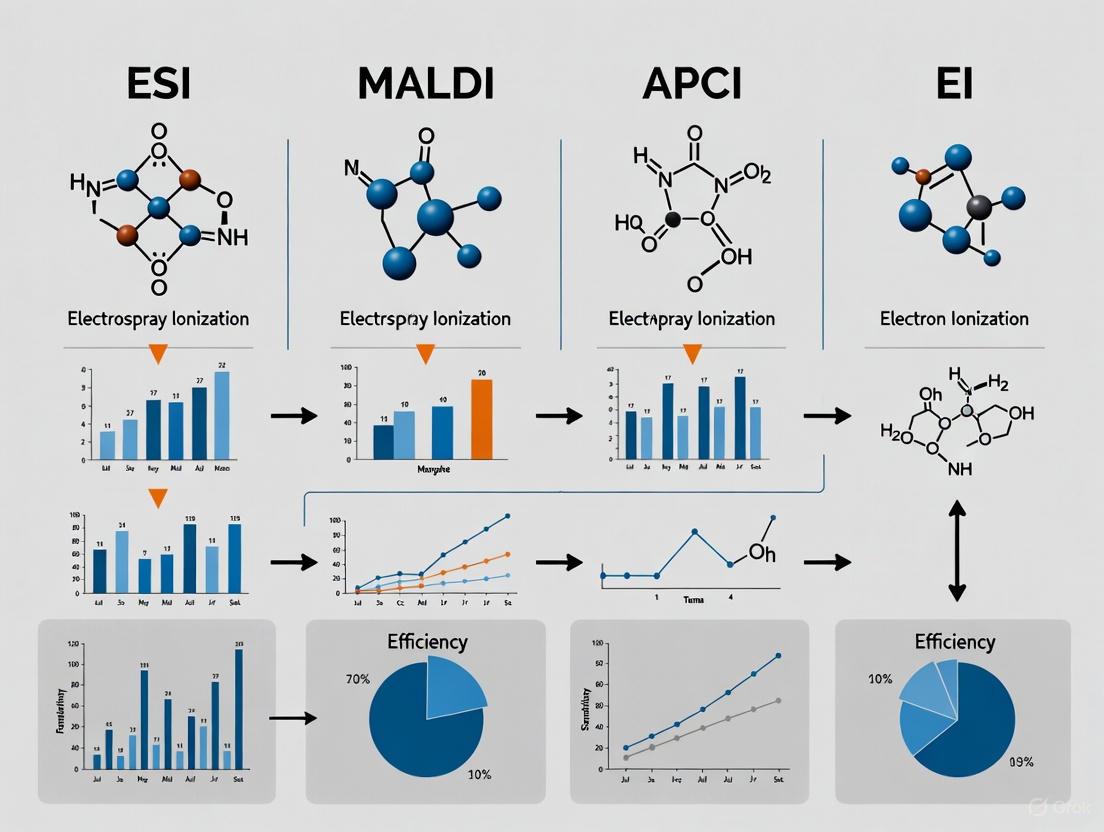
This article provides a comprehensive comparison of ionization efficiency across modern mass spectrometer platforms, tailored for researchers and professionals in drug development.
Ionization Efficiency Compared: A 2025 Guide to Mass Spectrometer Platform Performance for Drug Development
Abstract
This article provides a comprehensive comparison of ionization efficiency across modern mass spectrometer platforms, tailored for researchers and professionals in drug development. It covers foundational principles of established and emerging ionization techniques, explores their application-specific performance in pharmaceutical workflows, offers practical troubleshooting and optimization strategies, and delivers a direct comparative analysis of leading commercial instruments. The goal is to equip scientists with the knowledge to select the optimal MS platform for enhancing sensitivity, throughput, and data quality in targeted quantification, proteomics, and biomarker discovery.
Core Principles: Demystifying Ionization Mechanisms from ESI to Novel Ambient Techniques
Electrospray Ionization (ESI) is a foundational "soft ionization" technique in mass spectrometry that enables the analysis of large, non-volatile, and thermally labile molecules. By producing ions directly from a liquid solution, ESI has extended the application of mass spectrometry to biomacromolecules, revolutionizing fields such as proteomics, metabolomics, and pharmaceutical development. A key to its success is the generation of multiply charged ions, which effectively extends the mass range of analyzers and allows for the precise mass determination of proteins and other large polymers [1] [2] [3]. This guide objectively compares the ionization efficiency of ESI across different mass spectrometer platforms, providing a framework for selecting the appropriate technology based on specific analytical requirements.
The Electrospray Ionization Mechanism
The process of ESI transforms analytes in a liquid solution into gas-phase ions through several distinct stages, all occurring at atmospheric pressure.
Stage 1: Nebulization and Charged Droplet Formation
A sample solution is pumped through a fine capillary needle maintained at a high voltage (typically 2.5–6 kV) [3]. This strong electric field charges the liquid surface, forming a so-called Taylor cone from which a fine mist of highly charged droplets is ejected [1] [4]. The application of a nebulizing gas (like nitrogen) can enhance this process for higher flow rates [3].
Stage 2: Desolvation and Coulomb Fissions
The charged droplets travel towards the mass spectrometer's inlet, aided by a flow of warm, dry nitrogen gas. As the solvent evaporates, the droplets shrink, and their surface charge density increases. When the electrostatic repulsion within a droplet surpasses the surface tension holding it together (a point known as the Rayleigh limit), the droplet undergoes Coulomb fission, explosively dividing into smaller, progeny droplets [1] [4]. This cycle of evaporation and fission repeats multiple times [1].
Stage 3: Gas-Phase Ion Release
The final step of ion formation is explained by two primary models:
- Charged Residue Model (CRM): Proposed by Dole, this model suggests that repeated droplet fissions eventually lead to progeny droplets containing only a single analyte molecule. After the remaining solvent evaporates, the analyte retains the charges of the final droplet, becoming a gas-phase ion. This model is considered dominant for large molecules like folded proteins [1] [2].
- Ion Evaporation Model (IEM): Proposed by Iribarne and Thomson, this model posits that when the droplets become sufficiently small (in the nanometer range), the electric field at their surface is strong enough to directly "evaporate" or field-desorb solvated ions into the gas phase. This mechanism is thought to be more relevant for smaller ions [1] [2].
A critical feature of ESI is its ability to generate multiply charged ions [M+nH]ⁿ⁺, particularly for macromolecules like proteins. This multiple charging reduces the mass-to-charge ratio (m/z), bringing the ions within the detectable m/z range of common mass analyzers and allowing for the accurate molecular weight determination of species in the kDa to MDa range [1] [5].
The following diagram illustrates this multi-stage process and the two ion formation models.
Soft-Ionization Advantages and Challenges
ESI is classified as a "soft" ionization technique because it imparts minimal internal energy to the analyte molecules during the transition from solution to gas phase. This characteristic offers distinct advantages but also presents specific challenges that require careful experimental design.
Key Advantages
- Minimal Fragmentation: ESI overcomes the propensity of fragile biomacromolecules to fragment upon ionization, allowing the observation of intact molecular ions. This is crucial for accurately determining the molecular weight of proteins, peptides, and nucleotides [1] [2].
- Retention of Solution-Phase Information: The gentle nature of ESI can preserve non-covalent interactions in the gas phase, enabling the study of protein-ligand complexes, protein-protein interactions, and other supramolecular structures [2] [4].
- Compatibility with Liquid Chromatography: ESI serves as a perfect interface between high-performance liquid chromatography (HPLC) and mass spectrometry (LC-MS), facilitating the direct analysis of complex mixtures and enabling high-throughput applications [3] [4].
Inherent Challenges
- Susceptibility to Matrix Effects: The presence of non-volatile salts (e.g., phosphates), detergents, or ion-pairing agents in the sample can severely suppress ionization efficiency. These interfering compounds compete for charge and can prevent the analyte from being effectively ionized, leading to reduced sensitivity and inaccurate quantification [5] [4].
- Ion Suppression in Complex Mixtures: In samples with numerous components, co-eluting analytes can cause signal suppression or enhancement, complicating quantitative analysis. This necessitates meticulous sample preparation and often robust chromatographic separation [4].
- Solvent and Additive Restrictions: Only volatile buffers (e.g., ammonium acetate, formic acid) are compatible with ESI. Non-volatile buffers must be avoided as they can precipitate and clog the instrument interface [5].
Multiply Charged Ions: A Double-Edged Sword in Mixture Analysis
The production of multiply charged ions is a hallmark of ESI, but in the analysis of complex mixtures, it can lead to significant complications.
- Overlap in m/z Space: In a mixture, a singly charged ion from one component and a multiply charged ion from another, much larger, component can have very similar or identical m/z values. For instance, in lipidomics, a singly charged phosphatidylethanolamine (PE) lipid and a doubly charged cardiolipin (CL), which has roughly twice the mass, can overlap in the mass spectrum [6].
- Complications in Tandem MS: This overlap becomes particularly problematic in tandem mass spectrometry (MS/MS) experiments. If the mass isolation window for a precursor ion contains a mixture of singly and multiply charged species, the resulting fragmentation spectrum will be a composite, making it difficult to assign product ions to the correct precursor and obtain clean structural information [6].
Gas-Phase Solution: Charge-State Separation
To address this challenge, instrumental methods have been developed to separate ions based on their charge state prior to mass analysis. One such approach, performed in a linear quadrupole ion trap, exploits the charge-state dependence of an ion's kinetic energy in a trapping field [6].
Ions are thermalized through collisions with a background gas. The potential barrier for an ion to escape the trap is defined as zeU_trap, where z is the charge state, e is the elementary charge, and U_trap is the applied DC voltage. By carefully lowering the trapping potential (U_trap), it is possible to create conditions where singly charged ions (with a lower escape barrier, 1*eU_trap) are selectively ejected from the trap, while multiply charged ions (with a higher escape barrier, e.g., 2*eU_trap) remain confined. This allows for the isolation of the multiply charged population, a process known as an Enhanced Multiply Charged (EMC) scan. Conversely, the ejected singly charged ions can be captured in an adjacent ion trap for separate analysis in an Enhanced Singly Charged (ESC) scan [6].
This gas-phase separation, illustrated below, effectively deconvolutes complex spectra and removes chemical noise, thereby improving the signal-to-noise ratio for low-abundance, multiply charged ions of interest [6].
The Scientist's Toolkit: Essential Reagents and Materials for ESI
Successful ESI-MS analysis requires careful selection of solvents and additives to ensure efficient ionization and prevent instrument contamination.
Table: Essential Research Reagent Solutions for ESI-MS
| Item | Function/Purpose | Key Considerations & Examples |
|---|---|---|
| Volatile Solvents | Dissolve the analyte and form the electrospray. | Typically a mix of water and volatile organics (e.g., methanol, acetonitrile, chloroform) [1] [5]. |
| Volatile Acid | Promotes protonation in positive ion mode, increasing sensitivity. | Formic acid or acetic acid (0.1%) are commonly added to the mobile phase [5]. |
| Volatile Base | Promotes deprotonation in negative ion mode, increasing sensitivity. | Ammonium hydroxide (0.3%) can be added to the analyte solution [5]. |
| Volatile Buffer | Maintains pH in LC-MS without fouling the ion source. | Ammonium acetate or formate are standard choices. Non-volatile buffers (Tris, phosphate, HEPES) must be avoided [5]. |
| Nebulizing/Drying Gas | Shears the liquid for higher flow rates and evaporates solvent from droplets. | Nitrogen is most commonly used [1] [3]. |
Platform Comparison: ESI Performance Across Mass Spectrometers
The performance of ESI is also shaped by the mass analyzer to which it is coupled. Different platforms offer varying strengths in resolution, speed, and analytical capabilities.
Table: Comparison of ESI-MS Instrument Platforms
| Instrument | Mass Analyzer Type | Key Features | Strengths for ESI Analysis | Best Use Cases |
|---|---|---|---|---|
| TSQ Quantum Access MAX [7] | Triple Quadrupole | H-SRM, QED-MS/MS, fast polarity switching (<25 ms) | High sensitivity and selectivity for targeted quantification; rugged LC-MS/MS. | Targeted quantification, clinical assays, pharmacokinetics [7] [8]. |
| Orbitrap Fusion Lumos [7] | Quadrupole + Orbitrap + LIT | Ultrahigh resolution, multiple fragmentation modes (CID, HCD, ETD), MSⁿ capability. | Excellent for structural analysis; high mass accuracy; flexible scan modes. | Advanced proteomics, PTM mapping, drug discovery [7]. |
| Agilent 6540 UHD Q-TOF [7] | Quadrupole + TOF | Jet Stream ESI, high mass accuracy, Auto MS/MS. | Good resolution and fast acquisition; accurate mass for unknown identification. | Metabolomics, small molecule ID, fast screening [7]. |
| Q Exactive Plus [7] | Quadrupole + Orbitrap | High resolution (up to 280,000), Parallel Reaction Monitoring (PRM), DIA. | Balanced performance for quantification and identification; high dynamic range. | Quantitative proteomics, DIA workflows, biomarker discovery [7]. |
Experimental Protocol: Comparing ESI with MALDI on a Triple Quadrupole
A systematic comparison between ESI and Matrix-Assisted Laser Desorption Ionization (MALDI) can highlight their relative merits for specific applications, such as high-throughput pharmacokinetic (PK) analysis.
- Objective: To compare the analytical figures of merit and analysis speed of LC-ESI-MS and MALDI-MS for PK analysis of drug candidates from rat plasma on the same triple quadrupole platform [8].
- Methodology:
- Sample Preparation: The same solid-phase extraction protocol and internal standards were used for both methods.
- LC-ESI-MS Analysis: Sample extracts underwent fast liquid chromatography separation prior to ESI-MS analysis.
- MALDI-MS Analysis: The extracted samples were directly spotted on a MALDI target plate for analysis without chromatography.
- Mass Analysis: Both assays were performed on the same triple quadrupole mass spectrometer using identical Selected Reaction Monitoring (SRM) conditions [8].
- Key Findings:
- Performance: Both methods showed very similar performance in linearity, limit of quantitation, precision, and accuracy.
- Speed: The MALDI assay was able to generate the entire PK curve for one animal in less than 2 minutes (with five replicates), while the LC-ESI assay required 80 minutes (for two replicates). This demonstrated a >50x speed increase for MALDI in this specific context [8].
- Conclusion: While LC-ESI remains a robust and widely used method, MALDI on a triple quadrupole platform presents a compelling alternative for ultra-high-throughput quantitative analyses when chromatographic separation can be omitted [8].
Electrospray Ionization is a versatile and powerful technique that is most effective when its principles are well-understood and its implementation is carefully matched to the analytical challenge and instrument platform. Its soft-ionization nature and ability to generate multiply charged ions make it indispensable for modern biomolecular analysis. However, challenges like matrix effects and spectral complexity from charge-state overlap require strategic solutions, including rigorous sample preparation and advanced gas-phase separation techniques. The choice of mass spectrometer—whether a sensitive triple quadrupole for targeted quantification, a high-resolution Orbitrap for deep structural elucidation, or a fast Q-TOF for screening—further defines the scope and quality of the analytical results. By leveraging the comparative data and methodologies outlined in this guide, researchers can make informed decisions to optimize ESI-MS for their specific research needs.
Matrix-Assisted Laser Desorption/Ionization (MALDI) has established itself as a cornerstone analytical technique in mass spectrometry, enabling the sensitive detection of a wide range of biomolecules from small metabolites to large intact proteins. Since its development in the late 1980s, MALDI has evolved from a laboratory curiosity to a clinical cornerstone, particularly following its coupling with time-of-flight (TOF) analyzers [9]. The technique's "soft" ionization process minimizes analyte fragmentation, preserving molecular integrity for accurate mass measurement [10]. MALDI's unique capability to analyze intact tissues through mass spectrometry imaging (MALDI-MSI) has opened new frontiers in spatial omics, allowing researchers to visualize molecular distributions directly in biological samples [11] [12]. This guide examines the fundamental principles, spatial resolution capabilities, and recent innovations in quantitative performance of MALDI technology, providing researchers with a comprehensive comparison of its capabilities across mass spectrometry platforms.
Fundamental Principles of MALDI Technology
Core Mechanism and Instrumentation
The MALDI process involves embedding analytes within a light-absorbing crystalline matrix that facilitates desorption and ionization when irradiated with a laser pulse. The matrix compound, typically a small organic acid, serves two critical functions: it absorbs laser energy (typically at 337 nm from a nitrogen laser or 355 nm from a Nd:YAG laser) and transfers protons to the analyte molecules, enabling their ionization while preventing degradation [9] [13]. The ionized molecules are then accelerated through an electric field and separated based on their mass-to-charge ratio (m/z) in the mass analyzer, most commonly a time-of-flight (TOF) tube where lighter ions reach the detector faster than heavier ones [10].
The resulting mass spectrum provides a characteristic "fingerprint" of the sample composition, with the abscissa representing m/z values and the ordinate showing ion flow peak intensities [10]. This fundamental principle remains consistent across applications, though specific implementations vary based on the analytical goals, whether for microbial identification, tissue imaging, or biomarker discovery.
Critical Components and Their Functions
Table 1: Essential Research Reagents and Materials in MALDI Analysis
| Component | Function | Common Examples | Application Considerations |
|---|---|---|---|
| Matrix | Absorbs laser energy, facilitates analyte desorption/ionization, co-crystallizes with sample | CHCA (for peptides <5 kDa), SA (for proteins >5 kDa), DHB (lipids, proteins), 9-AA (metabolites in negative mode) [11] | Selection depends on analyte properties; matrix purity significantly impacts sensitivity [14] |
| Solvent System | Dissolves matrix and analytes, enables co-crystallization | Acetonitrile, ethanol, chloroform, water with trifluoroacetic acid | Affects crystal size, homogeneity, and analytical reproducibility |
| Tissue Embedding Media | Supports tissue architecture during sectioning | Carboxymethylcellulose (CMC), gelatin [12] | OCT media avoided due to ion suppression effects [12] |
| Conductive Slides | Enables sample mounting and charge dissipation | Indium tin oxide (ITO)-coated glass slides [12] | Allows simultaneous MSI and light microscopy on same slide |
| Washing Solutions | Removes interfering compounds | Ethanol, Carnoy's fluid (60% ethanol, 30% chloroform, 10% acetic acid) [12] | Redizes ion suppression from salts and lipids; protocol depends on analyte type |
Spatial Resolution in MALDI Imaging: Technical Capabilities and Limitations
Current Spatial Resolution Performance
Spatial resolution represents a critical performance parameter in MALDI Imaging Mass Spectrometry (MALDI-MSI), determining the level of anatomical detail that can be resolved in molecular images. The technology has seen remarkable advances since its inception, with resolution capabilities improving from several hundred micrometers to the single-digit micron range in contemporary systems [11] [12].
Table 2: Spatial Resolution Achievable with Different Matrix Deposition Methods in MALDI-MSI
| Deposition Method | Spatial Resolution (µm) | Key Advantages | Technical Challenges |
|---|---|---|---|
| Manual Application | >1000 [11] | Simple, accessible | Poor reproducibility, large crystal formation |
| Piezoelectric-Based Inkjet Printer | ≥150 [11] | Automated, controlled deposition | Equipment complexity, potential clogging |
| Automated Acoustic Deposition | ≥130 [11] | Non-contact, precise spotting | Limited throughput for large areas |
| Electrospray Deposition | ≥100 [11] | Homogeneous coating | Potential analyte delocalization with solvents |
| Robotic Sprayer | ~50 [11] | Balanced performance | Optimization required for different matrices |
| Nebulized Spray Coating | ~10 [11] | High resolution potential | Requires specialized equipment |
| Sublimation | ~5 [11] | Minimal analyte delocalization, pure layers | Limited extraction efficiency for proteins |
| Sublimation/Recrystallization | ~10 [11] | Enhanced extraction, high resolution | Additional processing step required |
| Low-Temperature Thermal Evaporation (LTE) | Sub-micrometer crystal size [14] | Ultra-pure layers, minimal heating, controlled thickness | Specialized equipment needed |
Methodological Innovations for Enhanced Resolution
Recent advances in matrix deposition technologies have significantly improved spatial resolution capabilities. The novel Low-Temperature Thermal Evaporation (LTE) method enables dry deposition of organic matrices under reduced vacuum pressure, producing exceptionally pure layers with crystal sizes consistently on the sub-micrometer scale [14]. This technique provides reproducible control of matrix thickness through linear calibration and eliminates solvent-induced analyte delocalization, addressing a fundamental limitation in conventional wet deposition methods.
Alternative approaches to resolution enhancement include specialized optical systems that focus laser spots to approximately 0.5μm [13] and the "stretched sample" method, which fragments tissue sections into single-cell-sized pieces attached to glass beads on a stretchable membrane for automated analysis of individual samples [13]. The "mass microscope" mode utilizes a defocused laser beam with a position-sensitive detector to generate images with approximately 4μm resolution [13], though this approach requires advanced detector technology such as pixel detectors for practical tissue imaging applications.
Diagram 1: MALDI-MSI Workflow and Resolution Factors. This workflow illustrates the key steps in MALDI imaging mass spectrometry, with critical factors affecting spatial resolution highlighted in red.
Quantitative MALDI: Overcoming Traditional Challenges
Advancements in Quantification Methodologies
Traditional MALDI analysis has faced challenges in quantitative applications due to signal heterogeneity caused by matrix crystallization inconsistencies and ion suppression effects. However, recent methodological innovations have significantly improved quantitative performance, expanding MALDI's utility in applications requiring precise concentration measurements.
The development of tissue-rinsing protocols represents a crucial advancement for protein quantification. These protocols utilize organic solvents like isopropanol or multi-step sequential rinsing with graded alcohols and Carnoy's fluid to remove lipids and salts that hamper protein ionization [11]. This approach has demonstrated remarkable 6.5-fold increases in total ion currents of proteins compared to unrinsed controls [11], substantially improving detection sensitivity and quantitative reliability.
For metabolite quantification, specialized matrices such as 9-aminoacridine (9-AA) have proven essential. Unlike conventional matrices that produce interfering ions in the low m/z range (150
Experimental Protocols for Quantitative Analysis
Quantitative Metabolite Imaging Protocol
- Tissue Preparation: Fresh frozen tissues are cryosectioned at appropriate thickness (typically 5-20μm) and thaw-mounted onto ITO-coated glass slides [12].
- Tissue Rinsing: Sections are rinsed with Carnoy's fluid (60% ethanol, 30% chloroform, 10% acetic acid) for 2 minutes to remove lipids and salts while preserving metabolites [11] [12].
- Matrix Application: 9-AA matrix is applied using controlled sublimation at 130°C under reduced pressure for 10 minutes, ensuring homogeneous microcrystalline deposition [11] [14].
- MALDI-MSI Analysis: Imaging is performed using a high-repetition rate laser (1-20 kHz) with spatial resolution settings appropriate to research questions (10-100μm) [13].
- Data Processing: Quantitative analysis incorporates internal standard normalization and ion mobility separation when available to distinguish isobaric compounds [12].
Protein-Ligand Binding Affinity Determination via IR-MALDESI
Infrared matrix-assisted laser desorption electrospray ionization (IR-MALDESI) has emerged as a powerful approach for quantifying noncovalent protein-ligand interactions, enabling rapid determination of equilibrium dissociation constants (Kd) and maximum binding capacity (Bmax) [15].
Experimental Workflow:
- Sample Preparation: Protein (e.g., carbonic anhydrase II) is dissolved in ammonium acetate buffer (20 mM, pH ~7.0) and desalted using molecular weight cutoff spin columns [15].
- Ligand Titration: A fixed protein concentration is incubated with varying ligand concentrations (e.g., 0-250 μM sulfanilamide) for 15 minutes at room temperature [15].
- High-Throughput Analysis: 30μL of each incubated mixture is transferred to a 384-well plate for IR-MALDESI-MS analysis with acquisition times of <13 seconds per concentration [15].
- Data Analysis: Fraction-bound values are plotted against free ligand concentrations, and Kd/Bmax parameters are derived by nonlinear regression of the titration curve using a one site-specific binding model [15].
Diagram 2: Quantitative MALDI Improvement Strategies. This diagram outlines the transition from traditional limitations to innovative solutions that have enhanced quantitative performance in MALDI applications.
Comparative Performance Across Mass Spectrometry Platforms
Ionization Efficiency and Application-Specific Performance
MALDI's ionization efficiency varies significantly across different analyte classes, with performance highly dependent on appropriate matrix selection and sample preparation methods. The technique demonstrates particular strength for higher molecular weight compounds such as proteins and peptides, while requiring specialized approaches for small molecules like metabolites and lipids.
Table 3: Quantitative Performance Comparison Across Analyte Classes in MALDI-MS
| Analyte Class | Recommended Matrix | Optimal m/z Range | Quantitative Challenges | Solutions |
|---|---|---|---|---|
| Proteins (>5 kDa) | Sinapinic acid (SA) [11] | 5,000-30,000+ [11] | Low abundance targets, inefficient extraction | Tissue rinsing with organic solvents, recrystallization after sublimation [11] |
| Peptides (<5 kDa) | CHCA, ionic matrices [11] | 2,000-10,000 | Interference from matrix clusters | CHCA/aniline ionic matrices, enzymatic digestion standardization [11] |
| Lipids (Positive Mode) | DHB, DHA, DAN [11] | 400-1,200 | Salt adduct formation ([M+Na]+/[M+K]+), isobaric overlaps | MS/MS imaging, matrix modifications with butylamine [11] |
| Lipids (Negative Mode) | DHB, 9-AA, DAN [11] | 400-1,200 | Ion suppression from phospholipids | 9-AA matrix, tissue washing protocols [11] |
| Small Molecules/Metabolites | 9-AA (negative mode) [11] | 150-600 | Matrix cluster interference, low concentration | 9-AA matrix, high spatial resolution (50μm) [11] |
Comparison with Alternative Ionization Techniques
When evaluated against other mass spectrometry ionization platforms, MALDI demonstrates distinct advantages and trade-offs in ionization efficiency, spatial resolution, and application suitability. Compared to electrospray ionization (ESI), MALDI generally produces simpler spectra dominated by singly-charged ions, facilitating interpretation, though potentially limiting structural information available from charge state distributions [15]. However, emerging hybrid approaches like IR-MALDESI combine benefits of both techniques, enabling analysis of noncovalent protein-ligand complexes with high throughput and minimal sample preparation [15].
For imaging applications, MALDI-MSI provides superior spatial resolution (down to 5μm with optimized protocols) compared to desorption electrospray ionization (DESI), though requires more extensive sample preparation including matrix application [12]. Secondary ion mass spectrometry (SIMS) offers higher spatial resolution (sub-micrometer) but is limited to smaller molecules and fragments analytes more extensively due to its more energetic ionization process [13].
MALDI technology has evolved significantly from its origins as a protein analysis tool to become a versatile platform addressing diverse analytical challenges across biomedical research. Innovations in matrix deposition methods, particularly low-temperature thermal evaporation and sublimation/recrystallization protocols, have substantially improved both spatial resolution and quantification capabilities. The development of application-specific matrices and tissue preparation protocols has enabled researchers to overcome traditional limitations in sensitivity and reproducibility.
For researchers and drug development professionals, contemporary MALDI platforms offer unprecedented capabilities for spatial molecular profiling, with quantitative performance now sufficient for applications ranging from drug distribution studies to biomarker validation. The ongoing integration of MALDI with complementary techniques like ion mobility separation and machine learning-assisted data analysis promises to further expand its utility in spatial omics and precision medicine initiatives. As matrix deposition methodologies continue to advance and standardization protocols mature, MALDI is positioned to remain an indispensable tool in the mass spectrometry arsenal, particularly for applications requiring spatial information alongside molecular identification.
The demand for rapid, accurate analytical results across fields like forensic science, pharmaceutical development, and heritage science has driven the innovation of ambient ionization mass spectrometry (AMS) techniques. These methods enable the direct analysis of samples in their native state with minimal or no sample preparation, bypassing the time-consuming extraction and separation steps required by conventional methods [16]. Among these, Desorption Electrospray Ionization (DESI), Direct Analysis in Real Time (DART), and the newer Extractive-Liquid Sampling Electron Ionization-Mass Spectrometry (E-LEI-MS) have emerged as powerful tools. This guide provides a comparative analysis of these three techniques, focusing on their fundamental principles, ionization efficiency, and operational performance, to inform method selection for research and drug development applications.
Principles and Ionization Mechanisms
Understanding the distinct ionization mechanisms of DESI, DART, and E-LEI-MS is fundamental to selecting the appropriate technique for a specific application.
Desorption Electrospray Ionization (DESI)
DESI is a spray-based liquid extraction technique. A charged solvent spray, generated by a pneumatically assisted electrospray needle, is directed at the sample surface under ambient conditions [16]. The impact of these microdroplets forms a thin liquid film on the sample, desorbing and extracting analytes into the liquid phase [16]. A secondary splashing process then produces microdroplets containing the dissolved analytes, which are ejected towards the mass spectrometer inlet [16] [17]. Ionization occurs primarily through charge transfer mechanisms, such as proton transfer, mediated by the solvent microdroplets [16]. The geometry of the system, including the spray angle of incidence and the distance to the MS inlet, is critical for efficient desorption and signal fidelity [16].
Direct Analysis in Real Time (DART)
DART is a plasma-based desorption technique. It operates by producing a stream of energetic, excited-state metastable atoms (often helium or nitrogen) [16] [18]. The process begins when a carrier gas is exposed to an electrical discharge, creating a plasma containing ions and electrons [18]. This plasma is then directed towards the sample. The excited gas atoms interact with the sample surface, desorbing and ionizing molecules through mechanisms like penning ionization or proton transfer [16] [18]. A key advantage of DART is its ability to analyze solids, liquids, and gases in a non-contact manner without the need for a solvent spray [16].
Extractive-Liquid Sampling Electron Ionization-Mass Spectrometry (E-LEI-MS)
E-LEI-MS represents a novel hybrid approach, combining ambient sampling with the powerful identification capabilities of electron ionization (EI) [19] [20]. A sampling tip, consisting of two coaxial tubes, is positioned over the sample surface. A solvent is delivered through the outer tube to the sample, where it dissolves the analytes. The resulting solution is immediately aspirated into the high-vacuum EI source of the mass spectrometer through the inner tube via the system's vacuum [20]. Inside the EI source, the liquid is vaporized, and the gas-phase analyte molecules are bombarded with a 70 eV electron beam, generating characteristic fragment ions [19] [20]. This process provides highly reproducible, library-searchable mass spectra directly from untreated samples [20].
The following diagram illustrates the core workflows and ionization pathways for these three techniques:
Comparative Performance Analysis
The selection of an ambient ionization technique depends heavily on performance metrics such as sensitivity, reproducibility, and the type of information required. The following table summarizes key characteristics and performance data for DESI, DART, and E-LEI-MS.
| Feature | DESI | DART | E-LEI-MS |
|---|---|---|---|
| Ionization Mechanism | Charged solvent droplet impact [16] | Metastable gas plasma interaction [16] [18] | Liquid extraction followed by 70 eV electron bombardment [20] |
| Typical Sample Throughput | High (compatible with imaging) [16] | Very High [18] | High [20] |
| Spectral Information | Protonated/deprotonated molecules, some in-source fragmentation [21] | Protonated/deprotonated molecules, limited fragmentation [18] | Library-searchable EI spectra with characteristic fragments [19] [20] |
| Key Advantage | Mass spectrometry imaging (MSI) capability [16] [21] | Rapid, non-contact analysis of solids/liquids/gases [16] [18] | High identification power via NIST library matching [20] |
| Reported LOD (Example) | - | - | ~80-400 pg for various analytes with similar techniques [22] |
| Quantitative Performance | Possible but can be affected by matrix effects [21] | Suitable for semi-quantitative analysis [22] | Good linearity and repeatability demonstrated [20] |
| Ionization Polarity | Positive and Negative mode | Positive and Negative mode | Positive mode (typically) |
A performance comparison of several ambient ionization techniques, including DART, for specific analyte classes reveals their complementary nature. The following table, compiled from experimental data, shows limits of detection (LOD) for explosives and drugs, providing a benchmark for sensitivity [22].
| Analyte | Analyte Class | ASAP LOD | TDCD LOD | DART LOD | Paper Spray LOD |
|---|---|---|---|---|---|
| PETN | Explosive | 100 pg | 200 pg | - | 400 pg |
| TNT | Explosive | 4 pg | 9 pg | - | 20 pg |
| RDX | Explosive | 10 pg | 40 pg | - | 100 pg |
| Amino Acids | Biological | High concentration range | Low pg range | High concentration range | 80-400 pg |
| Drugs | Pharmaceutical | Suitable for semi-quantitation | Excellent linearity & repeatability | Suitable for semi-quantitation | Surprising LODs |
Essential Research Reagents and Materials
Successful implementation of DESI, DART, and E-LEI-MS requires specific reagents and materials tailored to each technique's operational principle.
Key Research Reagent Solutions
| Item | Function | Technique Application |
|---|---|---|
| High-Purity Solvents (e.g., Methanol, Acetonitrile, Water) | Forms the charged electrospray for desorption/ionization and analyte extraction. | DESI [16], E-LEI-MS [19] |
| Inert Gas Supply (e.g., Helium, Nitrogen) | Source for generating excited-state metastable gas plasma. | DART [16] [18] |
| NIST/El Mass Spectral Library | Database for definitive identification of unknowns from characteristic fragmentation patterns. | E-LEI-MS (Critical) [20], DESI/DART (with MS/MS) |
| Syringe Pump & Microsyringe | Precisely controls the flow rate of the spray solvent for stable operation. | DESI [16], E-LEI-MS [20] |
| Sample Introduction Systems (e.g., QuickStrip, Metal Vessels) | Presents samples in a reproducible and automated fashion to the ionization region. | DART [18] |
| Fused Silica Capillaries | Core component of the sampling probe for precise solvent delivery and aspiration. | E-LEI-MS [20] |
Experimental Protocols and Methodologies
Detailed experimental protocols are crucial for reproducing results. Below are outlines of key methodologies cited in the literature for each technique.
DESI-MSI for Metabolomics and Lipidomics
This protocol is used for mapping the spatial distribution of metabolites and lipids in biological tissue sections [21].
- Sample Preparation: Fresh frozen tissue samples are cryo-sectioned into thin slices (typically 10-20 µm thick) and thaw-mounted onto glass microscope slides. Minimal or no matrix application is required, unlike MALDI.
- DESI Source Setup: The DESI source is configured with specific geometric parameters: a spray angle of incidence (α) of ~52°, a collection angle (β) of ~10°, and a distance of 2-3 mm between the sprayer and the sample surface. The solvent flow rate (e.g., methanol/water mixture) is set to 1.5 µL/min.
- Mass Spectrometry Imaging: The slide is mounted on a movable stage. The software defines a raster pattern to sequentially scan the entire sample surface. At each pixel location, a full mass spectrum is acquired.
- Data Analysis: Specialized software converts the spectral data into ion images, plotting the intensity of specific ions (m/z) against their spatial coordinates, revealing the distribution of hundreds of compounds simultaneously.
DART-MS for Drug and Contaminant Screening
This method is ideal for the rapid screening of pharmaceuticals, illicit drugs, or contaminants in various matrices [18] [19].
- Sample Introduction: A solid sample (e.g., a piece of tablet or material) is held in the gap between the DART source and the MS inlet using tweezers. For liquids or extracts, a dip-it tip or an automated system like QuickStrip is used.
- DART Source Operation: The helium gas flow for the DART source is activated and set to a temperature appropriate for the analyte (e.g., 250-450°C). The excited gas stream desorbs and ionizes molecules from the sample surface.
- Data Acquisition: The mass spectrometer, often a single quadrupole or time-of-flight (TOF) instrument, acquires data in full-scan mode. Acquisition times are typically a few seconds per sample.
- Compound Identification: Identification is based on the accurate mass of the protonated or deprotonated molecule ([M+H]+ or [M-H]-). Tandem mass spectrometry (MS/MS) is often required for confident identification when used with single-stage mass analyzers.
E-LEI-MS for Direct Pharmaceutical Analysis
This protocol details the direct analysis of active pharmaceutical ingredients (APIs) in tablets without any pre-treatment [20].
- System Configuration: The E-LEI-MS apparatus is set up with a coaxial sampling tip. The inner capillary (e.g., 40-50 µm I.D.) is connected to the EI source, and the outer capillary delivers solvent (e.g., acetonitrile) at a low flow rate.
- Sampling: The pharmaceutical tablet is placed on a metal support. The sampling tip is positioned directly above the tablet surface using a micromanipulator.
- Solvent Release and Aspiration: The syringe pump is activated, releasing solvent onto the tablet surface. The vacuum of the EI source immediately aspirates the dissolved analytes through the inner capillary.
- EI-MS Analysis: The sample enters the high-vacuum EI source, is vaporized, and ionized by a 70 eV electron beam. The mass spectrometer acquires data in full-scan or selected ion monitoring (SIM) mode.
- Identification via Library Match: The acquired spectrum, rich in fragment ions, is compared against a commercial NIST library for definitive identification of the API, even in the presence of excipients.
Application-Specific Considerations
Choosing the right technique depends heavily on the analytical question and sample type.
- Forensic Science: DESI is unparalleled for detecting the spatial distribution of illicit drugs in latent fingerprints or analyzing gunshot residue patterns [16]. DART-MS is extensively used for rapid screening of seized drugs, explosives, and unknown powders at ports of entry due to its speed [16] [22].
- Pharmaceutical Research: E-LEI-MS shows great promise for quality control and counterfeit drug detection because it can unequivocally identify APIs in formulations without preparation by matching to standard EI libraries [20]. DESI is valuable in drug discovery for imaging the distribution of drugs and their metabolites in tissue sections [19].
- Cultural Heritage: Both DESI and DART are used in heritage science for identifying dyes, binding media, and organic residues in artifacts like paintings and textiles. The choice depends on the artifact's sensitivity to solvents (favoring DART) or heat (favoring DESI) [17].
DESI, DART, and E-LEI-MS each offer unique capabilities that make them suitable for different analytical challenges within the paradigm of minimal sample preparation.
DESI stands out for its imaging capability, providing spatial context for chemical analysis. DART excels in raw analytical speed and simplicity for screening a wide variety of sample types. E-LEI-MS brings a powerful new dimension to ambient analysis by providing library-searchable, reproducible EI spectra, significantly enhancing the confidence of compound identification directly from complex samples.
The choice of technique is not a question of which is universally best, but which is most appropriate for the specific analytical requirement, whether it be spatial mapping, high-throughput screening, or definitive identification of unknowns. As these technologies continue to evolve, their integration into automated workflows will further solidify their role as indispensable tools in modern analytical laboratories.
High-throughput analysis has become a cornerstone of modern laboratories, particularly in pharmaceutical and biotechnology sectors where efficiency and speed are paramount. The global high-throughput screening (HTS) market size is expected to grow by USD 18.8 billion from 2025 to 2029, expanding at a compound annual growth rate (CAGR) of 10.6% during the forecast period [23]. This growth is primarily driven by increasing demand for efficient drug discovery and development processes, with rising research and development investments in the pharmaceutical industry creating greater emphasis on utilizing technology to identify potential therapeutic candidates more quickly and cost-effectively [23].
Automation serves as the backbone of high-throughput workflows, with automated plate handlers experiencing steady growth at a CAGR of 3.56% from 2019-2024 [24] [25]. These systems streamline laboratory processes by managing microplates with minimal human intervention, while automated plate readers demonstrate even more robust growth with a CAGR of 10.80% from 2019-2024 [26]. The integration of these automated systems with advanced detection technologies creates comprehensive platforms capable of processing thousands of samples daily, significantly accelerating research timelines and improving data quality through reduced human error.
Table 1: High-Throughput Analysis Market Overview
| Technology Segment | Market Size (2024) | Projected CAGR | Key Driving Factors |
|---|---|---|---|
| High-Throughput Screening | USD 18.8B (2025-2029) | 10.6% [23] | Drug discovery demand, R&D investments |
| Automated Plate Readers | USD 1,011M [27] | 11.0% (2025-2035) [27] | Demand for HTS in pharma and biotech |
| Automated Plate Handlers | Not specified | 3.56% [24] [25] | Laboratory automation needs, efficiency demands |
Core Technologies in High-Throughput Workflows
Automated Plate Handling Systems
Automated plate handlers form the foundational infrastructure for high-throughput analysis by physically managing sample plates throughout experimental workflows. These systems are categorized into several types including automated plate handlers, automated plate stackers, automated barcode labelers, and other specialized types [24] [25]. The primary function of these systems is to transport microplates between different stations in an automated workflow, including storage, labeling, incubation, and reading positions.
The market for automated plate handlers is moderately concentrated, with key players like Tecan Group Ltd, Molecular Devices LLC, Eppendorf AG, and Becton Dickinson driving innovation [25]. These companies focus on enhancing automation capabilities, increasing throughput, improving precision, and integrating advanced technologies such as AI and machine learning for data analysis and process optimization [25]. Modern systems also emphasize miniaturization and the development of user-friendly interfaces to broaden accessibility across different laboratory environments.
The applications of automated plate handlers span multiple domains including liquid handling, drug discovery, bioanalysis, analytical chemistry, and clinical diagnostics [24]. In drug discovery particularly, automated plate handlers enable high-throughput screening of compound libraries against biological targets to identify potential drug candidates, significantly accelerating the early stages of drug development [23].
Automated Plate Reading Technologies
Automated plate readers serve as the detection component in high-throughput workflows, providing the analytical capabilities to quantify biological, chemical, or physical events in microplate formats. The global automated plate readers market was valued at USD 1,011 million in 2024 and is expected to grow to USD 3,200 million by 2035, at a CAGR of 11.0% during the forecast period [27].
These instruments are categorized by detection technology into fluorescence detection, chemiluminescence detection, absorbance detection, and bioluminescence detection systems [27]. Each technology offers distinct advantages for specific applications, with fluorescence and luminescence-based methods typically providing higher sensitivity compared to absorbance-based detection.
Table 2: Automated Plate Reader Technologies Comparison
| Technology Type | Key Applications | Sensitivity Range | Throughput Capacity |
|---|---|---|---|
| Fluorescence Detection | Enzyme assays, cell-based assays | High (pM-fM) | High to ultra-high |
| Absorbance Detection | ELISA, protein quantification | Moderate (nM-μM) | Medium to high |
| Luminescence Detection | Reporter assays, ATP quantification | Very high (fM-amol) | High |
| Time-Resolved Fluorescence | Kinase assays, nuclear receptor assays | High (pM-fM) | High |
Multimode microplate readers represent the largest product segment, valued for their versatility in handling diverse assays within a single instrument [26]. This flexibility reduces costs and improves efficiency for research laboratories running multiple assay types. Technological innovations focus on enhancing sensitivity, speed, and automation capabilities, with integration of artificial intelligence and machine learning algorithms for advanced data analysis becoming increasingly common [26] [28].
Mass Spectrometry Platforms for High-Throughput Analysis
Mass spectrometry instruments represent the analytical core of many high-throughput workflows, particularly in proteomics, metabolomics, and pharmaceutical analysis. These systems vary significantly in their configuration, performance characteristics, and suitability for different applications.
The Triple Quadrupole mass spectrometer, exemplified by the TSQ Quantum Access MAX system, provides exceptional sensitivity and specificity for quantitative applications [7]. Its configuration of three quadrupoles (Q1, Q2, Q3) enables multiple scanning modes including Selected Reaction Monitoring (SRM) and High-Selectivity Reaction Monitoring (H-SRM) ideal for targeted quantification in complex matrices [7].
Hybrid systems such as the Q Exactive series combine quadrupole mass filtering with Orbitrap high-resolution detection, offering resolution up to 280,000 for the Q Exactive Plus model [7]. This combination provides excellent performance for both qualitative and quantitative workflows, particularly in proteomics and metabolomics applications where high mass accuracy is critical.
The Orbitrap Fusion Lumos Tribrid mass spectrometer represents a more advanced platform integrating quadrupole, Orbitrap, and linear ion trap (LIT) analyzers [7]. This configuration enables multi-stage fragmentation (MSⁿ) and multiple fragmentation modes (CID, HCD, ETD, UVPD), making it particularly valuable for advanced proteomics, post-translational modification mapping, and detailed structural analysis [7].
Table 3: Mass Spectrometer Platforms for High-Throughput Analysis
| Instrument | Mass Analyzer Type | Key Features | Best Use Cases |
|---|---|---|---|
| TSQ Quantum Access MAX | Triple Quadrupole | H-SRM, QED-MS/MS, fast polarity switching (<25 ms) | Targeted quantification, clinical assays, environmental monitoring |
| Q Exactive Plus | Quadrupole-Orbitrap | Resolution up to 280,000, PRM, DIA | Quantitative proteomics, DIA workflows, biomarker discovery |
| Orbitrap Fusion Lumos | Quadrupole-Orbitrap-LIT | Ultrafast MSⁿ, multiple fragmentation modes, ultrahigh resolution | Advanced proteomics, PTM mapping, metabolomics, drug discovery |
| Agilent 6540 UHD | Q-TOF | Jet Stream ESI, high mass accuracy, Auto MS/MS | Small molecule ID, metabolomics, fast screening |
Integrated Workflows for High-Throughput Analysis
Experimental Design Considerations
Designing effective high-throughput analysis workflows requires careful consideration of multiple factors including throughput requirements, sensitivity needs, sample complexity, and data analysis capabilities. For targeted quantification applications where sensitivity and specificity are paramount, triple quadrupole systems provide optimal performance with robust quantitative capabilities [7]. For discovery-based workflows requiring comprehensive characterization, high-resolution instruments like Orbitrap or Q-TOF systems offer the necessary mass accuracy and fragmentation capabilities.
Sample preparation represents a critical bottleneck in high-throughput workflows, particularly for complex analyses like N-glycan characterization of monoclonal antibodies [29]. Recent advancements have focused on designing integrated sample preparation workflows, adopting multiple well plate formats, implementing rapid enzymatic deglycosylation protocols, and reducing derivatization time through modified labels [29]. Automation of these sample preparation steps using liquid handling robotic systems has demonstrated significant improvements in throughput and reproducibility.
Data analysis complexity increases substantially in high-throughput workflows, necessitating specialized bioinformatics tools for data processing, interpretation, and storage. For glycan analysis specifically, tools including GlycoDigest, GlycoMod, autoGU, Glyco-Peakfinder, and SimGlycan have been developed to facilitate interpretation and assignment of complex glycan profiles [29]. Integration of automated data processing platforms with automated sample preparation and data acquisition creates seamless workflows that maximize efficiency.
Workflow Visualization: High-Throughput Analysis Process
The following diagram illustrates a generalized workflow for high-throughput analysis integrating automated plate handling, sample processing, and mass spectrometric detection:
This integrated workflow demonstrates how automated plate handlers and readers serve as front-line tools for primary screening, while mass spectrometry platforms provide detailed characterization for selected hits or samples of interest. The seamless transition between these systems enables comprehensive analysis of large sample sets with minimal manual intervention.
Essential Research Reagent Solutions
Successful implementation of high-throughput analysis workflows requires carefully selected reagents and consumables optimized for automated platforms. The following table details key research reagent solutions essential for these applications:
Table 4: Essential Research Reagents for High-Throughput Analysis
| Reagent Category | Specific Examples | Function in Workflow | Compatibility Notes |
|---|---|---|---|
| Enzyme Kits | Rapid PNGase F, Trypsin/Lys-C mix | Protein deglycosylation and digestion | Optimized for 96/384-well formats, reduced incubation time [29] |
| Derivatization Tags | RapiFluor-MS, InstantAB labels | Glycan labeling for detection | Reduced derivatization time (minutes vs. hours) [29] |
| Microplate Formats | 96-well, 384-well, 1536-well plates | Sample container and reaction vessel | Compatibility with automated handlers critical [24] [25] |
| Separation Media | HILIC, RPLC, HPAEC columns | Glycan/peptide separation | Method transfer to capillary formats for faster analysis [29] |
| Buffer Systems | Ammonium formate, acetate buffers | Mobile phase for LC separations | MS-compatible formulations, optimal pH control [29] |
| Calibration Standards | Dextran ladders, peptide mixes | Mass calibration and quality control | Essential for instrument performance verification [7] |
These reagent solutions are specifically optimized for high-throughput applications, focusing on reduced processing time, enhanced compatibility with automated liquid handling systems, and improved detection characteristics. For instance, modified glycan labels such as RapiFluor-MS have significantly reduced derivatization time from several hours to mere minutes while maintaining or improving detection sensitivity [29]. Similarly, rapid enzymatic deglycosylation protocols have been developed that maintain complete digestion while reducing incubation times from overnight to just 30-60 minutes [29] [7].
Comparative Performance Analysis
Throughput and Efficiency Metrics
High-throughput screening technologies offer significant advantages over traditional methods in terms of efficiency and capacity. HTS technology enables screening of large compound libraries against biological targets to identify potential drug candidates, with some studies reporting up to a 5-fold improvement in hit identification rates compared to traditional methods [23]. The implementation of HTS has reduced development timelines by approximately 30%, enabling faster market entry for new drugs [23].
Throughput capacity varies significantly between different detection technologies, with modern automated plate readers capable of processing thousands of samples per day. Ultra-high throughput screening systems can exceed 100,000 assays per day, particularly when integrated with automated plate handlers and stackers that ensure continuous operation [23]. Mass spectrometry-based approaches typically offer lower absolute throughput but provide significantly more detailed structural information, creating a trade-off between speed and information content that must be balanced based on application requirements.
Regional adoption patterns reflect these technological considerations, with North America dominating the automated plate readers market (valued at USD 474 million in 2024) due to substantial investments in research and development and a high demand for innovative healthcare solutions [27]. Europe also shows strong growth potential, while the Asia-Pacific region is experiencing steady expansion fueled by rising healthcare expenditures and technological advancements [27].
Analytical Performance Characteristics
The analytical performance of high-throughput systems varies significantly based on the detection technology employed. Fluorescence-based plate readers typically offer sensitivity in the pico- to femtomolar range, while luminescence detection can reach even higher sensitivity levels [27]. Mass spectrometry platforms provide exceptional specificity and structural elucidation capabilities, with modern Orbitrap instruments delivering resolution exceeding 200,000 and mass accuracy below 3 ppm [7].
For quantitative applications, triple quadrupole mass spectrometers provide the highest sensitivity and dynamic range, with the TSQ Quantum Access MAX capable of detecting analytes at low femtogram levels with signal-to-noise ratios exceeding 100:1 [7]. These systems support rapid polarity switching (<25 ms) and multiple reaction monitoring modes that enhance selectivity in complex matrices [7].
High-resolution mass spectrometry platforms bridge the gap between screening and confirmation, with the Q Exactive Plus providing both excellent quantification capabilities through parallel reaction monitoring (PRM) and data-independent acquisition (DIA), along with high-resolution full-scan data for retrospective analysis [7]. This combination makes such platforms particularly valuable for biomarker discovery and validation workflows.
Future Directions and Implementation Considerations
Emerging Technological Trends
The field of high-throughput analysis continues to evolve with several emerging trends shaping future development. Integration of artificial intelligence and machine learning represents perhaps the most significant trend, with these technologies being applied to enhance data analysis, improve pattern recognition, and enable more sophisticated experimental design [26] [28]. AI algorithms can optimize instrument parameters, identify subtle patterns in complex datasets, and even predict experimental outcomes based on historical data.
Miniaturization represents another important trend, with laboratories increasingly adopting 384-well and 1536-well formats to reduce reagent consumption and increase throughput [24] [25]. This trend is particularly relevant given the focus on sustainability in laboratory operations, with reduced waste generation and lower solvent consumption becoming important considerations.
Automation of sample preparation continues to be a major focus, with recent advancements in integrated kit-based workflows that can be automated through commercially available liquid handling robotic systems [29]. These solutions address the persistent challenge of sample preparation bottlenecks, particularly for complex analyses like N-glycan characterization where multiple processing steps are required.
Implementation Challenges and Solutions
Despite significant advancements, implementation of high-throughput analysis platforms presents several challenges that must be addressed for successful deployment. The high initial investment required for automated systems represents a significant barrier, particularly for smaller laboratories [24] [25]. Additionally, the technical complexity of these systems creates demand for skilled personnel who can operate, maintain, and troubleshoot the equipment [23].
To address these challenges, vendors are increasingly focusing on developing more user-friendly interfaces and robust software to simplify operation and data management [25]. Modular system architectures allow laboratories to implement automation incrementally, spreading costs over time while building internal expertise gradually. Additionally, cloud-based data management solutions are emerging that facilitate remote monitoring and collaboration while reducing local IT infrastructure requirements [27].
Technical compatibility between different system components remains challenging, particularly when integrating equipment from multiple vendors. Strategic partnerships between technology companies are helping to address this challenge by creating validated workflows that ensure seamless interoperability between automated plate handlers, readers, and mass spectrometry systems [28]. These integrated solutions reduce implementation complexity and provide laboratories with more predictable performance characteristics.
Inductively Coupled Plasma Mass Spectrometry (ICP-MS) has established itself as a cornerstone technique for trace elemental and impurity analysis across diverse scientific and industrial fields. This technique combines an inductively coupled plasma source, capable of generating temperatures of approximately 10,000 K, with a mass spectrometer to detect ions based on their mass-to-charge ratio. [30] [31] The fundamental strength of ICP-MS lies in its exceptional sensitivity, enabling it to measure most elements in the periodic table at concentrations from high parts per million (ppm) down to parts per trillion (ppt) levels, a range that is crucial for detecting trace impurities in pharmaceutical products and high-purity materials. [32] [30] Furthermore, its wide dynamic range—spanning up to 10 orders of magnitude—allows for the simultaneous quantification of major, minor, and trace elements in a single analysis run, a key advantage over techniques like graphite furnace atomic absorption (GFAA), which is limited to single-element analysis and has lower sample throughput. [33] [30]
The technique's versatility is amplified by its compatibility with various sample introduction methods. While liquid sample analysis via nebulization is most common, hyphenated techniques such as Laser Ablation ICP-MS (LA-ICP-MS) enable direct solid sampling, and coupling with chromatography systems like Liquid Chromatography ICP-MS (LC-ICP-MS) provides powerful speciation capabilities. [31] This multi-element capability, combined with short analysis times and simple sample preparation, makes ICP-MS a highly efficient tool for laboratories facing high sample volumes, such as those in environmental monitoring and drug development. [33]
Comparative Analysis with Alternative Techniques
Choosing the appropriate elemental analysis technique depends heavily on the specific application requirements, including detection limits, sample throughput, and matrix complexity. The following table provides a structured comparison of ICP-MS with other common analytical techniques.
Table 1: Comparison of ICP-MS with Other Elemental Analysis Techniques
| Technique | Detection Limits | Analytical Range | Multi-Element Capability | Sample Throughput | Key Advantages | Key Limitations |
|---|---|---|---|---|---|---|
| ICP-MS | ppt to ppm [32] | Up to 10 orders of magnitude [30] | Yes, simultaneous [33] | High [33] | Extremely low detection limits; isotopic analysis capabilities. [32] | High equipment and operational cost; susceptibility to spectral interferences. [33] |
| ICP-OES | ppb to ppm [32] | Large [33] | Yes, simultaneous [34] | High [33] | Robust for high-matrix samples (up to 30% TDS); simpler operation. [32] | Higher detection limits than ICP-MS; cannot measure isotopes. [32] |
| Graphite Furnace AA | ppt to ppb [33] | Limited [33] | Single element [33] | Low [33] | Low equipment cost; low detection limits for a single element. [33] | Very low sample throughput; not suitable for multi-element panels. [33] |
| Flame AA | ppb to ppm [33] | Limited [33] | Single or few elements [33] | Reasonably high [33] | Low equipment cost and operational expertise; few interferences. [33] | Limited analytical range; higher sample volume required. [33] |
For drug development professionals, the implications of this comparison are significant. ICP-MS is the unequivocal choice for quantifying low-abundance elemental impurities as per regulatory guidelines (e.g., ICH Q3D) in active pharmaceutical ingredients (APIs), excipients, and final drug products due to its ultra-trace detection capability. [33] Its ability to perform isotopic labeling and tracing is also invaluable in advanced pharmacokinetic and metabolism studies. [31] In contrast, ICP-OES is a more cost-effective and robust workhorse for routine monitoring of elements at higher concentration levels, such as catalyst residues in APIs, where its tolerance for high total dissolved solids (TDS) minimizes sample preparation needs. [32] Graphite Furnace AA may still find a niche in laboratories with a very limited budget and a need to monitor only one or two specific trace elements with low frequency.
Experimental Protocols for Assessing ICP-MS Performance
Single-Particle ICP-MS (spICP-MS) for Nanomaterial Characterization
The characterization of nanoparticles (NPs) in biological systems is a critical task in nanomedicine and toxicology. Single-Particle ICP-MS (spICP-MS) has emerged as a leading technique for this purpose, allowing direct determination of particle size, size distribution, and number concentration at environmentally relevant levels. [35]
Detailed Methodology:
- Sample Preparation: A highly diluted suspension of nanoparticles is essential to ensure that particles are introduced into the plasma individually. For complex biological matrices (e.g., tissues, blood), an enzymatic extraction is often required. For instance, ground beef tissue spiked with silver NPs can be extracted using a solution of protease and lipase in HEPES buffer to liberate the NPs into a liquid suspension without altering their native state. [35]
- Instrument Tuning and Calibration: The ICP-MS is tuned for maximum sensitivity and stability. A key step is determining the transport efficiency, which is the fraction of the nebulized sample that actually reaches the plasma. This is typically done using a reference NP suspension, such as well-characterized gold nanoparticles. The instrument's response time (dwell time) is set to a very short interval (e.g., 100 µs or less) to resolve the transient signals from individual particles. [35]
- Data Acquisition and Analysis: The diluted sample is introduced, and the instrument operates in a time-resolved analysis mode. Each NP vaporizes and ionizes in the plasma, producing a discrete pulse of ions. The intensity of each pulse is proportional to the mass of the element in the particle, and the frequency of pulses is related to the particle number concentration. Data processing software converts the signal intensity into particle size using calibration curves and known particle density. [35]
Laser Ablation ICP-MS (LA-ICP-MS) for Solid Samples
LA-ICP-MS bypasses liquid sample preparation by using a laser to directly ablate solid samples into an aerosol transported to the ICP. A critical experimental consideration is the phenomenon of two-phase sample transport, recently investigated for carbon-based materials. [36]
Detailed Methodology for Investigating Two-Phase Transport: [36]
- Sample Preparation: Polymer films (e.g., Polyimide (PI), PMMA) are prepared by drop-casting their solutions onto silicon wafers and curing to form a flat, homogeneous layer.
- Ablation and Transport: An ArF excimer laser (193 nm) is fired at the sample. The ablation process generates both particulate matter and gaseous carbon species. The carrier gas flows (Helium) are optimized to achieve a clear temporal separation between the particulate and gaseous peaks in the ICP-MS signal.
- Signal Detection and Quantification: A high-speed ICP-MS (e.g., quadrupole-based with minimal settling time) monitors the carbon isotope (13C+) with a high time resolution (e.g., 0.3 ms dwell time). The resulting signal shows distinct peaks for particles and gas. The sensitivity (counts per pg of carbon) for each phase is calculated by correlating the integrated signal with the ablated mass, determined by crater volume profilometry.
- Key Finding: This methodology revealed that the sensitivity for particulate carbon can vary by up to a factor of 7 (1.69 to 14.06 cts/pg) depending on the polymer matrix, while gaseous carbon sensitivity was more consistent (13.8 cts/pg). This matrix-dependent response makes carbon an inadequate internal standard for LA-ICP-MS analysis of heterogeneous carbon-based samples. [36]
Fundamentals of Ionization Efficiency in ICP-MS
The unrivalled sensitivity of ICP-MS for trace element analysis is fundamentally rooted in the exceptional ionization efficiency of the argon plasma source. Ionization efficiency refers to the fraction of atoms of a specific element that are converted into ions available for detection.
The ionization process occurs within the inductively coupled plasma, a hyperthermic environment sustained at temperatures of approximately 10,000 K. [30] [31] At these energies, the plasma provides an ionization potential of 15.8 eV, which is sufficient to efficiently ionize most elements in the periodic table. [30] Elements with a first ionization potential below 8-9 eV, such as sodium (5.14 eV), potassium (4.34 eV), and calcium (6.11 eV), are almost completely ionized (>90%). Even elements with high first ionization energies, like arsenic (9.81 eV) and selenium (9.75 eV), achieve useful ionization efficiencies of over 40% in the argon plasma, which is a significant advantage over other ionization sources. [31] This high and uniform ionization efficiency across most elements minimizes sensitivity variation and is a key reason for the technique's broad applicability and excellent detection limits.
Diagram of the ionization and analysis process in ICP-MS, highlighting the role of the high-temperature plasma and subsequent interference removal.
Managing Spectral Interferences
Despite high ionization efficiency, the analytical signal can be compromised by spectral interferences, primarily caused by polyatomic ions formed in the plasma from argon, solvent-derived species (water, acids), and matrix components. Common examples include:
- ArO+ (mass 56), which interferes with the most abundant isotope of Iron (56Fe).
- ArCl+ (mass 75), which interferes with the only isotope of Arsenic (75As). [30]
Modern ICP-MS instruments mitigate these interferences using a Collision/Reaction Cell (CRC) placed before the mass analyzer. The CRC operates in two primary modes:
- Collision Mode: An inert gas like helium is used. Polyatomic interferences, being larger than analyte ions, undergo more collisions and lose more kinetic energy. An energy barrier at the cell exit then filters out these lower-energy interferences, a process known as Kinetic Energy Discrimination (KED).
- Reaction Mode: A reactive gas (e.g., hydrogen) is used. The gas undergoes chemical reactions with the polyatomic interferences, converting them into harmless species or shifting them to a different mass, while the analyte ions remain unreactive. [30]
This ability to handle complex matrices is vital for analyzing biological and pharmaceutical samples, which often contain high levels of chlorine, carbon, and other potential interference-forming elements.
The Scientist's Toolkit: Essential Reagents and Materials
Successful and accurate ICP-MS analysis requires careful selection of high-purity reagents and materials to prevent contamination and ensure method integrity.
Table 2: Essential Research Reagent Solutions for ICP-MS
| Item | Function / Purpose | Key Considerations |
|---|---|---|
| High-Purity Acids (e.g., HNO₃) | Sample digestion and dilution; prevents precipitation of analytes. [34] | "Trace metal grade" acids are essential to avoid introducing elemental contaminants. [34] |
| Internal Standard Solution | Compensates for instrumental drift and matrix-induced suppression/enhancement. [31] | Elements (e.g., Indium, Rhodium) not present in the sample are added to all standards and samples. [31] |
| Tuned ICP-MS Instrument | The core analytical platform for ionizing samples and detecting elements. | Requires daily tuning for maximum sensitivity and stability; involves optimization of gas flows and lens voltages. [36] |
| Single/Multi-Element Calibration Standards | Used to establish a calibration curve for quantitative analysis. [31] | Certified Reference Materials (CRMs) ensure accuracy and traceability. |
| Certified Reference Materials (CRMs) | Method validation and verification of analytical accuracy. [31] | Should be matrix-matched to the sample type (e.g., urine, serum, water) where possible. |
| High-Purity Argon Gas | Plasma gas and auxiliary flows; sustains the high-temperature ICP. [33] | High purity (>99.99%) is required for stable plasma and low background signals. |
| Polypropylene Labware | Sample preparation, storage, and filtration to avoid adsorption or leaching. [34] | Preferred over glass as it does not adsorb or introduce metals. [34] |
ICP-MS stands as a powerful and versatile platform for trace elemental and impurity analysis, offering unmatched detection limits and multi-element capabilities that are essential for modern research and quality control in drug development. Its superior ionization efficiency, derived from the high-temperature argon plasma, provides a significant advantage over other atomic spectroscopy techniques. While methods like ICP-OES remain robust for higher-concentration analyses, the sensitivity, speed, and isotopic capability of ICP-MS solidify its position as the premier technique for ultra-trace level quantification. As demonstrated by advanced applications like spICP-MS and LA-ICP-MS, ongoing methodological developments continue to expand the frontiers of what is possible in elemental analysis, offering researchers and scientists ever more powerful tools for characterization and discovery.
Application-Driven Performance: Matching Ionization Sources to Pharmaceutical and Clinical Workflows
Liquid chromatography coupled with triple quadrupole mass spectrometry using electrospray ionization (LC-ESI-QqQ-MS) represents the gold standard for high-throughput targeted bioanalysis in drug development and clinical research. This dominance stems from its exceptional sensitivity and specificity achieved through multiple reaction monitoring (MRM), robust quantitative performance across diverse matrices, and operational efficiency that supports routine analysis. While high-resolution mass spectrometry (HRMS) platforms offer advantages for untargeted analysis, the triple quadrupole remains unparalleled for dedicated quantification workflows. This guide examines the technical foundations, performance characteristics, and experimental considerations that solidify ESI-QqQ-MS as the premier platform for targeted assays.
Targeted quantification of small molecules, peptides, and metabolites in biological matrices represents a cornerstone of pharmaceutical development and clinical diagnostics. The analytical technique must deliver exceptional sensitivity, specificity, precision, and throughput to support critical decisions in drug discovery and patient care. Among available technologies, liquid chromatography-triple quadrupole mass spectrometry with electrospray ionization has emerged as the dominant platform, particularly for applications requiring robust, high-throughput quantification of dozens to hundreds of predefined analytes [37] [38].
The configuration of three quadrupoles in series – the first for mass selection, the second as a collision cell, and the third for fragment analysis – creates an exceptionally selective filtering system. When paired with the soft ionization capabilities of electrospray, which efficiently produces gas-phase ions from solution, this platform delivers the performance characteristics essential for modern bioanalysis [3] [39]. The following sections explore the technical foundations, experimental evidence, and practical advantages underlying the sustained dominance of this technology in regulated and research environments.
Technical Foundations: How ESI-QqQ-MS Works
Electrospray Ionization: Efficient Ion Production
Electrospray ionization enables the transfer of analytes from liquid solution to the gas phase as ions, making it ideal for coupling liquid chromatography with mass spectrometry. The ESI process involves three key steps: (1) dispersal of a fine spray of charged droplets, (2) solvent evaporation through heated desolvation, and (3) ion ejection from highly charged droplets into the mass spectrometer [3]. This "soft" ionization technique efficiently produces molecular ions with minimal fragmentation, making it particularly suitable for thermally labile compounds such as pharmaceuticals and metabolites [40].
The efficiency of ESI is influenced by several factors including solvent composition, flow rate, and source parameters. Heated ESI generally provides improved signal compared to unheated approaches, enhancing detection capabilities for targeted assays [37]. ESI sources are also highly adaptable to different flow regimes, with conventional ESI operating effectively at capillary flow rates (1-10 μL/min) that balance sensitivity and robustness [41].
Triple Quadrupole Configuration: Selective Mass Filtering
The triple quadrupole mass spectrometer consists of three consecutive quadrupoles that perform distinct functions in tandem mass spectrometry experiments [42] [39]:
- Q1 (First Quadrupole): Functions as a mass filter to select precursor ions of a specific mass-to-charge ratio (m/z)
- Q2 (Collision Cell): An RF-only quadrupole where collision-induced dissociation (CID) with inert gas (e.g., argon) fragments the selected precursor ions
- Q3 (Third Quadrupole): Filters the resulting product ions based on their m/z
This arrangement enables multiple operational modes, with Multiple Reaction Monitoring (MRM) representing the gold standard for targeted quantification.
Multiple Reaction Monitoring: The Gold Standard for Quantification
MRM mode leverages the triple quadrupole's sequential filtering capability to achieve exceptional specificity. In this approach, both Q1 and Q3 are set to transmit specific m/z values – Q1 selects the intact molecular ion (precursor), while Q3 monitors a characteristic fragment (product) generated through CID [42]. Each precursor→product ion pair constitutes a "mass transition" that serves as a highly selective detection channel.
The power of MRM lies in its dual filtering approach, which significantly reduces chemical background and matrix interferences that plague other detection methods. This results in superior signal-to-noise ratios even for trace analytes in complex biological matrices such as plasma, urine, or tissue extracts [38] [42].
Performance Advantages in Targeted Assays
Sensitivity and Detection Limits
The combination of efficient ESI ionization and selective MRM detection enables exceptional sensitivity for quantitative applications. Experimental data demonstrate detection limits at the amol level for peptide analysis using capillary LC-ESI-QqQ-MS, with all eight target peptides clearly detected from 10 amol to 100 fmol on column [41]. For pharmaceutical applications, ESI-QqQ methods successfully quantified 20 oral molecular-targeted anticancer drugs and one active metabolite in human plasma, addressing concentration ranges differing by more than 100,000-fold through intelligent ion abundance adjustment techniques [43].
Specificity and Interference Reduction
The dual mass filtering inherent to MRM provides structural specificity that immunoassays and single-stage mass spectrometry cannot match. Whereas immunoassays suffer from antibody cross-reactivity leading to false positives and overestimated concentrations [38], MRM requires both correct retention time and mass transition, providing two orthogonal dimensions of selectivity. This specificity is particularly valuable for endocrine testing, where LC-MS/MS has become the reference method for steroid hormone analysis due to its ability to differentiate structurally similar compounds that immunoassays cannot resolve [38].
Quantitative Precision and Dynamic Range
Triple quadrupole systems deliver robust quantitative performance across extensive concentration ranges, typically achieving 4-5 orders of linear dynamic range [7] [41]. This wide dynamic range accommodates the substantial concentration variations encountered in biological systems and pharmaceutical applications. The quantitative reliability of QqQ systems is evidenced by their adoption as reference measurement procedures by organizations such as the Centers for Disease Control and Prevention (CDC) for endocrine testing [38].
Throughput and Operational Efficiency
The fast scanning speed and rapid polarity switching (<25 ms) of modern triple quadrupole instruments support high-throughput analysis [7]. Scheduled MRM algorithms further enhance efficiency by monitoring transitions only during expected retention windows, enabling quantification of hundreds of analytes in a single run [37] [41]. This throughput capability makes ESI-QqQ-MS ideal for applications requiring large sample volumes, such as therapeutic drug monitoring, newborn screening, and clinical trials [38].
Comparison with Alternative Mass Spectrometry Platforms
ESI-QqQ-MS vs. High-Resolution Mass Spectrometry
While high-resolution accurate mass (HRAM) instruments like Orbitrap and Q-TOF systems excel in untargeted discovery applications, triple quadrupoles maintain advantages for dedicated quantification [44]. The core differentiators include:
Table 1: Performance Comparison Between QqQ and HRMS Platforms
| Parameter | Triple Quadrupole (QqQ) | High-Resolution MS (Orbitrap, Q-TOF) |
|---|---|---|
| Quantitative Performance | Superior sensitivity and linear dynamic range for targeted assays [44] | Comparable for some applications, but may have limited dynamic range [44] |
| Acquisition Mode | MRM with high selectivity [42] | Full scan with post-acquisition extraction [37] |
| Throughput | Optimized for targeted analysis of many compounds [38] | Better for untargeted analysis and retrospective data mining [44] |
| Specificity | Based on retention time and mass transition [42] | Based on retention time and accurate mass [44] |
| Data File Size | Relatively small [44] | Substantially larger, creating data management challenges [44] |
| Operational Robustness | High; less susceptible to mass calibration drift [44] | Requires more frequent calibration; "less robust" in production environments [44] |
ESI-QqQ-MS vs. Other Ionization Techniques
Electrospray ionization provides distinct advantages for LC-MS-based bioanalysis compared to other ionization techniques:
Table 2: Comparison of Ionization Techniques for LC-MS
| Technique | Mechanism | Advantages | Limitations |
|---|---|---|---|
| Electrospray Ionization (ESI) | Ion formation via charged droplet formation and desolvation [3] | Excellent for polar, thermally labile compounds; compatible with LC flow rates [3] | Susceptible to matrix effects; may require source cleaning |
| Atmospheric Pressure Chemical Ionization (APCI) | Gas-phase chemical ionization at atmospheric pressure [37] | Less susceptible to matrix effects; good for less polar compounds [37] | Thermal degradation possible; not ideal for large biomolecules |
| Atmospheric Pressure Photoionization (APPI) | Photoionization using UV light [37] | Enhanced for non-polar compounds [37] | Limited application range; less established |
| Ambient Ionization (ASAP, DART) | Direct ionization from surfaces with minimal preparation [40] | Rapid analysis; minimal sample preparation [40] | Semi-quantitative; limited dynamic range; precision challenges [40] |
Experimental Protocols and Methodologies
Standard Workflow for Targeted Quantification
A typical LC-ESI-QqQ-MS method development protocol involves these critical steps:
Sample Preparation
- Protein precipitation using cold organic solvents (e.g., methanol) for plasma/serum [37]
- Rapid quenching of metabolism for cell/tissue samples (e.g., liquid nitrogen freezing) [37]
- Addition of stable isotope-labeled internal standards to correct for variability [43] [39]
Chromatographic Separation
- Reversed-phase chromatography with C18 or C8 columns [39]
- Hydrophilic interaction chromatography (HILIC) for polar compounds [37]
- Ion-pairing chromatography (e.g., with tributylamine) for acidic metabolites [37]
- Capillary columns (100-500 μm i.d.) for enhanced sensitivity [41]
Mass Spectrometric Analysis
- Optimization of precursor and product ions using compound standards [42]
- Collision energy optimization for each mass transition [42]
- MRM method development with 2-3 transitions per compound (quantifier and qualifier) [39]
- Implementation of scheduled MRM for increased multiplexing capacity [41]
Case Study: High-Throughput Anticancer Drug Monitoring
A recently published methodology for simultaneous quantification of 20 oral molecular-targeted anticancer drugs exemplifies ESI-QqQ-MS capabilities [43]. The experimental protocol included:
- Instrumentation: Shimadzu LCMS-8050 triple quadrupole with ESI source
- Chromatography: YMC-Triart C18 column (2.1 × 50 mm, 3 μm) with ammonium formate (pH 3.6)-methanol gradient
- Sample Volume: 6 μL injection
- Run Time: 5 minutes per sample
- Ionization: Positive ESI mode with 4000V probe voltage
- Key Innovation: Four ion abundance adjustment techniques (collision energy defects, in-source CID, secondary SRM, isotopologue SRM) to address detector saturation and extend linear range
This method successfully resolved the challenge of simultaneously quantifying analytes with therapeutic ranges differing by over 100,000-fold, demonstrating the flexibility of ESI-QqQ-MS for complex analytical challenges [43].
Figure 1: ESI-QqQ-MS MRM Workflow. The process begins with sample introduction via liquid chromatography, followed by electrospray ionization, sequential mass filtering through three quadrupoles, and final detection producing quantitative MRM data.
Essential Research Reagent Solutions
Table 3: Key Reagents and Materials for ESI-QqQ-MS Methods
| Reagent/Material | Function | Application Notes |
|---|---|---|
| Stable Isotope-Labeled Internal Standards | Correction for extraction and ionization variability [43] [39] | Typically deuterated (2H) or 13C-labeled analogs; should elute chromatographically identical to analytes |
| HPLC-Grade Organic Solvents (methanol, acetonitrile) | Mobile phase components; protein precipitation [43] | Low UV cutoff and minimal MS contaminants essential |
| Volatile Buffers (ammonium formate, formic acid) | Mobile phase modifiers for separation and ionization [43] [41] | Typically 0.1% formic acid or 2-10 mM ammonium salts; compatible with ESI |
| Solid-Phase Extraction Cartridges | Sample clean-up and analyte enrichment [43] | Various chemistries (C18, mixed-mode) for specific application needs |
| Analytical Columns (C18, HILIC, ion-pairing) | Chromatographic separation of analytes [37] [43] | Selection depends on analyte polarity; sub-2μm particles for UHPLC |
Application Domains Showcasing ESI-QqQ-MS Dominance
Therapeutic Drug Monitoring
LC-ESI-QqQ-MS has revolutionized therapeutic drug monitoring (TDM) by enabling simultaneous quantification of multiple drugs and metabolites with superior specificity compared to immunoassays [43] [38]. The technology is particularly valuable for dose optimization of drugs with narrow therapeutic windows, such as anticancer agents, immunosuppressants, and antidepressants. The simultaneous method for 20 tyrosine kinase inhibitors demonstrates how ESI-QqQ-MS supports personalized medicine by enabling precision dosing based on individual pharmacokinetics [43].
Endocrine Testing
Steroid hormone analysis represents a domain where ESI-QqQ-MS has largely displaced immunoassays due to superior specificity and the ability to perform multiplexed steroid profiling [38]. The UK National External Quality Assessment Service reports a six-fold increase in LC-MS/MS utilization for steroid hormone testing from 2011-2019, reflecting the technology's growing dominance for endocrine applications [38].
Newborn Screening
Inherited metabolic disorder screening represents one of the earliest clinical adoptions of ESI-QqQ-MS, with the technology now forming the backbone of expanded newborn screening programs worldwide [38] [3]. A Scopus database analysis revealed that 84% of newborn screening studies published between 2014-2024 utilized mass spectrometry, with 823 out of 924 papers explicitly employing tandem mass spectrometry or triple quadrupole technology [38]. This preference stems from the ability to simultaneously screen for dozens of metabolic markers from a single dried blood spot with high throughput and specificity.
Figure 2: Key Application Domains for ESI-QqQ-MS. Triple quadrupole technology dominates multiple application areas in biomedical research and clinical diagnostics where robust, sensitive, and specific quantification is required.
Triple quadrupole LC-MS/MS with electrospray ionization maintains its dominant position in high-throughput targeted quantification due to an unmatched combination of sensitivity, specificity, robustness, and throughput. While high-resolution mass spectrometry platforms offer compelling capabilities for untargeted discovery applications, the operational efficiency and quantitative performance of QqQ instruments in MRM mode remain superior for dedicated quantification workflows. The extensive adoption of ESI-QqQ-MS across therapeutic drug monitoring, clinical diagnostics, and biomedical research underscores its critical role in advancing personalized medicine and pharmaceutical development. As mass spectrometry technology continues to evolve, the triple quadrupole platform will likely maintain its central position in the quantitative bioanalytical landscape, particularly for applications requiring robust, reproducible quantification of predefined analytes in complex matrices.
The comprehensive analysis of intact proteins, or top-down proteomics, is crucial for characterizing proteoforms—distinct molecular forms of a protein arising from variations like post-translational modifications (PTMs) and alternative splicing [45] [46]. Unlike bottom-up approaches that digest proteins into peptides, top-down proteomics preserves the intact protein, enabling precise identification and localization of modifications that define a protein's functional state [46] [47]. This is particularly critical for biologics characterization, where attributes like glycosylation patterns can directly impact therapeutic efficacy and safety [47]. Two advanced mass spectrometry platforms have become pivotal for these analyses: Orbital Ion Traps (Orbitraps) and Trapped Ion Mobility Spectrometry (TIMS) systems.
Orbitrap mass analyzers provide high-resolution mass measurements by detecting ions oscillating around a central electrode, with frequency data converted to mass-to-charge ratios via Fourier transformation [48] [7]. When coupled with quadrupole mass filters and linear ion traps in hybrid instruments like the Orbitrap Fusion Lumos, they enable versatile fragmentation experiments essential for protein sequencing [7]. In contrast, TIMS devices, particularly when coupled with time-of-flight (TOF) analyzers in instruments like the timsTOF, separate ions based on their collision cross-section (CCS) in addition to mass [45] [49]. This ion mobility dimension provides a separation orthogonal to mass, helping to resolve complex protein mixtures and isobaric proteoforms that are challenging to distinguish by mass alone [45] [49]. The following sections will objectively compare the performance of these platforms, supported by experimental data detailing their capabilities in intact protein characterization.
Technology Comparison: Performance and Applications
Analytical Performance Metrics
Table 1: Key Performance Metrics of Orbital Ion Trap and TIMS Platforms
| Performance Metric | Orbital Ion Trap (e.g., Q Exactive Plus) | TIMS-TOF (e.g., timsTOF) |
|---|---|---|
| Mass Resolution | Up to 280,000 at m/z 200 [7] | Defined by TOF analyzer; high resolution possible [45] |
| Mass Accuracy | Sub-ppm level with internal calibration [47] | < 20 ppm with TOF; challenges in top-down fragment assignment [45] |
| Fragmentation Techniques | HCD, CID, ETD, UVPD [7] | CID, UVPD (2-3 mbar pressure) [45] |
| Ion Utilization | Parallel-accumulation in C-trap [7] | PASEF (Parallel Accumulation-Serial Fragmentation) [45] |
| Key Separation Dimension | Mass-to-charge (m/z) | Mass & Collision Cross Section (CCS) [45] [49] |
| Sequence Coverage (Example) | Extensive coverage with MSⁿ capability [7] | 73% for Ubiquitin; decreases with increasing mass [49] |
Application Strengths and Limitations
Orbital Ion Traps excel in scenarios demanding ultra-high mass resolution and accuracy. The exceptional resolution of modern Orbitrap instruments (e.g., Q Exactive Plus: 280,000) allows for the separation of near-isobaric proteoforms and precise determination of modification masses [7]. Their ability to perform multiple stages of fragmentation (MSⁿ) within the tribrid architecture of instruments like the Orbitrap Fusion Lumos is a distinct advantage for localizing multiple PTMs on a single protein molecule [46] [7]. Common limitations include the relatively slower scan rates compared to TOF systems and the high instrument cost and operational complexity [7].
TIMS-TOF platforms offer a unique advantage by adding a separation based on ion size and shape through the measurement of collision cross sections (CCS) [45] [49]. This is particularly powerful for native top-down analysis, where protein conformation can be correlated with proteoform identity [45]. The PASEF (Parallel Accumulation-Serial Fragmentation) technology dramatically enhances sensitivity and sequencing speed by improving ion utilization efficiency [45] [50]. A key limitation is the inherent challenge of achieving fragment ion assignment at the 5-20 ppm mass accuracy typical of TOF analyzers, which can be mitigated using mobility data and probability-based scoring [45]. Furthermore, while effective for proteins up to 66 kDa, sequence coverage has been shown to decrease with increasing protein mass [49].
Experimental Data and Workflow Comparison
Workflow for Intact Protein Characterization
The general workflow for top-down protein characterization involves sample preparation, ionization, mass analysis, fragmentation, and data interpretation. While the core steps are similar, the implementation differs significantly between Orbital Ion Trap and TIMS-TOF platforms.
Diagram: Comparative Top-Down Proteomics Workflow
Key Experimental Protocols
Protocol 1: Top-Down Tandem-MS on an Orbital Ion Trap Platform (e.g., Q Exactive Series) This protocol is adapted for hybrid quadrupole-Orbitrap instruments [47] [7]. Sample Preparation: Proteins are solubilized in MS-compatible buffers such as 100 mM ammonium acetate for native conditions or methanol/water with 1% acid for denatured analysis [47]. The use of photocleavable surfactants like Azo is recommended for membrane proteins [46]. LC-MS/MS Analysis: Intact proteins are separated using reversed-phase liquid chromatography (e.g., with a C4 column) and ionized via electrospray ionization. The instrument is operated in data-dependent acquisition mode. A full MS scan is acquired in the Orbitrap at high resolution (e.g., 140,000-280,000). The most intense protein ions are isolated by the quadrupole with a 3-10 m/z window and fragmented using techniques like Higher-Energy Collisional Dissociation (HCD). The resulting fragment ions are analyzed in the Orbitrap. Data Analysis: Deconvolution software (e.g., MASH Explorer, TopPIC) is used to determine intact protein mass from the charge state envelope and to match fragment ions to protein sequences for PTM localization [49] [51].
Protocol 2: Top-Down Analysis with Ion Mobility on a TIMS-TOF Platform This protocol leverages the tandem-TIMS and PASEF capabilities of the timsTOF [45] [49]. Sample Preparation: Similar to Protocol 1, proteins are prepared in volatile buffers. For native MS, 100-200 mM ammonium acetate is used [45] [46]. LC-TIMS-MS/MS Analysis: Intact proteins are introduced into the mass spectrometer via LC infusion. Ions are first mobility-separated in the first TIMS device (TIMS1). As ions elute from TIMS1, specific mobility windows can be selected for fragmentation in the collision cell (using CID) or via UV Photodissociation (UVPD) at 2-3 mbar [45]. The resulting fragment ions are then separated in the second TIMS device (TIMS2) based on their own collision cross-sections before being mass-analyzed by the TOF. The PASEF mode is employed to dramatically increase sequencing speed and sensitivity by synchronizing the mobility elution with precursor selection [45]. Data Analysis: Fragment ion assignment is aided by the additional mobility dimension, which helps resolve isobaric fragments. The collision cross-section (CCS) values for both precursors and fragments provide an additional identifier [45] [49].
Comparative Performance Data
Table 2: Experimental Sequencing Data for Protein Standards
| Protein / Complex | Molecular Weight | Platform & Technique | Reported Sequence Coverage | Key Experimental Parameters |
|---|---|---|---|---|
| Ubiquitin | 8.6 kDa | TIMS-TOF (CID in TIMS) | 73% ± 1% (55 of 75 bonds) [49] | Δ6 voltage: 150 V; Tunnel-in pressure: 1.5 mbar [49] |
| Cytochrome C | ~12 kDa | TIMS-TOF (CID in TIMS) | 42% ± 2% (43 of 103 bonds) [49] | Δ6 voltage: 150 V; Tunnel-in pressure: 1.5 mbar [49] |
| β-Lactoglobulin | ~18 kDa | TIMS-TOF (CID in TIMS) | 25% ± 1% (40 of 161 bonds) [49] | Δ6 voltage: 150 V; Tunnel-in pressure: 1.5 mbar [49] |
| DDB1:DCAF1 Complex | - | Reduced Pressure nESI MS | Detectable at 50 nM concentration [52] | High-salt solution (up to 300 mM NaCl) [52] |
Essential Research Reagents and Materials
Successful top-down proteomics requires careful sample preparation and the use of MS-compatible reagents to prevent signal suppression and ensure high-quality data.
Table 3: Key Research Reagents for Top-Down Proteomics
| Reagent / Material | Function / Purpose | MS-Compatibility & Notes |
|---|---|---|
| Ammonium Acetate | Volatile buffer for protein solubilization and native MS [46] [47] | Highly compatible; easily removed during desolvation. Preferred over non-volatile salts [47]. |
| Photocleavable Surfactant (Azo) | Solubilizes membrane and hydrophobic proteins [46] | Compatible; rapidly degraded by UV light prior to analysis, preventing signal suppression [46]. |
| Methanol & Acetic Acid / Formic Acid | Organic solvent and acid for denaturing protein samples [49] | Highly compatible; promotes protein unfolding and ionization in positive ESI mode [47] [49]. |
| Molecular Weight Cut-Off (MWCO) Filters | Desalting and buffer exchange [46] [47] | Critical for removing non-volatile salts, detergents, and other MS-incompatible contaminants [47]. |
| Nanoscale Emitters (nano-ESI) | Sample ionization for ESI-MS [52] | Enhances sensitivity and reduces salt adduction; reduced pressure ionization can further improve performance [52]. |
The choice between Orbital Ion Trap and TIMS-TOF platforms for intact protein characterization is not a matter of one being universally superior, but rather which is best suited to the specific research question. Orbital Ion Traps offer unmatched mass resolution and accuracy, making them the platform of choice for detailed PTM localization and the analysis of extremely complex mixtures where mass precision is paramount. The recent development of intelligent data acquisition algorithms like FLASHIda, which uses real-time deconvolution and machine learning to optimize precursor selection, further enhances the capabilities of Orbitrap-based platforms for top-down proteomics [51].
Conversely, TIMS-TOF systems provide a powerful orthogonal separation based on ion mobility, which is invaluable for resolving isobaric proteoforms, analyzing proteins under native conditions, and obtaining conformational data via collision cross-section measurements [45] [49]. The high-speed, sensitive PASEF acquisition mode makes TIMS-TOF particularly attractive for high-throughput applications and the analysis of low-abundance species [45] [50]. The evolution of "proteoformics" highlighted at recent conferences underscores the growing role of TIMS technology in this field [50].
For researchers focused on the deepest possible characterization of a single protein, including exhaustive PTM mapping, an Orbital Ion Trap is often the preferred tool. For studies aiming to profile many proteoforms in a complex mixture, especially where conformational differences are relevant, a TIMS-TOF platform may provide significant advantages. As both technologies continue to advance, their combined application will undoubtedly push the boundaries of our ability to characterize the intact proteome, driving innovations in biologics development and basic biomedical research.
The increasing complexity of the global drug supply, characterized by the emergence of novel psychoactive substances and synthetic opioids, demands analytical techniques that provide rapid, reliable, and informative results [53]. In both forensic science and pharmaceutical quality control, the time between sample collection and result reporting is often critical. Traditional analytical methods, such as gas or liquid chromatography coupled with mass spectrometry (GC-MS or LC-MS/MS), provide high-quality results but typically require extensive sample preparation and chromatographic separation, which limits analysis speed [54].
Ambient Ionization Mass Spectrometry (AIMS) techniques have emerged as powerful alternatives, enabling the direct analysis of samples in their native state with minimal or no pretreatment [22] [20]. These techniques allow analysts to obtain results in seconds to minutes, facilitating near real-time decision-making. This review objectively compares the performance of several ambient ionization techniques, including Direct Analysis in Real Time (DART), Extractive-Liquid Electron Ionization Mass Spectrometry (E-LEI-MS), and related methods, for drug analysis applications. The evaluation is framed within broader research on ionization efficiency across mass spectrometer platforms, providing scientists with practical data for technique selection.
Performance Comparison of Ambient Ionization Techniques
A comprehensive 2024 comparative study evaluated multiple ambient ionization techniques coupled to a single quadrupole mass spectrometer for analyzing diverse analytes, including amino acids, drugs, and explosives [22]. The study focused on key performance metrics: linearity, repeatability, and limits of detection (LOD). The table below summarizes the quantitative findings for drug analysis applications.
Table 1: Performance comparison of ambient ionization techniques for drug analysis
| Technique | Key Advantages | Limitations | Linear Range | Repeatability (RSD) | Representative LOD |
|---|---|---|---|---|---|
| ASAP | Covers high concentration ranges; suitable for semiquantitative analysis | - | High concentration range | - | Competitive with ESI |
| DART | Covers high concentration ranges; suitable for semiquantitative analysis | - | High concentration range | - | Competitive with ESI |
| TDCD | Exceptional linearity and repeatability for most analytes | - | Excellent | Excellent for most analytes | - |
| Paper Spray | Surprising LODs despite complex setup | Complex setup | - | - | 80-400 pg for most analytes |
| E-LEI-MS | EI-generated, NIST-searchable spectra; minimal sample prep | Requires different capillary configurations for different MS vacuum conditions | Suitable for qualitative screening | - | - |
The performance data reveals that each technique presents a distinct profile of advantages. ASAP and DART are characterized by their wide linear ranges, making them suitable for applications where semiquantitative analysis is sufficient [22]. TDCD stands out for its exceptional analytical performance in linearity and repeatability. Paper Spray ionization achieves remarkably low detection limits, despite the relative complexity of its setup [22].
A key finding is that ambient ionization techniques can achieve limits of detection that are competitive with traditional electrospray ionization (ESI) for various compounds. For instance, the explosive PETN showed an LOD of 80 pg with ESI versus 100 pg with ASAP; TNT showed 9 pg with ESI versus 4 pg with ASAP; and RDX showed 4 pg with ESI versus 10 pg with ASAP [22]. This demonstrates that the speed advantage of ambient ionization does not necessarily come at the cost of sensitivity.
Emerging Techniques: E-LEI-MS Workflow and Applications
Extractive-Liquid Electron Ionization Mass Spectrometry (E-LEI-MS) represents a novel analytical strategy that combines ambient sampling with the high identification power of electron ionization (EI) [20]. This technique uses a solvent to extract analytes directly from a sample surface at atmospheric pressure, with the solution immediately aspirated into the high vacuum of an EI source [20]. A critical differentiator of E-LEI-MS from other ambient techniques is its production of classical 70-eV EI mass spectra, which are directly searchable against extensive commercial libraries such as the National Institute of Standards and Technology (NIST) database [20]. This capability significantly enhances compound identification confidence for unknown substances.
The E-LEI-MS system configuration consists of a solvent-release mechanism connected to a sampling tip that positions precisely over the sample surface [19]. The core component is a coaxial tip assembly where solvent flows through an outer tubing to the sample surface, and the resulting solution containing extracted analytes is aspirated through an inner tubing directly into the EI source [20] [19]. System configurations have been successfully adapted for different mass spectrometers, including single quadrupole, triple quadrupole (QqQ), and accurate-mass quadrupole time-of-flight (Q-ToF) instruments [19].
Experimental Protocol for E-LEI-MS Analysis
The following workflow details the standard operating procedure for E-LEI-MS analysis of pharmaceutical and forensic samples:
Sample Preparation: Place the sample (tablet, residue on surface, etc.) on a metal support. No additional preparation, extraction, or processing is required [20] [19].
System Configuration Selection:
Solvent Selection and Delivery:
Sampling Process:
- Position the sampling tip above the sample surface using a micromanipulator (accuracy 0.1 mm) [20]
- Activate solvent flow to wet the sample surface (approximately 1-2 μL)
- Open the on-off valve (e.g., MV201 manual microfluidic valve) to initiate aspiration of the analyte-containing solution to the EI source [20]
Mass Spectrometry Analysis:
Data Analysis:
- For unknown identification, compare acquired spectra against NIST library [20]
- For targeted analysis, use characteristic fragment ions for confirmation
The following diagram illustrates the E-LEI-MS sampling and ionization workflow:
Figure 1: E-LEI-MS workflow for direct drug analysis
Comparative Experimental Data and Applications
Forensic Application: Detection of Benzodiazepines in Simulated Crime Scenes
E-LEI-MS has demonstrated particular utility in forensic applications, specifically in detecting benzodiazepines used in drug-facilitated crimes. A 2025 study applied the technique to analyze 20 benzodiazepines, including six commonly abused compounds (clobazam, clonazepam, diazepam, flunitrazepam, lorazepam, and oxazepam) used to fortify gin and tonic cocktails to simulate drug-facilitated sexual assault (DFSA) scenarios [19].
Table 2: E-LEI-MS performance in pharmaceutical and forensic applications
| Application | Samples Analyzed | Sample Preparation | Key Results |
|---|---|---|---|
| Pharmaceutical Analysis | 20 industrial drugs, various formulations | None | Successful detection of APIs and excipients; identification of ingredients in online-purchased supplements [19] |
| Forensic Analysis (Benzodiazepines) | 20 BDZs standard solutions; fortified cocktail residues | Dried spots on watch glass | Accurate identification of BDZs in simulated DFSA scenario; detection at 20 mg/L concentration [19] |
| General Forensic Screening | Cocaine on banknotes; pesticides on fruit peel; unknown painting components | None | Spatial distribution mapping of analytes; successful identification of controlled substances [20] |
The forensic application is particularly significant because benzodiazepines have short half-lives in biological matrices, making them challenging to detect in victims after 72 hours [19]. E-LEI-MS enables rapid screening of drink residues directly at crime scenes, providing an alternative detection pathway when biological testing is no longer feasible.
Comparison with DART-MS for Seized Drug Analysis
Direct Analysis in Real Time (DART) represents another prominent ambient ionization technique with extensive applications in forensic drug analysis. The National Institute of Standards and Technology (NIST) has developed validation templates for implementing DART-MS for qualitative seized drug analysis [55]. DART-MS enables complete qualitative analysis of samples in under a minute, allowing near real-time monitoring of the drug landscape [53].
Key advantages of DART-MS include:
- Rapid response to evolving drug supplies: Internal spectral databases can be frequently updated as new reference materials become available [53]
- Retrospective data mining: Once new reference materials are added, previously collected data can be re-analyzed to identify when new compounds first appeared [53]
- High-throughput capability: Analysis times under one minute per sample enable processing of large sample batches [53]
However, DART-MS typically produces protonated molecules rather than classical EI fragments, which may limit structural information without secondary fragmentation (MS/MS) or high-resolution mass spectrometry [53]. This represents a significant differentiation from E-LEI-MS, which provides standard EI fragmentation patterns.
Essential Research Reagents and Materials
Successful implementation of ambient ionization techniques requires specific instrumentation and consumables. The following table details essential components for establishing E-LEI-MS capability.
Table 3: Essential research reagents and materials for E-LEI-MS
| Item | Specifications | Function/Purpose |
|---|---|---|
| Mass Spectrometer | Single quadrupole, QqQ, or Q-ToF with EI source | Platform for mass analysis and detection [20] [19] |
| Sampling Tip (Inner Tubing) | Fused silica capillary; 30-50 μm I.D.; 375 μm O.D. | Core sampling component; aspirates analyte solution to EI source [20] [19] |
| Solvent Delivery Syringe Pump | KD Scientific syringe pump with 1-mL Hamilton syringe | Precise solvent delivery to sampling interface [20] [19] |
| On-Off Valve | MV201 manual microfluidic 3-port valve | Regulates access to ion source; prevents continuous aspiration [20] |
| Micromanipulator | Standa or equivalent with 0.1 mm accuracy | Precise positioning of sampling tip relative to sample surface [20] |
| Vaporization Microchannel (VMC) | Tube (530 μm I.D.; 600 μm O.D.; 24 cm length) | Facilitates vaporization and transport of liquid extract into ion source [19] |
| Extraction Solvents | Acetonitrile, methanol (HPLC grade) | Extraction and transfer of analytes from sample surface [20] [19] |
Ambient ionization techniques represent a paradigm shift in drug analysis for both forensic and pharmaceutical applications. The comparative data demonstrates that technique selection should be guided by specific analytical requirements:
- DART-MS offers exceptional speed and throughput for high-volume screening applications, with established validation frameworks for implementation [53] [55].
- E-LEI-MS provides the unique advantage of NIST-searchable EI spectra, enabling confident identification of unknowns without reference standards, particularly valuable for emerging drugs [20] [19].
- ASAP and TDCD cover complementary concentration ranges with robust performance characteristics [22].
For researchers investigating ionization efficiency across mass spectrometer platforms, these techniques offer distinct profiles of analytical performance. The future development of standardized methods and validation packages will further lower implementation barriers, making these powerful techniques more accessible to laboratories addressing the challenges of modern drug analysis [53]. As the drug landscape continues to evolve, ambient ionization MS techniques will play an increasingly critical role in providing rapid, reliable analytical data for public health and safety.
High-Resolution Mass Spectrometry (HRMS) has revolutionized metabolomics and untargeted screening by providing the superior mass accuracy and resolving power necessary to identify and characterize thousands of metabolites in complex biological samples. The metabolome represents the total complement of small molecule metabolites (<1500 Da) present in a biological system, providing a direct readout of cellular activity and physiological status [56]. Within the field of HRMS, two platforms have emerged as predominant tools for investigative analysis: the Quadrupole Time-of-Flight (Q-TOF) mass spectrometer and the Hybrid Orbital Trap platform, most commonly exemplified by the Orbitrap series of instruments [57] [58]. These technologies have enabled a paradigm shift from targeted analyses to comprehensive untargeted screening, allowing researchers to discover novel biomarkers and understand complex biological responses without prior knowledge of the metabolic landscape [56].
The fundamental advantage of HRMS in metabolomics lies in its ability to measure mass-to-charge ratios (m/z) with exceptional precision, typically at resolutions exceeding 10,000 full-width half-maximum (FWHM) and mass accuracies below 5 parts per million (ppm) [58]. This capability allows for the discrimination of isobaric compounds—different metabolites with nearly identical nominal masses—and enables the determination of elemental compositions for unknown compounds, a critical requirement for confident metabolite identification [57]. For researchers in drug development and translational medicine, these platforms provide invaluable insights into metabolic pathways, disease mechanisms, and biochemical responses to therapeutic interventions [58].
Technical Comparison: Q-TOF Versus Hybrid Orbital Trap Platforms
Fundamental Operating Principles and Instrument Designs
The Q-TOF and Hybrid Orbital Trap platforms employ fundamentally different physical principles for mass separation and measurement. Q-TOF instruments separate ions based on their time of flight through a field-free drift tube, with lighter ions reaching the detector faster than heavier ones when accelerated by the same voltage [59]. Modern Q-TOF systems achieve high resolution through reflectron technology and sophisticated detection systems, with typical resolving powers of 20,000-40,000 FWHM [58].
In contrast, Hybrid Orbital Trap instruments, particularly Orbitrap systems, utilize electrostatic fields to trap ions around a central spindle-shaped electrode. Ions oscillate around this central electrode with frequencies proportional to their mass-to-charge ratios, generating an image current that is deconvoluted by Fourier transformation into a mass spectrum [57] [59]. This operating principle enables significantly higher resolving powers, typically ranging from 60,000 to over 500,000 FWHM depending on the specific instrument model and acquisition parameters [60] [57].
The "hybrid" designation in Orbital Trap systems refers to their combination with additional mass analyzers, most commonly a linear ion trap, which enables sophisticated fragmentation experiments including data-dependent acquisition (DDA) and data-independent acquisition (DIA) [60] [57]. This configuration allows for simultaneous high-resolution measurement and multi-stage fragmentation (MSⁿ), providing richer structural information for metabolite identification.
Performance Characteristics and Key Specifications
The following table summarizes the key performance characteristics of Q-TOF and Hybrid Orbital Trap platforms relevant to metabolomics and untargeted screening applications:
Table 1: Performance Comparison of Q-TOF and Hybrid Orbital Trap Platforms
| Performance Parameter | Q-TOF Platforms | Hybrid Orbital Trap Platforms |
|---|---|---|
| Mass Accuracy | ≤5 ppm with internal calibration [58] | ≤2-3 ppm with internal calibration [60] [58] |
| Resolving Power | 20,000-40,000 FWHM [58] | 60,000-500,000 FWHM [60] [57] |
| Scan Speed | ≥20 spectra/second [58] | ~1 second at 100,000 FWHM [58] |
| Dynamic Range | 4-5 orders of magnitude [58] | 3-5 orders of magnitude [60] [58] |
| Fragmentation Capabilities | CID, sometimes with additional fragmentation techniques [59] | CID, HCD, ETD, UVPD (depending on configuration) [60] [57] |
| MSⁿ Capability | MS² typically | MSⁿ with ion trap combination [57] [58] |
Implications for Metabolomics and Untargeted Screening
The differing performance characteristics of these platforms create distinct advantages for specific applications in metabolomics. Q-TOF systems excel in high-throughput screening scenarios where rapid data acquisition is critical, such as large-scale biomarker discovery studies or functional genomics screens involving thousands of samples [61] [58]. The fast scan speeds (≥20 spectra/second) enable better characterization of narrow chromatographic peaks in UHPLC separations, potentially detecting more metabolite features during transient elution events [58].
Hybrid Orbital Trap platforms provide superior capabilities for structural elucidation of unknown metabolites and isobar discrimination, particularly valuable when studying novel metabolic pathways or characterizing complex natural products [57]. The ultra-high resolution (>100,000 FWHM) enables separation of isobaric compounds with small mass differences (e.g., 5.6 mDa mass difference between N₂ and C₂H₄), which would be challenging to resolve on typical Q-TOF instruments [57]. Additionally, the multiple fragmentation techniques available on hybrid systems (HCD, CID, ETD, UVPD) provide complementary structural information that facilitates confident metabolite identification [60].
Experimental Approaches for Platform Comparison in Metabolomics
Standardized Metabolite Profiling Workflow
To objectively compare the performance of Q-TOF and Orbitrap platforms, researchers should implement a standardized experimental workflow that controls for variability in sample preparation, chromatography, and data analysis. The following diagram illustrates a robust metabolomics workflow suitable for cross-platform comparison:
Diagram 1: Standardized Metabolomics Workflow for Platform Comparison
Chromatographic Separation and Ionization Protocols
For comprehensive metabolite coverage, researchers should employ complementary chromatographic separations, typically involving reversed-phase (RP) chromatography for non-polar to moderately polar metabolites and hydrophilic interaction liquid chromatography (HILIC) for polar metabolites [62]. A detailed protocol for HILIC-based separation optimized for Orbitrap platforms involves:
- Column Selection: Zwitterionic HILIC column (e.g., Atlantis Premier BEH Z-HILIC, 4.6 × 150 mm, 2.5 μm) with guard column [62]
- Mobile Phase: Solvent A (20 mM ammonium carbonate in water, pH 9.2), Solvent B (acetonitrile) [62]
- Gradient Program: Linear gradient from 80% B to 20% B over 15-20 minutes [62]
- Flow Rate: 300 μL/min [62]
- Column Temperature: 45°C [62]
- Injection Volume: 5-10 μL [62]
Electrospray ionization (ESI) is the most common ionization technique for metabolomics applications, with both positive and negative ionization modes required for comprehensive metabolite coverage [57] [56]. Source parameters should be optimized for each platform but typically include:
- Source Temperature: 300-350°C
- Ion Spray Voltage: ±3.5-5.0 kV (positive/negative mode)
- Sheath Gas: 40-50 arbitrary units
- Auxiliary Gas: 10-15 arbitrary units
Data Acquisition Strategies for Untargeted Screening
Both Q-TOF and Orbitrap platforms support sophisticated data acquisition strategies for untargeted metabolomics. Data-dependent acquisition (DDA) is widely used but often misses lower-abundance metabolites due to preferential selection of intense ions for fragmentation [62]. Advanced DDA techniques like "deep-scan DDA" can increase MS/MS acquisition of lower-abundance features by more than 80% compared to standard DDA [62].
Data-independent acquisition (DIA) methods, such as sequential window acquisition of all theoretical fragment ion spectra (SWATH) on Q-TOF platforms or all-ion fragmentation (AIF) on Orbitrap platforms, fragment all ions within predetermined isolation windows without precursor ion selection, providing more comprehensive fragmentation data but with increased spectral complexity [60] [57].
For high-throughput applications, flow-injection mass spectrometry (FI-MS) without chromatographic separation can analyze samples in ~15-30 seconds using optimized scan ranges, detecting thousands of m/z features, though with reduced ability to separate isobaric compounds [61].
Comparative Performance in Metabolomics Applications
Metabolite Coverage and Sensitivity
Studies directly comparing platform performance in metabolomics applications reveal distinct differences in metabolite coverage and sensitivity. In a comparative study of osmotic stress in microalgae, Orbitrap GC-MS detected approximately 3-fold more compounds (339 vs. 114) than a single-quadrupole GC-MS system when using the same biological material [63]. While this comparison involved GC-MS systems, it demonstrates the general principle that high-resolution platforms typically detect more metabolite features due to their superior ability to distinguish low-abundance ions from chemical noise.
The following table summarizes key findings from comparative studies in different application domains:
Table 2: Experimental Performance Comparison in Various Applications
| Application Domain | Q-TOF Performance | Orbitrap Performance | Study Findings |
|---|---|---|---|
| Serum Metabolomics | Suitable for classification of homogeneous populations [64] | 8-17% higher accuracy in predictive models (≥83%) [64] | Both platforms achieved good prediction models, with Orbitrap showing advantages in model accuracy [64] |
| Comprehensive Metabolite Screening | Detected 543 standards with ZIC-pHILIC chromatography [62] | Detected 707 standards (71% of 990) with Z-HILIC chromatography [62] | Orbitrap with advanced chromatography detected 30% more metabolite standards [62] |
| High-Throughput Screening | ~1 minute per sample with ToF systems [61] | ~5 minutes per sample with spectral stitching method [61] | Q-TOF generally faster for high-throughput applications [61] [58] |
| Structural Elucidation | Good MS/MS capabilities with typical CID fragmentation [58] | Multiple fragmentation techniques (HCD, CID, ETD) with high-resolution MSⁿ [60] [57] | Orbitrap provides more comprehensive structural information [57] [58] |
Data Quality and Analytical Performance
Mass accuracy and resolution directly impact data quality in untargeted metabolomics. Orbitrap systems generally provide slightly better mass accuracy (typically ≤2-3 ppm vs. ≤5 ppm for Q-TOF) with internal calibration, which can be crucial for elemental composition determination of unknown metabolites [60] [58]. Modern Orbitrap systems can maintain <1 ppm mass accuracy for at least 5 days with EASY-IC internal calibration sources [60].
In terms of resolution, Orbitrap platforms clearly outperform Q-TOF systems, particularly at lower m/z values where many metabolites of interest are detected. For example, the Orbitrap Exploris 480 offers 480,000 resolving power at m/z 200, compared to typically 20,000-40,000 for Q-TOF systems [60] [58]. This superior resolution enables separation of isobaric compounds with small mass differences that would co-elute and be reported as a single feature on lower-resolution instruments.
Scan speed represents an area where Q-TOF platforms maintain an advantage, with acquisition rates of ≥20 Hz compared to approximately 1 second per scan at high resolution (100,000 FWHM) for Orbitrap systems [58]. This makes Q-TOF instruments better suited for coupling with ultra-high-performance liquid chromatography (UHPLC) where peak widths may be only 1-2 seconds [58].
Essential Research Reagents and Materials
Successful metabolomics studies require careful selection of reagents and materials to ensure reproducibility and data quality. The following table outlines essential solutions and their functions:
Table 3: Essential Research Reagent Solutions for Metabolomics
| Reagent Solution | Composition/Type | Function in Metabolomics Workflow |
|---|---|---|
| Metabolite Extraction Solvent | Methanol/chloroform/water (e.g., 4:4:3.6 ratio) [56] | Biphasic extraction of polar (methanol/water phase) and non-polar metabolites (chloroform phase) [56] |
| Internal Standards | Stable isotope-labeled metabolites (e.g., ¹³C, ¹⁵N, ²H) [56] | Correction for extraction efficiency, matrix effects, and instrument variability [56] |
| HILIC Mobile Phase | Solvent A: 20 mM ammonium carbonate in water, pH 9.2; Solvent B: acetonitrile [62] | Chromatographic separation of polar metabolites in HILIC mode [62] |
| Calibration Solution | FlexMix or similar commercial calibration mixtures [60] | Mass accuracy calibration for instrument performance validation [60] |
| Quality Control Sample | Pooled representative biological samples or commercial standards [65] | Monitoring instrument stability and data quality throughout analytical sequence [65] |
Decision Framework for Platform Selection
The choice between Q-TOF and Hybrid Orbital Trap platforms depends on specific research goals, sample throughput requirements, and available resources. The following diagram illustrates a decision framework for platform selection:
Diagram 2: Decision Framework for Platform Selection
Q-TOF platforms are recommended when:
- Research requires high-throughput analysis of large sample cohorts (hundreds to thousands of samples) [61] [58]
- Studies focus on known metabolites or targeted metabolic pathways
- Budget constraints necessitate a balance between performance and cost [58]
- Fast scan speeds are needed to adequately capture narrow UHPLC peaks [58]
Hybrid Orbital Trap platforms are preferred when:
- Research involves extensive structural elucidation of unknown metabolites [57] [58]
- Studies require the highest confidence in metabolite identification [60] [57]
- Analysis of complex mixtures with numerous isobaric compounds is necessary [57]
- Multiple fragmentation techniques are needed for comprehensive structural characterization [60] [57]
For laboratories with sufficient resources, maintaining both platforms provides optimal flexibility, allowing researchers to match the analytical tool to specific project requirements. As both technologies continue to evolve, the performance gap between them continues to narrow, with modern Q-TOF systems achieving better resolution and mass accuracy, while newer Orbitrap systems feature improved scan speeds and sensitivity [57] [59].
Inductively Coupled Plasma Mass Spectrometry (ICP-MS) has established itself as the gold standard analytical technique for detecting and quantifying elemental impurities and catalysts in pharmaceutical products [66]. This technology combines a high-temperature inductively coupled plasma source, capable of ionizing most elements of the periodic table, with a mass spectrometer that separates and detects ions based on their mass-to-charge ratio [31] [67]. The exceptional sensitivity of ICP-MS, with detection capabilities reaching parts-per-trillion (ppt) levels, makes it indispensable for complying with stringent global regulations such as ICH Q3D and USP chapters <232> and <233> that govern permitted daily exposure limits for elemental impurities in drug products [68] [66].
The fundamental principle of ICP-MS involves introducing a sample into an argon plasma operating at temperatures of 6,000-10,000 K, where elements are atomized and ionized [67]. These resulting ions are then extracted through an interface cone into a mass spectrometer, typically a quadrupole mass analyzer, which separates them based on their mass-to-charge ratio before detection [31] [33]. A key advantage for pharmaceutical analysis is that ICP-MS detects elements independently of their molecular structure, allowing for the quantification of metals and other elements without interference from the organic drug matrix [69]. This capability is particularly valuable for tracking residual metal catalysts used in drug synthesis and monitoring potentially toxic impurities that may originate from raw materials, manufacturing equipment, or container closure systems [68].
Fundamental Principles and Ionization Efficiency
The exceptional performance of ICP-MS in pharmaceutical analysis stems from its unique ionization source and detection mechanism. The inductively coupled plasma generates a highly ionized gas at atmospheric pressure through the interaction of a strong magnetic field with argon gas flowing through a quartz torch [67]. When a sample aerosol is introduced into the central channel of this plasma, it undergoes rapid desolvation, vaporization, atomization, and ionization in a process that takes approximately 2 milliseconds [67]. The high temperature of the plasma (6,000-10,000 K) provides sufficient energy to ionize most elements in the periodic table, typically producing singly charged positive ions (M⁺) by removing the most loosely bound electron from each atom [31] [67].
The ionization efficiency across different elements varies according to their first ionization potential. While most elements achieve ionization efficiencies exceeding 80%, those with first ionization potentials approaching or exceeding that of argon (15.76 eV) show lower efficiencies [67]. For instance, arsenic (9.81 eV) and selenium (9.75 eV) have ionization efficiencies of approximately 52% and 33%, respectively, which are still sufficient for robust quantitative analysis in pharmaceutical applications [67]. This high and consistent ionization efficiency across most elements of regulatory concern gives ICP-MS a significant advantage over other elemental analysis techniques, particularly for multi-element monitoring where consistent response across the periodic table is essential [33].
The diagram below illustrates the fundamental workflow and components of a typical ICP-MS instrument:
ICP-MS Instrument Workflow and Components
The ionized sample is then extracted from the plasma through a series of cones into the mass spectrometer vacuum system [67]. The mass analyzer, most commonly a quadrupole filter, separates the ions based on their mass-to-charge ratio (m/z) by applying specific RF and DC voltages that create a dynamic electrostatic field [67]. This allows the instrument to rapidly scan across different mass ranges or "hop" between specific masses of interest, making it ideal for simultaneous multi-element analysis [67]. The separated ions are finally detected by an electron multiplier that amplifies the signal, producing counts proportional to the ion concentration, with a dynamic range that can span from parts-per-trillion to hundreds of parts-per-million in a single analysis [67].
Comparative Analysis with Alternative Techniques
When selecting an analytical technique for elemental impurity testing, pharmaceutical researchers must consider multiple performance parameters including sensitivity, multi-element capability, sample throughput, and regulatory acceptance. The table below provides a systematic comparison of ICP-MS against other commonly used elemental analysis techniques:
Table 1: Performance Comparison of Elemental Analysis Techniques
| Technique | Sensitivity | Multi-Element Detection | Sample Throughput | Regulatory Acceptance | Key Limitations |
|---|---|---|---|---|---|
| ICP-MS | Excellent (ppt level) [66] | Yes, simultaneous [33] | High (rapid analysis) [33] | Global standard (ICH Q3D, USP <232>/<233>) [66] | High equipment cost, requires skilled operators [33] |
| ICP-OES | Moderate (ppb level) [66] | Yes, simultaneous [33] | High [33] | Limited for low-level impurities [66] | Higher detection limits, less suitable for ultra-trace analysis [33] |
| Graphite Furnace AAS | Good (ppt-ppb level) [33] | No, single element [33] | Low (slow process) [33] | Accepted but less preferred [66] | Sequential element analysis, limited dynamic range [33] |
| Flame AAS | Low (ppm-ppb level) [33] | No, single element [33] | Moderate [33] | Less preferred for trace analysis [66] | Poor sensitivity for many regulated elements [33] |
ICP-MS demonstrates clear advantages for pharmaceutical impurity testing where regulatory limits for toxic elements like cadmium, lead, and arsenic often require ppt-level detection capabilities [68] [66]. The multi-element capacity of ICP-MS is particularly valuable for comprehensive screening of all elements listed in ICH Q3D, allowing laboratories to perform complete impurity profiling in a single analytical run rather than requiring multiple method setups [69] [33]. This significantly improves laboratory efficiency and reduces sample volume requirements, which is especially important when dealing with precious drug development compounds [33].
The technique's wide dynamic range (up to 8-9 orders of magnitude) enables the simultaneous quantification of major components and trace impurities without requiring sample dilution or re-analysis [67]. This capability is particularly useful for monitoring residual metal catalysts like palladium, platinum, or rhodium used in pharmaceutical synthesis, where concentrations may vary significantly between different drug substances and batches [66]. While alternative techniques such as ICP-OES offer multi-element capability with lower operational costs, they cannot achieve the sensitivity required for the most stringent impurity limits, particularly for parenteral and inhaled drug products where PDE limits are lowest [66] [33].
ICP-MS in Pharmaceutical Applications: Impurity and Catalyst Tracking
Elemental Impurity Testing per ICH Q3D
The implementation of ICH Q3D guidelines represents a paradigm shift in how elemental impurities are controlled in pharmaceutical products, moving from a heavy metals test based on sulfide precipitation to a risk-based approach that requires specific quantification of individual elements [68]. ICP-MS has become the cornerstone technique for implementing these guidelines due to its ability to detect and quantify all Class 1, 2A, 2B, and 3 elements at their permitted daily exposure (PDE) limits across all routes of administration [68] [66]. Class 1 elements (arsenic, cadmium, lead, and mercury) require particular attention due to their significant toxicity and limited or no therapeutic benefit, with PDE limits as low as 2 μg/day for cadmium in parenteral products [68].
Recent interlaboratory studies organized by the Product Quality Research Institute (PQRI) have demonstrated both the capabilities and challenges of ICP-MS for elemental impurity testing. In a 2025 study involving twenty-one laboratories analyzing standardized samples, most elements showed acceptable accuracy and reproducibility, though mercury and vanadium presented specific challenges [68]. Mercury recovery issues were attributed to its volatility, requiring specialized stabilization techniques during sample preparation, while vanadium analysis was complicated by polyatomic interferences from chlorine oxides (ClO⁺) that require optimized collision cell parameters to overcome [68]. These findings highlight that while ICP-MS provides exceptional analytical capability, method optimization and expertise remain crucial for reliable results, particularly for problematic elements.
Residual Metal Catalyst Tracking
Metal-based catalysts are extensively used in pharmaceutical synthesis, particularly in active pharmaceutical ingredient (API) manufacturing where they facilitate key reactions including hydrogenations, cross-couplings, and oxidations [66]. While these catalysts enhance synthetic efficiency, they pose potential contamination risks, necessitating strict controls on their residual levels in final drug products. ICP-MS provides the sensitivity required to monitor catalysts containing platinum, palladium, rhodium, ruthenium, and other metals at the levels required by regulatory guidelines, typically in the parts-per-billion range [66].
The exceptional element-specific detection capability of ICP-MS is particularly advantageous for catalyst residue analysis because it can distinguish and quantify specific metals without interference from the complex organic matrix of drug substances and products [69]. This eliminates the need for complete chromatographic separation of the catalyst from the API, simplifying method development and reducing analysis time [69]. Additionally, the technique's capability to perform isotopic analysis enables the use of stable isotope labels in method development and validation, providing robust approaches for quantifying metal-containing species in biological matrices during preclinical and clinical studies [69].
Experimental Protocols and Methodologies
Sample Preparation Techniques
Proper sample preparation is critical for accurate ICP-MS analysis of pharmaceutical materials. The selection of preparation method depends on the sample matrix and the elements of interest. The PQRI interlaboratory study published in 2025 compared two primary approaches for pharmaceutical samples [68]:
Exhaustive Extraction: Samples are digested with concentrated nitric acid supplemented with gold inorganic standard, followed by dilution with hydrochloric acid to achieve a final concentration of 2% nitric acid and 2% hydrochloric acid. Microwave-assisted digestion is performed by ramping to 175°C over 10 minutes, holding for 10 minutes, then cooling to below 60°C [68].
Total Digestion: Employed for challenging matrices like silicon dioxide, this method uses a mixture of concentrated hydrochloric acid, nitric acid, phosphoric acid, and fluoroboric acid. The final dilution contains 2% nitric acid, 2% hydrochloric acid, and 0.2% hydrofluoric acid, with microwave digestion ramping to the maximum safe temperature over 25 minutes, holding for 20 minutes, then cooling to below 60°C [68].
For biological matrices such as plasma, serum, or tissue homogenates, sample preparation typically involves simple dilution with acidic or alkaline diluents, though protein precipitation can occur with acidic conditions, potentially requiring alkaline diluents with chelating agents or surfactants for stabilization [33]. A total dissolved solids content of <0.2% is generally recommended to prevent nebulizer clogging and matrix effects, typically achieved through dilution factors of 10-50 for biological fluids [33].
Instrumental Analysis Parameters
Modern ICP-MS instruments, particularly those with triple quadrupole configurations, provide enhanced interference removal capabilities essential for accurate pharmaceutical analysis [35] [33]. The following instrumental parameters represent typical conditions for elemental impurity testing:
- Plasma Conditions: Radio frequency power of 1.5-1.6 kW, argon gas flows: plasma gas 15 L/min, auxiliary gas 0.75 L/min, nebulizer gas 1 L/min [67]
- Sample Introduction: Pneumatic nebulizer with peristaltic pump or self-aspirating configuration, sample uptake rate of 0.3-1.0 mL/min [33]
- Interference Removal: Collision/reaction cell using helium (for kinetic energy discrimination) or hydrogen (for reaction-based removal) to mitigate polyatomic interferences [68] [67]
- Mass Analyzer: Quadrupole mass filter with resolution sufficient to separate adjacent masses (e.g., cadmium at m/z 114 from tin at m/z 115) [67]
- Calibration: Matrix-matched external calibration standards with internal standardization (typically using scandium, germanium, yttrium, indium, or other elements not present in samples) [68]
Table 2: Essential Research Reagent Solutions for ICP-MS Pharmaceutical Analysis
| Reagent/Material | Function | Application Notes |
|---|---|---|
| High-Purity Nitric Acid | Primary digestion acid for organic matrices | Must be ultra-pure grade to prevent contamination of trace elements [68] |
| Internal Standard Mixture | Correction for signal drift and matrix effects | Typically contains Sc, Ge, Y, In, Bi at appropriate concentrations [68] |
| Multi-Element Calibration Standards | Instrument calibration and quantitation | NIST-traceable standards covering all ICH Q3D elements [68] |
| Collision/Reaction Gases | Polyatomic interference removal | High-purity helium (for kinetic discrimination) and hydrogen (for chemical reactions) [68] [67] |
| Tuning Solutions | Instrument performance optimization | Contains elements across mass range (e.g., Li, Y, Ce, Tl) at specified concentrations [68] |
Method validation for pharmaceutical ICP-MS analysis must follow ICH Q2(R2) guidelines, demonstrating specificity, accuracy, precision, linearity, range, and robustness for each element of interest [66]. Quality control samples including blanks, continuing calibration verification standards, and quality control check standards at concentrations near the PDE limits should be analyzed regularly to ensure ongoing data quality [68].
Advancements and Future Trends in ICP-MS Technology
The ICP-MS landscape continues to evolve with technological innovations that enhance pharmaceutical analysis capabilities. Single-particle ICP-MS (spICP-MS) represents a significant advancement for nanoparticle characterization, enabling the detection and size determination of individual nanoparticles in biological and pharmaceutical matrices at environmentally relevant levels [35]. This technique works by introducing a highly diluted nanoparticle suspension into the plasma, where each particle generates a transient signal pulse whose intensity is proportional to the particle mass, allowing for determination of particle size, concentration, and distribution [35].
Hyphenated techniques that couple separation technologies with ICP-MS are also expanding application possibilities. Liquid chromatography-ICP-MS (LC-ICP-MS) enables elemental speciation, distinguishing between different forms of elements (e.g., inorganic arsenic vs. organic arsenic species) that may exhibit different toxicological profiles [35] [31]. Laser ablation ICP-MS (LA-ICP-MS) permits direct solid sample analysis, eliminating the need for extensive sample preparation and reducing contamination risks [35] [31]. These techniques are particularly valuable for characterizing complex drug products and understanding the fate of metal-containing species in biological systems.
The market for ICP-MS instruments continues to grow, projected to reach $2.4 billion by 2032 with a compound annual growth rate of 7.8%, reflecting increasing adoption across pharmaceutical and biotechnology sectors [70]. This growth is driven by tightening regulatory requirements, expanding applications in drug development, and ongoing technological innovations that improve sensitivity, robustness, and ease of use [70]. Multicollector ICP-MS systems, capable of high-precision isotope ratio measurements, represent another advancing segment with emerging applications in pharmaceutical research, particularly in drug metabolism studies using stable isotope tracers [71].
ICP-MS has firmly established itself as an indispensable analytical technology for ensuring drug safety and regulatory compliance through its unparalleled capabilities in impurity and catalyst tracking. The technique's exceptional sensitivity, multi-element capacity, wide dynamic range, and robustness make it uniquely suited to address the stringent requirements of modern pharmaceutical quality control. As regulatory standards continue to evolve and drug products become more complex, the role of ICP-MS is expected to expand further, supported by technological advancements that enhance its performance and application scope.
The comparative analysis presented in this guide demonstrates that while alternative techniques have specific niche applications, ICP-MS provides the comprehensive capabilities needed for complete elemental impurity control according to ICH Q3D guidelines. Proper method development, sample preparation, and instrument operation remain crucial for obtaining reliable data, particularly for challenging elements like mercury and vanadium. As the pharmaceutical industry continues to prioritize patient safety and product quality, ICP-MS will undoubtedly maintain its position as the gold standard for elemental analysis throughout the drug development and manufacturing process.
Maximizing Ionization Yield: Practical Strategies for Overcoming Sensitivity and Matrix Challenges
Electrospray Ionization (ESI) is a cornerstone technique in liquid chromatography-mass spectrometry (LC-MS), enabling the analysis of a vast array of compounds from polar to moderately nonpolar [72]. However, its susceptibility to ion suppression presents a significant challenge for quantitative analysis, particularly in complex matrices like biological fluids and environmental samples [73] [74]. This matrix effect occurs when co-eluting compounds interfere with the ionization efficiency of the target analyte, leading to reduced signal intensity, compromised accuracy, and poor precision [75] [73]. Understanding and mitigating ion suppression is therefore crucial for researchers and drug development professionals who rely on robust and sensitive LC-MS methods. This guide objectively compares the performance of ESI with alternative ionization techniques, providing supporting experimental data to inform analytical strategies.
Ion Suppression in ESI: Mechanisms and Impact
Ion suppression originates from processes within the ESI ion source. A predominant theory suggests that in multicomponent samples, analytes compete for limited charge or space on the surface of the electrospray droplets [73]. Compounds with higher surface activity or gas-phase basicity can out-compete target analytes, suppressing their signal [75] [73]. Other proposed mechanisms include an increase in droplet viscosity or surface tension due to interfering compounds, which reduces solvent evaporation and the liberation of gas-phase ions [73]. The presence of nonvolatile materials can also prevent droplets from reaching the critical radius required for ion emission [73].
The consequences of ion suppression are detrimental to analytical integrity:
- Reduced Detection Capability: Signal decrease leads to higher limits of detection (LOD) and lower signal-to-noise ratios [74].
- Compromised Precision and Accuracy: The degree of suppression can vary between samples, affecting reproducibility and leading to inaccurate quantification [73] [74].
- False Results: Severe suppression can lead to false negatives or, in regulated analysis, false positives if the internal standard is more affected than the analyte [73].
Comparative Analysis of Ionization Techniques
While ESI is highly sensitive for many applications, alternative ionization techniques can offer superior performance in the presence of complex matrices. The following table summarizes key differences and comparative performance data.
Table 1: Comparison of Ionization Techniques for Managing Matrix Effects
| Technique | Ionization Mechanism | Best For | Matrix Effect Susceptibility | Reported Performance vs. ESI |
|---|---|---|---|---|
| Electrospray Ionization (ESI) | Charge competition at liquid droplet surface [73] | Polar to moderately polar compounds [72] | High [76] [77] | (Baseline) |
| Atmospheric Pressure Chemical Ionization (APCI) | Gas-phase ion-molecule reactions [73] [77] | Moderate to low polarity compounds [77] | Moderate-Lower [73] [77] | ~30% signal reduction for ESI vs. stable APCI in extended sterol analysis [77]. Lower ion suppression reported in post-column infusion experiments [73]. |
| Atmospheric Pressure Photoionization (APPI) | Gas-phase photoionization [72] | Nonpolar and moderately polar compounds [72] | Moderate-Lower [72] | Significantly better for some pharmaceuticals in wastewater; complementary analyte coverage [72]. |
| Plasma-Based Techniques (e.g., FμTP, TPI) | Gas-phase reactions with plasma species [76] [77] | Wide polarity range [76] | Low [76] [77] | >70% of pesticides had higher sensitivity with FμTP; 76-86% showed negligible matrix effects vs. 35-67% for ESI [76]. Comparable LODs to APCI, outperforming ESI for sterols [77]. |
Experimental Data and Workflows
The comparative data in Table 1 is derived from controlled experimental studies. A common workflow to evaluate ionization techniques involves analyzing a set of target analytes in both pure solvent and a complex matrix extract. The signal intensity in the matrix is compared to that in the pure solvent to determine the extent of signal loss or enhancement [74].
For example, a 2025 study on sterol analysis in cancer cells directly compared ESI, APCI, and a tube plasma ionization (TPI) source. The researchers found that while ESI suffered from pronounced ion suppression, both APCI and TPI provided stable signals during extended measurements and delivered comparable limits of quantification (LOQs) that clearly outperformed ESI in terms of sensitivity [77]. The workflow for such a comparison is standardized, as illustrated below.
Another critical experiment for understanding suppression is the post-column infusion test, which helps identify the chromatographic regions affected by matrix interferences [73]. A recent 2023 study on secondary electrospray ionization (SESI) used a crossover experiment design to systematically investigate gas-phase ion suppression, revealing that compounds like pyridine with high gas-phase basicity can cause significant suppression, even at concentrations relevant to breath analysis (1 ppm) [75].
The Scientist's Toolkit: Key Reagents and Materials
Successful mitigation of ion suppression relies not only on instrumental technique but also on careful selection of reagents and materials. The following table details essential items for experiments aimed at evaluating and overcoming matrix effects.
Table 2: Essential Research Reagent Solutions and Materials
| Item | Function / Purpose | Example from Literature |
|---|---|---|
| High-Purity Solvents | Minimize background interference and adduct formation (e.g., [M+Na]+) [78]. | Optima LC-MS grade water, LC-MS grade methanol [75]. |
| Volatile Additives | Promote analyte ionization in the mobile phase without causing source contamination [78]. | Formic acid (0.1% v/v), Ammonium formate (5 mmol/L) [75] [77]. |
| Stable Isotope-Labeled Internal Standards (SIL-IS) | Compensate for variable ion suppression by normalizing the analyte signal; most effective when suppression affects analyte and IS equally [74]. | Deuterated standards (D6-acetone, D3-acetic acid, D7-cholesterol) [75] [77]. |
| Selective Sorbents for Sample Cleanup | Remove specific matrix interferences (e.g., lipids, salts) during sample preparation [76]. | Primary-Secondary Amine (PSA), Enhanced Matrix Removal-Lipid (EMR-Lipid) sorbents [76]. |
| Plastic vs. Glass Vials | Plastic vials prevent leaching of metal ions from glass, reducing metal adduct formation [78]. | Not specified, but a recognized best practice. |
Ion suppression remains a significant challenge in ESI-MS, but it can be effectively addressed through a combination of techniques. The experimental data demonstrates that while ESI is a powerful tool, alternative ionization sources like APCI and plasma-based techniques (FμTP/TPI) often provide superior robustness in the face of complex sample matrices, showing significantly lower ion suppression and more stable signals. For method development, a systematic approach that includes post-column infusion tests and the use of stable isotope-labeled internal standards is essential. The choice of ionization technique should be guided by the chemical nature of the analytes and the specific matrix, with plasma-based sources emerging as a versatile and sensitive option for expanding chemical space and improving quantitative accuracy in demanding applications such as pharmaceutical development and clinical research.
In liquid chromatography-mass spectrometry (LC-MS), the ionization source is a critical determinant of analytical performance, converting neutral molecules into measurable ions. Among the various techniques available, Electrospray Ionization (ESI) and Atmospheric Pressure Chemical Ionization (APCI) are two of the most widely used atmospheric pressure ionization sources [79] [77]. ESI is renowned for its efficiency in ionizing a broad range of polar compounds, from small molecules to large biomolecules, through a mechanism that involves charged droplet formation and solvent evaporation [79]. In contrast, APCI utilizes a corona discharge to create reagent ions from the mobile phase, which subsequently ionize analyte molecules through gas-phase chemical reactions, making it particularly effective for less polar and thermally stable compounds [80] [79].
The ionization efficiency of both ESI and APCI is highly dependent on the careful optimization of key source parameters, including temperature, gas flows, and voltages. Suboptimal settings can lead to reduced sensitivity, signal instability, and increased matrix effects. For researchers in drug development and other scientific fields, understanding these parameters is essential for developing robust and sensitive LC-MS methods. This guide provides a detailed, evidence-based comparison of parameter optimization for ESI and APCI, supported by experimental data and practical protocols.
Fundamental Ionization Mechanisms and Their Optimization Implications
The distinct ionization mechanisms of ESI and APCI fundamentally dictate their respective optimization strategies and suitability for different analytes.
Electrospray Ionization (ESI) Mechanism
ESI is a solution-phase ionization process. The sample solution is sprayed through a charged capillary, producing fine, charged droplets [79]. As the solvent evaporates, the droplets shrink, increasing the charge density until Coulombic fission occurs, ultimately leading to the liberation of gas-phase analyte ions [79] [81]. This mechanism is exceptionally well-suited for polar and ionic species, including large biomolecules like proteins and peptides, which can often be ionized as multiply charged ions, thereby extending the mass range of the mass spectrometer [79].
Optimization Implications: The ESI process is highly sensitive to the composition and flow rate of the liquid effluent. Parameters such as the sprayer voltage (which controls the initial droplet charging) and the nebulizing gas flow (which aids droplet formation and desolvation) are critical [81]. The process can also be susceptible to ion suppression from co-eluting matrix components and the formation of metal adducts (e.g., [M+Na]⁺) from salts in the sample or solvents [76] [81].
Atmospheric Pressure Chemical Ionization (APCI) Mechanism
APCI is a gas-phase ionization process. The LC effluent is first nebulized and vaporized in a heated tube (the vaporizer). The resulting gas mixture, comprising analyte and solvent vapor, then passes a corona discharge needle held at a high voltage [79]. This discharge primarily ionizes the abundant solvent molecules (e.g., forming CH₃OH₂⁺ from methanol), which then act as reagent ions. These reagent ions subsequently transfer charge to the analyte molecules through proton transfer or other ion-molecule reactions [80] [79]. This mechanism is highly effective for semi-volatile and low to medium polarity molecules that are thermally stable [79].
Optimization Implications: The vaporizer temperature is a paramount parameter in APCI, as it must be high enough to ensure complete and rapid vaporization of the entire LC effluent but not so high as to cause thermal degradation of the analyte [80]. The current applied to the corona discharge needle must also be optimized to efficiently generate reagent ions without causing excessive discharge or unwanted side reactions.
The logical relationship between the fundamental properties of a target analyte and the appropriate choice of ionization technique, along with its key parameters, is summarized in the workflow below.
Comparative Experimental Data and Source Parameter Optimization
Systematic optimization of source parameters is crucial for maximizing sensitivity and robustness. The following tables summarize core parameters and present quantitative comparisons from published studies.
Table 1: Core source parameters for ESI and APCI optimization in LC-MS applications.
| Parameter | ESI Function & Impact | Typical ESI Range | APCI Function & Impact | Typical APCI Range |
|---|---|---|---|---|
| Sprayer Voltage / Corona Current | Controls initial droplet charging; too high can cause discharge [81]. | 2.0 - 4.0 kV [81] | Generates reagent ions from solvent; critical for ionization efficiency [80]. | 2 - 5 µA [80] |
| Vaporizer Temperature | Not a primary parameter in standard ESI. | N/A | Vaporizes LC effluent for gas-phase reactions; must balance completeness of vaporization vs. analyte degradation [80]. | 250 - 500 °C [80] |
| Nebulizer Gas Flow / Pressure | Assists in droplet formation and size reduction; optimizes spray stability [81]. | Instrument dependent (e.g., 20 - 60 psi) | Functions similarly to ESI, aiding the creation of a fine aerosol before vaporization. | Instrument dependent |
| Drying/Desolvation Gas Flow & Temperature | Evaporates solvent from charged droplets; higher flows/temps aid desolvation but can destabilize spray if excessive [81]. | Flow: 5 - 15 L/min (N₂), Temp: 100 - 400 °C [81] | Evaporates solvent and prevents cluster formation; typically similar to ESI. | Flow: 5 - 15 L/min (N₂), Temp: 100 - 400 °C |
| Cone Voltage / Fragmentor Voltage | Declusters solvated ions and can induce in-source fragmentation (CID) [81]. | 10 - 60 V [81] | Declusters ions and can induce in-source fragmentation (CID). | 10 - 60 V [81] |
Table 2: Experimental comparison of ESI and APCI performance from case studies.
| Study Focus & Compounds | Optimal Ionization Technique & Key Parameters | Performance Outcome & Quantitative Comparison |
|---|---|---|
| Sterol Analysis in Cancer Cells [77] | APCI and TPI (Tube Plasma Ionization, a plasma-based source) outperformed ESI. Vaporizer/Plasma conditions were critical. | Sensitivity (LOQ): APCI and TPI showed comparable and superior limits of quantification compared to ESI. Signal Stability: ESI suffered from pronounced ion suppression in complex biological matrices (plasma, cells, tissue), while APCI and TPI provided stable signals. |
| Multiclass Pesticides [76] | FμTP (Flexible microtube plasma), ESI, and APCI were compared. Discharge gas and mobile phase were key. | Sensitivity: ~70% of pesticides had higher sensitivity with FμTP than with ESI. Matrix Effects: 76-86% of pesticides showed negligible matrix effects for FμTP, compared to 35-67% for ESI and 55-75% for APCI across different food matrices. |
| Irgarol, Diuron & Degradants [82] | ESI+ with ACN mobile phase was essential for the sensitive detection of a particular degradant, DCA. An experimental design was used for optimization. | Ionization of DCA: Satisfactory ionization was only achieved with ESI positive mode using acetonitrile in the mobile phase. The achieved instrumental detection limit was 0.11 ng/mL. |
Detailed Experimental Protocols for Parameter Optimization
A robust optimization strategy should move beyond "one-factor-at-a-time" approaches. A study on biocides and their degradation products exemplifies a systematic methodology [82]. The strategy begins with the fundamental choice of ionization mode and mobile phase, proceeds through parameter fine-tuning, and culminates in method validation with real samples, as illustrated below.
Protocol for ESI Source Optimization
The following protocol provides detailed steps for optimizing a standard ESI source, based on practical guidance [81] and the general strategy above [82].
- Initial Setup and Infusion: Directly infuse a standard solution of the target analyte (typically 0.1-1 µg/mL) dissolved in the mobile phase composition at which it elutes from the LC. Use a syringe pump at a low, representative flow rate (e.g., 10-50 µL/min).
- Sprayer Voltage Optimization: Monitor the signal of the protonated/deprotonated molecule ([M+H]⁺ or [M-H]⁻). Start at a low voltage (e.g., 1.5 kV) and gradually increase. Select the voltage that provides a stable, maximum signal. Avoid voltages that lead to signal instability or the appearance of solvent cluster ions, which indicate electrical discharge, especially in negative mode [81].
- Sprayer Position Optimization: Adjust the lateral and vertical position of the ESI probe relative to the MS inlet. Typically, smaller polar analytes benefit from the sprayer being farther from the sampling cone, while larger hydrophobic analytes perform better with the sprayer closer [81].
- Nebulizer and Desolvation Gas Optimization: Systematically vary the nebulizer gas pressure (or flow) and the desolvation gas flow and temperature. The goal is to find a combination that provides a stable spray and efficient solvent evaporation, maximizing the analyte signal.
- Cone Voltage Optimization: Adjust the cone (or fragmentor) voltage. A low voltage (e.g., 10-30 V) is typically used to maximize the intact molecular ion signal. Higher voltages (e.g., 30-100 V) can be applied to induce controlled in-source fragmentation for structural confirmation or declustering [81].
Protocol for APCI Source Optimization
The optimization of an APCI source shares some steps with ESI but focuses on key different parameters, particularly the vaporizer temperature and corona current [80] [82].
- Initial Setup and Infusion: As with ESI, begin by directly infusing a standard solution. The flow rate for APCI optimization can often be higher than for ESI (e.g., 100-200 µL/min) [82].
- Vaporizer Temperature Optimization: This is a critical step. Start at a moderate temperature (e.g., 300 °C) and incrementally increase it while monitoring the analyte signal. The signal will typically increase to an optimum and then may decrease due to thermal degradation. Select the lowest temperature that provides maximum, stable signal intensity [80].
- Corona Discharge Current Optimization: With the vaporizer at the optimal temperature, adjust the corona discharge current (e.g., from 2 to 5 µA). Find the current that yields the highest signal without causing excessive baseline noise or instability [80].
- Gas Flow and Cone Voltage Optimization: Optimize the nebulizer and desolvation gas flows as in ESI. Finally, fine-tune the cone voltage to balance sensitivity and the desired level of fragmentation.
Essential Research Reagent Solutions
The following table details key reagents and materials critical for successful LC-MS analysis using ESI or APCI, along with their specific functions in the analytical process.
Table 3: Key research reagents and materials for LC-MS with ESI and APCI.
| Reagent / Material | Function in LC-MS (ESI/APCI) | Application Notes & Selection Criteria |
|---|---|---|
| LC-MS Grade Solvents (Water, Methanol, Acetonitrile) [82] [81] | Form the mobile phase for chromatographic separation and are the medium for ionization. | High purity is essential to minimize chemical noise and background signals. Avoid plasticizers and sodium azide preservatives. |
| Volatile Additives (Formic Acid, Acetic Acid, Ammonium Formate, Ammonia) [82] [83] | Modify pH to promote [M+H]⁺/[M-H]⁻ formation in ESI or act as proton donors/acceptors in APCI reactions. | Typically used at low concentrations (0.01 - 0.1%). Choice of additive (acidic/basic) depends on analyte properties and ionization mode. |
| Internal Standards (e.g., Deuterated Analogs) [82] | Correct for variability in sample preparation, injection, and ionization efficiency (matrix effects). | Should be chemically similar to the analyte and elute close to it. Deuterated standards are ideal for mass spectrometric detection. |
| Solid-Phase Extraction (SPE) Cartridges (e.g., C18, Florisil) [82] | Clean-up and pre-concentrate samples, removing salts and matrix components that cause ion suppression. | Selection of sorbent depends on analyte chemistry. Critical for analyzing complex matrices like biological or environmental samples. |
| Plastic Vials & Autosampler Inserts [81] | Sample containers that minimize contamination. | Preferred over glass vials to avoid leaching of metal ions (e.g., Na⁺, K⁺) which form adducts and complicate ESI spectra [81]. |
The choice between ESI and APCI and the subsequent optimization of their respective source parameters are foundational to successful LC-MS analysis. ESI excels for polar and ionic species, including large biomolecules, but requires careful management of spray stability and matrix effects. APCI is a robust technique for less polar, thermally stable small molecules, with performance hinging on efficient vaporization and gas-phase chemistry.
As demonstrated by experimental data, the "best" technique is context-dependent. APCI can provide superior sensitivity and reduced matrix effects for non-polar compounds like sterols [77], whereas ESI may be uniquely capable of ionizing certain polar degradants [82]. Emerging plasma-based techniques like FμTP and TPI show promise in expanding the chemical space covered and mitigating matrix effects [76] [77]. A systematic, experimentally-driven optimization protocol, potentially employing design of experiments (DoE), is highly recommended to efficiently navigate the multi-parameter space and develop sensitive, robust, and reliable LC-MS methods for drug development and scientific research.
Mass spectrometry (MS) is an indispensable tool in modern research and drug development, but its implementation is fraught with significant operational challenges. This guide objectively compares the operational aspects of different mass spectrometer platforms and software solutions, focusing on the critical hurdles of skill requirements, cost, and regulatory compliance. For researchers and scientists selecting instrumentation, understanding these practical considerations is as crucial as evaluating technical performance. The choice between platforms often involves trade-offs between analytical capability, operational complexity, and total cost of ownership, all of which directly impact research efficiency and compliance in regulated environments.
Platform Comparisons: Operational Specifications
Comparative Table of MS Platforms and Software Solutions
| Platform/Software | Key Operational Features | Skill/Expertise Requirements | Regulatory Compliance Support | Reported Efficiency Gains |
|---|---|---|---|---|
| APCI-Orbitrap-MS (Field Deployment) | High-resolution (R = 120,000), real-time ambient OA measurements, ±1.5 ppm mass accuracy [84] | High (requires expertise in field deployment and data interpretation) | Research-grade (environmental monitoring focus) | 1-second temporal resolution for real-time monitoring [84] |
| Genedata Expressionist | Enterprise workflow automation, centralized knowledge base [85] | Medium (configured workflows reduce need for deep technical expertise) | Full GxP & 21 CFR Part 11 compliance, validated environments [85] | 10x acceleration in file loading; analysis time reduced from 5-6 hours to <30 minutes [85] |
| ZONTAL MS Platform | Intuitive data visualization, seamless data aggregation [86] | Low (designed for effortless navigation and operation) | Not explicitly specified | Enables efficient data handling (>10,000 points automated aggregation) [86] |
| JuliaMSI | High-performance MSI data analysis, interactive GUI [87] | Medium (programming knowledge beneficial but GUI available) | Research-focused (open-source platform) | Up to 214x faster processing of mzML/imzML files vs. R/Python [87] |
| Open-Source QC Dashboard | Python-based visualization, PostgreSQL database [88] | High (requires programming and database management skills) | Laboratory-developed for specific QC needs | Improved QC flagging accuracy (7.1% decrease in false positives) [88] |
Experimental Protocols for Operational Assessment
Protocol: Field Deployment of High-Resolution MS for Real-Time Monitoring
Application: Evaluating operational requirements for real-time aerosol characterization using APCI-Orbitrap-MS [84].
Methodology:
- Instrument Deployment: Deploy APCI-Orbitrap-MS in mobile laboratory container at field sites (urban and agricultural environments)
- Real-Time Data Acquisition: Achieve molecular resolution at atmospherically relevant concentrations with 1-second temporal resolution
- Data Validation: Compare results with established aerosol chemical speciation monitor (ACSM) for accuracy assessment
- Compound Identification: Perform MS² experiments for ambiguous identification (e.g., hydroxypinonyl ester of cis-pinic acid)
Operational Skill Requirements:
- Expertise in field instrument calibration and maintenance
- Advanced knowledge of high-resolution data interpretation
- Capability to troubleshoot complex instrumentation in non-laboratory environments
Performance Outcome: The system demonstrated excellent agreement with reference instruments (Pearson's R = 0.91 urban site) while requiring significant operational expertise for field deployment and data interpretation [84].
Protocol: Enterprise MS Data Management Implementation
Application: Assessing operational efficiency gains through workflow automation with Genedata Expressionist [85].
Methodology:
- Workflow Design: Implement automated MS data processing workflows across multiple instruments and teams
- Centralized Data Management: Establish unified platform for all MS data throughout drug lifecycle
- Quality Monitoring: Implement automated system suitability tests (SSTs) and Critical Quality Attribute (CQA) monitoring
- Regulatory Preparation: Configure electronic records with time-stamped audit trails for 21 CFR Part 11 compliance
Operational Skill Requirements:
- Initial configuration requires informatics expertise
- Ongoing operation designed for scientists with minimal computational background
- Administrative oversight for user management and compliance monitoring
Performance Outcome: Implementation reduced analysis time from 5-6 hours to less than 30 minutes per sample while ensuring regulatory compliance [85].
Protocol: AI-Enhanced Ionization Efficiency Prediction
Application: Utilizing deep learning (DeepCDM) to predict electrospray ionization tandem mass spectra of chemically derived molecules [89].
Methodology:
- Model Training: Employ transfer learning from generic spectrum prediction model using small set of experimental spectra
- Spectra Prediction: Generate accurate MS/MS spectra for dansylated molecules using specialized Dns-MS model
- Performance Validation: Compare predicted spectra with experimental results using weighted cosine similarity (WCS)
- Library Construction: Build in silico spectral library (DnsBank) containing 294,647 MS/MS spectra
Operational Skill Requirements:
- Specialized knowledge in machine learning implementation for MS
- Understanding of chemical derivatization impacts on fragmentation patterns
- Computational resources for model training and prediction
Performance Outcome: DeepCDM significantly improved prediction accuracy (median WCS = 0.69) over generic tools (median WCS = 0.38 for NEIMS), reducing experimental reference standard requirements [89].
Operational Workflows and Relationships
Platform Operational Decision Pathways
This diagram illustrates the relationship between operational hurdles in mass spectrometry platform selection. The decision process involves balancing skill requirements (red nodes), cost considerations (green nodes), and regulatory compliance (blue nodes). High-expertise systems often correlate with higher costs but enable custom solutions, while enterprise platforms provide compliance with medium expertise requirements. Open-source solutions offer low financial barriers but require significant expertise for implementation and lack built-in regulatory support.
Research Reagent Solutions for Operational MS
Essential Materials and Their Functions
| Research Reagent/Resource | Function/Application in MS Workflows | Operational Impact |
|---|---|---|
| Dansyl Chloride / Dansyl Hydrazine | Chemical derivatization for enhanced sensitivity and selectivity in LC-MS analysis [89] | Enables detection of otherwise challenging molecules; requires specialized expertise in derivatization chemistry |
| Makeup Solvent Systems | Critical for achieving sensitive/reproducible ionization in SFC-MS (e.g., ethanol, isopropanol for UniSpray) [90] | Optimization requires significant method development time; AI-driven approaches can accelerate process |
| Host Cell Protein (HCP) Detection Kits | MS-based contaminant identification and quantification in biopharmaceuticals [85] | Automated workflows reduce analysis from weeks to hours; essential for biotherapeutic characterization |
| Oligonucleotide QC Materials | Quality control standards for RNA-based therapeutic development [85] | Streamlined workflows reduce analytical bottlenecks in process development |
| Atmospheric Pressure Chemical Ionization (APCI) Reagents | Soft ionization for real-time ambient OA measurements [84] | Enables field deployment with minimal sample preparation but requires operational expertise |
Discussion: Strategic Approaches to Operational Challenges
The comparative analysis reveals several strategic approaches to navigating MS operational hurdles. Enterprise software platforms like Genedata Expressionist address the skill gap through workflow automation, providing compliant environments while reducing analysis time from hours to minutes [85]. This comes at substantial financial cost but offers significant operational efficiency gains in regulated environments. Conversely, open-source solutions like the Python-based QC dashboard and JuliaMSI present lower financial barriers but demand higher computational expertise [88] [87].
For field applications, high-resolution systems like APCI-Orbitrap-MS provide unprecedented analytical capability (1-second temporal resolution, ±1.5 ppm mass accuracy) but require substantial operational expertise and financial investment [84]. Emerging AI and machine learning approaches represent a promising direction for reducing operational burdens, as demonstrated by DeepCDM's ability to predict spectra for chemically derived molecules with high accuracy (median WCS = 0.69), potentially reducing dependency on reference standards [89].
The selection of mass spectrometry platforms ultimately requires balancing these operational factors against analytical requirements and available resources, with organizations needing to carefully assess their specific skill base, budgetary constraints, and compliance obligations when implementing MS solutions.
The integration of Artificial Intelligence (AI) and Machine Learning (ML) into mass spectrometry is fundamentally transforming data interpretation, moving beyond traditional manual methods to automated, intelligent systems. AI and ML algorithms are now being deployed to tackle some of the most persistent challenges in MS data analysis, including the accurate separation of true protein "signals" from background "noise" and the calibration of mass-to-charge (m/z) measurements across multiple samples [91]. This shift is crucial because raw MS data is inherently high-dimensional and complex, often comprising tens of thousands of measurement points per sample [91]. The automation of data processing workflows through AI not only reduces human bias and improves reproducibility but also unlocks new potential for identifying novel compounds, such as novel psychoactive substances, by predicting mass spectra from molecular structures [92].
The core of this transformation lies in the ability of AI to manage data complexity. For instance, in proteomics, the goal is often to discover "signature" protein profiles that distinguish different disease states. This process is hampered by biological complexities and instrumental noise. AI-driven tools provide a systematic strategy to resolve these issues, enabling the precise calibration of m/z values and the reliable identification of intensity peaks that represent biologically significant information [91]. This article will objectively compare how different mass spectrometry platforms perform when integrated with these advanced AI and smart software solutions for automated peak detection, calibration, and overall data processing.
Comparative Platform Performance in Automated Data Processing
The performance of a mass spectrometer in automated workflows is heavily influenced by its underlying technology, which dictates its resolution, speed, and suitability for AI-driven data analysis. The table below summarizes the key specifications of major platforms relevant to automated processing.
Table 1: Comparison of Mass Spectrometry Platforms for AI-Driven Workflows
| Instrument | Mass Analyzer Type | Key Features for Data Processing | Typical Data Output & AI Suitability |
|---|---|---|---|
| Thermo Scientific Orbitrap Exploris 480 [93] | Orbitrap | Resolution up to 480,000; High mass accuracy; Multiple fragmentation modes. | Ultra-high-resolution data ideal for complex mixture analysis and deep learning models for compound ID. |
| Agilent 6470B Triple Quadrupole [93] | Triple Quadrupole | High sensitivity for MRM; Rugged reliability; Jet Stream and iFunnel technologies. | Targeted, quantitative data. Excellent for automated, high-throughput screening with predefined panels. |
| SCIEX TripleTOF 6600+ [93] | Quadrupole + Time-of-Flight (TOF) | High-speed acquisition (100 Hz); SWATH Acquisition for comprehensive data. | Combines high-resolution and high-speed data, ideal for untargeted screening and AI-based biomarker discovery. |
| Orbitrap Fusion Lumos [7] | Quadrupole + Orbitrap + LIT (Tribrid) | Ultrahigh resolution; Multiple fragmentation modes (CID, HCD, ETD). | Excellent for complex structural analysis via MSⁿ, feeding AI models for PTM and proteomic characterization. |
| Agilent 6540 UHD Q-TOF [7] | Quadrupole + TOF | High mass accuracy; Jet Stream ESI; Auto MS/MS. | High-quality, accurate mass data suitable for automated compound identification and metabolomics. |
Performance Analysis and Experimental Data
High-Resolution Accurate-Mass (HRAM) Platforms (Orbitrap Exploris 480, TripleTOF 6600+): Instruments like the Orbitrap Exploris 480 generate data with exceptional resolution (up to 480,000) and mass accuracy (sub-3 ppm) [93]. This level of data quality is critical for AI algorithms that perform de novo identification or resolve isobaric compounds. For example, in real-time aerosol analysis, an APCI-Orbitrap-MS was able to resolve up to 30 isobaric peaks per unit mass, which were baseline-separated due to its high resolution (R=120,000 at m/z 200) and mass accuracy of ±1.5 ppm [94]. This precision provides the clean, high-fidelity data required for training reliable AI models.
Triple Quadrupole Platforms (Agilent 6470B): While exceptional for sensitive, targeted quantification using techniques like Multiple Reaction Monitoring (MRM), these systems operate at lower resolution [7] [93]. Their strength in automated processing lies in high-throughput, quantitative workflows. The data is less complex and highly structured, making it perfectly suited for automated processing pipelines that prioritize speed and reproducibility in clinical or environmental testing, rather than for AI-driven discovery of unknowns.
Hybrid and Tribrid Platforms (Orbitrap Fusion Lumos, SCIEX TripleTOF): These systems offer a powerful balance. The Orbitrap Fusion Lumos supports MSⁿ experiments with multiple fragmentation techniques, providing rich structural data that AI can use for deep structural elucidation [7]. The SCIEX TripleTOF 6600+, particularly with its SWATH Acquisition, collects comprehensive, untargeted data at high speed [93]. This creates large, information-dense datasets that are ideal for advanced ML techniques to uncover novel biomarkers or pathways without prior hypothesis.
Experimental Protocols for Automated Peak Processing
A standardized experimental protocol is essential for generating consistent and reliable data for AI-driven mass spectrometry. The following workflow, derived from established methodologies, outlines the key steps from sample preparation to AI-assisted data interpretation [91].
Diagram 1: Automated MS Data Processing Workflow
Detailed Methodologies
Protocol 1: Automated Peak Identification and Signal-to-Noise Separation
- Objective: To mathematically define "peaks" in protein intensity measurements, separating true signals from background noise [91].
- Procedure:
- Data Acquisition: Collect raw MS data (e.g., ~48,000 data points per sample for SELDI-TOF-MS) [91].
- Algorithmic Peak Detection: Apply a neighborhood-based algorithm that scans the mass spectrum. At each m/z point, the algorithm judges whether the protein intensity is the highest among its nearest ±N-point neighborhood (e.g., N=10). If it is the highest, that point is defined as a peak [91].
- Data Reduction: This step drastically reduces data dimensionality from tens of thousands of points to a more manageable set of potential signals (e.g., less than a thousand), enabling clearer biological interpretation [91].
Protocol 2: Automated Calibration of Mass/Charge (m/z) Measurements
- Objective: To correct for random, slight fluctuations in m/z values of the same peak across different samples, ensuring consistent labeling and analysis [91].
- Procedure:
- Identify Common Peaks: Use a representative sample or a pool of samples to identify a set of robust, common peaks that will serve as calibration landmarks.
- Define Calibration Window: For each calibration peak, establish a "window of potential shift" around its expected m/z value. This window accounts for the known maximum instrumental drift [91].
- Align Spectra: Across all samples, the algorithm searches within the predefined window for the corresponding peak and adjusts the m/z axis so that these landmark peaks align to a consensus m/z value. This corrects for misalignments that can otherwise lead to severely misleading quantitative assessments [91].
AI and Software Solutions for Advanced Data Interpretation
The final stage of the workflow involves specialized software platforms that leverage AI to extract meaningful biological insights from the processed data. These tools are designed to handle the high dimensionality and complexity of MS data.
Table 2: Key Research Reagent Solutions for AI-MS Workflows
| Item / Solution | Function in Workflow |
|---|---|
| MassVision Platform [95] | An open-source, end-to-end software for Mass Spectrometry Imaging (MSI) that integrates AI for tasks like tissue-type classification and ion identification directly within the 3D Slicer ecosystem. |
| AI/ML Algorithms (Deep Learning, Neural Networks) [92] | Used for predictive modeling, such as forecasting MS/MS spectra from molecular structures, which facilitates the automated identification of unknown compounds. |
| Multi-Capillary Column (MCC) [96] | A pre-separation technique used with Ion Mobility Spectrometry (IMS) to reduce sample complexity before it enters the mass spectrometer, improving the quality of data for subsequent AI analysis. |
| Ion Mobility Spectrometry (IMS) [96] | Provides an orthogonal separation dimension based on ion size and shape, which can be coupled with MS (IM-MS) to distinguish isomers, a task well-suited for sophisticated data analysis algorithms. |
The integration of these tools creates a powerful ecosystem for discovery. For example, MassVision directly addresses the computational intensity of MSI data by providing an intuitive interface that integrates visualization, segmentation, statistical analysis, and AI model training and deployment into a single, accessible platform [95]. This eliminates the need for researchers to juggle multiple disparate tools. Furthermore, AI algorithms are now being developed to not just process data but to predict it. Deep learning models can accurately predict MS/MS spectra from molecular structures, which is a powerful approach for the automated identification of compounds that are absent from existing databases [92]. The relationship between these advanced software tools and the mass spectrometry data they analyze can be visualized as a cyclical, iterative process for knowledge generation.
Diagram 2: AI-Driven MS Data Analysis Cycle
The integration of AI and smart software with mass spectrometry platforms marks a significant leap forward in analytical science. While all modern platforms benefit from automation, high-resolution instruments like the Orbitrap Exploris 480 and hybrid systems like the TripleTOF 6600+ provide the data richness and complexity that most powerfully leverage advanced AI and ML for untargeted discovery and deep structural analysis. Conversely, triple quadrupole systems remain the optimal choice for AI-driven, high-throughput quantitative workflows where robustness and speed are paramount.
The key to success in this evolving field lies in the synergy between robust experimental design—including standardized protocols for peak detection and calibration—and the sophisticated capabilities of end-to-end software platforms like MassVision. As AI models continue to advance, particularly in spectral prediction, their role in automating identification and reducing reliance on manual expertise will only grow, further embedding AI as an indispensable component of the mass spectrometry toolkit.
In modern mass spectrometry (MS), particularly within proteomics and drug development, maximizing workflow efficiency is as critical as achieving high analytical performance. Laboratories are increasingly pressured to improve throughput, robustness, and reproducibility without escalating costs. Two technological paradigms address these challenges: plug-and-play component systems that enable rapid and user-friendly exchange of key instrumentation parts, and on-board diagnostics that provide real-time system monitoring and fault detection.
This guide objectively compares the performance of a novel plug-and-play LC-MS source against conventional setups, with supporting experimental data. The analysis is framed within broader research on ionization efficiency, a fundamental determinant of sensitivity and quantitative accuracy in MS. For researchers and scientists, understanding these engineering advancements is key to selecting platforms that ensure data quality and operational efficiency.
Comparative Platform Performance
Plug-and-Play LC-MS Source vs. Conventional Systems
A novel, vendor-neutral plug-and-play LC-MS source was developed to address robustness limitations in conventional nano-flow liquid chromatography, a known bottleneck in proteomics [97]. The following table summarizes a systematic performance comparison based on published characterization experiments.
Table 1: Performance comparison of a novel plug-and-play LC-MS source versus conventional systems
| Feature | Novel Plug-and-Play LC-MS Source | Conventional LC-MS Setup |
|---|---|---|
| Connection Automation | Fully automated robotic connections using stepper motors [97] | Manual, user-made finger-tight fittings [97] |
| Component Modularity | Individual trap, column, and emitter cartridges can be exchanged independently in a "plug and play" manner [97] | Often requires replacement of integrated units; if a single component fails, the entire chip or assembly may need replacement [97] |
| Pressure Compatibility | Ultra-high pressure compatible (~10,000 p.s.i.) [97] | Some common commercial devices (e.g., HPLC-Chip, NanoFlex) are not currently ultra-high pressure compatible [97] |
| Versatility & Cost | High versatility for user-packed capillaries; cost-effective [97] | Limited by vendor offerings; can be expensive to replace proprietary chips or components [97] |
| Retention Time Reproducibility | High reproducibility: Standard deviation of 3.1 to 5.3 seconds for targeted peptides over 3 days [97] | Often more susceptible to variation due to manual connection inconsistencies |
| Impact of Emitter Replacement | Insignificant effect on peptide abundance after emitter cartridge replacement [97] | Manual replacement can lead to significant misalignment and signal variation |
| Impact of Trap Replacement | Minimal effect on retention time (<20 seconds shift) [97] | Manual replacement can cause significant retention time shifts due to dead volume |
Ionization Source Technologies and Diagnostic Capabilities
The "on-board diagnostics" concept, while not directly named in MS literature, is functionally embodied by technologies that monitor and optimize ionization efficiency in real-time. Ionization efficiency is a primary factor influencing overall sensitivity [98] [99]. The following table compares alternative ionization source technologies, which is crucial for expanding analytical coverage.
Table 2: Comparison of mass spectrometry ionization source technologies
| Ionization Source | Principle | Analyte Coverage | Key Advantages | Limitations/Challenges |
|---|---|---|---|---|
| Electrospray Ionization (ESI) [98] [76] | Ion formation from charged droplets at atmospheric pressure [98] | Polar compounds, large biomolecules [76] | High sensitivity for amenable compounds; ideal for LC coupling [76] | Low efficiency for non-polar compounds; susceptible to matrix effects and adduct formation [76] |
| Atmospheric Pressure Chemical Ionization (APCI) [76] | Gas-phase chemical ionization of vaporized analyte by corona discharge [76] | Less polar, low-to-medium molecular weight compounds [76] | More robust against matrix effects than ESI for certain compounds [76] | May not cover the full range of organochlorine pesticides; some matrix effects remain [76] |
| Flexible Microtube Plasma (FμTP) [76] | Dielectric barrier discharge ionization using a miniaturized plasma | Wide range, from polar to non-polar (e.g., organochlorine pesticides) [76] | Wider chemical space than ESI/APCI; 76-86% of pesticides showed negligible matrix effects vs. 35-67% for ESI; can use argon instead of helium [76] | Ionization mechanism, especially with argon, not fully elucidated [76] |
| SICRIT [100] | "Soft Ionization by Chemical Reaction In Transfer" using a ring-shaped cold plasma within the MS inlet [100] | Entire spectrum from polar to non-polar [100] | Plug-and-play vendor-independent source; no noble gases required; reduces sensitivity losses by ionizing inside the inlet [100] | Not suitable for very large biomolecules (e.g., proteins) [100] |
Experimental Protocols and Methodologies
Protocol for Evaluating Plug-and-Play Source Reproducibility
The following workflow and detailed methodology were used to characterize the plug-and-play LC-MS source, with a focus on retention time reproducibility and the impact of component swapping [97].
Figure 1: Experimental workflow for evaluating a plug-and-play LC-MS source.
Detailed Methodology [97]:
- LC System: Splitless nano-flow chromatography system (e.g., Waters NanoAcquity) operated in a vented column configuration.
- Mobile Phase: Solvent A: 99.9:0.1 water/formic acid; Solvent B: 99.9:0.1 acetonitrile/formic acid.
- Separation: Samples were loaded onto a self-packed capillary trap column (100 μm inner diameter × 4–5 cm) at a flow rate of 2 μl/min. After a wash step, a six-port valve switched to initiate the analytical gradient (250 nL/min) onto the analytical column.
- Columns: Integra-Frit columns were packed in-house with various reversed-phase particles (e.g., 4 μm C12, 1.9 μm C18).
- Mass Spectrometry: Analysis performed using Thermo Fisher mass spectrometers (e.g., Velos Pro LTQ).
- Experiment 1 - Retention Time Reproducibility:
- A standard six-protein digest was analyzed 20 times, interlaced with a complex Caenorhabditis elegans lysate to add complexity.
- The method included a full scan followed by four pseudo-SRM scans targeting four specific peptides.
- Raw data was imported into Skyline software, and retention time standard deviations were calculated over approximately 3 days.
- Experiment 2 - Emitter/Trap Replacement Impact:
- 25 injections of a standard digest were performed.
- The emitter cartridge was replaced on the 6th, 11th, 16th, and 21st injections while using the same trap and column.
- The trap cartridge was also replaced in a separate experiment.
- Peptide abundance and retention times were compared before and after replacement to quantify the impact.
Protocol for Assessing Ionization and Ion Transmission Efficiency
The ion utilization efficiency of an ESI-MS interface is a key metric that reflects the proportion of analyte molecules in solution that are successfully converted to gas phase ions and transmitted to the detector [98]. The following protocol outlines a method for its evaluation.
Detailed Methodology [98]:
- Sample Preparation: A mixture of standard peptides (e.g., angiotensin I, bradykinin) is prepared in a solvent of 0.1% formic acid in 10% acetonitrile and deionized water. Solutions are typically diluted to concentrations in the μM to nM range.
- Mass Spectrometry: An orthogonal time-of-flight (TOF) mass spectrometer with a modified interface, typically incorporating a tandem ion funnel, is used.
- Interface Configurations: The method involves comparing different ESI-MS interfaces:
- Single Capillary Inlet: A standard heated metal capillary inlet.
- Multi-Capillary Inlet: An array of multiple inlet capillaries.
- SPIN (Subambient Pressure Ionization with Nanoelectrospray) Interface: The ESI emitter is placed inside the first vacuum stage of the mass spectrometer, adjacent to the ion funnel.
- Current Measurements:
- The total electric current of transmitted ions is measured using a picoammeter connected to a downstream ion funnel, which acts as a charge collector.
- This measured electric current represents all charged particles transmitted through the interface.
- Mass Spectrometric Analysis:
- Simultaneously, mass spectra are acquired.
- The total ion current (TIC) and the extracted ion current (EIC) for specific analytes are obtained from the mass spectrometer detector.
- Data Correlation and Analysis:
- The ion utilization efficiency is determined by correlating the transmitted electric current (from the picoammeter) with the observed analyte ion current (from the mass spectrum).
- A higher ratio of detected ion current to transmitted electric current indicates a greater proportion of fully desolvated analyte ions in the ion cloud and, thus, a higher ion utilization efficiency for that interface configuration.
The Scientist's Toolkit: Essential Research Reagents & Materials
Table 3: Key reagents and materials for LC-MS workflow and ionization efficiency experiments
| Item | Function/Brief Explanation |
|---|---|
| Formic Acid | A common volatile additive in LC mobile phases (e.g., 0.1%) to promote protonation and improve chromatographic peak shape for peptides and proteins [97] [98]. |
| Integra-Frit Capillaries & Emitters | Commercial capillaries with sintered frits used for packing nano-flow LC columns; essential for creating reproducible trap and analytical columns [97]. |
| C18/C12 Reversed-Phase Particles | The standard stationary phase material (e.g., 3 μm, 1.9 μm) for separating peptides and proteins in nano-flow LC-MS based on hydrophobicity [97]. |
| Standard Protein/Pepetide Digest | A well-characterized mixture of proteins or peptides (e.g., six-protein digest) used as a model system for evaluating LC-MS system performance, retention time reproducibility, and signal intensity [97] [98]. |
| Primary-Secondary Amine (PSA) | A sorbent used in sample cleanup (e.g., QuEChERS) to remove various polar interferences like organic acids and sugars, helping to mitigate matrix effects [76]. |
| Enhanced Matrix Removal-Lipid (EMR) | A specialized sorbent designed to selectively remove lipids from complex sample extracts, significantly reducing a major source of matrix effects in MS analysis [76]. |
| Discharge Gases (He, Ar) | Noble gases used to generate and sustain plasma in ionization sources like FμTP. There is growing interest in alternatives to helium due to cost and supply concerns [76]. |
Platform Showdown: A Direct Comparison of Modern MS Systems for Ionization Efficiency and ROI
The selection of a mass spectrometry platform is a critical strategic decision that directly influences the depth and reliability of analytical data. This guide provides an objective, head-to-head comparison of three leading technologies: the Agilent 6470B Triple Quadrupole (Triple Quad), the Thermo Orbitrap Exploris 480 (Orbitrap), and the SCIEX TripleTOF 6600+ (Q-TOF). The performance of any mass spectrometer is fundamentally governed by its ionization efficiency—the successful transformation of sample molecules into gas-phase ions for analysis. Factors such as ion source design, transmission efficiency through the instrument's optics, and the inherent physico-chemical properties of the analyte all play a decisive role in the final signal intensity detected [101]. Variations in ionization efficiency mean that no single instrument is universally superior; rather, each excels in workflows aligned with its core design principles. This comparison, framed within the context of ionization efficiency research, will detail the operational strengths, supported by experimental data and methodologies, to guide researchers and drug development professionals in matching the right tool to their specific application.
Instrument Comparison Tables
Key Specifications and Performance Metrics
| Feature | Agilent 6470B Triple Quadrupole | Thermo Orbitrap Exploris 480 | SCIEX TripleTOF 6600+ |
|---|---|---|---|
| Mass Analyzer Type | Triple Quadrupole (QqQ) | Quadrupole-Orbitrap | Quadrupole-Time-of-Flight (Q-TOF) |
| Best For | High-throughput quantitative analysis, targeted screening [93] | Ultra-high-resolution qualitative & quantitative analysis, proteomics, metabolomics [93] [102] | Comprehensive qualitative & quantitative analysis, untargeted screening [93] |
| Key Applications | Clinical diagnostics, environmental testing, pharmaceutical QA/QC [93] | Proteomics, PTM mapping, biopharma R&D, lipidomics [7] [93] [102] | Biomarker discovery, proteomics, metabolomics [93] |
| Resolution | Unit resolution (~ 2000) [103] | Up to 480,000 FWHM [93] | High resolution (exact value not specified in search results) |
| Mass Accuracy | Not typically a key specification for quantification | < 3 ppm [93] | High mass accuracy (exact value not specified in search results) |
| Scan Speed | Not specified in search results | Up to 40 Hz [60] | Up to 100 spectra/second [93] |
| Sensitivity | Exceptional for trace-level quantification [93] | Enhanced for trace-level analytes [93] | Enhanced sensitivity [93] |
| Dynamic Range | Wide linear dynamic range [93] | Up to 5 orders of magnitude [60] | High dynamic range [93] |
| Key Technology | iFunnel, Jet Stream ESI, Fast MRM [93] | AcquireX, SureQuant, FAIMS compatibility [93] [60] | SWATH Acquisition, MRMHR [93] |
Operational and Commercial Considerations
| Consideration | Agilent 6470B Triple Quadrupole | Thermo Orbitrap Exploris 480 | SCIEX TripleTOF 6600+ |
|---|---|---|---|
| Ionization Source | Jet Stream Electrospray Ionization (ESI) [93] | Advanced API sources (H-ESI, APCI, APPI) [7] | Information not specified in search results |
| Fragmentation Modes | Collision-Induced Dissociation (CID) | HCD, CID, ETD [93] | Collision-Induced Dissociation (CID) |
| Quantitative Prowess | Excellent sensitivity and reproducibility for quantification; industry standard for targeted analysis [93] | Excellent for both discovery and targeted quantification (e.g., PRM) [93] | Powerful for targeted quantification via MRMHR [93] |
| Qualitative Prowess | Limited to precursor/product ion scans | Excellent structural analysis; versatile scan modes and MSn capability [7] [93] | Excellent for untargeted discovery and confident compound ID [93] |
| Typetypical Price Range | Mid-to-high five-figure to low six-figure range (USD) [93] | High six-figure range (USD) [93] | High six-figure range (USD) [93] |
Experimental Data and Ionization Efficiency
Ionization Source Performance
The ionization source is the first critical point where efficiency is determined. Electrospray Ionization (ESI), used across all three platforms, is powerful for a broad range of compounds but can be susceptible to ion suppression from co-eluting matrix components, which directly reduces ionization efficiency [72]. The Agilent 6470B addresses this with its Jet Stream ESI and iFunnel technology, which enhance ion generation and sampling efficiency, leading to superior signal-to-noise ratios in complex matrices like biological fluids [93]. For the Orbitrap Exploris 480, the optional FAIMS Pro Duo interface (High-Field Asymmetric waveform Ion Mobility Spectrometry) provides a significant boost in efficiency in complex samples by reducing chemical noise; it can improve the signal-to-noise ratio by 100-fold or higher by selectively transmitting target ions while excluding interfering species [60]. Furthermore, recent research into reduced pressure ionization demonstrates that modifying the pressure around the ESI emitter can enhance signal intensity by up to 20-fold for proteins in high-salt buffers, a technique applicable to existing instrumentation and relevant for native MS workflows on high-resolution platforms like the Orbitrap [52].
Supporting Experimental Protocol: Evaluating Ionization Efficiency
Objective: To compare the ionization efficiency and matrix tolerance of different mass spectrometer interfaces for a set of pharmaceutical compounds in a wastewater matrix.
Methodology Summary:
- Sample Preparation: A mixture of pharmaceuticals (e.g., antibiotics, beta-blockers, SSRIs) is prepared in both pure solvent and synthetic wastewater matrix [72].
- LC-MS/MS Analysis: The samples are analyzed using the three platforms (Triple Quad, Orbitrap, Q-TOF) interfaced with their standard ESI sources. Additionally, complementary ionization sources like Atmospheric Pressure Photoionization (APPI) can be tested on compatible systems, as APPI excels at ionizing non-polar compounds and can offer different matrix tolerance compared to ESI [72].
- Data Acquisition (Triple Quad): Method optimized with parameters like fragmentor voltage and collision energy. Analysis performed in Multiple Reaction Monitoring (MRM) mode for high sensitivity quantification [72].
- Data Acquisition (Orbitrap & Q-TOF): Analysis performed in full-scan and data-dependent MS/MS modes for qualitative identification, and in targeted modes (e.g., PRM, MRMHR) for quantification.
- Data Analysis: Ionization efficiency is assessed by comparing the signal intensity for each analyte in the matrix to its signal in pure solvent. A significant signal drop in the matrix indicates strong ion suppression and lower effective ionization efficiency for that compound on that specific platform/interface [72].
Workflow and Logical Pathways
The core difference in how these instruments manage ion processing and data acquisition can be visualized in their fundamental workflows. The pathway from ion generation to detection dictates the type of analytical information obtained.
Diagram 1: The targeted quantification path of a Triple Quadrupole mass spectrometer.
Diagram 2: The high-resolution analysis path of an Orbitrap mass spectrometer.
Essential Research Reagent Solutions
The following reagents and accessories are critical for conducting standardized experiments to evaluate instrument performance and ionization efficiency.
| Reagent/Accessory | Function in Experimentation | Applicable Platform(s) |
|---|---|---|
| FlexMix Calibration Solution | Provides one-click mass calibration for instruments like the Orbitrap Exploris series, ensuring sustained mass accuracy (<1 ppm) over days without manual intervention [60]. | Orbitrap |
| FAIMS Pro Duo Interface | An optional ion mobility interface that enhances ionization efficiency and selectivity by filtering out chemical noise, boosting signal-to-noise ratios in complex samples [60]. | Orbitrap |
| Synthetic Wastewater Matrix | A simulated matrix used to test and compare the matrix tolerance and ionization suppression resistance of different ion sources and platforms [72]. | All |
| ClinMass / ClinDART Kits | Pre-optimized assay kits for clinical and metabolite applications, providing standardized protocols for reproducible quantification on compatible MS systems [104]. | Various (e.g., Bruker) |
| APPI Dopant Solvents | Chemical dopants (e.g., toluene, acetone) used in Atmospheric Pressure Photoionization to enhance charge transfer and ionization efficiency for non-polar compounds [72]. | Platforms with APPI source |
| Nanospray Flex Ion Source | Enables nano-electrospray ionization, which can significantly improve ionization efficiency and reduce salt adduction for sensitive samples like proteins in native MS [60] [52]. | Orbitrap, others |
The choice between an Agilent 6470B Triple Quad, a Thermo Orbitrap Exploris 480, and a SCIEX TripleTOF 6600+ is not a search for a single "best" instrument, but a strategic matching of platform strengths to analytical goals.
- Choose the Agilent 6470B Triple Quadrupole when your primary requirement is robust, high-sensitivity, and high-throughput quantification of known target compounds. Its unparalleled performance in MRM mode makes it the workhorse for clinical diagnostics, environmental monitoring, and QA/QC where quantification is paramount and sample numbers are high [93].
- Choose the Thermo Orbitrap Exploris 480 when your research demands the deepest possible molecular characterization. Its ultra-high resolution and mass accuracy are indispensable for identifying unknowns, characterizing post-translational modifications, performing top-down proteomics, and conducting advanced structural elucidation in drug discovery [93] [102].
- Choose the SCIEX TripleTOF 6600+ when you need a versatile "all-in-one" system that balances excellent qualitative capabilities with strong quantitative performance. Its high speed and powerful SWATH Acquisition technology make it ideal for untargeted screening, comprehensive biomarker discovery, and applications where you need to collect both identification and quantification data from a single, complex sample [93].
Ultimately, ionization efficiency is the foundational metric that underpins all these applications. The most appropriate instrument is the one whose ion source, mass analyzer, and detection system are best suited to efficiently convert your specific analytes in their specific matrix into a measurable signal for your intended purpose.
The 2025 American Society for Mass Spectrometry (ASMS) conference served as a pivotal showcase for groundbreaking advancements in mass spectrometry instrumentation, with significant leaps in both analytical sensitivity and acquisition speed [50]. As proteomics research increasingly demands deeper coverage of complex biological samples and higher throughput for large-scale studies, the benchmark performance of platforms like the Bruker timsTOF and Thermo Fisher Scientific Orbitrap Astral systems has become a critical focus for researchers and core facilities [105] [106]. This guide provides an objective, data-driven comparison of these leading technologies, framing their performance within the broader context of ionization efficiency and analytical workflow optimization.
The evolution of these platforms addresses a fundamental challenge in the field: making in-depth proteomic analysis more accessible and cost-effective. While nucleic acid sequencing costs have plummeted over the past decade, proteomics has traditionally remained technically demanding and expensive, with per-sample costs often ranging from $200 to over $1,000 [105]. The technologies unveiled at ASMS 2025 directly confront this barrier, enabling what researchers term the "$10 proteome" through dramatic improvements in instrument performance and workflow efficiency [105].
The flagship instruments from leading manufacturers demonstrate a clear industry trend toward higher throughput, greater sensitivity, and expanded application capabilities. The latest generations of both Orbitrap and timsTOF platforms have achieved remarkable gains in key performance metrics that directly translate to more comprehensive proteome coverage and faster analytical cycles [50] [104].
The table below summarizes the core specifications and performance improvements for the major systems showcased at ASMS 2025:
Table 1: Key Instrument Launches at ASMS 2025 and Their Performance Specifications
| Instrument | Vendor | Key Technological Features | Performance Improvements | Primary Applications |
|---|---|---|---|---|
| Orbitrap Astral Zoom | Thermo Fisher Scientific | Hybrid DIA, TMT HR mode, Astral mass analyzer [107] | 35% faster scan speeds, 40% higher throughput, 50% better multiplexing vs. previous Astral [104] | Large-scale proteomics, biopharma, clinical cohorts [50] [107] |
| timsUltra AIP | Bruker | Trapped Ion Mobility Spectrometry (TIMS), 300 Hz acquisition speed [104] | 35% more peptide & 20% more protein coverage in bottom-up proteomics [104] | High-sensitivity bottom-up proteomics, multi-omics [50] [108] |
| timsOmni | Bruker | TIMS with eCD/ECD/ETD fragmentation, ion enrichment [50] [104] | Enhanced proteoform sequencing, PTM identification/localization [108] [104] | Top-down proteomics, proteoformics, structural biology [50] [108] |
| Xevo TQ Absolute XR | Waters | StepWave XR ion guide, refined tandem quadrupole [50] [104] | 15x sensitivity increase, 6x robustness (20,000+ injections) [50] [104] | High-throughput targeted quantitation, screening [50] [106] |
Beyond the core mass analyzer technologies, significant attention was directed toward ionization source innovations that enhance overall ion generation and transmission efficiency. The Thermo Scientific OptiSpray technology, for instance, represents an intelligent electrospray ionization interface designed to dramatically simplify the acquisition of high-quality, reproducible nano and capillary LC-MS data [107]. Similarly, Newomics showcased their UniESI ion sources and multinozzle M3 emitters, which feature monolithically integrated emitter-chip combinations that eliminate dead volume and simplify LC-MS connections [109]. These developments in ionization technology directly address the critical challenge of maintaining optimal ionization efficiency across diverse sample types and analytical conditions.
Comparative Performance Benchmarking
Direct Performance Comparisons in Proteomic Applications
Independent research evaluating the Bruker timsTOF Ultra 2 and Thermo Fisher Orbitrap Astral mass spectrometers provides critical benchmarking data for sensitivity and proteome coverage across a range of sample inputs. These studies employed standardized experimental protocols to ensure fair comparison between platforms, revealing remarkable capabilities for both systems in ultra-sensitive proteomics [105].
Table 2: Experimental Proteome Coverage Across Sample Input Masses
| Sample Input Mass | Orbitrap Astral Protein Groups | timsTOF Ultra 2 Protein Groups | Notes on Experimental Conditions |
|---|---|---|---|
| 200 pg (single-cell equivalent) | ~6,000 [105] | ~6,000 [105] | Approx. single-cell equivalent input |
| 10 ng | ~8,000 [105] | ~8,000 [105] | Saturation coverage range begins |
| 20-100 ng | ~8,000 [105] | ~8,000 [105] | Coverage plateaus in speed-limited regime |
| Not Specified (Complex Sample) | Not Specified | 14,000+ (timsTOF HT with Aurora column) [110] | Using narrow-window dia-PASEF method |
The data demonstrates that both flagship systems achieve comparable proteome coverage across varying sample inputs, with coverage beginning to plateau in the low-nanogram range (10-100 ng) [105]. This performance alignment suggests that the industry is reaching a maturation point for sensitivity in proteomic applications, with both systems capable of quantifying approximately 8,000 protein groups from minimal sample input. This represents a significant advancement toward comprehensive proteome profiling from limited biological material.
Workflow Efficiency and Throughput Metrics
Throughput and workflow efficiency emerged as critical differentiators at ASMS 2025, with manufacturers emphasizing not just raw performance but also practical considerations for high-volume laboratories. The following table compares key operational metrics across platforms:
Table 3: Throughput and Operational Efficiency Comparison
| Performance Metric | Orbitrap Astral Zoom | timsTOF Platforms | Industry Context |
|---|---|---|---|
| Daily Sample Throughput | Up to 300 samples/day [104] | Not explicitly quantified, but designed for high-speed acquisition [50] | Enables large-scale clinical cohorts [104] |
| Sample Analysis Cycle Time | Not Specified | Not Specified | ~10 minutes/sample target for $10 proteome [105] |
| Robustness/Maintenance | Improved reliability & reproducibility [104] | Not Specified | Xevo TQ Absolute XR: 20,000+ injections [50] |
| Multiplexing Capability | 50% improvement with Astral Zoom [104] | Not Specified | Enhances quantitative precision for biomarker studies |
The throughput advantages of these systems directly enable more cost-effective proteomic analyses. When operated with short gradients (~10 minutes per sample) and minimal sample input (10-100 ng), the combined instrument and consumable costs can approach $10 per sample for in-depth proteome profiling [105]. This represents a dramatic reduction from traditional proteomics costs, which often range from $200 to over $1,000 per sample, potentially democratizing access to high-quality proteomic data [105].
Experimental Protocols and Methodologies
Standardized Benchmarking Workflow
To ensure fair and reproducible comparisons between platforms, researchers employed standardized experimental protocols. The methodology below represents a consolidated view of the experimental approaches used to generate the performance data cited in this article:
Diagram 1: Experimental Workflow for Performance Benchmarking
Detailed Methodological Framework
Sample Preparation Protocol:
- Sample Input Range: Experiments evaluated inputs from 200 pg (single-cell equivalent) to 100 ng of total protein [105].
- Preparation Method: Utilization of one-pot or one-step sample preparation strategies originally developed for single-cell and spatial proteomics [105]. These methods enable processing of thousands of samples per day at minimal cost (a few cents per sample) [105].
- Cleanup Approach: Online cleanup sufficient for sub-50 ng samples, eliminating need for expensive offline cleanup kits [105].
Liquid Chromatography Conditions:
- System: Dual-column nanoLC system operated at high throughput [105].
- Throughput: 126 samples per day (~11.4 minutes per sample), approaching the target of 10 minutes per run [105].
- Columns: Aurora Series columns (e.g., 25 cm Aurora Ultimate) demonstrated 28% increase in crosslink identification compared to standard columns [110].
Mass Spectrometry Acquisition:
- Ionization Sources: Standard ESI sources or specialized sources like Newomics UniESI with multinozzle M3 emitters [109].
- Acquisition Method: Data-independent acquisition (DIA) employed on both timsTOF and Orbitrap Astral platforms [105].
- Method Standardization: Single or limited number of fixed MS acquisition methods across all sample inputs and analysis times to eliminate costly method development [105].
- Specific Settings:
Data Processing and Analysis:
- Software Tools: Spectronaut 19, MSConnect data management platform, vendor-specific software suites [105].
- Analysis Approach: Automated data processing, analysis, summarization, and visualization to streamline end-to-end workflow [105].
Essential Research Reagent Solutions
The performance benchmarks achieved in these studies relied on several key laboratory reagents and consumables that constitute essential components of the optimized workflows:
Table 4: Essential Research Reagents and Consumables
| Reagent/Consumable | Function | Specific Application Notes |
|---|---|---|
| Rapid Trypsin/Lys-C | Protein digestion | Cost limited to <$0.04/sample for <10 ng input [105] |
| Aurora Series Columns (IonOpticks) | LC separation | 25 cm Aurora Ultimate showed 28% increase in crosslink ID vs. standard columns [110] |
| One-pot/One-step Prep Reagents | Sample preparation | Enable processing of thousands of samples/day at few cents/sample [105] |
| OptiSpray Cartridges (Thermo) | Ion source components | Plug-and-play nano/capillary columns with integrated ion sources [107] |
| UniESI Sources (Newomics) | Ionization | Multinozzle M3 emitters with monolithic chip integration [109] |
The comprehensive benchmarking data emerging from ASMS 2025 reveals a rapidly evolving landscape in high-performance mass spectrometry, where both timsTOF and Orbitrap Astral platforms deliver remarkably similar performance in sensitivity and proteome coverage across diverse sample inputs. The choice between these systems increasingly depends on specific application requirements rather than clear performance superiority.
For researchers focused on high-throughput proteomics and large-scale clinical cohorts, the Orbitrap Astral Zoom offers compelling throughput advantages with its ability to process up to 300 samples per day [104]. Conversely, for laboratories requiring advanced structural characterization and proteoform analysis, the Bruker timsOmni provides unique capabilities for top-down proteomics and PTM localization [50] [108].
Perhaps most significantly, both platforms now enable the $10 proteome paradigm through their combination of exquisite sensitivity, rapid acquisition speeds, and streamlined workflows [105]. This represents a watershed moment for the field, potentially democratizing deep proteome profiling to a broader research community and accelerating the integration of proteomics into large-scale multi-omic studies. As these technologies continue to evolve, the focus is shifting from raw performance metrics to practical implementation considerations, including total cost of ownership, workflow integration, and application-specific optimization.
Liquid Chromatography-Mass Spectrometry (LC-MS) has established itself as a cornerstone technology in modern analytical science, combining the superior physical separation capabilities of liquid chromatography with the exceptional mass analysis power of mass spectrometry. This technique offers very high sensitivity and specificity, making it indispensable for the separation, detection, and identification of chemicals within complex mixtures [111]. The global LC-MS market, valued at USD 2209 million in 2024, demonstrates its widespread adoption, with projections indicating growth to USD 3145 million by 2032 at a compound annual growth rate (CAGR) of 5.3% [111]. Its applications are critical across numerous fields, including pharmaceutical analysis, agrochemical research, food safety, and clinical diagnostics [111].
This analysis examines the current market dominance of LC-MS systems and investigates the fastest-growing ionization segments that are driving innovation. Within the broader thesis comparing ionization efficiency across mass spectrometer platforms, we explore how traditional techniques like electrospray ionization (ESI) are being challenged by emerging ambient ionization methods and novel plasma-based sources that offer expanded analytical capabilities.
Market Dominance of LC-MS Systems
Current Market Position and Growth Trajectory
LC-MS maintains a dominant position within the mass spectrometry landscape, particularly evident in its substantial market share and consistent growth pattern. In terms of sample preparation technique, LC-MS accounts for the largest share of the mass spectrometry market [112]. The complementary technique of GC-MS, while essential for certain applications, does not match the widespread utilization of LC-MS across diverse sectors.
The stability of this dominance is reinforced by several key factors. The pharmaceutical industry's allocation of larger budgets for research and development, coupled with government regulations on drug safety, continues to increase demand for mass spectrometers, with LC-MS systems being primary beneficiaries [112]. Furthermore, the sensitive qualitative and quantitative mandates for food and beverage testing are expected to sustain this demand [112].
Table: Global LC-MS Market Size and Projections
| Year | Market Value (USD Million) | Growth Rate |
|---|---|---|
| 2024 | 2,209 | - |
| 2025 | 2,324 | 5.2% |
| 2032 | 3,145 | CAGR 5.3% |
Source: IntelMarketResearch [111]
Regional Adoption Patterns
North America, particularly the United States, represents the largest regional market with a share over 55% [111]. Another report specifies that the North American LCMS market size reached USD 1740.48 million in 2024, accounting for more than 40% of global revenue [113]. This regional dominance is attributed to several factors: the strong presence of major industry players, technological advancements, high R&D expenditure in pharmaceutical and biotechnology sectors, and stringent regulatory requirements for drug safety and environmental testing [111] [113].
The Asia Pacific region is anticipated to witness the fastest growth rate during forecast periods, driven by expanding pharmaceutical industries, increasing healthcare demands, rising government research spending, and ongoing modernization of environmental tracking systems [114] [115].
Table: Regional Market Analysis for LC-MS Systems
| Region | Market Share (2024) | Growth Characteristics |
|---|---|---|
| North America | 40-55% | Largest market; sophisticated research facilities; stringent regulations |
| Europe | Significant share | Stringent regulations driving adoption; Germany, UK, France leading |
| Asia Pacific | Fastest growing | Expanding pharma sector; increasing healthcare spending; modernization initiatives |
| Rest of World | Growing | Emerging applications in environmental and food testing |
Sources: IntelMarketResearch, Cognitive Market Research [111] [113]
Application Drivers Across Industries
The pharmaceutical and biotechnology sectors represent the primary end-users of LC-MS technology, with pharmaceutical companies alone acquiring the largest share of the global mass spectrometry market [112]. Several regulations for pharmaceutical manufacturing sites have been implemented that confine metal residues and endotoxins in pharmaceutical products to certain limits, prompting pharmaceutical companies to utilize mass spectrometers in their quality control departments [112].
In the field of clinical diagnostics, the LC-MS/MS-based diagnostics market is expanding quickly due to the many advantages these technologies provide over conventional immunoassays, including outstanding specificity, sensitivity, and multiplex testing capabilities [114]. The rising trend toward personalized healthcare further fuels this adoption, with over 72% of the more than 2.2 million personalized treatment tests performed worldwide in 2024 utilizing LC-MS methods for metabolic and genetic profiling [114].
Environmental testing represents another significant growth area, with mass spectrometers' applications in environmental sample testing of analytes like PFAS and microplastics expected to increase [112]. The increasing investments in energy exploration and climate studies will similarly stimulate demand for these analytical systems [112].
Ionization Techniques: Established Workhorses and Emerging Challengers
The Reigning Champion: Electrospray Ionization (ESI)
Electrospray Ionization (ESI) remains the most widely employed ionization technique for LC-MS analysis of organic contaminants due to its high sensitivity and selectivity [76]. It is particularly dominant in untargeted metabolomics and proteomics applications, where its ability to produce multiply charged ions facilitates the analysis of large biomolecules [116].
However, ESI faces significant challenges that create opportunities for alternative techniques. Its limitations include low ionization efficiency for nonpolar compounds, pronounced matrix effects arising from competition between the analyte and coeluting interfering species, and signal suppression from adduct formation [76]. These limitations complicate spectral interpretation and can lead to unpredictable ionization processes with low repeatability.
The Growing Contender: Ambient Ionization Mass Spectrometry
Ambient ionization (AI) techniques have experienced significant growth due to their ability to facilitate rapid and direct sample analysis with minimal sample preparation [40]. Unlike traditional ionization techniques coupled to mass spectrometers, ambient ionization allows for the formation of ions outside of the mass spectrometer without separation, enabling results to be generated at greater throughput than typically achieved with LC-MS and GC-MS [40].
Key ambient ionization techniques demonstrating substantial potential include:
- Atmospheric Solids Analysis Probe (ASAP): Utilizes a hot gas stream to desorb an analyte, with gas-phase molecules then ionized by a corona discharge. It covers high concentration ranges, making it suitable for semiquantitative analysis [40].
- Direct Analysis in Real Time (DART): Uses excited state species to interact with samples directly, releasing gas-phase ions. Similar to ASAP, it covers high concentration ranges [40].
- Paper Spray (PS): Allows direct analysis of samples by placing a sample on pointed paper, applying spray solvent and high voltage to perform ionization. Offers surprisingly low limits of detection despite its complex setup [40].
- Flexible Microtube Plasma (FμTP): A dielectric barrier discharge ionization technique that shows remarkable versatility and broad chemical coverage, enabling efficient ionization of both polar and nonpolar species [76].
Table: Performance Comparison of Selected Ionization Techniques
| Ionization Technique | Key Advantages | Limitations | Ionization Mechanism |
|---|---|---|---|
| Electrospray Ionization (ESI) | High sensitivity for polar compounds; suitable for large biomolecules | Matrix effects; low efficiency for nonpolar compounds; adduct formation | Charge separation at liquid surface; evaporation of charged droplets |
| Atmospheric Pressure Chemical Ionization (APCI) | Better for less polar compounds; reduced matrix effects | Limited for thermally labile compounds | Gas-phase chemical ionization; corona discharge |
| ASAP | Rapid analysis; minimal sample prep; semiquantitative capability | Limited quantitative precision | Thermal desorption followed by corona discharge ionization |
| Paper Spray | Low LODs; minimal sample prep | Complex setup; requires optimization | Electrospray-like process from paper substrate |
| FμTP (Plasma-based) | Broad chemical coverage; minimal matrix effects; works with nonpolar compounds | Emerging technology; mechanism not fully understood | Plasma-based reactions; charge transfer; Penning ionization |
Sources: PMC, ScienceDirect, Chromatography Online [40] [117] [76]
Analytical Performance Comparison
Recent comparative studies provide valuable experimental data on the performance of these ionization techniques. A 2024 study investigating ASAP, TDCD, DART, and paper spray coupled to a Waters QDa mass spectrometer evaluated linearity, repeatability, and limit of detection (LOD) across amino acids, drugs, and explosives [40].
The results demonstrated that each AI technique exhibits distinct advantages and limitations. ASAP and DART covered high concentration ranges, while paper spray offered impressive LODs (between 80 and 400 pg for most analytes) despite its complex setup [40]. Most significantly, the comparison with ESI showed that ambient ionization techniques can achieve competitive LODs for various compounds, as illustrated by explosive compounds PETN (80 pg ESI vs 100 pg ASAP), TNT (9 pg ESI vs 4 pg ASAP), and RDX (4 pg ESI vs 10 pg ASAP) [40].
In a comprehensive 2025 study evaluating FμTP as an alternative ionization source for LC-MS determination of multiclass pesticides, researchers assessed analytical performance in terms of limits of quantification, reproducibility, linearity, and matrix effects, comparing results with ESI and APCI sources [76]. Sensitivity assessment based on calibration slopes showed that 70% of the pesticides had higher sensitivity with FμTP than with ESI [76]. Regarding matrix effects - a significant challenge in quantitative LC-MS analysis - between 76% and 86% of the pesticides showed negligible matrix effects for FμTP, compared to 35-67% for ESI and 55-75% for APCI across different matrices evaluated [76].
Experimental Protocols and Methodologies
Ionization Source Optimization Protocol
Method optimization is critical for achieving high-quality results in mass spectrometry. A detailed experimental study aimed at optimizing ESI parameters for untargeted metabolomics using an Orbitrap mass spectrometer provides valuable methodological insights [116].
Experimental Parameters Optimized:
- ESI needle position: Systematically adjusted to maximize signal intensity
- Spray voltage: Positive and negative ion modes optimized separately
- Sheath gas and auxiliary gas: Flow rates optimized for efficient nebulization and desolvation
- Ion transfer tube (ITT) temperature: Evaluated for its impact on desolvation and sensitivity
- Vaporization temperature: Optimized to balance ion generation and analyte degradation
Methodology: The optimization process employed a design of experiments (DOE) approach, measuring MS signal stability and quality across a wide range of metabolites. The performance was evaluated based on the number of detected metabolic features, signal intensity, and reproducibility [116].
Key Finding: The MS signal stability and consequently quality across a wide range of metabolites showed a strong dependence on the needle position, while other source parameters could be varied within a relatively broad range without dramatic impacts on performance [116].
LC-MS Method Comparison Protocol
To evaluate separation efficiency alongside ionization, researchers compared the performance of five different RPLC and two different HILIC columns using 95 standard mixtures and human plasma standard reference material (NIST SRM 1950) [116].
Chromatographic Conditions:
- Reversed-Phase Columns: Five different C18 columns with varying particle sizes, pore sizes, and surface chemistry
- HILIC Columns: Two different stationary phases (amide and silica)
- Mobile Phase: Varied gradients of water/acetonitrile with appropriate modifiers
- Analysis: Monitoring of metabolite coverage, peak shape, retention time stability, and separation efficiency
Experimental Outcome: The study demonstrated that both column chemistry and mobile phase gradient significantly influenced metabolite detection and annotation. Recent developments in RPLC and HILIC column technologies were shown to improve retention of compounds with diverse polarities, thereby expanding metabolite coverage in untargeted metabolomics [116].
Technology Trends and Future Directions
Miniaturization and Portability
A significant trend in the mass spectrometry industry has been the push to reduce size requirements for instruments [50]. This has resulted in benchtop triple quads, qTOFs, diminutive MALDI devices, and other compact systems. Recent developments show a notable shift in this balancing act, with companies now pushing the boundaries of speed and performance through state-of-the-art engineering combined with design of smaller, more efficient instruments [50].
The next-generation mass spectrometer market is experiencing growth through miniaturization trends fueled by technological advancements that enable the development of portable analytical devices. These compact systems, known as micro-electro-mechanical systems (MEMS) mass spectrometers, are gaining popularity in several sectors, including scientific research, space organizations, and forensic labs [115].
Hybrid and Top-Down Approaches
There is increasing momentum toward hybrid mass spectrometry systems and top-down proteomic approaches to solve intact protein size and complexity challenges [50]. Hybrid mass spectrometers incorporate at least two component mass analyzers of different types arranged in sequence, which greatly increases their sensitivity, accuracy, resolution, and efficiency compared to single mass analyzers [112].
The "proteoformics" field is emerging as a significant growth area, with new instruments incorporating ion enrichment modes and machine learning isotope resolution features, making these systems ideal for functional, therapeutic, and pathological protein isoform analysis [50]. This represents a movement beyond traditional bottom-up proteomics toward more comprehensive protein characterization.
Artificial Intelligence Integration
The application of artificial intelligence and machine learning technologies is revolutionizing the next-generation mass spectrometer market by replacing manual data processing while identifying concealed patterns in large datasets [115]. AI-powered systems enhance methods used in proteomics and metabolomics by delivering more precise results combined with better effectiveness levels.
Recent industry developments include partnerships aimed at creating AI quantitation software for analyzing data from high-end mass spectrometers, and new software solutions with AI/ML features that make data access and analysis easier and more efficient [115] [50].
The Scientist's Toolkit: Essential Research Reagents and Materials
Table: Key Research Reagent Solutions for LC-MS Analysis
| Reagent/Material | Function/Application | Technical Notes |
|---|---|---|
| LC-MS Optima-grade solvents (water, methanol, acetonitrile) | Mobile phase preparation; sample reconstitution | Minimize background contamination; ensure signal stability |
| Formic Acid, Ammonium Acetate, Ammonium Formate | Mobile phase additives; promote ionization; control pH | Concentration typically 0.1%; choice affects adduct formation |
| Primary-Secondary Amine (PSA) | Sample clean-up; removes fatty acids and other interferents | Common in QuEChERS methods for food/environmental samples |
| Enhanced Matrix Removal-Lipid (EMR) | Selective lipid removal from complex samples | Improves sensitivity for non-lipid analytes by reducing suppression |
| NIST SRM 1950 (Human Plasma) | Method validation; inter-laboratory comparison | Standardized reference material for metabolomics studies |
| OpenSpot Cards (DART) | Sample presentation for ambient ionization | Allows automated analysis of multiple samples |
| Borosilicate glass melting point tubes (ASAP) | Sample introduction for ASAP ionization | Direct application of sample to glass capillary |
| Itemizer sample traps (TDCD) | Sample collection and introduction | Teflon-coated fiberglass swabs for thermal desorption |
Sources: Experimental data from multiple studies [40] [116] [76]
LC-MS systems maintain their market dominance through proven performance, technological refinement, and expanding application across diverse sectors. The established position of ESI as the primary ionization technique is now being challenged by emerging ambient ionization methods and novel plasma-based sources that address specific limitations, particularly for nonpolar compounds and matrix-effect-prone applications.
The experimental data presented reveals that while ESI remains the gold standard for many applications, techniques like ASAP, paper spray, and FμTP offer complementary capabilities with competitive sensitivity and significantly reduced matrix effects. The FμTP technology, in particular, demonstrates exceptional potential with 70% of pesticides showing higher sensitivity compared to ESI and 76-86% exhibiting negligible matrix effects versus 35-67% for ESI [76].
Future development will likely focus on miniaturization, AI integration, and hybrid approaches that combine multiple ionization techniques or mass analyzers to expand analytical capabilities. As the industry balances size constraints with performance demands, the continued innovation in ionization technologies promises to further broaden the chemical space accessible to mass spectrometric analysis, offering researchers an increasingly powerful toolkit for tackling complex analytical challenges.
Ionization Technology Evolution Pathways
For core laboratories supporting drug development and life science research, selecting the appropriate mass spectrometry (MS) instrumentation is a critical strategic decision. This guide provides an objective comparison between benchtop and floor-model systems, focusing on the key trade-offs in performance, laboratory footprint, and total cost of ownership. The analysis is framed within ongoing research investigating ionization efficiency across MS platforms, a fundamental parameter influencing data quality in quantitative analyses. The following data and protocols are designed to assist researchers, scientists, and drug development professionals in making an evidence-based selection that aligns with their specific analytical requirements and operational constraints.
System Comparison at a Glance
The choice between benchtop and floor-model systems often hinges on a core set of physical and performance characteristics. The table below summarizes these key differentiating factors.
Table 1: High-Level System Characteristics Comparison
| Characteristic | Benchtop Systems | Floor-Model Systems |
|---|---|---|
| Laboratory Footprint | Compact, space-saving design [118] | Requires significant, dedicated laboratory space [118] |
| Instrument Weight | Lighter (e.g., 25 kg - 92 kg) [118] [119] | Substantially heavier (e.g., 330 kg - 875 kg) [118] [119] |
| Typical Initial Cost | $150,000 - $500,000 [120] [121] | $500,000 - $1,000,000+ [120] [121] |
| Typical Applications | Routine analysis, teaching, QA/QC, targeted assays [118] [7] | Advanced proteomics, biomarker discovery, high-energy MS/MS, intact protein analysis [118] [7] |
| Operational Flexibility | High mobility; suitable for fieldwork or crowded labs [122] | Fixed installation; often requires facility modifications [120] |
Detailed Performance and Specification Analysis
Delving deeper into technical specifications reveals how the physical design of benchtop and floor-model systems correlates with their analytical capabilities. This is particularly relevant for core labs that must balance throughput with the depth of molecular characterization.
Table 2: Analytical Performance and Specification Comparison
| Specification | Benchtop MALDI-8030 [118] [119] | Floor-Model AXIMA Performance [118] [119] |
|---|---|---|
| Measurement Type | Linear TOF | Linear/Reflectron TOF and TOF/TOF |
| Measured Ion | Positive and Negative | Positive and Negative |
| Mass Range (Linear) | 1 - 500,000 m/z | 1 - 500,000 m/z |
| Mass Range (Reflectron) | Not Available | 1 - 80,000 m/z |
| MS/MS Function | Not Available | Collision-Induced Dissociation (CID) |
| Mass Resolution (Reflectron) | Not Applicable | > 20,000 |
| Mass Accuracy (Internal) | 20 ppm | 5 ppm (Reflectron mode) |
| Throughput (Laser Repetition Rate) | 50, 100, 200 Hz (Variable) | 1 - 50 Hz (Variable) |
| Ion Source Maintenance | TrueClean automated or manual EasyCare | Manual ion source cleaning |
The data shows a clear performance dichotomy. Benchtop systems like the MALDI-8030 excel in throughput and operational simplicity, featuring high-speed lasers and automated maintenance [118]. However, they typically lack MS/MS capability and offer lower mass resolution. In contrast, floor-model systems like the AXIMA Performance are defined by their analytical versatility and high performance, enabling sophisticated experiments like high-energy MS/MS and delivering superior mass accuracy and resolution, which are critical for confident analyte identification in complex samples [118] [119].
Experimental Design for System Evaluation
For a core lab, validating instrument performance against specific research needs is paramount. The following experimental protocol is designed to assess system capabilities, with a special emphasis on ionization efficiency—a core parameter in the broader research context.
Experimental Workflow
The diagram below outlines the key stages for a comparative evaluation of MS systems.
Detailed Methodology
Sample Preparation
- Stock Solution: Prepare a mixture of analytical standards covering a wide mass range (e.g., small molecules, peptides) in a suitable solvent.
- Serial Dilution: Create a serial dilution series spanning at least 6 orders of magnitude (e.g., from 1 µM to 1 pM).
- Matrix Addition (for MALDI): For MALDI-based systems, mix each diluted sample aliquot with an appropriate matrix solution (e.g., α-Cyano-4-hydroxycinnamic acid for peptides) and spot onto the target plate [121].
Data Acquisition
- Liquid Chromatography: Utilize a consistent nanoLC or UHPLC system for both instrument types to introduce samples, ensuring separation consistency.
- Mass Spectrometry Parameters:
- Ionization: Employ identical ionization sources (ESI or MALDI) where possible.
- MS Scan: Perform full-scan MS analysis in both positive and negative polarity modes to assess mass accuracy and resolution.
- MS/MS Scan: For systems with MS/MS capability, perform data-dependent acquisition (DDA) on a subset of samples to compare fragmentation efficiency and spectral quality [7].
Data Processing & Metric Calculation
- Software: Use vendor-agnostic software (e.g., Skyline, XCMS) for uniform peak picking, integration, and alignment.
- Key Metrics:
- Sensitivity: Determine the Limit of Detection (LOD) and Limit of Quantification (LOQ) for each analyte in the dilution series.
- Dynamic Range: Establish the linear dynamic range from the calculated LOQ to the concentration where signal saturation occurs.
- Ionization Efficiency (IE): Calculate IE by correlating the known analyte concentration with the integrated ion abundance of the precursor peak. Recent models using molecular fingerprints or fragmentation data can aid this prediction [123].
- Mass Accuracy & Resolution: Measure mass error in parts-per-million (ppm) and resolution at Full Width at Half Maximum (FWHM) for a known standard.
Cost of Ownership Analysis
The initial purchase price is a fraction of the total investment. A comprehensive financial analysis is essential for sustainable lab management.
Table 3: Total Cost of Ownership (TCO) Breakdown
| Cost Component | Benchtop System | Floor-Model System | Notes |
|---|---|---|---|
| Initial Purchase Price | $150,000 - $500,000 [120] [121] | $500,000 - $1,000,000+ [120] [121] | Highly dependent on configuration and vendor. |
| Annual Service Contract | $15,000 - $40,000 [121] | $25,000 - $50,000+ [120] | Critical for uptime; covers repairs/calibrations. |
| Annual Consumables | $10,000 - $25,000 [124] [121] | $15,000 - $35,000+ [120] | Includes matrices, target plates, solvents, gases [121]. |
| Installation & Infrastructure | Minimal [122] | Can be significant [120] | Floor-models may need reinforced benches, dedicated power/cooling [120]. |
| Potential Financing Model | Outright Purchase, Leasing [121] | Leasing, Capital Investment [121] | Leasing preserves capital and can include service [121]. |
The visualization below outlines the financial decision-making process, incorporating the TCO components.
The Scientist's Toolkit: Essential Research Reagent Solutions
The following reagents and materials are fundamental for operating and maintaining MALDI-based mass spectrometers in a core lab setting.
Table 4: Essential Research Reagent Solutions for MALDI-MS
| Item | Function | Application Example |
|---|---|---|
| MALDI Matrix (e.g., CHCA, SA, DHB) | Absorbs laser energy and assists in sample desorption/ionization [118]. | α-Cyano-4-hydroxycinnamic acid (CHCA) is standard for peptide mass fingerprinting. |
| Calibration Standards | Provides known m/z ions for accurate mass calibration of the instrument. | A mixture of peptides or other compounds spanning the mass range of interest. |
| High-Purity Solvents (e.g., ACN, TFA, Water) | Used for sample preparation, matrix dissolution, and spot cleaning. | Aqueous Trifluoroacetic Acid (TFA) and Acetonitrile (ACN) for peptide samples. |
| MALDI Target Plates | The platform onto which samples and matrix are co-crystallized for analysis. | Stainless steel for re-use or disposable plastic for high-throughput screening. |
| Vacuum Pump Oil | Maintains the high vacuum required inside the mass analyzer for proper ion flight. | Regular replacement is part of routine system maintenance. |
The decision between benchtop and floor-model mass spectrometers is not a matter of identifying a superior option, but of finding the optimal fit for a core laboratory's specific mission. Benchtop systems offer a compelling value proposition for labs prioritizing high-throughput, routine analysis, and operational agility within space and budget constraints. Conversely, floor-model systems are the unequivocal choice for research driven by maximum analytical depth, structural elucidation, and pioneering method development.
Core lab managers must weigh the explicit performance specifications against the implicit total cost of ownership. The most successful investments will be those where the instrument's capabilities are precisely mapped onto the laboratory's primary application workflows and strategic research directions, ensuring that both scientific and financial resources are deployed with maximum impact.
Mass spectrometry (MS) stands as one of the most versatile and precise analytical techniques available today, providing accurate identification, quantification, and structural analysis of molecules within a sample [125]. Its applications span pharmaceuticals, biotechnology, environmental science, and clinical diagnostics, making instrument selection critical for research and development success. The selection process must be guided by primary application needs—whether for targeted quantification, untargeted discovery, or clinical diagnostics—as no single instrument excels in all domains [93]. Technological advancements continuously reshape the landscape, with innovations in mass analyzers, ionization sources, and data acquisition strategies directly impacting sensitivity, throughput, and data quality [126].
This guide provides an objective, application-focused comparison of contemporary mass spectrometry platforms, supported by experimental data and structured to assist researchers, scientists, and drug development professionals in making informed decisions. We evaluate instrument performance across key applications, present detailed experimental methodologies for cited studies, and provide visualization of workflows to clarify the logical relationships between platform capabilities and application requirements. The content is framed within the broader context of ionization efficiency and its critical role in determining the success of mass spectrometry-based analyses across different scientific domains.
Mass Spectrometry Platform Comparison
Instrument Specifications and Application Alignment
Different mass spectrometry technologies offer distinct advantages tailored to specific analytical challenges. The selection process must consider factors including mass analyzer type, key performance characteristics, and inherent limitations for particular workflows [7] [93].
Table 1: Comprehensive Comparison of Mass Spectrometry Platforms
| Instrument | Mass Analyzer Type | Key Features | Strengths | Limitations | Best Use Cases |
|---|---|---|---|---|---|
| TSQ Quantum Access MAX | Triple Quadrupole | H-SRM, QED-MS/MS, fast polarity switching (<25 ms) [7] | High sensitivity and selectivity for quantification; rugged LC-MS/MS system [7] [93] | Lower resolution; less suited for unknown identification [7] | Targeted quantification, clinical assays, environmental monitoring [7] |
| Orbitrap Fusion Lumos | Quadrupole + Orbitrap + LIT | Ultrafast MSn, multiple fragmentation modes (CID, HCD, ETD, UVPD), ultrahigh resolution [7] | Exceptional versatility; excellent structural analysis; flexible scan modes [7] [93] | Complex operation; high cost [7] | Advanced proteomics, PTM mapping, metabolomics, drug discovery [7] [93] |
| Agilent 6470B Triple Quadrupole | Triple Quadrupole | iFunnel Technology, Jet Stream Technology, Fast MRM [93] | Exceptional sensitivity and reproducibility for quantification; robust for high-throughput operation [93] | Limited qualitative capabilities; lower resolution [7] | High-throughput quantitative analysis, targeted screening, clinical, environmental, and food safety labs [93] |
| Orbitrap Exploris 480 | Orbitrap | Resolution up to 480,000, multiple fragmentation techniques (HCD, CID, ETD) [93] | Unmatched resolution and mass accuracy; highly versatile for diverse applications [93] | High cost; potentially excessive capability for routine quantification [93] | Ultra-high-resolution proteomics and metabolomics; identifying low-abundance compounds in complex matrices [93] |
| SCIEX TripleTOF 6600+ | Quadrupole + TOF | High-resolution MRM, SWATH Acquisition, rapid scan speeds (up to 100 spectra/second) [93] | Exceptional versatility for both discovery and targeted applications; comprehensive data collection [93] | Slightly lower sensitivity compared to Orbitrap systems for some applications [7] | Comprehensive qualitative and quantitative analysis, untargeted screening, biomarker discovery [93] |
| Q Exactive Plus | Quadrupole + Orbitrap | Higher resolution (up to 280,000), PRM, DIA [7] | Enhanced quantification capabilities; better dynamic range [7] | Lacks MSn capability compared to Fusion Lumos [7] | Quantitative proteomics, DIA workflows, biomarker discovery [7] |
Quantitative Performance Metrics Across Platforms
Sensitivity, speed, and resolution vary significantly across platforms, directly impacting their suitability for specific applications. The following comparative data highlights key performance differentiators.
Table 2: Performance Metrics Comparison for Key Applications
| Instrument | Sensitivity | Resolution | Scan Speed | Quantification Performance | Discovery Applications |
|---|---|---|---|---|---|
| TSQ Quantum Access MAX | Exceptional for targeted assays [7] | Lower resolution [7] | Moderate | Excellent for SRM/MRM workflows [7] | Limited [7] |
| Orbitrap Fusion Lumos | Enhanced sensitivity for trace-level analytes [93] | Ultrahigh resolution [7] | Fast scanning with multiple fragmentation modes [7] | Good for targeted quantification [93] | Exceptional for proteomics, PTMs, metabolomics [7] [93] |
| Agilent 6470B | High sensitivity for trace-level quantification [93] | Standard for triple quadrupole [93] | Fast MRM for high-throughput [93] | Industry standard for targeted quantification [93] | Limited to targeted screening [93] |
| Orbitrap Exploris 480 | Enhanced sensitivity for detecting trace-level analytes [93] | Up to 480,000 FWHM [93] | Fast scanning for high-throughput separations [93] | Excellent for both discovery and targeted quantification [93] | Ideal for proteomics, metabolomics, advanced research [93] |
| SCIEX TripleTOF 6600+ | Improved ion optics for better signal-to-noise [93] | High resolution and mass accuracy [93] | Up to 100 spectra/second [93] | MRMHR for enhanced selectivity and quantification [93] | Powerful SWATH Acquisition for comprehensive data [93] |
| Stellar MS | High sensitivity enabling detection of low-abundance precursors [127] | Robust for clinical applications [127] | Extremely rapid PRM and MS3 targeting [127] | Excellent reproducibility and low coefficients of variation [127] | Efficient transfer of discovery data to targeted assays [127] |
Experimental Protocols and Methodologies
Crosslinking Mass Spectrometry Workflow for Structural Biology
Recent research comparing Orbitrap Astral and Orbitrap Eclipse instruments for crosslinking mass spectrometry (CLMS) provides a robust experimental framework for evaluating instrument performance in protein interaction studies [128]. The protocol was designed to standardize conditions across platforms while optimizing parameters for each system.
Sample Preparation:
- Cas9-Helo protein was crosslinked with either PhoX (DSPP) or DSSO crosslinkers
- Quality control (QC) samples were produced in a large batch of 100 μg total protein amount for each crosslinker and frozen in aliquots for long-term storage to minimize variability
- Aliquots from the same batch were always injected on both instruments equally to reduce variability originating from crosslink reaction and sample preparation procedures [128]
Chromatographic Conditions:
- Liquid chromatography (LC) setup equipped with a 25 cm IonOpticks Aurora Ultimate column
- Gradient design maintained as similar as possible for both instruments
- Column comparisons showed that pore size and particle diameter affect separation efficiency, with the Aurora Ultimate column yielding sharper peaks and more crosslink identifications than PepMap [128]
Instrument Configuration:
- Both instruments equipped with high-field asymmetric-waveform ion-mobility spectrometry (FAIMS) devices for ion filtering and noise reduction
- FAIMS compensation voltage (CV) settings optimized for each instrument individually
- For Orbitrap Astral, optimal CV values were determined as -48V/-60V/-75V, enhancing identifications by an average of 30% compared to non-FAIMS acquisitions [128]
Data Acquisition Parameters:
- MS1 automatic gain control (AGC) target set to 500 with injection time of 6 ms selected as optimal to balance sensitivity and mass accuracy
- For Orbitrap Astral, single higher-energy collisional dissociation (HCD) consistently outperformed stepped fragmentation, particularly at low sample amounts
- Orbitrap Eclipse showed minimal dependence on fragmentation strategy [128]
Plasma Proteomics and Biomarker Validation Workflow
The development and validation of the novel Stellar MS for plasma proteomics represents another standardized experimental approach for evaluating instrument performance in biomarker discovery and validation [127].
Sample Collection and Preparation:
- Patient plasma collected using EDTA tubes in accordance with the 1975 Declaration of Helsinki
- After collection, tubes inverted three times and centrifuged at 2000g for 20 min at 4°C
- Plasma separated, aliquoted, snap-frozen, and stored at -80°C [127]
- Plasma samples prepared based on published plasma proteome-profiling pipeline: 45 μl of 100 mM Tris (pH 8.0) added to 5 μl of plasma for tenfold dilution
- Denatured using reduction/alkylation buffer (20 mM tris(2-carboxyethyl)phosphine, 80 mM chloroacetic acid)
- Digested with trypsin and LysC at 37°C overnight [127]
Standard and Internal Standard Preparation:
- 15N-labeled proteins obtained from commercial sources
- Constructs cloned into pET30a vectors and expressed as His-tagged proteins in E.coli BL21(DE3) cultured in 15N-supplemented M9 medium
- Proteins purified by immobilized-metal affinity chromatography
- Protein purity and absolute concentration assessed by SDS-PAGE and amino acid analysis [127]
- Proteins either spiked into plasma and digested together or digested separately before spike-in
LC-MS Analysis:
- Digested peptides loaded onto disposable Evotip C18 trap columns according to manufacturer's instructions
- Samples analyzed using Evosep One liquid chromatography system coupled to mass spectrometers
- Peptides separated on 8 cm ionOptics Aurora Rapid column using Evosep 60 samples per day method (21 min) [127]
Data Analysis:
- Translation of discovery data-independent acquisition (DIA) data into targeted parallel reaction monitoring (PRM) assays
- Targeting thousands of peptides in short gradients
- Evaluation of 15N-labeled protein standards in neat plasma for absolute quantification [127]
Experimental Findings and Performance Metrics
The comparative study between Orbitrap Astral and Orbitrap Eclipse revealed significant performance differences:
- The Astral identified over 40% more unique residue pairs than the Eclipse, largely due to increased MS1 sensitivity and efficient detection of low-abundance precursors [128]
- Implementation of FAIMS further increased identifications by 30% through improved precursor filtering [128]
- The Astral showed higher MS1 apex intensities of crosslinked precursors, particularly with FAIMS, enabling detection of lower-abundance precursors due to reduced background noise [128]
For the Stellar MS evaluation in plasma proteomics:
- The instrument enabled targeting thousands of peptides originally measured on Orbitrap Astral MS, achieving high reproducibility and low coefficients of variation [127]
- Sensitivity and specificity were sufficient for targeting many of the top 1000 plasma proteins [127]
- The platform demonstrated efficient transfer of discovery data to targeted assays, bridging the gap between proteomics discovery and routine clinical testing [127]
Visualization of Platform Selection Workflows
Mass Spectrometry Platform Selection Logic
Crosslinking Mass Spectrometry Experimental Workflow
Research Reagent Solutions for Mass Spectrometry
Successful mass spectrometry analysis depends on appropriate reagent selection. The following table details essential materials and their functions based on the experimental protocols cited in this guide.
Table 3: Essential Research Reagents and Materials for Mass Spectrometry Workflows
| Reagent/Material | Function | Application Context |
|---|---|---|
| PhoX (DSPP) Crosslinker | Chemical crosslinking reagent for protein structural studies | Crosslinking mass spectrometry to study protein-protein interactions and 3D structure [128] |
| DSSO Crosslinker | Chemically crosslinks interacting protein residues | Alternative crosslinking chemistry for protein interaction studies [128] |
| 15N-labeled Protein Standards | Internal standards for absolute quantification; control for digestion variability | Plasma proteomics and biomarker validation using full-length labeled proteins [127] |
| Trypsin and LysC | Proteolytic enzymes for protein digestion | Sample preparation for bottom-up proteomics; generates peptides for LC-MS analysis [127] |
| Tris(2-carboxyethyl)phosphine (TCEP) | Reducing agent for disulfide bond cleavage | Sample preparation for proteomics workflows [127] |
| Chloroacetic Acid (CAA) | Alkylating agent for cysteine residues | Sample preparation; stabilizes reduced cysteine residues [127] |
| Evotip C18 Trap Columns | Solid-phase extraction for sample concentration and desalting | Sample loading and cleanup prior to LC-MS analysis [127] |
| IonOpticks Aurora Ultimate Column | NanoLC separation column with optimized particle size and pore structure | High-resolution chromatographic separation of complex peptide mixtures [128] |
| FAIMS Device | High-field asymmetric waveform ion mobility spectrometry for ion separation | Gas-phase separation and filtering of ions to reduce chemical noise [128] |
The comparative data and experimental evidence presented in this guide demonstrate that mass spectrometry platform selection must be driven by specific application requirements, as each technology offers distinct advantages and limitations. For targeted quantification applications, particularly in regulated environments, triple quadrupole systems like the Agilent 6470B and TSQ Quantum Access MAX provide exceptional sensitivity, reproducibility, and robustness for SRM/MRM workflows [7] [93]. For untargeted discovery applications in proteomics, metabolomics, and structural biology, high-resolution systems like the Orbitrap Fusion Lumos, Orbitrap Exploris 480, and SCIEX TripleTOF 6600+ offer the versatility, resolution, and advanced fragmentation capabilities needed for comprehensive compound identification [7] [93]. For clinical diagnostics and biomarker validation, emerging technologies like the Stellar MS show promise in bridging the gap between discovery proteomics and routine clinical testing, offering robust quantification with high sensitivity and specificity [127].
The ongoing evolution of mass spectrometry technology continues to expand analytical capabilities, with innovations in ion transmission, fragmentation techniques, and data acquisition strategies further enhancing sensitivity, speed, and specificity across platforms. By aligning specific application requirements with demonstrated instrument capabilities, researchers can optimize their analytical workflows to achieve their scientific objectives efficiently and effectively.
Conclusion
The choice of mass spectrometer platform and its ionization source is not a one-size-fits-all decision but a critical strategic choice that directly impacts the success of drug development projects. As evidenced, ESI remains the dominant force for quantitative LC-MS workflows, while novel ambient and vacuum ionization techniques are rapidly expanding the frontiers of direct, high-throughput analysis. The ongoing trends of miniaturization, AI integration, and the shift towards top-down proteomics underscore a future where MS platforms will become even more powerful, accessible, and specialized. For researchers, this means that aligning specific project goals—whether in targeted biomarker validation, comprehensive untargeted discovery, or ensuring drug safety—with the demonstrated ionization efficiencies and application strengths of these evolving platforms is paramount for accelerating innovation in biomedical and clinical research.
References
- 1. Electrospray ionization - Wikipedia [https://en.wikipedia.org/wiki/Electrospray_ionization]
- 2. Electrospray Ionization [https://www.creative-proteomics.com/support/electrospray-ionization.htm]
- 3. Electrospray Ionisation Mass Spectrometry: Principles and Clinical Applications - PMC [https://pmc.ncbi.nlm.nih.gov/articles/PMC1853331/]
- 4. Electrospray Ionization (ESI) in LC-MS [https://www.metwarebio.com/electrospray-ionization-esi-lc-ms-analysis/]
- 5. Electrospray Ionization | School of Chemical Sciences | Illinois [https://scs.illinois.edu/resources/cores-scs-research-and-service-facilities/mass-spectrometry-lab/electrospray-ionization]
- 6. Separation and Simultaneous Trapping of Multiply ... [https://pmc.ncbi.nlm.nih.gov/articles/PMC10129443/]
- 7. Top Mass Spectrometry Instruments Compared: Features, ... [https://www.metwarebio.com/top-mass-spectrometry-technologies-comparison/]
- 8. Comparison of MALDI to ESI on a triple quadrupole ... [https://pubmed.ncbi.nlm.nih.gov/17944440/]
- 9. Innovations in MALDI-TOF Mass Spectrometry - PubMed Central [https://pmc.ncbi.nlm.nih.gov/articles/PMC12274969/]
- 10. Application of matrix-assisted laser desorption/ionization ... [https://www.frontiersin.org/journals/cellular-and-infection-microbiology/articles/10.3389/fcimb.2025.1607258/full]
- 11. Matrix-Assisted Laser Desorption/Ionization (MALDI) Imaging ... [https://pmc.ncbi.nlm.nih.gov/articles/PMC3775825/]
- 12. Highlight of Recent Advances and Applications of MALDI ... [https://pmc.ncbi.nlm.nih.gov/articles/PMC12065102/]
- 13. Matrix-Assisted Laser Desorption-Ionization - an overview [https://www.sciencedirect.com/topics/materials-science/matrix-assisted-laser-desorption-ionization]
- 14. Improving MALDI Mass Spectrometry Imaging Performance [https://pubmed.ncbi.nlm.nih.gov/40250832/]
- 15. Native mass spectrometry enabled by infrared matrix- ... [https://link.springer.com/article/10.1007/s00216-025-06229-9]
- 16. Applications of DESI and DART Mass Spectrometry in ... [https://pmc.ncbi.nlm.nih.gov/articles/PMC12598873/]
- 17. Heritage science applications of ambient mass spectrometry [https://pubs.rsc.org/en/content/articlehtml/2025/ay/d5ay00193e]
- 18. DART-MS Testing [https://getenviropass.com/dart-ms/]
- 19. Drug screening in pharmaceutical and forensic ... [https://www.nature.com/articles/s41598-025-14772-9]
- 20. Extractive-liquid sampling electron ionization-mass ... [https://www.nature.com/articles/s41598-023-33647-5]
- 21. The application of desorption electrospray ionization mass ... [https://www.sciencedirect.com/science/article/abs/pii/S0039914025011014]
- 22. Performance Comparison of Ambient Ionization ... [https://pubmed.ncbi.nlm.nih.gov/39221767/]
- 23. High Throughput Screening (HTS) Market Size 2025-2029 [https://www.technavio.com/report/high-throughput-screening-market-industry-analysis]
- 24. Automated Plate Handlers Market Market Demand and ... [https://www.marketreportanalytics.com/reports/automated-plate-handlers-market-89549]
- 25. Automated Plate Handlers Market 3.56 CAGR Growth ... [https://www.datainsightsmarket.com/reports/automated-plate-handlers-market-12921]
- 26. Deep Dive into Automated Plate Readers Market [https://www.marketreportanalytics.com/reports/automated-plate-readers-market-90306]
- 27. Automated Plate Readers Market Research Report 2035 [https://www.wiseguyreports.com/reports/automated-plate-readers-market]
- 28. Automatic Plate Reader Market Size, Potential, Trends & ... [https://www.verifiedmarketreports.com/product/automatic-plate-reader-market/]
- 29. Recent progress in high-throughput and automated ... [https://www.sciencedirect.com/science/article/abs/pii/S0165993623004843]
- 30. ICP-MS: How Inductively Coupled Plasma Mass ... [https://www.spectro.com/inductively-coupled-plasma-mass-spectrometry-icp-ms-principle]
- 31. Inductively coupled plasma mass spectrometry [https://en.wikipedia.org/wiki/Inductively_coupled_plasma_mass_spectrometry]
- 32. Comparison of ICP-OES and ICP-MS for Trace Element ... [https://www.thermofisher.com/us/en/home/industrial/environmental/environmental-learning-center/contaminant-analysis-information/metal-analysis/comparison-icp-oes-icp-ms-trace-element-analysis.html]
- 33. Inductively Coupled Plasma Mass Spectrometry: Introduction ... [https://pmc.ncbi.nlm.nih.gov/articles/PMC6719745/]
- 34. How ICP-OES changed the face of trace element analysis [https://www.sciencedirect.com/science/article/abs/pii/S0048969723058692]
- 35. Advances in ICP‐MS‐Based Nanoparticle Characterization [https://pmc.ncbi.nlm.nih.gov/articles/PMC12423364/]
- 36. Investigating the sensitivity difference of gaseous and ... [https://pubs.rsc.org/en/content/articlehtml/2025/ja/d5ja00172b]
- 37. Analytical strategies for LC-MS-based targeted metabolomics [https://pmc.ncbi.nlm.nih.gov/articles/PMC2607197/]
- 38. Current Role and Potential of Triple Quadrupole Mass ... [https://pmc.ncbi.nlm.nih.gov/articles/PMC11643727/]
- 39. Triple Quadrupole Mass Spectrometer - an overview [https://www.sciencedirect.com/topics/biochemistry-genetics-and-molecular-biology/triple-quadrupole-mass-spectrometer]
- 40. Performance Comparison of Ambient Ionization ... [https://pmc.ncbi.nlm.nih.gov/articles/PMC11457451/]
- 41. Targeted Protein Quantification Using High-Throughput ... [https://www.spectroscopyonline.com/view/targeted-protein-quantification-using-high-throughput-capillary-lc-ms]
- 42. Triple Quadrupole Mass Spectrometry - an overview [https://www.sciencedirect.com/topics/medicine-and-dentistry/triple-quadrupole-mass-spectrometry]
- 43. High throughput LC/ESI-MS/MS method for simultaneous ... [https://pmc.ncbi.nlm.nih.gov/articles/PMC10360929/]
- 44. 3. What are the main advantages of HRMS vs triple ... [https://www.bioanalysis-zone.com/3-main-advantages-hrms-vs-triple-quadrupole-ms_ate_hrms_waters_ppd/]
- 45. Top-down protein analysis by tandem-trapped ion mobility ... [https://pmc.ncbi.nlm.nih.gov/articles/PMC11162218]
- 46. Top-down Proteomics: Challenges, Innovations, and ... [https://pmc.ncbi.nlm.nih.gov/articles/PMC7864889/]
- 47. Best practices and benchmarks for intact protein analysis ... [https://www.nature.com/articles/s41592-019-0457-0]
- 48. Advancements and Emerging Techniques in Mass ... [https://www.chromatographyonline.com/view/advancements-and-emerging-techniques-in-mass-spectrometry-a-comprehensive-review]
- 49. Characterizing the top-down sequencing of protein ions prior ... [https://pubs.rsc.org/en/content/articlehtml/2023/an/d2an01682f]
- 50. 2025 ASMS: New Mass Spectrometry Technologies to ... [https://www.labx.com/resources/2025-asms-new-mass-spectrometry-technologies-to-confront-the-next-wave-of-complex-challen/5428]
- 51. FLASHIda enables intelligent data acquisition for top ... [https://www.nature.com/articles/s41467-022-31922-z]
- 52. Reduced Pressure Ionization Enhances Native Mass ... [https://pmc.ncbi.nlm.nih.gov/articles/PMC12559447/]
- 53. How Mass Spectrometry and Ambient Ionization ... [https://www.chromatographyonline.com/view/how-mass-spectrometry-and-ambient-ionization-techniques-are-improving-drug-detection-in-forensics]
- 54. Modern drug testing in clinical laboratories: a narrative review ... [https://jlpm.amegroups.org/article/view/10561/html]
- 55. A template for the validation of DART-MS for qualitative seized ... [https://nij.ojp.gov/library/publications/template-validation-dart-ms-qualitative-seized-drugs-analysis]
- 56. Mass-spectrometry based metabolomics - PubMed Central - NIH [https://pmc.ncbi.nlm.nih.gov/articles/PMC12105183/]
- 57. High-resolution mass spectrometry: Theoretical and ... [https://www.sciencedirect.com/science/article/abs/pii/S2352007821002146]
- 58. High-Resolution Mass Spectrometry: An Ideal Analytical ... [https://www.chromatographyonline.com/view/high-resolution-mass-spectrometry-ideal-analytical-tool-drug-metabolism-studies]
- 59. Time-of-Flight Mass Spectrometry Versus Orbitrap-Based ... [https://www.sciencedirect.com/science/article/abs/pii/B9780444538109000092]
- 60. Orbitrap LC-MS Comparison Chart [https://www.thermofisher.com/us/en/home/industrial/mass-spectrometry/liquid-chromatography-mass-spectrometry-lc-ms/lc-ms-systems/orbitrap-lc-ms/orbitrap-lc-ms-comparison-chart.html]
- 61. Fast and sensitive flow-injection mass spectrometry ... [https://www.nature.com/articles/s41467-020-17026-6]
- 62. LC-MS Orbitrap-based metabolomics using a novel hybrid ... [https://pmc.ncbi.nlm.nih.gov/articles/PMC12177712/]
- 63. Metabolomics Benefits from Orbitrap GC–MS— ... [https://pmc.ncbi.nlm.nih.gov/articles/PMC7254393/]
- 64. Comparison of two metabolomics-platforms to discover ... [https://www.sciencedirect.com/science/article/pii/S0010482524014781]
- 65. Comparative Evaluation of MS-based Metabolomics Software ... [https://pmc.ncbi.nlm.nih.gov/articles/PMC6006240/]
- 66. ICP-MS in Pharmaceuticals: Its Critical Role in Drug Safety [https://aelabgroup.com/icp-ms-in-pharmaceuticals-its-critical-role-in-drug-safety/]
- 67. - ICP ? | Quadrupole MS - ICP Lab | Jackson School of Geosciences MS [https://www.jsg.utexas.edu/icp-ms/icp-ms/]
- 68. Setting the Gold Standard for Elemental Impurities Testing [https://www.kindevadd.com/resources/the-kindeva-advantage-setting-the-gold-standard-for-elemental-impurities-testing/]
- 69. Overview of Inductively Coupled Plasma Mass ... Spectrometry [https://dmpkservice.wuxiapptec.com/articles/351-introduction-to-inductively-coupled-plasma-mass-spectrometry-icp-ms-and-its-applications-in-bioanalysis/]
- 70. Icp Ms Spectrometer Market Report [https://dataintelo.com/report/icp-ms-spectrometer-market]
- 71. Multicollector ICP-MS 2025 Trends and Forecasts 2033 [https://www.archivemarketresearch.com/reports/multicollector-icp-ms-470104]
- 72. Ionization Efficiency for Environmentally Relevant ... [https://www.chromatographyonline.com/view/ionization-efficiency-for-environmentally-relevant-compounds-using-atmospheric-pressure-photoionization-versus-electrospray-ionization]
- 73. Ion Suppression: A Major Concern in Mass Spectrometry [https://www.chromatographyonline.com/view/ion-suppression-major-concern-mass-spectrometry]
- 74. Ion suppression; A critical review on causes, evaluation ... [https://www.sciencedirect.com/science/article/abs/pii/S0039914013001975]
- 75. Elucidating the Role of Ion Suppression in Secondary ... [https://pmc.ncbi.nlm.nih.gov/articles/PMC10623576/]
- 76. Efficient and Wide Chemical-Space Ionization of Organic ... [https://pmc.ncbi.nlm.nih.gov/articles/PMC12489893/]
- 77. Sterol analysis in cancer cells using atmospheric pressure ... [https://link.springer.com/article/10.1007/s00216-025-06126-1]
- 78. 10 Great Tips for Electrospray Ionization LC–MS [https://www.chromatographyonline.com/view/the-lcgc-blog-10-great-tips-for-electrospray-ionization-lc-ms]
- 79. Top 6 Ion Sources in Mass Spectrometry: EI, CI, ESI, APCI, ... [https://www.metwarebio.com/top-6-ion-sources-mass-spectrometry/]
- 80. Atmospheric Pressure Chemical Ionization (APCI) Technique [https://www.chromacademy.com/lc-ms/technique/atmospheric-pressure-chemical-ionization-apci-technique/]
- 81. 10 Tips for Electrospray Ionisation LC-MS [https://www.elementlabsolutions.com/uk/chromatography-blog/post/10-tips-for-electrospray-ionisation-lc-ms]
- 82. Optimization and Comparison of ESI and APCI LC-MS ... [https://link.springer.com/article/10.1007/s13361-011-0191-z]
- 83. AI-powered insights into the UniSpray ionization in ... [https://www.sciencedirect.com/science/article/abs/pii/S0021967325004121]
- 84. Real-time organic aerosol characterization via Orbitrap mass ... [https://amt.copernicus.org/articles/18/4573/2025/]
- 85. Mass Spectrometry Data Analysis | Genedata Expressionist [https://www.genedata.com/platform/expressionist]
- 86. Mass Spectrometry Platform to Streamline Lab Data [https://zontal.io/products/mass-spectrometry/]
- 87. JuliaMSI: A high-performance graphical platform for mass ... [https://www.sciencedirect.com/science/article/pii/S0003267025010074]
- 88. An open-source toolkit to visualize mass spectrometer data [https://pmc.ncbi.nlm.nih.gov/articles/PMC8739458/]
- 89. Deep learning prediction of electrospray ionization tandem ... [https://www.nature.com/articles/s41467-024-52805-5]
- 90. AI-powered insights into the UniSpray ionization in ... [https://pubmed.ncbi.nlm.nih.gov/40446414/]
- 91. An Automated Peak Identification/Calibration Procedure for ... [https://pmc.ncbi.nlm.nih.gov/articles/PMC514270/]
- 92. AI and ML in Mass Spectrometry: Current Status ... [https://www.clhc.nl/shared-content/thesistopics/2025-2026/ai-and-ml-in-mass-spectrometry-current-status-and-emerging-trends.html]
- 93. Best Mass Spectrometers of 2025: Top Picks for Research ... [https://www.labx.com/resources/best-mass-spectrometers-of-2025-top-picks-for-research-clinical-industry-labs/4808]
- 94. Real-time organic aerosol characterization via Orbitrap ... [https://egusphere.copernicus.org/preprints/2025/egusphere-2025-2243/]
- 95. MassVision: An Open-Source End-to-End Platform for AI- ... [https://pubmed.ncbi.nlm.nih.gov/40966530/]
- 96. Trying to detect gas-phase ions? Understanding ... [https://pmc.ncbi.nlm.nih.gov/articles/PMC4331244/]
- 97. Development and Characterization of a Novel Plug ... [https://pmc.ncbi.nlm.nih.gov/articles/PMC3675824/]
- 98. On the Ionization and Ion Transmission Efficiencies of ... [https://pmc.ncbi.nlm.nih.gov/articles/PMC4276539/]
- 99. Ionization Efficiency - an overview [https://www.sciencedirect.com/topics/engineering/ionization-efficiency]
- 100. SICRIT® Ion Source Technology [https://plasmion.com/technology/]
- 101. Efficiency of Nano-Electrospray Ionization [https://www.sciencedirect.com/science/article/pii/S1044030505005453]
- 102. Top 5 Mass Spectrometry Systems for Proteomics Research [https://synapse.patsnap.com/article/top-5-mass-spectrometry-systems-for-proteomics-research]
- 103. Advantages vs Disadvantages of Mass Analyzers [https://americanlaboratorytrading.com/a-buyers-guide-to-mass-spectrometry-platforms-pros-and-considerations/?srsltid=AfmBOorG9Q3Dg1VyBA8iH3JaIXYFIZudoOuBphPAm1aySiXqCmATeO_0]
- 104. Powerful New Products from ASMS 2025 Drive Mass ... [https://www.labmanager.com/powerful-new-products-from-asms-drive-mass-spectrometry-performance-34073]
- 105. The $10 proteome: low-cost, deep and quantitative ... [https://pmc.ncbi.nlm.nih.gov/articles/PMC12324313/]
- 106. Innovations Unveiled: Highlights from ASMS 2025 [https://www.sepscience.com/innovations-unveiled-highlights-from-asms-2025-12029]
- 107. ASMS 2025 | Thermo Fisher Scientific - US [https://www.thermofisher.com/us/en/home/about-us/events/industrial/asms.html]
- 108. ASMS 2025 [https://www.bruker.com/en/landingpages/bdal/asms.html]
- 109. Join us at ASMS 2025! [https://www.newomics.com/asms-2025/]
- 110. Global expansion, a new tech note, and an eventful ... [https://ionopticks.com/2025/03/12/global-expansion-a-new-tech-note-and-an-eventful-february-heres-the-latest/?srsltid=AfmBOoq-WzsFSFxomwIJYmspqeY8MwM_96nOAk3fuVk620TyY0_2K3Zt]
- 111. LCMS Market Outlook 2025-2032 [https://www.intelmarketresearch.com/lc-ms-market-15937]
- 112. Mass Spectrometry Market Analysis 2025-2030 by Product ... [https://finance.yahoo.com/news/mass-spectrometry-market-analysis-2025-093300234.html]
- 113. North America LCMS Industry Report 2025 [https://www.cognitivemarketresearch.com/regional-analysis/north-america-lcms-market-report]
- 114. LC-MS/MS-Based Diagnostics Market Size, Trends and ... [https://www.towardshealthcare.com/insights/lc-ms-ms-based-diagnostics-market-sizing]
- 115. Next-Generation Mass Spectrometer Market Size 2025 to ... [https://www.precedenceresearch.com/next-generation-mass-spectrometer-market]
- 116. Evaluation of ion source parameters and liquid ... [https://www.sciencedirect.com/science/article/abs/pii/S1570023225001163]
- 117. Nonconventional Alternatives to LC–MS [https://www.chromatographyonline.com/view/nonconventional-alternatives-lc-ms-0]
- 118. MALDI-Based Instruments Comparison [https://www.shimadzu.com/an/products/maldi/ms/comparison/index.html]
- 119. MALDI-Based Instruments Comparison [https://www.shimadzu-la.com/an/products/maldi/ms/comparison/index.html]
- 120. Mass Spectrometer Costs: How Much Should You Budget? [https://www.excedr.com/blog/mass-spectrometer-pricing-guide]
- 121. How Much Does a MALDI-TOF Mass Spectrometer Cost? [https://www.excedr.com/blog/how-much-does-a-maldi-tof-mass-spectrometer-cost]
- 122. Benchtop Spectrometer Market Analysis 2030, Growth ... [https://www.alliedmarketresearch.com/benchtop-spectrometer-market-A16513]
- 123. Ionization Efficiency Prediction of Electrospray ... [https://chemrxiv.org/engage/chemrxiv/article-details/684981141a8f9bdab58bf64c]
- 124. How Much Does a Mass Spectrometer Cost? [https://gentechscientific.com/how-much-does-a-mass-spectrometer-cost/]
- 125. Top 10 Mass Spectrometry CROs in the world (2026) | Trends [https://www.scispot.com/blog/top-mass-spectrometry-cros-in-the-world]
- 126. Towards Higher Sensitivity of Mass Spectrometry [https://www.frontiersin.org/journals/chemistry/articles/10.3389/fchem.2021.813359/full]
- 127. A Novel Hybrid High-Speed Mass Spectrometer Allows ... [https://pmc.ncbi.nlm.nih.gov/articles/PMC12455101/]
- 128. Breaking barriers in crosslinking mass spectrometry with ... [https://www.nature.com/articles/s41467-025-64844-7]