Machine Learning in Organic Synthesis: Accelerating Reaction Optimization and Drug Discovery
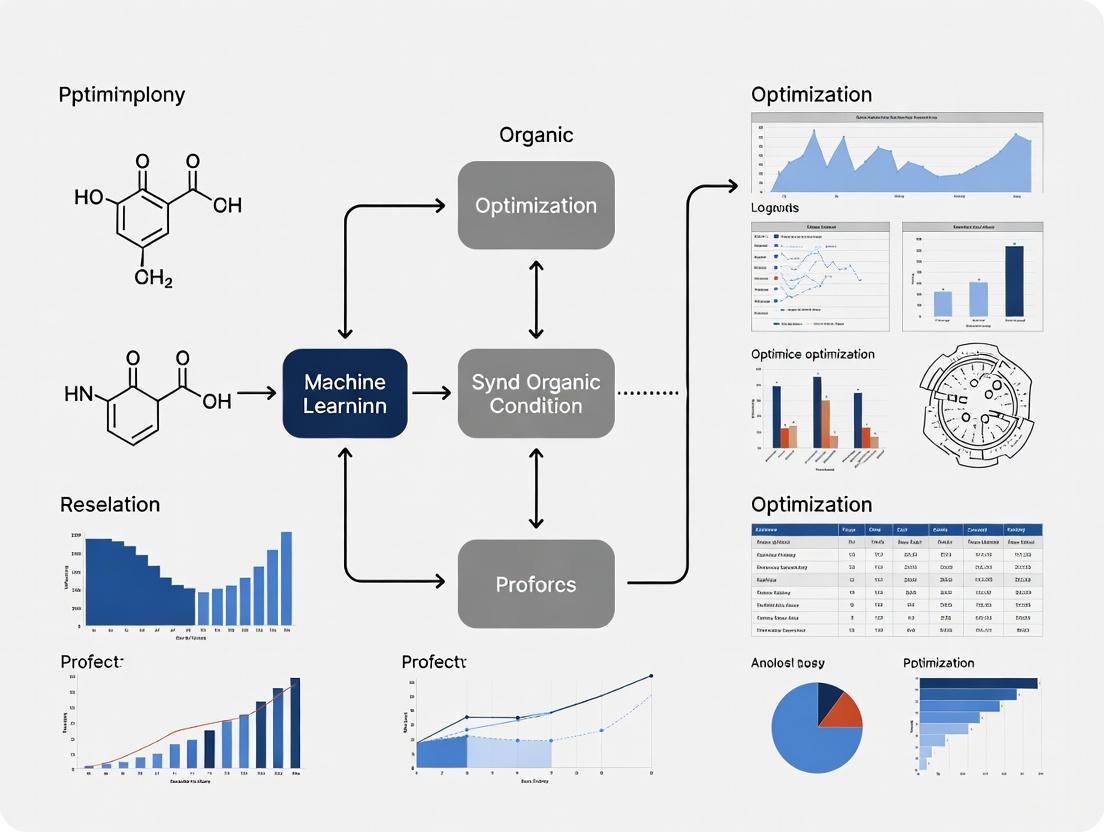
This article explores the transformative impact of machine learning (ML) on optimizing organic synthesis conditions, a critical process in pharmaceutical and materials science.
Machine Learning in Organic Synthesis: Accelerating Reaction Optimization and Drug Discovery
Abstract
This article explores the transformative impact of machine learning (ML) on optimizing organic synthesis conditions, a critical process in pharmaceutical and materials science. It covers the foundational shift from traditional one-variable-at-a-time approaches to data-driven strategies powered by artificial intelligence. The scope includes a detailed examination of core ML methodologies like Bayesian optimization and generative models, their integration with high-throughput experimentation (HTE) in automated platforms, and practical troubleshooting for real-world implementation. Through validation case studies and comparative analysis of performance against traditional methods, this review demonstrates how ML accelerates process development, reduces costs, and unlocks novel chemical discoveries, ultimately shaping the future of efficient and sustainable chemical research.
The New Paradigm: How AI is Reshaping the Foundations of Organic Synthesis
The Limitations of Traditional One-Variable-at-a-Time (OFAT) Optimization
In the field of organic synthesis, particularly in pharmaceutical development, the optimization of reaction conditions is a critical but resource-intensive process. For decades, the One-Variable-at-a-Time (OFAT) approach has been a cornerstone methodology where chemists systematically alter a single factor while keeping all others constant [1]. This intuitive, sequential method is deeply embedded in chemical training and practice, allowing researchers to observe the individual effect of each parameter on the reaction outcome [2]. However, with the increasing complexity of synthetic targets and the emergence of machine learning-driven optimization, the fundamental limitations of OFAT have become increasingly apparent [1] [3]. This Application Note examines these limitations through a quantitative lens, provides experimental protocols for modern alternatives, and contextualizes these findings within the broader thesis of machine-learning-guided reaction optimization.
Core Limitations of the OFAT Approach
The traditional OFAT method suffers from several critical drawbacks that hinder its efficiency and effectiveness in complex reaction optimization.
Inability to Detect Factor Interactions
The most significant limitation of OFAT is its fundamental assumption that variables act independently on the reaction outcome. In reality, chemical reactions often exhibit synergistic or antagonistic interactions between parameters such as temperature, catalyst loading, solvent polarity, and concentration [4]. OFAT methodology is blind to these interactions because it only tests variables in isolation. For instance, the optimal temperature for a reaction may depend heavily on catalyst concentration—a relationship that OFAT cannot systematically uncover. This often leads to the identification of local optima rather than the global optimum for the reaction system [4]. Statistical multivariate approaches, in contrast, are specifically designed to quantify these interactions.
Resource and Time Inefficiency
The OFAT approach is notoriously inefficient in its use of time and materials. As each variable is investigated sequentially, the total number of experiments required grows linearly with the number of factors being studied [5]. This becomes particularly problematic when exploring complex reaction systems with multiple categorical and continuous variables. For example, optimizing just five variables at three levels each would require 3⁵ = 243 experiments in a full factorial design; OFAT would require only 5×3 = 15 experiments but would likely miss the true optimum [4]. While OFAT appears more efficient superficially, its failure to locate true optimal conditions often necessitates additional optimization cycles, ultimately consuming more resources than more efficient experimental designs.
Suboptimal Final Conditions
Due to the inability to detect factor interactions, OFAT campaigns typically converge on suboptimal reaction conditions [2] [4]. The final combination of variable set points identified through OFAT is often substantially inferior to what could be achieved with multivariate optimization. The degree of suboptimality depends on the order in which variables were perturbed, introducing an arbitrary element into the optimization process [4]. In pharmaceutical development, where yield, purity, and cost are critical, this suboptimal performance has significant economic implications.
Table 1: Quantitative Comparison of OFAT versus Modern Optimization Approaches
| Characteristic | OFAT | Design of Experiments (DoE) | Machine Learning-Guided Optimization |
|---|---|---|---|
| Factor Interactions | Not detected | Quantified and modeled | Modeled with complex algorithms |
| Typical Experimental Load | Linear with factors | Fractional factorial (reduced) | Adaptive, often minimal |
| Optimal Solution | Local optimum (often suboptimal) | Global or near-global optimum | Global optimum with uncertainty quantification |
| Required Expertise | Chemical intuition | Statistical literacy | Data science and chemistry |
| Resource Efficiency | Low | Medium to High | High |
| Handling of Categorical Variables | Straightforward | Designed for both categorical and continuous | Requires specialized encoding |
Experimental Protocols for Modern Optimization
Protocol: Design of Experiments (DoE) for Reaction Screening
DoE represents a fundamental shift from OFAT, using statistical principles to systematically vary multiple factors simultaneously [1].
Materials:
- Chemical reactants and solvents
- Automated liquid handling system (e.g., Chemspeed SWING) or manual setup with controlled variance
- Analytical instrumentation (e.g., GC-MS, HPLC)
- DoE software (e.g., JMP, Design-Expert, or open-source alternatives)
Procedure:
- Factor Selection: Identify critical continuous (temperature, concentration, time) and categorical (catalyst type, solvent class) factors [4].
- Experimental Design: Select an appropriate screening design (e.g., Plackett-Burman) to identify significant factors with minimal experiments [4].
- Randomized Execution: Perform experiments in randomized order to minimize systematic bias.
- Response Measurement: Quantify key outcomes (yield, selectivity, purity).
- Statistical Modeling: Build a linear model to identify significant factors and their interactions.
- Optimization Design: For significant factors, implement a Response Surface Methodology (RSM) design such as Central Composite Design (CCD) to model curvature and locate the optimum [4].
- Model Validation: Confirm the predicted optimum with confirmatory experiments.
Protocol: Machine Learning-Guided Closed-Loop Optimization
This advanced protocol integrates high-throughput experimentation with adaptive algorithms for autonomous optimization [3] [5].
Materials:
- Automated reactor platform (e.g., batch HTE system or flow chemistry modules)
- In-line or at-line analytical tools (e.g., ReactIR, GC, HPLC)
- Central control software with optimization algorithm (e.g., Bayesian optimization)
- Access to chemical reaction databases (e.g., Reaxys, Open Reaction Database) [2]
Procedure:
- Define Search Space: Establish parameter bounds for all variables (e.g., temperature: 25-100°C, catalyst loading: 0.5-5 mol%).
- Initial Design: Execute a small set of initial experiments (e.g., Latin Hypercube Sample) to seed the model.
- Model Training: Train a machine learning model (e.g., Gaussian Process Regression) on collected data to predict reaction outcomes.
- Acquisition Function: Use an acquisition function (e.g., Expected Improvement) to suggest the most informative subsequent experiment.
- Automated Execution: The platform automatically prepares, runs, and analyzes the suggested reaction.
- Iterative Learning: Repeat steps 3-5 in a closed loop until convergence to an optimum or exhaustion of the experimental budget.
- Human Validation: Chemists interpret the final results and validate the optimal conditions manually.
Table 2: Research Reagent Solutions for High-Throughput Optimization
| Reagent/Material | Function in Optimization | Example Application |
|---|---|---|
| Microtiter Plates (96/384-well) | Miniaturized parallel reaction vessels | High-throughput screening of reaction conditions [5] |
| Catalyst Kit Libraries | Pre-formulated catalyst sets for rapid screening | Identifying optimal catalysts for cross-coupling reactions [6] |
| Solvent Screening Sets | Diverse polarity and functional group compatibility | Evaluating solvent effects on yield and selectivity [6] |
| Automated Liquid Handling Systems | Precense reagent dispensing and serial dilution | Ensuring reproducibility and enabling assay miniaturization [5] |
| In-line Spectroscopic Flow Cells | Real-time reaction monitoring | Kinetic data acquisition for model-based optimization [7] |
Visualization of Methodologies
The following diagram illustrates the fundamental procedural differences between OFAT, DoE, and ML-guided optimization, highlighting their efficiency in navigating a complex parameter space.
Integration with Machine Learning Optimization
The limitations of OFAT directly inform the value proposition of machine learning (ML) in reaction optimization. ML approaches fundamentally address OFAT's shortcomings:
Data Requirements and Model Training
ML models thrive on the high-dimensional, interaction-rich data that OFAT fails to produce [2]. The transition from OFAT to multivariate data collection enables the development of both global models (trained on large, diverse reaction datasets from databases like Reaxys and Open Reaction Database) and local models (fine-tuned for specific reaction families using High-Throughput Experimentation data) [2]. These models learn the complex relationships between reaction parameters and outcomes, allowing them to predict optimal conditions for new reactions.
The Human-AI Synergy in Optimization
Modern optimization does not seek to fully replace chemist intuition but to augment it [3]. The most successful implementations occur within a human-AI collaboration framework, where chemists define the chemical problem and constraints, and ML algorithms rapidly explore the experimental space [3] [7]. This synergy combines the deep chemical knowledge and pattern recognition of experienced scientists with the tireless, quantitative exploration capabilities of adaptive algorithms.
The One-Variable-at-a-Time approach, while intuitive and historically valuable, presents significant limitations in efficiency, effectiveness, and its capacity to uncover optimal conditions in complex chemical systems. Its inability to detect factor interactions, tendency to converge on local optima, and inherent resource inefficiency render it increasingly inadequate for modern organic synthesis challenges, particularly in drug development timelines. The framework of machine-learning-guided optimization directly addresses these limitations through parallel experimentation, statistical modeling of complex parameter spaces, and adaptive learning algorithms. The future of reaction optimization lies not in abandoning traditional chemical intuition, but in strategically integrating it with multivariate statistical approaches and machine learning to accelerate the discovery and development of synthetic methodologies.
Core AI and Machine Learning Techniques Revolutionizing Chemistry
The optimization of organic synthesis has traditionally been a labor-intensive process, relying on manual experimentation guided by chemist intuition and the inefficient one-variable-at-a-time (OVAT) approach [8]. This paradigm is undergoing a fundamental shift, driven by the convergence of artificial intelligence (AI) and machine learning (ML) with chemistry. These technologies are revolutionizing how researchers discover reactions, predict molecular properties, and design novel compounds, thereby accelerating the entire research and development pipeline [9] [10].
At the heart of this transformation is the ability to synchronously optimize multiple reaction variables across a high-dimensional parametric space. This data-driven approach, powered by lab automation and sophisticated algorithms, requires shorter experimentation time and minimal human intervention [8]. This article details the core AI and ML techniques at the forefront of this revolution, providing application notes and detailed protocols to equip researchers with the knowledge to implement these advanced methods in their work on optimizing organic synthesis conditions.
Core AI/ML Techniques and Their Applications in Chemistry
Molecular Representation and Property Prediction
A critical first step in applying AI to chemistry is representing molecular structures in a format that algorithms can process. The choice of representation significantly influences the performance of predictive models [11].
Table 1: Common Molecular Representations in AI-Driven Chemistry
| Representation Type | Description | Common Use Cases | Examples/Formats |
|---|---|---|---|
| SMILES | 1D string of characters representing the molecular structure [12]. | Retrosynthesis prediction, generative molecule design [12]. | CCO for ethanol |
| Molecular Graph | 2D graph with atoms as nodes and bonds as edges [13]. | Directly captures molecular topology; property prediction [13]. | Adjacency matrices, graph networks |
| Molecular Fingerprints | Binary bit strings indicating the presence of specific substructures [11]. | Similarity searching, QSAR models [11]. | ECFP, Morgan fingerprints, MACCS keys |
| Quantum Mechanical Descriptors | Numerical representations of electronic or geometric properties [11]. | Accurate prediction of reactivity and spectroscopic properties. | Partial charges, orbital energies |
Recent advancements have introduced powerful models that leverage these representations. MolE is a foundational model that uses a transformer-based architecture on molecular graphs. It was pretrained on over 842 million molecular graphs using a self-supervised approach, learning to understand atom environments and their relationships without requiring experimental data [13]. This approach allows it to generalize effectively, achieving state-of-the-art performance on critical ADMET (Absorption, Distribution, Metabolism, Excretion, Toxicity) prediction tasks. For instance, it ranked first in 10 out of 22 tasks on the Therapeutic Data Commons (TDC) benchmark, including predicting CYP inhibition, which is crucial for anticipating drug-drug interactions [13].
For researchers without deep programming expertise, tools like ChemXploreML provide a user-friendly desktop application for predicting key molecular properties such as boiling point, melting point, and critical temperature, with reported accuracy scores of up to 93% for critical temperature [14]. This tool automates the complex process of translating structures into numerical vectors using built-in "molecular embedders" [14].
Generative AI for Molecular Design
Generative AI models tackle the inverse design problem: they start with a set of desired properties and generate molecular structures that fulfill those criteria [12]. These models are pivotal for de novo molecular design, scaffold hopping, and lead optimization.
REINVENT 4 is a modern, open-source generative AI framework that utilizes Recurrent Neural Networks (RNNs) and Transformers to generate molecules, typically represented as SMILES strings [12]. The software is embedded within powerful ML optimization algorithms, including reinforcement learning (RL), transfer learning, and curriculum learning. In reinforcement learning, the generative agent (the "Actor") is guided by a scoring function that rewards the generation of molecules with desired properties, allowing the model to iteratively learn and improve its output [12].
The workflow for a typical generative design experiment using REINVENT 4 involves:
- Defining the Objective: A scoring function is configured to quantify the desirability of a generated molecule (e.g., high binding affinity, specific logP, low toxicity).
- Selecting a Prior Model: A foundation model, pre-trained on a large dataset of known molecules (e.g., ChEMBL), provides an initial understanding of chemical space and valid chemical structures.
- Running the Optimization: The reinforcement learning cycle begins. The agent generates a batch of molecules, which are scored. The agent's parameters are then updated to increase the likelihood of generating high-scoring molecules while retaining the chemical knowledge from the prior.
Machine Learning in Reaction Optimization and Synthesis Planning
AI extends beyond molecular design into the optimization of the synthetic processes themselves. Machine learning models can predict reaction outcomes, recommend optimal conditions (catalyst, solvent, temperature), and plan multi-step synthetic routes [8] [10].
High-Throughput Experimentation (HTE) plays a crucial role here by generating the large, high-quality datasets required to train robust ML models [6]. In an HTE workflow, hundreds or thousands of miniature reactions are run in parallel under varying conditions. The outcomes (e.g., yield, selectivity) are analyzed, creating a dataset that maps reaction parameters to results. ML algorithms, such as Bayesian optimization or random forests, can then analyze this data to identify optimal conditions or even discover new reactivity [6].
Tools like IBM RXN and AiZynthFinder use AI to perform retrosynthetic analysis, deconstructing a target molecule into simpler precursors and proposing viable synthetic pathways with unprecedented speed [10]. These platforms are increasingly integrated with experimental data, allowing them to not only propose routes but also predict the likelihood of success for each reaction step.
Table 2: Key AI-Driven Platforms for Synthesis and Analysis
| Platform / Tool | Primary Function | Underlying AI/ML Technology | Application in Synthesis Optimization |
|---|---|---|---|
| REINVENT 4 [12] | Generative molecular design | RNNs, Transformers, Reinforcement Learning | De novo design, molecule optimization, scaffold hopping. |
| ChemXploreML [14] | Molecular property prediction | Automated molecular embedders, ML classifiers | Rapid in-silico screening of compound properties to prioritize synthesis targets. |
| IBM RXN [10] | Retrosynthesis & reaction prediction | Transformer-based models | Automated planning of synthetic routes for target molecules. |
| AiZynthFinder [10] | Retrosynthesis planning | Monte Carlo tree search | Finding commercially feasible synthetic pathways. |
| MolE [13] | Molecular property prediction | Graph-based Transformers | Predicting ADMET properties to guide the design of synthesizable compounds with favorable profiles. |
Detailed Experimental Protocols
Protocol 1: Predicting Molecular Properties with ChemXploreML
This protocol outlines the steps for using the ChemXploreML desktop application to predict molecular properties for a series of novel organic compounds, aiding in the prioritization of synthesis targets.
I. Research Reagent Solutions & Materials
- Hardware: Standard desktop computer (Windows/macOS/Linux).
- Software: ChemXploreML application, downloaded and installed from the McGuire Research Group at MIT [14].
- Data Input: A list of candidate molecules in SMILES string format.
II. Step-by-Step Procedure
Input Preparation:
- Prepare a
.csvfile containing a column of SMILES strings representing the molecules to be evaluated. Ensure the SMILES are valid using a tool like RDKit (if available).
- Prepare a
Software Setup:
- Launch the ChemXploreML application. The offline capability ensures data privacy [14].
Model Configuration:
- Load the prepared
.csvfile. - Select the target properties for prediction from the available options (e.g., boiling point, melting point, critical temperature, critical pressure, vapor pressure).
- The application will automatically handle the featurization process, using its built-in molecular embedders to convert SMILES strings into numerical vectors [14].
- Load the prepared
Execution and Analysis:
- Initiate the prediction process. The software will run the built-in state-of-the-art algorithms to generate predictions.
- Once complete, the results will be displayed in the interactive graphical interface and can be exported for further analysis. The achieved accuracy for properties like critical temperature can be as high as 93% [14].
Protocol 2: Optimizing a Catalytic Reaction using HTE and Machine Learning
This protocol describes a combined experimental-computational workflow for optimizing a palladium-catalyzed cross-coupling reaction using High-Throughput Experimentation and Bayesian Optimization.
I. Research Reagent Solutions & Materials
- Automation & HTE: Liquid handling robot, 96-well or 384-well microtiter plates, automated plate sealer.
- Analysis: UHPLC-MS system with an autosampler.
- Chemicals: Substrates, diverse set of palladium catalysts, ligands, bases, and solvents for screening.
- Software: Data analysis software (e.g., Python with scikit-learn, Dragonfly for Bayesian optimization).
II. Step-by-Step Procedure
Experimental Design:
- Define the parametric space for optimization: catalyst (e.g., 4 types), ligand (e.g., 8 types), base (e.g., 4 types), solvent (e.g., 6 types). This creates a 4x8x4x6 = 768-condition grid.
- Use a strategic design (e.g., D-optimal, D-Optimal design, or random selection) to select a subset of ~150-200 conditions for the initial HTE run to efficiently explore the space [6].
HTE Execution:
- Use automated liquid handlers to dispense reagents and solvents into the wells of the microtiter plate in an inert atmosphere to handle air-sensitive chemistry [6].
- Seal the plates and allow reactions to proceed at the designated temperature.
Data Acquisition & Processing:
- After a set time, use UHPLC-MS with an autosampler to analyze reaction mixtures directly from the plate.
- Convert chromatographic data to reaction yield (the objective function for optimization).
ML-Guided Optimization:
- Train a machine learning model (e.g., Gaussian Process regression) on the initial HTE dataset. The model learns the complex relationship between reaction components and yield.
- Use a Bayesian optimization algorithm to propose the next set of ~20-30 promising reaction conditions that balance exploration (trying uncertain areas) and exploitation (improving on high-yield conditions) [8] [6].
- Execute the proposed experiments in the next HTE cycle.
Iteration and Validation:
- Repeat steps 3-4 for 2-3 iterations or until the yield converges to a satisfactory maximum.
- Manually validate the top-predicted conditions in a traditional round-bottom flask to confirm the ML model's predictions.
The Scientist's Toolkit: Essential Research Reagents & Software
Table 3: Key Research Reagent Solutions for AI-Driven Chemistry
| Category | Item / Software | Function / Application |
|---|---|---|
| Generative AI Software | REINVENT 4 [12] | Open-source framework for de novo molecular design and optimization using RL. |
| Property Prediction | ChemXploreML [14] | User-friendly desktop app for predicting molecular properties without coding. |
| MolE [13] | Foundation model for accurate ADMET property prediction from molecular graphs. | |
| Synthesis Planning | IBM RXN [10] | AI-powered platform for predicting retrosynthetic pathways and reaction outcomes. |
| AiZynthFinder [10] | Open-source tool for retrosynthetic planning using a publicly available compound library. | |
| Cheminformatics Toolkits | RDKit [10] | Open-source toolkit for cheminformatics, molecular descriptor calculation, and fingerprinting. |
| DeepChem [10] | Deep learning library for drug discovery and quantum chemistry. | |
| HTE & Automation | Automated Liquid Handlers | Enables precise, high-throughput dispensing of reagents for parallel reaction setup. |
| Microtiter Plates (96/384-well) | Miniaturized reaction vessels for running hundreds of experiments in parallel [6]. |
The field of organic synthesis is undergoing a profound transformation driven by artificial intelligence (AI) and machine learning (ML). These technologies are reshaping the traditional approach to molecular design and reaction optimization by seamlessly integrating data-driven algorithms with chemical intuition [9]. This document, framed within broader research on ML optimization of organic synthesis conditions, details specific applications and protocols that leverage AI to accelerate discovery. The revolution spans from accurately predicting reaction outcomes to controlling chemical selectivity, simplifying synthesis planning, and accelerating catalyst discovery [9]. This shift addresses critical limitations of conventional methods, which often rely on labor-intensive, time-consuming experimentation guided by human intuition and one-variable-at-a-time optimization [8]. For researchers and drug development professionals, these tools offer a powerful new toolkit to enhance precision, efficiency, and sustainability while addressing pressing global challenges in medicine, materials, and energy [15].
Application Note 1: Predictive Modeling for Reaction Outcomes
Core Concepts and Quantitative Performance
Predicting the results of a chemical reaction before stepping into the laboratory is a cornerstone of accelerated synthesis research. ML models achieve this by learning from vast repositories of reaction data to forecast products, yields, and selectivity. The Graph-Convolutional Neural Networks demonstrate high accuracy in reaction outcome prediction with interpretable mechanisms, while neural-symbolic frameworks and Monte Carlo Tree Search (MCTS) revolutionize retrosynthetic planning, generating expert-quality routes at unprecedented speeds [15]. Another powerful approach utilizes a machine learning model based on molecular orbital reaction theory, which delivers remarkable accuracy and generalizability for organic reaction outcome prediction [15].
Table 1: Performance Metrics of Select Reaction Outcome Prediction Models
| Model / Approach | Reported Accuracy / Performance | Key Application Context | Data Source |
|---|---|---|---|
| Uni-Mol Framework [16] | Identified catalysts achieving 94% yield and 99% enantiomeric excess | Asymmetric aldol reactions & catalyst screening | High-throughput experimentation (HTE) data |
| Graph-Convolutional Networks [15] | "High accuracy" with interpretable mechanisms | General reaction outcome prediction | Not Specified |
| Machine Learning Model (Molecular Orbital Theory) [15] | "Remarkable accuracy and generalizability" | Organic reaction outcome prediction | Not Specified |
| Machine Learning Model (for catalytic reactions on gold) [17] | Up to 93% prediction accuracy | Reactions on oxygen-covered and bare gold surfaces | Experimental data (~200 reactions) |
Experimental Protocol: Implementing the Uni-Mol Framework for Reaction Prediction
This protocol outlines the steps for employing the Uni-Mol framework to predict reaction outcomes and screen catalysts, as validated on asymmetric aldol reaction datasets [16].
- Objective: Rapidly predict reaction yields and enantioselectivity to identify optimal catalyst candidates from a tetrapeptide library for an asymmetric aldol reaction.
- Materials and Inputs:
- A library of candidate catalyst molecules (e.g., a self-synthesized tetrapeptide library).
- Reaction SMILES (Simplified Molecular-Input Line-Entry System) strings defining the reactants and the general reaction type.
- High-throughput experimentation (HTE) equipment for empirical validation.
- Software and Computational Setup:
- Implement the Uni-Mol framework, which leverages a model pre-trained on a large corpus of molecular conformations.
- Ensure access to adequate computational resources (GPU recommended) for model inference.
- Procedure:
- Step 1: Molecular Representation. Feed the SMILES strings of all candidate catalysts in the library into the pre-trained Uni-Mol model. The framework automatically generates a numerical representation (embedding) for each molecule that captures its structural and conformational features.
- Step 2: Model Training. Train a classification or regression model (as described in the source study) using the generated molecular representations as input features. The model's target variable is the reaction outcome (e.g., yield and enantiomeric excess), labeled from a subset of pre-existing HTE data.
- Step 3: Prediction and Screening. Use the trained model to predict the performance of all catalysts in the library, including those not yet experimentally tested.
- Step 4: Experimental Validation. Synthesize the top-ranked catalyst candidates identified by the model (e.g., those predicted to have high yield and enantioselectivity). Conduct the asymmetric aldol reaction under specified HTE conditions to measure the actual yield and enantiomeric excess.
- Expected Output: Successful identification of one or more tetrapeptide catalysts that deliver high performance (e.g., 94% yield and 99% enantiomeric excess) as predicted by the model [16].
Figure 1: Uni-Mol Reaction Prediction Workflow. A workflow for using the pre-trained Uni-Mol framework to predict reaction outcomes and screen potential catalysts.
Application Note 2: Machine Learning-Guided Catalyst Discovery
Core Concepts and Generative Models
Catalyst discovery is being revolutionized by ML-driven generative models, which move beyond simple prediction to the inverse design of novel catalyst structures. These models explore the vast chemical space to propose new candidates that meet specific performance criteria for a given reaction. The CatDRX framework is a prime example—a reaction-conditioned variational autoencoder (VAE) that generates potential catalyst structures and predicts their performance based on learned relationships between catalyst structure, reaction components, and outcomes [18]. This approach is pre-trained on a broad reaction database (e.g., the Open Reaction Database) and fine-tuned for specific downstream tasks, enabling it to handle a wide range of reaction classes [18].
Table 2: Key Generative and Predictive Models for Catalyst Discovery
| Model / Framework | Type | Key Capability | Conditioning |
|---|---|---|---|
| CatDRX [18] | Reaction-conditioned VAE | Generates catalysts and predicts yield/activity | Reactants, reagents, products, reaction time |
| Uni-Mol Framework [16] | Pre-trained Molecular Representation | Screens and predicts catalyst performance for asymmetric reactions | Molecular structure of catalyst and reactants |
| Algorithm with Latent Variables [19] | Machine Learning with Latent Variables | Predicts synthetic conditions and unobservable reactions for organic materials | Substitution patterns of target molecules |
Experimental Protocol: Catalyst Generation and Optimization with CatDRX
This protocol describes the process of using the CatDRX framework for the de novo design and optimization of catalysts for a target reaction [18].
- Objective: Generate novel, high-performance catalyst candidates for a specific catalytic reaction (e.g., a cross-coupling reaction) and predict their expected performance.
- Materials and Inputs:
- Reaction Components: SMILES strings or molecular graphs of the core reactants, reagents, and products of the target reaction.
- Reaction Conditions: Information such as reaction temperature or time, if available.
- Performance Metric: The desired property to optimize (e.g., reaction yield, enantioselectivity ΔΔG‡).
- Software and Computational Setup:
- Access to the CatDRX model architecture and its pre-trained weights on a broad reaction database (e.g., ORD).
- A downstream fine-tuning dataset specific to the reaction class of interest (if available) to enhance prediction accuracy.
- Computational chemistry software (e.g., for DFT calculations) for in silico validation of top candidates.
- Procedure:
- Step 1: Model Setup. Load the pre-trained CatDRX model. If a specialized fine-tuning dataset is available, fine-tune the model on this data to adapt it to the specific reaction domain.
- Step 2: Condition Embedding. Encode the given reaction conditions (reactants, reagents, products, temperature) into a numerical "condition embedding" using the model's condition embedding module.
- Step 3: Catalyst Generation. Use the decoder component of the VAE to generate novel catalyst structures. This can be done by sampling from the latent space and guiding the generation with the condition embedding. Sampling strategies can be adjusted to balance exploration and exploitation.
- Step 4: Performance Prediction. Simultaneously, use the model's predictor module to estimate the catalytic performance (e.g., predicted yield) for each generated catalyst candidate.
- Step 5: Candidate Filtering. Filter the generated catalysts based on:
- Predicted performance scores (prioritize high-yield candidates).
- Chemical feasibility and synthesizability checks (using background chemical knowledge or rules).
- Optional computational validation: Perform rapid DFT calculations on a shortlist of candidates to assess reaction barriers or other key properties.
- Step 6: Experimental Validation. Synthesize or procure the top-ranked, filtered catalyst candidates and test them experimentally in the target reaction.
- Expected Output: A list of novel, generated catalyst structures with high predicted performance for the target reaction, validated computationally and/or experimentally [18].
Figure 2: CatDRX Catalyst Generation Workflow. An overview of the catalyst inverse design process using the CatDRX generative model.
The Scientist's Toolkit: Essential Research Reagents and Materials
The experimental workflows cited in these application notes rely on a combination of physical reagents, computational tools, and data resources.
Table 3: Key Research Reagent Solutions and Essential Materials
| Item / Resource | Function / Application | Example in Context |
|---|---|---|
| Tetrapeptide Catalyst Library [16] | Provides a diverse set of asymmetric organocatalysts for screening and model training. | Used in the Uni-Mol framework to discover catalysts for asymmetric aldol reactions. |
| High-Throughput Experimentation (HTE) Robotic Platform [8] [20] | Automates the parallel execution of thousands of reactions, generating consistent, high-quality data for model training and validation. | Essential for generating the Buchwald-Hartwig cross-coupling dataset used to train and validate GraphRXN and other models. |
| Pre-trained Molecular Models (e.g., Uni-Mol) [16] | Provides a foundational understanding of molecular structure and conformations, enabling rapid feature extraction for downstream tasks with limited data. | Used as the base model for building a classifier that predicts enantioselectivity in catalytic reactions. |
| Open Reaction Database (ORD) [18] | A large, publicly available repository of reaction data used to pre-train broad-scale ML models on diverse chemical transformations. | Serves as the pre-training dataset for the CatDRX framework, giving it a general understanding of chemistry. |
| Graph Neural Network (GNN) Frameworks [20] | The computational engine for learning directly from molecular graph structures (atoms as nodes, bonds as edges) to build powerful reaction predictors. | The foundation of the GraphRXN model, which takes 2D reaction structures as input for yield prediction. |
The Synergy of Data-Driven Algorithms and Chemical Intuition
The field of organic synthesis is undergoing a profound transformation, driven by the integration of artificial intelligence (AI) and data-driven algorithms with deep-rooted chemical intuition. This synergy is reshaping the landscape of molecular design, moving research beyond traditional trial-and-error approaches toward more predictive, efficient, and sustainable practices [9]. AI now plays pivotal roles in accurately predicting reaction outcomes, controlling chemical selectivity, simplifying synthesis planning, and accelerating catalyst discovery [9]. This convergence marks a pivotal moment where algorithms and data combine with human expertise to revolutionize the world of molecules, promising accelerated research cycles and innovative solutions to pressing chemical challenges [9]. This document provides detailed application notes and experimental protocols for implementing these synergistic approaches, framed within broader thesis research on machine learning optimization of organic synthesis conditions.
Quantitative Performance Analysis of Data-Driven Chemistry Tools
The effectiveness of the synergy between data-driven algorithms and chemical intuition is quantitatively demonstrated through the performance of various computational platforms. The table below summarizes key metrics and capabilities of leading cheminformatics tools used in modern organic synthesis research.
Table 1: Performance Metrics of Cheminformatics Tools in Organic Synthesis
| Tool Name | Primary Function | Key Performance Metrics | Optimal Application Context | Validation Status |
|---|---|---|---|---|
| IBM RXN | Reaction prediction & retrosynthesis | >90% accuracy for common reaction types; rapid pathway generation [10] | Retrosynthetic planning for pharmaceutical intermediates | Experimentally validated for multiple drug candidates |
| AiZynthFinder | Synthetic route design | 85% success rate for known targets; 70% for novel structures [10] | Automated synthesis planning for complex natural products | Cross-validated against published synthetic routes |
| Chemprop | Molecular property prediction | RMSE <0.3 for solubility; >0.8 AUC for toxicity classification [10] | Pre-screening of candidate compounds for desired properties | Benchmark performance on diverse chemical datasets |
| ASKCOS | Reaction condition optimization | >40% improvement in yield prediction versus human intuition alone [8] | Optimization of catalyst, solvent, and temperature parameters | Validated through high-throughput experimentation |
| Synthia | Retrosynthetic analysis | Reduces synthesis planning time from weeks to hours [10] | Disconnection strategy for complex polymers & materials | Intellectual property generation for novel compounds |
The data reveals that AI-driven tools consistently enhance research efficiency, with particular strength in retrosynthetic planning and reaction outcome prediction. These platforms demonstrate that the synergy between algorithmic processing of large datasets and chemists' interpretive skills can reduce optimization cycles by up to 40% compared to traditional approaches [8].
Experimental Protocols for Machine Learning-Optimized Organic Synthesis
Protocol: High-Throughput Reaction Optimization with Machine Learning Guidance
Purpose: To efficiently optimize chemical reaction conditions by integrating automated experimentation with machine learning algorithms to navigate high-dimensional parameter spaces.
Background: Traditional reaction optimization involves modifying variables one at a time, a labor-intensive process that often misses optimal conditions due to parameter interactions [8]. This protocol synchronously optimizes multiple reaction variables using machine learning-driven experimental design.
Table 2: Essential Research Reagents and Equipment for ML-Optimized Synthesis
| Item Name | Specification | Function in Protocol | Critical Notes |
|---|---|---|---|
| Automated Liquid Handling System | Multi-channel, nanoliter precision | Enables high-throughput reagent dispensing | Regular calibration essential for volume accuracy |
| Reaction Block | 96-well or 384-well format with temperature control | Parallel reaction execution | Chemical compatibility with reactants/solvents required |
| Machine Learning Software | Bayesian optimization implementation | Designs experimental iterations based on previous results | Customizable acquisition function for specific objectives |
| Analytical Integration Platform | UPLC-MS with automated sampling | Rapid reaction outcome quantification | Direct data feed to ML model reduces processing delays |
| Chemical Variable Library | Substrates, catalysts, solvents, ligands | Provides chemical search space for optimization | Pre-formatted stock solutions enable automated handling |
Procedure:
Parameter Space Definition: Identify 4-6 critical reaction variables to optimize (e.g., catalyst loading, solvent ratio, temperature, concentration, ligand identity). Define realistic ranges for each parameter based on chemical feasibility [8].
Initial Design of Experiments: Generate an initial set of 24-48 reaction conditions using Latin Hypercube Sampling or similar space-filling algorithms to ensure broad coverage of the parameter space.
Automated Reaction Execution:
- Utilize robotic liquid handling systems to prepare reaction mixtures in designated well plates according to the initial experimental design.
- Implement temperature control and stirring conditions as specified for each experimental condition.
- Quench reactions at predetermined timepoints using automated sampling systems.
High-Throughput Analysis:
- Employ UPLC-MS systems with automated sample injection for rapid analysis.
- Quantify reaction outcomes (yield, conversion, selectivity) using calibrated standard curves or internal standards.
- Format results into machine-readable data structures for model input.
Machine Learning Iteration Cycle:
- Input reaction outcomes and conditions into Bayesian optimization algorithm.
- Generate next set of 12-24 proposed experiments focusing on promising regions of parameter space.
- Execute proposed experiments following steps 3-4.
- Repeat for 3-5 optimization cycles or until convergence on optimal conditions.
Validation and Scale-up: Confirm optimal conditions in triplicate at micro-scale, then translate to traditional laboratory equipment for millimole-scale validation.
Troubleshooting:
- Poor Model Convergence: Expand parameter ranges or increase initial experiment diversity.
- Analytical Bottlenecks: Implement parallel analytical techniques or reduce analysis depth during optimization phase.
- Reproducibility Issues: Verify robotic calibration and solution stability throughout experimental timeline.
Protocol: AI-Assisted Retrosynthetic Planning for Complex Molecules
Purpose: To accelerate the design of synthetic routes for target molecules by combining AI-powered disconnection strategies with chemical intuition-based evaluation.
Background: AI has revolutionized retrosynthetic analysis, allowing chemists to devise synthetic routes with unprecedented speed and precision [10]. This protocol integrates computational suggestions with expert evaluation to develop optimal synthetic pathways.
Materials:
- Retrosynthesis software (IBM RXN, AiZynthFinder, or Synthia)
- Chemical database access (Reaxys, SciFinder)
- Electronic laboratory notebook for pathway documentation
Procedure:
Target Molecule Specification:
- Input target structure using standardized chemical representation (SMILES, InChI, or molecular drawing).
- Define strategic constraints if applicable (avoided functional groups, preferred starting materials, safety considerations).
AI-Powered Disconnection Analysis:
- Execute multiple retrosynthetic analysis algorithms to generate diverse synthetic routes.
- Apply filter parameters to focus on most promising pathways (commercial precursor availability, step count, predicted yields).
Pathway Evaluation and Selection:
- Assess generated routes using multi-criteria scoring: step count, atom economy, safety profile, and green chemistry principles.
- Prioritize 2-3 routes for detailed computational and experimental validation.
Critical Intermediate Validation:
- Subject proposed routes to reaction prediction tools (IBM RXN) to estimate feasibility of key transformations.
- Screen proposed reactions against known literature examples for precedent.
Route Refinement and Optimization:
- Apply reaction condition optimization protocols (see Protocol 3.1) to challenging steps within selected routes.
- Iterate between synthetic design and experimental validation to refine the pathway.
Documentation and Knowledge Capture:
- Record both successful and failed disconnection strategies to enhance future AI training.
- Annotate decisions with chemical rationale to build institutional knowledge.
Troubleshooting:
- Overly Complex Route Generation: Adjust algorithm parameters to prioritize simpler transformations or commercially available building blocks.
- Unrealistic Transformation Suggestions: Implement manual curation step to filter chemically implausible suggestions before experimental investment.
- Limited Precedent for Key Steps: Utilize computational reaction modeling tools (Gaussian, ORCA) to predict activation energies and mechanism feasibility [10].
Workflow Visualization of Synergistic Research Approaches
The following diagrams, created using Graphviz DOT language, illustrate key workflows and logical relationships in the synergy between data-driven algorithms and chemical intuition. The color palette complies with the specified guidelines, ensuring sufficient contrast between elements.
Diagram 1: Integrated AI-Chemist Workflow for Synthesis Optimization
Diagram 2: AI-Assisted Retrosynthetic Planning with Expert Validation
The synergy between data-driven algorithms and chemical intuition represents a fundamental shift in organic synthesis methodology. By implementing the protocols and utilizing the tools described in these application notes, researchers can significantly accelerate the optimization of synthetic conditions and the design of novel synthetic routes. This integrated approach, which combines the pattern recognition capabilities of machine learning with the contextual understanding and creative problem-solving of experienced chemists, is poised to profoundly shape the future of organic chemistry [9]. As these technologies continue to evolve, their integration will become increasingly essential for maintaining competitiveness in both academic and industrial research settings, particularly in pharmaceutical development and materials science where rapid innovation is paramount [10].
AI in Action: Machine Learning Workflows and High-Throughput Experimentation Platforms
The optimization of organic synthesis conditions represents a critical challenge in chemical research and development, influencing fields from drug discovery to materials science. Traditional optimization, relying on manual experimentation and one-variable-at-a-time (OVAT) approaches, is inherently limited. It is a labor-intensive, time-consuming task that requires exploring a high-dimensional parametric space, often failing to capture complex variable interactions [8].
A paradigm change has been enabled by the convergence of machine learning (ML) and laboratory automation [5]. This new approach leverages data-driven algorithms to synchronously optimize multiple reaction variables, significantly reducing the number of experiments required and minimizing human intervention [8] [21]. This document outlines the standard ML optimization workflow, providing detailed application notes and experimental protocols tailored for researchers and scientists engaged in optimizing organic reactions.
The Machine Learning Workflow in Context
The machine learning lifecycle is a structured, iterative process distinct from traditional software engineering. Whereas traditional development often follows a linear, deterministic path from requirements to implementation, ML development is fundamentally empirical and data-centric, proceeding through iterative cycles of experimentation and validation [22]. This "scientific method in ML development" involves forming hypotheses (model architecture choices), running experiments (training and validation), analyzing results, and iterating based on findings [22].
In the context of organic synthesis, this iterative workflow is encapsulated in a continuous loop connecting experiment design, execution, data analysis, and model-based decision making [5]. This framework transforms chemical intuition into a quantitative, scalable engineering discipline, enabling the efficient navigation of complex reaction parameter spaces that would be intractable via manual methods.
Standard Workflow for ML-Guided Reaction Optimization
The standard workflow for ML-guided optimization integrates experimental and computational components into a cohesive, self-improving system. The following diagram illustrates the core iterative cycle and the key stages involved.
Stage 1: Design of Experiments (DoE)
The initial stage involves strategically planning the first set of experiments to efficiently explore the reaction parameter space.
- Objective Definition: Clearly define the optimization target(s), which may be a single objective (e.g., maximize yield) or multiple objectives (e.g., maximize yield while minimizing cost and environmental impact) [5].
- Parameter Selection: Identify key continuous variables (e.g., temperature, concentration, time) and categorical variables (e.g., catalyst, solvent, ligand) that influence the reaction outcome [5].
- Initial DoE: Employ statistical design of experiments (DoE) methods to select an initial set of reaction conditions that provide maximal information about the system with a minimal number of experiments. Common approaches include full factorial designs, Plackett-Burman designs, or space-filling designs for more complex spaces [5].
Table 1: Common Experimental Variables in Organic Synthesis Optimization
| Variable Type | Examples | Considerations |
|---|---|---|
| Continuous | Temperature, Time, Concentration, Stoichiometry | Defines a range (e.g., 25°C - 150°C); crucial for modeling continuous relationships. |
| Categorical | Solvent, Catalyst, Ligand, Reagent | Represented numerically for ML models via one-hot or ordinal encoding [23]. |
| Process-Related | Stirring Speed, Pressure, Addition Rate | May require specialized equipment for control and monitoring. |
Stage 2: Reaction Execution with High-Throughput Tools
The planned experiments are executed using high-throughput experimentation (HTE) platforms to generate data rapidly and reliably.
- Platform Selection: HTE platforms leverage a combination of automation, parallelization, and advanced analytics [5].
- Batch Systems: Platforms like Chemspeed SWING use 96-well plate reactor blocks to perform many reactions in parallel, ideal for screening catalysts, ligands, and solvents [5].
- Flow Systems: Continuous flow platforms offer advantages for precise control of reaction time and efficient heat/mass transfer, often used for self-optimization [5].
- Custom Robotic Systems: Advanced labs may employ fully integrated robotic systems, such as the mobile robot developed by Burger et al. for photocatalysis, which links multiple experimental stations [5].
- Automation: Liquid handling systems automate reagent dispensing with high precision, ensuring reproducibility and freeing researcher time [5]. Platforms can perform tasks like heating, cooling, mixing, and even in-line analysis with minimal human intervention.
Stage 3: Data Collection and Processing
The quality of the ML model is directly dependent on the quality of the data. This stage transforms raw experimental results into a structured dataset.
- Analytical Data Collection: Products are characterized using in-line or offline analytical tools. Techniques like UPLC/HPLC, GC, GC-MS, and NMR are common. The output (e.g., yield, conversion, selectivity) is quantified for each reaction [5].
- Data Curation and Feature Engineering: Reaction conditions are recorded in a structured format. Categorical variables are encoded (e.g., one-hot encoding), and molecular structures may be converted into numerical descriptors (e.g., using RDKit) [10]. This creates a feature vector for each experiment.
- Data Storage: All data is stored in a centralized database, often adhering to the FAIR (Findable, Accessible, Interoperable, Reusable) principles to ensure it is usable for current and future modeling efforts.
Stage 4: ML Modeling and Prediction
With a curated dataset, machine learning models are trained to map reaction conditions to outcomes and suggest new experiments.
- Model Selection: The choice of model depends on data size and problem complexity.
- Gaussian Process Regression (GPR): A popular choice for Bayesian optimization due to its ability to provide uncertainty estimates alongside predictions.
- Random Forests / Decision Trees: Effective for non-linear relationships and providing feature importance.
- Neural Networks: Powerful for large, complex datasets and when molecular structures are input as graphs [10].
- Optimization Algorithm: An optimization strategy uses the model's predictions to select the next best experiment(s).
- Bayesian Optimization (BO): A powerful framework that balances exploration (testing in uncertain regions of parameter space) and exploitation (testing conditions predicted to be high-performing) to find the global optimum efficiently [5]. It is particularly effective when experimental runs are expensive or time-consuming.
- Suggestion: The BO algorithm proposes one or a set of reaction conditions predicted to most improve the optimization objective.
Stage 5: Experimental Validation and Iteration
The conditions suggested by the ML model are tested in the lab, closing the loop.
- Validation Run: The proposed experiment is executed, and its outcome is measured analytically.
- Model Update and Iteration: The result from this new experiment is added to the growing dataset. The ML model is retrained on this expanded dataset, improving its accuracy and leading to a new, refined suggestion for the next experiment [5].
- Stopping Criteria: The loop continues until a predefined stopping criterion is met. This could be achieving a performance target, the convergence of suggestions, depletion of resources, or minimal improvement over several iterations.
Essential Tools and Reagents
A successful ML-driven optimization campaign relies on a suite of computational and experimental tools.
Table 2: The Scientist's Toolkit for ML-Guided Optimization
| Category | Tool/Reagent | Function and Application Notes |
|---|---|---|
| ML & Cheminformatics | scikit-learn [23] |
Open-source library for classic ML models (Random Forests, SVMs). Protocol: Use RandomForestRegressor for initial yield prediction. |
RDKit [10] |
Open-source toolkit for cheminformatics; calculates molecular descriptors from structures. | |
Chemprop [10] |
Message-passing neural network specialized for molecular property prediction. | |
| HTE Platforms | Commercial (Chemspeed) [5] | Integrated robotic platform for automated synthesis in well plates. Protocol: Configure a 96-well plate for catalyst/solvent screening. |
| Custom Robotic Systems [5] | Mobile robots or custom rigs for specialized tasks (e.g., photocatalysis). | |
| Analytical Tools | UPLC/HPLC with UV/ELSD | Standard for high-throughput reaction analysis. Protocol: Use a 5-minute gradient method for rapid throughput. |
| Reagent Solutions | Diverse Solvent Library | Covering a range of polarities (hexane to DMSO). Protocol: Use pre-prepared solvent stocks in HTE dispensers. |
| Catalyst/Ligand Libraries | Broad sets of Pd catalysts, phosphine ligands, etc., for reaction discovery. | |
| Internal Standard | e.g., dimethyl fumarate [24]. Protocol: Add a known mass to reaction aliquots for quantitative NMR (qNMR) yield determination [25]. |
A Representative Protocol: ML-Optimized Suzuki-Miyaura Coupling
The following detailed protocol exemplifies the application of the standard workflow to a specific reaction.
Objective: Maximize the yield of a biaryl product from a Suzuki-Miyaura coupling reaction.
Initial Setup and DoE:
- Define Search Space:
- Continuous Variables: Temperature (25-110°C), Time (1-24 h), Catalyst Loading (0.5-5 mol%).
- Categorical Variables: Solvent (Dioxane, DMF, Toluene, Water), Base (K₂CO₃, Cs₂CO₃, NaOH), Pd Catalyst (Pd(PPh₃)₄, Pd(dppf)Cl₂, Pd(OAc)₂).
- Select Initial Design: A space-filling design (e.g., Latin Hypercube Sampling) is used to select 30 initial reaction conditions that broadly cover the defined parameter space.
High-Throughput Execution:
- Automated Setup: A Chemspeed SWING robot is programmed to weigh solids and dispense liquids into a 48-well reaction block [5].
- Reaction Conditions: The block is sealed and heated with stirring. Each well is pressurized with nitrogen to prevent solvent evaporation.
- Parallel Analysis: After the reaction time, an aliquot from each well is quenched and diluted into a 96-well analysis plate.
- UPLC Analysis: The plate is analyzed via UPLC-UV to determine conversion and yield using a calibrated method.
Data Processing & Modeling:
- Data Curation: Results are compiled into a table with columns for all input variables and the output yield.
- Model Training: A Gaussian Process Regression (GPR) model is trained on the initial dataset. Categorical variables are one-hot encoded.
- Bayesian Optimization: The GPR model and an acquisition function (e.g., Expected Improvement) are used to select the next set of 8 reaction conditions predicted to give the highest yield.
Validation and Iteration:
- Iterative Loops: The suggested conditions are executed on the HTE platform, analyzed, and the data is used to update the GPR model.
- Outcome: Typically, within 5-8 iterative loops (totaling 70-90 experiments), the algorithm converges on the optimal set of conditions, often discovering non-intuitive solvent/base combinations that maximize yield.
The standard ML optimization workflow represents a fundamental shift in how organic chemists approach reaction development. By integrating systematic experiment design, high-throughput automation, and iterative machine learning, this methodology enables the rapid and efficient discovery of optimal reaction conditions in a high-dimensional space. This structured, data-driven approach moves beyond traditional one-variable-at-a-time experimentation, accelerating research and development in organic synthesis. As the tools and platforms for this workflow become more accessible and robust, their adoption is poised to become a cornerstone of modern chemical research, particularly in demanding fields like pharmaceutical development.
High-Throughput Experimentation (HTE) has emerged as a transformative approach in modern organic synthesis, enabling the rapid exploration of chemical reaction spaces by conducting numerous parallel experiments under varying conditions. These automated platforms provide the solid technical foundation required for the deep fusion of artificial intelligence with chemistry, allowing researchers to efficiently optimize reaction parameters, screen catalysts, and explore substrate scopes [26]. The integration of HTE with machine learning represents a paradigm shift in chemical research, creating a synergistic relationship where high-quality, extensive datasets generated through HTE train predictive models that subsequently guide more intelligent experimental design.
Within the context of machine learning optimization of organic synthesis, HTE systems serve as the critical data generation engine. The unique advantages of these systems—including low consumption, low risk, high efficiency, high reproducibility, high flexibility, and good versatility—make them indispensable for constructing comprehensive datasets that capture the complex relationships between reaction parameters and outcomes [26]. Intelligent automated platforms for high-throughput chemical synthesis are reshaping traditional scientific approaches, promoting innovation, redefining the rate of chemical synthesis, and revolutionizing material manufacturing methodologies.
HTE Reactor System Architectures
Batch Reactor Systems
Batch reactor systems represent a fundamental architecture within HTE platforms, characterized by their ability to perform multiple reactions simultaneously in discrete, sealed vessels. These systems are particularly valuable for reactions requiring extended reaction times, heterogeneous conditions, or specialized atmospheres. At hte, parallelized batch reactor systems are highly automated, lab-scale systems specifically designed for testing various chemical processes, including polymerization and the precipitation of materials such as battery materials [27]. The modular and flexible design of these systems allows for efficient integration into existing laboratory infrastructures while meeting the highest safety standards.
The design principles of modern HTE batch reactors emphasize modularity and flexibility. As described by hte, these systems are "robust, modular, and easily expandable," offering valuable support during scale-up operations, process development and optimization, and extended catalyst testing [27]. This modularity enables researchers to adapt the systems to challenging process conditions, including high temperatures or demanding feeds and products such as corrosive media. The flexibility extends to the systems' configurability for specific research tasks, particularly in emerging fields like decarbonization, where the ability to quickly adapt experimental setups accelerates innovation.
Flow Reactor Systems
Flow reactor systems represent an alternative HTE architecture where reactions occur in continuously flowing streams rather than in discrete batches. These systems offer distinct advantages for certain reaction classes, including improved heat and mass transfer, enhanced safety profiles for hazardous reactions, and potentially easier scalability from laboratory to production environments. While the provided search results focus primarily on batch systems, the underlying principles of high-throughput experimentation—parallelization, automation, and integrated analytics—apply equally to flow chemistry platforms.
The integration of flow reactor systems into HTE workflows enables the rapid optimization of continuous processes and the exploration of reaction parameters that are specifically relevant to flow chemistry, such as residence time, mixing efficiency, and pressure effects. When combined with machine learning approaches, both batch and flow HTE systems generate the multidimensional datasets necessary to build accurate predictive models of chemical reactivity and process optimization.
HTE System Components and Capabilities
Modern HTE platforms incorporate several integrated components that work in concert to enable efficient, reproducible, and informative experimentation. These systems typically include reactor blocks, automated liquid handling systems, integrated analytical capabilities, and sophisticated software for experimental control and data management.
Reactor Systems: HTE platforms feature specialized reactor designs tailored to different chemical transformations. For catalyst screening and optimization, high throughput systems are designed for parallel testing of multiple catalysts simultaneously, significantly increasing productivity when evaluating heterogeneous catalysts while maintaining high data quality [27]. These systems can screen up to 16 reactions in parallel, with some specialized configurations for electrochemical applications facilitating parallel screening of up to 16 electrochemical cells equipped with specific electrochemical analytics, as well as automatic electrolyte mixing and metering capabilities [27].
Integrated Analytics: A critical feature of modern HTE systems is the integration of analytical capabilities directly within the experimental workflow. hte emphasizes that their laboratory systems are "tailor-made turnkey solutions with integrated analytics and a software package for unit control and data evaluation" [27]. This integration enables rapid analysis of reaction outcomes without manual sample handling, reducing analysis time and minimizing potential errors. The specific analytical techniques employed vary based on the application but often include chromatography (GC, HPLC), spectroscopy (FTIR, NMR), and mass spectrometry.
Software and Data Management: HTE systems incorporate specialized software packages that manage both experimental control and data evaluation. These digital components are essential for handling the large volumes of data generated by high-throughput platforms and ensuring that information is structured appropriately for subsequent machine learning analysis. The software enables researchers to design experimental arrays, control reaction parameters precisely, monitor experiments in real-time, and correlate reaction outcomes with input conditions.
Table 1: Key Characteristics of HTE Reactor Systems
| Characteristic | Batch Reactor Systems | Flow Reactor Systems |
|---|---|---|
| Reaction Volume | Typically 1-50 mL per reactor | Continuous flow with defined residence time |
| Parallelization Capacity | Up to 16-96 parallel reactions [27] | Multiple parallel flow channels |
| Temperature Range | -80°C to 300°C+ | -100°C to 500°C+ |
| Pressure Range | Vacuum to 200 bar | Ambient to 400 bar |
| Mixing Method | Magnetic stirring | Static mixers, segmented flow |
| Residence Time Control | Fixed by reaction duration | Precisely controlled via flow rate |
| Automation Level | High for liquid handling, sampling | High for pumping, parameter control |
| Reaction Phases | Solid, liquid, gas compatible | Primarily homogeneous or slurry |
Applications in Organic Synthesis and Drug Development
HTE systems have found particularly valuable applications in pharmaceutical research and development, where the acceleration of synthetic route development and optimization directly impacts drug discovery timelines. In antibody discovery and optimization, for example, the integration of high-throughput experimentation and machine learning is transforming data-driven antibody engineering, revolutionizing the discovery and optimization of antibody therapeutics [28]. These approaches employ extensive datasets comprising antibody sequences, structures, and functional properties to train predictive models that enable rational design.
The application of HTE extends throughout the drug development pipeline, from early-stage hit identification to late-stage process optimization. Key applications include:
Reaction Condition Optimization: Systematically varying parameters such as temperature, concentration, stoichiometry, and solvent composition to identify optimal conditions for key synthetic transformations.
Catalyst Screening: Rapidly evaluating libraries of homogeneous or heterogeneous catalysts to identify the most selective and efficient catalysts for specific bond-forming reactions.
Substrate Scope Exploration: Testing a particular synthetic methodology across diverse substrate structures to define the limitations and generality of the transformation.
Process Impurity Identification: Intentionally varying process parameters to deliberately generate and identify potential impurities, supporting regulatory filings and quality control strategies.
The generation of high-quality, comprehensive datasets through these applications provides the foundation for machine learning approaches in organic synthesis. By capturing intricate relationships between reaction parameters and outcomes, HTE enables the development of predictive models that can extrapolate beyond the experimentally tested conditions, accelerating the design of optimal synthetic routes.
Table 2: Quantitative Data Output from HTE Systems in Pharmaceutical Applications
| Application Area | Throughput (Experiments/Week) | Data Points Generated | Key Measured Parameters |
|---|---|---|---|
| Catalyst Screening | 100-1,000 | Conversion, selectivity, yield | Temperature, pressure, catalyst loading |
| Reaction Optimization | 50-500 | Yield, impurity profile, kinetics | Solvent composition, stoichiometry, addition rate |
| Enzyme Engineering | 1,000-10,000+ | Activity, specificity, stability | pH, cofactors, substrate concentration |
| Formulation Screening | 200-2,000 | Solubility, stability, dissolution | Excipient ratios, processing parameters |
| Pharmacokinetic Profiling | 100-500 | Clearance, bioavailability, metabolism | Concentration-time data, metabolic stability |
Experimental Protocols for HTE
Protocol 1: High-Throughput Screening of Cross-Coupling Reactions in Batch Reactors
Objective: To systematically optimize a palladium-catalyzed Suzuki-Miyaura cross-coupling reaction using HTE batch reactor systems.
Materials and Equipment:
- HTE batch reactor system with 24-position reactor block
- Automated liquid handling system
- Argon or nitrogen atmosphere glovebox
- HPLC or UPLC system with autosampler
- Aryl halide substrate (1.0 M stock solution in DMF)
- Boronic acid coupling partner (1.2 M stock solution in DMF)
- Palladium catalyst library (0.02 M stock solutions in DMF)
- Ligand library (0.04 M stock solutions in DMF)
- Base solutions (2.0 M aqueous potassium carbonate, potassium phosphate, cesium carbonate)
- Solvents (DMF, toluene, dioxane, water)
Procedure:
- Experimental Design: Utilize a statistical experimental design approach (e.g., D-optimal, factorial design) to define the reaction matrix, varying catalyst (0.5-5 mol%), ligand (1-10 mol%), base (1.5-3.0 equiv), solvent composition (binary mixtures), and temperature (50-120°C).
Reactor Preparation: In an inert atmosphere glovebox, distribute the designated reaction vessels within the HTE reactor block.
Reagent Dispensing: Using the automated liquid handling system, dispense the appropriate volumes of catalyst, ligand, and solvent to each reaction vessel according to the experimental design.
Substrate Addition: Add the aryl halide substrate (0.1 mmol scale) and boronic acid coupling partner (0.12 mmol) to each reaction vessel.
Base Addition: Add the designated base solution (1.5-3.0 equiv) to each reaction vessel.
Reaction Execution: Seal the reactor block and heat to the designated temperatures with continuous agitation (750 rpm) for the prescribed reaction time (typically 2-24 hours).
Quenching and Sampling: After the reaction time, cool the reactor block to room temperature and automatically withdraw aliquots from each reaction vessel.
Analysis: Dilute aliquots with appropriate solvent and analyze by HPLC/UPLC against calibrated standards to determine conversion, yield, and selectivity.
Data Processing: Compile results into a structured database linking reaction parameters to outcomes for subsequent machine learning analysis.
Validation and Quality Control:
- Include control reactions with known outcomes in each experimental array to validate system performance.
- Implement internal standards in analytical methods to ensure quantification accuracy.
- Perform replicate experiments (minimum n=3) for selected conditions to assess reproducibility.
Protocol 2: Optimization of Flow Reaction Parameters Using HTE Approaches
Objective: To optimize residence time, temperature, and stoichiometry for a continuous flow transformation using a high-throughput flow reactor system.
Materials and Equipment:
- HTE flow reactor system with multiple parallel microreactors
- Precision syringe or piston pumps
- Back-pressure regulators
- In-line analytical capability (FTIR, UV-Vis)
- Automated collection system
- Substrate solutions (varying concentrations)
- Reagent solutions (varying stoichiometries)
- Appropriate solvents
Procedure:
- System Configuration: Prime the flow reactor system with solvent and establish stable flow conditions at the desired back-pressure.
Experimental Design: Define a parameter space exploring residence time (0.5-30 minutes), temperature (25-150°C), substrate concentration (0.1-1.0 M), and reagent stoichiometry (1.0-3.0 equiv).
Solution Preparation: Prepare stock solutions of substrates and reagents at concentrations appropriate for the desired stoichiometries at different flow rates.
Parameter Implementation: Program the system to automatically vary flow rates (controlling residence time) and reactor temperatures according to the experimental design.
Equilibration: For each condition, allow the system to stabilize for至少 three residence times before sample collection to ensure steady-state operation.
Sample Collection: Automatically collect output streams for each condition in designated vessels containing appropriate quenching agent if necessary.
In-line Monitoring: Record data from in-line analytical instruments throughout the experiment to monitor reaction progression and stability.
Off-line Analysis: Analyze collected samples by HPLC, GC, or NMR to determine conversion, yield, and selectivity.
Data Compilation: Structure the results to correlate reaction outcomes with flow parameters, including residence time, temperature, concentration, and stoichiometry.
Validation and Quality Control:
- Verify flow rate accuracy through periodic gravimetric measurements.
- Calibrate temperature sensors against reference standards.
- Include replicate conditions at the beginning, middle, and end of the experimental sequence to assess system stability over time.
HTE Experimental Workflow
The following diagram illustrates the integrated workflow of High-Throughput Experimentation combined with Machine Learning for organic synthesis optimization:
HTE-ML Integration Workflow
This workflow demonstrates the iterative cycle between high-throughput experimentation and machine learning. The process begins with clearly defined optimization objectives, followed by ML-guided experimental design that identifies the most informative reactions to execute. After automated execution in HTE systems and integrated analytics, the structured data feeds into ML model training, which generates predictions that guide subsequent validation experiments. This creates a virtuous cycle where each iteration enhances the predictive capability of the models while efficiently exploring the chemical reaction space.
Research Reagent Solutions for HTE
The successful implementation of HTE methodologies requires specialized reagents and materials that enable parallel experimentation while maintaining consistency and reliability across multiple simultaneous reactions.
Table 3: Essential Research Reagent Solutions for HTE Applications
| Reagent/Material | Function in HTE | Application Examples | Technical Specifications |
|---|---|---|---|
| Catalyst Libraries | Enable rapid screening of catalytic activity | Cross-coupling, oxidation, reduction | Pre-weighed in individual vials, 0.1-1.0 mg samples |
| Ligand Collections | Modify catalyst selectivity and reactivity | Asymmetric synthesis, polymerization | 96-well format, 0.05 M stock solutions in appropriate solvents |
| Solvent Systems | Create diverse reaction environments | Solvent optimization studies | HPLC grade, stored over molecular sieves, oxygen-free |
| Substrate Arrays | Explore reaction scope and limitations | Structure-activity relationship studies | 0.5-1.0 M stock solutions in DMSO or DMF |
| Activated Bases | Facilitate reactions requiring strong bases | Deprotonation, elimination reactions | Packaged in single-use capsules to minimize moisture exposure |
| Quenching Reagents | Terminate reactions at precise timepoints | Kinetic studies, reaction profiling | 96-well quench plates with integrated internal standards |
| Internal Standards | Enable accurate quantitative analysis | HPLC, GC calibration | Deuterated or structural analogs at precise concentrations |
High-Throughput Experimentation systems, encompassing both batch and flow reactor architectures, have established themselves as indispensable tools in modern organic synthesis research, particularly within the framework of machine learning optimization. These automated platforms provide the foundational infrastructure for generating the comprehensive, high-quality datasets required to train accurate predictive models of chemical reactivity. The synergy between HTE and machine learning creates a powerful paradigm where data-driven insights guide experimental design, dramatically accelerating the optimization of synthetic methodologies and process development.
As HTE technologies continue to evolve, their integration with artificial intelligence will further transform chemical research, enabling more predictive approaches to reaction design and optimization. The unique advantages of these systems—including their efficiency, reproducibility, and versatility—position them as critical enablers of innovation across pharmaceutical development, materials science, and sustainable chemistry. By embracing these technologies and methodologies, researchers can navigate complex chemical spaces more effectively, ultimately reducing development timelines and enhancing the sustainability of chemical processes.
The optimization of reaction conditions is a fundamental and time-consuming challenge in organic synthesis, particularly within pharmaceutical development. Traditional methods, which often rely on iterative, one-variable-at-a-time experimentation, struggle with the high-dimensional and resource-intensive nature of complex synthetic workflows. Machine learning, specifically the combination of Bayesian optimization (BO) and Gaussian Processes (GPs), presents a powerful solution to this problem. This framework enables the intelligent guidance of experiments, dramatically accelerating the discovery of optimal synthetic conditions by effectively balancing exploration of the unknown chemical space with exploitation of promising leads [29]. This document provides detailed application notes and experimental protocols for implementing these algorithms in organic synthesis optimization, framed within broader research on machine-learning-guided experimentation.
Core Concepts and Mathematical Foundation
Bayesian Optimization in a Nutshell
Bayesian optimization is a sequential model-based strategy for global optimization of black-box functions that are expensive to evaluate [29]. In the context of organic synthesis, a "black-box function" could be the reaction yield or purity, and an "expensive evaluation" is a single chemical experiment. The core principle involves using a probabilistic surrogate model to approximate the objective function and an acquisition function to decide which experiment to perform next.
The BO cycle can be summarized as follows [29]:
- Initialization: Start with a small set of initial experiments.
- Surrogate Modeling: Fit a Gaussian Process (or other surrogate model) to the observed data.
- Acquisition: Use an acquisition function to select the next experiment point that promises the highest potential improvement.
- Evaluation: Run the proposed experiment and record the result.
- Update: Update the surrogate model with the new data point.
- Iteration: Repeat steps 2-5 until convergence or the exhaustion of the experimental budget.
Gaussian Process Regression
A Gaussian Process is a collection of random variables, any finite number of which have a joint Gaussian distribution [30]. It is completely specified by its mean function, ( m(\mathbf{x}) ), and covariance (kernel) function, ( k(\mathbf{x}, \mathbf{x}') ):
[ f(\mathbf{x}) \sim \mathcal{GP}(m(\mathbf{x}), k(\mathbf{x}, \mathbf{x}')) ]
For regression, one typically uses a prior mean of zero. The kernel function defines the covariance between two function values based on their input points. A common choice is the Matérn kernel, which is a generalization of the radial basis function (RBF) kernel that can handle less smooth functions [31]. The kernel's hyperparameters, such as the length-scale, are learned from the data.
The power of the GP lies in its ability to provide a full predictive distribution for a new test point ( \mathbf{x}* ), giving both a mean prediction ( \bar{f}* ) and an associated variance ( \mathbb{V}[f_*] ) that quantifies the model's uncertainty [30]. This uncertainty estimate is crucial for the balancing act performed by the acquisition function in BO.
Table 1: Key Components of a Gaussian Process Model for Chemical Applications.
| Component | Description | Common Choices in Synthesis |
|---|---|---|
| Mean Function | Represents the expected value before seeing data. | Zero mean function; constant mean. |
| Covariance Kernel | Dictates the similarity between data points; controls the smoothness of the function. | Matérn kernel, Radial Basis Function (RBF). |
| Hyperparameters | Parameters of the kernel that are learned from data. | Length-scale (how quickly the function changes), output variance. |
| Inference | Process of updating the prior GP with data to obtain the posterior. | Exact inference for small datasets; approximations for larger ones. |
Application Notes: Success Stories in Synthesis
The application of BO-GP has led to significant advancements in optimizing chemical processes, as demonstrated in these recent studies.
Optimization of Organic Photoredox Catalysts
A landmark study demonstrated a two-step, data-driven approach for the targeted synthesis and optimization of organic photoredox catalysts (OPCs) for a decarboxylative cross-coupling reaction [32].
- Virtual Library: A virtual library of 560 cyanopyridine (CNP)-based molecules was designed from 20 β-keto nitriles (Ra) and 28 aromatic aldehydes (Rb) using the Hantzsch pyridine synthesis.
- Encoding: Each CNP catalyst was encoded using 16 molecular descriptors capturing thermodynamic, optoelectronic, and excited-state properties.
- BO Protocol: A batched Bayesian optimization, using a GP surrogate model, was employed to select which catalysts to synthesize and test from the virtual library.
- Outcome: After synthesizing and testing only 55 molecules (9.8% of the library), a catalyst yielding 67% for the target reaction was identified. A subsequent BO round optimizing reaction conditions (catalyst, Ni catalyst, ligand concentration) evaluated 107 of 4,500 possible conditions to achieve a final yield of 88% [32].
Optimization of Superconducting Material Synthesis
In materials science, BO was successfully applied to the synthesis of P-doped BaFe2(As,P)2 (Ba122) superconducting materials [33].
- Objective: Maximize the phase purity of the polycrystalline bulk by optimizing the heat-treatment temperature.
- Search Space: A wide temperature range of 200–1000 °C with 800 candidate points.
- Outcome: Bayesian optimization identified the optimal temperature of 863 °C in only 13 experiments, achieving a phase purity of 91.3% [33]. This highlights the method's efficiency in navigating a one-dimensional but costly experimental parameter.
Table 2: Summary of Quantitative Outcomes from Bayesian Optimization Case Studies.
| Study & Objective | Search Space Size | BO Evaluations | Result |
|---|---|---|---|
| Organic Photoredox Catalyst Discovery [32] | 560 candidate molecules | 55 catalysts synthesized | 67% reaction yield |
| Metallaphotocatalysis Reaction Optimization [32] | 4,500 condition combinations | 107 conditions tested | 88% reaction yield |
| Superconducting Material Synthesis [33] | 800 temperature points | 13 experiments | 91.3% phase purity |
Experimental Protocols
This section provides a detailed, actionable protocol for implementing a BO-GP workflow to optimize a hypothetical organic synthesis reaction, incorporating elements from the cited success stories.
Protocol: BO-Guided Optimization of Reaction Conditions
A. Pre-Experimental Planning
- Define Objective: Clearly define the primary objective to be optimized (e.g., reaction yield, purity, or a combination of objectives). For multi-objective problems, a weighted sum or specialized multi-objective BO is required.
- Select Variables: Identify the independent variables (parameters) to be optimized and their bounds (e.g., temperature: 25–100 °C; catalyst loading: 0.5–5 mol%; reactant equivalence: 1.0–2.0).
- Encode the Search Space: For categorical variables like catalyst choice, use molecular descriptors (e.g., from RDKit) or one-hot encoding. For continuous variables, ensure they are properly scaled.
B. Workflow Initialization
- Initial Design: Select an initial set of experiments (5-10 points) to build the first GP model. Use a space-filling design like Latin Hypercube Sampling or the Kennard-Stone algorithm to ensure good coverage of the search space [32].
C. The Optimization Loop
- Run Experiments: Perform the experiments as per the current design (initial or proposed by the acquisition function) and record the results.
- Update the GP Model: Using the collected data (input parameters and corresponding objective values), train the GP model. Optimize the kernel hyperparameters by maximizing the marginal likelihood.
- Maximize Acquisition Function: Using the updated GP model (which provides a mean and variance for the entire space), calculate the acquisition function. The next experiment is chosen at the point that maximizes this function.
- Iterate: Repeat steps 5–7 until a convergence criterion is met (e.g., no significant improvement over several iterations, exhaustion of the experimental budget, or achievement of a target objective value).
Diagram 1: BO-GP experimental workflow.
The Scientist's Toolkit: Key Reagents and Software
Table 3: Essential Research Reagent Solutions and Computational Tools.
| Category / Item | Function / Description | Example Usage |
|---|---|---|
| Chemical Building Blocks | ||
| β-Keto Nitriles (Ra) & Aromatic Aldehydes (Rb) | Core building blocks for constructing a diverse library of cyanopyridine (CNP) photoredox catalysts via Hantzsch pyridine synthesis [32]. | Creating a virtual library of organic photocatalysts for BO-guided screening. |
| Computational & Analysis Tools | ||
| RDKit | Open-source cheminformatics software for calculating molecular descriptors and fingerprints [31]. | Generating features (e.g., partial charges, topological fingerprints) to encode molecules for the GP model. |
| GP Software (e.g., Scikit-learn, GPy, BoTorch) | Libraries providing implementations of Gaussian Process regression and Bayesian optimization [29] [31]. | Building and updating the surrogate model within the optimization loop. |
| Acquisition Functions | Heuristics to balance exploration and exploitation by evaluating the promise of untested points. | Expected Improvement (EI), Upper Confidence Bound (UCB), and Probability of Improvement are common choices for selecting the next experiment. |
Visualization of the Bayesian Optimization Process
The following diagram illustrates the sequential nature of the BO-GP process, showing how the surrogate model and acquisition function evolve with each new data point.
Diagram 2: Single BO iteration logic.
Multi-Objective Optimization for Yield, Selectivity, and Cost
The optimization of organic reactions has traditionally relied on labor-intensive, time-consuming methods where reaction variables are modified one at a time (OFAT), guided primarily by chemical intuition [8]. This approach often fails to identify truly optimal conditions as it ignores complex interactions between multiple parameters and does not efficiently balance competing objectives such as yield, selectivity, and cost [2].
A paradigm change is now underway, enabled by advances in lab automation and machine learning (ML) algorithms [8]. Multi-objective optimization (MOO) represents a fundamental shift, allowing chemists to synchronously optimize multiple reaction variables and objectives to identify conditions that achieve the best possible trade-offs between competing goals [34] [35]. This approach requires shorter experimentation time and minimal human intervention while delivering superior outcomes compared to traditional methods [8].
Within pharmaceutical development, where stringent economic, environmental, health, and safety considerations must be balanced with reaction performance, MOO has become particularly valuable [35]. This Application Note provides detailed protocols and frameworks for implementing MOO strategies to simultaneously optimize yield, selectivity, and cost in organic synthesis.
Computational Framework & Key Concepts
Multi-Objective Optimization Fundamentals
In multi-objective optimization, the goal is to find conditions that optimally balance multiple, often competing objectives. Unlike single-objective optimization which yields a single best solution, MOO identifies a set of optimal solutions representing different trade-offs between objectives [34] [36].
The Pareto front is a fundamental concept in MOO, comprising all non-dominated solutions across multiple objective functions [36]. Solutions on the Pareto front are superior to other solutions in at least one objective function while being no worse in the remaining objective functions [36]. This frontier helps researchers understand the trade-offs between different objectives and identify the best achievable solutions under given constraints [36].
For chemical reaction optimization, this typically involves maximizing yield and selectivity while minimizing cost, though additional objectives such as safety, environmental impact, or processing time may also be incorporated [35].
Machine Learning Approaches
Machine learning drives modern MOO by learning complex relationships between reaction parameters and outcomes from empirical data. Two primary modeling strategies exist:
- Global models cover a wide range of reaction types and predict experimental conditions based on extensive literature data, making them suitable for computer-aided synthesis planning [2] [37].
- Local models focus on specific reaction families and optimize fine-grained experimental conditions using High-Throughput Experimentation (HTE) data coupled with Bayesian Optimization (BO) [2].
Bayesian Optimization has emerged as a particularly powerful approach for reaction optimization, using uncertainty-guided ML to balance exploration of unknown regions of the search space with exploitation of promising areas identified through previous experiments [35] [2]. This is especially valuable when dealing with expensive-to-evaluate experiments, as it identifies optimal conditions with minimal experimental trials [35].
Experimental Protocols
Protocol 1: HTE Platform Setup for Multi-Objective Reaction Optimization
This protocol establishes an automated HTE system for efficient data generation, a prerequisite for successful ML-guided optimization.
- Objective: Configure an HTE platform capable of executing and analyzing numerous parallel reactions with minimal human intervention.
Materials & Equipment:
- Automated liquid handling system
- Robotic solid dispenser
- 96-well or 384-well reaction plates
- Automated chromatography system (e.g., UHPLC) for reaction analysis
- Temperature-controlled agitator/hotplate
- Inert atmosphere capability (glovebox or Schlenk line)
Procedure:
- Reaction Plate Design: Define a discrete combinatorial set of plausible reaction conditions comprising categorical variables (catalysts, ligands, solvents, bases, additives) and continuous variables (temperature, concentration, time) [35].
- Condition Filtering: Implement automated filtering to exclude impractical or unsafe conditions (e.g., temperatures exceeding solvent boiling points, incompatible chemical combinations) [35].
- Initial Sampling: Employ algorithmic quasi-random Sobol sampling to select an initial batch of experiments that maximally cover the reaction condition space [35].
- Plate Preparation: a. Use automated dispensers to allocate solvents and stock solutions to reaction wells. b. Employ solid dispensers for precise delivery of solid reagents and catalysts. c. Maintain inert atmosphere throughout preparation when required.
- Reaction Execution: Initiate reactions simultaneously using a temperature-controlled agitator.
- Quenching & Analysis: Automatically quench reactions after specified time intervals and transfer aliquots for UHPLC analysis.
- Data Processing: Automatically calculate yields and selectivity metrics from chromatographic data and compile into a structured database.
Troubleshooting:
- Precipitation issues: Include sonication steps or optimize solvent mixtures.
- Evaporation losses: Ensure proper plate sealing, especially at elevated temperatures.
- Analysis inconsistencies: Implement internal standards for quantification.
Protocol 2: Machine Learning Workflow for Multi-Objective Bayesian Optimization
This protocol details the computational workflow for implementing MOO using experimental data.
- Objective: Identify Pareto-optimal reaction conditions balancing yield, selectivity, and cost through iterative ML-guided experimentation.
Computational Requirements:
- Python environment with key libraries (scikit-learn, GPyTorch, BoTorch, PyTorch)
- Custom optimization packages (e.g., Minerva) [35]
Procedure:
- Data Preprocessing: a. Compile results from initial HTE experiments into a structured table (samples × features). b. Clean data, handling missing values appropriately. c. Engineer features (e.g., molecular descriptors for catalysts, solvents) [36]. d. Normalize continuous variables and encode categorical variables.
- Surrogate Model Training: a. Train a probabilistic model (typically Gaussian Process Regressor) to predict reaction outcomes (yield, selectivity) and associated uncertainties based on reaction parameters [35]. b. Implement a cost model based on reagent prices and processing requirements.
- Multi-Objective Acquisition: a. Define objective functions for yield (maximize), selectivity (maximize), and cost (minimize). b. Use scalable multi-objective acquisition functions (q-NParEgo, TS-HVI, or q-NEHVI) to select the next batch of experiments by balancing exploration and exploitation [35].
- Iterative Optimization: a. Execute the top-ranked experiments suggested by the acquisition function using the HTE platform. b. Incorporate new results into the training dataset. c. Retrain the surrogate model and repeat the optimization cycle for 3-5 iterations or until performance plateaus.
- Pareto Front Analysis: a. Calculate the Pareto front from all experimental data collected throughout the campaign. b. Identify promising candidate conditions representing different trade-offs between objectives.
Key Considerations:
- Batch size: HTE campaigns typically use batches of 24, 48, or 96 experiments [35].
- Objective scaling: Normalize objectives to comparable scales to prevent dominance by any single metric.
- Constrained optimization: Incorporate constraints (e.g., minimum purity thresholds) during the optimization process.
Results & Data Presentation
Case Study: Pharmaceutical Process Development Optimization
Recent applications demonstrate the power of MOO in real-world pharmaceutical development. In one case, a Minerva ML framework was deployed to optimize active pharmaceutical ingredient (API) syntheses, successfully identifying multiple conditions achieving >95% yield and selectivity for both a Ni-catalyzed Suzuki coupling and a Pd-catalyzed Buchwald-Hartwig reaction [35]. This approach directly translated to improved process conditions at scale, accelerating a development timeline from 6 months to just 4 weeks in one instance [35].
Table 1: Performance comparison of optimization approaches for a challenging Ni-catalyzed Suzuki reaction
| Optimization Method | Best Yield Achieved | Best Selectivity Achieved | Number of Experiments | Experimental Time |
|---|---|---|---|---|
| Chemist-designed HTE plates | Failed to find successful conditions | Failed to find successful conditions | 192 | 2 weeks |
| ML-guided optimization (Minerva) | 76% AP | 92% AP | 96 | 1 week |
| Improvement | >76% | >92% | 50% reduction | 50% reduction |
Table 2: Multi-objective optimization results for API synthesis campaigns
| Reaction Type | Optimal Conditions Identified | Yield (%) | Selectivity (%) | Key Achievement |
|---|---|---|---|---|
| Ni-catalyzed Suzuki coupling | Multiple conditions with varying catalysts/solvents | >95 | >95 | Accelerated process development timeline |
| Pd-catalyzed Buchwald-Hartwig | Multiple conditions with different ligands/bases | >95 | >95 | Improved process conditions at scale |
Workflow Visualization
The following diagram illustrates the integrated computational-experimental workflow for multi-objective optimization:
Diagram 1: MOO workflow integrating machine learning with high-throughput experimentation.
Pareto Front Visualization
The Pareto front visualization reveals the trade-offs between competing objectives and helps researchers select optimal conditions based on their specific priorities:
Diagram 2: Pareto front visualization showing non-dominated solutions and trade-offs.
The Scientist's Toolkit
Table 3: Essential research reagents and computational tools for multi-objective optimization
| Category | Item | Function/Application | Examples/Alternatives |
|---|---|---|---|
| Catalyst Systems | Ni/Pd catalysts | Enable key cross-coupling transformations | Ni(cod)₂, Pd₂(dba)₃, Pd(OAc)₂ |
| Ligand Libraries | Phosphine ligands | Modulate catalyst activity and selectivity | XPhos, SPhos, BINAP, dppf |
| Solvent Collections | Diverse solvent sets | Explore solvent effects on yield/selectivity | DMF, THF, 1,4-dioxane, toluene |
| HTE Equipment | Automated liquid handler | Enables parallel reaction setup | Chemspeed, Labcyte Echo |
| Analysis | UHPLC system | Provides high-throughput reaction analysis | Agilent, Waters systems |
| Computational | Bayesian optimization | ML algorithm for efficient search | Minerva, BoTorch, EDBO+ |
| Descriptor Tools | Molecular featurization | Converts molecules to ML-readable features | DRFP, Mordred, molecular fingerprints |
Discussion & Outlook
The integration of multi-objective optimization with machine learning and high-throughput experimentation represents a transformative advancement in reaction optimization. The case studies presented demonstrate that this approach not only identifies superior reaction conditions but also significantly accelerates development timelines compared to traditional methods [35].
Future developments in this field will likely focus on improving data quality and availability through initiatives like the Open Reaction Database (ORD) [2], developing more efficient transfer learning techniques that operate effectively with small datasets [37], and creating more interpretable models that provide chemical insights alongside predictive capabilities [36] [38]. As these technologies mature, multi-objective optimization will become an increasingly standard approach for balancing complex competing objectives in organic synthesis and pharmaceutical development.
For researchers implementing these protocols, success depends on careful experimental design, appropriate algorithm selection, and iterative refinement based on emerging results. The frameworks presented here provide a robust foundation for applying these powerful methods to challenging optimization problems in synthetic chemistry.
The optimization of chemical reactions is a fundamental, yet resource-intensive, process in pharmaceutical development. Traditional methods, which often rely on chemical intuition and one-factor-at-a-time (OFAT) approaches, struggle to efficiently navigate the high-dimensional parameter spaces of modern synthetic chemistry [35] [8]. The convergence of laboratory automation, high-throughput experimentation (HTE), and artificial intelligence (AI) has catalyzed a paradigm shift, enabling the simultaneous optimization of multiple variables and reaction objectives [8] [3].
This case study examines the application of the Minerva framework, a scalable machine learning (ML) platform for highly parallel multi-objective reaction optimization [35]. We detail its deployment in pharmaceutical process development, highlighting experimental protocols, performance benchmarks against traditional methods, and the specific reagent solutions that enable its success. The findings demonstrate that Minerva can significantly accelerate development timelines and identify robust, high-performing reaction conditions for challenging Active Pharmaceutical Ingredient (API) syntheses.
Results and Performance Analysis
Minerva was developed to address the limitations of traditional HTE and existing Bayesian optimization, which often operates with small parallel batches, obscures decision-making, and fails to leverage full automation [35] [39]. The framework combines automated high-throughput experimentation with scalable machine intelligence to handle large search spaces and multiple objectives, such as yield and selectivity.
Performance in Pharmaceutical Case Studies
Minerva was prospectively validated in two key API synthesis optimizations. The platform successfully identified multiple high-performing conditions for each transformation, directly leading to improved process conditions at scale [35].
Table 1: Summary of Minerva Performance in API Synthesis Case Studies [35]
| API Synthesis Reaction | Catalyst System | Key Performance Outcomes | Development Timeline Impact |
|---|---|---|---|
| Suzuki Coupling | Non-precious Nickel | Multiple conditions achieving >95% Area Percent (AP) yield and selectivity. | Improved process conditions identified at scale. |
| Buchwald-Hartwig Amination | Palladium | Multiple conditions achieving >95% AP yield and selectivity. | Process development accelerated from 6 months to 4 weeks. |
Benchmarking Against Traditional & Other ML Methods
In-silico and experimental benchmarks demonstrate Minerva's effectiveness. In a challenging nickel-catalysed Suzuki reaction with 88,000 possible conditions, Minerva identified conditions with 76% AP yield and 92% selectivity, whereas chemist-designed HTE plates failed to find successful conditions [35].
Furthermore, Minerva's performance is competitive with other advanced ML methods. A benchmarking study against a swarm intelligence algorithm (α-PSO) on pharmaceutically relevant reaction datasets showed that both ML-driven approaches (Minerva using qNEHVI and α-PSO) significantly outperform a simple Sobol sampling baseline [39].
Table 2: In-silico Benchmarking of Optimization Algorithms on a Ni-catalyzed Suzuki Reaction Dataset[a] [39]
| Optimization Algorithm | Final Hypervolume (%) | Key Characteristics |
|---|---|---|
| Sobol (Baseline) | ~53% | Quasi-random sampling; no ML guidance. |
| α-PSO | ~85% | Interpretable, physics-inspired swarm dynamics. |
| Minerva (qNEHVI) | ~87% | Advanced Bayesian optimisation; handles multiple objectives efficiently. |
[a] Benchmark conducted for 5 iterations with a batch size of 96. Hypervolume measures the volume of objective space dominated by the identified conditions, with higher values indicating better performance.
The Scientist's Toolkit: Key Research Reagent Solutions
The successful implementation of an Minerva-driven optimization campaign relies on a suite of integrated hardware and software components.
Table 3: Essential Research Reagent Solutions for a Minerva HTE Workflow
| Component | Function / Description | Example Applications / Notes |
|---|---|---|
| HTE Robotic Platform | Automated liquid handling and reaction setup. | Platforms from Chemspeed, Zinsser Analytic, etc., using 96-well plates as standard reaction vessels [5]. |
| Microtiter Plate (MTP) | Miniaturized reactor for parallel experimentation. | Standard 96-well plates are widely used; 384 or 1536-well plates enable "ultraHTE" [5]. |
| Machine Learning Core (Minerva) | Bayesian optimization algorithm for guiding experiments. | Uses acquisition functions (e.g., qNEHVI) to balance exploration and exploitation [35]. |
| Chemical Descriptors | Numerical representations of categorical variables (e.g., solvents, ligands). | Converts molecular entities into a format usable by the ML model for searching the reaction space [35]. |
| Analytical Module | High-throughput analysis of reaction outcomes. | Often coupled with mass spectrometry (MS) or UHPLC for rapid yield and selectivity determination [6]. |
Detailed Experimental Protocols
Protocol 1: Initializing an Optimization Campaign with Minerva
This protocol describes the setup for a standard 96-well plate HTE campaign, such as for a nickel-catalyzed Suzuki coupling [35].
Materials:
- Reagents: Substrates, catalyst precursors, ligands, bases, solvents.
- Labware: 96-well MTP, sealed metal blocks for heating and mixing.
- Equipment: Automated liquid handler (e.g., Chemspeed SWING), UHPLC-MS for analysis.
Procedure:
- Define Search Space: Collaboratively with chemists, define a discrete set of plausible reaction conditions. This includes categorical variables (e.g., 4 ligands, 6 solvents, 3 bases) and continuous variables (e.g., temperature range, concentration range).
- Apply Practical Filters: Algorithmically filter out unsafe or impractical condition combinations (e.g., temperatures exceeding solvent boiling points, incompatible reagent pairs).
- Initial Sampling: Use the Minerva framework to perform quasi-random Sobol sampling. This selects the first batch of 96 reaction conditions to maximize diversity and initial coverage of the search space.
- Automated Reaction Setup: Execute the initial batch using the robotic platform to dispense all reagents into the 96-well plate according to the specified conditions.
- Parallel Reaction Execution: Run the sealed MTP under the specified thermal conditions with mixing.
- Analysis and Data Registration: Analyze all wells via UHPLC-MS to determine area percent (AP) yield and selectivity. Register the results in the Minerva platform, linking each outcome to its specific condition set.
Protocol 2: Iterative ML-Guided Optimization Cycles
This protocol follows Protocol 1 and details the closed-loop optimization process.
Procedure:
- Model Training: The Minerva framework trains a Gaussian Process (GP) regressor on all data collected to date (initial batch + previous iterations). This model predicts reaction outcomes and their uncertainties for all possible condition combinations in the predefined search space.
- Next-Batch Selection: An acquisition function (e.g., q-NEHVI) evaluates all possible conditions. It balances exploring uncertain regions (high prediction uncertainty) and exploiting known promising regions (high predicted performance) to select the next most informative batch of 96 conditions.
- Loop Execution: Repeat steps 4-6 from Protocol 1 to set up, run, and analyze the ML-suggested batch.
- Termination: The cycle is typically repeated for 3-5 iterations or until performance converges, stagnates, or the experimental budget is exhausted. The output is a Pareto front of non-dominated conditions that represent the best trade-offs between the multiple objectives (e.g., yield vs. selectivity).
Workflow and System Architecture
The Minerva platform operates through a tightly integrated workflow that combines human expertise with automated, AI-driven experimentation. The following diagram illustrates this closed-loop optimization cycle.
Discussion
The case studies presented confirm that the Minerva framework effectively addresses several critical challenges in pharmaceutical process development. Its ability to navigate high-dimensional spaces with large parallel batches allows for a more efficient and comprehensive exploration than traditional or human-designed HTE approaches [35]. The success in identifying high-performing conditions for challenging nickel-catalyzed couplings is particularly notable, as it demonstrates the platform's capability to uncover non-intuitive solutions in complex chemical landscapes.
A key strength of integrating ML like Minerva with HTE is the creation of a positive feedback loop: high-quality, reproducible HTE data trains better ML models, which in turn design more informative HTE experiments [6]. This synergy is crucial for accelerating development timelines, as evidenced by the reduction of a 6-month optimization campaign to just 4 weeks [35].
While advanced ML models like the Bayesian optimization in Minerva are powerful, the most successful strategies often involve a synergy between human chemical intuition and artificial intelligence [3]. The chemist's role in defining the initial plausible search space and applying practical filters remains invaluable. Future developments will likely focus on enhancing model interpretability and improving human-AI collaboration to further harness the strengths of both.
The Minerva framework represents a significant advancement in the machine-learning optimization of organic synthesis. By combining scalable Bayesian optimization with highly parallel automated experimentation, it enables the rapid identification of optimal reaction conditions for pharmaceutical processes. The detailed protocols and performance data provided in this application note offer researchers a blueprint for implementing such an approach. As the field continues to evolve, the integration of intelligent, data-driven platforms like Minerva will become increasingly central to achieving efficient, sustainable, and accelerated chemical development.
Generative Models for De Novo Molecular Design
Generative Artificial Intelligence (GenAI) has emerged as a transformative force in computational chemistry and drug discovery, enabling the automated design of novel molecular structures with tailored properties. These models address the fundamental challenge of exploring the vast chemical space, estimated to contain between 10³³ to 10⁶⁰ synthetically accessible compounds, thereby accelerating the identification of potential drug candidates [40] [41]. Within the broader context of machine learning optimization for organic synthesis conditions, generative models serve as the initial crucial step in the design-make-test-analyze cycle by proposing structurally diverse, chemically valid, and functionally relevant molecules for subsequent synthesis and evaluation.
The integration of these models with synthesis planning systems creates a closed-loop optimization framework where generative design informs synthetic feasibility, and experimental outcomes feedback to refine the models. This review examines the key generative architectures, their optimization of organic synthesis pathways, and provides detailed protocols for their implementation in drug discovery pipelines.
Key Generative Model Architectures and Applications
Generative Adversarial Networks (GANs)
Generative Adversarial Networks (GANs) represent a cornerstone of de novo molecular design, employing a competitive framework where two neural networks—a generator and a discriminator—are trained simultaneously [41]. The generator creates synthetic molecular structures, while the discriminator distinguishes these from real molecules in the training data. This adversarial process progressively improves the quality and realism of generated compounds.
MedGAN, an optimized deep learning model based on Wasserstein GANs (WGAN) with Graph Convolutional Networks (GCNs), demonstrates the application of this architecture for generating novel quinoline-scaffold molecules [40]. The model processes molecular graphs where atoms represent nodes and bonds represent edges, preserving critical structural information. Through hyperparameter optimization including latent space dimensions (256 inputs), optimizer selection (RMSprop), and learning rate adjustment (0.0001), MedGAN achieved generation of 25% valid molecules, 62% fully connected, with 92% being quinolines, 93% novel, and 95% unique [40].
Another advanced implementation, Feedback GAN, incorporates an encoder-decoder architecture, GAN, and predictor models interconnected through a feedback loop [41]. This framework includes multi-objective optimization using a non-dominated sorting genetic algorithm to steer generation toward molecules with high binding affinity to specific biological targets like the Kappa Opioid Receptor (KOR) and Adenosine A₂a receptor, while maintaining favorable drug-like properties.
Flow Matching and Diffusion Models
Flow matching represents an emerging approach that explicitly incorporates physical constraints into reaction prediction and molecular generation. The FlowER (Flow matching for Electron Redistribution) system, developed at MIT, utilizes a bond-electron matrix based on 1970s chemical theory to represent electrons in reactions, ensuring conservation of both atoms and electrons throughout the process [42].
This method addresses a critical limitation of large language models in chemistry, which often violate fundamental physical principles like mass conservation. By tracking all chemicals and their transformations throughout reaction processes, FlowER provides realistic predictions for a wide variety of reactions while maintaining real-world physical constraints [42]. The system demonstrates particular promise for predicting reactions in medicinal chemistry, materials discovery, combustion, atmospheric chemistry, and electrochemical systems.
Transformer-based Models and Large Language Models
Transformer architectures, originally developed for natural language processing, have been adapted for molecular generation by treating Simplified Molecular-Input Line-Entry System (SMILES) strings or other molecular representations as textual sequences [43]. These models leverage self-attention mechanisms to capture long-range dependencies in molecular structures, enabling the generation of complex molecules with specific stereochemical properties.
Recent advancements include the integration of reaction knowledge graphs to ground large language models in chemical reality [44], and frameworks that teach language models mechanistic explainability through arrow-pushing techniques familiar to organic chemists [44]. These approaches enhance the interpretability and chemical plausibility of generated molecules.
Table 1: Performance Comparison of Key Generative Models for Molecular Design
| Model | Architecture | Validity Rate | Novelty | Key Applications | Limitations |
|---|---|---|---|---|---|
| MedGAN | WGAN with GCN | 25% valid molecules | 93% novel | Quinoline-scaffold generation for anticancer, anti-inflammatory applications | Limited to molecules up to 50 atoms; sensitive to molecular size [40] |
| FlowER | Flow matching with electron redistribution | Matches/exceeds existing approaches in mechanistic pathways | Generalizes to unseen reaction types | Reaction prediction with physical constraints; patent literature applications | Limited coverage of metals and catalytic cycles [42] |
| Feedback GAN | GAN with encoder-decoder and predictor | Correctly reconstructs 99% of datasets including stereochemistry | High internal (0.88) and external (0.94) diversity | KOR and ADORA2A receptor inhibitors; multi-objective optimization | Complex training process with multiple components [41] |
| LatentGAN | Autoencoder + GAN | 82% reconstruction accuracy | Adaptable via transfer learning | De novo design using SMILES representations | Lower reconstruction accuracy than newer models [41] |
Optimization Strategies for Organic Synthesis
Reinforcement Learning Approaches
Reinforcement learning (RL) has emerged as a powerful strategy for optimizing generative models toward molecules with desired properties. In this framework, an agent learns to modify molecular structures through a series of actions, receiving rewards based on computed properties such as drug-likeness, binding affinity, and synthetic accessibility [43].
The Graph Convolutional Policy Network (GCPN) employs RL to sequentially add atoms and bonds, constructing novel molecules with targeted properties while ensuring chemical validity [43]. Similarly, MolDQN modifies molecules iteratively using rewards that integrate multiple properties, sometimes incorporating penalties to preserve similarity to a reference structure. DeepGraphMolGen exemplifies the application of RL for complex molecular optimization tasks, utilizing a graph convolution policy with multi-objective reward to generate molecules with strong binding affinity to dopamine transporters while minimizing binding to norepinephrine receptors [43].
Property-Guided and Multi-Objective Optimization
Property-guided generation represents a paradigm shift from exploration of chemical space to targeted design of molecules with specific characteristics. The Guided Diffusion for Inverse Molecular Design (GaUDI) framework combines an equivariant graph neural network for property prediction with a generative diffusion model, achieving 100% validity in generated structures while optimizing for both single and multiple objectives [43].
Multi-objective optimization is particularly crucial for drug design, where candidates must simultaneously satisfy multiple properties including efficacy, selectivity, permeability, synthesizability, and solubility. Feedback GAN frameworks address this challenge by incorporating property predictors that evaluate generated molecules according to multiple desired objectives at every training epoch, steadily shifting the generated distribution toward the space of targeted properties [41].
Bayesian Optimization
Bayesian optimization (BO) provides a sample-efficient strategy for molecular design, particularly when dealing with expensive-to-evaluate objective functions such as docking simulations or quantum chemical calculations [43]. BO develops a probabilistic model of the objective function to make informed decisions about which candidate molecules to evaluate next.
In generative models, BO often operates in the latent space of variational autoencoders, proposing latent vectors that are likely to decode into desirable molecular structures. The integration of BO with deep learning was pioneered by Gómez-Bombarelli et al., who utilized a VAE to learn continuous representations of molecules and performed Bayesian optimization in this learned latent space for more efficient exploration of chemical space [43].
Experimental Protocols
Protocol 1: Implementing MedGAN for Scaffold-Focused Molecular Generation
Purpose: To generate novel quinoline-scaffold molecules with optimized drug-like properties using Wasserstein GAN with Graph Convolutional Networks.
Materials and Reagents:
- Dataset: ZINC15 database subset containing 1 million quinoline molecules (molecular weight 250-500 Da, LogP -1 to 5)
- Software: Python 3.8+, PyTorch 1.10+, RDKit, TensorFlow 2.4+
- Hardware: GPU with ≥8GB VRAM (NVIDIA RTX 3080 or equivalent recommended)
- Atom Types: C, H, N, O, Cl, S, F (7 atom types total)
- Maximum Molecular Size: 50 atoms
Procedure:
- Data Preprocessing:
- Extract quinoline molecules from ZINC15 database based on molecular weight and LogP criteria
- Represent molecules as graphs with adjacency matrices (bond information) and feature tensors (atom characteristics)
- Include atom properties: chirality, formal charge, stereochemistry
- Split dataset into training (80%), validation (10%), and test (10%) sets
Model Configuration:
- Set latent space dimensions to 256
- Configure generator and discriminator with 4,092 neuron units each
- Initialize with RMSprop optimizer (learning rate: 0.0001)
- Apply LeakyReLU activation functions throughout the network
- Implement gradient penalty (λ=10) for training stability
Training Protocol:
- Train for 100,000 epochs with batch size 128
- Monitor validity, connectivity, and uniqueness metrics every 1,000 steps
- Apply early stopping if validity plateau persists for 10,000 consecutive steps
- Save model checkpoints every 5,000 iterations
Evaluation Metrics:
- Calculate validity rate (target: ≥25%)
- Assess quinoline scaffold preservation (target: ≥92%)
- Measure novelty (target: ≥93%) and uniqueness (target: ≥95%)
- Compute drug-likeness properties (QED, SAscore, Lipinski compliance)
Troubleshooting:
- If training collapses with ZINC15-I dataset (molecules up to 100 atoms), reduce maximum molecular size to 50 atoms
- If mode collapse occurs, increase gradient penalty weight or reduce learning rate
- For low validity scores, adjust discriminator/generator training ratio (recommended: 5:1)
Protocol 2: FlowER for Physically Constrained Reaction Prediction
Purpose: To predict reaction outcomes while conserving mass and electrons through flow matching with electron redistribution.
Materials and Reagents:
- Dataset: USPTO patent database (>1 million chemical reactions)
- Software: Python 3.7+, PyTorch Geometric, RDKit, NumPy
- Hardware: GPU with ≥12GB VRAM (NVIDIA A100 or equivalent recommended)
- Representation: Bond-electron matrices based on Ugi's formalism
Procedure:
- Data Preparation:
- Extract reactions from USPTO database
- Represent reactions using bond-electron matrices with nonzero values representing bonds or lone electron pairs
- Ensure atom and electron conservation in all training examples
- Split into training (90%), validation (5%), and test (5%) sets
Model Architecture:
- Implement flow matching framework for electron redistribution
- Configure network to process bond-electron matrices
- Set constraints to enforce conservation laws during training
- Anchor reactants and products in experimentally validated patent data
Training Specifications:
- Train for 50,000 epochs with batch size 64
- Use Adam optimizer with learning rate 0.001
- Apply gradient clipping (max norm: 1.0)
- Validate mechanistic pathway accuracy every 500 steps
Validation and Testing:
- Compare predicted mechanisms against established textbook understandings
- Evaluate conservation of atoms and electrons in all predictions
- Assess generalization to previously unseen reaction types
- Benchmark against existing reaction prediction systems
Applications:
- Prediction of reaction pathways for medicinal chemistry applications
- Materials discovery and electrochemical systems design
- Synthesis planning for complex organic molecules
Table 2: Key Research Reagent Solutions for Generative Molecular Design Experiments
| Reagent/Resource | Specifications | Function | Example Sources |
|---|---|---|---|
| Chemical Databases | ZINC15, ChEMBL, USPTO | Provides training data of known molecules and reactions; essential for learning chemical space distributions | [40] [45] |
| Molecular Representations | SMILES, Graph representations, Bond-electron matrices | Encodes molecular structure for model input; different representations suit different architectures | [42] [41] |
| Deep Learning Frameworks | PyTorch, TensorFlow, PyTorch Geometric | Implements and trains generative models; provides optimized operations for neural networks | [40] [41] |
| Chemical Informatics Tools | RDKit, Open Babel, ChemAxon | Processes chemical structures; calculates molecular properties and descriptors | [40] [41] |
| Property Prediction Models | Random forests, GCNs, Transformers | Predicts molecular properties for optimization; enables targeted generation | [43] [41] |
| Optimization Algorithms | RMSprop, Adam, Bayesian optimization | Adjusts model parameters during training; optimizes generation toward desired objectives | [40] [43] |
Workflow Visualization
Integrated Molecular Design Workflow
Generative models for de novo molecular design represent a paradigm shift in computational chemistry and drug discovery, enabling rapid exploration of chemical space with increasing sophistication. The integration of these models with organic synthesis optimization creates powerful frameworks for accelerating the design-make-test-analyze cycle. As these technologies continue to evolve—addressing current limitations in handling complex reaction mechanisms, catalytic cycles, and stereochemical precision—they promise to significantly reduce the time and cost associated with traditional drug discovery while opening new frontiers in materials science and sustainable chemistry. The protocols and frameworks outlined herein provide researchers with practical guidance for implementing these transformative technologies in their molecular design pipelines.
Navigating Challenges: Data Quality, Model Training, and Real-World Implementation
Addressing Data Scarcity and Hybrid Data Preparation Strategies
Data scarcity presents a fundamental challenge in developing robust machine learning (ML) models for organic synthesis, where the high cost and labor-intensive nature of experimental and computational data generation limit the availability of large, high-quality datasets [46]. This application note details proven strategies to overcome this limitation, focusing on hybrid data preparation and advanced modeling techniques that leverage both scarce high-fidelity data and more readily available computational or synthetic data. By implementing these protocols, researchers can accelerate the development of ML models for predicting reaction outcomes, optimizing synthetic routes, and discovering new catalysts, thereby advancing drug development and materials science.
The following table summarizes the core quantitative findings from recent literature on addressing data scarcity in chemical ML, providing a basis for comparing different methodological approaches.
Table 1: Quantitative Performance of Data Scarcity Solutions in Chemical Machine Learning
| Method/Model | Application Context | Data Strategy | Key Performance Metric | Result |
|---|---|---|---|---|
| DeePEST-OS [47] | Transition state search | Hybrid data preparation (~75,000 reactions) | RMSD (Transition State Geometry) | 0.12 Å |
| MAE (Reaction Barriers) | 0.60 kcal/mol | |||
| Computational Speed-up vs. DFT | ~10,000x faster | |||
| Ensemble of Experts (EE) [46] | Polymer property prediction (Tg, χ) | Transfer learning from pre-trained "experts" | Outperformance vs. Standard ANN | Significant in data-scarcity conditions |
| Minerva [35] | Reaction optimization (Ni-catalyzed Suzuki) | Bayesian Optimization with HTE | Best Identified Yield/Selectivity | 76% AP yield, 92% selectivity |
Detailed Experimental Protocols
Protocol: Hybrid Data Preparation for Machine Learning Potentials
This protocol is adapted from the development of DeePEST-OS, a generic machine learning potential for transition state search [47]. Its primary objective is to create a diverse and expansive dataset for training ML models while minimizing reliance on exhaustive, costly quantum mechanical calculations.
Table 2: Research Reagent Solutions for Hybrid Data Preparation
| Item/Category | Specific Examples/Details | Primary Function in Workflow |
|---|---|---|
| Initial Reaction Database | ~75,000 diverse organic reactions [47] | Provides broad chemical space coverage for initial sampling. |
| Semi-Empirical Methods | DFTB, PM7, etc. | Enables rapid, low-cost conformational sampling and preliminary energy evaluations. |
| High-Fidelity Computation | Density Functional Theory (DFT) | Provides accurate target values (energies, forces) for a strategically selected subset. |
| Δ-Learning Architecture | Physical priors from semi-empirical methods + High-order equivariant message passing NN [47] | Learns the difference between low-fidelity and high-fidelity quantum calculations, improving accuracy and data efficiency. |
| SMILES Strings | Simplified Molecular Input Line Entry System [46] | Tokenized representation of molecular structures for model input. |
Procedure:
- Database Curation: Compile an initial set of diverse chemical reactions and structures. The DeePEST-OS database covers ten element types (C, H, N, O, F, Cl, Br, I, S, P), dramatically extending beyond the traditional four elements (C, H, N, O) [47].
- Exhaustive Low-Fidelity Sampling: Perform comprehensive conformational sampling and single-point energy calculations for all structures in the database using fast semi-empirical quantum chemistry methods. This step reduces the cost of exhaustive conformational sampling to approximately 0.01% of a full DFT workflow [47].
- Strategic High-Fidelity Subsampling: Select a representative subset of configurations from the low-fidelity data for subsequent high-fidelity DFT calculations. This selection can be based on diversity, uncertainty estimates, or structural motifs.
- Model Training in a Δ-Learning Framework: a. Train the machine learning potential (e.g., an equivariant message passing neural network) to predict the difference (Δ) between the high-fidelity DFT values and the low-fidelity semi-empirical values. b. During inference, the model's prediction is added to the semi-empirical baseline to obtain a high-fidelity quality prediction.
Protocol: Ensemble of Experts for Property Prediction
This protocol utilizes the Ensemble of Experts (EE) approach to predict material properties, such as glass transition temperature (Tg) and the Flory-Huggins parameter (χ), under severe data scarcity [46].
Procedure:
- Pre-train "Expert" Models: Train multiple independent Artificial Neural Networks (ANNs) on large, high-quality datasets for various, potentially related, physical properties. These models become the "experts" [46].
- Generate Expert Fingerprints: For the limited dataset of the target property (e.g., Tg), process the molecular structures (represented as SMILES strings) through each pre-trained expert. The activations from an intermediate layer of each network are extracted to form a "fingerprint" that encapsulates the expert's encoded chemical knowledge [46].
- Construct Ensemble Input: Concatenate the fingerprints from all experts to create a comprehensive input feature vector for each data point in the scarce target dataset.
- Train Meta-Model: Train a final model (e.g., another ANN) on the small target dataset, using the concatenated expert fingerprints as input and the target property as output. This model learns to leverage the pre-existing knowledge to make accurate predictions with minimal data [46].
Protocol: Bayesian Optimization for High-Throughput Experimentation
This protocol outlines the use of the Minerva framework for the ML-guided optimization of chemical reactions in a high-throughput experimentation (HTE) setting [35].
Procedure:
- Define Search Space: Enumerate a discrete set of plausible reaction conditions (e.g., solvents, ligands, catalysts, additives, temperatures) based on chemical intuition and process requirements. This space can be large, e.g., 88,000 conditions [35].
- Initial Sampling: Use a quasi-random sampling algorithm (e.g., Sobol sampling) to select an initial batch of experiments (e.g., a 96-well plate) that provides broad coverage of the reaction condition space [35].
- Execute Experiments and Measure Outcomes: Perform the selected reactions using an automated HTE platform and measure the target objectives (e.g., yield, selectivity).
- Update Model and Select Next Batch: a. Train a machine learning regressor (e.g., Gaussian Process) on all data collected so far to predict reaction outcomes and their associated uncertainty. b. Use a multi-objective acquisition function (e.g., q-NParEgo, TS-HVI) to evaluate all possible conditions in the search space. This function balances exploring uncertain regions and exploiting known high-performing regions. c. Select the next batch of experiments that maximizes the acquisition function.
- Iterate: Repeat steps 3 and 4 until performance converges, the experimental budget is exhausted, or satisfactory reaction conditions are identified.
Workflow Visualization
The following diagram illustrates the integrated workflow combining hybrid data preparation with active learning for optimization, synthesizing the core methodologies described in the protocols.
Diagram 1: Integrated ML Optimization Workflow for Organic Synthesis.
In the field of machine learning (ML)-driven optimization of organic synthesis, two primary challenges threaten model validity and longevity: overfitting and concept drift. Overfitting occurs when a model learns the noise and specific patterns of the training data too closely, failing to generalize to new, unseen data [48]. Concept drift describes the scenario where the underlying statistical properties of the target data stream change over time, causing model performance to decay [49] [50]. For researchers using high-throughput experimentation (HTE) to accelerate reaction discovery and optimization, both phenomena can lead to inaccurate predictions, wasted resources, and failed experiments [6]. These application notes provide structured protocols and materials to identify, mitigate, and manage these challenges, ensuring robust and reliable ML models in dynamic research environments.
Mitigating Overfitting in Predictive Synthesis Models
Overfitting is a fundamental problem where an overly complex model performs well on training data but poorly on unseen test data [48]. In organic synthesis optimization, this can manifest as a model that perfectly predicts yields for its training reaction set but fails when applied to new substrate scopes or conditions.
Core Techniques and Quantitative Comparison
The following table summarizes the primary techniques used to prevent overfitting in neural networks, a common model architecture for complex chemical prediction tasks.
Table 1: Techniques for Mitigating Overfitting in Neural Networks
| Technique | Core Principle | Key Hyperparameters | Advantages in Synthesis Context |
|---|---|---|---|
| Model Simplification [48] | Reduce model complexity by removing layers/neurons. | Number of layers, neurons per layer. | Lower computational cost; faster inference for high-throughput screening. |
| Early Stopping [48] | Halt training when performance on a validation set starts to degrade. | Patience (number of epochs to wait before stopping). | Prevents unnecessary training; simple to implement in automated ML pipelines. |
| Data Augmentation [48] | Artificially expand the training set using label-preserving transformations. | Type and magnitude of transformations (e.g., noise, scaling). | Mitigates data scarcity for rare reaction types; improves generalization. |
| L1/L2 Regularization [48] | Add a penalty term to the loss function to discourage complex weights. | Regularization parameter (λ). | Produces simpler, more interpretable models; L2 is often more robust for complex data. |
| Dropout [48] | Randomly "drop" neurons during training to prevent co-adaptation. | Dropout rate (probability of removing a neuron). | Effectively ensembles multiple networks; highly effective for large networks. |
Experimental Protocol: Implementing Regularization and Dropout
This protocol outlines the steps for integrating L2 regularization and dropout into a deep neural network for predicting reaction yields.
Application: Training a robust yield prediction model from HTE data. Research Reagent Solutions:
- ML Framework: Python environment with TensorFlow/PyTorch.
- Optimizer: Adam or Stochastic Gradient Descent.
- Regularization Module: L2 weight decay.
- Dropout Module: SpatialDropout or standard Dropout layers.
Procedure:
- Model Architecture Definition:
a. Design a fully connected or convolutional network architecture appropriate for your featurized reaction data (e.g., using molecular descriptors).
b. After each hidden layer, add a
Dropoutlayer. A typical starting dropout rate is 0.5. c. In the model's configuration, set thekernel_regularizerparameter for the hidden layers tol2(0.01)as a starting value for the L2 penalty.
Model Training with Validation: a. Split the HTE dataset into training (70%), validation (15%), and test (15%) sets. b. Compile the model with a relevant loss function (e.g., Mean Squared Error for yield prediction) and the chosen optimizer. c. Implement an early stopping callback that monitors the validation loss with a patience of 10 epochs. d. Train the model on the training set, using the validation set for epoch-wise evaluation.
Hyperparameter Tuning: a. Use a hyperparameter optimization framework (e.g., GridSearchCV or Bayesian optimization) to systematically search for the optimal combination of dropout rate and L2 regularization parameter. b. Re-train the model with the optimized parameters on the combined training and validation set. c. Evaluate the final model's performance on the held-out test set.
Diagram 1: Neural network architecture with dropout and L2 regularization for yield prediction. Dropout layers randomly deactivate neurons during training, while L2 regularization penalizes large weights in the dense layers.
Adapting to Concept Drift in Data Streams
Concept drift occurs when the relationship between input features (e.g., reaction conditions) and the target variable (e.g., yield, selectivity) changes over time [49] [50]. In organic synthesis, this can be caused by catalyst decomposition, subtle changes in reagent purity, or evolving environmental conditions in the lab [6].
Types and Causes of Drift
The joint probability distribution ( P(X, y) ) of features ( X ) and target ( y ) can change in several ways [49]:
- Real Concept Drift: Change in ( P(y|X) ), the posterior probability. This directly affects the decision boundary and is critical to detect. Example: A previously optimal catalyst loses efficacy due to a minor, unmeasured impurity in a new reagent batch.
- Virtual Drift: Change in ( P(X) ), the input feature distribution. Example: A research focus shifts to a new class of substrates with different descriptor distributions, even though the underlying reaction rules remain the same.
Table 2: Concept Drift Types and Detection Methods
| Drift Type | Definition | Detection Method Category | Example Algorithms |
|---|---|---|---|
| Sudden/Abrupt | The concept is rapidly replaced by a new one [50]. | Error Rate-based, Data Distribution-based | DDM [50] [51], ADWIN [50], KSWIN [50] |
| Gradual | The old and new concepts alternate before the new one dominates [50]. | Error Rate-based, Data Distribution-based | EDDM [51], ADWIN [50] |
| Incremental | The concept changes via a sequence of intermediate steps [50]. | Data Distribution-based | HDDMW, HDDMA [50] |
| Recurring | Old concepts reappear after a period of time [50]. | Error Rate-based, Data Distribution-based | DDM, EDDM with memory |
Experimental Protocol: Drift Detection with DNN and Autoencoders
This protocol is based on the DNN+AE-DD (Deep Neural Network combined with Autoencoder for Drift Detection) method [50], adapted for an HTE data stream.
Application: Monitoring a continuous stream of HTE results for signs of concept drift. Research Reagent Solutions:
- Base Model: A pre-trained Deep Neural Network (DNN) for the initial prediction task.
- Detection Model: An Autoencoder (AE) for learning the distribution of the DNN's hidden representations.
- Statistical Test: The 3σ (Three-Sigma) rule for anomaly detection in reconstruction error.
Procedure:
- Base Model Pre-training: a. Train a DNN on initial HTE data ("Phase 1" data) to predict the desired output (e.g., yield). b. Save the model architecture and weights.
Stream Processing Model Setup: a. Initialize a "stream processing" DNN with the same architecture and pre-trained weights. b. Freeze a portion of the initial hidden layers to preserve the original feature representations.
Autoencoder Training for Drift Detection: a. Pass the Phase 1 training data through the pre-trained DNN and extract the outputs from the last frozen hidden layer. This forms the reference dataset. b. Train an autoencoder on this reference dataset of hidden layer outputs. The autoencoder learns to compress and reconstruct the normal feature distribution. c. Calculate the reconstruction error (e.g., Mean Squared Error) for the Phase 1 data using the trained autoencoder. Establish a threshold using the 3σ rule: ( \text{threshold} = \mu + 3\sigma ), where ( \mu ) and ( \sigma ) are the mean and standard deviation of the Phase 1 reconstruction errors.
Online Drift Detection: a. For new incoming HTE data points ("Phase 2"), pass them through the stream processing DNN. b. Extract the outputs from the same frozen hidden layer. c. Use the trained autoencoder to reconstruct these new hidden layer outputs and compute the reconstruction error. d. Trigger a drift alarm if the reconstruction error exceeds the pre-defined threshold. This indicates that the new data's internal representation has significantly diverged from the original concept.
Diagram 2: Workflow for online concept drift detection using a deep neural network and autoencoder to monitor changes in data distribution from high-throughput experimentation streams.
Integrated Workflow for Robust ML-Driven Synthesis
A robust ML system for organic synthesis must proactively address both overfitting and concept drift. The following integrated protocol combines the elements from previous sections.
Application: Establishing a continuous learning pipeline for reaction optimization. Research Reagent Solutions:
- HTE Platform: Automated system for parallel reaction setup and analysis.
- Data Management: FAIR (Findable, Accessible, Interoperable, Reusable) data repository [6].
- ML Pipeline: Modular software for model training, validation, and deployment with monitoring.
Procedure:
- Initial Model Deployment: a. Collect a comprehensive and diverse initial HTE dataset. b. Train a predictive model (e.g., DNN) using strong regularization and dropout techniques as outlined in Section 2.2 to prevent overfitting. c. Deploy the validated model to guide the next round of HTE.
Continuous Monitoring and Drift Detection: a. Log all predictions and experimental outcomes from the ongoing HTE campaign. b. Implement the DNN+AE-DD drift detection protocol from Section 3.2 to monitor the data stream in near-real-time. c. Additionally, track traditional performance metrics (e.g., prediction accuracy) on a held-back test set.
Model Adaptation and Retraining: a. If concept drift is detected, initiate a model update protocol. b. Data Augmentation: Use synthetic data generation, where possible, to create variations of the new data and address potential class imbalances [52]. c. Retraining: Combine the new data (post-drift) with a subset of relevant historical data. Fine-tune the model, potentially unfreezing some of the previously frozen layers to allow for adaptation to the new concept. d. Re-validation: Rigorously validate the updated model on a new test set before redeployment.
Diagram 3: Integrated continuous learning workflow for ML-driven synthesis optimization, combining robust initial training with ongoing drift monitoring and model adaptation.
The Critical Role of Data Quality, Standardization, and Negative Results
The application of machine learning (ML) to optimize organic synthesis represents a paradigm shift from traditional, intuition-guided methods to a data-driven approach [8]. The performance of these ML models is not merely a function of their algorithms but is fundamentally constrained by the quality, structure, and completeness of the experimental data used for their training [53] [54]. High-throughput experimentation (HTE) platforms, which enable the miniaturized and parallel execution of numerous reactions, are powerful tools for generating the large datasets required by these models [6]. However, the full potential of this synergy is only realized when the underlying data adheres to principles of high quality, standardized reporting, and the inclusion of negative results. This document outlines application notes and protocols to address these critical areas, providing a framework for researchers to generate data that robustly fuels ML-driven synthesis optimization.
Data Quality: Quantifying the Challenge and Implementing Solutions
The integrity of any ML model is contingent on the integrity of its training data. In chemical synthesis, errors in reported characterization data can significantly misguide model predictions and hinder reproducibility.
Quantitative Analysis of Data Inconsistencies
A large-scale analysis of Supporting Information (SI) files from Organic Letters (2023-2024) revealed critical inconsistencies in accurate mass measurement (AMM) data, a key metric for structural confirmation [55]. The findings are summarized in the table below.
Table 1: Analysis of Accurate Mass Measurement Errors in Supporting Information
| Metric | Organic Letters 2023 (Issues 1-51) | Organic Letters 2024 (Issues 1-36) |
|---|---|---|
| SI PDF Files with AMM Data | 1,618 (96%) | 1,294 (96%) |
| Files Without AMM Errors | 662 (41%) | 519 (40%) |
| Total AMMs Analyzed | 56,134 | 45,749 |
| AMMs with Errors | 16,955 (30%) | 12,694 (28%) |
| Most Common Error Types | ||
| Electron Mass Errors (e⁻) | 12,182 | 8,074 |
| Omission of One H Atom | 1,617 | 1,362 |
| Omission of One Na Atom | 679 | 393 |
The data demonstrates that only about 40% of files were fully compliant with journal guidelines, with the most prevalent error being the calculation of exact mass for a neutral molecule instead of the measured charged species ([M+H]⁺ or [M+Na]⁺) [55].
Experimental Protocol: Automated Data Quality Check
Aim: To implement a high-throughput, automated verification of internal consistency for high-resolution mass spectrometry (HRMS) data.
Materials:
- Software: Python environment (e.g., Anaconda) with libraries such as
PyPDF2orpdfplumberfor text extraction, andchemformulaorrdkitfor molecular mass calculation. - Input: Supporting Information PDFs containing HRMS data.
Procedure:
- Data Location: The script systematically scans all PDF files within a designated folder [55].
- Data Extraction: For each PDF, the script locates and extracts all AMM data paragraphs. This typically involves identifying text patterns that match "Calcd for", "Found", and molecular formulas [55].
- Recalculation: For each extracted molecular formula associated with a measured ion (e.g., [M+Na]⁺), the script recalculates the accurate mass using precise isotopic masses (e.g., 22.9898 for Na, not 23.0000) [55].
- Deviation Analysis: The script calculates the deviation (in parts per million, ppm) between the reported "Found" mass and both the reported "Calcd" mass and the internally recalculated mass.
- Error Flagging & Suggestion:
- Deviations exceeding a predefined threshold (e.g., 10 ppm) are flagged.
- If the reported formula does not match the calculated mass, the script identifies missing atoms (e.g., H, Na) and suggests a corrected formula that fits the data [55].
- Common errors like digit transposition or incorrect atom assignment are identified.
- Reporting: The script generates a summary report for all analyzed files, listing inconsistencies and proposed corrections.
This automated check provides a scalable solution to improve the quality of data before it is used for ML model training [55].
Protocol Standardization: Enabling Machine Readability
The lack of standardization in reporting synthesis protocols is a major bottleneck for automated text mining and data extraction, which are essential for building large, ML-ready datasets [53].
The ACE Model and the Impact of Standardization
The ACE (sAC transformEr) transformer model was developed to convert unstructured synthesis protocols for single-atom catalysts (SACs) into structured, machine-readable action sequences [53]. The model's performance highlights the challenge:
- On originally reported protocols, the model achieved a Levenshtein similarity of 0.66, meaning it could correctly extract only about two-thirds of the information [53].
- When the same protocols were rewritten using machine-readable guidelines, the model's performance improved significantly, demonstrating that standardized reporting is a key enabler for automation [53].
Guidelines for Machine-Readable Synthesis Protocols
Aim: To write experimental procedures in a way that maximizes clarity and enables efficient extraction by both human researchers and automated algorithms.
Protocol:
- Use a Consistent Sequential Structure: Describe the synthesis as a linear, chronological sequence of discrete steps. Avoid narrative prose and complex sentence structures [53].
- Standardize Action Verbs: Begin each step with a consistent, unambiguous action term (e.g., "Mix", "Add", "Heat", "Stir", "Filter", "Wash", "Dry", "Purify") [53].
- Explicitly State All Parameters: For each action, explicitly list all associated parameters in a consistent order.
- Example (Non-Standard): "The mixture was heated to reflux for 2 hours under a nitrogen atmosphere."
- Example (Standardized):
Heat: mixture; Temperature: 110 °C; Time: 2 h; Atmosphere: N₂.
- Define All Components: Clearly identify all reagents, catalysts, and solvents with their amounts (mass, volume, molar equivalents) and key properties (e.g., anhydrous, concentration) at the point of use [56].
- Separate Description from Data: Avoid embedding numerical data within long sentences. Use a structured format, such as pairing a brief descriptive sentence with a bulleted list of parameters.
Adopting these guidelines can reduce the time required for literature analysis and data extraction by over 50-fold, accelerating the creation of datasets for ML [53].
The Value of Negative Results: Informing Models with Failure
Traditional chemical literature exhibits a strong publication bias towards successful reactions, creating a skewed data landscape for ML models. Integrating negative results—unsuccessful or low-yielding experiments—is crucial for teaching models the boundaries of chemical reactivity [54].
Categorization and Utility of Negative Data
- Type 1: Reactions that yield unexpected but chemically meaningful products. These are highly valuable for refining theoretical predictions and delineating model boundaries [54].
- Type 2: Reactions where the intended product is not observed, and starting materials remain largely unreacted. These inform the model about unfavorable reaction pathways [54].
Experimental Protocol: Incorporating Negative Data in ML Training
Aim: To leverage negative data for enhancing the performance of reaction prediction models, especially when positive data is scarce.
Materials:
- Dataset: A collection of reaction outcomes including both positive (successful) and negative (unsuccessful) examples. The HiTEA dataset is an example of a real-world HTE dataset containing such information [54] [35].
- Model: A base transformer model pre-trained for forward reaction prediction (e.g., on data from patented reactions) [54].
Procedure (Reinforcement Learning from Negative Data):
- Fine-Tuning (FT) Baseline: Fine-tune the base model exclusively on the limited set of available positive reactions. In low-data regimes (e.g., only 22 positive examples), this approach often fails to improve the model [54].
- Reinforcement Learning (RL) Setup:
- A reward model is trained to distinguish between successful and unsuccessful reactions based on the experimental data, including the negative results [54].
- The base reaction prediction model is then updated using a reinforcement learning algorithm, where the objective is to maximize the reward assigned by the reward model [54].
- This RL framework allows the model to learn from a large number of negative examples, even when positive examples are scarce [54].
- Evaluation: Model performance is evaluated based on its accuracy in predicting the outcomes of positive reactions. The RL approach has been shown to outperform standard fine-tuning in low-data scenarios, successfully leveraging negative datasets that can be 40 times larger than the positive dataset [54].
Integrated Workflow and Essential Research Tools
The following diagram and table summarize the key components for building a robust data pipeline for ML-driven synthesis optimization.
Diagram 1: Integrated data workflow for ML-driven synthesis.
Table 2: Research Reagent Solutions for a Robust Data Pipeline
| Item | Function in the Workflow |
|---|---|
| HTE Microtiter Plates (MTP) | Enables miniaturization and parallel execution of hundreds of reactions for rapid data generation [6]. |
| Automated Liquid Handling Systems | Provides precision and reproducibility in reagent dispensing, reducing human error and spatial bias within plates [6]. |
| In-Situ Reaction Monitoring (e.g., HRMS) | Allows for rapid, high-sensitivity analysis of reaction mixtures, facilitating the accumulation of large-scale data for both desired and unexpected products [57]. |
| Python Scripts for Data QC | Automates the validation of internal consistency for characterization data (e.g., HRMS) across thousands of files [55]. |
| Structured Data Formats (e.g., SURF) | Provides a standard, machine-readable format for reporting reaction conditions and outcomes, enhancing interoperability and reuse [35]. |
| Transformer Models (e.g., ACE) | Converts unstructured text from literature into structured, actionable data for analysis and model training [53]. |
Algorithmic Handling of High-Dimensional and Categorical Variables
In the field of organic synthesis, the optimization of chemical reactions constitutes a fundamental yet challenging process, requiring the exploration of a high-dimensional parametric space [5]. Traditional methods, which modify reaction variables one at a time (OVAT), are not only labor-intensive and time-consuming but also fail to capture the complex interactions between competing variables [5]. The advent of high-throughput experimentation (HTE), which involves the miniaturization and parallelization of reactions, has significantly accelerated data generation [6]. However, the effectiveness of HTE is often constrained by the exponential expansion of possible experimental configurations when numerous categorical and continuous parameters are involved [35].
This is where machine learning (ML), particularly Bayesian optimization, demonstrates profound utility. ML algorithms are capable of navigating vast reaction condition spaces efficiently, requiring fewer experiments to identify optimal conditions [5] [35]. A central challenge in applying these algorithms to chemical synthesis is the effective handling of high-dimensional and categorical variables—such as ligands, solvents, and additives—which can create distinct and isolated optima in the reaction yield landscape [35]. This application note details advanced methodologies and protocols for the algorithmic representation and optimization of these complex variables, framed within the context of ML-driven reaction optimization.
Core Concepts and Challenges
The Nature of Variables in Organic Synthesis Optimization
In chemical reaction optimization, variables are typically classified as either continuous or categorical.
- Continuous Variables: These can assume any value within a defined range. Examples include temperature, reaction time, catalyst loading, and concentration. They are readily incorporated into mathematical models.
- Categorical Variables: These represent distinct, discrete choices. Key examples in synthesis include:
- Ligands: Molecular structures that bind to catalysts, profoundly influencing reactivity and selectivity.
- Solvents: Mediums that affect solubility, reaction rate, and mechanism.
- Additives: Chemicals added in small quantities to modulate reaction outcomes.
- Catalysts: Substances that accelerate reactions without being consumed.
The primary challenge with categorical variables is their non-numeric and often non-ordinal nature; there is no inherent numerical relationship between "Solvent A" and "Solvent B" [35]. Converting these molecular entities into a numerical format that machine learning algorithms can process is a critical step.
The Curse of Dimensionality in Reaction Space
The combinatorial explosion of possible reaction conditions presents a significant obstacle. For instance, exploring 10 solvents, 15 ligands, 5 catalysts, and 4 additives already creates 10 * 15 * 5 * 4 = 3,000 unique combinations. When continuous variables like temperature and concentration are added, the search space can easily encompass tens or even hundreds of thousands of potential conditions [35]. Exhaustive screening becomes intractable, necessitating intelligent, data-driven search strategies.
Algorithmic Framework and Representation
The representation of the reaction condition space as a discrete combinatorial set of plausible conditions, guided by domain knowledge, is a foundational step [35]. This allows for the automatic filtering of impractical or unsafe conditions (e.g., temperatures exceeding solvent boiling points, or incompatible reagent combinations) before optimization begins.
Representing Categorical Variables for Machine Learning
Categorical variables must be converted into numerical descriptors for ML algorithms. The following table summarizes the primary representation strategies.
Table 1: Strategies for Numerical Representation of Categorical Chemical Variables
| Representation Method | Description | Advantages | Limitations |
|---|---|---|---|
| One-Hot Encoding | Represents each category as a binary vector where a single element is "hot" (1) and all others are 0. | Simple to implement; preserves uniqueness of each category. | Leads to high-dimensional sparse vectors; does not encode chemical similarity. |
| Molecular Descriptors | Uses quantitative chemical features (e.g., logP, molar refractivity, topological surface area, donor/acceptor counts). | Encodes meaningful chemical information; allows the model to infer relationships between different molecules. | Requires calculation or lookup of descriptor values; choice of descriptors can impact model performance. |
| Chemical Fingerprints | Represents molecular structure as a bit string indicating the presence or absence of specific substructures or paths. | Powerful for capturing structural similarities; widely used in cheminformatics. | Can be high-dimensional; may not capture all relevant electronic or steric properties. |
As highlighted in recent research, the conversion of molecular entities into numerical descriptors is essential for managing the complexity of the search space [35].
Optimization Algorithms for High-Dimensional Spaces
Bayesian optimization with Gaussian Process (GP) regressors is a cornerstone of modern reaction optimization [35]. The workflow involves:
- Initial Sampling: Using quasi-random Sobol sampling to select an initial batch of experiments that are diversely spread across the reaction condition space [35].
- Model Training: A GP regressor is trained on the initial experimental data to predict reaction outcomes (e.g., yield, selectivity) and their associated uncertainties for all possible reaction conditions [35].
- Acquisition Function: This function uses the GP's predictions to balance exploration (testing uncertain conditions) and exploitation (testing conditions predicted to be high-performing) to select the next most promising batch of experiments [35].
For multi-objective optimization (e.g., maximizing yield while minimizing cost), scalable acquisition functions are critical, especially for large batch sizes. The Minerva framework, for example, employs functions like:
- q-NParEgo & q-NEHVI: Scalable variants of expected improvement for multiple objectives [35].
- Thompson Sampling with HVI: A method that balances multiple goals effectively in high-throughput settings [35].
Experimental Protocols
Protocol: ML-Guided HTE Campaign for Reaction Optimization
This protocol outlines the steps for a closed-loop optimization campaign, integrating HTE with a machine learning driver, such as the Minerva framework [35].
I. Pre-Experimental Planning
- Define Reaction Objectives: Clearly specify the primary objectives (e.g., maximize yield, maximize selectivity, minimize cost) and any constraints [35].
- Delineate Search Space: Compile discrete, plausible sets of all categorical (solvents, ligands, etc.) and continuous (temperature, concentration, etc.) variables. Incorporate chemical knowledge to exclude unsafe or impractical combinations [35].
- Representation: Choose a numerical representation for all categorical variables (e.g., molecular descriptors or fingerprints).
II. Initial Experimental Iteration
- Initial Batch Selection: Use Sobol sampling to select the first batch of experiments (e.g., a 96-well plate) to ensure broad, diverse coverage of the defined search space [35].
- HTE Execution: a. Liquid Handling: Use an automated liquid handling system (e.g., Chemspeed SWING) to dispense reagents and solvents into a microtiter plate (MTP) [5]. b. Reaction Execution: Conduct reactions in a parallel reactor block capable of heating and mixing. Note that individual well control for temperature and pressure can be a limitation of standard MTPs [5]. c. Inert Atmosphere: For air-sensitive reactions, perform plate setup and experimentation within an inert atmosphere glovebox [6].
- Analysis and Data Processing: a. Reaction Monitoring: Use in-line or off-line analytical tools, such as UHPLC-MS or GC-MS, to quantify reaction outcomes [5]. b. Data Mapping: Map the analytical results for each well to the corresponding reaction conditions and target objectives [5].
III. ML-Driven Optimization Loop
- Model Training: Input the collected experimental data into the ML framework to train the surrogate model (e.g., a Gaussian Process regressor) [35].
- Next-Batch Selection: The acquisition function evaluates all possible conditions in the search space and selects the next batch of experiments predicted to be most informative for improving the objective(s) [35].
- Iteration: Repeat steps 5 through 8 for multiple cycles (iterations), typically until performance converges, stagnates, or the experimental budget is exhausted [35].
Case Study: Ni-Catalyzed Suzuki Reaction Optimization
A recent study demonstrated the power of this approach in optimizing a challenging Ni-catalyzed Suzuki reaction [35].
- Search Space: The campaign explored a space of 88,000 possible reaction conditions.
- ML Workflow: The Minerva framework was used to drive a 96-well HTE campaign.
- Outcome: The ML-guided approach identified conditions yielding 76% area percent (AP) and 92% selectivity. In contrast, two traditional, chemist-designed HTE plates failed to find successful conditions, underscoring the advantage of the algorithmic search in navigating complex chemical landscapes with unexpected reactivity [35].
Visualization of Workflows
ML-Driven HTE Optimization Workflow
The Scientist's Toolkit
Table 2: Essential Research Reagent Solutions for ML-Driven HTE
| Item | Function/Description | Application in Workflow |
|---|---|---|
| Microtiter Plates (MTP) | Standardized plates with 96, 384, or 1536 wells for parallel reaction execution. | The primary vessel for conducting miniaturized, parallel reactions in HTE campaigns [6] [5]. |
| Automated Liquid Handler | Robotic system (e.g., Chemspeed, Zinsser Analytic) for precise dispensing of reagents and solvents. | Enables rapid, accurate, and reproducible setup of reaction arrays, crucial for data quality [5]. |
| Parallel Reactor Block | A module that provides heating and magnetic stirring for all wells of an MTP simultaneously. | Facilitates the execution of chemical reactions under controlled conditions (temperature, mixing) [5]. |
| Bayesian Optimization Software | ML framework (e.g., Minerva, custom code) with Gaussian Processes and acquisition functions. | The algorithmic "brain" that selects the most informative next experiments based on collected data [35]. |
| Molecular Descriptor Software | Tools for calculating quantitative chemical features (e.g., RDKit, Dragon). | Converts categorical molecular variables (e.g., ligand structures) into numerical inputs for the ML model [35]. |
| In-Line Analyzer (e.g., UHPLC-MS) | Integrated analytical instrument for rapid product characterization and yield determination. | Provides high-quality, quantitative data on reaction outcomes essential for training the ML model [5]. |
The field of organic synthesis is undergoing a transformative shift, moving away from traditional one-variable-at-a-time (OVAT) experimentation toward a data-driven approach combining high-throughput experimentation (HTE) with artificial intelligence (AI) [8] [6]. However, the most successful methodologies emerging from recent research are not fully autonomous systems, but those that strategically integrate human chemical intuition with machine learning capabilities [58]. This human-in-the-loop (HITL) paradigm leverages the rapid exploration capabilities of AI while incorporating the deep mechanistic understanding of experienced chemists, creating a synergistic relationship that accelerates discovery while maintaining chemical insight [58].
The limitations of purely algorithmic approaches are particularly evident in complex chemical domains such as enantioselective organocatalysis and reaction discovery, where human expertise provides essential guidance in selecting appropriate descriptors, validating predictions, and interpreting results [58]. This application note details practical protocols for implementing HITL frameworks, specifically designed for researchers and drug development professionals working in organic synthesis and reaction optimization.
Core Methodologies and Experimental Protocols
Active Learning for Atom-to-Atom Mapping
Background: Precise atom-to-atom mapping (AAM) is fundamental for understanding reaction mechanisms and training accurate ML models for retrosynthesis and reaction outcome prediction [59]. Incorrect AAM leads to invalid reaction templates and fundamentally flawed mechanistic understanding, compromising downstream AI applications [59].
Protocol: LocalMapper Implementation for High-Quality AAM
- Objective: To generate perfect (100% accurate) AAM for reaction datasets using minimal human labeling effort via an active learning framework [59].
- Principle: A graph-based ML model learns from chemist-validated AAM, with an uncertainty sampling strategy to identify the most valuable reactions for human expert review [59].
Workflow Diagram: Active Learning for Atom-to-Atom Mapping
Table 1: Key Components of the LocalMapper Active Learning Protocol
| Step | Action | Key Parameters | Output |
|---|---|---|---|
| Initialization | Randomly sample k reactions from unmapped dataset. |
k = affordable batch size for human labeling (e.g., 50-100) |
Small, initially labeled dataset |
| Human Expertise | Expert chemist manually labels correct AAM for sampled reactions. | Uses chemistry knowledge (not just substructure alignment) | Verified AAMs; updated template library |
| Model Training | Train LocalMapper (GNN) on human-labeled reactions. | 3 message-passing layers + 3 cross-attention blocks [59] | Trained LocalMapper model |
| Prediction | Use model to predict AAM for all unmapped reactions. | Atom-atom correlation probability calculation [59] | Preliminary AAM for full dataset |
| Uncertainty ID | Flag predictions where extracted template is not in verified library. | Template-based confidence metric [59] | "Confident" vs. "Uncertain" predictions |
| Active Sampling | Sample new k reactions from the most frequent uncertain templates. |
Prioritizes templates with highest occurrence [59] | New batch for human verification |
Performance Metrics: This protocol achieved 98.5% calibrated accuracy on 50K reactions by learning from only 2% of human-labeled data. More significantly, the confident predictions (covering 97% of the dataset) showed 100% accuracy upon manual validation [59].
Human-AI Synergy in Reaction Optimization
Background: Closed-loop, self-driving laboratories (SDLs) represent the cutting edge in reaction optimization, yet their effectiveness is maximized when they incorporate, rather than replace, chemist intuition [58] [60].
Protocol: Multi-Objective Optimization with RoboChem-Flex
- Objective: To autonomously identify optimal reaction conditions for complex objectives (e.g., high yield and enantioselectivity) within a flexible, HITL-compatible platform [60].
- Principle: A low-cost, modular SDL platform integrates Bayesian optimization with real-time experimental execution, supporting both fully autonomous and human-in-the-loop configurations [60].
Workflow Diagram: Human-in-the-Loop Self-Driving Laboratory
Table 2: Research Reagent Solutions for HITL Automated Optimization
| Component | Function | Example Implementation / Note |
|---|---|---|
| Modular SDL Platform | Affordable, flexible hardware for automated reaction execution. | RoboChem-Flex: Customizable, in-house-built hardware [60] |
| Bayesian Optimization | ML algorithm that navigates complex chemical spaces efficiently. | Balances exploration (new areas) and exploitation (known highs) [60] |
| Multi-Objective Algorithm | Handles optimization of multiple, sometimes competing, targets. | e.g., Simultaneously maximizing yield and enantiomeric excess [60] |
| Transfer Learning | Applies knowledge from previous campaigns to new reactions. | Reduces required experimentation time for related chemistry [60] |
| Shared Analytical Equipment | Enables integration with existing lab infrastructure. | Reduces cost and entry barriers (e.g., shared HPLC, MS) [60] |
Validation: This approach has been successfully demonstrated across diverse case studies, including photocatalysis, biocatalysis, thermal cross-couplings, and enantioselective catalysis, achieving optimal conditions with minimal human intervention but maintained expert oversight [60].
Case Studies and Data Analysis
Case Study: Precise AAM with LocalMapper
The LocalMapper protocol was validated on the widely used USPTO-50K reaction dataset. The quantitative outcomes are summarized below:
Table 3: Performance Metrics of the HITL AAM Protocol [59]
| Metric | Performance | Comparative Benchmark (RXNMapper) |
|---|---|---|
| Overall Calibrated Accuracy | 98.5% | ~95% (estimated, with >5% error rate) |
| Coverage of Confident Predictions | 97% of dataset | Not reliably available |
| Accuracy of Confident Predictions | 100% (on 3,000 random samples) | Not reliably available |
| Human Labeling Effort Required | 2% of total dataset (1,000/50,000 reactions) | 0% (unsupervised learning) |
This case study demonstrates that a minimal investment in human expert time (labeling just 2% of the data) can generate a near-perfect AAM for an entire reaction dataset, a critical prerequisite for training reliable retrosynthesis and reaction prediction models [59].
Case Study: pKa Prediction Workflow
A quantum chemistry-based workflow for pKa prediction illustrates how machine learning benefits from chemical understanding in selecting appropriate descriptors and validating predictions [58]. This HITL approach integrates:
- Expert Knowledge: Guides the selection of quantum chemical descriptors relevant to acid-base equilibria.
- ML Capabilities: Rapidly processes these descriptors to generate accurate pKa predictions across diverse solvents.
- Human Validation: Chemists interpret results and ensure predictions align with established physicochemical principles.
This synergy produces a more robust and trustworthy predictive model than either component could achieve independently [58].
Discussion and Outlook
The protocols outlined herein confirm that the most effective path forward in automated chemical research is not the replacement of chemists, but their enhanced collaboration with AI [58]. Key challenges remain, including the development of more interpretable AI models to facilitate collaboration and improved methods for uncertainty quantification to identify when human oversight is most critical [58].
Future developments in HITL systems will likely focus on:
- Advanced Transfer Learning: Enabling more efficient knowledge transfer between related chemical domains.
- Infrastructure Democratization: Making SDL technologies more accessible through platforms like RoboChem-Flex [60].
- Real-Time Intervention: Creating more seamless interfaces for human guidance during autonomous optimization campaigns.
By adopting these HITL frameworks, researchers can accelerate the discovery and optimization of chemical reactions while ensuring that results remain grounded in deep chemical insight, ultimately driving innovation in pharmaceutical development and materials science.
Proof of Performance: Benchmarking ML Models and Pharmaceutical Case Studies
The integration of machine learning (ML) into organic synthesis represents a paradigm shift, moving research from traditional trial-and-error approaches towards data-driven, predictive science [3]. Within this context, in silico benchmarking using emulated virtual datasets has emerged as a critical methodology for developing and validating new computational tools and algorithms [61]. These simulated datasets provide established ground truth, enabling rigorous evaluation of analytical methods where experimental validation remains complex, costly, or practically unattainable [61]. This Application Note details standardized protocols for creating benchmark virtual datasets and performance metrics, framed within a broader research thesis on ML-driven optimization of organic synthesis conditions. The guidance provided is essential for researchers, scientists, and drug development professionals seeking to assess the reliability and robustness of computational models before their deployment in experimental workflows.
Performance Metrics for Simulation Fidelity
A foundational requirement for credible in silico benchmarking is establishing comprehensive metrics to quantify how faithfully simulated data replicates the properties of real experimental datasets [61]. Benchmarking studies should evaluate simulation methods against a panel of criteria that capture both general data properties and the retention of specific biological or chemical signals.
Table 1: Key Performance Metrics for Virtual Dataset Validation
| Metric Category | Specific Metric | Description | Quantification Method |
|---|---|---|---|
| Data Property Estimation | Mean-Variance Relationship | Captures the gene-wise or feature-wise expression distribution. | Kernel Density Estimation (KDE) statistic [61] |
| Library Size | Represents the total counts per cell or sample. | Correlation, KDE statistic [61] | |
| Zero Inflation | Measures the proportion of zero values (dropouts). | KDE statistic [61] | |
| Gene-Cell Correlation | Maintains the correlation structure within the data. | KDE statistic [61] | |
| Biological Signal Retention | Differential Expression (DE) | Proportion of correctly identified DE genes/features. | Comparison to known ground truth [61] |
| Differentially Variable (DV) Genes | Proportion of correctly identified DV genes. | Comparison to known ground truth [61] | |
| Differentially Distributed (DD) Genes | Proportion of correctly identified DD genes. | Comparison to known ground truth [61] | |
| Computational Scalability | Runtime | Computational time required for dataset generation. | Measurement with respect to sample size [61] |
| Memory Usage | Memory consumption during simulation. | Measurement with respect to sample size [61] | |
| Applicability | Multiple Group Simulation | Ability to simulate data with multiple sample groups. | Qualitative assessment (Yes/No) [61] |
| Custom Signal Pattern | Flexibility to incorporate user-defined effect sizes. | Qualitative assessment (Yes/No) [61] |
Experimental Protocols
Protocol: Benchmarking a Single-Cell RNA Sequencing Simulation Method
This protocol outlines a procedure for systematically evaluating a single-cell RNA sequencing (scRNA-seq) data simulation method using the SimBench framework [61]. The approach is adaptable for benchmarking simulation tools in other domains, such as organic reaction data.
Step 1: Experimental Dataset Curation and Preprocessing
- Action: Select one or more real experimental scRNA-seq datasets that represent the biological contexts of interest (e.g., different tissues, organisms, or experimental protocols). Ensure the datasets are publicly available and well-annotated [61].
- Action: Split the selected dataset into two parts: an input dataset (e.g., 70-80% of cells) used to parameterize the simulation method, and a test dataset (the remaining 20-30%) held back for comparison [61].
Step 2: Generation of the Emulated Virtual Dataset
- Action: Use the simulation method under evaluation to analyze the input dataset. This allows the method to learn and estimate key data properties (e.g., gene mean, variance, and zero-inflation parameters).
- Action: Run the simulation tool to generate a new simulated dataset of a size comparable to the original test dataset. Ensure the simulation incorporates any known ground truth, such as pre-defined differentially expressed genes between cell groups.
Step 3: Quantitative Comparison and Metric Calculation
- Action: Compare the simulated dataset against the test dataset using the metrics outlined in Table 1.
- Action: For data property estimation, calculate the KDE statistic to compare the distribution of each key property (e.g., mean, variance, zeros) between the simulated and test data [61].
- Action: For biological signal retention, apply differential expression (or other relevant) analysis tools to both the simulated and test datasets. Compare the results against the known ground truth to calculate accuracy, precision, and recall.
Step 4: Scalability and Applicability Assessment
- Action: Record the computational runtime and peak memory usage during the dataset generation in Step 2. Repeat this process for increasingly larger sample sizes to assess scalability [61].
- Action: Document the method's ability to simulate complex data structures, such as multiple cell groups or continuous trajectories, as per the applicability criteria in Table 1.
Protocol: In Silico Guidance for Reaction Optimization
This protocol describes a methodology for using in silico simulations to map and optimize competing reaction pathways, providing a virtual benchmark for predicting experimental outcomes [62].
Step 1: Define Reaction Space and Objectives
- Action: Clearly define the competing reactions of interest (e.g., hetero-Diels-Alder vs. Mukaiyama aldol reactions of C-nitroso compounds) [62].
- Action: Establish the optimization objectives, such as maximizing product yield, selectivity, or space-time yield, particularly for flow chemistry processes [62].
Step 2: Computational Screening with Semi-Empirical QM
- Action: Perform semi-empirical quantum mechanics (QM) calculations on the reaction components to rapidly screen reagent candidates and predict potential energy surfaces [62].
- Action: Use the results of these calculations to generate a primary dataset of predicted reaction outcomes and transition state features.
Step 3: Machine Learning Prediction and Bayesian Optimization
- Action: Train supervised machine learning models (e.g., using a graphical user interface) on the data from Step 2 and existing literature data. These models will predict key kinetic and selectivity parameters without requiring full transition-state localization for every candidate [62].
- Action: Integrate the ML model predictions with a Bayesian optimizer. The optimizer will iteratively propose the most promising reaction conditions (e.g., solvent, catalyst, temperature) to achieve the multiple objectives defined in Step 1 [62].
Step 4: Experimental Validation and Model Refinement
- Action: Synthesize the top-performing conditions identified by the Bayesian optimizer in the laboratory.
- Action: Use the experimental results to validate the in silico predictions and refine the ML models, creating a closed-loop, self-improving system for reaction optimization [62].
Workflow Visualization
In Silico Benchmarking Workflow
Reaction Optimization Guidance System
The Scientist's Toolkit: Research Reagent Solutions
Table 2: Essential Computational Tools for In Silico Benchmarking and Reaction Optimization
| Tool Name | Type/Category | Primary Function | Relevance to Benchmarking |
|---|---|---|---|
| SimBench [61] | Evaluation Framework | Comprehensive benchmarking of single-cell simulation methods. | Provides metrics and a framework for evaluating the fidelity of virtual datasets. |
| ZINB-WaVE [61] | Simulation Method | Generates simulated single-cell data using a zero-inflated negative binomial model. | A top-performing method for creating realistic virtual datasets for benchmarking. |
| SPARSim [61] | Simulation Method | Generates simulated single-cell data; balances realism and scalability. | Useful for creating large-scale benchmark datasets. |
| Predictive GUI [62] | Graphical User Interface | Integrates computational and ML modules for reaction prediction. | Allows chemists to execute in silico guidance workflows without coding. |
| IBM RXN [10] | AI Platform | Predicts chemical reaction outcomes and plans retrosynthetic pathways. | Generates predicted reaction data for benchmarking synthesis prediction models. |
| AiZynthFinder [10] | AI Platform | Automates retrosynthetic route planning using a neural network. | Used to create benchmark datasets for evaluating retrosynthesis algorithms. |
| Gaussian/ORCA [10] | Quantum Chemistry | Models reaction mechanisms and predicts activation energies. | Provides ground truth data for benchmarking faster, approximate simulation methods. |
| Chimera/Graph2Edits [10] | Machine Learning Framework | Enhances retrosynthesis prediction accuracy and scalability. | Its output can be benchmarked against established synthetic route databases. |
High-Throughput Experimentation (HTE) has revolutionized organic synthesis by enabling the rapid screening of vast reaction condition spaces, a task prohibitively time-consuming through traditional manual approaches [5]. Within drug development and chemical research, two distinct paradigms exist for designing and executing these campaigns: the established, intuition-driven approach led by expert chemists, and the emerging, data-driven approach guided by Machine Learning (ML) algorithms [5] [2]. This application note provides a detailed comparative analysis of these two strategies, framing them within the broader context of machine learning optimization for organic synthesis conditions. We present structured quantitative data, detailed experimental protocols, and standardized workflows to guide researchers and scientists in selecting and implementing the optimal strategy for their specific discovery and development objectives.
Quantitative Comparison of Campaign Performance
The following table summarizes the core performance characteristics and operational footprints of ML-driven versus traditional chemist-designed HTE campaigns, synthesizing data from recent literature and case studies.
Table 1: Performance and Operational Comparison of HTE Campaigns
| Feature | ML-Driven HTE Campaigns | Traditional Chemist-Designed HTE Campaigns |
|---|---|---|
| Primary Approach | Data-driven, algorithmic optimization of multiple variables simultaneously [5] [2]. | Knowledge-based, guided by chemical intuition and literature precedents; often uses One-Factor-At-a-Time (OFAT) variation [2]. |
| Experimental Design | Bayesian Optimization and other Design of Experiments (DoE) strategies for active learning [5]. | Often relies on OFAT or pre-defined, static grids of conditions [2]. |
| Typical Campaign Size | Generally smaller, more focused campaigns (e.g., 100-500 experiments) guided by iterative model predictions [5]. | Often larger, initial grids (e.g., 1,000-5,000 experiments) to map a wide parameter space empirically [5]. |
| Key Strengths | - High efficiency in navigating complex, high-dimensional spaces [5].- Discovers non-intuitive optimal conditions [5].- Minimal human intervention in closed-loop systems [5]. | - Leverages deep domain expertise and historical knowledge.- Transparent and interpretable decision-making process.- Less initial setup required for data infrastructure. |
| Inherent Limitations | - Dependency on quality and quantity of initial data [63] [2].- "Black box" nature can reduce interpretability.- Requires expertise in both chemistry and data science. | - Suboptimal performance due to inability to map complex variable interactions [2].- High resource consumption (time, materials) [5].- Susceptible to human cognitive biases. |
| Optimal Use Case | Optimization of complex reactions with multiple interacting variables and for reaction scouting with clear, quantifiable objectives [5]. | Initial reaction discovery, feasibility studies, and projects with strong, reliable precedent literature. |
Detailed Experimental Protocols
Protocol for an ML-Driven HTE Campaign
This protocol outlines the steps for a closed-loop, ML-optimized campaign, such as for a Suzuki-Miyaura coupling optimization [5] [2].
Objective: To maximize the yield of a target biaryl product using a palladium catalyst.
I. Pre-Experimental Phase
- Define Search Space: Identify the continuous and categorical parameters to be optimized.
- Continuous Variables: Temperature (25-120 °C), Reaction Time (1-24 h), Catalyst Loading (0.5-5.0 mol%), Equivalents of Base (1.0-3.0 equiv).
- Categorical Variables: Ligand (PPh3, SPhos, XPhos), Solvent (Toluene, Dioxane, DMF), Base (K2CO3, Cs2CO3, NaO-t-Bu).
- Select an Optimization Algorithm: Choose a suitable algorithm like Bayesian Optimization (BO), which is effective for navigating chemical spaces with limited data [2].
- Establish an Initial Dataset: This can be a small set of historical data or a space-filling design (e.g., 20-30 initial experiments) to provide the model with a baseline.
II. Automated Experimental Loop
- Reaction Execution: A liquid-handling robot (e.g., Chemspeed SWING platform) prepares reactions in parallel in a 48 or 96-well plate format according to the conditions suggested by the ML model [5]. The reactor block provides heating and stirring.
- Analysis and Data Collection: After the reaction time elapses, an inline or offline analytical tool (e.g., UPLC-MS) analyzes the reaction crude to determine the yield [5].
- Model Update and Prediction: The yield data from the completed experiments are added to the training set. The BO model is retrained and suggests a new set of conditions predicted to yield higher product formation.
- Iteration: Steps 1-3 are repeated in a closed loop until a convergence criterion is met (e.g., yield >90% or a predetermined number of experiments is completed).
III. Post-Campaign Analysis
- Validation: Manually run the top-predicted conditions to validate the robotic and analytical results.
- Model Interrogation: Analyze the model to understand which parameters were most critical for success, if possible.
Protocol for a Traditional Chemist-Designed HTE Campaign
This protocol describes a standard, high-throughput grid screen for the same Suzuki-Miyaura coupling objective.
Objective: To empirically identify suitable reaction conditions for a target biaryl product.
I. Experimental Design
- Grid Construction: Chemists design a comprehensive grid based on literature and experience.
- Example Grid: 4 Ligands × 3 Solvents × 3 Bases × 3 Temperatures = 108 unique conditions.
- Other variables like catalyst loading and time may be held constant based on precedent.
II. Parallel Experimentation
- Manual or Automated Setup: Using a liquid-handling system or manual pipetting, reactions are set up in a 96-well plate format. Each well corresponds to a unique combination of parameters from the pre-defined grid.
- Reaction Execution: The plate is sealed and placed on a heated, shaking reactor block for the duration of the reaction.
- Analysis: All 96 reactions are quenched and analyzed using a high-throughput UPLC-MS system to determine yields.
III. Data Analysis and Decision Making
- Hit Identification: Scientists review the resulting data table (often visualized as a heatmap) to identify conditions that provided the highest yield.
- Follow-up: If necessary, a subsequent, smaller OFAT screen might be conducted around the most promising "hit" conditions to further refine one or two parameters.
Workflow Visualization
The core distinction between the two campaign types is their workflow structure: iterative vs. linear. The following diagrams illustrate these fundamental differences.
ML-Driven HTE Workflow
Chemist-Designed HTE Workflow
The Scientist's Toolkit: Essential Research Reagents and Platforms
Successful implementation of either HTE strategy relies on a core set of physical and digital tools. The table below details key components of a modern HTE toolkit.
Table 2: Key Research Reagent Solutions and Platforms for HTE
| Item | Function in HTE | Application Notes |
|---|---|---|
| Chemspeed SWING | Automated robotic platform for hands-free solid and liquid dispensing, reaction setup, and work-up in well plates [5]. | Ideal for both initial large grids and iterative ML campaigns. Enables closed-loop operation. |
| 96-Well Plates | Standardized microtiter plates used as reaction vessels for parallel synthesis [5]. | Allow for high experimental density. Not suitable for high-pressure or reflux conditions without modification. |
| UPLC-MS | Ultra-Performance Liquid Chromatography-Mass Spectrometry for rapid, high-throughput analysis of reaction outcomes [5]. | Provides both yield quantification (via UV) and identity confirmation (via MS). Critical for data quality. |
| Bayesian Optimization Software | ML algorithm that models the reaction landscape and suggests the most informative next experiments [2]. | The core engine of efficient ML-driven campaigns. Reduces the total number of experiments needed. |
| Reaction Database (e.g., Reaxys) | Proprietary database of published chemical reactions and conditions [2]. | Invaluable for chemists designing initial grids, providing precedent and a starting search space. |
| Open Reaction Database (ORD) | Open-access initiative to collect and standardize chemical synthesis data [2]. | A growing resource for building and benchmarking global ML models for reaction condition prediction. |
The integration of machine learning (ML) with high-throughput experimentation (HTE) is revolutionizing the development of synthetic methodologies, particularly in the field of sustainable catalysis. This application note details the successful implementation of an ML-driven workflow to accelerate process development for Active Pharmaceutical Ingredient (API) synthesis. Focusing on the use of earth-abundant nickel as a sustainable alternative to precious palladium catalysts, this document provides a comprehensive account of the optimization of both a Ni-catalyzed Suzuki-Miyaura cross-coupling and a Pd-catalyzed Buchwald-Hartwig amination [35]. The described approach identifies high-performing reaction conditions satisfying rigorous process chemistry objectives—including yield, selectivity, and economic factors—in a fraction of the time required by traditional methods.
Machine Learning-Driven Reaction Optimization
The Minerva Optimization Framework
The case studies herein utilized a scalable machine learning framework, termed Minerva, designed for highly parallel multi-objective reaction optimization integrated with automated HTE [35]. This system addresses key challenges in chemical optimization:
- High-Dimensional Search Spaces: Efficiently navigates complex landscapes with numerous variables (e.g., ligands, solvents, additives, catalysts, bases, temperatures).
- Large Parallel Batches: Capable of designing and processing large batches of experiments (e.g., 96-well plates) in each optimization cycle.
- Multi-Objective Optimization: Simultaneously optimizes for multiple critical outcomes, such as yield and selectivity.
- Reaction Noise and Constraints: Robustly handles experimental variability and practical laboratory constraints.
The core of the Minerva workflow employs Bayesian optimization to guide experimental design. It uses a Gaussian Process (GP) regressor to model the reaction landscape and predict outcomes for untested conditions. An acquisition function then balances the exploration of uncertain regions of the chemical space with the exploitation of known promising areas to select the most informative next batch of experiments [35]. For the multi-objective problems central to process chemistry, the framework implements scalable acquisition functions like q-NParEgo and Thompson sampling with hypervolume improvement (TS-HVI) to efficiently identify optimal condition sets [35].
The following diagram illustrates the iterative, closed-loop optimization pipeline.
Case Study 1: Ni-Catalyzed Suzuki-Miyaura Cross-Coupling
Background and Challenge
Nickel has emerged as an effective and inexpensive catalyst for Suzuki-Miyaura cross-coupling (SMCC) reactions, offering a sustainable alternative to traditional palladium catalysts [64]. As a congener of palladium, nickel catalyzes coupling via a similar mechanism but often requires more rigorous reaction conditions and is more prone to side reactions with certain functional groups [64]. A significant challenge in nickel catalysis is the complex speciation of the metal during the reaction, which can involve Ni(0), Ni(I), and Ni(II) oxidation states. Mechanistic studies suggest that while the active catalytic cycle likely operates via Ni(0)/Ni(II), the formation of Ni(I) species via comproportionation can be detrimental by siphoning active catalyst out of the cycle [65]. The optimization goal was to identify conditions for a pharmaceutically relevant Ni-catalyzed Suzuki coupling that achieved high yield and selectivity while minimizing the cost and catalyst loading.
Optimization Campaign and Results
The ML-driven campaign explored a vast search space of approximately 88,000 potential reaction conditions in a 96-well HTE format. The Minerva framework successfully navigated this complex landscape, identifying conditions that delivered a 76% area percent (AP) yield and 92% selectivity for this challenging transformation [35]. Notably, this outcome was achieved where traditional, chemist-designed HTE plates had failed to find successful conditions, underscoring the power of the ML-guided approach to uncover non-intuitive optima in complex chemical spaces [35].
Key Optimized Conditions:
- Precatalyst: The optimization identified highly active pre-catalysts such as
(dppf)Ni(o-tolyl)(Cl). This complex demonstrates rapid activation and can achieve excellent yields even at room temperature with loadings as low as 1 mol%, representing a significant improvement over previously common systems likePCy3NiIICl2[65]. - Ligand: Bidentate phosphine ligands, particularly 1,1'-bis(diphenylphosphino)ferrocene (dppf), were crucial for high activity, stabilizing the nickel center and facilitating the catalytic cycle [65].
- ML Contribution: The algorithm efficiently balanced ligand identity, solvent, base, and concentrations to maximize both yield and selectivity concurrently.
Quantitative Outcomes
Table 1: Performance Summary for Optimized Ni-Catalyzed Suzuki Reaction
| Metric | Traditional HTE Result | ML-Optimized Result | Notes |
|---|---|---|---|
| Area Percent (AP) Yield | Not achieved | 76% | Primary objective |
| Selectivity | Not achieved | 92% | Critical for API purity |
| Catalyst Loading | ~5-10 mol% [65] | ~1-2.5 mol% | (dppf)Ni(o-tolyl)(Cl) precatalyst |
| Reaction Temperature | Often >100°C [64] | Down to room temperature | Enabled by optimized system |
| Condition Space Explored | Limited subset | ~88,000 conditions | ML navigated full space efficiently |
Case Study 2: Pd-Catalyzed Buchwald-Hartwig Amination
Background and Challenge
The Buchwald-Hartwig amination is a cornerstone reaction for constructing C–N bonds in pharmaceutical synthesis. While powerful, its optimization is notoriously labor-intensive, requiring careful balancing of palladium precatalyst, ligand, base, and solvent to achieve high yield and minimize side products. The objective was to rapidly identify process-suitable conditions for a specific API intermediate, meeting stringent yield and selectivity targets (>95%) while adhering to economic and safety constraints.
Optimization Campaign and Results
Deployed within a pharmaceutical process development setting, the Minerva framework was applied to optimize a Pd-catalyzed Buchwald-Hartwig reaction. The ML-driven workflow rapidly identified multiple reaction conditions achieving >95 AP yield and selectivity, directly translating to improved, scalable process conditions [35]. In one notable instance, this approach condensed a process development timeline from a previous 6-month campaign to just 4 weeks [35], demonstrating a dramatic acceleration in development speed.
Key Optimized Conditions:
- The ML algorithm efficiently screened a broad library of ligands, bases, and solvents to find optimal combinations.
- The identified conditions likely involved the use of bulky biarylphosphine ligands, which are known to facilitate challenging C–N coupling reactions and suppress deleterious side reactions.
Quantitative Outcomes
Table 2: Performance Summary for Optimized Buchwald-Hartwig Amination
| Metric | Previous Development | ML-Optimized Result | Impact |
|---|---|---|---|
| Area Percent (AP) Yield | Target not met in initial campaign | >95% | Meets quality threshold for API |
| Selectivity | Target not met in initial campaign | >95% | Reduces purification burden |
| Development Timeline | ~6 months | ~4 weeks | ~80% reduction in development time |
| Number of Conditions | Not specified | Multiple robust conditions identified | Provides flexibility for scale-up |
Experimental Protocols
General Workflow for ML-Guided HTE Optimization
Materials:
- Automated liquid handling system (e.g., Hamilton, Labcyte).
- High-throughput reactor blocks (e.g., 96-well plates).
- Analytical instrumentation for rapid analysis (e.g., UPLC-MS, GC-MS).
- Minerva software framework or equivalent ML platform [35].
Procedure:
- Parameter Space Definition: Collaboratively define the search space with chemists, including categorical (e.g., ligand, solvent, base) and continuous (e.g., concentration, temperature, stoichiometry) variables. Apply filters to exclude impractical or unsafe combinations (e.g., temperature exceeding solvent boiling point) [35].
- Initial Sampling: Use an algorithm (e.g., Sobol sampling) to select an initial batch of 24-96 experiments that are maximally diverse and spread across the defined reaction space [35].
- Automated Reaction Setup: Utilize robotic platforms to dispense reactants, catalysts, solvents, and bases into reaction vials or plates in a highly parallel manner under an inert atmosphere if necessary.
- Reaction Execution: Conduct reactions in a controlled environment (e.g., heated/stirred reactor blocks) for a specified time.
- Reaction Quenching & Analysis: Quench reactions automatically and dilute samples for high-throughput analysis.
- Data Processing: Automate the extraction of reaction outcomes (e.g., yield, selectivity, conversion) from analytical data.
- Machine Learning Iteration: a. Input the new experimental data into the ML model (Gaussian Process). b. Allow the acquisition function (e.g., q-NParEgo) to select the next batch of experiments from the entire condition space, aiming to maximize the multi-objective goal (e.g., hypervolume improvement for yield and selectivity) [35]. c. Repeat steps 3-7 until performance converges or the experimental budget is exhausted (typically 3-5 cycles).
Specific Protocol: Ni-Catalyzed Suzuki Coupling
Reagents:
- Aryl sulfamate electrophile (e.g., naphthalen-1-yl dimethylsulfamate, 0.133 mmol).
- Aryl boronic acid (e.g., 4-methoxyphenylboronic acid, 0.333 mmol).
- Base (e.g., K₃PO₄, 0.599 mmol).
- Precatalyst:
(dppf)Ni(o-tolyl)(Cl)(1-2.5 mol%) [65]. - Solvent: Toluene (1 mL).
Procedure:
- In an automated glovebox, prepare a stock solution of the precatalyst in toluene.
- Using an automated liquid handler, dispense the solvent, precatalyst stock solution, aryl sulfamate, boronic acid, and base into a 96-well reactor plate.
- Seal the plate and remove it from the glovebox.
- React at the ML-suggested temperature (ranging from room temperature to elevated temperatures) with agitation for the specified time (e.g., 24 h).
- Quench the reactions with a suitable solvent (e.g., ethyl acetate) and analyze by GC or UPLC versus an internal standard (e.g., naphthalene) [65].
Specific Protocol: Buchwald-Hartwig Amination
Reagents:
- Aryl halide (e.g., aryl bromide).
- Amine coupling partner.
- Palladium precatalyst (e.g., Pd₂(dba)₃, G3 precatalyst).
- Ligand (e.g., a bulky biarylphosphine identified by ML).
- Base (e.g., NaOᵗBu, Cs₂CO₃).
- Solvent (e.g., toluene, 1,4-dioxane, ᵗAmyl alcohol).
Procedure:
- Following the ML-designed plate layout, use an automated system to dispense stock solutions of the precatalyst, ligand, aryl halide, amine, and base into the reaction wells.
- Add the specified solvent to each well.
- Seal the plate and heat with agitation in a high-throughput incubator at the ML-suggested temperature (e.g., 80-100 °C) for the specified time.
- After cooling, quench and dilute samples for UPLC-MS analysis to determine yield and selectivity.
The Scientist's Toolkit: Key Research Reagents & Solutions
Table 3: Essential Reagents and Materials for ML-Optimized Cross-Coupling
| Reagent/Material | Function/Description | Application & Notes |
|---|---|---|
(dppf)Ni(o-tolyl)(Cl) |
Nickel(II) precatalyst | Highly active precatalyst for Ni-Suzuki; rapid activation to active species; effective at low loadings [65]. |
dppf (1,1'-Bis(diphenylphosphino)ferrocene) |
Bidentate Ligand | Stabilizes Ni centers; crucial for successful coupling of aryl sulfamates and phenol-derived electrophiles [65]. |
| Aryl Sulfamates | Phenol-derived electrophile | Robust, easily synthesized coupling partners; superior reactivity with Ni vs. Pd catalysts [65]. |
| Palladium G3 Precatalyst | Pd-based precatalyst | State-of-the-art precatalyst for Buchwald-Hartwig; fast activation under mild conditions. |
| Bulky Biarylphosphine Ligands | Ligand class for C–N coupling | (e.g., BrettPhos, RuPhos); suppress β-hydride elimination; enable coupling of sterically hindered partners. |
t-Amyl alcohol / 2-MeTHF |
Green solvents | Sustainable solvent choices for ML-guided optimization campaigns aligning with pharmaceutical green chemistry goals [66]. |
| Minerva ML Framework | Optimization software | Bayesian optimization platform for large-batch, multi-objective reaction optimization integrated with HTE [35]. |
| High-Throughput Reactor Block | Automation hardware | Enables parallel execution of 24-96 reactions at a time with temperature control and agitation. |
Catalytic Mechanism and ML Navigation
A key advantage of ML is its ability to navigate complex reaction landscapes where performance is governed by intricate mechanistic pathways. For the optimized Ni-catalyzed Suzuki coupling, the active cycle is proposed to operate through a Ni(0)/Ni(II) pathway, as illustrated below. However, off-cycle comproportionation processes can generate less active or inactive Ni(I) species, creating a complex energy landscape that ML is well-suited to navigate by finding conditions that favor the productive cycle [65].
The ML algorithm's success stems from its capacity to implicitly account for such mechanistic complexities by correlating input parameters (e.g., ligand identity, solvent, temperature) with the final output (high yield/selectivity), thereby identifying conditions that maximize flux through the productive Ni(0)/Ni(II) cycle while minimizing off-pathway deactivation [65].
Validation on External Test Sets and Cross-Dataset Performance
In the field of machine learning (ML) for organic synthesis, the ultimate test of a model's utility is its performance on unfamiliar data. Validation on external test sets and cross-dataset evaluations provides this critical assessment, moving beyond optimistic internal metrics to reveal how models will perform in real-world research and development scenarios. These rigorous validation frameworks directly address the pervasive challenges of dataset bias and domain shift, where models trained on one data distribution fail to generalize to others due to differences in data collection protocols, annotation standards, or chemical space coverage [67]. For researchers and drug development professionals, adopting these validation standards is essential for translating computational predictions into successful experimental outcomes, ultimately accelerating the discovery and optimization of synthetic routes for drug candidates.
Quantitative Benchmarking of Model Performance
Performance Metrics for Cross-Dataset Evaluation
Cross-dataset evaluation employs specific metrics to quantify a model's generalization capability and robustness. Key metrics and protocols include [67]:
- Cross-Dataset Error Rate: ( \text{Error}_{cross} = 1 - \frac{\text{Number of correct predictions on target dataset}}{\text{Total number of target test samples}} )
- Normalized/Relative Performance: For a model trained on source dataset ( s ) and tested on target dataset ( t ), normalized performance is calculated as ( g_{norm}[s, t] = \frac{g[s, t]}{g[s, s]} ), where ( g[s, s] ) is the model's performance on its own training distribution.
- Aggregated Off-Diagonal Scores: This provides an absolute measure of cross-dataset generalization by averaging performance across all other datasets: ( ga[s] = \frac{1}{d - 1} \sum{t \ne s} g[s, t] ).
Comparative Performance of ML Models in Chemistry
The table below summarizes the cross-dataset and external test performance of various ML models as reported in recent literature.
Table 1: Cross-Dataset and External Test Performance of ML Models in Chemistry
| Model / System | Training Data | External Test / Cross-Dataset Performance | Key Quantitative Results |
|---|---|---|---|
| DeePEST-OS (ML Potential) [68] | ~75,000 DFT-calculated transition states | 1,000 external test reactions | Transition state geometry RMSD: 0.14 Å; Reaction barrier MAE: 0.64 kcal/mol |
| Condition Recommendation (Neural Network) [69] | ~10 million reactions from Reaxys | Internal test set | Top-10 match for catalyst, solvent, reagent: 69.6%; Temperature within ±20°C: 60-70% |
| Crack Classification VGG16 (Computer Vision) [70] | Multiple crack image datasets | Cross-testing on lower-resolution datasets | Self-testing accuracy: up to 100%; Cross-testing: substantial performance degradation |
| MEDUSA Search (MS Search Engine) [57] | Synthetic MS data | Application to 8 TB of real, multi-group HRMS data | Discovered previously unknown reactions (e.g., heterocycle-vinyl coupling) in existing data |
These quantitative benchmarks highlight a critical theme: while models can achieve exceptional performance on internal or self-test data, their accuracy often diminishes when faced with external data from different sources. This performance drop underscores the necessity of cross-dataset validation as a standard practice before deploying models in production environments, such as automated synthesis planning or drug candidate screening.
Experimental Protocols for Cross-Dataset Validation
Protocol 1: External Test Set Validation for ML Potentials
This protocol outlines the procedure for validating machine learning potentials, such as DeePEST-OS, on external test sets of chemical reactions [68].
- Objective: To evaluate the generalization error of an ML potential on reaction pathways and transition states not encountered during training.
- Materials & Data:
- Trained ML Potential: e.g., DeePEST-OS, which integrates Δ-learning with a high-order equivariant message passing neural network.
- External Test Set: A curated set of reactions (e.g., 1,000 reactions) with reference DFT-calculated transition state geometries and reaction barriers.
- Computational Resources: High-performance computing cluster.
- Procedure:
- Test Set Curation: Assemble the external test set, ensuring no overlap in reaction types or substrates with the model's training database (~75,000 DFT transition states). Apply stringent chemical sanity checks.
- Geometry Optimization: Use the ML potential to perform transition state search and geometry optimization for each reaction in the external test set.
- Energy Calculation: Calculate the reaction barrier (activation energy) for each optimized transition state.
- Metric Calculation:
- Calculate the Root Mean Square Deviation (RMSD) between the ML-predicted transition state geometries and the reference DFT geometries.
- Calculate the Mean Absolute Error (MAE) between the ML-predicted reaction barriers and the reference DFT values.
- Benchmarking: Compare the computational speed and accuracy of the ML potential against rigorous DFT calculations and semi-empirical quantum chemistry methods.
- Validation Notes: A successful model should maintain high accuracy (e.g., MAE < 1 kcal/mol for barriers) while achieving a significant speedup (nearly three orders of magnitude) over DFT [68].
Protocol 2: Cross-Dataset Evaluation for Reaction Outcome Prediction
This protocol provides a framework for assessing the generalizability of ML models that predict reaction outcomes, conditions, or analytical data across diverse datasets [67] [57].
- Objective: To measure model robustness against domain shift caused by variations in data sources, experimental protocols, or instrumentation.
- Materials & Data:
- Model: A trained model for reaction prediction (e.g., a graph-convolutional network for reaction outcome prediction).
- Multiple Datasets: At least two distinct datasets (e.g., Source A and Target B) with shared prediction tasks but different data distributions. For example, high-resolution mass spectrometry data from different laboratories [57].
- Procedure:
- Dataset Alignment: Reconcile label spaces and annotation ontologies across datasets (e.g., standardizing product yield bins or analytical signal classifications) [67].
- Baseline Establishment: Train and evaluate the model on Data A, testing it on a held-out test set from Data A to establish a baseline performance (( g[s, s] )).
- Cross-Dataset Testing: Evaluate the model trained on Data A directly on the entire test set of Data B (( g[s, t] )).
- Performance Calculation:
- Compute the Cross-Dataset Error Rate for the primary metric (e.g., accuracy).
- Compute the Normalized Performance (( g_{norm}[s, t] )) to quantify the relative performance drop.
- Advanced Analysis (Optional):
- Perform a full cross-product experiment, training on all datasets and testing on all others, then aggregating results into a performance matrix.
- Use visualization tools like performance matrices or hexagons to illustrate generalization patterns [67].
- Validation Notes: A significant performance drop in cross-dataset testing (e.g., high ( \text{Error}{cross} ), low ( g{norm}[s, t] )) indicates overfitting to dataset-specific artifacts and poor real-world generalizability.
Workflow Visualization: Cross-Dataset Validation for Organic Synthesis
The following diagram illustrates the logical workflow and decision points for implementing a robust cross-dataset validation strategy in organic synthesis research.
The Scientist's Toolkit: Essential Research Reagents & Computational Solutions
This section details key computational tools, data resources, and methodological approaches that serve as essential "reagents" for conducting rigorous cross-dataset validation in machine learning-driven organic synthesis.
Table 2: Key Research Reagent Solutions for Cross-Dataset Validation
| Reagent / Solution | Type | Function in Validation | Example / Source |
|---|---|---|---|
| High-Quality Reaction Databases | Data | Provides large, diverse, and well-annotated data for training and initial testing; foundational for benchmarking. | Reaxys [69], USPTO [69] |
| Specialized External Test Sets | Data | Serves as the gold standard for evaluating model generalizability to unseen chemical space. | 1,000 reaction test set for DeePEST-OS [68] |
| High-Throughput Experimentation (HTE) | Data & Method | Generates reproducible, high-quality datasets (including negative results) ideal for training and testing robust ML models [6]. | Custom workflow for reaction optimization [6] |
| Δ-Learning | Method | Improves accuracy and transferability by having the ML model learn the difference between a high-cost and low-cost quantum method, rather than the property directly. | Used in DeePEST-OS [68] |
| Cross-Dataset Benchmarking Frameworks | Software/Protocol | Standardizes the process of training on one dataset and testing on others, enabling fair model comparison. | Protocols described in [67] |
| Domain Adaptation Techniques | Method | Mitigates performance drop by explicitly adapting a model trained on a source domain to perform well on a target domain with different data statistics. | Data augmentation, fine-tuning, domain-adversarial training [67] |
| Isotopic-Distribution-Centric Search | Algorithm | Enables robust mining of mass spectrometry data across instruments and labs by focusing on a fundamental chemical signature, reducing false positives. | Core algorithm in MEDUSA Search [57] |
Integrating rigorous validation on external test sets and cross-dataset performance evaluations is no longer an optional enhancement but a fundamental requirement for developing trustworthy ML models in organic synthesis and drug development. The protocols and benchmarks outlined here provide a roadmap for researchers to quantify and improve the real-world applicability of their models, thereby reducing the risk of failure when moving from in silico predictions to laboratory experiments. By adopting these practices, the scientific community can build more robust, reliable, and generalizable AI tools that truly accelerate the discovery and optimization of synthetic pathways.
The conventional approach to discovering and optimizing organic reactions is often a time- and resource-intensive process, limited by the "one factor at a time" (OFAT) paradigm and the high cost of extensive experimentation [2]. However, a paradigm shift is underway, moving beyond mere reaction optimization to the genuine discovery of previously unknown chemical transformations. This shift is powered by machine learning (ML) and its ability to decipher vast, pre-existing experimental datasets, uncovering hidden reactions that were performed and recorded but never identified [71]. This approach, termed "experimentation in the past," repurposes terabytes of abandoned analytical data, enabling cost-efficient and environmentally friendly discovery without consuming new reagents or generating waste [71]. This Application Note details the protocols and tools for implementing this ML-powered discovery strategy, with a focus on the analysis of high-resolution mass spectrometry (HRMS) data.
The core of this methodology lies in using ML to screen terabyte-scale databases of analytical data to identify molecular patterns indicative of novel reactions. The following table summarizes the scale and performance metrics of a representative ML-powered search engine as reported in the literature.
Table 1: Performance Metrics of an ML-Powered Search Engine for Reaction Discovery
| Metric | Description | Reported Value/Scale |
|---|---|---|
| Data Volume | Total size of the mass spectrometry data archive analyzed. | > 8 Terabytes [71] |
| Spectral Data | Number of individual mass spectra processed within the archive. | 22,000 spectra [71] |
| Search Speed | Performance of the search algorithm in processing large-scale data. | "Acceptable time" (No specific value provided, described as feasible for tera-scale data) [71] |
| Search Accuracy | Use of isotopic distribution patterns to reduce incorrect identifications. | Critical for reducing false positive rates [71] |
| Validation | Discovery of previously undescribed chemical transformations. | e.g., Heterocycle-vinyl coupling in the Mizoroki-Heck reaction [71] |
The foundation of this approach is built upon two primary ML strategies, each with distinct data requirements and applications, as summarized below.
Table 2: Comparison of Machine Learning Models for Reaction Data
| Feature | Global Models | Local Models |
|---|---|---|
| Scope | Broad coverage across diverse reaction types [2]. | Focus on a single, specific reaction family [2]. |
| Primary Application | Computer-aided synthesis planning (CASP) and general condition recommendation [2]. | Fine-tuning and optimizing parameters (e.g., yield, selectivity) for a known reaction [2]. |
| Dataset Size | Very large (millions of reactions); e.g., Reaxys (≈65M) [2]. | Smaller, focused datasets (typically < 10k reactions); e.g., from High-Throughput Experimentation (HTE) [2]. |
| Key Advantage | Wide applicability for novel reaction suggestion [2]. | High precision and inclusion of failed experiments for robust optimization [2]. |
| Example Dataset | Open Reaction Database (ORD) [2]. | Buchwald-Hartwig coupling (4,608 reactions) [2]. |
Experimental Protocols
Protocol: ML-Powered Deciphering of Mass Spectrometry Data for Reaction Discovery
This protocol describes the procedure for using the MEDUSA Search engine to discover novel reactions from existing HRMS data archives [71].
I. Research Reagent Solutions & Essential Materials
Table 3: Essential Tools and Data for ML-Powered Reaction Discovery
| Item Name | Function/Description |
|---|---|
| Tera-scale HRMS Data Archive | Existing repository of high-resolution mass spectrometry data (>8 TB). The primary source for retrospective analysis [71]. |
| MEDUSA Search Engine | The core ML-powered software featuring an isotope-distribution-centric search algorithm [71]. |
| Synthetic Training Data | Computer-generated MS data with isotopic distribution patterns, used to train ML models without manual annotation [71]. |
| Hypothesis Generation Method | A system (e.g., BRICS fragmentation or Multimodal LLMs) to automatically propose potential reactant fragments and product ions for searching [71]. |
| High-Resolution Mass Spectrometer | The instrument used to generate the original data. Required for any subsequent validation experiments. |
II. Step-by-Step Procedure
Hypothesis Generation (Step A):
- Define potential reaction pathways based on prior knowledge of the chemical system.
- Identify breakable bonds and the possible recombination of resulting fragments.
- Input: Use an automated method (e.g., BRICS fragmentation or an LLM) to generate a list of candidate molecular formulas for query ions [71].
Theoretical Pattern Calculation (Step B):
- For each query molecular formula and its charge state, calculate the theoretical isotopic pattern.
- The algorithm extracts the two most abundant isotopologue peaks from this pattern for the initial coarse search [71].
Coarse Spectra Search:
- Using inverted indexes, the search engine rapidly identifies candidate mass spectra from the archive that contain the two query peaks with a mass accuracy of 0.001 m/z [71].
In-Spectrum Isotopic Distribution Search:
- For each candidate spectrum, a detailed search is performed to match the full theoretical isotopic distribution of the query ion against the experimental data.
- The similarity is quantified using the cosine distance metric [71].
Machine Learning-Powered Filtering (Step C):
- An ML regression model estimates an ion-presence threshold (the maximum acceptable cosine distance) specific to the query ion's formula.
- A second ML classification model acts as a final filter to remove any remaining false positive matches, providing a binary verdict on the ion's presence or absence in the spectrum [71].
Validation and Downstream Analysis:
- Manually review the search results indicating a high probability of a novel ion.
- Design follow-up experiments to confirm the structure of the newfound product using orthogonal methods such as NMR spectroscopy or tandem mass spectrometry (MS/MS) [71].
Workflow Visualization
Protocol: Automated Reaction Hypothesis Generation
A critical prerequisite for the discovery process is the generation of plausible chemical hypotheses. This protocol outlines methods for creating candidate ions to query against the MS database.
I. Step-by-Step Procedure
BRICS Fragmentation:
- Decompose known starting materials or common intermediates into logical structural fragments based on breakable bonds defined by the BRICS methodology [71].
- Recombine these fragments in novel ways to generate molecular formulas for potential products that are not reported in the literature.
Multimodal Large Language Model (LLM) Generation:
- Employ chemistry-specific LLMs (e.g., ChemLLM, SynthLLM) that have been fine-tuned on large reaction corpora like USPTO and Reaxys [72].
- Input: Provide the LLM with context about the reaction system, such as reactants and general conditions.
- Output: The LLM can generate potential product SMILES strings or molecular formulas based on learned chemical "grammar" and reactivity patterns, without being constrained by pre-defined templates [72].
Application in Drug Discovery
The ML-powered discovery of novel reactions has profound implications for pharmaceutical research. It directly accelerates the hit-to-lead process by rapidly expanding the accessible chemical space around a promising scaffold with new synthetic pathways [73]. Furthermore, the ability to comprehensively identify all products in a reaction mixture, including minor byproducts, significantly improves the prediction of compound toxicity and drug-drug interactions by revealing potentially harmful metabolites or side products early in the development process [73]. This leads to a more efficient and safer drug discovery pipeline.
Conclusion
The integration of machine learning with organic synthesis marks a pivotal shift towards a more efficient, data-driven research paradigm. By leveraging adaptive experimentation, high-throughput automation, and intelligent algorithms, ML successfully navigates complex chemical spaces to identify optimal reaction conditions with unprecedented speed and precision. This approach not only accelerates drug discovery timelines—as evidenced by case studies where process development was reduced from months to weeks—but also promotes sustainability by minimizing resource consumption. The future of this field lies in enhanced human-AI collaboration, improved data quality and sharing mechanisms, and the development of more interpretable models. As these technologies mature, they promise to unlock novel therapeutic pathways and solidify the role of AI as an indispensable tool in biomedical innovation, ultimately leading to faster development of safer and more effective medicines.
References
- 1. Reaction Conditions Optimization: The Current State [https://prismbiolab.com/reaction-conditions-optimization-the-current-state/]
- 2. Machine learning-guided strategies for reaction conditions ... [https://www.beilstein-journals.org/bjoc/articles/20/212]
- 3. Adaptive experimentation and optimization in organic ... [https://www.beilstein-journals.org/bjoc/articles/21/180]
- 4. Using design of experiments to guide genetic optimization of ... [https://pmc.ncbi.nlm.nih.gov/articles/PMC10981448/]
- 5. Emerging trends in the optimization of organic synthesis ... [https://pmc.ncbi.nlm.nih.gov/articles/PMC11730176/]
- 6. Advancing Organic Chemistry Using High‐Throughput ... [https://pmc.ncbi.nlm.nih.gov/articles/PMC12462754/]
- 7. An automatic end-to-end chemical synthesis development ... [https://www.nature.com/articles/s41467-024-54457-x]
- 8. Emerging trends in the optimization of organic synthesis ... [https://www.sciencedirect.com/science/article/pii/S1860539725000088]
- 9. Machine learning advancements in organic synthesis [https://www.sciencedirect.com/science/article/pii/S2949747724000071]
- 10. Why Cheminformatics is Important for Organic Chemists in ... [https://neovarsity.org/blogs/cheminformatics-for-organic-chemists]
- 11. Advancements in Molecular Property Prediction: A Survey ... [https://arxiv.org/html/2408.09461v1]
- 12. Reinvent 4: Modern AI–driven generative molecule design [https://jcheminf.biomedcentral.com/articles/10.1186/s13321-024-00812-5]
- 13. Introducing MolE: A New Model for Predicting Molecular ... [https://www.recursion.com/news/introducing-mole-a-new-model-for-predicting-molecular-properties-for-ai-drug-design-and-beyond]
- 14. New machine-learning application to help researchers ... [https://news.mit.edu/2025/chemxploreml-app-helps-predict-chemical-properties-0724]
- 15. Review of the latest progress of AI and Machine Learning ... [https://www.sciencedirect.com/science/article/pii/S2949866X25000620]
- 16. Applying pretrained molecular representation for reaction ... [https://www.sciencedirect.com/science/article/pii/S2666386425005302]
- 17. Predicting outcomes of catalytic reactions using machine ... [https://arxiv.org/abs/1908.10953]
- 18. Reaction-conditioned generative model for catalyst design ... [https://www.nature.com/articles/s42004-025-01732-7]
- 19. An Algorithm with Latent Variables for Understanding and ... [https://chemrxiv.org/engage/chemrxiv/article-details/68ca1d8223be8e43d68575c0]
- 20. A deep learning framework for accurate reaction prediction ... [https://jcheminf.biomedcentral.com/articles/10.1186/s13321-023-00732-w]
- 21. Emerging trends in the optimization of organic synthesis ... [https://pubmed.ncbi.nlm.nih.gov/39811684/]
- 22. AI Workflow [https://www.mlsysbook.ai/contents/core/workflow/workflow.html]
- 23. The Machine Learning Workflow: From Data to Model ... [https://www.scrumlaunch.com/blog/the-machine-learning-workflow-from-data-to-model-deployment]
- 24. Organic Syntheses Procedure [http://orgsyn.org/demo.aspx?prep=v94p0016]
- 25. Organic Syntheses Procedure [http://www.orgsyn.org/demo.aspx?prep=v96p0586]
- 26. Automated Intelligent Platforms for High‐Throughput ... [https://www.sciencedirect.com/science/article/pii/S2949747724000150]
- 27. High-throughput systems and laboratory reactors [https://www.hte-company.com/en/laboratory-systems/]
- 28. Accelerating antibody discovery and optimization with high ... [https://jbiomedsci.biomedcentral.com/articles/10.1186/s12929-025-01141-x]
- 29. Bayesian optimisation for chemical problems - RSC Publishing [https://pubs.rsc.org/en/content/articlehtml/2024/dd/d3dd00234a]
- 30. Bayesian Optimization with Gaussian Processes Part 1 [https://medium.com/@de.villiers.wim/bayesian-optimization-with-gaussian-processes-part-1-83bcc291802b]
- 31. Stacking Gaussian Processes to Improve pKa Predictions ... [https://pmc.ncbi.nlm.nih.gov/articles/PMC9478567/]
- 32. Sequential closed-loop Bayesian optimization as a guide ... [https://www.nature.com/articles/s41557-024-01546-5]
- 33. Application of Bayesian optimization to the synthesis ... [https://www.sciencedirect.com/science/article/pii/S092583882302916X]
- 34. Multi-objective optimization framework to obtain model-based ... [https://bmcsystbiol.biomedcentral.com/articles/10.1186/s12918-016-0269-0]
- 35. Highly parallel optimisation of chemical reactions through ... [https://www.nature.com/articles/s41467-025-61803-0]
- 36. Multi-objective optimization in machine learning assisted ... [https://www.oaepublish.com/articles/jmi.2024.108]
- 37. Machine Learning Strategies for Reaction Development [https://pmc.ncbi.nlm.nih.gov/articles/PMC11163943/]
- 38. Computational tools for the prediction of site - RSC Publishing [https://pubs.rsc.org/en/content/articlehtml/2025/sc/d5sc00541h]
- 39. Swarm Intelligence for Chemical Reaction Optimisation [https://arxiv.org/html/2509.11798v1]
- 40. MedGAN: optimized generative adversarial network with ... [https://www.nature.com/articles/s41598-023-50834-6]
- 41. Designing optimized drug candidates with Generative ... [https://jcheminf.biomedcentral.com/articles/10.1186/s13321-022-00623-6]
- 42. A new generative AI approach to predicting chemical ... [https://news.mit.edu/2025/generative-ai-approach-to-predicting-chemical-reactions-0903]
- 43. Generative artificial intelligence based models optimization ... [https://jcheminf.biomedcentral.com/articles/10.1186/s13321-025-01059-4]
- 44. Generative Models, LLMs, and the Future of Molecular AI ... [https://moleculediscovery.github.io/workshop2025/]
- 45. Generative Adversarial Networks for De Novo Molecular ... [https://pubmed.ncbi.nlm.nih.gov/34622551/]
- 46. Machine learning-driven property prediction for materials in ... [https://www.sciencedirect.com/science/article/abs/pii/S0927025625004355]
- 47. Generic Machine Learning Potential for Accelerating ... [https://chemrxiv.org/engage/chemrxiv/article-details/68cbca7c23be8e43d6d2503a]
- 48. 5 Techniques to Prevent Overfitting in Neural Networks [https://www.kdnuggets.com/2019/12/5-techniques-prevent-overfitting-neural-networks.html]
- 49. Concept Drift Adaptation Methods under the Deep ... [https://www.mdpi.com/2076-3417/13/11/6515]
- 50. Concept Drift Detection Based on Deep Neural Networks ... [https://www.mdpi.com/2076-3417/15/6/3056]
- 51. Enhanced metabolomic predictions using concept drift ... [https://pmc.ncbi.nlm.nih.gov/articles/PMC12037104/]
- 52. Why Synthetic Data Is Taking Over in 2025: Solving AI's Data ... [https://humansintheloop.org/why-synthetic-data-is-taking-over-in-2025-solving-ais-data-crisis/]
- 53. Language models and protocol standardization guidelines ... [https://www.nature.com/articles/s41467-023-43836-5]
- 54. Negative chemical data boosts language models in reaction ... [https://pmc.ncbi.nlm.nih.gov/articles/PMC12164950/]
- 55. What I Learned from Analyzing Accurate Mass Data ... [https://pmc.ncbi.nlm.nih.gov/articles/PMC11731364/]
- 56. Organic Syntheses Procedure [http://www.orgsyn.org/demo.aspx?prep=V87p0001]
- 57. Discovering organic reactions with a machine-learning ... [https://www.nature.com/articles/s41467-025-56905-8]
- 58. Adaptive experimentation and optimization in organic ... [https://pmc.ncbi.nlm.nih.gov/articles/PMC12599388/]
- 59. Precise atom-to-atom mapping for organic reactions via ... [https://www.nature.com/articles/s41467-024-46364-y]
- 60. A Flexible and Affordable Self-Driving Laboratory for ... [https://chemrxiv.org/engage/chemrxiv/article-details/686d106b9f3a716b54a2f8b0]
- 61. A benchmark study of simulation methods for single-cell ... [https://www.nature.com/articles/s41467-021-27130-w]
- 62. A Multidimensional In Silico Guidance to Map and Optimize ... [https://chemrxiv.org/engage/chemrxiv/article-details/6915878c65a54c2d4af6e9f7]
- 63. The future of machine learning for small-molecule drug ... [https://www.nature.com/articles/s43588-024-00699-0]
- 64. Recent developments in nickel catalyzed Suzuki-Miyaura ... [https://www.sciencedirect.com/science/article/abs/pii/S0020169324003402]
- 65. Mechanistic Study of an Improved Ni Precatalyst for Suzuki ... [https://pmc.ncbi.nlm.nih.gov/articles/PMC5360380/]
- 66. Recent Advances in Nickel Catalysis - PMC [https://pmc.ncbi.nlm.nih.gov/articles/PMC4344729/]
- 67. Cross-Dataset Evaluation in ML [https://www.emergentmind.com/topics/cross-dataset-evaluation]
- 68. DeePEST-OS: A Generic Machine Learning Potential for ... [https://chemrxiv.org/engage/chemrxiv/article-details/684161351a8f9bdab5d606ae]
- 69. Using Machine Learning To Predict Suitable Conditions for ... [https://pmc.ncbi.nlm.nih.gov/articles/PMC6276053/]
- 70. Cross-dataset evaluation of deep learning models for crac... [https://www.degruyterbrill.com/document/doi/10.1515/jmbm-2025-0074/html?srsltid=AfmBOoqVoi1rpRcdVeWgRtF0YFKGQEldt6-6_W9Bf_q373TdNllLS09v]
- 71. with a Discovering - organic -powered... reactions machine learning [https://www.nature.com/articles/s41467-025-56905-8?error=cookies_not_supported]
- 72. Large Language Models Transform Organic From... Synthesis [https://arxiv.org/html/2508.05427v1]
- 73. The Role of AI in Drug Discovery: Challenges, Opportunities ... [https://pmc.ncbi.nlm.nih.gov/articles/PMC10302890/]