Multi-Objective Optimization in Analytical Chemistry: Accelerating Drug Discovery and Materials Development
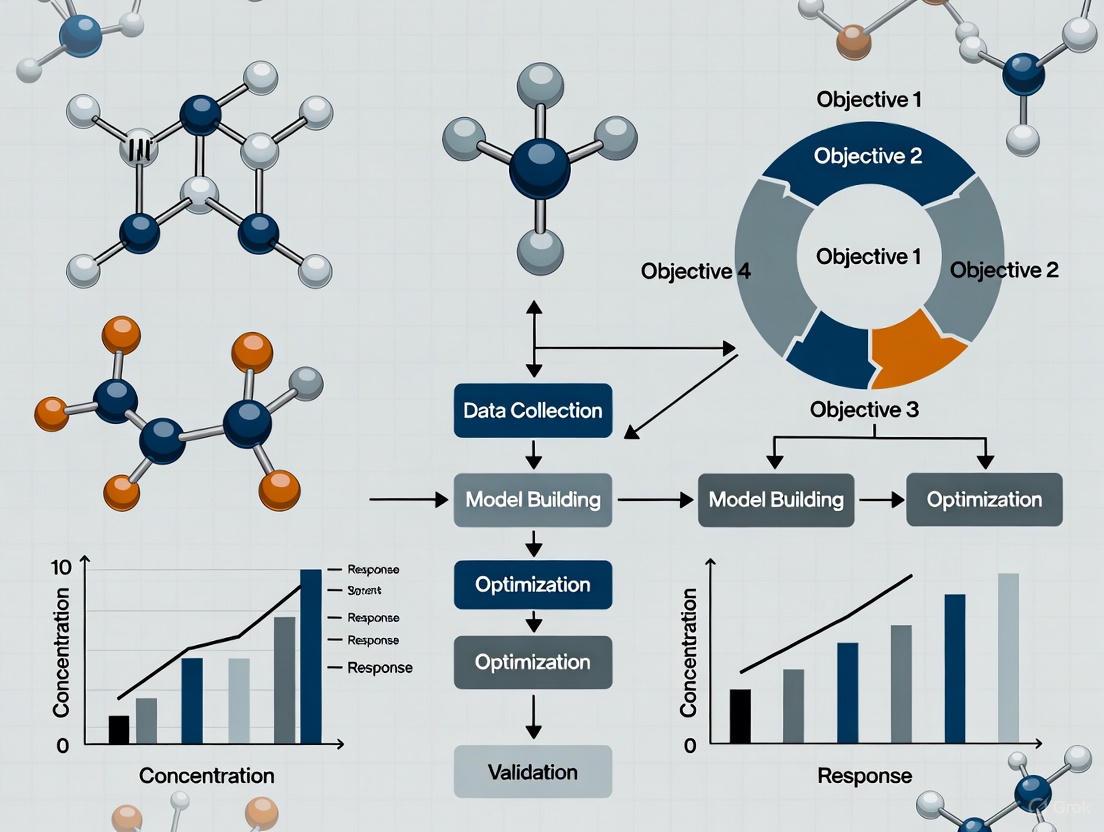
This article provides a comprehensive overview of multi-objective optimization (MOO) methodologies and their transformative impact on analytical chemistry, with a focus on drug discovery and materials development.
Multi-Objective Optimization in Analytical Chemistry: Accelerating Drug Discovery and Materials Development
Abstract
This article provides a comprehensive overview of multi-objective optimization (MOO) methodologies and their transformative impact on analytical chemistry, with a focus on drug discovery and materials development. It explores the foundational principles of MOO, including Pareto optimality and the challenges of navigating complex chemical spaces. The review details advanced algorithms—from evolutionary strategies like NSGA-II and MoGA-TA to Bayesian optimization—and their specific applications in molecular design and process engineering. It further addresses critical troubleshooting aspects for handling constraints and mixed-variable systems, and offers a comparative analysis of solver performance using established metrics. Aimed at researchers and drug development professionals, this guide serves as a roadmap for implementing MOO to efficiently balance conflicting objectives such as efficacy, toxicity, and synthesizability.
Pareto Frontiers and Chemical Space: The Foundations of Multi-Objective Optimization
FAQs: Core Concepts and Applications
Q1: What is Multi-Objective Optimization (MOO), and why is it particularly important in chemical research?
Multi-Objective Optimization (MOO) is an area of multiple-criteria decision-making concerned with mathematical optimization problems involving more than one objective function to be optimized simultaneously [1]. In practical chemical problems, these objectives are often conflicting, meaning improving one leads to the degradation of another [2]. For example, you might aim to maximize reaction yield while minimizing environmental impact or minimizing production cost while maximizing product purity [1] [2]. Unlike single-objective optimization which yields a single "best" solution, MOO identifies a set of optimal trade-off solutions, known as the Pareto front [1] [3]. This is crucial in chemistry and drug development because it provides researchers with a comprehensive view of the available compromises, enabling more informed and sustainable decision-making that balances economic, environmental, and performance criteria [2].
Q2: What is the "Pareto Front" and how should I interpret it?
The Pareto front (or Pareto optimal set) is the collection of solutions where none of the objectives can be improved without worsening at least one other objective [1]. For a chemist, each point on the Pareto front represents a viable set of reaction conditions (e.g., temperature, catalyst, solvent) that defines a specific trade-off between your goals.
- Interpreting the Plot: In a plot showing two objectives—for instance, Reaction Yield vs. Environmental Impact—every solution on the front is equally "optimal" from a mathematical standpoint [1]. The choice of a final solution from this set depends on the specific priorities of your project, such as whether cost or speed is more critical [2].
Q3: My optimization problem involves both continuous variables (like temperature) and categorical variables (like catalyst type). Is MOO applicable?
Yes. This is known as a Mixed-Variable Optimization problem, and it is a common challenge in reaction optimization. Recent advances have led to the development of algorithms specifically designed to handle both continuous variables (e.g., temperature, concentration) and discrete variables (e.g., catalyst, ligand, solvent selection) concurrently [4] [5]. For example, the Mixed Variable Multi-Objective Optimization (MVMOO) algorithm utilizes a Bayesian methodology to efficiently explore the complex parameter space and reveal key interactions between variable types, providing greater process understanding [4].
Q4: What are the main categories of MOO solution methods, and how do I choose?
MOO methods can be broadly categorized as follows [6]:
- A Priori Methods: Require you to specify your preferences (e.g., weightings for each objective) before the optimization run. An example is the weighted sum method.
- A Posteriori Methods: Generate a set of Pareto-optimal solutions first, allowing you to choose from the trade-offs afterwards. Evolutionary algorithms like NSGA-II fall into this category.
- Interactive Methods: Allow for human decision-maker input during the optimization process. For chemical reaction optimization, a posteriori methods are often favored because they map the entire trade-off space without requiring prior bias, thus revealing unexpected optimal conditions [5].
Troubleshooting Common Experimental and Computational Issues
Problem 1: The optimization algorithm fails to converge, or the results are inconsistent.
- Potential Cause 1: Poorly Defined Objectives and Constraints. The mathematical formulation of the problem may be incorrect.
- Solution: Ensure your objective functions and constraints are correctly implemented and computationally stable. Test the simulation model with various inputs to verify it behaves as expected before starting optimization [2].
- Potential Cause 2: Unsuitable Algorithm or Poor Hyperparameter Tuning.
- Solution: Select an algorithm suited to your problem's nature (e.g., MVMOO for mixed variables [4], NSGA-II for continuous variables [6]). Adjust hyperparameters like population size and number of generations carefully, as they significantly impact performance [6].
Problem 2: The Pareto front has poor diversity—all the solutions are clustered in one small region.
- Potential Cause: The optimization algorithm is overly exploiting one region of the search space and lacks exploratory capability.
- Solution: Implement algorithms with mechanisms to maintain diversity. Many modern Multi-Objective Evolutionary Algorithms (MOEAs), like NSGA-II, use a crowding distance operator to ensure solutions are spread out across the Pareto front [6]. You can also adjust the algorithm parameters to favor more exploration.
Problem 3: Handling many (more than three) objectives leads to confusing results and poor algorithm performance.
- Potential Cause: This is a "Many-Objective Optimization" problem, which presents unique challenges. As the number of objectives increases, the computational cost grows exponentially, and visualizing the Pareto front becomes difficult [3]. Furthermore, almost all solutions in a population can become non-dominated, reducing the selection pressure for improvement.
- Solution: Consider using algorithms specifically designed for many objectives, such as NSGA-III [3]. You could also investigate if some objectives are correlated and can be consolidated, or if some can be reformulated as constraints to simplify the problem.
Key Reagents and Computational Tools for MOO in Chemistry
Table 1: Essential "Reagent Solutions" for a Multi-Objective Optimization Experiment
| Tool Category | Example(s) | Primary Function |
|---|---|---|
| MOO Solvers & Algorithms | MVMOO [4], NSGA-II [6], MOEA/D [7], Dragonfly, TSEMO [5] | Core computational engines for finding Pareto-optimal solutions. MVMOO is specialized for mixed-variable problems. |
| Automated Flow Reactors | Self-optimizing flow platforms [4] | Automated experimental systems that physically execute reactions and measure outcomes based on algorithm-set parameters. |
| Process Modeling Software | Aspen Plus, Hysys [2] | Software for building detailed process models, which can be used as the "objective function" simulators for optimization. |
| Performance Metrics | Hypervolume (HV), Generational Distance (GD), Spacing [6] | Quantitative metrics to evaluate and compare the quality (convergence and diversity) of different Pareto fronts. |
Detailed Experimental Protocol: A MOO Case Study
Title: Multi-Objective Optimization of a Sonogashira Reaction using a Mixed-Variable Algorithm and an Automated Flow Reactor [4].
Background: The Sonogashira coupling is a crucial reaction for forming C-C bonds. Optimizing it involves balancing multiple outcomes, such as yield, selectivity, and productivity, which are influenced by both continuous (e.g., temperature, residence time) and discrete (e.g., ligand, solvent) variables.
Objective: To simultaneously identify the trade-offs between reaction yield and productivity by optimizing continuous and discrete variables concurrently.
Materials:
- Chemical Reagents: Palladium catalyst, various ligands, solvents, aryl halide, and alkyne substrates.
- Equipment: Automated continuous flow reactor system with in-line analytics (e.g., HPLC or UV-Vis).
- Software: Mixed Variable Multi-Objective Optimization (MVMOO) algorithm code [4].
Methodology:
- Problem Formulation:
- Variables: Define continuous variables (e.g.,
Temperature,Residence Time) and discrete variables (e.g.,Ligandfrom a set {L1, L2, L3},Solventfrom a set {S1, S2}). - Objectives: Define the objectives to be optimized, e.g.,
Maximize Reaction YieldandMaximize Space-Time Yield (Productivity). - Constraints: Define any operational limits (e.g.,
Temperature < 150 °C,Pressure < 10 bar).
- Variables: Define continuous variables (e.g.,
Experimental Workflow Setup: Couple the MVMOO algorithm with the control system of the automated flow reactor. The algorithm will propose new experimental conditions, the reactor will execute the experiment, and in-line analytics will feed the result back to the algorithm.
Algorithm Execution:
- Initialization: The algorithm typically starts with an initial set of experiments, often generated via a space-filling design like Latin Hypercube Sampling.
- Iterative Optimization: The algorithm runs iteratively:
- Surrogate Modeling: A machine learning model (e.g., Gaussian Process) is built based on all data collected so far to predict reaction outcomes.
- Acquisition Function: An acquisition function (e.g., Expected Hypervolume Improvement) uses the model to suggest the next most informative experiment, balancing exploration and exploitation.
- Evaluation: The suggested experiment (combination of discrete and continuous variables) is performed automatically by the flow platform.
- Update: The new data point is added to the dataset, and the process repeats until a stopping criterion is met (e.g., a set number of experiments or convergence is achieved).
The following diagram illustrates this iterative, automated workflow:
Expected Outcome: After a predetermined number of experiments, the algorithm will output a set of non-dominated solutions, forming the Pareto front. This front will clearly visualize the trade-off between yield and productivity and identify the specific combinations of ligand, solvent, temperature, and residence time that achieve each optimal compromise.
Solver Selection Guide for Chemical Applications
Table 2: Comparison of Multi-Objective Optimization Solvers for Chemical Reaction Optimization
| Solver Name | Key Features | Best Suited For | Considerations |
|---|---|---|---|
| MVMOO [4] [5] | Handles mixed variables (continuous & categorical); Bayesian methodology. | Problems where solvent, catalyst, or ligand choice is a key variable. | High optimization efficiency; requires no prior knowledge. |
| NSGA-II [6] | A well-established, dominance-based genetic algorithm; uses crowding distance for diversity. | General-purpose MOO with continuous variables. | A robust, widely used choice; may struggle with many objectives or mixed variables. |
| TSEMO [5] | Bayesian global optimization; often very sample-efficient. | Problems where each experimental evaluation is very expensive or time-consuming. | Can find good solutions with fewer experiments. |
| Dragonfly [5] | - | Refer to specific software documentation for features. | - |
| EDBO+ [5] | Designed for experimental design and batch optimization. | High-throughput experimentation where parallel evaluation of experiments is possible. | Can optimize multiple conditions simultaneously. |
Frequently Asked Questions
Q1: What is Pareto optimality in the context of molecular optimization? Pareto optimality describes a state in multi-objective optimization where no single molecular property can be improved without worsening at least one other property. In drug discovery, a molecule is considered Pareto optimal if it represents the best possible compromise between conflicting objectives, such as potency versus metabolic stability [8]. Such molecules lie on the Pareto front, a concept that helps identify the set of non-dominated solutions from which researchers can select the most suitable candidate [9].
Q2: Why is the Pareto Principle important for designing multi-target therapeutics? Designing compounds that engage multiple targets often requires balancing different, and sometimes competing, chemical features [8]. The Pareto Principle provides a framework for identifying these optimal trade-offs. Without computational methodologies like multi-objective optimization, it is particularly challenging to design compounds with a well-balanced profile of these conflicting features [8].
Q3: How can I identify the "vital few" molecular properties to focus on during optimization? The Pareto Principle, often called the 80/20 rule, suggests that a small proportion of inputs (the "vital few") generates a disproportionately large proportion of outputs [10]. To identify these critical properties:
- Gather data on how different molecular properties contribute to your overall goal (e.g., therapeutic efficacy).
- Rank properties by their contribution and calculate cumulative percentages.
- Visualize with a Pareto chart to clearly see which few properties (e.g., potency, solubility) have the largest impact on your outcome, and focus optimization efforts there [10].
Q4: What are common pitfalls when applying Pareto analysis to experimental data?
- Obsessing over exact ratios: The principle identifies uneven distributions, not rigid 80/20 splits. Context matters enormously [10].
- Neglecting the "trivial many": While focus should be on high-impact properties, smaller issues can accumulate into significant problems if completely ignored [10].
- Assuming static relationships: The importance of molecular properties can shift as research progresses. Regular re-analysis is necessary to keep focus areas current [10].
Troubleshooting Guides
Problem: Difficulty converging on a Pareto front during in-silico compound design.
- Potential Cause 1: The algorithm is exploring a parameter space that is too large or poorly constrained.
- Solution:
- Re-evaluate the bounds of your parameter space using known physicochemical constraints.
- Incorporate prior knowledge to define a lower-dimensional manifold for more efficient searching, a approach inspired by how biological systems reduce complex parameter spaces to simpler subspaces [9].
- Potential Cause 2: Conflicting objectives are too equally weighted, causing the search to oscillate without finding clear trade-offs.
- Solution:
- Revisit the performance space and ensure your objective functions accurately reflect the biological tasks. The Pareto front forms part of the boundary between plausible and implausible regions in this space [9].
- Consider if some objectives can be reformulated as constraints to simplify the optimization landscape.
Problem: A lead compound is optimal in one key area (e.g., potency) but underperforms in another (e.g., metabolic stability).
- Explanation: This compound may be close to a performance archetype—a phenotype optimal for a single task [9]. In a multi-task environment, evolution (or a design algorithm) selects for compromises.
- Solution:
- Map your candidate compounds in a performance space defined by your key objectives.
- Identify the Pareto front—the set of compounds where no other candidate dominates across all properties.
- Select a compound from this front that offers the best balance for your specific requirements, accepting that peak performance in one area must be sacrificed for adequacy in others [9] [11].
Problem: Experimental results for optimized compounds do not match in-silico predictions.
- Potential Cause: The computational model's performance functions do not fully capture the complexity of the in-vivo environment.
- Solution:
- Iterate and Validate: Use the experimentally observed discrepancies to refine your computational model's objective functions.
- Refine the Pareto Front: Treat the initial model as a starting point. The Pareto front is not static; it should evolve with new biological data, much like biological systems refill morphospace after extinction events [11].
- Ensure your model accounts for real-world variability and unanticipated interactions not present in the simulated environment.
Key Research Reagent Solutions
The following reagents and computational resources are essential for implementing Pareto-based multi-objective optimization in drug discovery.
| Reagent / Resource | Function in Pareto Optimization |
|---|---|
| Generative Molecular Models | Used to design de novo compounds by exploring chemical space and generating candidates predicted to have a good balance between desired, conflicting properties [8]. |
| Public Bioactivity Datasets | Provide the training data for generative models, allowing for the identification of structure-property relationships even when data is limited [8]. |
| Multi-Objective Optimization Algorithms | Computational engines that identify the set of Pareto optimal solutions by balancing different, competing chemical features during the design process [8]. |
| Performance Space Mapping Tools | Software that visualizes candidate compounds based on multiple objectives, helping researchers identify the Pareto front and select the best compromises [9]. |
Experimental Protocol: Identifying a Pareto Front for Molecular Properties
1. Define Objectives and Constraints:
- Clearly specify the molecular properties to be optimized (e.g., binding affinity (pIC50), solubility (LogS), metabolic stability (CLint)).
- Define acceptable ranges for each property and other chemical constraints (e.g., molecular weight < 500, no reactive functional groups).
2. Generate Candidate Population:
- Use a generative chemical model to produce a large and diverse set of candidate molecules [8].
- Alternatively, curate a dataset of known actives from public or proprietary databases.
3. Compute Property Predictions:
- Employ quantitative structure-activity relationship (QSAR) models or other predictive tools to estimate the key properties for every candidate in the population.
4. Perform Pareto Sorting:
- For the set of molecules and properties, apply a non-dominated sorting algorithm:
- A molecule (A) is said to dominate another molecule (B) if A is better than or equal to B in all properties and strictly better in at least one property.
- Identify all molecules that are not dominated by any other molecule in the population. This is the Pareto front [9].
- Iteratively remove these front molecules and repeat the process to rank the entire population by their level of optimality.
5. Analyze and Select:
- Visualize the results, typically using 2D or 3D scatter plots where each axis represents an optimization objective. The Pareto front will form one boundary of the data cloud.
- Select final candidate(s) from the Pareto front based on the desired balance of properties for the specific therapeutic context.
Logical Workflow for Multi-Objective Molecular Optimization
The diagram below outlines the core process for applying Pareto optimality in molecular design.
Navigating the Vast Chemical Search Space (∼10^60 Molecules)
FAQs: Understanding the Chemical Search Space and Multi-Objective Optimization
What is the "chemical space" and why is its size (∼10^60 molecules) a challenge for research? The term "chemical space" (CS) or "chemical universe" refers to the total number of chemical compounds that could theoretically exist. This space is vast because organic molecules can form stable chains and rings, leading to a multitude of fascinating and complex structures [12]. The estimated ∼10^60 possible molecules represents both an opportunity and a challenge; it is prohibitively expensive and time-consuming to exhaustively search this space to find novel molecules with promising properties for applications like drug discovery or materials science [13] [14].
What is multi-objective optimization (MOO) and how does it apply to chemical research? Multi-objective optimization (also known as Pareto optimization) is an area of multiple-criteria decision-making concerned with mathematical optimization problems involving more than one objective function to be optimized simultaneously [1]. In chemistry, this is essential because researchers often need to balance conflicting goals, such as maximizing a reaction's yield while minimizing cost, waste, or energy consumption [5]. For a multi-objective problem, there is rarely a single "best" solution; instead, the goal is to find a set of optimal trade-off solutions, known as the Pareto front [1].
Which multi-objective optimization solvers are available for chemical reaction optimization? Several solvers have been developed and applied in real chemical scenarios. The choice of solver depends on the specific problem, including the types of variables (continuous or categorical) and required features like constraint handling. The table below summarizes key solvers identified in a 2024 comparative study [5].
Table 1: Multi-Objective Optimization Solvers for Chemical Applications
| Solver Name | Key Features/Notes |
|---|---|
| MVMOO | Verified in real chemical reaction scenarios [5]. |
| EDBO+ | Verified in real chemical reaction scenarios [5]. |
| Dragonfly | Verified in real chemical reaction scenarios [5]. |
| TSEMO | Verified in real chemical reaction scenarios [5]. |
| EIM-EGO | Verified in real chemical reaction scenarios [5]. |
What is the Biologically Relevant Chemical Space (BioReCS)? The Biologically Relevant Chemical Space (BioReCS) is a chemical subspace comprising molecules with biological activity—both beneficial and detrimental. It spans areas like drug discovery, agrochemistry, and natural product research. It includes not only therapeutic compounds but also toxic and allergenic molecules [14]. Public databases such as ChEMBL and PubChem are major sources for exploring this space [14].
What are some underexplored regions of the chemical space? Certain chemical structure types remain underexplored due to modeling challenges [14]:
- Metal-containing molecules and metallodrugs are often filtered out of standard analyses.
- Macrocycles (compounds with large rings), PROTACs, and mid-sized peptides.
- Protein-protein interaction (PPI) inhibitors.
- Dark chemical matter: Compounds that have repeatedly failed to show activity in high-throughput screens [14].
Troubleshooting Guides for Computational Experiments
Guide: Poor Performance in Multi-Objective Optimization
Problem: The optimization algorithm is not efficiently finding good candidate molecules or reaction conditions on the Pareto front.
Possible Causes and Solutions:
- Cause 1: Inadequate fitness function formulation.
- Solution: Ensure your fitness function accurately reflects the real-world material properties. For molecular materials, relying solely on molecular properties and ignoring solid-state crystal packing can lead to poor performance. Incorporate Crystal Structure Prediction (CSP) into the fitness evaluation to account for the significant effects of the crystal structure [13].
- Cause 2: The solver is not suited for the specific problem type (e.g., mixed variable types, constraints).
- Solution: Re-evaluate your choice of solver. Refer to Table 1 and select a solver that handles your specific variable types (continuous/categorical) and can manage any process constraints [5].
- Cause 3: Algorithm is trapped in a local optimum.
- Solution: For evolutionary algorithms like CSP-EA, ensure the parameters for mutation and crossover are tuned to maintain population diversity. Using a representative set of initial structures in the CSP step can improve the robustness of the property prediction [13].
Guide: Handling Ionizable Compounds in Chemical Space Analysis
Problem: Computational predictions for ionizable compounds (weak acids, bases, ampholytes) are inaccurate under physiological conditions.
Explanation and Solution:
- Root Cause: Most chemical space analyses assume molecular structures are neutrally charged. However, an estimated 80% of contemporary drugs are ionizable. Their ionization state profoundly impacts solubility, permeability, binding, and toxicity [14].
- Solution: Do not rely solely on molecular descriptors calculated for the neutral species. Account for the pH-dependent ionization state of the compound in your environment (e.g., physiological pH). Use tools that can calculate molecular properties like lipophilicity (log P) for the correct charged species to improve the accuracy of your models [14].
The Scientist's Toolkit: Key Research Reagent Solutions
This table details essential computational and data resources for exploring the chemical space.
Table 2: Essential Resources for Navigating the Chemical Space
| Resource Name | Type | Function |
|---|---|---|
| ChEMBL | Public Database | A major source of biologically active small molecules with extensive bioactivity annotations, crucial for defining the BioReCS [14]. |
| PubChem | Public Database | A large collection of chemical substances and their biological activities, essential for chemoinformatics and CS analysis [14]. |
| InertDB | Public Database | A curated collection of experimentally confirmed and AI-generated inactive compounds. Vital for defining the non-biologically relevant regions of chemical space [14]. |
| MAP4 Fingerprint | Molecular Descriptor | A general-purpose molecular fingerprint designed to work across diverse chemical entities, from small molecules to peptides, aiding in the comparison of different ChemSpas [14]. |
| CSP-EA | Computational Algorithm | An evolutionary algorithm that integrates crystal structure prediction to evaluate candidate molecules based on solid-state material properties, not just molecular properties [13]. |
Experimental Protocol: CSP-Informed Evolutionary Algorithm (CSP-EA)
Methodology for Crystal Structure Prediction-Informed Evolutionary Optimization
The following workflow outlines the protocol for using an evolutionary algorithm guided by crystal structure prediction to navigate the vast chemical search space for materials discovery, as demonstrated in the search for organic molecular semiconductors [13].
Detailed Procedure:
- Initialize Population: Generate a diverse starting population of molecules from the target chemical search space [13].
- Loop (for each generation): a. Select Parents: Choose molecules from the current population to act as parents for the next generation. Selection is based on a fitness score derived from predicted material properties [13]. b. Create Offspring: Apply evolutionary operators (e.g., crossover to combine molecular features, mutation to introduce random changes) to the parent molecules to create a new set of offspring molecules [13]. c. Crystal Structure Prediction (CSP): For each new offspring molecule, perform crystal structure prediction to generate a set of low-energy, plausible crystal packing arrangements [13]. d. Calculate Fitness: Evaluate the fitness of each offspring molecule based on the properties calculated from its predicted crystal structures (e.g., electron mobility for semiconductors). This is the key step that differentiates CSP-EA from methods that use molecular properties alone [13].
- Check Stopping Criteria: Repeat the loop until a predefined condition is met, such as a maximum number of generations or convergence of the fitness score.
- Output Result: Return the set of non-dominated, Pareto-optimal molecules that represent the best trade-offs between the multiple objectives [13] [1].
Frequently Asked Questions (FAQs)
Q1: What makes multi-objective optimization (MOO) necessary in modern drug discovery? Traditional drug discovery often follows a "one-drug, one-target" paradigm, which is insufficient for complex diseases like cancer and neurodegenerative disorders, where multiple pathways are involved. MOO is necessary to balance several, often competing, molecular properties simultaneously. This includes enhancing efficacy against one or multiple targets while reducing toxicity, improving solubility, and maintaining selectivity to avoid off-target effects. The goal is to identify a set of optimal compromise solutions, known as the Pareto front, rather than a single "perfect" molecule [15].
Q2: What are the most common conflicting objectives in molecular optimization? The most common conflicts arise between:
- Efficacy vs. Toxicity: A molecule highly potent against a primary target may have strong off-target interactions, leading to adverse effects [15].
- Potency vs. Solubility/Absorption: Structural features that increase binding affinity (e.g., large aromatic rings, high molecular weight) can negatively impact aqueous solubility and oral bioavailability, governed by rules like Lipinski's Rule of Five [16] [17].
- Similarity vs. Novelty/Diversity: Optimizing a molecule for high structural similarity to a known active drug can limit the exploration of chemical space and reduce the potential for discovering novel scaffolds with improved properties [16] [17].
- Multi-Target Activity vs. Selectivity: Designing a drug to act on multiple disease-relevant targets (polypharmacology) can conflict with the objective of minimizing activity on unrelated targets to avoid toxicity [15].
Q3: How do computational methods like evolutionary algorithms handle these conflicts? Multi-objective evolutionary algorithms (MOEAs), such as NSGA-II, manage conflicts by evaluating populations of candidate molecules across all objectives at once. They use techniques like non-dominated sorting to rank molecules and crowding distance to maintain population diversity. This allows the algorithm to evolve a population towards the Pareto front, providing researchers with a diverse set of candidate molecules representing different trade-offs between the objectives, such as a molecule with slightly lower potency but much better solubility [16] [17].
Q4: What are the key metrics for evaluating a successful multi-objective optimization run? Success is not measured by a single metric but by a combination that assesses the quality of the entire set of candidate molecules:
- Success Rate (SR): The percentage of generated molecules that satisfy all predefined property thresholds [17].
- Hypervolume (HV): Measures the volume in objective space covered by the non-dominated solutions, indicating both convergence and diversity. A larger hypervolume is better [16] [17].
- Geometric Mean: Calculates the central tendency of performance across multiple objectives for a comprehensive view [16] [17].
- Internal Similarity: Assesses the structural diversity within the generated population of molecules [16] [17].
Troubleshooting Guides
Issue 1: Algorithm Prematurely Converges to a Single Region of Chemical Space
Problem: The optimization algorithm produces molecules that are too structurally similar, lacking diversity and potentially missing better compromise solutions.
Possible Causes and Solutions:
- Cause: Inadequate diversity preservation mechanism.
- Cause: Excessive selection pressure towards a single objective early in the run.
- Cause: Population size is too small.
- Solution: Increase the population size to allow for a broader sampling of the chemical space.
Issue 2: Generated Molecules Fail to Meet Key Physicochemical Property Thresholds
Problem: The final candidate molecules have poor drug-like properties, such as low solubility or incorrect lipophilicity (logP).
Possible Causes and Solutions:
- Cause: Objective function weights or thresholds are improperly set.
- Cause: The chemical space defined by the initial population or allowed mutations is biased or limited.
- Solution: Curate the initial molecule set and ensure the mutation operators (e.g., atom/bond changes, fragment replacements) can generate a wide range of valid, drug-like structures.
- Cause: Inaccurate property prediction models.
Issue 3: Inability to Balance Multi-Target Efficacy with Selectivity
Problem: Designed molecules either fail to hit the desired multiple targets or show excessive promiscuity, leading to predicted toxicity.
Possible Causes and Solutions:
- Cause: The objective function for "efficacy" is too simplistic.
- Cause: Lack of high-quality bioactivity data for off-targets.
- Solution: Leverage public bioactivity databases like ChEMBL, BindingDB, and DrugBank to build more comprehensive predictive models for both on-target and off-target interactions [15].
- Cause: The model is overfitting to a narrow set of training data.
Experimental Protocols & Data
Detailed Methodology: MoGA-TA Multi-Objective Optimization
The following protocol is adapted from the MoGA-TA algorithm for multi-objective drug molecule optimization [16] [17].
1. Problem Formulation:
- Define Objectives: Clearly specify the 2-5 molecular properties to be optimized. Examples from benchmarks include Tanimoto similarity (using ECFP4, FCFP4, or AP fingerprints), QED (drug-likeness), logP, TPSA, molecular weight, and specific biological activities [16] [17].
- Define Modifier Functions: For each objective, apply a modifier function to map the raw property value to a normalized score between 0 and 1. Common modifiers include
Gaussian(mean, sigma)for targeting a specific value,MaxGaussian(max, sigma)for maximizing a property, andThresholded(value)for setting a minimum acceptable level [16] [17].
2. Algorithm Initialization:
- Initialize Population: Generate a starting population of molecules, typically from a database like ChEMBL or by sampling around a lead compound.
- Set Parameters: Define population size (e.g., 100-1000), maximum number of generations, crossover rate, and mutation rate.
3. Evolutionary Loop:
- Evaluation: For each molecule in the population, calculate its scores for all defined objectives using the modifier functions.
- Non-dominated Sorting: Rank the population into fronts (Pareto fronts) based on Pareto dominance.
- Crowding Distance Calculation (Tanimoto-based): Calculate the crowding distance for molecules in the same front using Tanimoto similarity on molecular fingerprints. This promotes structural diversity.
- Selection: Select parent molecules for the next generation using tournament selection, favoring individuals from better fronts and those with larger crowding distances.
- Variation (Crossover & Mutation): Create offspring molecules by applying a decoupled crossover and mutation strategy within the chemical space. This involves SMILES-based or graph-based operations.
- Population Update (Dynamic Acceptance): Use a dynamic acceptance probability strategy to decide whether new offspring replace existing individuals, balancing exploration and exploitation.
4. Termination and Analysis:
- The loop continues until a stopping condition is met (e.g., max generations).
- The final output is the non-dominated set of molecules from the last generation, representing the Pareto-optimal solutions.
The table below summarizes six benchmark tasks used to evaluate the MoGA-TA algorithm, detailing the objectives and key results [16] [17].
Table 1: Multi-Objective Molecular Optimization Benchmark Tasks
| Task Name (Reference Drug) | Optimization Objectives | Key Experimental Findings |
|---|---|---|
| Fexofenadine [16] [17] | Tanimoto similarity (AP), TPSA, logP | MoGA-TA showed improved success rate and hypervolume compared to NSGA-II and GB-EPI. |
| Pioglitazone [16] [17] | Tanimoto similarity (ECFP4), Molecular weight, Number of rotatable bonds | The algorithm effectively balanced similarity constraints with physicochemical goals. |
| Osimertinib [16] [17] | Tanimoto similarity (FCFP4), Tanimoto similarity (FCFP6), TPSA, logP | Successfully handled four competing objectives, generating a diverse Pareto front. |
| Ranolazine [16] [17] | Tanimoto similarity (AP), TPSA, logP, Number of fluorine atoms | Demonstrated capability to optimize for a specific structural feature (fluorine count) alongside other properties. |
| Cobimetinib [16] [17] | Tanimoto similarity (FCFP4), Tanimoto similarity (ECFP6), Number of rotatable bonds, Number of aromatic rings, CNS | Effectively managed a complex five-objective task, including a central nervous system (CNS) activity score. |
| DAP kinases [16] [17] | DAPk1 activity, DRP1 activity, ZIPk activity, QED, logP | Showcased application in multi-target optimization (polypharmacology) while maintaining drug-likeness. |
Evaluation Metrics for Multi-Objective Optimization
Table 2: Key Performance Metrics for Algorithm Evaluation
| Metric | Description | Interpretation |
|---|---|---|
| Success Rate (SR) [17] | The percentage of generated molecules that meet all target property thresholds. | Higher is better. Directly measures the ability to produce viable candidates. |
| Hypervolume (HV) [16] [17] | The volume in objective space covered by the non-dominated solutions relative to a reference point. | A larger HV indicates a better combination of convergence and diversity. |
| Geometric Mean [16] [17] | The nth root of the product of scores for n objectives. | Provides a single measure of overall performance across all objectives. |
| Internal Similarity [16] [17] | The average pairwise structural similarity (e.g., Tanimoto) within the population. | A very high value may indicate lack of diversity; a moderate value is often desirable. |
Workflow and Algorithm Diagrams
Multi-Objective Molecular Optimization Workflow
MoGA-TA's Enhanced Selection and Update Strategy
Table 3: Essential Computational Tools and Data Resources
| Resource Name | Type | Function in Multi-Objective Optimization |
|---|---|---|
| RDKit [16] [17] | Software Library | Calculates molecular descriptors (e.g., logP, TPSA), generates fingerprints (ECFP, FCFP), and handles molecular I/O and operations. |
| ChEMBL [16] [15] | Bioactivity Database | Provides curated bioactivity data for building initial populations, training predictive models, and defining target activity objectives. |
| GuacaMol [16] [17] | Benchmarking Platform | Offers standardized molecular optimization tasks to fairly evaluate and compare the performance of different algorithms. |
| DrugBank [15] | Drug/Target Database | Supplies information on known drug-target interactions, useful for defining selectivity constraints and polypharmacology objectives. |
| Tanimoto Similarity [16] [17] | Metric | Quantifies structural similarity between molecules using fingerprints; used in crowding distance and similarity objectives. |
| NSGA-II Framework [16] [17] | Algorithm | Provides the core multi-objective evolutionary optimization logic (non-dominated sorting and selection). |
The Role of Tanimoto Similarity and Other Molecular Metrics in Quantifying Objectives
Frequently Asked Questions
1. Why is the Tanimoto coefficient the most recommended metric for comparing molecular fingerprints?
The Tanimoto coefficient (also known as Jaccard-Tanimoto) is consistently identified in large-scale studies as one of the best-performing metrics for fingerprint-based similarity calculations [19]. Its performance is often equivalent to other top metrics like the Dice index and Cosine coefficient, producing rankings closest to a composite average ranking of multiple metrics [19]. It is considered a robust and versatile choice for routine similarity searching in cheminformatics.
2. My similarity search results seem biased towards smaller molecules. Is this related to my choice of metric?
Yes, this can be a known limitation of certain metrics. The Tanimoto index has been reported to have a tendency to select smaller compounds during dissimilarity selection [19]. If this is affecting your results, you might consider testing alternative metrics like the Dice or Cosine coefficients, which were identified alongside Tanimoto as top performers but may exhibit different behavioral biases [19].
3. For interaction fingerprints (IFPs), is Tanimoto still the best similarity metric to use?
While Tanimoto is the most commonly used metric for Interaction Fingerprints (IFPs), research suggests that other similarity measures can be viable or even better alternatives depending on the specific virtual screening scenario [20]. It is recommended to evaluate multiple metrics for your specific IFP configuration and target protein. The Baroni-Urbani-Buser (BUB) and Hawkins-Dotson (HD) coefficients have shown promise in related fields [20].
4. I need a true mathematical metric for my analysis. Does the Tanimoto distance satisfy the triangle inequality?
The standard Tanimoto distance, defined as 1 - Tanimoto similarity, is a proper metric only when using binary fingerprints [21]. For continuous or general non-binary vector representations, this simple transformation may not satisfy the triangle inequality. In such cases, a modified form of the Tanimoto distance must be used to ensure it is a true metric [21].
5. How do I convert a distance or dissimilarity measure into a similarity score?
Conversion depends on the range of the distance metric [22]:
- For distances with a range of 0 to 1 (e.g., Soergel distance), similarity is simply:
Similarity = 1 - Distance. - For distances with a larger upper bound (e.g., Euclidean or Manhattan distance), you can use:
Similarity = 1 / (1 + Distance). This ensures that identical molecules (distance=0) have a similarity of 1, and highly dissimilar molecules have a similarity approaching 0.
6. What is an appropriate similarity threshold to consider two molecules "similar"?
A Tanimoto coefficient of 0.85 is historically used as a general threshold for molecular similarity, particularly with Daylight fingerprints [23]. However, this should not be universally applied as a guarantee of similar bioactivity [23]. The optimal threshold can vary significantly depending on the type of molecular fingerprint used (e.g., ECFP vs. MACCS keys) and the specific application [22]. Always validate thresholds within the context of your own data and objectives.
Troubleshooting Guides
Problem: Poor Performance in Virtual Screening or Multi-Objective Optimization
Your similarity metric may not be capturing the correct structural relationships for your specific task.
- Checklist:
- Verify Fingerprint Compatibility: Ensure your chosen similarity metric is appropriate for your fingerprint type (e.g., binary vs. continuous).
- Benchmark Multiple Metrics: Do not rely solely on Tanimoto. Test other high-performing metrics like Dice, Cosine, and Soergel, as their rankings can differ and may be more suitable for your chemical space [19].
- Inspect for Size Bias: If your results are skewed towards smaller molecules, it could be a known bias of the Tanimoto coefficient. Experiment with the Dice coefficient as an alternative [19].
- Consider Data Fusion: If no single metric performs outstandingly, use data fusion techniques (similarity fusion or group fusion) to combine the results from several different similarity metrics, which can enhance overall performance [19].
Problem: Inconsistent Similarity Rankings Between Different Software or Toolkits
Differences can arise from the implementation of the fingerprint or the metric itself.
- Checklist:
- Confirm Fingerprint Parameters: For common fingerprints like ECFP or FCFP, ensure the parameters (e.g., radius, length) are identical across toolkits (e.g., RDKit vs. Schrodinger).
- Validate Metric Implementation: Double-check the formula used by your software. The Tanimoto coefficient for binary fingerprints should be defined as
T = a / (a + b + c), whereais the number of bits set in both molecules, andbandcare the bits set in only one molecule [20]. - Use Standardized Tools: For critical comparisons, use well-documented and widely used cheminformatics toolkits like RDKit or CDK, and document the exact version and function used.
Comparison of Key Molecular Similarity and Distance Metrics
The table below summarizes commonly used metrics in cheminformatics, their mathematical formulas for binary fingerprints, and their key characteristics [19] [22].
| Metric Name | Type | Formula (Binary Features) | Value Range | Key Characteristics |
|---|---|---|---|---|
| Tanimoto Coefficient | Similarity | ( T = \frac{a}{a+b+c} ) | 0 to 1 | Gold standard; best overall performer; potential bias for small molecules [19]. |
| Dice Coefficient | Similarity | ( D = \frac{2a}{2a+b+c} ) | 0 to 1 | Top performer; very similar behavior to Tanimoto [19]. |
| Cosine Coefficient | Similarity | ( C = \frac{a}{\sqrt{(a+b)(a+c)}} ) | 0 to 1 | Top performer; often used in text and data mining [19]. |
| Soergel Distance | Distance | ( S_d = \frac{b+c}{a+b+c} ) | 0 to 1 | Complement of Tanimoto; identified as a top distance metric [19]. |
| Manhattan Distance | Distance | ( M_d = b + c ) | 0 to N* | Not recommended alone; can add diversity in data fusion [19]. |
| Euclidean Distance | Distance | ( E_d = \sqrt{b + c} ) | 0 to √N* | Not recommended alone; can add diversity in data fusion [19]. |
Note: N is the length of the molecular fingerprint [22].
Experimental Protocol: Benchmarking Similarity Metrics for a Virtual Screening Task
This protocol outlines how to evaluate different similarity metrics to identify the best one for a specific virtual screening campaign, based on methodologies from the literature [19] [20].
1. Objective To compare the performance of multiple similarity metrics (Tanimoto, Dice, Cosine, etc.) in enriching known active compounds from a decoy database for a given target protein.
2. Materials and Reagents
| Item | Function in Experiment |
|---|---|
| Active Compounds | A set of known active molecules for the target (from ChEMBL or other databases). Serves as reference queries. |
| Decoy Database | A large set of inactive or presumed inactive molecules (e.g., from DUD or ZINC). The background to search. |
| Cheminformatics Toolkit | Software like RDKit or KNIME to generate molecular fingerprints and calculate similarities. |
| Molecular Fingerprints | Structural representation of molecules (e.g., ECFP4, FCFP6, MACCS keys). The basis for comparison. |
3. Procedure
- Step 1: Data Preparation
- Select a reference set of active compounds for your target.
- Prepare a screening database by combining these actives with a large number of decoy molecules.
- Step 2: Molecular Representation
- Generate a consistent type of molecular fingerprint (e.g., ECFP4 with 1024 bits) for all molecules in the dataset.
- Step 3: Similarity Calculation
- For each active compound as a query, calculate its similarity to every molecule in the screening database using each metric under investigation (Tanimoto, Dice, Cosine, etc.).
- Step 4: Performance Evaluation
- For each query and each metric, rank the database molecules by descending similarity.
- Calculate enrichment metrics, such as the Area Under the Accumulative Recall Curve (AUC), the hit rate in the top 1% of the sorted list, or use the Sum of Ranking Differences (SRD) to compare the metrics against a consensus ranking [19] [20].
- Step 5: Analysis
- Aggregate the results across all query molecules.
- Identify the similarity metric(s) that provide the highest average enrichment for your specific target and fingerprint.
4. Workflow Diagram The following diagram illustrates the key steps in this benchmarking protocol.
The Scientist's Toolkit: Essential Research Reagents & Materials
This table lists key computational "reagents" used in molecular similarity analysis and multi-objective optimization experiments.
| Item | Function / Explanation |
|---|---|
| ECFP/FCFP Fingerprints | Binary vectors (e.g., ECFP4) that capture circular substructures of a molecule, forming a standard representation for similarity search [16]. |
| RDKit | An open-source cheminformatics toolkit used for generating fingerprints, calculating similarity, and property prediction [16]. |
| Tanimoto/Dice/Coefficients | Similarity functions used to quantify the structural overlap between two molecular fingerprints in a multi-objective task [19] [16]. |
| NSGA-II Algorithm | A multi-objective evolutionary algorithm used to find Pareto-optimal solutions balancing multiple properties [16]. |
| GuacaMol Benchmark | A framework and set of benchmark tasks for evaluating generative chemistry and molecular optimization models [16]. |
Algorithmic Toolkit: From Evolutionary Algorithms to Bayesian Optimization for Chemistry
Troubleshooting Guide for NSGA-II and MoGA-TA Experiments
FAQ 1: Why is my algorithm converging prematurely to a local optimum, lacking diversity in the final Pareto front?
Answer: Premature convergence often stems from a loss of population diversity, which can be addressed by refining the crowding distance calculation and population update strategies.
- Problem Analysis: In standard NSGA-II, the crowding distance estimates diversity based on objective space, which may not translate well to structural diversity in chemical problems. This can cause the population to cluster around a few similar solutions [16] [24].
- Recommended Solution: Implement the MoGA-TA adaptation. It replaces the standard crowding distance with a Tanimoto similarity-based crowding distance. This method more effectively captures structural differences between molecules, helping to maintain a diverse population and prevent premature convergence [16] [24].
- Additional Step: Incorporate a dynamic acceptance probability population update strategy. This strategy allows for broader exploration of the chemical space in early generations and progressively focuses on exploiting high-quality solutions in later stages, effectively balancing exploration and exploitation [16] [24].
FAQ 2: My molecular optimization experiments are computationally expensive. How can I improve efficiency?
Answer: High computational costs can be managed by leveraging specialized evolutionary algorithms and verifying your experimental setup.
- Problem Analysis: Traditional methods and deep generative models can have high data dependency and computational demands. Evolutionary algorithms like NSGA-II and MoGA-TA are designed to efficiently explore vast chemical spaces without the need for extensive prior training data [16].
- Recommended Solution:
- Algorithm Selection: For drug molecule optimization, use the MoGA-TA algorithm, which is specifically designed for this task and has been shown to significantly improve efficiency and success rate [16] [24].
- Tool Verification: Ensure you are using optimized libraries. The MOEA Framework provides fast, reliable implementations of NSGA-II and other algorithms, which can help avoid performance issues stemming from suboptimal code [25].
FAQ 3: How do I handle multiple, competing objectives in my chemical process design?
Answer: The core strength of NSGA-II and related algorithms is to handle multiple competing objectives without needing to combine them into a single goal.
- Problem Analysis: In multi-objective optimization, a single solution that optimizes all objectives simultaneously often does not exist. Instead, the goal is to find a set of "trade-off" solutions [26].
- Recommended Solution: NSGA-II uses a Pareto dominance ranking and crowding distance to construct a front of non-dominated solutions, known as the Pareto front. Each solution on this front represents a different compromise between the objectives. You can then use a decision-making method, like PROMETHEE II, to select the final best compromise solution from the Pareto front based on your specific preferences [26].
FAQ 4: Why is the performance of my NSGA-II algorithm low during iterations?
Answer: Low search efficiency can be improved by integrating more sophisticated search strategies.
- Problem Analysis: Standard evolutionary operators may not efficiently guide the search in complex, high-dimensional spaces.
- Recommended Solution: Recent research suggests that new search strategies, such as the neighbor strategy and guidance strategy, can significantly enhance search performance. These strategies, when integrated into algorithms like NSGA-III and MOEA/D, have been shown to improve convergence speed by over 12% and the accuracy of the solution set by nearly 4% [27]. Consider exploring and implementing such advanced strategies tailored to your problem's characteristics.
Experimental Protocols for Key Applications
Protocol 1: Optimizing a Triplex-Tube Phase Change Thermal Energy Storage Unit
This protocol details the use of NSGA-II for the multi-objective design of a thermal energy storage system, balancing heat transfer efficiency, storage rate, and mass [28].
- 1. Problem Formulation:
- Decision Variables: Inner tube radius (
r1), casing tube radius (r2), and outer tube radius (r3) [28]. - Objective Functions: Maximize heat transfer efficiency (
ε), maximize heat storage rate (Pt), and minimize mass (M) [28]. - Constraints: Define feasible ranges for the tube radii based on physical and manufacturing limitations [28].
- Decision Variables: Inner tube radius (
- 2. Algorithm Configuration (NSGA-II):
- Population Size: Use a population size suitable for the problem complexity (e.g., 100-500 individuals).
- Termination Condition: Run until a predefined number of generations or convergence criteria are met.
- Genetic Operators: Use simulated binary crossover (SBX) and polynomial mutation with typical distribution indices (e.g., ηc = 20, ηm = 20) [28].
- 3. Execution and Analysis:
- Run the NSGA-II algorithm to generate a Pareto-optimal set of design configurations.
- Analyze the Pareto front to select a final design. For example, an optimized configuration might be
r1=0.014 m,r2=0.041 m, andr3=0.052 m, which achieved a 2.12% improvement in heat transfer efficiency and a 73.23% increase in heat storage rate in one study [28]. - Validate the selected design through experimental testing or high-fidelity simulation, investigating parameters like heat transfer fluid (HTF) temperature and flow rate [28].
Protocol 2: Multi-Objective Drug Molecule Optimization with MoGA-TA
This protocol outlines the steps for optimizing lead compounds using the MoGA-TA algorithm, which enhances NSGA-II for chemical space [16] [24].
- 1. Problem Formulation:
- Starting Point: Begin with a known lead compound (e.g., Fexofenadine, Osimertinib) [16].
- Objective Functions: Define 2-5 objectives. These typically include:
- Tanimoto Similarity: Maximize structural similarity to the lead compound (calculated using ECFP, FCFP, or Atom Pair fingerprints) [16].
- Physicochemical Properties: Optimize properties like polar surface area (TPSA), lipophilicity (logP), molecular weight, number of rotatable bonds, etc., using Gaussian or threshold-based scoring functions to map values to a [0, 1] interval [16].
- Biological Activity: Maximize predicted activity against specific targets (e.g., DAPk1, DRP1, ZIPk) [16].
- 2. Algorithm Configuration (MoGA-TA):
- Representation: Encode molecules using their SMILES strings or molecular graphs.
- Genetic Operators: Use a decoupled crossover and mutation strategy specifically designed for chemical structures.
- Selection: Implement non-dominated sorting.
- Diversity Preservation: Use Tanimoto similarity-based crowding distance instead of the standard crowding distance.
- Population Update: Apply the dynamic acceptance probability strategy for population updates [16] [24].
- 3. Execution and Analysis:
- Run MoGA-TA until a stopping condition is met (e.g., number of generations or stability of the Pareto front).
- Evaluate the performance using metrics like success rate, dominating hypervolume, geometric mean, and internal similarity [16] [24].
- Select promising candidate molecules from the Pareto front for synthesis and experimental validation.
Workflow and Algorithm Comparison Diagrams
Diagram 1: NSGA-II vs MoGA-TA for Drug Optimization
Research Reagent Solutions: Essential Materials and Tools
The following table lists key computational "reagents" and resources used in multi-objective optimization for chemical research.
| Research Reagent / Tool | Function / Purpose | Key Features / Notes |
|---|---|---|
| NSGA-II [28] [29] [30] | A multi-objective evolutionary algorithm for finding a Pareto-optimal set of solutions. | Uses non-dominated sorting and crowding distance; well-suited for problems with 2-3 objectives [16]. |
| MoGA-TA [16] [24] | An NSGA-II adaptation for drug molecule optimization. | Employs Tanimoto crowding distance and dynamic acceptance probability to enhance diversity and efficiency. |
| MOEA Framework [25] | A Java library for multiobjective optimization. | Provides open-source implementations of NSGA-II, MOEA/D, and other algorithms; includes diagnostic tools. |
| RDKit [16] | An open-source cheminformatics toolkit. | Used for calculating molecular descriptors (e.g., TPSA, LogP), fingerprints, and Tanimoto similarity. |
| Tanimoto Similarity [16] [24] | A metric for quantifying the structural similarity between two molecules. | Core to MoGA-TA's diversity preservation; based on molecular fingerprints like ECFP4 and FCFP4. |
| PROMETHEE II [26] | A multi-criteria decision-making method. | Used to select a single best-compromise solution from the Pareto front generated by NSGA-II. |
Multi-Objective Bayesian Optimization (MOBO) and Expected Hypervolume Improvement (EHVI)
Frequently Asked Questions (FAQs)
FAQ 1: What is the primary purpose of using EHVI in Multi-Objective Bayesian Optimization? EHVI is an acquisition function that quantifies the expected increase in the hypervolume indicator, which measures the volume of objective space dominated by a set of solutions relative to a reference point. It efficiently guides the selection of new evaluation points to maximize the expansion of the Pareto front, thereby identifying optimal trade-offs between competing objectives in expensive black-box function optimization [31].
FAQ 2: When should I use qNEHVI over qEHVI for my experiment?
For batch optimization or in noisy experimental settings, qNEHVI is strongly recommended over qEHVI. qNEHVI is mathematically equivalent in noiseless settings and is far more efficient because it integrates over the posterior distribution of the function values at previously evaluated points, which provides more robust performance with parallel computations [32].
FAQ 3: How do I set an appropriate reference point for hypervolume calculation? The reference point should be set to a value that is slightly worse than the lower bound of the acceptable objective values for each objective. It can be set using domain knowledge or a dynamic selection strategy. An improperly chosen reference point can bias the optimization; it acts as a lower bound for the hypervolume calculation and influences the distribution of solutions on the Pareto front [32] [31].
FAQ 4: My MOBO experiment is stalling. How can I overcome search stagnation? Conventional hypervolume improvement can create zero-gradient plateaus that stall optimization. A novel approach is to use a Negative Hypervolume Improvement (NHVI) infill criterion. NHVI assigns negative gradients to dominated regions, transforming these plateaus into searchable landscapes that actively drive optimization momentum. This can lead to a significant increase in Pareto solution density and faster convergence [33].
FAQ 5: What are the key advantages of MOBO over scalarization methods in analytical chemistry applications? Unlike scalarization, which combines objectives into a single function and requires pre-defined weights, Pareto-based MOBO does not need prior knowledge of the relative importance of each objective. This reveals the complete set of trade-offs between objectives, making it more robust for discovery tasks, such as finding molecules that optimally balance multiple properties like potency, solubility, and synthetic cost [34].
Troubleshooting Guides
Issue 1: Poor Pareto Front Distribution
Symptoms
- Clustered solutions that do not cover the full range of trade-offs.
- Gaps in the Pareto front.
Possible Causes and Solutions
| Cause | Diagnostic Steps | Solution |
|---|---|---|
| Inadequate exploration | Check the acquisition function's balance; over-exploitation can cause clustering. | Use qNParEGO with random Chebyshev scalarizations to promote diversity [32] [35]. |
| Incorrect reference point | The reference point is too close to or far from the Pareto front. | Dynamically adjust the reference point based on observed data to ensure it properly bounds the objectives [32]. |
| High observation noise | Noise can obscure the true Pareto front. | Use qNEHVI, which integrates over noise, or increase the number of bootstrap iterations in your surrogate model for better uncertainty quantification [32] [36]. |
Issue 2: Prohibitively Long Computation Time for EHVI
Symptoms
- Slow optimization loops, especially as the number of objectives or data points grows.
Possible Causes and Solutions
| Cause | Diagnostic Steps | Solution |
|---|---|---|
| High-dimensional objectives | Computation time scales poorly beyond 3-4 objectives with exact methods. | For many objectives (>3), use efficient approximations like the WFG algorithm, Monte Carlo methods, or neural approximators like HV-Net [31]. |
| Large number of Pareto points | The partitioning step becomes slow. | Enable prune_baseline=True (in qNEHVI) to remove points with near-zero probability of being on the Pareto front [32]. |
| Inefficient computation | Algorithm is running on CPU. | qEHVI and qNEHVI aggressively exploit parallel hardware. Run experiments on a GPU for significant speed-ups [32]. |
Issue 3: Model Fitting Failures or Poor Surrogate Performance
Symptoms
- The Gaussian Process (GP) model fails to converge or provides poor predictions.
- Optimization recommendations are erratic.
Possible Causes and Solutions
| Cause | Diagnostic Steps | Solution |
|---|---|---|
| Incorrect likelihood specification | Check if the noise level is correctly set for your data. | For problems with known, heteroskedastic (varying) noise, provide the train_yvar parameter to the SingleTaskGP model. If noise is unknown, the GP will infer homoskedastic noise [32]. |
| Insufficient or poor initial data | The model is initialized with too few data points. | Increase the number of initial quasi-random samples (e.g., Sobol sequences). A common heuristic is to use 2*(d+1) initial points, where d is the input dimension [32]. |
| Inappropriate surrogate model | The model cannot capture the complexity of the response surface. | Use automatic model selection or try alternative models. For complex, nonlinear relationships, GradientBoosting can be more effective than a Gaussian Process [36]. |
Experimental Protocol: Implementing a MOBO Loop with EHVI
This protocol provides a step-by-step methodology for setting up and running a MOBO experiment using the BoTorch framework, tailored for a dual-objective problem in analytical chemistry.
Problem Setup and Initial Data Collection
Objective: Define the search space and collect an initial dataset to fit the surrogate model.
- Define the Problem: Formulate your multi-objective problem. In BoTorch, all objectives are assumed to be maximized. Minimization problems must be negated [32].
- Specify Bounds: Define the bounds of your search space (e.g.,
bounds = torch.tensor([[0., 0.], [1., 1.]])). - Generate Initial Data: Use space-filling designs like Sobol sequences to generate initial training data.
Model Initialization
Objective: Construct a probabilistic surrogate model of the objective functions.
- Model Choice: Use a
ModelListGPcomprising independentSingleTaskGPmodels, one for each objective. This is flexible and allows for different noise levels per objective. - Likelihood Variance: If the noise standard deviations (
NOISE_SE) for each objective are known from experimental replication, provide them via thetrain_yvarargument. Otherwise, the GP will infer them [32].
Acquisition Function Configuration and Optimization
Objective: Set up the EHVI acquisition function and optimize it to find the next candidate point(s) for evaluation.
- Reference Point: Set a reference point
ref_pointthat is slightly worse than the worst acceptable value for each objective. - Partitioning: For
qEHVI, partition the non-dominated space usingFastNondominatedPartitioning. - Optimize Acquisition Function: Use
optimize_acqfwith sequential greedy optimization for batches (q > 1).
Evaluation and Iteration
Objective: Evaluate the selected candidates and update the model in a closed loop.
- Observe New Values: Evaluate the expensive objective functions at the candidate points (
new_x). - Update Dataset: Append the new data
(new_x, new_obj)to the training dataset. - Update Model: Re-fit the surrogate model with the expanded dataset.
- Repeat: Continue the loop for a predetermined number of iterations or until a convergence criterion is met (e.g., minimal hypervolume improvement).
Workflow Visualization
MOBO-EHVI Experimental Workflow
MOBO Acquisition Function Selection
Performance Metrics and Comparison
Quantitative Comparison of MOBO Acquisition Functions
| Acquisition Function | Key Principle | Best for Number of Objectives | Handles Noise? | Supports Batch? |
|---|---|---|---|---|
| EHVI [35] [31] | Expected increase in dominated hypervolume | 2-3 (analytic) | No (without extension) | No (without extension) |
| qEHVI [32] | Parallel batch version of EHVI | 2-4 | No | Yes |
| qNEHVI [32] [35] | Integrates over posterior at in-sample points | 2+ | Yes | Yes |
| qNParEGO [32] [35] | Random Chebyshev scalarizations | 2+ | Yes | Yes |
| NHVI [33] | Uses negative gradients in dominated regions to avoid stagnation | 2-6 | Yes | Yes |
| Test Problem | Number of Objectives | Conventional Method(Pareto Solutions) | NHVI Method(Pareto Solutions) | Improvement |
|---|---|---|---|---|
| ZDT1 | 2 | Baseline | ~3x density | ~200% increase |
| DTLZ5 | 3 | Baseline | ~2.5x density | ~150% increase |
| Aerodynamic Airfoil | 2 | 7 | 41 | 485% increase |
| DTLZ7 | 4 | Baseline | Faster convergence | Statistically significant |
The Scientist's Toolkit: Research Reagent Solutions
| Item / Algorithm | Function / Purpose | Key Considerations |
|---|---|---|
| BoTorch [32] [35] | A flexible framework for Bayesian optimization research and implementation, providing built-in MOBO components. | Provides implementations of qEHVI, qNEHVI, and qNParEGO. Recommended for full customization. |
| Ax [32] | A user-friendly platform for adaptive experimentation, built on BoTorch. | Simplifies setup; automatically selects NEHVI for multi-objective problems. Ideal for rapid deployment. |
| MultiBgolearn [36] | A Python package tailored for multi-objective materials design and discovery. | Offers EHVI, PI, and UCB methods with automatic surrogate model selection. |
| Gaussian Process (GP) | The core surrogate model for modeling unknown objective functions. | Use SingleTaskGP for independent modeling of each objective. ModelListGP combines them. |
| Reference Point [32] [31] | A crucial parameter for hypervolume calculation that bounds the region of interest. | Should be set using domain knowledge to be slightly worse than the worst acceptable objective values. |
| Sobol Sequences | A quasi-random method for generating initial space-filling design points before optimization begins. | A common heuristic is to use 2*(d+1) initial points, where d is the input dimension. |
Frequently Asked Questions (FAQs)
Q1: When should I choose the Chebyshev scalarizing function over the Weighted Sum method?
The choice depends primarily on the characteristics of your Pareto front. Use the Weighted Sum method for problems where you know or suspect the Pareto front is convex. It is computationally simpler and efficient for such cases. In contrast, the Chebyshev scalarizing function is more versatile; it can obtain Pareto optimal solutions for both convex and non-convex Pareto fronts, making it a safer choice for complex or unknown problem geometries [37] [38].
Q2: Why is my algorithm using the Chebyshev function only finding weakly Pareto optimal solutions?
A solution obtained with the Chebyshev scalarizing function is guaranteed to be at least weakly Pareto optimal [37]. To ensure regular Pareto optimality, you need to employ a modification. Common troubleshooting strategies include:
- Using the Lexicographic Method: Among all solutions optimal for the Chebyshev problem, select the one that is also optimal for a secondary optimization, such as minimizing the sum of objectives [39].
- Using an Augmented Function: Add a small, weighted term of the L1-norm (the weighted sum) to the Chebyshev function. This small augmentation penalizes solutions that are only weakly Pareto optimal [39].
Q3: My decomposition-based algorithm performs poorly on a problem with an irregular Pareto front. What components can I adjust?
Poor performance on irregular Pareto fronts (e.g., disconnected, degenerate, or highly nonlinear) is a known challenge [40]. You can improve performance by adjusting these key design elements:
- Adaptive Weight Vectors: Instead of using a fixed set of uniform weight vectors, implement a strategy that adapts the weights during the evolutionary process. This involves removing weight vectors in crowded regions of the objective space and adding new ones in sparse regions [40].
- Scalarizing Function Parameters: For the Chebyshev and Penalty-Based Boundary Intersection (PBI) functions, carefully tune the penalty parameter. For the Chebyshev function, you can also experiment with different Lp-norms [40].
- Reference Point Strategy: Some advanced algorithms use multiple reference points instead of a single ideal point to guide the search, which can prevent the population from converging to a single region of the Pareto front [40].
Q4: Does the performance of decomposition-based methods degrade as the number of objectives increases?
All multi-objective algorithms face challenges with a high number of objectives, a field often called "many-objective optimization." While decomposition-based methods like MOEA/D are often cited as being more robust than Pareto-dominance methods for many objectives, they are not immune [37] [41]. The primary issue is that the number of subproblems needed to approximate the Pareto front well grows rapidly. However, under mild conditions, the Chebyshev scalarizing function has been shown to have an effect almost identical to Pareto-dominance relations, suggesting that the main issue may be the algorithm's ability to follow a balanced trajectory rather than the scalarization itself [37].
Troubleshooting Guides
Issue: Inability to Find Certain Pareto Optimal Solutions (Weighted Sum)
- Problem Description: The algorithm converges to a limited set of solutions, missing large portions of the Pareto front, particularly in concave regions.
- Root Cause: The Weighted Sum method can only find solutions that lie on the convex hull of the Pareto front. Any solution in a non-convex (concave) region will be inaccessible, regardless of the weights used [39].
- Solution:
- Switch Scalarizing Function: Replace the Weighted Sum with the Chebyshev scalarizing function, which can obtain all Pareto optimal solutions for a suitable choice of weights, even for non-convex problems [37] [39].
- Verify with a Simple Test: Test your algorithm on a benchmark problem with a known concave Pareto front to confirm the limitation.
Issue: Poor Diversity in the Final Solution Set
- Problem Description: The obtained solutions are clustered in some regions of the Pareto front, while other regions are unexplored.
- Root Cause: The distribution of solutions is highly dependent on the distribution of weight vectors and the shape of the Pareto front. Using a fixed set of uniform weights does not guarantee a uniform distribution of solutions if the Pareto front is irregular [40].
- Solution:
- Implement Weight Adaptation: Introduce a periodic weight vector adjustment mechanism.
- Monitor Solution Density: Identify crowded and sparse regions in the objective space.
- Reallocate Resources: Remove weight vectors associated with crowded solutions and generate new weight vectors to target sparse areas [40].
Issue: Algorithm Convergence is Slow or Stagnates
- Problem Description: The algorithm's progress toward the Pareto front is slower than expected or halts prematurely.
- Root Cause: The selection pressure toward better solutions may be insufficient. In decomposition-based algorithms, how parents are selected for recombination is a critical design element that significantly impacts convergence [38].
- Solution:
- Revisit Parent Selection Mechanism: Compared to the selection of weight vectors, the parent selection strategy has a higher influence on performance [38]. Ensure your selection mechanism provides sufficient selective pressure.
- Hybridize with Local Search: Incorporate a local search operator that optimizes the scalarizing function to refine solutions and accelerate convergence.
Comparative Analysis of Scalarizing Functions
The following table summarizes the core properties of the Weighted Sum and Chebyshev functions to aid in selection and troubleshooting.
Table 1: Comparison of Key Scalarizing Functions
| Feature | Weighted Sum | Chebyshev |
|---|---|---|
| Basic Formulation | ( s1(z, \lambda) = \sum{j=1}^J \lambdaj zj ) [38] | ( s\infty(z, z^*, \lambda) = \maxj [ \lambdaj (zj - z^*_j ) ] ) [38] |
| Pareto Front Geometry | Only finds solutions on convex hull (supported solutions) [39] | Can find solutions on both convex and non-convex regions [37] |
| Guarantee on Solutions | Produces supported efficient solutions | Produces at least weakly efficient solutions; modifications needed for strictly efficient solutions [37] [39] |
| Parameter Sensitivity | Performance sensitive to weight vector distribution | Performance sensitive to weight vectors and reference point ( z^* ) selection |
| Computational Complexity | Generally lower | Generally higher due to the max function |
Experimental Protocols
Protocol: Benchmarking Scalarizing Function Performance
This protocol outlines how to compare the performance of different scalarizing functions within an evolutionary algorithm framework.
- Algorithm Framework: Select a decomposition-based evolutionary algorithm framework like MOEA/D [40] [38].
- Variable Component: Implement different scalarizing functions (e.g., Weighted Sum, Chebyshev, Augmented Chebyshev) as interchangeable components.
- Benchmark Problems: Choose a diverse set of benchmark problems with known Pareto front geometries (e.g., ZDT, CEC 2009 test suites), including both convex and non-convex fronts [42].
- Performance Metrics: Evaluate results using standard metrics:
- Statistical Analysis: Perform multiple independent runs and use statistical tests (e.g., Wilcoxon signed-rank test) to determine the significance of performance differences.
Protocol: Adaptive Adjustment of Weight Vectors
This protocol describes a method for dynamically adjusting weight vectors to improve solution diversity on irregular Pareto fronts [40].
- Initialization: Generate an initial set of evenly distributed weight vectors using a method like Simplex Lattice Design [40].
- Optimization Cycle: Run the evolutionary algorithm for a predetermined number of generations.
- Population Assessment: Periodically (e.g., every 50 generations), analyze the current population of solutions. Cluster solutions in the objective space to identify crowded and sparse regions.
- Weight Adjustment:
- Delete: Identify weight vectors associated with a cluster of solutions in a crowded region and remove a portion of them.
- Add: Generate new weight vectors that point toward the sparse regions of the Pareto front.
- Continuation: Continue the optimization process with the updated set of weight vectors.
Diagram 1: Adaptive Weight Vector Adjustment Workflow
The Scientist's Toolkit
Table 2: Key Reagents and Computational Tools for Decomposition-Based Optimization
| Reagent / Tool | Function / Purpose | Example / Note |
|---|---|---|
| Weight Vectors | Defines the search direction and relative importance of each objective for a subproblem. | Generated via Simplex Lattice Design; can be static or adaptive [40]. |
| Reference Point | Serves as a point of reference for measuring the quality of solutions in the Chebyshev function. | Typically the ideal point ( y^I ) or a utopia point ( y^U < y^I ) [39]. |
| Scalarizing Function | Aggregates multiple objectives into a single scalar value to enable optimization. | Chebyshev, Weighted Sum, Augmented Chebyshev, PBI [40] [38]. |
| Neighborhood Size | Defines the number of neighboring subproblems that share information in MOEA/D. | Critical parameter; a larger size promotes exploitation, a smaller size promotes exploration [40]. |
| Pareto Archive | Stores the best non-dominated solutions found during the search process. | Used to keep a record of the approximated Pareto front. |
The discovery of new pharmaceuticals often requires balancing multiple, competing molecular properties. Multi-objective optimization is an area of mathematical optimization that deals with problems involving more than one objective function to be optimized simultaneously [1]. In drug discovery, this translates to designing molecules that optimally balance desired properties like high efficacy, low toxicity, good solubility, and appropriate pharmacokinetics [43].
MoGA-TA (Multi-objective genetic algorithm based on Tanimoto crowding distance and Acceptance probability) is an improved evolutionary algorithm developed to address key limitations in traditional molecular optimization methods, which often struggle with high data dependency, significant computational demands, and a tendency to produce solutions with high similarity, leading to reduced molecular diversity [17] [16] [24].
Key Components and Workflow of MoGA-TA
The MoGA-TA framework integrates two key innovations to enhance drug molecule optimization.
Core Technical Components
- Tanimoto Similarity-based Crowding Distance: Replaces standard crowding distance calculations in traditional genetic algorithms to better capture molecular structural differences. This enhances exploration of the chemical search space, maintains population diversity, and prevents premature convergence to local optima [17] [16].
- Dynamic Acceptance Probability Population Update Strategy: Balances exploration and exploitation during evolution. Enables broader exploration of chemical space during early evolution phases while effectively retaining superior individuals in later stages to guide the population toward global optimum solutions [17] [24].
- Decoupled Crossover and Mutation Strategy: Operates within the chemical space for effective molecular optimization while maintaining structural feasibility [16].
Experimental Workflow
The diagram below illustrates the typical MoGA-TA optimization process.
Frequently Asked Questions (FAQs)
General Algorithm Questions
Q1: What distinguishes MoGA-TA from other multi-objective optimization methods in drug discovery? MoGA-TA specifically addresses two key limitations of conventional approaches: reduced molecular diversity due to high similarity in solutions, and poor balancing of exploration versus exploitation during the search process. Its integration of Tanimoto-based crowding distance and dynamic acceptance probability provides more effective navigation of the vast chemical space (estimated at ~10⁶⁰ molecules) while maintaining structural diversity among candidate molecules [17] [16].
Q2: How many optimization objectives can MoGA-TA effectively handle? While many traditional multi-objective optimization methods focus on 2-3 objectives, MoGA-TA is designed to handle a larger number of objectives simultaneously. The algorithm has been experimentally validated on tasks with 3-5 objectives, demonstrating robust performance across these scenarios [17] [43].
Q3: What types of molecular properties can be optimized using MoGA-TA? The algorithm can optimize diverse molecular properties including:
- Physicochemical properties: logP, polar surface area (TPSA), molecular weight
- Structural properties: number of rotatable bonds, aromatic rings, fluorine atoms
- Biological activity: similarity to target drugs, kinase inhibition profiles
- Drug-like properties: Quantitative Estimate of Drug-likeness (QED), CNS activity [17] [16]
Implementation Questions
Q4: What software tools are required to implement MoGA-TA? Key research reagents and computational tools for MoGA-TA implementation include:
Table: Essential Research Tools for MoGA-TA Implementation
| Tool/Resource | Function | Application in MoGA-TA |
|---|---|---|
| RDKit | Cheminformatics toolkit | Calculates molecular descriptors (TPSA, logP) and fingerprints [17] [16] |
| ChEMBL Database | Bioactive molecule database | Provides benchmark datasets and training molecules [16] |
| GuacaMol Platform | Benchmarking framework | Offers standardized molecular optimization tasks [17] |
| Molecular Fingerprints | Structural representation | ECFP4, FCFP4, FCFP6, and Atom Pair fingerprints for similarity calculations [17] |
Q5: How is molecular similarity quantified in the MoGA-TA algorithm? Molecular similarity is primarily measured using the Tanimoto coefficient, which quantifies the similarity between two molecular fingerprint representations based on set theory principles. The coefficient calculates the ratio of the intersection to the union of the fingerprint features, providing a robust measure of structural similarity that guides the optimization process [17] [16].
Troubleshooting Common Experimental Issues
Performance and Optimization Problems
Issue 1: Poor Diversity in Generated Molecules
- Problem: Algorithm converges too quickly to similar molecular structures, reducing chemical diversity.
- Solution:
- Adjust the Tanimoto crowding distance parameters to increase emphasis on structural diversity.
- Modify the dynamic acceptance probability to favor more exploration in early generations.
- Verify that the fingerprint representation (ECFP, FCFP, or AP) appropriately captures relevant structural features for your specific optimization task [17] [16].
- Prevention: Regularly monitor population diversity using internal similarity metrics throughout the optimization process.
Issue 2: Inadequate Progress in Multi-Objective Optimization
- Problem: The algorithm fails to simultaneously improve all target objectives, getting stuck in suboptimal regions of chemical space.
- Solution:
- Prevention: Conduct preliminary single-objective optimizations to establish reasonable performance bounds for each objective.
Technical Implementation Issues
Issue 3: Computational Performance and Scalability
- Problem: Optimization process requires excessive computational time or resources.
- Solution:
- Prevention: Start with smaller population sizes and shorter runs for algorithm parameter tuning.
Issue 4: Validation of Optimization Results
- Problem: Difficulty in assessing whether obtained solutions represent genuine improvements.
- Solution:
- Utilize multiple evaluation metrics including success rate, hypervolume, and geometric mean for comprehensive assessment.
- Compare against established baseline methods (NSGA-II, GB-EPI) using standardized benchmarks.
- Employ external validation sets to test generalizability of optimized molecules [17].
Benchmark Performance and Evaluation Metrics
MoGA-TA has been rigorously evaluated against established methods across multiple benchmark tasks. The table below summarizes key performance metrics.
Table: MoGA-TA Performance on Benchmark Optimization Tasks [17]
| Benchmark Task | Target Drug | Optimization Objectives | Success Rate | Hypervolume | Key Improvements |
|---|---|---|---|---|---|
| Task 1 | Fexofenadine | Tanimoto(AP), TPSA, logP | Significant improvement over NSGA-II | Increased dominating hypervolume | Better balance of similarity and properties |
| Task 2 | Pioglitazone | Tanimoto(ECFP4), MW, rotatable bonds | Higher success rate | Improved convergence | Enhanced molecular diversity |
| Task 3 | Osimertinib | Dual similarity, TPSA, logP | Superior to comparative methods | Larger hypervolume | Effective multi-property optimization |
| Task 4 | Ranolazine | Similarity, TPSA, logP, F-count | Enhanced performance | Better distribution | Optimal halogen incorporation |
| Task 5 | Cobimetinib | Multiple similarities, structural features | Higher success rate | Improved metrics | Effective complex property balancing |
| Task 6 | DAP kinases | Kinase activities, QED, logP | Significant improvement | Superior hypervolume | Successful bioactivity-property optimization |
Best Practices for Experimental Implementation
Experimental Design Considerations
Objective Selection: Limit initial experiments to 3-5 key objectives that represent the most critical trade-offs in your molecular design problem [43].
Constraint Definition: Clearly distinguish between hard constraints (must be satisfied) and soft constraints (optimization targets) to guide the algorithm effectively [43].
Benchmarking: Always compare MoGA-TA performance against appropriate baseline methods using standardized evaluation metrics to validate improvements [17].
Parameter Optimization
The dynamic acceptance probability strategy requires careful tuning of exploration-exploitation balance across generations. Implement a systematic approach to parameter optimization, starting with recommended values from benchmark studies and adapting based on specific molecular design requirements [17] [16].
MoGA-TA represents a significant advancement in multi-objective optimization for drug discovery, effectively addressing key challenges of molecular diversity and computational efficiency. By integrating Tanimoto-based crowding distance and dynamic acceptance probability strategies, the algorithm enables more effective exploration of chemical space while maintaining balanced improvement across multiple molecular properties. The troubleshooting guidelines and implementation recommendations provided here offer practical support for researchers applying this method to their drug optimization challenges.
Technical Support Center
Troubleshooting Guides & FAQs
This section addresses common technical issues encountered when operating an Autonomous Experimentation (AE) system for Additive Manufacturing (AM), focusing on the Multi-Objective Bayesian Optimization (MOBO) workflow.
Q1: The system fails to start a new experiment after analysis.
- Potential Cause 1: The planner service is not running or has crashed.
- Solution: Restart the AM-ARES software suite and check the service logs for errors. A system reboot is often the fastest solution if any program enters a faulty state [44].
- Potential Cause 2: The knowledge base was not updated with the last analysis results.
- Solution: Verify the data flow between the "Analyze" and "Plan" modules. Ensure the web server successfully receives the analysis results and that the planner (MOBO) can access the updated knowledge base [45].
Q2: The optimization results are not converging toward the desired objectives.
- Potential Cause 1: The conflict relationships between objectives were not properly defined.
- Solution: Re-analyze the conflict relationships between your objectives before selecting the multi-objective optimization method. The MOBO algorithm requires an understanding of how objectives trade off against each other [46].
- Potential Cause 2: The initial training dataset is too small or not representative.
- Solution: In the "Initialize" phase, provide as much prior knowledge as possible. For a high-dimensional parameter space, the system may require a larger initial dataset to build an accurate surrogate model before effective autonomous iteration can begin [45] [46].
Q3: The physical printing output does not match the predicted quality from the model.
- Potential Cause 1: A key sensor (e.g., machine vision camera) is malfunctioning or unplugged.
- Solution: Verify that all sensors are correctly connected and functioning. For instance, SLAM and quality assessment need the Lidar scan and machine vision to work [44]. Check the machine vision system's image feed for clarity and ensure the lighting is adequate [45].
- Potential Cause 2: The machine learning model's predictions have deviated from reality (model drift).
- Solution: Recalibrate the relationship mapping models (e.g., the CatBoost algorithm used for predicting objectives) with a new set of manually verified data points. This ensures the AI planner is working with an accurate predictive model [46].
Q4: The system exhibits intermittent disconnections or power failures during experiments.
- Potential Cause: The power supply is insufficient for the peak demands of the system.
- Solution: This is a known issue with systems that draw significant power. Replace the battery with a new, fully charged one. If the battery is old, consider retiring it for a new one, as high-power components like computers and motors can cause voltage drops with an underperforming battery [44].
Experimental Protocols & Methodologies
Protocol 1: MOBO for Multi-Objective Optimization in AM
This protocol details the application of Multi-Objective Bayesian Optimization (MOBO) within an AE framework, based on a case study for printing test specimens [45].
- Initialize: The human researcher defines the research objectives (e.g., maximize line accuracy and maximize layer homogeneity) and specifies the experimental constraints for the input parameters (e.g., print speed, nozzle temperature).
- Plan: The MOBO planner, using an Expected Hypervolume Improvement (EHVI) acquisition function, designs the next experiment. It selects a set of print parameter values that are expected to most improve the Pareto front of solutions.
- Experiment: The AM robot (e.g., a syringe extrusion system) uses the new parameters to print the target geometry. A machine vision system captures an image of the printed specimen.
- Analyze: The system analyzes the image and other sensor data to score the printed specimen against the defined objectives. The results (parameter values and objective scores) are added to the knowledge base.
- Iterate: The system cycles back to the "Plan" step, using the updated knowledge base. This loop continues until a termination condition set by the researcher is met (e.g., a number of iterations or performance threshold).
Table: Key Parameters for MOBO in Additive Manufacturing
| Parameter Type | Example Parameters | Role in the Experiment |
|---|---|---|
| Input/Control Parameters | Print speed, Nozzle temperature, Layer thickness, Filling rate [47] | The variables the MOBO algorithm adjusts to explore the design space and find optimal conditions. |
| Optimization Objectives | Geometrical accuracy, Layer homogeneity, Ultimate Tensile Strength, Total Elongation [45] [47] | The two or more performance metrics that the system aims to optimize simultaneously. |
| Performance Metrics | Ultimate Tensile Strength (MPa), Total Elongation (%) [47] | Quantitative measures used to evaluate the quality of the printed output against the objectives. |
Protocol 2: Pareto Front Analysis for Candidate Selection
This methodology is adapted from drug candidate selection [46] and is directly applicable to identifying optimal AM parameters.
- Data Collection: Gather experimental data comprising sets of input parameters and their corresponding performance across multiple objectives.
- Non-Dominated Sorting: Identify a subset of solutions that are not dominated by any other feasible solution. A solution
x_adominatesx_bif it is not worse in any objective and is better in at least one [46]. - Pareto Front Visualization: Plot the non-dominated solutions in objective space (e.g., Objective 1 vs. Objective 2). This collective set of points forms the Pareto front.
- Solution Selection: The Pareto front reveals the trade-offs between objectives. Researchers can then select the final set of parameters from the Pareto-optimal solutions based on project-specific priorities.
Table: Quantitative Results from Multi-Objective Optimization in AM
| Study Focus | Optimized Parameters | Key Finding / Optimal Result |
|---|---|---|
| Balancing strength and ductility in Ti-6Al-4V alloys [47] | L-PBF processing and post-processing parameters | Identified an alloy with an ultimate tensile strength of 1,190 MPa and total elongation of 16.5%. |
| Optimizing 3D printing for PEEK plastics [47] | Printing speed, Layer thickness, Nozzle temperature, Filling rate | Determined the optimal combination: speed of 15 mm/s, layer thickness of 0.1 mm, nozzle temp of 420°C, and filling rate of 50%. |
Workflow Visualization
AE Closed-Loop Workflow
MOBO Parameter-Objective Map
The Scientist's Toolkit: Research Reagent Solutions
Table: Essential Materials for an AM Autonomous Experimentation System
| Item | Function in the Experiment |
|---|---|
| Syringe Extruder System | A custom-built print head that enables the exploration of novel materials by precisely extruding feedstock, often from disposable syringes [45]. |
| Dual-Camera Machine Vision | An integrated vision system for in-situ characterization of printed specimens, such as analyzing the geometry of printed lines, which provides the data for objective scoring [45]. |
| High-Performance Feedstock (e.g., PEEK) | Engineering plastics that allow for production-grade applications. Their printing parameters (e.g., nozzle temperature) are critical optimization variables [47]. |
| Conductive Material (e.g., Silver Paste) | Used in Direct Write methods for printing functional electronic components (e.g., circuits) directly onto substrates like glass [48]. |
| Pareto Active Learning Framework | A machine learning algorithm that explores candidate parameter combinations to identify a set of non-dominated solutions that best balance multiple competing objectives [47]. |
Addressing Many-Objective Problems (>3 Objectives) in Complex Chemical Systems
Frequently Asked Questions (FAQs) & Troubleshooting Guides
Fundamental Concepts & Problem Identification
FAQ 1: What distinguishes a "many-objective" problem from a "multi-objective" one in chemical research?
A many-objective optimization problem (ManyOOP) is formally defined as one that involves optimizing more than three objective functions simultaneously [43]. In contrast, the term "multi-objective" is typically used for problems with three or fewer objectives. This distinction is critical because as the number of objectives increases, the computational complexity grows significantly, and the performance of traditional multi-objective evolutionary algorithms (MOEAs) often degrades [43].
Table: Key Differences Between Multi and Many-Objective Problems
| Feature | Multi-Objective Problems (≤3 objectives) | Many-Objective Problems (>3 objectives) |
|---|---|---|
| Number of Objectives | 2 or 3 | 4 to 20 or more |
| Pareto Front | Relatively easier to approximate | High-dimensional, difficult to approximate and visualize |
| Algorithm Selection | Classic MOEAs (e.g., NSGA-II) often effective | Requires specialized ManyOEAs or enhanced frameworks |
| Dominance Pressure | Effective | Diminishes as dimensions increase, requiring new selection strategies [43] |
| Primary Challenge | Balancing convergence and diversity | High computational cost, decision-maker overload, visualization [43] |
Troubleshooting Guide: Problem Formulation
- Problem: My optimization algorithm fails to find a diverse set of solutions, converging to a small region.
- Diagnosis: This is a classic symptom of weakened selection pressure in many-objective spaces. As the number of objectives increases, most solutions in a population become non-dominated, making it hard for algorithms to distinguish between them [43].
- Solution: Consider algorithms that incorporate indicators like Hypervolume (HV) or use reference points to help guide the search and maintain diversity under high dimensions [43].
Algorithm Selection & Performance
FAQ 2: Which algorithms are most effective for many-objective optimization in chemical applications?
The choice of algorithm is crucial. While the Non-dominated Sorting Genetic Algorithm II (NSGA-II) is a robust and competitive choice for multi-objective problems, its performance can diminish with more than three objectives due to the loss of selection pressure [49] [50] [43]. Researchers are increasingly developing and using specialized Many-Objective Evolutionary Algorithms (ManyOEAs).
Table: Comparison of Optimization Algorithms for Many-Objective Problems
| Algorithm | Type | Key Mechanism | Reported Application/Strength |
|---|---|---|---|
| NSGA-II [49] [50] | Multi-Objective EA | Non-dominated sorting & crowding distance | Effective for ≤3 objectives; widely used and validated. |
| Improved NSGA-II [50] | Many-Objective EA | Elite reservation & congestion adaptive adjustment | Enhanced convergence and diversity in emergency resource scheduling. |
| AIDF [51] | Large-Scale Optimization Framework | Dual-space (decision/objective) attention mechanism | Balances exploration/exploitation for large-scale problems (500+ variables). |
| MultiMol [52] | Collaborative LLM System | Data-driven and literature-guided AI agents | Achieved 82.3% success rate in multi-objective molecular optimization. |
Troubleshooting Guide: Algorithm Stagnation
- Problem: The optimization process has stagnated, with no significant improvement in solutions over many generations.
- Diagnosis: The algorithm may be trapped in a local Pareto front or struggling with variable interactions in a high-dimensional decision space.
- Solution:
- Hybrid Approaches: Combine evolutionary algorithms with local search or machine learning techniques to refine solutions [43] [52].
- Problem Transformation: Use a framework like AIDF, which employs an attention mechanism to identify important variables and a linear inverse mapping strategy to enhance population diversity [51].
- Adaptive Operators: Implement algorithms that dynamically adjust crossover and mutation rates based on population diversity metrics.
Data Visualization & Interpretation
FAQ 3: How can I effectively visualize and interpret high-dimensional Pareto fronts?
Visualizing a Pareto front with four or more objectives is inherently challenging. Relying solely on color to differentiate objectives or solutions will fail for users with color vision deficiencies and often creates "chartjunk" [53].
Troubleshooting Guide: Visualizing High-Dimensional Data
- Problem: A parallel coordinates plot for a 5-objective problem is cluttered and impossible to interpret.
- Diagnosis: The visualization is over-reliant on color and lacks a "dual encoding" as recommended by WCAG guidelines [53].
- Solution:
- Small Multiples: Break down the data into a series of smaller, linked charts (e.g., 2D scatter plots of objective pairs) to make trends easier to see [53].
- Integrate Text and Icons: Directly label key solutions and trade-off regions on the chart to eliminate dependency on a color legend [53].
- Focus and Filter: Use bold colors only to highlight critical solutions or segments of the Pareto front, while using neutral grays for the remainder of the data to reduce visual noise [53].
Visualization Workflow for Many-Objective Results The following diagram outlines a logical workflow for creating accessible and informative visualizations of many-objective data.
Practical Implementation & Experimental Protocols
FAQ 4: Can you provide a concrete example of a many-objective protocol from a related field?
A relevant example is the multi-objective emergency resource scheduling model for chemical industrial parks [50]. This case study involves three conflicting objectives: minimizing scheduling time, maximizing demand coverage, and maximizing allocation fairness.
Experimental Protocol: Resource Scheduling Optimization [50]
- Problem Formulation: Define the three objectives mathematically. Fairness is quantified as an independent objective using a standard deviation-based dynamic resource allocation balance index.
- Algorithm Execution: Apply an improved NSGA-II algorithm. Key enhancements include:
- An elite reservation strategy to preserve high-quality solutions.
- A congestion adaptive adjustment mechanism to maintain population diversity.
- Solution Generation: Run the algorithm to generate a set of Pareto-optimal scheduling plans (41 sets were generated in the case study).
- Decision-Making: Screen the solutions based on loss tolerance thresholds. The final optimal solution is selected using a composite score of comprehensive weighted losses.
Troubleshooting Guide: Handling Conflicting Objectives
- Problem: In a molecule optimization task, improving binding affinity (potency) seems to inevitably increase molecular weight (which harms synthesizability).
- Diagnosis: You are observing the fundamental nature of a trade-off between conflicting objectives. There is no single "best" solution, only a set of compromises.
- Solution: Use the Pareto-optimal set to your advantage. The set reveals the "exchange rate" between objectives. For example, it can show how much molecular weight must be increased to achieve a certain gain in affinity, allowing medicinal chemists to make an informed choice [43] [52].
The Scientist's Toolkit: Key Reagent Solutions
Table: Essential Computational Tools for Many-Objective Optimization
| Tool / Reagent | Function / Explanation |
|---|---|
| Reference Point Set | Provides goal posts for the algorithm, helping to structure the search in the high-dimensional objective space and maintain diversity. |
| Hypervolume (HV) Indicator | A key performance metric that measures the volume of the objective space dominated by an approximation set, capturing both convergence and diversity. |
| Inverted Generational Distance (IGD) | A performance metric that measures the average distance from the true Pareto front to the solutions in the approximation set. |
| Dual-Space Attention Mechanism [51] | A computational strategy that refines the search by analyzing variable importance in both decision and objective spaces, rather than just one. |
| Collaborative LLM Agents (MultiMol) [52] | AI system where one agent generates candidate molecules and another filters them using literature-based knowledge, bridging data-driven and expert-guided approaches. |
Conquering Real-World Challenges: Constraints, Convergence, and Practical Pitfalls
Frequently Asked Questions (FAQs)
Q1: Why can't I just treat all drug-like criteria as optimization objectives?
A1: Stringent drug-like criteria are fundamentally different from properties you aim to improve and are often more suitable as constraints. For instance, while you might want to maximize binding affinity, you need to ensure that molecules avoid certain structural alerts or possess rings of a specific size. Converting these 'hard' criteria into optimization objectives can lead to molecules that score well on a weighted sum of properties but violate critical requirements for drug-likeness or synthesizability [54] [55].
Q2: My optimization keeps generating molecules that are predicted to be active but are flagged by structural alerts. What should I do?
A2: This is a common challenge. A structural alert should be a hypothesis, not an absolute prediction of toxicity [56]. Your strategy should be:
- Verify the Alert: Understand the mechanistic basis of the alert and check if other molecular features in your compound mitigate the risk.
- Use a Tiered Approach: Integrate alerts with more sophisticated Quantitative Structure-Activity Relationship (QSAR) models. QSAR models can provide a more reliable quantitative assessment, as they consider the entire molecular context, not just a substructure [56].
- Treat as a Constraint: Formalize the alert as a constraint in your multi-objective optimization framework, forcing the algorithm to explore only chemical space that avoids these problematic substructures [54].
Q3: What is the most effective way to balance multiple property improvements with strict constraint satisfaction?
A3: Advanced multi-objective optimization frameworks use dynamic strategies to balance this. For example, the CMOMO framework divides the process into two stages [54] [55]:
- Unconstrained Scenario: First, it focuses on finding molecules with good convergence and diversity in their desired properties (e.g., bioactivity, drug-likeness).
- Constrained Scenario: Then, it uses a dynamic constraint handling strategy to select from these high-property molecules those that also satisfy all drug-like constraints. This sequential approach prevents the optimization from being prematurely trapped by constraints and achieves a better balance.
Troubleshooting Common Experimental Issues
| Problem | Possible Cause | Solution |
|---|---|---|
| Low Success Rate | Algorithm struggles to find molecules in the narrow, feasible chemical space that satisfies all constraints [55]. | Implement a dynamic cooperative optimization that searches both discrete chemical space and a continuous latent molecular space to improve exploration efficiency [54] [55]. |
| Reward Hacking | Generated molecules have high predicted property values but are unrealistic or outside the applicability domain of the predictive models [57]. | Integrate prediction reliability directly into the optimization loop. Use a framework like DyRAMO to dynamically adjust reliability levels and ensure molecules fall within the reliable domain of all property predictors [57]. |
| Invalid/Unstable Molecules | The molecular representation (e.g., SMILES) or generation process allows for chemically invalid structures [58]. | Switch to a more robust molecular representation like SELFIES and ensure the generation process explicitly filters out or avoids invalid structures to prevent "SELFIES-related collapse" [58]. |
| Over-Flagging by Structural Alerts | Structural alerts have high sensitivity but low specificity, flagging many non-toxic compounds [56]. | Do not use alerts as sole predictors. Use them for initial grouping and hypothesis generation, followed by a more nuanced QSAR model assessment for final safety evaluation [56]. |
Experimental Protocols & Methodologies
Protocol 1: Implementing a Two-Stage Dynamic Constraint Handling Strategy
This protocol is based on the CMOMO framework for constrained multi-objective molecular optimization [54] [55].
1. Population Initialization:
- Input: A lead molecule (as a SMILES string).
- Procedure:
- Construct a library ("Bank") of high-property molecules structurally similar to the lead from public databases.
- Use a pre-trained encoder (e.g., a variational autoencoder) to embed all molecules into a continuous latent space.
- Generate an initial population by performing linear crossover between the latent vector of the lead molecule and those of molecules in the Bank library.
2. Dynamic Cooperative Optimization:
- Stage 1 - Unconstrained Multi-Objective Optimization:
- Use an evolutionary reproduction strategy (e.g., Vector Fragmentation-based Evolutionary Reproduction - VFER) on the latent population to generate offspring.
- Decode the latent vectors back to molecules (SMILES) and evaluate their properties.
- Select the best molecules for the next generation using a multi-objective selector (e.g., NSGA-II).
- Iterate to find a population of molecules with strong trade-offs in the target properties.
- Stage 2 - Constraint Handling and Feasible Molecule Identification:
- From the optimized population, apply a constraint violation (CV) function to evaluate each molecule against the drug-like criteria (e.g., ring size, structural alerts).
- Select the set of feasible molecules (CV = 0) that possess the desired property values.
Protocol 2: Ensuring Prediction Reliability with DyRAMO
This protocol prevents reward hacking by ensuring multi-objective optimization remains within the applicability domain of property predictors [57].
1. Define Applicability Domains (ADs):
- For each target property (e.g., binding affinity, metabolic stability), define the AD of its predictive model using a simple metric like the Maximum Tanimoto Similarity (MTS) to the training data. A molecule is inside the AD if its MTS exceeds a set reliability level (ρ).
2. Integrated Molecular Design and Reliability Adjustment:
- Step 1 - Set Reliability Levels: For each property
i, set an initial reliability levelρ_ito define its AD. - Step 2 - Design Molecules: Use a generative model (e.g., an RNN with Monte Carlo Tree Search) to design molecules that fall within the overlapping region of all ADs. The reward for generation is set to zero if a molecule falls outside any AD.
- Step 3 - Evaluate Results: Calculate a "DSS" score that balances the achieved reliability levels and the top reward values of the designed molecules.
- Iterate with Bayesian Optimization: Use Bayesian Optimization to efficiently explore and adjust the combination of reliability levels (
ρ_1, ρ_2, ...) to maximize the DSS score over multiple design cycles.
Workflow Visualization
The following diagram illustrates the core logic of the CMOMO framework, which dynamically handles constraints across two optimization stages [54] [55].
The Scientist's Toolkit: Research Reagent Solutions
| Tool / Resource | Function in Constrained Molecular Optimization |
|---|---|
| CMOMO Framework | A deep multi-objective optimization framework specifically designed to balance multiple property improvements with the satisfaction of drug-like constraints [54] [55]. |
| DyRAMO Framework | A dynamic reliability adjustment framework for multi-objective optimization that prevents reward hacking by ensuring predictions are within the models' applicability domains [57]. |
| SELFIES Representation | A robust molecular string representation that helps avoid the generation of invalid chemical structures during AI-driven molecular design [58]. |
| Pre-trained Molecular Encoder/Decoder | Maps discrete molecular structures (e.g., SMILES) to and from a continuous latent space, enabling efficient evolutionary operations and exploration [54] [55]. |
| NSGA-II Algorithm | A multi-objective evolutionary algorithm used for environmental selection to find a Pareto-optimal set of molecules trading off different properties [54] [55]. |
| Structural Alert Libraries (e.g., ToxAlerts) | Used to flag potential toxicity hazards based on molecular substructures, forming the basis for defining toxicity-related constraints [56]. |
| Quantitative Structure-Activity Relationship (QSAR) Models | Provide more accurate and reliable quantitative predictions of toxicity and other properties, used to validate or replace simple structural alerts [56]. |
Frequently Asked Questions & Troubleshooting Guides
This section addresses common challenges researchers face when implementing Constrained Multi-Objective Optimization (CMOO) frameworks, with a focus on the CMOMO framework for molecular optimization.
FAQ 1: Why does my optimization algorithm fail to find molecules that satisfy all drug-like constraints while maintaining good property values?
- Problem: The algorithm converges to infeasible regions or finds feasible molecules with poor property values.
- Solution: Implement a dynamic constraint-handling strategy that separates the optimization process into distinct stages. The CMOMO framework addresses this by first solving an unconstrained multi-objective scenario to find molecules with good properties, then considering both properties and constraints to identify feasible molecules with promising properties [54].
- Troubleshooting Steps:
- Verify Constraint Formulation: Ensure all stringent drug-like criteria (e.g., ring size, substructure constraints) are correctly transformed into equality or inequality constraints for the Constraint Violation (CV) calculation [54].
- Check Population Diversity: Use the latent vector fragmentation-based evolutionary reproduction (VFER) strategy to maintain population diversity and effectively explore the chemical space [54].
- Inspect CV Calculation: Confirm the CV aggregation function accurately measures the degree of constraint violation for each molecule. A molecule is feasible only if its CV is zero [54].
FAQ 2: How can I handle constraints that make the feasible molecular space narrow, disconnected, or irregular?
- Problem: Complex constraints lead to a feasible search space that is difficult to navigate, causing algorithms to get trapped.
- Solution: Utilize a cooperative optimization strategy that operates in both discrete chemical space and a continuous implicit latent space. This allows for more efficient and smooth exploration [54].
- Troubleshooting Steps:
- Initial Population: Generate a high-quality initial population using a linear crossover between the latent vector of your lead molecule and those of similar, high-property molecules from a constructed library [54].
- Space Switching: Ensure your framework can decode molecules from the continuous latent space back to discrete chemical space for property evaluation and validity checks (e.g., using RDKit) [54].
- Explore Advanced CHTs: Consider generalized multi-objective-based constraint handling techniques (CHTs) like the Constraint Violation Ratio (CVR) or adaptive Constraint Diversity Factor (CDF), which quantify violation severity and adjust based on frequency [59].
FAQ 3: What is the difference between treating constraints as objectives versus using a constraint dominance principle?
- Problem: Confusion in selecting the appropriate methodological approach for handling constraints.
- Solution: A hybrid approach can be most effective. The generalized framework for multi-objective-based CHTs integrates both concepts. It systematically incorporates various aspects of constraint violations into the optimization objective while still leveraging the constraint dominance principle for selection [59].
- Troubleshooting Steps:
- For Complex, Conflicting Constraints: Framing constraints as additional objectives can help the algorithm understand trade-offs.
- For Clear Feasibility/Infeasibility: The constraint dominance principle (feasible solutions always dominate infeasible ones) can be simpler and more direct.
- Implement an Adaptive System: Use the Constraint Diversity Factor (CDF), an adaptive version of the constraint weight vector, which changes as the frequency of constraint violations changes during the optimization run [59].
Experimental Protocols for Key CMOO Frameworks
Protocol 1: Implementing the CMOMO Framework for Molecular Optimization
This protocol details the methodology for the CMOMO framework, designed for constrained molecular multi-property optimization [54].
1. Objective and Constraint Formulation
- Define Objectives: Treat each molecular property to be optimized (e.g., bioactivity, drug-likeness) as a separate objective function,
f_i(x). - Define Constraints: Formulate each stringent drug-like criterion (e.g., ring size, structural alerts) as an inequality constraint
g_j(x) ≤ 0or equality constrainth_k(x) = 0. - Calculate Constraint Violation (CV): For each molecule
x, compute the total CV using an aggregation function. A CV of zero indicates a feasible molecule [54].
2. Population Initialization
- Input: A lead molecule (SMILES string).
- Bank Library Construction: Compile a library of high-property molecules similar to the lead from public databases.
- Latent Space Embedding: Use a pre-trained molecular encoder to map the lead molecule and bank library molecules into a continuous latent vector space.
- Linear Crossover: Perform linear crossover between the latent vector of the lead molecule and each molecule in the bank library to generate a high-quality initial population
P_0[54].
3. Dynamic Cooperative Optimization This is a two-stage process:
- Stage 1 - Unconstrained Scenario:
- Reproduction: Apply the Vector Fragmentation-based Evolutionary Reproduction (VFER) strategy to the parent population in the latent space to generate offspring.
- Evaluation: Decode parent and offspring molecules from latent space to discrete structures (e.g., SMILES). Evaluate their properties and filter out invalid molecules using a tool like RDKit.
- Selection: Use an environmental selection strategy (e.g., non-dominated sorting) to select molecules with the best property values, ignoring constraints [54].
- Stage 2 - Constrained Scenario:
- Switch: Incorporate the CV calculation into the optimization process.
- Balanced Selection: Apply a selection strategy that balances both property optimization (objectives) and constraint satisfaction (CV). The goal is to find a set of non-dominated, feasible molecules [54].
4. Validation
- Output Analysis: The final output is a Pareto set of molecules representing optimal trade-offs between the multiple properties while adhering to the constraints.
- Benchmarking: Compare the performance (number of successful molecules, property values, success rate) against state-of-the-art methods like MOMO, QMO, or GB-GA-P [54].
Protocol 2: A Generalized Multi-Objective-Based Constraint Handling Technique
This protocol is based on a framework that treats constraints as objectives [59].
1. Problem Setup
- Define the multi-objective optimization problem with
Mobjectives andCconstraints.
2. Constraint Violation Metric Calculation
- Constraint Violation Ratio (CVR): For each solution, calculate the CVR. This metric uses a constraint weight vector to quantify the overall severity of all constraint violations [59].
3. Adaptive Weight Adjustment
- Constraint Diversity Factor (CDF): Implement the CDF, which is an adaptive version of the constraint weight vector. The CDF adjusts dynamically based on the changing frequency of violations for each constraint throughout the evolutionary process [59].
4. Optimization Loop
- Integration with MOEA: Incorporate the CVR/CDF into a Multi-Objective Evolutionary Algorithm (MOEA) of your choice (e.g., NSGA-II, MOEA/D).
- Selection and Reproduction: Use the combined information from the primary objectives and the constraint violation metrics to guide the selection, reproduction, and population update steps [59].
Workflow Visualization of Key Frameworks
CMOMO Molecular Optimization Workflow
Generalized Constraint Handling Framework
The Scientist's Toolkit: Essential Research Reagents & Computational Solutions
The following table details key computational "reagents" and materials essential for implementing CMOO frameworks in analytical chemistry and drug development research.
| Research Reagent / Solution | Function in CMOO Experiments |
|---|---|
| Pre-trained Molecular Encoder/Decoder | Maps discrete molecular structures (e.g., SMILES) to and from a continuous latent vector space, enabling efficient evolutionary operations [54]. |
| Constraint Violation (CV) Aggregation Function | A mathematical function that quantifies the total degree of constraint violation for a given solution, crucial for distinguishing feasible from infeasible candidates [54]. |
| Latent Vector Fragmentation (VFER) Strategy | An evolutionary reproduction operator that fragments and recombines latent vectors to generate promising new offspring molecules in the continuous space [54]. |
| Dynamic Constraint Handling Strategy | A meta-strategy that manages how constraints are incorporated during different stages of the optimization (e.g., the two-stage process in CMOMO) [54]. |
| Constraint Violation Ratio (CVR) | A metric that uses a constraint weight vector to provide a single, weighted measure of the severity of all constraint violations for a solution [59]. |
| Constraint Diversity Factor (CDF) | An adaptive version of the constraint weight vector that automatically adjusts based on the changing frequency of constraint violations during the optimization run [59]. |
| Bank Library of High-Property Molecules | A curated set of molecules with desirable properties, used to initialize the population and guide the search toward high-performance regions of the chemical space [54]. |
| Validity Checker (e.g., RDKit) | A software tool used to filter out invalid molecular structures generated during the decoding process from latent space to discrete chemical space [54]. |
Balancing Exploration and Exploitation to Avoid Premature Convergence
In multi-objective optimization for analytical chemistry and drug development, the balance between exploration (searching new regions of the chemical space) and exploitation (refining known promising candidates) is critical. An imbalance often leads to premature convergence, where the optimization process settles for suboptimal solutions, potentially missing superior therapeutic candidates [60] [61]. This guide provides targeted troubleshooting advice to help researchers diagnose, prevent, and correct this common issue.
FAQs on Premature Convergence
Q1: What are the primary symptoms of premature convergence in my optimization runs?
A1: The key indicators are a rapid decrease in population diversity and a stagnation of improvement in the Pareto front. You may observe that new candidate solutions are no longer outperforming their parents and that a large percentage of the population shares identical genetic material for specific genes, leading to a loss of alleles [61].
Q2: How can I quantitatively measure the exploration-exploitation balance during an experiment?
A2: While direct measurement is challenging, several proxy metrics are useful. Population diversity in the search space is a common metric [62] [61]. In multi-objective optimization, you can monitor the progress of performance indicators like Hypervolume (HV) and Inverted Generational Distance (IGD); a sudden and sustained plateau often signals an imbalance [62] [63].
Q3: What algorithmic strategies can explicitly enforce a better balance?
A3: Several strategies have been developed:
- Explicit Exploration Strategy (EES): A general-purpose method that extends the initial sampling phase to gather more comprehensive landscape information before the main search begins [60].
- Hybrid Operator Approaches: Algorithms like EMEA use survival analysis to dynamically switch between a exploratory operator (e.g., Differential Evolution) and an exploitative operator (e.g., a Gaussian model-based sampler) [62].
- Structured Populations: Moving away from panmictic (fully mixed) populations to cellular or niche-based models helps preserve genetic diversity and prevent the rapid spread of suboptimal genetic material [61].
Q4: Can my initial experimental setup influence premature convergence?
A4: Yes, significantly. Generating the initial population of candidates using a uniform distribution is common, but the size of this initial population is crucial. A population that is too small may not provide enough information about the fitness landscape, hampering the exploration stage from the start [60].
Troubleshooting Guide: Diagnosing and Resolving Convergence Issues
Table 1: Common Issues and Recommended Mitigation Strategies
| Observed Problem | Potential Root Cause | Recommended Corrective Actions |
|---|---|---|
| Rapid loss of population diversity and stagnation [61] | Over-reliance on exploitation; insufficient exploration [60] | Increase mutation rate; Introduce "incest prevention" in mating; Use fitness sharing or crowding techniques [61]. |
| Algorithm gets trapped in a local Pareto front | Poor initial exploration or high selection pressure [60] | Apply the Explicit Exploration Strategy (EES); Increase population size; Hybridize with a global exploration operator [60] [62]. |
| Inconsistent performance across different problem types | Fixed parameters unable to adapt to different fitness landscapes [63] | Implement adaptive parameter control; Use algorithms with self-tuning capabilities for the exploration-exploitation trade-off [62] [63]. |
| Slow convergence speed despite good diversity | Over-emphasis on exploration; lack of local refinement [60] | Hybridize with a local search operator; Implement an adaptive strategy that increases exploitation over time [62]. |
Detailed Experimental Protocols
Protocol 1: Implementing an Explicit Exploration Strategy (EES)
The EES is a versatile strategy that can be paired with various evolutionary algorithms to reinforce initial exploration [60].
1. Principle: The strategy extends the standard initialization phase by generating a large number of candidate solutions and then filtering them down to a high-quality, informative initial population for the main algorithm [60].
2. Workflow:
- Initial Sampling: Generate a large set of candidate solutions (much larger than the typical population size) using a uniform random distribution across the search space.
- Fitness Evaluation: Compute the objective functions for all generated candidates.
- Iterative Filtering: While the current set size is larger than the target population size:
- Identify the most similar pair of candidates in the set.
- Remove the candidate from this pair with the worse fitness value.
- Algorithm Initiation: Use the final filtered set of candidates as the initial population for your chosen multi-objective evolutionary algorithm (e.g., MOEA/D, NSGA-II).
The following diagram illustrates the EES workflow.
Protocol 2: Dynamic Balance with the EMEA Algorithm
The Exploration/exploitation Maintenance multiobjective Evolutionary Algorithm (EMEA) uses survival analysis to dynamically balance two distinct operators [62].
1. Principle: EMEA calculates a control probability, β, based on how long solutions survive in the population. This probability then determines whether to use an exploratory or exploitative recombination operator to generate new offspring [62].
2. Workflow:
- Initialization: Create an initial population and set an empty history archive.
- Survival Analysis: For each generation, track how long each solution survives. Calculate the control probability
βbased on the survival statistics over a history lengthH. - Adaptive Operator Selection:
- With probability
β, use an exploitative operator (e.g., Cluster-based Advanced Sampling Strategy - CASS). - With probability
1-β, use an exploratory operator (e.g., DE/rand/1/bin).
- With probability
- Environmental Selection: Combine parents and offspring, select the best solutions for the next generation, and update the history archive.
- Repeat: Steps 2-4 until termination criteria are met.
The diagram below outlines EMEA's core adaptive loop.
The Scientist's Toolkit: Key Algorithmic Reagents
Table 2: Essential Components for Balancing Exploration and Exploitation
| Reagent Solution | Function in Optimization | Key Consideration |
|---|---|---|
| Explicit Exploration Strategy (EES) [60] | Enhances initial search space coverage to provide a more robust starting point for the main algorithm. | Effective for problems where the initial random population is unlikely to capture the landscape's structure. |
| Differential Evolution (DE/rand/1/bin) [62] | Serves as a powerful exploratory recombination operator, promoting population diversity. | Best used when the algorithm requires vigorous global search to escape local optima. |
| Cluster-based Advanced Sampling (CASS) [62] | An exploitative operator that samples from a probabilistic model built on elite solutions. | Refines solutions in promising regions but may lead to diversity loss if overused. |
| Survival-in-Position (SP) Indicator [62] | Measures solution quality based on longevity in the population, used to adaptively control operator choice. | Provides a feedback mechanism to automatically shift the search focus between exploration and exploitation. |
| Crowding Distance & Niche Preservation [61] | Maintains diversity along the Pareto front by penalizing solutions in crowded regions. | Crucial for ensuring a uniform spread of solutions in the final reported Pareto set. |
Frequently Asked Questions (FAQs)
FAQ 1: What are the main challenges when optimizing reactions with mixed variable types? The primary challenge is that traditional optimization algorithms often require all parameters to be numerical (continuous). Categorical variables, like the type of catalyst or solvent, have distinct classes without a natural numerical order. This makes it difficult for algorithms to efficiently navigate the search space and understand the relationships between these categories and the reaction outcomes. Furthermore, the interplay between continuous variables (like temperature and concentration) and categorical variables adds complexity to modeling the reaction system accurately [64].
FAQ 2: Which multi-objective optimization algorithms are best suited for handling mixed variables? Population-based metaheuristic algorithms are particularly well-suited for this task. The Non-dominated Sorting Genetic Algorithm-II (NSGA-II) and the Multi-Objective Artificial Hummingbird Algorithm (MOAHA) have been successfully applied to optimize formulations with multiple objectives, a scenario common in reaction optimization [65]. Other advanced algorithms like the Multi-Objective Crested Porcupine Optimization (MOCPO) have also been developed to efficiently manage conflicting objectives and are designed to handle a variety of problem types [66]. The choice of algorithm often depends on the specific problem and the number of variables involved.
FAQ 3: How can I efficiently screen a large number of variables? For initial screening of a large number of factors (both continuous and categorical), a fractional factorial design is highly recommended. This approach allows you to identify the factors that have the most significant impact on your outcomes without having to run a full set of experiments, which can be prohibitively time-consuming and resource-intensive. Once key factors are identified, you can then perform a more detailed optimization on them [64].
FAQ 4: What is the advantage of using a multi-objective approach over optimizing for a single goal? Reaction optimization is seldom oriented toward a single target. For example, you may want to maximize yield while simultaneously minimizing cost, reaction time, or impurity formation. A multi-objective approach allows you to find a set of optimal compromises (the Pareto front) between these competing goals. This provides a clearer picture of the available options and enables more informed decision-making, rather than finding a single solution that may be optimal for one objective but poor for another [67].
FAQ 5: How do I validate the results of an optimization? Experimental validation is crucial. After the optimization algorithm suggests optimal parameter sets, you must run experiments under those conditions. The measured outcomes are then compared to the model's predictions. A common method is to use a statistical test, like a t-test, to confirm that there is no significant difference between the predicted and observed values, with deviations typically expected to be under 5% to confirm the model's reliability [65].
Troubleshooting Guides
Problem 1: The optimization algorithm is not converging to a satisfactory solution.
Possible Causes and Solutions:
- Cause: Improper handling of categorical variables.
- Solution: Ensure categorical variables are correctly encoded. Common techniques include one-hot encoding, where each category is converted into a binary (0 or 1) vector. This allows algorithms to process them effectively.
- Cause: Insufficient exploration of the search space.
- Solution: Leverage the exploration capabilities of swarm intelligence or evolutionary algorithms. For instance, the Multi-Objective Crested Porcupine Optimizer (MOCPO) uses multiple defensive strategies to balance exploration and exploitation, preventing the algorithm from getting stuck in local optima [66].
- Cause: An imbalance between the number of experiments and the number of variables.
- Solution: Use a structured experimental design. Start with a screening design (e.g., fractional factorial) to reduce the number of important variables before proceeding to a more comprehensive optimization like Response Surface Methodology (RSM) [64].
Problem 2: The model predictions do not match experimental results during validation.
Possible Causes and Solutions:
- Cause: The mathematical models do not accurately capture the complex relationships between variables.
- Solution: Employ more advanced modeling techniques. The Box-Behnken design (BBD), for example, can be used to develop quadratic models that account for non-linear effects and interactions between factors, leading to more accurate predictions [65].
- Cause: High variability in experimental data (noise).
- Solution: Replicate experimental runs to estimate and account for experimental error. This improves the robustness of the model and helps distinguish between true factor effects and random noise.
- Cause: The "optimal" conditions are at the edge of the experimental region, suggesting the true optimum may be outside the tested range.
- Solution: Expand the upper or lower limits of your key continuous variables (e.g., temperature, concentration) in a subsequent round of optimization to explore a wider operational space.
Problem 3: The Pareto front lacks diversity, offering only very similar solutions.
Possible Causes and Solutions:
- Cause: The optimization algorithm is suffering from diversity loss, a common issue in multi-objective optimization.
- Solution: Utilize algorithms specifically designed to maintain diversity. The NSGA-II algorithm, for instance, uses a crowding distance mechanism to ensure solutions are spread evenly across the Pareto front. Newer algorithms like MOAHA and MOCPO also incorporate mechanisms to enhance solution diversity [65] [66].
- Solution: Increase the population size in your algorithm to allow for a broader exploration of the solution space.
Experimental Protocols & Data Presentation
Detailed Protocol: Multi-Objective Optimization of a Model Reaction using a Hybrid DoE and MOAHA Approach
This protocol outlines a methodology for optimizing a reaction with mixed variables, combining Design of Experiments (DoE) and a multi-objective algorithm.
1. Problem Definition and Objective Setting:
- Define your continuous parameters (e.g., reaction temperature, catalyst concentration, reaction time).
- Define your categorical parameters (e.g., solvent type, catalyst class).
- Clearly state your objectives (e.g., Maximize yield, Minimize cost, Target a specific particle size).
2. Experimental Design and Data Collection:
- Select an appropriate experimental design that can handle mixed variables, such as a Box-Behnken Design (BBD) or a Central Composite Design (CCD).
- Generate a set of experimental runs using the design and execute them in a randomized order to minimize bias.
- Measure the responses for each objective for every experimental run.
3. Model Building:
- Use the collected data to build mathematical models for each response (objective).
- The model will typically be a quadratic equation that relates the continuous and categorical factors to each response.
4. Multi-Objective Optimization:
- Input the developed models into a multi-objective optimization algorithm such as NSGA-II or MOAHA.
- The algorithm will search for a set of parameters (the Pareto optimal set) that provides the best trade-offs between your objectives.
5. Validation:
- Select one or more promising parameter sets from the Pareto front.
- Perform validation experiments under these suggested conditions.
- Compare the measured results with the model's predictions to confirm the validity and reliability of the optimization. A successful validation typically shows a deviation under 5% [65].
The following table compares algorithms suitable for complex optimization problems.
| Algorithm Name | Type | Key Features | Suitability for Mixed Variables |
|---|---|---|---|
| NSGA-II [65] | Evolutionary Algorithm | Uses non-dominated sorting and crowding distance; well-established. | High; easily handles mixed variables with proper encoding. |
| MOAHA [65] | Swarm Intelligence (Bio-inspired) | Models foraging behaviors of hummingbirds; efficient and modern. | High; population-based approach is naturally suited. |
| MOCPO [66] | Swarm Intelligence (Bio-inspired) | Models four defensive strategies of crested porcupines; emphasizes balance and diversity. | High; designed for robustness in complex search spaces. |
Workflow Visualization
Multi-Objective Optimization with Mixed Variables
Algorithm Selection Logic
The Scientist's Toolkit: Research Reagent Solutions
| Reagent / Material | Function in Optimization |
|---|---|
| Enzyme / Protease (e.g., HRV-3C Protease) | A model biological catalyst used to develop and validate the optimization protocol for enzymatic reactions [64]. |
| Polymer (e.g., Polycaprolactone - PCL) | Used in the formulation of microspheres (PCL-MS); its concentration is a key continuous variable affecting critical quality attributes like particle size [65]. |
| Stabilizing Agent (e.g., Polyvinyl Alcohol - PVA) | Acts as a surfactant or stabilizer in emulsion-based syntheses; its concentration is a vital continuous parameter controlling particle size and distribution [65]. |
| Solvent Systems (e.g., Water, Organic Solvents) | The choice of solvent is a fundamental categorical variable that can drastically influence reaction kinetics, yield, and mechanism [67] [64]. |
| Colloidal Quantum Dot Precursors (e.g., Cesium Lead Halide Salts) | Starting materials for nanomaterial synthesis; their ratios and the halide type (categorical) are optimized to target specific band gaps and particle sizes [67]. |
Overcoming Data Scarcity and High Computational Demands in Molecular Optimization
Troubleshooting Guides
Common Problem 1: Poor Model Performance with Limited Labeled Data
Problem Description: Molecular property prediction models show high error rates when trained on small datasets (e.g., fewer than 100 labeled molecules), which is common for novel targets or expensive-to-measure properties.
Diagnosis Steps:
- Check your dataset size and label distribution across different properties or tasks.
- Evaluate whether the model performance degrades more severely on tasks with fewer labels, indicating negative transfer in multi-task learning.
- Assess the structural similarity between your training and test sets using Tanimoto similarity metrics [68].
Solution: Implement multi-task learning (MTL) with Adaptive Checkpointing and Specialization (ACS).
- Methodology: The ACS training scheme uses a shared graph neural network (GNN) backbone with task-specific heads. It monitors validation loss for each task and checkpoints the best backbone-head pair when a task reaches a new minimum, protecting tasks from detrimental parameter updates [69].
- Experimental Protocol:
- Architecture: Employ a message-passing GNN as a shared backbone. Attach separate multi-layer perceptron (MLP) heads for each molecular property prediction task.
- Training: Use a loss masking strategy for missing labels. Train the model on all available tasks simultaneously.
- Checkpointing: Track the validation loss for each task independently. Save a checkpoint for a task-specific model (backbone + head) each time its validation loss hits a new minimum.
- Specialization: After training, select the specialized checkpoint for each task to make final predictions [69].
- Expected Outcome: ACS has been validated to learn accurate models with as few as 29 labeled samples, significantly outperforming standard MTL and single-task learning in ultra-low data regimes [69].
Common Problem 2: Inefficient Exploration of Vast Chemical Space
Problem Description: Generative molecular design models fail to efficiently find molecules with optimized, often conflicting, properties (e.g., high potency and low toxicity), leading to prolonged discovery cycles.
Diagnosis Steps:
- Identify if your generative model is producing molecules with invalid structures or that are chemically unrealistic.
- Determine if the optimization process is stuck in local optima, unable to balance multiple objectives.
- Check whether the model struggles to maintain structural similarity to a lead compound while improving other properties.
Solution: Apply Latent Space Optimization (LSO) with a Junction Tree VAE (JTVAE) and multi-objective guidance.
- Methodology: A JTVAE encodes molecules into a continuous latent space, ensuring generated structures are valid. Bayesian optimization or a rule-based evaluator is then used to search this latent space for points that decode into molecules with optimized properties [70] [18].
- Experimental Protocol:
- Model Training: Pre-train a JTVAE on a large corpus of unlabeled molecules (e.g., from public databases like ZINC) to learn a robust latent representation.
- Objective Formulation: Define a multi-objective function combining the target properties (e.g., QED, DRD2 activity). Use a weighted sum or Pareto-based optimization scheme [68] [8].
- Optimization Loop:
- Propose latent points using an acquisition function.
- Decode these points into molecular structures.
- Evaluate the properties of the generated molecules using a predictive model or a mechanistic pathway model [70].
- Update the optimizer based on the evaluation scores.
- Periodic Retraining (Optional): Retrain the JTVAE periodically by adding high-scoring generated molecules to the training set, steering the latent space toward more promising regions [70].
- Expected Outcome: This method enables a more efficient search of the chemical space, generating novel, valid molecules predicted to have a good balance of multiple, conflicting properties [8] [70].
Common Problem 3: Lack of Interpretability in AI-Driven Predictions
Problem Description: Deep learning models for molecular optimization operate as "black boxes," making it difficult to understand the chemical rationale behind their predictions and generated structures.
Diagnosis Steps:
- Verify if the model provides any explanation for why a particular molecule is predicted to have a certain property.
- Check if the model's decisions align with established chemical knowledge (e.g., the importance of known functional groups).
Solution: Integrate external chemical knowledge via a Knowledge Graph (KG).
- Methodology: Enhance molecular representation learning by incorporating a chemical element-oriented knowledge graph (ElementKG) during pre-training and fine-tuning [71].
- Experimental Protocol:
- KG Construction: Build a knowledge graph (ElementKG) containing entities for chemical elements and functional groups, their attributes (e.g., electron affinity), and relationships (e.g., "isPartOfGroup") [71].
- Pre-training: Use an element-guided graph augmentation for contrastive learning. For a given molecule, retrieve relations between its constituent elements from the ElementKG and create an augmented molecular graph that includes these microscopic associations. Train a graph encoder to maximize agreement between the original and augmented views [71].
- Fine-tuning: Use "functional prompts" based on functional group knowledge from the ElementKG to evoke task-related knowledge in the pre-trained model during fine-tuning on specific property prediction tasks [71].
- Expected Outcome: This approach, known as KANO, has been shown to outperform purely data-driven models on property prediction tasks and provides chemically sound explanations for its predictions by highlighting the influence of elements and functional groups [71].
Frequently Asked Questions (FAQs)
FAQ 1: What are the most effective strategies for multi-objective molecular optimization when properties conflict? Effective strategies focus on finding a balance rather than a single optimal point. Key methods include:
- Pareto-Based Optimization: Algorithms like GB-GA-P use genetic algorithms to identify a set of "Pareto-optimal" molecules, where improving one property would worsen another. This allows researchers to choose the best compromise [68].
- Multi-Objective Latent Space Optimization: This involves using a generative model (like a VAE) and guiding the search in its latent space using a multi-objective function. This can flexibly optimize towards simple properties or more complex outcomes predicted by mechanistic models [70] [18].
- Reinforcement Learning (RL): Frameworks like MolDQN and GCPN use RL to iteratively modify molecules, with reward functions that aggregate multiple properties, sometimes including penalties to maintain similarity to a lead compound [68] [18].
FAQ 2: How can I ensure my generative model produces chemically valid molecules? The choice of molecular representation and model architecture is critical:
- Use SELFIES or Graph-Based Representations: Models that use SELFIES (SELF-referencing Embedded Strings) or molecular graphs (where nodes are atoms and edges are bonds) are inherently better at guaranteeing syntactic validity compared to traditional SMILES strings [68].
- Leverage Structurally-Constrained Models: The Junction Tree VAE (JTVAE) is a prominent example that first generates a tree-structured scaffold of valid chemical substructures and then assembles them into a complete molecule, ensuring chemical validity at each step [70].
FAQ 3: Beyond collecting more data, how can I improve model performance in low-data scenarios?
- Multi-Task Learning (MTL): Train a single model on multiple related properties simultaneously. This allows the model to leverage shared information across tasks, improving generalization for tasks with scarce data [69].
- Transfer Learning and Pre-training: Pre-train a model on a large, unlabeled dataset of molecules to learn general chemical representations. Then, fine-tune this model on your small, labeled dataset for a specific task [71] [18].
- Utilize External Knowledge: Integrate structured chemical knowledge from knowledge graphs (like ElementKG) to provide a strong prior, reducing reliance on large, labeled datasets [71].
FAQ 4: What are the best practices for evaluating molecular optimization algorithms?
- Use Standardized Benchmarks: Employ established benchmark tasks, such as optimizing QED or penalized logP while maintaining a Tanimoto similarity above a threshold (e.g., 0.4) to a starting molecule [68].
- Report Multiple Metrics: Evaluate performance based on:
- Apply Rigorous Data Splits: Use time-split or Murcko-scaffold splits instead of random splits to avoid inflated performance estimates and better simulate real-world prediction scenarios [69].
Experimental Protocols & Data
Table 1: Comparison of Molecular Optimization Methods
| Method | Core Principle | Optimal Data Scenario | Key Advantages | Key Limitations |
|---|---|---|---|---|
| Genetic Algorithms (GA) [68] | Heuristic search inspired by evolution (crossover, mutation) | Medium to Large-sized datasets | Flexible, robust, does not require differentiable models | Performance depends on population size and generations; can be computationally expensive |
| Reinforcement Learning (RL) [68] [18] | Agent learns to take actions (modify molecules) to maximize a reward | Varies with reward function design | Can directly optimize complex, non-differentiable objectives | Sensitive to reward shaping; can be unstable during training |
| Latent Space Optimization (LSO) [70] [18] | Optimization in the continuous latent space of a generative model (e.g., VAE) | Requires data to pre-train the generative model | Efficient exploration of chemical space; generates valid molecules | Quality depends on the pre-trained model; latent space can be non-smooth |
| Multi-Task Learning (ACS) [69] | Shared model trained on multiple tasks with adaptive checkpointing | Tasks with imbalanced label distribution | Effectively mitigates negative transfer; excels in ultra-low data regimes | Requires multiple related tasks; more complex training procedure |
Table 2: Key Metrics for Benchmarking Molecular Optimization
| Metric | Formula/Description | Interpretation in Optimization | ||||||||
|---|---|---|---|---|---|---|---|---|---|---|
| Tanimoto Similarity [68] | ( sim(x,y) = \frac{fp(x) \cdot fp(y)}{ | fp(x) | ^2 + | fp(y) | ^2 - fp(x) \cdot fp(y)} ) | Measures structural similarity between optimized (y) and lead (x) molecules. Values closer to 1 indicate higher similarity. | ||||
| Quantitative Estimate of Drug-likeness (QED) [68] | A quantitative measure of drug-likeness combining several properties. | A value between 0 and 1; higher values indicate more drug-like molecules. A common target is QED > 0.9. | ||||||||
| Success Rate | ( \frac{\text{Number of molecules satisfying all constraints}}{\text{Total number of generated molecules}} \times 100\% ) | The efficiency of an algorithm in producing molecules that meet the optimization goals (e.g., improved property & similarity constraint). | ||||||||
| Property Improvement (Δ) | ( \Delta P = P{optimized} - P{lead} ) | The absolute or relative gain in the target property (P) achieved through optimization. |
Methodologies and Workflows
Workflow 1: Multi-Task Learning with ACS for Data-Scarce Properties
Workflow 2: Knowledge-Enhanced Molecular Property Prediction
The Scientist's Toolkit: Research Reagent Solutions
Table 3: Essential Computational Tools for Molecular Optimization
| Item/Reagent | Function/Benefit | Example Use Case |
|---|---|---|
| Graph Neural Network (GNN) | Learns meaningful representations from molecular graph structure. | Base architecture for molecular property prediction in MTL and other frameworks [69]. |
| Junction Tree VAE (JTVAE) | Generative model that ensures chemical validity by decomposing molecules into substructures. | Used as the core generative model in Latent Space Optimization for molecular design [70]. |
| Chemical Knowledge Graph (e.g., ElementKG) | Provides fundamental domain knowledge as a prior to guide models. | Used to augment molecular graphs and create functional prompts for interpretable, data-efficient learning [71]. |
| Bayesian Optimizer | Sample-efficient global optimizer for expensive black-box functions. | Navigates the latent space of a generative model to find molecules with optimal properties [18]. |
| Multi-Objective Reward Function | Aggregates multiple, potentially conflicting, property goals into a single scalar. | Guides Reinforcement Learning agents or Bayesian optimization towards a balanced compromise in molecular design [68] [18]. |
Benchmarking and Validation: Ensuring Robust and Reproducible Results
Frequently Asked Questions (FAQs)
Q1: My hypervolume calculation result is unexpectedly low, even though my solution set looks good visually. What could be the cause? This commonly occurs due to an inappropriate reference point. The hypervolume indicator measures the space dominated by your solution set up to a reference point [72]. If this point is set too far away, it can make even a good front appear to have low quality. Ensure your reference point is slightly worse than the nadir point of your data. Also, verify that all your objectives are consistently set to minimization; multiply any maximization objectives by -1 before calculation [73].
Q2: When should I use GD/GD+ versus IGD/IGD+ for evaluating my multi-objective optimization algorithm? Use Generational Distance (GD) and GD+ when you want to measure convergence—how close your obtained solutions are to the true Pareto front [72]. Use Inverted Generational Distance (IGD) and IGD+ when you want to measure both convergence and diversity—how well your solutions cover the entire Pareto front [72]. IGD+ is generally preferred over IGD as it is weakly Pareto compliant and provides a more accurate assessment [72].
Q3: Why does my hypervolume calculation sometimes produce different values for the same dataset? This could stem from several issues. First, check that you're using the same reference point across calculations, as the hypervolume is highly sensitive to this choice [73]. Second, ensure numerical stability; some algorithms avoid floating-point comparisons to enhance consistency [73]. Third, verify that all points in your set strictly dominate the reference point; some implementations may discard points that don't, which affects the result [73].
Q4: What are the relative advantages of mathematical programming versus population-based approaches for multi-objective optimization? Mathematical programming-based methods, originating in the late 1950s, are typically efficient for problems with continuous solution spaces and can provide theoretical guarantees [74]. Population-based approaches, particularly those using evolutionary computation that flourished in the 1990s, excel at handling complex, discontinuous problems and can approximate the entire Pareto front in a single run [74]. The choice depends on your problem characteristics: use mathematical programming for well-behaved problems where gradient information is available, and population-based methods for complex, black-box problems where discovering diverse solutions is paramount.
Performance Metrics Reference Tables
Table 1: Core Multi-objective Performance Indicators
| Metric | Mathematical Formula | Key Strengths | Key Limitations | ||||
|---|---|---|---|---|---|---|---|
| Generational Distance (GD) [72] | ( \text{GD}(A) = \frac{1}{ | A | } \left( \sum_{i=1}^{ | A | } d_i^p \right)^{1/p} ) | Measures average convergence to Pareto front; intuitive interpretation. | Requires known Pareto front; does not assess diversity. |
| Generational Distance Plus (GD+) [72] | ( \text{GD}^+(A) = \frac{1}{ | A | } \left( \sum_{i=1}^{ | A | } {d_i^{+}}^2 \right)^{1/2} ) | More accurate than GD; weakly Pareto compliant. | Requires known Pareto front; slightly more complex computation. |
| Inverted Generational Distance (IGD) [72] | ( \text{IGD}(A) = \frac{1}{ | Z | } \left( \sum_{i=1}^{ | Z | } \hat{d_i}^p \right)^{1/p} ) | Measures both convergence and diversity. | Not Pareto compliant; requires complete reference set. |
| Inverted Generational Distance Plus (IGD+) [72] | ( \text{IGD}^{+}(A) = \frac{1}{ | Z | } \left( \sum_{i=1}^{ | Z | } {d_i^{+}}^2 \right)^{1/2} ) | Weakly Pareto compliant; better performance than IGD. | Requires complete reference set. |
| Hypervolume (HV) [73] [72] | Volume of dominated space relative to reference point | No need for true Pareto front; Pareto compliant. | Computationally expensive; sensitive to reference point. |
Table 2: Technical Specifications for Hypervolume Computation
| Aspect | Details | Recommendations |
|---|---|---|
| Complexity [73] | O(nd-2 log n) time and linear space complexity for worst-case | Be cautious with high dimensions (>5) and large solution sets. |
| Objective Handling [73] | Assumes minimization by default | Multiply maximization objectives by -1 before computation. |
| Reference Point [73] [72] | Critical parameter affecting absolute values | Set slightly worse than the nadir point of your data. |
| Algorithms [73] | Dimension-sweep with recursive calculation; specialized 3D case | Use optimized implementations like moocore for production work. |
| Input Format [73] | Points in separate lines, coordinates separated by whitespace | Normalize objectives to similar scales before computation. |
Experimental Protocols for Metric Evaluation
Protocol 1: Calculating Hypervolume for Analytical Chemistry Method Optimization
Purpose: To quantitatively compare different multi-objective optimization outcomes when developing analytical methods, such as balancing detection limit, analysis time, and cost [75].
Materials and Software:
- Non-dominated solution set from your optimization algorithm
- Reference point appropriate for your problem context
- Hypervolume computation tool (e.g., moocore implementation [73])
Procedure:
- Prepare Solution Set: Format your non-dominated solutions with each point on a separate line and coordinates separated by whitespace. Ensure all objectives are set to minimization (convert maximization objectives by multiplying by -1) [73].
- Determine Reference Point: Select a reference point that is slightly worse than the worst values observed across all objectives in your solution sets. For analytical chemistry applications, this might represent unacceptable values for detection limit, analysis time, or resource cost [72].
- Execute Calculation: Use the command-line tool:
hv -r "[reference_point]" solutions.dator employ the embedded function in your programming environment [73]. - Interpret Results: Higher hypervolume values indicate better overall performance. Compare different optimization runs using the same reference point for fair comparison.
Troubleshooting:
- If results seem inconsistent, verify that all solutions strictly dominate the reference point.
- For large solution sets, consider the optimized 3D algorithm if working with three objectives [73].
- Ensure numerical stability by using implementations that avoid problematic floating-point comparisons [73].
Protocol 2: Assessing Convergence and Diversity using Distance-Based Metrics
Purpose: To evaluate how close and well-distributed your solutions are compared to a known reference Pareto front, particularly useful when validating new analytical techniques against established methods.
Materials and Software:
- Obtained solution set from your algorithm
- Known Pareto front (or representative approximation)
- Computational environment with GD, GD+, IGD, and IGD+ implementations (e.g., pymoo framework [72])
Procedure:
- Prepare Datasets: Format both your obtained solution set (A) and the reference Pareto front (Z) as coordinate matrices.
- Calculate GD/GD+:
- Calculate IGD/IGD+:
- Interpret Holistically: Lower values for all metrics indicate better performance. Use GD/GD+ to assess convergence, and IGD/IGD+ to assess both convergence and diversity.
Note: For analytical chemistry applications where the true Pareto front is unknown, use a carefully constructed approximation based on expert knowledge or the union of all non-dominated solutions from multiple optimization runs.
Conceptual Workflows for Metric Application
Decision Framework for Metric Selection
Table 3: Key Software and Implementation Resources
| Tool/Resource | Type | Key Functionality | Application Context |
|---|---|---|---|
| moocore [73] | C library/command-line tool | Efficient hypervolume computation | High-performance calculation for large solution sets |
| pymoo [72] | Python framework | GD, GD+, IGD, IGD+ implementations | End-to-end multi-objective optimization and analysis |
| MATLAB Central HV [76] | MATLAB function | Monte Carlo hypervolume estimation | Quick estimation for moderate-sized problems |
| R mco package [73] | R package | Multi-criteria optimization algorithms | Statistical analysis of optimization results |
Advanced Integration: MCDM for Final Solution Selection
Context: After generating a Pareto front approximation using multi-objective optimization, researchers often need to select a single final solution for implementation. This is particularly relevant in analytical chemistry method development where a specific balance of objectives must be chosen for routine use [77] [78].
Procedure:
- Generate Pareto Solutions: Use multi-objective optimization to obtain a diverse set of non-dominated solutions.
- Identify Relevant Criteria: Determine which objectives (e.g., detection sensitivity, analysis time, cost, robustness) are most critical for your specific application [75].
- Apply MCDM Methods: Utilize techniques such as CODAS, TOPSIS, or VIKOR to rank solutions based on stakeholder preferences [78].
- Validate Selection: Ensure the chosen solution meets practical implementation constraints and regulatory requirements where applicable.
Considerations: The maximum normalization technique has shown strong performance in MCDM applications for analytical decision-making [78]. For problems with uncertainty, fuzzy-based approaches can enhance robustness.
In analytical chemistry and drug development, reaction optimization often involves balancing multiple, conflicting objectives such as maximizing yield, minimizing cost, reducing environmental impact, and ensuring product purity. Multi-objective optimization (MOO) solvers are computational tools designed to identify these optimal trade-offs, known as Pareto-optimal solutions [2] [79]. Within this context, solvers like MVMOO, EDBO+, Dragonfly, and TSEMO have been developed and applied to real-world chemical scenarios [5]. However, given that each optimization problem is unique—varying in variable types (continuous or categorical) and required features (like constraint handling or parallel evaluation)—selecting the most appropriate solver is a common challenge for researchers [5]. This technical support guide provides a comparative analysis and troubleshooting resource to assist scientists in effectively deploying these MOO solvers in their experiments.
Solver Comparison Table
The table below summarizes the key features and performance characteristics of the four MOO solvers based on a recent study testing them across 10 different chemical reaction-based in silico models. Performance was compared using metrics like hypervolume, modified generational distance, and worst attainment surface [5].
| Solver Name | Variable Type Support | Key Features | Best for Problem Type | Performance Notes |
|---|---|---|---|---|
| MVMOO | Not Explicitly Stated | Not Specified in Sources | General MOO | Performance varies; see metrics below |
| EDBO+ | Continuous & Categorical | Constraint handling, parallel evaluation | Problems with mixed variables & constraints | High performance on specific metrics |
| Dragonfly | Not Explicitly Stated | Not Specified in Sources | General MOO | Competitive in specific scenarios |
| TSEMO | Not Explicitly Stated | Not Specified in Sources | General MOO | Good performance on certain benchmarks |
Table 1: General features of the evaluated MOO solvers. The choice of solver depends heavily on the specific problem characteristics [5].
The following table provides a simplified overview of the relative performance of the solvers across key evaluation metrics. Note that "Best" indicates top-tier performance, "Good" indicates competitive performance, and "Varies" indicates performance is highly problem-dependent [5].
| Solver | Hypervolume | Modified Generational Distance | Worst Attainment Surface |
|---|---|---|---|
| MVMOO | Varies | Varies | Varies |
| EDBO+ | Best | Good | Best |
| Dragonfly | Good | Best | Good |
| TSEMO | Good | Good | Good |
Table 2: Relative performance metrics of MOO solvers from a chemical reaction optimization study [5].
Experimental Protocol for MOO in Reaction Optimization
A typical MOO experiment in analytical chemistry involves several key steps, from defining the problem to selecting a final solution for implementation. The workflow below outlines this process, integrating machine learning for enhanced efficiency where applicable [80].
Diagram 1: Workflow for ML-aided MOO in chemical processes.
Step-by-Step Protocol:
- Problem Definition: Identify the decision variables (e.g., temperature, concentration, catalyst type), objectives (e.g., maximize yield, minimize cost), and constraints (e.g., safety limits, material availability) for your chemical reaction [2] [80].
- Data Collection & ML Model Training: Collect historical or generate data (e.g., via Design of Experiments) on the reaction. Train machine learning models (e.g., Artificial Neural Networks, Random Forests) to act as fast-running surrogates (emulators) for the complex, computationally expensive reaction simulations [80].
- MOO Problem Formulation: Mathematically define your MOO problem. Ensure all objectives are aligned (e.g., formulated for minimization) and constraints are normalized for numerical stability [81].
- Solver Selection & Execution: Choose a solver based on your problem's needs (refer to Table 1). For example, use EDBO+ for problems with mixed variable types and constraint handling. Configure the solver's parameters (e.g., population size, iteration count) and run the optimization [5] [81].
- Pareto Front Analysis: The solver returns a set of non-dominated solutions (the Pareto front). Visualize this front to understand the trade-offs between your objectives [79] [80].
- Multi-Criteria Decision Making (MCDM): Use MCDM methods like TOPSIS, SAW, or PROBID to rank the Pareto-optimal solutions and select the single best one for your specific criteria and preferences [80].
- Final Solution Implementation: Validate the selected optimal conditions experimentally in the lab [80].
The Scientist's Toolkit: Essential Research Reagents & Materials
The following table lists key computational "reagents" and resources essential for conducting MOO studies in chemical process engineering [5] [2] [80].
| Item Name | Function in MOO Experiment | Example/Note |
|---|---|---|
| Process Simulator | Generates high-fidelity data for training surrogate models. | Aspen Plus, Hysys, ProII |
| Surrogate ML Models | Fast, approximate models of the chemical process for efficient optimization. | Artificial Neural Networks (ANN), Radial Basis Functions (RBF) |
| Hyperparameter Optimizer | Tunes the surrogate models for maximum prediction accuracy. | Particle Swarm Optimization (PSO), Genetic Algorithm (GA) |
| MOO Solver Software | The core algorithm that performs the multi-objective optimization. | MVMOO, EDBO+, Dragonfly, TSEMO, NSGA-II |
| MCDM Tool | Ranks the final Pareto-optimal solutions to aid in selection. | TOPSIS, PROBID, Simple Additive Weighting (SAW) |
Table 3: Essential computational tools for MOO in chemical engineering.
Frequently Asked Questions (FAQs)
Q1: My MOO solver fails to converge or produces poor results. What could be the cause? A1: Solver failures can stem from several issues:
- Poor Initialization: The solver may be starting from a region of the variable space that is far from any optimal solution or where the model is ill-defined. Always provide physically reasonable initial guesses for your variables [82].
- Inadequate Surrogate Model: If you are using an ML surrogate, its predictions might be inaccurate. Ensure your model is well-trained and validated on a sufficient dataset. Hyperparameter tuning is often necessary [80].
- Improper Problem Formulation: Check that your objectives and constraints are correctly specified. Constraints should be normalized to a similar scale to prevent one from dominating the others numerically [81].
Q2: How do I handle both continuous (e.g., temperature) and categorical (e.g., catalyst type) variables in my optimization? A2: This is a key differentiator between solvers. EDBO+ is explicitly mentioned as being capable of handling both continuous and categorical variables [5]. If using a solver that does not natively support categorical variables, you will need to preprocess them (e.g., one-hot encoding), which may not be ideal.
Q3: After obtaining the Pareto front, how do I choose a single solution to implement in my experiment? A3: The Pareto front presents a set of equally optimal trade-offs. Selecting one requires a Multi-Criteria Decision Making (MCDM) step. Methods like TOPSIS (Technique for Order of Preference by Similarity to Ideal Solution) or PROBID are commonly used in chemical engineering to rank solutions based on your specific preferences for each objective [80].
Q4: What should I do if the linear or nonlinear solves within the MOO algorithm are failing? A4:
- For Linear Solve Failures: This often indicates an issue with the problem's preconditioner. Enabling verbose output to inspect linear residuals can help diagnose the issue [82].
- For Nonlinear Solve Failures: Techniques like adding temporary diffusion terms to stabilize the solve, using a pseudo-transient continuation approach, or applying diagonal damping in the line search can improve convergence [82].
Troubleshooting Guide
Use the following flowchart to diagnose and resolve common issues when working with MOO solvers.
Diagram 2: Troubleshooting flowchart for MOO solver issues.
Detailed Troubleshooting Steps:
Symptom: Non-Convergence
- Action: Check the initial conditions provided to the solver. A poor initial guess can prevent the algorithm from finding a valid solution region. Use domain knowledge to set realistic starting values [82].
- Action: If the problem is highly nonlinear or stiff, consider implementing numerical stabilization. This can include adding a temporary diffusion term that decays over time or using a pseudo-transient continuation method to gradually approach the steady-state solution [82].
Symptom: Inaccurate or Unexpected Results
- Action: If using a machine learning surrogate model, validate its predictive performance on a separate test dataset. Low accuracy will lead to poor optimization results. Retrain the model with more data or use advanced optimization algorithms (like PSO or GA) to tune the model's hyperparameters [80].
- Action: Verify that your solver is appropriate for your problem's variable types and constraints. If your problem contains categorical variables (e.g., catalyst type), a solver like EDBO+ may be more suitable than one designed only for continuous variables [5].
Frequently Asked Questions (FAQs)
1. What is the primary purpose of the GuacaMol benchmark? GuacaMol is an open-source benchmarking suite designed for the rigorous, standardized assessment of both classical and neural models for de novo molecular design. It enables comparative analysis by evaluating model performance on distribution-learning tasks (to reproduce chemical space) and goal-directed tasks (for property optimization) based on datasets derived from ChEMBL [83] [84] [85].
2. How does ChEMBL handle biological context in assay data, especially with multiple organisms?
ChEMBL provides clear definitions for ASSAY_ORGANISM and TARGET_ORGANISM. The TARGET_ORGANISM is the organism that researchers are measuring the effect of the compound on, while the ASSAY_ORGANISM is the 'host' organism used as part of the assay but not the primary target [86].
For example:
- Recombinant human protein expressed in mouse cells: Target organism = Homo sapiens; Assay_organism = Mus musculus [86].
- Antibacterial activity against E. coli infected in rat: Target organism = Escherichia coli; Assay_organism = Rattus rattus [86].
3. What are the common data integrity issues when depositing into ChEMBL? Common issues include [86]:
- Placeholder Values: Most fields are not mandatory; using placeholders is unnecessary and can cause errors.
- Illegal Identifier Values: Values like "CR0" and "default" are not permitted for AIDX, RIDX, or CIDX fields.
- Incomplete Datasets: Errors occur if a compound structure (CTAB) is provided without a corresponding record in the
COMPOUND_RECORDSorACTIVITYfiles, leading to CIDX/CRIDX errors. - Updating Compound Structures: To change a compound's structure, you must deposit a new
COMPOUND_CTABfile. To remove a structure, the CTAB field for that CIDX must be explicitly set to empty [86].
4. What is Multi-Objective Optimization (MPO) in molecular design, and how is it scored?
Multi-Objective Optimization involves designing molecules that balance multiple, often conflicting, properties (e.g., potency, metabolic stability). In GuacaMol, the scoring for these tasks often aggregates several criteria. A typical scoring formula is:
S = 1/3 * (s1 + (1/10) * Σ(s_i for i=1 to 10) + (1/100) * Σ(s_i for i=1 to 100))
where s_i are the scores of the top-ranked solutions, balancing the quality of the top candidate with the quality and diversity of other high-scoring solutions [83].
Troubleshooting Guides
Issue 1: GuacaMol Distribution-Learning Benchmark Shows Low Validity or Novelty
Problem: Your model generates a high proportion of invalid, duplicate, or non-novel molecules.
Solution Guide:
- Check Validity: A low validity score (fraction of chemically plausible SMILES) often indicates issues with the SMILES string generation process in neural models (e.g., LSTM, VAE). Review the model's training on SMILES syntax [83].
- Check Uniqueness and Novelty: Low uniqueness (high duplicate rate) may suggest a model with low exploratory power. Low novelty (molecules already in the training set) indicates overfitting. Adjust model hyperparameters to encourage exploration and diversity [83].
- Evaluate with FCD: A poor Fréchet ChemNet Distance (FCD) score signifies the generated molecules' distribution does not match the ChEMBL training set's distribution. This may require retraining with a more representative dataset or adjusting the model's latent space [83].
Issue 2: Errors When Preparing ChEMBL Data for Deposition
Problem: Data submission fails due to identifier conflicts, organism misclassification, or missing compound structures.
Solution Guide:
- SRC_ID and RIDX Conflicts: Ensure unique
SRC_ID/RIDXcombinations. If noRIDXis specified, the system will use 'default'. You cannot manually create an RIDX named 'default' [86]. - Incorrect ASSAY_ORGANISM: Follow ChEMBL's definitions strictly. For a recombinant human protein in mouse cells, the
TARGET_ORGANISMis human (Homo sapiens), and theASSAY_ORGANISMis mouse (Mus musculus). Misclassification will lead to incorrect biological context [86]. - Updating/Removing Compound Structures:
- To update a structure: Provide a new
COMPOUND_CTABfile with the existingCIDXand the new structure. This will assign a newMOLREGNO[86]. - To remove a structure: Provide a
COMPOUND_CTABfile with theCIDXand an empty CTAB field. This will assign a blankMOLREGNOto all records with that CIDX [86].
- To update a structure: Provide a new
Issue 3: Poor Performance on GuacaMol Goal-Directed Tasks
Problem: Your model fails to generate molecules that score highly on specific property optimization tasks.
Solution Guide:
- Rediscovery Task Failure: If the model cannot rediscover a known target molecule (e.g., a specific drug), it may lack the necessary exploration capability. Consider hybrid models like genetic algorithms that combine exploration with heuristic rules [83].
- Multi-Property Optimization (MPO) Failure: When a model fails to balance multiple objectives, implement a dedicated multi-objective optimization algorithm. Studies show that methods like the Nondominated Sorting Genetic Algorithm-II (NSGA-II) can effectively find optimal trade-offs between conflicting objectives, generating a Pareto front of solutions [8] [65].
Experimental Protocols for Key Benchmarking Tasks
Protocol 1: Executing a GuacaMol Distribution-Learning Benchmark
Objective: Evaluate a model's ability to learn and reproduce the chemical space of the training data (typically from ChEMBL).
Methodology:
- Model Training: Train your generative model on a standardized dataset of molecules (e.g., a subset of ChEMBL).
- Molecular Generation: Use the trained model to generate a large set of molecules (e.g., 10,000).
- Metric Calculation: Evaluate the generated set using the following core metrics [83]:
- Validity: Fraction of generated SMILES strings that are chemically valid.
- Uniqueness: Fraction of unique molecules after removing duplicates.
- Novelty: Fraction of generated molecules not present in the training set.
- Fréchet ChemNet Distance (FCD): Measures the similarity between the generated and training set distributions using the activations of the ChemNet network.
- KL Divergence: Calculates the divergence over key physicochemical properties (e.g., BertzCT, MolLogP, TPSA).
Protocol 2: Running a GuacaMol Goal-Directed Optimization Task
Objective: Generate novel molecules that maximize a specific, pre-defined scoring function.
Methodology:
- Task Selection: Choose a goal-directed task (e.g., "Rediscovery," "Isomer," or "Multi-Property Optimization").
- Scoring Function: The benchmark provides a specific scoring function for each task. For MPO, this is often a weighted sum or a geometric mean of multiple property scores [83].
- Model Execution: Run your optimization algorithm to generate molecules intended to maximize the scoring function.
- Performance Evaluation: The benchmark evaluates the results based on the task's success criteria. For example:
- Rediscovery: Checks if the target molecule is found.
- MPO: The final score is calculated from the top proposed molecules, often using a formula that rewards a diverse set of high-scoring solutions [83].
Visual Workflows for Benchmarking and Troubleshooting
GuacaMol Benchmarking Workflow
ChEMBL Data Deposition & Troubleshooting
Table 1: Essential Computational Tools and Databases
| Item Name | Function/Description | Relevance to Benchmarking |
|---|---|---|
| ChEMBL Database | A manually curated database of bioactive molecules with drug-like properties, containing chemical, bioactivity, and genomic data [87]. | Serves as the primary source of high-quality chemical data for training and evaluating generative models. |
| GuacaMol Python Package | The open-source implementation of the GuacaMol benchmarking framework, containing the benchmark tasks, metrics, and baseline models [83] [84]. | The core platform for running standardized evaluations of de novo molecular design models. |
| Multi-Objective Optimization Algorithms (e.g., NSGA-II, MOAHA) | Intelligent algorithms designed to find a set of optimal solutions (Pareto front) that balance multiple, competing objectives [8] [65]. | Crucial for performing and evaluating Multi-Property Optimization (MPO) tasks in GuacaMol and real-world drug design. |
| Fréchet ChemNet Distance (FCD) | A metric that computes the similarity between two sets of molecules by comparing the distributions of their activations from the ChemNet network [83]. | A key metric in GuacaMol for assessing how well a model reproduces the chemical space of the training data. |
| Standardized Molecular Descriptors | Calculable physicochemical properties (e.g., BertzCT, MolLogP, TPSA) used to characterize molecules and compute metrics like KL divergence [83]. | Used to quantitatively describe and compare the chemical properties of generated molecules versus the training set. |
Table 2: Core Metrics for Evaluating Molecular Generative Models
| Metric Category | Metric Name | Description | Ideal Value |
|---|---|---|---|
| Distribution-Learning | Validity | Fraction of generated SMILES strings that are chemically plausible. | 1.0 (100%) |
| Uniqueness | Fraction of unique molecules after removing duplicates. | 1.0 (100%) | |
| Novelty | Fraction of generated molecules not present in the training set. | High | |
| Fréchet ChemNet Distance (FCD) | Quantitative measure of distributional similarity to the training set. | Low | |
| KL Divergence | Measures the fit of physicochemical property distributions. | Low | |
| Goal-Directed | Task Score | Score specific to the optimization task (e.g., similarity to a target, weighted sum of properties). | Defined by task (High) |
In analytical chemistry and drug discovery research, optimizing a process or molecule for a single property is often insufficient. The real challenge lies in balancing multiple, often competing objectives simultaneously, such as maximizing potency while minimizing off-target interactions or optimizing binding affinity alongside pharmacokinetic properties [88]. Multi-objective optimization (MOO) addresses this challenge, and its solution is not a single optimal point but a set of solutions known as the Pareto front [89].
A solution is said to be "Pareto optimal" or "non-dominated" if no objective can be improved without worsening at least one other objective [88]. The collection of these points forms the Pareto front, which visually encapsulates the trade-offs between the conflicting goals. Interpreting this front is therefore critical for chemists and researchers to make informed decisions. This guide provides practical troubleshooting and methodologies for effectively applying MOO in analytical research.
Troubleshooting Guides and FAQs
Common Interpretation Challenges and Solutions
Challenge 1: Overwhelming Number of Pareto Solutions
- Problem: The optimization algorithm returns hundreds or thousands of non-dominated points, making it impractical to evaluate each one.
- Solution: Apply a smart filter or a divide-and-conquer algorithm to reduce the solution set to only those points with significant trade-offs between them. This provides an adaptive resolution, emphasizing "knee" points where a small improvement in one objective causes a large deterioration in another [89].
Challenge 2: Identifying the "Best" Compromise Solution
- Problem: It is unclear how to select a single solution for further experimental validation from the Pareto front.
- Solution: Use an a posteriori analysis. Techniques like the "order of efficiency filter" rank solutions based on how balanced their overall performance is. The decision maker can then apply domain knowledge to select from these high-performing, balanced candidates [89].
Challenge 3: Poor Diversity of Proposed Solutions
- Problem: The solutions on the Pareto front are chemically similar, offering no real strategic choice.
- Solution: Implement a diversity-enhanced acquisition strategy. In virtual screening, this has been shown to increase the number of acquired molecular scaffolds by 33% with only a minor impact on optimization performance, providing more viable starting points for lead optimization [88].
Frequently Asked Questions (FAQs)
Q1: What is the difference between scalarization and Pareto optimization?
A1: Scalarization (e.g., weighted sum method) combines multiple objectives into a single objective function using a set of weights, requiring you to know the relative importance of each objective before the optimization. In contrast, Pareto optimization identifies the entire set of non-dominated solutions without pre-defined weights, allowing you to explore the trade-offs between objectives before making a decision [88].
Q2: My Pareto front is very "flat" with no clear knees. What does this mean?
A2: A flat Pareto front indicates a high conflict between your objectives. Improving one objective will lead to a significant worsening of the other. In this case, the "best" compromise is not obvious, and the decision maker must carefully weigh the relative importance of each objective based on the project's goals [89].
Q3: How can I reduce the computational cost of a multi-objective virtual screen?
A3: Instead of exhaustively screening entire libraries, use model-guided optimization. Tools like MolPAL use Bayesian optimization to iteratively select and evaluate the most promising molecules. This approach can identify 100% of the Pareto front after evaluating only a small fraction (e.g., 8%) of the virtual library, dramatically reducing computational expense [88].
Q4: What software tools can help me visualize and analyze my multi-objective data?
A4: Several platforms offer advanced data visualization for decision support:
- CDD Vault: Enables interactive graphing (scatterplots, histograms), filtering, and calculation of derived properties like selectivity scores [90].
- Dotmatics Vortex: Provides sophisticated plotting and data manipulation for large datasets, including cheminformatics analyses like R-group and SAR [91].
- OVITO: A powerful solution for visualizing and analyzing particle-based simulation data, supporting automation via its Python package [92].
Experimental Protocols for Key Applications
Protocol: Multi-Objective Virtual Screening for Selective Inhibitors
This protocol uses the open-source tool MolPAL to efficiently identify selective drug candidates [88].
1. Problem Formulation:
- Objective 1: Maximize binding affinity (e.g., docking score) for the primary target (e.g., EGFR).
- Objective 2: Minimize binding affinity for an off-target protein (e.g., IGF1R) to ensure selectivity.
2. Initialization:
- Select a representative subset (e.g., 0.5-1%) of your virtual library.
- Calculate docking scores for all molecules in this subset against both the on-target and off-target.
3. Surrogate Model Training:
- Train separate surrogate models (e.g., neural networks, random forests) for each objective using the initial docking data.
4. Iterative Bayesian Optimization Loop:
- Prediction: Use the surrogate models to predict objective values for all unevaluated molecules in the library.
- Acquisition: Select a batch of promising molecules using a multi-objective acquisition function. For identifying trade-offs, Expected Hypervolume Improvement (EHI) or Probability of Hypervolume Improvement (PHI) are recommended [88].
- Evaluation: Calculate the actual docking scores for the acquired molecules.
- Update: Retrain the surrogate models with the new data.
- Repeat steps a-d until a stopping criterion is met (e.g., budget exhausted or Pareto front convergence).
5. Decision:
- Analyze the final Pareto front to understand the trade-off between potency and selectivity.
- Select one or several candidate molecules from the "knee" of the front for synthesis and experimental testing.
Workflow Visualization: Multi-Objective Virtual Screening
The following diagram illustrates the iterative Bayesian optimization workflow for multi-objective virtual screening.
The Scientist's Toolkit: Essential Research Reagents & Software
The following table details key computational tools and their functions in multi-objective optimization research for drug discovery and chemical engineering.
Table 1: Key Research Tools for Multi-Objective Optimization
| Tool Name | Type | Primary Function in MOO | Key Feature |
|---|---|---|---|
| MolPAL [88] | Open-source Software | Bayesian optimization for molecular discovery | Reduces virtual screening cost by identifying Pareto front with minimal evaluations. |
| CDD Vault [90] | Data Visualization & Analysis Platform | Interactive analysis of SAR and property trade-offs. | Molecule optimization scoring and interactive scatterplots for hit identification. |
| Dotmatics Vortex [91] | Data Visualization & Analysis Platform | Cheminformatics analysis and collaborative decision-making. | R-group, SAR, and matched molecular pair analysis on large datasets. |
| OVITO [92] | Scientific Visualization Software | Analysis and rendering of particle-based simulation data. | Python scripting for reproducible analysis and path-tracing for high-quality renders. |
| Smart Filter / Divide-and-Conquer Algorithm [89] | Computational Method | Post-processing of Pareto front to highlight significant solutions. | Provides an adaptive resolution Pareto front, emphasizing high-trade-off "knee" points. |
Decision Framework for Pareto Front Analysis
Once a Pareto front is obtained, a systematic approach is needed to select a final candidate. The following diagram outlines a logical decision framework that incorporates key concepts like "knee" identification and diversity checks.
Reliability and Efficiency Analysis of Different MOO Methodologies in CAMD
Technical Support Center: Troubleshooting Guides & FAQs
Frequently Asked Questions (FAQs)
Q1: My multi-objective optimization for solvent design is highly sensitive to small changes in model parameters, leading to unreliable solutions. How can I make the outcomes more robust?
A1: This is a classic challenge when moving from deterministic to real-world applications where noise and uncertainty are inevitable. We recommend implementing a Reliability-Based Robust Multi-Objective Optimization (RBRMOO) framework [93]. This approach combines robust optimization, which finds solutions stable against input variations, with reliability constraints, which ensure a high probability of satisfying key performance criteria (e.g., product purity). For experimental systems with significant or unknown noise, using a Bayesian optimization algorithm like Multi-Objective Euclidian Expected Quantile Improvement (MO-E-EQI) has shown robust performance in identifying optimal reaction conditions despite heteroscedastic noise structures [94].
Q2: When comparing different MOO algorithms (WS, SD, NSGA-II) for my CAMD project, what performance metrics should I use to ensure a fair and comprehensive comparison?
A2: A rigorous comparison should evaluate both the quality of the final Pareto front and the computational efficiency. Based on recent studies, the following metrics are recommended [95] [94]:
- Hypervolume-based metric: Measures the volume of objective space covered by the Pareto front relative to a reference point. A larger hypervolume generally indicates a better approximation of the true Pareto front.
- Coverage metric: Assesses the diversity and spread of solutions along the Pareto front.
- Number of solutions on the Pareto front: A simple count of non-dominated solutions found.
- Computational time/Number of function evaluations: Critical for assessing efficiency, especially when using computationally expensive property predictors.
Q3: I need to design a solvent for CO2 capture, but the objectives of maximum absorption efficiency and minimum environmental impact are conflicting. Which MOO methodology is best suited for this integrated process and molecular design problem?
A3: For integrated process and molecular design problems with clear trade-offs, a multi-objective molecular design technique linked with a process synthesis framework is appropriate [95]. Studies have successfully adapted the sandwich algorithm and genetic algorithms (like NSGA-II) for this exact application [95]. These methods allow you to generate a Pareto front of optimal solvent candidates, where each point represents a different trade-off between your objectives, enabling informed decision-making.
Q4: The property prediction models (e.g., group contribution methods) used in my CAMD optimization have inherent errors. How can I account for this uncertainty to avoid designing sub-optimal molecules?
A4: A stochastic approach is needed to characterize this uncertainty. You should reformulate your optimization problem from a deterministic one to one that incorporates expected values and probability functions [93]. Instead of optimizing property values directly, you optimize their expected value. Constraints can then be redefined as reliability constraints; for example, you could require that there is a 95% probability that the designed molecule's melting point is below a certain threshold. This ensures the final design is reliable despite uncertainties in the predictive models.
Troubleshooting Common Experimental Issues
Issue: Poor Convergence or Limited Diversity in Pareto Front Solutions
- Problem: The optimization algorithm gets stuck in a local optimum or produces a sparse set of solutions that do not adequately capture the trade-offs.
- Solution:
- Algorithm Tuning: If using NSGA-II, adjust the crossover and mutation probabilities. If using simulated annealing-based methods (like the SA version of Weighted Sum or Sandwich algorithm), carefully design the cooling schedule [95].
- Multi-Start Strategies: Implement multi-start approaches for local optimization methods to explore different regions of the search space [95].
- Hybrid Methods: Consider using a metaheuristic algorithm like Efficient Ant Colony Optimization (EACO), which has been successfully applied in CAMD and other chemical engineering problems for effective global search [93].
Issue: High Computational Cost of CAMD Workflow
- Problem: The MOO process is slow due to the large number of molecular structures being evaluated with complex property models.
- Solution:
- Surrogate Modeling: Replace computationally intensive property predictors (e.g., molecular simulations) with fast-to-evaluate machine learning models. Support Vector Regression (SVR) has been effectively used as a metamodel for chemical process optimization [93].
- Variable Selection: Before optimization, use machine learning techniques like Lasso to identify the most important control or group contribution variables. This reduces the dimensionality of the problem and speeds up computation [93].
Table 1: Comparison of MOO Algorithm Performance in CAMD Studies
| Algorithm | Key Features | Reported Performance | Best Suited For |
|---|---|---|---|
| Weighted Sum (WS) [95] | Transforms MOO into single-objective problems via weight combinations. Simplicity. | Performance highly dependent on chosen weights; can struggle with non-convex Pareto fronts. | Quick, initial screening of solution space. |
| Sandwich Algorithm (SD) [95] | Aims to construct progressively better approximations of the Pareto front. | Shows robust performance when paired with process design, e.g., for CO2 capture solvents [95]. | Problems requiring a well-defined and accurate Pareto front. |
| NSGA-II [95] | A genetic algorithm using non-dominated sorting and crowding distance. | Effective at finding diverse sets of solutions; successfully applied in molecular design [95]. | Complex problems with high-dimensional search spaces and multiple trade-offs. |
| MO-E-EQI [94] | A Bayesian method focused on improving solution quantiles under uncertainty. | Robust performance under significant heteroscedastic noise; effective in experimental reaction optimization [94]. | Noisy experimental data or systems with high uncertainty. |
| EACO [93] | A metaheuristic algorithm inspired by ant behavior. | Extensively used in chemical engineering, including CAMD, for efficient global optimization [93]. | Large-scale combinatorial problems like molecular structure generation. |
Table 2: Essential Research Reagent Solutions for CAMD MOO Analysis
| Research Reagent / Tool | Function / Explanation | Example Use in CAMD |
|---|---|---|
| Group Contribution (GC) Methods [95] | Predictive model that estimates molecular properties by summing contributions from functional groups. | The foundational property prediction method in CAMD for screening generated molecular structures. |
| Support Vector Regression (SVR) [93] | A machine learning algorithm used to create fast and accurate surrogate models (metamodels). | Replaces slower process simulators or property predictors during the iterative optimization loop. |
| Metaheuristic Algorithms [93] | High-level search strategies (e.g., EACO, GA) designed to find near-optimal solutions in large search spaces. | Solves the combinatorial problem of generating and selecting optimal molecular structures from building blocks. |
| Process Simulator [93] | Software that models the behavior of a chemical process (e.g., Aspen HYSYS). | Provides data to build surrogate models and validates the performance of designed molecules in a process context. |
| Digital Twin [93] | A virtual representation of a physical process that mirrors its behavior and updates from data. | Used in reliability assessment to simulate the process performance under a wide range of hypothetical scenarios. |
Detailed Experimental Protocols
Protocol 1: Implementing a Reliability-Based Robust Multi-Objective Optimization (RBRMOO)
This protocol is adapted from the methodology used for optimizing a natural gas dehydration plant under feed composition uncertainty [93].
- Problem Formulation: Define your control variables (e.g., glycol circulation rate, reboiler temperature) and uncertain parameters (e.g., feed composition). Set your objectives (e.g., minimize BTEX emissions, minimize water content in dry gas) and reliability constraints (e.g., P(water content < spec) > 0.95).
- Data Generation: Use a process simulator (the "digital twin") to generate a dataset. Systematically vary the control variables and uncertain parameters within their plausible ranges and record the resulting objective values.
- Surrogate Model Development: Train machine learning models (e.g., Support Vector Regression) using the generated data. These models will act as fast surrogates for the simulator during optimization. Validate model accuracy against held-out simulator data.
- Stochastic Optimization: Perform the RBRMOO using a metaheuristic algorithm (e.g., EACO). The algorithm will use the surrogate models to find the set of control variables that optimizes the expected value of your objectives while satisfying the probabilistic reliability constraints.
- Validation: Validate the optimal solutions identified by the RBRMOO framework by running them through the high-fidelity process simulator.
Protocol 2: Comparative Analysis of MOO Algorithms for CAMD
This protocol is based on a study comparing MOO algorithms for the design of a solvent for CO2 capture [95].
- Case Study Definition: Select a well-defined CAMD case study (e.g., solvent for chemical absorption of CO2). Define the molecular building blocks, target properties, and the two or three primary objectives for optimization.
- Algorithm Configuration: Implement or configure the MOO algorithms to be compared (e.g., Weighted Sum with Simulated Annealing, Sandwich Algorithm with Simulated Annealing, NSGA-II). Ensure all algorithms use the same property prediction models and computational resources.
- Performance Evaluation: Run each algorithm multiple times to account for stochastic elements. For each run, record the performance metrics: hypervolume, coverage, number of Pareto solutions, and computational time.
- Data Analysis: Statistically analyze the collected performance metrics. Compare the algorithms based on the reliability (consistency of results) and efficiency (computational cost) of finding a well-distributed Pareto front.
Workflow and Relationship Visualizations
CAMDMOO Flow
MOO Methods Map
Conclusion
Multi-objective optimization has emerged as an indispensable framework in analytical chemistry, enabling the systematic navigation of complex trade-offs inherent in drug and materials design. By leveraging advanced algorithms such as improved genetic algorithms (MoGA-TA), Bayesian optimization, and constrained frameworks (CMOMO), researchers can simultaneously enhance multiple molecular properties while adhering to critical drug-like constraints. The future of MOO in biomedical research points toward greater integration with autonomous experimentation systems, facilitating the rapid discovery of novel therapeutics and materials with optimized, balanced profiles. As these methodologies continue to mature, they promise to significantly shorten development timelines and increase the success rate of bringing new, optimized compounds to the clinic.
References
- 1. Multi-objective optimization [https://en.wikipedia.org/wiki/Multi-objective_optimization]
- 2. Multi-Objective Optimization Applications in Chemical ... [https://www.mdpi.com/2227-9717/8/5/508]
- 3. Multi-and many-objective optimization: present and future ... [https://pmc.ncbi.nlm.nih.gov/articles/PMC10773868/]
- 4. Machine learning directed multi-objective optimization of ... [https://www.sciencedirect.com/science/article/pii/S1385894722039250]
- 5. A Chemist's guide to multi-objective optimization solvers for ... [https://pubs.rsc.org/en/content/articlelanding/2024/re/d4re00175c]
- 6. An efficient multi-objective parrot optimizer for global and ... [https://www.nature.com/articles/s41598-025-88740-8]
- 7. Multi-objective optimization for smart cities: a systematic ... [https://peerj.com/articles/cs-3042/]
- 8. Finding Balance: Multi-Objective Optimization in Molecular ... [https://chemrxiv.org/engage/chemrxiv/article-details/6863e52ac1cb1ecda08070ae]
- 9. Pareto optimality, economy–effectiveness trade-offs and ... [https://pmc.ncbi.nlm.nih.gov/articles/PMC9277232/]
- 10. Everything You Need to Know About the Pareto Principle ... [https://www.statology.org/everything-you-need-to-know-about-the-pareto-principle-aka-80-20-rule/]
- 11. Evolutionary tradeoffs, Pareto optimality and the morphology ... [https://bmcsystbiol.biomedcentral.com/articles/10.1186/s12918-015-0149-z]
- 12. FAQs: Chemistry [https://www.uwindsor.ca/science/chemistry/492/faqs-chemistry]
- 13. Exploring organic chemical space for materials discovery ... [https://chemrxiv.org/engage/chemrxiv/article-details/67eb9d1781d2151a0289d4a4]
- 14. On the biologically relevant chemical space: BioReCS [https://www.frontiersin.org/journals/drug-discovery/articles/10.3389/fddsv.2025.1674289/full]
- 15. Machine Learning for Multi-Target Drug Discovery [https://pmc.ncbi.nlm.nih.gov/articles/PMC12473769/]
- 16. Multi-Objective Drug Molecule Optimization Based on ... [https://pmc.ncbi.nlm.nih.gov/articles/PMC12389091/]
- 17. Multi-Objective Drug Molecule Optimization Based on ... [https://www.mdpi.com/1424-8247/18/8/1227]
- 18. Generative artificial intelligence based models optimization ... [https://jcheminf.biomedcentral.com/articles/10.1186/s13321-025-01059-4]
- 19. Why is Tanimoto index an appropriate choice for fingerprint ... [https://jcheminf.biomedcentral.com/articles/10.1186/s13321-015-0069-3]
- 20. Life beyond the Tanimoto coefficient: similarity measures for ... [https://jcheminf.biomedcentral.com/articles/10.1186/s13321-018-0302-y]
- 21. Is Tanimoto a metric? - PMC [https://pmc.ncbi.nlm.nih.gov/articles/PMC11870582/]
- 22. 6.2: Similarity Coefficients [https://chem.libretexts.org/Courses/Intercollegiate_Courses/Cheminformatics/06%3A_Molecular_Similarity/6.02%3A_Similarity_Coefficients]
- 23. Chemical similarity [https://en.wikipedia.org/wiki/Chemical_similarity]
- 24. Multi-Objective Drug Molecule Optimization Based on ... [https://pubmed.ncbi.nlm.nih.gov/40872616/]
- 25. MOEA Framework | A Free and Open Source Java Framework ... [https://moeaframework.org/]
- 26. Optimal Solutions of Multiproduct Batch Chemical Process ... [https://pmc.ncbi.nlm.nih.gov/articles/PMC2695950/]
- 27. New search strategy for multi-objective evolutionary ... [https://www.sciencedirect.com/science/article/pii/S2405844024169484]
- 28. Multi-Objective Optimization Research Based on NSGA-II ... [https://www.mdpi.com/1996-1073/18/8/2129]
- 29. Application of the Non-Dominated Sorting Genetic ... [https://www.mdpi.com/2079-8954/13/3/206]
- 30. A mathematical formulation and an NSGA-II algorithm ... [https://pmc.ncbi.nlm.nih.gov/articles/PMC9044217/]
- 31. Expected Hypervolume Improvement (EHVI) [https://www.emergentmind.com/topics/expected-hypervolume-improvement-ehvi]
- 32. Multi-objective optimization with qEHVI, qNEHVI, and ... [https://botorch.org/docs/tutorials/multi_objective_bo/]
- 33. Negative hypervolume improvement assisted infill criterion ... [https://www.sciencedirect.com/science/article/abs/pii/S2210650225003475]
- 34. Computer-aided multi-objective optimization in small ... [https://www.sciencedirect.com/science/article/pii/S2666389923000016]
- 35. Multi-Objective Bayesian Optimization [https://botorch.org/docs/multi_objective/]
- 36. MultiBgolearn: Multi-Objective Bayesian Global Optimization [https://bgolearn.netlify.app/multibgolearn]
- 37. Methods for multi-objective optimization: An analysis [https://www.sciencedirect.com/science/article/abs/pii/S0020025514009074]
- 38. Experimental analysis of design elements of scalarizing ... [https://link.springer.com/article/10.1007/s00500-018-3631-x]
- 39. Analysis of the weighted Tchebycheff weight set ... [https://link.springer.com/article/10.1007/s10898-023-01284-x]
- 40. A decomposition-based evolutionary algorithm with ... [https://www.sciencedirect.com/science/article/abs/pii/S0377221725006691]
- 41. What if we increase the number of objectives? Theoretical ... [https://www.sciencedirect.com/science/article/pii/S0305054822001319]
- 42. A Chaotic Decomposition-Based Approach for Enhanced ... [https://www.mdpi.com/2227-7390/13/5/817]
- 43. Multi-and many-objective optimization: present and future ... [https://www.frontiersin.org/journals/chemistry/articles/10.3389/fchem.2023.1288626/full]
- 44. MBot Troubleshooting Guide [https://mbot.robotics.umich.edu/docs/troubleshooting/]
- 45. Multi-objective Bayesian optimization: a case study in material ... [https://pubs.rsc.org/en/content/articlehtml/2025/dd/d4dd00281d]
- 46. Application of multi-objective optimization in the study ... [https://www.nature.com/articles/s41598-022-23851-0]
- 47. Additive manufacturing progress update – JAN 2025 [https://www.engineering.com/additive-manufacturing-progress-update-jan-2025/]
- 48. Additive Manufacturing Gets a Boost This 2025 [https://www.global-imi.com/blog/additive-manufacturing-gets-boost-2025]
- 49. Multi-Objective Optimization for Complex Systems ... [https://www.mdpi.com/2076-3417/14/13/5371]
- 50. on Research - multi emergency resource... | PLOS One objective [https://journals.plos.org/plosone/article?id=10.1371/journal.pone.0332858]
- 51. A large-scale multi-objective optimization framework based ... [https://www.sciencedirect.com/science/article/abs/pii/S2210650225002470]
- 52. Collaborative Expert LLMs Guided Multi - Objective Molecular... [https://arxiv.org/html/2503.03503]
- 53. How Accessibility Standards Can Empower Better Chart ... [https://www.smashingmagazine.com/2024/02/accessibility-standards-empower-better-chart-visual-design/]
- 54. CMOMO: a deep multi-objective optimization framework for ... [https://pmc.ncbi.nlm.nih.gov/articles/PMC12240737/]
- 55. Balancing property optimization and constraint satisfaction ... [https://arxiv.org/html/2411.15183v1]
- 56. Alarms about structural alerts - PMC - PubMed Central - NIH [https://pmc.ncbi.nlm.nih.gov/articles/PMC5423727/]
- 57. A data-driven generative strategy to avoid reward hacking ... [https://www.nature.com/articles/s41467-025-57582-3]
- 58. DeLA-DrugSelf: Empowering multi-objective de novo ... [https://www.sciencedirect.com/science/article/pii/S0010482524005705]
- 59. A Generalized Framework for Multi-objective-based ... [https://link.springer.com/article/10.1007/s12555-024-0445-8]
- 60. An explicit exploration strategy for evolutionary algorithms [https://www.sciencedirect.com/science/article/abs/pii/S156849462300248X]
- 61. Premature convergence [https://en.wikipedia.org/wiki/Premature_convergence]
- 62. Balancing exploration and exploitation in multiobjective ... [https://www.sciencedirect.com/science/article/abs/pii/S0020025519304499]
- 63. Multi objective elk herd optimization for efficient structural ... [https://www.nature.com/articles/s41598-025-96263-5]
- 64. A General Guide for the Optimization of Enzyme Assay ... [https://www.sciencedirect.com/science/article/pii/S247255522206779X]
- 65. Application of multi-objective optimization algorithm to the ... [https://www.sciencedirect.com/science/article/pii/S0378517325006969]
- 66. A new multi objective crested porcupines optimization ... [https://www.nature.com/articles/s41598-025-99207-1]
- 67. A multi-objective platform for autonomous targeting and ... [https://chemrxiv.org/engage/chemrxiv/article-details/67f4cfd76dde43c908e8d9d7]
- 68. Artificial Intelligence in Molecular Optimization - PubMed Central [https://pmc.ncbi.nlm.nih.gov/articles/PMC12112088/]
- 69. Molecular property prediction in the ultra‐low data regime [https://www.nature.com/articles/s42004-025-01592-1]
- 70. Pathway-Guided Optimization of Deep Generative ... [https://arxiv.org/html/2411.03460v1]
- 71. Knowledge graph-enhanced molecular contrastive ... [https://www.nature.com/articles/s42256-023-00654-0]
- 72. Performance Indicator [https://pymoo.org/misc/indicators.html]
- 73. Computation of the Hypervolume Indicator [https://lopez-ibanez.eu/hypervolume]
- 74. Fifty years of multi-objective optimization and decision ... [https://www.sciencedirect.com/science/article/pii/S0377221725004849]
- 75. Molecules | Section Analytical Chemistry [https://www.mdpi.com/journal/molecules/sections/Analytical_Chemistry]
- 76. Hypervolume Indicator - File Exchange - MATLAB Central [https://www.mathworks.com/matlabcentral/fileexchange/19651-hypervolume-indicator]
- 77. A multi-criteria decision-making (MCDM) approach for data ... [https://pmc.ncbi.nlm.nih.gov/articles/PMC9878493/]
- 78. A comprehensive MCDM assessment for economic data ... [https://jfin-swufe.springeropen.com/articles/10.1186/s40854-023-00588-x]
- 79. - Multi ( Objective ) | by Chong Jing Ting | Medium Optimization MOO [https://medium.com/@chongjingting/multi-objective-optimization-moo-1b29ece5b64f]
- 80. Machine learning aided multi-objective optimization and ... [https://www.sciencedirect.com/science/article/abs/pii/S0098135422002836]
- 81. Part II: Find a Solution Set using Multi-objective Optimization [https://pymoo.org/getting_started/part_2.html]
- 82. Troubleshooting Failed Solves [https://mooseframework.inl.gov/application_usage/failed_solves.html]
- 83. GuacaMol Benchmark for Molecular Design [https://www.emergentmind.com/topics/guacamol-benchmark]
- 84. GuacaMol: Benchmarking Models for De Novo Molecular ... [https://www.benevolent.com/about-us/publications/guacamol-benchmarking-models-de-novo-molecular-design/]
- 85. Benchmarking Models for De Novo Molecular Design [https://pubmed.ncbi.nlm.nih.gov/30887799/]
- 86. Common data issues | ChEMBL Data Deposition Guide [https://chembl.gitbook.io/chembl-data-deposition-guide/common-data-issues]
- 87. ChEMBL [https://www.ebi.ac.uk/chembl/]
- 88. Pareto optimization to accelerate multi-objective virtual screening - Digital Discovery (RSC Publishing) DOI:10.1039/D3DD00227F [https://pubs.rsc.org/en/content/articlehtml/2024/dd/d3dd00227f]
- 89. A novel algorithm for fast representation of a Pareto front with adaptive resolution: Application to multi-objective optimization of a chemical reactor - ScienceDirect [https://www.sciencedirect.com/science/article/abs/pii/S0098135417302661]
- 90. Scientific Data Visualization Software [https://www.collaborativedrug.com/scientific-data-visualization-software]
- 91. Dotmatics Vortex Data Visualization [https://www.dotmatics.com/capabilities/vortex]
- 92. OVITO — Scientific data visualization and analysis software [https://www.ovito.org/]
- 93. Reliability-Based Robust Multi-Objective Optimization ... [https://www.frontiersin.org/journals/sustainability/articles/10.3389/frsus.2022.856836/full]
- 94. Multi-objective reaction optimization under uncertainties ... [https://www.sciencedirect.com/science/article/pii/S0098135424004010]
- 95. Computer-Aided Molecular Design - an overview [https://www.sciencedirect.com/topics/engineering/computer-aided-molecular-design]