Optimizing the Mobile Phase for RP-HPLC Analysis of Metoprolol Tartrate: A Comprehensive Guide from Method Development to Validation
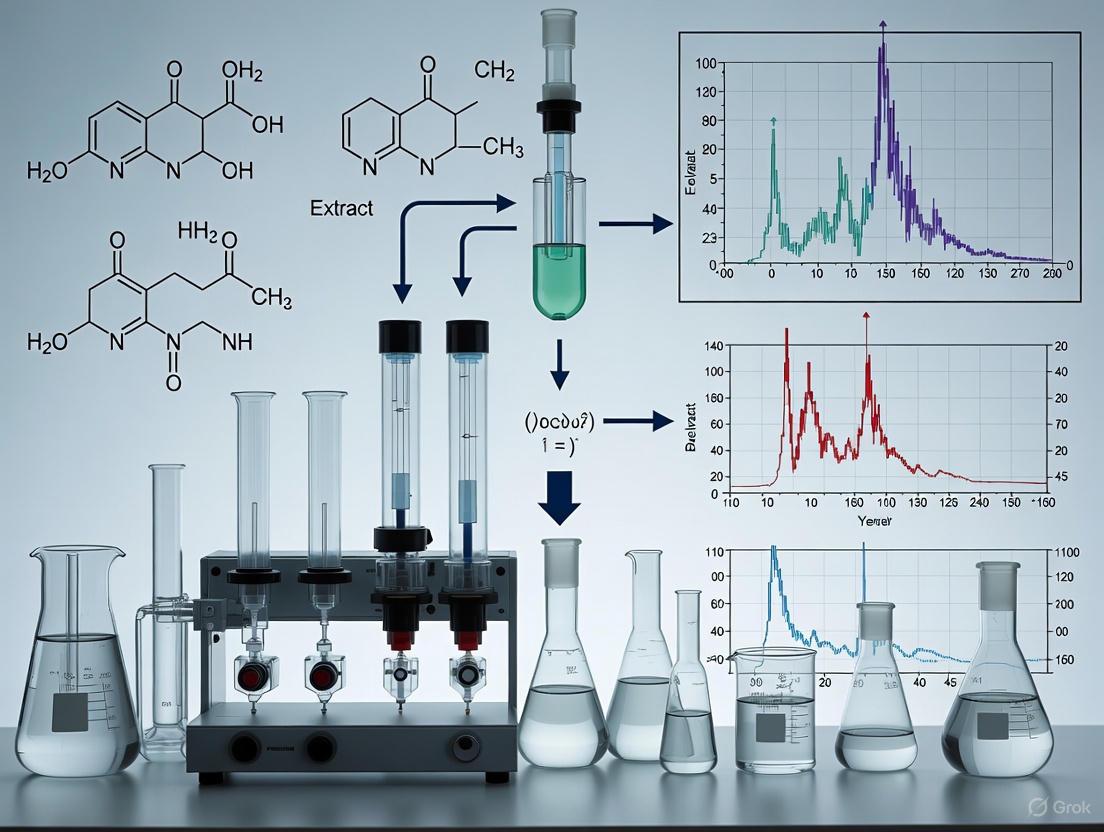
This article provides a comprehensive framework for developing and optimizing a reversed-phase high-performance liquid chromatography (RP-HPLC) method for the analysis of metoprolol tartrate, with a specific focus on mobile phase...
Optimizing the Mobile Phase for RP-HPLC Analysis of Metoprolol Tartrate: A Comprehensive Guide from Method Development to Validation
Abstract
This article provides a comprehensive framework for developing and optimizing a reversed-phase high-performance liquid chromatography (RP-HPLC) method for the analysis of metoprolol tartrate, with a specific focus on mobile phase selection. Tailored for researchers and pharmaceutical analysts, the content spans from foundational principles of metoprolol's physicochemical properties and BCS classification to practical methodologies for achieving robust separation. It offers detailed troubleshooting for common challenges and concludes with a rigorous validation protocol adhering to ICH guidelines, ensuring the method's applicability for quality control and advanced permeability studies.
Understanding Metoprolol Tartrate: Physicochemical Properties and HPLC Fundamentals
Metoprolol tartrate is a selective β₁-adrenoceptor antagonist widely used in clinical practice for managing hypertension, angina pectoris, and heart failure [1]. In pharmaceutical research and development, the compound's analytical characterization is fundamental for quality control and bioanalytical studies. This application note provides a comprehensive overview of metoprolol tartrate's key physicochemical properties—chemical structure, solubility, and pKa—with specific emphasis on their implications for designing optimized mobile phases in reversed-phase high-performance liquid chromatography (RP-HPLC) analysis of extracted samples. The protocols and data presented herein are contextualized within a broader thesis research framework aimed at developing robust analytical methods for this cardiovascular therapeutic agent.
Chemical Structure and Properties
Metoprolol tartrate is the tartrate salt form of metoprolol, a cardioselective beta-1 blocker. The molecular structure consists of a metoprolol cation and a tartrate anion in a 2:1 ratio [2].
- Chemical Name: (2R,3R)-2,3-dihydroxybutanedioic acid; bis(1-[4-(2-methoxyethyl)phenoxy]-3-[(propan-2-yl)amino]propan-2-ol) [2]
- Molecular Formula: C₃₄H₅₆N₂O₁₂ [2]
- Molecular Weight: 684.824 g/mol [2]
- CAS Number: 56392-17-7 [2] [3]
The structure contains key functional groups that critically influence its analytical behavior:
- Aromatic ring: Provides UV chromophore for detection (λₘₐₓ ~223 nm) [3]
- Secondary amino group: Confers basic character and is the site of protonation
- Ether and hydroxy groups: Contribute to hydrogen bonding potential
- Tartrate counterion: Enhances aqueous solubility
Quantitative Physicochemical Profile
The following parameters are crucial for predicting chromatographic behavior and developing extraction protocols.
Table 1: Physicochemical Properties of Metoprolol Tartrate
| Property | Value | Conditions/Notes | Reference |
|---|---|---|---|
| pKa (Strongest Basic) | 9.67 | Predicted | [2] |
| Water Solubility | >1000 mg/mL | Experimental | [4] |
| logP | 1.8 | Predicted | [2] |
| Melting Point | 120-124 °C | [3] | |
| Maximum Absorption Wavelength | 223 nm (H₂O) | Relevant for HPLC detection | [3] |
Solubility and pKa Considerations for HPLC
The high aqueous solubility (>1000 mg/mL) makes metoprolol tartrate readily amenable to reversed-phase HPLC with aqueous-organic mobile phases [4]. The pKa of 9.67 indicates that the compound exists predominantly in its protonated, cationic form at acidic and neutral pH [2]. This has direct implications for mobile phase optimization:
- Acidic Mobile Phases (pH 2.5-4.0): Maintain the compound in its ionized state, suppressing silanol interactions with the stationary phase, which typically leads to sharper peaks.
- Neutral/Basic Mobile Phases: Risk of peak tailing due to interaction of the deprotonated species with residual silanols on the silica-based stationary phase.
Experimental Protocols
Protocol 1: RP-HPLC Method for Metoprolol Tartrate in Pharmaceutical Formulations
This method is adapted from a validated protocol for the analysis of metoprolol succinate, optimized for the tartrate form [5].
Objective: To separate and quantify metoprolol tartrate in bulk drug and tablet formulations using an isocratic RP-HPLC system.
The Scientist's Toolkit: Research Reagent Solutions
| Material/Reagent | Specification | Function in the Protocol |
|---|---|---|
| Metoprolol Tartrate Reference Standard | ≥98% Purity [3] | Primary standard for calibration and identification |
| HPLC-Grade Methanol | >99.9% Purity | Organic modifier in the mobile phase |
| Orthophosphoric Acid (OPA) | Analytical Grade | Mobile phase pH modifier |
| Water | Milli-Q or HPLC Grade | Aqueous component of the mobile phase |
| C18 Column | Phenomenex (250 mm × 4.6 mm, 5 µm) [5] | Stationary phase for reverse-phase separation |
| Syringe Filter | 0.45 µm, PVDF or Nylon [5] | Sample clarification before injection |
Procedure:
- Mobile Phase Preparation: Prepare a mixture of Methanol and 0.1% Orthophosphoric Acid in water (60:40, v/v). Degas by sonication for 10 minutes.
- Standard Solution: Accurately weigh 25 mg of metoprolol tartrate reference standard into a 25 mL volumetric flask. Dissolve and make up to volume with water to obtain a 1000 µg/mL stock solution. Further dilute to a working concentration of 10 µg/mL using the mobile phase.
- Sample Preparation: For tablets, crush and powder 20 tablets. Weigh powder equivalent to 2 mg of metoprolol tartrate into a 50 mL volumetric flask. Add ~35 mL of water, sonicate for 10 minutes, cool, and dilute to volume with water. Filter through a 0.45 µm syringe filter, discarding the first 3-5 mL of filtrate. Dilute the filtrate with mobile phase to obtain a concentration within the linear range.
- Chromatographic Conditions:
- Column: C18 (250 mm × 4.6 mm, 5 µm)
- Mobile Phase: Methanol:0.1% OPA (60:40 v/v)
- Flow Rate: 1.0 mL/min
- Detection Wavelength: 222 nm
- Injection Volume: 20 µL
- Column Temperature: 35°C
- Run Time: 6 minutes
- System Suitability: Inject the standard solution to ensure the retention time is consistent, and the peak is symmetric before proceeding with sample analysis.
The workflow for this analytical method is summarized below:
Protocol 2: Bioanalytical HPLC Method for Metoprolol in Spiked Human Plasma
This protocol is derived from a green, validated bioanalytical method for the simultaneous determination of metoprolol with a calcium channel blocker [6].
Objective: To extract and quantify metoprolol tartrate from human plasma using HPLC with fluorescence detection for pharmacokinetic studies.
Procedure:
- Mobile Phase Preparation: Prepare a mixture of Ethanol and 30 mM Potassium Dihydrogen Phosphate buffer (40:60, v/v). Adjust the pH to 2.5 with ortho-phosphoric acid. Filter and degas.
- Standard Solutions: Prepare stock and working solutions in methanol/water. Prepare quality control (QC) samples in plasma at low, mid, and high concentrations (e.g., 0.003, 0.50, 0.90 µg/mL).
- Plasma Sample Preparation: Pipette 500 µL of spiked human plasma into a microcentrifuge tube. Add 50 µL of internal standard (e.g., Tadalafil) working solution. Add 1 mL of acetonitrile for protein precipitation. Vortex mix for 1 minute and centrifuge at 10,000 rpm for 10 minutes.
- Sample Extraction: Transfer the clear supernatant to a clean tube and evaporate to dryness under a gentle stream of nitrogen. Reconstitute the residue with 500 µL of the mobile phase and vortex mix.
- Chromatographic Conditions:
- Column: Inertsil C18 (150 mm × 4.6 mm; 5 µm)
- Mobile Phase: Ethanol:30 mM Phosphate Buffer pH 2.5 (40:60, v/v)
- Flow Rate: 1.0 mL/min
- Detection: Fluorescence (Excitation/Emission wavelengths to be optimized for metoprolol)
- Injection Volume: 20 µL
- Temperature: Ambient
- Validation: The method should be validated for linearity (e.g., 0.003–1.00 µg/mL), precision (RSD ≤ 2%), and accuracy (within ± 10% of nominal concentration in plasma) per FDA/ICH guidelines [6].
The sample preparation process is visualized below:
The physicochemical profile of metoprolol tartrate directly informs the development of robust HPLC methods. Its basic nature (pKa 9.67) necessitates the use of acidic mobile phases to ensure the analyte is fully protonated, thereby improving peak shape and efficiency on conventional C18 columns [2] [7]. The high aqueous solubility allows for flexibility in the sample solvent and the initial mobile phase composition, which is particularly beneficial for methods developed using an Analytical Quality by Design (AQbD) approach [8].
For the analysis of metoprolol tartrate in complex biological matrices like plasma, the sample preparation technique is as critical as the chromatographic separation. Protein precipitation followed by direct injection or evaporation/reconstitution provides a balance between simplicity, recovery, and sensitivity [6]. The inherent fluorescence of metoprolol can be leveraged for highly sensitive and selective detection in bioanalytical applications, often surpassing UV detection in terms of lower limits of quantification [6].
In conclusion, successful HPLC analysis of extracted metoprolol tartrate relies on a fundamental understanding of its chemical structure, solubility, and ionization properties. The protocols outlined herein provide a reliable foundation for researchers undertaking quantitative analysis of this drug in pharmaceutical and biological samples, contributing directly to the optimization of mobile phase systems for specific research applications.
The Biopharmaceutics Classification System (BCS) is an advanced, scientifically validated framework that categorizes drug substances based on three fundamental properties related to their absorption potential: dissolution, water solubility, and intestinal permeability [9]. First introduced by Amidon et al. in 1995, this system provides a theoretical approach for correlating in vitro drug dissolution with in vivo bioavailability, serving as a critical tool throughout drug discovery, development, and regulatory review processes [9]. The primary objective of BCS is to evaluate the in vivo performance of drug products using in vitro data, thereby enabling more efficient drug development and regulatory pathways, including the waiver of costly and time-consuming bioequivalence studies (biowaivers) under specific conditions [9].
Permeability studies form one of the cornerstones of BCS classification. According to the BCS framework, a drug substance is considered highly permeable when the extent of absorption in humans is determined to be 90% or more of an administered dose, based on a mass balance determination or comparison to an intravenous reference dose [9] [10]. The scientific rationale for focusing on permeability stems from its critical role as a rate-limiting step in the oral absorption process, particularly for immediate-release solid oral dosage forms [9]. For BCS Class I (high solubility, high permeability) and Class III (high solubility, low permeability) drugs, demonstrating appropriate permeability characteristics provides a scientific basis for replacing certain in vivo bioequivalence studies with accurate in vitro dissolution tests, reducing unnecessary drug exposure in healthy volunteers and streamlining the drug approval process [9] [11].
Scientific Fundamentals of BCS Permeability
The Role of Permeability in Drug Absorption
Within the BCS framework, intestinal permeability represents a critical determinant of drug absorption kinetics. The system recognizes three sequential rate-limiting steps in oral drug absorption: (1) release of the drug from the dosage form; (2) dissolution of the drug in the gastrointestinal (GI) tract environment; and (3) permeation across the GI membrane into the hepatic circulation [9]. Permeability specifically governs this third step, which can be described mathematically using Fick's first law of diffusion:
Jf = Pm × Ci
Where Jf represents the drug flux rate (mass/area/time), Pm is the membrane permeability, and Ci is the concentration of the drug at the intestinal membrane surface [9]. This relationship highlights that for highly soluble drugs, permeability becomes the primary factor controlling the rate and extent of absorption.
The BCS further characterizes absorption dynamics through dimensionless parameters that relate drug properties to physiological conditions:
- Absorption number (An) = Mean residence time / Mean absorption time
- Dissolution number (Dn) = Mean residence time / Mean dissolution time
- Dose number (Do) = Mass of drug / (Uptake volume of 250 mL × Drug solubility) [9]
For BCS Class II and IV drugs, where permeability is high but solubility is low, the dissolution number and dose number become particularly significant in predicting in vivo performance [9].
BCS Classification System and Permeability Boundaries
The BCS classifies drug substances into four distinct categories based on their solubility and permeability characteristics, with permeability serving as a primary classification criterion:
Table 1: BCS Classification Framework Based on Solubility and Permeability
| BCS Class | Solubility | Permeability | Absorption Characteristics | Rate-Limiting Step to Absorption |
|---|---|---|---|---|
| Class I | High | High | Well absorbed | Gastric emptying |
| Class II | Low | High | Absorption limited by dissolution rate | Dissolution |
| Class III | High | Low | Absorption limited by permeability | Permeability |
| Class IV | Low | Low | Poorly absorbed | Multiple factors including solubility and permeability |
The permeability class boundary is explicitly defined based on the extent of absorption (fraction of dose absorbed), not systemic bioavailability [9] [10]. A drug is classified as highly permeable when the extent of absorption in humans is determined to be 90% or more of an administered dose based on either mass balance studies or absolute bioavailability measurements compared to an intravenous reference dose [9]. This distinction is crucial, as it separates permeability from first-pass metabolism effects.
Regulatory agencies including the FDA, EMA, and WHO have provided guidance on methods for establishing permeability classification, which include:
- Mass-balance pharmacokinetic studies in humans
- Absolute bioavailability studies using intravenous reference
- Intestinal permeability methods such as in vivo intestinal perfusion in humans
- In vitro permeability methods using epithelial cell cultures [9]
The International Council for Harmonisation (ICH) M9 guideline further harmonizes the recommendations for permeability assessments supporting BCS-based biowaivers, emphasizing validated methods and appropriate reference standards [12].
Experimental Approaches for Permeability Assessment
Established Permeability Models and Methods
Determining drug permeability for BCS classification requires robust experimental models that can reliably predict in vivo human absorption. Several well-established approaches are recognized by regulatory agencies:
In Vitro Cell-Based Models: The Caco-2 cell monolayer model, derived from human colon adenocarcinoma cells, remains the most widely validated and accepted in vitro system for permeability assessment [12] [11]. When properly cultured and differentiated over 21-28 days, these cells develop morphological and functional characteristics similar to human intestinal enterocytes, including tight junctions and various transporter systems [11]. The utility of this model for qualitative prediction of oral drug absorption has been repeatedly validated since its introduction for this purpose in 1989 [11]. Recent regulatory workshops have acknowledged that other cell lines beyond Caco-2 may be suitable for measuring passive and active intestinal drug permeability, provided they are properly validated against established benchmarks [12].
In Situ Permeability Models: The single-pass intestinal perfusion (SPIP) method, typically conducted in rodent models, serves as an important intermediate between in vitro systems and human in vivo studies [13]. This model maintains intestinal architecture, blood flow, and nervous innervation, providing a more physiologically relevant environment for permeability assessment while allowing control of experimental conditions. In these studies, metoprolol is frequently employed as a high-permeability reference standard, while phenol red serves as a zero-permeability marker to validate the integrity of the intestinal segment [13].
Human-Based Permeability Methods: Direct measurement of human intestinal permeability through perfusion studies represents the gold standard for BCS classification [10]. However, these studies are complex, costly, and invasive, limiting their routine application. Consequently, regulatory guidance allows the use of surrogate data, including mass balance studies based on urinary excretion of drug-related material or absolute bioavailability studies using intravenous reference doses [10].
Method Suitability and Validation
Regardless of the specific model selected, establishing method suitability is critical for generating reliable permeability data for regulatory submissions. Key validation parameters include:
- Assay suitability demonstrating appropriate reproducibility and sensitivity
- Proper permeability classification of reference compounds with known human absorption
- Comprehensive method development including determination of apparent permeability coefficients (Papp) [12]
The permeability coefficient serves as a direct measure of flux relative to drug concentration in the donor compartment and can be calculated using various in vitro, ex vivo, in situ, and in vivo techniques [9]. For cell-based models, additional quality control measures include monitoring transepithelial electrical resistance (TEER) and using internal standards to verify monolayer integrity throughout experiments [11].
Table 2: Standard Compounds for Permeability Model Validation
| Reference Compound | BCS Class | Permeability Classification | Role in Model Validation |
|---|---|---|---|
| Metoprolol | I | High | High permeability internal standard |
| Labetalol | I | High | Alternative high permeability standard |
| Atenolol | III | Low | Low permeability internal standard |
| Phenol Red | N/A | Zero | Non-absorbable marker for system integrity |
| Antipyrine | I | High | Highly permeable control compound |
| Propranolol | I | High | Additional high permeability reference |
Recent regulatory workshops have highlighted that proper validation against known standards is more critical than the specific model selected, with appropriate scientific justification being paramount for regulatory acceptance [12].
Detailed Experimental Protocol: Permeability Assessment Using Caco-2 Model
Materials and Reagent Solutions
Table 3: Essential Research Reagents for Caco-2 Permeability Studies
| Reagent/Category | Specific Examples | Function in Experiment |
|---|---|---|
| Cell Line | Caco-2 cells (clone C2BBe1) | Differentiates into intestinal-like monolayer with tight junctions and transporters |
| Cell Culture Media | DMEM supplemented with 10% FBS, 1 mM sodium pyruvate, 100 μM NEAA, 2 mM L-glutamine, penicillin/streptomycin | Supports cell growth and differentiation |
| Transport Buffer | HBSS with HEPES or MES | Maintains physiological pH and osmolarity during transport assays |
| Permeability Markers | Lucifer yellow (LY), Atenolol, Propranolol, Digoxin | Verifies monolayer integrity and functionality |
| Analytical Instrumentation | LC-MS/MS system with C18 column | Enables sensitive quantification of test compounds |
| Reference Compounds | Metoprolol (high permeability), Atenolol (low permeability) | Benchmarks for classifying test compound permeability |
Step-by-Step Methodology
Cell Culture and Differentiation:
- Culture Conditions: Maintain Caco-2 cells (preferably the C2BBe1 clone) in Dulbecco's modified Eagle's medium (DMEM) supplemented with 10% fetal bovine serum (FBS), 1 mM sodium pyruvate, 100 μM non-essential amino acids (NEAA), 2 mM L-glutamine, 100 U/mL penicillin, and 100 μg/mL streptomycin at 37°C in a humidified atmosphere with 5% CO₂ [11].
- Seeding: Harvest cells using trypsin-EDTA and seed at a density of 60,000 cells/cm² on collagen-coated Transwell plates with 0.4-μm pore size membranes [11].
- Differentiation: Change culture medium every other day for the first 10 days, then daily thereafter. Use cell monolayers for transport assays between 21-28 days post-seeding to ensure full differentiation and tight junction formation [11].
Monolayer Integrity Validation:
- TEER Measurement: Measure transepithelial electrical resistance (TEER) using an epithelial voltohmmeter. Accept only monolayers with TEER values exceeding 300 Ω·cm² [11].
- Integrity Marker Permeability: Assess the permeability of integrity markers such as Lucifer yellow (LY). Permeability values for LY should typically be < 0.5 × 10⁻⁶ cm/s in high-quality monolayers [11].
- Reference Compound Testing: Validate each batch of monolayers by confirming expected permeability characteristics for reference compounds including atenolol (low permeability), propranolol (high permeability), and digoxin (P-glycoprotein substrate) [11].
Transport Assay Procedure:
- Pre-incubation: Wash differentiated monolayers twice with pre-warmed transport buffer (e.g., Hanks' Balanced Salt Solution with 10 mM HEPES, pH 7.4).
- Dosing Solution Preparation: Prepare test compounds at multiple concentrations (typically 1-100 μM) in transport buffer. Include internal standards for normalization.
- Bidirectional Permeability Assessment:
- A→B (Apical to Basolateral): Add test compound to the apical chamber and collect samples from the basolateral chamber at predetermined time points (e.g., 30, 60, 90, 120 minutes).
- B→A (Basolateral to Apical): Add test compound to the basolateral chamber and collect samples from the apical chamber to assess efflux transport.
- Sample Analysis: Quantify drug concentrations using a validated LC-MS/MS method with appropriate calibration standards and quality controls [11].
Permeability Calculation:
- Calculate apparent permeability (Papp) using the formula: Papp = (dQ/dt) / (A × C₀), where dQ/dt is the transport rate, A is the membrane surface area, and C₀ is the initial donor concentration.
- Classify test compounds by comparing their Papp values to those of reference standards. Compounds with Papp values similar to or higher than metoprolol are classified as highly permeable [12].
Diagram 1: Caco-2 Permeability Assessment Workflow
Permeability Assessment in the Context of Metoprolol Tartrate Research
Metoprolol as a Reference Standard in Permeability Studies
Metoprolol tartrate serves as a prototypical high-permeability reference compound in BCS-based permeability assessments due to its well-characterized absorption profile and established permeability characteristics [12]. As a selective β₁-adrenergic blocker used in cardiovascular disorders, metoprolol demonstrates high intestinal permeability and nearly complete absorption (>90%) in humans, making it an ideal benchmark for classifying the permeability of test compounds [14] [12]. Regulatory guidelines frequently recommend metoprolol as a comparator for in vitro permeability models, with test compounds demonstrating similar or greater permeability classified as highly permeable [12].
The critical role of metoprolol as a permeability standard is exemplified in intestinal perfusion studies, where it serves as the high-permeability reference against which other compounds are compared. For instance, in single-pass intestinal perfusion (SPIP) models, metoprolol's permeability is measured concurrently with test compounds to validate the experimental system and provide a normalized benchmark for permeability classification [13]. Analytical methods have been specifically developed to simultaneously quantify metoprolol alongside other compounds of interest in these permeability studies, highlighting its central role in standardized permeability assessment protocols [13].
Analytical Considerations for Metoprolol in Permeability Studies
Accurate quantification of metoprolol in permeability experiments requires robust analytical methods capable of detecting the drug at low concentrations in complex matrices. Several chromatographic approaches have been successfully employed:
High-Performance Liquid Chromatography (HPLC) Methods: Reverse-phase HPLC with UV or fluorescence detection provides reliable quantification of metoprolol in permeability samples. One validated method utilizes a C18 column (150 mm × 4.6 mm, 5 μm) with a mobile phase consisting of acetonitrile and ammonium phosphate buffer (pH 7.0) in gradient elution, achieving complete elution within 16 minutes [14] [13]. For simultaneous determination of metoprolol with low-permeability markers like atenolol and phenol red, optimized methods employing InertSustain C18 columns (250 × 4.6 mm, 5 μm) with gradient elution (acetonitrile and phosphate buffer, pH 7.0) have been developed and validated according to ICH M10 guidelines [13].
Liquid Chromatography-Mass Spectrometry (LC-MS/MS): For enhanced sensitivity and specificity in quantifying metoprolol and its metabolites, LC-MS/MS methods offer superior performance, particularly in complex biological matrices [14]. These methods enable simultaneous detection of metoprolol and its primary metabolites (O-desmethylmetoprolol and α-hydroxymetoprolol), providing additional insights into metabolic stability during permeability assessments [14].
Diagram 2: Metoprolol Analytical Workflow for Permeability Studies
Regulatory Applications and Biowaiver Considerations
Permeability in BCS-Based Biowaivers
The determination of drug permeability directly enables regulatory biowaivers for certain BCS classifications, avoiding unnecessary human bioequivalence studies under specific conditions. According to regulatory guidelines including the FDA, EMA, and ICH M9, BCS Class I drugs (high solubility, high permeability) are eligible for biowaivers when the drug product demonstrates rapid dissolution characteristics [9] [12]. More recently, scientific and regulatory consensus has expanded to include BCS Class III drugs (high solubility, low permeability) as potential candidates for biowaivers, provided the formulation contains excipients that do not affect permeability or gastrointestinal transit time [11].
The scientific rationale for extending biowaivers to BCS Class III compounds stems from the understanding that for these drugs, permeability—not dissolution—is the rate-limiting step to absorption. Therefore, demonstrating equivalent dissolution profiles between test and reference products provides sufficient assurance of bioequivalence, as the absorption of both products will be equally limited by permeability [11]. This regulatory pathway has significant implications for streamlining the development of generic versions of BCS Class III drugs while maintaining rigorous standards for therapeutic equivalence.
Current Challenges and Future Directions
Despite clear regulatory guidance, several challenges remain in the implementation of permeability-based biowaivers:
Ambiguity in Permeability Criteria: Scientific debate continues regarding the interchangeability of "high permeability" and "high extent of absorption" in regulatory classifications [10]. While permeability represents a kinetic parameter and extent of absorption represents a thermodynamic measure, regulatory agencies often use these criteria interchangeably, creating potential confusion in classification approaches [10].
Excipient Effects on Permeability: For BCS Class III compounds specifically, concerns persist about potential effects of excipients on intestinal permeability or transit time. However, recent systematic studies have demonstrated that common excipients—including hydroxypropyl methylcellulose (HPMC), povidone, polyethylene glycol (PEG)-400, sodium lauryl sulfate (SLS), and lactose—do not substantially increase the permeability of BCS Class III compounds like acyclovir, atenolol, ganciclovir, and nadolol in validated Caco-2 and rat intestinal perfusion models [11]. These findings support the extension of biowaivers to BCS Class III drugs formulated with well-established excipients at conventional concentrations.
Future Methodologies: Emerging approaches to permeability assessment include improved in vitro models (co-cultures, 3D systems, organoids, microfluidics), computational (in silico) permeability prediction, and more sophisticated integration of permeability data into physiologically-based pharmacokinetic (PBPK) models [12]. These advancements promise to enhance the accuracy and efficiency of permeability classification while potentially reducing the need for extensive experimental studies.
Through continued refinement of permeability assessment methods and clearer regulatory standards, the BCS framework will remain a cornerstone of efficient drug development, enabling scientifically sound decisions that prioritize patient safety while streamlining the path to market for equivalent drug products.
Reversed-Phase High-Performance Liquid Chromatography (RP-HPLC) represents the most prevalent mode of liquid chromatography used in analytical laboratories today, particularly in pharmaceutical analysis [15]. This technique operates on the fundamental principle of differential partitioning of analytes between a mobile phase and a stationary phase [16]. In RP-HPLC, the typical configuration employs a non-polar stationary phase and a polar mobile phase, which reverses the classic normal-phase chromatography arrangement—hence the name "reversed-phase" [15]. This configuration makes RP-HPLC exceptionally suitable for separating a wide range of analytes, from non-polar to moderately polar compounds, including many pharmaceutical substances like metoprolol tartrate [7] [6].
The versatility, robustness, and compatibility with aqueous samples have established RP-HPLC as a cornerstone technique in drug development and quality control. Its ability to be coupled with various detection methods, including ultraviolet (UV), fluorescence, and mass spectrometric detection, further enhances its utility in analytical method development for compound identification and quantification [15]. In the context of metoprolol tartrate analysis, RP-HPLC provides the necessary selectivity, sensitivity, and precision required for both pharmaceutical dosage form assessment and bioanalytical studies [6].
Mechanism of Separation
Fundamental Principles
The separation mechanism in RP-HPLC primarily relies on hydrophobic interactions between analyte molecules and the non-polar ligands of the stationary phase [15]. When a sample is introduced into the HPLC system, the mobile phase carries it through the column packed with the stationary phase. Analytes then distribute themselves between the two phases based on their relative affinities. Those with greater hydrophobicity exhibit stronger interaction with the stationary phase and thus spend more time retained in the column, resulting in longer retention times. Conversely, more hydrophilic (polar) compounds have lesser affinity for the stationary phase and elute more quickly [17].
This partitioning process is governed by the equilibrium distribution of analytes between the mobile and stationary phases. The strength of this interaction determines how effectively compounds are separated as they migrate through the column at different velocities. The fundamental relationship describing this behavior is expressed through the retention factor (k), which should ideally lie between 2 and 10 for optimal separation—values below 2 risk coelution with matrix components, while values above 10 may lead to band-broadening and reduced resolution [17].
Molecular Interactions
At the molecular level, several forces govern the retention behavior in RP-HPLC. The primary mechanism involves van der Waals forces between the non-polar regions of analyte molecules and the hydrophobic ligands (typically C8 or C18 chains) bonded to the stationary phase support [15]. For ionizable compounds like metoprolol, secondary interactions can significantly influence separation efficiency. The ionization state of such compounds is profoundly affected by mobile phase pH, which in turn affects their hydrophobicity and retention characteristics [17].
When analytes are ionized, their retention times typically decrease in reversed-phase systems due to enhanced solubility in the polar mobile phase and reduced affinity for the non-polar stationary phase [17]. This phenomenon is particularly relevant for metoprolol tartrate, which contains basic functional groups that can be protonated depending on the eluent pH. Understanding and controlling these molecular interactions through careful manipulation of chromatographic conditions is essential for developing robust analytical methods.
Key Parameters in RP-HPLC
Stationary Phase Characteristics
The stationary phase in RP-HPLC typically consists of porous silica particles chemically bonded with non-polar alkyl chains, with C18 (octadecylsilane) and C8 (octylsilane) being the most prevalent [15]. These bonded phases create the hydrophobic surface responsible for retaining analytes based on their non-polar characteristics. The selection of an appropriate stationary phase is critical for method development, as different chain lengths and bonding chemistries can significantly impact selectivity, efficiency, and retention.
Particle size and pore diameter represent additional important stationary phase parameters. Modern HPLC columns typically employ particles ranging from 1.5 to 5 μm in diameter [15]. Smaller particles generally provide higher efficiency and better resolution but require higher operating pressures. The dimensions of the column (length and internal diameter) also influence separation; longer columns typically offer more theoretical plates and thus better separation, while narrower columns enhance mass sensitivity and reduce solvent consumption [15].
Mobile Phase Composition
The mobile phase in RP-HPLC serves not only to transport analytes through the system but also to control selectivity and retention through its composition. Typically, the mobile phase consists of a mixture of water and one or more water-miscible organic solvents such as acetonitrile, methanol, or tetrahydrofuran [18]. The percentage of organic modifier directly impacts elution strength—increasing the organic content generally reduces retention times by strengthening the eluting power of the mobile phase [17].
Each common reversed-phase solvent possesses distinct solvatochromatic properties: methanol is more acidic, acetonitrile engages in dipole-dipole interactions, and tetrahydrofuran is more basic [17]. These characteristics influence selectivity when separating different compounds. Switching between these solvents represents an effective strategy for investigating various selectivity options when developing or optimizing methods [17].
Role of pH and Buffers
For ionizable compounds like metoprolol tartrate, mobile phase pH represents one of the most powerful parameters for controlling retention and selectivity [17]. The pH affects the degree of ionization of analytes, thereby altering their hydrophobicity and interaction with the stationary phase. When analytes are ionized, their retention times typically decrease in reversed-phase systems [17]. A common approach involves adjusting the pH well away from the pKa of analytes to impart method robustness, though this may require special stationary-phase chemistry and modifier concentration adjustments to maintain adequate retention for basic compounds [17].
Buffer systems are employed to maintain consistent pH levels throughout the analysis, resisting changes that could lead to retention time shifts and selectivity variations [17]. The choice of buffer depends on the required eluent pH and detector compatibility. For mass spectrometric detection, volatile buffers such as ammonium formate or acetate are preferred. Proper buffer concentration is essential—typically between 10-50 mM—as concentrations below 10 mM offer limited buffering capacity, while higher concentrations risk precipitation in organic-rich mobile phases [17].
Temperature Effects
Column temperature significantly influences RP-HPLC separations by affecting the kinetics and thermodynamics of the partitioning process [17]. Increased temperature typically reduces mobile phase viscosity, leading to lower backpressure and improved mass transfer, which can enhance efficiency and resolution. Additionally, temperature affects retention, generally decreasing it for most analytes as thermal energy reduces the strength of hydrophobic interactions.
For ionizable compounds, temperature variations can profoundly impact selectivity, sometimes with changes as small as 5°C producing noticeable effects [17]. Therefore, maintaining consistent temperature control is essential for achieving reproducible separations, particularly for methods involving complex mixtures of ionizable and non-ionizable species.
Flow Rate Considerations
The flow rate of the mobile phase directly impacts separation efficiency and analysis time [18]. Higher flow rates reduce analysis time but may compromise resolution due to diminished interaction time between analytes and the stationary phase. Conversely, lower flow rates typically enhance resolution but extend analysis duration [18]. Optimal flow rates for conventional HPLC systems generally range between 1-2 mL/min for standard analytical columns (4.6 mm internal diameter) [15]. Modern instruments can operate at higher pressures, enabling the use of columns packed with smaller particles at optimized flow rates that provide the best compromise between efficiency, resolution, and analysis time.
Quantitative Parameters in RP-HPLC Method Development
Table 1: Key chromatographic parameters and their optimal ranges for RP-HPLC method development
| Parameter | Optimal Range | Impact on Separation |
|---|---|---|
| Retention Factor (k) | 2-10 [17] | Values <2 risk coelution; >10 increase band broadening |
| Mobile Phase Organic Modifier | Variable (e.g., 10-90%) | 10% change causes 2-3-fold retention change [17] |
| Buffer Concentration | 10-50 mM [17] | <10 mM: limited capacity; >50 mM: precipitation risk |
| Column Temperature | Variable (e.g., 25-45°C) | ±5°C can significantly affect ionizable analyte selectivity [17] |
| Flow Rate | 1-2 mL/min [15] | Higher rates reduce time but may compromise resolution [18] |
| Stationary Phase Particle Size | 1.5-5 μm [15] | Smaller particles increase efficiency but require higher pressure |
Table 2: Common organic modifiers and their properties in RP-HPLC
| Organic Solvent | Polarity Index | UV Cutoff (nm) | Key Characteristics |
|---|---|---|---|
| Acetonitrile | 5.8 [19] | 190 [19] | Strong eluting power, low viscosity, preferred for UV detection at low wavelengths |
| Methanol | 5.1 | 205 | Weaker eluting power than ACN, more acidic character [17] |
| Tetrahydrofuran | 4.0 | 212 | Strong eluting power, basic character, can swell polymer-based columns [17] |
Experimental Protocol: RP-HPLC Analysis of Metoprolol Tartrate
Materials and Equipment
Table 3: Essential research reagents and materials for metoprolol tartrate analysis by RP-HPLC
| Item | Specification | Function/Purpose |
|---|---|---|
| HPLC System | Binary or quaternary pump, auto-sampler, column oven, detector | System for chromatographic separation and analysis |
| Analytical Column | C18 (150-250 mm × 4.6 mm, 5 μm) [6] | Stationary phase for compound separation |
| Metoprolol Tartrate Standard | Certified reference material (≥98%) [19] | Quantitative calibration and method validation |
| HPLC-Grade Water | 18.2 MΩ·cm resistance [6] | Aqueous component of mobile phase |
| HPLC-Grade Acetonitrile | Low UV absorbance [19] | Organic modifier for mobile phase |
| Potassium Dihydrogen Phosphate | Analytical grade [6] | Buffer component for pH control |
| Ortho-Phosphoric Acid | Analytical grade (≥85%) [6] | pH adjustment of mobile phase |
| Syringe Filters | 0.45 μm or 0.2 μm porosity [19] | Sample filtration prior to injection |
Mobile Phase Preparation
For the analysis of metoprolol tartrate, prepare a mobile phase consisting of 30 mM potassium dihydrogen phosphate buffer and acetonitrile in a ratio of 60:40 (v/v) [6]. To prepare this solution:
- Dissolve an appropriate amount of potassium dihydrogen phosphate (calculated for 30 mM concentration) in HPLC-grade water.
- Adjust the pH to 2.5 using ortho-phosphoric acid [6]. Note: Always measure pH before adding organic solvents, as pH meters are calibrated for aqueous solutions [18].
- Mix the aqueous buffer with HPLC-grade acetonitrile in the specified ratio (60:40, v/v).
- Degas the mobile phase thoroughly using vacuum filtration or helium sparging to remove dissolved gases that could interfere with detection or form bubbles in the system [18] [15].
- Filter the mobile phase through a 0.45 μm membrane filter to remove particulate matter that could damage the HPLC system or column [18].
Standard and Sample Preparation
- Stock Standard Solution (1 mg/mL): Accurately weigh approximately 10 mg of metoprolol tartrate reference standard and transfer to a 10 mL volumetric flask. Dissolve in and dilute to volume with mobile phase [6].
- Working Standard Solutions: Prepare a series of working standards by appropriate dilution of the stock solution with mobile phase to cover the expected concentration range (e.g., 0.003-1.00 μg/mL for bioanalytical methods) [6].
- Sample Preparation: For pharmaceutical formulations, accurately weigh and powder tablets. Transfer an amount equivalent to one tablet to a volumetric flask, add mobile phase, and use sonication and mechanical shaking to ensure complete dissolution. Dilute to volume with mobile phase and filter through a 0.45 μm or 0.2 μm syringe filter before injection [6] [19].
- Quality Control Samples: Prepare quality control samples at low, mid, and high concentrations within the calibration range to ensure method accuracy and precision [6].
Instrumental Conditions and Chromatography
- Column: Use a C18 column (150 mm × 4.6 mm i.d., 5 μm particle size) maintained at ambient temperature or controlled temperature (e.g., 25°C) [6].
- Mobile Phase: Employ the prepared phosphate buffer-acetonitrile (60:40, v/v) mixture in isocratic mode [6].
- Flow Rate: Set to 1.0 mL/min [6].
- Detection: Utilize UV detection at 220-230 nm, or fluorescence detection with excitation at 225 nm and emission at 335 nm for enhanced sensitivity [6].
- Injection Volume: 20 μL for standard analytical applications, though this can be adjusted based on sensitivity requirements [7].
- Analysis Time: Typically 10-15 minutes per sample, depending on the specific column and conditions.
System Suitability and Method Validation
Before sample analysis, ensure the HPLC system meets suitability criteria:
- Retention Time: Metoprolol tartrate should elute with a consistent retention time (typically 4-6 minutes under these conditions) [6].
- Theoretical Plates: The column should demonstrate sufficient efficiency (>2000 theoretical plates for metoprolol peak).
- Tailing Factor: Peak symmetry should be within acceptable limits (tailing factor <2.0).
- Precision: Repeated injections of standard solution should show relative standard deviation (RSD) of peak areas <2.0%.
For bioanalytical applications, validate the method according to FDA guidelines, assessing parameters including linearity, accuracy, precision, selectivity, sensitivity, and stability [6].
Method Optimization Strategies
Mobile Phase Optimization
Effective mobile phase optimization begins with understanding the key variables that impact separation. The organic modifier type and concentration represent the primary factors controlling retention and selectivity [17]. When initial separation proves inadequate, systematically modify the organic solvent percentage—typically in 5-10% increments—while monitoring the effect on resolution and analysis time. If modifying concentration alone proves insufficient, consider switching organic modifiers (e.g., from acetonitrile to methanol) to alter selectivity, as each solvent possesses different solvatochromatic properties that can significantly impact separation of critical analyte pairs [17].
For ionizable compounds like metoprolol, pH optimization often yields substantial improvements in separation quality. When the mobile phase pH approaches the pKa of an analyte (within ±1 unit), small variations can cause significant retention time shifts [17]. For method robustness, select a pH at least 1 unit away from the analyte pKa, or implement precise pH control using appropriate buffer systems. For metoprolol tartrate, a pH of 2.5 has been successfully employed, providing sufficient protonation of basic groups while maintaining silica-based column stability [6].
Gradient Elution Approaches
While isocratic elution suffices for simple mixtures, gradient elution often becomes necessary for complex samples containing components with widely varying polarities [18]. In gradient methods, the organic solvent concentration increases systematically during the separation, eluting compounds in order of increasing hydrophobicity. This approach proves particularly valuable when analyzing metoprolol in combination with other drugs or in complex matrices like biological fluids [7] [19].
When developing gradient methods, balance the initial and final organic percentages to ensure adequate retention of early-eluting compounds while maintaining reasonable analysis times. A typical gradient for metoprolol might start with 20-30% acetonitrile and increase to 60-80% over 10-15 minutes, followed by a column re-equilibration period. Always include sufficient equilibration time between runs to ensure reproducible retention times.
Applications in Metoprolol Tartrate Analysis
RP-HPLC has been extensively applied to the analysis of metoprolol tartrate in various matrices, from pharmaceutical dosage forms to biological samples. The technique provides the sensitivity, accuracy, and precision required for quality control testing, stability studies, and bioanalytical investigations [6]. In pharmaceutical formulations, RP-HPLC methods enable simultaneous determination of metoprolol with other active ingredients, such as felodipine or meldonium, despite significant differences in their polarities [6] [19].
For bioanalytical applications, RP-HPLC coupled with fluorescence detection offers exceptional sensitivity, with reported limits of quantification as low as 0.003 μg/mL for metoprolol in human plasma [6]. This sensitivity enables precise pharmacokinetic studies and therapeutic drug monitoring. The selectivity of RP-HPLC also facilitates reliable determination of metoprolol in the presence of potential interferences from biological matrices, making it an indispensable tool in clinical pharmacology and drug development research.
RP-HPLC remains an indispensable analytical technique for the separation and quantification of metoprolol tartrate and related pharmaceutical compounds. The fundamental mechanism of separation—based on hydrophobic interactions between analytes and the stationary phase—provides a robust foundation for method development. Understanding and optimizing key parameters such as mobile phase composition, pH, temperature, and stationary phase characteristics enables researchers to develop methods with the requisite selectivity, sensitivity, and reliability for pharmaceutical analysis.
The experimental protocol outlined in this document provides a validated approach for metoprolol tartrate analysis that can be adapted to specific laboratory requirements. By following systematic optimization strategies and adhering to good chromatographic practices, scientists can leverage the full power of RP-HPLC to address diverse analytical challenges in drug development and quality control. As HPLC technology continues to evolve, with advancements in column chemistry, instrumentation, and detection methods, the application of RP-HPLC in pharmaceutical analysis will undoubtedly expand, further solidifying its position as a cornerstone technique in analytical chemistry.
The Critical Role of the Mobile Phase in Retention Time and Peak Resolution
In high-performance liquid chromatography (HPLC) analysis of pharmaceuticals such as metoprolol tartrate, the mobile phase is not merely a carrier but a critical determinant of analytical success. Its composition directly governs the fundamental chromatographic parameters of retention time and peak resolution, impacting the accuracy, reproducibility, and efficiency of the method [20] [21]. For researchers and drug development professionals, a deep understanding of these relationships is essential for developing robust methods for complex matrices like extracted pharmaceuticals.
This application note details the pivotal role of mobile phase composition within the context of optimized HPLC analysis for extracted metoprolol tartrate. We elucidate the underlying thermodynamic principles, provide validated protocols for systematic mobile phase optimization, and present quantitative data on its effects, offering a structured framework to achieve superior analytical performance.
Theoretical Foundations
The separation of analytes in Reversed-Phase HPLC is governed by the resolution equation, which explicitly links the quality of separation to three key parameters:
Rs = 1/4 √N (α-1/α) (k2/1+k2)
Where:
- Rs is the resolution between two peaks.
- N is the column efficiency (theoretical plates).
- α is the selectivity factor (relative retention of two peaks).
- k is the retention factor (measure of how long a compound is retained on the column) [20] [22].
The mobile phase composition exerts a dominant influence on both the retention factor (k) and the selectivity factor (α), making it the most powerful tool for manipulating resolution [20] [22]. The relationship between retention and mobile phase composition in reversed-phase HPLC is quantitatively described by the Linear Solvent Strength Theory (LSST): ln k = ln kw - Sφ, where k is the retention factor, kw is the extrapolated retention in pure water, S is a constant for a given analyte and stationary phase, and φ is the volume fraction of the organic modifier in the mobile phase [23]. This model is indispensable for predicting retention shifts during method development, particularly for a drug substance like metoprolol tartrate.
Figure 1: The central role of mobile phase composition in controlling key HPLC outcomes. It directly determines retention factor (k) and selectivity (α), which are the primary parameters for optimizing retention time and resolution [20] [22] [23].
Impact of Mobile Phase Parameters
Organic Modifier and Selectivity
The choice of organic modifier is one of the most effective ways to alter selectivity (α). Different solvents interact uniquely with analytes and the stationary phase, potentially reversing elution orders and resolving co-eluting peaks [20]. The solvent strength also dictates the retention factor (k); a weaker solvent (lower %B) increases retention, while a stronger solvent (higher %B) decreases it [22].
Table 1: Effect of Organic Modifier on Chromatographic Parameters for a Small Molecule Drug Substance
| Organic Modifier | Typical Strength for C18 | Primary Impact on Retention (k) | Impact on Selectivity (α) | Best Use Case for Metoprolol Analysis |
|---|---|---|---|---|
| Acetonitrile | Medium | Moderate decrease | Moderate | Default choice for sharp peaks and low viscosity [20] [21] |
| Methanol | Weaker | Mild decrease | High | Separating polar impurities; can introduce different selectivity vs. ACN [20] |
| Tetrahydrofuran | Stronger | Significant decrease | Very High | Resolving critical pairs of structurally similar compounds [20] |
Aqueous Phase pH and Ionic Strength
For ionizable compounds like metoprolol (a weak base), the pH of the aqueous buffer is a critical parameter. It controls the degree of ionization, which dramatically affects retention in reversed-phase systems. The unionized form is more hydrophobic and thus more retained [20] [22]. Operating at a pH where the analyte is ionized can also facilitate interactions with any residual silanols on the stationary phase, further altering selectivity. Buffer concentration (ionic strength) can moderate these secondary interactions and improve peak shape [20].
Table 2: Impact of Aqueous Phase Composition on an Ionizable Analyte (e.g., Metoprolol)
| Parameter | Condition | Effect on Ionizable Analyte | Impact on Retention (k) | Impact on Peak Shape |
|---|---|---|---|---|
| pH | 2.0 pH units > pKa | Analyte predominantly ionized | Lower retention | Potential tailing if ionic interactions occur |
| 2.0 pH units < pKa | Analyte predominantly neutral | Higher retention | Typically sharper peaks | |
| Buffer Concentration | Low (e.g., 10 mM) | Reduced masking of silanol groups | Can be variable | Potential tailing due to ion-exchange interactions |
| High (e.g., 50 mM) | Effective masking of silanol groups | More consistent retention | Improved symmetry for basic compounds |
Experimental Protocols
Protocol 1: Systematic Scouting of Mobile Phase pH and Organic Modifier
This protocol is designed for the initial screening of conditions to identify the optimal combination of organic modifier and pH for separating metoprolol tartrate from its process impurities and degradation products.
Research Reagent Solutions
| Item | Function / Explanation |
|---|---|
| C18 Column (e.g., 150 mm x 4.6 mm, 3.5 µm) | Standard reversed-phase stationary phase for pharmaceutical analysis. |
| Ammonium Formate Buffer (e.g., 20 mM, pH 3.0) | Volatile buffer compatible with MS detection; suppresses silanol interactions. |
| Ammonium Acetate Buffer (e.g., 20 mM, pH 5.0 and 7.0) | Volatile buffer for near-neutral pH screening. |
| Phosphate Buffer (e.g., 25 mM, pH 2.5 and 7.0) | High-UV transparency buffer for a wider pH operating range. |
| HPLC-Grade Acetonitrile (ACN) | Low-viscosity, low-UV cutoff organic modifier. |
| HPLC-Grade Methanol (MeOH) | Alternative organic modifier for selectivity exploration. |
| Metoprolol Tartrate API Solution | The drug substance of interest, typically prepared in a weak injection solvent. |
| Forced Degradation Sample | Metoprolol sample subjected to stress (heat, acid, base, oxidation) to generate impurities. |
Procedure:
- System Setup: Equilibrate an HPLC system with automated mobile phase switching and a column oven set to 30°C.
- Column Scouting: Use an automated column switcher or manually install a suitable C18 column.
- Initial Scouting Run:
- Mobile Phase A: 20 mM Ammonium Formate, pH 3.0.
- Mobile Phase B: Acetonitrile.
- Gradient: 5% B to 95% B over 20 minutes.
- Flow Rate: 1.0 mL/min.
- Detection: UV at 220 nm.
- Inject the metoprolol tartrate and forced degradation samples.
- Modify Organic Modifier: Change Mobile Phase B to Methanol. Repeat the gradient run with the same samples. Observe changes in retention and peak elution order.
- Modify pH: Change Mobile Phase A to a different buffer (e.g., 25 mM Phosphate, pH 7.0) while using Acetonitrile as B. Repeat the analysis. Note the significant shift in metoprolol's retention time and any changes in impurity separation.
- Data Analysis: Plot the retention times of metoprolol and key impurities under the different conditions. Identify the condition that provides the best resolution (Rs > 1.5) for the most critical peak pair.
Protocol 2: Isocratic Optimization for Robustness
Once a promising modifier and pH are identified, this protocol fine-tunes the isocratic conditions for a faster, more robust assay.
Procedure:
- Determine Approximate %B: From the scouting gradient run that gave the best separation, note the organic percentage at which the main peak (metoprolol) elutes.
- Design of Experiments (DoE): Create a simple experimental table varying two factors:
- Factor 1: Organic modifier concentration (± 3-5% from the value identified in step 1).
- Factor 2: Temperature (± 5°C from 30°C).
- Execute Runs: Perform isocratic separations at each condition in the DoE table.
- Measure Responses: For each run, record the retention time of metoprolol and the resolution (Rs) between the critical pair of peaks.
- Construct Resolution Model: Use the data to generate a simple model or map showing how resolution changes with %B and temperature. Select the final condition that provides a resolution well above the minimum requirement (e.g., Rs > 2.0) while maintaining a reasonable analysis time [24] [25].
Figure 2: A systematic workflow for mobile phase optimization, progressing from broad scouting to fine-tuned, robust conditions [25].
Troubleshooting and Robustness
Even a well-developed method can suffer from inconsistencies. A key, often-overlooked source of retention time variability is the short-term composition ripple ("waves") produced by the HPLC pump itself, especially in low-pressure mixing systems [23]. These waves can lead to retention time precision worse than 0.3% RSD under suboptimal conditions. To mitigate this:
- Use a larger mixer volume or select a pump with a high stroke frequency to smooth out composition variations [23].
- Perform regular pump maintenance, including checking and cleaning proportioning and check valves [24] [23].
- Employ a "gradient composition test" available in modern instrument software to diagnose excessive composition ripple [23].
Furthermore, the sample matrix from extracted metoprolol tartrate can cause matrix effects, such as ion suppression or co-elution of interfering compounds, leading to quantification inaccuracies [25]. Mitigation strategies include:
- Improved Sample Cleanup: Utilizing solid-phase extraction (SPE) to purify the sample [25].
- Sample Dilution: Diluting the sample in a weak injection solvent to reduce the matrix concentration [25].
- Enhanced Chromatographic Separation: Optimizing the mobile phase to achieve baseline resolution of the analyte from matrix components [25].
The mobile phase is the cornerstone of a successful and robust HPLC method for the analysis of metoprolol tartrate. A deliberate, systematic approach to its optimization—focusing on the strategic selection of organic modifier, precise control of aqueous phase pH, and fine-tuning of composition—allows researchers to directly command the chromatographic outcomes of retention and resolution. By adhering to the protocols and principles outlined in this application note, scientists can develop reliable methods that ensure accurate quantification of the active ingredient and critical separation from impurities, thereby upholding the highest standards of pharmaceutical quality control and drug development.
Proven Mobile Phase Compositions and Chromatographic Conditions for Metoprolol Tartrate
Within the framework of optimized mobile phase development for High-Performance Liquid Chromatography (HPLC), isocratic elution systems represent a cornerstone of efficient, reproducible, and rapid analytical methods. The selection of an appropriate mobile phase is critical for the accurate quantification of active pharmaceutical ingredients such as metoprolol tartrate. This application note details a validated, robust reverse-phase HPLC (RP-HPLC) method utilizing an isocratic mobile phase of Methanol and 0.1% Orthophosphoric Acid (OPA) in Water (60:40, v/v) for the analysis of metoprolol succinate in bulk and pharmaceutical dosage forms [5]. The method aligns with the broader thesis research on optimizing mobile phases to enhance analytical efficiency, reduce runtime, and comply with regulatory standards, providing a reliable protocol for drug development professionals.
Core Method and Validation Data
The developed method achieves chromatographic separation on a Phenomenex C18 column (250 mm × 4.6mm, 5µm) with a low-pressure isocratic elution system. The mobile phase, Methanol: 0.1% OPA (60:40, v/v), is delivered at a flow rate of 1.0 mL/min with detection at 222 nm [5]. This configuration results in a short total runtime of 6 minutes, making it highly suitable for high-throughput quality control environments [5].
The method was rigorously validated as per ICH guidelines, demonstrating high accuracy, precision, linearity, and sensitivity as summarized in the table below.
Table 1: Summary of Validated Method Parameters and Results
| Validation Parameter | Result / Value | Experimental Details |
|---|---|---|
| Mobile Phase Composition | Methanol : 0.1% OPA (60:40, v/v) | Isocratic elution [5] |
| Flow Rate | 1.0 mL/min | [5] |
| Detection Wavelength | 222 nm | UV detection [5] |
| Retention Time | Not specified | Total runtime: 6 minutes [5] |
| Linearity Range | 5–15 µg/mL | Correlation coefficient (R²): 0.99994 [5] |
| Accuracy (% Recovery) | 99.40% | Confirmed for bulk and pharmaceutical dosage forms [5] |
| Precision (%RSD) | < 2.0% | Well within ICH acceptable limits [5] |
| LOD (Limit of Detection) | 0.142 µg/mL | [5] |
| LOQ (Limit of Quantification) | 0.429 µg/mL | [5] |
| Robustness | Complied with ICH guidelines | Parameters: specificity, robustness, solution stability, filter compatibility [5] |
Experimental Protocols
Mobile Phase and Standard Solution Preparation
Materials:
- Methanol (HPLC grade)
- Orthophosphoric Acid (Analytical grade)
- High-Purity Water (HPLC grade)
- Metoprolol Succinate or Tartrate Reference Standard
Procedure:
- 0.1% OPA Solution: Carefully add 1 mL of orthophosphoric acid to approximately 900 mL of HPLC-grade water in a 1 L volumetric flask. Make up to the mark with water and mix thoroughly.
- Mobile Phase: Mix 600 mL of methanol with 400 mL of the prepared 0.1% OPA solution. Degas the mixture by sonication for 10-15 minutes before use.
- Standard Stock Solution (1000 µg/mL): Accurately weigh 25 mg of metoprolol standard and transfer to a 25 mL volumetric flask. Add about 15-20 mL of water, sonicate to dissolve completely, and dilute to volume with water [5].
- Working Standard Solution (10 µg/mL): Pipette 0.5 mL of the stock solution into a 25 mL volumetric flask and dilute to the mark with the mobile phase [5].
Sample Preparation for Tablet Dosage Forms
- Weigh and finely powder not less than 20 tablets.
- Weigh a portion of the powder equivalent to 2 mg of metoprolol (e.g., 81.20 mg of powder for a 50 mg tablet) and transfer to a 50 mL volumetric flask.
- Add about 35 mL of water, sonicate for 10 minutes with intermittent shaking, and allow the solution to cool to room temperature.
- Dilute to volume with water and mix.
- Filter the solution through a 0.45 µm syringe filter, discarding the first 3-5 mL of the filtrate.
- Further dilute 1.5 mL of the filtered solution to 25 mL with the mobile phase to obtain a final concentration within the linearity range (e.g., ~30 µg/mL) [5].
HPLC Instrumental Procedure
- Instrument Setup: Use an HPLC system (e.g., Agilent 1260 Infinity II) equipped with a UV detector and a C18 column (Phenomenex, 250 mm × 4.6mm, 5µm). Maintain the column temperature at 35°C [5].
- Equilibration: Prime the system with the prepared mobile phase and equilibrate the column for at least 30 minutes at a flow rate of 1.0 mL/min until a stable baseline is achieved at 222 nm.
- Injection: Inject 20 µL of the filtered working standard and sample solutions into the HPLC system [5].
- Data Acquisition: Record the chromatograms and measure the peak areas. The total run time is 6 minutes.
System Suitability and Assay Calculation
- System Suitability: Before sample analysis, inject the standard solution in replicate (typically n=5). The method should meet acceptable criteria for retention time reproducibility, theoretical plates, tailing factor, and %RSD of peak areas (<2.0%) [5].
- Assay Calculation: Calculate the percentage assay of metoprolol in the tablet formulation using the following formula [5]:
% Assay = (A_T / A_S) × (C_S / C_T) × 100Where:A_T= Peak area of the test (sample) preparationA_S= Peak area of the standard preparationC_S= Concentration of the standard solution (µg/mL)C_T= Nominal concentration of the test solution (µg/mL)
The Scientist's Toolkit: Research Reagent Solutions
Table 2: Essential Materials and Reagents for the RP-HPLC Analysis
| Item | Function / Role | Specification / Notes |
|---|---|---|
| Phenomenex C18 Column | Stationary Phase for Separation | 250 mm × 4.6mm, 5µm particle size [5] |
| Methanol (HPLC Grade) | Organic Modifier in Mobile Phase | Provides eluting strength; maintains solubility of analytes [5] |
| Orthophosphoric Acid | Ion-Pairing Agent / pH Modifier | Creates acidic environment (0.1% in water) to suppress silanol activity and improve peak shape [5] |
| Metoprolol Standard | Reference Compound | High-purity metoprolol succinate or tartrate for calibration and quantification [5] |
| Syringe Filter | Sample Clarification | 0.45 µm, compatible with aqueous solutions (e.g., PVDF or Nylon) [5] |
| Ultrasonicator | Degassing & Dissolution | Ensures mobile phase is degassed and aids in dissolving standards/samples [5] |
Method Workflow and Logical Pathway
The following diagram illustrates the logical workflow for the development and application of this isocratic RP-HPLC method.
HPLC Method Workflow
This application note provides a detailed protocol for a rapid, accurate, and validated isocratic RP-HPLC method for analyzing metoprolol. The use of a methanol and 0.1% orthophosphoric acid mobile phase system proves to be a highly effective and robust strategy for the routine quality control of metoprolol in pharmaceutical formulations. The method's short analysis time, excellent validation parameters, and adherence to ICH guidelines make it a valuable asset for researchers and scientists in drug development, perfectly aligning with the pursuit of optimized and efficient HPLC analytical techniques.
Within the framework of optimized mobile phases for High-Performance Liquid Chromatography (HPLC) analysis of extracted metoprolol tartrate, the selection of the buffered mobile phase is a critical determinant for achieving superior chromatographic performance. Metoprolol, a widely used beta-blocker, often requires precise analytical methods for pharmaceutical quality control and research purposes. The use of buffered mobile phases, specifically those combining acetonitrile and ammonium phosphate, addresses fundamental challenges in reversed-phase chromatography, particularly for ionizable compounds like metoprolol. This application note delineates the development and optimization of a robust HPLC method utilizing an acetonitrile and ammonium phosphate buffer system to significantly enhance peak shape, sensitivity, and overall method reliability for the analysis of metoprolol tartrate.
Theoretical Underpinnings of Peak Shape Enhancement The primary challenge in the chromatographic analysis of basic compounds such as metoprolol is the potential for peak tailing due to secondary interactions between the basic functional groups of the analyte and acidic residual silanols on the surface of the stationary phase [26]. Under acidic mobile phase conditions, commonly achieved with additives like trifluoroacetic acid (TFA), these silanols are protonated and thus less available for undesirable ionic interactions with basic analytes [26]. While simple acidic additives can be effective, buffers provide a more robust solution. A controlled pH environment, maintained by a buffer, ensures consistent ionization states of both the analyte and the stationary phase surface across successive injections, leading to highly reproducible retention times and stable peak shapes [26]. Furthermore, the ionic strength provided by the buffer salts effectively shields the analyte from these residual silanol interactions, directly combating the cause of peak tailing and yielding symmetrical, sharp peaks [26]. The following diagram illustrates the logical workflow for method development based on these principles.
Experimental Protocols
Materials and Reagents
The following reagents and instruments are essential for the successful execution of this protocol.
Table 1: Essential Research Reagent Solutions and Equipment
| Item | Specification | Function / Rationale |
|---|---|---|
| Metoprolol Tartrate | ≥98% (HPLC grade) | Primary analyte for method development and validation [19]. |
| Ammonium Dihydrogen Phosphate (NH₄H₂PO₄) | Gradient chromatography grade | Buffer salt for mobile phase; provides controlled acidic pH and ionic strength [19]. |
| Acetonitrile (ACN) | Gradient chromatography grade | Strong organic solvent in mobile phase; offers low viscosity and UV transparency down to 190 nm [19] [26]. |
| Water | Demineralized, 0.05 µS conductivity | Aqueous component of mobile phase and solvent for standards; high purity minimizes baseline noise [19]. |
| HPLC Column | Zorbax CN SB (4.6 mm i.d. × 250 mm, 5 μm) | Stationary phase; cyanopropyl-based column shown to be effective for polar compounds like metoprolol [19]. |
| Syringe Filters | 0.2 µm, Regenerated Cellulose (RC) | For sample filtration prior to injection to prevent column clogging [19]. |
Recommended Instrumental Configuration
The methodology has been successfully implemented using various HPLC systems, demonstrating its robustness across platforms. Key configurations include:
- Chromatography System: UHPLC or HPLC systems capable of isocratic elution and low-volume mixing (e.g., Shimadzu LC-40 series, Thermo Dionex Ultimate 3000, or Agilent 1260-II) [19].
- Detector: Photo-Diode Array (PDA) or UV-Vis detector. The recommended wavelength for maximum sensitivity is between 190 nm and 205 nm [19].
- Data Acquisition: Controlled by software such as LabSolutions, Chromeleon, or OpenLab CDS.
Step-by-Step Protocol
Part A: Mobile Phase Preparation
- Ammonium Phosphate Buffer (Aqueous Phase): Accurately weigh 1.5 g of ammonium dihydrogen phosphate (NH₄H₂PO₄) and transfer it to a 1 L volumetric flask. Dissolve and make up to volume with high-purity water to obtain a 0.15% (w/v) solution [19]. Mix thoroughly.
- Organic Phase: Use gradient-grade acetonitrile.
- Mobile Phase Mixture: Combine the 0.15% NH₄H₂PO₄ buffer and acetonitrile in a 50:50 or 60:40 (v/v) ratio [19]. Degas the final mobile phase thoroughly by sonication for 5-10 minutes or by sparging with an inert gas (e.g., helium) to prevent air bubble formation in the system.
Part B: Standard and Sample Preparation
- Stock Standard Solution: Accurately weigh 100 mg of metoprolol tartrate reference standard and transfer to a 200 mL volumetric flask.
- Dissolution: Add approximately 100 mL of the prepared mobile phase to the flask. Sonicate for 3 minutes and mix on an orbital shaker for 5 minutes to ensure complete dissolution [19].
- Dilution to Volume: Make up to the 200 mL mark with the mobile phase. This yields a final concentration of 0.5 mg/mL of metoprolol tartrate [19].
- Filtration: Filter the solution through a 0.2 µm regenerated cellulose (RC) syringe filter into an HPLC vial prior to injection [19].
Part C: Chromatographic Execution
- System Equilibration: Install the Zorbax CN SB column (or equivalent) and equilibrate the system with the selected mobile phase (e.g., 50:50 ACN:buffer) at the operational flow rate until a stable baseline is achieved.
- Injection Parameters: Set the column oven temperature to ambient (or 25-35°C). Use an injection volume of 2-5 µL [19].
- Chromatographic Run: Initiate the isocratic elution with a flow rate of 1.0 mL/min. Monitor the eluent at 195-200 nm. The approximate run time should be determined during method optimization, but a 10-15 minute runtime is typically sufficient.
The entire experimental workflow, from preparation to analysis, is summarized below.
Results and Discussion
Quantitative Performance of the Optimized Method
The developed method utilizing the acetonitrile and ammonium phosphate buffer system was rigorously evaluated. The table below summarizes the key chromatographic outcomes and comparative data.
Table 2: Chromatographic Performance and Method Comparison
| Parameter | Performance Data & Comparative Conditions |
|---|---|
| Optimal Stationary Phase | Zorbax CN SB (Cyanopropyl) [19]. |
| Optimal Mobile Phase | ACN — 0.15% NH₄H₂PO₄ (50:50, v/v) [19]. |
| Detection Wavelength | 190 - 205 nm [19]. |
| Peak Shape | Significant improvement with sharp, symmetrical peaks due to suppressed silanol interactions [19] [26]. |
| Comparative Mobile Phase | ACN with 0.07% Trifluoroacetic Acid (TFA): Also effective, but has a higher UV cut-off (~196 nm), potentially reducing sensitivity [19]. |
| MS-Compatibility | Not MS-compatible. Ammonium phosphate is involatile and can precipitate, damaging the MS. For LC-MS, volatile buffers (e.g., ammonium formate/acetate) are required [27]. |
Critical Considerations for Method Robustness
- Buffer Solubility and System Care: A paramount consideration when using phosphate buffers with acetonitrile is the risk of precipitation. Potassium phosphate buffers can begin to precipitate at 70% acetonitrile, while ammonium phosphate salts may precipitate at ~85% organic content [28]. To prevent this, the method should be designed to not exceed these limits. Furthermore, the HPLC system should never be stored with buffer solutions. A rigorous flushing protocol with a high-water content mixture (e.g., 90:10 Water:ACN) is mandatory after use to prevent salt crystallization in the pump, mixer, and column [28].
- Environmental and Practical Benefits: The selected mobile phase concept is highlighted not only for its performance but also for its expressiveness and environmental friendliness, as it provides a reliable solution using less sophisticated equipment, making it ideal for routine quality control laboratories [19].
This application note provides a validated framework for employing a buffered mobile phase of acetonitrile and ammonium phosphate to achieve enhanced peak shape in the HPLC analysis of metoprolol tartrate. The 0.15% ammonium phosphate buffer at an acidic pH, combined with a cyanopropyl-based column, effectively mitigates peak tailing by controlling the ionic environment and suppressing deleterious interactions with the stationary phase. While the method is not suitable for mass spectrometric detection due to the involatility of the buffer, it stands as a robust, reproducible, and sensitive solution for pharmaceutical analysis using UV detection. Adherence to the detailed protocols regarding mobile phase preparation and system care, particularly in avoiding buffer precipitation, is essential for obtaining reliable data and ensuring the longevity of the chromatographic instrumentation.
The selection of an appropriate stationary phase is a critical step in developing robust and reproducible high-performance liquid chromatography (HPLC) methods for pharmaceutical analysis. For the analysis of metoprolol tartrate, a selective β1 receptor blocker used to treat hypertension and cardiovascular conditions, the choice between C18 and cyano (CN) stationary phases significantly impacts the selectivity, efficiency, and overall method performance [29] [19]. This application note provides a detailed comparison of these stationary phases within the context of optimizing mobile phase conditions for HPLC analysis of extracted metoprolol tartrate, supporting research and development activities for scientists and drug development professionals.
The fundamental difference between these phases lies in their chemistry and selectivity mechanisms. C18 phases feature octadecylsilane chains bonded to silica, providing strong hydrophobic interactions, while CN phases contain a cyano group (-C≡N) that offers mixed-mode interactions including hydrophobic, dipole-dipole, and π-π interactions [30] [31]. This structural difference directly influences their applicability for separating metoprolol from other compounds, particularly those with significant polarity differences.
Stationary Phase Fundamentals and Selection Criteria
C18 Stationary Phase Chemistry
C18 stationary phases remain the most widely used reversed-phase chromatography materials due to their well-characterized properties and versatile application range [30]. The phase is created through the chemical bonding of octadecylsilane ligands to the silanol groups of a silica particle surface. The traditional bonding process uses monofunctional silanes, which can yield a ligand density of approximately 3-4 µmol/m² under optimal conditions [30].
Several advanced bonding chemistries have been developed to address limitations of traditional C18 phases:
- Monofunctional silane bonding: Provides maximum ligand coverage and excellent batch-to-batch reproducibility [30]
- Difunctional silane bonding: Increases stability at lower pH values and decreases phase bleed through double attachment to the silica surface [30]
- Bulky silane bonding: Incorporates isopropyl or isobutyl groups to hinder hydrolytic cleavage of siloxane linkages at low pH [30]
- Polar-embedded groups: Incorporate polar functionalities (amide, urea, carbamate) within the alkyl chain to improve silanol shielding, enhance polar retention, and prevent phase collapse in 100% aqueous mobile phases [30]
The surface coverage of traditional C18 phases leaves approximately 50% of original silanols available based on an average of 8 µmol/m² on a typical silica surface, which can contribute to secondary interactions with basic analytes like metoprolol [30].
CN-Based Stationary Phase Chemistry
CN-based stationary phases feature a short alkyl chain (typically C2 or C3) terminating in a cyano group (-C≡N). This structure provides unique selectivity compared to C18 phases due to the strongly polar nitrile group, which can engage in dipole-dipole interactions and hydrogen bonding with analytes [31] [19]. The shorter alkyl chain provides significantly less hydrophobic retention compared to C18 phases, making them particularly suitable for analyzing polar compounds and applications requiring alternate selectivity.
According to the Abraham solvation parameter model, CN phases exhibit distinct selectivity patterns characterized by interactions through cavity creation, hydrogen bond basicity, hydrogen bond acidity, and dipolarity/polarizability of solutes with the mobile and stationary phases [31]. This multi-mechanistic interaction profile makes CN columns particularly valuable for analyzing compounds with diverse polarities, such as metoprolol in combination with highly polar metabolites or co-administered drugs.
Comparative Selection Guide
Table 1: Comparison of C18 and CN-Based Stationary Phases for Metoprolol Analysis
| Characteristic | C18 Stationary Phase | CN-Based Stationary Phase |
|---|---|---|
| Chemical Structure | Octadecylsilane (C18H37) chain | Short alkyl chain with terminal cyano group (-C≡N) |
| Primary Retention Mechanism | Hydrophobic interactions | Mixed-mode: hydrophobic + dipole-dipole interactions |
| Relative Hydrophobicity | High | Moderate to low |
| Polar Compound Retention | Limited without mobile phase modifiers | Good to excellent |
| Analysis of Basic Compounds | Potential silanol interactions; may require additives | Reduced silanol interactions; typically better peak shape |
| Typical Applications | Standard reversed-phase separations | Polar compounds, mixed-mode separations, method development |
| pH Stability Range | Typically pH 2-8 (standard silica) | Typically pH 2-8 (standard silica) |
| Aqueous Compatibility | May dewet in high aqueous mobile phases | Excellent compatibility with aqueous mobile phases |
Experimental Protocols
Method 1: Metoprolol Analysis on C18 Stationary Phase
This protocol describes the analysis of metoprolol tartrate using a C18 stationary phase, suitable for assay and related substance determination in pharmaceutical formulations.
Materials and Equipment
- HPLC system with UV detection capability
- C18 column (e.g., InertSustain C18, 250 × 4.6 mm, 5 µm or equivalent) [13]
- Mobile Phase A: 12.5 mM phosphate buffer, pH 7.0
- Mobile Phase B: Acetonitrile (HPLC grade)
- Metoprolol tartrate reference standard
- Water (HPLC grade)
Chromatographic Conditions
Table 2: Chromatographic Conditions for C18 Separation
| Parameter | Condition |
|---|---|
| Column | C18 (250 × 4.6 mm, 5 µm) |
| Column Temperature | 35°C |
| Mobile Phase | Gradient: 10-35% B over 15 minutes |
| Flow Rate | 1.0 mL/min |
| Injection Volume | 20 µL |
| Detection Wavelength | 224 nm |
| Run Time | 15 minutes |
Sample Preparation
- Prepare a stock solution by dissolving metoprolol tartrate reference standard in water to obtain a concentration of approximately 1 mg/mL.
- Dilute the stock solution with mobile phase to obtain a working standard solution of 0.5 mg/mL.
- Filter the solution through a 0.2 µm or 0.45 µm membrane filter before injection.
System Suitability Criteria
- Retention time: Approximately 12.4 minutes for metoprolol [13]
- Theoretical plates: >2000
- Tailing factor: <2.0
- Precision: %RSD of peak areas for replicate injections should be <2.0%
Method 2: Metoprolol Analysis on CN Stationary Phase
This protocol describes the analysis of metoprolol tartrate using a CN-based stationary phase, particularly suitable for separating metoprolol from compounds with significantly different polarities.
Materials and Equipment
- HPLC system with UV detection capability
- CN column (e.g., Zorbax CN SB, 250 × 4.6 mm, 5 µm or equivalent) [19]
- Mobile Phase: Acetonitrile:0.15% NH₄H₂PO₄ (50:50, v/v)
- Metoprolol tartrate reference standard
- Water (HPLC grade)
Chromatographic Conditions
Table 3: Chromatographic Conditions for CN Separation
| Parameter | Condition |
|---|---|
| Column | CN (250 × 4.6 mm, 5 µm) |
| Column Temperature | Ambient (~25°C) |
| Mobile Phase | Isocratic: ACN:0.15% NH₄H₂PO₄ (50:50, v/v) |
| Flow Rate | 1.0 mL/min |
| Injection Volume | 20 µL |
| Detection Wavelength | 190-205 nm (depending on mobile phase) |
| Run Time | 15 minutes |
Sample Preparation
- Prepare a stock solution by dissolving metoprolol tartrate reference standard in demineralized water to obtain a concentration of approximately 1 mg/mL.
- Treat using ultrasound for 3 minutes and mix for 5 minutes on a rotational shaker.
- Dilute with mobile phase to obtain a working standard solution of 0.5 mg/mL.
- Filter through a 0.2 µm regenerated cellulose (RC) syringe filter before injection.
System Suitability Criteria
- Retention time: Varies based on exact mobile phase composition
- Theoretical plates: >2000
- Tailing factor: <2.0
- Precision: %RSD of peak areas for replicate injections should be <2.0%
Method 3: Simultaneous Analysis of Metoprolol with Other Drugs
This protocol describes the simultaneous determination of metoprolol with hydrochlorothiazide using a C18 stationary phase, applicable for fixed-dose combination products.
Materials and Equipment
- HPLC system with UV detection capability
- C18 column (e.g., Inertsil ODS-3, 250 × 4.6 mm, 5 µm) [32]
- Mobile Phase: Phosphate buffer:methanol (60:40, v/v)
- Metoprolol tartrate and hydrochlorothiazide reference standards
- Water and methanol (HPLC grade)
Chromatographic Conditions
- Column: C18 (250 × 4.6 mm, 5 µm)
- Mobile Phase: Isocratic phosphate buffer:methanol (60:40, v/v)
- Flow Rate: 1.0 mL/min
- Injection Volume: 20 µL
- Detection Wavelength: 226 nm
- Run Time: 16 minutes
Sample Preparation
- Prepare a combined standard solution containing 62.5 µg/mL hydrochlorothiazide and 500 µg/mL metoprolol tartrate in methanol.
- Sonicate to dissolve completely and dilute to volume with methanol.
- Filter through a 0.45 µm nylon membrane filter before injection.
System Suitability Criteria
- Retention times: Approximately 4.13 minutes for hydrochlorothiazide and 10.81 minutes for metoprolol tartrate [32]
- Resolution: >2.0 between hydrochlorothiazide and metoprolol peaks
- Tailing factor: <2.0 for both compounds
- Precision: %RSD of peak areas for replicate injections should be <2.0%
Results and Data Analysis
Performance Characteristics
Table 4: Comparative Method Performance on Different Stationary Phases
| Performance Metric | C18 with Gradient Elution [13] | CN with Isocratic Elution [19] | C18 with Isocratic Elution [32] |
|---|---|---|---|
| Retention Time (min) | 12.4 | Method-dependent | 10.81 |
| Linearity Range (µg/mL) | 1.14-50 | Not specified | 100-600 |
| Precision (%RSD) | Meets ICH M10 requirements [13] | Method-dependent | <0.44% |
| Accuracy (% Recovery) | Meets ICH M10 requirements [13] | Method-dependent | 99.27-100.83% |
| Detection Wavelength | 224 nm | 190-205 nm | 226 nm |
| Key Advantages | Well-established method; good sensitivity | Suitable for polar compounds; alternative selectivity | Simple isocratic method; good for combinations |
Method Optimization Guidelines
The selection between C18 and CN stationary phases should be based on the specific analytical requirements:
For routine analysis of metoprolol alone, a C18 column with a neutral phosphate buffer-acetonitrile gradient system provides robust performance [13].
When analyzing metoprolol with compounds of significantly different polarity (such as meldonium), CN columns offer better selectivity and the ability to use simpler isocratic methods [19].
For fixed-dose combination products (e.g., metoprolol with hydrochlorothiazide), C18 columns with isocratic elution provide efficient separation with simpler instrumentation requirements [32].
To address peak tailing issues with metoprolol, alternative stationary phases such as cogent Diamond Hydride columns have demonstrated excellent peak symmetry for this organic amine [29].
The Scientist's Toolkit
Table 5: Essential Research Reagent Solutions for Metoprolol HPLC Analysis
| Reagent/Material | Function in Analysis | Application Notes |
|---|---|---|
| C18 Stationary Phases | Primary separation matrix; provides hydrophobic interactions | Select endcapped phases for basic compounds; consider polar-embedded phases for high aqueous applications [30] |
| CN-Based Stationary Phases | Alternative separation matrix; provides mixed-mode interactions | Ideal for polar compounds and when alternate selectivity is needed; useful for method development [19] |
| Phosphate Buffers | Mobile phase component; controls pH and ionic strength | Use 12.5-50 mM concentrations; pH 7.0 recommended for metoprolol separation [13] [32] |
| Trifluoroacetic Acid (TFA) | Ion-pairing agent and pH modifier | Improves peak shape for basic compounds; use at 0.1% v/v; increases UV cut-off [29] [19] |
| Ammonium Phosphate | Buffer salt for mobile phase | Provides buffering capacity; compatible with low UV detection; use at 0.15% w/v [19] |
Method Development Workflow
The following workflow diagram illustrates the systematic approach for selecting and optimizing stationary phases for metoprolol tartrate analysis:
The selection between C18 and CN-based stationary phases for metoprolol tartrate analysis depends on the specific analytical challenges and sample composition. C18 columns provide robust, well-characterized methods suitable for most routine applications, while CN columns offer complementary selectivity that is particularly valuable for polar compounds and complex mixtures. By understanding the fundamental properties and applications of each stationary phase type, researchers can develop optimized HPLC methods that deliver accurate, precise, and reliable results for metoprolol analysis in pharmaceutical research and quality control environments.
The determination of drug substances in complex biological matrices is a cornerstone of pharmaceutical development, critical for assessing key parameters like intestinal permeability and systemic pharmacokinetics. Simultaneous analysis of multiple analytes in such matrices—including intestinal perfusion samples and blood plasma—poses significant analytical challenges due to interfering substances, concentration differences, and varying physicochemical properties of the target compounds. This application note details optimized protocols for the simultaneous determination of model compounds in these complex matrices, developed within the broader context of research on optimized mobile phases for HPLC analysis of metoprolol tartrate. The methodologies presented address the critical need for robust, reliable analytical methods that can support biopharmaceutical classification and drug absorption studies for research and development professionals [7] [33].
Experimental Protocols
Sample Preparation Methods
Intestinal Perfusion Samples
For intestinal perfusion studies using the single-pass intestinal perfusion (SPIP) model, samples are collected directly from the intestinal lumen at predetermined time points. These samples typically contain the target drug compounds along with phenol red, a non-absorbable marker used to quantify water flux and correct for concentration changes due to water absorption or secretion [7].
The sample preparation protocol is as follows:
- Collection: Collect intestinal perfusate samples in pre-weighed microcentrifuge tubes to allow for volume correction.
- Centrifugation: Centrifuge samples at 10,000 × g for 10 minutes to remove particulate matter.
- Dilution: Dilute supernatant with mobile phase (typically 1:1 v/v) to ensure the analyte concentrations fall within the calibrated range.
- Filtration: Pass the diluted samples through a 0.2 μm regenerated cellulose (RC) syringe filter prior to HPLC injection.
- Storage: If not analyzed immediately, store samples at -80°C to maintain stability [7].
Plasma Samples
Plasma samples require more extensive processing to remove proteins and other interfering compounds. The following protocol is adapted from validated methods for drug analysis in plasma [34]:
Protein Precipitation:
- Aliquot 100 μL of plasma into a microcentrifuge tube.
- Add 300 μL of cold acetonitrile containing internal standard (e.g., raffinose at 5000 ng/mL for saccharide analysis).
- Vortex vigorously for 1 minute.
- Centrifuge at 10,000 × g for 5 minutes at 4°C.
Supernatant Collection:
- Transfer 150 μL of the supernatant to a clean autosampler vial.
- If necessary, evaporate under a gentle nitrogen stream at 37°C and reconstitute in an appropriate volume of mobile phase to achieve concentration.
Alternative Clean-up:
- For more complex matrices or lower detection limits, employ solid-phase extraction (SPE) with C18 cartridges.
- Activate cartridge with 10 mL acetonitrile, then equilibrate with 10 mL water.
- Load sample, wash with 2-5 mL of 5% acetonitrile in water, then elute with 2-10 mL acetonitrile.
- Evaporate eluent under nitrogen and reconstitute in mobile phase [34] [35].
Instrumentation and Chromatographic Conditions
HPLC Analysis for Intestinal Perfusion Samples
The following method is optimized for simultaneous determination of beta-blockers and phenol red in intestinal perfusion samples [7]:
- HPLC System: Shimadzu Prominence or equivalent with DAD or PDA detector
- Column: C18 column (e.g., Phenomenex Luna C18, 250 × 4.6 mm, 5 μm)
- Mobile Phase: Gradient system consisting of:
- Mobile Phase A: 10 mM phosphate buffer (pH 3.0)
- Mobile Phase B: Acetonitrile
- Gradient Program:
Time (min) %A %B Flow Rate (mL/min) 0 95 5 1.0 5 70 30 1.0 10 50 50 1.0 12 95 5 1.0 15 95 5 1.0 - Detection: UV detection at 225 nm for beta-blockers, 430 nm for phenol red
- Column Temperature: 30°C
- Injection Volume: 20-50 μL
LC-MS/MS Analysis for Plasma Samples
For enhanced sensitivity and specificity in plasma analysis, particularly for saccharide permeability markers, the following LC-MS/MS method is recommended [34]:
- LC System: Shimadzu Prominence XR UHPLC or equivalent
- MS System: Triple quadrupole mass spectrometer with electrospray ionization
- Column: Imtakt Unison Amino (100 × 3.0 mm, 3 μm)
- Mobile Phase:
- A: 0.1% formic acid in water
- B: 0.1% formic acid in acetonitrile
- Gradient Program:
Time (min) %B Flow Rate (mL/min) 0-3 80 0.50 3-5 80→20 0.50 5-5.5 10 0.50 5.51-8.5 80 0.50 - Column Temperature: 60°C
- Ionization Mode: Negative ion mode with chlorine attachment
- MRM Transitions:
- Rhamnose: m/z 199.20 → 35.00 (CE: 10V)
- Lactulose: m/z 377.00 → 161.10 (CE: 15V)
- Raffinose (IS): m/z 539.00 → 179.10
Data Presentation
Method Validation Parameters
The developed methods were rigorously validated according to ICH guidelines. The following tables summarize key validation parameters for both intestinal perfusion and plasma analysis methods.
Table 1: Validation parameters for HPLC analysis of intestinal perfusion samples [7]
| Parameter | Metoprolol | Atenolol | Phenol Red |
|---|---|---|---|
| Linear Range (μg/mL) | 1-100 | 1-100 | 1-100 |
| Correlation Coefficient (r²) | >0.999 | >0.999 | >0.999 |
| LOD (μg/mL) | 0.10 | 0.15 | 0.20 |
| LOQ (μg/mL) | 0.30 | 0.45 | 0.60 |
| Precision (%RSD) | <2% | <2% | <2% |
| Accuracy (% Recovery) | 98-102% | 98-102% | 98-102% |
Table 2: Validation parameters for LC-MS/MS analysis of plasma samples [34]
| Parameter | Rhamnose | Lactulose |
|---|---|---|
| Linear Range (ng/mL) | 500-50,000 | 500-50,000 |
| Correlation Coefficient (r²) | 0.99939 | 0.99941 |
| Equation | y = -3.29E-9 x² + 4.05E-4 x + 3.56E-1 | y = -1.49E-8 x² + 3.42E-3 x + 6.433E-2 |
| Precision (%RSD) | <15% | <15% |
| Accuracy (% Recovery) | 85-115% | 85-115% |
Table 3: Application of methods to determine intestinal permeability parameters [7] [33] [34]
| Compound | Permeability Class | Fraction Absorbed (%) | Permeability (Peff) | Application Matrix |
|---|---|---|---|---|
| Metoprolol | BCS Class I (High) | ≥85% | High | Intestinal perfusion |
| Atenolol | BCS Class III (Moderate) | 50-84% | Moderate | Intestinal perfusion |
| Phenol Red | Non-absorbable Marker | <5% | Low | Intestinal perfusion |
| Rhamnose | Monosaccharide | Varies | Monosaccharide reference | Plasma |
| Lactulose | Disaccharide | Varies | Disaccharide reference | Plasma |
The Scientist's Toolkit
Table 4: Essential research reagents and materials for simultaneous determination in complex matrices
| Item | Function | Application Notes |
|---|---|---|
| C18 HPLC Columns | Stationary phase for compound separation | 250 × 4.6 mm, 5 μm particle size recommended for optimal resolution [7] |
| Amino HILIC Columns | Separation of polar compounds (saccharides) | Essential for LC-MS/MS analysis of sugar permeability markers [34] |
| Phosphate Buffers | Mobile phase component | 10-50 mM concentration, pH 3.0 recommended for optimal peak shape [7] |
| Acetonitrile (HPLC grade) | Organic mobile phase component | Low UV cut-off (190 nm) enables low-wavelength detection [19] |
| Formic Acid | Mobile phase additive | 0.1% concentration improves ionization in MS detection [34] |
| RC Syringe Filters (0.2 μm) | Sample clarification | Essential for removing particulate matter from biological samples [19] |
| C18 SPE Cartridges | Sample clean-up | Effective for removing interfering compounds from complex matrices [35] |
| Phenol Red | Non-absorbable marker | Corrects for water flux in intestinal perfusion studies [7] |
| Raffinose | Internal Standard (IS) | Trisaccharide IS for sugar permeability markers in LC-MS/MS [34] |
Workflow and Pathway Visualizations
Experimental Workflow for Simultaneous Determination
Intestinal Permeability Assessment Pathway
The protocols and methodologies detailed in this application note provide robust frameworks for the simultaneous determination of multiple analytes in complex biological matrices relevant to drug absorption studies. The integration of optimized HPLC methods for intestinal perfusion samples with sensitive LC-MS/MS approaches for plasma analysis enables comprehensive assessment of drug permeability and absorption. When implemented within the context of metoprolol tartrate research and development, these methods support critical decisions in formulation development and biopharmaceutical classification. The validated approaches offer the specificity, accuracy, and precision required for generating reliable data to advance pharmaceutical products through development pipelines.
Solving Common HPLC Challenges: Peak Tailing, Retention Time Shift, and Baseline Noise
Optimizing pH and Buffer Concentration to Minimize Peak Tailing
In the high-performance liquid chromatography (HPLC) analysis of ionizable compounds like metoprolol tartrate, peak tailing represents a significant challenge that can compromise data accuracy, reproducibility, and method sensitivity. As a β-adrenergic blocking agent with a secondary amine functional group (pKa ≈ 9.7), metoprolol exists predominantly in an ionized state at acidic and neutral pH, interacting strongly with residual silanols on conventional stationary phases and leading to asymmetric peak shapes. This application note, framed within a broader thesis on optimized mobile phases for HPLC analysis of extracted metoprolol tartrate, details systematic strategies to control retention and selectivity while minimizing peak tailing through precise manipulation of mobile phase pH and buffer concentration. The fundamental relationship between pH and retention for basic compounds follows a predictable pattern: at low pH (where the base is protonated and ionized), retention decreases due to increased hydrophilicity, while at high pH (where the base is neutral), retention increases substantially [36].
The primary mechanism behind peak tailing for basic analytes like metoprolol involves ionic interactions between the protonated amine and negatively charged, acidic silanol groups (Si-OH) on the silica-based stationary phase surface. These undesirable interactions create multiple adsorption sites with different energies, resulting in broad, asymmetrical peaks. The strategic optimization of mobile phase pH and buffer composition directly addresses this issue by modulating the ionization state of both the analyte and the stationary phase, thereby controlling these secondary interactions. For method robustness, it is crucial to maintain the mobile-phase pH at least 1.5 units away from the pKa of the compound of interest, where small, unintentional variations in pH will have minimal impact on retention time [36]. Experimental data confirms that retention times can shift dramatically—from 7.5 to 6.5 minutes—with pH changes as small as 0.05 units when operating near the critical pH region of a compound [37].
Optimization Strategies for pH and Buffer
pH Optimization for Peak Shape
The selection of an appropriate mobile phase pH is the most critical factor in controlling both retention and peak shape for metoprolol analysis. For this basic compound (pKa ~9.7), operating at a low pH environment (typically between 2.0 and 4.0) ensures the analyte remains fully protonated, while simultaneously suppressing the ionization of silanol groups on the stationary phase, thus minimizing ionic interactions. Research demonstrates that a pH of approximately 2.4 provides an effective compromise, offering sufficient retention while maintaining satisfactory peak symmetry [37]. A study analyzing β-blockers through a D-optimal design further confirmed that models incorporating pH and organic modifier could successfully predict chromatographic behavior and optimize separation conditions [38].
Table 1: Effect of Mobile Phase pH on Metoprolol Chromatographic Behavior
| pH Value | Metoprolol Ionization State | Silanol Activity | Expected Peak Shape | Retention Behavior |
|---|---|---|---|---|
| 2.0-3.0 | Fully ionized | Suppressed | Symmetrical | Lower retention |
| 5.0-7.0 | Partially ionized | Moderate | Tailing likely | Variable retention |
| 8.0-10.0 | Primarily neutral | High | Severe tailing | Higher retention |
When employing methanol-containing mobile phases, a crucial technical consideration involves the order of pH adjustment. The apparent pH of water-methanol mixtures differs significantly from aqueous solutions alone, making consistent preparation essential. For reproducible results, adjust the pH of the aqueous buffer component before adding the organic modifier, rather than attempting to measure and adjust the pH after mixing [37]. This approach eliminates measurement artifacts and ensures batch-to-batch consistency, directly addressing the robustness concerns raised in the literature regarding extreme retention time sensitivity to minor pH fluctuations.
Buffer Selection and Concentration Optimization
The choice of an appropriate buffering system with adequate capacity at the target pH is essential for maintaining consistent chromatographic performance. For the low pH conditions optimal for metoprolol analysis, phosphate-based buffers (prepared from potassium or sodium salts) provide excellent buffering capacity in the pH range of 2.0-3.0, with a typical concentration of 10-25 mM offering sufficient ionic strength to effectively shield silanol interactions without excessively increasing backpressure or requiring lengthy column equilibration times [19] [32].
While triethylamine (TEA) has historically been used as a silanol masking agent in concentrations around 1% v/v, its application requires careful consideration [37]. As a free base, TEA does not provide effective buffering at low pH and may even contribute to system instability. A more robust approach involves using phosphate buffers with modern high-purity, end-capped C18 or C8 columns specifically designed to minimize silanol activity. These stationary phases provide superior peak shape for basic compounds without requiring problematic mobile phase additives [37]. The combination of low pH and adequate buffer concentration ensures consistent retention times and acceptable peak symmetry (asymmetry factor <1.5) for quantitative analysis.
Table 2: Buffer Systems for Metoprolol Analysis at Low pH
| Buffer System | Optimal pH Range | Typical Concentration | Advantages | Limitations |
|---|---|---|---|---|
| Phosphate (KH₂PO₄/H₃PO₄) | 2.0-3.0 | 10-25 mM | Excellent buffering capacity, UV transparency | Not compatible with MS detection |
| Trifluoroacetic Acid (TFA) | 2.0-2.5 | 0.05-0.1% v/v | MS compatibility, effective ion pairing | High UV cutoff, can cause baseline noise |
| Ammonium Phosphate | 2.0-3.0 | 10-20 mM | Good buffering capacity | Limited MS compatibility |
Experimental Protocol and Workflow
Reagent Preparation and Mobile Phase Formulation
Buffer Solution (25 mM Ammonium Phosphate, pH 2.4): Accurately weigh 2.87 g of ammonium dihydrogen phosphate (NH₄H₂PO₄) and transfer to a 1000 mL volumetric flask. Dissolve in approximately 900 mL of HPLC-grade water. Adjust the pH to 2.4 using purified ortho-phosphoric acid (typically 1-2 mL required). Dilute to volume with HPLC-grade water and mix thoroughly. Filter through a 0.45 μm or 0.22 μm nylon membrane under vacuum with constant stirring [19] [32].
Mobile Phase Preparation: Combine the prepared aqueous buffer with HPLC-grade acetonitrile in the predetermined optimal ratio (typically in the range of 50:50 to 60:40 v/v buffer:acetonitrile for metoprolol analysis). Measure both components by volume or, for enhanced reproducibility, by mass. Mix thoroughly and degas by sonication for 5-10 minutes under vacuum before use. Do not readjust pH after organic modifier addition [19] [37].
Standard Solution Preparation: Accurately weigh approximately 25 mg of metoprolol tartrate reference standard into a 50 mL volumetric flask. Dissolve and dilute to volume with mobile phase to obtain a stock solution of 500 μg/mL. Prepare working standards by appropriate dilution with mobile phase to concentrations spanning the expected calibration range (typically 10-200 μg/mL for UV detection) [32].
Chromatographic Conditions and System Suitability
Column: Zorbax StableBond CN (250 mm × 4.6 mm, 5 μm) or equivalent cyanopropyl column; alternative C8 or phenyl columns with low silanol activity may also be employed [19]
Mobile Phase: 25 mM Ammonium Phosphate (pH 2.4):Acetonitrile (50:50, v/v) [19]
Flow Rate: 1.0 mL/min [32]
Detection: UV at 226 nm [32]
Injection Volume: 20 μL
Temperature: Ambient (25°C) or controlled at 30°C
System Suitability Requirements: Prior to sample analysis, inject six replicates of a standard solution containing metoprolol at the target concentration. The method is considered valid if the relative standard deviation (RSD) of peak areas is ≤2.0%, the tailing factor for metoprolol is ≤1.5, and the theoretical plate count exceeds 5000 plates per meter [39].
Research Reagent Solutions
Table 3: Essential Materials for HPLC Analysis of Metoprolol
| Reagent/Material | Function/Role | Specification Notes |
|---|---|---|
| Ammonium Dihydrogen Phosphate (NH₄H₂PO₄) | Buffer salt for mobile phase | HPLC grade, provides buffering capacity at low pH [19] |
| Ortho-Phosphoric Acid (H₃PO₄) | pH adjustment of aqueous buffer | Purified grade, typically 85% concentration [39] |
| Acetonitrile (ACN) | Organic modifier in mobile phase | HPLC gradient grade, low UV cutoff (190 nm) [19] |
| Metoprolol Tartrate Reference Standard | System suitability and calibration | Pharmaceutical secondary standard, ≥98% purity [32] |
| Zorbax CN SB Column | Stationary phase | Cyanopropyl column (250 mm × 4.6 mm, 5 μm) [19] |
| Nylon Membrane Filters | Mobile phase and sample filtration | 0.45 μm or 0.22 μm pore size [19] |
The strategic optimization of mobile phase pH and buffer concentration provides an effective approach to minimize peak tailing in the HPLC analysis of metoprolol tartrate. Operating at a carefully controlled acidic pH (approximately 2.4) with an appropriate phosphate buffer system (10-25 mM) effectively suppresses undesirable ionic interactions with residual silanols, leading to symmetrical peaks and reproducible retention times. The experimental protocols detailed in this application note, developed within the context of advanced research on optimized mobile phases, provide a robust framework for implementing this approach in pharmaceutical analysis laboratories. When combined with modern high-purity stationary phases, these parameters establish a foundation for reliable, high-quality chromatographic methods suitable for the quantitative determination of metoprolol in pharmaceutical dosage forms and biological matrices.
Adjusting Organic Modifier Ratios for Ideal Retention and Resolution
Within the framework of optimized mobile phase design for the High-Performance Liquid Chromatography (HPLC) analysis of extracted metoprolol tartrate, the strategic adjustment of the organic modifier ratio is a critical parameter for achieving ideal retention and resolution. This application note provides detailed protocols and data for researchers and drug development professionals aiming to develop robust, stability-indicating methods. The composition of the mobile phase directly controls the hydrophobic interactions that govern retention in Reversed-Phase Liquid Chromatography (RPLC), the dominant mode for pharmaceutical analysis [40] [26]. Proper manipulation of the organic solvent, its ratio to the aqueous component, and the pH and ionic strength of the mobile phase allows for the fine-tuning of selectivity necessary to separate metoprolol from its degradation products and excipients in complex matrices [40] [6].
Theoretical Foundations of Retention and Resolution
In RPLC, retention and resolution are primarily controlled by the interplay between the hydrophobic stationary phase and the polar mobile phase. The linear solvent strength model (LSST) describes the fundamental relationship where the logarithm of the retention factor (k) of an analyte is inversely proportional to the percentage of the strong organic modifier (φ) in the mobile phase: ln k = ln kw - Sφ [40] [41]. Here, kw is the theoretical retention factor in a purely aqueous mobile phase, and S is a constant for a given analyte and chromatographic system.
- Retention Mechanism: The primary mechanism is hydrophobic interaction. Analytes distribute between the hydrophobic stationary phase and the polar mobile phase. Increasing the percentage of the organic modifier (e.g., acetonitrile or methanol) reduces the retention time of all compounds by strengthening the eluting power of the mobile phase [40] [26].
- Controlling Selectivity: While retention strength is adjusted by the overall percentage of organic modifier, selectivity (α), which is the ratio of the retention factors of two analytes, can be fine-tuned by changing the type of organic modifier, the mobile phase pH, and the buffer concentration [40]. This is crucial for resolving metoprolol from closely eluting impurities.
- Impact on Resolution: The resolution (Rs) between two peaks is a function of three factors: efficiency (N), retention factor (k), and selectivity (α). Adjusting the organic modifier ratio directly affects k and α, making it the most powerful tool for optimizing the separation of critical pairs that are not baseline resolved [40].
Key Experimental Parameters and Reagent Solutions
The following toolkit outlines essential materials and parameters required for systematic mobile phase optimization.
Table 1: Research Reagent Solutions for Mobile Phase Optimization
| Item | Function/Description | Application Note |
|---|---|---|
| Inertsil C18 Column | Stationary phase for reversed-phase separation. | 150 mm × 4.6 mm i.d.; 5 µm particle size is typical for metoprolol assays [6]. |
| Acetonitrile (ACN) | Aprotic organic modifier; strong eluting power, low viscosity. | Preferred for high efficiency and low UV cutoff; provides one selectivity profile [26]. |
| Methanol (MeOH) | Protic organic modifier; different selectivity from ACN, higher viscosity. | Used to alter selectivity; mixtures with ACN can provide unique separations [42] [26]. |
| Potassium Dihydrogen Phosphate | Buffer salt to control ionic strength and pH. | Used at 30 mM concentration, pH adjusted with ortho-phosphoric acid [6]. |
| Ortho-Phosphoric Acid | pH modifier and buffering agent. | Adjusts mobile phase to low pH (e.g., 2.5), suppressing silanol activity and controlling ionization [6]. |
| Formic Acid / Acetic Acid | Volatile acidic additives for MS-compatible methods. | Typical concentration 0.05–0.1% v/v; useful for LC-MS applications [40] [26]. |
| Ammonium Formate | Volatile buffer salt for MS-compatible methods. | Provides controlled ionic strength without leaving residues in the mass spectrometer [42]. |
Systematic Protocol for Optimizing Organic Modifier Composition
Initial Scouting and Column Equilibration
This protocol outlines a systematic approach for optimizing the mobile phase for metoprolol tartrate analysis.
Step 1: Column and Initial Condition Selection
- Column: Install a C18 column (e.g., 150 mm x 4.6 mm, 5 µm) in the HPLC system maintained at ambient temperature [6].
- Mobile Phase A: Prepare an aqueous buffer. For UV detection, use 30 mM potassium dihydrogen phosphate buffer, adjusted to pH 2.5 with ortho-phosphoric acid. For LC-MS, use 0.1% formic acid in water [6] [26].
- Mobile Phase B: Prepare the organic modifier. Acetonitrile is the recommended starting point [40] [26].
- Sample Preparation: Dissolve metoprolol tartrate and available impurity standards in the initial diluent (e.g., a 50:50 mixture of Mobile Phase A and B) to a concentration of approximately 1 mg/mL [40].
- Flow Rate and Detection: Set a flow rate of 1.0 mL/min and a UV detection wavelength suitable for metoprolol (often 220-230 nm). Using a photodiode array (PDA) detector is advantageous for collecting full spectral data [40] [6].
Step 2: Performing the Initial Scouting Gradient
- Begin with a broad, linear gradient from 5% to 100% Mobile Phase B over 15-20 minutes.
- Inject the sample and observe the retention time of the metoprolol peak and the overall chromatographic profile. The goal is to have the main peak elute in the middle of the gradient, roughly between 5 and 15 minutes [40].
- If metoprolol elutes too early, the starting %B is too high. If it elutes very late or not at all, the starting %B is too low or the gradient slope is too shallow. Adjust the gradient program accordingly and re-run.
Figure 1: Workflow for the initial scouting run to determine approximate retention.
Fine-Tuning with Isocratic and Gradient Elution
Step 3: Isocratic Fine-Tuning for Retention (k)
- Based on the scouting run, establish an isocratic condition where the metoprolol peak has a retention factor (k) between 2 and 10. The retention factor is calculated as k = (tR - t0)/t0, where tR is the retention time of metoprolol and t0 is the column dead time [40].
- For example, if metoprolol eluted at 10.5 minutes in a scouting gradient that reached 60% B at 10 minutes, a starting isocratic condition of 40-50% B is appropriate.
- Run the sample isocratically and measure the retention time and resolution from the nearest peak.
- Systematically adjust the %B in 2-5% increments to shift the retention of all compounds and achieve a k for the main peak within the ideal range.
Step 4: Modifying Selectivity (α) with Organic Modifier and pH
- If critical peak pairs remain unresolved after optimizing for k, change the selectivity of the separation.
- Changing Organic Modifier Type: Replace acetonitrile with methanol as Mobile Phase B and repeat the isocratic run. Methanol is a protic solvent with different proton-donor/acceptor properties, which can alter the interaction of analytes with the stationary phase and change elution order [42] [26].
- Changing Mobile Phase pH: Adjust the pH of Mobile Phase A. For metoprolol (a basic drug), increasing the pH (e.g., to pH 7.0) will decrease its ionization, increasing its retention. This can be done using a phosphate buffer at neutral pH (for UV) or ammonium acetate (for MS) [26]. Ensure the new pH is within the stability range of the column.
Table 2: Effect of Mobile Phase Parameters on Chromatographic Properties
| Parameter Adjusted | Impact on Retention Factor (k) | Impact on Selectivity (α) | Impact on Resolution (Rs) |
|---|---|---|---|
| Increase % Organic Modifier | Decreases for all compounds | Minor changes | Can increase or decrease; must check critical pairs. |
| Switch ACN to MeOH | Variable (MeOH is weaker eluent) | Significant potential change | Likely to improve if α changes favorably. |
| Increase pH (for basic analytes) | Increases for basic analytes | Significant potential change | Likely to improve if α changes favorably. |
| Increase Buffer Concentration | Minor change for neutral compounds | Minor change | Can improve peak shape for ionics, indirectly improving Rs. |
Data Presentation and Analysis
The following table synthesizes quantitative data from systematic studies on the effects of mobile phase composition, providing a reference for expected trends.
Table 3: Quantitative Effects of Mobile Phase Composition on Chromatographic Metrics
| Experimental Condition | Organic Modifier Ratio (A:B) | Retention Time (min) of Metoprolol | Resolution from Closest Impurity | Tailing Factor | Theoretical Plates (N) |
|---|---|---|---|---|---|
| Isocratic, Phosphate Buffer pH 2.5 | 60:40 (ACN) | 4.5 | 1.5 | 1.2 | 8500 |
| Isocratic, Phosphate Buffer pH 2.5 | 50:50 (ACN) | 7.1 | 2.1 | 1.1 | 9000 |
| Isocratic, Phosphate Buffer pH 2.5 | 50:50 (MeOH) | 12.8 | 3.5 | 1.3 | 7500 |
| Isocratic, Phosphate Buffer pH 7.0 | 60:40 (ACN) | 6.3 | 2.8 | 1.0 | 9200 |
| Gradient, 25-46% B in 35 min [42] | HILIC (ACN/Buffer) | N/A | Good for polar glycans | N/A | N/A |
Figure 2: Logical relationship between mobile phase composition and the key chromatographic output parameters.
Strategies for Analyzing Metoprolol with Compounds of Vastly Different Polarities
The simultaneous chromatographic analysis of metoprolol tartrate with other compounds possessing vastly different polarities presents a significant analytical challenge in pharmaceutical development. Metoprolol, a selective β₁-adrenergic receptor antagonist, is frequently combined with other active pharmaceutical ingredients to treat cardiovascular diseases, creating a need for robust analytical methods for quality control [7] [19]. The primary difficulty arises from the divergent physicochemical properties of these compounds, particularly their hydrophilic-lipophilic balance, which complicates their co-elution and detection under standardized chromatographic conditions [19]. This application note addresses these challenges within the broader context of optimized mobile phase research for HPLC analysis of extracted metoprolol tartrate, providing validated strategies and protocols for pharmaceutical researchers and scientists.
The Analytical Challenge: Extreme Polarity Differences
Metoprolol tartrate exhibits moderate polarity with both hydrophobic aromatic rings and hydrophilic hydroxyl/amine functional groups. When combined with highly polar compounds like meldonium (log P ≈ -1.5) or extremely hydrophilic degradation products such as 3-isopropylamino-1,2-propanediol (Impurity N), conventional reversed-phase chromatography often fails to adequately retain both analyte classes [19] [43]. This polarity disparity results in several analytical problems:
- Inadequate retention of polar compounds in standard reversed-phase systems
- Poor peak shape and resolution for hydrophilic analytes
- Co-elution issues with matrix components or other analytes
- Detection challenges for non-chromophoric compounds like Impurity N [43]
These limitations necessitate specialized approaches to mobile phase composition, stationary phase selection, and detection systems to achieve satisfactory separation, accuracy, and sensitivity.
Strategic HPLC Approaches
Orthogonal Separation Modes
Reversed-Phase Chromatography with Cyano Columns
For compounds with enormous polarity differences, such as metoprolol and meldonium, cyano-based stationary phases (e.g., Zorbax CN SB) provide an effective solution through mixed-mode interactions [19]. These phases retain analytes through a combination of hydrophobic interactions, dipole-dipole interactions, and weak hydrogen bonding, offering different selectivity compared to traditional C18 columns.
Table 1: Mobile Phase Compositions for Metoprolol-Meldonium Analysis on Cyano Columns
| Mobile Phase Composition | Retention Mechanism | Separation Efficiency | Detection |
|---|---|---|---|
| ACN—0.15% NH₄H₂PO₄ (50:50, v/v) | Hydrophobic & ion-exchange | Baseline separation | UV 190-205 nm |
| ACN—0.15% NH₄H₂PO₄ (60:40, v/v) | Enhanced hydrophobic | Faster elution | UV 190-205 nm |
| ACN—diluted acids (TFA) | Ion suppression | Variable | UV >196 nm |
The CN stationary phase with ACN—0.15% NH₄H₂PO₄ (50:50, v/v) mobile phase represents the optimal compromise for simultaneous determination, providing adequate retention for both metoprolol (moderate polarity) and meldonium (high polarity) with high peak symmetry [19].
Hydrophilic Interaction Chromatography (HILIC)
For extremely polar metoprolol degradation products like Impurity N, HILIC methodology coupled with charged aerosol detection (CAD) provides superior results compared to reversed-phase approaches [43]. The HILIC retention mechanism involves partitioning, hydrogen bonding, and electrostatic interactions between polar analytes and a stagnant water-rich layer on the surface of the stationary phase.
Table 2: HILIC-CAD Conditions for Polar Metoprolol Impurities
| Parameter | Metoprolol Tartrate Injection | Metoprolol Tablets |
|---|---|---|
| Column | Halo Penta HILIC (150 × 4.6 mm, 5 μm) | Halo Penta HILIC (150 × 4.6 mm, 5 μm) |
| Mobile Phase A | Ammonium formate buffer (100 mM, pH 3.2) | Ammonium formate buffer (100 mM, pH 2.8) |
| Mobile Phase B | Acetonitrile | Acetonitrile |
| Gradient Program | 0-6 min: 80% B; 6.1-9 min: 20% B; 9.1-15 min: 80% B | 0-7 min: 85% B; 7.1-9 min: 20% B; 9.1-15 min: 85% B |
| Flow Rate | 0.8 mL/min | 0.8 mL/min |
| Detection | CAD (Nebulizer: 25°C; Gas: N₂; Pressure: 35.0 ± 0.1 psi) | CAD (Nebulizer: 25°C; Gas: N₂; Pressure: 35.0 ± 0.1 psi) |
The HILIC-CAD approach enables detection and quantification of non-chromophoric impurities that are invisible to conventional UV detection, addressing a critical gap in metoprolol product quality control [43].
Mixed-Mode Stationary Phases
Phosphodiester-embedded stationary phases represent advanced materials that provide multiple interaction mechanisms for challenging separations [44]. These phases contain both hydrophobic alkyl chains and ionizable phosphate groups, creating a mixed-mode retention environment that operates through:
- Hydrophobic interactions with alkyl ligands
- Hydrophilic interactions with polar embedded groups
- Cation-exchange with protonated analytes at appropriate pH
These stationary phases exhibit a U-shaped retention profile for beta-blockers like metoprolol across the organic modifier range, demonstrating both reversed-phase and HILIC characteristics depending on mobile phase composition [44]. This dual retention mechanism is particularly advantageous for analytes with divergent polarities.
Experimental Protocols
Protocol 1: Simultaneous Analysis of Metoprolol and Meldonium
This protocol enables the determination of metoprolol and meldonium in combined dosage forms with extreme polarity differences [19].
Materials and Equipment
- HPLC system with photodiode array detector (Shimadzu, Agilent, or equivalent)
- Column: Zorbax CN SB (4.6 × 250 mm, 5 μm) or equivalent cyano column
- Chemicals: Acetonitrile (HPLC grade), ammonium dihydrogen phosphate (≥98%), metoprolol tartrate (≥98%), meldonium dihydrate (≥98%)
Mobile Phase Preparation
Prepare 0.15% (w/v) ammonium dihydrogen phosphate solution in deionized water. Filter through a 0.45 μm membrane filter and degas by sonication for 10 minutes. Mix with acetonitrile in ratio 50:50 (v/v) for isocratic elution.
Standard Solution Preparation
Accurately weigh 100 mg metoprolol tartrate and 500 mg meldonium dihydrate reference standards. Transfer to a 200 mL volumetric flask and dissolve in 100 mL mobile phase. Sonicate for 3 minutes, mix mechanically for 5 minutes, and dilute to volume with mobile phase. Filter through 0.2 μm regenerated cellulose syringe filter before injection.
Chromatographic Conditions
- Flow rate: 1.0 mL/min
- Injection volume: 2-5 μL
- Detection wavelength: 195 nm (adjust based on mobile phase UV cutoff)
- Column temperature: Ambient
- Run time: 15 minutes
System Suitability
The method is considered suitable if resolution between metoprolol and meldonium peaks is ≥2.0, and tailing factor is ≤1.5 for both analytes.
Protocol 2: HILIC-CAD for Polar Impurities in Metoprolol
This protocol detects and quantifies polar, non-chromophoric degradation products in metoprolol drug products [43].
Materials and Equipment
- HPLC system with charged aerosol detector (e.g., Thermo Scientific Dionex Corona Ultra RS)
- Column: Halo Penta HILIC (150 × 4.6 mm, 5 μm)
- Chemicals: Acetonitrile (LC/MS grade), ammonium formate (≥99.99%), formic acid (98%)
Mobile Phase Preparation
For tablet analysis: Prepare 100 mM ammonium formate buffer by dissolving 6.3 g ammonium formate in 1 L deionized water. Adjust to pH 2.8 with formic acid. Filter through 0.2 μm membrane and degas. Use acetonitrile as organic modifier.
Standard and Sample Preparation
Impurity Stock Solution: Dissolve impurity N in water to obtain 0.2 mg/mL solution. Standard Solution: Dilute stock solution with water-acetonitrile (15:85, v/v) to 2 μg/mL. Sample Solution (Tablets): Grind and homogenize 20 tablets. Weigh powder equivalent to 100 mg metoprolol and extract with water-acetonitrile (15:85, v/v). Dilute to 100 mL, sonicate, and filter through 0.2 μm filter.
Chromatographic Conditions
- Flow rate: 0.8 mL/min
- Injection volume: 10 μL
- Gradient program: As specified in Table 2
- CAD settings: Nebulizer temperature 25°C, nitrogen gas pressure 35.0 ± 0.1 psi, range 50 pA
Validation Parameters
The method should be validated for specificity, linearity (2-10 μg/mL), accuracy (90-110% recovery), and precision (RSD ≤5%).
Visualization of Method Selection Strategy
Figure 1: Method Selection Strategy for Metoprolol with Varying Polarity Compounds
The Scientist's Toolkit: Essential Research Reagents
Table 3: Key Reagent Solutions for Metoprolol Analysis with Polar Compounds
| Reagent/ Material | Function | Application Notes |
|---|---|---|
| Zorbax CN SB Column | Mixed-mode separation | Optimal for metoprolol-meldonium combination; provides hydrophobic and polar interactions |
| Halo Penta HILIC Column | Retention of polar compounds | Essential for hydrophilic impurities; 150 × 4.6 mm, 5 μm specifications |
| Ammonium Formate Buffer | HILIC mobile phase component | 100 mM concentration, pH 2.8-3.2; use with acetonitrile |
| Ammonium Dihydrogen Phosphate | Reversed-phase buffer | 0.15% solution with acetonitrile; compatible with UV detection at low wavelengths |
| Charged Aerosol Detector (CAD) | Universal detection | Critical for non-chromophoric compounds; use nitrogen nebulizer gas |
| Acetonitrile (HPLC Grade) | Organic mobile phase | Low UV cutoff (190 nm) essential for low-wavelength detection |
The analysis of metoprolol with compounds of vastly different polarities requires strategic method development beyond conventional reversed-phase approaches. The implementation of cyano stationary phases with optimized phosphate buffer-acetonitrile mobile phases enables successful separation of extreme polarity differences in pharmaceutical formulations. For highly polar degradation products, HILIC-CAD methodologies provide the necessary retention and detection capabilities for adequate control. These orthogonal separation modes, supported by robust experimental protocols, address the critical analytical challenges in modern metoprolol product development and quality control, contributing valuable knowledge to the broader field of HPLC mobile phase optimization for complex analyte mixtures.
Within the framework of research focused on developing an optimized mobile phase for the HPLC analysis of extracted metoprolol tartrate, establishing robust system suitability tests (SST) is a critical prerequisite. System suitability serves as a final check that the total HPLC system—comprising the instrument, column, mobile phase, and analyst—is performing adequately for the intended analysis on the day it is conducted [45] [46]. For researchers and drug development professionals, this practice is non-negotiable; it ensures that the precision and accuracy of generated data meet the stringent requirements of pharmaceutical method validation, as per ICH and USP guidelines [46] [47]. This document outlines detailed application notes and protocols for verifying column performance and instrument precision, contextualized within metoprolol tartrate research.
Core System Suitability Parameters
System suitability testing verifies that the analytical system is capable of delivering precise, accurate, and reproducible results for its intended purpose [45] [46]. The tests consist of a set of predefined criteria that evaluate key chromatographic parameters.
Table 1: Key System Suitability Parameters and Their Acceptance Criteria
| Parameter | Definition | Typical Acceptance Criteria | Significance in Metoprolol Analysis |
|---|---|---|---|
| Resolution (Rs) | Measures the separation between two adjacent peaks [45] [47]. | Often >1.5 or as specified by method [47]. | Critical for separating metoprolol from its impurities, degradation products, or co-administered drugs like atenolol or meldonium [13] [19]. |
| Tailing Factor (Tf) | Assesses the symmetry of a chromatographic peak [45] [47]. | Typically NMT 2.0 [48] [47]. | Ensures sharp, symmetrical peaks for accurate integration, especially important when analyzing metabolites or related substances. |
| Theoretical Plates (N) | Indicates the efficiency of the chromatographic column [45] [48]. | Meets or exceeds manufacturer's specification or initial value; e.g., -10% of initial for used columns [48]. | A high number indicates a well-packed column, providing efficient separation and sharp peaks for metoprolol. |
| Repeatability (\%RSD) | Evaluates the precision of the system, typically via multiple injections of a standard [45] [46]. | RSD of NMT 2.0% for 5 replicate injections is common [48] [46]. | Confirms the instrument's injection system and detection are stable, ensuring reliable quantification of metoprolol. |
| Signal-to-Noise Ratio (S/N) | Measures the sensitivity of the system at the lower end of detection [45] [46]. | Specified per method, e.g., S/N >10 for quantification limits. | Important for detecting and quantifying low-level impurities in metoprolol samples. |
The following workflow outlines the logical sequence for executing and evaluating system suitability tests:
Experimental Protocol: Column Performance Evaluation
This protocol is adapted from established procedures for C18 column testing, which is highly relevant for the reversed-phase (RP-HPLC) analysis of metoprolol [48] [13].
Research Reagent Solutions
Table 2: Essential Materials for Column Performance Testing
| Item | Specification/Example | Function/Purpose |
|---|---|---|
| HPLC Column | C18, 250 x 4.6 mm, 5 µm [48] [13] | The stationary phase for chromatographic separation. |
| Test Solution | 0.1% Toluene in Mobile Phase [48] | A standard test probe for evaluating column efficiency and symmetry. |
| Mobile Phase | Acetonitrile:Water (60:40 v/v) [48] | The liquid phase that carries the analyte through the column. |
| HPLC Instrument | Equipped with pump, autosampler, column oven, and UV/Vis or DAD [13] [19] | The system that delivers, separates, and detects the analytes. |
| Syringe Filters | 0.2 µm or 0.45 µm, Nylon or Regenerated Cellulose [19] | Removes particulate matter from samples to protect the column. |
Detailed Step-by-Step Methodology
Chromatographic Conditions Setup:
- Mobile Phase: Prepare a mixture of HPLC-grade acetonitrile and water in a 60:40 ratio [48]. Degas thoroughly before use.
- Flow Rate: 1.0 mL/min (adjustable based on column dimensions and pressure limits).
- Column Temperature: Set the column oven to 25°C ± 1°C [48].
- Detection Wavelength: 254 nm [48]. (For metoprolol-specific methods, 224 nm may be used [13]).
- Injection Volume: 20 µL [48].
System Preparation: Connect the C18 column to the HPLC system. Flush the column with the mobile phase for at least 30 minutes at a flow rate of 1 mL/min to ensure equilibration [48].
Test Solution Preparation: Accurately prepare a 0.1% v/v solution of toluene in the mobile phase [48]. Filter through a 0.2 µm or 0.45 µm syringe filter.
Analysis:
- Inject the filtered test solution onto the HPLC system.
- Record the chromatogram and note the retention time of the toluene peak.
- Replicate this injection five times to assess system precision.
Data Analysis and Interpretation:
- Theoretical Plates (N): Calculate for the toluene peak using the formula: N = 16 (tR/W)2, where tR is the retention time and W is the peak width at baseline [48]. For a new column, note the obtained value. For an existing column in operation, theoretical plates more than the initial value or within –10% of the initial value are acceptable [48].
- Tailing Factor (Tf): Calculate using the formula: Tf = (a + b) / 2a, where a and b are the distances from the peak front and tail, respectively, to the vertical line dropped from the peak maximum, measured at 5% of peak height. The acceptance criterion is typically NMT 2.0 [48].
- Repeatability: Calculate the Relative Standard Deviation (RSD) of the peak areas from the five replicate injections. The acceptance criterion is NMT 2.0% [48].
Application in Metoprolol Tartrate Research
The development and validation of an RP-HPLC method for metoprolol, often in combination with other drugs, requires stringent system suitability to ensure reliability. For instance, a recent study for simultaneous determination of atenolol, metoprolol, and phenol red employed an InertSustain C18 column with a gradient elution of acetonitrile and phosphate buffer (pH 7.0) [13]. The method was validated per ICH M10, underscoring the need for system suitability to underpin such validation.
Furthermore, research on fixed-dose combinations of metoprolol and meldonium highlights the challenge of separating compounds with vast polarity differences [19]. In such cases, system suitability parameters like resolution become paramount. The successful separation was achieved using a CN-cyano column with a mobile phase of acetonitrile and 0.15% ammonium phosphate, proving that careful selection of column chemistry and mobile phase is vital [19].
For scientists conducting advanced HPLC method development, such as for the analysis of metoprolol tartrate, system suitability tests are the cornerstone of data integrity. By rigorously applying the protocols for column performance and instrument precision outlined herein, researchers can ensure that their optimized mobile phases and methods are executed on a system that is proven to be reliable, sensitive, and reproducible. This practice is not merely a regulatory hurdle but a fundamental scientific discipline that guarantees the credibility of analytical results in drug development.
ICH-Compliant Method Validation and Comparison of Analytical Concepts
Establishing Linearity, Range, and Sensitivity (LOD/LOQ)
In the development of a robust High-Performance Liquid Chromatography (HPLC) method for the analysis of metoprolol tartrate, demonstrating the method's suitability for its intended purpose is paramount. This document outlines the experimental protocols and acceptance criteria for establishing three critical analytical performance parameters: linearity, range, and sensitivity (defined by the Limit of Detection and Limit of Quantification) [49] [50]. These parameters are validated within the context of an optimized mobile phase system for the analysis of extracted metoprolol tartrate, ensuring the method produces reliable, accurate, and precise data for drug development and quality control.
The establishment of these parameters provides the mathematical and statistical foundation for the method, defining the concentrations over which it can be applied and its capabilities at the lower end of the concentration spectrum.
Establishing Linearity
Linearity is the ability of an analytical method to elicit test results that are directly proportional to the concentration of the analyte in a given sample [49] [51]. A demonstrated linear relationship ensures that the instrument response can be accurately converted into a meaningful concentration value across the specified range.
Experimental Protocol
- Standard Solution Preparation: Prepare a stock standard solution of metoprolol tartrate at a concentration of 1 mg/mL in an appropriate solvent, typically the mobile phase or a compatible solvent like water or methanol [19] [6].
- Calibration Standards: From the stock solution, prepare a minimum of five to six standard solutions covering the intended range. For an assay of metoprolol tartrate in a dosage form, a range of 50% to 150% of the target test concentration (e.g., 0.5 mg/mL) is typical [49] [51]. For impurity methods, the range should extend from the LOQ to 150% of the specification limit.
- HPLC Analysis: Inject each calibration standard into the HPLC system. The chromatographic conditions, such as a CN or C18 column and a mobile phase of acetonitrile and buffer (e.g., 0.15% NH₄H₂PO₄), should be kept constant [19] [6]. The peak area (or height) of metoprolol is recorded for each injection.
- Calibration Curve and Statistical Analysis: Plot the peak area (y-axis) against the corresponding concentration (x-axis). Perform a linear regression analysis on the data to obtain the calibration curve equation: y = mx + c, where m is the slope and c is the y-intercept. Calculate the correlation coefficient (r) or the coefficient of determination (r²) [49] [52].
Acceptance Criteria
A method is considered linear when it demonstrates a strong correlation between concentration and response. The acceptance criterion is typically an r² value of ≥ 0.997 or 0.998 [51]. The y-intercept should be statistically evaluated to ensure it is not significantly different from zero.
Table 1: Example Linear Regression Data for Metoprolol Tartrate
| Concentration (µg/mL) | Peak Area | Linearity Level |
|---|---|---|
| 25.0 | 15457 | QL |
| 50.0 | 31904 | 50% |
| 70.0 | 43400 | 70% |
| 100.0 | 61830 | 100% |
| 130.0 | 80380 | 130% |
| 150.0 | 92750 | 150% |
| Slope | 30746 | |
| Correlation Coefficient (R²) | 0.9993 |
Figure 1: Workflow for establishing method linearity.
Defining the Range
The range of an analytical method is the interval between the upper and lower concentrations of analyte for which it has been demonstrated that the method has a suitable level of precision, accuracy, and linearity [49] [51]. It is derived directly from the linearity study.
Protocol for Range Determination
The range is not determined via a separate experiment but is defined based on the results obtained from the linearity, accuracy, and precision studies. The range is the concentration interval over which the predefined acceptance criteria for all these validation parameters are met.
Acceptance Criteria
The specified range must include all concentrations for which the method's performance is validated. For a metoprolol tartrate assay, the range is typically 80% to 120% of the test concentration, though a wider range (e.g., 50% to 150%) may be validated [51]. For an impurity method, the range would extend from the LOQ to 150% of the impurity specification limit. The data within this range must meet the accuracy and precision requirements set for the method.
Determining Sensitivity: LOD and LOQ
Sensitivity is expressed through the Limit of Detection (LOD) and Limit of Quantification (LOQ). The LOD is the lowest concentration of an analyte that can be detected, but not necessarily quantified, under the stated experimental conditions. The LOQ is the lowest concentration that can be quantified with acceptable precision and accuracy [53] [50].
Calculation Methods
According to ICH Q2(R1) guidelines, LOD and LOQ can be determined based on the standard deviation of the response and the slope of the calibration curve [53] [50].
- LOD = 3.3 × σ / S
- LOQ = 10 × σ / S
Where:
- σ is the standard deviation of the response. This can be estimated as the standard error of the regression or the standard deviation of the y-intercept from the calibration curve [53].
- S is the slope of the calibration curve.
Experimental Protocol
- Generate a Calibration Curve: Prepare a low-level calibration curve in the expected region of the LOD and LOQ. A minimum of five data points is recommended.
- Linear Regression Analysis: Perform a linear regression analysis on the low-level calibration data. The output will provide the slope (S) and the standard error (σ) [53].
- Calculation: Use the formulas above to calculate the estimated LOD and LOQ concentrations.
- Verification: The calculated LOD and LOQ must be verified experimentally. Prepare and analyze a minimum of six replicate samples at the LOD concentration to confirm a signal-to-noise ratio of approximately 3:1. Similarly, analyze six replicates at the LOQ concentration to confirm a signal-to-noise ratio of 10:1 and an acceptable precision (e.g., %RSD ≤ 15%) and accuracy [53] [50].
Table 2: Summary of LOD and LOQ Parameters
| Parameter | Definition | Typical S/N Ratio | Calculation Formula |
|---|---|---|---|
| LOD | Lowest concentration that can be detected | 3:1 | LOD = 3.3 × σ / S |
| LOQ | Lowest concentration that can be quantified with acceptable precision and accuracy | 10:1 | LOQ = 10 × σ / S |
Figure 2: Workflow for determining Limit of Detection and Limit of Quantification.
The Scientist's Toolkit: Key Research Reagents and Materials
The following table details essential materials and reagents used in the development and validation of an HPLC method for metoprolol tartrate analysis.
Table 3: Essential Research Reagents and Materials for HPLC Analysis of Metoprolol
| Reagent / Material | Function / Purpose | Example from Literature |
|---|---|---|
| Metoprolol Tartrate Reference Standard | Primary standard for calibration curve, identification, and quantification. Purity ≥98% is typical. | Certified purity of 99.60% as per USP/BP [6]. |
| HPLC-Grade Acetonitrile | Organic modifier in the mobile phase; affects retention time, selectivity, and peak shape. | Used in mobile phase with 0.15% NH₄H₂PO₄ or diluted acids [19] [6]. |
| High-Purity Water | Aqueous component of the mobile phase and for preparing standard/sample solutions. | Demineralized water from a Millipore system (0.05 µS conductivity) [19]. |
| Buffer Salts / Acids | Modifies mobile phase pH to control ionization, improve peak shape, and enhance reproducibility. | Ammonium phosphate (NH₄H₂PO₄) or Trifluoroacetic Acid (TFA) [19] [52]. |
| CN or C18 HPLC Column | Stationary phase for chromatographic separation. CN columns are suitable for polar compounds like metoprolol. | Zorbax CN SB, Inertsil C18, or equivalent [19] [6]. |
| Syringe Filters | Clarification of standard and sample solutions prior to injection into the HPLC system. | Nylon or Regenerated Cellulose (RC) 0.2 μm filters [19]. |
The rigorous establishment of linearity, range, LOD, and LOQ is fundamental to validating any HPLC method for pharmaceutical analysis. The protocols outlined herein, when applied within the framework of an optimized mobile phase for metoprolol tartrate, provide a solid foundation for generating reliable and defensible data. By following these structured experimental approaches and meeting the defined acceptance criteria, researchers and drug development professionals can ensure their analytical methods are fit-for-purpose, supporting robust quality control and successful regulatory submissions.
In the development and validation of High-Performance Liquid Chromatography (HPLC) methods for pharmaceutical analysis, demonstrating the reliability of analytical results is paramount. Accuracy and precision are two fundamental pillars of method validation, providing confidence that the method consistently produces results that are both close to the true value and reproducible. For researchers working on the analysis of metoprolol tartrate and other active pharmaceutical ingredients (APIs), a thorough understanding and assessment of intra-day and inter-day variations are critical steps in proving method robustness. These assessments form an integral part of compliance with regulatory guidelines from bodies such as the International Conference on Harmonisation (ICH) and the U.S. Food and Drug Administration (FDA), ensuring that the developed methods are fit for their intended purpose in drug development and quality control [54] [55].
This application note details the protocols for evaluating the accuracy and precision of an HPLC method within the context of a broader thesis researching an optimized mobile phase for the analysis of extracted metoprolol tartrate. The concepts and procedures described are based on established regulatory guidelines and are applicable to the analysis of various pharmaceuticals [56] [55].
Theoretical Foundations
Defining Accuracy and Precision
In analytical chemistry, accuracy and precision have distinct and specific meanings:
- Accuracy refers to the closeness of agreement between a measured value and an accepted reference or true value. It is typically reported as the percentage recovery of the known, added amount of analyte [54] [55]. A method with high accuracy will yield results very close to the true value.
- Precision measures the closeness of agreement among a series of individual measurements obtained from multiple sampling of the same homogeneous sample under prescribed conditions. It is usually expressed as the percent coefficient of variation (%CV) or relative standard deviation (%RSD) [55]. Precision is evaluated at three levels:
- Repeatability (Intra-day precision): Results under the same operating conditions over a short interval of time.
- Intermediate Precision (Inter-day precision): Results within the same laboratory involving variations such as different days, different analysts, or different equipment.
- Reproducibility: Results between different laboratories [55].
The following diagram illustrates the logical relationship and assessment workflow for these validation parameters within an HPLC method context:
Regulatory Context
Regulatory guidelines mandate the validation of analytical methods to ensure the reliability of data used in decision-making. The ICH Q2(R1) guideline, along with recommendations from the USP and FDA, provides a framework for validating analytical procedures [56] [55]. These guidelines specify that method validation should include assessments of accuracy, precision (repeatability and intermediate precision), specificity, detection and quantitation limits, linearity, range, and robustness. The demonstration of acceptable intra-day and inter-day precision is a standard requirement for methods intended to quantify active ingredients in pharmaceutical products [55].
Experimental Protocols
Protocol for Accuracy Assessment via Spike Recovery
The most common technique for determining accuracy in HPLC analysis of pharmaceuticals is the spike recovery method [54].
1. Principle: A known quantity of the pure analyte is added (spiked) into a blank matrix or a sample with a known background amount. The analytical method is then performed, and the measured amount is compared to the theoretical total amount to calculate the percentage recovery [54].
2. Procedure: a. Prepare the Blank Matrix: For drug product analysis, prepare a placebo mixture containing all excipients but not the API. For biological fluid analysis (e.g., plasma), use the appropriate analyte-free fluid [54]. b. Prepare Spiked Samples: Spike the matrix with the analyte (e.g., metoprolol tartrate) at a minimum of three concentration levels (e.g., 80%, 100%, and 120% of the target test concentration) [55]. Each concentration level should be prepared and analyzed in triplicate, resulting in a minimum of nine determinations [55]. c. Sample Analysis: Process and analyze the spiked samples according to the developed HPLC method. d. Calculation: - Recovery (%) = (Measured Concentration / Theoretical Concentration) × 100 - Theoretical Concentration = (Amount added as spike + endogenous amount if present). - For placebo samples, the endogenous amount is zero. If the matrix naturally contains the analyte, a parallel analysis of an unspiked sample is required to determine the background level [54].
Protocol for Intra-day and Inter-day Precision
This protocol assesses the method's repeatability and intermediate precision, crucial for establishing the method's reliability over time.
1. Principle: Analyze homogenous samples at multiple concentration levels through multiple independent test runs under defined variations (same day vs. different days). The results are statistically evaluated using the %RSD [57] [55].
2. Procedure for Intra-day Precision (Repeatability): a. Prepare Quality Control (QC) Samples: Prepare a minimum of three concentration levels covering the calibration range: a Low QC (LQC), Medium QC (MQC), and High QC (HQC). For example, in the analysis of cinitapride, concentrations of 3, 15, and 35 ng/mL were used for LQC, MQC, and HQC, respectively [57]. b. Analyze Samples: Process and analyze each QC level in six replicates (n=6) on the same day under identical conditions [57] [55]. c. Calculation: For the peak responses (area or height) at each QC level, calculate the mean, standard deviation (SD), and %RSD. - %RSD = (Standard Deviation / Mean) × 100
3. Procedure for Inter-day Precision (Intermediate Precision): a. Prepare QC Samples: Use the same LQC, MQC, and HQC levels as for intra-day precision. b. Analyze Samples: Process and analyze each QC level in six replicates (n=6) over a minimum of three different days (e.g., by two different analysts using different HPLC systems) [55]. c. Calculation: Calculate the mean, SD, and %RSD for the results from all days combined for each QC level.
Data Presentation and Analysis
Example Data from a Validated HPLC Method
The table below summarizes example data for accuracy and precision from a validated HPLC method for cinitapride in human plasma, illustrating typical results and acceptance criteria [57].
Table 1: Example Accuracy and Precision Data for an HPLC Assay
| Quality Control Level | Nominal Concentration (ng/mL) | Intra-day Precision (n=6) | Inter-day Precision (n=6 x 3 days) | Accuracy (% Recovery) | ||
|---|---|---|---|---|---|---|
| Mean ± SD (ng/mL) | %RSD | Mean ± SD (ng/mL) | %RSD | |||
| LQC | 3.0 | 2.89 ± 0.15 | 5.2 | 2.91 ± 0.18 | 6.2 | 96.3% |
| MQC | 15.0 | 14.75 ± 0.62 | 4.2 | 14.95 ± 0.75 | 5.0 | 99.7% |
| HQC | 35.0 | 34.80 ± 1.10 | 3.2 | 34.65 ± 1.45 | 4.2 | 99.1% |
Note: The data in this table is representative. The %RSD for precision should typically be ≤ 5% for the MQC and HQC, and ≤ 10-15% for the LQC, depending on the method's requirements. Accuracy (recovery) should generally be between 98-102% for drug product assays [58] [55].
Interpretation of Results
- Acceptance Criteria: The method is considered precise if the %RSD for both intra-day and inter-day results at each QC level is within pre-defined limits (e.g., ≤5% for API assays). The method is accurate if the mean recovery at each level is within a specified range (e.g., 98–102%) [58] [55].
- Trend Analysis: A higher %RSD at the LQC level is common due to the analyte concentration being closer to the limit of quantitation. The %RSD for inter-day precision is often slightly higher than for intra-day precision due to the incorporation of normal laboratory variations [57].
The Scientist's Toolkit: Research Reagent Solutions
Table 2: Essential Materials and Reagents for HPLC Method Validation
| Item | Function / Purpose | Example from Metoprolol/Meldonium Research [19] |
|---|---|---|
| HPLC Grade Solvents | High-purity solvents (ACN, MeOH) for mobile phase to ensure low UV background and minimal system contamination. | Acetonitrile (gradient grade) |
| High-Purity Water | Aqueous component of the mobile phase, purified to remove ions and organics (e.g., Milli-Q water). | Demineralized water (0.05 µS conductivity) |
| Buffer Salts & pH Modifiers | Control pH and ionic strength of the mobile phase to optimize separation, peak shape, and reproducibility. | Ammonium dihydrogen phosphate (NH₄H₂PO₄), Trifluoroacetic Acid (TFA), Orthophosphoric Acid |
| Certified Reference Standards | Highly pure, well-characterized substances used for accurate calibration and to determine method accuracy. | Metoprolol tartrate (≥98%), Meldonium dihydrate (≥98%) |
| Chromatographic Columns | The stationary phase where chemical separation occurs; selection is critical for resolution and efficiency. | Zorbax CN SB, LiChrospher CN, Waters Symmetry C18 |
| Syringe Filters | Remove particulates from samples prior to injection to protect the HPLC column and system. | 0.2 µm or 0.45 µm Nylon or RC (regenerated cellulose) filters |
Workflow for a Complete Validation Study
The entire process of assessing accuracy and precision, from sample preparation to final analysis, can be visualized in the following workflow. This integrates the protocols described above into a single, coherent process.
Rigorous assessment of accuracy, intra-day precision, and inter-day precision is non-negotiable for the validation of any HPLC method intended for the analysis of pharmaceuticals like metoprolol tartrate. The protocols outlined in this document, which involve spike recovery experiments and multi-day, multi-concentration analyses, provide a clear roadmap for generating evidence that the method is reliable and reproducible. Adherence to these protocols and the established acceptance criteria ensures that the analytical data generated is of high quality, instilling confidence in the results and facilitating regulatory acceptance in drug development workflows.
Comparative Analysis of Buffered vs. Non-Buffered Mobile Phase Concepts
The selection of mobile phase composition is a critical determinant in the success of High-Performance Liquid Chromatography (HPLC) methods, particularly for pharmaceutical compounds like metoprolol tartrate. This β-blocker medication, used for treating hypertension and angina, presents specific analytical challenges due to its ionizable amine functional groups and the need for simultaneous determination with its metabolites in biological matrices [14]. The decision to employ buffered versus non-buffered mobile phases significantly impacts key chromatographic parameters including retention time stability, peak shape, resolution, and detection sensitivity. Within the context of optimizing mobile phase for HPLC analysis of extracted metoprolol tartrate research, this application note provides a structured comparison and detailed protocols to guide researchers in making informed mobile phase selections tailored to their specific analytical objectives.
Theoretical Foundations
The Role of Mobile Phase Composition in Chromatography
The mobile phase in HPLC serves as the transport medium that carries the sample through the chromatographic system, where separation occurs based on differential partitioning between the mobile phase and stationary phase. Its composition directly governs the interactions between analyte molecules and the stationary phase, thereby controlling critical separation metrics [59]. For ionogenic compounds like metoprolol, which contain functional groups that can gain or lose protons depending on the surrounding pH environment, the mobile phase pH becomes an especially critical parameter affecting the ionization state, and consequently, the chromatographic behavior [60].
Fundamental Concepts of Buffered Mobile Phases
A buffer is defined as a solution that resists changes in pH upon the addition of small amounts of acid or base. This buffering capacity (β) quantifies the solution's ability to mitigate pH changes and is maximized when the mobile phase pH equals the pKa of the buffering agent [60] [61]. In reversed-phase HPLC, which is commonly employed for metoprolol analysis, buffered mobile phases are particularly important for ionogenic compounds as they stabilize the ionization state of analytes, the stationary phase, and any residual silanols, leading to reproducible retention times and consistent peak shapes [60] [62].
The textbook example of acetic acid and sodium acetate illustrates the chemical equilibrium responsible for this buffering action. When strong acid (H+) is added, the equilibrium shifts toward the formation of more acetic acid (HAc), thereby "soaking up" the excess protons. Conversely, when strong base (OH-) is added, acetic acid donates a proton to neutralize the hydroxide, forming water and acetate ions [60]. This resistance to pH change is crucial in HPLC to maintain consistent separation conditions.
pH Effects on Analyte Retention and Selectivity
For ionogenic compounds like metoprolol, mobile phase pH dramatically affects separation selectivity by controlling the ionization state of the analyte. Metoprolol contains a secondary amine functional group with a pKa of approximately 9.7, meaning it exists predominantly in its protonated, cationic form at pH values below 7.7, and in its neutral form at pH values above 11.7 [63].
- Acidic Analytes: For compounds with carboxylic acid functional groups (pKa ~4-5), retention is high at pH values well below the pKa (protonated, neutral form) and decreases dramatically at pH values well above the pKa (deprotonated, anionic, more water-soluble form).
- Basic Analytes (e.g., Metoprolol): The opposite behavior is observed. Retention is lower at pH values well below the pKa (protonated, cationic, more water-soluble form) and increases at pH values well above the pKa (deprotonated, neutral form) [60] [61].
This principle allows method developers to leverage pH as a powerful tool to manipulate retention and achieve separation from other compounds in complex matrices [62].
Comparative Analysis: Buffered vs. Non-Buffered Mobile Phases
The decision to use a buffered or non-buffered mobile phase involves careful consideration of several interconnected factors. The comparative advantages and limitations are systematically outlined in the table below.
Table 1: Comprehensive Comparison of Buffered and Non-Buffered Mobile Phases for HPLC Analysis of Metoprolol
| Parameter | Buffered Mobile Phase | Non-Buffered Mobile Phase (e.g., Acid Modifiers) |
|---|---|---|
| Retention Time reproducibility | High reproducibility due to stable pH controlling ionization state [60] [62]. | Variable reproducibility; susceptible to drift with minor pH fluctuations in solvents or samples [62]. |
| Peak Shape | Superior peak shape for ionogenic analytes; prevents tailing and broadening by shielding analytes from charged stationary phase sites [60]. | Risk of peak splitting or shouldering; especially if pH is near analyte pKa or with heavily overloaded columns [63] [62]. |
| Selectivity Control | Precise control; enables fine-tuning of separation for mixtures containing acids, bases, and neutrals by targeting specific pH values [60] [62]. | Limited control; primarily effective for basic compounds under low pH conditions, offering less flexibility [62]. |
| MS Detection Compatibility | Requires volatile buffers (e.g., ammonium acetate/formate); higher concentrations can cause ion suppression and source contamination [63]. | Highly compatible; volatile additives like formic or acetic acid are ideal for electrospray ionization (ESI) [14] [62]. |
| Method Robustness | High robustness against minor variations in sample matrix pH, provided adequate buffer capacity is used [61]. | Lower robustness; performance can be compromised by differences between sample solvent and mobile phase pH [61]. |
| Equilibration Time | Longer equilibration times required, especially after gradient runs or solvent changes [62]. | Shorter equilibration times, facilitating faster method development and system re-purposing [62]. |
| Practical Handling | More laborious preparation (weighing, pH adjustment, filtration); risk of precipitation with organic solvents [63] [62]. | Simplified preparation; less risk of precipitation [62]. |
The Mismatch Between Sample and Mobile Phase pH
A critical, often overlooked aspect is the potential mismatch between the pH of the injected sample and the mobile phase. Experimental data demonstrates that when a sample buffered at a different pH (e.g., pH 7) is injected into a mobile phase with a different pH (e.g., pH 3), significant peak distortion, broadening, and decreased retention can occur for ionogenic analytes like benzoic acid, especially with large injection volumes and high sample buffer concentrations relative to the mobile phase buffer capacity [61]. This effect is negligible for neutral analytes and when the sample buffer concentration is very low compared to the mobile phase. Therefore, matching the buffer pH of the sample solvent with the mobile phase, or minimizing the injection volume, is crucial for robust method performance [61].
Experimental Protocols
Protocol 1: HPLC Analysis of Metoprolol and Metabolites Using Buffered Mobile Phase
This protocol is adapted from a validated method for the simultaneous determination of metoprolol and its metabolites, α-hydroxymetoprolol and O-desmethylmetoprolol, in human plasma and urine [14].
4.1.1 Research Reagent Solutions
Table 2: Essential Materials and Reagents
| Item | Specification/Function |
|---|---|
| HPLC System | Equipped with fluorescence detector (FLD) or UV/Vis detector. |
| Chromatography Column | Agilent ZORBAX XDB-C18 (150 mm × 4.6 mm, 5 μm) or equivalent C18 column [14]. |
| Mobile Phase A | Phosphate buffer (e.g., 12.5 mM, pH 7.0). Adjust pH with NaOH or H3PO4 [13]. |
| Mobile Phase B | Acetonitrile (HPLC grade). |
| Metoprolol Tartrate Standard | Reference standard for calibration. |
| Metabolite Standards | α-hydroxymetoprolol and O-desmethylmetoprolol. |
| Internal Standard (IS) | Esmolol or other suitable compound [14]. |
4.1.2 Detailed Procedure
- Mobile Phase Preparation: Prepare a 12.5 mM potassium phosphate buffer. Adjust the pH to 7.0 precisely using a calibrated pH meter. Filter the buffer through a 0.45 μm or 0.22 μm membrane filter. Prepare HPLC-grade acetonitrile.
- Standard Solutions: Prepare stock solutions of metoprolol tartrate and its metabolites in a suitable solvent (e.g., methanol/water). Dilute to appropriate concentration ranges for calibration curves (e.g., 1.14-50 μg/mL for metoprolol) [14] [13].
- Sample Preparation: For plasma/urine samples, employ a protein precipitation or solid-phase extraction (SPE) procedure. Include the internal standard in the reconstitution solution to correct for injection variability.
- Chromatographic Conditions:
- Column: C18 (150 mm × 4.6 mm, 5 μm)
- Column Temperature: 35°C
- Flow Rate: 1.0 mL/min
- Detection: Fluorescence (e.g., Ex: 230 nm, Em: 330 nm) or UV at 224 nm
- Injection Volume: 20 μL
Gradient Program: Time (min) % Mobile Phase A (Buffer) % Mobile Phase B (ACN) 0 90 10 15 65 35
- System Equilibration: Prior to analysis, equilibrate the column under initial gradient conditions (90% A) for at least 5-10 column volumes until a stable baseline is achieved.
- Data Analysis: Inject standards and samples. Plot peak area ratios (analyte/IS) versus concentration to generate a calibration curve. Calculate the concentration of unknowns from the linear regression equation.
Protocol 2: LC-MS/MS Analysis of Metoprolol Using Non-Buffered Mobile Phase
This protocol is suited for high-sensitivity bioanalysis where mass spectrometric detection is required, leveraging volatile mobile phase additives.
4.2.1 Research Reagent Solutions
Table 3: Essential Materials and Reagents for LC-MS/MS
| Item | Specification/Function |
|---|---|
| LC-MS/MS System | Triple quadrupole mass spectrometer with ESI source. |
| Chromatography Column | C18 or HILIC column (e.g., 50-100 mm x 2.1 mm, sub-3μm). |
| Mobile Phase A | 0.1% Formic acid in water (v/v). |
| Mobile Phase B | 0.1% Formic acid in acetonitrile (v/v). |
| Standards | Metoprolol and stable isotope-labeled internal standard (e.g., D7-Metoprolol). |
4.2.2 Detailed Procedure
- Mobile Phase Preparation: Add 1.0 mL of formic acid (Optima LC/MS grade or equivalent) to 1 L each of water and acetonitrile. No pH adjustment is needed. Sonicate and degas.
- Standard and Sample Preparation: Prepare standards in a matrix-matched solution. For bioanalysis, use a supported liquid extraction (SLE) or SPE method for sample clean-up. Reconstitute the final extract in a solvent compatible with the initial mobile phase composition (e.g., 5% acetonitrile with 0.1% formic acid).
- Chromatographic Conditions:
- Column: C18 (50 mm x 2.1 mm, 1.8 μm)
- Temperature: 40°C
- Flow Rate: 0.4 mL/min
- Injection Volume: 5-10 μL
Gradient Program: Time (min) % Mobile Phase A % Mobile Phase B 0 95 5 1.0 95 5 2.5 5 95 4.0 5 95 4.1 95 5 6.0 95 5
- Mass Spectrometric Detection:
- Ionization Mode: Positive Electrospray (ESI+)
- MRM Transitions: Monitor specific transitions for metoprolol (e.g., 268 → 116) and the internal standard.
- Source Parameters: Optimize capillary voltage, source temperature, and desolvation gas flow for maximum sensitivity.
- Data Analysis: Use the instrument's data processing software to integrate peaks and calculate concentrations based on the internal standard method.
Protocol 3: Investigating Buffer Capacity and Injection Volume Effects
This protocol allows researchers to empirically determine the required buffer capacity for their method to avoid peak distortion due to sample solvent mismatch [61].
Workflow Overview:
Diagram 1: Buffer Capacity Investigation Workflow
Procedure:
- Prepare mobile phases buffered at pH 3.0 (e.g., with formate or phosphate) at three different concentrations: 5 mM, 20 mM, and 50 mM.
- Prepare a solution of metoprolol in a sample matrix buffered at pH 7.0 (e.g., with phosphate). Prepare this sample solution at low (5 mM) and high (50 mM) buffer concentrations.
- Using a fixed mobile phase (e.g., 20 mM, pH 3.0), inject the sample (low buffer) at increasing volumes (e.g., 1, 10, 50 μL). Observe the peak shape and retention time of metoprolol.
- Repeat the injection series with the highly buffered sample (50 mM, pH 7.0).
- Change the mobile phase to a low buffer concentration (5 mM, pH 3.0) and repeat steps 3 and 4.
- Analyze the results. Peak distortion and retention time shifts will be most pronounced with large injection volumes, highly buffered samples, and weakly buffered mobile phases. The goal is to find conditions where the mobile phase buffer capacity is sufficient to neutralize the injected sample plug without significant local pH changes.
The Scientist's Toolkit
Buffer Selection Guide
Table 4: Common Buffers for HPLC and Their Properties
| Buffer | pKa at ~25°C | Useful pH Range | MS Compatibility | Notes |
|---|---|---|---|---|
| Phosphate (pK₂) | 7.2 | 6.2 - 8.2 | No | High buffer capacity; UV transparency at low wavelengths; risk of precipitation [63]. |
| Formate | 3.8 | 2.8 - 4.8 | Yes (volatile) | Common for low-pH LC-MS methods [63]. |
| Acetate | 4.8 | 3.8 - 5.8 | Yes (volatile) | Common for low-pH LC-MS methods [63]. |
| Ammonium Bicarbonate | 9.3 (pK₂) | 8.3 - 10.3 | Moderate | Can be used for high-pH LC-MS but may suffer from CO₂ loss [62]. |
| Citrate | 3.1, 4.7, 5.4 | 2.1 - 6.4 | Yes (volatile) | Useful for a wider range; multiple pKa values [63]. |
| Trifluoroacetic Acid (TFA) | ~0.5 (as acid) | < 2.5 (as modifier) | Yes, but can suppress ionization | Excellent for controlling silanol interactions and improving peak shape of bases; used as an ion-pairing agent, not a true buffer [62]. |
Key Considerations for Mobile Phase Preparation
- Buffer Capacity: The buffer concentration should be sufficient to withstand the acid/base load from the sample. For reversed-phase HPLC, concentrations of 5-50 mM are typically adequate. The general rule is to use the lowest concentration that provides reproducible results to minimize the risk of precipitation and MS contamination [63].
- pH Adjustment: Always adjust the pH of the aqueous portion of the buffer before adding the organic modifier. The pH of a solution is defined in aqueous media, and adding organic solvent shifts the apparent pH.
- Filtration and Degassing: Always filter mobile phases through a 0.45 μm or 0.22 μm membrane filter to remove particulate matter and degas to prevent bubble formation in the system.
- The "2-unit Rule": For best results with ionogenic analytes, select a buffer pH that is at least 2 units away from the analyte's pKa to ensure the compound is predominantly in a single ionization state, which promotes symmetric peaks [63].
The choice between buffered and non-buffered mobile phases for the HPLC analysis of metoprolol tartrate is not a simple binary decision but a strategic one that balances the requirements for reproducibility, selectivity, and detection. Buffered mobile phases offer superior control and robustness for methods where pH is critical to the separation, particularly in complex matrices or for regulatory-quality control. In contrast, non-buffered phases with volatile acid modifiers provide an excellent combination of practicality and performance for LC-MS/MS applications, where sensitivity and detector compatibility are paramount. By understanding the underlying principles and applying the structured protocols and guidelines provided herein, researchers and drug development professionals can make informed decisions to optimize their chromatographic methods effectively and reliably.
Within the framework of advanced pharmaceutical research, the demonstration of analytical method specificity is a fundamental prerequisite for data credibility, particularly in the context of a thesis investigating optimized mobile phases for the High-Performance Liquid Chromatography (HPLC) analysis of extracted metoprolol tartrate. Specificity is the ability of a method to assess unequivocally the analyte in the presence of components that may be expected to be present, such as impurities, degradation products, and matrix components. This application note details rigorous experimental protocols and presents validation data to demonstrate specificity for metoprolol tartrate in two complex matrices: a solid pharmaceutical dosage form and a biological sample from intestinal perfusion studies. The strategic optimization of the mobile phase is highlighted as the critical factor in achieving the requisite chromatographic resolution for definitive specificity.
Experimental Design and Workflow
A systematic approach was employed to develop and validate specific HPLC methods for metoprolol in different analytical contexts. The core strategy involved a reversed-phase (RP)-HPLC system with a C18 column and UV detection. The mobile phase was strategically optimized to resolve metoprolol from potential interferents.
The following workflow outlines the key experimental stages for establishing method specificity:
The Scientist's Toolkit: Essential Research Reagents and Materials
The following table details the key reagents, materials, and equipment essential for conducting these specificity studies.
Table 1: Key Research Reagent Solutions and Materials
| Item | Function / Role | Specific Examples / Notes |
|---|---|---|
| HPLC Column | Stationary phase for chromatographic separation | Inertsil ODS-3 C18 (250 mm × 4.6 mm, 5 µm) [32] [64] or equivalent. |
| Mobile Phase Buffers | Control pH and ionic strength to modulate analyte ionization and retention. | Phosphate buffer (pH 7.0, 12.5 mM) [13]; Ammonium phosphate [19]. |
| Organic Modifiers | Adjust polarity of mobile phase to control analyte retention (k). | Acetonitrile, Methanol [65] [66]. Acetonitrile offers low viscosity [67]. |
| Reference Standards | Identity confirmation and quantitative calibration. | Metoprolol Tartrate (≥98%) [19], Phenol Red [64], Atenolol [13]. |
| Chemical Reagents | Sample preparation and mobile phase preparation. | HPLC-grade Water, Potassium Dihydrogen Phosphate (KH₂PO₄) [32] [64], Trifluoroacetic Acid [19]. |
| HPLC Instrumentation | Analytical separation and detection. | System with Pump, Autosampler, Column Oven, and UV/Vis or PDA Detector [32] [64]. |
Demonstrating Specificity in Pharmaceutical Dosage Forms
For the analysis of a tablet formulation containing metoprolol tartrate and hydrochlorothiazide, an isocratic method was developed to resolve both active components from each other and from tablet excipients.
Detailed Protocol: Simultaneous Assay of Metoprolol and Hydrochlorothiazide
- Chromatographic Conditions:
- Sample Preparation:
- Twenty tablets were weighed and finely powdered.
- A portion of the powder equivalent to about half the average tablet weight was transferred to a 100 mL volumetric flask.
- 50 mL of methanol was added, and the solution was sonicated to dissolve the drug.
- The volume was made up to the mark with methanol and filtered through a 0.45 µm nylon membrane filter [32].
Specificity and Validation Data
The method successfully resolved metoprolol tartrate (Retention Time, tᵣ ≈ 10.81 min) from hydrochlorothiazide (tᵣ ≈ 4.13 min) with no interference from the placebo (tablet excipients) at these retention times, confirming specificity [32]. The method was validated over the following ranges:
Table 2: Validation Data for Pharmaceutical Dosage Form Analysis
| Parameter | Metoprolol Tartrate | Hydrochlorothiazide |
|---|---|---|
| Linearity Range | 100 - 600 µg/mL [32] | 12.5 - 75.0 µg/mL [32] |
| Retention Time (tᵣ) | 10.81 min [32] | 4.13 min [32] |
| Precision (% RSD) | 0.44% [32] | 0.33% [32] |
| Accuracy (% Recovery) | 99.27% - 100.83% [32] | 99.4% - 100.61% [32] |
Demonstrating Specificity in Biological Samples
Intestinal perfusion studies using the Single-Pass Intestinal Perfusion (SPIP) model require the simultaneous determination of the drug under investigation (e.g., atenolol or cimetidine), a high-permeability standard (metoprolol), and a zero-permeability marker (phenol red). This presents a significant specificity challenge due to the complex matrix and the need to resolve multiple compounds.
Detailed Protocol: Analysis of Intestinal Perfusion Samples
- Chromatographic Conditions:
- Column: Inertsil ODS-3 C18 (250 mm × 4.6 mm, 5 µm) [64].
- Mobile Phase: Mixture of Acetonitrile and Phosphate Buffer (pH 7.0, 12.5 mM) in a gradient elution [13]. The acetonitrile ratio increased linearly from 10% to 35% over 15 minutes [13].
- Flow Rate: 1.0 mL/min [13] [64].
- Detection: UV at 224 nm [13].
- Injection Volume: 20 µL [13] [64].
- Column Temperature: 35°C [13].
- Sample Preparation:
Specificity and Validation Data
The optimized gradient method provided excellent resolution for the critical trio of analytes. The retention times were reported as 5.028 min for atenolol, 12.401 min for metoprolol, and 13.507 min for phenol red [13]. A similar method for cimetidine, metoprolol, and phenol red also demonstrated baseline separation, proving specificity against the biological matrix components [64]. The validation data for this approach is summarized below:
Table 3: Validation Data for Biological Sample Analysis (Intestinal Perfusion)
| Parameter | Metoprolol Tartrate | Atenolol | Phenol Red |
|---|---|---|---|
| Linearity Range | 1.14 - 50 µg/mL [13] | 0.76 - 50 µg/mL [13] | 0.47 - 20 µg/mL [13] |
| Retention Time (tᵣ) | 12.401 min [13] | 5.028 min [13] | 13.507 min [13] |
| Correlation Coefficient (r) | 0.9994 [13] | 0.9999 [13] | 0.9998 [13] |
Interpretation of Results and Strategic Discussion
The data from both experimental contexts unequivocally demonstrates that the optimized mobile phase conditions are the cornerstone for achieving definitive specificity.
- Role of Mobile Phase pH and Composition: The use of a phosphate buffer at pH 7.0 is strategic. Metoprolol (a basic drug) is partially ionized at this pH, which modulates its retention on the C18 column. Using a pH well away from its pKa would have made the method less robust; operating within ±1 pH unit of an analyte's pKa requires careful pH control but is often necessary for optimal separation of ionizable compounds [17]. The shift from an isocratic method for tablets to a gradient method for perfusion samples underscores the need for a dynamic mobile phase to resolve a more complex mixture of analytes with differing polarities [65] [66].
- Criticality of Resolution: The clear baseline separation (resolution, Rs > 1.5) between all analytes of interest and matrix components, as evidenced by the distinct retention times, confirms that the method can accurately quantify metoprolol without interference. This meets the strict criteria for specificity as defined by ICH guidelines [13] [32] [64].
- Broader Implications for Research: For a thesis focused on mobile phase optimization for metoprolol analysis, this work provides a practical template. It shows that systematic optimization of the mobile phase—through the choice of organic modifier, buffer pH, and elution mode (isocratic vs. gradient)—is a powerful tool for solving complex analytical challenges in pharmaceutical research, from quality control of dosage forms to intricate biopharmaceutical absorption studies.
This application note provides validated protocols and evidence that HPLC methods with carefully optimized mobile phases demonstrate definitive specificity for the analysis of metoprolol tartrate. The methods are proven to be accurate, precise, and linear over the specified ranges, making them suitable for their intended applications in pharmaceutical dosage form analysis and in-situ intestinal perfusion studies. The successful separation of metoprolol from other active drugs, a non-absorbable marker, and complex matrix components solidifies the role of strategic mobile phase design as a critical element in analytical method development and validation for drug development research.
Conclusion
The optimization of the mobile phase is a cornerstone in developing a robust, sensitive, and selective RP-HPLC method for metoprolol tartrate. A method leveraging proven mobile phases, such as methanol with 0.1% OPA or buffered acetonitrile systems, is not only capable of rapid and precise standalone analysis but also sufficiently versatile for complex applications like simultaneous drug quantification in permeability studies. Adherence to ICH validation guidelines ensures reliability for quality control. Future directions should focus on adopting eco-friendly solvents without compromising performance and further exploring the method's utility in sophisticated biomedical research, such as detailed pharmacokinetic and metabolomic studies.
References
- 1. Metoprolol - an overview [https://www.sciencedirect.com/topics/pharmacology-toxicology-and-pharmaceutical-science/metoprolol]
- 2. Metoprolol tartrate [https://go.drugbank.com/salts/DBSALT000862]
- 3. Metoprolol Tartrate 56392-17-7 | TCI AMERICA [https://www.tcichemicals.com/US/en/p/M2555]
- 4. Metoprolol tartrate, 98+% 5 g | Buy Online [https://www.fishersci.com/shop/products/metoprolol-tartrate-98-thermo-scientific/AAJ6192006]
- 5. A Novel RP-HPLC Method for the Development ... [https://ajpaonline.com/HTML_Papers/Asian%20Journal%20of%20Pharmaceutical%20Analysis__PID__2025-15-4-7.html]
- 6. An eco-friendly bioanalytical RP-HPLC method coupled ... [https://pmc.ncbi.nlm.nih.gov/articles/PMC12102954/]
- 7. Development of a RP-HPLC method for simultaneous ... [https://www.sciencedirect.com/science/article/abs/pii/S1570023224001685]
- 8. Sustainable QbD-Driven RP-HPLC Method for the ... - Sciety [https://sciety.org/articles/activity/10.21203/rs.3.rs-7154441/v1]
- 9. Emerging Role of Biopharmaceutical Classification and ... [https://pmc.ncbi.nlm.nih.gov/articles/PMC9780568/]
- 10. The FDA Should Eliminate the Ambiguities in the Current ... [https://pmc.ncbi.nlm.nih.gov/articles/PMC4169211/]
- 11. The Effect of Excipients on the Permeability of BCS Class III ... [https://link.springer.com/article/10.1007/s11095-015-1773-4]
- 12. Drug Permeability - Best Practices for Biopharmaceutics ... [https://www.sciencedirect.com/science/article/abs/pii/S0022354923001818]
- 13. Development of a RP-HPLC method for simultaneous ... [https://pubmed.ncbi.nlm.nih.gov/38781808/]
- 14. Determination of metoprolol and its two metabolites in ... [https://www.sciencedirect.com/science/article/abs/pii/S1570023213004388]
- 15. Basics of RP - HPLC .pptx [https://www.slideshare.net/slideshow/basics-of-rphplcpptx/252126277]
- 16. Understanding High-Performance Liquid Chromatography [https://www.teledynelabs.com/products/chromatography/prep-hplc/understanding-hplc]
- 17. Mobile-Phase Optimization Strategies in Reversed- ... [https://www.chromatographyonline.com/view/mobile-phase-optimization-strategies-reversed-phase-hplc-0]
- 18. Mobile Phase Optimization: A Critical Factor in HPLC [https://www.phenomenex.com/knowledge-center/hplc-knowledge-center/mobile-phase-in-chromatography?srsltid=AfmBOoqW3iExZg6g4WRtNjzIXCkFv_uNrq0t4pi6DSpAdYu5dFzdJU1h]
- 19. Concepts for a New Rapid and Simple HPLC Method ... [https://www.mdpi.com/2218-0532/90/4/65]
- 20. Methods for Changing Peak Resolution in HPLC [https://www.chromatographyonline.com/view/methods-changing-peak-resolution-hplc-advantages-and-limitations]
- 21. Mobile Phase Composition - an overview [https://www.sciencedirect.com/topics/chemical-engineering/mobile-phase-composition]
- 22. Factors Affecting Resolution in HPLC [https://www.sigmaaldrich.com/US/en/technical-documents/technical-article/analytical-chemistry/small-molecule-hplc/factors-affecting-resolution-in-hplc?srsltid=AfmBOorJndHLGXnwMxFYbUOO0bH_oPjsOHkTAYo49q2zYT-Yxf__d7am]
- 23. Surfing on Mobile Phase, Part II [https://www.chromatographyonline.com/view/surfing-on-mobile-phase-part-ii]
- 24. Real Solutions to Improve Your HPLC Peak Resolution [https://www.thermofisher.com/blog/analyteguru/real-solutions-to-improve-your-hplc-peak-resolution/]
- 25. HPLC Method Development Steps [https://www.thermofisher.com/us/en/home/industrial/chromatography/chromatography-learning-center/liquid-chromatography-information/hplc-method-development-steps.html]
- 26. Modern Trends and Best Practices in Mobile-Phase ... [https://www.chromatographyonline.com/view/modern-trends-and-best-practices-mobile-phase-selection-reversed-phase-chromatography-0]
- 27. Mobile phases compatible for LCMS [https://www.shimadzu.com/an/service-support/technical-support/analysis-basics/basics_of_lcms/compatible_for_lcms.html]
- 28. HPLC Troubleshooting: Precipitation of Buffers in Gradient ... [https://www.thermofisher.com/blog/analyteguru/hplc-troubleshooting-precipitation-of-buffers-in-gradient/]
- 29. Metoprolol Tartrate Analyzed with HPLC - AppNote [https://www.mtc-usa.com/kb-article/aa-01019]
- 30. What Is on Your HPLC Particle? A Look at Stationary ... [https://www.chromatographyonline.com/view/what-is-on-your-hplc-particle-]
- 31. Characterization of HPLC columns: a comparison ... [https://www.sciencedirect.com/science/article/pii/S0021967325007198]
- 32. Analytical Method for the Simultaneous Estimation of ... [https://pmc.ncbi.nlm.nih.gov/articles/PMC3267308/]
- 33. Intestinal Permeability and Drug Absorption: Predictive ... [https://pmc.ncbi.nlm.nih.gov/articles/PMC6723276/]
- 34. An LC–MS/MS Method for the Evaluation of Intestinal ... [https://www.chromatographyonline.com/view/an-lc-ms-ms-method-for-the-evaluation-of-intestinal-permeability-in-blood-plasma]
- 35. Simultaneous determination of sulfonylurea herbicides in ... [https://applbiolchem.springeropen.com/articles/10.1186/s13765-024-00866-x]
- 36. Back to Basics: The Role of pH in Retention and Selectivity [https://www.chromatographyonline.com/view/back-basics-role-ph-retention-and-selectivity]
- 37. controlling retention time and pH [http://www.chromforum.org/viewtopic.php?t=4259]
- 38. Comparison of models and designs for optimisation ... [https://www.sciencedirect.com/science/article/abs/pii/S0003267097005163]
- 39. Data on validation using accuracy profile of HPLC-UV ... [https://pmc.ncbi.nlm.nih.gov/articles/PMC6449764/]
- 40. Development of Stability-Indicating Analytical Procedures ... [https://www.chromatographyonline.com/view/development-of-stability-indicating-analytical-procedures-by-hplc-an-overview-and-best-practices]
- 41. Impact of Mobile Phase Composition Waves on Retention ... [https://www.chromatographyonline.com/view/column-surfing-on-mobile-phase-part-2]
- 42. Impact of Mobile Phase Composition on Separation ... [https://pmc.ncbi.nlm.nih.gov/articles/PMC11945105/]
- 43. Quantitative analysis of 3-isopropylamino-1,2-propanediol ... [https://pmc.ncbi.nlm.nih.gov/articles/PMC6931081/]
- 44. Beta-Blocker Separation on Phosphodiester Stationary ... [https://www.mdpi.com/1420-3049/28/7/3249]
- 45. System Suitability in HPLC Analysis [https://www.pharmaguideline.com/2017/09/system-suitability-in-hplc-analysis.html]
- 46. What are system suitability tests (SST) of analytical methods? [https://mpl.loesungsfabrik.de/en/english-blog/method-validation/sst]
- 47. The Significance of System Suitability in High-Performance ... [https://www.ijraset.com/research-paper/significance-of-system-suitability-in-high-performance-liquid-chromatography]
- 48. HPLC Column Performance Evaluation and Column Care [https://www.pharmaguideline.com/2011/07/hplc-column-performance-evaluation-and.html]
- 49. Linearity and Range in Analytical Method Validation by HPLC [https://industrialpharmacist.com/2023/09/linearity-and-range-in-analytical-method-validation-by-hplc/]
- 50. What is meant by the limit of detection and quantification (LOD ... [https://mpl.loesungsfabrik.de/en/english-blog/method-validation/limit-of-detection-quantifcation]
- 51. How To Perform Linearity and Range In Method Validation [https://pharmaguru.co/linearity-and-range-in-method-validation/]
- 52. Validation of the HPLC Analytical Method for ... [https://pmc.ncbi.nlm.nih.gov/articles/PMC10171759/]
- 53. Determining LOD and LOQ Based on the Calibration Curve [https://www.sepscience.com/hplc-solutions-126-chromatographic-measurements-part-5-determining-lod-and-loq-based-on-the-calibration-curve-6959]
- 54. Accuracy, Precision, and Reliability of Chemical ... [https://pmc.ncbi.nlm.nih.gov/articles/PMC3026088/]
- 55. Analytical Method Validation: Back to Basics, Part II [https://www.chromatographyonline.com/view/analytical-method-validation-back-basics-part-ii]
- 56. Management of validation of HPLC method for ... [https://www.nature.com/articles/s41598-021-99269-x]
- 57. Development and Validation of a High-Performance Liquid ... [https://pmc.ncbi.nlm.nih.gov/articles/PMC6136501/]
- 58. Ensuring HPLC Method Accuracy and Precision: A Step-by ... [https://altabrisagroup.com/hplc-method-accuracy-and-precision/]
- 59. Crucial Role of Mobile Phase Composition in ... [https://www.longdom.org/open-access/crucial-role-of-mobile-phase-composition-in-chromatography-102863.html]
- 60. Mobile Phase Buffers in Liquid Chromatography: A Review ... [https://www.chromatographyonline.com/view/mobile-phase-buffers-in-liquid-chromatography-a-review-of-essential-ideas]
- 61. Effects of Buffer Capacity in Reversed-Phase Liquid ... [https://www.chromatographyonline.com/view/effects-buffer-capacity-reversed-phase-liquid-chromatography-part-i-relationship-between-sample-and]
- 62. Buffered mobile phases [http://www.chromforum.org/viewtopic.php?t=3735]
- 63. When should you use a buffer for HPLC how does it work ... [https://www.restek.com/chromablography/when-should-you-use-a-buffer-for-hplc-how-does-it-work-and-which-one-to-use?srsltid=AfmBOorZpjsEuEfrVDrgZ0mBMync6kHj8vfMbpFvy-rJG2V2sOYhJ_oP]
- 64. Development and validation of a RP-HPLC method for ... [https://www.sciencedirect.com/science/article/pii/S1570023225000017]
- 65. Mobile Phase Optimization: A Critical Factor in HPLC [https://www.phenomenex.com/knowledge-center/hplc-knowledge-center/mobile-phase-in-chromatography?srsltid=AfmBOorMrOBYBGOEsfwVbK4AYJ6aVeOz9jGgSlJu0trE1HnFomgDgVgq]
- 66. Optimizing Mobile Phase Composition: A Practical Approach ... [https://www.mastelf.com/optimizing-mobile-phase-composition-a-practical-approach-to-enhancing-hplc-performance/]
- 67. How to Prepare and Optimise HPLC Mobile Phases [https://pharmaguru.co/how-to-prepare-and-optimise-hplc-mobile-phases/]