Portable XRF for In-Situ Environmental Monitoring: A Comprehensive Guide for Researchers and Scientists
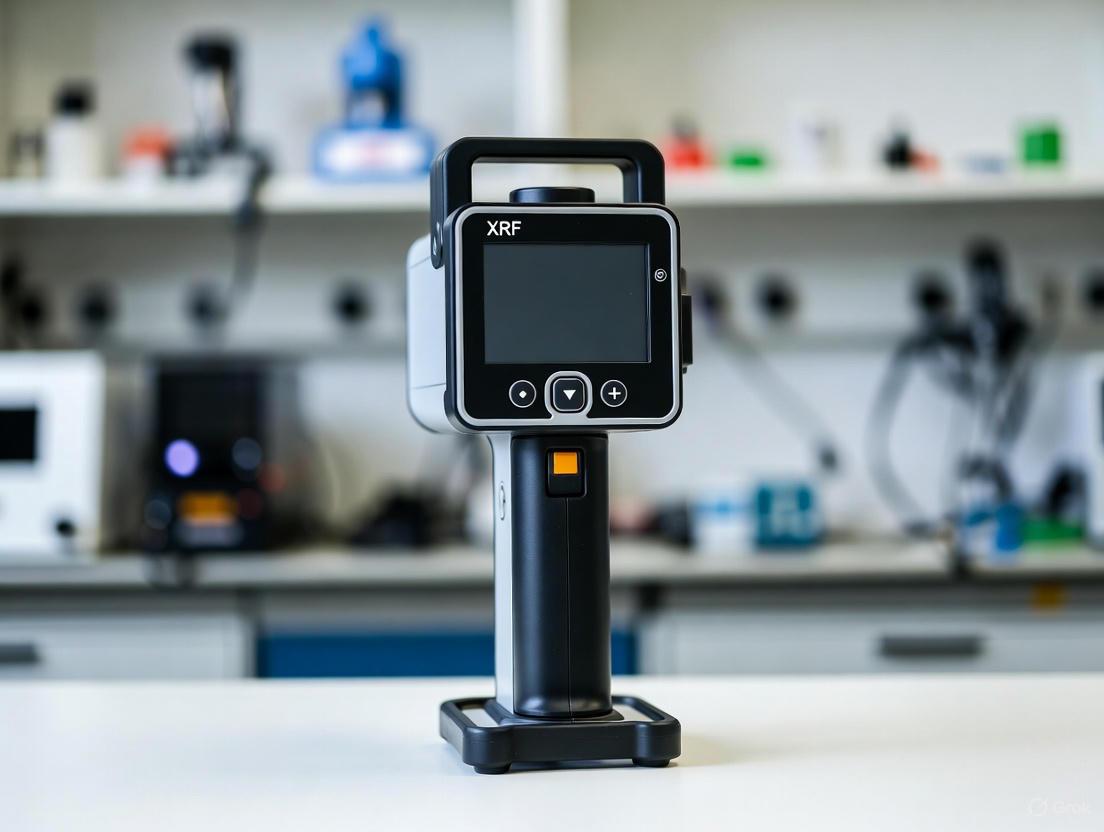
This article provides a thorough examination of portable X-ray fluorescence (XRF) technology for in-situ environmental assessment.
Portable XRF for In-Situ Environmental Monitoring: A Comprehensive Guide for Researchers and Scientists
Abstract
This article provides a thorough examination of portable X-ray fluorescence (XRF) technology for in-situ environmental assessment. It covers the foundational principles of the technique, explores its methodological applications in soil and air monitoring, details strategies for troubleshooting and optimizing data quality, and validates performance against laboratory-based methods like ICP-MS. Aimed at researchers and scientific professionals, this guide synthesizes current best practices to empower confident, efficient, and accurate elemental analysis in field settings.
Understanding Portable XRF: Principles and Capabilities for Environmental Science
X-Ray Fluorescence (XRF) is a powerful, non-destructive analytical technique used for determining the elemental composition of materials. The method is based on the principle that when a material is exposed to high-energy X-rays, its atoms become excited and emit secondary, characteristic X-rays upon returning to their ground state. Each element produces a unique fluorescent signature, allowing for both identification and quantification of the elements present. This technology is particularly valuable for rapid, on-site analysis across diverse fields, from environmental monitoring to industrial quality control, as it requires minimal sample preparation and can provide results in seconds to minutes [1].
The fundamental physical process involves three key stages. First, primary X-ray excitation occurs when a high-energy X-ray beam from an X-ray tube strikes the sample. Second, the photoelectric effect takes place as incoming X-ray photons eject inner-shell electrons from atoms within the sample, creating electron vacancies. Finally, fluorescence emission happens when higher-energy outer-shell electrons fill these vacancies, releasing the energy difference as characteristic X-ray photons. The energy of these emitted photons is unique to each element and the specific electron transition involved, enabling precise elemental identification. A detector then measures the energy and intensity of these fluorescent X-rays, generating a spectrum where peaks at specific energies correspond to particular elements, with peak heights indicating their relative concentrations [1] [2].
Key Principles and Technological Advantages
Fundamental Analytical Principles
The XRF process is governed by well-established principles of X-ray physics. The "fundamental parameters" approach to calibration in XRF is unique because it relies on the theoretical relationship between measured X-ray intensities and elemental concentrations, based on fundamental atomic parameters in the X-ray region of the electromagnetic spectrum. This theoretical foundation allows for highly accurate quantitative analysis across various sample types and matrices [2]. Primary fluorescence results directly from the exciting X-ray beam, while secondary fluorescence occurs when characteristic radiation from one element induces fluorescence in another element within the sample. Tertiary fluorescence is also possible but typically accounts for only 2-3% of observed emissions and is often considered negligible in most applications [2].
Comparative Advantages of XRF Technology
XRF technology offers several distinct advantages that make it particularly suitable for rapid elemental analysis, especially in field applications. Its non-destructive nature ensures that samples remain intact and unaltered during analysis, allowing for further testing or archival preservation. The technique provides rapid analysis with measurements typically ranging from seconds to a few minutes, significantly faster than laboratory-based techniques that require extensive sample preparation and processing. Furthermore, XRF requires minimal sample preparation, as many samples can be analyzed directly without complex processing steps. The method also boasts a wide elemental range, capable of detecting elements from sodium (Na) to uranium (U) on the periodic table. Finally, its versatile applicability to solids, liquids, powders, and thin films makes it an invaluable tool across numerous scientific and industrial domains [1].
Table 1: Key Advantages of XRF Technology for Elemental Analysis
| Advantage | Technical Description | Impact on Analysis |
|---|---|---|
| Non-Destructive | Sample is not consumed or altered during analysis | Enables further testing; preserves valuable samples |
| Rapid Analysis | Measurements take seconds to few minutes | Allows for high-throughput screening and real-time decision making |
| Minimal Sample Prep | Many samples analyzed directly with little to no preparation | Reduces analysis time and potential introduction of errors |
| Wide Elemental Range | Detects elements from sodium (Na) to uranium (U) | Provides comprehensive elemental characterization |
| Quantitative & Qualitative | Identifies elements and determines concentrations | Offers both discovery and precision measurement capabilities |
Portable XRF for Environmental Monitoring
Portable X-ray fluorescence (PXRF) analyzers have revolutionized environmental monitoring by enabling rapid, on-site assessment of soil contamination with heavy metal(loid)s such as lead (Pb), arsenic (As), chromium (Cr), copper (Cu), and zinc (Zn). Traditional laboratory methods like atomic absorption spectroscopy and inductively coupled plasma techniques, while accurate, are costly, time-consuming, and require extensive sample preparation including acid digestion, which generates hazardous waste. PXRF presents a practical alternative, offering real-time results with minimal sample preparation and no chemical reagents, making it particularly suitable for urban agriculture assessments where rapid identification of contamination hotspots is essential for ensuring food safety and community well-being [3].
The accuracy and precision of PXRF in environmental applications depend significantly on proper calibration and sample handling. When properly calibrated, particularly with certified reference materials (CRMs) that match the sample's chemical composition, PXRF can achieve reliable accuracy comparable to traditional laboratory methods. Ex situ measurements (analyzing prepared samples in controlled conditions) generally provide higher precision due to reduced heterogeneity and controlled environmental factors. However, in situ measurements offer practical advantages for rapid field screening and spatial analysis of contamination patterns. Key factors affecting PXRF performance include soil moisture content, particle size distribution, sample homogeneity, and surface roughness, all of which should be documented and controlled to the extent possible for optimal results [3].
Experimental Protocols for Environmental Soil Analysis
Field Sampling and Preparation Protocol
A standardized protocol is essential for obtaining reliable PXRF data for environmental monitoring. The sampling strategy should be designed based on the specific objectives of the investigation, whether it's identifying contamination hotspots, mapping spatial distribution, or assessing remediation effectiveness. For systematic grid sampling, establish a regular pattern with sampling points spaced appropriately for the site size and suspected contamination heterogeneity. For targeted sampling, focus on areas with visible contamination indicators or historical land use suggesting potential pollution. At each sampling point, clear the surface of debris and vegetation, then use a clean soil probe or auger to collect samples from the desired depth (typically 0-15 cm for surface contamination assessment). Document precise GPS coordinates and observable site conditions for each sample location [3].
Sample preparation varies based on analytical approach. For in situ measurements, simply flatten the soil surface at the measurement point to ensure good contact with the instrument window. For ex situ measurements with potentially higher accuracy, collect representative soil samples, air-dry them at ambient temperature, gently grind to break up aggregates, and sieve through a 2-mm mesh to ensure consistent particle size. Place the prepared samples in specialized XRF cups with prolene film windows to prevent contamination and ensure consistent geometry during measurement. For quality assurance, include certified reference materials with similar matrix composition to the samples to verify calibration and analytical accuracy throughout the measurement process [3].
Instrument Operation and Data Collection
Proper instrument operation is crucial for obtaining reliable environmental data. Begin by selecting the appropriate analytical mode for soil analysis, typically a "geochemistry" or "soil" mode that optimizes measurement conditions for elements of environmental concern. Ensure the instrument is properly calibrated according to manufacturer specifications, using custom calibrations if available for specific soil types in the study area. During measurement, maintain consistent contact pressure between the instrument window and soil surface, and use a protective film on the window to prevent contamination. For each sample location, acquire measurements for a minimum of 60-90 seconds to ensure sufficient counting statistics for precise quantification of trace elements. Take multiple readings at each sampling point if possible to account for micro-scale heterogeneity, and document all measurement parameters including measurement time, voltage/current settings, and environmental conditions for future reference and data comparison [3] [4].
Diagram 1: PXRF Environmental Soil Analysis Workflow. This flowchart illustrates the systematic protocol for soil contamination assessment using portable XRF.
Technical Specifications and Performance Data
Analytical Performance and Detection Capabilities
The performance of XRF systems varies significantly based on their design and configuration, with portable systems offering increasingly sophisticated capabilities for field applications. Modern PXRF instruments can detect approximately 20-23 chemical elements simultaneously, with detection limits dependent on specific elements, sample matrices, and measurement conditions. Analytical performance is typically characterized by limits of detection (LOD), accuracy, precision, and analysis speed. For environmental applications, PXRF demonstrates excellent performance for heavy metal(loid)s like Pb, As, Cd, Cu, Zn, and Hg, with detection limits in the low parts-per-million (ppm) range for most elements of environmental concern. Accuracy, when properly calibrated with matrix-matched standards, generally achieves 85-95% recovery compared to reference laboratory methods, while precision typically shows relative standard deviations of 2-8% for major and minor elements [3].
Table 2: Typical PXRF Performance Characteristics for Environmental Analysis
| Performance Parameter | Typical Range | Key Influencing Factors |
|---|---|---|
| Detection Limits | 1-100 ppm for most heavy metals | Element atomic number, matrix effects, measurement time |
| Analysis Time | 30-120 seconds per measurement | Required precision, element concentrations, instrument type |
| Accuracy | 85-95% recovery vs. reference methods | Calibration quality, matrix matching, sample preparation |
| Precision | 2-8% RSD | Counting statistics, sample heterogeneity, measurement conditions |
| Elemental Range | Na to U (Mg to U with graphene windows) | Detector type, window material, X-ray tube configuration |
Comparison with Other Analytical Techniques
XRF technology occupies a unique position in the analytical landscape, complementing rather than replacing established laboratory techniques. Compared to Inductively Coupled Plasma Mass Spectrometry (ICP-MS), which remains the gold standard for ultra-trace element detection with unmatched sensitivity and precision, XRF offers distinct advantages in speed, portability, and non-destructive analysis. While ICP-MS excels in laboratory settings for detecting ultra-trace metals in complex matrices like biological tissues, PXRF has revolutionized on-the-spot testing with robust data collection without traditional wet-lab constraints. The choice between techniques depends on specific analytical needs: ICP-MS for detailed quantitative analysis in laboratories with demands for ultra-low detection limits, and XRF for non-destructive, immediate field applications where speed and portability are prioritized. Emerging hybrid approaches that combine features of both technologies are showing promise for comprehensive metal analysis in environmental monitoring, clinical diagnostics, and epidemiological studies [5].
Diagram 2: Elemental Analysis Technique Comparison. This diagram illustrates the positioning of XRF within the broader landscape of analytical methods.
The Scientist's Toolkit: Essential Research Reagents and Materials
Successful XRF analysis, particularly in environmental applications, requires appropriate materials and standards to ensure analytical quality and data reliability. The core toolkit includes both instrumentation and supporting materials for proper calibration, sample preparation, and quality assurance. For portable XRF analysis in environmental monitoring, key items include the PXRF analyzer itself, certified reference materials for calibration and quality control, sample preparation equipment for consistent analysis, and appropriate personal protective equipment for safety during field operations [3] [4].
Table 3: Essential Research Toolkit for PXRF Environmental Analysis
| Tool/Reagent | Specification | Primary Function |
|---|---|---|
| PXRF Analyzer | With soil/geochemistry mode and GPS | Primary analytical instrument for field measurements |
| Certified Reference Materials | Matrix-matched to samples (e.g., NIST soil CRMs) | Calibration verification and quality control |
| Sample Cups | XRF cups with prolene or mylar windows | Hold prepared samples for consistent analysis |
| Sieving Equipment | 2-mm stainless steel sieve | Standardize particle size for improved precision |
| Portable Balance | 0.01-g precision | Sample weighing for quantitative preparation |
| Protective Film | 4-6 μm polypropylene or similar | Prevent instrument window contamination |
| GPS Device | Integrated or separate with ≤3m accuracy | Precise location data for spatial analysis |
| Field Documentation Kit | Weatherproof notebooks, cameras, markers | Comprehensive site and sample documentation |
Advanced Applications and Future Directions
XRF technology continues to evolve, with emerging applications demonstrating its versatility beyond traditional elemental analysis. In paleontology, mobile macroscale scanning XRF (MA-XRF) is being used for in-situ analyses of the elemental chemistry of fossil vertebrates, detecting remarkable tissue-specific chemical signatures in specimens millions of years old. This non-destructive approach has revealed associations between specific elements and fossilized tissues, such as sulfur and titanium with hair and feathers, and copper and zinc with abdominal tissues, providing new insights into preservation processes and ancient biology [6]. In biological imaging, multielement Z-tag XRF (MEZ-XRF) enables highly multiplexed tissue imaging at subcellular resolution, allowing researchers to visualize up to 20 different biomarkers simultaneously in a non-destructive manner. This approach combines the tissue-penetrating capability of X-rays with elemental tags to overcome limitations of fluorescence microscopy, particularly for formalin-fixed paraffin-embedded clinical samples where autofluorescence can complicate analysis [7].
The future of XRF technology is being shaped by several key trends, including the integration of artificial intelligence and machine learning algorithms to enhance data processing, interpretation, and operational efficiency. AI-powered systems enable faster and more accurate spectral analysis, reducing manual intervention and minimizing errors while identifying complex elemental patterns that traditional methods might overlook. The market for XRF analysis services is projected to grow from USD 2.5 billion in 2024 to USD 4.5 billion by 2033, reflecting expanding applications and technological advancements [8]. Additionally, ongoing development of portable and handheld devices with improved sensitivity, lower detection limits, and enhanced user interfaces continues to broaden the accessibility and applicability of XRF technology across scientific disciplines, from environmental monitoring to industrial quality control and cultural heritage preservation [8] [1].
Portable X-ray Fluorescence (XRF) spectrometers have become indispensable tools for in-situ environmental monitoring, enabling rapid, on-site elemental analysis of samples such as soils, sediments, and waters. The analytical performance of these handheld instruments in field research is governed by three core technological components: the X-ray tube, the detector, and the analytical software. This document details these key components within the context of a broader thesis on portable XRF, providing application notes and experimental protocols tailored for researchers and scientists engaged in environmental assessment. Understanding the specifications and interplay of these components is crucial for optimizing data quality, ensuring methodological validity, and making informed decisions during field deployment.
Core Component Analysis
The performance of a portable XRF analyzer in environmental fieldwork is directly determined by its fundamental subsystems. The following sections break down the critical specifications of X-ray tubes and detectors.
X-Ray Tube Anodes: Material and Voltage
The X-ray tube generates the primary X-rays that excite the sample. The choice of anode material and the tube voltage are critical for optimal excitation of elements of interest. [9]
Table 1: X-Ray Tube Anode Materials and Their Applications in Environmental Analysis
| Anode Material | Optimal Element Range | Key Applications in Environmental Monitoring | Performance Notes |
|---|---|---|---|
| Rhodium (Rh) | Light elements (Mg, Al, Si, P, S) [9] | Analysis of soils and sediments; key for aluminum and silicon in clays and silicates. | Fastest analysis for light elements; considered the best all-around choice for most alloy and environmental applications. [9] |
| Tungsten (W) | High-energy elements (e.g., Cadmium) [9] | Detection of heavy metal contaminants like Cadmium (Cd) in soils. | Superior excitation for high-energy K-lines of heavy elements; also highlighted for enhanced sensitivity in rare earth element detection. [10] [9] |
| Silver (Ag) | Mid- to high-energy elements [9] | General-purpose screening for a wide range of heavy metals. | A good all-around compromise anode when budget is a constraint, though not optimal for very light or very heavy elements. [9] |
Tube voltage, measured in kilovolts (kV), determines the energy available to excite elements. A higher voltage (e.g., 50 kV) is necessary to excite heavier elements, resulting in faster analysis times and higher accuracy. [11] Some advanced handheld models feature tubes with enhanced voltage (e.g., 55 kV) for improved detection of rare earth elements and low-level pathfinders. [10]
Detector Technology: PIN vs. SDD
The detector measures the energy of the fluorescent X-rays emitted from the sample. The type and size of the detector are primary factors influencing sensitivity and analysis speed. [9]
Table 2: Comparison of Detector Technologies in Portable XRF
| Feature | PIN Detector | SDD (Silicon Drift Detector) |
|---|---|---|
| Technology | Older, less sensitive technology. [9] | Newer, more sensitive technology. [9] |
| Analysis Speed | Slower (e.g., 8-10 seconds for alloy ID). [9] | Faster (e.g., 1-2 seconds for alloy ID). [9] |
| Light Element Sensitivity | Poor performance for Mg, Al, Si, P, S. [9] | Required for measuring light elements. [9] |
| Limit of Detection (LOD) | Higher (less sensitive). [9] | Lower (more sensitive). [9] |
| Cost | Less expensive. [9] | More expensive. [9] |
For environmental research requiring the quantification of light elements (e.g., Al, Si in soils) or trace-level contaminants, an instrument with an SDD is essential. Furthermore, the size of the SDD matters; large-area SDDs offer better analytical sensitivity, though at a higher cost. [9] Detector resolution, typically around 135 eV, is also a key specification for distinguishing between closely spaced X-ray peaks. [11]
The Scientist's Toolkit: Essential Research Reagents & Materials
Table 3: Essential Materials for Portable XRF Environmental Analysis
| Item | Function & Importance |
|---|---|
| Certified Reference Materials (CRMs) | Crucial for calibrating the instrument and validating analytical methods. CRMs with matrices matching the environmental samples (e.g., soil, sediment) are necessary for achieving accurate quantitative results. [11] |
| Sample Preparation Tools | Though minimal, preparation is often needed. Tools include grinders and pellet presses to create homogeneous, flat-surface samples, which minimize matrix effects and improve analytical precision. [12] |
| Spillage Protection Foil | A critical accessory when analyzing liquid samples (e.g., water, oils). It protects the delicate instrument window from accidental contamination and is easily replaceable by the operator. [11] |
| Built-in Pressure & Temperature Sensors | Low-energy X-rays from light elements are sensitive to atmospheric changes. These sensors allow the software to automatically compensate for variations, ensuring consistent data quality in field conditions. [11] |
Operational Workflow and Signaling Pathways
The process of XRF analysis follows a defined physical pathway, from sample excitation to data interpretation.
XRF Principle and Analytical Workflow
The following diagram illustrates the core physical principle of X-ray fluorescence and the subsequent workflow for environmental analysis.
Diagram 1: XRF Analysis Workflow
The fundamental signaling pathway within the XRF process is the photoelectric effect. [13]
- Primary Excitation: High-energy X-rays from the tube strike the sample, ejecting inner-shell electrons from atoms.
- Electron Relaxation: An electron from an outer shell drops into the inner shell to fill the vacancy.
- Fluorescence Emission: The energy difference from this transition is emitted as a secondary (fluorescent) X-ray.
- Elemental Fingerprint: The energy of this emitted X-ray is characteristic of the specific element, acting as its fingerprint. [13]
Detailed Experimental Protocol for Soil Analysis
This protocol provides a standardized methodology for the in-situ elemental screening of soils using a portable XRF analyzer.
Objective: To perform non-destructive, semi-quantitative elemental analysis of soil samples for rapid environmental assessment and screening of heavy metal contaminants.
Materials and Equipment:
- Portable XRF analyzer (equipped with an SDD detector and Rh anode tube is recommended).
- Proprietary instrument charging dock and battery.
- Sampling bags, spatula, and sieve (if performing pre-screening preparation).
- Certified Reference Materials (CRMs) for soil (e.g., NIST 2710a, 2711a).
- Field logbook or data logger.
Step-by-Step Procedure:
Instrument Preparation and Safety:
- Ensure the instrument battery is fully charged.
- Power on the analyzer and allow it to complete its startup and self-check procedures.
- Verify that the instrument's safety features are operational. Always point the analyzer safely towards the ground or sample when measuring.
Pre-Analysis Calibration and Verification:
- Follow the manufacturer's instructions for a quick stability check.
- Analyze a soil CRM to verify the instrument's calibration and performance. Record the results and compare them to the certified values to ensure accuracy is within acceptable limits for your study.
Sample Collection and Preparation (Minimal):
- Collect a representative soil sample using a clean spatula.
- For in-situ analysis, remove large stones and debris from the measurement spot. If possible, lightly compact the soil surface to create a flat, uniform analysis area.
- For more consistent results, a sub-sample can be homogenized, air-dried, and pressed into a pellet using a hydraulic press. [12] This is recommended for quantitative studies.
Instrument Configuration:
- Select the appropriate analytical mode pre-configured for "Soils" or "Geochemistry".
- Set the measurement time based on data quality requirements; a typical time for soil screening is 30-60 seconds per spot. For lower detection limits, longer counting times (e.g., 90-120 seconds) may be required. [12]
Sample Analysis:
- Place the analyzer window snugly against the prepared soil surface.
- Initiate the measurement cycle. Keep the instrument stable throughout the counting period.
- Analyze each sample at multiple spots (e.g., 3-5 spots) to account for potential heterogeneity. Record all results and note any visual outliers.
Data Management and Reporting:
- The analyzer's software will display the elemental composition in weight percent (wt%) or parts per million (ppm).
- Export the data via USB, Wi-Fi, or Bluetooth for further statistical analysis.
- In the report, document the analyzer model, analysis mode, measurement time, and any sample preparation steps undertaken.
Essential Software Capabilities
Analytical software transforms raw spectral data into interpretable elemental concentrations. Key features for environmental research include:
- Pre-Calibrated Modes: Ready-to-use application modes (e.g., "Soil" or "Environmental") allow for immediate field screening without complex setup. [10] [11]
- Advanced Data Security: For regulatory compliance and research integrity, features like advanced user management, action logging, and audit trails are critical. [11]
- Standardless Analysis: Software packages like Omnian enable the quantification of a wide variety of samples without the need for dedicated calibrations, which is invaluable for analyzing unknown or unusual sample matrices. [11]
- Data Export and Connectivity: Seamless transfer of results to USB drives or via wireless connectivity is essential for integrating field data into larger databases and for real-time decision-making. [14] [9]
Portable X-ray Fluorescence (pXRF) spectrometry has emerged as a transformative technology for in-situ environmental monitoring, enabling researchers to make rapid, on-site decisions without the delays associated with traditional laboratory analysis. This technology provides real-time elemental data critical for assessing soil contamination, monitoring water quality, and evaluating air particulate matter [15]. The core advantages driving its adoption—speed, portability, and non-destructive testing—address fundamental needs in environmental research, particularly for large-scale spatial assessments and rapid screening campaigns [16] [17]. These application notes detail the implementation of pXRF within rigorous scientific research, providing protocols and data frameworks to support its use in thesis and professional research contexts.
pXRF analyzers determine elemental composition by directing an X-ray beam into a sample, causing elements to emit characteristic fluorescent X-rays that are detected and quantified [18] [19]. This section summarizes the performance of leading pXRF models and their detection capabilities for environmentally significant elements.
Table 1: Comparison of Representative Handheld XRF Analyzers for Environmental Research
| Feature/Model | Bruker S1 Titan 600 | Olympus Vanta Element-S | Niton XL5 Plus | Evident Delta Premium |
|---|---|---|---|---|
| Weight | 1.5 kg (3.3 lbs) [18] | Information Missing | 1.3 kg (2.8 lbs) [18] | Information Missing |
| Detector Type | Silicon Drift Detector (SDD) [18] | SDD [18] | Drift Detector [18] | Silicon Drift Detector (SDD) [17] |
| Key Environmental Applications | Site remediation, pipeline inspection [18] | Soil analysis, scrap sorting [18] | Mining, large-scale soil remediation [18] | Soil, sediment, and filter analysis per EPA 6200 [17] |
| Light Element Analysis | Restricted without calibration [18] | Yes (in Element-S model) [18] | Yes [18] | Yes (Mg and higher) [17] |
| Approx. Price | ~$6,000 [18] | ~$4,200-$4,800 [18] | ~$6,000 [18] | Information Missing |
Table 2: Typical Detection Limits for Key Pollutants in Soils using a Premium pXRF (in ppm) This data, derived from a configured 3-beam soil analyzer, demonstrates the capability of pXRF for screening regulated metals [17].
| Element | Typical Detection Limit | Element | Typical Detection Limit |
|---|---|---|---|
| Arsenic (As) | 1 - 3 ppm | Lead (Pb) | 2 - 4 ppm |
| Cadmium (Cd) | 6 - 8 ppm | Mercury (Hg) | 2 - 4 ppm |
| Chromium (Cr) | 5 - 10 ppm | Selenium (Se) | 1 - 3 ppm |
| Copper (Cu) | 5 - 7 ppm | Zinc (Zn) | 3 - 5 ppm |
Experimental Protocols for Environmental Sampling
Adherence to standardized protocols is essential for generating reliable, publishable data. The following methodologies are adapted from US EPA Method 6200 and established scientific guidelines [17] [20].
Pre-Deployment Planning and Safety
- Define Objectives: Clearly state the analytical goal (e.g., contaminant hotspot identification, nutrient mapping, lab sample pre-screening) [20].
- Radiation Safety Training: All operators must undergo specific training on the pXRF instrument. Never aim the device at people or animals, and never hold samples during analysis [21].
- Regulatory Compliance: Investigate and adhere to local regulations governing the use of X-ray instrumentation [20].
In-Situ Soil Measurement Protocol
- Site Preparation: Clear the sampling point of surface debris, rocks, and organic matter (e.g., leaves, twigs).
- Surface Preparation: Create a flat, representative soil surface. For the most consistent results, the soil should be fine-grained and homogeneous [16].
- Instrument Preparation: Ensure the battery is charged. Attach a protective film to the measurement window if required. Select the "Soil" or "Environmental" mode on the analyzer.
- Measurement:
- Place the analyzer nose firmly and directly onto the prepared soil surface to minimize air gaps.
- Initiate the analysis trigger. A typical measurement time for soils is 60-120 seconds to achieve optimal detection limits [17].
- Maintain the instrument in a stable position throughout the analysis.
- Data Logging: Record the result along with GPS coordinates for geospatial mapping [17].
Ex-Situ Analysis of Soil Cores and Powders
- Sample Collection: Collect samples using a soil probe or auger.
- Sample Preparation:
- Air-dry samples at ambient temperature to mitigate the negative effects of moisture on X-ray signal attenuation [16].
- Gently grind the soil to a fine powder (< 75 μm) to minimize the effects of particle size heterogeneity [16].
- Fill a standard XRF cup or press the powder into a pellet for a uniform analysis surface.
- Analysis: Follow steps 3-5 of the in-situ protocol. Analyze multiple sub-samples from a homogenized batch to account for inherent sample heterogeneity [20].
Workflow Integration and Data Validation
A rigorous pXRF program integrates field analysis with robust quality control and data validation procedures to ensure data fitness-for-purpose.
Quality Assurance/Quality Control (QA/QC) Protocol:
- Instrument Calibration: Verify performance daily using a certified reference material (CRM) traceable to a national standard [20].
- Site-Specific Calibration: For maximum accuracy, develop a custom calibration using CRMs that matrix-match the soils of the study area [20].
- Ongoing QC Checks: Integrate the analysis of blanks, duplicates, and CRMs at a frequency of 5-10% of the total sample batch to monitor precision, accuracy, and instrumental drift [20].
The Researcher's Toolkit: Essential Materials and Reagents
Table 3: Essential Research Reagents and Materials for pXRF Analysis
| Item | Function in Research | Specification / Note |
|---|---|---|
| Certified Reference Materials (CRMs) | Calibration and validation of analyzer accuracy for specific soil matrices [20]. | Should matrix-match the environmental samples (e.g., clay soil, river sediment). |
| XRF Sample Cups | Hold prepared powdered samples for ex-situ analysis. | Typically have a polypropylene film (e.g., Mylar, Prolene) window transparent to X-rays. |
| Protective Window Films | Prevent contamination of the instrument's detector window from soil and moisture [21]. | Essential for maintaining instrument performance and preventing costly damage. |
| Portable Glove Bag / Grinding Mill | Sample preparation; grinding creates homogeneous powders for improved analytical precision [16]. | A ring-and-puck mill or mortar and pestle can be used to achieve a consistent particle size. |
| Radiation Dosimeter Badge | Monitors cumulative radiation exposure for the operator, providing a safety record [21]. | Worn on the body; does not offer protection but measures dose for regulatory compliance. |
| GPS Receiver | Geotagging each measurement point for spatial data analysis and contaminant mapping [17]. | Can be integrated with the pXRF or a separate device. |
Portable X-ray fluorescence (pXRF) is a rapid, in-situ analytical technique that has gained significant traction for environmental monitoring, particularly in the assessment of soils and sediments [16]. Its value lies in its ability to provide immediate, non-destructive elemental data across a wide area, enabling high-density sampling strategies that are impractical with laboratory-based methods. However, the analytical performance of pXRF in real-world environmental applications is governed by two fundamental concepts: detection limits and matrix effects. A thorough understanding of these inherent limitations is not merely an academic exercise; it is a critical prerequisite for designing robust research, interpreting data correctly, and drawing scientifically defensible conclusions. This application note details these limitations and provides structured protocols to mitigate their impact, specifically framed within the context of in-situ environmental research.
Core Limitations in Environmental pXRF Analysis
The analytical signal in pXRF is generated from a specific interaction volume within the sample, and its quality is heavily influenced by the sample's physical and chemical properties. The primary limitations can be categorized as follows.
Detection Limits and Effective Analysis Volume
Detection limits in pXRF are not fixed values; they are dynamic and depend on the element of interest, the instrument configuration, and, critically, the sample matrix [22]. The effective analysis volume—the depth from within the sample from which fluorescent X-rays can escape and be detected—varies significantly with element and matrix composition.
- Elemental Energy Dependence: Lighter elements (e.g., Na, Mg, Al, Si) produce low-energy fluorescent X-rays that are easily absorbed by the sample itself. Consequently, they can only be detected from a very shallow depth at the sample surface, often just a few micrometers [22]. In contrast, heavier elements (e.g., Cu, Zn, Pb) emit more energetic X-rays that can escape from deeper within the sample, up to several millimeters in a light matrix [22].
- Matrix Absorption: The sample composition directly controls the escape depth. Low-energy X-rays from light elements will be strongly absorbed in a matrix comprised of heavy elements, further reducing the already small analysis volume [22]. This makes the accurate measurement of light elements in dense or heterogeneous environmental matrices particularly challenging.
Table 1: Factors Influencing Detection Limits and Volume in Environmental pXRF
| Factor | Impact on Detection Limit & Analysis Volume | Practical Implication for Soil Analysis |
|---|---|---|
| Element Atomic Number | Low-Z elements (e.g., Na, Mg) have high (poor) detection limits and shallow analysis volumes; High-Z elements (e.g., Pb, Cd) have lower (better) detection limits and deeper volumes [22]. | Sodium and magnesium are difficult to quantify in soils, while lead and arsenic are more readily detected. |
| Matrix Composition | High organic matter or water content attenuates X-rays, raising detection limits and reducing the effective analysis volume for all elements [16]. | Wet, organic-rich soils require longer measurement times for the same precision as dry, mineral soils. |
| Sample Density | Higher density reduces X-ray penetration, shrinking the analysis volume and raising detection limits [16]. | Dense, clay-rich soils present a greater analytical challenge than sandy soils. |
| Instrument Power & Time | Higher tube current (μA) and longer counting times improve counting statistics, lowering detection limits. | To achieve low detection limits for trace elements, longer analysis times (e.g., 60-90 seconds) are necessary [23]. |
Matrix Effects
Matrix effects are the most significant source of analytical error in XRF if not properly accounted for. They refer to alterations in the intensity of an element's fluorescent signal caused by the other constituents of the sample [24]. There are two primary types:
- Absorption Effects: The sample matrix can absorb the primary X-rays from the tube, reducing the energy available to excite the analyte atoms. It can also absorb the fluorescent X-rays emitted by the analyte before they escape to the detector [22] [24]. For example, chlorine atoms strongly absorb the fluorescent X-rays from lead, causing a suppressed lead signal even if the concentration is high [22].
- Enhancement Effects: Also called secondary excitation, this occurs when the fluorescent X-ray from one element has enough energy to excite a second element in the sample. This increases the characteristic signal of the second element beyond what the primary X-ray beam would produce alone [24]. For instance, in a sample containing high iron and manganese, the intense Fe Kβ line can secondarily excite manganese, enhancing its measured intensity.
Table 2: Common Matrix and Interference Effects in Environmental Matrices
| Matrix/Interference Type | Physical Process | Example in Environmental Analysis |
|---|---|---|
| Absorption by Light Elements | Soil organic matter and water scatter and absorb X-rays, reducing overall intensity [16]. | Fluctuations in soil water content between samples cause significant variation in the measured concentrations of all elements. |
| Element-Element Absorption | One element's X-rays are absorbed by another, suppressing its signal [22]. | Chlorine (Cl) absorbs the Ka X-rays from lead (Pb), leading to an underestimation of lead concentration. |
| Secondary Excitation | A major element's emission line excites a trace element, enhancing its signal [24]. | High iron content can enhance the signal of adjacent elements like manganese. |
| Spectral Overlap | Emission lines from different elements have similar energies and overlap [22] [24]. | Bromine (Br) Kβ line can interfere with the lead (Pb) Kα line, and arsenic (As) Kβ can interfere with lead (Pb) Lα lines [24]. |
The following diagram illustrates the interconnected relationship between sample properties, fundamental physical effects, and their ultimate impact on pXRF data quality.
Experimental Protocols for Mitigating Limitations
A systematic approach to measurement and data interpretation is essential to manage the limitations described above. The following protocols are designed specifically for in-situ environmental assessment of soils.
Protocol for In-Situ Soil Analysis
This protocol is designed to maximize data quality and consistency when analyzing soils directly in the field.
Step 1: Pre-Analysis Site and Sample Assessment
- Safety: Ensure the pXRF is used in a safe manner, following all manufacturer guidelines for radiation safety [4].
- Sample Selection: Choose a representative, flat surface for analysis. Remove surface debris, rocks, and obvious organic matter like roots and leaves [16].
- Homogeneity Evaluation: Visually assess the sample for consistency in color and texture. If inhomogeneous, take multiple measurements at different spots and record them as distinct analyses [24].
Step 2: Sample Preparation (In-Situ)
- Moisture Mitigation: The single most important factor. For the most consistent results, analyze dry soils. If possible, collect samples and allow them to air-dry before analysis [16]. If in-situ analysis of moist soil is necessary, document the moisture condition qualitatively (e.g., "field-moist") and be aware that all concentrations will be diluted by the water content. For high-accuracy work, a subsample should be taken for laboratory moisture determination to correct the pXRF data.
- Surface Preparation: Gently smooth the analysis surface to minimize surface roughness effects, but avoid compressing the soil as this will alter its density.
Step 3: Instrumental Setup and Measurement
- Calibration Mode: Select a calibration mode appropriate for the soil matrix (e.g., "Geochemistry" or "Soil" mode). Do not use a "Mining" or "Alloys" mode for soil analysis.
- Measurement Parameters: Use a beam energy and filter setting optimized for the target elements. For general soil screening, a three-beam approach (e.g., low, main, high) is common. A minimum analysis time of 60-90 seconds per beam is recommended to achieve good counting statistics for trace elements [23] [16].
- Analysis and Replication: Hold the instrument steady on the sample surface during analysis. Perform a minimum of three replicate measurements on the same sample spot (if homogeneous) or on different representative spots to assess precision.
Step 4: Data Quality Control
- Standard Validation: Regularly analyze a certified reference material (CRM) with a matrix similar to your samples (e.g., NIST soil standards) to check the accuracy and drift of the instrument.
- Data Scrutiny: Review the spectral data for signs of common interferences (e.g., check for Bromine if Lead is high) [24]. Use the instrument's software to see if spectral deconvolution was applied correctly.
Protocol for ex-situ Soil Analysis (Improved Accuracy)
For higher accuracy, ex-situ analysis with controlled sample preparation is recommended.
Step 1: Sample Collection and Drying
Step 2: Grinding and Homogenization
- Gently break up dried soil aggregates using a porcelain mortar and pestle or a mechanical grinder.
- Pass the soil through a <2 mm or <75 μm sieve, depending on the analysis requirements. Fine grinding improves homogeneity and creates a smoother surface, reducing particle size effects [26].
Step 3: Presentation to the pXRF
- Powder Pellets: For best results, press the powdered soil into a pellet using a hydraulic press and a binding agent. This creates an infinitely thick, homogeneous, and flat sample ideal for analysis [26].
- Loose Powder: If a press is unavailable, present the powdered soil in a dedicated XRF cup with an X-ray transparent film. Ensure the powder is leveled and has a depth of at least 1-1.5 cm to approximate infinite thickness [26].
Step 4: Quantitative Calibration
- For true quantitative results, develop a site-specific calibration using a suite of CRMs that span the expected concentration ranges of your elements of interest [22] [27]. The Fundamental Parameters method can be used if standards are unavailable, but its accuracy will be lower for complex matrices [22].
The workflow below summarizes the key decision points and steps for both in-situ and ex-situ analysis pathways.
The Scientist's Toolkit: Essential Research Reagents & Materials
The following table lists key materials and reagents required for implementing the protocols described above, particularly for the higher-accuracy ex-situ pathway.
Table 3: Essential Materials for High-Quality pXRF Soil Analysis
| Item | Specification / Example | Critical Function in Analysis |
|---|---|---|
| Certified Reference Materials (CRMs) | NIST 2710a (Montana Soil), NIST 2711a (Montana Soil II) | Essential for validating instrument accuracy, quantifying matrix effects, and creating site-specific calibration curves [22] [4]. |
| Hydraulic Pellet Press | Capable of applying 10-20 tons of pressure. | Creates compact, homogeneous, and flat pellets from powdered samples, minimizing heterogeneity and surface roughness effects [26]. |
| Binding Agent | Cellulose wax (binder), boric acid (backing). | Mixed with powdered samples to provide structural integrity to pressed pellets, preventing them from crumbling [26]. |
| Mortar and Pestle | Agate or porcelain. | Used for grinding and homogenizing dried soil samples to a consistent fine powder, reducing particle size effects [26]. |
| Test Sieves | 2 mm (10-mesh), 75 μm (200-mesh). | Standardizes particle size after grinding, which is critical for achieving representative and reproducible results [26]. |
| Sample Cups | With polypropylene or Mylar film (4-6 μm). | Holds loose powdered samples for analysis when pellet pressing is not feasible. The film must be X-ray transparent [26]. |
| Laboratory Oven | Capable of maintaining 60°C. | Removes soil moisture, which is a major and highly variable source of X-ray absorption and matrix effect [16] [25]. |
Portable XRF is a powerful tool for in-situ environmental assessment, but its data are not immune to the fundamental physical principles of X-ray matter interactions. Detection limits are element and matrix-specific, and matrix effects like absorption and enhancement can significantly skew results if not managed. The key to success lies in a rigorous methodological approach. Researchers must choose between rapid in-situ screening and more accurate ex-situ analysis based on their research questions. Crucially, this involves controlling for variables like moisture and particle size, validating results with certified reference materials, and maintaining a healthy skepticism toward raw, unvalidated data. By acknowledging these inherent limitations and systematically employing the protocols and tools outlined in this note, environmental scientists can harness the full potential of pXRF as a reliable source of elemental data.
Field Deployment and Application: Protocols for Soil and Air Monitoring
The selection between in-situ (on-site) and ex-situ (off-site) analysis represents a fundamental decision point in environmental monitoring and research. Within the specific context of portable X-ray fluorescence (pXRF) spectroscopy, this choice directly influences data quality, operational efficiency, and analytical costs. In-situ analysis involves placing the analytical instrument directly in contact with the sample in its natural environment, while ex-situ analysis requires removing samples from their original context for processing in a controlled setting [28]. For researchers employing pXRF technology, this distinction extends beyond mere location to encompass different levels of environmental control, sample processing requirements, and uncertainty management.
The evolution of pXRF technology has significantly expanded capabilities for in-situ environmental characterization, particularly for contaminated land assessment [29], soil salinity monitoring [30], and corrosion analysis [31]. However, this technological advancement has not eliminated the need for ex-situ approaches, which continue to offer advantages in specific scenarios. This application note provides a structured framework for selecting between standardized in-situ and ex-situ methodologies within research applications, with particular emphasis on pXRF analysis for environmental monitoring.
Comparative Performance Analysis
Quantitative Performance Metrics
The choice between in-situ and ex-situ approaches involves balancing multiple performance factors that directly impact research outcomes. The table below summarizes key comparative metrics derived from field and laboratory studies.
Table 1: Performance comparison of in-situ versus ex-situ analytical approaches
| Performance Metric | In-Situ Analysis | Ex-Situ Analysis | Research Context |
|---|---|---|---|
| Measurement Uncertainty | Higher (predominated by environmental heterogeneity) [29] | Lower (controlled conditions reduce variability) [29] | Contaminated land characterization with pXRF [29] |
| Relative Cost-Effectiveness | 3× more cost-effective [29] | Lower cost-effectiveness [29] | Site characterization for lead contamination [29] |
| Cell Recovery Rate | 85-95% [28] | 65-80% [28] | Biological sample processing [28] |
| Processing Time | 10-15 minutes per sample [28] | 8-30 minutes per sample [28] | Biological sample processing [28] |
| Cell Viability Post-Filtration | >90% [28] | 75-85% [28] | Biological sample processing [28] |
Impact of Sample Processing on Data Quality
Ex-situ processing techniques can significantly enhance pXRF data quality for certain sample types. Research on heterogeneous post-metallurgical sites demonstrates that specific pre-treatment methods improve analytical precision and accuracy.
Table 2: Impact of ex-situ pre-processing methods on pXRF analytical quality
| Pre-Processing Method | Impact on Precision (Average RSD) | Impact on Accuracy (Average r²) | Elements Showing Improvement |
|---|---|---|---|
| Sieving | Improved (fell by 7.17%) [32] | Minimal change [32] | Multiple elements including Pb, Cr, Mn, Ca, Fe [32] |
| Grinding | Improved (fell by 8.37%) [32] | Enhanced (increased by 0.10) [32] | Multiple elements including Pb, Cr, Mn, Ca, Fe [32] |
| Drying | Minimal change [32] | Enhanced (increased by 0.03) [32] | Multiple elements including Pb, Cr, Mn, Ca, Fe [32] |
| Ignition | Negligible impact [32] | Negligible impact [32] | No significant improvement observed [32] |
The data indicates that grinding provides the most substantial improvement in both precision and accuracy, while ignition (to remove organic matter) shows negligible benefits, suggesting this time-consuming step may be omitted without compromising data quality [32].
Decision Framework for Analytical Approach Selection
The selection between in-situ and ex-situ methodologies depends on multiple factors including research objectives, sample characteristics, and operational constraints. The following decision pathway provides a systematic approach to this selection process.
Experimental Protocols
Standardized In-Situ pXRF Field Protocol
Application: Rapid elemental screening of contaminated soils and sediments [29] [30]
Materials and Equipment:
- Portable XRF analyzer with manufacturer calibration
- Site-specific calibration standards (when available)
- Field notebook or electronic data recorder
- GPS device for coordinate recording
- Protective equipment (gloves, safety glasses)
Procedure:
- Site Preparation: Clear debris and vegetation from measurement location to ensure direct soil contact.
- Instrument Preparation: Power on pXRF analyzer and allow sufficient warm-up time (typically 10-15 minutes).
- Field Calibration: Verify calibration using manufacturer reference standards; perform drift correction if necessary.
- Measurement Placement: Apply instrument probe directly to soil surface with consistent pressure.
- Data Collection: Acquire measurements for predetermined time (typically 30-90 seconds depending on elements of interest).
- Quality Assurance: Collect replicate measurements at predetermined frequency (recommended: 10% of samples).
- Documentation: Record GPS coordinates, soil conditions, moisture status, and visual observations for each measurement location.
- Data Validation: Periodically validate field readings with ex-situ samples from representative locations.
Notes: This protocol is optimized for rapid screening where spatial context is critical. Measurement uncertainty is influenced by field conditions including soil heterogeneity and moisture content [29].
Standardized Ex-Situ pXRF Laboratory Protocol
Application: High-precision elemental quantification in environmental samples [32]
Materials and Equipment:
- Portable XRF analyzer
- Laboratory crusher or grinder
- Sieve set (typically <2mm and <75μm mesh sizes)
- Drying oven
- Sample cups with XRF film windows
- Analytical balance
Procedure:
- Sample Collection: Obtain representative field samples using appropriate methods (e.g., soil coring, grab sampling).
- Sample Preparation: a. Drying: Oven-dry samples at 40°C until constant weight (typically 24-48 hours) [32]. b. Homogenization: Grind samples using ceramic-coated mechanical grinders to avoid contamination. c. Sieving: Pass samples through 2mm sieve for general analysis; use <75μm sieve for optimal precision [32].
- Sample Loading: Pack prepared material into standardized sample cups with XRF film windows, ensuring consistent density and thickness.
- Instrument Calibration: Power on pXRF analyzer and validate calibration using certified reference materials matched to sample matrix.
- Measurement: Analyze samples using manufacturer-recommended conditions for soil matrices, typically 60-90 seconds measurement time.
- Quality Control: Include procedural blanks, duplicate samples, and certified reference materials in each analytical batch (minimum 5% of total samples).
Notes: Grinding and sieving significantly improve analytical precision (reducing RSD by 8.37% and 7.17% respectively) and enhance accuracy (increasing r² by 0.10 and maintaining respectively) for heterogeneous samples [32]. Ignition to remove organic matter shows negligible benefits and can be omitted to save time and costs [32].
Research Reagent Solutions and Materials
Table 3: Essential research materials for pXRF environmental analysis
| Item | Function | Application Context |
|---|---|---|
| Portable XRF Analyzer | Non-destructive elemental analysis in field and laboratory | In-situ and ex-situ measurement of metals in soils, sediments, and rust layers [29] [31] [30] |
| XRF Sample Cups | Hold prepared samples during analysis | Ex-situ analysis requiring standardized presentation to instrument [32] |
| XRF Film Windows | Allow X-ray transmission while containing samples | Ex-situ analysis of powdered materials [32] |
| Certified Reference Materials | Quality assurance and calibration verification | Both in-situ and ex-situ approaches to ensure data quality [32] |
| Portable Sieve Shaker | Particle size separation for sample homogenization | Ex-situ sample preparation to improve analytical precision [32] |
| Mechanical Grinder | Sample homogenization to fine particle size | Ex-situ preparation of heterogeneous materials [32] |
| Drying Oven | Moisture removal from samples | Ex-situ preparation to eliminate water interference [32] |
| Portable Thickness Gauge | Measurement of coating/rust layer thickness | Complementary in-situ measurements for pXRF analysis [31] |
Integrated Methodological Workflow
The following workflow illustrates the integrated relationship between in-situ and ex-situ methodologies within a comprehensive environmental monitoring campaign.
The selection between in-situ and ex-situ analytical approaches represents a strategic decision that should be guided by specific research objectives, data quality requirements, and practical constraints. For pXRF applications in environmental monitoring, in-situ methods provide superior cost-effectiveness and maintenance of spatial context, making them ideal for preliminary site assessment and screening of large areas [29]. Conversely, ex-situ approaches with appropriate sample processing deliver enhanced precision and accuracy for quantitative analysis and regulatory decision-making [32].
An integrated methodology that leverages both approaches—using in-situ analysis for spatial screening and ex-situ analysis for targeted quantification—represents the most robust framework for comprehensive environmental characterization. This hybrid approach maximizes the respective strengths of each method while mitigating their individual limitations, ultimately producing datasets with both spatial integrity and analytical rigor.
For researchers utilizing portable X-ray Fluorescence (pXRF) for in-situ environmental monitoring, sample preparation is a critical determinant of data quality and reliability. While pXRF offers the advantage of field-based, rapid elemental analysis, the accuracy of its results is profoundly influenced by pre-analysis techniques. This application note details standardized protocols for drying, homogenization, and sample presentation, framing them within the context of a research thesis focused on robust environmental monitoring. Proper preparation mitigates matrix effects, reduces particle size heterogeneity, and minimizes moisture content, which are known sources of analytical error in XRF spectrometry [33] [34]. The following sections provide actionable, evidence-based methodologies to ensure the integrity of your pXRF data, from field collection to final measurement.
Core Sample Preparation Workflows
The journey from a raw environmental sample to a reliable pXRF measurement involves a series of critical steps. The following workflow diagrams outline the primary pathways for solid and powdered samples, highlighting key decision points to ensure analytical integrity.
For researchers requiring the highest level of accuracy for heterogeneous environmental samples, a more rigorous fusion-based protocol is available. This method, while more time-intensive, effectively eliminates mineralogical and particle size effects.
Quantitative Comparison of Preparation Methods
The choice of sample presentation method significantly impacts analytical recovery rates for various elements. The following table summarizes quantitative performance data from controlled studies, providing a basis for method selection in environmental research.
Table 1: Elemental Recovery Rates by Sample Preparation Method
| Element | Loose Powder (LP) | Pressed Pellet (PP) | Pressed Pellet w/ Binder (PPB) | Fusion |
|---|---|---|---|---|
| Ni | 85-110% | 70-95% | 95-105% | >98% |
| Pb | 90-115% | 75-90% | 95-110% | >98% |
| Cu | 88-112% | 72-88% | 98-108% | >99% |
| Mg | 80-100% | 65-85% | 90-105% | >99% |
| S | 75-98% | 60-80% | 85-100% | >98% |
| P | 78-95% | 65-82% | 88-102% | >98% |
| Cr | 82-105% | 68-88% | 92-107% | >99% |
| Zn | 95-118% | 80-98% | 90-112% | >99% |
| Mn | 92-115% | 78-95% | 85-108% | >99% |
| Fe | 90-108% | 85-102% | 94-106% | >99% |
Data adapted from soil analysis studies using ISE standards and CRM materials [34]. Recovery rates relative to certified values. Optimal methods for each element are highlighted in bold.
Detailed Experimental Protocols
Drying Method Optimization for Biological Materials
Objective: To determine the optimal drying technique for acid-digested biological samples prior to TXRF/XRF analysis, minimizing elemental loss and ensuring measurement precision [35].
Materials:
- Acid-digested biological reference materials (e.g., apple leaves, tomato leaves, oyster tissue, beef liver)
- Internal standard solution (e.g., Gallium, Cobalt)
- Drying equipment: Laminar flow chamber, vacuum chamber, infrared lamp, hot plate
- TXRF reflector sample carriers
- Micropipettes
Procedure:
- Sample Digestion: Digest approximately 200 mg of biological reference material in 2.5 ml of 65% Suprapur nitric acid using PTFE pressure vessels at 195°C for 8 hours [35].
- Internal Standard Addition: Add an appropriate internal standard to the digested sample solution.
- Sample Deposition: Deposit 10 µL of the digested sample onto a TXRF reflector.
- Drying Methods Comparison: For each drying method, prepare ten replicates:
- Laminar Flow Chamber (LFC): Dry samples at room temperature under constant airflow.
- Vacuum Chamber (VC): Dry samples at approximately 100 mbar pressure.
- Infrared Lamp (IR): Dry samples using a 250W infrared lamp.
- Hot-Plate 45°C (HP45): Dry samples on a hot plate set to 45°C.
- Hot-Plate 75°C (HP75): Dry samples on a hot plate set to 75°C.
- TXRF Measurement: Analyze all dried samples using consistent TXRF instrument parameters.
- Data Analysis: Calculate recovery rates for each element and method relative to certified values. Determine precision using relative standard deviation.
Key Findings: Research indicates that for biological materials, the choice of drying method has no significant impact on the final quantitative TXRF results. However, hot-plate drying at 75°C provided marginally better results compared to other methods, while vacuum chamber drying showed the largest variations in measurement results [35].
Pressed Pellet with Binder Method for Soils
Objective: To prepare homogeneous soil pellets with enhanced structural integrity for improved pXRF analysis accuracy [34].
Materials:
- Homogenized, dried soil powder (<75 µm particle size)
- Binder (e.g., wax, cellulose, boric acid)
- Hydraulic press (capable of 15-25 tons)
- Pellet die set (standard 32 mm or 40 mm diameter)
- Laboratory balance (± 0.0001 g accuracy)
Procedure:
- Sample Preparation: Ensure soil samples are completely dried (40°C for 24 hours) and finely powdered to pass through a 75 µm sieve.
- Weighing: Precisely weigh 8-10 g of soil powder.
- Binder Addition: Add binder at 10-20% of sample mass. Mix thoroughly for 2-5 minutes to ensure homogeneity.
- Loading: Transfer the mixture to a pellet die, ensuring even distribution.
- Pressing: Apply 15-25 tons of pressure for 1-2 minutes. Include a pre-pressurization step at 5 tons for 30 seconds to release air.
- Ejection: Carefully eject the pellet from the die.
- Storage: Store pellets in a desiccator to prevent moisture absorption before pXRF analysis.
Quality Control: Include certified reference materials (CRMs) with each batch to verify analytical accuracy. Prepare replicates to assess method precision.
Fusion Method for Complex Matrices
Objective: To completely eliminate mineralogical and particle size effects in heterogeneous environmental samples through high-temperature fusion [33] [36].
Materials:
- High-temperature furnace (capable of 1250°C)
- Platinum crucibles and molds (5% Au/Pt alloy recommended)
- Flux (lithium tetraborate/metaborate mixture, 12:22 ratio)
- Laboratory balance (± 0.0001 g accuracy)
- Ceramic tongs
Procedure:
- Weighing: Precisely weigh 0.5-1.0 g of sample powder into a platinum crucible.
- Flux Addition: Add flux at 5:1 to 10:1 flux-to-sample ratio. Mix thoroughly.
- Fusion: Place crucible in furnace at 1050-1250°C for 10-20 minutes until a homogeneous melt is formed.
- Agitation: Periodically swirl the crucible to ensure complete mixing and release of gas bubbles.
- Pouring: Pour the molten mixture into a pre-heated platinum mold.
- Cooling: Allow the disc to cool slowly to prevent crystallization or cracking.
- Cleaning: Remove the glass disc from the mold and clean if necessary.
Application Note: The fusion method is particularly recommended for calibration standards and complex geological samples where the highest level of accuracy is required, despite being more time-consuming than pressed pellet methods [33].
The Scientist's Toolkit: Essential Research Reagents & Materials
Table 2: Key Research Reagents and Materials for pXRF Sample Preparation
| Item | Function | Application Notes |
|---|---|---|
| Lithium Tetraborate/Metaborate Flux | Forms low-temperature eutectic mixture for fusion | Use 12:22 ratio for general applications; enables formation of homogeneous glass discs [37] |
| Boric Acid/Cellulose Binders | Enhances pellet cohesion for pressed powder methods | 10-20% by weight sufficient for most soil matrices; improves particle packing [34] |
| Internal Standard Solutions (Ga, Co) | Corrects for sample loading & instrument drift | Added post-digestion pre-deposition for liquid samples [35] |
| Certified Reference Materials (CRMs) | Quality assurance & calibration validation | Matrix-matched standards essential for empirical calibrations [34] |
| Polypropylene X-ray Film | Sample containment for loose powder analysis | 4 µm thickness optimal; minimal X-ray attenuation [34] |
| Pt/Au Crucibles & Molds (5% Au) | High-temperature sample containment | Resists oxidation; withstands repeated fusion cycles [36] |
The selection of appropriate drying, homogenization, and presentation techniques is fundamental to generating reliable pXRF data for environmental monitoring research. While method choice depends on specific research goals, sample type, and required precision, the pressed pellet with binder method generally offers an optimal balance of preparation efficiency and analytical performance for most environmental matrices. Fusion methods provide the highest accuracy for complex or heterogeneous samples but require greater resources. By implementing these standardized protocols, researchers can significantly enhance the quality of their in-situ environmental monitoring data, contributing to more robust scientific conclusions in their thesis research.
Portable X-ray fluorescence (pXRF) spectrometry has become an indispensable tool for in-situ environmental monitoring, offering rapid, non-destructive elemental analysis of soils, sediments, and other environmental samples. However, the accuracy of pXRF measurements is significantly influenced by matrix effects, primarily from soil moisture and organic matter (OM) content. These components affect X-ray scattering and attenuation, potentially leading to underestimation of elemental concentrations [16]. This application note provides a detailed framework of protocols and correction procedures to mitigate these effects, enhancing data reliability for environmental researchers.
Understanding the Interfering Effects
Mechanisms of Interference
- Moisture Effects: Water content in soils suppresses X-ray fluorescence signals. The presence of water increases X-ray scattering and absorption, reducing the intensity of characteristic X-rays reaching the detector. Studies show a significant correlation between water content and pXRF measurement deviation, with correlation coefficients ranging from 0.2 to 0.5 for various heavy metals [38]. Moisture contents of 20% or more can substantially suppress metal readings [39].
- Organic Matter Effects: Soil organic matter (SOM) interferes with X-ray signals through similar scattering and attenuation mechanisms. While some studies indicate pXRF measurements of heavy metals are only weakly affected by SOM (correlation coefficients <0.5) [38], others have observed notable interference, particularly for lighter elements [16]. The complex and variable composition of organic matter means its effects can be inconsistent across different soil types.
Quantitative Impact Assessment
Table 1: Quantitative Effects of Matrix Components on pXRF Accuracy
| Matrix Factor | Impact Level | Correlation with pXRF Error | Key Elements Affected | Typical Signal Effect |
|---|---|---|---|---|
| Moisture | High | r = 0.2 - 0.5 [38] | Zn, As, Rb, Sr, Pb [38] | Signal suppression (up to 20% or more at ≥20% moisture) [39] |
| Organic Matter | Low to Moderate | r < 0.5 [38] | Lighter elements, Low-energy X-rays [16] | Signal attenuation & scattering |
| Sample Heterogeneity | Variable | Not quantified | All elements, particularly at low concentrations | Increased measurement variance |
Experimental Protocols for Mitigating Matrix Effects
Sample Pre-processing Methods for Ex Situ Analysis
Table 2: Efficacy of Sample Pre-processing Steps on pXRF Data Quality
| Processing Step | Impact on Accuracy (Avg. r² change) | Impact on Precision (Avg. RSD change) | Practical Recommendation |
|---|---|---|---|
| Sieving (<2 mm) | Minimal | +7.17% improvement [39] | Recommended for heterogeneous materials |
| Drying (105°C) | +0.03 improvement [39] | Not specified | Essential for moist samples |
| Grinding | +0.10 improvement [39] | +8.37% improvement [39] | Recommended for maximum accuracy |
| Organic Matter Removal (Ignition) | No significant change [39] | -0.32% change [39] | Not routinely recommended |
Protocol 1: Standard Ex Situ Soil Preparation
- Field Collection: Collect representative soil samples using appropriate tools. For heterogeneous sites, increase sampling density to capture variability [39].
- Homogenization: Sieve samples through a 2 mm mesh to remove large particles and improve homogeneity [39].
- Drying Procedure: Oven-dry samples at 105°C for a minimum of 24 hours to remove moisture [39]. For time-sensitive applications, air-drying is an alternative, though less effective.
- Pulverization: Grind dried samples using a disk mill or similar apparatus to achieve fine powder (<0.125 mm) [39].
- Presentation: Firmly pack prepared samples into XRF cups with 4μm Prolene or Ultralene film for analysis [40].
Mathematical Correction Procedures
Protocol 2: Moisture and Organic Matter Correction Model
A general framework for developing site-specific correction models:
- Sample Selection: Collect representative samples covering the expected range of moisture, OM, and elemental concentrations at the site [38].
- Parallel Measurement: For each sample, measure:
- Data Transformation: Apply mathematical transformations (logarithmic, power, quadratic) to identify relationships between pXRF values and interfering factors [38].
- Model Development: Use stepwise regression to construct relationship models between pXRF readings, actual concentrations, and matrix parameters [38]:
Actual Concentration = f(PXRF_reading, Moisture, OM, ...) - Model Validation: Verify model performance using an independent set of samples not included in model development [38].
Instrument-Specific Calibration Approaches
Protocol 3: Optimizing Instrument Settings and Calibration
- Calibration Selection: Choose matrix-specific calibrations rather than general-purpose ones. For environmental samples, "GeoExploration" or "Soil Mode" calibrations are typically appropriate [40].
- Element-Specific Optimization: Adjust excitation voltages to target appropriate emission lines. For example, use higher voltages to excite K-lines of heavy elements like Sn and Sb rather than relying on overlapping L-lines [41].
- Compton Normalization: Utilize Compton normalization as an internal standardization method to correct for matrix effects [38].
- Quality Assurance: Perform twice-daily calibration checks using certified reference materials (CRMs) with matrices similar to your samples [39] [41].
Workflow Integration
In-Situ Environmental Assessment Workflow
The Scientist's Toolkit: Essential Research Reagents and Materials
Table 3: Key Materials for pXRF Analysis of Environmental Samples
| Item | Function | Application Notes |
|---|---|---|
| Certified Reference Materials (CRMs) | Calibration verification | Matrix-matched to samples; monitor analytical precision [41] |
| XRF Sample Cups | Sample containment | 4μm Prolene or Ultralene film windows; prevent contamination [39] |
| Sieving Equipment | Particle size control | 2mm mesh standard; improves homogeneity [39] |
| Laboratory Oven | Moisture removal | 105°C for 24 hours; standardized drying [39] |
| Grinding Mill | Sample homogenization | Disk mill; achieves <0.125mm particle size [39] |
| Calibration Standards | Instrument calibration | Fundamental for accurate quantification [41] [40] |
Effective mitigation of moisture and organic matter effects is essential for producing reliable pXRF data in environmental monitoring applications. Through appropriate sample processing, mathematical corrections, and optimized instrument operation, researchers can significantly improve data quality. The protocols presented here provide a systematic approach to address these matrix effects, enabling more accurate environmental assessment and supporting the advancement of in-situ analytical methodologies.
Table of Contents
- Introduction
- Application Note 1: Regulatory Compliance Screening for Lead-Based Paint in NYC Buildings
- Application Note 2: Superfund Site Lead Contamination Assessment
- Comparative Analysis of pXRF Applications
- The Scientist's Toolkit: Essential Research Reagent Solutions
- Experimental Protocols for Environmental pXRF Analysis
- Visual Workflows for pXRF Implementation
- Conclusion
Portable X-ray fluorescence (pXRF) spectrometry has emerged as a transformative technology for in-situ environmental monitoring, offering rapid, cost-effective elemental analysis with minimal sample preparation. This technology provides researchers and environmental professionals with real-time data acquisition capabilities directly in the field, enabling immediate decision-making for regulatory compliance and contamination assessment. The fundamental principle of pXRF involves irradiating samples with X-rays and measuring the characteristic fluorescent emissions from constituent elements, which allows for non-destructive analysis of diverse environmental matrices including soils, paints, and vegetation [15] [42].
These application notes detail standardized protocols for implementing pXRF technology across two critical environmental monitoring scenarios: urban regulatory compliance for lead-based paint and comprehensive Superfund site assessment. The documented methodologies support the integration of pXRF data into established regulatory frameworks and risk assessment models, validating its equivalence to traditional laboratory techniques while highlighting its significant advantages for rapid screening and high-density spatial mapping of contaminated sites.
Application Note 1: Regulatory Compliance Screening for Lead-Based Paint in NYC Buildings
Background and Regulatory Context
New York City's Local Law 31 mandates compressive lead-based paint inspections in residential buildings constructed before 1960, with specific requirements for testing methodology and documentation. The legislation explicitly requires XRF technology as the sole accepted method for compliance testing, establishing a definitive standard for lead paint assessment in affected properties [43]. This regulatory framework creates a substantial need for standardized protocols that ensure consistent, legally-defensible results across thousands of residential units while accommodating the practical constraints of occupied buildings.
The August 2025 deadline for compliance has accelerated adoption of pXRF methodologies throughout the NYC property management sector, with specific documentation requirements including room-by-room scanning records, positive/negative lead readings, and professional reports for Local Law 31 documentation that must be maintained for 10 years [43] [44]. The regulatory landscape also establishes a formal challenge process for disputing violations, requiring secondary laboratory analysis of paint chip samples with specific certification requirements for assessors [44].
Critical Implementation Parameters
Table 1: Key Performance Requirements for NYC Local Law 31 XRF Compliance Testing
| Parameter | Regulatory Requirement | Technical Specification | Documentation Needed |
|---|---|---|---|
| Testing Method | XRF technology required | X-ray fluorescence detection | Method certification in report |
| Building Coverage | All pre-1960 residential buildings | All dwelling units, not sampling | Building age documentation |
| Surface Coverage | All painted surfaces | Windows, doors, baseboards, trim, walls, radiators | Room-by-room inventory |
| Inspector Qualifications | EPA-certified, HUD-compliant | XRF-specific training | Certification copies included |
| Record Retention | 10 years | Digital and hard copy available | Records provided upon HPD request |
| Common Areas | Required under Local Law 111 | Hallways, stairwells, lobbies | Separate section in report |
Methodology and Quality Assurance
The inspection protocol requires comprehensive surface testing across all painted components within each dwelling unit. Technicians must systematically scan windows, doors, baseboards, trim, walls, and radiators, maintaining consistent probe contact and measurement duration across all surfaces. The non-destructive nature of pXRF analysis is particularly valuable in occupied units where dust containment and minimal disruption are operational priorities [43].
Quality assurance measures include regular calibration verification using standard reference materials, duplicate measurements at a predetermined frequency (typically 5-10% of surfaces), and background radiation monitoring. All instrumentation must undergo daily performance checks to ensure analytical accuracy, with documentation incorporated into the final compliance report. The instant results provided by pXRF technology enable immediate identification of lead hazards and facilitate more efficient remediation planning [43].
Application Note 2: Superfund Site Lead Contamination Assessment
Framework for Risk-Based Site Characterization
The U.S. Environmental Protection Agency has established comprehensive guidance for implementing pXRF technology at lead-contaminated Superfund sites, with specific application to the Integrated Exposure Uptake Biokinetic (IEUBK) model for children's health risk assessment [45]. This framework enables the translation of field-based pXRF measurements into predictive exposure models that inform remediation decisions and cleanup goals. The EPA's "Residential Lead Directive for CERCLA Sites" (October 2025) establishes a multi-layered approach for addressing residential lead exposures that incorporates pXRF data collection as a fundamental component [45].
The IEUBK model utilizes soil lead concentration inputs derived from pXRF measurements to estimate blood lead levels in children, with the arithmetic mean of concentration data serving as the critical exposure parameter. EPA guidance specifically recommends weighting data from common play areas within apartment complexes to account for differential exposure patterns in multi-family residential settings [45]. This application represents a sophisticated integration of rapid field measurements with complex pharmacokinetic modeling.
Site Assessment Design and Implementation
Table 2: pXRF Deployment Parameters for Superfund Site Lead Assessment
| Assessment Phase | pXRF Configuration | Quality Measures | Data Integration |
|---|---|---|---|
| Preliminary Site Screening | 30-60 second scans, grid pattern | GPS tagging, duplicate samples | Identification of hot spots |
| Definitive Site Characterization | 90-180 second scans, targeted sampling | 10% laboratory validation, depth profiling | IEUBK model input development |
| Remediation Verification | Pre/post-measurements, clearance testing | Action level comparison, trend analysis | Compliance documentation |
| Long-term Monitoring | Periodic scans at fixed locations | Standard reference materials, control charts | Exposure pathway tracking |
Strategic implementation of pXRF technology at Superfund sites requires systematic sampling designs that account for exposure pathways and spatial variability. The EPA's "Lead-Contaminated Residential Sites Handbook" (March 2024) provides comprehensive guidance on sample collection strategies, including recommendations for assessing intermittent exposures at locations such as daycares, parks, and recreational areas [45]. Technical parameters such as scan time, sample preparation, and instrument calibration must be optimized for specific site conditions and data quality objectives.
Advanced Applications for Bioavailability Assessment
Recent methodological advances have enabled the correlation of pXRF measurements with lead bioavailability parameters through the EPA Method 1340 for in vitro bioaccessibility (IVBA) [45]. This integration provides a more nuanced understanding of exposure risks than total concentration measurements alone, supporting refined risk assessments and more targeted remediation approaches. The April 2025 guidance document "How do I use Bioavailability Data from EPA Method 1340 in the IEUBK Model?" facilitates the direct incorporation of site-specific bioavailability adjustments into the risk assessment framework [45].
Comparative Analysis of pXRF Applications
Table 3: Performance Metrics Across Environmental Application Domains
| Performance Characteristic | NYC Lead Paint Compliance | Superfund Site Assessment | Vegetation Analysis (Research) |
|---|---|---|---|
| Analysis Time | 30-60 minutes per unit | 60-180 seconds per sample point | 60-180 seconds per sample |
| Sample Preparation | Minimal (non-destructive) | Sieving (<250 μm recommended) | Drying, grinding (≤0.5-2 mm) |
| Detection Limits | ~0.5-1.0 mg/cm² for lead | ~20-40 mg/kg for soil lead | Variable by element (P, K, Ca, Fe) |
| Accuracy Verification | Laboratory chip sampling for challenges | 10% laboratory analysis (ICP) | Acid digestion + ICP validation |
| Cost per Sample | $200-500 per unit | $5-50 per sample point | <$5 per sample (vs. $28 lab) |
| Key Elements | Lead | Lead, arsenic, cadmium, others | P, K, Ca, Fe, Zn, Mn |
The comparative analysis reveals significant methodological adaptations across application domains, with sample preparation requirements representing the most substantial variable. While regulatory compliance testing for lead-based paint requires no material removal, soil and vegetation analysis benefit from controlled particle size reduction through grinding and sieving. Research demonstrates that decreasing particle size to ≤0.5 mm significantly improves analytical precision (r² ≥ 0.70) for heterogeneous environmental samples [42]. This relationship remains robust (r² ≥ 0.57) even at larger particle sizes (1-2 mm), demonstrating the flexibility of pXRF technology for diverse field conditions.
The Scientist's Toolkit: Essential Research Reagent Solutions
Table 4: Critical Materials and Reference Standards for pXRF Environmental Analysis
| Research Solution | Technical Function | Application Context | Quality Assurance Role |
|---|---|---|---|
| Certified Reference Materials (CRMs) | Instrument calibration, accuracy verification | All application domains | Establish measurement traceability |
| Prolene X-ray Film | Sample containment, minimal interference | Soil/vegetation analysis (cup preparation) | Standardized presentation geometry |
| Vacuum Pump System | Removal of attenuating air | Light element analysis (Mg to Fe) | Enhances low-energy X-ray detection |
| Sample Grinding Mill | Particle size reduction | Soil/vegetation homogenization | Improves analytical precision |
| ICP Validation Suite | Method correlation | Superfund sites, research studies | Confirmatory analysis (10% samples) |
| Portable Environmental Chamber | Control of humidity/temperature | Field operations in extreme conditions | Maintains instrument performance |
The research toolkit for professional pXRF implementation requires both analytical standards and field operational systems to ensure data quality across diverse environmental conditions. Certified reference materials with matrix matching to target samples provide the foundation for measurement accuracy, while specialized sampling accessories enable reproducible analytical geometry. The vacuum systems referenced in vegetation studies [42] are particularly critical for light elements (Mg to Fe) where air attenuation would otherwise compromise detection capabilities.
Advanced implementations may incorporate helium purge systems as an alternative to vacuum for light element analysis, particularly for benchtop configurations. Sample preparation equipment including grinding mills, sieves, and powder presses represents essential infrastructure for laboratories processing solid environmental samples. The integration of GPS tagging capabilities with pXRF instruments enhances spatial data management for large-scale site characterization projects.
Experimental Protocols for Environmental pXRF Analysis
Standard Operating Procedure: Soil Lead Assessment at Superfund Sites
Scope and Application: This protocol describes the standardized methodology for using pXRF to measure lead concentrations in soil at hazardous waste sites for inclusion in the IEUBK model and other risk assessment frameworks.
Equipment Requirements:
- Portable XRF spectrometer with vacuum capability or helium purge
- Certified reference materials (NIST 2710a, 2711a)
- Polypropylene sample cups with prolene film (4μm thickness)
- Soil sieving apparatus (2mm, 250μm screens)
- GPS receiver for geotagging measurements
- Field data logging system
Step-by-Step Procedure:
Site Planning: Establish systematic sampling grid based on exposure units and potential hotspots. Include common play areas in residential settings as specified in EPA guidance [45].
Sample Collection: Obtain representative soil samples from 0-2cm depth for child exposure scenarios. Collect 100-200g from each location using clean procedures to prevent cross-contamination.
Sample Preparation: Air-dry samples at 40°C until constant weight. Sieve to <250μm particle size following EPA recommendations for lead bioavailability assessment [45]. Homogenize using ceramic mortar and pestle.
Instrument Preparation: Power up pXRF and allow 15-minute stabilization. Verify calibration using certified reference materials. Record instrument parameters including X-ray tube voltage, current, and filter settings.
Analysis Configuration: Program analytical method for "Soils" mode. Set measurement time to 90-180 seconds based on data quality objectives. Enable vacuum system for light element detection.
Sample Presentation: Load prepared samples into polypropylene cups with prolene film windows. Ensure consistent fill height and compaction. Insert into instrument sample chamber.
Measurement: Initiate analysis and monitor for spectrum stability. Record elemental concentrations for Pb, As, Cd, and other site-specific contaminants. Tag with GPS coordinates.
Quality Assurance: Analyze duplicate samples every 10th measurement. Include standard reference materials at 5% frequency. Document any instrument drift or performance issues.
Data Interpretation: Calculate arithmetic mean concentrations for exposure units as required for IEUBK modeling. Apply soil-specific correction factors if validated for the instrument.
Validation: Submit 10% of samples to certified laboratory for ICP analysis following EPA Method 6010D. Establish correlation between pXRF and laboratory results.
Standard Operating Procedure: Lead-Based Paint Inspection for Regulatory Compliance
Scope and Application: This protocol defines the methodology for conducting legally-defensible lead-based paint inspections in compliance with NYC Local Law 31 and similar regulatory frameworks.
Equipment Requirements:
- Handheld XRF analyzer with X-ray fluorescence capability
- Pb paint reference standards (NIST 2579)
- Radiation safety equipment and signage
- Digital documentation system with camera
- Inspection forms with surface inventory
Step-by-Step Procedure:
Pre-Inspection Documentation: Verify building age and ownership records. Identify all dwelling units and common areas requiring inspection. Notify occupants following regulatory requirements.
Radiation Safety: Implement controlled work area with appropriate signage. Utilize personal dosimetry if required by jurisdiction. Follow ALARA principles for radiation exposure.
Instrument Preparation: Verify valid calibration certificate. Perform performance check using Pb paint reference standards. Confirm operational status of safety interlocks.
Surface Inventory: Document all painted components room-by-room. Identify testing locations on each surface, focusing on friction and impact points.
Measurement Technique: Maintain consistent probe contact with surface. Apply measurement pressure within manufacturer specifications. Hold position steady throughout analysis period (typically 30 seconds per location).
Multi-layer Assessment: Account for potential lead concentration variations through paint layers. Interpret spectrum characteristics to identify subsurface lead pigments.
Data Recording: Document lead concentrations in mg/cm² for all measured surfaces. Categorize as positive (>1.0 mg/cm²) or negative based on regulatory thresholds.
Quality Assurance: Re-measure 5% of surfaces to verify reproducibility. Photograph representative conditions and measurement locations.
Reporting: Generate comprehensive inspection report including room-by-room results, inspector certification, instrument calibration records, and regulatory compliance statements.
Record Retention: Maintain complete inspection files for 10 years as required by NYC Local Law 31 [43]. Provide copies to property owner and regulatory agencies upon request.
Visual Workflows for pXRF Implementation
Figure 1: pXRF Implementation Workflow for Environmental Assessment
Figure 2: pXRF Analytical Decision Framework
Portable XRF technology has established itself as an indispensable tool for environmental monitoring applications spanning regulatory compliance, hazardous waste site assessment, and research investigations. The standardized protocols presented in these application notes provide a rigorous framework for implementing pXRF across diverse scenarios while maintaining scientific defensibility and regulatory acceptance. The integration of pXRF data with established risk assessment models like the IEUBK represents a significant advancement in the field of environmental health, enabling more responsive and spatially-resolved exposure characterization.
Future methodological developments will likely focus on increased sensitivity for low-concentration elements, enhanced bioavailability prediction capabilities, and tighter integration with geospatial analysis platforms. The continuing evolution of pXRF technology promises to expand its applications in environmental monitoring while reducing analytical costs and turnaround times, ultimately supporting more effective protection of human health and the environment.
Maximizing Data Quality: Troubleshooting and Optimization Strategies
Portable X-ray fluorescence (pXRF) has emerged as a powerful tool for in-situ environmental monitoring, offering rapid, on-site elemental analysis of diverse sample types, from soils and sediments to water and waste materials [15] [46]. Its utility in enabling rapid spatial prediction of contaminants like heavy metals is particularly valuable for large-scale environmental investigations [47]. However, the accuracy and precision of pXRF data are not inherent; they are profoundly influenced by the operator's skill in sample preparation and instrument operation [48] [4]. Errors introduced at these stages can lead to misleading data, compromising research conclusions and environmental management decisions. This application note details the most common pitfalls encountered in pXRF analysis for environmental research and provides structured protocols to avoid them, ensuring the generation of robust and reliable data.
Common Pitfalls in Sample Preparation and Analysis
The journey to accurate pXRF data is fraught with potential errors. Understanding these pitfalls is the first step toward mitigating them. The table below summarizes the top errors and their impacts on analytical results.
Table 1: Common Pitfalls in pXRF Sample Preparation and Operation
| Pitfall Category | Specific Error | Impact on Analysis | Recommended Correction |
|---|---|---|---|
| Sample Preparation | Failure to clean solid samples (e.g., metals, alloys) | Introduction of surface contaminants; inaccurate composition readings [48] | Thoroughly clean samples with a file; use dedicated files for different material types (e.g., one for aluminum, another for steel) [48] |
| Analyzing heterogeneous bulk samples (e.g., soils, catalysts) without preparation | Large particle composition variation leads to non-representative results and high data scatter [48] [49] | Carefully crush and homogenize samples; use a cuvette and average multiple measurements if grinding is not possible [48] | |
| Neglecting the effects of sample condition (moisture, organic matter, particle size) | Significant attenuation or enhancement of X-ray signals, causing biased concentration estimates [47] [3] [46] | Correct data using robust statistical models (e.g., RGWR); perform ex-situ analysis on dried, homogenized samples where possible [47] [3] | |
| Using sandpaper to clean samples for light element analysis | Contamination of the sample surface with silicon (from the sandpaper), skewing light element results [48] | Use a file or other cleaning method that does not introduce interfering elements [48] | |
| Instrument Operation & Calibration | Using an incorrect analytical calibration | Poor accuracy and incorrect results; measurements may be merely qualitative rather than quantitative [48] [49] | Ensure the instrument calibration matches the analytical task (e.g., "Soil" mode for soils, "Mining" mode for ores) [48] [49] |
| Insufficient measurement time | Large scatter in results around true concentration values; failure to detect trace elements [48] | Increase measurement time; typically 10-30 seconds is required for accurate quantitative results, but longer times may be needed for traces [48] | |
| Failure to replace protective cartridges | Accumulation of contaminants on the cartridge distorts subsequent measurements [48] | Replace protective cartridges periodically, and always after analyzing materials like aluminum alloys that may leave particles [48] | |
| Ignoring matrix effects and elemental interferences | Inaccurate quantification due to physical and spectral interactions within the sample [49] | Use matrix-matched standards or fundamental parameters (FP) calibration; be aware of spectral overlaps for certain element pairs [49] |
Detailed Experimental Protocols for Environmental Matrices
Protocol for In-Situ Soil Analysis and Data Correction
The following workflow is adapted from methodologies successfully employed for the spatial prediction of heavy metals like lead (Pb) in peri-urban agricultural soils [47]. This protocol is designed to correct for the spatially variable influences of soil moisture (SM), soil organic matter (SOM), and soil particle size (SPZ).
Table 2: Essential Research Reagent Solutions & Materials for Soil Analysis
| Item | Function/Description |
|---|---|
| Portable XRF Analyzer | Instrument with soil calibration mode and SDD detector for on-site measurement. |
| GPS Device | For precise geolocation of each sampling point for spatial regression. |
| Soil Sampling Auger/Corer | For collecting representative topsoil samples (e.g., 0-20 cm depth). |
| Certified Reference Materials (CRMs) | Soil standards with known concentrations to validate and correct pXRF readings [3]. |
| Sample Bags & Cuvettes | For holding and analyzing loose soil samples during in-situ measurement. |
Workflow Description:
- Field Sampling & In-Situ Measurement: Collect a large number of soil samples (e.g., n=357) from the study area, ensuring precise GPS logging at each site [47]. Perform in-situ pXRF measurements directly on the unprepared soil, recording the raw data.
- Laboratory Validation: A subset of these samples is transported to the laboratory, air-dried, ground, and sieved (< 0.149 mm) to create homogeneous powders. These are then analyzed using a reference method, such as Inductively Coupled Plasma Mass Spectrometry (ICP-MS), to obtain accurate concentration data [47].
- Data Correction with RGWR: The relationship between the in-situ pXRF data and the laboratory (ICP-MS) data is rarely constant across a landscape due to spatial variations in SM, SOM, and SPZ. A Robust Geographically Weighted Regression (RGWR) is used to correct the pXRF data. Unlike traditional linear regression, RGWR calculates local regression coefficients (slope and intercept) for each location, effectively modeling and correcting for the spatially non-stationary influences of soil factors. Its "robust" nature also reduces the impact of outliers in the dataset [47].
- Spatial Prediction: The corrected pXRF data, now of higher accuracy, can be used as "hard data" in robust geostatistical methods like Robust Ordinary Kriging (ROK) to generate accurate spatial distribution maps of heavy metal contamination [47].
Protocol for Aqueous Sample Analysis via Preconcentration
Analyzing water samples directly with pXRF is challenging due to the low concentrations of metals and the weak X-ray signal from liquids. This protocol uses a preconcentration step to achieve detection limits in the µg/L range, suitable for environmental guidelines [50].
Table 3: Essential Research Reagent Solutions & Materials for Aqueous Analysis
| Item | Function/Description |
|---|---|
| Metal Collecting Filters (MCFs) | Nanostructured filters functionalized with bisphosphonates to capture and concentrate metal ions from water [50]. |
| Portable XRF Analyzer | For analyzing the metal-loaded MCFs on-site. |
| Portable Pump System | For drawing a precise volume of water (e.g., 10 mL) through the MCF at a controlled rate. |
| Syringe Filter Housing | To hold the MCF during the filtration process. |
| pH Meter & Buffers | To monitor sample pH, as the adsorption efficiency of the MCF is pH-dependent [50]. |
Workflow Description:
- Preconcentration: A known volume of water (e.g., 10 mL) is pumped through a Metal Collecting Filter (MCF). The MCF consists of a nanoporous silicon matrix with a surface functionalized by bisphosphonate molecules, which efficiently chelate and retain cationic metal ions (e.g., Mn, Ni, Cu, Zn, Pb, U) from the water sample over a wide pH range [50].
- On-Site Analysis: After filtration, the MCF, now containing the concentrated metals, is analyzed directly using the pXRF analyzer. The solid-state nature of the filter provides a much stronger and more stable signal for the spectrometer compared to a liquid water sample.
- Quantification: The intensity of the XRF signals from the MCF is correlated to the metal concentrations in the original water sample through an empirical calibration curve developed using spiked water samples analyzed in parallel by ICP-MS [50]. This entire process can be completed in approximately 15 minutes per sample in the field.
The potential of portable XRF as a transformative tool for in-situ environmental monitoring is undeniable. However, this potential can only be fully realized through meticulous attention to sample preparation and instrument operation. The pitfalls outlined in this document—from inadequate homogenization and moisture effects to incorrect calibration and insufficient measurement time—are not merely theoretical but have demonstrable impacts on data quality. By adhering to the detailed protocols provided, such as employing advanced statistical corrections for soil matrices and leveraging novel preconcentration techniques for water analysis, researchers can overcome these challenges. A rigorous, protocol-driven approach is the cornerstone of generating precise, accurate, and reliable pXRF data that can robustly support environmental research and decision-making.
Portable X-ray fluorescence (pXRF) is a rapid, mobile, and high-throughput analytical technique that is increasingly vital for in-situ environmental monitoring research [16]. However, the performance of pXRF is highly dependent on analytical parameters to achieve results comparable to laboratory techniques. This application note addresses the critical roles of measurement time and instrument stability in obtaining precise and accurate data. We provide researchers with a structured experimental protocol and data-driven guidelines to optimize these parameters, ensuring reliable elemental assessment in field conditions.
Key Factors Affecting pXRF Data Quality
The accuracy and precision of pXRF measurements are influenced by a complex interplay of factors. Understanding this ecosystem is the first step toward optimization.
The diagram above illustrates the primary factors influencing pXRF data quality. While sample factors like organic matter and moisture can suppress readings [16] [51], and matrix effects necessitate dedicated calibrations [52], this document focuses on the operational parameters—specifically measurement time and its relationship with instrument stability—that analysts can control directly during field deployment.
Quantitative Impact of Measurement Time
The duration of an individual measurement directly influences the signal-to-noise ratio and the detection limits for target elements. The following table summarizes the typical measurement times used in recent environmental and geological studies.
Table 1: Measurement Times in pXRF Applications
| Application Context | Typical Total Measurement Time | Key Elements/Objectives | Impact on Data Quality |
|---|---|---|---|
| General Soil Survey [51] | 50 seconds (Multiple beams) | Cr, Fe, Mn, Ca, Pb, Sr | Achieved quantitative (r² ≥ 0.70) or qualitative (r² ≥ 0.60) results for key elements after sample pre-processing. |
| Aqueous Analysis (with pre-concentration) [50] | 15 minutes (incl. pre-concentration) | Mn, Ni, Cu, Zn, Pb, U | Enabled detection limits in the range of 29–137 μg/L for a 10 mL water sample, suitable for environmental guidelines. |
| Sedimentary & Igneous Rock Analysis [52] | Not Explicitly Stated | Major, minor, and trace elements | Highlighted that raw pXRF data requires careful calibration; sufficient measurement time is a prerequisite for building accurate empirical models. |
Longer measurement times generally improve precision by increasing the total counts for an element's characteristic X-rays, reducing statistical uncertainty. However, the relationship is not linear, and the optimal time must balance data quality with the practical demands of high-throughput field surveys.
Assessing and Ensuring Instrument Stability
Instrument stability—encompassing X-ray tube output, detector performance, and power supply fluctuations—is a foundational requirement for reproducible results [16]. Instability can manifest as instrumental drift, invalidating data collected over a long session.
Protocol: Instrument Stability Check and Drift Monitoring
Objective: To verify instrument performance before analysis and monitor for drift during a measurement session.
Materials:
- pXRF analyzer
- Certified calibration check reference material (e.g., a 316 Stainless Steel alloy coin or other certified standard) [51]
- Log sheet
Methodology:
Pre-Session Calibration Check:
- Power on the pXRF analyzer and allow it to warm up for the manufacturer-recommended time (typically 10-15 minutes).
- Analyze the certified calibration check reference material using a standard method.
- Record the measured values for key elements (e.g., Cr, Ni, Mo, Fe in 316 steel).
- Compare the results against the certified values. The measurements should fall within the acceptable tolerance limits specified by the manufacturer or your quality control protocol. If they do not, the instrument may require re-calibration.
In-Session Drift Monitoring:
- During a long measurement session, re-analyze the same calibration check standard at regular intervals (e.g., every 60-90 minutes).
- Record the results on a log sheet.
Data Interpretation:
- Plot the measured concentrations of a stable element from the check standard against time or sample sequence number.
- A stable instrument will show random, minor variations around the certified value.
- A consistent upward or downward trend indicates instrumental drift. In such cases, data collected after the last acceptable check may need to be flagged or re-measured.
Integrated Workflow for Optimized pXRF Analysis
The following workflow integrates the optimization of measurement time with procedures for ensuring instrument stability, from pre-field preparation to data validation.
Protocol: Pilot Study for Determining Optimal Measurement Time
Objective: To empirically determine the measurement time that provides sufficient precision for your specific application without being wasteful.
Materials:
- pXRF analyzer
- 3-5 representative samples from your site (homogenized and prepared ex-situ if possible)
- Data logging software or spreadsheet
Methodology:
- Select one representative sample for the pilot test.
- Place the pXRF analyzer on the sample and initiate analysis.
- Measure the sample repeatedly for a total time that is longer than you anticipate needing (e.g., 180 seconds).
- Use the instrument's software feature (if available) that outputs cumulative element concentrations at set intervals (e.g., every 5 or 10 seconds) throughout the measurement. Alternatively, perform 5-10 consecutive analyses at a fixed, medium duration (e.g., 30 seconds) to assess repeatability.
- Repeat steps 2-4 for other sample types if your site is highly heterogeneous.
Data Interpretation:
- For the cumulative data: Plot the reported concentration of your key elements (e.g., Pb, Zn, Fe) against the measurement time.
- For the repeat data: Calculate the relative standard deviation (RSD) for the measurements of each key element.
- The optimal measurement time is the point where the concentration curve for critical elements plateaus (minimal change with additional time) and/or the RSD falls below a pre-defined target (e.g., <5% for major elements). This represents the point of diminishing returns for data quality versus time invested.
The Researcher's Toolkit: Essential Materials for pXRF Analysis
Table 2: Key Research Reagent Solutions and Materials for pXRF Analysis
| Item | Function/Application | Example from Literature |
|---|---|---|
| Certified Reference Materials (CRMs) | Calibration and validation of the pXRF for specific matrices (e.g., soil, slag). | Used for building empirical, matrix-matched calibration models to ensure accurate quantitative results [52]. |
| Calibration Check Standard | Monitoring instrument stability and drift before and during analytical sessions. | A 316 Stainless Steel alloy coin used for twice-daily calibration checks [51]. |
| Metal Collecting Filters (MCF) | Pre-concentration of trace metals from water samples for low-level detection. | A nanoporous silicon-based filter functionalized with bisphosphonates to concentrate metals from water, enabling pXRF detection at μg/L levels [50]. |
| XRF Sample Cups | Holding homogenized powdered samples during ex-situ analysis. | Used with Prolene windows for analyzing ground and ignited samples in a consistent geometry [51]. |
| Portable XRF Analyzer | Core instrument for in-situ or ex-situ elemental analysis. | Examples include the Olympus Delta Premium, Bruker Tracer 5g, and Evident Vanta series, often equipped with a soil mode and multiple X-ray beams/filters [10] [51]. |
In environmental monitoring research, the simplistic "point and shoot" perception of pXRF is obsolete. Data quality is profoundly governed by analytical parameters, with measurement time and instrument stability being two of the most critical, controllable factors. By adopting the systematic protocols outlined herein—conducting pilot studies to define optimal measurement times and implementing rigorous drift monitoring—researchers can significantly enhance the reliability of their data. This disciplined approach allows pXRF to realize its full potential as a powerful tool for rapid, accurate, and in-situ environmental assessment.
For researchers employing portable X-ray fluorescence (pXRF) for in-situ environmental monitoring, the reliability of field data is paramount. This reliability is directly contingent on two pillars of instrument stewardship: the physical protection of detectors from field hazards and the rigorous ensuring of calibration for analytical accuracy [3]. These analyzers have become indispensable in modern environmental science, enabling rapid, on-site screening for heavy metal(loid)s in soils, such as lead (Pb), arsenic (As), and cadmium (Cd) [3] [53]. Maintaining these instruments is not merely operational procedure but a fundamental aspect of research methodology, ensuring that data collected in the field is both defensible and scientifically sound for critical decisions in environmental assessment and conservation planning [54] [3].
Protecting the pXRF Detector
The detector is the core sensory component of a pXRF analyzer. Its protection is critical for maintaining sensitivity and ensuring the accuracy of elemental detection limits [55].
Key Threats and Prevention Strategies
Environmental conditions present the most common threats to detector integrity during field research. Proactive measures are essential for mitigation.
- Physical Shock and Vibration: Although housed in ruggedized casings, pXRF analyzers contain delicate internal components [56] [55]. Avoid dropping the instrument and utilize provided field cases for transport and storage.
- Particulate Matter and Moisture: Fieldwork in dusty or humid environments can compromise the analyzer. Dust can obscure the detector window or ingress into the housing, while moisture can cause electrical damage [55]. Adhere to the manufacturer's Ingress Protection (IP) rating guidelines, regularly inspect and clean the detector window as directed, and avoid operation in rain or extreme humidity.
- Temperature Extremes: Operating or storing the instrument outside its specified temperature range can damage the detector and electronics, and reduce battery life. Allow the instrument to acclimate to ambient field conditions before use and avoid leaving it in direct sunlight or in a closed vehicle [55].
Routine Maintenance Protocol
A consistent maintenance routine is a non-negotiable aspect of a rigorous research protocol.
- Pre- and Post-Field Work Inspection: Visually inspect the instrument casing, detector window, and interface for any signs of damage, dirt, or debris [56].
- Cleaning: Use a soft, dry, lint-free cloth to wipe the exterior. For the detector window, follow the manufacturer's specific cleaning instructions meticulously, often involving a gentle brush or approved lens wipe to avoid scratches.
- Battery Management: Ensure the battery is fully charged before field deployment. Use only manufacturer-approved chargers and batteries to prevent power-related instability or damage [55].
- Storage: When not in use for extended periods, store the instrument in its provided case in a dry, temperature-controlled environment.
Ensuring pXRF Calibration
Calibration is the process that converts raw X-ray intensity counts into meaningful elemental concentrations. Without proper calibration, even a physically pristine instrument will yield inaccurate data [40].
Fundamentals of Calibration
Calibration in pXRF is the configuration of the instrument to provide accurate quantitative results for a specific sample matrix [40]. The core principle involves analyzing materials with known elemental concentrations (standards) to create a calibration curve. The instrument's software then uses this curve to interpret the X-ray signals from unknown samples [57].
A critical challenge in this process is matrix effects, where the physical and chemical composition of the sample itself influences the X-ray signal. Absorption effects can reduce signal intensity, while enhancement effects can cause overestimation [57]. For example, measuring magnesium (Mg) in a chocolate matrix is affected by the presence of calcium (Ca), which absorbs Mg's low-energy X-rays [57]. Using matrix-matched standards that closely mimic the sample's environment is the most effective way to correct for these effects and ensure reproducible results [57].
Calibration Standards and Types
Selecting the appropriate standards is the most critical step in ensuring calibration accuracy.
- Standard Reference Materials (SRMs): Sourced from national metrology institutes like NIST, these provide the highest level of traceability and lowest uncertainty, ideal for proving compliance with ISO requirements [57] [58].
- Certified Reference Materials (CRMs): Produced by accredited suppliers, CRMs are matrix-matched and certified, making them the best choice for routine calibration and accuracy checks in environmental soil analysis [3] [57] [40].
- In-House Reference Materials (RMs): These are stable, consistent, but non-certified materials used for daily quality control checks to monitor instrument drift between calibrations [57].
For environmental research, the "GeoExploration" or "Soil" calibration mode is typically the starting point, as it is pre-configured to detect a comprehensive range of elements from magnesium to uranium [40]. However, for definitive quantitative work, this factory calibration must be validated and often refined using matrix-matched CRMs specific to the study area's soil type [3] [40].
QA/QC Protocol for Calibration
The following protocol, summarized in the table below, should be integrated into every research project using pXRF.
Table 1: QA/QC Protocol for pXRF Calibration in Environmental Research
| Step | Frequency | Procedure & Materials | Acceptance Criterion |
|---|---|---|---|
| Hardware Performance Check | Beginning and end of each analysis day [58] | Analyze a blank and a calibration check standard (e.g., NIST SRM 2711a Montana II Soil) [58]. | Results within manufacturer's specifications (often ±5% of known value for the standard) [58]. |
| Instrument Calibration | At project start; when matrix changes | Select and run appropriate matrix-matched CRMs (e.g., NIST 2580, 2582 for paints; certified soils for environmental work) [40] [58]. | Establish or verify calibration curve. |
| Continuing Calibration Verification | After every 10th sample, and at end of analysis batch [58] | Re-analyze a CRM or a quality control check standard. | Values within ±10% of the certified or known concentration [3]. |
| Data Quality Review | After each analysis session | Review QA/QC data for trends or systematic drift. | Identify need for re-calibration or instrument service. |
The workflow for establishing and maintaining a valid calibration is a cyclical process of setup, verification, and monitoring, as illustrated below.
Experimental Protocol: Validating pXRF Performance for Soil Analysis
This detailed methodology provides a template for researchers to validate their pXRF analyzer's performance against a standard laboratory method, such as ICP-OES, specifically for the analysis of heavy metals in soil samples.
Research Reagent Solutions and Materials
Table 2: Essential Materials for pXRF Method Validation
| Material/Reagent | Function in Protocol |
|---|---|
| Portable XRF Analyzer (e.g., Olympus Vanta, Bruker TITAN) | Primary instrument for non-destructive, in-situ analysis [56] [58]. |
| ICP-OES System | Reference laboratory method for definitive quantitative analysis [58]. |
| Certified Reference Materials (CRMs) | To calibrate/verify the pXRF and ICP-OES (e.g., NIST 2711a, NIST 2580) [57] [58]. |
| Trace Metal Grade Nitric Acid (HNO₃) | For sample digestion prior to ICP-OES analysis [58]. |
| Polyethylene Sample Cups | To hold homogenized soil/paint samples for pXRF analysis [40] [58]. |
| 4µm Prolene/XRF Film | Creates a thin, low-containment window for the sample cup, allowing X-ray transmission while holding powder [40] [58]. |
| High-Speed Mixer/Mill | For homogenizing samples to a fine, consistent powder (<500 µm) to minimize particle size effects [58]. |
Step-by-Step Validation Methodology
Sample Collection & Preparation:
- Collect representative soil samples from the field using appropriate tools.
- Air-dry samples and gently crush to break up aggregates.
- Homogenize using a high-speed mixer/mill. For hard, dried materials, cryogenic grinding with liquid nitrogen may be necessary to achieve a fine, homogeneous powder (<500 µm) [58]. This step is critical for reducing analytical error due to particle size and mineralogy effects.
pXRF Analysis:
- Calibration: Ensure the pXRF is calibrated using a soil-specific mode (e.g., "GeoChem") and validated with a soil CRM [40] [58].
- Loading: Pack the homogenized soil powder firmly into a polyethylene sample cup fitted with a 4µm Prolene film to ensure a consistent, infinite thickness (typically >14mm sample height) [58].
- Measurement: Analyze each sample in triplicate (or more), rotating the sample cup between measurements to account for potential heterogeneity. Record the elemental concentrations and associated error [58].
ICP-OES Analysis (Reference Method):
- Digestion: Precisely weigh (~0.15 g) of the homogenized powder. Digest using a microwave-assisted acid digestion system with 5.0 mL of trace metal grade nitric acid, following a modified ASTM E1645-16 method [58].
- Analysis: Run the digested samples on the ICP-OES, using a series of diluted multi-element standards for calibration. Include a CRM (e.g., NIST 2580) with each digestion batch for quality assurance [58].
Data Correlation and Correction:
- Statistically compare the results from pXRF and ICP-OES using linear regression.
- Studies have shown strong linear correlations, even when pXRF results show a consistent bias (e.g., pXRF results ~27% lower than ICP-OES for Pb in paint) [58].
- If a consistent, statistically significant bias is found, a correction factor can be derived from the regression equation to improve the pXRF's accuracy for that specific sample matrix, bringing it to within ±10% of the ICP-OES values [58].
The following workflow visualizes the multi-stage process of this validation procedure.
In the context of in-situ environmental monitoring, the commitment to meticulous instrument care and rigorous calibration is what separates screening data from research-grade results. Protecting the detector ensures the instrument's fundamental sensitivity, while a robust, matrix-aware calibration protocol grounded in certified standards guarantees the analytical accuracy and precision required for scientific publication and informed environmental decision-making [3] [57]. By adopting these detailed application notes and protocols, researchers can confidently leverage the full potential of portable XRF technology, generating reliable, defensible data that advances our understanding and management of environmental contaminants.
Portable X-ray fluorescence (pXRF) spectrometry has become an indispensable tool for in-situ environmental monitoring, offering rapid, non-destructive elemental characterization from fluorine to uranium [59]. Its application in environmental research, such as assessing soil salinization and characterizing oil and gas waste, provides scientists with immediate field data crucial for time-sensitive decisions [60]. However, the value of this analytical power is fully realized only through rigorous data management practices. Proper management ensures the integrity, traceability, and long-term usability of the chemical data collected from the field. This application note details comprehensive protocols for managing pXRF data throughout its entire lifecycle—from initial on-board storage in the field to advanced cloud-based platform analysis—within the context of environmental monitoring research.
Data Management Workflow: From Field to Archive
The journey of pXRF data from acquisition to final archive follows a critical path where errors at any stage can compromise the entire dataset. Figure 1 below illustrates this integrated workflow, highlighting the key stages and logical data pathways.
Figure 1. Integrated pXRF data management workflow, showing the flow from field acquisition to final reporting and archiving.
Field Data Acquisition and On-Board Storage
The foundation of reliable data management is laid during field acquisition. The initial collection and on-board storage of data on the pXRF device are critical.
- Metadata Capture: Each measurement must be accompanied by comprehensive metadata. Best practices, as emphasized in archaeological studies which are applicable to environmental work, mandate recording the instrument make and model, analytical program and settings (kV, µA, filter), count time, and a unique sample ID [61]. For environmental in-situ monitoring, GPS coordinates of the measurement location are equally vital [62].
- Sample Preparation Documentation: The condition of the sample surface significantly impacts analytical results [59] [60]. The data log must document the sample state (e.g., loose powder, original form) and preparation method. Studies show that non-homogeneous samples can create variable spectral line intensities, reducing accuracy, while moisture content can decrease measurement accuracy by 15% [60].
- On-Device Data Integrity: Establish a consistent routine for saving data directly to the instrument's internal storage. Implement a file naming convention that links the data file to the sample ID and location. Regularly verify that data has been saved correctly before moving to a new sample site.
Data Transfer and Cloud Upload
Transitioning data from the field device to a centralized, secure location is the next crucial step. Modern cloud-based platforms have streamlined this process.
- Automated Data Synchronization: Systems like Hitachi's ExTOPE Connect and SciAps' Fleet Management enable analyzers to automatically upload results, images, and spectra to the cloud upon establishing a WiFi connection [62] [63]. This eliminates manual transcription errors and saves time.
- Alternative Transfer Methods: In field environments without WiFi, data can often be transferred via an app on a connected smartphone, which then sends the data securely to the cloud [62].
- Secure Transfer Protocols: Cloud platforms such as Evident Connect are built on secure infrastructures like Microsoft Azure, employing end-to-end encryption to ensure data confidentiality both in transit and at rest [64].
Cloud-Based Management and Processing
Once in the cloud, data becomes more accessible, manageable, and powerful for analysis.
- Centralized Data Access: Cloud platforms act as a single-source hub, allowing multiple authorized users to access data from any location via desktop, tablet, or smartphone [62] [64]. This facilitates immediate collaboration between field technicians and off-site scientists.
- Data Processing and Export: These platforms typically offer tools to generate PDF reports for customers or internal review and allow the download of raw data in CSV or Excel formats for further statistical analysis [62] [63]. Advanced systems can also merge data from different techniques, such as integrating pXRF and LIBS results for a more comprehensive chemical analysis [63].
- Fleet Management: For research groups managing multiple instruments, cloud systems provide an overview of all devices, allowing administrators to monitor device health, push software updates, and manage calibration files remotely [63] [64].
Data Validation, Reporting, and Archiving
The final stages involve ensuring data quality, disseminating findings, and preserving data for the long term.
- Validation with Reference Materials: Data quality is checked by analyzing Certified Reference Materials (CRMs) or Secondary Reference Materials (SeRMs) [59]. Control samples with known concentrations are used for daily checks to validate the analytical application [59].
- Drift Monitoring: The high long-term stability of pXRF can be monitored using a stable drift correction sample. The change in the measured signal for this monitor over time is used to correct for instrument drift [59].
- Reporting and Archiving: Final reports can be generated and shared directly from cloud platforms. With scalable cloud storage, researchers can archive vast amounts of data—including spectra, results, and associated metadata—without investing in costly in-house IT infrastructure, ensuring data is available for future research or regulatory compliance [62] [64].
Experimental Protocols for In-Situ Environmental Monitoring
This protocol provides a detailed methodology for using pXRF to characterize chloride contamination in soil and waste materials, a common application in environmental monitoring [60].
Research Reagent Solutions and Materials
Table 1: Essential Materials and Reagents for pXRF Environmental Field Analysis
| Item | Function & Specification |
|---|---|
| Portable XRF Analyzer | Instrument capable of detecting Cl (e.g., Bruker, SciAps, Olympus/Evident models). Must have onboard data storage and cloud connectivity options [63] [64]. |
| Certified Reference Materials (CRMs) | Materials with certified Cl concentrations for calibration validation (e.g., NIST soil CRMs) [59]. |
| Control Samples | Stable, homogenous materials with known Cl concentration for daily performance checks and drift monitoring [59]. |
| Sample Preparation Tools | Spatulas, sieves (<2mm), and grinding mills for homogenizing solid samples to reduce particle size effects [60]. |
| Moisture Analyzer | Device to determine water content of samples, a key parameter known to affect Cl measurement accuracy [60]. |
| Cloud Data Platform Account | Subscription or account to a platform like ExTOPE Connect, SciAps Fleet Management, or Evident Connect for data management [62] [63] [64]. |
Step-by-Step Field and Data Protocol
Step 1: Pre-Deployment Instrument Check
- Calibration Check: Analyze a CRM relevant to the expected Cl concentration range. The measured values should be within the certified uncertainty range.
- Drift Correction: Measure the dedicated drift monitor and record the intensity of the Cl line. Apply the correction factor provided by the instrument software or determined during the initial calibration [59].
- Device Configuration: Ensure the instrument's internal clock and GPS are accurate. Verify that the correct analytical program (typically a "soil" or "geochem" mode with low kV settings optimized for light elements) is selected.
Step 2: In-Situ Field Measurement and Data Acquisition
- Site Logging: Record the unique Site ID and GPS coordinates provided by the instrument [62].
- Sample Presentation: For unconsolidated materials, clear the surface of debris and attempt to create a flat, representative surface for analysis. Document the sample condition (e.g., "wet, heterogeneous waste material") in the instrument's comment field [60].
- Spectra Collection: Position the instrument window snugly against the sample surface. Initiate analysis with a minimum count time of 60 seconds to reduce counting error; longer times (e.g., 90-120 sec) improve precision for low concentrations [61]. Acquire a minimum of three replicates per location to assess variability.
- Metadata Attachment: Save the analysis with a filename that incorporates the Site ID, replicate number, and date (e.g.,
SiteA_Rep1_20231127).
Step 3: Post-Measurement Data Transfer and Validation
- Cloud Upload: At the end of the sampling day, connect the analyzer to a WiFi network to automatically sync all data and spectra to the cloud platform [63]. If WiFi is unavailable, use a connected smartphone as a gateway [62].
- Data Quality Review: In the cloud platform, review the collected spectra and initial results. Check for anomalies in the total count rate or spectral shape that might indicate instrument issues or poor sample presentation.
- Batch Export: Export the raw data and results in CSV format for subsequent statistical analysis. Generate a PDF field report summarizing the day's activities and preliminary findings.
The relationship between field activities, critical parameters, and data flow is mapped in Figure 2.
Figure 2. Detailed experimental protocol for in-situ pXRF analysis, showing key steps from lab preparation to data export.
The following tables summarize key quantitative findings from the literature and data management specifications.
Table 2: Impact of Sample Condition on pXRF Data Accuracy for Chloride Measurement
| Sample Condition | Change in Accuracy | Key Management Action |
|---|---|---|
| Dry & Homogenized | Baseline (Highest Accuracy) [60] | Document "homogenized" in metadata; ideal state for validation. |
| Increased Moisture Content | Decreased by ~15% [60] | Measure and record moisture content; consider correction factors. |
| Not Homogenized | Decreased by ~75% [60] | Document "as is" state; results are semi-quantitative screening only. |
Table 3: Cloud Platform Data Management Capabilities
| Platform Feature | Functional Benefit | Example Platforms |
|---|---|---|
| Automatic Data Upload | Eliminates manual entry errors; real-time data access from field [62] [63]. | ExTOPE Connect, SciAps Fleet Management |
| Remote Fleet Management | Monitor device health, push updates, manage calibrations across multiple devices [63] [64]. | Evident Connect, SciAps Fleet Management |
| Cross-Platform Data Merging | Integrate XRF and LIBS data for more complete analysis (e.g., including carbon) [63]. | SciAps Fleet Management |
| Advanced Visualization | Generate heat maps to visualize elemental concentration gradients [63]. | SciAps GeochemPro |
| Secure, Scalable Storage | Provides NIST-compliant, encrypted archiving without in-house IT cost [64]. | Evident Connect (Azure) |
Robust data management is not an administrative afterthought but a core component of scientifically rigorous pXRF analysis in environmental monitoring. By implementing the detailed protocols outlined in this document—from meticulous metadata capture in the field to leveraging the power of secure, cloud-based platforms—researchers can ensure their data is accurate, traceable, and meaningful. This structured approach to data from cradle to grave maximizes the return on investment in pXRF technology, enables confident decision-making, and creates a valuable, lasting archive for future research and environmental stewardship.
Ensuring Data Accuracy: Validation Against ICP-MS and Method Comparison
Within the context of in-situ environmental monitoring research, the analysis of potentially toxic elements (PTEs) in soil is a fundamental task for assessing contamination and guiding remediation efforts [65]. Researchers are often faced with a critical choice between two principal analytical techniques: the laboratory-based Inductively Coupled Plasma Mass Spectrometry (ICP-MS), renowned for its high sensitivity, and the field-deployable Portable X-Ray Fluorescence (XRF), celebrated for its rapid, on-site analysis capabilities [65] [66]. This application note provides a detailed comparative evaluation of these two methods, framing them within a complementary workflow. It offers structured quantitative data, detailed experimental protocols, and visual workflows to guide researchers and scientists in the effective application of these techniques for environmental assessment.
Comparative Technique Performance Data
The selection of an analytical technique hinges on a clear understanding of its performance characteristics. The following table summarizes key comparative data for portable XRF and ICP-MS, synthesizing findings from environmental soil and biological tissue studies.
Table 1: Performance Comparison of Portable XRF and ICP-MS for Elemental Analysis
| Performance Characteristic | Portable XRF | ICP-MS |
|---|---|---|
| Typical Detection Limits | Higher (e.g., ~100s µg/kg for some elements) [67] | Exceptibly low (parts per trillion (ppt) achievable) [65] |
| Working Range | Parts per million (ppm) to 100% [10] | Wide dynamic range, from ppt to % levels [65] |
| Precision (Coefficient of Variation) | Varies by element and concentration | Typically ≤15% for validated methods [68] |
| Analytical Throughput | Very high (30-80 seconds per sample) [69] [66] | Lower (requires sample preparation) [65] |
| Correlation with ICP-MS (R² values) | Pb: 0.89 [67]; As: 0.86; Cd: 0.81; Cu: 0.77; Mn: 0.88; Zn: 0.74 [70] | Considered the reference method [66] |
| Key Advantages | On-site, real-time results; Non-destructive; Minimal sample preparation; Lower operational cost [65] [69] [10] | Exceptional sensitivity and low detection limits; Multi-element capability; High accuracy [65] [66] |
| Key Limitations | Affected by sample heterogeneity and matrix effects; Higher detection limits [65] [66] | Destructive analysis; Time-consuming sample digestion; High instrument cost and maintenance; Requires skilled personnel [65] |
Statistical analyses often reveal systematic biases between the two techniques. A study on soil contaminants found significant differences for Sr, Ni, Cr, V, As, and Zn, with XRF consistently underestimating V compared to ICP-MS [65]. Conversely, for Pb, a paired t-test showed no statistically significant difference in means, and a high linear correlation (R² = 0.89) was reported in an urban soil study [67]. These findings underscore that the level of agreement is element-specific.
Experimental Protocols for Method Comparison
To ensure reliable and comparable results, standardized protocols for both field and laboratory analysis are essential. The following section details established methodologies for sample collection, preparation, and analysis.
Soil Sampling and Preparation Protocol
Sample Collection:
- Site Selection & Gridding: Define the study area and establish a sampling grid (e.g., 1x1 km) [67]. Collect samples from various locations within the grid, such as the center and four corners [65] [67].
- In-Situ Measurement (for pXRF): If using portable XRF on-site, clear the soil surface of litter and vegetation. Place the instrument probe directly on the soil surface for measurement [65].
- Sample Collection for Lab Analysis: Using a sanitized hand trowel or auger, collect topsoil samples (e.g., 0-10 cm depth) [65]. At each location, collect 3-5 discrete sub-samples and combine them into a composite sample to improve representativeness [67]. Store samples in clean, labeled bags.
Sample Preparation (Laboratory Analysis):
- Drying: Air-dry soil samples at ambient temperature for 24 hours without applied heat [66].
- Homogenization & Sieving: Gently crush dried samples and pass them through a 250 µm (or 2 mm) stainless steel sieve to remove rocks and organic debris [66] [67].
- Splitting: Split the homogenized sample for parallel XRF and ICP-MS analysis. For XRF, a portion can be analyzed directly as a loose powder or pressed into a pellet for improved homogeneity [65] [67]. For ICP-MS, a separate portion is used for digestion.
Analytical Instrumentation Protocols
Portable XRF Analysis:
- Instrument Calibration: Calibrate the handheld XRF analyzer using National Institute of Standards and Technology (NIST) certified reference materials (CRMs) relevant to soil matrices, such as NIST 2709 (San Joaquin Soil), NIST 2710 (Montana Soil), or NIST 2711 [66] [67]. Factory calibration should be verified and adjusted periodically.
- Measurement Parameters: Place the sample cup or pressed pellet in the instrument's test stand. Select the manufacturer's "Soil" or "Mining" mode as appropriate for the expected concentration range. Set a counting time of 30-80 seconds per beam condition to ensure sufficient counting statistics [66] [67]. Analyze at least three replicates per sample.
ICP-MS Analysis:
- Sample Digestion: Accurately weigh ~0.25 g of the sieved soil sample into a digestion vessel. Add a mixture of concentrated nitric acid (HNO₃) and optionally hydrochloric acid (HCl) or hydrogen peroxide (H₂O₂), following established protocols like US EPA Method 3050B or 3051A [66]. Perform digestion using a microwave-assisted digestion system for complete dissolution of PTEs.
- Analysis: Dilute the digested coolate with ultrapure water (e.g., 18.2 MΩ·cm) to a known volume. Analyze the solution using ICP-MS (e.g., following EPA Method 6020A) [66] [71]. Use an internal standard, such as Rhenium (Re) or Gallium (Ga), to correct for instrumental drift and matrix effects [71] [68]. Construct a calibration curve using multi-element standard solutions bracketing the expected concentration range.
Visual Workflow for Complementary Use
The most effective application of these techniques in environmental research often involves a complementary workflow, where the strengths of each method are leveraged strategically. The following diagram illustrates this integrated approach.
Diagram: A complementary workflow integrating portable XRF and ICP-MS for comprehensive environmental site assessment.
This workflow enables "smart sampling," where pXRF quickly measures a large number of representative samples to map contamination and identify areas of concern, thereby minimizing the number of costly ICP-MS analyses required while ensuring they are targeted effectively [69].
The Scientist's Toolkit: Essential Research Reagents & Materials
Successful execution of the protocols described above requires a suite of specific reagents, standards, and instrumentation. The following table details the essential components of the researcher's toolkit for this comparative analysis.
Table 2: Key Research Reagent Solutions and Essential Materials
| Item | Function & Application |
|---|---|
| NIST Soil CRMs(e.g., 2709, 2710, 2711) | Certified Reference Materials (CRMs) are used for calibration and verification of both XRF and ICP-MS instruments, ensuring analytical accuracy and traceability [66] [67]. |
| Concentrated HNO₃ (Trace Metal Grade) | High-purity nitric acid is the primary reagent for digesting soil samples in preparation for ICP-MS analysis, dissolving metal constituents into a liquid matrix [66] [71]. |
| Multi-Element Stock Standards | Certified single- or multi-element solutions (e.g., 1000 mg/L) are used to prepare calibration curves for quantitative analysis by ICP-MS [71]. |
| Internal Standards (e.g., Re, Ga, Sc) | Added to all samples, calibration standards, and quality controls in ICP-MS to correct for instrument drift and matrix suppression/enhancement effects [71] [68]. |
| Portable XRF Analyzer(e.g., Vanta Series, NITON XL3) | Handheld instrument for rapid, non-destructive, in-situ elemental analysis of soil. Key for initial screening and high-density spatial mapping [10] [67]. |
| Microwave Digestion System | Provides controlled, high-temperature, and high-pressure conditions for rapid and complete digestion of soil samples prior to ICP-MS analysis [66]. |
| Ultrapure Water System(18.2 MΩ·cm) | Produces water free of ionic contaminants, which is critical for preparing blanks, standards, and diluting samples for ICP-MS to avoid background interference [71]. |
Portable XRF and ICP-MS are not mutually exclusive but are powerful complementary tools in the environmental researcher's arsenal. Portable XRF is unparalleled for rapid screening, spatial mapping, and smart sampling in the field, providing immediate data to guide investigations [69] [10]. ICP-MS remains the undisputed gold standard for definitive, high-sensitivity quantification, particularly for trace-level PTEs and regulatory compliance [65] [70]. By adopting the integrated workflow and standardized protocols outlined in this application note, researchers can design more efficient and cost-effective studies. This approach leverages the speed of pXRF to inform and target the precision of ICP-MS, ultimately yielding a more robust and comprehensive understanding of environmental contamination.
Developing Site-Specific Correction Factors to Improve Agreement
Portable X-ray fluorescence (PXRF) spectrometry has emerged as a cornerstone technique for in-situ environmental monitoring, offering rapid, non-destructive, and cost-effective analysis of elemental contaminants in soil [3]. This capability is vital for precise risk assessment and targeted remediation of polluted sites. However, the accuracy and precision of PXRF measurements are significantly influenced by site-specific matrix effects, including soil moisture content (WC), organic matter content (OM), particle size, and the presence of other major elements [38]. These factors can cause elemental interactions, such as absorption and enhancement of X-ray signals, leading to skewed results if not properly accounted for [72] [22]. For instance, the presence of chlorine can strongly absorb the fluorescent X-rays from lead, resulting in a much less intense signal than the actual concentration would suggest [22].
Developing site-specific correction factors is therefore not an optional enhancement but a fundamental requirement for converting semi-quantitative PXRF data into results of laboratory-grade quality. A "one-size-fits-all" factory calibration is often insufficient for the diverse and heterogeneous conditions encountered in field environments [3]. This protocol outlines a systematic framework and practical procedure for creating and validating these essential correction factors, thereby improving the agreement between PXRF measurements and actual contaminant concentrations. This process strengthens the reliability of PXRF data for critical decision-making in environmental research and remediation.
Key Influencing Factors on PXRF Accuracy
The performance of PXRF in environmental matrices is governed by a complex interplay of physical and chemical factors. Understanding these variables is the first step in developing robust correction models.
- Moisture Content: Water attenuates X-ray signals, leading to an underestimation of elemental concentrations. Studies show a weak to moderate negative correlation (correlation coefficients in the range of 0.2–0.5) between water content and PXRF measured values [38]. The water layer effectively dilutes the sample and absorbs both incoming and fluorescent X-rays.
- Organic Matter Content: Soil OM can have a variable effect, with correlations to PXRF measurements often reported as lower than 0.5 [38]. Its influence is complex, as it can affect soil density, homogeneity, and water retention, indirectly modifying X-ray fluorescence signals.
- Major Element Composition: The fundamental matrix effect arises from major elements (e.g., Si, Al, Fe, Ca, K) that constitute the bulk of the sample. These elements can absorb or enhance the fluorescence of target trace elements. For example, iron (Fe) can cause a significant increase in the test value of cobalt (Co) [72]. Ignoring these inter-element effects is a primary source of inaccuracy.
- Particle Size and Surface Heterogeneity: Inhomogeneous samples can lead to poor analytical precision because PXRF has a relatively small sampling volume. Grinding and homogenizing samples to a fine, consistent particle size (e.g., passing through a 0.15-mm nylon screen) is a standard method to mitigate this effect [38].
- Spectral Overlaps: In some cases, the characteristic X-ray peaks of different elements can overlap, leading to misidentification or inaccurate quantification of concentrations. Modern instrument software includes algorithms to deconvolute these overlaps, but awareness of potential interferences remains crucial [22].
Table 1: Key Factors Affecting PXRF Measurement Accuracy and Their Impacts
| Factor | Primary Effect on PXRF Signal | Typical Correlation with Measurement Error |
|---|---|---|
| Moisture Content | Signal attenuation (underestimation) | Negative (r ~ 0.2 - 0.5) [38] |
| Organic Matter | Variable signal attenuation | Weak (r < 0.5) [38] |
| Major Elements (e.g., Fe, Ca) | Absorption or enhancement of target element signals | Can be strongly positive or negative [72] |
| Particle Size/Homogeneity | Increased signal variance; poor precision | Requires homogenization to mitigate [3] |
Generalized Framework for Correction Model Development
The following workflow provides a structured, step-by-step methodology for establishing site-specific correction factors. This generalizable procedure can be adapted to various sites and influencing variables.
Step 1: Strategic Site Survey and Sample Collection
Conduct a systematic survey of the study area. Collect soil samples using an appropriate design (e.g., grid or checkerboard layout) to capture spatial heterogeneity [38]. Samples should be collected from various depths to account for vertical variation. A sufficient number of samples is critical; a subset will be used for model development (training set) and another, independent subset for model validation (testing set).
Step 2: Comprehensive Laboratory Analysis
This step generates the foundational dataset for model development.
- PXRF Measurement: Analyze all soil samples using the PXRF instrument in a consistent mode (e.g., "soil mode"). Follow best practices: perform instrument self-inspection, fill sample bags uniformly, align the probe window vertically, and take multiple readings (e.g., 3) per sample, averaging the results [38]. The use of a portable energy dispersive X-ray fluorescence spectrometer with a silicon drift detector is common [72].
- Reference Analysis: Determine the "true" concentration of target elements (e.g., Pb, Zn, Cu) in the laboratory using a standard method such as Inductively Coupled Plasma Mass Spectrometry (ICP-MS) or Atomic Absorption Spectroscopy (AAS) [3] [38]. This requires sample preparation including drying, grinding, and acid digestion [38].
- Ancillary Parameter Measurement: Quantify key matrix parameters, specifically gravimetric water content [38] and soil organic matter content [38].
Step 3: Data Preprocessing and Transformation
Test the reliability of the PXRF data, for example, by calculating the Relative Standard Deviation (RSD) for replicate measurements [38]. Based on initial correlation analyses, apply mathematical transformations (e.g., logarithmic, power, quadratic) to the variables (PXRF data, WC, OM) if necessary to linearize relationships for the regression analysis [38].
Step 4: Correlation Analysis
Perform statistical correlation analysis (e.g., Pearson correlation) between the PXRF measured values, the reference laboratory concentrations, and the ancillary parameters (WC, OM). This identifies which factors have the most significant influence on measurement accuracy and should be included in the correction model [38].
Step 5: Model Building and Selection
Construct multiple regression models to predict the actual concentration (Cactual) from the PXRF reading (CPXRF) and the significant influencing factors.
- Simple Linear Regression (SLR):
C_actual = α * C_PXRF + u - Multiple Linear Regression (MLR):
C_actual = α_i * C_PXRF + α_j * WC + α_k * OM + uA more advanced MLR approach can also incorporate major elements as correction indicators. For example, if Fe affects the Co measurement, the model becomes:C_actual_Co = α_Co * C_PXRF_Co + α_Fe * C_Fe + u[72].
Evaluate the models based on statistical parameters like the Coefficient of Determination (R²), Mean Absolute Error (MAE), and Root Mean Square Error (RMSE). Select the model that offers the highest R² and lowest error metrics [72].
Step 6: Model Validation
Apply the selected model from the training set to the independent testing set of samples. Compare the model-corrected PXRF values to the reference ICP-MS values. A successful model will show a significant improvement in the correlation and a reduction in error metrics for the validation dataset, confirming its predictive power and robustness [38].
Experimental Protocols and Methodologies
Detailed PXRF Field Analysis Protocol
- Instrument Preparation: Power on the PXRF analyzer and allow it to complete its startup and self-inspection cycle to correct for spectral line drift [38].
- Mode Selection: Select the appropriate analysis mode for the matrix (e.g., "Soil Mode") which may use Compton normalization for internal standardization.
- Sample Presentation: Place a representative, homogenized soil sample (~1 kg) into a dedicated polyethylene XRF sample bag. Ensure the sample is level and has a consistent thickness (ideally several cm).
- Measurement: Position the analyzer's probe window vertically and flush against the sample bag. Initiate analysis with a minimum live-time of 30-60 seconds to ensure adequate counting statistics [72] [38].
- Replication: Perform a minimum of three replicate measurements on each sample, moving the instrument to a different spot on the sample bag for each replicate to account for micro-heterogeneity.
- Data Recording: Record the average concentration value for each element of interest, along with the associated standard deviation.
Sample Preparation for Reference Laboratory Analysis
- Drying: Oven-dry fresh soil samples at 105°C ± 5°C to a constant weight to determine moisture content [38].
- Grinding and Homogenization: Crush the dried soil clumps and pass the material through a 0.15-mm (100-mesh) nylon sieve to achieve a consistent fine powder [38].
- Digestion: Precisely weigh ~0.2 g of the sieved soil powder. Use microwave-assisted acid digestion with a mixture of hydrofluoric acid (HF), nitric acid (HNO₃), and perchloric acid (HClO₄) in specialized digestion vessels to completely dissolve the silicate matrix [38].
- Analysis: Analyze the digested liquid using ICP-MS according to established standard methods, such as HJ 781-2016 [38]. Use certified reference materials (CRMs) and blank samples for quality control throughout the process.
The Scientist's Toolkit: Essential Research Reagents and Materials
Table 2: Essential Materials and Reagents for PXRF Correction Factor Development
| Item Name | Function/Application |
|---|---|
| Portable XRF Analyzer | The core instrument for rapid, in-situ elemental analysis. Should have a soil mode and capability for user calibration [3]. |
| Certified Reference Materials (CRMs) | Soil or sediment CRMs with known elemental concentrations are essential for instrument calibration and validating the accuracy of both PXRF and reference methods [3] [72]. |
| Polyethylene Sample Bags | Specifically designed for XRF analysis, these bags are thin enough to minimize X-ray attenuation while containing the sample. |
| Microwave Digestion System | For the safe and efficient complete digestion of soil samples prior to reference ICP-MS analysis [38]. |
| High-Purity Acids (HF, HNO₃, HClO₄) | Used in the digestion process to break down the soil matrix and dissolve target metals. "GR" (Guarantee Reagent) grade is recommended to minimize contamination [38]. |
| ICP-MS Instrument | Provides the high-precision, reference data against which the PXRF results are corrected [38]. |
| Laboratory Mill & Sieves | For grinding and homogenizing soil samples to a standard particle size (e.g., <150 μm), reducing heterogeneity effects [38]. |
Data Analysis and Validation Procedures
The core of this protocol lies in the quantitative evaluation of the correction models. The following statistical parameters should be calculated to assess model performance before and after correction [72]:
- Coefficient of Determination (R²): Measures the proportion of variance in the reference values explained by the model. An increase post-correction indicates a better fit.
- Root Mean Square Error (RMSE): Represents the standard deviation of the prediction errors. A lower RMSE after correction indicates improved accuracy.
- Mean Absolute Error (MAE): The average magnitude of errors. A lower MAE is desirable.
- Mean Absolute Percentage Error (MAPE): Provides a relative measure of error.
- Percentage of Data with RE < 20% (PRE): A practical metric showing the proportion of data points with a relative error of less than 20%, a common threshold for data quality [72].
Table 3: Example Model Performance Comparison for Lead (Pb) Analysis
| Model Type | R² | RMSE (mg/kg) | MAE (mg/kg) | PRE (% of samples) |
|---|---|---|---|---|
| Uncorrected PXRF | 0.85 | 45.2 | 36.1 | 65% |
| SLR Model | 0.89 | 38.7 | 30.5 | 72% |
| MLR Model (with WC & Fe) | 0.94 | 22.5 | 17.8 | 92% |
The table above demonstrates a typical outcome where a Multiple Linear Regression (MLR) model that incorporates matrix effects (e.g., water content and a major element like Fe) provides a superior correction compared to a Simple Linear Regression (SLR) model, significantly improving all error metrics.
Portable X-ray Fluorescence (pXRF) spectrometry has become an indispensable tool for in-situ environmental monitoring, offering rapid, non-destructive elemental analysis capabilities directly in the field. For researchers and scientists engaged in environmental assessment and drug development research, understanding the core performance metrics of this technology—precision, accuracy, and limits of detection (LOD)—is fundamental to generating reliable, publishable data. This application note provides a structured framework for evaluating these critical performance parameters within the specific context of environmental monitoring, presenting standardized protocols, quantitative performance data, and experimental workflows to optimize pXRF implementation for field-based research.
Core Performance Metrics in pXRF Analysis
The analytical performance of pXRF instruments is quantified through three primary metrics. Precision describes the reproducibility of measurements, typically reported as relative standard deviation (RSD). Accuracy reflects the closeness of pXRF measurements to true concentration values, usually determined through comparison with laboratory-based reference methods like Inductively Coupled Plasma Mass Spectrometry (ICP-MS). The Limit of Detection (LOD) defines the minimum concentration that can be reliably detected, but not necessarily quantified, under stated analytical conditions [73] [74].
Performance across these metrics is influenced by multiple factors. Instrumental parameters such as X-ray tube voltage and current, measurement time, and detector resolution establish the fundamental capability [41]. Sample characteristics, including matrix composition, heterogeneity, particle size, moisture content, and organic matter, significantly affect X-ray scattering and absorption [16]. Finally, operator-dependent factors such as sample preparation technique, instrument calibration approach, and measurement consistency play a crucial role in data quality [73].
Quantitative Performance Data
The following tables summarize typical performance data for pXRF analysis of environmental samples, based on recent literature.
Table 1: Typical Limits of Detection (LOD) for pXRF in Various Environmental Matrices
| Element | Soils (mg/kg) | Ambient PM (ng/m³) | Toenails (mg/kg) | Notes |
|---|---|---|---|---|
| Lead (Pb) | ~20 [75] | <3 [74] | 0.29-4.47 [76] | LOD dependent on measurement time and matrix. |
| Arsenic (As) | Varies with matrix | Not specified | Below 3.8 [76] | Performance can be affected by spectral overlap. |
| Nickel (Ni) | Not specified | <3 [74] | ~25-420 [76] | |
| Copper (Cu) | Not specified | <3 [74] | Not specified | |
| Zinc (Zn) | Not specified | <3 [74] | 10-890 [76] | |
| Cadmium (Cd) | ~20 [73] | Not specified | Not specified | Often challenging for pXRF at low concentrations. |
| Iron (Fe) | Not specified | Dominant in PM [74] | Not specified |
Table 2: Comparison of pXRF Performance Against Reference Methods (ICP-MS)
| Sample Matrix | Element | Correlation with ICP-MS | Observed Bias | Citation |
|---|---|---|---|---|
| Toenails | Ni, Zn, Pb | Strong correlation, no proportional bias | Small absolute bias | [76] |
| Toenails | As (≤3.8 mg/kg) | Strong proportional bias (slope=0.25) | Overestimation at low concentrations | [76] |
| Toenails | Se (<2 mg/kg) | Strong proportional bias | Overestimation at low concentrations | [76] |
| Paint | Pb | Accuracy dependent on instrument type | Underestimation with L-shell excitation | [75] |
Experimental Protocols for pXRF Performance Evaluation
Protocol: Determining Limit of Detection (LOD)
The LOD is a critical parameter for assessing the suitability of a pXRF method for detecting trace-level contaminants.
Materials and Reagents:
- Certified Reference Materials (CRMs) with a matrix similar to the environmental samples under investigation (e.g., contaminated soils, NIST traceable standards).
- Blank sample (a material certified to contain no detectable levels of the analytes of interest).
- pXRF instrument calibrated for the target elements.
- Sample preparation tools (e.g., grinders, pellet presses, cups with XRF film).
Procedure:
- Preparation: Homogenize the CRM and blank. For soil/powder samples, press into pellets to ensure infinite thickness and a uniform, flat surface.
- Measurement: Analyze the blank sample a minimum of 10 times using the same analytical method and conditions (e.g., voltage, filter, time) intended for unknown samples.
- Data Analysis: Calculate the standard deviation (σ) of the concentration readings from the blank measurements.
- Calculation: Compute the LOD using the formula: LOD = 3.3 * σ [77].
Validation: The calculated LOD should be verified by analyzing a CRM with a certified concentration near the estimated LOD.
Protocol: Assessing Accuracy and Precision
This protocol evaluates the agreement between pXRF results and reference values (accuracy) and the repeatability of measurements (precision).
Materials and Reagents:
- A suite of at least 5-10 CRMs covering the expected concentration range for all target elements.
- pXRF instrument.
Procedure:
- Calibration: Ensure the pXRF instrument is calibrated using a calibration set independent of the CRMs used for validation.
- Measurement: Analyze each CRM multiple times (n ≥ 5). If the CRM is a powder, re-homogenize and re-pack between replicates to assess both instrumental and sample preparation precision.
- Data Analysis for Accuracy:
- Calculate the mean measured concentration for each element in each CRM.
- Plot the mean measured concentration against the certified value for each element.
- Calculate the Root Mean Square Error (RMSE) to quantify average error [41].
- Use regression analysis (e.g., Passing-Bablok) to identify constant or proportional bias [76].
- Data Analysis for Precision:
- For each element in each CRM, calculate the Relative Standard Deviation (RSD%) across the replicates. An RSD of <5% is often considered excellent for pXRF analysis of homogeneous materials [77].
Workflow Optimization for Environmental Monitoring
A systematic approach from planning to analysis is crucial for obtaining high-quality data with pXRF in environmental research.
Sample Preparation and Handling
Proper sample preparation is arguably the most critical factor under the researcher's control for maximizing data quality.
- Soils and Sediments: Air-dry samples at 60°C, then grind and sieve to a fine, consistent particle size (e.g., <75 μm). Homogenize thoroughly and press into pellets using a hydraulic press to create an infinitely thick, flat surface for analysis [16].
- Liquid Filters: Ensure filters are completely dry and presented in a dedicated holder that maintains a consistent geometry and distance from the pXRF aperture.
- Biological Samples (e.g., Toenails): Clean samples meticulously to remove exogenous contaminants using a multi-step process involving sonication in a non-ionic detergent (e.g., Tween 20) and ultrapure water [76]. The sample should completely cover the instrument's aperture.
Instrument Calibration and Operation
- Calibration Strategy: Avoid relying solely on manufacturer's built-in calibrations, which may be optimized for modern alloys and perform poorly for complex environmental matrices [41]. Develop a custom, matrix-matched calibration using Certified Reference Materials (CRMs) that closely mirror the chemical and physical properties of your samples.
- Optimizing Settings: Select the appropriate X-ray tube voltage and filters to efficiently excite the target elements. For example, using a higher voltage (e.g., 50 kV) is necessary to excite the K-lines of heavier elements like Sn and Sb, providing more accurate results than relying on their overlapping L-lines [41].
- Measurement Time: Increase analysis time (e.g., 60-90 seconds per beam) to improve counting statistics, which lowers LODs and enhances precision, especially for trace elements [73].
The Scientist's Toolkit: Essential Research Reagents & Materials
The following table details key materials and reagents required for rigorous pXRF-based environmental research.
Table 3: Essential Research Reagents and Materials for pXRF Analysis
| Item | Function/Application | Specification Notes |
|---|---|---|
| Certified Reference Materials (CRMs) | Calibration and validation of analytical methods. | Must be matrix-matched (e.g., soil, sediment, plant matter). The Copper CHARM Set is an example for alloy analysis [41]. |
| XRF Sample Cups & Prolene Film | Holding powdered samples for ex-situ analysis. | Provides a clean, standardized container that allows X-rays to pass through with minimal attenuation. |
| Hydraulic Pellet Press | Preparing powder pellets for analysis. | Creates uniform, dense pellets that minimize heterogeneity and ensure infinite thickness for reproducible results. |
| Laboratory Grinder & Sieves | Sample preparation for soils and sediments. | Achieves consistent, fine particle size (<75 μm) to reduce particle size effects and improve homogeneity. |
| Non-Ionic Detergent (e.g., Tween 20) | Cleaning biological samples like toenails. | Removes external contamination without introducing elemental contaminants [76]. |
| Portable XRF Analyzer | Primary analytical instrument for in-situ and ex-situ measurement. | Select model based on required detection limits, element range, and operational environment (e.g., ruggedness). |
| Quality Control Materials | Ongoing verification of instrument performance during analysis. | Can be secondary reference materials or a stable, well-characterized in-house material. |
Portable X-ray fluorescence (PXRF) spectrometry has emerged as a transformative technology for in-situ elemental analysis in environmental monitoring research. This guide details the applicability and practical scope of PXRF, providing researchers with structured protocols and criteria to determine when this technology is fit-for-purpose. PXRF offers a rapid, non-destructive alternative to traditional laboratory techniques, enabling real-time, high-density spatial data collection directly in the field [3] [54]. Its utility spans diverse environmental matrices, including soils, sediments, and air particulates, making it particularly valuable for screening contaminated sites, mapping elemental distributions, and supporting dynamic sampling campaigns [17] [78].
Understanding the fundamental principles of PXRF is crucial for determining its appropriate application. The technique operates by irradiating a sample with X-rays, causing elements within the sample to fluoresce and emit secondary X-rays at characteristic energy levels [78]. A detector measures these energies, allowing for simultaneous qualitative and quantitative analysis of multiple elements, typically from magnesium to uranium on the periodic table, depending on the instrument configuration [12] [73].
Fundamental Principles: Accuracy, Precision, and Limitations
A critical step in determining fitness-for-purpose involves understanding the performance characteristics of PXRF, primarily accuracy and precision. These distinct but related concepts form the foundation for evaluating data quality.
Accuracy refers to how close a measured value is to the true value, while precision describes the repeatability of measurements—how closely repeated measurements of the same sample agree with each other [79] [80]. A common adage in the field that "portable XRF instruments are precise but not necessarily accurate" underscores the importance of proper calibration to correct for systematic bias, transforming precise data into accurate results [80].
Key Technological Limitations
Despite its versatility, PXRF technology faces inherent limitations that define its optimal scope:
- Light Element Analysis: PXRF struggles with elements lighter than sodium (atomic number 11), such as beryllium, carbon, nitrogen, and oxygen, due to their low-energy fluorescent X-rays that are easily absorbed by air and instrument components [12] [73].
- Depth of Analysis: The technique typically penetrates only a few millimeters into a material, making it primarily a surface analysis method [12].
- Non-Destructive Nature: While generally non-destructive, PXRF cannot identify elemental oxidation states, isotopic compositions, or molecular structures [12].
- Matrix Effects: The accuracy of results can be significantly influenced by sample heterogeneity, moisture content, particle size, and overall chemical composition [3] [73].
Table: Elements of Concern in Environmental Monitoring and Typical PXRF Performance
| Element | Common Environmental Source | Typical PXRF Limit of Detection (LOD) | Key Spectral Interferences |
|---|---|---|---|
| Lead (Pb) | Paint, legacy pesticides, industrial emissions | 2-4 ppm [17] | Arsenic L-lines [78] |
| Arsenic (As) | Treated timber, pesticides, industrial waste | 1-3 ppm [17] | Lead L-lines [78] |
| Cadmium (Cd) | Phosphate fertilizers, batteries, electroplating | 6-8 ppm [17] | Overlap with other K-lines |
| Chromium (Cr) | Tannery waste, metal plating, pigments | 5-10 ppm [17] | Vanadium K-Lines |
| Copper (Cu) | Mining, electrical wiring, pesticides | 5-7 ppm [17] | Minor spectral overlaps |
| Zinc (Zn) | Industrial corrosion, tire wear, fertilizers | 3-5 ppm [17] | Minor spectral overlaps |
Decision Workflow for PXRF Application Suitability
Detailed Experimental Protocols for Environmental Monitoring
Protocol 1: In-Situ Analysis of Urban Soils
This protocol is designed for rapid screening of metal contamination in urban gardens, parks, or potential brownfield sites [3] [17].
1. Pre-Deployment Planning:
- Objective Definition: Clearly define the regulatory or research objective (e.g., screening for RCRA metals like Pb, As, Cd, Cr) [17].
- Instrument Preparation: Ensure the PXRF analyzer is charged and configured with the appropriate soil mode, which typically uses Compton normalization for matrix correction [17].
- Safety Protocols: Use personal protective equipment. Clearly mark the survey area and establish safe operating procedures for X-ray emissions.
2. In-Situ Measurement:
- Site Preparation: Clear the soil surface of debris, leaves, and rocks. Gently scrape away the top few millimeters if the surface is highly heterogeneous or crusted.
- Soil Contact: Place the instrument window flush against the soil surface. Ensure good contact to minimize air gaps that can attenuate the X-ray signal [54].
- Data Collection: Trigger analysis for a minimum of 60-120 seconds per beam (modern instruments often use multiple beams/filters). The instrument's built-in GPS will geotag each reading if this feature is enabled [17].
3. Data Quality Assurance:
- In-Field Validation: Analyze a soil Certified Reference Material (CRM) with a similar matrix to the site soils at the beginning of the survey and after every 20-30 measurements to monitor instrument drift [3] [80].
- Data Logging: Record all measurements with unique IDs, GPS coordinates, and site observations (e.g., moisture condition, visible debris).
Protocol 2: Ex-Situ Analysis for High-Precision Determination
For applications requiring higher precision, such as quantifying nutrient levels in agricultural soils or generating data for regulatory decisions, ex-situ analysis is preferred [3] [80].
1. Sample Collection and Preparation:
- Collection: Collect a representative soil sample using a clean, soil-specific corer or trowel. Place the sample in a labeled, sealed bag to prevent moisture loss.
- Drying: Oven-dry samples at a low temperature (e.g., 40-50°C) to constant weight. Avoid high temperatures that may volatilize elements of concern like Hg or Se.
- Homogenization and Grinding: Grind the dried soil to a fine, homogeneous powder using a ceramic or agate mill. Passing the powder through a <2 mm or <150 μm sieve improves consistency [3].
- Presentation: Place the homogenized powder into an XRF cup with a prolene or mylar film, or press into a pellet using a hydraulic press and binding agent [12].
2. Instrument Measurement:
- Calibration: Verify/calibrate the instrument using a suite of CRMs that closely match the sample matrix and elements of interest [3] [80].
- Analysis: Place the sample cup or pellet in the instrument stand for stability. Analyze for a longer duration (e.g., 90-180 seconds per beam) to improve counting statistics and lower detection limits [80] [73].
3. Post-Processing and Data Validation:
- Accuracy Adjustment: Apply a user factor to the data if a consistent bias is observed when analyzing CRMs [79].
- Lab Correlation: Select a subset of samples (5-10%) for confirmatory analysis using a laboratory-based method such as ICP-MS or ICP-OES to validate the PXRF results [3] [80].
Table: Researcher's Toolkit for PXRF Analysis
| Tool / Reagent | Function / Purpose | Application Notes |
|---|---|---|
| Portable XRF Analyzer | Core instrument for elemental analysis. | Select a model with a soil mode and SDD detector for optimal performance [18] [17]. |
| Certified Reference Materials (CRMs) | Calibration and verification of instrument accuracy. | Choose CRMs with a matrix similar to your samples (e.g., NIST soil standards) [3] [80]. |
| Hydraulic Pellet Press | Creates uniform, flat pellets from powdered samples. | Essential for ex-situ analysis; improves precision by standardizing sample geometry [12]. |
| XRF Sample Cups with Mylar Film | Holds powdered samples for ex-situ analysis. | The film provides a low-background window for X-ray transmission. |
| Portable Sieve (150 μm) | Homogenizes soil particle size. | Reduces variability caused by particle size effects [3]. |
| Field Logbook / Data Logger | Records GPS coordinates, sample IDs, and observations. | Critical for linking geochemical data to spatial context. |
Scope and Applicability in Research Contexts
Ideal Use Cases for PXRF
PXRF technology excels in several key environmental research applications:
- Rapid Contamination Screening and Hotspot Identification: PXRF is unparalleled for quickly assessing large areas to identify zones of elevated metal concentration, triaging samples for more costly laboratory analysis, and informing dynamic sampling strategies [3] [17] [54]. The US EPA Method 6200 endorses its use for this purpose [17].
- High-Density Spatial Mapping: The ability to collect hundreds of georeferenced data points in a single day enables researchers to construct detailed spatial maps of elemental distributions for studies in pedology, sedimentology, and precision agriculture [17] [54].
- Material Verification and Quality Control: PXRF is ideal for verifying the composition of materials used in environmental remediation, such as amendments, fertilizers, or construction materials, ensuring they do not introduce contaminants [81].
When to Consider Alternative Techniques
Researchers should consider traditional laboratory methods when project requirements fall outside PXRF's optimal scope:
- Analysis of Lighter Elements: Techniques like Ion Chromatography or combustion analysis are more appropriate for elements like carbon, nitrogen, or sulfur.
- Ultra-Trace Level Detection (sub-ppm): For detecting concentrations in the parts-per-billion range, methods like ICP-MS offer superior sensitivity [12].
- Speciation Analysis: When determining the chemical form or oxidation state of an element (e.g., Cr(III) vs. Cr(VI)) is necessary, techniques such as HPLC-ICP-MS are required [12].
- Analysis of Gases or Volatile Compounds: PXRF cannot analyze gases directly [12].
In-Situ vs. Ex-Situ PXRF Analysis Trade-offs
Determining the fitness-for-purpose of portable XRF requires a balanced consideration of its strengths—speed, portability, and in-situ capability—against its limitations—detection limits, matrix effects, and inability to detect light elements. For a significant portion of environmental monitoring research, particularly screening, spatial mapping, and rapid material identification, PXRF is an indispensable tool that dramatically increases field efficiency and data density. For definitive regulatory decisions or ultra-trace analysis, it serves as a powerful complement to, rather than a replacement for, traditional laboratory methods. By adhering to the structured protocols and scope definitions outlined in this document, researchers can confidently deploy PXRF to generate robust, reliable data for their environmental investigations.
Conclusion
Portable XRF has cemented its role as a powerful, cost-effective tool for in-situ environmental monitoring, offering unparalleled speed for screening and decision-making. Success hinges on a methodical approach that respects the technology's nuances—proper sample preparation, understanding matrix effects, and rigorous instrument maintenance. For definitive quantitative analysis, validation against laboratory techniques like ICP-MS and the application of correction factors are often essential. Future directions point towards the integration of more sophisticated data correction algorithms and the expanded use of portable XRF in large-scale biomonitoring and exposure assessment studies, offering profound implications for public health and environmental remediation.
References
- 1. X-Ray Fluorescence (XRF) for Elemental Composition and ... [https://www.labx.com/resources/x-ray-fluorescence-xrf-for-elemental-composition-and-quality-control-in-battery-and-rene/5461]
- 2. Basic Fundamental Parameters in X-Ray Fluorescence [https://www.spectroscopyonline.com/view/basic-fundamental-parameters-x-ray-fluorescence]
- 3. Portable X-ray fluorescence as a tool for urban soil ... [https://soil.copernicus.org/articles/11/565/2025/]
- 4. Protocols, pitfalls, and publishing for pXRF analyses [https://www.sciencedirect.com/science/article/abs/pii/S2352409X24004590]
- 5. Ways to Measure Metals: From ICP-MS to XRF [https://stacks.cdc.gov/view/cdc/208678]
- 6. analyses of vertebrate fossil specimens from Messel ... [https://pubs.rsc.org/en/content/articlehtml/2025/ja/d4ja00310a]
- 7. Multielement Z-tag imaging by X-ray fluorescence microscopy ... [https://pmc.ncbi.nlm.nih.gov/articles/PMC10482696/]
- 8. X-Ray Fluorescence Analysis Services Market 2025 [https://www.linkedin.com/pulse/x-ray-fluorescence-analysis-services-market-bltzc/]
- 9. Which XRF Analyzer Is Right for Me? | Blog Post [https://ims.evidentscientific.com/en/insights/which-xrf-analyzer-is-right-for-me]
- 10. Portable and Handheld XRF Analyzers [https://ims.evidentscientific.com/en/xrf-analyzers/handheld]
- 11. Epsilon 1 | Portable XRF Analyzer [https://www.malvernpanalytical.com/en/products/product-range/epsilon-range/epsilon1]
- 12. What XRF Can and Can't Analyze: A Guide for Beginners [https://rigaku.com/products/xrf-spectrometers/learning/blog/what-xrf-can-and-cannot-analyze-a-guide-for-beginners]
- 13. How does XRF work? [https://www.bruker.com/en/products-and-solutions/elemental-analyzers/xrf-spectrometers/how-does-xrf-work.html]
- 14. 6 Essential Features of a Basic XRF Analyzer from Elvatech [https://elvatech.com/6-essential-features-of-a-basic-xrf-analyzer-from-elvatech/]
- 15. X-ray fluorescence spectrometry for environmental analysis [https://www.sciencedirect.com/science/article/pii/S0045653522014990]
- 16. Portable X-ray fluorescence for environmental assessment ... [https://www.sciencedirect.com/science/article/pii/S0160412019324614]
- 17. Field Portable XRF for Agriculture: Environmental Quality ... [https://ims.evidentscientific.com/en/applications/field-portable-xrf-agriculture-environmental-quality-assessments]
- 18. Handheld XRF Analyzers: Comparing the Top Models for ... [https://harpersurveying.com/handheld-xrf-analyzers-comparing-the-top-models-for-2025/]
- 19. How XRF Analysis Supports Environmental Control [https://elvatech.com/how-xrf-analysis-supports-environmental-control/]
- 20. Portable XRF — A Quickstart Guide for Best Practices [https://ims.evidentscientific.com/en/insights/pxrf-quickstart-best-practices]
- 21. Metal Work and XRF Safety [https://www.thermofisher.com/blog/metals/metal-work-and-xrf-safety/]
- 22. X-ray Fluorescence (XRF) Analysis [https://www.horiba.com/usa/scientific/technologies/energy-dispersive-x-ray-fluorescence-ed-xrf/xrf-analysis-theory/]
- 23. Qualitative | XRF User Guide [https://www.xrf.guru/Concepts/Qualitative%20Analysis/index.html]
- 24. The matrix and interference effects of XRF energy dispersive X-ray fluorescence spectrometer - Application cases - Efficiency Scientific Instrument Co., Ltd [https://www.esi-xrf.com/info/the-matrix-and-interference-effects-of-xrf-ene-57634530.html]
- 25. Evaluating the Application of Portable Handheld X-ray ... [https://pmc.ncbi.nlm.nih.gov/articles/PMC10417198/]
- 26. Sample Preparation for XRF Analysis [https://www.drawellanalytical.com/sample-preparation-for-xrf-analysis-what-are-the-samples-and-how-to-prepare/]
- 27. Using micro-XRF for Quantitative Analysis [https://www.bruker.com/en/news-and-events/webinars/2022/micro-xrf-quantitative-analysis-guide.html]
- 28. In Situ vs Ex Situ Filtration: Which is Right for You? - QUALIA [https://qualia-bio.com/blog/in-situ-vs-ex-situ-filtration-which-is-right-for-you/]
- 29. comparison of in situ and ex situ analysis of contaminated ... [https://pubmed.ncbi.nlm.nih.gov/15669345/]
- 30. Soil salinity hazard monitoring with portable X-ray ... [https://www.frontiersin.org/journals/soil-science/articles/10.3389/fsoil.2025.1661473/full]
- 31. Application of portable X-ray fluorescence spectroscopy ... [https://www.sciencedirect.com/science/article/abs/pii/S0584854725001703]
- 32. Development and optimisation of ex situ portable X-ray ... [https://pubmed.ncbi.nlm.nih.gov/40616668/]
- 33. Sample Preparation Methods in X-ray Fluorescence and ... [https://www.linkedin.com/pulse/sample-preparation-methods-x-ray-fluorescence-impact-test-jh1xc]
- 34. Optimising Sample Preparation and Calibrations in EDXRF ... [https://www.mdpi.com/2073-4395/10/9/1309]
- 35. Optimisation of the drying method during sample ... [https://www.sciencedirect.com/science/article/abs/pii/S0584854725000722]
- 36. 4 Critical Steps for Precise XRF Sample Preparation [https://www.xrfscientific.com/critical-steps-precise-xrf-sample-preparation/]
- 37. Methods of XRF Sample Preparation [https://www.azom.com/article.aspx?ArticleID=16236]
- 38. A general framework and practical procedure for improving ... [https://www.nature.com/articles/s41598-021-85045-4]
- 39. Development and optimisation of ex situ portable X-ray ... [https://pmc.ncbi.nlm.nih.gov/articles/PMC12228670/]
- 40. Guide to portable XRF calibrations [https://www.portaspecs.com/guide-to-portable-xrf-calibrations/]
- 41. Comparison of Different Methods for Evaluating ... [https://www.mdpi.com/2410-3896/9/1/5]
- 42. Portable X-Ray Fluorescence Spectroscopy for Rapid and ... [https://www.frontiersin.org/journals/plant-science/articles/10.3389/fpls.2019.00317/full]
- 43. Why XRF Lead Paint Testing Is Critical for NYC Buildings ... [https://www.unyse.net/xrf-lead-testing-nyc-2025]
- 44. New Rules Proposed For XRF Violation Challenges As ... [https://sitecompli.com/blog/new-rules-proposed-for-xrf-violation-challenges-as-test-deadline-nears/]
- 45. Lead at Superfund Sites: Guidance [https://www.epa.gov/superfund/lead-superfund-sites-guidance]
- 46. Portable X-ray fluorescence for autonomous in-situ ... [https://www.sciencedirect.com/science/article/pii/S0269749122017729]
- 47. Correction of in-situ portable X-ray fluorescence (PXRF) ... [https://www.sciencedirect.com/science/article/abs/pii/S0269749119322766]
- 48. Top 5 most common mistakes made by beginners when ... [https://elvatech.com/top-5-most-common-mistakes-made-by-beginners-when-operating-a-handheld-xrf-analyzer/]
- 49. Possible Pitfalls in the Analysis of Minerals and Loose ... [https://www.mdpi.com/2075-163X/11/1/33]
- 50. Real-Time On-Site Multielement Analysis of Environmental ... [https://pmc.ncbi.nlm.nih.gov/articles/PMC9434549/]
- 51. Development and optimisation of ex situ portable X-ray ... [https://link.springer.com/article/10.1007/s10653-025-02574-x]
- 52. Portable x-ray fluorescence calibrations: Workflow and ... [https://www.sciencedirect.com/science/article/abs/pii/S0009254123000955]
- 53. Applications Of Terras XRF Analyzer In The Alloy Field [https://www.terra-scientific.com/blog-the-future-of-xrf-analysis-in-environmental-monitoring-and-safety.html]
- 54. Portable X-Ray Fluorescence [https://www.nrcs.usda.gov/conservation-basics/natural-resource-concerns/soil/portable-x-ray-fluorescence]
- 55. How Handheld XRF Analyzer Works — In One Simple Flow ... [https://www.linkedin.com/pulse/how-handheld-xrf-analyzer-works-one-simple-flow-tx0je/]
- 56. Portable XRF Steel Testing: A Comprehensive Guide [https://www.mdmetals.com/2025/08/01/portable-xrf-steel-testing/]
- 57. Choose the Right XRF Standards For Elemental Analysis [https://www.azom.com/article.aspx?ArticleID=24735]
- 58. Preliminary studies for the standardization of a pXRF analyzer ... [https://pubs.rsc.org/en/content/articlehtml/2025/ay/d4ay01442a]
- 59. FAQ about XRF [https://www.fluxana.com/company/faq]
- 60. Portable X-ray fluorescence for autonomous in-situ ... [https://pubmed.ncbi.nlm.nih.gov/36328285/]
- 61. Best Practices for Publishing pXRF Analyses [https://www.cambridge.org/core/journals/advances-in-archaeological-practice/article/best-practices-for-publishing-pxrf-analyses/71DC5CACEFD0BAE98348D6F72BB47A4D]
- 62. Cloud-based Data Management for XRF and LIBS Analysis [https://hha.hitachi-hightech.com/en/blogs-events/blogs/2018/11/08/extope-connect-cloud-based-data-management-for-xrf-and-libs-analysis/]
- 63. analyzer data storage and fleet management [https://www.sciaps.com/post/simplify-analyzer-control-with-fleet-management]
- 64. The Evident Connect Cloud | Olympus IMS [https://ims.evidentscientific.com/en/evident-connect]
- 65. Comparative Evaluation of Inductively Coupled Plasma Mass ... [https://pmc.ncbi.nlm.nih.gov/articles/PMC12030935/]
- 66. A comparison of field portable X-ray fluorescence (FP XRF) ... [https://pmc.ncbi.nlm.nih.gov/articles/PMC10802746/]
- 67. Comparison between inductively coupled plasma and X ... [https://link.springer.com/article/10.1007/s12665-017-6753-z]
- 68. Method validation of an inductively coupled plasma mass ... [https://www.sciencedirect.com/science/article/pii/S2667145X24000336]
- 69. Portable XRF Soil Analyzer [https://www.bruker.com/en/landingpages/bna/portable-xrf-soil-analyzer.html]
- 70. Comparison between inductively coupled plasma-mass ... [https://www.sciencedirect.com/science/article/pii/S2773050625000205]
- 71. Development and Validation of an ICP-MS Method for the ... [https://www.mdpi.com/2073-4441/14/17/2631]
- 72. A Matrix Effect Correction Method for Portable X-ray ... [https://www.mdpi.com/2076-3417/12/2/568]
- 73. An Essential Guide To XRF Detection Limits [https://www.portableas.com/news/xrf-detection-limits-guide/]
- 74. Performance evaluation of an online monitor based on X-ray ... [https://amt.copernicus.org/articles/17/6791/2024/]
- 75. Performance Evaluation of Currently Used Portable X Ray ... [https://pubmed.ncbi.nlm.nih.gov/24964951/]
- 76. Portable XRF as a rapid determination tool to detect ppm ... [https://pmc.ncbi.nlm.nih.gov/articles/PMC8582015/]
- 77. Quantitative analysis of copper alloys by means of portable ... [https://www.sciencedirect.com/science/article/abs/pii/S0584854723001957]
- 78. X-ray Fluorescence for Environmental Monitoring [https://www.thermofisher.com/blog/materials/x-ray-fluorescence-for-environmental-monitoring/]
- 79. Accuracy vs. Precision in Handheld XRF [https://ims.evidentscientific.com/en/insights/accuracy-vs-precision-in-handheld-xrf-whats-the-difference]
- 80. Precision and Accuracy [https://www.portaspecs.com/precision-and-accuracy/]
- 81. Portable Xrfanalysers in the Real World: 5 Uses You'll ... [https://www.linkedin.com/pulse/portable-xrfanalysers-real-world-5-uses-youll-actually-9vmzf/]