UFLC-DAD in Pharmaceutical Analysis: Practical Applications, Method Development, and Validation for Modern Labs
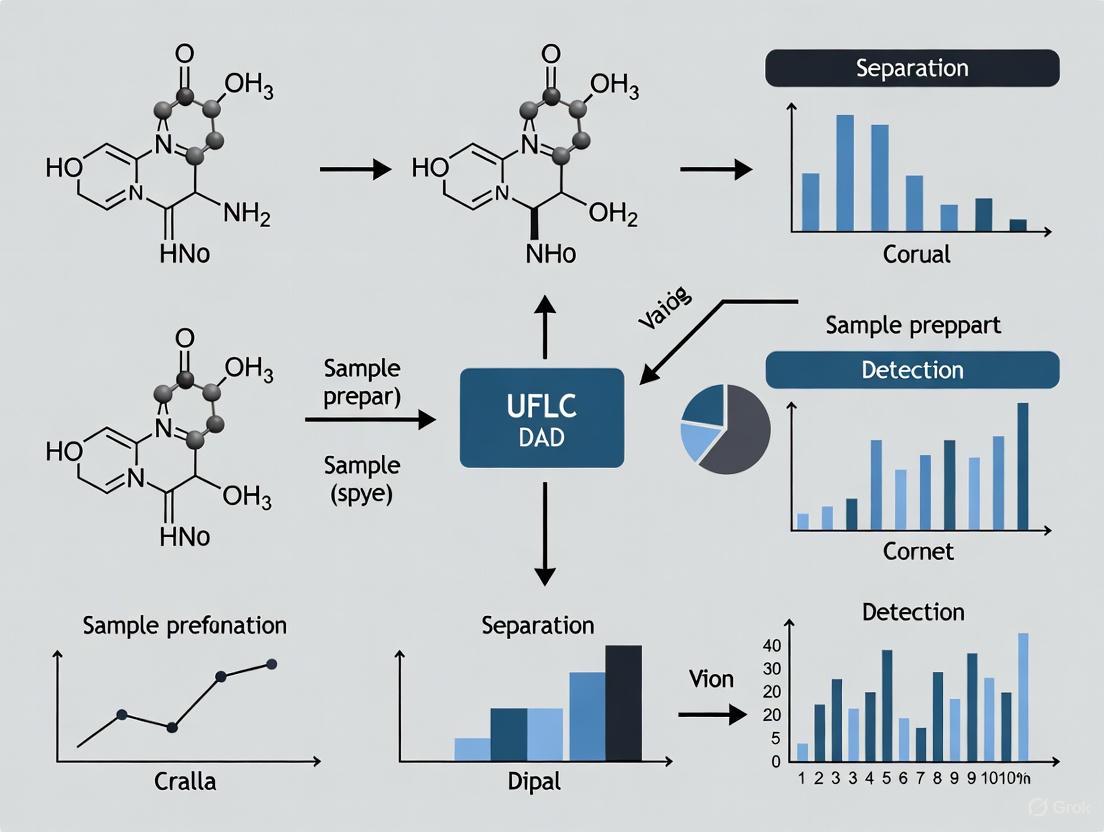
This article provides a comprehensive overview of the practical applications of Ultra-Fast Liquid Chromatography with Diode Array Detection (UFLC-DAD) in pharmaceutical analysis.
UFLC-DAD in Pharmaceutical Analysis: Practical Applications, Method Development, and Validation for Modern Labs
Abstract
This article provides a comprehensive overview of the practical applications of Ultra-Fast Liquid Chromatography with Diode Array Detection (UFLC-DAD) in pharmaceutical analysis. Tailored for researchers, scientists, and drug development professionals, it explores the foundational principles of UFLC-DAD, details its methodological use in quantifying active ingredients and studying drug release, addresses common troubleshooting and optimization strategies, and establishes its validity through comparative analysis with other techniques. The content synthesizes current research and case studies to offer a actionable guide for implementing robust, efficient, and compliant UFLC-DAD methods in quality control and research laboratories.
UFLC-DAD Fundamentals: Principles, Advantages, and Core Components for Pharmaceutical Scientists
Core Principles of Ultra-Fast Liquid Chromatography (UFLC) and Diode Array Detection (DAD)
Core Principles and Instrumentation
Ultra-Fast Liquid Chromatography (UFLC) represents an advanced evolution of High-Performance Liquid Chromatography (HPLC), engineered to achieve superior speed and resolution through operational pressures that can exceed conventional HPLC limits. When integrated with Diode Array Detection (DDA), this technique becomes a powerful tool for the comprehensive analysis of complex pharmaceutical mixtures.
Table 1: Key Operational Principles of UFLC and DAD
| Principle | Technical Description | Impact on Pharmaceutical Analysis |
|---|---|---|
| Reduced Particle Size | Utilization of sub-2-micron particle packing in analytical columns [1]. | Dramatically enhances chromatographic efficiency and resolution, enabling separation of structurally similar impurities and degradation products. |
| Increased Pressure Tolerance | System capability to withstand pressures up to 1300 bar (approx. 19,000 psi) [1]. | Facilitates the use of longer columns or faster flow rates for separating complex samples, such as protein digests or synthetic intermediates. |
| High-Speed Scanning DAD | Simultaneous acquisition of spectra across a range of wavelengths (e.g., 190-800 nm) [2]. | Provides spectral confirmation of analyte identity and checks peak purity, which is critical for method specificity in regulatory submissions. |
| Binary Pumps & Low-Dispersion Flow Paths | Advanced pumping systems that deliver highly accurate mobile phase compositions with minimal delay volume [1]. | Essential for achieving sharp peaks and reproducible retention times in fast, shallow gradients, improving throughput in quality control (QC) labs. |
| Biocompatible Flow Paths | Use of MP35N, gold, ceramic, and special polymers in the fluidic path [1]. | Allows for the direct analysis of biomolecules like proteins and peptides without sample degradation or metal adsorption, streamlining biopharmaceutical analysis. |
Experimental Protocol: Method Development for Pharmaceutical Mixtures
The following protocol details a streamlined approach for developing a UFLC-DAD method suitable for separating a mixture of small molecule pharmaceuticals or their metabolites, incorporating both automated and manual screening strategies.
Materials and Reagents
- Analytical Standards: Target analytes (e.g., drug substance and known impurities).
- Mobile Phase A: High-purity water with 0.1% (v/v) formic acid.
- Mobile Phase B: HPLC-grade acetonitrile with 0.1% (v/v) formic acid.
- Columns: A selection of 3-5 reversed-phase C18 columns (e.g., 50-100 mm length, 2.1 mm internal diameter, 1.7-1.8 µm particle size) from different manufacturers to assess selectivity.
- Equipment: UFLC system equipped with a binary pump, autosampler, thermostatted column compartment, and DAD.
Procedure
Initial Automated Scouting (Optional but Recommended)
- Employ automated method development software if available. Tools like ChromSword can automate column and mobile phase screening [3].
- The software uses an AI-based algorithm to perform iterative injections, automatically adjusting the gradient based on previous results to rapidly identify the optimal starting conditions for selectivity and resolution [3].
Manual Column and Mobile Phase Screening
- If automated screening is not available, systematically screen the different C18 columns.
- For each column, perform an initial fast generic gradient (e.g., 5% B to 95% B over 10 minutes) at a flow rate of 0.4-0.6 mL/min and a column temperature of 40°C.
- Monitor the separation using the DAD, acquiring spectra from 200 nm to 400 nm for all peaks.
Gradient Optimization
- Based on the best separation from the initial screen, use computer-assisted retention modeling or empirical testing to fine-tune the gradient slope, temperature, and mobile phase pH.
- The goal is to achieve baseline resolution for all critical peak pairs (resolution, Rs > 1.5) in the shortest possible runtime. A feedback-controlled optimization strategy can significantly reduce the time required for this step [3].
DAD-Specific Method Setup
- After establishing the separation, select the most appropriate wavelength for quantification based on the absorbance spectra of each analyte to maximize sensitivity.
- Implement peak purity analysis by comparing spectra across the peak (at the upslope, apex, and downslope) to ensure each peak represents a single, pure compound [2].
Method Validation
- Validate the final method according to ICH guidelines, assessing parameters including linearity, precision, accuracy, limit of detection (LOD), and limit of quantification (LOQ) [2].
| Validation Parameter | Result for SCFA Analysis |
|---|---|
| Precision (Coefficient of Variance) | ≤ 2.5% |
| Linearity (Determination Coefficient, R²) | > 0.997 |
| Limit of Detection (LOD) | 0.01 - 0.80 mmol/kg |
| Limit of Quantification (LOQ) | 0.04 - 2.64 mmol/kg |
| Recovery | 90 ± 2% to 106 ± 2% |
Workflow Visualization
UFLC-DAD Method Development Workflow
The Scientist's Toolkit: Essential Research Reagent Solutions
Table 3: Key Materials and Reagents for UFLC-DAD Analysis
| Item | Function & Importance | Example/Specification |
|---|---|---|
| UHPLC Columns | The stationary phase where chemical separation occurs. Small, solid particles are critical for achieving high efficiency and fast separations [1]. | Reversed-phase C18, 50-100 mm long, 1.7-1.8 µm particle size. |
| Mass Spectrometry-Grade Solvents | Form the mobile phase. High purity is essential to minimize baseline noise and prevent detector contamination, ensuring high sensitivity. | Acetonitrile and Water with low UV cutoff and minimal particulate matter. |
| Ion-Pairing & pH Modifiers | Additives that modify mobile phase properties to control ionization of analytes, improving peak shape and selectivity for ionizable compounds. | Trifluoroacetic Acid (TFA), Formic Acid, Ammonium Formate/Bicarbonate. |
| System Suitability Standards | A mixture of known compounds used to verify that the entire chromatographic system is performing adequately before sample analysis. | USP standards or custom mixes of APIs and related compounds. |
| Biocompatible Seal Kits | Replacement seals and components designed for use with high-pH mobile phases or to prevent leaching of metal ions when analyzing biomolecules. | MP35N, gold-pled, or ceramic components [1]. |
Ultra-Fast Liquid Chromatography (UFLC) coupled with Diode Array Detection (DAD) represents a significant technological evolution in analytical chromatography, offering substantial improvements over traditional High-Performance Liquid Chromatography (HPLC) for pharmaceutical analysis. UFLC systems achieve enhanced performance primarily through the use of columns packed with smaller particles (typically sub-2 µm) and instrumentation capable of operating at significantly higher pressures [4]. This configuration, combined with the versatile detection capabilities of DAD, provides pharmaceutical researchers with a powerful tool for method development, quality control, and regulatory compliance.
The core principle of UFLC builds upon the van Deemter equation, which describes the relationship between flow rate and plate height (HETP). By utilizing smaller stationary phase particles, UFLC minimizes the contributions of eddy diffusion (A-term) and mass transfer resistance (C-term), resulting in a flatter van Deemter curve [4]. This theoretical foundation enables operation at higher linear velocities without sacrificing efficiency, directly translating to the key practical advantages of speed, sensitivity, and solvent economy that form the focus of this application note.
Core Advantages: Quantitative Comparison
The operational benefits of UFLC-DAD can be quantitatively demonstrated through direct comparison with conventional HPLC systems. The following table summarizes key performance metrics that highlight these advantages.
Table 1: Quantitative Performance Comparison: UFLC vs. Traditional HPLC
| Performance Parameter | Traditional HPLC | UFLC Systems | Advantage Factor |
|---|---|---|---|
| Operating Pressure | Typically < 600 bar | Up to 1300 bar [1] | ~2x increase |
| Particle Size | 3–5 µm | 1.7–2.5 µm [4] | ~2-3x reduction |
| Analysis Time | Baseline (e.g., 30 min) | Up to 9x reduction [5] | 3x to 9x faster |
| Solvent Consumption | Baseline | Up to 90% reduction [5] | Significant saving |
| Flow Rate Range | Broader ranges | Optimized for low flow (e.g., 0.2–0.5 mL/min) [6] | Enhanced efficiency |
Enhanced Speed and Throughput
The reduction in analysis time is one of the most impactful advantages of UFLC. By using sub-2 µm particles and higher pressures, UFLC systems can achieve separations 3 to 9 times faster than chromatographic systems using 5 µm particle-size packed columns [5]. This dramatic increase in speed directly enhances laboratory throughput, enabling a significantly higher number of analyses per unit time. This is crucial in pharmaceutical development for applications like high-throughput screening, dissolution testing, and stability studies, where rapid method execution accelerates decision-making and reduces time-to-market for new therapeutics.
Superior Sensitivity and Resolution
The smaller particle size and optimized flow path in UFLC systems contribute to narrower and sharper chromatographic peaks [5]. This peak shape results in a higher signal-to-noise ratio and lower detection limits, thereby improving overall method sensitivity. The DAD detector further augments this by acquiring full UV-Vis spectra for each peak, providing a second dimension of data for peak purity assessment and identity confirmation. This combination is invaluable for detecting and quantifying low-abundance impurities and degradation products in complex pharmaceutical matrices.
Significant Solvent Economy
The shift to UFLC brings substantial reductions in solvent consumption, often cited as up to 90% compared to conventional HPLC methods [5]. This economy is achieved through shorter run times, narrower-bore columns, and optimized low flow rates (e.g., 0.2–0.5 mL/min) [6]. This aligns with the principles of Green Analytical Chemistry (GAC), minimizing environmental impact and waste generation while also reducing operational costs associated with solvent purchase and disposal [7].
Experimental Protocol: Determination of Active Pharmaceutical Ingredients and Related Substances
This protocol details a representative method for the simultaneous assay and impurity determination of a drug substance using UFLC-DAD, adaptable for various small-molecule pharmaceuticals.
Research Reagent Solutions
Table 2: Essential Materials and Reagents
| Item | Specification / Function |
|---|---|
| UFLC System | Binary or quaternary pump capable of ≥ 1000 bar pressure [1]. |
| DAD Detector | Capable of scanning 200-400 nm; configured for low-volume flow cells. |
| Analytical Column | C18, 100 x 2.1 mm, 1.7–1.8 µm particle size [4]. |
| Mobile Phase A | 0.1% Formic acid or appropriate buffer in high-purity water. |
| Mobile Phase B | 0.1% Formic acid in acetonitrile (HPLC grade). |
| Standard Solution | Accurate weight of reference standard dissolved in diluent. |
| Sample Solution | Test sample prepared at appropriate concentration. |
Chromatographic Conditions and Sample Preparation
- Chromatographic System: Shimadzu i-Series UFLC or equivalent, equipped with DAD.
- Column Temperature: 40 °C.
- Mobile Phase: Gradient elution using Water:Acetonitrile with 0.1% Formic Acid [6].
- Gradient Program: Time (min) / %B: 0/5, 1.0/5, 8.0/95, 9.0/95, 9.1/5, 12.0/5.
- Flow Rate: 0.4 mL/min.
- Injection Volume: 2 µL.
- DAD Settings: Acquisition range: 200-400 nm; Primary monitoring wavelength: 254 nm.
- Sample Preparation:
- Standard Solution: Accurately weigh about 10 mg of drug reference standard into a 10 mL volumetric flask. Dissolve and dilute to volume with a mixture of water and acetonitrile (50:50, v/v) to obtain a 1 mg/mL stock solution. Further dilute as needed.
- Test Solution: Prepare the sample (tablet powder, capsule content, or drug substance) at a concentration of approximately 1 mg/mL in the same diluent.
System Suitability and Analysis
- System Equilibration: Stabilize the system with initial mobile phase conditions for at least 10 column volumes or until a stable baseline is achieved.
- System Suitability Test: Make six replicate injections of the standard solution. The relative standard deviation (RSD) for the peak area of the active ingredient should be ≤ 1.0%. The number of theoretical plates should be > 10,000.
- Sample Analysis: Inject the standard solution followed by the test solution. Record the chromatograms and spectra for the active peak and any impurity peaks.
- Data Processing: Integrate the peaks and calculate the assay content using the formula:
- Assay (%) = (AT / AS) x (CS / CT) x 100
- Where AT and AS are the peak areas of the analyte in the test and standard solutions, respectively, and CT and CS are their concentrations.
The workflow for this analytical procedure is outlined below.
Advanced Application: Forced Degradation Studies
Forced degradation (stress testing) is a critical application of UFLC-DAD in pharmaceutical development, used to elucidate the stability profile of a drug substance.
Protocol for Stress Testing
- Sample Preparation: Subject the drug substance to various stress conditions:
- Acidic Hydrolysis: Expose to 0.1M HCl at 60°C for 1-4 hours.
- Basic Hydrolysis: Expose to 0.1M NaOH at 60°C for 1-4 hours.
- Oxidative Degradation: Expose to 3% H₂O₂ at room temperature for 1-4 hours.
- Thermal Degradation: Heat solid sample at 80°C for 24 hours.
- Photodegradation: Expose to UV light as per ICH guidelines [8].
- Analysis: After neutralizing or quenching the reactions, prepare samples at appropriate concentrations and analyze using the UFLC-DAD method described in Section 3.2.
- Data Interpretation: Use the DAD's spectral capabilities to compare the UV spectra of the main peak and all degradation peaks. This helps in identifying potential degradation products and assessing peak purity, which is vital for establishing the stability-indicating power of the method.
UFLC-DAD technology provides a robust, efficient, and environmentally conscious platform for modern pharmaceutical analysis. The demonstrated advantages of speed, sensitivity, and solvent economy directly address the core needs of drug development laboratories striving for higher productivity, superior data quality, and sustainable practices. The protocols outlined herein provide a practical framework for scientists to implement this powerful technique for routine quality control and advanced research applications, contributing significantly to the overarching goal of ensuring drug safety and efficacy.
Ultra-Fast Liquid Chromatography coupled with Diode Array Detection (UFLC-DAD) represents a significant advancement in analytical technology for pharmaceutical research and development. This instrumentation enables researchers to achieve superior separation efficiency, faster analysis times, and comprehensive spectral data collection for compound identification and quantification. The integration of high-pressure fluidics, advanced separation columns, and multi-wavelength detection provides a powerful platform for analyzing complex pharmaceutical compounds, from active pharmaceutical ingredients (APIs) to impurities and degradation products. The practical application of UFLC-DAD has become indispensable in modern drug development, quality control, and stability studies, offering the robustness, sensitivity, and reproducibility required to meet stringent regulatory standards. This deep dive explores the critical hardware components that constitute a UFLC-DAD system and their specific roles in pharmaceutical analysis, providing researchers with the foundational knowledge necessary to optimize analytical methods and troubleshoot instrumental challenges.
Core UFLC-DAD System Architecture
A UFLC-DAD system is an integrated instrument comprising several specialized components that work in concert to separate, detect, and quantify chemical compounds. The system operates with significantly higher pressure capabilities (typically up to 1300 bar or 18,850 psi) compared to conventional High-Performance Liquid Chromatography (HPLC), enabling the use of smaller particle size columns (<2 μm) for improved resolution and faster separations. The fundamental workflow involves the mobile phase transporting the sample through the system under high pressure, separation of components on the chromatographic column, and subsequent detection across a range of wavelengths in the DAD. Each hardware component plays a critical role in ensuring the accuracy, precision, and reliability of pharmaceutical analysis, from method development and stability studies to quality control of finished drug products and bioavailability studies. Understanding the specific function, operational parameters, and technical specifications of each component is essential for researchers to fully leverage the capabilities of UFLC-DAD technology in addressing complex analytical challenges in pharmaceutical sciences.
Table 1: Core UFLC-DAD System Components and Their Pharmaceutical Applications
| System Component | Key Function | Technical Specifications | Pharmaceutical Application Relevance |
|---|---|---|---|
| Solvent Delivery Pump | Generates high pressure for mobile phase delivery | Pressure up to 1300 bar; flow rate precision <0.1% RSD; programmable composition | Enables fast separations with sub-2μm particles; critical for high-throughput analysis of multiple samples |
| Autosampler | Introduces precise sample volumes into mobile phase stream | Injection volume precision <0.5% RSD; temperature control (4-40°C); carryover <0.05% | Ensures reproducible sample introduction for quantitative analysis; maintains sample integrity |
| Column Oven | Maintains stable temperature for separation column | Temperature range: ambient-100°C; stability ±0.1°C | Improves retention time reproducibility; optimizes separation efficiency for temperature-sensitive compounds |
| DAD Detector | Simultaneous multi-wavelength detection with spectral scanning | Wavelength range: 190-800 nm; resolution: 1-4 nm; sampling rate: up to 100 Hz | Provides spectral confirmation of compound identity; peak purity assessment; method specificity |
Critical Hardware Components and Their Technical Specifications
Solvent Delivery System
The solvent delivery system, typically a binary or quaternary high-pressure pump, is the cornerstone of any UFLC-DAD instrument. Modern systems like the Shimadzu i-Series and Agilent Infinity III LC series incorporate advanced pumping technologies capable of maintaining stable flow rates against back-pressures up to 1300 bar, which is essential for utilizing columns packed with sub-2μm particles. These systems feature dual piston in-series or parallel designs with active damper chambers to minimize flow and pressure pulsations, ensuring a stable baseline for sensitive detection. The pumping systems include degassing capabilities, either inline or through built-in membrane degassers, to prevent bubble formation that can disrupt detection stability. For pharmaceutical applications requiring high precision in gradient elution, the dwell volume (delay between gradient formation and arrival at column) is minimized (typically 100-500 μL) to improve method transferability between different systems. Modern pumps also incorporate leak detection sensors, pressure monitoring with automatic shutdown capabilities, and corrosion-resistant materials (e.g., MP35N, titanium, or ceramic) for compatibility with a wide range of mobile phases including high-salt buffers and acidic conditions commonly used in pharmaceutical analysis [1].
Autosampler Technology
Modern UFLC autosamplers, such as the Knauer Analytical Liquid Handler LH 8.1, are engineered for high precision and minimal carryover, which is critical for quantitative pharmaceutical analysis. These systems employ various injection mechanisms including flow-through needle, fixed-loop, and dynamic loading designs. Key technical considerations include injection volume accuracy (typically <0.5% RSD for volumes from 0.1-100 μL), temperature-controlled sample compartments (4-40°C) to maintain sample stability, and wash protocols to minimize carryover between injections (<0.005%). Advanced systems feature multiple sample tray configurations accommodating vials, microplates, and deep-well plates for high-throughput applications. For regulated pharmaceutical laboratories, compliance features including sample tracking (barcode/RFID readers), audit trails, and integration with chromatography data systems (CDS) are essential. The autosampler's ability to maintain sample integrity, provide precise injection volumes, and minimize cross-contamination directly impacts the quality and reliability of pharmaceutical analytical data, particularly for low-dose compounds and trace impurity analysis [1].
Separation Column Technology
The chromatographic column is where actual separation of pharmaceutical compounds occurs, making its selection critical for method development. UFLC columns are typically shorter (50-100 mm) with smaller internal diameters (2.1-3.0 mm) packed with sub-2μm particles to maximize efficiency under ultra-high pressure conditions. Stationary phase chemistry selection depends on the analytical application: reversed-phase C18 columns are most common for neutral and moderately polar compounds; phenyl-hexyl phases offer alternative selectivity for aromatic compounds; HILIC columns separate polar compounds; and charged surface hybrid (CSH) technology provides improved peak shape for basic compounds. Column materials include stainless steel for high-pressure compatibility, and titanium or PEEK-lined for bio-compatibility or ion analysis. Column oven technology maintains stable temperature (±0.1°C) to ensure retention time reproducibility, with some systems offering active pre-heating of mobile phase before it enters the column. For pharmaceutical laboratories analyzing multiple compounds, switching valves enable method-specific column selection or two-dimensional chromatography for complex separations [9] [10].
Diode Array Detector (DAD) Optics and Flow Cells
The DAD represents a significant advancement over single-wavelength UV detectors by simultaneously capturing full UV-Vis spectra for each data point across the chromatogram. Key components include a deuterium lamp (190-400 nm) and tungsten lamp (400-800 nm) as light sources, a diffraction grating to disperse light across the diode array (typically 512-1024 diodes), and a flow cell where detection occurs. Technical specifications critical for pharmaceutical applications include wavelength accuracy (±1 nm), photometric accuracy (±5 mAU), baseline noise (<±0.1 mAU), and stray light (<0.02%). Flow cell design balances path length (typically 10-60 mm) against pressure tolerance and dispersion volume, with modern cells featuring bubble traps, reduced volume (≤500 nL) to maintain chromatographic efficiency, and high-pressure ratings (>200 bar). The DAD's ability to collect full spectra enables peak purity analysis through spectral overlay, identification of unknown peaks by library matching, and selection of optimal wavelengths for quantification post-analysis. These capabilities are particularly valuable for method development, forced degradation studies, and impurity profiling in pharmaceutical analysis [9] [10] [11].
Experimental Protocol: Multi-Component Analysis of Antihypertensive Drugs
Background and Pharmaceutical Context
The quantitative analysis of antihypertensive drug combinations exemplifies the application of UFLC-DAD in pharmaceutical quality control and bioequivalence studies. This protocol details the simultaneous determination of amlodipine and valsartan, commonly prescribed in combination for hypertension management, using green analytical chemistry principles. The method emphasizes practical considerations for pharmaceutical researchers, including sample preparation, chromatographic separation, detection parameters, and method validation according to ICH guidelines. The protocol incorporates recent advancements in green analytical chemistry, utilizing metrics such as Analytical GREEnness (AGREE) and Blue Applicability Grade Index (BAGI) to evaluate environmental impact and practical applicability, aligning with the pharmaceutical industry's increasing focus on sustainable analytical practices [9].
Materials and Reagents
Table 2: Research Reagent Solutions for Antihypertensive Drug Analysis
| Reagent/Material | Specification | Function in Analysis | Handling Considerations |
|---|---|---|---|
| Amlodipine besylate reference standard | USP reference standard; ≥98.5% purity | Primary standard for quantification | Light-sensitive; store in amber glass at 2-8°C |
| Valsartan reference standard | USP reference standard; ≥99.0% purity | Primary standard for quantification | Hygroscopic; store in desiccator at room temperature |
| Acetonitrile (ACN) | LC-MS grade; ≥99.9% purity | Mobile phase component (organic modifier) | Use with adequate ventilation; flammable |
| Ammonium acetate | Analytical grade; ≥98% purity | Mobile phase buffer component | Prepares 10 mM buffer solution in purified water |
| Purified water | HPLC grade; 18.2 MΩ·cm resistance | Aqueous mobile phase component | Freshly prepared or stored <24 hours |
| Phosphoric acid | Analytical grade; 85% solution | pH adjustment of mobile phase | Corrosive; handle with appropriate PPE |
| Methanol | HPLC grade; ≥99.9% purity | Sample extraction solvent | Use with adequate ventilation; flammable |
Instrumentation and Conditions
This analysis employs a UFLC-DAD system configured for high-pressure operation with low-dispersion fluidics to maintain separation efficiency. The specific conditions have been optimized for the simultaneous determination of amlodipine and valsartan, incorporating green chemistry principles by minimizing organic solvent consumption and analysis time [9].
Table 3: UFLC-DAD Instrumental Conditions for Antihypertensive Analysis
| Parameter | Specification | Rationale |
|---|---|---|
| UFLC System | Shimadzu i-Series or equivalent | High-pressure capability (up to 1300 bar) with low dwell volume |
| Column | C18 (100 × 2.1 mm, 1.8 μm) | Provides efficient separation of both polar and non-polar compounds |
| Column Temperature | 35°C | Optimizes retention time reproducibility and separation efficiency |
| Mobile Phase | A: 10 mM ammonium acetate (pH 4.5) B: Acetonitrile | Volatile buffer compatible with MS detection; pH optimized for compound ionization |
| Gradient Program | 0 min: 20% B; 5 min: 50% B; 6 min: 90% B; 7 min: 90% B; 7.1 min: 20% B; 10 min: 20% B | Efficient separation with runtime under 10 minutes for high throughput |
| Flow Rate | 0.4 mL/min | Balances separation efficiency with back-pressure and solvent consumption |
| Injection Volume | 2 μL | Provides adequate sensitivity while minimizing column overloading |
| DAD Wavelengths | 237 nm (amlodipine); 250 nm (valsartan) | Wavelengths of maximum absorbance for each compound |
| Spectral Acquisition | 200-400 nm | Enables peak purity assessment and spectral confirmation |
Sample Preparation Protocol
Standard Solution Preparation: Accurately weigh 25 mg of amlodipine besylate and 50 mg of valsartan reference standards into separate 50 mL volumetric flasks. Dissolve and dilute to volume with methanol to create stock solutions of 500 μg/mL amlodipine and 1000 μg/mL valsartan. Prepare working standard solutions by appropriate dilution with the mobile phase initial composition (20% acetonitrile in 10 mM ammonium acetate, pH 4.5) to cover the concentration range of 1-50 μg/mL for amlodipine and 5-200 μg/mL for valsartan.
Pharmaceutical Formulation Preparation: Randomly select and accurately weigh not less than 20 tablets. Calculate the average tablet weight and finely powder the tablets. Transfer an accurately weighed portion of the powder equivalent to one tablet to a 100 mL volumetric flask. Add approximately 70 mL of methanol, sonicate for 30 minutes with occasional shaking, and dilute to volume with methanol. Filter through a 0.45 μm PVDF membrane, discarding the first 5 mL of filtrate. Dilute the filtrate appropriately with the mobile phase initial composition to obtain concentrations within the working range of the calibration curve.
Validation Parameters: Establish method validation according to ICH Q2(R1) guidelines including specificity (peak purity >990), linearity (r²>0.999), precision (RSD<2%), accuracy (98-102% recovery), and robustness (deliberate variations in pH, temperature, and mobile phase composition) [9].
Advanced UFLC-DAD Configurations for Pharmaceutical Applications
Two-Dimensional Liquid Chromatography (2D-LC)
Comprehensive two-dimensional liquid chromatography configurations represent a significant advancement for analyzing complex pharmaceutical samples. 2D-LC systems incorporate two separate separation mechanisms with complementary selectivity, such as reversed-phase coupled with hydrophilic interaction chromatography (HILIC) or ion-exchange chromatography. Advanced systems like the Agilent InfinityLab 2D-LC solution utilize multiple pumps, a two-position/four-port duo valve for heart-cutting or comprehensive analysis, and a high-speed second dimension separation to maintain resolution from the first dimension. This configuration is particularly valuable for pharmaceutical impurity profiling, forced degradation studies, and analysis of complex biological matrices where single-dimension separation proves insufficient. The DAD detector in 2D-LC systems provides spectral data for peaks from both dimensions, aiding in compound identification. For regulated environments, compatible chromatography data systems (CDS) manage the complex instrument control and data processing requirements, with recent advancements focusing on automated method development and real-time data processing for increased laboratory efficiency [1].
Coupled UFLC-DAD-MS Systems
The hyphenation of UFLC-DAD with Mass Spectrometry (MS) creates a powerful analytical platform combining separation efficiency, spectral identification, and mass confirmation. Modern triple quadrupole mass spectrometers like the Sciex 7500+ MS/MS and Shimadzu LCMS-TQ series provide complementary detection with high sensitivity and selectivity for pharmaceutical applications. In such configurations, the flow is typically split post-column with approximately 5-10% directed to the DAD and 90-95% to the MS, or alternatively, the DAD is placed before the MS with minimal extra-column volume. The DAD provides UV-spectral data and quantitative information, while the MS offers molecular weight and structural information through fragmentation patterns. This configuration is particularly valuable for metabolite identification, impurity characterization, and degradation product studies in pharmaceutical development. Interface technology, including electrospray ionization (ESI) and atmospheric pressure chemical ionization (APCI) sources, enables efficient transfer of analytes from the liquid phase to the gas phase for mass analysis. Recent systems incorporate additional detectors such as corona charged aerosol detection (CAD) or evaporative light scattering detection (ELSD) for compounds with poor UV chromophores [10] [1].
System Suitability and Quality Control Protocols
Performance Verification Tests
Regular performance verification ensures UFLC-DAD systems operate within specified parameters for pharmaceutical analysis. Key tests include pump flow rate accuracy and precision verification using a calibrated flow meter or gravimetric method (acceptance criteria: ±1% accuracy, <0.1% RSD precision). Autosampler injection volume accuracy and carryover assessment using appropriate standards (acceptance criteria: ±2% accuracy, <0.1% carryover). DAD wavelength accuracy verification using holmium oxide or caffeine standards (acceptance criteria: ±2 nm accuracy). Photometric accuracy assessment using potassium dichromate solutions at specific concentrations (acceptance criteria: ±2% accuracy). Baseline noise and drift evaluation over a 30-minute period with mobile phase isocratic conditions (acceptance criteria: <±0.1 mAU noise, <1 mAU/hr drift). These verification tests should be performed during installation, after major repairs, and periodically (typically every 6-12 months) as part of a preventive maintenance program in regulated pharmaceutical laboratories [9] [10].
Quality Control in Routine Pharmaceutical Analysis
For daily system suitability testing in pharmaceutical quality control environments, specific test mixtures are chromatographed to verify resolution, efficiency, sensitivity, and reproducibility. The United States Pharmacopeia (USP) system suitability tests provide standardized protocols and acceptance criteria for various analytical applications. A typical system suitability protocol for UFLC-DAD includes evaluation of retention time reproducibility (<0.5% RSD for n=6 injections), theoretical plate count (>5000 for the analyte peak), tailing factor (<2.0 for the analyte peak), resolution (>1.5 between critical pair), and signal-to-noise ratio (>10 for the lowest concentration of interest). These parameters confirm that the entire UFLC-DAD system—from solvent delivery through separation to detection—is performing appropriately for its intended analytical application. Documentation of system suitability results provides evidence of instrument performance for regulatory audits and ensures the validity of generated analytical data [9] [10].
Workflow Diagram: UFLC-DAD Pharmaceutical Analysis Pathway
Diagram 1: UFLC-DAD Pharmaceutical Analysis Workflow
The sophisticated hardware components of UFLC-DAD systems provide pharmaceutical researchers with powerful tools for drug development, quality control, and regulatory compliance. Understanding the technical specifications, operational principles, and performance characteristics of each component—from high-pressure pumping systems and precision autosamplers to efficient separation columns and multi-wavelength detection—enables scientists to maximize instrumental capabilities and develop robust analytical methods. The continuing evolution of UFLC-DAD technology, including higher pressure limits, reduced extra-column volume, enhanced detection sensitivity, and improved integration with mass spectrometry, promises to further expand pharmaceutical applications. As demonstrated in the antihypertensive drug analysis protocol, proper method development combined with instrumental expertise delivers accurate, precise, and reliable results that meet stringent regulatory requirements while incorporating green analytical chemistry principles. For pharmaceutical researchers, this deep understanding of UFLC-DAD instrumentation translates to improved method development efficiency, enhanced troubleshooting capabilities, and ultimately, higher quality analytical data supporting drug development and manufacturing.
The evolution of liquid chromatography has been marked by a continuous pursuit of higher efficiency, speed, and sensitivity. Ultra-Fast Liquid Chromatography with Diode Array Detection (UFLC-DAD) represents a significant advancement over traditional High-Performance Liquid Chromatography (HPLC), particularly for pharmaceutical analysis where throughput, resolution, and method robustness are critical. UFLC, also referred to as UHPLC (Ultra-High Performance Liquid Chromatography), utilizes columns packed with smaller particles (typically below 2μm) and systems capable of operating at significantly higher pressures compared to conventional HPLC [12]. This technological progression bridges the gap between demanding performance requirements and practical laboratory constraints, enabling researchers and pharmaceutical analysts to achieve superior separations in a fraction of the time. Within drug development and quality control, this translates to faster method development, more precise quantification of active pharmaceutical ingredients (APIs), and more efficient screening of impurities and degradation products [13] [14].
Comparative Performance: UFLC-DAD vs. Traditional HPLC
The fundamental differences between UFLC-DAD and traditional HPLC systems lie in their operational parameters, which directly impact their analytical performance. Table 1 provides a direct comparison of key technical characteristics.
Table 1: Technical and Performance Comparison between Traditional HPLC and UFLC-DAD
| Parameter | Traditional HPLC | UFLC-DAD |
|---|---|---|
| Operating Pressure | Typically 200-400 bar | 600-1300 bar [12] [1] |
| Particle Size | 3-5 μm | Often below 2.2 μm, commonly 1.3-1.7 μm [12] [14] |
| Analysis Time | Longer (e.g., 11 minutes for Posaconazole) | Shorter (e.g., 3 minutes for Posaconazole) [12] |
| Solvent Consumption | Higher (e.g., 1.5 mL/min flow rate) | Lower (e.g., 0.4 mL/min flow rate) [12] |
| Injection Volume | Higher (e.g., 20-50 μL) | Lower (e.g., 5 μL) [12] |
| Peak Capacity/Resolution | Standard | Enhanced due to smaller particle size and higher efficiency [14] |
| Detection | Variable Wavelength (VWD) or DAD | Primarily DAD, enabling spectral confirmation [15] |
The practical benefits of UFLC are demonstrated in direct application studies. A comparative study on the analysis of Posaconazole in a suspension dosage form developed methods for both HPLC-DAD and UHPLC-UV. The UHPLC method provided a run time of only 3 minutes, a stark contrast to the 11 minutes required for the HPLC method, while maintaining equivalent linearity (r² > 0.999) and precision [12]. This four-fold reduction in analysis time is coupled with a significant decrease in solvent consumption, from 1.5 mL/min in HPLC to 0.4 mL/min in UHPLC, making the UFLC approach more economical and environmentally friendly [12] [14]. Similarly, in the analysis of anticancer guanylhydrazones, the UHPLC-DAD method demonstrated a 20-fold reduction in injection volume and a four-fold decrease in solvent usage compared to the HPLC method, all while achieving the required specificity, accuracy, and precision [14].
The Diode Array Detector (DAD) is a critical component that complements the separation power of UFLC. Unlike a single-wavelength UV detector, the DAD simultaneously captures the entire UV-Vis spectrum (e.g., 190-800 nm) for each data point during the chromatographic run [15]. This capability allows for peak purity assessment by comparing spectra across the peak, as well as method specificity verification by ensuring that analytes are free from co-elution [13] [14]. The DAD's ability to acquire spectra in multiple channels and provide 3D data (time-absorbance-wavelength) makes it invaluable for method development and the analysis of complex pharmaceutical matrices where interference is a concern [15].
Experimental Protocols
Protocol 1: Quantification of Metoprolol Tartrate in Tablets using UFLC-DAD
This protocol is adapted from a study that optimized and validated a UFLC-DAD method for quantifying the active component metoprolol tartrate (MET) in commercial tablets, comparing it favorably to a spectrophotometric method [13].
1. Scope and Application: This method is suitable for the extraction and quantification of metoprolol tartrate in 50 mg and 100 mg commercial tablets for quality control purposes.
2. Apparatus and Reagents:
- UFLC-DAD System: Configured with a quaternary pump, autosampler, column thermostat, and diode array detector.
- Analytical Column: Reverse-phase C18 column (e.g., 50 mm x 2.1 mm, 1.7 μm particle size or equivalent).
- Reagents: Metoprolol tartrate (≥98%) reference standard, HPLC-grade acetonitrile, ultrapure water, phosphoric acid.
3. Methodology:
- Mobile Phase Preparation: Prepare a mixture of acetonitrile and 15 mM potassium dihydrogen phosphate buffer. The exact pH and gradient elution profile must be optimized during method development. An example isocratic mobile phase for similar applications is acetonitrile:phosphate buffer (45:55, v/v) [12].
- Standard Solution Preparation: Accurately weigh an appropriate amount of MET reference standard. Dissolve and dilute with the mobile phase or a compatible solvent to prepare a stock solution. Subsequently, prepare a series of working standard solutions for constructing the calibration curve.
- Sample Preparation (Tablet Extraction): Weigh and finely powder not less than 20 tablets. Transfer an accurately weighed portion of the powder, equivalent to about 50 mg of MET, to a suitable container. Add approximately 30 mL of ultrapure water and sonicate for 15-20 minutes with occasional shaking. Cool, dilute to volume with the same solvent, and mix well. Filter a portion of the solution, discarding the first few mL of the filtrate. Further dilute the filtrate quantitatively with the mobile phase to obtain a final concentration within the linear range of the assay.
- Chromatographic Conditions:
- Column Temperature: 40 °C
- Flow Rate: 0.4 - 0.5 mL/min
- Injection Volume: 5 μL
- Detection Wavelength: 223 nm (with spectral confirmation via DAD from 200-400 nm)
- Run Time: Optimized to approximately 3-5 minutes.
- System Suitability: The chromatographic system should meet predefined suitability criteria prior to analysis. Parameters include retention time reproducibility (%RSD < 2%), theoretical plate count (e.g., > 2000), and tailing factor (e.g., < 2.0).
4. Method Validation: The method was validated according to ICH guidelines, demonstrating acceptable parameters for specificity/selectivity, sensitivity, linearity (e.g., R² > 0.999), accuracy (recovery 80-110%), precision (intra-day and inter-day RSD < 2%), and robustness [13].
Protocol 2: Simultaneous Determination of Guanylhydrazones by UFLC-DAD
This protocol outlines the use of UFLC-DAD for the simultaneous quantification of multiple guanylhydrazone compounds with anticancer activity, showcasing the application of experimental design (DoE) for method optimization [14].
1. Scope and Application: This method is designed for the simultaneous quantification of guanylhydrazones LQM10, LQM14, and LQM17 in synthetic mixtures and raw materials for quality control during drug synthesis.
2. Apparatus and Reagents:
- UFLC-DAD System
- Analytical Column: Kinetex-C18 (2.1 x 50 mm, 1.3 μm) or equivalent.
- Reagents: LQM10, LQM14, LQM17 reference standards, HPLC-grade methanol, acetonitrile, and ultrapure water. Acetic acid for pH adjustment.
3. Methodology:
- Mobile Phase Preparation: The study employed a design of experiments (DoE) approach to optimize the mobile phase. An optimized isocratic elution system can consist of a mixture of acetonitrile and water with acid modifier (e.g., 0.1% formic acid). The final proportion is determined via DoE.
- Standard and Sample Preparation: Prepare stock and working standard solutions of each guanylhydrazone in methanol. For synthetic raw material samples, dissolve an accurately weighed sample in methanol and dilute to an appropriate volume.
- Chromatographic Conditions:
- Column Temperature: 40 °C
- Flow Rate: 0.4 mL/min
- Injection Volume: 2 μL
- Detection Wavelength: 290 nm (with DAD spectral acquisition from 220-400 nm for peak purity).
- Run Time: ~5 minutes.
- Method Optimization via DoE: Critical method parameters (e.g., mobile phase composition, pH, temperature, gradient profile) are varied simultaneously according to a factorial design. The chromatographic responses (resolution, peak symmetry, run time) are measured, and a statistical model is built to identify the optimal robust conditions.
5. Method Validation: The validated method demonstrated high specificity with peak purity index > 999, linearity (R² > 0.999), accuracy (recoveries 99.07% - 101.62%), and precision (intra-day RSD < 1.27%) for all three analytes [14].
Workflow and Logical Diagrams
The following diagram illustrates the strategic decision-making workflow for selecting and implementing a chromatographic method for pharmaceutical analysis, integrating the comparative advantages of UFLC-DAD and HPLC.
Method Selection Workflow
The Scientist's Toolkit: Essential Research Reagent Solutions
Successful implementation of UFLC-DAD methods relies on the selection of appropriate materials and reagents. Table 2 lists key components and their functions in the analytical process.
Table 2: Essential Research Reagents and Materials for UFLC-DAD Analysis
| Item | Function/Description | Application Example |
|---|---|---|
| Reverse-Phase C18 Column (Sub-2μm particles, e.g., 1.3-1.7 μm) | The core separation component; high-efficiency columns with small particles are essential for achieving the high resolution and speed of UFLC [12]. | Separation of metoprolol tartrate, guanylhydrazones, and posaconazole from their respective matrices [13] [12] [14]. |
| HPLC-Grade Acetonitrile & Methanol | High-purity organic modifiers for the mobile phase to prevent baseline noise, ghost peaks, and system damage. | Used as the organic component in the mobile phase for eluting analytes from the reverse-phase column [13] [14]. |
| High-Purity Water (e.g., 18.2 MΩ·cm) | The aqueous component of the mobile phase. Must be free of organics and particles. | Used in mobile phase preparation, often with a buffer or acid modifier [12]. |
| Buffer Salts & Acid Modifiers (e.g., Potassium dihydrogen phosphate, Formic acid, Acetic acid) | Control the pH and ionic strength of the mobile phase, which critically affects analyte ionization, retention, and peak shape. | Phosphate buffer for posaconazole; acetic acid for guanylhydrazones to improve peak symmetry [12] [14]. |
| Reference Standards | Highly characterized, pure substances used for peak identification and quantitative calibration. | Metoprolol tartrate (≥98%), Posaconazole, and guanylhydrazone compounds for method development and validation [13] [12] [14]. |
UFLC-DAD unequivocally bridges the gap between high performance and practicality in modern pharmaceutical analysis. The documented evidence demonstrates its superior capabilities in speed, resolution, and solvent economy compared to traditional HPLC, without compromising on accuracy, precision, or reliability. The integration of diode array detection further empowers this technique by providing spectral confirmation and peak purity assessment, which is indispensable for method specificity. As the pharmaceutical industry continues to strive for greater efficiency and greener methodologies, the adoption of UFLC-DAD represents a strategic advancement. It enables faster drug development cycles, more robust quality control, and the ability to tackle increasingly complex analytical challenges, solidifying its role as a cornerstone technique in the analytical scientist's arsenal.
Practical UFLC-DAD Workflows: From Method Development to Real-World Pharma Applications
In the field of pharmaceutical analysis, the demand for robust, precise, and efficient analytical methods is paramount. Systematic method development for liquid chromatography ensures reliable quantification of active pharmaceutical ingredients and impurities. This document outlines a structured approach to optimizing column selection, mobile phase composition, and gradient parameters, specifically within the context of Ultra-Fast Liquid Chromatography with Diode Array Detection (UFLC-DAD). The principles discussed support critical pharmaceutical applications, from raw material testing to stability studies, aligning with regulatory requirements for method validation [16].
Systematic Optimization Strategy
A systematic approach to method development significantly enhances efficiency, reduces solvent consumption, and leads to more robust methods compared to univariate (trial-and-error) experimentation [14].
Critical Method Attributes (CMAs) and Analytical Target Profile (ATP)
Begin by defining the Analytical Target Profile (ATP)—a pre-defined objective that outlines the method's purpose. The ATP specifies requirements for critical method attributes such as resolution, analysis time, and sensitivity.
- Key CMAs: Resolution (Rs ≥ 1.5), peak asymmetry (0.8 - 1.2), runtime, and signal-to-noise ratio [17].
- Define Scope: Determine the number of analytes, their chemical properties, and the required detection limits.
Factor Screening and Optimization
Utilize Design of Experiments (DoE) to efficiently identify and optimize critical factors.
- Screening Designs: Use fractional factorial or Plackett-Burman designs to identify significant factors (e.g., % organic, pH, temperature) from a wide range of variables [14].
- Optimization Designs: Apply Response Surface Methodology (RSM), such as Central Composite Design, to model the relationship between factors and responses (e.g., resolution) and locate the optimal operational region [14].
Table 1: Key Factors to Evaluate in Chromatographic Method Development
| Factor Category | Specific Factors | Impact on Separation |
|---|---|---|
| Stationary Phase | Column chemistry (C18, C8, PFP), particle size (e.g., 1.7-5 µm), column dimensions | Selectivity, efficiency, backpressure [18] [16] |
| Mobile Phase | % Organic modifier (ACN/MeOH), buffer pH, buffer concentration, additive (e.g., TFA) | Retention, selectivity, peak shape [17] [14] |
| Gradient Profile | Initial/Final %B, gradient time (tG), flow rate | Resolution, analysis time [16] |
| System Parameters | Temperature, flow rate, detection wavelength | Efficiency, retention, sensitivity [17] |
Experimental Protocols
Protocol 1: Column and Mobile Phase Scouting
Objective: To rapidly identify the most promising column and mobile phase combination for a given separation [18].
Materials:
- UFLC-DAD System: Equipped with quaternary pump, autosampler, DAD, and column oven.
- Columns: A suite of 3-5 columns with different selectivities (e.g., C18, C8, Phenyl, PFP).
- Chemical Reagents: HPLC-grade water, acetonitrile, methanol, and buffer salts (e.g., potassium phosphate).
- Analytes: Standard solution of target analytes at a known concentration.
Procedure:
- Condition Setting: Maintain a constant column temperature (e.g., 30 °C) and flow rate (e.g., 1.0 mL/min).
- Mobile Phase Preparation: Prepare at least two different mobile phase systems:
- Scouting Run: For each column, perform a fast, wide-range gradient (e.g., 5% to 95% organic in 10 minutes).
- Data Analysis: Evaluate chromatograms for retention of all analytes, general peak shape, and early resolution assessment. Select the column/mobile phase combination that provides the best overall performance for further optimization.
Protocol 2: Gradient Optimization via DoE
Objective: To systematically optimize the gradient profile and temperature for maximum resolution and minimal runtime [14].
Procedure:
- Define Factors and Ranges: Based on scouting results, select factors such as:
- Initial %B (e.g., 5% - 20%)
- Final %B (e.g., 80% - 95%)
- Gradient Time (tG) (e.g., 5 - 15 min)
- Temperature (e.g., 25 - 45 °C)
- Experimental Design: Create a Central Composite Design (CCD) using statistical software. The design will specify the experimental conditions for each run.
- Execution: Perform the chromatographic runs in a randomized order to minimize bias.
- Response Modeling: Input the measured responses (e.g., resolution between critical pair, total runtime) into the software to generate a mathematical model and contour plots.
- Optimization and Prediction: Use the software's optimizer to find the parameter set that maximizes resolution while maintaining an acceptable runtime. Verify the predicted optimal conditions with a confirmatory experiment.
Diagram 1: Systematic Method Development Workflow. This flowchart outlines the sequential and iterative stages of developing a robust chromatographic method, from initial scouting to final validation.
Case Study & Data Presentation
Separation of Guanylhydrazones by HPLC-DAD and UHPLC-DAD
A study developing methods for anticancer guanylhydrazones (LQM10, LQM14, LQM17) demonstrates the systematic approach [14].
- HPLC Method (Empirical): Optimized via one-factor-at-a-time, using a C18 column, isocratic elution with methanol-water (60:40, pH 3.5 with acetic acid) at 1.5 mL/min. Total runtime was ~7 minutes [14].
- UHPLC Method (DoE): A faster method was developed using a factorial design to optimize the gradient and temperature, resulting in a method with 4x less solvent consumption and a 20x smaller injection volume [14].
Table 2: Validation Parameters for HPLC and UHPLC Methods for Guanylhydrazones [14]
| Validation Parameter | HPLC Method (LQM10) | UHPLC Method (LQM10) |
|---|---|---|
| Linearity (R²) | 0.9995 | 0.9994 |
| Precision (Intra-day RSD%) | 1.48% | 0.53% |
| Accuracy (% Recovery) | 99.49 - 100.46% | 99.32 - 101.62% |
| Injection Volume | 20 µL | 1 µL |
| Solvent Consumption per Run | ~10.5 mL | ~2.6 mL |
The superior precision and significantly reduced solvent consumption/injection volume of the UHPLC method, developed via DoE, highlight the benefits of a systematic approach [14].
Overcoming Co-elution: Derivatization for Tocol Analysis
A common challenge in pharmaceutical analysis is separating structurally similar compounds. A study on tocopherols and tocotrienols (collectively "tocols") faced this with the β- and γ-forms, which co-elute on standard C18 columns [18].
- Optimized Solution: A pre-column derivatization step was introduced, esterifying the tocols' hydroxyl group with trifluoroacetic anhydride. This chemical modification altered their hydrophobicity sufficiently to allow for satisfactory separation on a conventional C18 column [18].
- Method Performance: The optimized C18-UFLC method was precise, accurate, and offered low limits of detection (<10 ng/mL) and quantification (<27 ng/mL) [18].
This case underscores that systematic development includes not just physical parameters but also chemical modification of analytes to achieve selectivity.
Diagram 2: DoE Optimization Logic. This diagram illustrates the use of a statistical model to balance often conflicting goals, such as maximum resolution and minimum runtime, to find a optimal compromise.
The Scientist's Toolkit
Table 3: Essential Research Reagent Solutions for UFLC-DAD Method Development
| Reagent / Material | Function / Explanation |
|---|---|
| C18 Chromatographic Column | The most common reversed-phase stationary phase; a versatile starting point for method development [18] [17]. |
| Trifluoroacetic Anhydride | Derivatization agent used to chemically modify compounds with hydroxyl groups (e.g., tocols) to improve separation and resolution on a C18 column [18]. |
| Acetonitrile & Methanol (HPLC Grade) | Organic modifiers for the mobile phase; scouting both is crucial as they can impart different selectivity for various analytes [14]. |
| Buffer Salts (e.g., Phosphate) | Used to prepare aqueous mobile phase components to control pH, which critically impacts ionization, retention, and peak shape of ionizable compounds [17]. |
| Acetic Acid / Trifluoroacetic Acid | Acidic mobile phase additives which suppress silanol activity on the stationary phase, improving peak symmetry for acidic and basic analytes [14]. |
| Design of Experiments (DoE) Software | Statistical software used to create efficient experimental designs, model results, and pinpoint optimal chromatographic conditions, saving time and resources [14]. |
Systematic method development, grounded in structured scouting and statistical optimization via DoE, is the most efficient path to creating robust, transferable, and high-quality chromatographic methods for pharmaceutical analysis. The integration of UFLC-DAD with these principles provides a powerful platform for meeting the demanding timelines and regulatory standards of modern drug development. As demonstrated, this approach consistently yields methods that are not only analytically superior but also more sustainable and economical due to reduced solvent consumption and waste generation.
The demand for robust, efficient, and reliable analytical methods for the simultaneous quantification of multiple active pharmaceutical ingredients (APIs) is paramount in modern drug development and quality control. This application note details the development and validation of an Ultra-Fast Liquid Chromatography (UFLC) method with Diode Array Detection (DAD) for the simultaneous determination of multiple active ingredients, framed within a broader thesis on the practical applications of this technique in pharmaceutical analysis. The protocols described herein are designed to provide researchers, scientists, and drug development professionals with a detailed framework for implementing this methodology in their own laboratories, emphasizing practical considerations for method development, validation, and application to complex matrices such as dietary supplements.
Method Development and Optimization
Chromatographic Conditions
The development of a precise and accurate chromatographic method requires careful optimization of critical parameters to achieve optimal separation, sensitivity, and peak shape.
- Stationary Phase: A UPLC CSH column (100 mm × 2.1 mm, 1.7 μm particle size) is recommended for its superior reproducibility with challenging matrices compared to classical C18 columns [19]. The use of columns with sub-2 μm particles is a cornerstone of UHPLC/UFLPC, enabling higher efficiency, resolution, and shorter analysis times [14].
- Mobile Phase: A binary solvent system is employed [19].
- Solvent A: 0.1% Formic acid in water.
- Solvent B: Methanol.
- Flow Rate and Run Time: The total run time is 4 minutes, consuming only 1.2 mL of liquid, which underscores the method's efficiency and alignment with green chemistry principles by reducing solvent waste [19].
- Detection: DAD is initially favored for its cost-effectiveness and because it does not require expensive stable isotope-labeled reference standards, which are necessary for mass spectrometric detection [19]. The wavelength for detection should be set based on the maximum absorbance of the target analytes; for example, 290 nm was used for a class of guanylhydrazones [14]. The use of a DAD also allows for peak purity assessment by comparing ultraviolet spectral characteristics [19].
Sample Preparation
The sample preparation protocol varies depending on the sample matrix. For solid dosage forms like tablets or capsules, content uniformity should be assessed, and an average weight powder should be dissolved and sonicated in a suitable solvent (e.g., methanol). The resulting solution should be centrifuged, filtered (e.g., through a 0.22 μm syringe filter), and diluted to an appropriate concentration within the linear range of the method before injection [19].
Method Validation
The method was rigorously validated according to international guidelines, such as ICH Q2(R2), to ensure its suitability for the intended purpose. The table below summarizes key validation parameters for a model analysis of guanylhydrazones, demonstrating the method's performance [14].
Table 1: Method Validation Parameters for Simultaneous Determination of Guanylhydrazones (LQM10, LQM14, LQM17) via HPLC-DAD
| Validation Parameter | LQM10 | LQM14 | LQM17 |
|---|---|---|---|
| Linearity (R²) | 0.9995 | 0.9999 | 0.9994 |
| Accuracy (Recovery % at 10 μg/mL) | 100.46% | 101.47% | 99.71% |
| Precision (RSD%, n=6) | |||
| Intra-day | 1.48% | 2.00% | 1.24% |
| Inter-day | 2.81% | 1.56% | 2.20% |
| Robustness (Variation in Flow Rate) | RSD: 2.07% | RSD: 2.34% | RSD: 2.54% |
| Robustness (Variation in pH) | RSD: 1.76% | RSD: 1.64% | RSD: 1.61% |
Validation Protocols
- Selectivity and Specificity: The method's selectivity is demonstrated by the absence of interfering peaks at the retention times of the target analytes in representative blank matrices. Peak identification is confirmed by comparing both the retention time and the ultraviolet spectrum of the sample with those of a reference standard. For complex herbal matrices (e.g., containing passionflower, hop, or hemp), the peak purity should be verified to ensure the absence of co-eluting compounds [19].
- Linearity: Prepare at least five standard solutions of the target analytes at concentrations spanning the expected range (e.g., 8-12 μg/mL). Inject each solution in triplicate and plot the peak area versus the concentration. The correlation coefficient (R²) should be greater than 0.999 [14].
- Accuracy (Recovery): Spike a known amount of the reference standard into a placebo or a pre-analyzed sample matrix at multiple concentration levels (e.g., 80%, 100%, 120% of the target concentration). Analyze these samples (n=5 per level) and calculate the percentage recovery of the known added amount. Recovery rates should be close to 100% [14].
- Precision:
- Intra-day Precision: Analyze six independent sample preparations from a homogeneous sample at 100% of the test concentration on the same day and calculate the relative standard deviation (RSD%) of the peak areas.
- Inter-day Precision: Repeat the intra-day precision assay over three different days and calculate the RSD% of the results [14].
- Robustness: Deliberately introduce small, deliberate variations in method parameters (e.g., mobile phase flow rate ±0.05 mL/min, pH ±0.05 units). The RSD% of the peak areas and retention times under these varied conditions should remain low, indicating the method's resilience [14].
Application to Real-World Samples: Melatonin in Dietary Supplements
To demonstrate its applicability, the UFLC-DAD methodology was applied to analyze 50 dietary supplements claiming to contain melatonin [19]. The findings confirmed reports of high melatonin content, particularly in products purchased from online sources. The study highlighted compliance issues, finding that 12% of samples from legal supply chains violated legislation through unauthorized health claims or by containing at least triple the permitted melatonin amount.
Table 2: System Suitability Parameters for UHPLC-DAD Method for Melatonin Quantification
| Parameter | Description/Value |
|---|---|
| Chromatographic Column | Acquity UPLC CSH (100 x 2.1 mm, 1.7 μm) |
| Mobile Phase | 0.1% Formic Acid (A) / Methanol (B) |
| Analysis Time | 4 minutes |
| Solvent Consumption | 1.2 mL per run |
| Detection | Diode Array Detector (DAD) |
| Key Advantage | Cost-effective; suitable for medicines and most dietary supplements |
For complex herbal supplements containing ingredients like passionflower, hop, hemp, lime tree, or lavender, UFLC-DAD may face selectivity issues due to overlapping peaks from the complex matrix. In such cases, coupling chromatography to high-resolution accurate mass spectrometry (HRAM MS) is recommended for unambiguous identification and quantification [19].
The Scientist's Toolkit: Essential Research Reagents and Materials
Table 3: Key Research Reagent Solutions and Essential Materials
| Item | Function/Application |
|---|---|
| UHPLC/UFLC System | High-pressure chromatographic system for efficient separation. |
| Diode Array Detector (DAD) | Detection and peak purity verification via UV spectrum. |
| CSH C18 Column (1.7 μm) | Advanced stationary phase for challenging matrices. |
| Melatonin Reference Standard | Primary standard for identification and quantification. |
| Formic Acid (MS Grade) | Mobile phase modifier to improve peak shape and ionization. |
| Methanol (HPLC Grade) | Organic solvent for mobile phase and sample preparation. |
| Syringe Filters (0.22 μm) | Clarification of samples prior to injection. |
| Stable Isotope-Labeled Melatonin | Internal standard for mass spectrometry-based methods. |
Workflow and Signaling Pathway Diagrams
The following diagrams outline the logical workflow for method development and application, as well as the decision pathway for detection system selection.
Method Development Workflow
Detection System Selection
Application in Drug Release and In-Vitro Digestion Studies
Ultra-Fast Liquid Chromatography coupled with Diode Array Detection (UFLC-DAD) has become a cornerstone technique in modern pharmaceutical analysis, offering rapid, precise, and reliable quantification of active pharmaceutical ingredients and nutraceuticals in complex matrices. This technology is particularly vital for advancing pre-clinical research in two critical areas: understanding drug release profiles from novel formulations and predicting human bioavailability through in-vitro digestion models. These applications are fundamental to the development of safe and effective pharmaceutical products, enabling researchers to simulate and analyze a drug's journey from ingestion to absorption. This application note details specific, validated protocols utilizing UFLC-DAD for studying the release of B-complex vitamins from gummy formulations and for assessing the bioaccessibility of bioactive compounds from natural products, providing a practical framework for scientists in drug development.
UFLC-DAD in Vitamin Release from Pharmaceutical Gummies
The release profile of vitamins from advanced dosage forms, such as gummies, can be significantly influenced by dietary co-consumption. A recent study developed and validated a robust HPLC-DAD method to investigate the impact of different fluids on the in-vitro digestion of B-complex vitamins from pharmaceutical gummies [20].
Key Quantitative Findings
The table below summarizes the key validation parameters and findings for the UFLC-DAD method used in the gummy vitamin study [20].
Table 1: Method Validation and Application Data for Vitamin Analysis in Gummies and GI Fluids
| Parameter | Result / Value | Application Finding |
|---|---|---|
| Analytical Method | HPLC-DAD/FLD | Simultaneous analysis of B1, B2, B6 in gummies & GI fluids. |
| Chromatographic Column | Aqua column (250 mm × 4.6 mm, 5 µm) | Effective separation of target vitamins. |
| Linearity (R²) | > 0.999 | Excellent correlation across the calibrated range. |
| Accuracy (% Mean Recovery) | 100 ± 3% | High accuracy for quantitative analysis. |
| Precision (% RSD) | < 3.23% | High repeatability of the method. |
| Gummy Extraction (% Recovery) | > 99.8% (Liquid/Solid Extraction) | Efficient recovery from the gummy matrix. |
| GI Fluid Extraction (% Recovery) | 100 ± 5% (Solid Phase Extraction) | Efficient and clean recovery from complex biological fluids. |
| Superior Release Medium for B2 & B6 | Water | Slightly better release compared to milk or orange juice. |
| Superior Release Medium for B1 | Orange Juice | Slightly better release compared to water or milk. |
Detailed Experimental Protocol
Method Title: UFLC-DAD Analysis of Vitamins B1, B2, and B6 in Pharmaceutical Gummies and Gastrointestinal Fluids During In-Vitro Digestion [20].
1. Scope: This protocol describes the simultaneous determination of thiamine (B1), riboflavin (B2), and pyridoxine (B6) in pharmaceutical gummies and simulated gastric/intestinal fluids using UFLC-DAD. For B1 analysis via fluorometry (FLD), a separate pre-column derivatization step is required.
2. Equipment and Reagents:
- UFLC-DAD System: Configured with a DAD detector.
- Chromatography Column: Aqua column (250 mm × 4.6 mm, 5 µm particle size).
- Chemicals: HPLC-grade methanol, sodium dihydrogen phosphate (NaH₂PO₄), potassium ferricyanide, sodium hydroxide.
- Solvents and Buffers: Ultrapure water, NaH₂PO₄ buffer (pH 4.95).
- Simulated Fluids: Simulated gastric and intestinal fluids, optionally prepared with water, milk, or orange juice as diluents.
- Standards: Certified reference standards of Vitamin B1, B2, and B6.
3. Sample Preparation:
- Gummy Extraction: Accurately weigh a homogenized gummy sample. Perform liquid/solid extraction using a suitable solvent. Vortex and centrifuge, then filter the supernatant through a 0.45 µm membrane prior to injection [20].
- GI Fluid Extraction (SPE): After in-vitro digestion, acidify the gastrointestinal fluid sample. Condition a dedicated Solid Phase Extraction (SPE) cartridge. Load the sample, wash interfering compounds, and elute the target vitamins. Evaporate the eluent to dryness and reconstitute in the mobile phase for analysis [20].
4. UFLC-DAD Analysis:
- Mobile Phase: 70% NaH₂PO₄ buffer (pH 4.95) and 30% methanol (isocratic elution).
- Flow Rate: 0.9 mL/min.
- Column Temperature: 40 °C.
- Injection Volume: 10 µL.
- DAD Detection: Set wavelengths for simultaneous detection of B2 and B6. Typical wavelengths are 265 nm for B1 (pre-derivatization), 270 nm for B2, and 290 nm for B6.
- Pre-column Derivatization for B1/FLD: For fluorometric detection of B1, oxidize an aliquot of the prepared sample with potassium ferricyanide under alkaline conditions to convert it to fluorescent thiochrome. The FLD detection can be set at Ex: 375 nm, Em: 430 nm [20].
5. In-Vitro Digestion Procedure: A three-phase in-vitro digestion protocol simulating the human gastrointestinal tract was applied [20].
- Phase I - Oral Digestion: Mix the gummy sample with simulated salivary fluid for a defined period.
- Phase II - Gastric Digestion: Combine the oral bolus with simulated gastric fluid and incubate with agitation to simulate stomach conditions.
- Phase III - Intestinal Digestion: Transfer the gastric chyme to simulated intestinal fluid and incubate further. Samples should be collected at the end of the gastric and intestinal phases for UFLC-DAD analysis to determine the release profile.
Diagram 1: In-vitro digestion and analysis workflow for gummy vitamins.
Assessment of Bioactive Compound Bioaccessibility
UFLC-DAD is equally powerful for evaluating the bioaccessibility of bioactive compounds from natural products and herbal medicines during simulated digestion, a key step in predicting their bioavailability. A study on fruit residues demonstrated this application, showing that gastrointestinal digestion and probiotic fermentation can significantly increase the bioaccessibility of phenolic compounds [21]. Another study on Gardenia jasminoides Ellis (GJE) utilized advanced UFLC-MS/MS for comprehensive multi-component analysis, highlighting how geographical origin affects chemical composition, an important consideration for standardizing herbal medicines [10]. The principles of sample preparation and digestion are directly transferable to UFLC-DAD analysis.
Table 2: Key Findings from Bioaccessibility Studies of Natural Products
| Study Material | Analytical Technique | Key Finding on Bioaccessibility | Implication for Drug Development |
|---|---|---|---|
| Cashew Apple & Soursop Residues | UFLC-DAD & Biochemical Assays | Increased bioaccessibility of total phenolics (up to 475%) and flavonoids after digestion/fermentation [21]. | Probiotic fermentation can enhance the release and potential absorption of antioxidants. |
| Gardenia jasminoides Ellis (GJE) | UFLC-MS/MS & PCA | Significant regional variations (P < 0.05) in content of iridoid glycosides, flavonoids, and phenolic acids [10]. | Critical for quality control and standardization of herbal medicine sources. |
Detailed Experimental Protocol
Method Title: UFLC-DAD Analysis of Bioactive Compounds Following In-Vitro Gastrointestinal Digestion and Fermentation [21].
1. Scope: This protocol determines the bioaccessibility of phenolic compounds and other antioxidants from a plant-based matrix after simulated digestion and probiotic fermentation.
2. Equipment and Reagents:
- UFLC-DAD System
- Chromatography Column: C18 column (e.g., 4.6 mm × 100 mm, 3.5 µm).
- Chemicals: HPLC-grade methanol, acetonitrile, formic acid, acetic acid.
- Simulated Digestion Fluids: Simulated salivary, gastric, and intestinal fluids (with electrolytes and enzymes).
- Probiotic Strains: Lactobacillus species (e.g., L. rhamnosus), Bifidobacterium longum.
- Standards: Reference standards for target bioactive compounds (e.g., gallic acid, catechin, quercetin).
3. In-Vitro Digestion and Fermentation:
- Simulated Digestion: Subject the sample to a sequential 3-phase (oral, gastric, intestinal) in-vitro digestion model. Centrifuge the final intestinal digesta to obtain the soluble fraction (serum), which represents the bioaccessible compounds [21].
- Probiotic Fermentation: Inoculate the digested sample or its insoluble fraction with a probiotic culture in an anaerobic chamber. Incubate for 24-48 hours while monitoring pH. Stop the fermentation by heating or centrifugation [21].
4. Sample Preparation for UFLC-DAD:
- Liquid-Liquid Extraction: Acidify the digested/fermented sample and extract bioactive compounds with a mixture of methanol/ethyl acetate/water.
- Solid Phase Extraction (SPE): For cleaner extracts, use C18 or similar SPE cartridges. Condition, load, wash, and elute as described in Section 2.2.
- Filtration: Before injection, pass the final extract through a 0.22 µm syringe filter.
5. UFLC-DAD Analysis:
- Mobile Phase: (A) 0.1% Formic acid in water; (B) 0.1% Formic acid in acetonitrile.
- Gradient Elution: Program from 98% A to 60% A over 4 min, then to 5% A, hold, and re-equilibrate.
- Flow Rate: 0.8 mL/min.
- Column Temperature: 40 °C.
- Injection Volume: 2-5 µL.
- DAD Detection: Acquire spectra from 200 nm to 400 nm. Monitor specific wavelengths for compounds of interest (e.g., 280 nm for phenolic acids, 360 nm for flavonoids).
6. Data Analysis:
- Calculate the Bioaccessibility Index using the formula:
(Concentration in soluble digest fraction / Total concentration in undigested sample) × 100%.
The Scientist's Toolkit: Essential Research Reagents and Materials
Successful execution of these protocols relies on specific, high-quality materials. The following table catalogs the essential reagent solutions and their functions.
Table 3: Essential Research Reagents and Materials for UFLC-DAD Drug Release Studies
| Reagent / Material | Function / Application | Example from Protocols |
|---|---|---|
| Simulated Gastrointestinal Fluids | To mimic the chemical environment (pH, enzymes, ions) of the human GI tract for in-vitro digestion. | Salivary, gastric, and intestinal fluids with enzymes like pepsin and pancreatin [20] [21]. |
| Stable Isotope-Labeled Internal Standards | To correct for analyte loss during sample preparation and matrix effects in mass spectrometry; enables precise quantification. | Use of deuterated analogs (e.g., DTX-d5 for Docetaxel) in drug release assays [22]. |
| Solid Phase Extraction (SPE) Cartridges | To purify and pre-concentrate analytes from complex biological matrices like GI fluids, reducing matrix interference. | C18 or dedicated cartridges for cleaning up vitamin samples from digested fluids [20]. |
| UFLC-QTRAP-MS System | For high-sensitivity, high-selectivity simultaneous quantification of multiple analytes in complex mixtures. | Used for simultaneous determination of 21 target compounds in Gardenia jasminoides [10]. |
| Certified Reference Standards | To provide absolute identification and enable accurate quantification of target analytes via calibration curves. | Certified standards of vitamins (B1, B2, B6) or phenolic compounds (gallic acid, quercetin) [20] [21]. |
| Molecular Cut-Off Filters | To separate free/unencapsulated drug from encapsulated drug in plasma during drug release studies. | 10-30 kDa molecular weight cut-off (MWCO) filters for ultrafiltration [22]. |
The protocols and data presented herein demonstrate the critical role of UFLC-DAD in addressing complex challenges in pharmaceutical development. The ability to reliably monitor the release and transformation of active compounds under biologically relevant conditions provided by in-vitro models is indispensable for formulators and toxicologists. The hyphenation of UFLC with DAD offers a balance of speed, sensitivity, and affordability, making it a widely accessible tool for routine analysis in both academic and industrial settings. As drug modalities and delivery systems grow more complex, the continued application and refinement of these UFLC-DAD-based methods will be vital for ensuring the efficacy, consistency, and safety of future pharmaceutical products.
Impurity Profiling and Forced Degradation Analysis with DAD Specificity
Impurity profiling and forced degradation studies are critical components of pharmaceutical development, providing essential data on the stability behavior of drug substances and products. These studies help identify potential degradation products, elucidate degradation pathways, and establish stability-indicating methods that can separate and quantify the active pharmaceutical ingredient (API) from its impurities. The International Conference on Harmonization (ICH) guidelines Q1A(R2) and Q1B recommend conducting stability studies on APIs to understand their sensitivity to various external factors such as light, heat, pH, and humidity [23]. Within this framework, the Diode Array Detector (DAD) coupled with Ultra-Fast Liquid Chromatography (UFLC) provides a powerful analytical tool for comprehensive impurity characterization. The specificity of DAD detection enables not only quantification but also verification of peak purity and identity, which is mandatory for rigorous impurity profiling [24].
This application note details the practical implementation of UFLC-DAD for impurity profiling and forced degradation studies within pharmaceutical analysis research. We present specific case studies, experimental protocols, and data interpretation strategies that demonstrate the critical role of DAD specificity in ensuring analytical confidence for regulatory submissions.
Theoretical Foundations and Regulatory Context
The Role of Impurity Profiling and Forced Degradation
Forced degradation, also known as stress testing, involves intentional degradation of a drug substance or product under conditions more severe than accelerated stability protocols. This process serves to generate representative impurities and degradants that might form during long-term storage [25]. The primary objectives include: (1) demonstrating the specificity of the stability-indicating method, (2) providing insight into degradation pathways, (3) elucidating the structure of degradation products, and (4) understanding the intrinsic stability characteristics of the molecule [23] [25].
Impurity profiling encompasses the identification and quantification of both process-related and degradation-related impurities in APIs and finished pharmaceutical products (FPPs). The safety of a drug product depends not only on the toxicological properties of the active drug substance but also on the toxicological properties of its impurities [26]. Regulatory authorities have established strict thresholds for impurities based on the maximum daily dose. For instance, according to ICH Q3A(R), for a drug with a maximum daily dose of 960 mg/day (e.g., lumefantrine), the thresholds are defined as 0.10% for reporting, 0.20% for identification, and 0.20% for qualification [26].
The Analytical Value of DAD Specificity
The DAD enhances liquid chromatography by providing three-dimensional data (time, absorbance, wavelength) for each analyte. This functionality is crucial for:
- Peak Purity Assessment: By acquiring full UV spectra across a peak, the DAD can detect co-eluting impurities with different spectral signatures, a critical requirement for stability-indicating methods [24].
- Selective Quantification: Analytes can be monitored at their wavelength of maximum absorption (λmax) even in complex matrices, improving sensitivity and specificity [13].
- Provisional Identifications: UV spectra can be compared with libraries to generate preliminary structural information for unknown impurities before confirmation by mass spectrometry [26].
The combination of UFLC and DAD offers superior resolution, speed, and sensitivity compared to conventional HPLC, making it particularly suitable for analyzing complex degradation mixtures [13].
Case Studies in Pharmaceutical Analysis
Impurity Profiling of Lumefantrine
A comprehensive impurity profile of the anti-malarial drug lumefantrine was established using HPLC-DAD/UV-ESI/MS [26]. The study analyzed market samples, stress-testing samples, and stability samples of both the API and FPPs.
Key Findings:
- Nine lumefantrine-related impurities were detected and characterized.
- A new specified degradant, the desbenzylketo (DBK) derivative, was identified and characterized in real market samples (FPPs).
- The USP and International Pharmacopoeia had established specification limits for three known lumefantrine-related impurities (A, BA, and BB), but this study revealed several previously unreported compounds [26].
- In-silico toxicological predictions using Toxtree and Derek indicated that the newly found impurities had a toxicity risk comparable to the API lumefantrine itself [26].
This case highlights the critical need for exhaustive impurity profiling, as official monographs may not encompass the full spectrum of degradants present in commercially available products.
Forced Degradation of a Binary Mixture: Allopurinol and Thioctic Acid
A stability-indicating HPLC-DAD method was developed for the simultaneous analysis of allopurinol (ALO) and thioctic acid (THA) in a binary mixture [24]. The method successfully separated both drugs from their forced degradation products.
Methodology and Results:
- Chromatographic Conditions: A Durashell C18 column with a gradient elution of acidified water (pH 4.0) and acetonitrile was used. Detection was at 249 nm for ALO and 210 nm for THA [24].
- Forced Degradation Conditions: The drugs were subjected to neutral, acidic, and alkaline hydrolysis, oxidation, and thermal decomposition [24].
- Outcome: The peaks of ALO and THA were successfully resolved from their forced degradation products, and the DAD was used to verify peak identity and purity. The method was validated as per ICH guidelines and successfully applied to a tablet dosage form [24].
This study demonstrates the application of a validated HPLC-DAD method as the first detailed stability-indicating analytical study for this pharmaceutical mixture.
Forced Degradation and Degradation Kinetics of Xylopic Acid
A first-of-its-kind forced degradation study on xylopic acid (XA), a diterpene with multiple pharmacological activities, was conducted using LC-Q/TOF-MS/MS [23].
Key Outcomes:
- Seven degradation products were identified and tentatively characterized.
- A validated UPLC-DAD method was used to investigate the degradation kinetics of XA under various stress conditions [23].
- The study provided vital information on the stability of XA, its degradation products, and degradation kinetics, which is invaluable for further pharmaceutical development [23].
This case underscores the role of forced degradation studies in the early development of new chemical entities to guide formulation strategies and packaging choices.
Experimental Protocols
General Protocol for Forced Degradation Studies
The following protocol provides a systematic approach for conducting forced degradation studies on an API, adaptable based on the specific chemical properties of the compound under investigation.
Title: Forced Degradation Workflow
Materials:
- API (purity >95%)
- Hydrochloric acid (HCl, 0.1-1 M)
- Sodium hydroxide (NaOH, 0.1-1 M)
- Hydrogen peroxide (H₂O₂, 3-30%)
- HPLC-grade solvents: water, acetonitrile, methanol
- Volumetric flasks, pipettes, heating block, photostability chamber
Procedure:
- Sample Preparation: Prepare a stock solution of the API at a suitable concentration (e.g., 1 mg/mL) in a diluent that dissolves the API and is compatible with the mobile phase.
- Stress Conditions:
- Acidic Hydrolysis: Mix 1 mL of stock solution with 1 mL of 0.1-1 M HCl. Heat at 70°C for 24 hours or until 5-20% degradation is observed [23] [24].
- Alkaline Hydrolysis: Mix 1 mL of stock solution with 1 mL of 0.1-1 M NaOH. Heat at 70°C for 24 hours or until 5-20% degradation is observed [23] [24].
- Oxidative Degradation: Mix 1 mL of stock solution with 1 mL of 3-30% H₂O₂. Keep at room temperature for 24 hours or until 5-20% degradation is observed [23] [24].
- Thermal Degradation: Expose the solid API to a temperature of 105°C for up to 1 week [23]. After degradation, prepare the sample solution at the target concentration.
- Photolytic Degradation: Expose the solid API and/or solution to a specified light source as per ICH Q1B guidelines (e.g., 1.2 million lux hours of visible and 200 watt hours/square meter of UV light) [25].
- Quenching: For hydrolytic and oxidative stress studies, neutralize the solution after the stress period (e.g., with acid, base, or a reducing agent) to stop the degradation.
- Dilution: Dilute all stressed samples appropriately with the mobile phase or diluent to achieve the target concentration for instrumental analysis.
- Analysis: Inject the samples into the UFLC-DAD system using the developed stability-indicating method.
Protocol for Stability-Indicating Method Validation
After developing the chromatographic method, it must be validated to demonstrate its reliability for intended use. The following table summarizes the key validation parameters and acceptance criteria based on ICH guidelines.
Table 1: Key Validation Parameters for a Stability-Indicating UFLC-DAD Method
| Parameter | Objective | Recommended Procedure | Acceptance Criteria |
|---|---|---|---|
| Specificity | Demonstrate resolution of API from impurities/degradants and confirm peak purity. | Inject blank, standard, and forced degradation samples. Use DAD to check peak purity. | Resolution > 2.0 between critical pairs. Peak purity index > 0.999 [24]. |
| Linearity & Range | Establish a proportional relationship between analyte concentration and detector response. | Prepare and analyze a minimum of 5 concentrations, from below to above the expected range. | Correlation coefficient (r²) > 0.999 [24]. |
| Accuracy | Determine the closeness of measured value to the true value. | Spiked recovery experiments at multiple levels (e.g., 50%, 100%, 150%). | Mean recovery of 98–102% [13]. |
| Precision | Evaluate the degree of repeatability of the method. | Multiple injections of a homogeneous sample (Repeatability), and on different days/different analysts (Intermediate precision). | Relative Standard Deviation (RSD) < 2.0% [13]. |
| Robustness | Assess the method's capacity to remain unaffected by small, deliberate variations in parameters. | Deliberately vary parameters like flow rate (±0.1 mL/min), column temperature (±2°C), mobile phase pH (±0.1). | System suitability parameters are met, and RSD of retention time and area < 2% [13]. |
The Scientist's Toolkit: Essential Research Reagents and Materials
Successful impurity profiling requires a set of specific reagents and materials. The following table details essential items for these studies.
Table 2: Key Research Reagent Solutions for Impurity Profiling and Forced Degradation
| Item | Function / Application | Specific Example / Note |
|---|---|---|
| UFLC-DAD System | Core analytical instrument for separation, detection, and peak purity analysis. | Equipped with a binary pump, autosampler, thermostatted column compartment, and DAD. |
| C18 Column | The most common stationary phase for reverse-phase chromatography. | e.g., Durashell C18 (4.6 × 250 mm, 5 µm) [24] or Purospher STAR RP-18 [26]. |
| HPLC Grade Solvents | Used for mobile phase and sample preparation to ensure low UV background and minimal interference. | Acetonitrile, methanol, and water (often acidified with formic or phosphoric acid) [26] [13]. |
| Stress Reagents | To induce degradation under forced conditions. | HCl (acid hydrolysis), NaOH (alkaline hydrolysis), H₂O₂ (oxidative degradation) [23] [24]. |
| Chemical Standards | To identify and quantify known impurities and the API. | USP reference standards are available for some drugs and their impurities (e.g., lumefantrine) [26]. |
| Buffer Salts | To control the pH of the mobile phase, critical for reproducibility and peak shape. | Ammonium acetate, ammonium formate, phosphates. Use high-purity salts [26] [23]. |
Data Interpretation and Analytical Decision-Making
Chromatographic Data and Peak Purity
The primary data from a UFLC-DAD analysis includes the chromatogram and the UV spectra for each peak. The DAD software typically includes an algorithm for peak purity assessment, which compares spectra from the upslope, apex, and downslope of a peak. A high purity match (purity angle < purity threshold) suggests a single component, while a low purity match indicates a co-eluting impurity [24]. This is a critical step in proving that the analytical method is truly stability-indicating.
Degradation Pathway Elucidation
By correlating the generated degradants with the specific stress condition applied, a degradation pathway can be proposed. For example, in the case of xylopic acid, seven degradation products were identified, and pathways involving hydrolysis, oxidation, and decarboxylation were proposed [23]. The following diagram illustrates a generalized logic for elucidating these pathways based on stress conditions and structural alerts.
Title: Degradation Pathway Elucidation Logic
Quantification and Reporting
Impurities are quantified relative to the API concentration. For example, if an API peak area is 10,000,000 µVsec for a 1 mg/mL solution, and an impurity peak area is 10,000 µVsec, the impurity level is (10,000 / 10,000,000) * 100% = 0.1%. This meets the ICH reporting threshold for a high-dose drug [26]. Any impurity above the identification threshold (e.g., 0.2%) must be identified, and any above the qualification threshold must be toxicologically qualified [26].
UFLC-DAD is an indispensable platform in modern pharmaceutical analysis, providing a balance of speed, resolution, and critical specificity for impurity profiling and forced degradation studies. The DAD's peak purity assessment capability is a cornerstone for validating a method as truly stability-indicating, a non-negotiable requirement for regulatory filings. The experimental protocols and case studies outlined in this application note provide a robust framework for researchers to generate high-quality, defensible data. Through systematic stress testing, careful method validation, and intelligent data interpretation using DAD specificity, scientists can ensure drug product safety, efficacy, and stability throughout its shelf life, thereby accelerating the development of robust pharmaceutical products.
Solving Common UFLC-DAD Challenges: A Troubleshooting and Optimization Guide
Resolving Peak Shape Issues and Achieving Baseline Separation
Ultra-Fast Liquid Chromatography (UFLC) coupled with Diode Array Detection (DAD) represents a significant advancement in pharmaceutical analysis, enabling rapid and high-resolution separation of complex drug compounds and their impurities. The core principle of UFLC involves the use of stationary phases with smaller particle sizes (typically below 2 μm) compared to conventional HPLC, which dramatically increases efficiency, resolution, and speed while maintaining sensitivity [27]. This technological evolution has proven particularly valuable in drug development workflows where time-efficient and reliable analytical methods are crucial for quality control, stability testing, and impurity profiling.
The pursuit of optimal peak shape and baseline separation remains fundamental to accurate quantification and identification in pharmaceutical applications. Peak tailing, broadening, or co-elution can significantly compromise data integrity, leading to inaccurate potency assessments, misidentification of degradants, or failure to detect critical impurities. Within the framework of a broader thesis on practical UFLC-DAD applications, this article addresses these ubiquitous challenges by providing systematic troubleshooting protocols and optimization strategies validated through pharmaceutical case studies.
Theoretical Foundations of Peak Shape and Resolution
Chromatographic performance is quantitatively assessed through several key parameters. The retention factor (k') measures how long a compound is retained on the column relative to the unretained solvent front. The separation factor (α), or selectivity, describes the ability of a chromatographic system to differentiate between two compounds based on their chemical properties. Column efficiency is expressed as the number of theoretical plates (N), which quantifies the band broadening occurring in the column. Finally, the resolution (Rs) is a comprehensive metric that combines efficiency, selectivity, and retention to describe the degree of separation between two adjacent peaks [28].
The relationship between these parameters is mathematically described by the fundamental resolution equation:
$$R_s = \frac{\sqrt{N}}{4} \times \frac{\alpha - 1}{\alpha} \times \frac{k'}{k' + 1}$$
This equation reveals that resolution is proportional to the square root of efficiency, directly proportional to selectivity, and influenced by retention. To achieve baseline separation (typically Rs > 1.5), optimization strategies must address all three terms: increasing efficiency through better column packing or smaller particles, enhancing selectivity through mobile phase or stationary phase modification, and optimizing retention through solvent strength adjustments [28].
Common Peak Shape Issues and Root Causes
Table 1: Common Peak Shape Anomalies and Their Primary Causes
| Peak Anomaly | Primary Manifestation | Root Causes |
|---|---|---|
| Tailing | Asymmetry with delayed elution on trailing edge | - Active sites on stationary phase- Secondary interactions with metals- Inappropriate sample solvent [29] |
| Fronting | Asymmetry with accelerated elution on leading edge | - Column overload (mass or volume)- Sample solvent stronger than mobile phase- Channeling in column bed |
| Broadening | Wide, short peaks with reduced efficiency | - Extra-column volume- Excessive flow rate- Poor mass transfer (C-term effects) [28] |
| Splitting | Single analyte producing double or multiple peaks | - Column hardware issues (voids)- Contaminated guard column- Sample precipitation |
The kinetic plot method provides a sophisticated approach to visualize the trade-offs between analysis time, efficiency, and pressure, transforming traditional Van Deemter curve data into a more practically useful format for method development [28]. This approach allows scientists to determine the optimal column length and flow rate conditions for achieving required separation efficiency within method constraints.
Systematic Optimization Protocols
Sample and Solvent Preparation
Protocol 1: Mitigating Peak Tailing in Basic Compounds
- Column Selection: Employ specially purified silica columns with reduced metal activity or use metal-free coated stainless steel columns for compounds prone to metal chelation (e.g., amines, polyprotic acids) [29].
- Mobile Phase Modification: Add low concentrations (0.1-0.5%) of competing bases such as triethylamine or ammonium hydroxide to suppress silanol interactions.
- pH Control: Adjust mobile phase pH to at least 2 units above or below the pKa of ionizable compounds to ensure complete ionization and minimize secondary interactions.
- Passivation Procedure: For persistent metal sensitivity issues, implement a system passivation protocol using EDTA or other chelating agents to minimize metal-solute interactions [29].
Protocol 2: Optimizing Sample Solvent Composition
- Solvent Strength Assessment: Ensure the sample solvent is slightly stronger than the initial mobile phase composition to promote effective analyte focusing at the column head [29].
- Injection Volume Optimization: For a standard 2.1 mm × 50 mm column, begin with 1-5 μL injection volumes and increase only if sensitivity requirements necessitate, while monitoring for peak shape deterioration.
- Solvent Matching: When analyzing in reversed-phase mode, prepare samples in a solvent with higher organic content than the starting mobile phase (e.g., 10-20% higher organic modifier concentration).
Mobile Phase and Gradient Optimization
Protocol 3: Achieving Baseline Separation for Complex Mixtures
- Scouting Gradient: Implement a wide initial gradient (e.g., 5-95% organic modifier over 20 minutes) to determine the approximate retention window for all analytes.
- Selectivity Adjustment: Systematically modify pH, organic modifier type (acetonitrile vs. methanol), and buffer concentration to maximize α-values between critical pairs.
- Gradient Steepness Optimization: Calculate optimal gradient steepness based on initial scouting run using the following relationship: $$ \text{Steepness} = \frac{Vm \times \Delta \phi \times \%B}{tG \times F} $$ where Vm is column void volume, Δϕ is change in organic modifier, %B is gradient range, tG is gradient time, and F is flow rate.
- Fine-Tuning: For challenging separations, implement multi-segment gradients with shallow slopes in regions containing poorly resolved peaks [27].
Table 2: UFLC-DAD Method Parameters for Pharmaceutical Compounds
| Parameter | Typical Range | Optimization Impact |
|---|---|---|
| Column Temperature | 30-50°C | Higher temperature reduces viscosity, improves efficiency, may reduce retention [30] |
| Flow Rate | 0.2-0.6 mL/min (for 2.1 mm ID) | Lower flow increases efficiency but extends run time; optimal typically 0.3-0.4 mL/min [31] |
| Gradient Time | 5-20 minutes | Shorter for simple mixtures, longer for complex samples [27] |
| Injection Volume | 1-10 μL | Dependent on column dimensions and detection sensitivity requirements [29] |
| Detection Wavelength | 200-400 nm (DAD) | Compound-specific; use λmax for maximum sensitivity [31] |
Column and Instrument Selection
Protocol 4: Column Screening and Conditioning
- Stationary Phase Selection: Screen at least 3 different column chemistries (C18, C8, phenyl, polar-embedded) to maximize selectivity differences.
- Particle Size Consideration: Sub-2μm particles for highest efficiency; 2.7-3.5μm core-shell particles for high efficiency with lower backpressure.
- Column Dimensions: Utilize shorter columns (50-100 mm) for simple mixtures, longer columns (100-150 mm) for complex separations.
- Proper Conditioning: Flush new columns with 20-30 column volumes of starting mobile phase before initial use; between different methods, re-equilibrate with at least 10-15 column volumes.
Figure 1: Systematic troubleshooting workflow for resolving peak shape issues and achieving baseline separation in UFLC-DAD pharmaceutical analysis.
Advanced Applications in Pharmaceutical Analysis
Case Study: Multi-Component Analysis in Herbal Medicine
A validated UFLC-DAD-MS/MS method for quality evaluation of peony petals demonstrates the practical application of these optimization principles. The methodology successfully separated and quantified 16 bioactive constituents including flavonoids, monoterpenes, tannins, and phenolic acids within a shortened run time [31]. Critical optimization steps included:
- Column Screening: Four different C18 columns were evaluated with the Agilent Purshell 120 SB C18 column (2.1 mm × 100 mm, 2.7 μm) selected for optimal separation efficiency and peak symmetry.
- Mobile Phase Optimization: 0.1% formic acid in water and acetonitrile with gradient elution provided superior separation and ionization efficiency for mass spectrometric detection.
- Detection Optimization: DAD detection enabled monitoring at multiple wavelengths (210, 254, 290 nm) to maximize sensitivity for different compound classes.
This comprehensive approach allowed for both qualitative fingerprinting and quantitative analysis of multiple active components, demonstrating the power of optimized UFLC-DAD methods in complex pharmaceutical matrix analysis [31].
Retention Time Prediction in Method Development
Quantitative Structure-Retention Relationship (QSRR) models have emerged as valuable tools for predicting retention behavior and streamlining method development. A comparative study of three prediction models demonstrated that both ACD/ChromGenius and OPERA-RT models significantly outperformed simple logP-based predictions, with R² values of 0.81-0.92 versus 0.66-0.69 for training-test sets [30].
In practical pharmaceutical applications, these models can significantly reduce method development time by predicting retention order and identifying optimal separation conditions in silico before laboratory experimentation. The OPERA-RT model successfully screened out 60% of candidate structures within a 3-minute retention time window, dramatically narrowing the identification possibilities in non-targeted analysis of pharmaceutical impurities and degradants [30].
The Scientist's Toolkit: Essential Research Reagents and Materials
Table 3: Essential Research Reagents and Materials for UFLC-DAD Method Development
| Item | Specification | Function/Application |
|---|---|---|
| UFLC System | Binary pump, autosampler with temperature control, DAD detector | Core instrumentation for separations |
| Analytical Columns | C18, C8, phenyl, HILIC (50-150 mm × 2.1 mm, 1.7-2.7 μm) | Stationary phases for different selectivity |
| Guard Columns | Matching chemistry to analytical column (3-5 mm length) | Protection of analytical column from contaminants [32] |
| Mobile Phase A | High-purity water with 0.1% formic acid or buffer | Aqueous component for reversed-phase chromatography |
| Mobile Phase B | HPLC-grade acetonitrile or methanol with 0.1% modifier | Organic component for gradient elution |
| Sample Filters | 0.22 μm PVDF or nylon membrane | Removal of particulate matter from samples |
| Reference Standards | Pharmaceutical compounds and known impurities (>95% purity) | Method development and validation |
| Column Regeneration | Strong solvents (e.g., 100% methanol, isopropanol) | Cleaning and storage of chromatographic columns |
Systematic approaches to resolving peak shape issues and achieving baseline separation in UFLC-DAD analysis are fundamental to successful pharmaceutical research and development. By understanding the theoretical principles governing chromatographic performance and implementing structured troubleshooting protocols, scientists can develop robust methods that deliver accurate, reproducible results. The integration of modern optimization tools, including retention time prediction models and sophisticated column selection strategies, further enhances method development efficiency. As pharmaceutical compounds grow increasingly complex, these fundamental chromatographic principles remain essential for ensuring product quality, safety, and efficacy throughout the drug development lifecycle.
Optimizing DAD Parameters for Maximum Identification Confidence
In the field of pharmaceutical analysis, the Ultra-Fast Liquid Chromatography (UFLC) system coupled with a Diode Array Detector (DAD) represents a powerful analytical tool for the separation and identification of complex drug compounds and their impurities. The DAD detector provides the distinct advantage of capturing complete UV-Vis spectra for each eluting peak, enabling both quantitative analysis and critical peak identity confirmation [33]. Within the context of a broader thesis on practical UFLC-DAD applications, this document details specialized protocols for optimizing DAD parameters to maximize confidence in compound identification, a cornerstone of robust method development in drug research and quality control.
The fundamental principle leveraged here is that a pure compound exhibits a consistent UV-Vis spectrum regardless of its concentration or minor shifts in retention time. By optimizing DAD settings, analysts can move beyond single-wavelength detection to perform spectral comparisons and peak purity assessments, which are essential for verifying the identity of target analytes and detecting potential co-eluting impurities in pharmaceutical matrices such as active pharmaceutical ingredients (APIs), biological fluids, and formulated products [34] [33].
Key DAD Parameters for Spectral Fidelity
The quality of the spectral data used for identification is directly controlled by several configurable DAD parameters. Misconfiguration can lead to poor spectral resolution, low signal-to-noise ratios, and ultimately, unreliable identification.
Table 1: Critical DAD Parameters and Their Impact on Spectral Identification
| Parameter | Function & Optimization Goal | Recommended Setting for Identification | Impact of Improper Setting |
|---|---|---|---|
| Spectral Acquisition Rate | Speed at which full spectra are captured. | 5-20 Hz (higher for fast UFLC peaks) [34] | Slow rates cause undersampling, distorting peak shape and spectrum. |
| Slit Width | Controls the bandwidth of light entering the detector. | Narrower slit (e.g., 1-2 nm) [35] | Wider slits reduce spectral resolution, blurring fine spectral features. |
| Wavelength Range | The span of wavelengths captured for each spectrum. | Wider than the λmax of interest (e.g., 200-400 nm) [36] | A narrow range prevents full spectral characterization and library matching. |
| Data Sampling Interval | Density of data points collected across a peak. | ≥ 20 points per peak [34] | Too few points fails to accurately represent the peak's spectral profile. |
| Smoothness / Noise Filter | Algorithmic reduction of high-frequency electronic noise. | Minimal application to avoid distorting true spectral data. | Over-smoothing can obscure minor spectral shoulders and peaks. |
Experimental Protocol for Systematic DAD Optimization
This protocol provides a step-by-step methodology for establishing and validating DAD parameters to ensure maximum confidence in compound identification during pharmaceutical UFLC-DAD analysis.
Materials and Reagents
- Analytical Standard: High-purity reference standard of the target analyte (e.g., Progesterone [36]).
- System Suitability Solution: A mixture containing the target analyte and any known, closely eluting impurities or degradation products.
- Mobile Phase: HPLC-grade solvents and buffers, as specified by the chromatographic method (e.g., methanol-water or acetonitrile-water mixtures [36]).
- Columns: Appropriate reversed-phase (e.g., C18) or other specified UHPLC column.
Instrumentation and Software
- UFLC system equipped with a Diode Array Detector.
- Data acquisition and processing software capable of spectral collection, overlay, and peak purity assessment (e.g., tools described in modern AI-powered platforms [34]).
Procedure
Step 1: Initial Parameter Setup and Baseline Spectral Acquisition
- Reconstitute the analytical standard to a concentration that provides a strong signal (e.g., near the upper end of the calibration curve).
- Inject the standard and run the chromatographic method.
- Set the DAD to acquire spectra across a broad range (e.g., 200-400 nm). Use a medium spectral acquisition rate (e.g., 10 Hz) and a narrow slit width (e.g., 2 nm).
- From the resulting chromatogram, extract the average spectrum at the apex of the analyte peak. This spectrum will serve as the reference.
Step 2: Optimization of Spectral Resolution and Sampling
- Vary Slit Width: Inject the standard repeatedly. For each injection, change only the DAD slit width (e.g., 1 nm, 2 nm, 4 nm). Overlay the spectra obtained at the peak apex. The optimal slit width is the narrowest setting that still provides an excellent signal-to-noise ratio, preserving sharp spectral features.
- Optimize Acquisition Rate: Using the optimized slit width, inject the standard using a fast gradient to simulate a narrow peak. Incrementally increase the spectral acquisition rate until the measured peak height and shape no longer increase and the spectral data stabilizes. This ensures the peak is adequately sampled.
Step 3: Peak Purity Assessment Workflow
- Inject the system suitability solution containing the analyte and potential interferences.
- Process the data using the optimized DAD parameters.
- Use the software's peak purity algorithm. This tool typically compares spectra extracted from the upslope, apex, and downslope of the peak of interest.
- A pure compound will show a high purity match (e.g., >990). A low purity score indicates a spectral shift across the peak, suggesting a co-eluting impurity [34].
Step 4: Method Validation and Specificity Confirmation
- To validate the method's specificity, analyze a placebo sample (formulation without API) and a sample spiked with known impurities.
- The DAD analysis should confirm that the API peak is absent in the placebo and that the optimized parameters allow for clear spectral differentiation between the API and all known impurities, confirming the method's ability to identify the analyte unequivocally [36].
The following workflow diagram summarizes the logical process for DAD optimization and peak identity confirmation:
The Scientist's Toolkit: Essential Reagent Solutions
Table 2: Key Research Reagent Solutions for UFLC-DAD Analysis
| Reagent / Solution | Function in Analysis | Preparation & Handling Notes |
|---|---|---|
| Mobile Phase Buffers (e.g., Phosphate, Acetate) | Controls pH to ensure consistent ionization and retention of acidic/basic analytes, improving peak shape [36] [35]. | Use high-purity reagents. Prepare daily or ensure stability; filter through 0.45 μm membrane. |
| Ion-Pairing Reagents (e.g., Heptanesulfonate) | Enhances retention of ionic analytes (e.g., strong acids/bases) in reversed-phase chromatography by forming neutral pairs [33]. | Can be difficult to purge from the system; requires extended flushing with high-water mobile phase. |
| Standard Solutions | Used for calibration, identification, and system suitability testing. Provides the reference spectrum for the target analyte [36]. | Prepare in a solvent compatible with the mobile phase. Store as per stability data. |
| Sample Diluent | The solvent used to dissolve the sample. Must be compatible with the mobile phase to avoid peak distortion [35]. | The diluent should ideally be weaker than the initial mobile phase composition. |
| Column Regeneration Solvents | Used to clean the column of strongly retained impurities, maintaining column efficiency and lifetime. | Examples include strong solvents like pure acetonitrile or methanol, or water for buffers removal. |
Data Interpretation and Validation
With optimized DAD parameters, the resulting data provides multiple layers of information for identification confidence.
Table 3: DAD-Based Metrics for Identification Confidence
| Metric | Definition & Measurement | Acceptance Criteria for Positive ID |
|---|---|---|
| Retention Time (tR) | The time from injection to peak apex. Compared to a reference standard. | Match with reference standard within ±0.5-2.0%, depending on application criticality [34]. |
| Spectral Match (Purity/Similarity) | Numerical score (e.g., 0-1000) comparing spectra from different parts of a peak (purity) or to a library spectrum (similarity). | Purity/Similarity threshold > 990 is typically indicative of a pure, correctly identified peak [34]. |
| Peak Max Plot / Wavelength Ratio | Overlay of spectra from upslope, apex, and downslope of a single peak. Alternatively, ratioing absorbance at different wavelengths. | No significant shifts in spectral maxima or in absorbance ratios across the peak. |
| Selectivity / Resolution | The ability to separate the analyte from other components. | Resolution (Rs) > 1.5 between the analyte and the closest eluting peak [36]. |
The power of optimized DAD detection is fully realized when spectral information is used to resolve analytical challenges, such as confirming the identity of a main active ingredient or detecting a co-eluting impurity that would be invisible with a single-wavelength detector. Advanced data analysis software can further employ machine learning algorithms to automatically detect subtle spectral anomalies and predict potential identification issues [34].
Addressing System Pressure Problems and Ensuring Column Longevity
In the pharmaceutical research landscape, Ultra-Fast Liquid Chromatography with Diode Array Detection (UFLC-DAD) has become indispensable for the precise analysis of active pharmaceutical ingredients (APIs) and their impurities. The core of any robust UFLC-DAD method lies in a stable and long-lasting chromatographic column. System pressure anomalies and column degradation are among the most frequent challenges analysts face, directly threatening data integrity, method reproducibility, and operational efficiency [14] [37]. This application note provides a structured framework for diagnosing pressure-related issues and implementing protocols to maximize column lifetime, thereby ensuring the reliability of pharmaceutical analyses.
Troubleshooting System Pressure Problems
Unexpected pressure changes—whether high, low, or fluctuating—are primary indicators of an underlying issue within the UFLC system. A systematic approach to diagnosis is crucial. The workflow below outlines a step-by-step troubleshooting logic to efficiently identify and resolve the root cause of pressure problems.
Figure 1: A logical workflow for diagnosing the root cause of system pressure problems in UFLC.
Diagnosis and Resolution of Common Pressure Issues
Once the general category of pressure problem is identified, specific investigative actions and corrective measures must be taken. The following table summarizes the common causes and solutions for each pressure scenario, based on the troubleshooting workflow.
Table 1: Common UFLC Pressure Problems, Causes, and Corrective Actions
| Pressure Symptom | Primary Causes | Diagnostic & Corrective Actions |
|---|---|---|
| High Pressure [37] | Column blockage by sample debris or precipitated salts. | 1. Bypass the column: If pressure drops, the column is the cause.2. Replace/install in-line filter and guard column [37].3. Backflush the column if permitted by the manufacturer.4. Replace the column if backflushing is ineffective. |
| Blocked system frit or tubing. | 1. Check pressure segment by segment (pre- and post-column) to isolate the blockage.2. Flush or replace the blocked component (e.g., in-line filter, injector needle). | |
| Low Pressure [37] | Mobile phase leak or air bubble. | 1. Inspect all fittings for leaks; tighten or replace as needed.2. Check pump seals for failure and replace if worn out [37].3. Purge the system to remove air and prime the pump with degassed mobile phase. |
| Faulty check valves or pump issue. | 1. Inspect and clean or replace pump check valves.2. Verify pump operation and piston integrity. | |
| Fluctuating Pressure [37] | Air bubbles in the pump or detector. | 1. Thoroughly degas all mobile phases before use.2. Purge the entire system to eliminate trapped air.3. Clean or replace sticking proportioning valves [37]. |
| Incompletely mixed mobile phase. | 1. For gradient methods, ensure the mixer is functioning correctly. |
Protocols for Ensuring Column Longevity
Column degradation is a primary cause of method failure and increased operational costs. Proactive maintenance is key to preserving column integrity.
Preventive Maintenance and Conditioning Protocol
The following workflow outlines a systematic protocol for routine column maintenance, cleaning, and storage to ensure maximum lifespan and performance.
Figure 2: A recommended workflow for routine column maintenance, cleaning, and storage to ensure longevity.
Implementing the workflow above involves specific procedures:
- Proper Equilibration: After any change in mobile phase composition, purge the system and pump of the old solvent using at least 20 column volumes of the new mobile phase to achieve a stable baseline [37]. In method development, using Design of Experiments (DoE) can help establish robust and faster equilibration conditions [14].
- Sample Cleanup: Always filter samples through a 0.45 µm or 0.2 µm membrane filter to remove particulate matter that could block the column frit [37]. For complex biological matrices like plasma, employ techniques such as protein precipitation [38].
- pH Control: Use buffered mobile phases within the recommended pH range (typically 2.0-8.0 for most silica-based columns) to prevent dissolution of the silica substrate and subsequent collapse of the porous structure [14] [39].
- Column Cleaning: As per the maintenance workflow, flush the column periodically with a strong organic solvent (e.g., acetonitrile or methanol) to remove strongly retained compounds. The protocol for a C18 column is:
- Flush with 20-30 column volumes of water.
- Flush with 20-30 column volumes of a strong organic solvent like acetonitrile.
- Re-equilibrate with 20 column volumes of the starting mobile phase [37].
- Proper Storage: For long-term storage, flush the column thoroughly with a solvent containing a high percentage of organic (e.g., 80% methanol or acetonitrile), seal both ends tightly, and store at room temperature in a dry, safe location.
Application in Pharmaceutical Analysis: An Experimental Model
To illustrate these principles, a validated method for the quantification of guanylhydrazones with anticancer activity is cited [14]. The experimental details serve as a model for robust UFLC-DAD method development.
Experimental Protocol: Method Development and System Suitability
- Instrumentation: A UFLC system equipped with a binary pump, autosampler, thermostatted column compartment, and DAD.
- Chromatographic Conditions [14]:
- Column: C18 column (e.g., 100 mm x 2.1 mm, sub-2 µm particles).
- Mobile Phase: Methanol:water (60:40, v/v), pH adjusted to 3.5 with acetic acid.
- Flow Rate: 0.2 - 0.7 mL/min (typical for UHPLC systems) [40].
- Column Temperature: Ambient or controlled (e.g., 25°C).
- Injection Volume: 1-5 µL.
- Detection: DAD at 290 nm.
- System Suitability Test: Prior to sample analysis, perform a system suitability test by injecting a standard solution to verify key parameters meet acceptance criteria [14].
Table 2: System Suitability Criteria from a Validated Guanylhydrazone Method [14]
| Parameter | Acceptance Criterion | Result for LQM10 |
|---|---|---|
| Retention Time (min) | Consistent (RSD < 1%) | ~5.08 min |
| Peak Area Precision (Intra-day RSD, n=6) | RSD ≤ 2% | 0.53% |
| Peak Area Precision (Inter-day RSD, n=6) | RSD ≤ 3% | ~2.81% |
| Accuracy (% Recovery, n=5) | 98-102% | 99.32% - 101.62% |
| Linearity (r²) | r² ≥ 0.999 | 0.9994 |
The Scientist's Toolkit: Key Research Reagent Solutions
Table 3: Essential materials and reagents for UFLC-DAD method development in pharmaceutical analysis.
| Item | Function & Importance | Application Example |
|---|---|---|
| C18 UHPLC Column (<2 µm particles) | The stationary phase for high-efficiency separation of non-polar to moderately polar analytes. | Separating synthetic guanylhydrazones [14] or menaquinone-4 [38]. |
| In-line Filter (0.5 µm) & Guard Column | Protects the analytical column from particulate matter and strongly adsorbed compounds, extending its life. | Essential for all analyses, especially with complex matrices like plasma or tissue homogenates [37]. |
| HPLC-grade Solvents & Water | High-purity mobile phase components minimize baseline noise and prevent system contamination. | Used in mobile phase preparation for all methods [14] [38] [41]. |
| Buffering Salts & pH Modifiers | Controls mobile phase pH, which is critical for reproducible retention of ionizable compounds. | Acetic acid for guanylhydrazones [14]; phosphate buffer for histamine analysis [41]. |
| Internal Standard (e.g., Carboximidamide) | Corrects for variability in sample preparation and injection, improving quantitative accuracy. | Used in the bioanalysis of Menaquinone-4 in rabbit plasma [38]. |
Maintaining stable system pressure and ensuring column longevity are not isolated tasks but fundamental, interconnected practices in pharmaceutical UFLC-DAD analysis. By adopting the systematic troubleshooting and proactive maintenance protocols outlined in this document, researchers can achieve superior method robustness, generate reliable and reproducible data, and significantly reduce operational costs associated with column replacement and system downtime.
Leveraging In-Silico Modeling for Accelerated Method Development
The development of robust analytical methods, such as those utilizing Ultra-Fast Liquid Chromatography with Diode Array Detection (UFLC-DAD), is a critical yet time-consuming stage in pharmaceutical analysis. Traditional experimental approaches require extensive resource investment for parameter optimization and validation [13]. In-silico modeling presents a transformative strategy by using computational simulations to predict optimal separation conditions, significantly accelerating this process [42]. This application note details a hybrid methodology that integrates computer-aided design with experimental validation to streamline UFLC-DAD method development, providing researchers with a structured protocol to enhance efficiency and resource allocation in pharmaceutical research.
Key Research Reagent Solutions
The following reagents, materials, and software are essential for implementing the integrated in-silico and experimental workflow.
Table 1: Essential Research Reagents and Software for Integrated Method Development
| Item | Function/Description |
|---|---|
| UFLC-DAD System | High-performance liquid chromatography system for rapid separations coupled with a diode array detector for peak purity assessment and spectral confirmation [13]. |
| C18 Analytical Column | A standard reversed-phase column (e.g., 5 µm, 150 × 4.6 mm) used for the separation of small molecule pharmaceuticals [43]. |
| Acetonitrile (HPLC Grade) | A high-purity organic solvent used as the primary component of the mobile phase to elute analytes from the stationary phase [43]. |
| Molecular Modeling Software | Software platforms capable of performing quantitative structure-activity relationship (QSAR) calculations and semi-mechanistic PK/PD modeling to predict molecular behavior and chromatographic retention [44]. |
| Analytical Reference Standards | High-purity compounds (e.g., ≥98%) of the active pharmaceutical ingredient (API) and known potential impurities, used for calibration and method validation [13]. |
Integrated Experimental and In-Silico Workflow
The core of this approach is a cyclical process of computational prediction followed by experimental validation, leading to a refined and robust analytical method.
In-Silico Pre-Optimization Protocol
Objective
To computationally predict the physicochemical properties of target analytes and simulate their chromatographic behavior to derive a set of evidence-based initial UFLC-DAD conditions, thereby reducing the number of initial experimental trials.
Methodology
Step 1: Molecular Structure Input and Preparation
- Obtain or draw the 2D chemical structures of the Active Pharmaceutical Ingredient (API) and all known relevant impurities in a SDF or MOL file format.
- Use molecular modeling software to perform geometry optimization, generating the most stable 3D conformation for each structure through energy minimization algorithms [42].
Step 2: Physicochemical Property Prediction
- Calculate key properties influencing reversed-phase chromatography retention:
- Log P (Partition Coefficient): A measure of lipophilicity.
- pKa (Acid Dissociation Constant): To determine the ionization state of the molecule at a given pH.
- These calculations often use Quantitative Structure-Activity Relationship (QSAR) approaches, which correlate molecular descriptors (e.g., surface area, polarity) with chromatographic retention parameters [44].
Step 3: In-Silico Chromatographic Simulation
- Input the calculated molecular properties into chromatographic simulation software.
- The simulation should model the interaction between the analytes and the stationary phase (e.g., C18), predicting:
- Elution order of the analytes.
- Approximate retention times.
- Potential for co-elution (peak overlap).
- Based on the simulation, recommend a starting mobile phase composition (e.g., acetonitrile-to-water ratio) and a gradient profile [44].
Expected Outputs
- A ranked list of predicted starting mobile phase conditions.
- A simulated chromatogram indicating potential resolution challenges.
- A preliminary report on the estimated method robustness.
Experimental Validation and Refinement Protocol
Objective
To empirically test and refine the in-silico-derived method conditions using a UFLC-DAD system, establishing a validated and robust analytical procedure.
Methodology
Step 1: Instrumental Setup and Preliminary Run
- Column: C18 column (e.g., 5 µm, 150 × 4.6 mm) [43].
- Mobile Phase: Prepare the in-silico recommended mixture of acetonitrile and water. A typical starting point for many small molecules is a ratio near 70:30 (V/V) [43].
- Detection: Set the DAD to monitor at a wavelength appropriate for the analytes (e.g., 227 nm for many APIs), while also collecting full spectra (200-400 nm) for peak purity and identification [43] [13].
- Flow Rate: 0.5 mL/min [43].
- Injection: Inject a standard solution of the API and impurity mix.
Step 2: Data Analysis and Model Refinement
- Compare the experimental chromatogram with the in-silico prediction.
- If resolution is inadequate, use the experimental data (e.g., observed retention times) to refine the computational model.
- This creates a perpetual refinement cycle where the model's predictive power improves with each experimental iteration [45].
Step 3: Method Validation
- Once optimal conditions are established, validate the method according to ICH guidelines [43] [13].
- The table below summarizes key validation parameters and typical acceptance criteria for a UFLC-DAD method, demonstrating the high quality achievable through this optimized approach.
Table 2: Key Validation Parameters for a UFLC-DAD Method [43] [13]
| Validation Parameter | Experimental Result Example | Typical Acceptance Criteria |
|---|---|---|
| Linearity (R²) | R² ≥ 0.999 | R² ≥ 0.999 |
| Accuracy (% Relative Error) | < 6.8% | Typically within ±10% |
| Precision (% RSD) | Intraday: < 5.83% Interday: < 5.76% | Typically ≤ 5% for retention time, ≤ 10% for area |
| Limit of Detection (LOD) | 1 µg/mL | Signal-to-Noise Ratio ~3:1 |
| Limit of Quantification (LOQ) | 5 µg/mL | Signal-to-Noise Ratio ~10:1 |
| Robustness | Method tolerant to small, deliberate changes in flow rate, mobile phase pH, and composition. | Consistent performance upon deliberate parameter variation. |
The integration of in-silico modeling with UFLC-DAD experimental workflows provides a powerful, fit-for-purpose strategy that aligns with modern Model-Informed Drug Development (MIDD) principles [44]. This synergistic approach moves method development from a purely empirical, trial-and-error process to a rational, predictive, and accelerated paradigm. By leveraging computational power to guide laboratory work, researchers can achieve significant reductions in solvent consumption, instrument time, and labor, while simultaneously developing more robust and reliable analytical methods for pharmaceutical analysis.
Ensuring Data Integrity: UFLC-DAD Method Validation and Comparative Technique Analysis
Within the context of a broader thesis on the practical applications of UFLC-DAD in pharmaceutical analysis research, the demonstration of a method's reliability is paramount. Analytical method validation provides the documented evidence that an analytical procedure is fit for its intended purpose, ensuring the integrity, reliability, and consistency of test results [46]. For researchers, scientists, and drug development professionals, this process is not merely a regulatory hurdle but a fundamental component of quality by design, confirming that a method consistently produces results that can be trusted for making critical decisions about drug quality, safety, and efficacy [47]. The International Council for Harmonisation (ICH) provides the harmonized framework that defines the global gold standard for these validation activities, with its guidelines being adopted by regulatory bodies like the U.S. Food and Drug Administration (FDA) and the European Medicines Agency (EMA) [46].
The recent simultaneous issuance of the revised ICH Q2(R2) guideline on the validation of analytical procedures and the new ICH Q14 guideline on analytical procedure development marks a significant modernization. This evolution shifts the focus from a prescriptive, "check-the-box" approach to a more scientific, risk-based, and lifecycle-based model [46]. This application note will delve into the core ICH validation parameters—with a specific focus on linearity, accuracy, and precision—providing detailed protocols and data presentation frameworks tailored for pharmaceutical analysis using Ultra-Fast Liquid Chromatography with Diode Array Detection (UFLC-DAD). The objective is to equip practitioners with the practical knowledge to design and execute robust validation studies that meet modern regulatory expectations.
Regulatory Foundation: ICH Q2(R2) and the Analytical Lifecycle
The ICH Q2(R2) guideline, titled "Validation of Analytical Procedures," serves as the primary global reference for defining what constitutes a valid analytical procedure [48]. It provides guidance and recommendations on how to derive and evaluate the various validation tests for analytical procedures used in the release and stability testing of commercial drug substances and products [48]. The guideline outlines a set of fundamental performance characteristics that must be evaluated to demonstrate that a method is fit for its purpose, with the specific parameters tested depending on the type of method (e.g., quantitative assay vs. identification test) [46].
A key advancement in the modernized approach is the concept of the Analytical Target Profile (ATP), introduced in ICH Q14. The ATP is a prospective summary that describes the intended purpose of an analytical procedure and its required performance criteria [46]. Defining the ATP at the outset of method development ensures that the subsequent validation activities are strategically aligned with the method's intended use, fostering a quality-by-design philosophy into the analytical lifecycle [46] [47]. This lifecycle management model views validation not as a one-time event, but as a continuous process that begins with development and continues through any post-approval changes [46].
Table 1: Core Validation Parameters as Defined by ICH Q2(R2) and Their General Application to a Quantitative Assay
| Validation Parameter | Definition | Typical Acceptance Criteria for Assay |
|---|---|---|
| Accuracy | The closeness of agreement between the conventional true value and the value found [46]. | Recovery of 98–102% for drug substance; 98–102% for drug product (depending on matrix complexity) [47]. |
| Precision | The closeness of agreement between a series of measurements from multiple sampling of the same homogeneous sample [46]. | RSD ≤ 2.0% for drug substance; RSD ≤ 3.0% for drug product (for repeatability) [47]. |
| Linearity | The ability of the method to obtain test results directly proportional to the concentration of the analyte [46]. | Correlation coefficient (r) ≥ 0.998 [14] [47]. |
| Range | The interval between the upper and lower concentrations for which linearity, accuracy, and precision have been demonstrated [46]. | Typically 80–120% of the target test concentration for an assay [47]. |
| Specificity | The ability to assess the analyte unequivocally in the presence of components that may be expected to be present [46]. | No interference from blank, placebo, or known impurities; peak purity confirmed via DAD. |
| Robustness | A measure of the method's capacity to remain unaffected by small, deliberate variations in method parameters [14] [46]. | Method meets system suitability criteria after deliberate variations (e.g., flow rate, pH, temperature). |
Detailed Experimental Protocols for Key Validation Parameters
The following section provides detailed, step-by-step experimental methodologies for assessing linearity, accuracy, and precision. These protocols are designed for a hypothetical UFLC-DAD analysis of an active pharmaceutical ingredient (API) in a tablet formulation, reflecting a common scenario in pharmaceutical research and quality control.
Protocol for Linearity and Range
1. Principle: The linearity of an analytical procedure is its ability to elicit test results that are directly proportional to the concentration of the analyte in samples within a given range [46].
2. Materials and Equipment:
- UFLC system with DAD detector and auto-sampler.
- Analytical balance (calibrated).
- Volumetric flasks (Class A).
- Reference standard of the API (>98.5% purity).
- Appropriate diluent (e.g., mobile phase or a solvent that completely dissolves the analyte without causing degradation).
3. Procedure: 1. Stock Solution Preparation: Accurately weigh and transfer approximately 25 mg of the API reference standard into a 25 mL volumetric flask. Dissolve and dilute to volume with the diluent to obtain a primary stock solution of approximately 1 mg/mL. 2. Standard Solution Preparation: Pipette appropriate volumes of the primary stock solution into a series of at least five separate volumetric flasks. Prepare standard solutions that cover the range of 50% to 150% of the target test concentration (e.g., for a target of 100 µg/mL, prepare 50, 75, 100, 125, and 150 µg/mL solutions). Dilute each to volume with the diluent. 3. Analysis: Inject each standard solution in triplicate into the UFLC-DAD system using the finalized chromatographic conditions. 4. Data Analysis: Plot the mean peak area (or height) for each concentration level against the corresponding theoretical concentration. Perform a linear regression analysis on the data to calculate the slope, y-intercept, and correlation coefficient (r).
4. Acceptance Criteria: The correlation coefficient (r) should be not less than 0.998. A visual inspection of the residual plot should show random scatter, and the y-intercept should not be significantly different from zero [14] [47].
Protocol for Accuracy (Recovery Study)
1. Principle: Accuracy expresses the closeness of agreement between the value found and the value accepted as a conventional true value. It is typically established by applying the method to a sample matrix spiked with known amounts of analyte [46] [47].
2. Materials and Equipment:
- All items listed in the Linearity protocol.
- Placebo formulation (containing all excipients except the API).
3. Procedure: 1. Preparation of Spiked Samples: Accurately weigh and transfer placebo formulation equivalent to one dosage unit into three separate containers for each of three concentration levels (e.g., 80%, 100%, and 120% of the target concentration). 2. Spiking: To each container, add known, precise amounts of the API reference standard to achieve the target 80%, 100%, and 120% levels. Process each sample according to the analytical method (e.g., extract, dilute, and filter). 3. Analysis: Inject each prepared solution in triplicate. 4. Data Analysis: Calculate the mean recovered concentration for each level. The percent recovery is calculated as: (Found Concentration / Theoretical Concentration) × 100.
4. Acceptance Criteria: Mean recovery should be within 98.0–102.0% at each level, with a relative standard deviation (RSD) of not more than 2.0% [47].
Table 2: Exemplary Accuracy Data for a Hypothetical API in a Tablet Formulation
| Spike Level (%) | Theoretical Concentration (µg/mL) | Mean Recovered Concentration (µg/mL) (n=3) | Mean Recovery (%) | RSD (%) |
|---|---|---|---|---|
| 80 | 80.0 | 79.2 | 99.0 | 1.2 |
| 100 | 100.0 | 99.5 | 99.5 | 0.8 |
| 120 | 120.0 | 120.9 | 100.8 | 1.1 |
Protocol for Precision
Precision is considered at two levels: repeatability (intra-assay precision) and intermediate precision.
A. Repeatability 1. Procedure: Prepare six independent sample preparations from a single homogeneous sample batch at 100% of the test concentration. Analyze all six samples in one sequence by the same analyst, using the same equipment and on the same day. 2. Data Analysis: Calculate the %RSD for the peak areas and the reported content (e.g., % of label claim). 3. Acceptance Criteria: The %RSD for the content should be NMT 2.0% for the drug substance [47].
B. Intermediate Precision 1. Procedure: To establish the impact of random variations within the laboratory, the repeatability study is repeated on a different day, by a different analyst, and/or using a different UFLC instrument. The experimental design should incorporate at least one of these variables. 2. Data Analysis: The results from both sets of measurements (e.g., from Day 1/ Analyst 1 and Day 2/ Analyst 2) are combined and the overall %RSD is calculated. 3. Acceptance Criteria: The overall %RSD should be NMT 3.0% for the drug product, indicating the method is rugged under normal laboratory variations [47].
Table 3: Exemplary Precision Data for a Hypothetical API Assay
| Precision Type | Sample Set | Mean Assay Result (% of Label Claim) | RSD (%) | Comments |
|---|---|---|---|---|
| Repeatability | 6 preparations, same day & analyst | 99.8 | 0.7 | Meets acceptance criteria (≤2.0%) |
| Intermediate Precision | 6 preparations, different day & analyst | 100.5 | 1.5 | Combined RSD of 1.1%, meets criteria (≤3.0%) |
Workflow and Visualization of the Method Validation Lifecycle
The modernized ICH guidelines emphasize a structured, lifecycle-based approach to analytical procedures, from initial conception through post-approval change management. The following workflow diagram illustrates this comprehensive process, integrating the core validation parameters discussed in this note.
Diagram 1: The Analytical Procedure Lifecycle according to ICH Q14 & Q2(R2), illustrating the integration of the ATP, risk assessment, and core validation parameters within a continuous management model.
The Scientist's Toolkit: Essential Reagents and Materials
Successful execution of the validation protocols requires high-quality materials and a deep understanding of their function within the analytical system. The following table details key research reagent solutions and materials essential for validating a UFLC-DAD method.
Table 4: Essential Materials and Reagents for UFLC-DAD Method Validation
| Item | Function / Role in Validation | Key Considerations for Use |
|---|---|---|
| Reference Standard | Serves as the benchmark for identity, potency, and purity against which the sample is compared. Critical for establishing accuracy and linearity. | Use a well-characterized standard of known purity (e.g., compendial or in-house qualified). Purity value is used in calculations for standard solution preparation [47]. |
| Chromatographic Column | The stationary phase where the separation of the analyte from potential interferents occurs. Essential for achieving specificity. | Select based on analyte properties (e.g., C18 for reversed-phase). Document column dimensions, particle size, and lot number. Method robustness is often tested against columns from different lots or vendors [14] [47]. |
| HPLC-Grade Solvents & Buffers | Constitute the mobile phase, which carries the sample through the column. Composition and pH are critical for retention, peak shape, and reproducibility. | Use high-purity solvents and buffers to minimize baseline noise and ghost peaks. Filter and degas before use. Robustness testing involves deliberate variations in mobile phase pH (±0.2) and composition (±2-3%) [14] [47]. |
| Placebo Formulation | A mixture of all excipient components without the active drug. Used to demonstrate specificity and accuracy by proving the absence of interference. | Must be representative of the final drug product formulation. Any interference at the retention time of the analyte indicates a lack of specificity [47]. |
| System Suitability Standards | A reference preparation used to verify that the chromatographic system is performing adequately at the time of the test. | Typically a solution containing the analyte at the target concentration. Used to check parameters like plate count, tailing factor, and %RSD of replicate injections before the validation run proceeds [47]. |
The rigorous validation of analytical methods, in accordance with ICH Q2(R2) and the lifecycle approach of ICH Q14, is a non-negotiable pillar of pharmaceutical research and development. For scientists utilizing UFLC-DAD, a deep understanding and meticulous application of the principles for testing linearity, accuracy, and precision are fundamental. The protocols and frameworks provided in this application note serve as a detailed guide for designing and executing these critical validation studies. By adopting this modernized, science- and risk-based approach, researchers can not only ensure regulatory compliance but also build more efficient, reliable, and trustworthy analytical procedures that robustly support the overarching goal of ensuring patient safety and product quality throughout a drug's lifecycle.
Ultra-Fast Liquid Chromatography with Diode-Array Detection (UFLC-DAD) and spectrophotometry represent two tiers of analytical techniques widely employed in pharmaceutical quality control (QC). The selection between these methods involves critical considerations of selectivity, sensitivity, cost, and environmental impact. This application note provides a structured comparison based on a validated study for the quantification of metoprolol tartrate (MET) [13], supplemented with broader methodological principles. The objective is to furnish drug development professionals with clear, actionable data and protocols to inform their analytical strategies.
Comparative Data Analysis
The following tables summarize the key performance metrics and characteristics of UFLC-DAD and spectrophotometry, drawing from direct comparative studies and established applications.
Table 1: Performance Validation Metrics for MET Quantification (Adapted from [13])
| Parameter | UFLC-DAD Method | Spectrophotometric Method |
|---|---|---|
| Specificity/Selectivity | High (Separation of analytes from excipients) | Moderate (Potential for excipient interference) |
| Linearity Range | Wider dynamic range | Limited to higher concentrations |
| LOD & LOQ | Lower (Higher sensitivity) | Higher (Lower sensitivity) |
| Accuracy | High | High (in absence of interference) |
| Precision (RSD) | High (Low RSD) | High (Low RSD) |
| Robustness | High | Moderate |
| Analysis Time | Shorter (UFLC advantage) | Rapid (Single measurement) |
| Sample Volume | Lower consumption | Larger volumes required |
| Applicable Dosage Forms | 50 mg & 100 mg tablets | 50 mg tablets (due to concentration limits) |
Table 2: General Method Characteristics and Applications
| Characteristic | UFLC-DAD | Spectrophotometry |
|---|---|---|
| Principle | Separation followed by spectral identification [49] | Measurement of light absorption without separation [50] |
| Key Instrument Components | UFLC pump, column, DAD detector | Light source, monochromator, sample holder, detector |
| Cost & Operational Complexity | High equipment cost and complexity [13] | Economical and simple operation [50] |
| Primary Pharmaceutical Applications | Assay of complex mixtures, impurity profiling, dissolution testing, bioanalysis [51] [14] | Drug assay in formulations, dissolution profiling, stability testing [50] |
| Greenness (AGREE Metric) | Lower score (higher solvent consumption) | Higher score (more environmentally friendly) [13] |
| Handling of Complex Matrices | Excellent; resolves analytes from interfering components [52] | Prone to interference from overlapping absorptions [13] |
Experimental Protocols
Protocol 1: Spectrophotometric Assay of Metoprolol Tartrate
This protocol outlines a validated method for determining MET in 50 mg tablets [13].
Research Reagent Solutions
| Item | Function/Description |
|---|---|
| Metoprolol Tartrate (MET) Standard | Primary reference standard (≥98%) for calibration [13]. |
| Ultrapure Water (UPW) | Solvent for preparing standard and sample solutions [13]. |
| Commercial Tablets | Test formulation containing 50 mg of MET. |
| Volumetric Flasks | For precise preparation and dilution of standard and sample solutions. |
| Spectrophotometer | Instrument equipped with a UV lamp and detector; quartz cuvettes required. |
Procedure
- Standard Solution Preparation: Precisely weigh an appropriate mass of MET standard and dissolve in UPW to prepare a stock solution. Protect solutions from light [13].
- Sample Solution Preparation: Extract and dissolve the powdered content of commercial MET tablets (50 mg) in UPW. Filter if necessary to obtain a clear solution.
- Calibration Curve: Dilute the standard stock solution to a series of known concentrations. Measure the absorbance of each standard solution at the maximum absorption wavelength (λmax = 223 nm for MET) [13].
- Absorbance Measurement: Measure the absorbance of the prepared sample solution at 223 nm.
- Calculation: Plot the absorbance versus concentration of the standard solutions to generate a calibration curve. Calculate the concentration of MET in the sample solution using the linear regression equation from the calibration curve.
Protocol 2: UFLC-DAD Assay of Metoprolol Tartrate
This protocol describes a validated, optimized UFLC-DAD method suitable for both 50 mg and 100 mg MET tablets [13].
Research Reagent Solutions
| Item | Function/Description |
|---|---|
| Metoprolol Tartrate (MET) Standard | Primary reference standard for calibration and system suitability [13]. |
| Ultrapure Water (UPW) & Organic Modifier | Mobile phase components (specific composition is method-dependent). |
| Chromatographic Column | Reversed-phase (e.g., C18) column suitable for UFLC. |
| Syringe Filters | For filtration of the final sample solution before injection into the UFLC system. |
| UFLC-DAD System | Ultra-Fast Liquid Chromatography system equipped with a binary pump, autosampler, and Diode-Array Detector. |
Procedure
- System Setup & Mobile Phase: The UFLC-DAD system should be equipped with a suitable reversed-phase column. The specific mobile phase composition (e.g., acetonitrile or methanol with a buffer or acidified water) must be used as per the optimized method [13].
- Standard & Sample Preparation: Prepare standard and sample solutions similar to the spectrophotometric method, but with final dilution in the initial mobile phase composition. Filter through a syringe filter (e.g., 0.45 µm) [14].
- DAD Detection: Set the DAD to monitor at the analyte's λmax (e.g., 223 nm for MET). The DAD also allows for continuous scanning across a spectrum (e.g., 200-400 nm) to confirm peak purity and identity by comparing the full UV spectrum against a standard [13] [52].
- Chromatographic Separation: Inject the processed samples. The UFLC conditions (gradient, flow rate) will achieve separation of MET from tablet excipients and potential degradants.
- Quantification: Identify the MET peak by comparing its retention time and UV spectrum with the standard. Quantify the MET concentration in the sample based on the peak area using an external standard calibration curve.
Workflow and Decision Pathway
The fundamental difference between the two techniques lies in the incorporation of a separation step prior to detection. The following diagram illustrates the core workflows and the critical decision point for method selection.
The choice between UFLC-DAD and spectrophotometry is not a matter of superiority but of appropriate application. The direct, rapid, and cost-effective nature of spectrophotometry makes it an excellent choice for the routine analysis of simple formulations where the analyte has a strong, unique chromophore and is free from interference [13] [50]. However, its limitations in specificity and sensitivity can be a significant drawback.
UFLC-DAD provides a powerful orthogonal approach by combining high-resolution separation with spectral confirmation. This is indispensable for analyzing complex mixtures, performing impurity profiling, and conducting stability-indicating assays where specificity is paramount [13] [52] [14]. The DAD's ability to collect full spectra for each peak enables peak purity assessment, which is a critical advantage over single-wavelength detectors that may be misled by co-eluting impurities [52] [53]. The trade-offs are higher instrument cost, operational complexity, and greater solvent consumption.
In conclusion, for routine QC of straightforward drug formulations, spectrophotometry remains a viable and green choice. For methods requiring high specificity, analysis of complex matrices, or comprehensive product characterization, UFLC-DAD is the unequivocally recommended technique, despite its higher resource investment.
Assessing Greenness and Cost-Effectiveness of UFLC-DAD Methods
Ultra-Fast Liquid Chromatography (UFLC) coupled with Diode Array Detection (DAD) represents a significant advancement in analytical technology that combines separation efficiency with detection versatility. This technique has gained substantial traction in pharmaceutical analysis due to its ability to provide rapid, high-resolution separation and reliable quantification of complex drug mixtures. The core of UFLC technology lies in its use of columns packed with smaller particles (typically below 2μm) and systems capable of operating at higher pressures compared to conventional HPLC, resulting in enhanced separation efficiency, faster analysis times, and reduced solvent consumption [27] [14]. When combined with the multi-wavelength detection capabilities of a DAD detector, which allows for simultaneous monitoring of multiple compounds at their optimal wavelengths and peak purity assessment, UFLC-DAD presents a powerful analytical tool for drug development and quality control.
The evaluation of analytical methods has expanded beyond traditional validation parameters to include environmental impact and economic feasibility, leading to the emergence of Green Analytical Chemistry (GAC) principles. These principles emphasize reducing hazardous waste, minimizing energy consumption, and implementing safer procedures without compromising analytical performance [54] [55]. Concurrently, cost-effectiveness remains a critical consideration for method adoption in routine analysis, particularly in quality control laboratories with high sample throughput demands. This application note examines the intersection of these factors within UFLC-DAD methodology, providing a comprehensive assessment framework and practical protocols for implementing sustainable and economically viable analytical methods in pharmaceutical research.
Comparative Analysis of UFLC-DAD Methods: Performance and Greenness
Analytical Performance Metrics
Table 1: Analytical performance of recently developed UFLC-DAD methods in pharmaceutical analysis
| Analytical Target | Analysis Time (min) | Linear Range (μg/mL) | LOD/LOQ (μg/mL) | Key Methodological Advantages | Reference |
|---|---|---|---|---|---|
| 38 polyphenols in applewood | 21 | Not specified | Not specified | High-throughput; 38 compounds simultaneously | [27] |
| Sulbactam combinations | 6 | 10-200 | LOQ: 3.85-7.20 | Organic solvent-free; micellar mobile phase | [56] |
| Guanylhydrazones with anticancer activity | <5 (UHPLC) | Not specified | Not specified | 4x less solvent vs. conventional HPLC | [14] |
| Donepezil HCl and Curcumin | Not specified | 0.1-100 | Not specified | Green solvents; nanoliposome analysis | [54] |
| Mirabegron and Tadalafil | Not specified | 0.65-100 | Not specified | Stability-indicating; forced degradation studies | [57] |
| Paracetamol, Dexketoprofen, Rivaroxaban | 12 | 0.15-50 | LOD: 0.047-0.531 | Spiked plasma analysis; green solvent application | [55] |
Recent advancements in UFLC-DAD methodologies demonstrate a consistent trend toward minimizing analysis time while maintaining or enhancing analytical performance. The conversion of conventional HPLC methods to UFLC platforms typically reduces analysis time by 3-5 fold, as evidenced by the separation of 38 polyphenols in applewood extracts within 21 minutes compared to 60 minutes required by conventional HPLC [27]. Similarly, a method for antibiotics including cefoperazone, cefixime, ampicillin, and sulbactam achieved complete separation in just 6 minutes using a micellar liquid chromatography approach [56]. The implementation of ultra-fast liquid chromatography for guanylhydrazones with anticancer activity demonstrated a four-fold reduction in solvent consumption compared to conventional HPLC, significantly enhancing the method's environmental and economic profile [14].
Greenness Assessment Metrics
Table 2: Greenness assessment of UFLC-DAD methods using different metric tools
| Analytical Method | AGREE Score | GAPI Assessment | BAGI Score | RGB/White Assessment | Key Green Features | |
|---|---|---|---|---|---|---|
| Sulbactam combinations (Micellar) | Not specified | Not specified | Not specified | Not specified | Organic solvent-free; biodegradable surfactants | [56] |
| Donepezil and Curcumin | Approved as "green" | Not specified | Not specified | "White" under RGB12 | Ethanol as organic modifier | [54] |
| Mirabegron and Tadalafil | Approved as "green" | Not specified | "Blue" according to BAGI | "White" under RGB12 | Gradient elution optimization | [57] |
| Paracetamol, Dexketoprofen, Rivaroxaban | Applied (score not specified) | Applied (score not specified) | Not specified | White Analytical Chemistry principles | Ethanol-based mobile phase; reduced runtime | [55] |
| Sterol derivatization | Not specified | Not specified | Not specified | Not specified | Reduced toxicity derivatization reagent | [58] |
The greenness of analytical methods is increasingly quantified using standardized assessment tools such as the Analytical GREEnness (AGREE) metric, Green Analytical Procedure Index (GAPI), and Blue Applicability Grade Index (BAGI). These tools evaluate multiple parameters including waste generation, energy consumption, reagent toxicity, and operator safety [54] [57]. Recent UFLC-DAD methods demonstrate improved environmental profiles through various approaches, with micellar liquid chromatography representing one of the greenest options by completely eliminating organic solvents from the mobile phase [56]. Alternative approaches include substituting toxic solvents like acetonitrile and methanol with greener alternatives such as ethanol, as demonstrated in methods for donepezil/curcumin and paracetamol/dexketoprofen/rivaroxaban analysis [54] [55]. A third strategy focuses on reducing analysis time and optimizing chromatographic conditions to minimize solvent consumption per analysis, enhancing both environmental and economic efficiency [27] [14].
Experimental Protocols for Green UFLC-DAD Method Development
Protocol 1: Micellar UFLC-DAD Method for Antibiotic Combinations
This protocol outlines the development of an organic solvent-free method for simultaneous quantification of sulbactam combinations, representing one of the greenest approaches to liquid chromatography [56].
Reagents and Materials:
- Sodium dodecyl sulfate (SDS), analytical grade
- Polyoxyethylene-23-lauryl ether (Brij-35)
- Tri-ethylamine (TEA)
- Ortho-phosphoric acid (1 M)
- Reference standards: cefoperazone, cefixime, ampicillin, sulbactam
- Isère C18 BDS column or equivalent
Mobile Phase Preparation:
- Dissolve 0.288 g of SDS in 100 mL distilled water to obtain 0.01 mol/L solution.
- Dissolve 3.597 g of Brij-35 in 100 mL distilled water to obtain 0.03 mol/L solution.
- Mix the SDS and Brij-35 solutions in appropriate proportions.
- Add 0.4% (v/v) tri-ethylamine to the mixed surfactant solution.
- Adjust pH to 2.8 using 1 M ortho-phosphoric acid.
- Filter the mobile phase through a 0.45 μm membrane and degas by sonication.
Chromatographic Conditions:
- Column: Isère C18 BDS (100 × 4.6 mm, 3 μm) or equivalent
- Mobile phase: 0.01 mol/L SDS + 0.03 mol/L Brij-35 + 0.4% TEA, pH 2.8
- Flow rate: 1.0 mL/min
- Column temperature: 40°C
- Detection: 215 nm
- Injection volume: 20 μL
- Run time: 6 minutes
Method Validation Parameters:
- Linearity: 10–200 μg/mL for all analytes
- Precision: RSD < 2% for system precision
- Accuracy: Recovery 98.39–100.35%
- LOQ: 6.09 μg/mL (cefoperazone), 6.07 μg/mL (cefixime), 3.85 μg/mL (ampicillin), 7.20 μg/mL (sulbactam)
Protocol 2: Green UFLC-DAD Method for Post-COVID-19 Syndrome Drugs
This protocol describes a sustainable method for simultaneous analysis of paracetamol, dexketoprofen trometamol, and rivaroxaban using ethanol as a green organic modifier [55].
Reagents and Materials:
- Paracetamol reference standard
- Dexketoprofen trometamol reference standard
- Rivaroxaban reference standard
- Diclofenac sodium (internal standard)
- Ethanol, HPLC grade
- Formic acid, HPLC grade
- Water, double distilled
- Kromasil Phenyl column (150 mm × 4.6 mm, 5 μm)
Mobile Phase Preparation:
- Prepare solvent A: 0.1% formic acid in water
- Prepare solvent B: ethanol
- Employ gradient elution program:
- 0-1.5 min: 95% A, 5% B
- 1.5-7.5 min: linear gradient to 30% A, 70% B
- 7.5-8.0 min: maintain 30% A, 70% B
- 8.0-9.0 min: return to initial conditions
- 9.0-12.0 min: re-equilibrate at 95% A, 5% B
Chromatographic Conditions:
- Column: Kromasil Phenyl (150 mm × 4.6 mm, 5 μm)
- Mobile phase: gradient of 0.1% formic acid in water and ethanol
- Flow rate: 1.5 mL/min
- Column temperature: 25°C
- Detection: 254 nm
- Injection volume: 10 μL
- Run time: 12 minutes
Sample Preparation:
- Prepare stock solutions of each drug at 1 mg/mL
- For paracetamol and dexketoprofen: dissolve in mobile phase
- For rivaroxaban: dissolve in acetonitrile:water (80:20 v/v) due to solubility considerations
- Prepare working solutions by appropriate dilution with mobile phase
- For plasma samples: protein precipitation with acetonitrile followed by centrifugation and dilution
Protocol 3: UFLC-DAD Method with Experimental Design Optimization
This protocol employs design of experiments (DoE) for systematic optimization of chromatographic conditions, representing a resource-efficient approach to method development [14].
Experimental Design Setup:
- Identify critical method parameters (factors):
- Mobile phase composition (organic modifier percentage)
- pH of aqueous phase
- Column temperature
- Flow rate
- Define experimental domain for each factor
- Select appropriate experimental design (full factorial, central composite, or Box-Behnken)
- Perform experiments according to design matrix
- Measure critical quality attributes (responses):
- Resolution between critical peak pairs
- Analysis time
- Peak asymmetry
- Build mathematical models and establish design space
- Verify optimal conditions experimentally
Chemometric Optimization Steps:
- Preliminary screening experiments to identify significant factors
- Response surface methodology to understand factor interactions
- Derivation of mathematical models linking factors to responses
- Multi-criteria decision making to identify optimal conditions
- Validation of predicted optimal conditions
Case Study Implementation (for guanylhydrazones):
- Factors: methanol content, pH, temperature
- Responses: retention time, resolution, peak symmetry
- Optimal conditions: methanol-water (60:40 v/v), pH 3.5 (acetic acid), ambient temperature
- Detection: 290 nm
Diagram 1: Experimental design workflow for UFLC-DAD method optimization
The Scientist's Toolkit: Essential Research Reagent Solutions
Table 3: Key reagents and materials for implementing green UFLC-DAD methods
| Reagent/Material | Function in UFLC-DAD | Green Alternatives | Application Notes |
|---|---|---|---|
| Acetonitrile | Organic modifier in mobile phase | Ethanol, Micellar solutions | High environmental impact; replace with ethanol where possible [54] [55] |
| Methanol | Organic modifier in mobile phase | Ethanol, Isopropanol | Less toxic than acetonitrile but still hazardous [14] |
| Sodium Dodecyl Sulfate (SDS) | Surfactant for micellar chromatography | N/A (already green) | Enables organic solvent-free methods [56] |
| Brij-35 | Non-ionic surfactant for mixed micelles | N/A (already green) | Modifies selectivity in micellar methods [56] |
| Ethanol | Green organic modifier | N/A (replacement solvent) | Renewable, low toxicity; may require method adjustment [55] |
| Formic Acid | Mobile phase additive (pH modifier) | Acetic acid, Citric acid | Improves peak shape; minimal concentrations recommended [55] |
| C18 Columns | Stationary phase | Smaller particle columns for UFLC | 1.7-2.6μm particles for improved efficiency [27] |
| Phenyl Columns | Alternative stationary phase | N/A | Different selectivity for polar compounds [55] |
Greenness and Cost-Effectiveness Assessment Framework
Comprehensive Assessment Methodology
Diagram 2: Comprehensive assessment framework for UFLC-DAD methods
The sustainability and economic viability of UFLC-DAD methods require a multidimensional assessment approach that balances environmental impact, analytical performance, and practical implementation costs. The AGREE metric tool evaluates methods against the 12 principles of Green Analytical Chemistry, providing a comprehensive score from 0-1, where higher scores indicate better environmental performance [54] [55]. This tool considers factors such as waste generation, energy consumption, reagent toxicity, and operator safety. The Green Analytical Procedure Index (GAPI) offers a visual representation of method greenness through a pictogram that covers all steps of the analytical process from sample collection to final determination [55]. More recently, the Blue Applicability Grade Index (BAGI) has been introduced to assess methodological practicality, complementing greenness evaluations with operational considerations [57].
From an economic perspective, UFLC-DAD methods demonstrate significant cost advantages through reduced solvent consumption and higher sample throughput. Studies directly comparing UHPLC with conventional HPLC report approximately 70-80% reduction in solvent usage, translating to substantial cost savings in mobile phase preparation and waste disposal [14]. The dramatically shorter analysis times (typically 4-6 times faster than conventional HPLC) enable laboratories to increase sample throughput without additional equipment investment, effectively reducing per-sample analysis costs [27] [56]. Furthermore, methods employing experimental design optimization require fewer development resources and identify robust method conditions more efficiently than traditional univariate approaches, reducing method development time and costs [14].
UFLC-DAD methodology represents a strategically important analytical platform that effectively balances the competing demands of analytical performance, environmental sustainability, and economic feasibility in pharmaceutical analysis. The continued evolution of this field is likely to focus on several key areas: further reduction of solvent consumption through column miniaturization and improved stationary phase technology, expanded applications of green solvent systems including natural deep eutectic solvents, enhanced integration of automated method development using artificial intelligence, and standardized implementation of greenness assessment tools across the pharmaceutical industry. As regulatory agencies increasingly emphasize environmental considerations in pharmaceutical manufacturing, the adoption of green UFLC-DAD methods is expected to transition from a competitive advantage to an industry standard, making the assessment frameworks and protocols outlined in this application note essential tools for modern analytical scientists.
Establishing Specificity and Robustness for Regulatory Compliance
This application note provides detailed protocols and experimental methodologies for establishing specificity and robustness of Ultra-Fast Liquid Chromatography with Diode Array Detection (UFLC-DAD) methods in pharmaceutical analysis. Within the broader context of practical UFLC-DAD applications, we demonstrate systematic approaches to method validation that meet rigorous regulatory standards. The protocols outlined herein enable researchers to generate reliable, reproducible data for quality control and drug development processes, with particular emphasis on experimental designs that proactively address potential sources of variability.
Method validation demonstrates that an analytical procedure is suitable for its intended purpose and provides documented evidence that established performance characteristics are consistently met. For pharmaceutical analysis, specificity and robustness represent critical validation parameters that ensure method reliability under varied conditions and confirm accurate measurement of the analyte in the presence of potential interferents. UFLC-DAD has emerged as a powerful technique combining rapid separation capabilities with sophisticated spectral verification, making it particularly valuable for analyzing pharmaceuticals in complex matrices such as active ingredients and biological samples [38] [13]. This document provides practical experimental protocols for establishing these parameters within a regulatory framework.
Core Principles: Specificity and Robustness
Specificity in UFLC-DAD Analysis
Specificity is the ability to assess unequivocally the analyte in the presence of components that may be expected to be present, such as impurities, degradation products, and matrix components [13]. In UFLC-DAD analysis, specificity is established through multiple orthogonal approaches:
- Chromatographic resolution: Baseline separation of the analyte peak from all potential interferents
- Spectral purity: Verification using diode array detection to confirm peak homogeneity
- Retention time stability: Consistent elution patterns across multiple analyses
For bioanalytical methods, such as the quantification of Menaquinone-4 in rabbit plasma, specificity is demonstrated by the absence of interfering peaks at the retention times of the analyte and internal standard in blank plasma samples [38].
Robustness in UFLC-DAD Analysis
Robustness is a measure of a method's capacity to remain unaffected by small, deliberate variations in method parameters, providing an indication of its reliability during normal usage. Robustness testing typically evaluates the impact of:
- Mobile phase composition and pH variations
- Flow rate changes
- Column temperature fluctuations
- Different column batches or equivalent columns from multiple suppliers
The experimental design for robustness testing should systematically vary these parameters while monitoring their effects on critical method performance indicators [13] [14].
Experimental Protocols
Protocol for Establishing Specificity
Objective: To demonstrate that the method unequivocally quantifies the analyte in the presence of potential interferents.
Materials and Reagents:
- Reference standard of target analyte
- Placebo formulation (without active ingredient)
- Forced degradation samples (acid, base, oxidative, thermal, photolytic stress)
- Biological matrix (for bioanalytical methods, e.g., plasma)
Procedure:
- System Suitability: Establish chromatographic conditions that meet system suitability criteria before specificity experiments.
- Blank Interference: Inject blank solvent, placebo formulation, and biological matrix (if applicable) to demonstrate no interference at the retention time of the analyte.
- Forced Degradation: Subject the analyte to various stress conditions:
- Acidic hydrolysis: 0.1N HCl at room temperature for 1-24 hours
- Basic hydrolysis: 0.1N NaOH at room temperature for 1-24 hours
- Oxidative stress: 3% H₂O₂ at room temperature for 1-24 hours
- Thermal stress: 60°C for 1-7 days
- Photolytic stress: Exposure to UV and visible light per ICH guidelines
- Degradation Sample Analysis: Inject stressed samples and verify separation of degradation products from the main peak.
- Peak Purity Assessment: Use DAD to obtain spectra at multiple points across the analyte peak (up-slope, apex, down-slope) and confirm spectral homogeneity using the instrument's peak purity algorithm.
Acceptance Criteria:
- Resolution between analyte and closest eluting potential interferent should be ≥2.0
- Peak purity index should be ≥990 (on a scale of 0-1000)
- No interference from blank at the retention time of analyte
Protocol for Establishing Robustness
Objective: To demonstrate that the method is unaffected by small, deliberate variations in method parameters.
Experimental Design: Utilize a fractional factorial design to efficiently evaluate multiple parameters with minimal experiments. The example below evaluates four factors at two levels each.
Factors and Variations:
- Mobile phase composition: ±2% of the organic modifier
- Mobile phase pH: ±0.2 units
- Flow rate: ±0.1 mL/min from nominal
- Column temperature: ±5°C from nominal
Procedure:
- Prepare a standard solution of the analyte at target concentration.
- Perform injections according to the experimental design matrix.
- For each experimental condition, measure the following responses:
- Retention time
- Peak area
- Tailing factor
- Theoretical plates
- Resolution from critical pair (if applicable)
- Analyze results to determine the effect of each parameter variation on the responses.
Data Analysis:
- Calculate relative standard deviation (RSD%) for each response across all conditions
- Determine which parameters have statistically significant effects on method performance
- Establish system suitability criteria that accommodate normal operational variations
Acceptance Criteria:
- RSD of retention time should be ≤2% across all conditions
- RSD of peak area should be ≤5% across all conditions
- All system suitability criteria should be met under all conditions
Data Presentation and Analysis
Quantitative Validation Parameters
The following tables summarize typical acceptance criteria and results for specificity and robustness studies based on published UFLC-DAD methods.
Table 1: Specificity Parameters for UFLC-DAD Methods Based on Published Studies
| Parameter | Acceptance Criteria | Reported Values | Matrix |
|---|---|---|---|
| Resolution | ≥2.0 between analyte and closest potential interferent | 2.18 - 5.08 minutes retention times with baseline separation [14] | Synthetic guanylhydrazones |
| Peak Purity | Purity index ≥990 (0-1000 scale) | Similarity Index 959-1000 [14] | Synthetic guanylhydrazones |
| Forced Degradation | Clear separation of degradation products | Not explicitly reported | N/A |
| Blank Interference | No interference at analyte retention time | No interference from plasma components at MK-4 and IS retention times [38] | Rabbit plasma |
Table 2: Robustness Testing Results for UFLC-DAD Methods
| Parameter Varied | Variation Range | Effect on Retention Time (RSD%) | Effect on Peak Area (RSD%) | Reference |
|---|---|---|---|---|
| Flow Rate | ±0.05 mL/min | ~2.07% | Not specified | [14] |
| Mobile Phase pH | ±0.05 units | ~1.76% | Not specified | [14] |
| Inter-day Precision | Multiple days, different analysts | 1.56-2.81% (area) | 1.24-2.20% (area) | [14] |
| Intra-day Precision | Multiple injections, same day | 0.53-2.00% (area) | 0.84-1.27% (area) | [14] |
Visualizing Method Validation Workflows
Method Validation Workflow
UFLC-DAD Analysis Process
The Scientist's Toolkit: Essential Research Reagent Solutions
Table 3: Essential Materials and Reagents for UFLC-DAD Method Validation
| Item | Function/Purpose | Specification/Notes |
|---|---|---|
| C-18 Column | Stationary phase for reverse-phase chromatography | 150 × 4.6 mm, 5 μm particle size; maintain at consistent temperature [38] |
| Acetonitrile (HPLC Grade) | Organic mobile phase component | Low UV cutoff, high purity to minimize background noise [38] |
| Isopropyl Alcohol (HPLC Grade) | Organic mobile phase component | Used in specific ratios with acetonitrile (e.g., 50:50 v/v) [38] |
| Reference Standard | Method calibration and quantification | High purity (≥98%); used for preparing stock and working solutions [13] [14] |
| Phosphate Buffered Saline | Sample preparation and dilution | Maintains physiological pH for biological samples [59] |
| Internal Standard | Bioanalytical method accuracy | Compound with similar properties to analyte but distinct retention; e.g., for MK-4 quantification [38] |
| Protein Precipitation Reagents | Plasma sample preparation | Typically organic solvents like ethanol or acetonitrile for deproteinization [38] |
Advanced Applications and Case Studies
Bioanalytical Application: Menaquinone-4 in Rabbit Plasma
A validated UFLC-DAD method for quantification of vitamin K2 as Menaquinone-4 (MK-4) in spiked rabbit plasma demonstrates practical application of these principles. The method employed protein precipitation for sample preparation, isocratic elution with isopropyl alcohol and acetonitrile (50:50 v/v), and detection at 269 nm. Specificity was confirmed by the absence of interfering peaks at the retention times of MK-4 (5.5 ± 0.5 min) and internal standard (8 ± 0.5 min) in blank plasma. The method showed excellent linearity (r² = 0.9934) across the concentration range of 0.374-6 μg/mL, with accuracy (%RSD <15%) and precision (inter- and intra-day precision <10%) meeting regulatory standards [38].
Pharmaceutical Quality Control: Metoprolol Tartrate Analysis
A comparative study of spectrophotometric and UFLC-DAD methods for quantification of metoprolol tartrate (MET) in commercial tablets highlighted the superiority of UFLC-DAD for specificity in complex formulations. The UFLC-DAD method enabled specific quantification without interference from excipients, with validation parameters including specificity/selectivity, sensitivity, linearity, detection limit, quantification limit, accuracy, precision, and robustness all meeting acceptance criteria [13].
Establishing specificity and robustness for UFLC-DAD methods requires carefully designed experiments that challenge the method under conditions simulating normal and borderline scenarios. Regulatory compliance demands comprehensive documentation of all validation parameters with data supporting the chosen acceptance criteria. The experimental protocols outlined in this application note provide a framework for developing UFLC-DAD methods that meet these rigorous standards, ensuring reliable analytical results for pharmaceutical quality control and bioanalytical applications. As demonstrated in the case studies, properly validated UFLC-DAD methods offer the specificity needed for complex matrices and the robustness required for transfer between laboratories and long-term use in regulated environments.
Conclusion
UFLC-DAD stands as a powerful, versatile, and validated workhorse in the modern pharmaceutical analytical laboratory. Its demonstrated capabilities in high-speed, multi-analyte quantification, impurity profiling, and complex application studies like in-vitro digestion make it indispensable for both R&D and quality control. Adherence to systematic method development, rigorous validation based on ICH guidelines, and strategic troubleshooting ensures the generation of reliable, regulatory-compliant data. Future directions point toward deeper integration with in-silico modeling tools to further accelerate methods, increased application in biopharmaceutical characterization, and a continued emphasis on developing greener, more sustainable chromatographic practices. The technique's proven reliability ensures it will remain a cornerstone for ensuring drug safety and efficacy in the evolving pharmaceutical landscape.
References
- 1. New HPLC, MS, and CDS Products from 2024–2025 [https://www.chromatographyonline.com/view/new-hplc-ms-and-cds-products-from-2024-2025-a-brief-review]
- 2. HPLC-DAD method for the quantitative determination of ... [https://www.sciencedirect.com/science/article/pii/S0026265X19329479]
- 3. Improved assay development of pharmaceutical modalities ... [https://www.sciencedirect.com/science/article/abs/pii/S0021967324002036]
- 4. A Comprehensive Review on UHPLC and UPLC [https://www.ijsrtjournal.com/article/A+Comprehensive+Review+on+UHPLC+and+UPLC+Advancements+Comparison+and+Applications]
- 5. Prospects of UPLC in Pharmaceutical Analysis over HPLC [https://biomedres.us/fulltexts/BJSTR.MS.ID.007138.php]
- 6. A Review of Methodological Innovations (2014-2025) [https://pubmed.ncbi.nlm.nih.gov/40503695/]
- 7. Green metrics and green analytical applications [https://www.sciencedirect.com/science/article/pii/S2772577424000685]
- 8. Ultrafast Liquid Chromatography - an overview [https://www.sciencedirect.com/topics/agricultural-and-biological-sciences/ultrafast-liquid-chromatography]
- 9. Evaluation of green and practical analytical techniques for ... [https://www.sciencedirect.com/science/article/pii/S0026265X25029649]
- 10. Analysis of bioactive compounds in Gardenia jasminoides ... [https://pmc.ncbi.nlm.nih.gov/articles/PMC12517822/]
- 11. Simultaneous qualitative and quantitative analysis to ... [https://www.sciencedirect.com/science/article/pii/S1872204024001336]
- 12. A Comparative Study of Newly Developed HPLC-DAD ... - PMC [https://pmc.ncbi.nlm.nih.gov/articles/PMC4167226/]
- 13. Comparative analysis and validation of analytical ... [https://www.sciencedirect.com/science/article/abs/pii/S0019452224000530]
- 14. Development and Validation of HPLC-DAD and UHPLC ... [https://pmc.ncbi.nlm.nih.gov/articles/PMC6151785/]
- 15. HPLC and UHPLC Detectors [https://www.thermofisher.com/us/en/home/industrial/chromatography/liquid-chromatography-lc/hplc-uhplc-components/hplc-uhplc-detectors.html]
- 16. RP-UHPLC method development and validation for the ... [https://www.sciencedirect.com/science/article/abs/pii/S0731708525000391]
- 17. Optimization and validation of HPLC–DAD method for ... [https://link.springer.com/article/10.1007/s00217-023-04328-4]
- 18. Optimization of high-efficient pre-column sample ... [https://www.sciencedirect.com/science/article/abs/pii/S030881462302527X]
- 19. Validated UHPLC Methods for Melatonin Quantification ... [https://pmc.ncbi.nlm.nih.gov/articles/PMC12196456/]
- 20. Development and Validation of HPLC-DAD/FLD Methods ... [https://pubmed.ncbi.nlm.nih.gov/41097322/]
- 21. Influence of in vitro gastrointestinal digestion and probiotic ... [https://www.sciencedirect.com/science/article/pii/S0023643821015899]
- 22. Ultrafiltration Drug Release Assay Utilizing a Stable Isotope ... [https://www.ncbi.nlm.nih.gov/books/NBK604932/]
- 23. Forced Degradation Studies, Elucidation of ... [https://www.sciencedirect.com/science/article/abs/pii/S0022354923000084]
- 24. Forced Degradation and Stability-Indicating Study for the ... [https://pubmed.ncbi.nlm.nih.gov/36847424/]
- 25. Development of forced degradation and stability indicating ... [https://www.sciencedirect.com/science/article/pii/S2095177913001007]
- 26. Stability-indicating HPLC-DAD/UV-ESI/MS impurity profiling of ... [https://pmc.ncbi.nlm.nih.gov/articles/PMC3059303/]
- 27. Rapid and high-throughput UHPLC-DAD method for ... [https://www.sciencedirect.com/science/article/abs/pii/S2212429225017377]
- 28. Comparison Techniques for HPLC Column Performance [https://www.chromatographyonline.com/view/comparison-techniques-hplc-column-performance]
- 29. Improving peak shapes in an HPLC method in Aqueous ... [https://www.mtc-usa.com/kb-article/aa-04012]
- 30. A Comparison of Three Liquid Chromatography (LC) ... [https://pmc.ncbi.nlm.nih.gov/articles/PMC6066181/]
- 31. Quality Evaluation of Peony Petals Based on the ... - PMC [https://pmc.ncbi.nlm.nih.gov/articles/PMC10708337/]
- 32. 9.4: High-Performance Liquid Chromatography [https://chem.libretexts.org/Courses/University_of_San_Diego/USD_CHEM_220%3A_Fall_2022_(Gillette)/09%3A_Chromatography/9.04%3A_High-Performance_Liquid_Chromatography]
- 33. High perfomance liquid chromatography in pharmaceutical ... [https://pubmed.ncbi.nlm.nih.gov/15629016/]
- 34. HPLC Data Interpretation and Management [https://www.scispot.com/blog/hplc-data-interpretation-and-management-tools-techniques-and-compliance]
- 35. 10 Tips for HPLC Analysis In Pharmaceuticals [https://www.pharmaguideline.com/2018/01/10-tips-for-hplc-analysis.html]
- 36. HPLC Method Development and Validation for ... [https://www.pharmtech.com/view/hplc-method-development-and-validation-pharmaceutical-analysis]
- 37. HPLC Troubleshooting Guide [https://scioninstruments.com/us/blog/hplc-troubleshooting-guide-2/]
- 38. An UFLC-DAD Method for the Quantification of ... [https://archives.jyoungpharm.org/article/1327]
- 39. 3.2: High Performance Liquid chromatography [https://chem.libretexts.org/Bookshelves/Analytical_Chemistry/Physical_Methods_in_Chemistry_and_Nano_Science_(Barron)/03%3A_Principles_of_Gas_Chromatography/3.02%3A_High_Performance_Liquid_chromatography]
- 40. HPLC Basics | Thermo Fisher Scientific - US [https://www.thermofisher.com/us/en/home/industrial/chromatography/chromatography-learning-center/liquid-chromatography-information/hplc-basics.html]
- 41. Development of a Rapid and Eco-Friendly UHPLC ... [https://www.mdpi.com/1660-4601/17/20/7453]
- 42. A Guide to In Silico Drug Design - PMC - PubMed Central [https://pmc.ncbi.nlm.nih.gov/articles/PMC9867171/]
- 43. Development and Validation of a Rapid RP-HPLC-DAD ... [https://pmc.ncbi.nlm.nih.gov/articles/PMC4871185/]
- 44. Advancing drug development with “Fit-for-Purpose” modeling ... [https://pmc.ncbi.nlm.nih.gov/articles/PMC12436579/]
- 45. In Silico Technologies: Leading the Future of Drug ... [https://globalforum.diaglobal.org/issue/october-2024/in-silico-technologies-leading-the-future-of-drug-development-breakthroughs/]
- 46. ICH and FDA Guidelines for Analytical Method Validation [https://www.labmanager.com/ich-and-fda-guidelines-for-analytical-method-validation-34252]
- 47. Analytical Method Development and Validation in ... [https://resolvemass.ca/analytical-method-development-and-validation-in-pharmaceuticals/]
- 48. ICH Q2(R2) Validation of analytical procedures [https://www.ema.europa.eu/en/ich-q2r2-validation-analytical-procedures-scientific-guideline]
- 49. Identification and Comparison of Constituents of Aurantii ... [https://pubmed.ncbi.nlm.nih.gov/29601542/]
- 50. Spectrophotometric Methods in Pharmaceutical Analysis [https://juniperpublishers.com/ijesnr/IJESNR.MS.ID.556391.php]
- 51. High-Performance Liquid Chromatography With Diode ... [https://www.sciencedirect.com/topics/medicine-and-dentistry/high-performance-liquid-chromatography-with-diode-array-detection]
- 52. Benefits and Pitfalls of HPLC Coupled to Diode-Array, ... [https://pmc.ncbi.nlm.nih.gov/articles/PMC8199029/]
- 53. Peak area for DAD vs Spectrophotometric detector [http://www.chromforum.org/viewtopic.php?t=97694]
- 54. Assessment of greenness, blueness, and whiteness ... [https://pmc.ncbi.nlm.nih.gov/articles/PMC11743032/]
- 55. A sustainable and green HPLC-PDA technique for the ... [https://www.nature.com/articles/s41598-024-75216-4]
- 56. Development of green micellar HPLC–DAD method for ... [https://bmcchem.biomedcentral.com/articles/10.1186/s13065-023-01006-0]
- 57. Cutting-edge assays for mirabegron and tadalafil combo ... [https://pmc.ncbi.nlm.nih.gov/articles/PMC12101028/]
- 58. Development of an improved and greener HPLC-DAD method ... [https://pmc.ncbi.nlm.nih.gov/articles/PMC12486244/]
- 59. Antinociceptive and anti-inflammatory activities of the Jatropha ... [https://pmc.ncbi.nlm.nih.gov/articles/PMC6130469/]